




Abstract
The designs of gamification platforms are diverse and constantly evolving. Excessive use of various game mechanisms in learning platforms can distract from the learning process. However, the fit of game mechanisms is still uncertain. Thus, this study investigates the effect of achieving fit when implementing game mechanisms on learning outcomes by applying the well-known task-technology fit theory (TTF). TTF is frequently employed to improve fit between tasks to be completed and the technology applied. The findings indicate that achieving gamification fit can reduce the cognitive load of students and result in enhanced learning performance in terms of learning outcomes. Data collected from 266 participants were analyzed using the technique of the partial least squares to validate the developed research model. The findings of this study can aid educators and educational technology designers in identifying the design mechanisms and characteristics that can be used to ensure design fit on gamification platforms.
Introduction
In this era, gaming has become a crucial aspect of human culture and society (Bozkurt & Durak, 2018; Krath et al., 2021). Several studies have demonstrated that games promote individual engagement, motivation, and productivity (Alsawaier, 2018; Kiron et al., 2020; Liu et al., 2021; Xu et al., 2021; Yu et al., 2021). In the educational context, the use of a gaming approach to learning is referred to as game-based learning or gamification (Lester et al., 2023). Game-based learning involves developing a sense of accomplishment through the use of game content and play involving problem solving and challenges (Dahalan et al., 2023; Qian & Clark, 2016). Gamification focuses on applying game elements and mechanics to the development of learning processes in a nongame context (Deterding et al., 2011). In addition, the emergence of game-based approaches in non-game contexts has led to the concept of serious games, which involves the use of digital games for educational purposes using full-fledged games (Gurbuz & Celik, 2022; Krath et al., 2021). The distinction lies in the fact that serious learning applies to only digital games, whereas gamification and game-based learning involves the methodologies employed (Roedavan et al., 2021).
Franzwa et al. (2014) summarized three game mechanisms for designing gamification platforms that are fun, reduce frustration, and maintain a balance between enjoyment and learning: feedback in the form of rewards, instructional information that is aligned with the game’s environment and story, and the delivery of instructions in short cycles. Based on these three concepts, our study aims to investigate the fit design of implementing reward mechanisms, visual programming learning environments, and flexible learning environments. We used the theory of task-technology fit (TTF) to evaluate design fit, as TTF has been extensively used to evaluate how technology can enhance performance and match tasks to technology characteristics. Thus, the purpose of this study is to explore how applied game mechanics are employed and how performance is generated through gamification.
Among various forms of gamification, programming has become a topic of worldwide discourse due to the emergence of the digital economy, which has made it a must for professional success (Melro et al., 2023). In the context of programming instruction, gamification platforms are designed in various ways (Kafai & Burke, 2016). For instance, Scratch uses a block-based environment (Topalli & Cagiltay, 2018), Algotaurus uses a mini-language microworld programming environment (Krajcsi et al., 2021), Programmer Adventure Land uses an adventure-based programming environment (Chang et al., 2020), and many other computer programs designed to promote gamification provide various learning environment features.
Differences between HackerRank and Grasshopper.
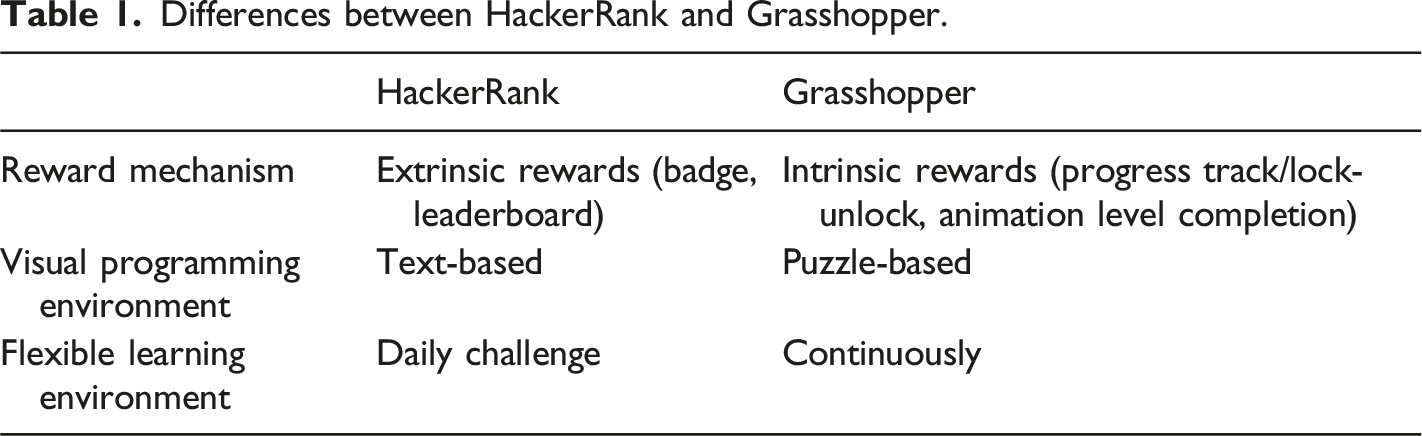
Nevertheless, the purpose of this study is not to determine which of the evaluated platforms is more advanced but rather to investigate the relationship between the application of game mechanisms with various strategies and students’ perceptions of the TTF of gamification platforms. Hence, the following research questions are addressed:
Does the student’s perspective of the game mechanism influence the student’s perspective on TTF?
Does the student’s perspective on TTF have a substantial impact on the desired learning outcomes?
Theoretical Background
Gamification Design Research
Previous Studies On Design and Outcome Evaluation.
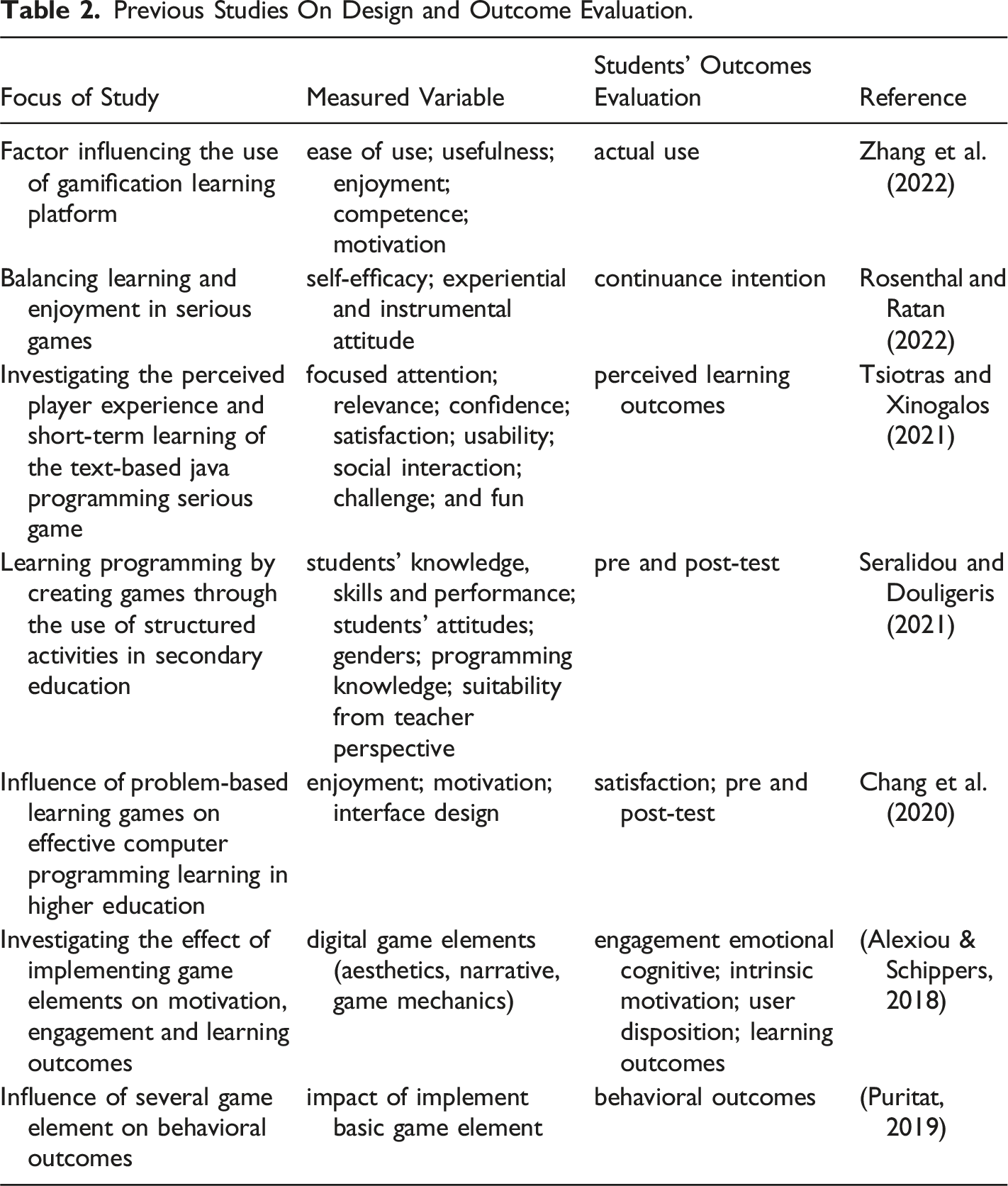
As presented in Table 2, From the previous studies, the aims of those previous studies are balancing enjoyment and learning and/or optimize outcomes. Nevertheless, the results of the investigation efforts into the design of game mechanisms for gamification remain inconclusive. Consequently, this study aims to explore the design fit of game mechanisms by utilizing the TTF theory.
Task–Technology Fit (TTF) Theory
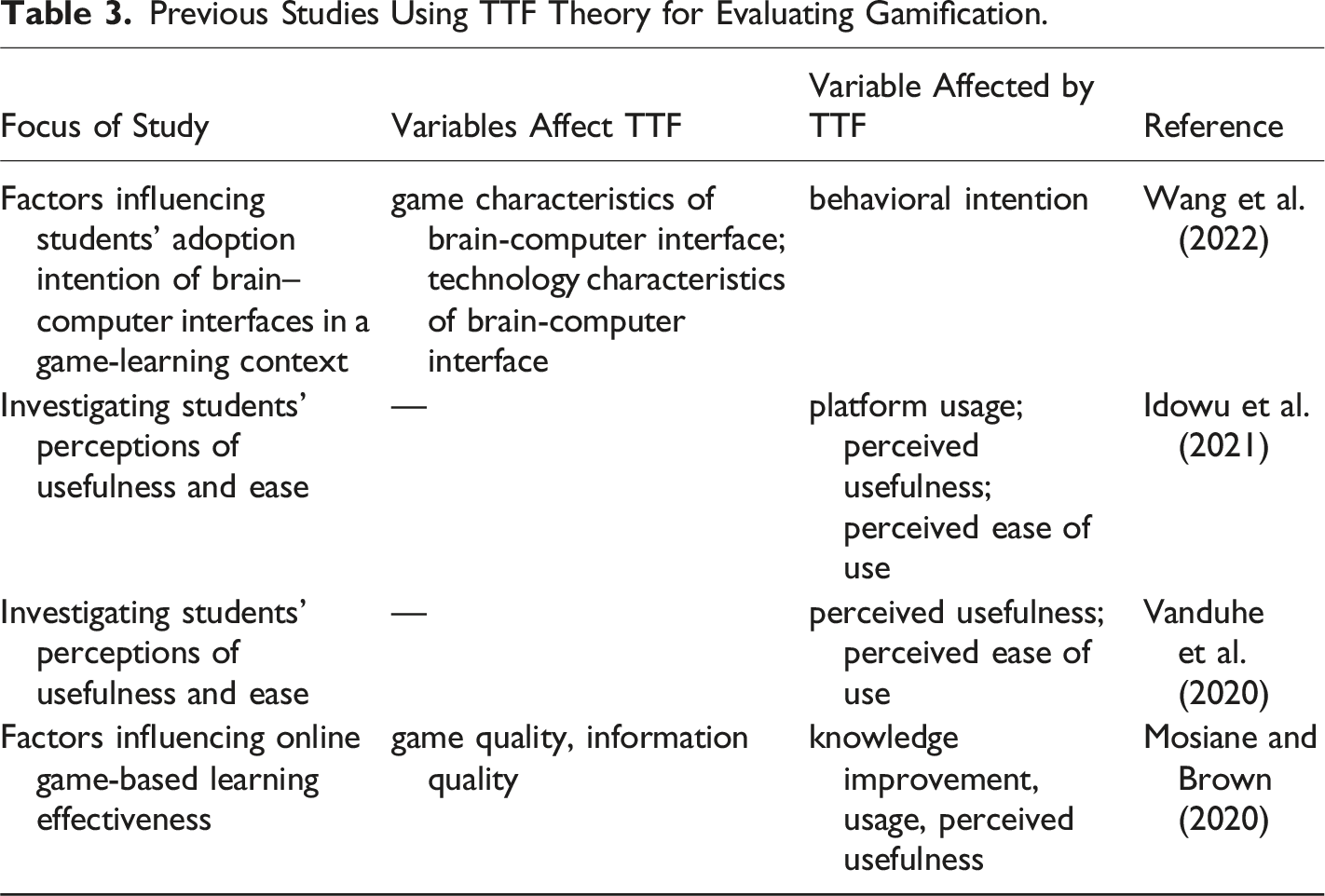
Previous Studies Using TTF Theory for Evaluating Gamification.
Cognitive Load Theory
Cognitive load is connected to working memory’s capacity to process information (Sweller, 1988; 2010). As a theory of instructional design, working memory limitations should be considered when designing learning instruction (Sweller, 1988; Van Merrienboer & Sweller, 2005). It is believed that cognitive load is a crucial consideration in designing instructional learning, as a lack of consideration for the limitations of working memory could reduce the effectiveness of learning (Hanham et al., 2017). This theory has been widely adopted and refined as an explanation of how the brain processes information.
According to the literature, the subjective questionnaire is the most often employed method among the numerous approaches (Ayres & Sweller, 2005; Korbach et al., 2017; Leppink et al., 2013). In previous studies, cognitive load has been measured in various ways due to its evolution. The three most common dimensions consist of extraneous cognitive load, which is caused by ineffective instructional feature designs; intrinsic cognitive load, which depends on the complexity and characteristics of learning materials; and germane cognitive load, which is caused by instructional feature designs that promote learning (Chandler & Sweller, 1991; Sweller, 2010). In addition, Paas and Van Merriënboer (1994) introduce a causal dimension that reflects the interactions between the individual, tasks, and performance. This causal dimension describes the measurable aspects of mental load, mental effort, and performance. Based on this framework, mental load reflects task demands (a task-based dimension), and mental effort reflects cognitive resources allocated to fulfill task demands (a learner-based dimension). However, cognitive load can be generally split into two groups: learning-relevant (productive) cognitive load processes and learning-irrelevant (unproductive) cognitive load processes (Kalyuga & Singh, 2016). Productive cognitive load comprises all cognitive processes required to fulfill learning objectives, such as providing instructions as needed. Meanwhile, unproductive cognitive load process occurs when the design instructions distract students during the learning process.
Krell (2017) examined instruments for measuring mental load and mental effort based on complexity levels. According to this research, mental load and mental effort are positively correlated and enhance student performance. In addition, Wu (2018) and Yang et al. (2023) demonstrated that gamification can facilitate students' comprehension of the material presented on learning platforms and reduce their cognitive load by enhancing playful interactions and increasing engagement. Therefore, based on the findings, this study aims to examine the effect of TTF on cognitive load based on mental load, mental effort, and learning performance.
Theoretical Model and Hypothesis Development
Reward Mechanism
Reward mechanisms have been scientifically shown to reinforce learning outcomes (Howard-Jones & Jay, 2016; Pierce et al., 2003). The use of rewards has been shown to increase students' motivation to continue challenging tasks and produce positive feedback (Nadolny et al., 2020). In reinforcement learning problems, cumulative rewards affect the learning outcome (Silver et al., 2021). Reward mechanisms can be divided into two categories: intrinsic and extrinsic rewards (Singh et al., 2010). Intrinsic rewards are rewards that stimulate users’ intrinsic motivation to continue completing challenges, such as the lock and unlock challenge, until successful completion. On the other hand, extrinsic rewards are rewards that offer explicitly beneficial outcomes, such as badges and leaderboards. Singh et al. (2010) indicate that both extrinsic and intrinsic rewards have a close relationship with motivation and the improvement of fit in the learning environment. The achievement of optimal fit between rewards and individuals results in positive performance and behavioral outcomes (Drugan, 2019; Grunitzki et al., 2017; Sequeira et al., 2014). However, the relationship between the implementation of rewards and the achievement of fit in TTF remains unknown. However, it should be emphasized that using only these two types of rewards to predict student learning performance is insufficient. Therefore, the purpose of this study was to determine whether reward mechanisms are closely related to students’ perspectives on the TTF when utilizing gamification platforms. Thus, the following hypothesis is proposed:
The student’s perspective of the reward mechanism is positively related to the student’s perspective on the TTF of gamification.
Visual Programming Environment
Gamification commonly implements a visual programming environment, especially for computer programming. Previous studies have examined the effect of applying visual learning environments, such as block-based learning, text-based learning (Broll et al., 2018; Weintrop & Wilensky, 2019), and puzzle-based learning (Hsu & Wang, 2018). The findings demonstrate that a visual programming environment increases the enjoyment and effectiveness of learning. Hence, based on previous findings, this study proposes the following hypothesis:
The student’s perspective of the visual programming environment is positively related to the student’s perspective on the TTF of gamification.
Flexible Learning Environment
Lock-and-unlock features in gamification are commonly used as features that provide a challenge to learners, also known as a flexible learning environment. A flexible learning environment involves providing technological support for the learning process by giving freedom of choice about where, when, and how learning occurs (Jiang et al., 2021). Moreover, previous studies have specifically discussed flexible learning and indicated that it positively affects student satisfaction and performance (Li & Wong, 2018; Sun et al., 2008). Accordingly, the following hypothesis is proposed:
The student’s perspective of the flexible learning environment is positively related to the student’s perspective on the TTF of gamification.
Task–Technology Fit and Learning Outcomes
The significance of TTF in gamification design must be demonstrated by analyzing the connection between obtaining fit in gamification design and learning outcomes. In the context of gamification for programming learning, interface features of programming tools such as coding screens, drag-and-drop options, and button colors may reduce the efficiency of the learning process (Asai et al., 2019; Çakiroğlu et al., 2018; Tsai, 2019). Therefore, by analyzing the TTF of how game mechanisms are employed, it is essential to ensure that game mechanisms can reduce cognitive load and enhance learning performance.
This study uses cognitive load and performance as indications of the effectiveness of gamification design. This approach is derived from a previous study conducted by Krell (2017), which validates the correlation between mental load and mental effort as well as how these variables can be used to predict performance. In addition, Unal and Topu (2021) confirmed that when students perceive a decrease in cognitive load, their learning performance improves. As a result, this study develops the following hypothesis:
The student’s perspective of TTF in gamification is positively related to the student’s learning performance.
The student’s perspective of TTF in gamification is negatively related to the student’s cognitive load.
Reducing the cognitive load of students enhances their learning performance. Additionally, Vilhunen et al. (2022) suggested using the pretest score as a control variable that influences the posttest score, as the measure of learning performance, can prevent spurious affect and misspecification. Therefore, this study used prior knowledge as a control variable for learning performance in the proposed research model. Figure 1 illustrates the comprehensive framework of the hypotheses that we aim to examine. The theoretical model was based on the recent literature on gamification design and TTF theory. Students' perceptions of the reward mechanism, visual programming environment, and flexible learning environment were used to assess the TTF of the design resulting from the implementation of the game mechanism. Furthermore, the effect of TTF achievement on gamification design is measured by learning outcomes based on cognitive load and learning performance.
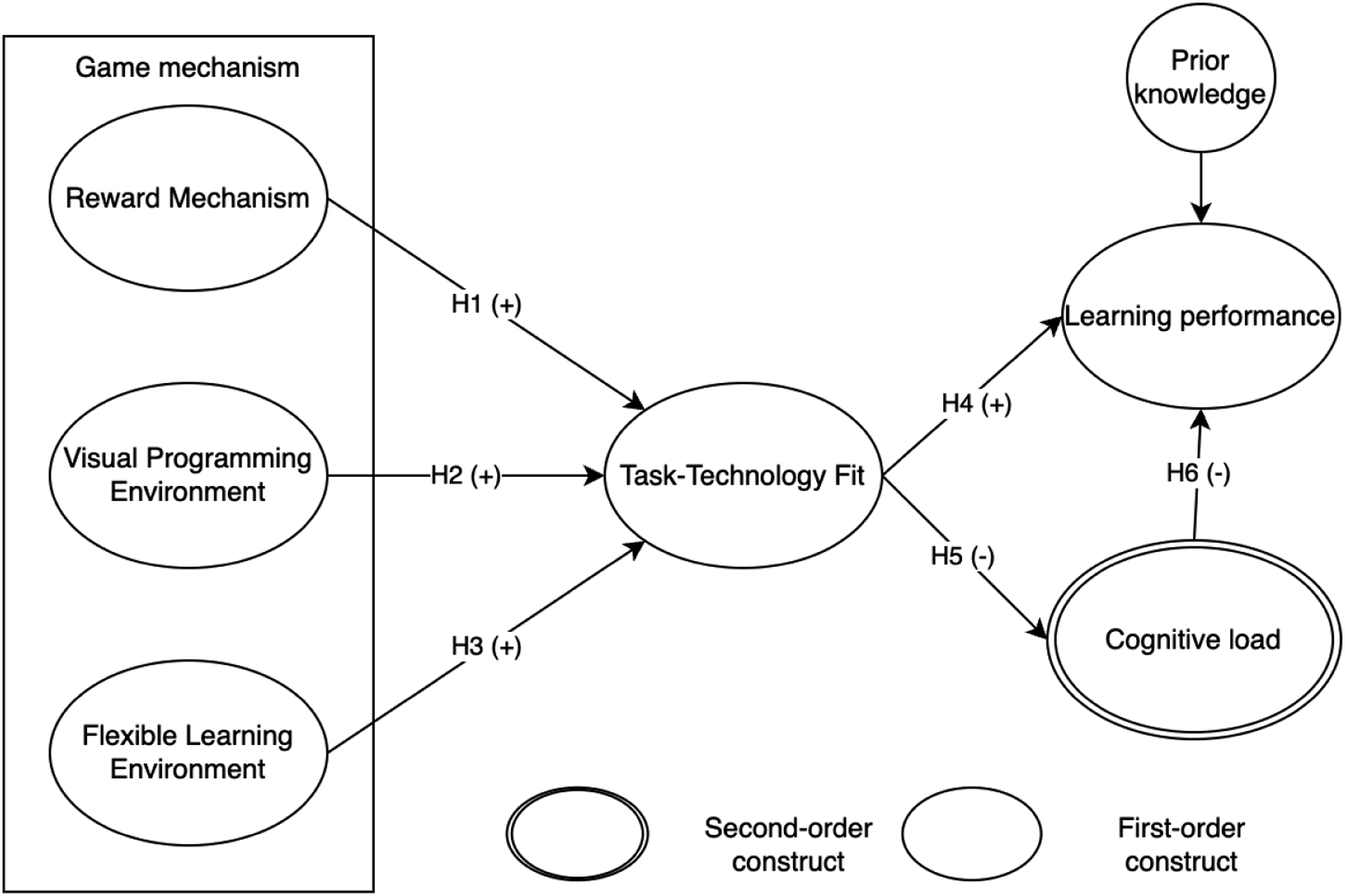
Game mechanism, task-technology fit, and learning outcomes: a theoretical model.
Material and Methods
This study proposes a new model to investigate the significance of achieving TTF in gamification to optimize benefits by demonstrating their influence on learning outcomes. We studied HackerRank and Grasshopper, two popular open-access learning platforms for programming. Both learning platforms apply the same game mechanism, such as a reward mechanism, visual programming environment, and flexible learning environment with their distinctive features. HackerRank applies a badge and leaderboard for the reward mechanism, while Grasshopper shows a progress track and an animation indicating that the student has completed the task successfully. For the visual programming environment, HackerRank utilizes a conventional text-based approach. According to a study by Weintrop and Wilensky (2019), a text-based approach makes it easier for students to transfer their skills to a professional programming environment. Meanwhile, Grasshopper provides a block-based visual learning environment, which is believed to make programming easier to learn (Bak et al., 2020; Cakiroglu et al., 2021). Another difference is a flexible learning environment. HackerRank provides one challenge for each daily topic, in which learners are free to choose the challenge they want to complete first. On the other hand, Grasshopper requires students to accomplish one challenge before advancing to the next, with various simple challenges. From the variation in differences provided by the two platforms, we aim to reveal whether these differences have a significant effect on the TTF of game mechanisms and learning outcomes.
Our experiment was conducted in four phases. First, students completed a pretest to determine their prior knowledge condition score. Second, we randomly assigned participants to one of two gamification platforms. When utilizing the gamification platform, they were asked to accomplish four fundamental challenges within a week: arithmetic operators, conditional statements (if-else), loops, and arrays. In the third phase, participants were asked to complete a posttest to assess their acquired knowledge as their learning performance. Participants then completed a questionnaire to determine the students’ perspectives on the gamification platform used.
Measurement Items.
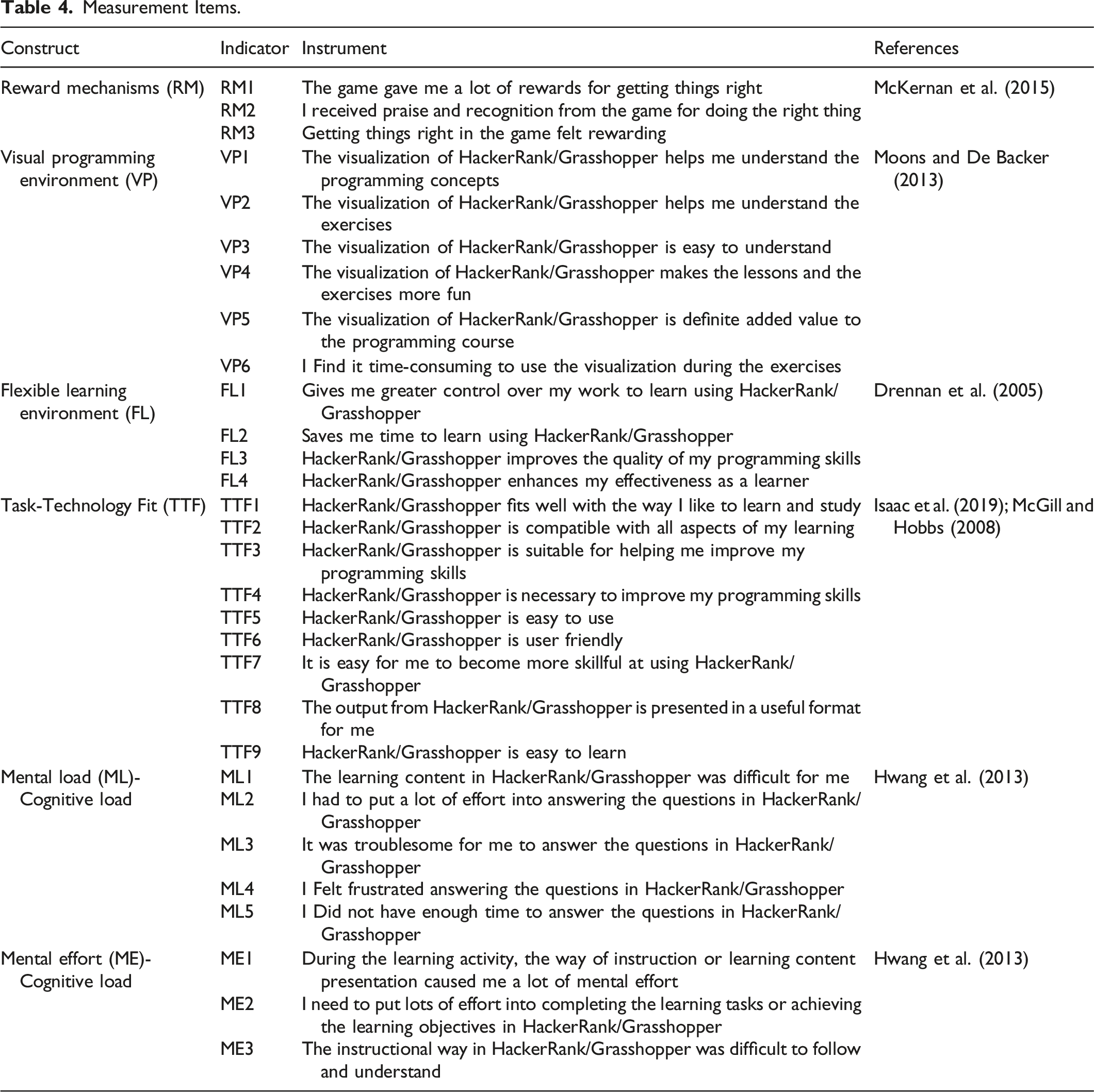
Preliminary Analysis
Data were collected from the informatics engineering departments of two Indonesian universities, where all students were enrolled in an introductory computer programming course. A total of 266 students who chose to participate were randomly divided into two groups. One group was assigned to HackerRank, while the other was assigned to Grasshopper. Of the participants, 78.20% were male and 21.80% were female. The majority of participants were 18–22 years old (95.49%), with 2.26% under 18 years old and 2.26% over the age of 22.
Independent t test Result.
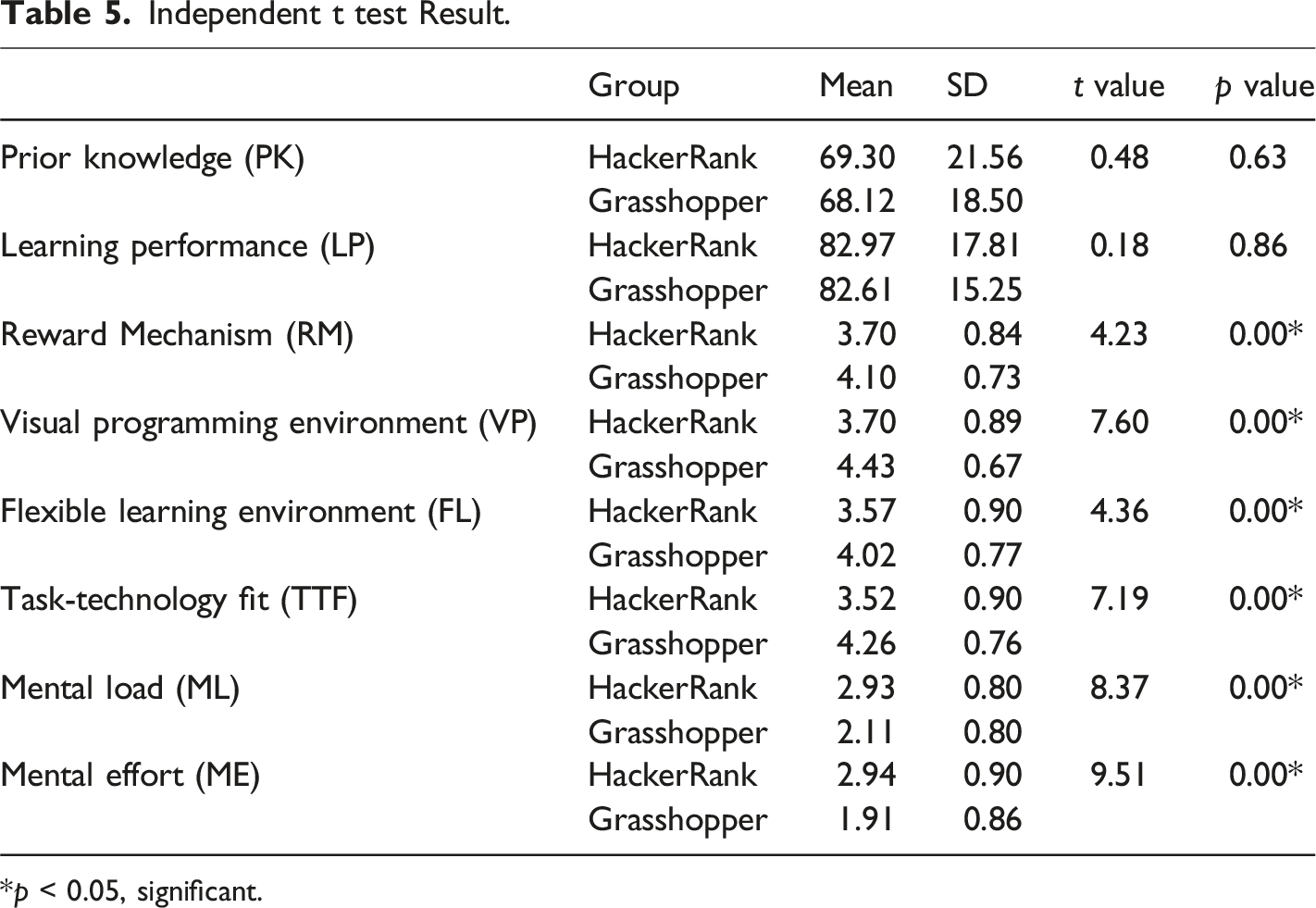
*p < 0.05, significant.
Measurement Model.
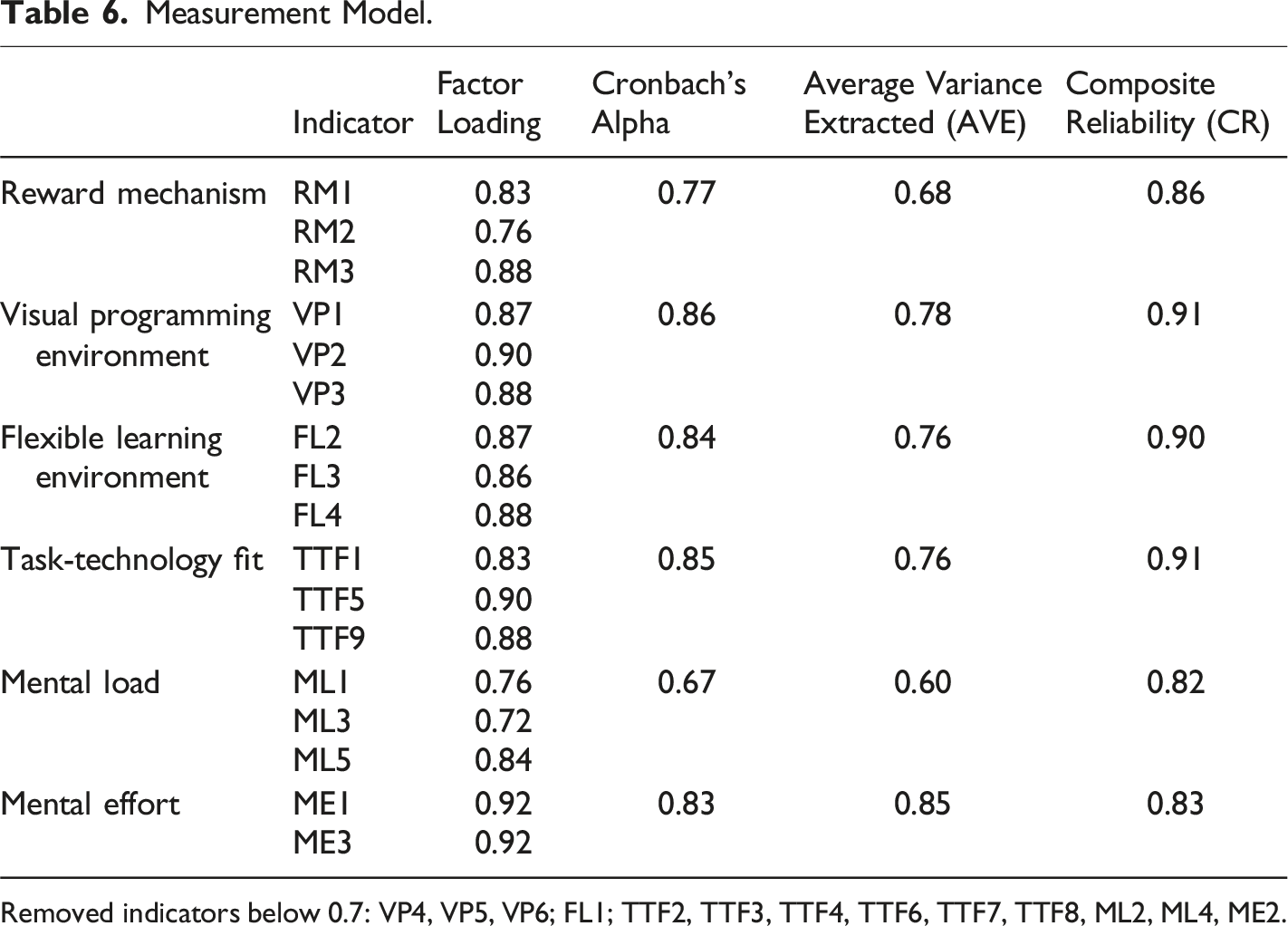
Removed indicators below 0.7: VP4, VP5, VP6; FL1; TTF2, TTF3, TTF4, TTF6, TTF7, TTF8, ML2, ML4, ME2.
Discriminant Validity.
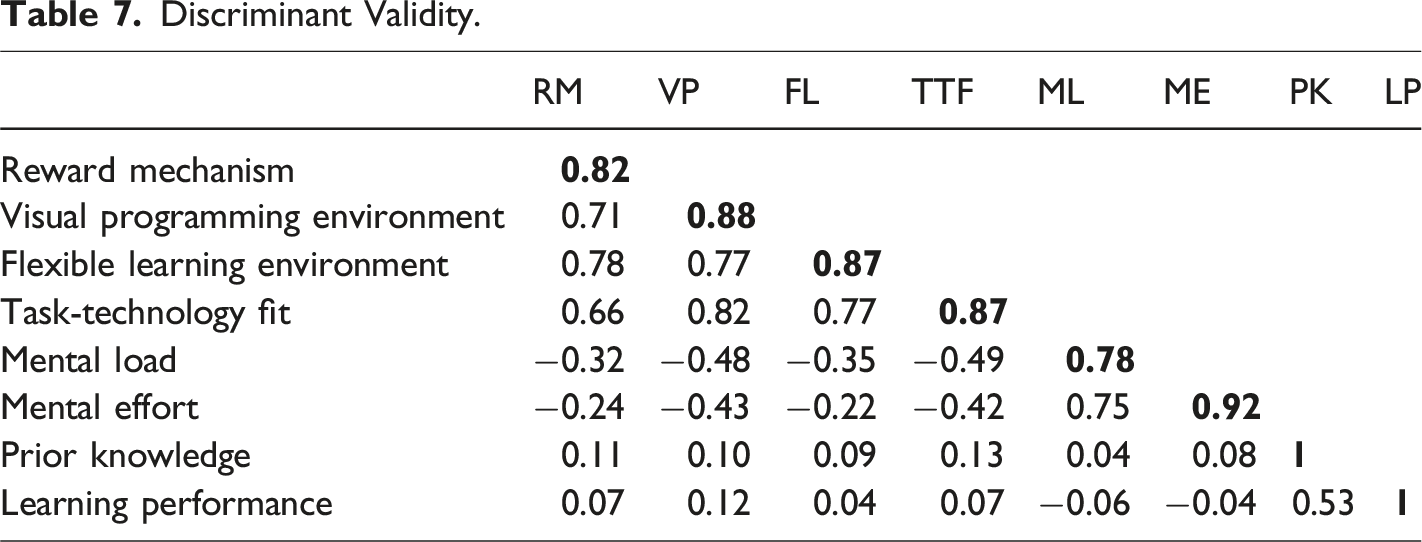
Results of the Analysis of the Structural Model
The outcomes of the hypothesis analysis are presented in Figure 2. Excluding the reward mechanism, this study indicates that game mechanisms, such as the visual programming environment and the flexible learning environment, positively affect students' perceptions of TTF in gamification. However, according to the results of this study, the reward mechanism implemented in both gamification platforms has no significant impact on students' perceptions of the TTF. This indicates that while Hypothesis 1 is rejected, Hypotheses 2 and 3 are supported. Moreover, our research revealed that TTF negatively affects cognitive load but does not directly affect learning performance. This finding highlights the impact of achieving TTF through the gamification platform on learning outcomes. Meanwhile, game mechanisms and instructional content reduce students' cognitive load, which improves learning performance. Thus, Hypothesis 4 is rejected, as there is no significant direct affect between the TTF and learning performance. However, Hypotheses 5 and 6 are supported, as the findings demonstrate that TTF negatively affects cognitive load and that cognitive load is negatively correlated with learning performance. Hypothesis testing results.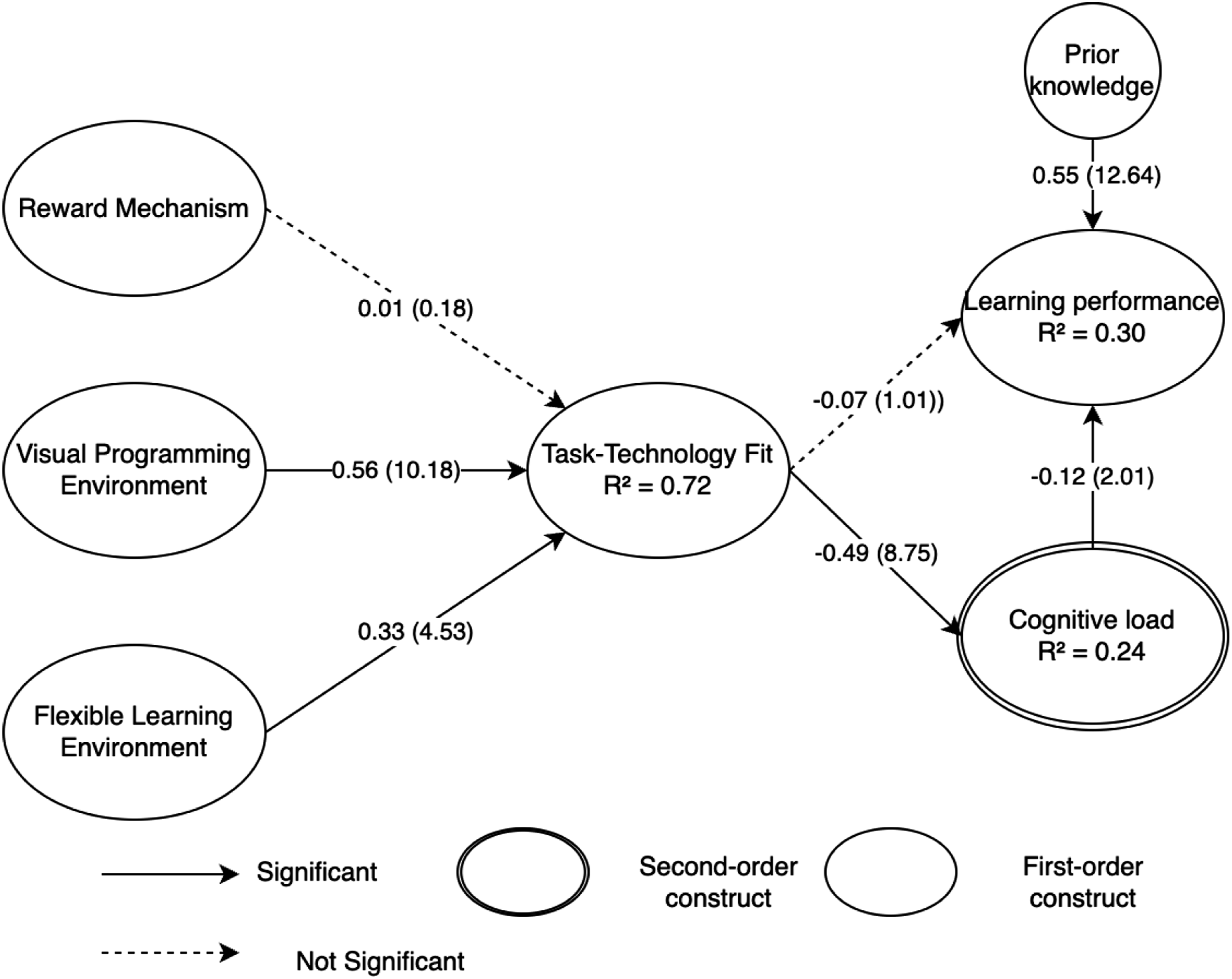
According to the coefficient of determination findings, the R square of the TTF is 0.72, indicating that ensuring the TTF of implementing game mechanisms is essential, as it could explain 72% of the variance in the TTF of gamification. Although the implementation of the reward mechanism’s (β = 0.01, t = 0.18) effect on TTF is insufficiently significant, the total effects for the visual programming environment (β = 0.56, t = 10.18) and the flexible learning environment (β = 0.33, t = 4.53) indicate that both game mechanisms are relevant. The TTF effect (β = −0.49, t = 8.75) explained 24% of the variance in cognitive load, whereas the combination of the TTF effect (β = −0.07, t = 1.01) and the cognitive load effect (β = −0.12, t = 2.01) explained 30% of learning performance.
Discussion
The findings of this study reveal that reward mechanisms implemented in both gamification platforms do not substantially affect students’ perspectives toward TTF. Previous studies have declared that reward mechanisms enhance student behavior, motivation, and engagement (Chen et al., 2015; Hanus & Fox, 2015). However, Hanus and Fox (2015) found that the availability of reward mechanisms in gamification affects student motivation, which may be split into intrinsic and extrinsic. Intrinsic motivation arises when students complete assignments according to their own desires, whereas extrinsic motivation occurs when students perform tasks in exchange for rewards. In addition, McKernan et al. (2015) found that the number of rewards was relevant to how positively students rated their overall gaming experience. Nevertheless, there was no correlation between the number of rewards and learning outcomes. From these two studies, the following recommendations have been suggested: (a) the presence of a reward system can motivate students to complete learning tasks, but (b) extrinsic motivation can result in students completing tasks without acquiring new knowledge. Thus, based on the two gamification platform assessment results, the number of rewards delivered had no significant impact on learning outcomes or student perceptions of TTF. However, eliminating the reward mechanism can reduce students' motivation to learn through gamification (Lepper et al., 1973). Consequently, this study suggests that the reward mechanism is still a game mechanism that must be integrated into gamification.
The second finding relates to the visual programming environment, which positively influences students' perspectives on the TTF of the gamification platform. This result is consistent with the previous findings Unal and Topu (2021) and Palazzo et al. (2020). Both of these studies found that the effect of visual learning facilitates realizing learning programming objectives. In the context of learning programming, extensive information and complex rules can lower students' success in acquiring knowledge (Kelleher & Pausch, 2005; Yukselturk & Altiok, 2017). Visual learning environments are vital for simplifying the concept of learning and facilitating students' knowledge acquisition. Thus, the previous research supports our second hypothesis, which highlights that the visual programming environment is an essential component and that the visual programming environment positively affects students' perspectives on the TTF of gamification.
To establish successful gamification, it is crucial to provide learners with an environment that is flexible to their needs, as demonstrated by the third finding. Previous research has demonstrated that the implementation of a flexible learning environment can have a favorable effect on learning outcomes (Mavridis et al., 2017). Students who engage in flexible learning are better able to adapt to new challenges. The extent to which students perceive that they are participating in a flexible learning environment is one factor that can help them prepare for the upcoming task. Thus, the third hypothesis is supported.
Furthermore, by demonstrating the effect of TTF on learning outcomes, the results of our study highlight the importance of achieving a fit between gaming and learning tasks. The results of the insignificant influence of TTF on learning outcomes are consistent with the findings of Lowyck et al. (2004) and Wu et al. (2013) that environmental elements on learning platforms, such as instructional strategies, do not have a direct effect on learning outcomes; rather, they are mediated by the cognitive processes and activities of the learners. This explains why the TTF associated with the applied game mechanism does not have a significant direct effect on learning performance but has an indirect effect on it through the mediation of cognitive load. In addition, consistent with the results of Blikstein et al. (2014) and Song et al. (2021), who showed that there was no significant correlation between students' success and failure on a number of tasks, students' success on these tasks was not always indicative of their performance. Moreover, there was no significant difference between the two groups in terms of learning performance. In line with a previous study, there were no significant differences in learning performance between groups across learning environments (Tugtekin & Odabasi, 2022; Unal & Topu, 2021). This indicates that both gamification platforms can provide equal performance. The results of previous studies are relevant to our findings, which suggest that a well-designed learning environment can enhance student performance by reducing cognitive load. As a result, the gamification platform meets its objective of making programming education more accessible to students by simplifying the complex concepts of programming. Therefore, Hypothesis 4 is rejected, and Hypothesis 5 is accepted.
Meanwhile, it has been demonstrated that reducing cognitive load, particularly extraneous cognitive load, has a significant impact on improving student learning performance. Several previous studies have demonstrated that reducing cognitive load using a well-designed learning environment can improve student memory and learning performance (Krell, 2017; Park et al., 2011; Scheiter et al., 2009; Wang et al., 2020). Thus, Hypothesis 6 in this study is significantly supported and consistent with the previous findings.
Conclusions and Implications
This study aims to investigate the significance of the application of game mechanisms in online learning gamification platforms that implement flexible learning processes for supporting learning in computer programming skills. The results indicate that game mechanisms play a significant role in enhancing TTF in such online gamification platforms. Interestingly, it is found that the reward mechanism implemented by both gamification platforms investigated does not have a significant influence on the TTF. This indicates that while rewards may be one of the essential elements of gamification, they may not be the most influencing factor in determining the overall design fit of online gamification platforms that are developed for supporting learning. To conclude, the findings of this study indicate that when students’ cognitive loads are reduced as a result of the appropriate design of online gamification learning platforms, their learning performance is likely to be enhanced.
Theoretical Implications
This study has provided a theoretical foundation for future research into the implementation of game mechanisms on gamification platforms. Researchers can improve and enhance gamification experiences by knowing how game mechanisms and learning platform goals interact. The results of this study can also be used to guide the design of future gamification platform activities, providing educators with the materials they need to develop effective learning environments that optimize the benefits of gamification. Using TTF theory, this study suggests that gamification platform design should prioritize achieving a design fit between game mechanisms and learning environments. Although TTF has been frequently used in previous studies, these findings contribute to demonstrating the significance of measuring TTF in gamification based on the applicable game mechanism.
The findings demonstrate that reward mechanisms have no substantial impact on the TTF of gamification platforms. This has implications for developers, who should consider focusing on the design mechanisms of visual learning environments and flexible learning environments when attempting to create a fit design of gamification platforms, particularly for computer programming learning. Additionally, this finding has implications for educators, who may need to adjust their teaching strategies to account for the increased importance of visual and flexible learning environments in gamification platform design for computer programming learning. It also suggests that educators may need to prioritize teaching students how to use these mechanisms effectively to ensure that their gamification platform designs fit the tasks they present. Ultimately, this study contributes to the development of a more comprehensive understanding of gamification platform design and its implications for educational practice.
Moreover, although several studies have revealed that gamification is effective since it results in higher learning scores (Mavridis & Tsiatsos, 2017; Yang et al., 2018), the results of learning performance in this study cannot be predicted unless the effect of stimuli on cognitive load is identified. Therefore, to determine the impact of achieving fit on performance, the effect on cognitive load should be determined beforehand to predict the results of learning performance. This suggests that the design of gamification, along with other aspects such as cognitive load, must be considered when evaluating its effectiveness. This implies that educators should be mindful of the design of their learning platform activities and the specific ways in which students experience the learning process to ensure that their students are best able to benefit from learning platforms. Furthermore, this research indicates that the evaluation of gamification should go beyond simple measures of learning performance and include a more holistic approach to assessing student experience and performance.
Practical Implications
The practical implications of this study are in improving the quality of gamification by revealing the influencing factors and accurate variables for measuring the TTF of gamification. The findings from this study highlight the importance of achieving a good TTF between game mechanisms and the learning environment when designing a gamification platform. As Qian and Clark (2016) concluded, effective learning is based on game design. Therefore, to create an effective gamification that balances gameplay and learning, academics and practitioners should consider the visual programming environment and flexible learning environment.
In an educational context, the employment of animation can have a powerful and positive impact on student learning. By introducing animation into the design of gamification, educators could create a more engaging and interactive learning environment for students while also accomplishing the intended purpose of gamification. This could ultimately lead to increased active learning and higher learning outcomes. In addition, level stages that must be completed before moving on to a more difficult level generate a sense of accomplishment and advancement that will encourage them to continue advancing and broaden their perspective of the gamification that achieves fit.
Although this study demonstrated that the reward mechanism does not significantly affect the TTF of gamification design, the absence of a reward mechanism has a negative impact on student behavior (Lepper et al., 1973). In addition, our findings revealed that the different approaches to reward mechanisms do not interfere with students’ learning and do not affect the balance of gameplay design of the learning environment in gamification. The results of this study suggest that when designing gamification, various reward mechanisms should not be prioritized over the perspectives of the students. Moreover, to accurately measure the quality of gamification, educators should focus on assessing students' cognitive performance rather than using a score on learning performance. This approach can provide a more meaningful and reliable assessment of the efficacy of gamification. Furthermore, by focusing on cognitive performance, educators can gain insight into the effectiveness of gamification approaches and make more informed decisions about how to optimize gamification for their students.
Limitations and Future Work
This research was limited to an exploration of computer learning through gamification for the JavaScript programming language. Furthermore, we rely on two gamification platform environments. Both platform environments use the three primary game mechanisms investigated in our study. Future studies should be conducted by extending our research model to further investigate the effect of task and technology characteristics on a good fit. Thus, future research can build more mechanisms to be applied to gamification and assess how these applications alter the design fit to give students a rewarding and successful learning experience.
In addition, according to the study, further research is needed to identify relevant constructs and indicators that can be used to determine performance. Predicting performance as a learning outcome demands precise constraints and indicators. These conditions support the idea that obtaining a good fit does not directly correlate with improving learner performance scores but correlates with cognitive load. Furthermore, Qian and Clark (2016) indicated that games that provide content with a simple design, such as quizzes or practical approaches, do not interest learners. Therefore, additional research on the relationship between good fit and learner engagement is required since increasing engagement is impossible if there is no interest in gamification.
Footnotes
Declaration of Conflicting Interests
The author(s) declared no potential conflicts of interest with respect to the research, authorship, and/or publication of this article.
Funding
The author(s) disclosed receipt of the following financial support for the research, authorship, and/or publication of this article: This work was supported by the Ministry of Science and Technology, Taiwan (MOST 109-2511-H-006-006-MY3).

Data Availability Statement
The author provides the data set used upon reasonable request.