




Abstract
Adding gaming elements to conventional teaching methodologies has gained a lot of attention because of its ability to incorporate an engaging, motivating, and fun-based environment. As a result, learners' dedication and performance are also better. Unfortunately, current gamification models do not consider the effect of different levels of gamification. Therefore, this study provides deeper insight into the three levels of gamification on the motivation, engagement, and performance of 450 undergraduates enrolled in an online course. The level of gamification is experimentally manipulated based on different gaming elements and the presentation of learning content. The outcomes were measured at three points. Quantitative methods were used to analyze defined measures, and qualitative methods were used to analyze open-ended measures. The results revealed no change in outcomes between all groups during pre-course and mid-course assessments. However, motivation, engagement, and performance are improved in gamified environments, and these effects are more noticeable towards the end of the course. It was discovered that the gamification level was a significant determinant of motivation and performance but not engagement, which highlights the importance of implementing gamification in educational platforms. The gamification appeared to be a pedagogically profound way of engaging students in the online course. The whole setup triggered the learner’s motivation to learn and perform in the course. We conclude that gamification does help in motivation, engagement and performance if considered properly. Thus, educators and educational institutions seeking to enhance student motivation and performance may look at the ‘right level’ of gamification as an appropriate methodology.
Introduction
A common worry among educators is learners' motivation, engagement, and performance. Learners, if disengaged, might find themselves unfit to succeed in the course. As a result, educators look for tools and methods to support their pedagogy to increase learners' motivation, engagement, and performance. One such method is the use of gamified elements in the course design. Previous studies have established that games promote learning (Pan et al., 2022; Sun et al., 2021); therefore, the adoption of gamified courses and peer communication and interaction can help learners share achievements and perspectives, encouraging them to learn more in a competitive environment, leading to sustainable, improved outcomes for all stakeholders (Nicholson, 2015). This led to the adoption of what is called “gamification.”
Gamification has been applied in several fields by applying several techniques such as points-scoring systems, leaderboards, and awards of badges as rewards for completing ascending levels in the quest of assigned learning tasks (Ibanez et al., 2014; Poondej & Lerdpornkulrat, 2016). It is an educational method in which different gaming strategies and elements are incorporated into non-game contexts in an attempt to increase users' engagement and motivation (Attali & Arieli-Attali, 2015; Carreno-Leon et al., 2018; Chans & Portuguez Castro, 2021; Laine & Lindberg, 2020) through an interactive interface that helps learners participate and complete the process of a particular activity (Seaborn & Fels, 2015). In education, gamification was deployed to improve learners' commitment and engagement to assure effective dissemination of knowledge while meeting the learning outcomes of a particular educational course. The potential of gamification in the education domain is based on its intention to support and motivate learners, leading to enhanced learning outcomes (Alhammad & Moreno, 2018; Zahedi et al., 2021). Previous evidence shows that gamification provides better motivation than traditional non-gamified methods (Barab et al., 2005). This paper is organized as follows: The Literature review presents the literature review. The Materials and Methods presents the overview of the study and methodology. The results are analyzed in The Results, while the discussion and conclusions are presented in Discussion and The Final, respectively.
Literature Review
Self-Determination Theory (SDT)
Several theoretical frameworks have been applied to explain the motivational potential of gamification. The most broadly cited is self-determination theory (SDT) (Deci & Ryan, 2016; Landers, 2014). This framework highlights that learners have an internal tendency to become ‘engaged’ in an online educational environment and that this ‘motivation’ is enhanced by the mentioned requirements for autonomy, perceived competence and choice, and relatedness (Ryan & Deci, 2000). These needs determine the intrinsic and extrinsic motivation sources and can be used to guide educators in addressing them. Different gamification studies identify different aspects of SDT, with some claiming that achievements and competition are intrinsically motivating (Hamari et al., 2014; Hamari & Koivisto, 2015; Morschheuser et al., 2018), while others view game design elements as a source of extrinsic motivation (Mekler et al., 2013; Mitchell et al., 2020). Other theoretical frameworks, such as the theory of gamified learning, mostly highlight the extrinsic motivational effects of gamification (Landers & Landers, 2014). These latter approaches suggest that useful activities (e.g. class exercises) should be rewarded, creating positive associations with learners' learning that ultimately lead to behaviour change (Zichermann & Cunningham, 2011).
Gamification as a Pedagogical Tool
Learners' motivation and engagement are perceived as critical factors for achieving higher levels of participation and completion of online/digital educational courses, which is reflected by improved performance (Azzouz Boudadi & Gutiérrez-Colón, 2020; Lopez & Tucker, 2019). Motivation is the internal force that provides an individual with the energy required to fulfill a certain requirement or task to satisfy a particular need (Sotos-Martínez et al., 2022). Meanwhile, engagement has been defined as a valuable indicator of a student’s academic achievements (S. de Freitas & Griffiths, 2008; S. I. de Freitas, 2006; Portelli & McMahon, 2004). Engagement is perceived as the manifesting component of the prior motivation, which can be simply interpreted as the action that leads to the completion of a particular goal (Chans & Portuguez Castro, 2021). Both terms are not interchangeable, and they are both required for achieving better outcomes. That being said, achieving both motivation and engagement, especially on online educational platforms, is considered a challenge. In the same context, performance is defined as completing a certain task or an objective during the learning process, which translates into “a near-absolute change in the knowledge that solidifies the successful retention and transfer of knowledge” (Soderstrom & Bjork, 2015). Such context shows the importance of motivation and other psychological states on gamification in education research. It is the starting point of gamification functioning as well as among the most important factors for learning. Thus, considering motivation in gamification is pertinent because of its value to learning and its role in preventing misinterpretations of whether it worked.
Educators incorporate gamification in learning to seek how to motivate learners, keeping their attention during the course, and allowing learners to actively participate in achieving meaningful learning. In some studies, it has been shown that a high level of motivation in learning allows the learners to remain focused on their learning processes and the achievement of their goals. For this reason, motivation in the courses is affected by the belief that it requires hard work. For example, higher motivation has been associated with learners who have prior knowledge of the course topics for novice students who are easily discouraged when they do not understand the concepts. Likewise, these game-based course setups can be used to relate to others, promoting self-knowledge, responsibility, determination, and self-realization of the learners. Gamification introduces models to enhance the psychological aspects of motivations, such as the human tendency to learn, improve, overcome obstacles and win (Metwally et al., 2021). Researchers have proposed different motivational models and pedagogical frameworks for instructional design. Some of these models and strategies used by researchers include the ARCS (Attention, Relevance, Confidence, and Satisfaction) model (Hannig et al., 2013). Apart from the ARCS model, another popular instructional design model is ADDIE (Analysis, Design, Develop, Implement and Evaluate) (Allen, 2006). Besides pedagogical frameworks and models, there is a need to consider the intention of using the games in the learning process. It is important to understand which game elements will be needed to enhance learning. It is essential to recognize that different gaming elements serve different purposes in the learning process, and careful consideration is needed when designing the games. The learning process must be considered as a whole and determine how different gaming elements would fit within. For example, rewards can be used as motivation but over-relying on an extrinsic reward system can be limiting (Dichev et al., 2015). However, researchers report mixed findings on the effectiveness of integrating gamification into learning for increasing student motivation and engagement (Hanus & Fox, 2015; Lieberoth, 2015; Mekler et al., 2017; O’Donovan et al., 2013).
Engagement Through Gamification
In literature, engagement has been observed to include various aspects, such as cognitive and academic, making engagement studies a complicated field to study and render coherently and objectively (Gaydos et al., 2016). The complexity requires extra efforts from educators to design education to engage learners toward successful and sustainable learning outcomes. Engagement assessment techniques have evolved to maximize effectiveness by providing formative feedback and conjuring additional ways that measure learning motivation and engagement to balance the negative consequences of over-assessment and under-assessment on the motivational aspect of learners (Stiggins, 2005). The traditional education engagement measurements employ techniques such as classroom attendance percentages, marks scored on tests, dropout, or completion rates; the qualitative factors of enjoyment in learning, active participation, and punctuality in attending to assigned tasks were not considered. Therefore, the educators and learners must have their views represented in the active engagement measurement framework (Lopes et al., 2017). The application of tools is not enough to reach an effective gamification process. Experience of “fun” and the element of surprise should complement those elements to motivate the members. If the process is not attractive, the members would connect with less fun, consequently affecting their participation. Educators need to be aware of the purpose of the various game features and how these features can help achieve the learning objectives. Merely adding gaming elements will not serve the purpose. That is the reason this research is investigating if the level of gamification makes any difference or not.
Different Levels of Gamification
According to Landers and Callan (Landers et al., 2017), gamification in educational activities supported by virtual learning environments (VLEs) can help learners gain more and provide flexibility from the classical learning approaches not employed gamification-based learning. Moreover, the engagement approaches help students gain better perspectives through more in-depth engagement in their academic content (Anderson et al., 2014). Meta-analyses of gamification’s effect within the educational domain show its effectiveness, compared to no gamification, while demonstrating that gamification might affect different types of learning outcomes (e.g., psychological and behavioural) and that its effect depends on several moderators (Kim & Castelli, 2021). For instance, gamification has been used in education to improve students' grades, satisfaction, motivation, and lecture attendance, among other goals (Pinter et al., 2020). Accordingly, understanding how gamification works is important to evaluate whether it is working as expected properly (Antonaci et al., 2017; Smiderle et al., 2020; Klemke et al., 2018).
Summary of the Literature
To date, several gamification models have been developed and used to compare learners' motivation and engagement in a gamified environment as compared to a non-gamified environment or through responses to questionnaires addressing different themes. That being said, most of the available gamification models do not put into account the different levels of gamification exposure. Instead, they just compare gamified to non-gamified environments to see if gamification would catalyze learners' motivation and engagement. Therefore, these models fall short of expectations and potential future implications in digital educational platforms. The study procedure is introduced in the following section.
Materials and Methods
The present investigation contributes to filling research gaps in the area by addressing the outcome of the game-based course design and the level of needed gamification. The current research aims to answer three research questions (RQs):
The purpose of this research is twofold: first, to compare three different levels of gamification: zero-level (ZLG), low-level (LLG), and high-level gamification (HLG), in order to see whether the exposure extent would translate into a different change in learning outcomes in terms of learners' motivation, engagement, and performance. Furthermore, to investigate whether these changes would hold constant at three different assessment timepoints (pre-course, mid-course, and post-course) or would show variability in learning outcomes throughout the study.
Conceptual Framework
This framework was designed to help guide the development of the various gamified environments within the online course provided for the undergraduate engineering students included in the study (Figure 1). The conceptual framework for the gamified learning environment of the course.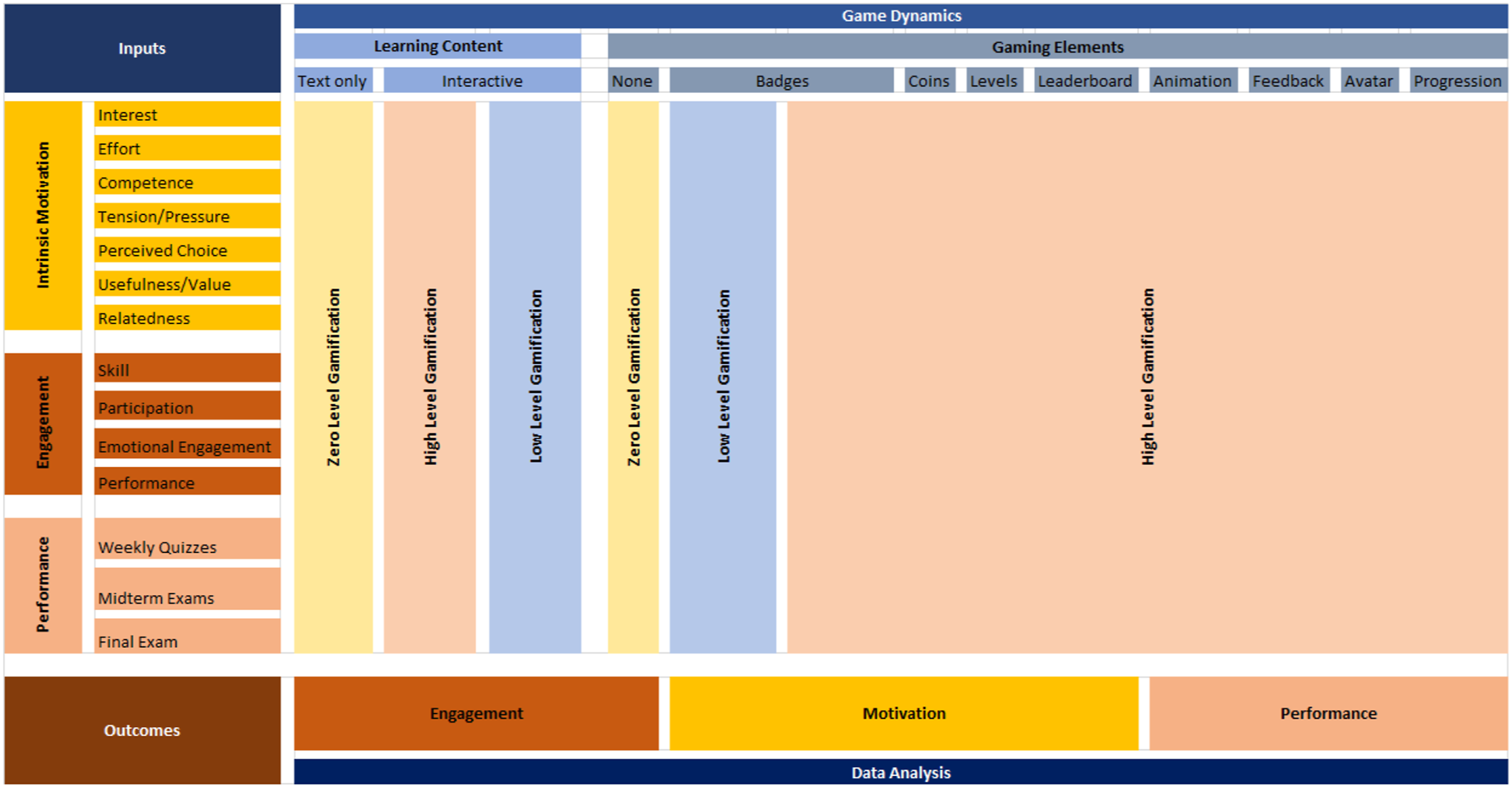
The combination of the gaming elements, learning mechanisms/content, and the learning themes/course modules (described below) aimed to provide a more effective learning environment for undergraduate students, implementing different levels of gamification during the learning process through the differences in the framework mentioned above. These different learning environments were designed to help assess the impact of variable levels of gamification on the three outcomes that are essential for effective and successful learning and dissemination of knowledge: intrinsic motivation, engagement, and performance.
Participants and Study Design
This study was conducted for one semester among undergraduate students enrolled in an online undergraduate-level course named “Introduction to programming.” In order to explore how level of gamification will affect learners’ engagement, motivation and performance, a total of 450 students were invited to participate in the experiment. This 13-week course comprises 13 modules (one module per week). The material provided in the course was developed to fit the course’s objectives and learning outcomes. During the course period, there were 10 quizzes (each of 10 marks), a midterm exam (out of 50 marks), and a final exam (out of 100 marks). The final course grade included a score up to 100 (20% of quizzes' scores +35% of midterm scores +45% of final exam scores).
Three different versions of this course were designed to fit the study goals. In this context, two gamified versions were designed to “engage” learners in the provided educational material in a fun manner. A learner scaffolding method is deployed to “motivate” the learner to be enthusiastic during the learning process (Zichermann & Cunningham, 2011). Then, motivational and engagement designs were applied to the course modules using different gaming elements.
Study Groups
Eligible participants were randomly enrolled into one of three different versions of the course based on the gamification level and design: zero-level gamification (ZLG), low-level gamification (LLG), and high-level gamification (HLG) groups. The ZLG group was considered the control group, and both LLG and HLG groups were considered the experimental groups. Apart from gamification design and elements, both the control and experimental groups had the same teacher, lecture notes, weekly quizzes, midterm exams, and final exams. The study started in the first week of the course. A web link was sent to students outlining the purpose of the research and their right to withdraw at any moment. Informed consent was obtained for every participant.
The ZLG group was considered the control group in the study, accounting for the normal regular teaching method without incorporating any gaming elements, as highlighted in Figure 2. The design of the zero-level gamification course group.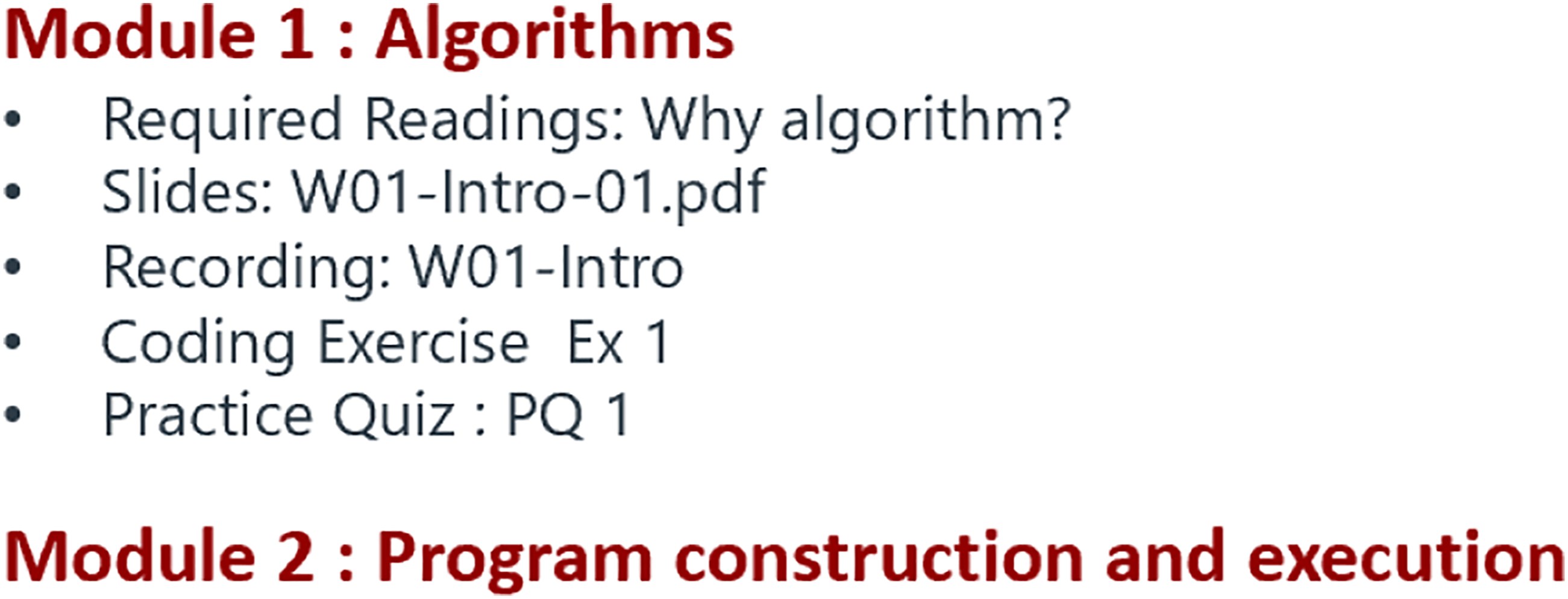
The LLG group included interactive learning material while incorporating badges only as a gaming element (gained in certain situations like upon completing a quiz). Lasse proposed that achievement badges are one of the most used gamification methods (Hakulinen et al., 2015). There are several different definitions for achievement badges, but they are commonly seen as an additional system that provides optional goals and challenges. 10 badges were the maximum number a learner can achieve throughout the whole course, as shown in Figure 3. The gamification design and gaming elements in the low-level gamification course group.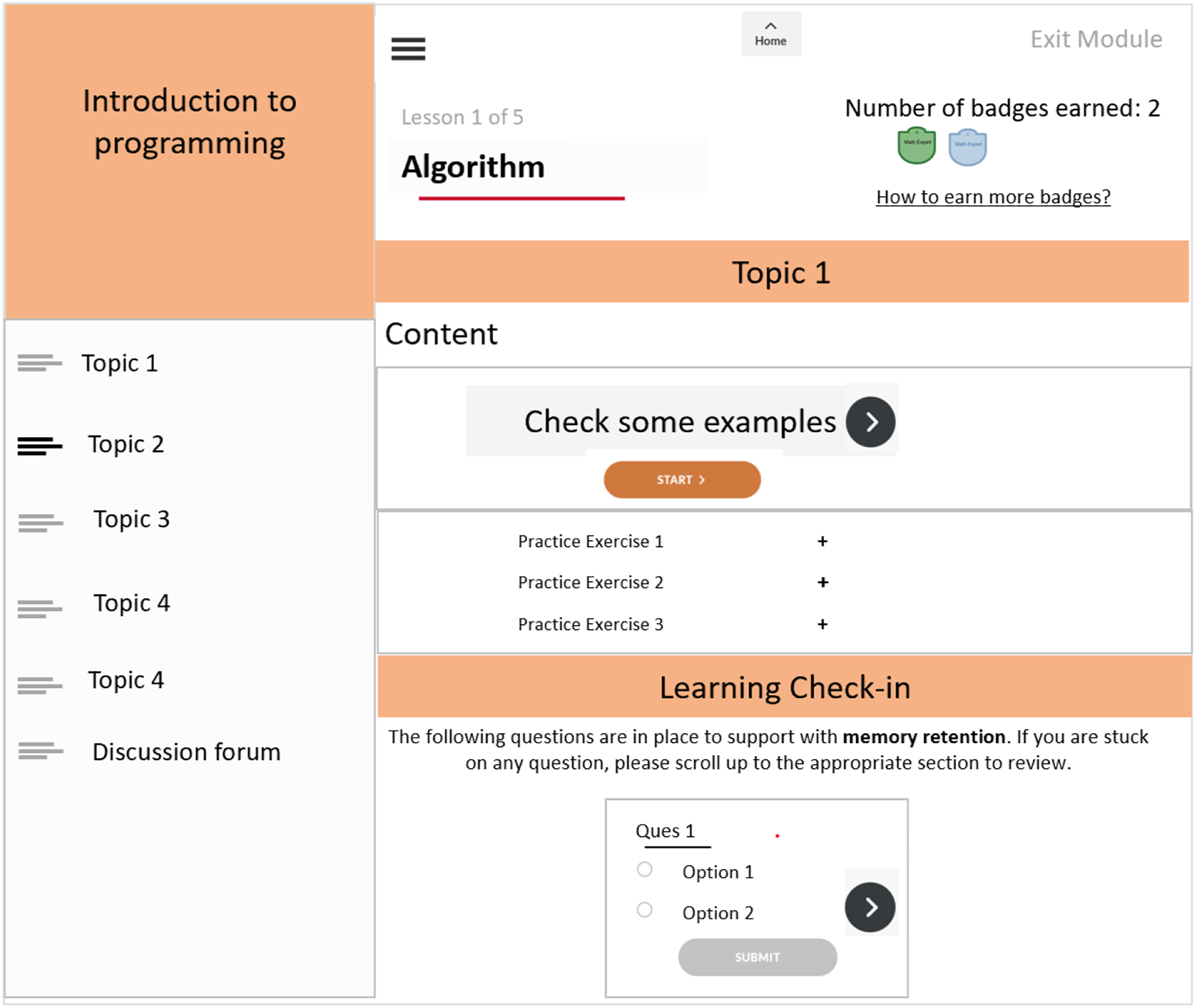
The HLG group included the same gamification design as the LLG group but with more gaming elements (i.e., interactive text, badges, coins, leaderboard, levels, leaderboard, animation, feedback, avatar, and progression status) as shown in Figure 4. The gamification design and gaming elements in the high-level gamification course group.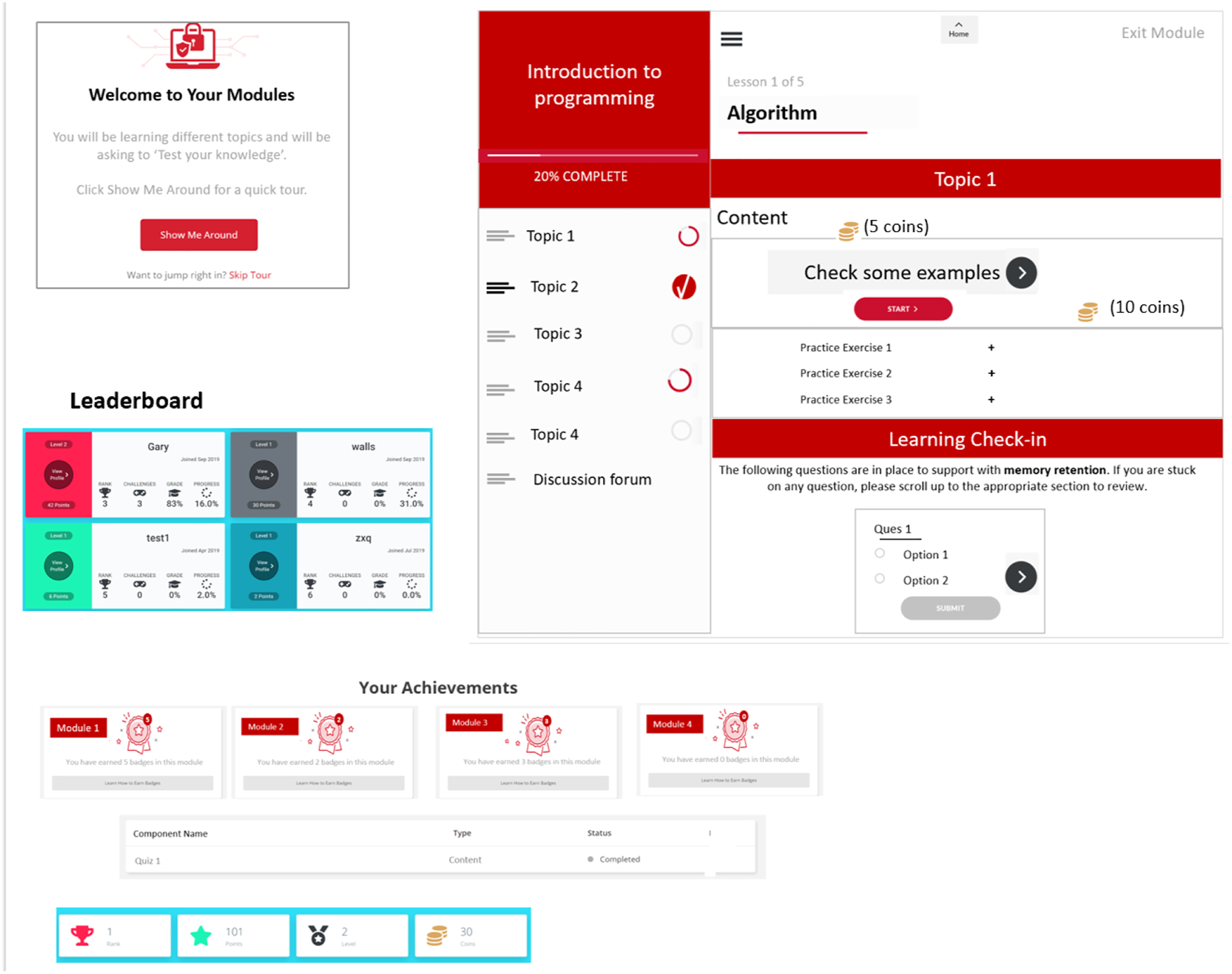
The course’s content (educational information and learning outcomes) for the first week was the same for all three groups; however, at the beginning of the second week, the gamification elements were incorporated into the different versions of the course, as shown in Figure 5. The incorporation of gamification into the course work over 13 weeks.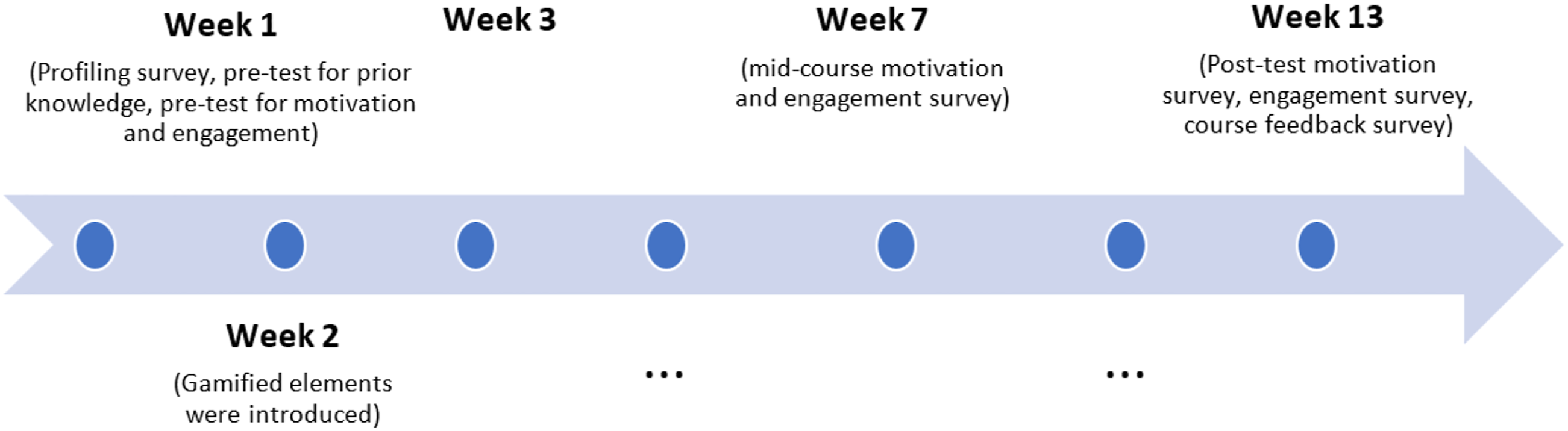
Outcomes of Interest
The primary goal of the research was to determine the association between the gamification level (ZLG, LLG, HLG) and effective learning measured by three outcome variables: intrinsic motivation, course engagement, and learner’s performance across different time intervals. The hypothesis is that there will be a significant change in the motivation, engagement, and performance score over the three assessment time points across different gamification levels.
Secondary goals included the following: (1) Identify significant predictors of each of the three outcomes (motivation, engagement, and performance). The hypothesis is that the level of gamification (ZLG, LLG, HLG) will significantly predict learners' motivation, engagement, and performance. (2) Determining whether there is a correlation between the examined outcomes after controlling for gamification. The hypothesis is that there will be a significant correlation between the three outcomes (motivation, engagement, and performance), at least at one of the components of each outcome, after adjusting for the confounding effect of gamification (ZLG, LLG, HLG).
Data Collection and Measurement Tools
A total of five online questionnaires were distributed among learners at three timepoints (pre-course, mid-course, and post-course). These questionnaires included: (1) profiling survey, (2) course knowledge survey, (3) motivation assessment survey, (4) course engagement survey, and (5) course feedback survey. The first survey was only collected once because it contained participants' baseline data such as age and gender. The response rate in the experimental population was slightly higher, equivalent to 86.6% (390 out of 450 responses). The second survey assessed learners' knowledge level of the provided programming language before and after completing the course (pre-and post-test). Knowledge was assessed through 10 multiple-choice questions, each of which was related to a certain programming language topic as follows: (1) Algorithms (2) Program construction and execution (3) Variables and data types (4) control structure and loops (5) File handling (6) Arrays (7) Functions (8) Sorting (9) Searching (10) Complexity. This survey was validated by two experienced teachers who taught this course. The third survey was used to assess learners' motivation through the Intrinsic Motivation Inventory (IMI) scale (Ryan, 1982), which has been previously validated in the literature (Ostrow & Heffernan, 2018). Through the IMI scale, motivation can be further subdivided into several items as follows: (1) interest, (2) competence, (3) effort, (4) tension/pressure, (5) perceived choice, (6) usefulness/value, and (7) relatedness. The fourth survey assessed learners' engagement through the Student Course Engagement Questionnaire (SCEQ) (Harman & Brown, 2022). The SCEQ consisted of 23 questions to measure all of the four components of engagement as follows: (1) skill, (2) participation, (3) emotional engagement, and (4) performance. The questionnaire and its components have been previously validated in the literature (Lin & Huang, 2018). Each question was rated on a 10-point Likert scale, where one indicated that the statement is “not true” while a score of 10 indicated that the statement is “very true” for each given activity. Of not, learner’s performance included weekly quizzes, midterm exams, and final exams. Importantly, three grades were given for each participant: (a) average grade on weekly quizzes, (b) midterm examination grades, and (c) final examination grades. The final course grades were used to measure their learning performances.
The final questionnaire was distributed to get learners' feedback regarding the course in a qualitative manner. The survey included two questions: (1) which feature(s) did you like the most in your course version? And (2) which feature(s) did you dislike the most in your course version?
Statistical Analysis
All analyses were conducted through R Package (R Core Team, 2021), and figures were formatted using the ggstatsplot Package (Patil, 2021). Baseline characteristics of recruited participants are provided in the form of numbers for categorical and dichotomous variables and the form of means and standard deviations (SDs) for continuous variables. Histograms were used for data visualization and identifying outliers, and a Shapiro-Wilk test was used to determine whether or not the data are normally distributed (Bera et al., 1984; Royston, 1992). The scores of motivation, engagement, and performance in different gamification levels were measured using the Kruskal–Wallis test, as the data were not normally distributed (McKight & Najab, 2010). For post-hoc analysis, the Dunn post-hoc test with Holm correction was used for pairwise compassion to identify which group the change in the scores occurred (Dinno, 2015). These differences were estimated and measured at three-time points (pre-course, mid-course, and post-course). Based on the findings, the impact of “badges” on learners' motivation in the LLG and HLG groups was also examined.
To examine the association between gamification level and the outcomes of interest (motivation, engagement, and performance), unadjusted and adjusted logistic regression models were conducted, where the level of gamification (ZLG, LLG, HLG) was considered the independent variable and motivation, engagement, and performance were considered the dependent variables (outcome variables). These outcome variables were treated as dichotomous variables (good vs. poor) using a cut-off value of five to discriminate good (≥5 overall score) from poor (<5 overall scores) outcomes, and this is supported in the literature (Arumugam et al., 2018; Biddle, 1993). The adjusted models included the categories of each outcome variable along with some baseline data (i.e., age, gender). Data in the regression models were reported in the form of unadjusted and adjusted odds ratio (OR, aOR) and their corresponding 95% confidence interval (CI). A p-value of 0.05 was used as the cut-off value for statistical significance in all conducted analyses.
Results
Baseline Characteristics of Included Participants
Baseline characteristics of included participants through the profiling survey (N = 450).
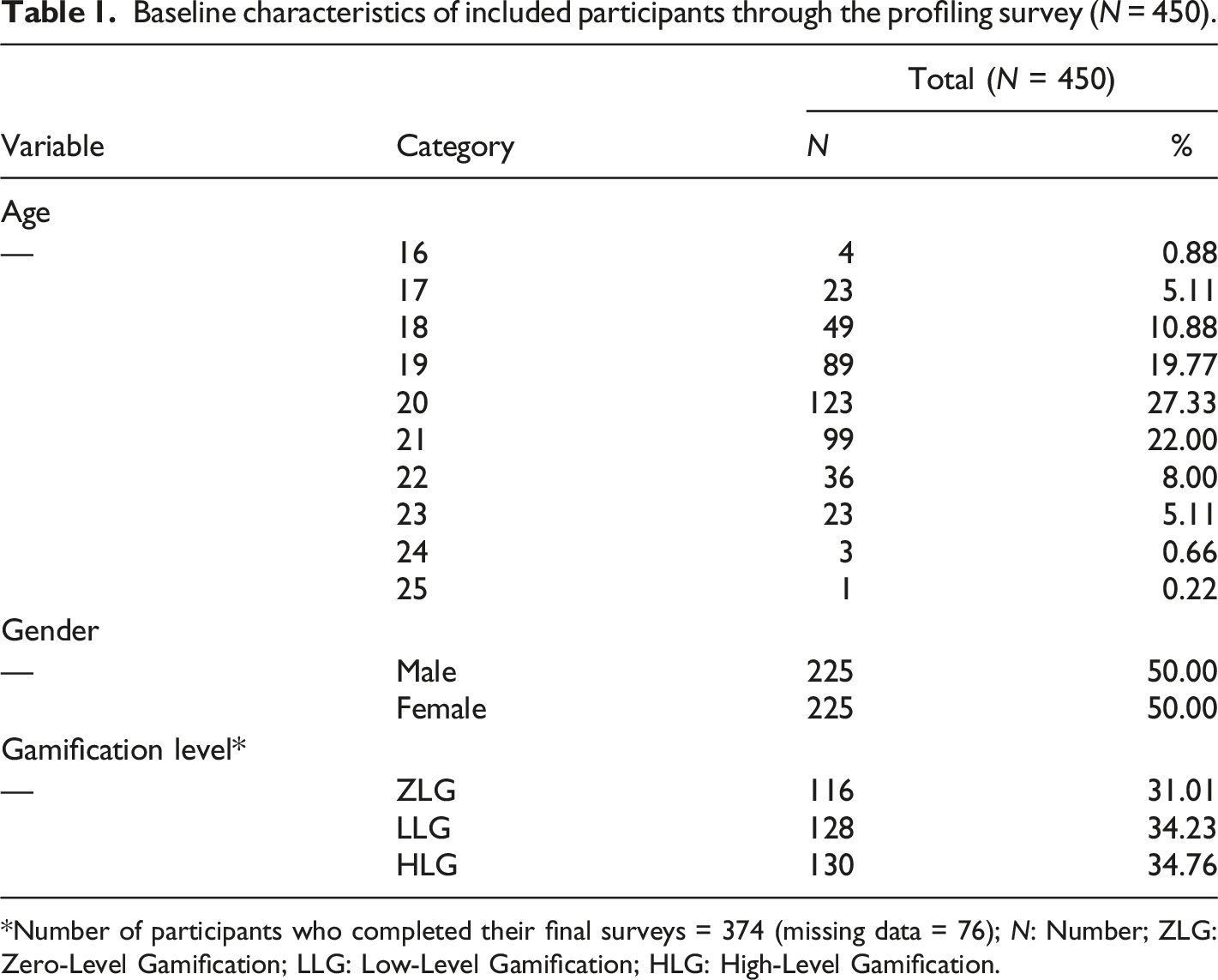
*Number of participants who completed their final surveys = 374 (missing data = 76); N: Number; ZLG: Zero-Level Gamification; LLG: Low-Level Gamification; HLG: High-Level Gamification.
Association between Gamification Level and Motivation, Engagement, and Performance Scores
Motivation, engagement, and performance scores based on gamification level.
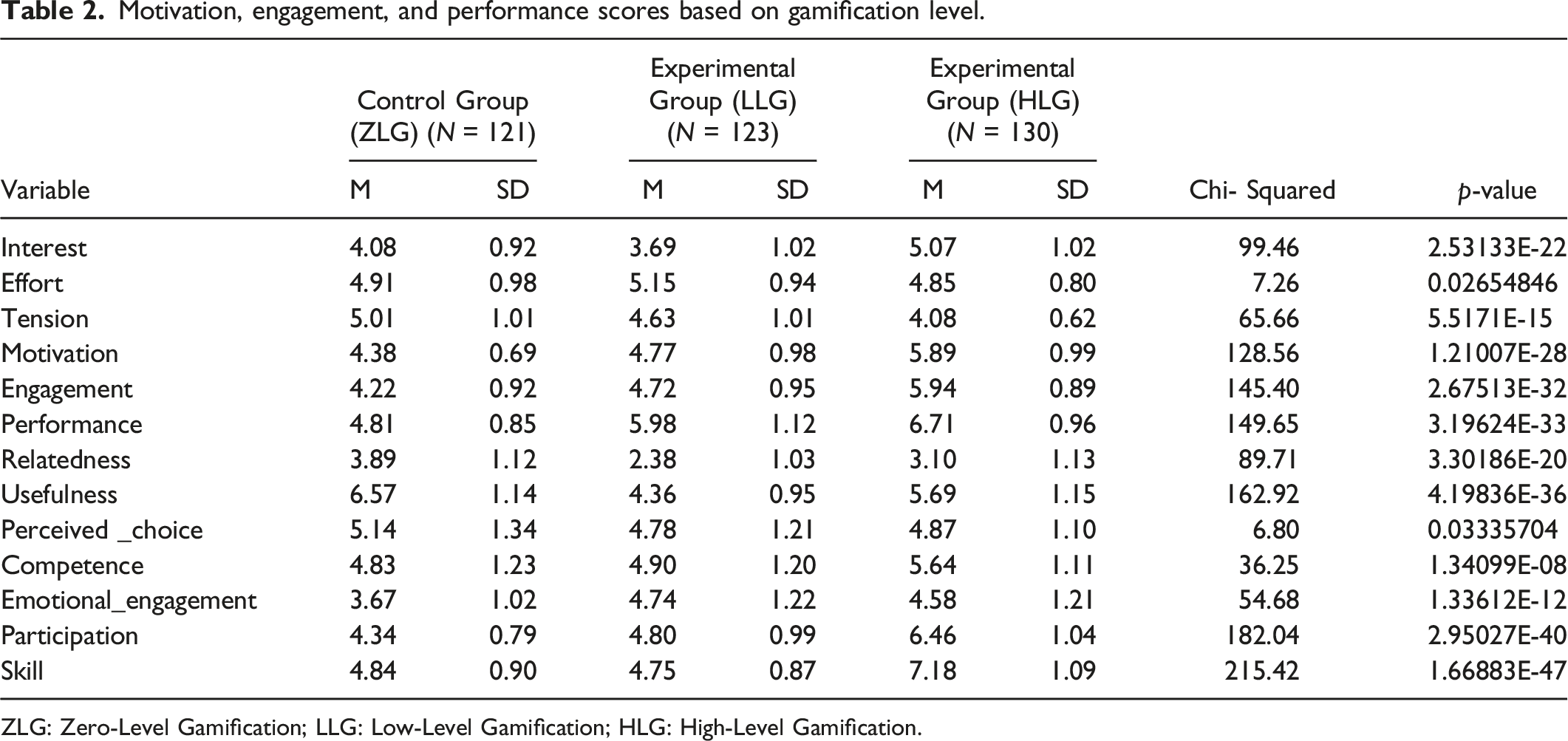
ZLG: Zero-Level Gamification; LLG: Low-Level Gamification; HLG: High-Level Gamification.
The changes in the scores of motivation, engagement, and performance over time (pre-course, mid-course, post-course) in different gamification groups (ZLG, LLG, HLG) are shown in Figure 6. The trend of motivation, engagement, and performance change over time in different gamification levels.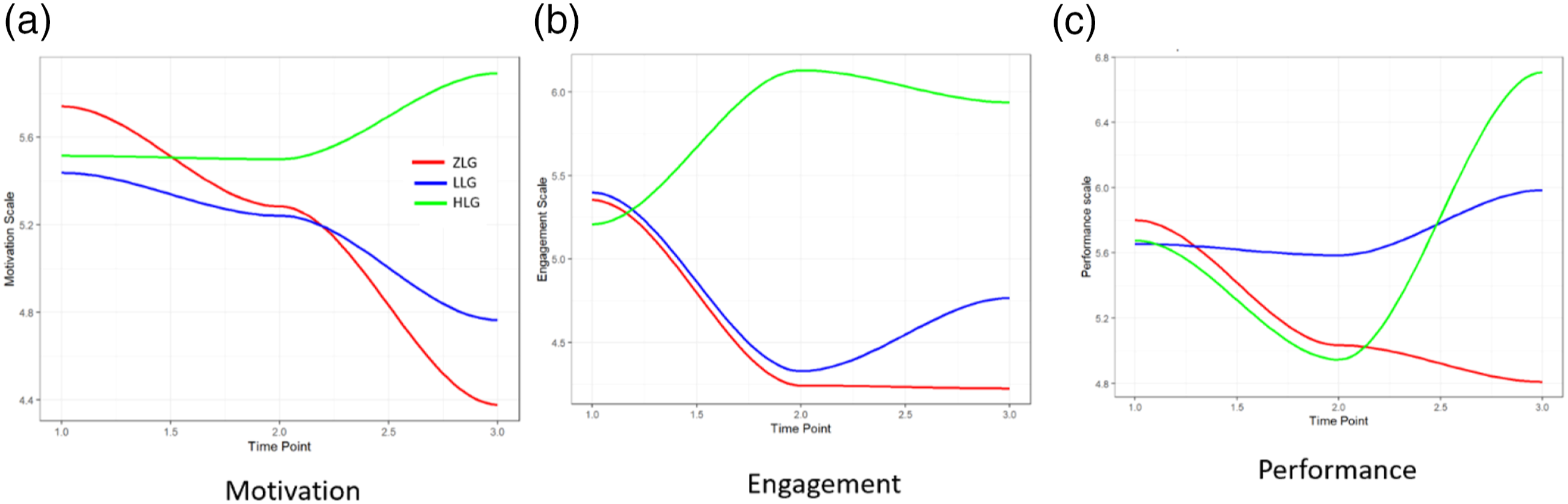
The main focus was on between-group differences regarding each of the three outcomes. In terms of motivation, no significant change between groups (ZLG vs. HLG) was noted at the first assessment time point (pre-course score); however, there was a significant trend of improved motivation over time in the following comparisons (HLG vs. ZLG; p = 9.471,186e-02) and (HLG vs. LLG; p = 513,592 e-16), respectively (Figure 7). The change in learners' motivation based on different gamification levels at (a) pre-course, (b) mid-course, and (c) post-course assessment points.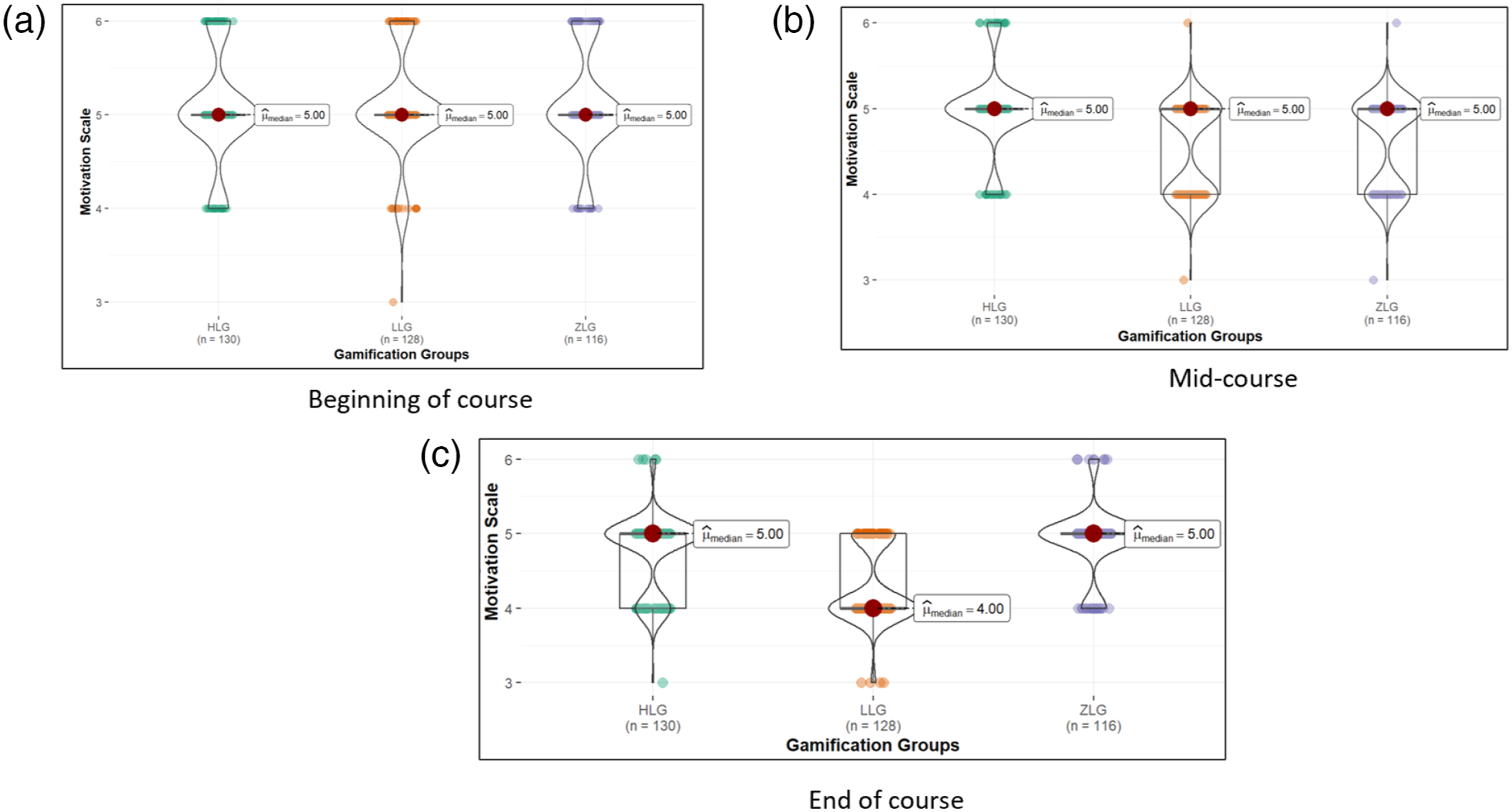
Of note, the number of badges significantly differed between LLG and HLG groups (p < 2.2e-16), and this could potentially lead to a change in the motivation score between both groups (Figure 8). The association between the number of badges and low-level and high-level gamification.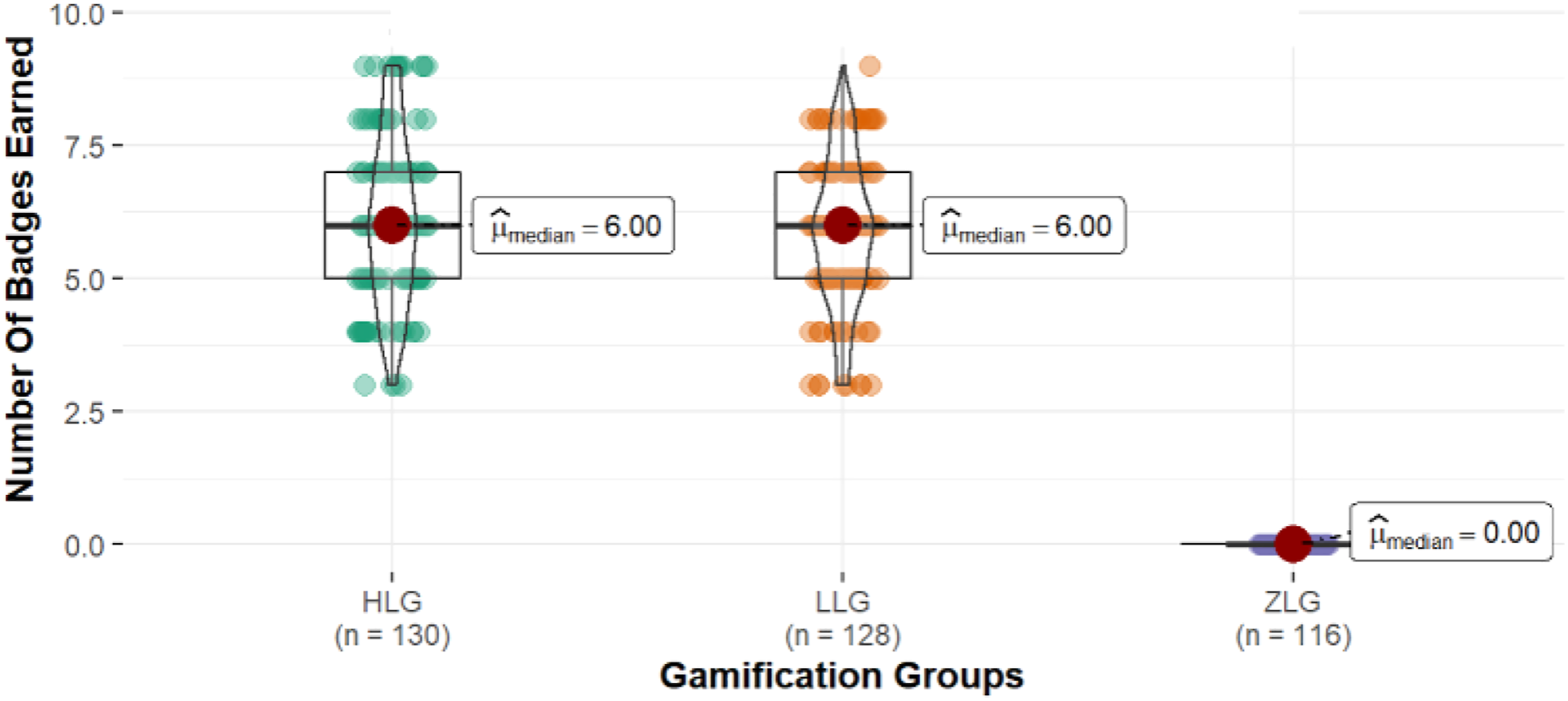
Regarding leaners' engagement, no significant change was noted between all groups at the pre-course assessment point (p = 0.62). However, at the post-course point, compared to the ZLG group, learners enrolled in the HLG group had significantly higher engagement scores (p = 0.0001); however, this was not true for the LLG group (p = 0.39) (Figure 9). The change in learners’ engagement based on different gamification levels at (a) mid-course and (b) post-course assessment points.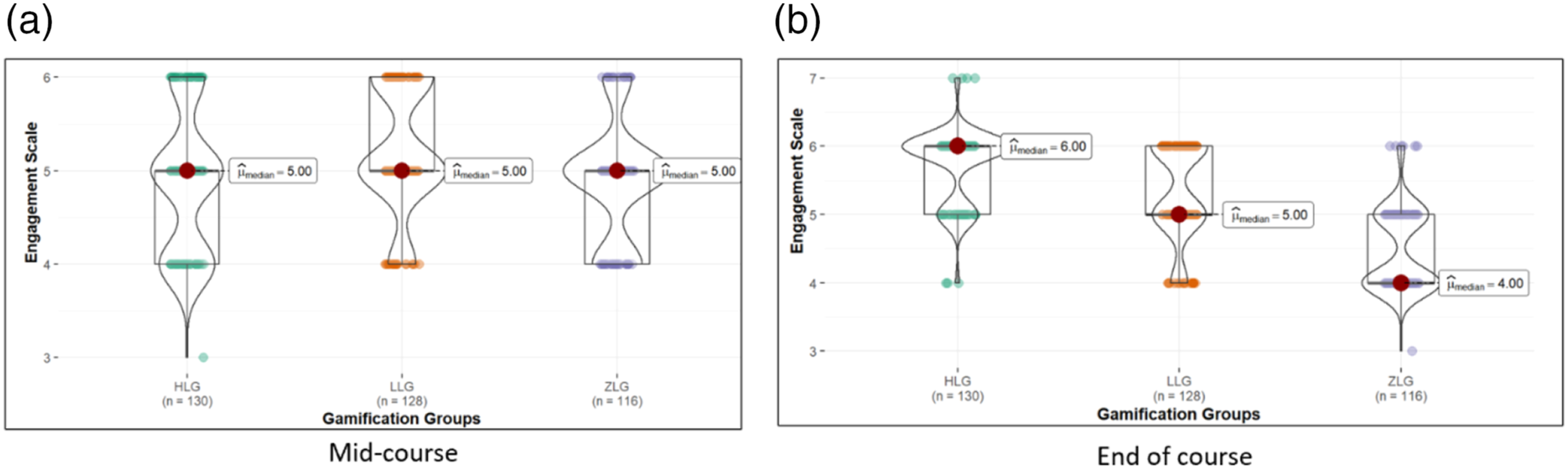
In terms of learners' performance, no significant difference between all groups was noted during the pre-course period. However, a significant change was noted between groups favouring the HLG group at the mid-course period. This observation was consistent during the post-course period as well for the following comparisons (HLG vs. LLG; p = 4.128,421e-07) and (HLG vs. ZLG; p = 1.555,180e-19) (Figure 10). The change in learners' performance based on different gamification levels at (a) mid-course and (b) post-course assessment points.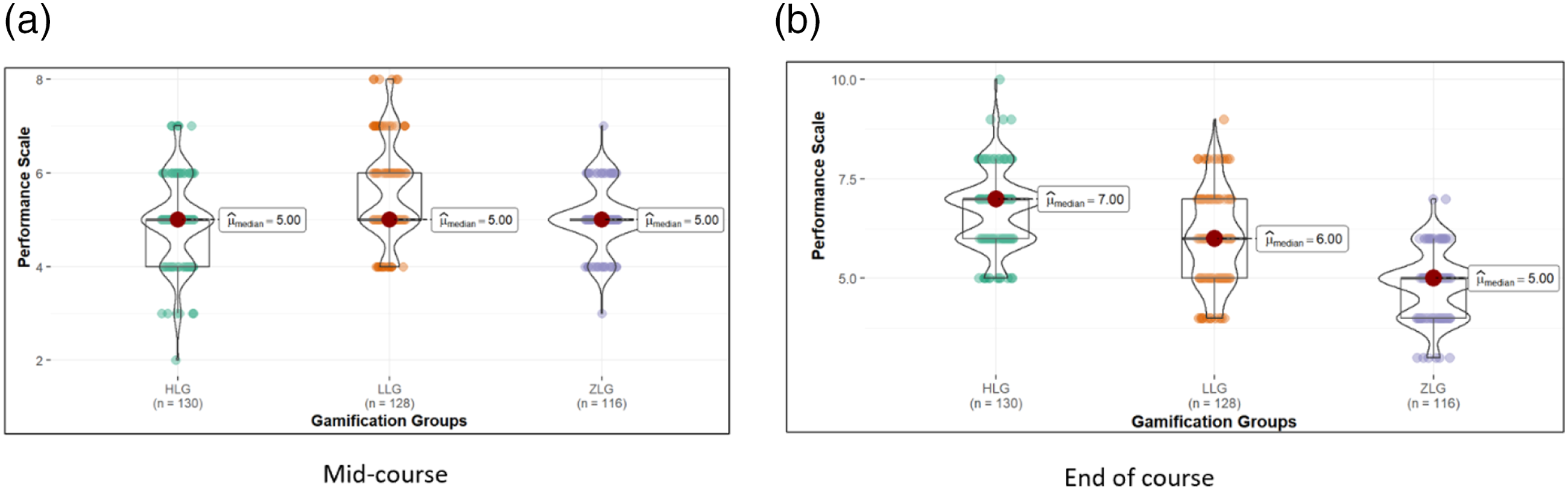
Correlation between Gamification Level and Motivation
Correlation between gamification level and motivation.
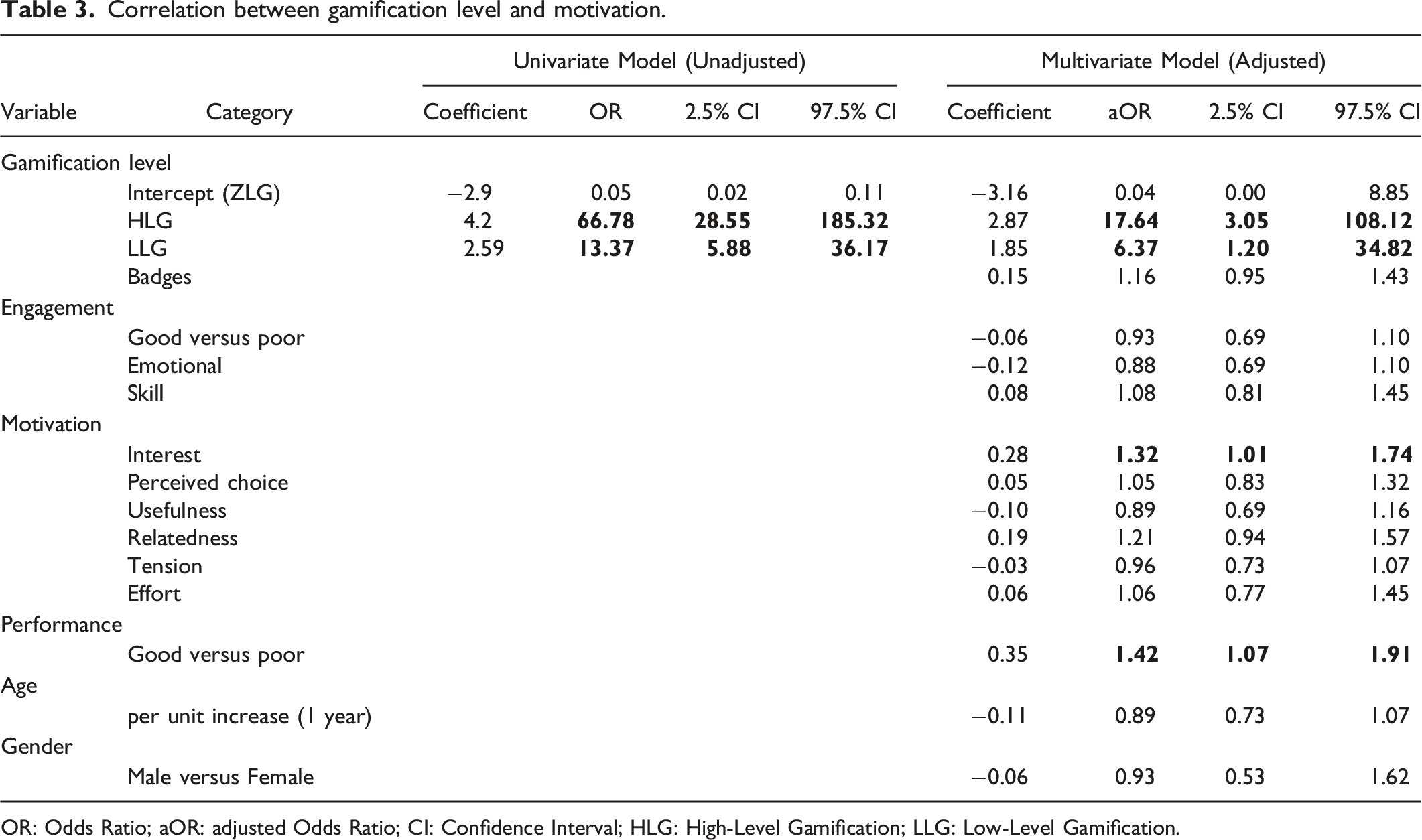
OR: Odds Ratio; aOR: adjusted Odds Ratio; CI: Confidence Interval; HLG: High-Level Gamification; LLG: Low-Level Gamification.
In the unadjusted model, compared to zero-level gamification, the odds of good motivation were significantly higher (OR = 66.78; 95% CI: 28.55–185.32). This remained true in the adjusted model after controlling for all measured confounders; however, the odds were lower than that of the unadjusted model (aOR = 17.64; 95% CI: 3.05–108.12). Engagement, age, and gender were insignificant predictors of good motivation. On the other hand, interest (aOR = 1.32; 95% CI: 1.01–1.74) and performance (aOR = 1.42; 95% CI: 1.07–1.91) were significantly correlated with motivation. However, these results were marginally significant.
Correlation between Gamification Level and Engagement
Correlation between gamification level and engagement.
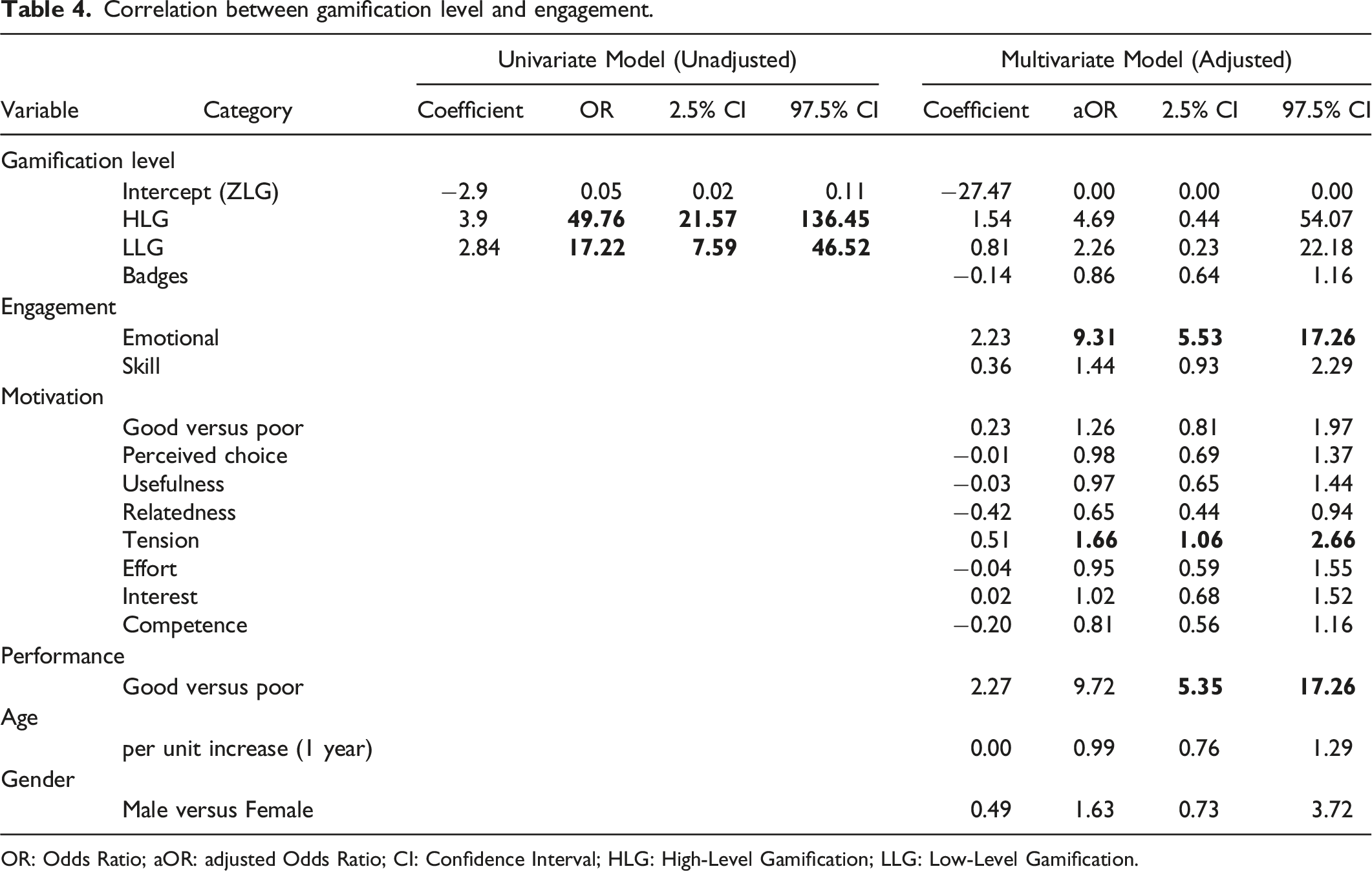
OR: Odds Ratio; aOR: adjusted Odds Ratio; CI: Confidence Interval; HLG: High-Level Gamification; LLG: Low-Level Gamification.
In the unadjusted model, compared to zero-level gamification, the odds of good engagement were significantly high (OR = 49.76; 95% CI: 21.57–136.35). Surprisingly, after adjusting for potential confounder, no significant correlation could be found (aOR = 4.69; 95% CI: 0.44–54.07). However, in terms of correlation with other predictors, performance (aOR = 9.72; 95% CI: 5.35–17.26) and tension (aOR = 1.66; 95% CI: 1.06–2.66) were significantly correlated with engagement, respectively.
Correlation between Gamification Level and Performance
Correlation between gamification level and performance.
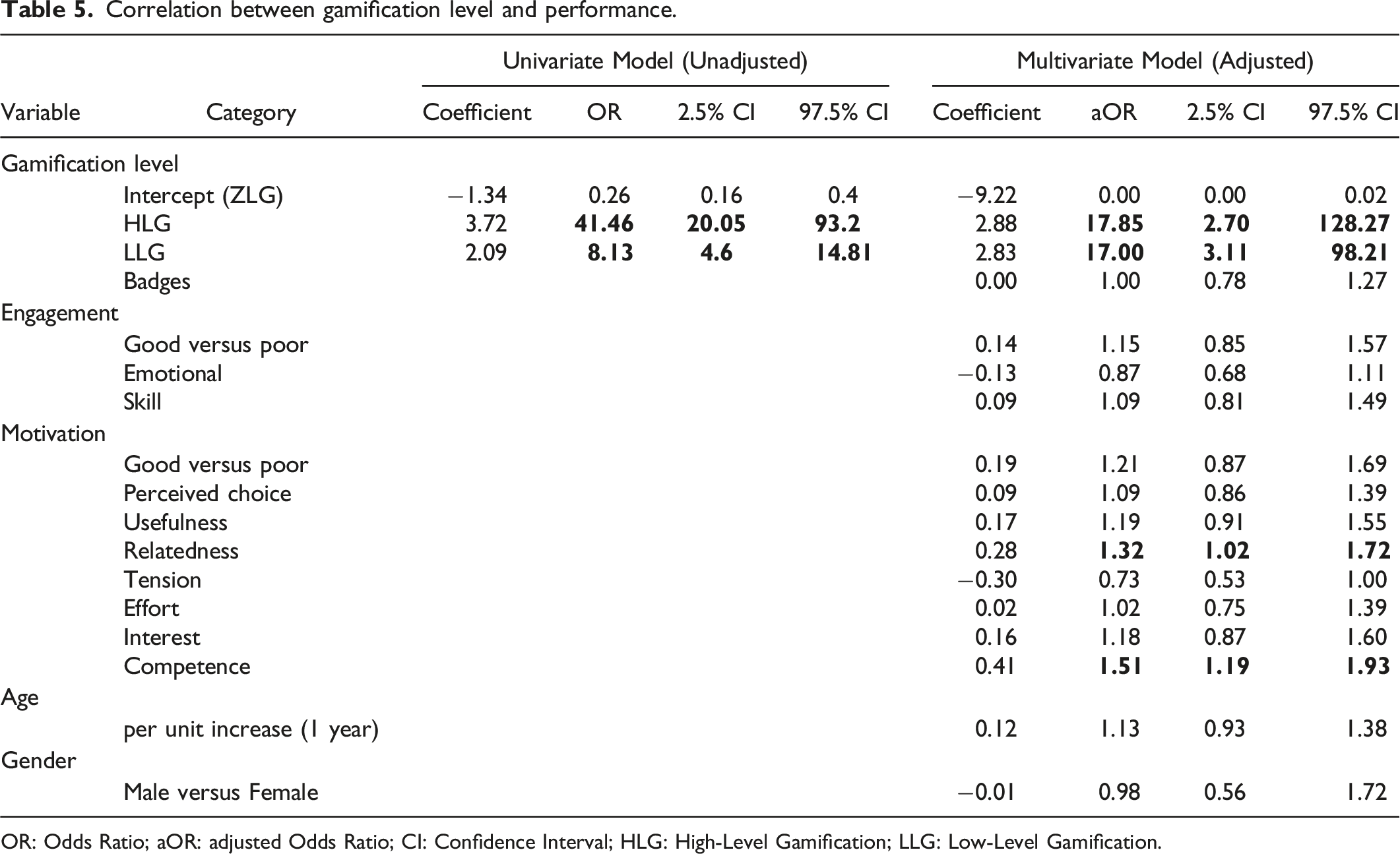
OR: Odds Ratio; aOR: adjusted Odds Ratio; CI: Confidence Interval; HLG: High-Level Gamification; LLG: Low-Level Gamification.
In the unadjusted model, compared to zero-level gamification, the odds of good performance were significantly higher (OR = 41.46; 95% CI: 20.05–93.20). This remained true in the adjusted model after controlling for all measured confounders; however, the odds were lower than that of the unadjusted model (aOR = 17.85; 95% CI: 2.70–128.27). Of note, relatedness (aOR = 1.32; 95% CI: 1.02–1.72) and competence (aOR = 1.51; 95% CI: 1.19–1.93) were the only two significant predictors of performance, respectively.
Discussion
Given the current pandemic situation and the increased need to develop and deploy online educational platforms and courses, the application of gamification activities and elements has increased. However, the major problem remains students' low participation rate, affecting the transfer of knowledge and effective education (Dhingra et al., 2021; Duggal et al., 2021). Most of the available gamification courses are poorly designed due to the sudden and increased need to shift from face-to-face environments into online platforms, which further affects how effectively these gamification courses can affect learners' motivation and engagement to improve the dissemination of knowledge. Therefore, this research is conducted to determine the change in learners' motivation, engagement, and performance over time (from pre-course to post-course) in different gamification environments and identify the significant predictors of effective/good motivation, engagement, and performance.
In this study, three different levels of gamification were included: zero-level, low-level (in the form of badges only), and high-level (many gamification elements). The results indicated a remarkable increase in motivation, engagement, and performance scores at mid-course and post-course levels compared to the other groups (LLG and ZLG). In both LLG and ZLG groups, motivation was noticed to drop overtime at all three assessment time points (pre-, mid-, and post-course). This aligns with the literature (Kyewski & Krämer, 2018). For engagement and performance, there was a constant drop in the score during the pre-and mid-course periods; however, these scores went back up during the post-course period, and still, they remained lower than that observed in the HLG group.
In an attempt to identify the correlation between gamification level and motivation, two regression models were designed (unadjusted and adjusted). Gamification was found to be a significant predictor of motivation in both the unadjusted and adjusted models; however, the probability of achieving good motivation in the HLG group was remarkably lower in the adjusted model after controlling for measured confounders. My findings are consistent with another study conducted among 48 engineering students taking a chemistry course to determine whether the additional gamification elements would change students' motivation (Chans & Portuguez Castro, 2021). The authors found that gamification was associated with improved students' motivation. However, this study adds more valid evidence given the higher sample size in this study. Surprisingly, performance was found to be a significant predictor of good motivation, which is logically sound because if a student’s performance is better, then, by default, his or her motivation would be better. However, important to say this finding was marginally significant. So, more investigations with larger sample sizes are still warranted to confirm this observation.
In terms of engagement, LLG and HLG groups were associated with a higher probability of gaining good engagement in the unadjusted model. However, after controlling other confounders, there was no significant correlation between gamification and engagement. This is inconsistent with the literature (Bouchrika et al., 2021; Chans & Portuguez Castro, 2021). That being said, this result should be carefully interpreted since the confidence interval was very wide-ranging, from 0.44 to 54.07. Both motivation and engagement concepts are close to one another, given their overlap in certain categories (i.e., intrinsic motivation and cognitive engagement) (Dörnyei & Ushioda, 2021; Guthrie et al., 2012). However, regardless of the presence of a profound connection between both terms, they can not be used interchangeably or indicate the presence or absence. Interestingly, motivation and performance were significant predictors of engagement, where an increase in either of these predictors would reflect a positive increase in the probability of achieving good engagement.
Gamification was significantly correlated with an increased probability of achieving higher/good performance than the ZLG group in terms of learners' performance. This was consistent in both the adjusted and unadjusted models; however, the probability of achieving better performance was lower in the adjusted model after controlling for measured confounders. Of interest, motivation (namely relatedness and competence components) was a significant predictor of achieving higher performance.
Gamification elements, particularly badges, are validated indicators of a certain accomplishment, skill achieved, or interest that can be earned in a wide variety of gamification or educational platforms. In educational fields, badges are used in gamified environments to accommodate students relating to their motivation (Abramovich et al., 2013) while recording students' achievements (Devedžić & Jovanović, 2015). There was a significant difference between LLG and HLG in terms of badges; however, it was not evident which group yielded higher badges. It was believed that this effect could be because learners could see the leaderboard and other learners' performance in the course. That could be a reason for a competitive feeling that motivates learners more in HLG. Finally, there was no significant correlation between badges and motivation, engagement, or performance in the regression model.
This study indicated no predictive role of both age and gender on motivation, engagement, or performance at different gamification levels. However, this should be cautioned since, in this study, the population included was only undergraduate students (16–25 years of age), limiting the generalizability of the finding. Also, the small sample size of the population could explain the lack of significant change in these outcomes based on different gamification levels. Therefore, future studies are recommended to put these points into consideration.
Implications and Future Directions
This study should draw educators' attention to enhancing pedagogy using gamification techniques, as gamification shows a significant increase in the gamified versions. Moreover, the educators could relatively enhance the gamified course design such that the degree of course difficulty does not stop the learner from further engagement who loses interest after earning a few badges. The gamification restrictions feature should go automatically hand in hand with the level of gamified difficulty (Domínguez et al., 2013). For academia, the revealed results show that more gamification tools may enhance pedagogy, which should increase the thrust of gamification tools for courses. Noteworthy, recent evidence suggests a role of the learner’s personality in correlating gamification and learning outcomes (i.e., motivation, engagement, and behaviour). Therefore, future research should investigate this point to confirm its role (Smiderle et al., 2020).
Limitations
To the best of my knowledge, this is the first thorough study to examine the association between different levels of gamified environments and learning outcomes such as motivation, engagement, and performance over three assessment time points. However, this study has several limitations. The evidence provided in this paper is not conclusive. It should be interpreted cautiously because although there was a significant association between gamification and motivation and performance, the 95% confidence interval was very wide-ranging from the value that is near the null value that indicates no practical implications to very high values. The significance of the observations of this analysis can be understood when seen in the light of contrasting inferences drawn in an earlier study (Abramovich et al., 2013). (Abramovich et al., 2013) infer that badge acquisition patterns differed across the learner’s knowledge profile. However, the result of this study shows a positive relationship between engagement, motivation, performance, and level of gamification. In this study, the results pointed out that engagement comprises different dimensions. Evaluating all of them would require a sizeable experimental base, spanning different courses, programs, and constructs across geographic and demographic diaspora over longer durations in a more controlled environment. Therefore, the additional factors that affect time engagement and motivation are considerations for future work.
Conclusion
This work aimed to explore whether incorporating different gamified elements in an online course helps in improving the engagement, motivation, and performance of learners. Based on the hypothesis, the results showed that the motivation, engagement, and performance scores change following the implementation of the gamified course (post-course period), with the highest scores in the high-level gamification environment. After controlling for confounders, the results also revealed that gamification level was a significant predictor of motivation and performance but not engagement. Finally, the results showed a co-correlation between different outcomes (motivation, engagement, and performance) after holding the gamification constant. The results indicate that the overall learning motivation and performance can be improved by embedding different levels of gamification in an online course learning environment. Educators seeking to increase student motivation and engagement through an empirically supported psychological theory like SDT may look to gamification as a potential pedagogical solution. Finally, it will be worth exploring the effectiveness of game dynamics, mechanics, and components for demographically diverse audiences.
Footnotes
Declaration of Conflicting Interests
The author(s) declared no potential conflicts of interest with respect to the research, authorship, and/or publication of this article.
Funding
The author(s) received no financial support for the research, authorship, and/or publication of this article.
