




Abstract
Underpinning the teaching of coding with Computational Thinking has proved relevant for diverse learners, particularly given the increasing demand in upskilling for today’s labour market. While literature on computing education is vast, it remains unexplored how existing CT conceptualisations relate to the learning opportunities needed for a meaningful application of coding in non-Computer Scientists’ lives and careers. In order to identify and organise the learning opportunities in the literature about CT, we conducted a configurative literature review of studies published on Web of Science, between 2006 and 2021. Our sample gathers 34 papers and was analysed on NVivo to find key themes. We were able to organise framings of CT and related learning opportunities into three dimensions: functional, collaborative, and critical and creative. These dimensions make visible learning opportunities that range from individual cognitive development to interdisciplinary working with others, and to active participation in a technologically evolving society. By comparing and contrasting frameworks, we identify and explain different perspectives on skills. Furthermore, the three-dimensional model can guide pedagogical design and practice in coding courses.
Introduction
The idea that more people should learn coding, programming or computing, as they are interchangeably used (Bocconi et al., 2016), has become a global mainstream discourse. In particular, higher education students in non-Computer Science (CS) fields, from social sciences to humanities, are being encouraged to learn coding so they can play a more effective role in solving today’s challenges (Burke et al., 2016; Grover & Pea, 2017; Popat & Starkey, 2019). Not only have many of these students missed being taught computing as part of their compulsory education (Lockwood & Mooney, 2018), but they are also about to enter a demanding job market in terms of “the skills they need to compete successfully in the global digital economy” (Davenport et al., 2019, p. 3). Coding is promoted as key to economic success due to the growth in emerging tech jobs and because it is essential for all jobs (Orlik, 2019). Alongside the employability rationale, it is also argued that a basic level of computing understanding is becoming ubiquitous in terms of interdisciplinary conversations (Chilana et al., 2015; Dawson et al., 2018). Traditional disciplines are being transformed by computation and new ones are emerging, such as digital humanities or computational social science (diSessa, 2018). Furthermore, there is a recognition of the need to support individuals to be not just problem solvers and programmers, but also thinkers and active citizens for a more inclusive society and democracy (Boyd & Crawford, 2011; Grover & Pea, 2017). From this perspective, learning code can also be a way to critique its usage (Dufva & Dufva, 2016).
A prevailing argument when introducing coding to diverse learners is, that this should not be limited to teaching a programming language, but should also include the development of wider skills (diSessa, 2018; Dufva & Dufva, 2016; Grover & Pea, 2017; Turner, 2019). As Grover and Pea (2017, p. 21) state, “teaching mathematics has moved towards thinking like a mathematician”, therefore teaching computing should also privilege Computational Thinking (CT). Although CT is a thought process independent of technology (Bocconi et al., 2016), and does not therefore need to be taught using a computer, research shows that introducing CT and teaching across disciplines, can make programming more appealing and accessible for non-CS learners (Dawson et al., 2018; Yadav et al., 2011). The idea of CT has its roots in Seymour Papert’s (1980) constructionist theory, in which programming was seen as a way of developing children’s problem-solving and analytical skills by making the abstract concrete. Over 20 years later, the notion of CT comprising higher order thinking skills transferable to other fields became widely disseminated when Jeannette Wing (2006) argued that CT develops essential skills “for everyone, everywhere.” Since then, CT has been explored extensively in the literature through a variety of approaches, conceptualisations and emerging terminologies. However, there remains a lack of consensus around definitions of CT (Grover & Pea, 2013; Israel et al., 2015; National Research Council, 2011), particularly about the learning opportunities it opens up for students from non-CS backgrounds who are introduced to coding. As multiple frameworks are being adopted, skills are being framed differently, leading to confusion about what students are learning and how this is being assessed. This paper therefore seeks to make visible and discuss the diversity of learning opportunities for students learning coding that are associated with different conceptualisations of CT across the literature by addressing the following research question: (RQ) What types of learning opportunities are revealed by systematically mapping the CT literature?
In this study, we have undertaken a configurative review of the literature and mapped the learning opportunities related to CT to create an organisational model. This model consists of three dimensions: (1) a functional dimension in which framings of CT focus on operational skills related to problem-solving (eg. decomposition, debugging); (2) a collaborative dimension which emphasises learning to participate and work with others in communities and interdisciplinary teams (eg. expressing, communication); and (3) a critical and creative dimension which focuses on learning to imagine possibilities and question the impact of coding in order to make informed and inclusive decisions in society (e.g., evaluation, empowerment).
The intention here is not to propose a new theoretical CT framework itself, but rather to identify and explain the crossovers and nuances between different conceptualisations and related learning opportunities. The main contribution of this paper therefore is to make visible the diversity of learning opportunities identified across the range of CT framings. The proposed model can help teachers and designers of coding courses in their pedagogical design, and will be of particular value for those seeking to meet the rising demand from students in non-CS fields (Camp et al., 2017; Dawson et al., 2018; Sax et al., 2017).
Configurative Review of the CT Literature
Criteria Followed in the Sample Selection.
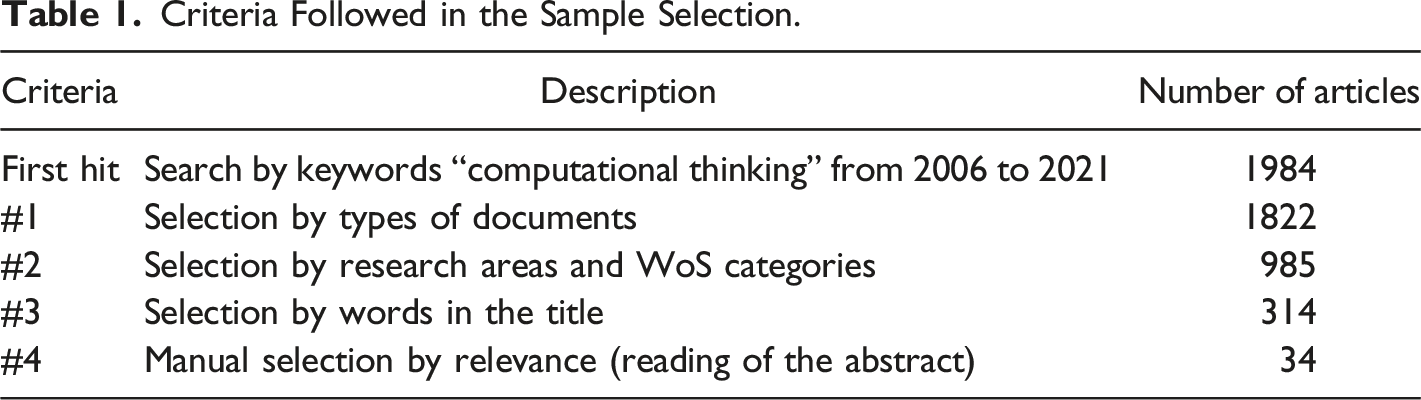
The first criterion consisted in filtering by types of documents. Since conference proceedings are relevant in this field, we chose to include them. Literature reviews are also significant to understand what has already been considered when conceptualising CT. Thus, research articles, proceedings papers and literature reviews were included while types of documents excluded encompass book reviews, letters, corrections, bibliographic items, book chapters and reprints.
For the second criterion we filtered the search by research areas and WoS categories. We included the following research areas: “Education Educational Research,” “Computer Science” and “Social Sciences Other Topics.” As for the WoS categories, we included articles within “Education Educational Research,” “Computer Science Theory Methods”, “Computer Science Interdisciplinary Applications” and “Social Sciences Interdisciplinary.” All remaining areas and WoS categories were excluded to ensure that articles collected came from an educational or an interdisciplinary research field. Despite filtering by subject, there were still articles crossing over with specialised areas, such as robotics or mathematics, leading to another round of filtering.
Since the database exported from WoS contained empty fields in the columns referring to “keywords” and “abstract,” we opted to refine the search by including and excluding specific words from the title of the article. By doing so, we ensured that the selected articles were closer to the aim of the current study. Therefore, we included in the title the words “computation” or “computational,” and excluded for instance any term related to robotics, mathematics, modelling, games, physics, biology and specific software or programming languages. After the third criterion, our sample was reduced to a total of N = 314 articles.
The final criterion involved three rounds of manual peer revision. This consisted firstly of three team members independently reading each of the 314 articles’ abstract and deciding to include or exclude them, according to their relevance to our study. Secondly, the team discussed and compared each member’s selection. There were no absolute disagreements about each selection but there were occasionally some differences of opinion. In these instances, it was agreed that each reviewer would revisit the full article. Thirdly, having all read the articles, joint decisions were made to agree on the final sample. Our priority was to include papers that would discuss definitions of CT and the range of related learning opportunities about the teaching of coding, regardless of the research methods employed in each paper. We therefore did not exclude any paper based on its research method. In this study, we draw from the labels ‘skills,’ ‘competencies,’ ‘components’ or ‘facets’ to describe the learning opportunities addressed by the authors. We included 34 articles (Appendix 1) consisting of: literature reviews on CT (mostly on CT definitions and related skills); cross-field definitions or new conceptualisations of CT; and conceptual and empirical studies about CT skills. We then excluded studies on pedagogic practices or CT applications, articles about STEM education, and empirical studies (practical implementations, assessments, evaluations, etc.). As a final stage, we looked at the references in our sample papers to ensure we did not miss important frameworks. The sample was then analysed using NVivo.
Sample Characterisation
As shown in Figure 1, literature about CT conceptualisations appears to have an exponential growth on the number of papers at least from 2014 to 2020. In our sample (N = 34), 47% of the papers are studies about primary and secondary education, 29% are about secondary education and 26% discuss CT in higher education. Number of papers in the sample from 2006 to 2021 (N = 34).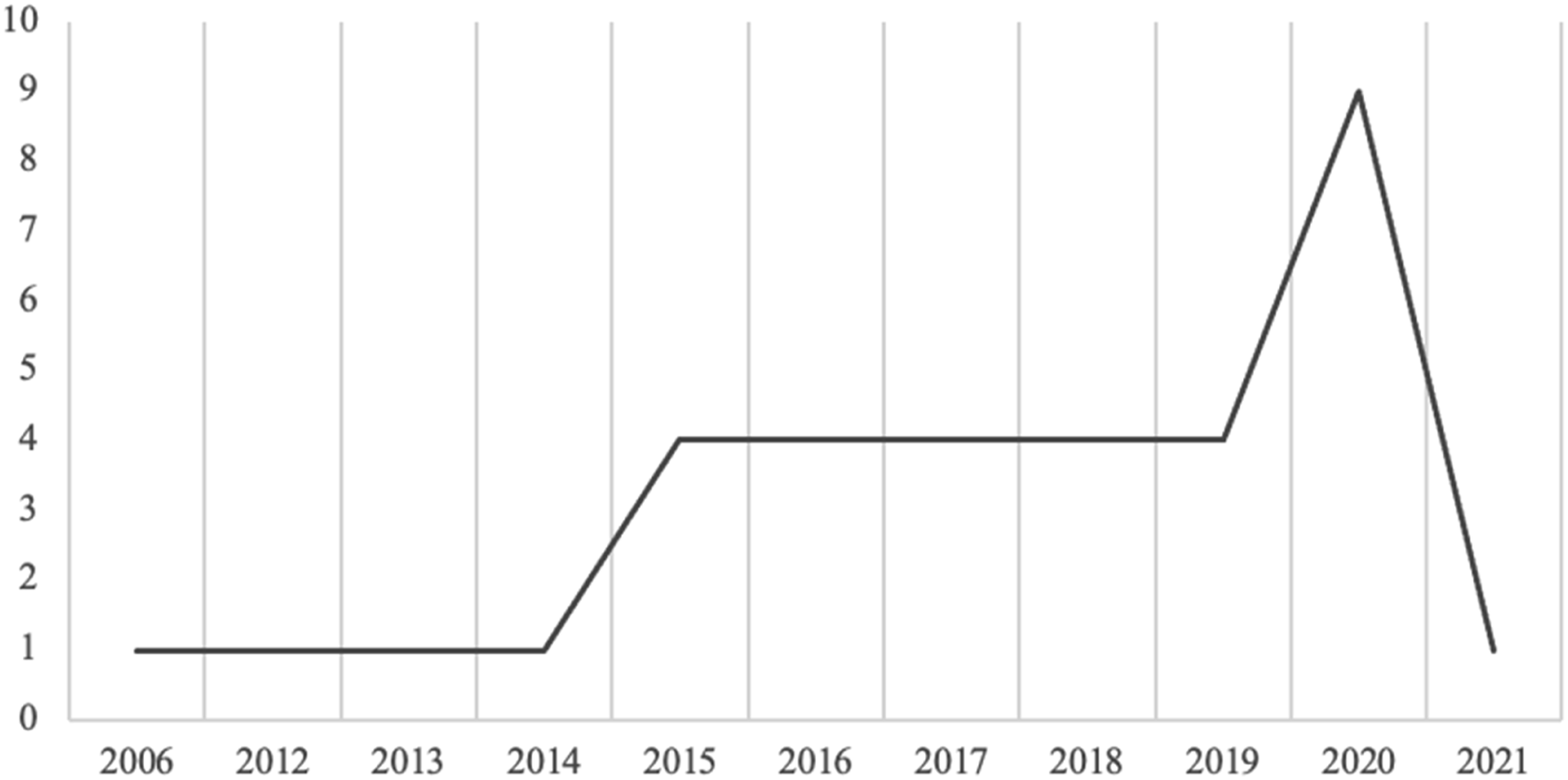
Studies derived mostly from North America, in particular from the US (n = 16; 47%), as observed in Figure 2. The second popular country is Turkey (n = 4) in Middle East, and only one study was found from the UK within European perspectives (n = 6). Frequency of papers across the world (N = 34).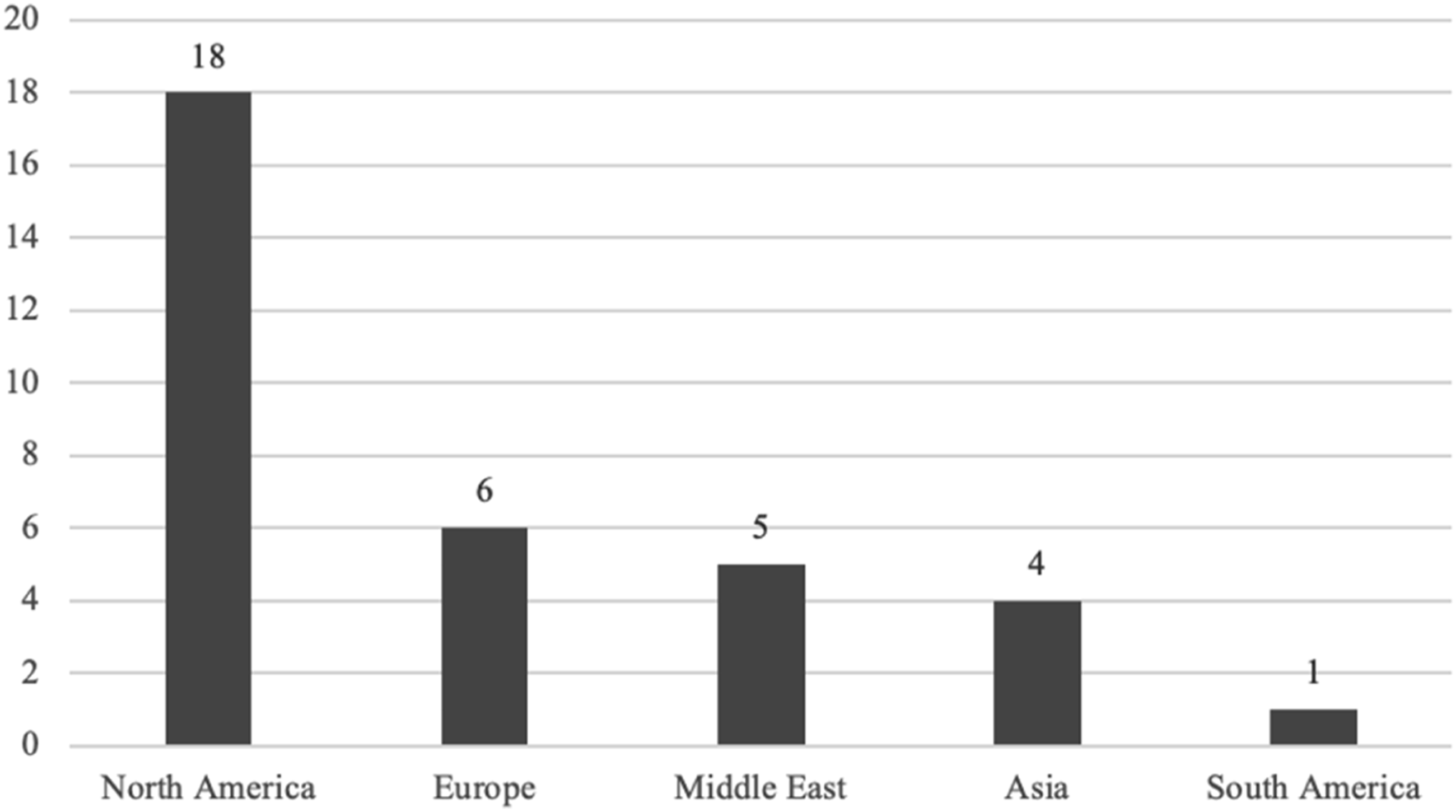
The papers in our sample allowed us to identify patterns related to CT conceptualisations and related learning opportunities which were then organised into three main key dimensions. A summary of the configurative literature review is displayed in Appendix 1, where we describe in detail the main contributions of each study, their conceptualisations of CT and related learning opportunities.
Key Dimensions in the CT Literature
To get an overview of the frameworks, terminologies, and crossovers around CT conceptualisations we classified the papers in four main types of study (Appendix 1): A – Creation of a new or alternative CT framework; B – Comparison between CT and other frameworks; C – Inclusion of CT in the context of a broader conceptualisation; D – Overview of definitions of CT identifying similarities and differences.
In type A, the authors propose an alternative CT framework, sometimes using new terminologies, such as computational participation (Kafai, 2016), computational empowerment (Iversen et al., 2018), or critical computational literacy (Lee & Soep, 2018). In type B, authors compare or combine CT with other frameworks or disciplines, such as Digital Literacy, Media and Information Literacy (MIL), or Problem Based Learning (PBL). In this type, authors commonly built on other frameworks, being among the popular ones, the Brennan and Resnick’s (2012) framework, which is composed of computational concepts, practices and perspectives. The framework of the International Society for Technology in Education (ISTE) and the curriculum of the Advanced Placement Computer Science Principles (CSP) were also central to some of the papers analysed. These two frameworks were included in our analysis because they were frequently cited in our sample papers. Therefore, we refer to them as important landmarks in the conceptualisation of CT. Thirdly, type C refers to papers in which CT is part of a broader conceptualisation such as the Danish framework of “Technological Understanding” (Caeli & Bundsgaard, 2020). Lastly, in type D, authors present an overview of key competences and definitions associated with CT, usually using systematic reviews of the literature. For example, Shute et al. (2017) reviewed 45 papers containing a diversity of definitions and models of CT in which they compile a range of CT ‘core facets’. Cutumisu et al. (2019) scoped 39 papers on CT assessment and identified the most commonly assessed skills or computational ‘concepts.’ Likewise, Hasesk and Ilic (2019) systematically reviewed the literature to identify the most assessed CT skills, which is useful in our study to get an overview of existing learning opportunities.
Finally, in order to identify the key main themes or dimensions that resulted in our three-dimensional organisational model, we looked at the learning opportunities revealed in each paper (based on labels such as ‘skills’, ‘competences’, ‘components’, ‘facets’) and went through a three-stage process. First, we scraped a list of the most frequent words related to skills from our sample on NVivo. Second, we refined this to a list of 16 discrete learning opportunities based on the skills mentioned in each paper. As observed in Figure 3, “problem solving” appears across all papers in our sample (N = 34), followed by “algorithmic thinking” and “creative thinking”. At the bottom of the list, the least mention learning opportunities are “empowerment,” “questioning”, and “community participation.” Top 16 most frequent learning opportunities identified in the sample (N = 34).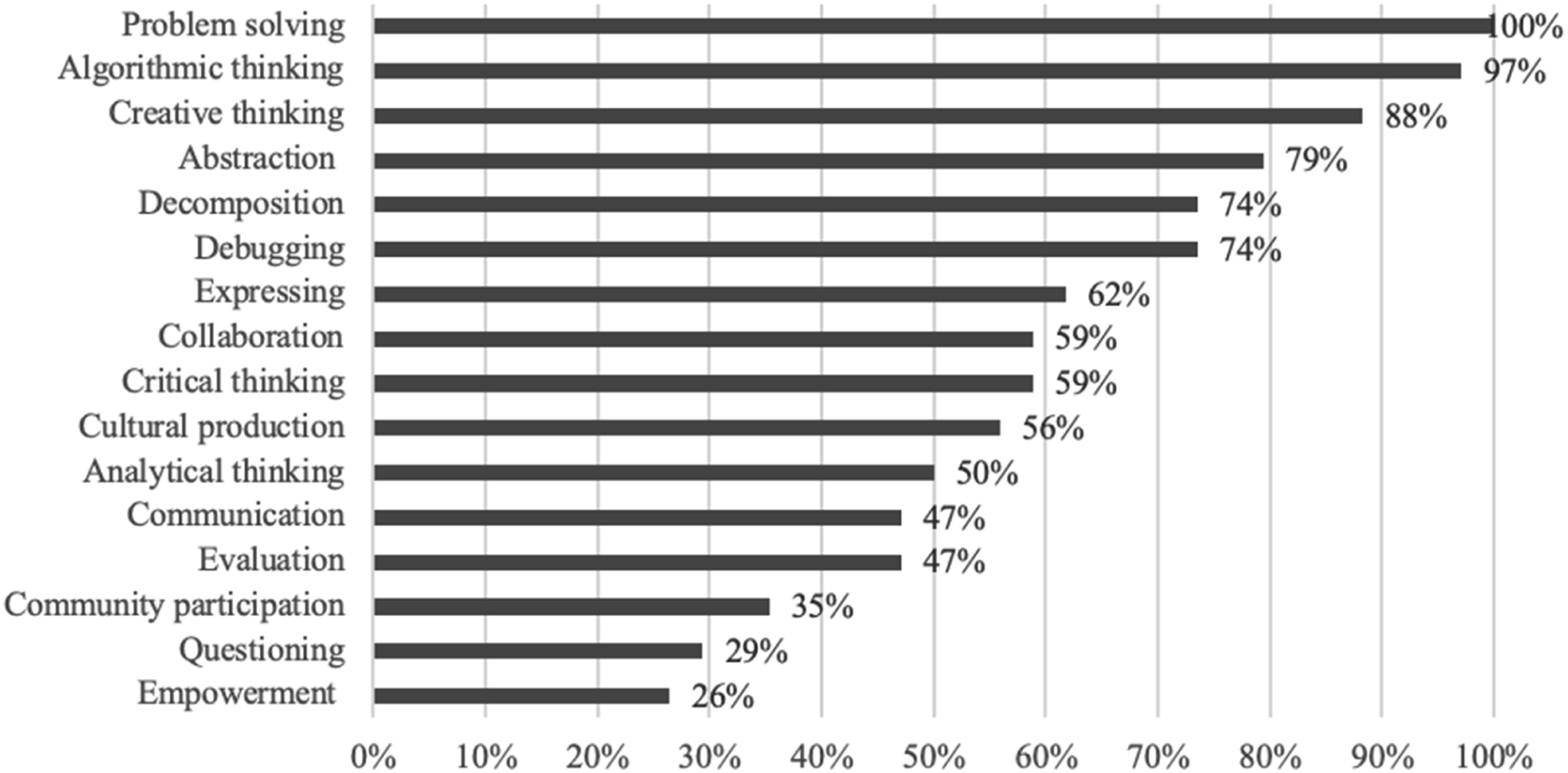
We then conducted a thematic analysis arriving at three overarching dimensions that best described the range of learning opportunities found in the different framings of CT: functional, collaborative, and critical and creative. The label functional was chosen to encompass ways of approaching CT that focus on fostering operational or ‘required’ skills so one can ‘function’ 2 in a changing society and future workforce (Dufva & Dufva, 2016). This focus describes specific cognitive processes involved in problem formulation and solving (Cuny et al., 2010; Shute et al., 2017) and is echoed in many institutional discourses with an economic-driven rationale for the teaching of coding (Williamson, 2016). We chose the label collaborative as it acknowledges coding as a social practice at different scales: both at a micro level of the classroom and macro level of community of practice (diSessa, 2001; Dufva & Dufva, 2016; Iversen et al., 2018; Turner, 2019). The label critical and creative was informed by MIL frameworks which emphasise the dynamic between critical and creative thinking skills in supporting citizens to engage in a digital world (Gretter & Yadav, 2016; Iversen et al., 2018; Kafai et al., 2019; Knochel & Patton, 2015; Lee & Soep, 2018). The following headings describe in detail the learning opportunities we associate with each dimension based on different framings of CT found in the literature. At the end of each section, we summarise the main CT conceptualisations and the learning opportunities drawn from the work of other scholars.
Findings
Functional Dimension
CT and the Functional Dimension.
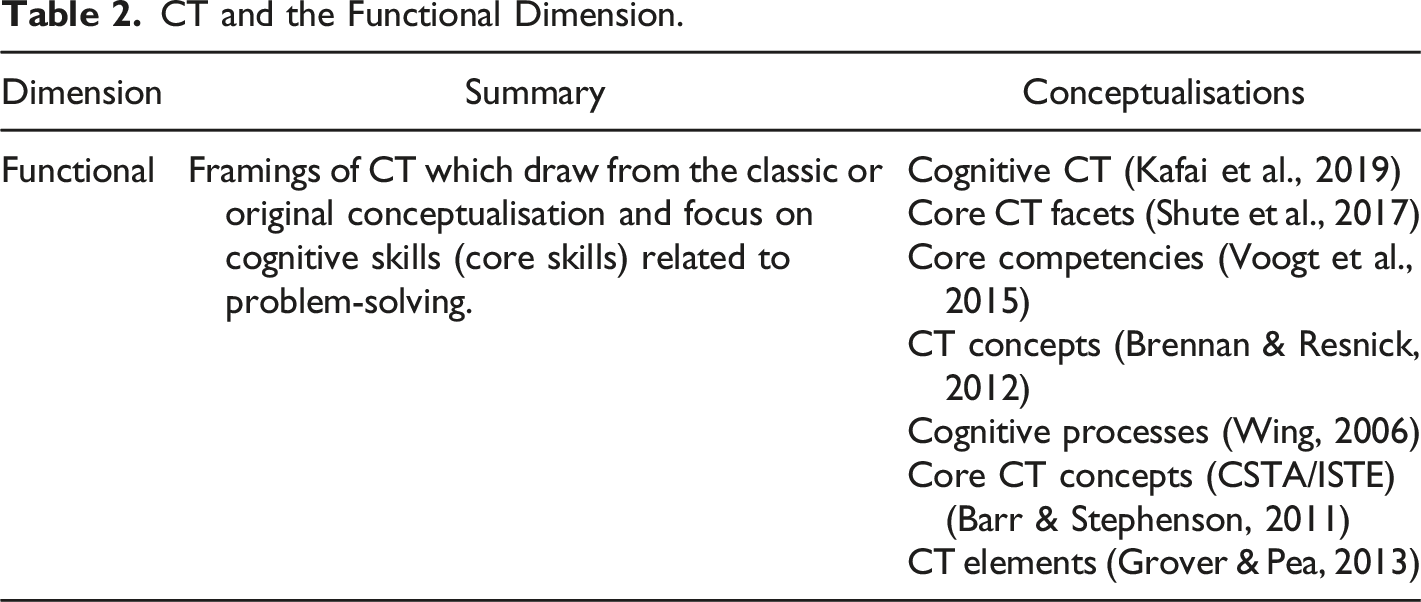
In this dimension, CT is related to operational problem-solving with computers, using mathematical and engineering thinking as a foundation (Shute et al., 2017). Studies about CT, including all papers in our sample, start with the conceptual understanding first described by Wing (2006), which involves five main cognitive processes: problem reformulation, recursion, problem decomposition, abstraction and systematic testing. This makes it the dominant framing of CT focussing on key learning opportunities regarding individual cognitive processes for problem-solving (Kafai et al., 2019). However, there remains debate across our sample around what the ‘core skills’ are. In a review of the CT literature, Shute et al. (2017) summarise these as the ‘core CT facets’: decomposition, abstraction, algorithms and debugging, iteration and generalisation. Through their model, the authors emphasise the importance of approaching problems in a systematic way: by breaking down a complex problem into smaller parts (problem decomposition); through iterative debugging; by finding patterns and generalise solutions (abstraction/pattern generalisation); and through algorithm design for solving problems (Shute et al., 2017).
Whilst there is much crossover between the key or core skills identified, there are also nuances regarding the specific cognitive skills identified as being stages in this process and in the terms used to describe a similar skill. In addition, the number of these core components fluctuates depending on the framework. Nonetheless, these cognitive processes translate into valuable learning opportunities that usually comprise analytical reasoning for problem decomposition, algorithmic thinking, abstraction, and automation (Yadav et al., 2016). One mainstream CT framework acknowledged by several authors in our sample is the Computer Science Teachers Association (CSTA) and International Society for Technology in Education (ISTE), in which Barr and Stephenson (2011) list nine ‘core CT concepts’: data collection, data analysis, data representation, problem decomposition, abstraction, algorithms and procedures, automation, parallelisation, and simulation. Drawing from the ISTE and Wing’s definitions, Grover and Pea (2013) also summarise nine widely accepted CT elements for secondary education: abstractions and pattern generalisations; systematic processing of information; symbol systems and representations; algorithmic notions of flow of control; structured problem decomposition; iterative, recursive, and parallel thinking; conditional logic; efficiency and performance constraints; and debugging and systematic error detection.
Another popular model revealed in our sample is the Brennan and Resnick’s (2012) CT framework, in which CT core components are described as computational ‘concepts’, i.e., the concepts designers engage with as they program, such as iteration, parallelism, etc. For instance, in a scoping review, Cutumisu et al. (2019) found that most studies focus on interventions that promote CT concepts and practices that mainly assess algorithmic thinking, abstraction, problem decomposition, and logical thinking. Also in Hasesk and Ilic’s (2019) literature review, abstraction, algorithmic thinking, decomposition and sequence of steps were the most assessed CT skills.
Overall, in the functional dimension, CT is often described in terms of problem formulation and solution through cognitive processes (Taslibeyaz et al., 2020). In some articles in our sample, however, CT is not just related to cognitive skills, but focusses also in more general thinking and in the “habits and dispositions needed to solve complex problems” (Voogt et al., 2015, p. 720). Using Bloom’s taxonomy, Tang et al. (2020a), for example, conducted a literature review to classify the most common keywords associated with CT in terms of cognitive, affective and psychomotor domains. In the cognitive domain, the authors consider some of the core skills, such as problem-solving, abstraction and decomposition, but also include a mix of general thinking skills such as reasoning, reflection, metacognition, and evaluation (Tang et al., 2020a). Attitudes and affective dispositions are used in other framings of CT as complements to the cognitive domain of CT (Sondakh et al., 2020; Tang et al., 2020a, 2020b). Although attitudes can impact students’ engagement with learning, it is difficult to distinguish specific learning opportunities offered in the context of CT (Velázquez-Iturbide, 2018).
To some extent, the skills revealed in the functional dimension describe the granular level of deconstructing the problem-solving process which translates into vital cognitive learning opportunities for students who are introduced to coding.
Collaborative Dimension
CT and the Collaborative Dimension.
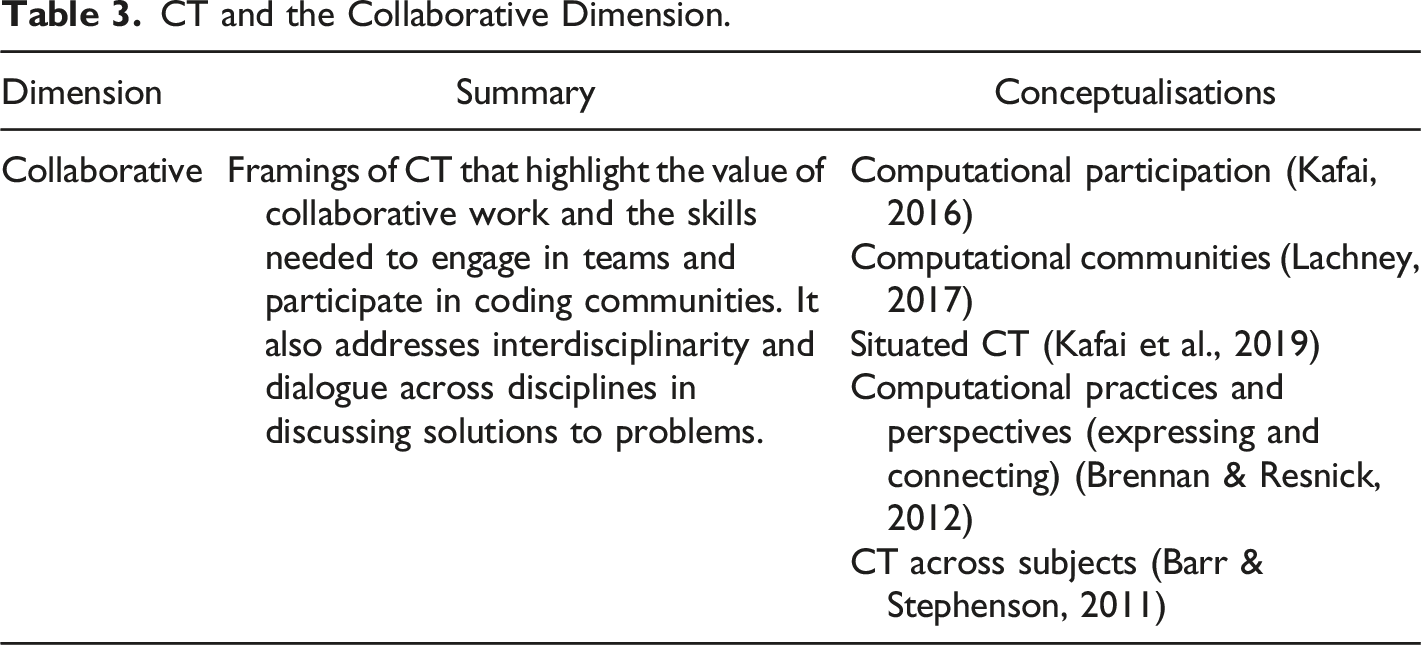
The collaborative dimension encompasses what Kafai (2016) conceptualised as computational participation and then incorporated in the situated framing of CT (Kafai et al., 2019). This draws from constructionist learning theories and focuses on building meaningful social relationships through coding as an alternative proposition to the cognitive framing (Kafai et al., 2019). Coding is therefore seen as a collective process that is developed through peer-supported activities and sharing digital artifacts in online or offline collaborative spaces, such as hackathons, coding clubs or GitHub. For the authors, whereas the cognitive framing of CT uses an algorithmic lens towards problem-solving, computational participation extends the thinking beyond the individual to integrate social networks and digital tools in a networked society (Kafai, 2016; Kafai et al., 2019). Using collaborative online spaces, leveraging existing resources or remixing others’ work are also what Brennan and Resnick (2012) refer to as computational practices. But in order to take part in these practices, there needs to be an awareness of the skills needed to engage in collaborative work.
Across the literature in our sample various authors include skills related to learning coding in a team as part of their definition of CT. For example, the ISTE framework states that in addition to being able to break problems down together into smaller parts (decomposition) and to simplify concrete into general solutions (abstraction), learners should be able to negotiate within a team the merging of parts of the solution into the whole (negotiation), as well as, building group solidarity behind one idea or solution (consensus building) (Barr & Stephenson, 2011). Drawing on the ISTE framework, Korkmaz et al. (2017) include cooperative learning, which they define as working in small groups towards a common goal, as one of five important dimensions in their CT assessment scale. They also highlight communication as a foundational competence, not only for cooperative learning, but also for problem-solving and critical thinking (Korkmaz et al., 2017).
In Brennan and Resnick’s computational perspectives, computation is seen as medium of communication or as means of expressing (pointing, clicking, browsing, and chatting), sharing things or connecting with others in the digital world. Developing relationships with others is articulated in Brennan and Resnick’s CT framework as a way to learn “the value of creating with others, and the value of creating for others” (2012, p. 10), fostering both inclusive collaborative work and community engagement through the creation of digital artefacts. Using Brennan and Resnick’s perspectives in the conceptualisation of programming empowerment, Kong et al. (2018) found that primary school students with positive attitudes towards collaboration had greater creative self-efficacy. Also building on computational perspectives, Pinkard et al. (2020) explored how students shifted their perceptions of CT through knowledge and experience, such as project work. The authors found that teamwork and building community (computational participation) offered students new computational perceptions about themselves (computational identity) and the domain.
The conceptualisations of CT mapped to the collaborative dimension are also informed by an understanding that an interdisciplinary and inclusive approach is needed for solving some of the world’s wicked problems from social inequities to climate breakdown. As Kafai et al. (2019, p. 104) argue, “fostering personal connections alone is no guarantee for inclusion.” From this perspective having a basic understanding of coding and its vocabulary is important not only for those wanting to programme computers themselves, but also as a communication skill for those wanting to engage in conversations with programmers, work in interdisciplinary teams or learn from other how computational thinking might be applied to their own studies or problems. These definitions recognise the need for CT to be in dialogue with contextual cultural and subject-based knowledge. For Lachney (2017), allowing students to explore aspects of their culture with coding provides not only opportunities for understanding CT vocabulary and concepts, but also for reflecting on their own cultural capital and heritage. A key aspect of CT in this context is being able to create diverse entry points for others in order to broaden participation in computational communities (Lachney, 2017). CT therefore should include interdisciplinary collaboration to incorporate discussion of relatable content and real-life applications (Tran, 2019) across different subjects (Barr & Stephenson, 2011).
The collaborative dimension overall emphasises that not only social and interpersonal skills are important, but also interdisciplinary communication and being pro-actively inclusive should be considered as fundamental learning opportunities within conceptualisations of CT.
Critical and Creative
CT and the Critical and Creative Dimension.
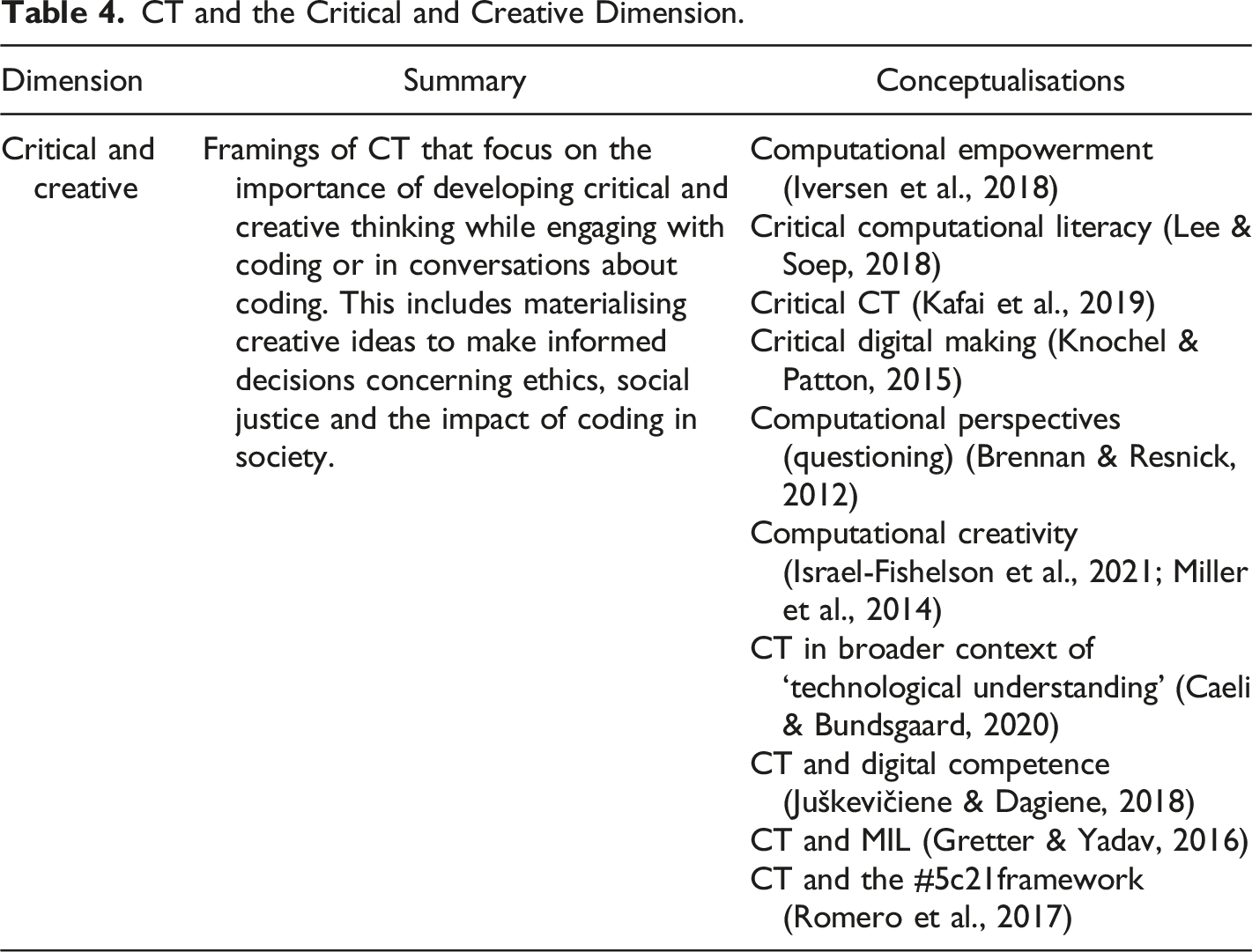
This dimension supports the idea that CT is not just about promoting individuals to be problem-solvers and interdisciplinary programmers, but to be creative thinkers and informed citizens for an inclusive society with technology (Iversen et al., 2018; Kafai et al., 2019; Lee & Soep, 2018). This has allowed some authors to find crossovers between CT and, for instance, UNESCO’s MIL framework (Gretter & Yadav, 2016) or other approaches to digital literacy (Juškevičiene & Dagiene, 2018). The dynamic between creative and critical thinking is well described in Knochel and Patton’s (2015) study where they highlight the value of engaging in computational thinking by playfully creating computer code as both an art medium and as an opportunity to critically think about the ways digital media impacts society. Throughout our sample we have identified different definitions of creativity and critical thinking leading to a range of understandings of how they combine with computational thinking.
Creativity is described in our sample as both an innovative way of approaching problem-solving and as a form of expression through the creation of artefacts (Brennan & Resnick, 2012). One way of conceptualising the merging of CT and creative thinking is through computational creativity: the idea that the more creative students are, the less time and effort it takes them to solve problems (Israel-Fishelson et al., 2021). Drawing from Epstein’s Generativity Theory, Miller et al. (2014) identify four components of computational creativity: broadening knowledge, challenging established thinking, surrounding oneself with stimulus and capturing novelty. Nurturing these ways of thinking allows one to break through the wall of predetermined thoughts and apply concrete and innovative ideas to solve problems (Miller et al., 2014). For Korkmaz et al. (2017), creativity is about introducing new relations and combinations by looking at problems or events from different perspectives in order to find alternative solutions. As much CT is grounded in solution-seeking, for Michaelson (2015) is also about ensuring that equal weight is given to concrete information structures in real world problem scenarios. Overall, it is consensual in these studies that creativity should become more visible, but assessing creativity can be complex (Romero et al., 2017).
In terms of what critical thinking actually means in the context of CT, some papers define it as a methodological way of evaluating and making decisions in problem-solving (Berikan & Özdemir, 2020; Brennan & Resnick, 2012; Korkmaz et al., 2017; Voskoglou & Buckley, 2012). The latter is, for instance, described in Brennan and Resnick’s (2012) computational perspectives (perceptions about individuals and the world around them), when the authors refer to the ability of questioning the taken-for-granted. The relationship of critical thinking and questioning is aligned with the analytical way of making conscious judgements, as described by the American Psychology Association (APA). Following this rationale, Korkmaz et al. (2017) define critical thinking in CT as the use of different methods to solve problems by effectively questioning one’s decisions through evidence based proofs.
Critical thinking is also framed in a broader context of having a technological understanding of coding in society (Caeli & Bundsgaard, 2020; Juškevičiene & Dagiene, 2018), for instance, in the fostering of a responsible use of technologies by understanding the impact of computing in society that involves ethical issues and privacy concerns (Juškevičiene & Dagiene, 2018). Terminologies such as critical computational thinking (Kafai et al., 2019) or critical computational literacy (Lee & Soep, 2018) bring creativity and critical thinking together by emphasising both an understanding of power structures and production-oriented media literacy in order to develop culturally meaningful applications that have impact in the real world. Through this critical pedagogy approach, CT is seen as a way of engaging with the political, moral and ethical challenges of the world with concerns about social discrimination, such as racism or sexism (Kafai et al., 2019). It therefore places a deeper understanding of technology that goes beyond teaching the technical know-how, to value and nurture educational practices that centre on underrepresented societal minorities for inclusive participation in society (Lee & Soep, 2018). In line with this approach lies computational empowerment (CE) (Iversen et al., 2018), which argues that classic definitions of CT lack a critical and reflective stance towards a digitalized society. CE focuses on contextualisation and societal challenges, developing skills to engage diverse students for creative and critical participation with technology in society.
Critical and creative thinking are also highlighted in discourses about the 21st century skills as, for instance, in the #5c21 framework, in which Romero et al. (2017) propose an integrated approach to CT, with critical thought as the basis of all other 21st century skills (creativity, CT, problem-solving, and collaboration). Likewise, for Buitrago-Flórez et al. (2020), the 4Cs of 21st century skills (creativity, critical thinking, collaboration and communication) are crucial in the context of CT. Attempting to map these 21st century skills (creativity, critical thinking, and problem-solving) onto Brennan and Resnick’s (2012) framework, Wong and Cheung (2020) found that CT interventions did enhance these skills, but caution is needed in assuming their ‘transferability’ to other domains. Overall, the critical and creative dimension highlights fundamental learning opportunities for an informed and inclusive engagement with coding in society.
Discussion
This review of the literature set out to find what types of learning opportunities are revealed by a systematic mapping of the literature around CT conceptualisations. Our intention is not to build a framework nor give an ultimate definition of CT, but rather “try to find similarities and relationships in the discussions about CT” (Voogt et al., 2015, p. 726) in order to enable more coherent pedagogical approaches overall.
Learning Opportunities Identified in the Configurative Literature Review.
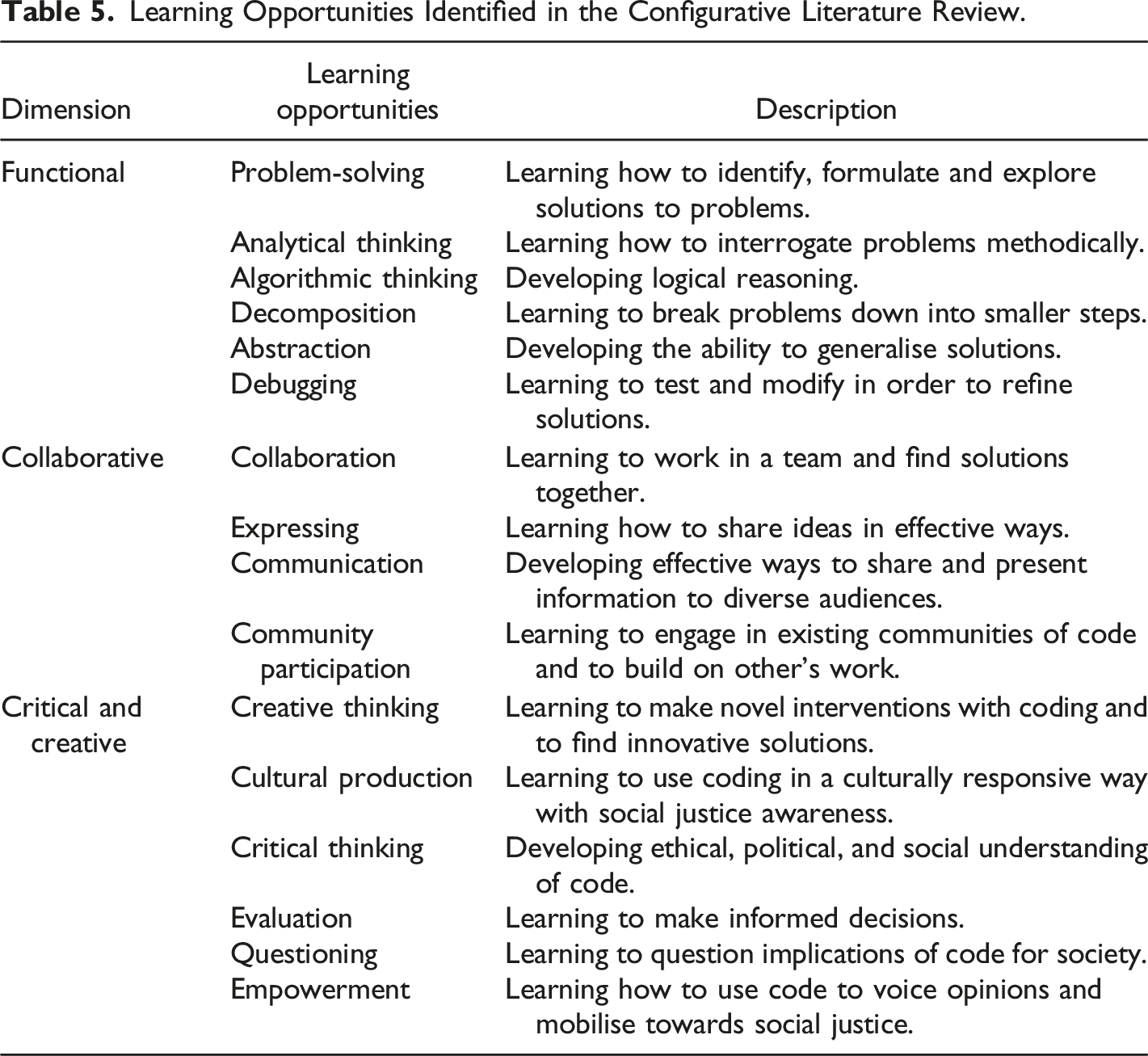
Whilst expanding conceptualisations of CT provides a comprehensive way of looking at the teaching of coding, it is also important not to over-simplify what we have found nor suggest static delineations. Firstly, so-called ‘core’ CT skills should be seen as overlapping and intertwined with wider transversal skills rather than fixed and isolated. Attempting to define CT ‘core’ competencies versus more ‘peripheral’ ones might create an unnecessary tension (Voogt et al., 2015). We find that using the term 'learning opportunities' is more inclusive, rather than the reductionist view implied by terms like ‘components.’ In addition, many definitions comprise varying mixtures of specific and transversal competences, and in some cases attitudes, which are not exclusive to CT (Velázquez-Iturbide, 2018). Recognition that there remain difficulties in trying to bring CT into other research fields is one takeaway from this review. CT is still perceived as epistemologically challenging in non-CS fields, such as social sciences and humanities, suggesting the need for alternative design strategies (Czerkawski & Lyman, 2015).
Thirdly, awareness is needed that there are different understandings of the same term for a skill across the literature. For instance, the definition of critical in one paper may be different to the definition of critical in another paper. This can have direct implications in the way that skills are assessed and viewed as learning opportunities. In particular, there are different interpretations of creativity and critical thinking across the literature including how these two skills are related, hiding sometimes the interconnectedness at play. This might help explain why some reviews in our sample show a prominence of ‘functional’ skills being the most assessed (Cutumisu et al., 2019; Hasesk & Ilic, 2019), compared, for instance, to communication, collaboration, creativity, or critical thinking, which are complex to evaluate (Romero et al., 2017). Bringing awareness of different definitions is a starting point to make visible and stimulate discussion about the learning opportunities related to CT.
The three dimensions identified through the literature are related to each other in a dynamic and intertwined way. Our proposed organisational model as illustrated in Figure 4 seeks to highlight the ways in which the dimensions are built on top of each other in permeable layers of equal importance. This visualisation shows how the individual act of learning coding can be embedded in broader interactions with others and the world. For instance, problem-solving can be perceived both in terms of reading and writing code in a functional way, but also in terms of working in teams to find creative and critically informed solutions. Visualisation of the three-dimensional mapping of CT literature.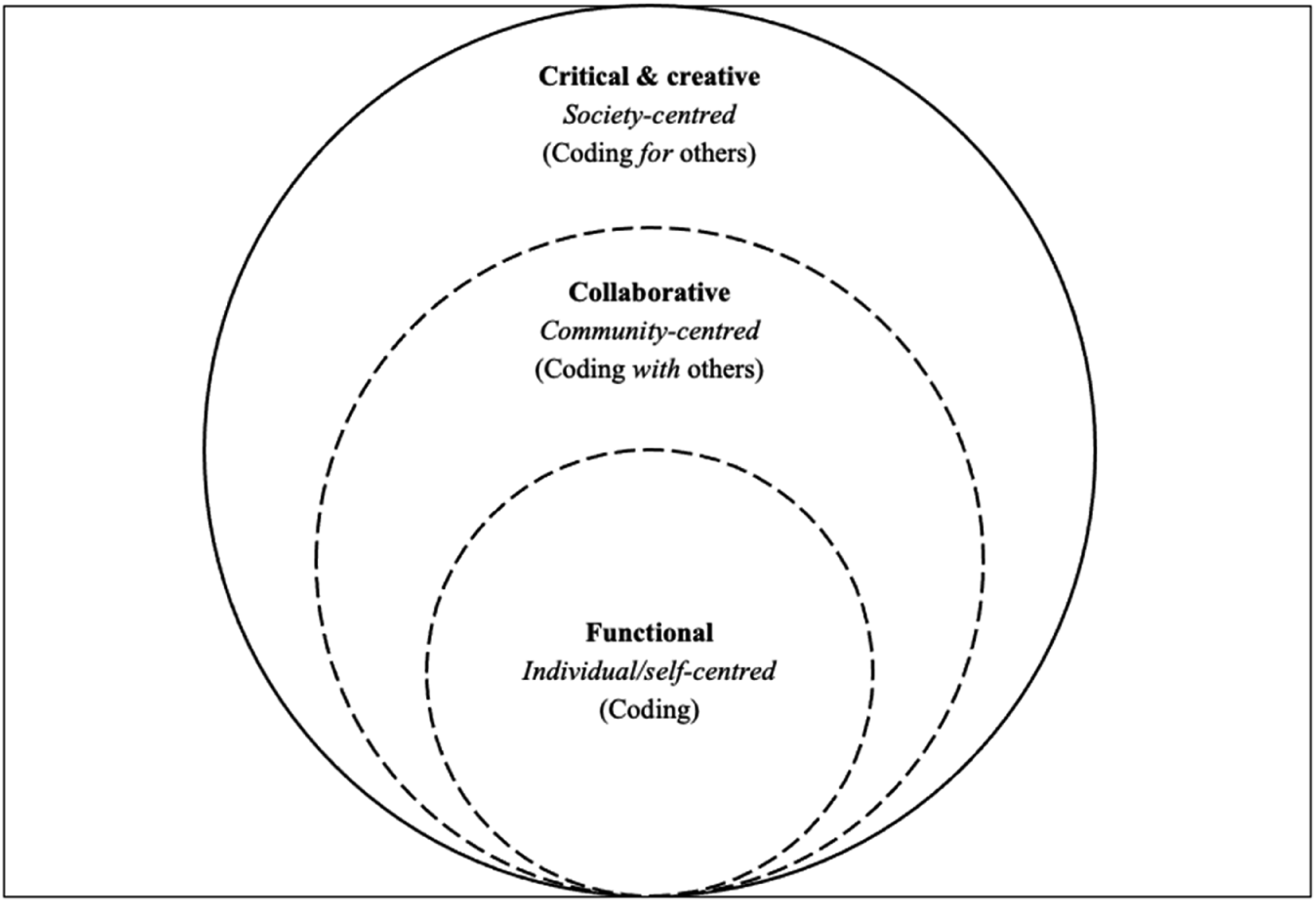
We also argue that the development of the learning opportunities can be understood at different levels: the functional dimension is more focussed on developing individual cognitive skills related to coding; the collaborative dimension is about coding with others in a community or a team; and the critical and creative dimension involves coding for others in the context of wider informed participation in society. This distinction is similar to what Brennan and Resnick (2012) describe as the value of creating with others, and the value of creating for others. We expand on the latter’s values of being aware of a broader audience (society-at-large) when creating/coding for others.
This way of presenting different layers or dimensions related to CT is not a novelty. In our systematic analysis, Kafai et al. (2019) also use a circular model to present three epistemological framings of CT (cognitive, situated, and critical). Whilst there are undoubtedly similarities between both studies (as discussed in our findings), we focus on the learning opportunities of CT rather than the underpinning learning theories. For instance, while the situated frame is aligned with our collaborative dimension, it emphasises collaborative practices in the context of work, family and community, rather than developing the skills for interdisciplinary and intercultural dialogue in coding. One important crossover is the dynamics between the frames/dimensions illustrated in both circular models. For instance, Kafai et al. (2019) argue that the outer frames (situated and critical) are not progressions from the cognitive to better framings. Similarly in our model, we argue that the outer layers are grounded in the functional heart of CT, but learning should also be balanced across the dimensions.
Conclusion and Further Work
Given the importance of CT in the learning of coding, the learning opportunities revealed by organising the CT literature can help teachers and designers of coding courses. This is a significant contribution because whilst most courses for introducing coding to non-CS learners still centre on individual acquisition of operational aspects of programming (diSessa, 2018), our review suggests teaching coding through a broader range of learning opportunities that are meaningful to student lives and careers. For example, our collaborative dimension might point to interdisciplinary practices around the use of real-world examples, remixing other’s work, and use of datasets that students can relate to and engage with meaningfully and critically. The pedagogic practices that support our multi-dimensional model have also been explored in further research, where we study how the learning opportunities in each dimension are fostered in practice (Tarling et al., 2022). If we want to provide meaningful learning to students, rather than just preparing them for the digital workforce (Dufva & Dufva, 2016), we need to educate them to communicate, collaborate, and question the ways in which coding, for instance, can ensure more under-represented voices contribute to the evolution of socio-technical practices (Baker-doyle, 2018; Ryoo et al., 2013).
Supplemental Material
Supplemental Material - What Else Can Be Learned When Coding? A Configurative Literature Review of Learning Opportunities Through Computational Thinking
Supplemental Material for What Else Can Be Learned When Coding? A Configurative Literature Review of Learning Opportunities Through Computational Thinking by Ana Melro, Georgie Tarling, Taro Fujita, and Judith Kleine Staarman in Journal of Educational Computing Research
Footnotes
Declaration of Conflicting Interests
The author(s) declared no potential conflicts of interest with respect to the research, authorship, and/or publication of this article.
Funding
The author(s) disclosed receipt of the following financial support for the research, authorship, and/or publication of this article: This work was supported by the Institute of Coding.
Supplemental Material
Supplemental material for this article is available online.
Notes
Author Biographies

References
Supplementary Material
Please find the following supplemental material available below.
For Open Access articles published under a Creative Commons License, all supplemental material carries the same license as the article it is associated with.
For non-Open Access articles published, all supplemental material carries a non-exclusive license, and permission requests for re-use of supplemental material or any part of supplemental material shall be sent directly to the copyright owner as specified in the copyright notice associated with the article.
