




Abstract
Fire performance measurements of one of the most used firefighting protective ensembles (also called turnout gears), in terms of thermal and smoke hazards, were determined with the cone calorimeter, that of thermal stability were determined with thermogravimetric analyzer, the physical inspection (physical degradation) of the surface done with the scanning electron microscopy, and energy dispersive spectroscopy measurements determined the elemental compositions of the detergent used in washing and the residual elements in the turnout gears. The cone calorimeter results indicated that the values of the thermal performance parameters, namely: peak heat release rate, maximum average rate of heat emission, and fire growth rate index, all decrease with increasing number of washing cycles, while the smoke parameters: peak smoke production rate, smoke growth rate index, total smoke release, and related sustained flaming values, all increase with increasing number of washing cycles. From the thermogravimetric analyzer measurements, the thermal stability of the turnout gears decrease with increasing number of washings.
Keywords
Introduction
There are three main activities that could influence the integrity of the fire-retardant composition of the structural firefighting protective ensembles, also known as turnout gear, and perhaps compromise its fire performances. These are the continual cycle of washings, chemical exposure, 1 and varying levels of heat exposure.
According to the NFPA 1851, 2 Standard on Selection, Care and Maintenance of Protective Ensembles for Structural Fire Fighting and Proximity Fire Fighting, firefighter’s turnout gear should be laundered after fireground activity due to the possibility of collecting, holding blood-borne pathogens, particulate and aerosols that adhere to the turnout gear as well as releasing toxic gases which could cause cancer to the wearer. 3 The Gauteng Emergency Management Services (GEMS) policy of retiring turnout gear in service after a period of 10 years conforms to NFPA 1851 4 standard irrespective of the number of cleaning cycles the turnout gear has been subjected to that might affect the degradation of its functionality. 5
Thermal performance properties of laundered turnout gear, as a term, has been determined from measurements such as: flammability, thermal protective performance (TPP), and total heat loss (THL) under NFPA 1971, the Standard on Protective Ensembles for Structural Fire Fighting and Proximity Fire Fighting, 6 listed methods. Horn et al. 7 work on repeated exposure and cleaning (up to 40 washing cycles) on turnout gear (subjected to 84 kW/m2 external heat flux) and found out that TPP increased slightly while THL decreased. Earlier, Morgan and Yip 8 had looked at the effects of laundering (from zero up till 25 cycles) on military fabric flammability. Their flammability parameters were afterflame and afterglow times and subsequently used the cone calorimeter (set external heat flux output was 85 kW/m2) to determine fire safety performance of the fabric in terms of time to ignition (Tig), heat release rate (HRR), and maximum average rate of heat emission (MARHE) parameters. They found little difference between the cycled laundered samples and the heat release testing. Won and Yun 5 had also evaluated flame-retardant performance in terms of afterflame and afterglow times as well as spin-drying speeds and had determined flame spread rate of laundered (0 to 50 cycles) turnout gear using the Rhoburn Flammability Testing equipment in accordance with ISO 15025:2000. They had found that residual detergent increase with washing cycles and result in higher afterglow times that affect the flame-retardant performance of the turnout gear. A very recent work by Girase et al. 9 had assessed the durability of structural firefighting turnout gear from different washing procedures. They demonstrated that liquid carbon dioxide has distinct advantages over conventional dry-cleaning solvents. Their assessment on durability had dwelt on physical testing, visual inspection, water repellence, and quantifying color changes using spectrophotometric analysis of the turnout gear samples.
This study settings of fire safety performance on firefighter turnout gear are similar to Morgan and Yip. 8 The cone calorimeter was used. The differences lie in a lower external heat flux (50 kW/m2) the laundered (up to 50 cycles) samples were irradiated with. Besides, parameters that relate to smoke hazards were also determined as well as the turnout gear thermal stability and physical state after 50 washing cycles. In all, one of the most used structural firefighting turnout gear was obtained from GEMS suppliers and its thermal performances investigated using the Dual Cone Calorimeter, Thermogravimetric Analyzer (TGA), Scanning Electron Microscopy (SEM), and Energy Dispersive Spectroscopy (EDS). Before this study, there has not been any known thermal performance study on increasing washing cycles of any South African manufactured turnout gear.
Experimental details
Sample preparation
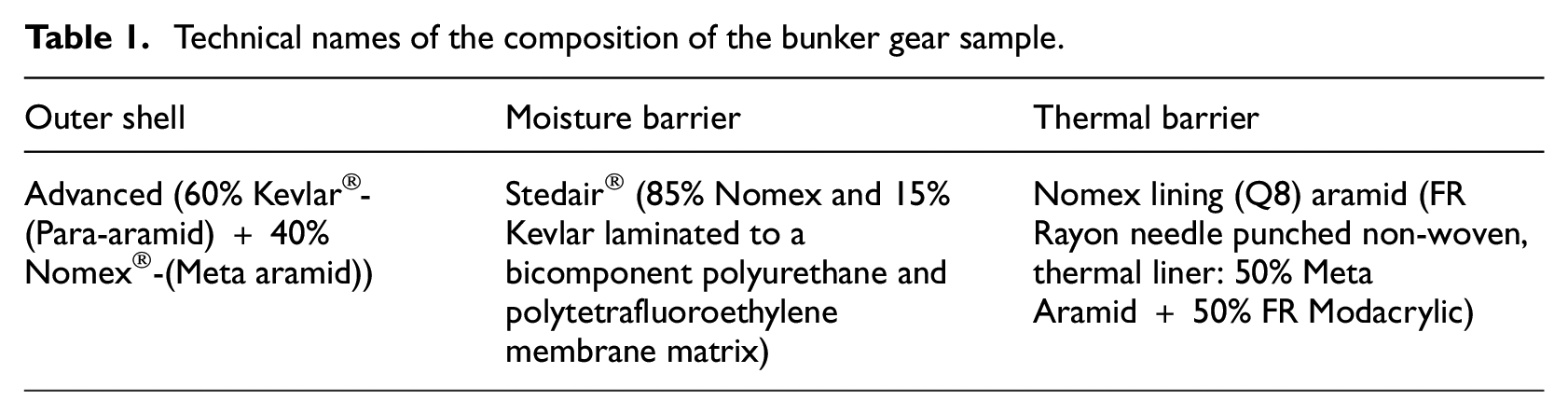
The as-received turnout gear sample was new (never washed before), and its technical details are shown in Table 1.
Technical names of the composition of the bunker gear sample.
Laundered followed NFPA 1851 2 —Standard on Selection, Care, and Maintenance of Protective Ensembles for Structural Fire Fighting and Proximity Fire Fighting guidelines using a front-loaded extractor (Speed Queen washing machine) with warm water (40°C) and (Sunlight 2-in-1) detergent, pH 10.1. The protocol consisted of an initial 3 min rinse, followed by a 15 min wash cycle and three 5 min rinse cycles. 7 A 1–5 min extraction cycle followed each wash and rinse cycle to drain the extractor. Immediately after the final rinse cycle, the turnout gear was dried in Speed Queen Dryer for 5 min.
Starting from as-received, unwashed, samples were cut from the dried turnout gear for the thermal measurements—cone calorimeter, TGA, and SEM/EDS—and cut again after each washing cycle till 50 cycles of washings were done.
Experimental techniques
Cone calorimeter
The measured thermal properties of the turnout gears, on the cone calorimeter, calibrated according to ISO 5660 standards include:
Tig;
sustained flaming;
HRR;
pHRR;
MARHE;
fire spread rate index (FIGRA);
smoke production rates (SPRs);
peak SPR (pSPR);
smoke spread rate index (SMOGRA); and
total smoke release (TSR).
TGA
TGA is the second equipment that was used for the thermal stability analysis of the samples.
TGA is a technique in which the mass of a substance is monitored as a function of temperature or time as the sample specimen is subjected to a controlled temperature program in a controlled atmosphere. TGA measures weight changes in materials as a function of temperature or time, provides a simple, as detailed in ASTM E1131 and ISO11358 (Standard Test Method for Compositional Analysis by Thermogravimetry) methods. 10 From TGA data, the kinetic parameters of decomposition of the turnout gear samples in the form of the activation energy (E) and the pre-exponential factor (ko) can be determined.
SEM
The SEM instrument was used to observe the surface morphology before and after cone measurements and to ascertain the extend of physical degradation of the turnout gears due to repeated washing cycles of the samples.
EDS
The elemental compositions of the detergent powder used as well as that of the turnout gear and its washing cycles were measured with the EDS.
Results and discussion
Cone calorimeter measurements
The turnout gear samples before and after cone calorimeter measurements are shown in Figure 1.
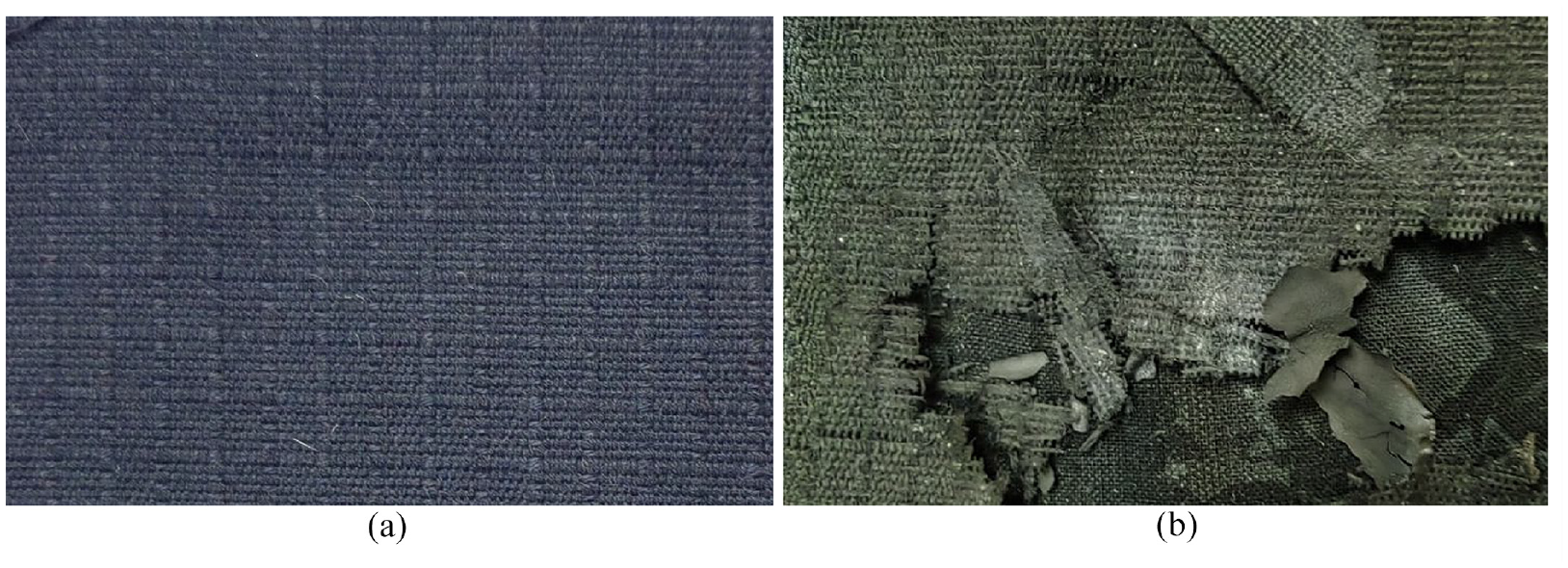
Unwashed turnout gear samples before (a) and after (b) cone calorimeter measurements—irradiated at 50 kW/m2 external heat flux for 150 s.
The after cone calorimeter measurements of the samples Figure 1(b) show different states of flaky charred remains. Nair et al. 11 and others in quoting Babrauskas and Peacock 12 stated that the single most important variable in fire hazard is the HRR. HRR is one of the flammability parameters. HRR with time measurements from the cone calorimeter was therefore one of the thermal properties investigated.
A typical profile of HRR with time measurements of a turnout gear is shown in Figure 2. The profile comes from 50 washing cycles of the sample exposed to an external heat flux of 50 kW/m2.
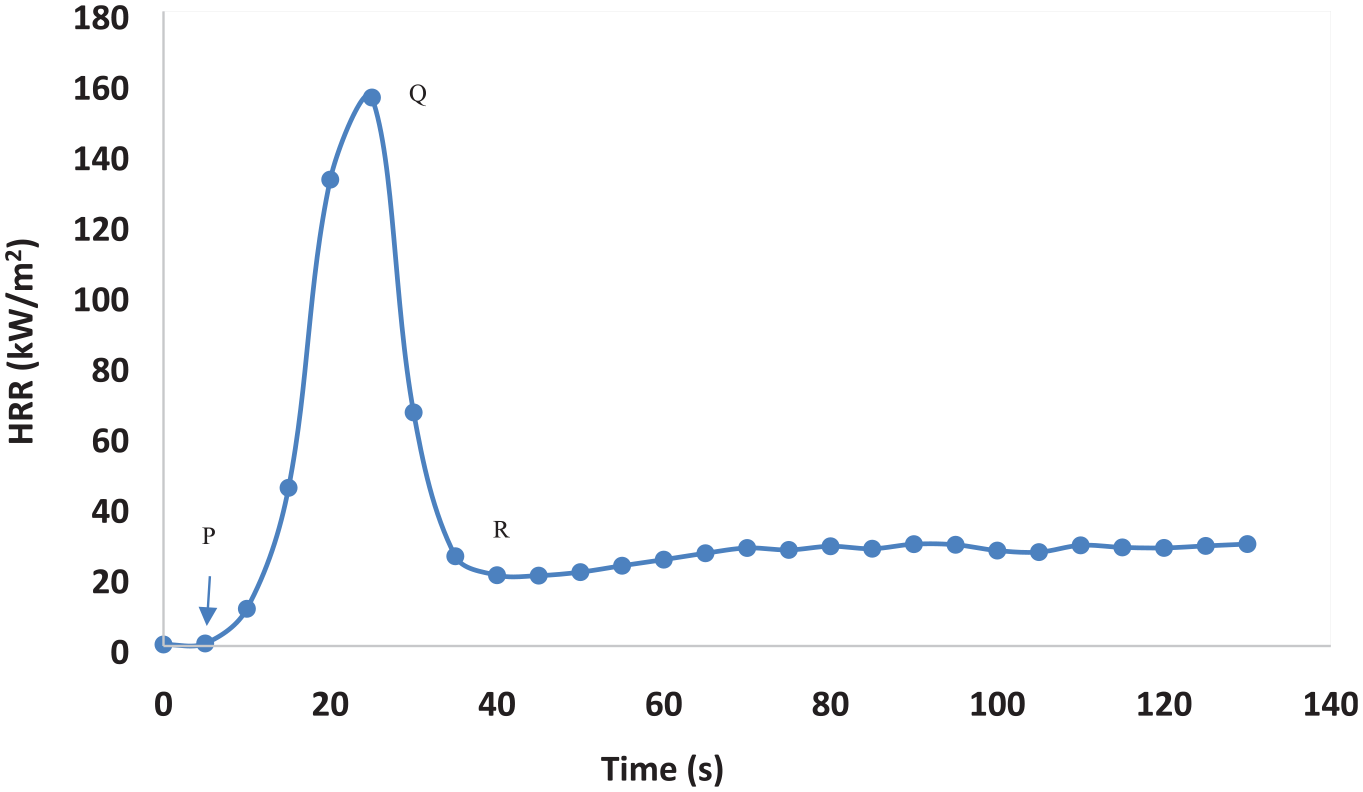
Typical heat release rate profile of the 50 cycles washed sample.
For a particular HRR profile, as shown in Figure 2, the following could be distinguished: Tig (0P), where the turnout gear material, subjected to 50 kW/m2 external heat flux, released combustible volatile which on mixing with oxygen, is ignited by a spark over the sample. The decomposition of the organic components released is accompanied by phase transition from solid to liquid that is seen as an upward stroke, after ignition. Thereafter a rapid release of flammable volatiles leads to the main pHRR (Q). Flameout follows the pHRR with the decrease in heat release with some char contribution to the HRR, which is seen from R, after 40 s, with some 20 kW/m2 heat release flux. The HRR profile is consistent with the thermally thin sample profile described by Schartel and Hull. 13
Further thermal performance measurements, namely, pHRR, MARHE, and FIGRA of the turnout gear, of washing cycles, from 0 to 50, and each subjected to 50 kW/m2 heat flux, were performed.
HRR
The HRR results of different washing cycles under 50 kW/m2 external heat flux are shown in Figure 3. Figure 3 shows that the pHRR decrease with increasing washing cycles. The decrease in pHRR with increasing washing cycles suggests a possible enhancement of the fire reductant in the turnout gear 5 in spite of the fabric physical degradation as shown in SEM micrographs (Figure 16).
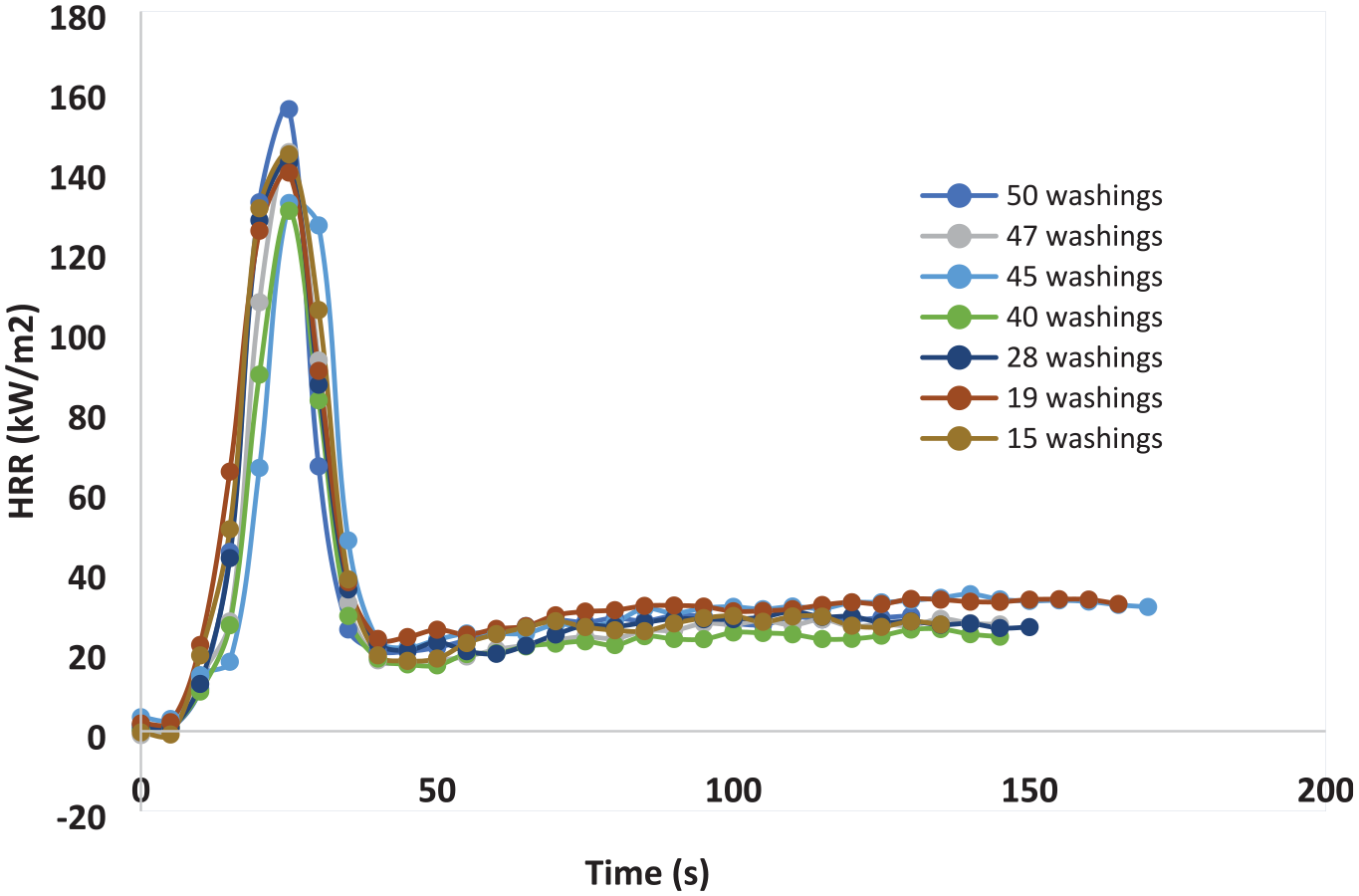
Heat release rate profiles for various washing cycles of the turnout gear.
Figure 4 shows the pHRR versus number of washing cycles of the three samples have a negative linear relation.
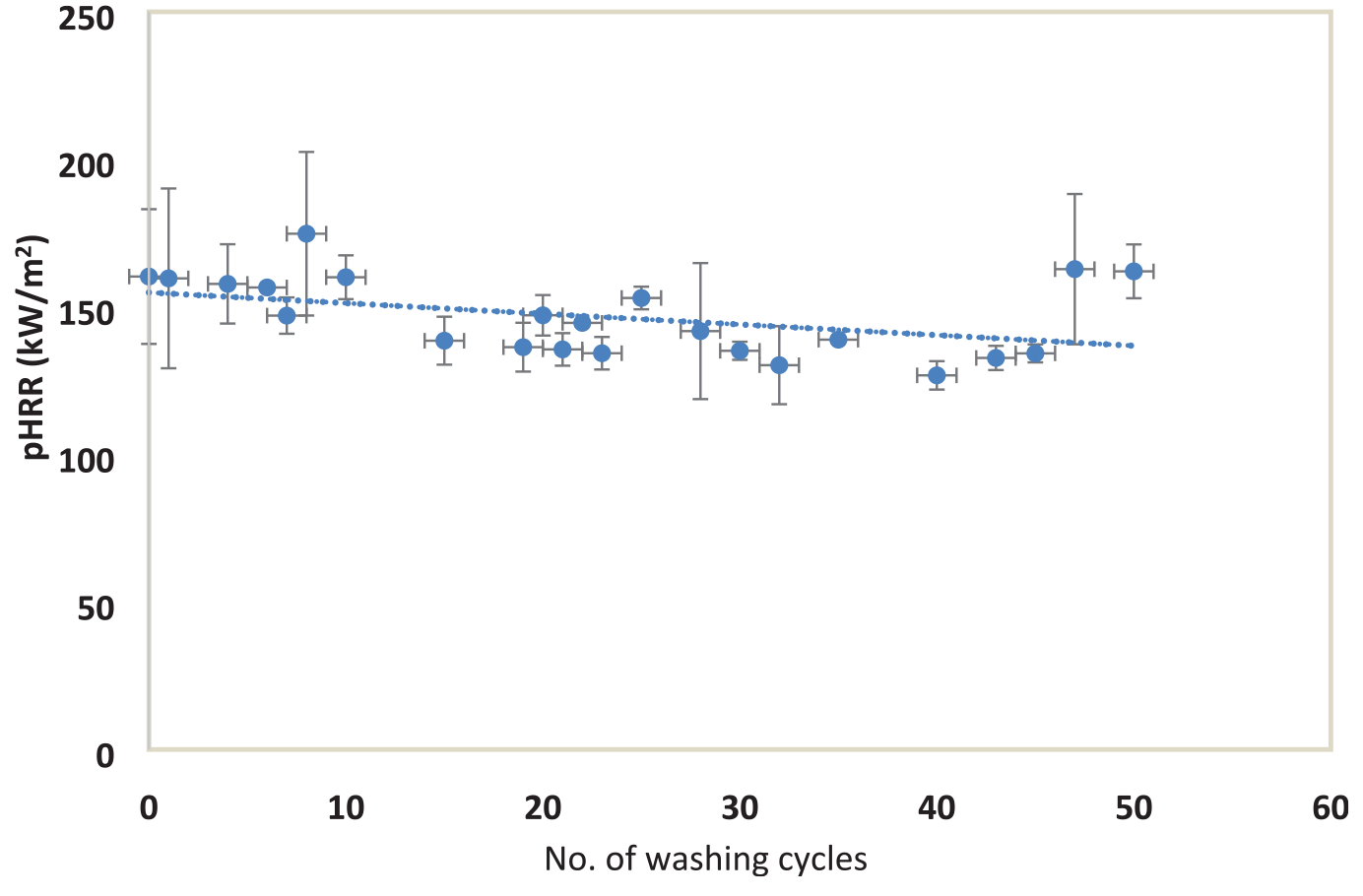
Number of washing cycles of sample and their peak heat release rate values.
Figure 4 shows clearly that the pHRR decreases with increasing number of washing cycles. 7 Trendline equation is: y = −0.3611x + 154.88. This shows theoretically that after 429 washing cycles, the pHRR will be zero.
According to Won and Yun, 5 the residual detergent in the fabric of the firefighter clothing after washings (a physiochemical effect) increases the afterglow times which implies the performance enhancement of the flame retardant. The next thermal measurement parameter is the MARHE.
MARHE
MARHE is related to HRR and THL. 8 It is used to determine the average heat generated during each combustion period. According to Chen et al., 14 MARHE is influenced by Tig and pHRR as the concept considers the average effect and cumulative effect of heat release in the combustion process and can objectively and comprehensively reflect the heat release performance of the samples in the whole combustion process.
Figure 5 shows the relationship between MARHE values and the number of washing cycles of the samples.
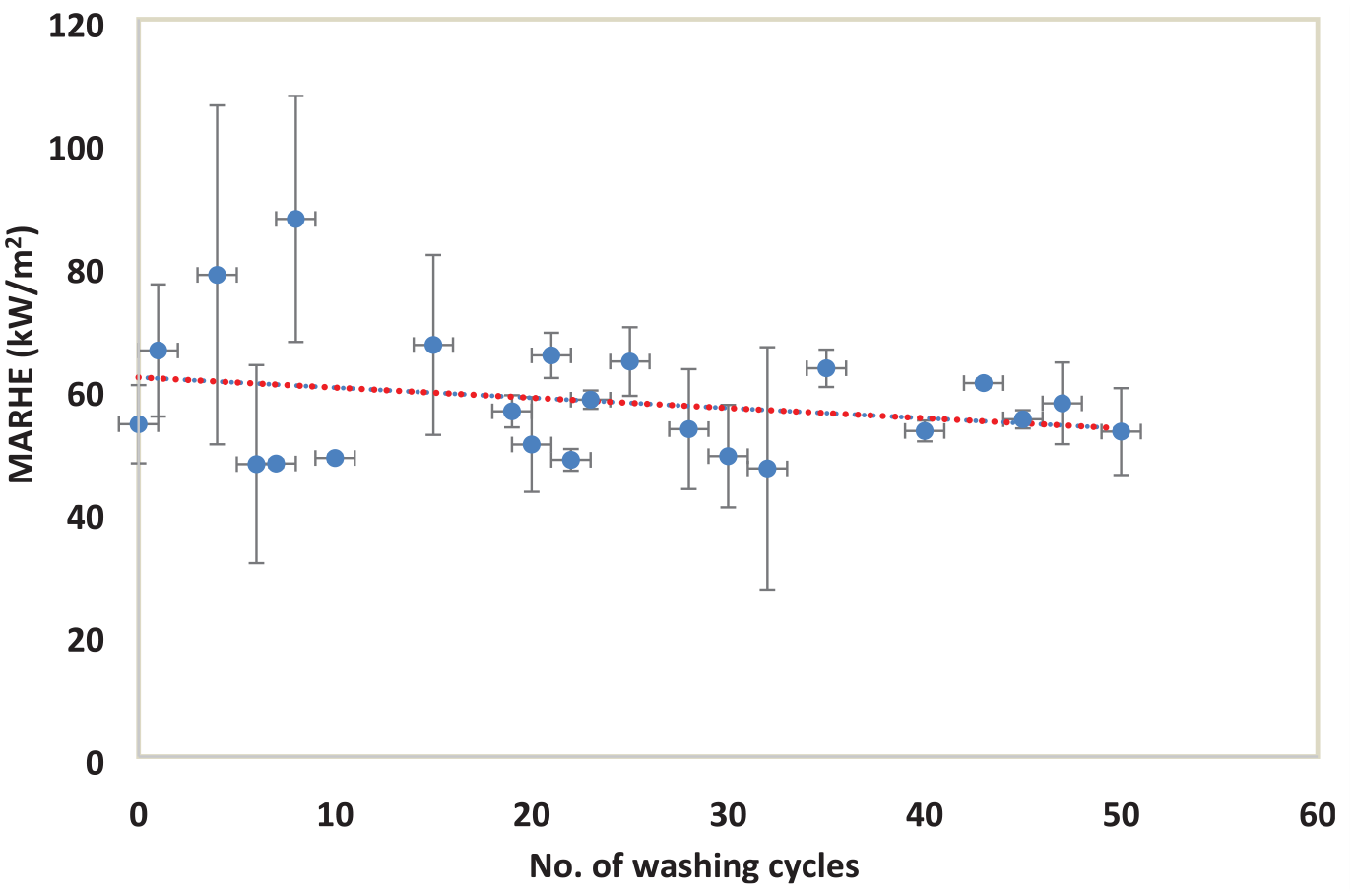
Number of washing cycles of the sample and their corresponding maximum average rate of heat emission values.
MARHE values decrease with increasing values of number of washing cycles. The trendline equation gives: y = −0.1661x + 61.722. This implies that theoretically, MARHE value would drop to 0 after about 372 washing cycles. These are to be expected when compared to the relationship between pHRR and the number of washing cycles (as in Figure 4).
The next thermal performance parameter considered is the FIGRA of the turnout gear.
FIGRA
FIGRA is a derived parameter and expressed as the ratio of pHRR and the time at which the pHRR occurs. It provides estimation on the rate of fire spread or development. The lower the FIGRA value, the lower the burn hazard from the product once ignited. 15
FIGRA values decrease slightly with increasing number of washing cycles (Figure 6). Meaning, fire spread lowers with increasing washing cycles. From the trendline equation, y = −0.0153x + 5.8778, FIGRA value would theoretically come to zero after 384 washing cycles. The reason would be placed on the residual detergent elements in the fabric of the firefighter clothing after the cycles of washings that seemingly lead to the enhancement of the flame-retardant performance. 5
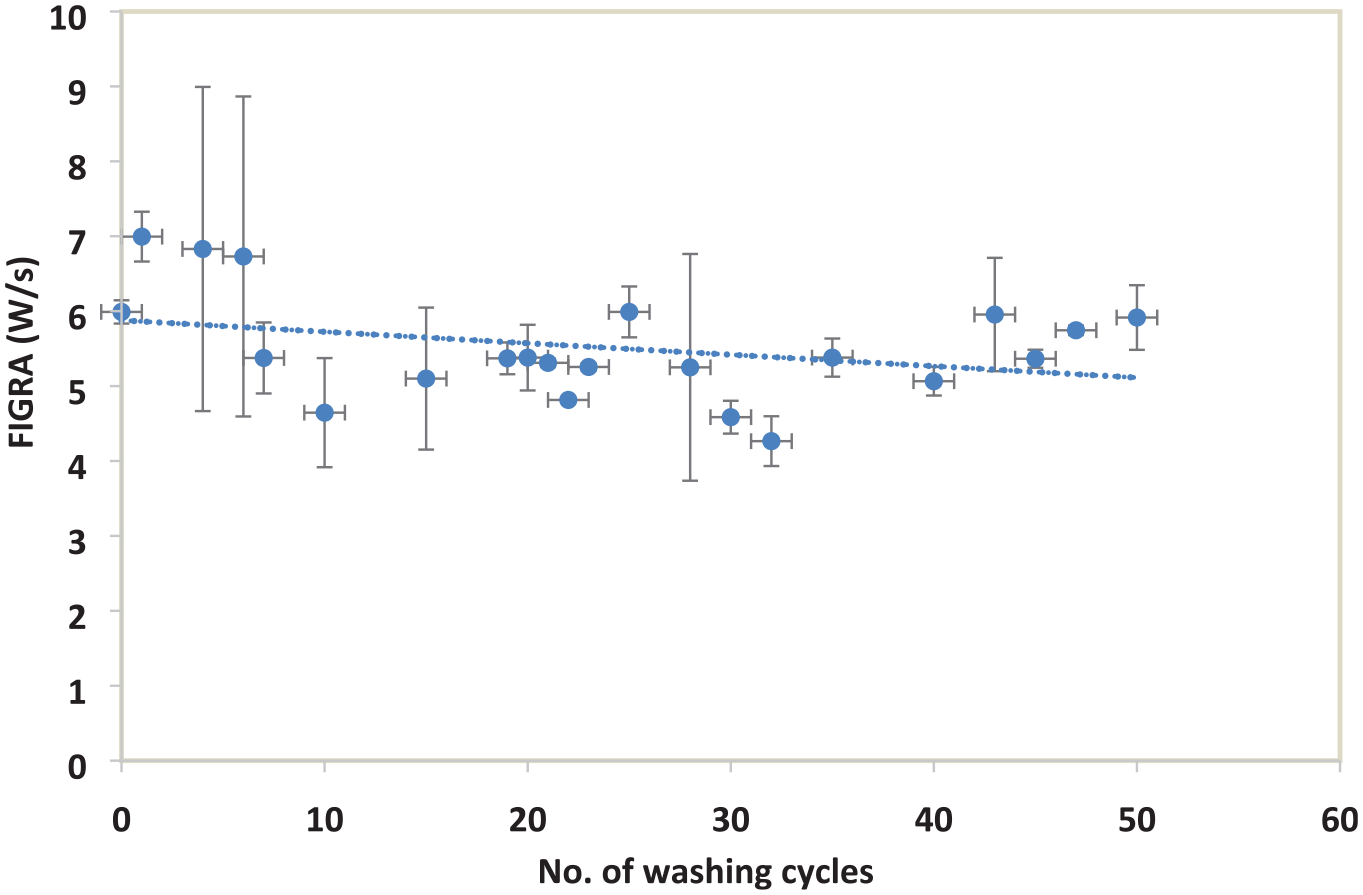
Number of washing cycles of the turnout gear and their corresponding fire growth rate index values.
All the thermal performance parameters of the turnout gear are shown in Table 2.
Thermal parameter values of the turnout gear.
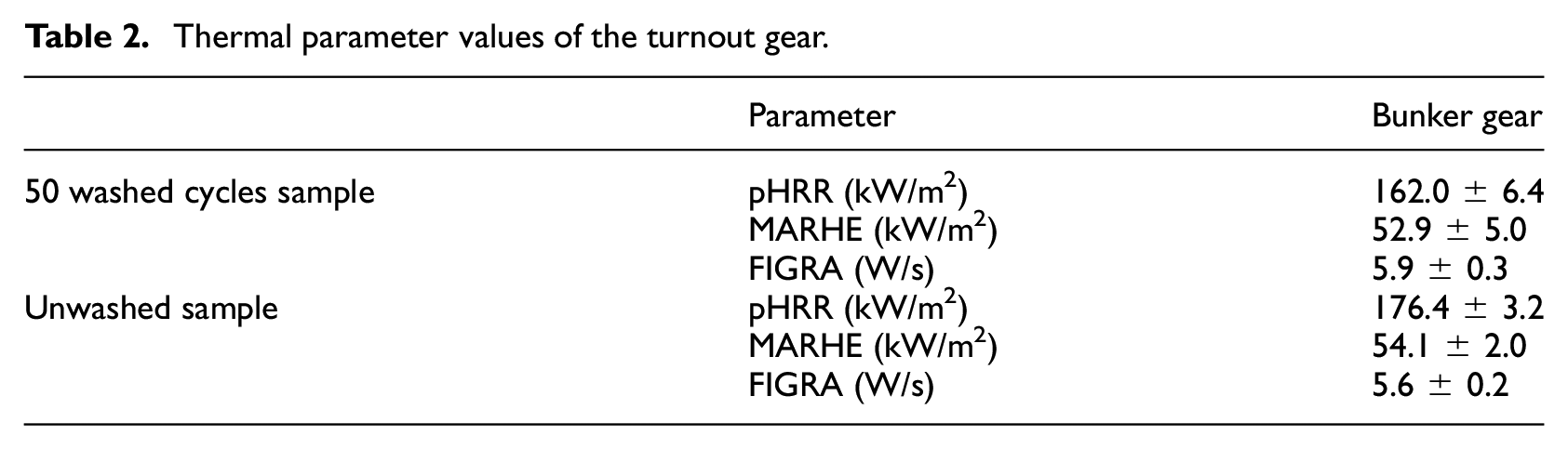
The thermal parameter values in Table 2 are comparable to those found on laundered (25 washing cycles) military uniform fabric tested on the cone calorimeter at a higher external heat flux of 85 kW/m2 conducted by Morgan and Yip. 8 They found pHRR (160 kW/m2) and MARHE (67 kW/m2). For unwashed turnout gear of different technical specifications, Mokoana et al. 16 obtained the following values: pHRR (166.2 kW/m2) and FIGRA (3.5 ± 0.4 W/s), also comparable to the present work.
Closely related to HRR, in terms of fire safety, is smoke generation associated with burning turnout gear. The next aspect of thermal investigation therefore deals with smoke generation.
Smoke release
SPR
SPR is one of the fire safety parameters in thermal performance investigations of a material.
Figure 7 shows the SPR profile of the turnout gear.
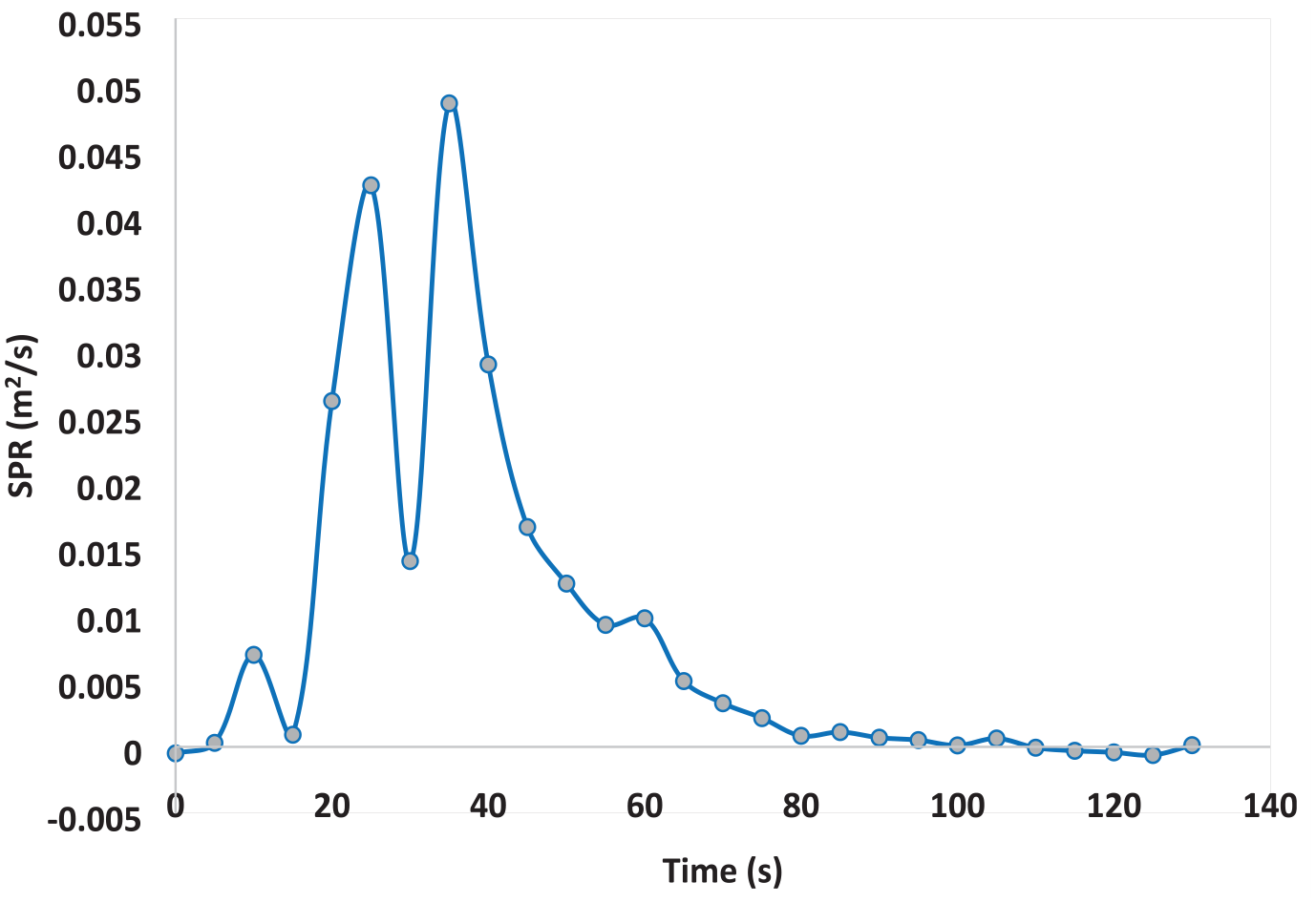
Smoke production rate profile of 50-washed cycles of the turnout gear.
There are three SPR peaks which when compared to TGA micrograph, Figure 14, indicate the three-stage degradation of the sample.
PSPR
The pSPR (third peak) versus the number of washing cycles of the turnout gear is shown in Figure 8.
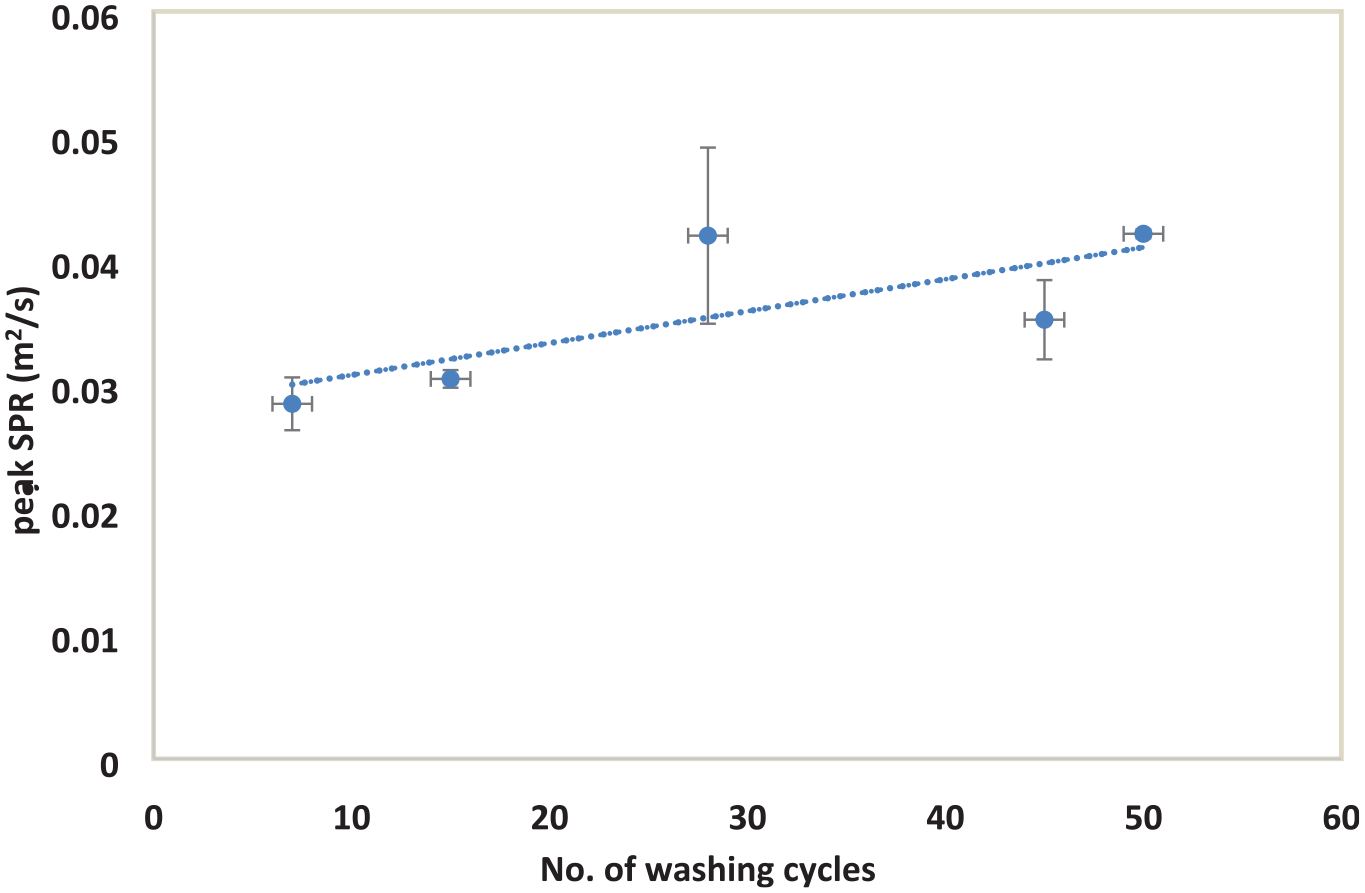
Number of samples washing cycles and their corresponding peak smoke production rate values.
There is very gentle increase in the SPR with increasing number of washing cycles. The trendline equation is: y = 0.0003x + 0.0282. These could be ascribed to the possible breakdown of the mechanical and chemical integrity of the turnout gear fabric with the increase in the washing cycles as well as the volatiles from the small increase in the acquired residual elements in the detergent such as S and Si in the turnout gears. 17
Closely related to SPR is the smoke growth rate index (SMOGRA) which indicates the smoke spread measure of the turnout gear, the TSR, and sustained flaming.
SMOGRA
SMOGRA is the next smoke-related thermal performance measurement of the turnout gear. The measurements are displayed in Figure 9.
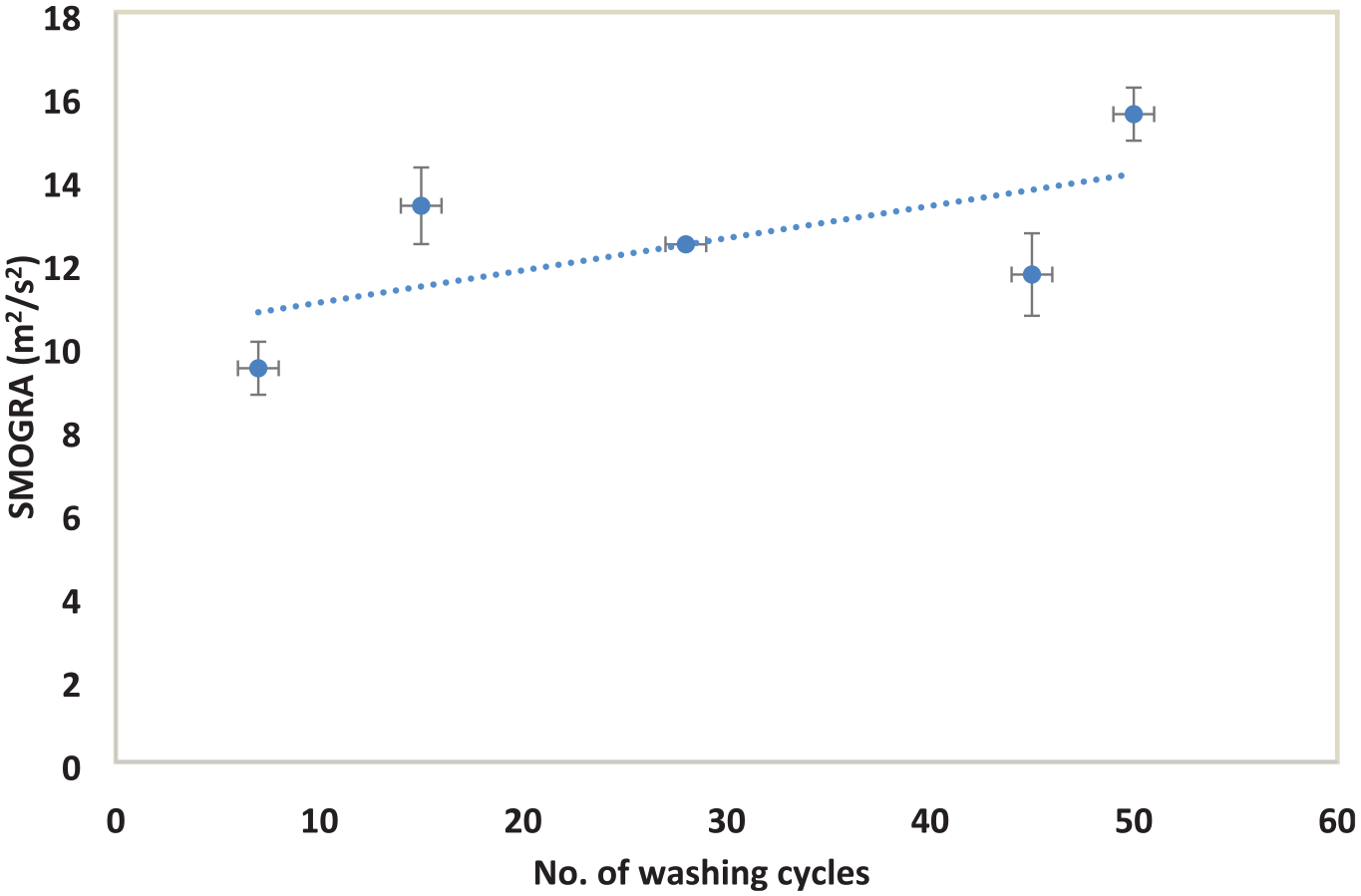
Number of turnout gear washing cycles and their smoke growth rate index values.
Figure 9 also shows a gentle increase in SMOGRA values with the increasing number of washings of the three samples. The trendline equation is: y = 0.0773x + 10.253. These are to be expected when compared to the peak SPR profiles in Figure 8.
Further knowledge of risk from smoke emission is seen in TSR (Figure 10) and sustained flaming (Figure 11) measured values, which are closely related to SMOGRA and peak SPR.
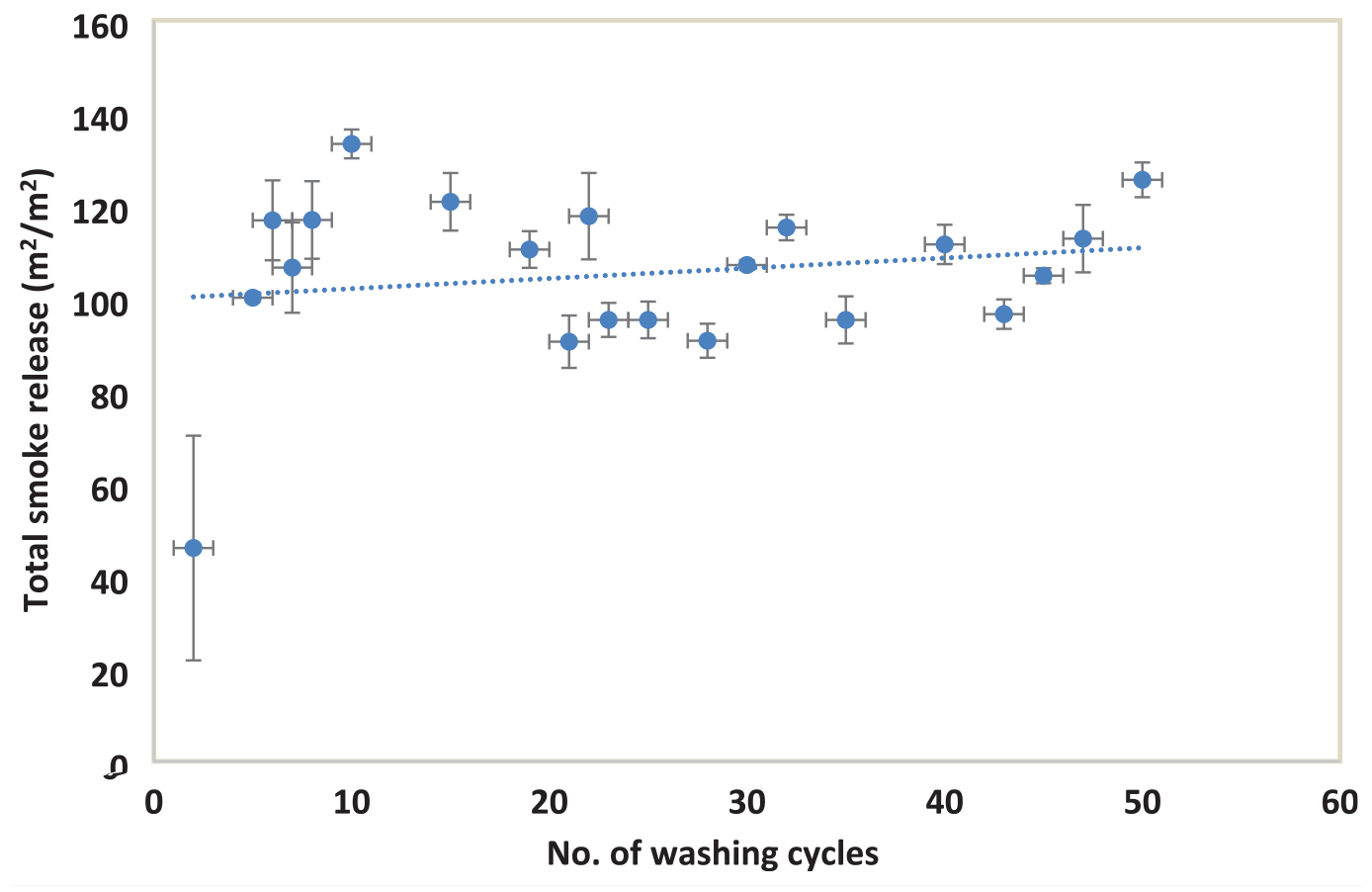
Number of washing cycles and their total smoke release values of the turnout gear.
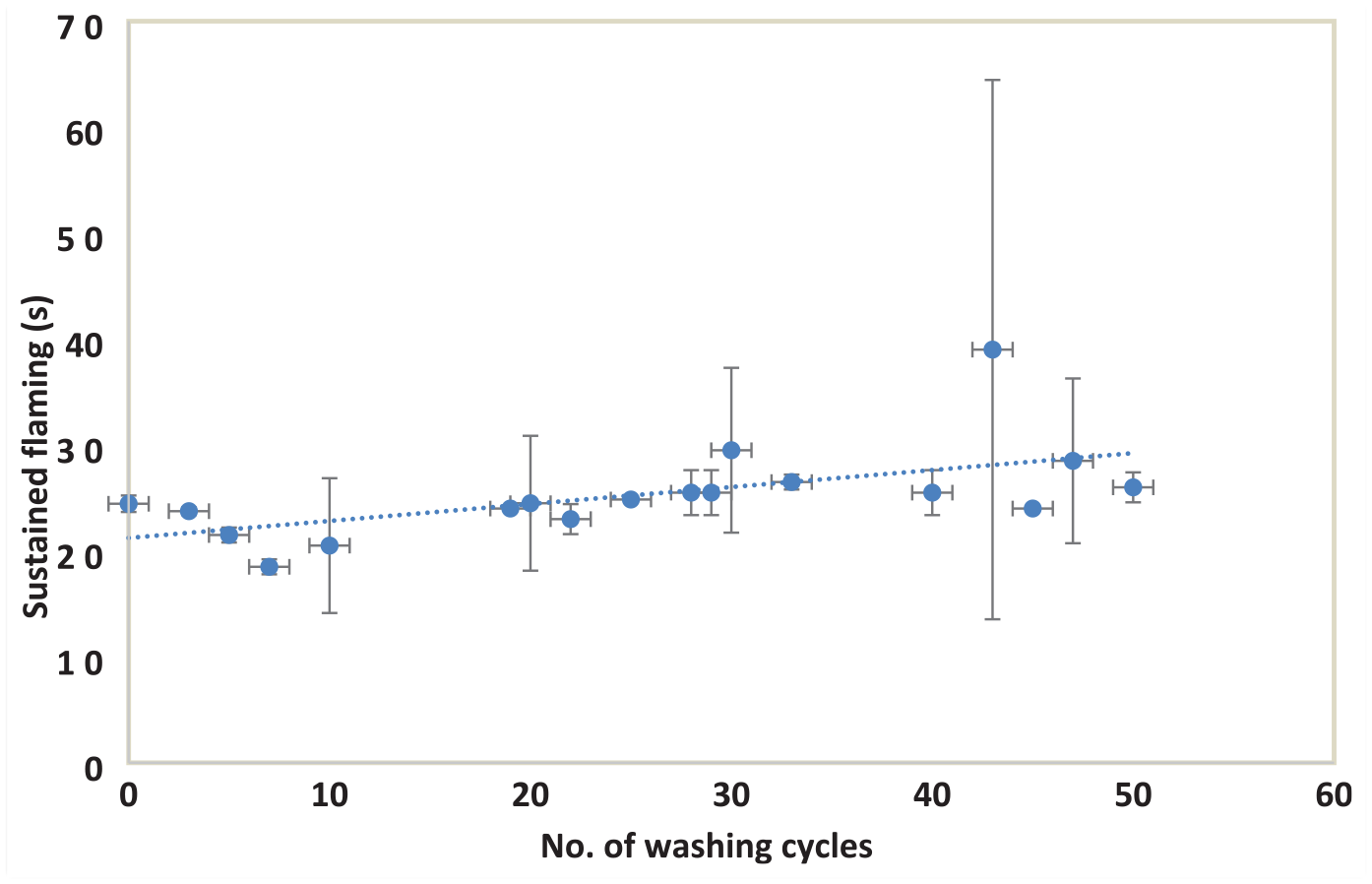
Number of washings of the turnout gear and their corresponding sustained flame duration.
TSR
There are slight increase in TSR values of the turnout gear with increasing washing cycles. The trendline equation is: y = 0.2205x + 99.843.
The next smoke-related parameter is the sustained flaming.
Sustained flaming duration
Sustained flame duration is defined as the time interval between ignition and flame out when a sample is irradiated with constant external heat flux of 50 kW/m2. Plots of sustained flaming and the number of washing cycles of the turnout gear are shown in Figure 11.
Figure 11 shows a gentle linear increase in sustained flaming duration with increasing washing cycles. The trendline equation is: y = 0.1601x + 21.225.
The explanations advanced for the increase of the pSPR values with increasing washing cycles for peak TSR, SMOGRA, and sustained flaming also hold true here. The summary of smoke safety results after 50 washed cycles is shown in Table 3.
Smoke parameter values of the turnout gear after 50 washing cycles.
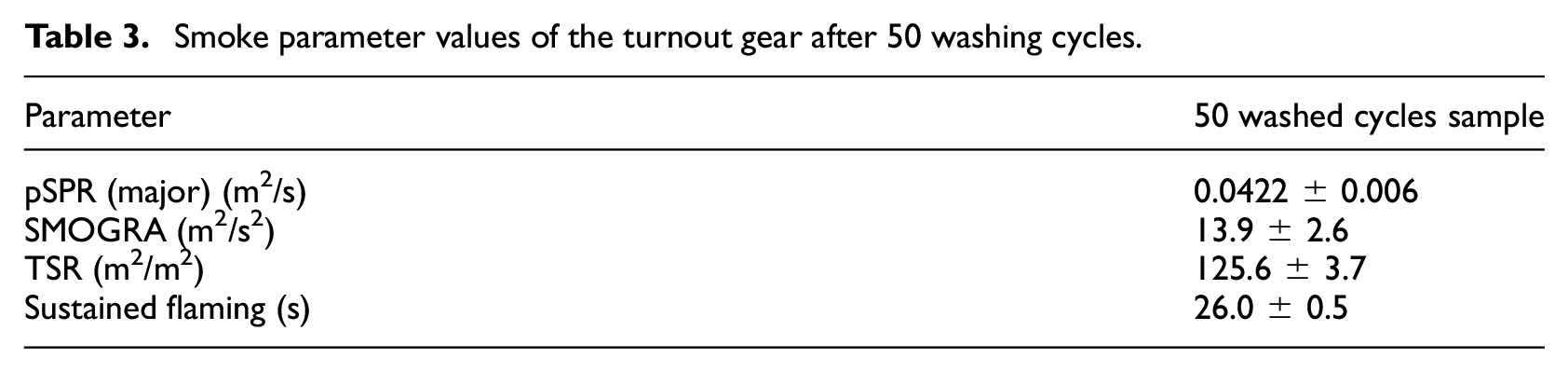
The smoke parametric values obtained for unwashed turnout gear by Mokoana et al. 16 compare favorably with the present results. Values obtained were pSPR (0.031 m2/s) and SMOGRA (5.3 m2/s2).
EDS measurements
Figure 12 shows the elemental compositions of the detergent powder (Sunlight 2-in-1) (pH 10.1) used to wash the turnout gear samples.
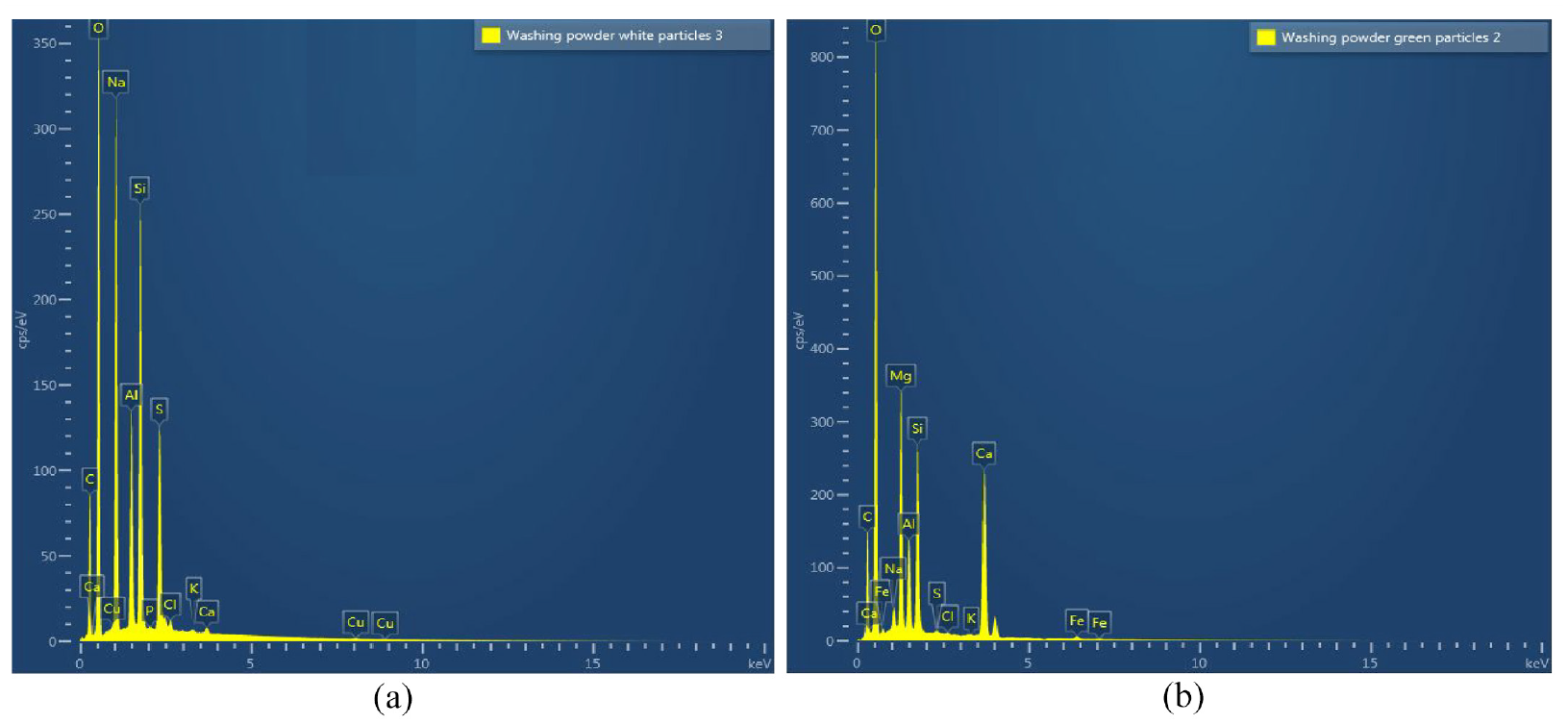
Elemental compositions of the detergent that comprises white (a) and green (b) powders.
Figure 13 shows the EDS images of the turnout gear: unwashed (a), 20 (b), and 50 (c) washed cycles.
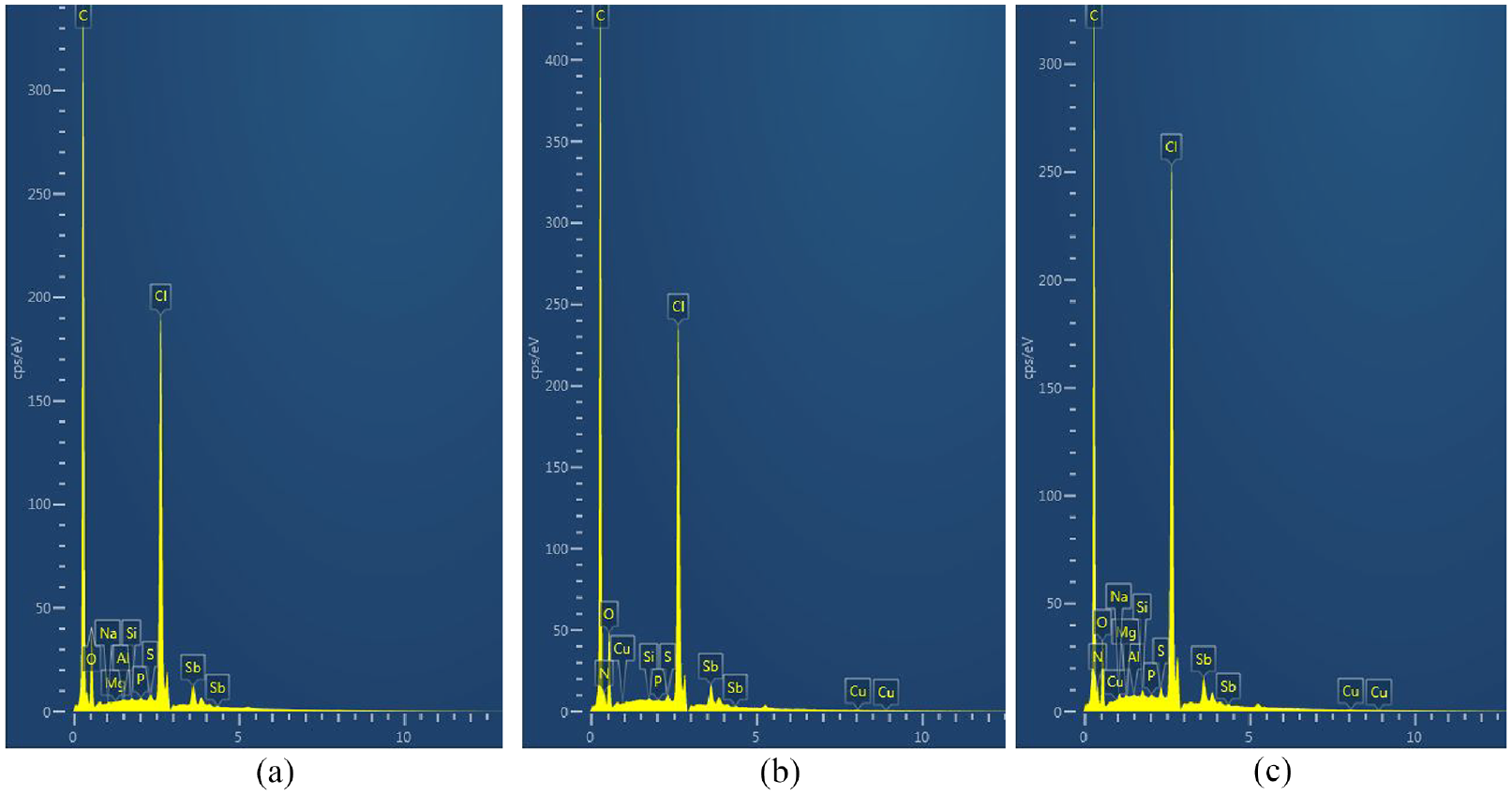
Elemental compositions of the turnout gear: (a) unwashed, (b) 20 washed, and (c) 50 washed cycles.
Furthermore, the elemental compositions of the turnout gear samples and that of the washing detergent (average of white and green particles), from EDS measurements, are shown in Table 4.
Elemental compositions of the turnout gear and the washing detergent.
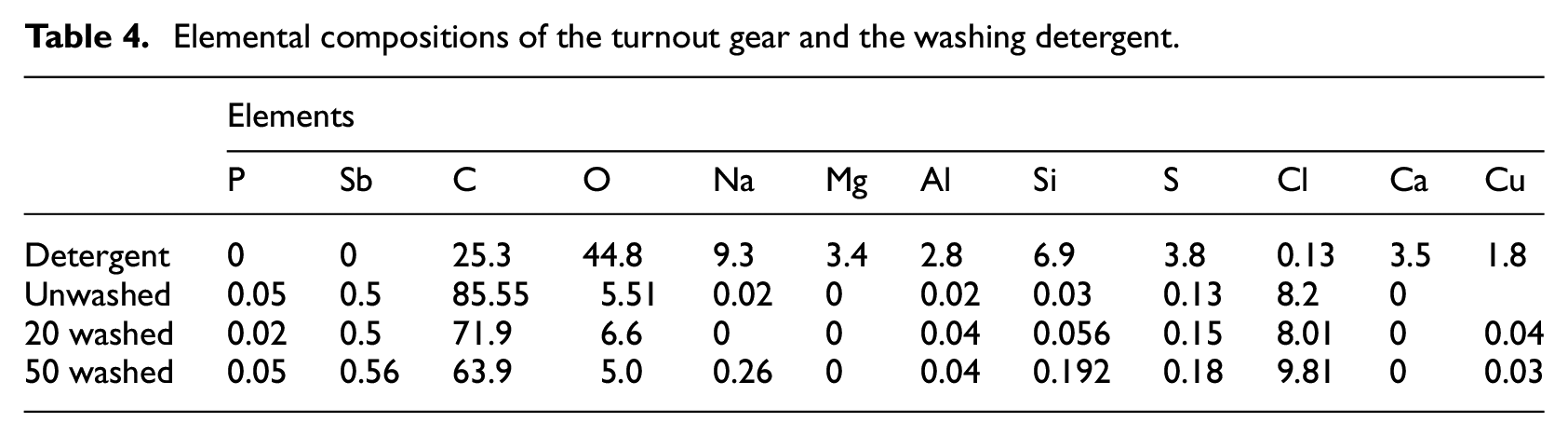
Clearly, there are elemental composition increases of Si, S, and Na in the turnout gear fabrics due to the continual cycle of washings with the detergent. According to Battig et al. 17 and Jiang et al., 18 the increasing presence of sulfur, for example, from the washing detergent increased the thermal stability of the inherent flame retardants. This results in the generation of sulfur radicals which play a key role in the flame-retardant mode of action, with the release of incombustible SO2. Furthermore, the increase in Si in the turnout gear as detergent residual element also give rise to additional thermal stability resulting in strong Si-O and Si-C bonds. 19 In the case of Na detergent residuals, their ions promote decarboxylation of molecular chains and react with oxygen to form water and carbon dioxide which in turn delay the burning chain reaction. 20 Thus, the decrease in the following thermal performance parameters: peak HRR, MARHE, and FIGRA, with increasing washing cycles would be due to the residual elements from the detergent used.
TGA
The TGA measurements ascertain the thermal stability of a sample. The thermograph in Figure 14 indicates a three-stage decomposition which is a typical of the turnout gear sample.
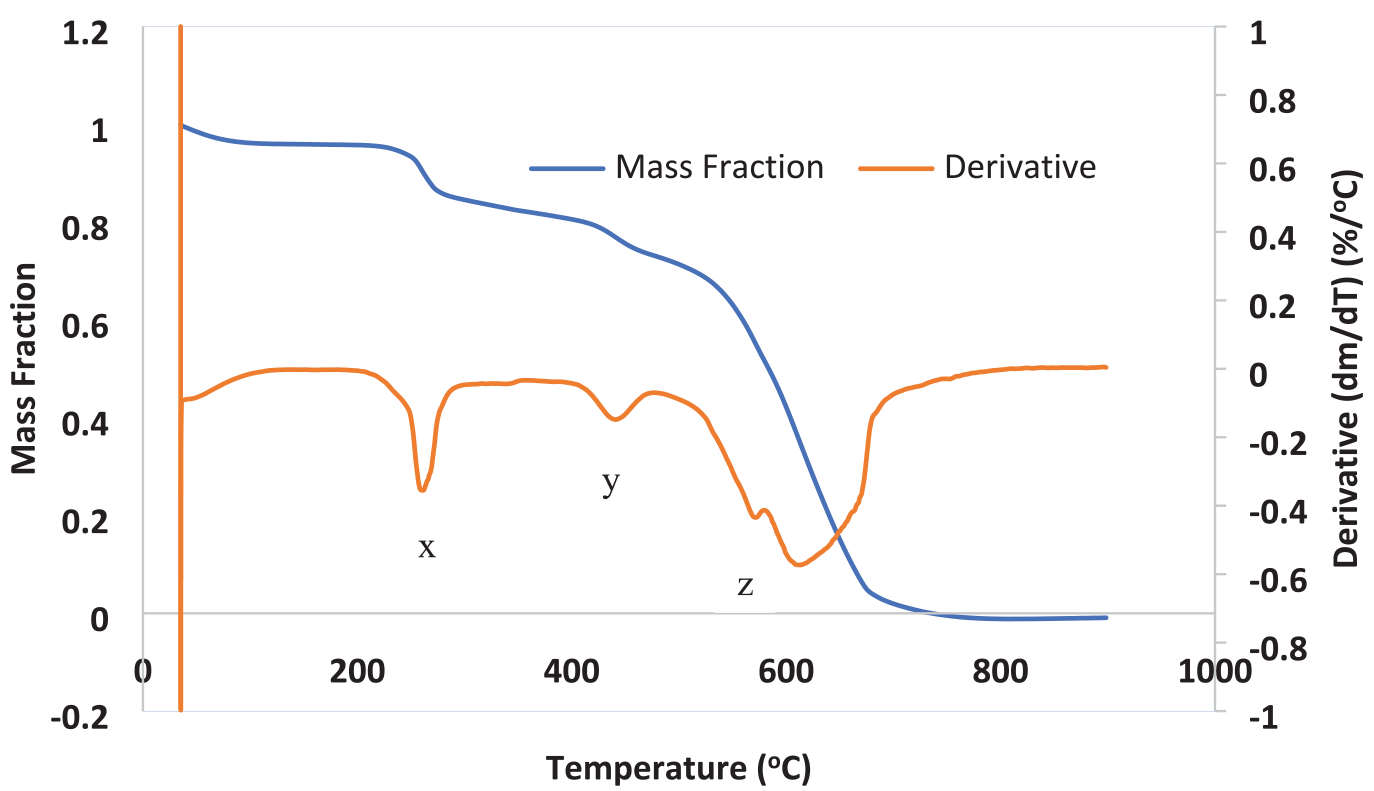
TGA and dTGA thermographs for turnout gear after 20 washing cycles with 10°C/min heating ramp.
Figure 14 shows a typical thermogravimetric (TG) and derivative TG (dTG) profiles of the thermal decomposition of the turnout gear. From the dTG profile, it can be seen that the degradation of the sample took place in three stages (x, y, and z). The first stage of dynamic decomposition (x) occurred at temperature of 261°C, with a loss of sample mass of 0.37%/°C. The second stage (y) occurred at 440.7°C, with a loss of mass of 0.15%/°C. The third dynamic decomposition began at a temperature of 536°C, and the peak of the third stage of dynamic decomposition (z) was visible at the temperature of 613.5°C, with the largest mass loss of 0.57%/°C. There was zero residual (100% mass loss) after the TGA from 683°C. Šajatović et al. 21 had similar profiles for firefighter clothing they investigated its thermal performance. The three decomposition peaks as observed in Figure 14 can be related to the SPR peaks of the turnout gear sample in Figure 7.
In order to determine the quantified thermal stability in the activation energy of the samples, TGA thermographs of each sample, with three different heating rates: 10, 15, and 20°C/min, were measured. Data were then simulated with equation (1)

where β, mi, Ea, ko, T∞, and Xc are the heating rate, initial mass, activation energy, pre-exponential factor, ambient temperature, and ratio of initial mass to the final mass, respectively.
Equation (1) can further be simplified if m/mi is plotted against T (from T∞) for different heating rates (β). A set of the decomposition rate constant k and its associated temperature T could be tabulated from a particular mass fraction (say, m/mi = 0.7) to enable the determination of Ea and ko. 22
Figure 15 shows a typical TGA thermographs of the turnout gear with different heating rates from 38 to 800°C. The activation energies of the turnout gear at different washing cycles are shown in Table 5.
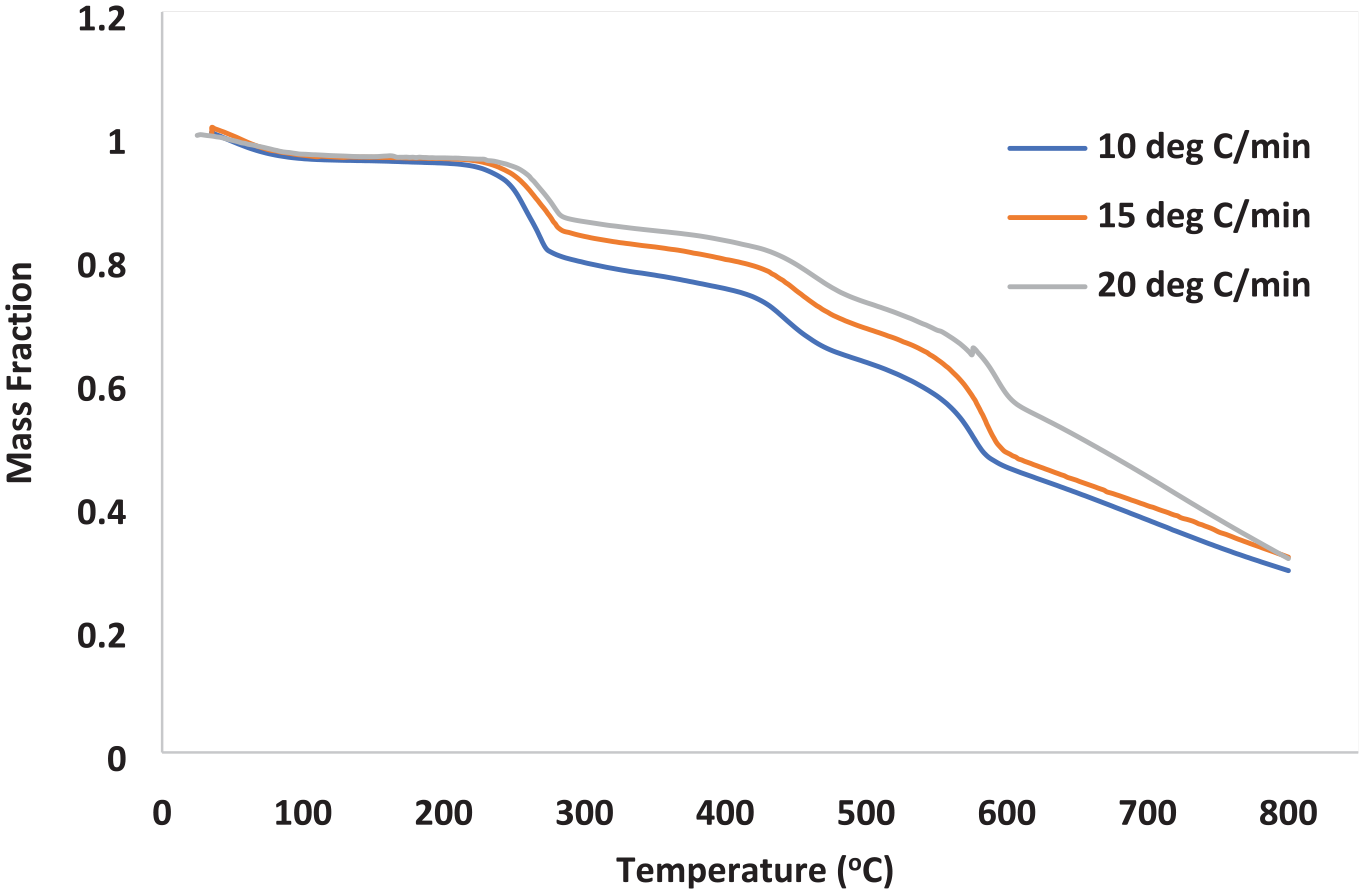
TGA thermographs for the turnout gear after 50 washing cycles at different heating rates.
Activation energies (Ea) and pre-exponential (ko) of the turnout gear at three washing cycles.
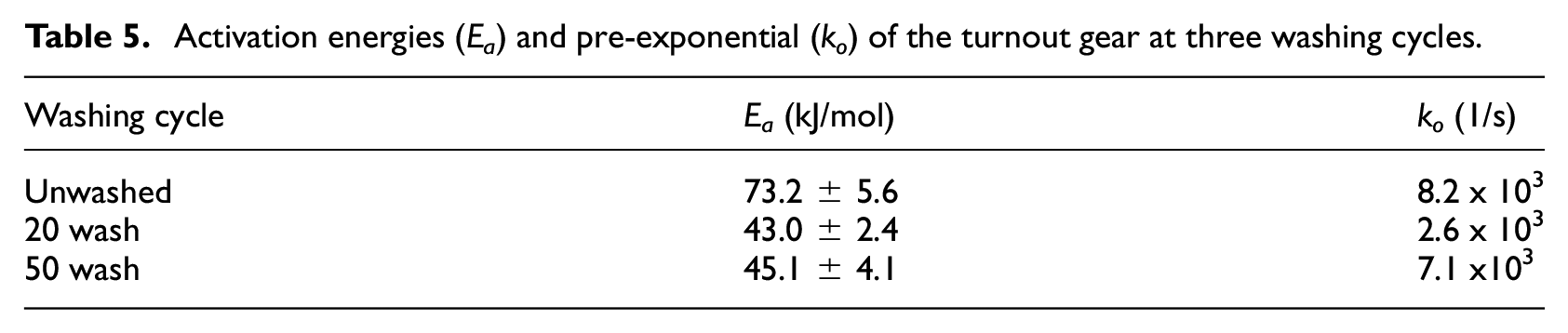
From Table 5, there seems to be no trend with respect to the activation energy values and the cycle of washings in the turnout gear. However, there is over 60% difference between the unwashed and 50 washing cycle values indicating that the thermal stability of the bunker gear decreases with increasing number of washings.
The physical degradation status of the turnout gear with increasing washings is further demonstrated with SEM measurements.
SEM
The following SEM micrographs of unwashed, 20, and 50 washed cycles of the turnout gear samples are shown in Figure 16.
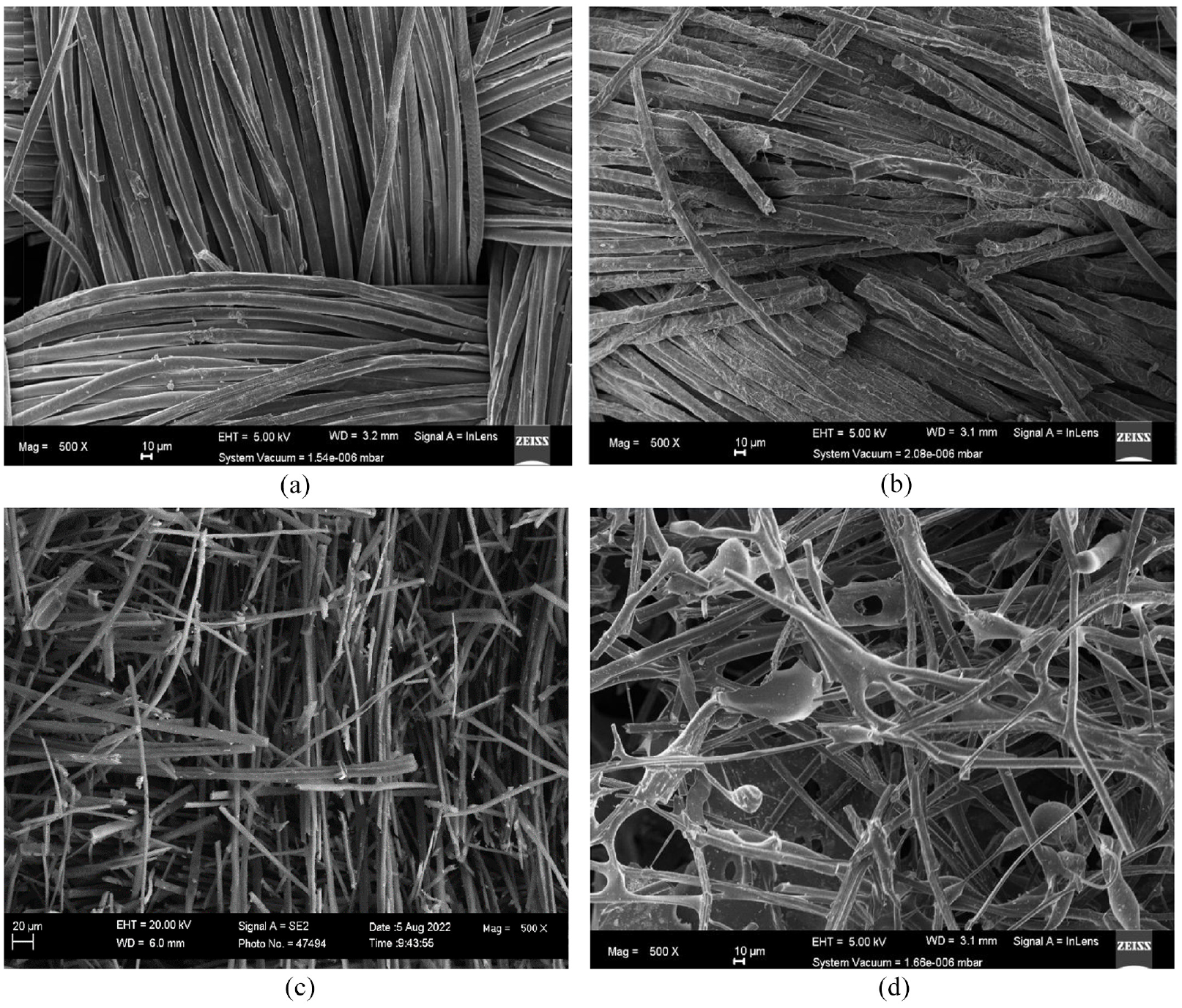
SEM micrographs (magnified 500 times) of the turnout gear: (a) unwashed; (b) 20 washed cycles; (c) 50 washed cycles; and (d) after cone measurements 50 washed cycle.
There is progression of physical degradation of the bunker gear with increasing number of washing cycles, as shown in Figure 16(a)–(c). There is increase in the number of fabric yarns that are torn and splayed with increase in the number of washings and perhaps add up to the increase in the pSPR, SMOGRA, TSR as well as sustained flaming values, as shown in Table 5. Horn et al. 7 also observed material strength (tear and seams) degradation of firefighter’s gear after 40 washing laundry cycles. Figure 16(d) is a micrograph of 50 washed cycles sample after cone calorimeter measurements at 50 kW/m2 irradiation. Clearly, the image shows some singed yarns.
Conclusion
The study has successfully assessed the thermal performances of one of the most used turnout gears by firefighters in the Gauteng Province of South Africa. Investigation was done using the Cone Calorimeter, TGA, SEM, and the EDS.
The thermal performance parameters: pHRR, MARHE, and FIGRA values decrease with increasing number of washing cycles for the turnout gear samples which is attributed to residual elements acquired from the washing detergent that enhanced the inherent fire retardants in the bunker gear fabric.
EDS elemental measurements confirmed the transfer of elements such as Na, S, and Si from the detergent onto the turnout gear fabric (residual elements). On the contrary, for the smoke parameters: pSPR, SMOGRA, TSR, and related sustained flaming values, they all increase with increasing number of washing cycles. This is attributed to the possible breakdown of the mechanical/physical and chemical integrity of the turnout gear fabrics. SEM micrographs showed increase in the yarn splays and the break in the fabric yarns after 50 washing cycles.
From the TGA measurements, the thermal stability of the turnout gear turned to decrease with the number of washings.
Footnotes
Declaration of conflicting interests
The author(s) declared no potential conflicts of interest with respect to the research, authorship, and/or publication of this article.
Funding
The author(s) disclosed receipt of the following financial support for the research, authorship, and/or publication of this article: This study was supported with funds from the Tshwane University of Technology Material Composites Niche Area as well the financial support granted by the City of Johannesburg Emergency Management Services for assisting with neat sets of bunker gears.
