



Abstract
The health-impairment process from job demands to lower well-being among public servants is still understudied. This article therefore uses the Job Demands-Resources model and answers the following question: What is the relationship between sector-specific job demands and public servants’ work-related well-being, and which of the Big Five personality traits ensure that either the hindering effect of these demands is lowered or the challenging effect enlarged? Four public sector specific demands are studied including organizational restructurings, technological innovations, aggression from citizens, and integrity pressure. The analysis of two representative subsamples of the Dutch public sector show that all job demands negatively relate to well-being. Organizational restructurings is the strongest hindering job demand, while technological innovations is the least hindering demand. Moreover, some personality traits turned out to be demands instead of resources, opening new doors for future research in the health-impairment process of public servants.
Keywords
Introduction
Employee well-being—defined as the overall quality of an employee’s experience and functioning at work (Warr, 1987)—has been gaining increasing attention among public organizations (Borst et al., 2020). This is a consequence of public organizations facing several challenges that potentially impair public servants’ well-being, such as rising societal expectations that public servants will perform better with fewer resources (Hesketh & Cooper, 2017; Liu et al., 2015; Tummers et al., 2015), and the changing nature of their work. Examples of the latter are the rapidly changing work environment that results in organizational restructurings and the increasing number of collaborations with citizens and non-profit and private organizations in designing and providing public services (Voorberg et al., 2014). These challenges require substantial psychological capabilities and adjustments by public servants to maintain their well-being (Hesketh & Cooper, 2017; Schaufeli, 2013).
While various multidimensional conceptualizations of work-related well-being exist, most share the idea that work-related well-being can have both a pleasant energizing side, often framed as work engagement, 1 and an unpleasant energy-sapping side known as burnout (Schaufeli & Salanova, 2014). Engaged public servants are vital, proud, and enthusiastic, whereas burnt out public servants are exhausted. This emotional exhaustion is often caused by the high emotional demands from customers or clients (Maslach & Jackson, 1981). The growing challenges facing public organizations raise the question as to what extent public servants are becoming exhausted and losing their pleasant, engaged side (Schaufeli & Taris, 2014).
These increasing challenges can result in various job demands. Four context-specific job demands in the public sector are: organizational restructuring (van der Voet & Van de Walle, 2018; van der Voet & Vermeeren, 2017; Wynen et al., 2020), technological innovations (de Vries et al., 2018), aggression (Tummers et al., 2016), and the increasing complexity to remain integer (van der Wal, 2019). However, to what extent these demands decrease the well-being of public servants is unknown. For example, Tummers et al. (2016) call for research that examines whether workplace aggression is indeed a job demand that negatively affects the well-being of public employees using the widely applied Job Demands-Resources model (JD-R). More generally, many public administration (PA) and HRM scholars call for a contextualized approach in studying the relationship between job demands and resources, and the well-being of public servants, to better grasp the health-impairment process, understood as the gradual draining of mental resources that may occur due to job demands (Audenaert et al., 2019; Bauwens et al., 2021; Fletcher et al., 2020).
Using the JD-R model, this study responds to these calls by studying the relationships between four contextual job demands and public servants’ well-being. This article makes two important contributions to the HRM knowledge base. First, it not only examines four contextual job demands as such, but also studies whether public servants perceive these as hindering or challenging. While several PA scholars have focused on job demands in the public sector, they have studied either general job demands (Bauwens et al., 2021) or red tape as the classic public sector job demand (Borst et al., 2019; Fletcher et al., 2020). Other contextualized job demands, including organizational restructuring, technological innovations, aggression, and increasing complexity in integrity, remain understudied (e.g., Fletcher et al., 2020; Tummers et al., 2016). Further, job demands are generally framed as hindering the well-being of public servants, while some recent studies show that some challenging job demands might increase the well-being of public servants (Bauwens et al., 2021). In this article, we therefore broaden the scope of context-specific job demands and examine how these are perceived by public servants.
Second, this article examines whether personal resources and demands influence public servants’ perceptions of contextual job demands. This is relevant because personal resources shape the way employees understand their environment, which in turn determines their well-being (Schaufeli & Taris, 2014). To date, personal resources have received almost no attention in PA research, and a systematic overview is also missing from the general JD-R literature (Schaufeli & Taris, 2014). As a result, it is unknown whether personal resources serve as resources or as personal demands (Bakker & Demerouti, 2017; Schaufeli & Taris, 2014). One of the most commonly applied taxonomies of personal resources in the JD-R model is the Big Five personality traits. A literature review by Mäkikangas et al. (2013) showed that, depending on context, some of these traits can be either personal resources or personal demands. Therefore, we include the Big Five as personal resources/demands and study whether and how these affect public servants’ perceptions of job demands.
To achieve these two goals, the following research questions guide this article: What is the relationship between sector-specific job demands and public servants’ work-related well-being? Which of the Big Five personality traits ensure that either the hindering effect of these demands is lowered, or the challenging effect enlarged?
In answering this question, we use two representative subsamples of the Dutch public sector (N = 8,537 and N = 8,310). The first subsample provided answers to questions related to technological innovations and aggression, and the second to questions related to organizational restructurings and integrity. The remainder of this article is structured as follows. The next section discusses contextual job demands and personal resources, and their relationships with work-related well-being. Subsequently, the methods and results of the study are presented, followed by a concluding section that includes theoretical implications and suggestions for further research.
Theory and Hypotheses
Contemporary JD-R Model
The relationships between well-being and both job demands and personal resources can be construed through the JD-R model (Schaufeli & Taris, 2014). The JD-R model posits that all job characteristics can be placed in one of three categories: job demands, job resources, and personal resources. Job demands are factors that consume energy in dealing with them, such as high workload and role ambiguity. Personal and job resources cover factors that generally help individuals to deal with these demands. Job resources are located at the level of the organization, at the interpersonal level, at the level of the organization of work, and the level of the task (Bakker & Demerouti, 2007).
A recent review of the public administration literature found quite convincing evidence on the effects of job resources, whereas the evidence regarding job demands and individual resources was weak and moderate to weak respectively (Fletcher et al., 2020). This is in part due to the limited public-sector research using the JD-R model, and partly because it is unclear whether personal resources and job demands positively or negatively affect employees’ well-being (Bauwens et al., 2021; Fletcher et al., 2020). This study therefore integrates contextualized job demands and personal resources into the JD-R model, with specific attention given to whether these are perceived as challenging or demanding.
Demand I: Organizational restructuring
In recent years, the public management literature has given increasing attention to deliberate (e.g., Wynen et al., 2020) and involuntary restructurings of public sector workplaces (e.g., Piatak, 2019; van der Voet & Van de Walle, 2018). Deliberate organizational restructuring, that is “deliberate changes to the structure and processes of public sector organizations with the objective of getting them run better” (Pollitt & Bouckaert, 2011, p. 2), are most often framed in the context of major paradigm changes, such as New Public Management (NPM) and New Public Governance (NPG). Restructurings resulting from NPM ideas include mergers/acquisitions, downsizing without forced layoffs, and outsourcing of specific tasks/services. Studies focusing on involuntary restructurings are often framed in the context of societal changes, including financial crises, that lead to cutbacks and layoffs (e.g., Piatak, 2019; van der Voet & Van de Walle, 2018). In recent years, reforms aimed at cutbacks and efficiency improvements have become commonplace in public organizations (van der Voet & Vermeeren, 2017).
While these restructurings are normally aimed at improvements, public servants are frequently skeptical (Kiefer et al., 2015). van der Voet and Vermeeren (2017) argue that public servants often perceive restructurings as negative, especially if the content is bad for them personally, the management of the implementation process is poor, and/or if they have experienced many changes in the past. Their research shows that changes due to restructuring are often evaluated rather poorly and that “reform fatigue” is ubiquitous in the public sector.
Restructurings are not only evaluated poorly, but research also shows they have negative consequences for employee well-being. Applying the JD-R model, van der Voet and Vermeeren (2017) argue that downsizing and cutbacks in the public sector come with increased job demands and decreased job resources (e.g., job security and social/supervisory support), which in turn leads to a decrease in public servants’ well-being in the form of reduced work engagement. They further state that not only employees who lose their jobs but also those who “survive” may experience negative effects because they experience an erosion of trust and morale, as well as an increase in work pressure, job insecurity, and inherent stress (i.e., burnout). Applying the JD-R model, Harney et al. (2018) show that not only downsizing, but also other restructurings, amount to job demands that directly increase employees’ burnout. They argue that restructuring is a form of change that detracts from well-known drivers of well-being, including a sense of security and feelings of being valued. Organizational restructurings in general and downsizing/cutbacks in particular might therefore be perceived as hindering demands, negatively influencing the well-being of public servants. Hence, we hypothesize:
Hypothesis 1. Organizational restructurings are hindering demands that have a negative relationship with work engagement and a positive relationship with burnout.
Demand II: Technological innovation
Although public management research gives little attention to technological innovation, it does receive significant attention in research on e-government (de Vries et al., 2018). As with organizational restructuring, technological innovations are often aimed at improving efficiency and effectiveness through achieving greater accessibility to information and better delivery of government services to citizens (de Vries et al., 2018; Dukić et al., 2017).
While public servants are predominantly positive about the overall results of technological innovation, they are more skeptical about its effects on themselves and their jobs. Several studies show that public servants believe that technological innovations could increase the accessibility of government, improve public services, and enhance the internal efficiency of government (e.g., Christensen & Lægreid, 2010; Homburg, 2008). However, research also shows that, despite having some basic technological skills, public servants’ more advanced e-skills are underdeveloped (e.g., Dukić et al., 2017), which might lower their employability. Dukić et al. (2017) for example show that public servants possess some basic ICT skills including internet browsing, word processing and e-mailing, but those same public servants score severely insufficient when it comes to the possession of more advanced ICT skills which will become much more important in the coming years, including working with data through databases, cloud computing, and video editing.
Although public servants in general do not feel threatened by technological innovations, the JD-R model suggests that these innovations should nevertheless be understood as hindering job demands (van Den Heuvel et al., 2010). These scholars argue such innovations are changes that increase pressure on employees to display changeability and resilience, resulting in lower well-being. Public servants who see themselves as under-skilled to deal with technological innovations will feel hindered, rather than challenged, resulting in lower work engagement and higher burnout. As such, we hypothesize:
Hypothesis 2. Technological innovations are hindering demands that have a negative relationship with work engagement, and a positive relationship with burnout.
Demand III: Workplace aggression
Due to increasing interactions with empowered citizens, the work of many public employees increasingly involves emotions (Dudau & Brunetto, 2020; Guy & Lee, 2015; Guy et al., 2008). Many public employees perform emotional labor as they must deal with demands from their employer (e.g., having to follow rules and regulations that ensure equity with reduced resources) while also wanting to deliver appropriate services to often troubled and vulnerable citizens (Brunetto et al., 2014; Dudau & Brunetto, 2020). When interacting with citizens, public employees often have to deal with aggressive citizens who feel they are not served well and cannot opt for alternative providers due to the monopolized public services (Fischer et al., 2016; Tummers et al., 2016). This so-called “external” aggression from citizens and other clients can take many forms including verbal aggression, sexual harassment, physical aggression, and threats (Fischer et al., 2016; Tummers et al., 2016).
Since aggression is often framed as a negative phenomenon, Tummers et al. (2016) argue that aggression should be viewed as a job demand that increases burnout and inherently decreases well-being. Supporting this premise, JD-R research on student violence and pupil misbehavior against teachers, as well as on patient harassment of nurses, shows that these forms of aggression constitute hindering job demands that negatively affect work engagement and increase exhaustion (e.g., Bakker et al., 2003; Bass et al., 2016; Hakanen et al., 2006). Such studies consistently show that, as the result of such acts of aggression, employees perceive less job control, greater injustice, lower self-esteem, and trauma, resulting in higher levels of burnout. Therefore, we hypothesize:
Hypothesis 3. Workplace aggression constitutes a hindering demand that has a negative relationship with work engagement and a positive relationship with burnout.
Demand IV: Integrity violation
Due to the increasing interactions with citizens and other stakeholders, public servants are confronted with greater complexity in maintaining their integrity (van der Wal, 2019). Integrity is often defined as the quality of acting, as an individual or organization, in accordance with relevant moral values, norms, and rules (Lasthuizen et al., 2011). In line with the arguments offered in the emotional labor literature (Dudau & Brunetto, 2020), van der Wal (2019) argues the integrity of public servants is under pressure through two processes: stakeholders expecting to be able to co-create and co-produce policies, while also expecting public servants to take the lead and therefore carry the responsibility if a partner crosses a line. Given this increasing complexity, management might be inclined to go beyond the conventional boundaries, thereby putting pressure on public servants. For example to be able to co-create, management might pressure public servants to share information extensively with various partners, but this might easily damage the security and confidentiality of information (van der Wal, 2019). The line between good and bad practice therefore becomes increasingly thin.
Although interest in integrity and ethics has increased significantly in recent decades, the specific aspect of improper administrative/managerial pressure to violate personal integrity has not been well studied. Various integrity violations have been distinguished including withholding information, preferential treatment/favoritism, and inaction when unethical behavior is recognized (Lasthuizen et al., 2011). Kaptein (2011) argues that this unethical behavior is affected by the ethical culture, which is determined by managers, who can be wrongdoers themselves through unethical role-modeling that stimulates unethical behavior.
To date, there is no research studying improper administrative/managerial pressure to violate integrity in the context of the JD-R model. Nevertheless, by combining the discussion on unethical behavior with JD-R research, we conclude that improper pressures on integrity should be viewed as a hindering job demand that negatively influences the well-being of public servants. These improper pressures create an unsupportive, negative, and unfair climate, and leads to distrust in leadership, all negative drivers of work engagement and positive drivers of burnout (Schaufeli & Taris, 2014). Therefore, we hypothesize:
Hypothesis 4. Pressure to violate integrity is a hindering demand that has a negative relationship with work engagement, and a positive relationship with burnout.
Personal resources: Big Five personality traits
There is growing consensus that a personality model comprising five major overarching factors, “the Big Five” (extraversion, intellectual autonomy, conscientiousness, agreeableness, and emotional stability), describes the salient aspects of personality. Although increasing attention is being given to the Big Five in the context of the public sector, it remains unclear how these traits relate to public servants’ well-being (Kruyen et al., 2019).
In the context of using the JD-R model, the Big Five personality traits are the most investigated set of personal resources in relation to well-being, together with the single dispositional trait of self-efficacy (Mäkikangas et al., 2013). Scholars have integrated these personal resources in the JD-R model in several ways (Schaufeli & Taris, 2014). The first is through studying the direct impact of personal resources on well-being (Alarcon et al., 2009; Mäkikangas et al., 2013; Schaufeli & Taris, 2014). The meta-analysis of Alarcon et al. (2009) shows that four of the Big Five factors—emotional stability, extraversion, conscientiousness, and agreeableness—are consistently related negatively to burnout. Further, the meta-analysis by Mäkikangas et al. (2013) shows that three of the Big Five factors—emotional stability, extraversion, and conscientiousness—were consistently and positively related to higher work engagement. The relationships of each of the Big Five personality traits with work engagement and burnout are discussed below.
First, employees scoring high on extraversion tend to be optimistic and to appraise problems positively, which is associated positively with engagement and negatively with burnout (Alarcon et al., 2009; Robins et al., 2018). Second, employees scoring high on conscientiousness tend to strive for persistency, accomplishments, and achievements, which relates positively to engagement and negatively to burnout (Alarcon et al., 2009; Robins et al., 2018). Third emotional stability, the general tendency of employees to be free of negative emotions, such as anxiety, depression, and frustration, leads to lower burnout and higher work engagement (Costa & McCrae, 1992; Robins et al., 2018). Fourth, employees scoring high on agreeableness can be expected to behave kindly toward others, including co-workers and managers, which evokes favorable responses and inherently makes workers more susceptible to feeling engaged and less susceptible to burnout (Alarcon et al., 2009). Finally, employees who score high on openness to experience are highly self-motivated to embrace novel, unique, and varied experiences. As such, whether employees scoring highly for this trait experience greater work engagement and less burnout depends very much on the characteristics of the occupational group and the work context (Griffin & Hesketh, 2004). Consequently, openness is the most debated Big Five trait, lacking straightforward direct consequences for employees’ work engagement and burnout (Alarcon et al., 2009; Mäkikangas et al., 2013). Hence, we hypothesize:
Hypothesis 5a: Public servants’ emotional stability, extraversion, conscientiousness, and agreeableness relate positively with their work engagement and negatively with their burnout.
Hypothesis 5b: Public servants’ openness to experience is not significantly related with their work engagement and burnout.
The second way in which these Big Five traits are integrated into the JD-R model is through their direct influence on employees’ perceptions of job demands and resources. Within the JD-R model, Social Cognitive Theory is used to justify treating personal resources as psychological characteristics that provide employees with the ability to control and impact their environment. Consequently, employees with more personal resources form stronger positive evaluations of themselves and, in turn, can comprehend or create more resourceful work environments while focusing less on job demands (Xanthopoulou et al., 2007). Applied to this study, it can be argued that all the Big Five personality traits affect employees’ perceptions about organizational restructurings, technological innovations, workplace aggression, and pressure to violate integrity. This relationship is discussed below for each personality trait.
First, relative to introverts, extraverts might experience job demands more optimistically and with greater confidence because they tend to use positive re-appraisal strategies and experience more social support (Alarcon et al., 2009). Second, highly conscientious employees are dutiful and tend to adhere to principles and obligations initiated by management, which may reduce the feeling that they are being pressured by management to violate their personal integrity, or that imposed organizational restructurings and technological innovations are hindering (Vakola et al., 2004). Moreover, highly conscientious employees may actively manipulate work environments to eliminate demanding working conditions whereas less conscientious employees tend not to engage in behaviors that actively address such stressors (Alarcon et al., 2009). Third, relative to their more neurotic colleagues, emotionally stable employees are likely to perceive demands as less intense and less distressing (Robins et al., 2018). Fourth, relative to disagreeable employees, agreeable colleagues often avoid tensions and disagreements in the workplace (e.g., aggression and pressures to violate integrity) and will be less reluctant to resist changes such as technological innovations and organizational restructurings (Vakola et al., 2004). Finally, employees who are relatively open to experiences thrive on novel, unique, and varied experiences and, as a result, will positively embrace demands such as organizational restructurings and technological innovations (Griffin & Hesketh, 2004). Moreover, these employees are relatively tolerant and perceptive, and will inherently perceive less aggression or pressure to violate their integrity (Vakola et al., 2004). Hence, we hypothesize:
Hypothesis 6. Public servants’ Big Five personality traits all relate negatively with their perceived job demands.
The third way in which these Big Five traits are integrated in the JD-R model is through their indirect influence (i.e., mediation) on well-being through employees’ perceptions of job demands (Alarcon et al., 2009; Robins et al., 2018). While in most studies it is accepted that employees will always perceive job demands and therefore one should study how traits can be used to cope with these demands, this new approach that considers mediation argues that not all job demands are experienced equally by all employees because their personality traits differ (Schaufeli & Taris, 2014). Employees with a more positive outlook view similar job demands as less hindering than colleagues with a more negative outlook (Alarcon et al., 2009; Mäkikangas et al., 2013; Robins et al., 2018; Schaufeli & Taris, 2014). Consequently, the well-being of employees who perceive job demands as less hindering due to their positive outlook, will be less negatively affected by job demands (Schaufeli & Taris, 2014). In Hypothesis 6, we therefore posit that high levels of the Big Five personality traits lower perceived job demands. Following this line of reasoning, we argue that the Big Five personality traits might not only directly, but also indirectly, affect employee well-being.
Hence, we hypothesize:
Hypothesis 7: Public servants’ Big Five personality traits, through perceived job demands, have a positive indirect relationship with work engagement and a negative indirect relationship with burnout.
Methodology
Participants
To test the hypotheses, we used a survey carried out in 2019 by the Dutch Central Bureau of Statistics, commissioned by the Dutch Ministry of Internal Affairs and Kingdom Relations. In total, 46,090 questionnaires were sent to public servants employed in municipalities, provinces, water boards, central government, legal authorities, semi-autonomous government agencies, and other intergovernmental cooperations (see Table 1 for an overview). In total, 20,207 were returned (a response rate of 43.8%).
Data Characteristics.
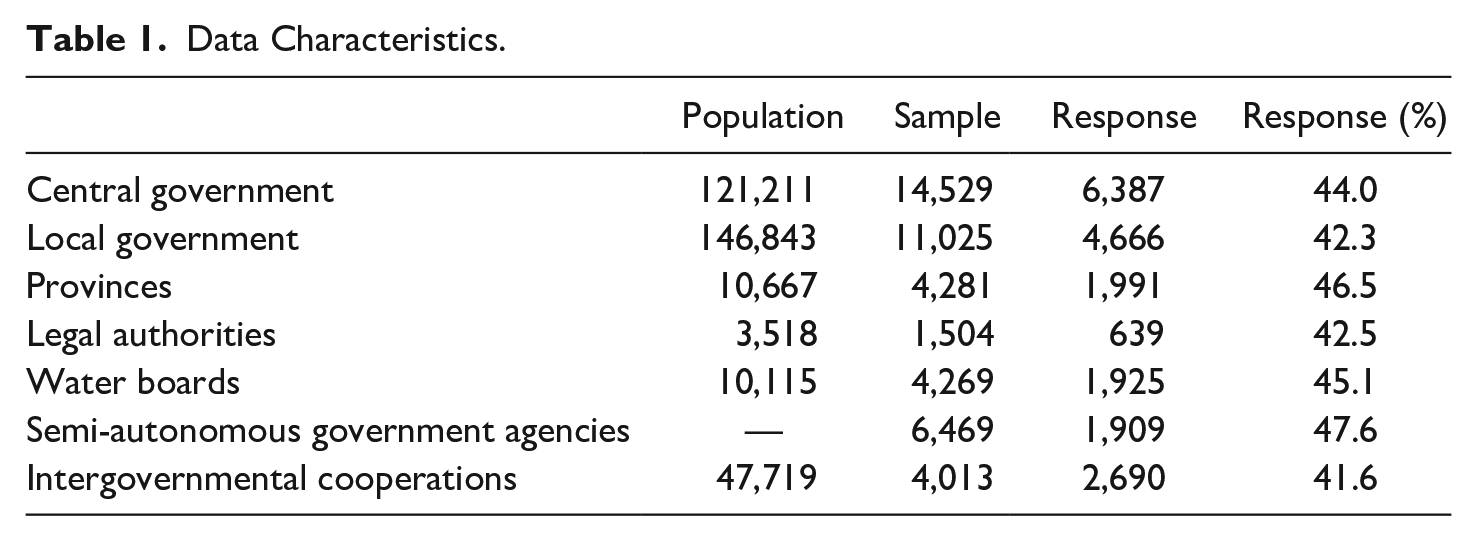
We excluded managers from the analyses because they received a different questionnaire than employees. As a result, we included the responses of 16,847 non-management public servants (i.e., employees who do not carry out performance interviews). To avoid a high non-response rate due excessive questions, the Central Bureau of Statistics split the questionnaire and potential respondents into two parts. One subsample (N = 8,537) answered questions concerning technological innovations and aggression, and the second (N = 8,310) on organizational restructurings and integrity. The questions relating to these job demands were only to be answered by respondents who considered themselves to have actually been confronted with a particular demand, whereas all respondents were expected to answer questions on their well-being and personality.
We analyzed four models, one for each job demand. The models consisted of 4,812 (technological innovations), 6,350 (aggression), 2,984 (organizational restructurings), and 6,818 respondents (integrity) respectively.
Measures
Well-being was measured through two constructs: work engagement and burnout.
Work engagement
In line with Schaufeli et al. (2019), a very short measure (UWES-3), that has been shown to be both valid and reliable, was used for work engagement. This takes three items from the UWES-9, one for each dimension: (1) “When I get up in the morning, I feel like going to work” (Vigor); (2) “My job inspires me” (Dedication); and (3) “I feel happy when I am working intensely” (Absorption) (Schaufeli et al., 2019). These items were answered by the respondents based on a 5-point Likert scale ranging from 1 (“Totally disagree”) to 5 (“Totally agree”).
Burnout
Hsieh (2014) showed that emotional exhaustion is the primary dimension of burnout in a public administration context. We therefore measured emotional exhaustion, using three items from the emotional exhaustion dimension of the validated Oldenburg Burnout Inventory scale: (1) After my work, I usually feel worn out and weary; (2) After working, I have enough energy for my leisure activities (reversed); and (3) After work, they have to leave me alone for a while. These items were answered by the respondents based on a five-point Likert scale ranging from 1 (“Totally disagree”) to 5 (“Totally agree”).
Big Five personality
The Big Five personality characteristics were measured through the validated Big Five 10-item Inventory (Rammstedt & John, 2007) that includes two items for each dimension starting with the phrase “I see myself as someone who. . .” Extraversion is measured through the items “is talkative” and “is outgoing, sociable.” Intellectual autonomy is measured through the items “is original, comes up with new ideas” and “has an active imagination”; Conscientiousness through the items “does a thorough job” and “tends to be lazy” (reversed). Agreeableness is measured using the items “has a forgiving nature” and “is considerate and kind to almost everyone” and, finally, Emotionally Stability is measured using “remains calm in tense situations” and “gets nervous easily” (reversed). These items were answered by the respondents based on a 5-point Likert scale ranging from 1 (“Totally disagree”) to 5 (“Totally agree”).
Organizational restructuring was measured using three items: “The organizational restructuring(s) including major reorganizations, mergers/acquisitions, downsizing with(out) forced layoffs, and structural disaggregations of certain (administrative) tasks/services were: (1) negative in general; (2) managed badly; and (3) negative in terms of improving the performance of the organization”. These items were answered by the respondents based on a 5-point Likert scale ranging from 1 (“Totally disagree”) to 5 (“Totally agree”).
Aggression was measured with four items: “In the past 12 months I have had to deal with: (1) unwanted sexual attention from citizens/customers; (2) threats or intimidation by citizens/customers; (3) physical aggression and/or physical violence by citizens/customers; and (4) verbal aggression from citizens/customers”. These items were answered by the respondents based on a 4-point Likert scale ranging from 1 (“Never”) to 5 (“Very often”).
Integrity violation was measured using three items: (1) “Employees in my organization are put under pressure by management to violate rules, withhold information, or to give preferential treatment”; (2) “The will of the management/organization leadership leads in my organization, even when this is not in line with integrity codes”; and (3) “Raising sensitive issues related to integrity is discouraged in my organization.” These items were answered by the respondents based on a five-point Likert scale ranging from 1 (“Totally disagree”) to 5 (“Totally agree”).
Technological innovation was measured using two items: “To what extent can you keep up with these changes (such as data-driven work, robotization, etc.) in your work?” (1 = “bad” to 5 = “really well”) and “To what extent do these technological developments (such as data-driven work, robotization, etc.) pose a threat to the preservation of your job?” (1 = “not at all” to 5 = “a large extent”).
Control variables
Three control variables were also included in the analyses. We dummy coded gender (0 = male; 1 = female). Age was categorized into 10 cohorts: 1 = 15–24 years; 2 = 25–29; 3 = 30–34; 4 = 35–39; 5 = 40–44; 6 = 45–49; 7 = 50–54; 8 = 55–59; 9 = 60–64; and 10 = 65 years and older. We also included education in our analysis. This was subdivided into eight categories, reflecting the Dutch educational system: 1 = lower vocational education; 2 = pre-vocational secondary education; 3 = lower general secondary education; 4 = higher general secondary education; 5 = pre-university education; 6 = secondary vocational education; 7 = higher professional education; and 8 = university education including PhDs.
Strategy of Analysis
Our seven hypotheses were tested using structural equation modeling performed in Mplus version 7.4. A two-step approach was adopted for each model where, first, the measurement models were examined, followed by the analysis of the structural models (Anderson & Gerbing, 1988). We used the Weighted Least Squares Means and Variance adjusted (WLSMV) estimation method since the measurement models include a large number of categorical variables whose answers showed skewed distributions (floor and ceiling effects). The WLSMV estimation method does not assume normally distributed variables and provides the best option for modeling categorical data (Brown, 2006). The comparative fit index (CFI), Tucker–Lewis index (TLI), and root mean square of approximation (RMSEA) were used to assess how well the models fit the data. CFI and TLI values above .90 indicate a good fit, and above .95 an excellent fit. RMSEA values below .08 indicate a good fit, and below .05 an excellent one (Byrne, 2012). Furthermore, construct reliability (CR) and Average Variance Extracted (AVE) values were calculated to test the reliability and validity respectively of our variables. Following the calculation of the measurement models, the structural models were tested including the hypothesized mediating effects. Mediation was tested through bootstrapping with 1,000 resamples.
Results
The Measurement Models
The four measurement models (one for each demand) are presented in Table 2.
Fit Statistics of the Four Measurement Models.
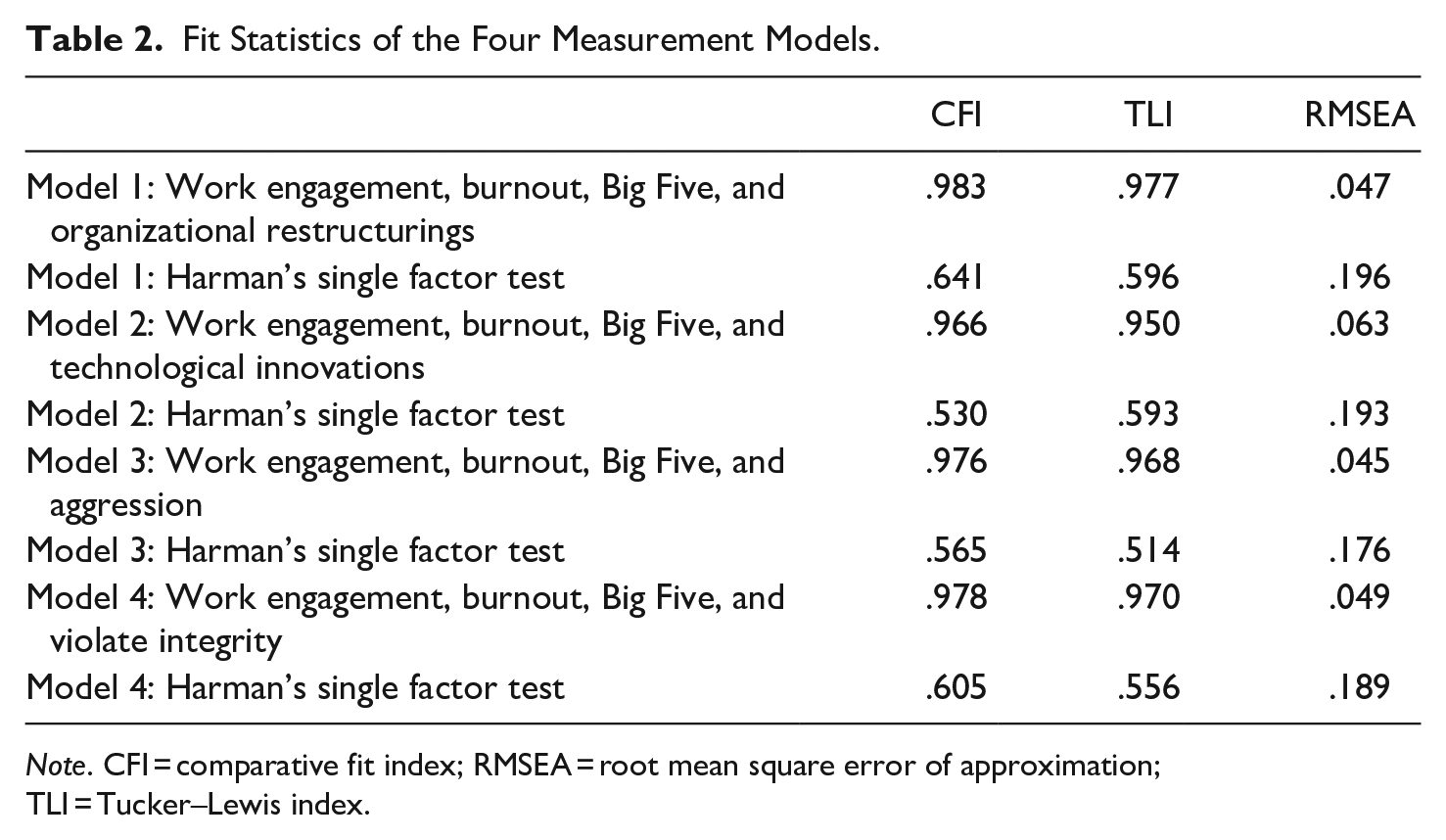
Note. CFI = comparative fit index; RMSEA = root mean square error of approximation; TLI = Tucker–Lewis index.
The results in Table 2 show that all four models have at least a good fit with the data. Given the data come from a single source, common-method variance (CMV) may be an issue (Podsakoff et al., 2003). To check for this, Harman’s single factor tests were performed for all four models in which we loaded all items onto a single factor. Although it has been criticized, this test is often used to indicate the possible presence of CMV (George & Pandey, 2017). As Table 2 shows, these one-factor models had significantly worse fits than the original measurement models, indicating that CMV is unlikely to be an issue.
The mean AVE values for the work engagement, burnout, emotional stability, extraversion, and openness models are classified as good (0.619; 0.729; 0.507; 0.649; 0.494 respectively) as are their mean CRs (0.829; 0.889; 0.672; 0.786; 0.649) indicating that there are unlikely to be validity issues. However, the AVEs of both agreeableness and conscientiousness are rather low (0.418 and 0.379) as are their CRs (respectively 0.566 and 0.538). However, and in line with previous research (Rammstedt & John, 2007), the indicators for these two constructs loaded more highly onto their respective latent factors than those of the other constructs. In addition, the correlations of the constructs in all four models, as presented in Tables 3 and 4, show that the squared correlations of agreeableness and conscientiousness exceeded those between the other constructs. These findings suggest that these two constructs do have discriminant validity and we therefore chose to retain conscientiousness and agreeableness in the model.
Descriptive Statistics and Correlations: Subsample 1 (Model 1 and 2).
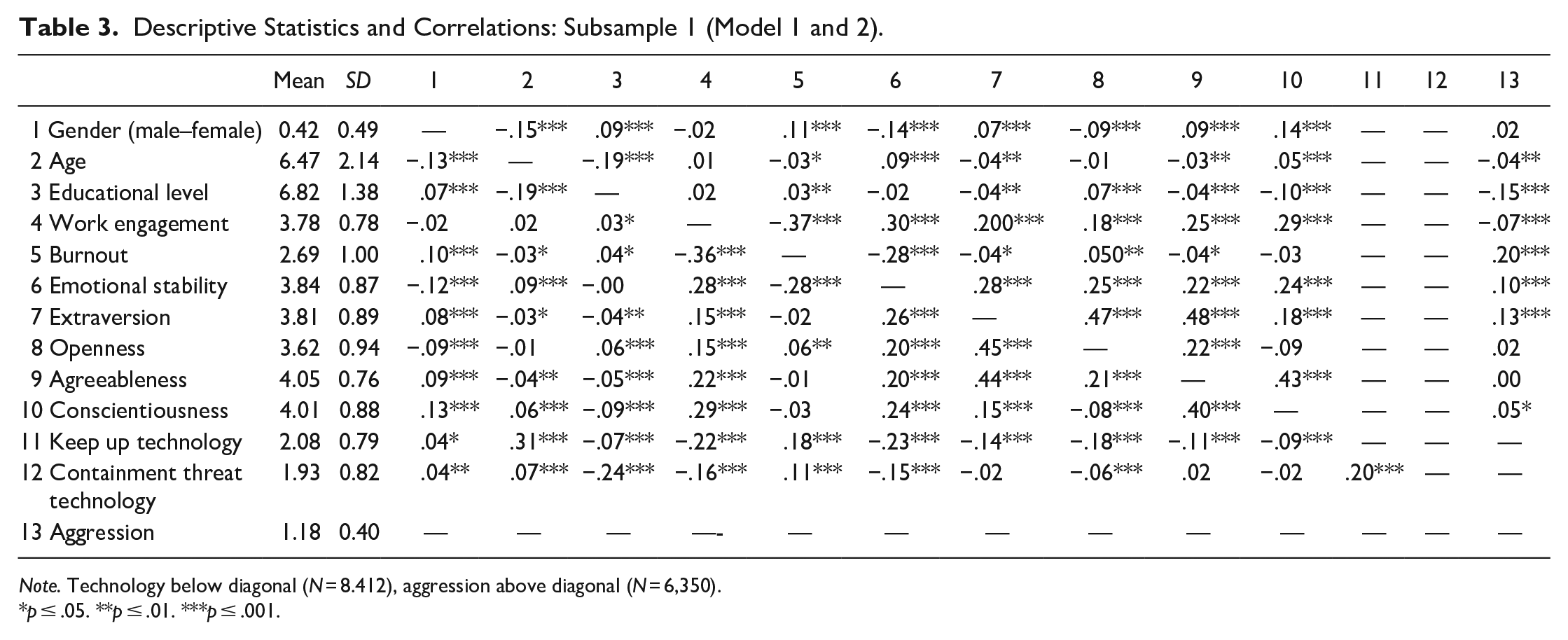
Note. Technology below diagonal (N = 8.412), aggression above diagonal (N = 6,350).
p ≤ .05. **p ≤ .01. ***p ≤ .001.
Descriptive Statistics and Correlations Subsample 2 (Model 3 and 4).
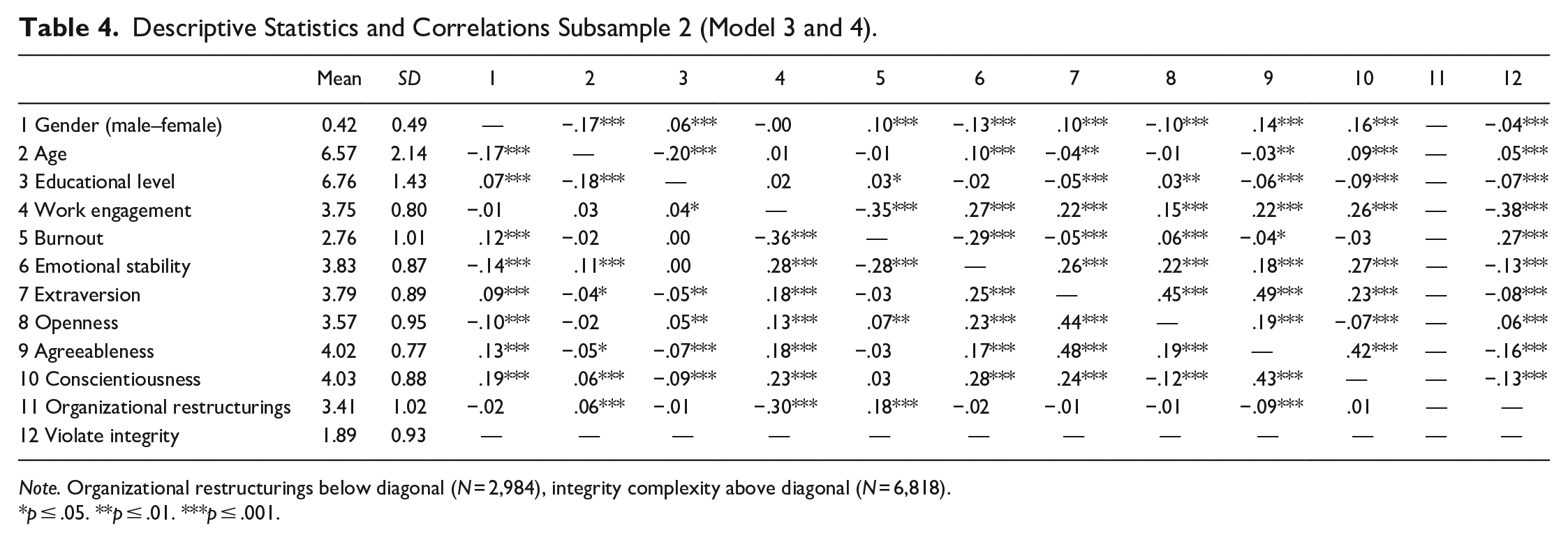
Note. Organizational restructurings below diagonal (N = 2,984), integrity complexity above diagonal (N = 6,818).
p ≤ .05. **p ≤ .01. ***p ≤ .001.
The AVEs of the organizational restructuring, aggression, and integrity violation job demands are good (0.785; 0.719; 0.765 respectively), as are their CRs (0.916; 0.909; 0.907). Since the technological innovations demand was measured using observed variables, values for AVE and CR are not available.
As shown in Tables 3 and 4, the mean values of work engagement (positive well-being) and burnout (negative well-being) across the subsamples are 3.77 and 2.73 respectively. Public servants are therefore moderately engaged, but not particularly suffering from burnout.
Furthermore, public servants’ perceptions of the demands vary. First, organizational restructurings are predominantly rated negatively, scoring 3.4 on a scale from 1 to 5. Second, technological innovations are generally perceived positively, with 81.5% of the public servants stating that they perceive hardly any threats due to technological developments, and 96.4% of the public servants indicating that they can keep up with technological developments fairly to very well. Third, the perceptions concerning aggression are mixed. Verbal aggression and threats/intimidation are the most common, with 30.3% of the public servants indicating that they had been confronted with verbal aggression occasionally, and 17.9% with threats or intimidation. Unwanted sexual attention was the least commonly reported form of aggression with 2.4% indicating that they had occasionally been confronted with sexual harassment and 0.1% either often or very often. Physical aggression was also unusual: 3.8% of civil servants indicated that they had occasionally experienced physical aggression and 0.7% more often. Finally, turning to the fourth demand, perceived pressure to violate integrity, this received a relatively low mean score of 1.89.
Structural Models
The results of the structural (mediated) path analyses beyond the control variables can be found in Table 5.
Structural path analyses.
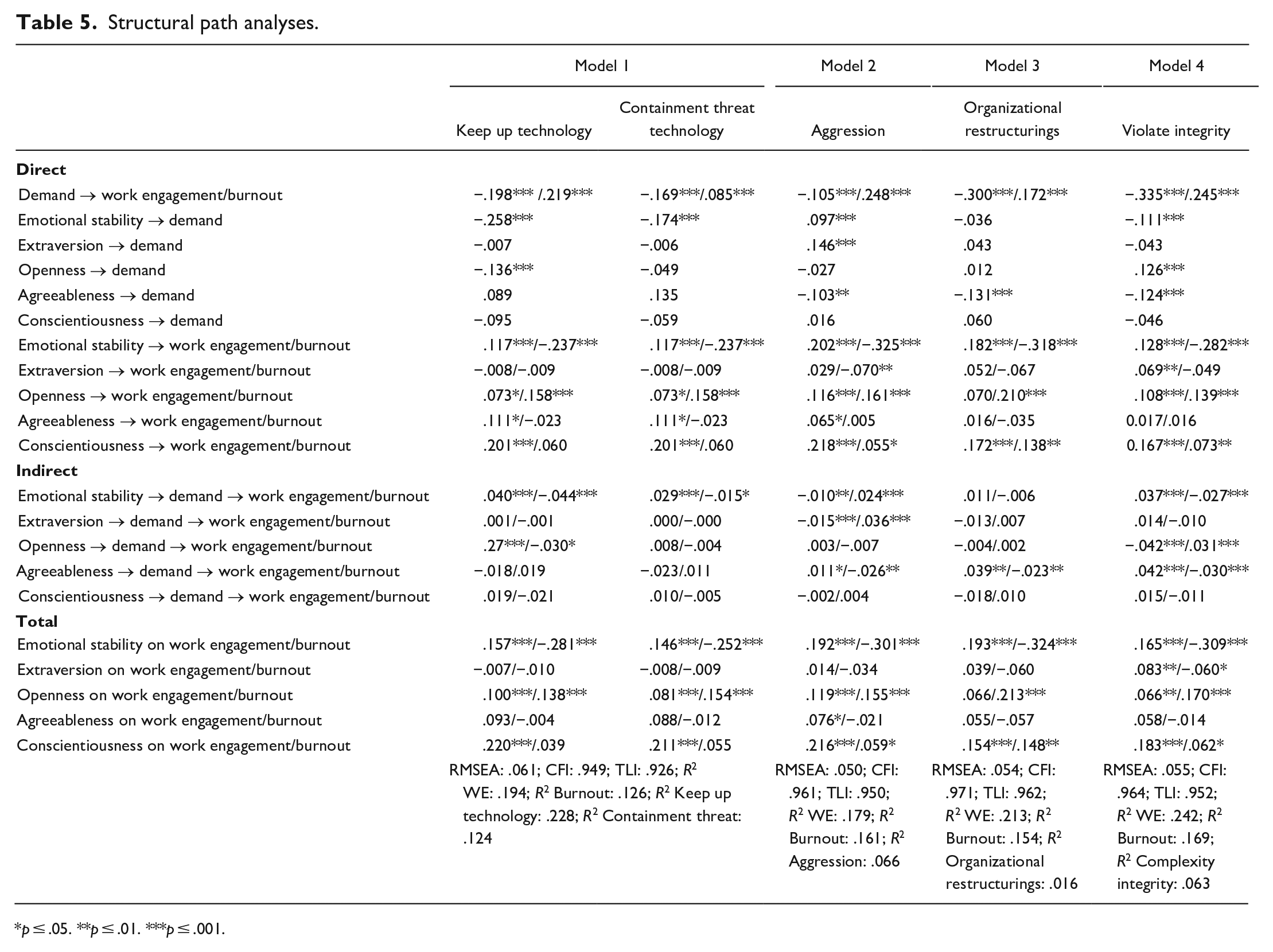
p ≤ .05. **p ≤ .01. ***p ≤ .001.
As the results in Table 5 show, the various demands and the personality traits explain between 17.9% and 24.2% of the variance in work engagement, and between 12.6% and 16.9% in burnout. Furthermore, the personality traits and the control variables combined explain 12.4% and 22.8% of the variance in perceptions of technological innovation demands. The explained variance of the other demands were lower (perceived aggression: 6.6%, integrity violation pressure: 6.3%, and organizational restructuring: 1.6%).
As hypothesized, all four demands are related negatively with work engagement and positively with burnout. Pressure on integrity has the strongest negative relation with work engagement (β = −.335, p ≤ .001), followed by organizational restructurings (β = −.300, p ≤ .001), technological innovations (β = −.156, p ≤ .001, and β = −.138, p ≤ .001), and aggression (β = −.105, p ≤ .001). In contrast, aggression has the strongest relation with burnout symptoms (β = .248, p ≤ .001), followed by pressures on integrity (β = .245, p ≤ .001), organizational restructurings (β = .172, p ≤ .001), and technological innovations (β = .172, p ≤ .001, and β = .070, p ≤ .001). As such, all these types of demand are perceived as hindering (as opposed to challenging). Hypotheses 1 to 4 are thus supported.
Turning to the personality traits, the relationships between the Big Five personality factors and well-being (work engagement and burnout) are mixed. Across the models, emotional stability is the only personality trait that positively relates with work engagement and negatively relates with burnout. Openness to experience and conscientiousness are also strongly and positively related to work engagement, but also positively with burnout. In contrast, agreeableness and extraversion have barely any significant relationship with either burnout or work engagement. Hypotheses 5a and 5b are therefore only partly supported.
The results in Table 5 show that the relationships between personality factors and perceived demands are also mixed. Conscientiousness has no significant relationship with job demands, whereas agreeableness is positively related with all demands except technological innovations. Further, emotional stability is positively related to all job demands except organizational restructuring. The other two personality factors, extraversion and openness, have both positive and negative relationships with the various demands. Extraversion increases the perceived frequency of aggressive encounters with citizens but has no perceived influence on the other demands. Openness decreases the negative perception of technological innovations but increases the sense of pressure to violate integrity. Hence, Hypothesis 6 is only partially supported.
In addition to the direct relationships discussed above, Table 5 also shows indirect relationships between personal resources and both work engagement and burnout through perceived job demands. Since agreeableness, through three out of four job demands, positively relates to work engagement and negatively relates to burnout, it is the strongest personality trait to ensure that the hinder effects of demands are lowered. Further, emotional stability has significant positive indirect relations, through both technological innovations and integrity violation, with work engagement and negative indirect relations with burnout. Surprisingly though, emotional stability has significant negative indirect relations through aggression with work engagement and significant positive indirect relations with burnout. In other words, public servants with emotional stability believe they can handle technological innovation and perceive less integrity violation, which in turn enhances well-being (lower burnout/higher engagement). By contrast, public servants with emotional stability perceive more aggression, which in turn reduces well-being (higher burnout/lower engagement). We also see that extraversion and intellectual autonomy only relate with work engagement and burnout indirectly through two of the job demands (aggression and integrity violation) and, surprisingly, that these relationships are in the opposite direction to that proposed in the hypothesis. Finally, conscientiousness has no significant indirect effects through any of the four job demands on well-being. Hypothesis 7 is therefore largely rejected.
Discussion and Conclusion
Although practitioners and public management researchers acknowledge that public servants’ well-being is under pressure, their main focus is on identifying positive “motivational” processes, and largely ignore the negative “health-impairment” process of job demands that lead to reduced well-being. This article fills this gap by applying the JD-R model in public management and human resource management research to focus on the health-impairment process. While red tape, as a job demand, is frequently studied in the PA literature, other also relevant demands are studied less frequently. We focused on four of these: aggression, integrity violation, organizational restructuring, and technological innovation. The results show that, in line with our theoretical expectations, all these demands reduce employee well-being by decreasing work engagement and increasing burnout. However, the public servants’ perceptions of the demands, as well as the personality characteristics that influence these perceptions, are more complex than the literature suggests.
Although the studied job demands hinder the well-being of public servants (in correspondence with de Vries et al., 2018; Tummers et al., 2016; van Den Heuvel et al., 2010; van der Voet & Van de Walle, 2018; van der Voet & Vermeeren, 2017; van der Wal, 2019; Wynen et al., 2020), the experiences of public servants with the demands themselves are mixed. First, as expected, public servants’ perceptions of organizational restructurings are predominantly negative. As van der Voet and Vermeeren (2017) argue, in restructurings, public servants experience an erosion of trust and morale, as well as increased work pressure, job insecurity, and lower supervisor support.
Second, workplace aggression is experienced by many public servants, although the frequency varies between different types of aggression. While physical aggression and sexual harassment are very rarely experienced, almost one-third of the public servants reported experiencing verbal aggression regularly, and almost one-fifth have experiences threats or intimidation. These results fit with the reported trend of many public servants increasingly experiencing emotional labor (Dudau & Brunetto, 2020).
Third, public servants are predominantly positive about their ability to keep up with technological developments and are not afraid that they will lose their job because of these developments. This result is in line with the findings of Dukić et al. (2017) who showed that many public servants are confident that they possess the right ICT skills to deal with technological developments. This confidence might be the result of the ubiquitous use of technologies in the public sector (Meijer et al., 2018). Indeed, even before the COVID-19 outbreak, many public servants frequently teleworked using digital means (de Vries et al., 2018). Nevertheless, the positive perceptions might also be a case of overconfidence or even ignorance from public servants, given that Dukić et al. (2017) show that public servants often possess only simple ICT skills, and Kruyen and Van Genugten (2020) show that very few public servants argue that digital competences are important to their performance.
Turning to the final job demand, public servants seem to hardly experience pressures to violate their integrity despite the increasing complexity in trying to balance multiple values (van der Wal, 2019). As a result, it can be concluded that organizational restructuring constitutes the strongest hindering job demand in that it lowers the well-being of public servants who experience this demand as predominantly negative. At the other end of the scale, perceptions of technological developments are the least negative of the four demands and their influence on well-being is also the lowest, making this the generally least disruptive of the job demands.
The Big Five personality traits play a complex role in how public servants’ experience job demands and their relationship with well-being. This contradicts what many scholars have argued: that these personality traits all strengthen the positive evaluations of employees about themselves and their environment leading to experiencing job demands less negatively (Xanthopoulou et al., 2007). Our study indeed shows that some personality traits have that effect. In general, agreeableness appears to improve perceptions of job demands. Public servants who score highly on agreeableness are less negative about organizational restructuring, integrity pressure, and aggression than their colleagues with lower scores on this trait (in line with Alarcon et al., 2009; Mäkikangas et al., 2013). In addition, agreeableness results in such job demands being less hindering by indirectly improving the well-being of public servants (again in line with Alarcon et al., 2009; Mäkikangas et al., 2013). Furthermore, it can be concluded, albeit to a lesser extent, that openness and emotional stability lead to less negative perceptions of job demands. That is, the more open and emotionally stable that public servants are, the less negative their perceptions of technological developments and pressure on their integrity. Moreover, because of these more positive perceptions, openness and emotional stability also indirectly improve well-being (Robins et al., 2018; Vakola et al., 2004).
However, the greater one’s emotional stability, the more likely one is to experience aggression. The same is true for extraversion. An explanation for these unexpected results might lie in the work environment. According to Alarcon et al. (2009) next to personality, it needs to be taken into account what the amount of stress is in the environment (i.e., extremely stressful or stressor-free environment) of employees to understand how employees experience demands. In other words, although extraversion predisposes individuals to experience events positively, these extraverts also seek more interaction and are stronger sensation-seekers than introverts which might explain why extraverts relative to introverts perceive more aggression in their work environment. Moreover, neurotic employees, relative to emotionally stable employees might seek less frequent contact with citizens because they know they perceive more hostile reactions much quicker. Consequently, emotionally stable employees might have more contact and inherently a higher chance to come into contact with aggressive citizens behavior in their work environment than neurotics. Although these findings go against the expectation that all the Big Five traits are personal resources that decrease negative perceptions about job demands (Alarcon et al., 2009; Mäkikangas et al., 2013), they are in line with the more recent suggestions that some personality characteristics might amount to personal demands that increase perceived job demands and inherently decrease well-being (Bakker & Demerouti, 2017).
The idea that some personality characteristics are indeed personal demands rather than personal resources is further supported by their effect on well-being. Openness and conscientiousness are strong personality traits that inspire work engagement but interestingly also increase the level of exhaustion among public servants. Although conscientiousness is consistently and positively related to work engagement in the literature (Mäkikangas et al., 2013), a meta-analysis by Alarcon et al. (2009) showed that conscientiousness is negatively related to burnout. Moreover, according to these meta-analyses, openness has no significant relationship with well-being. This contradicts our finding that openness and conscientiousness increase emotional exhaustion.
Bakker and Demerouti (2017, p. 7) do show that some traits might amount to personal demands, which are defined as “the requirements that individuals set for their own performance and behavior that force them to invest effort in their work and are therefore associated with physical and psychological costs.” Indeed, when employees are extremely conscientious, their strong sense of dutifulness, accomplishment, and achievement might turn into a pathological striving for perfection and an obsession with achievement, which has been associated with psychological costs (Carter et al., 2015). Moreover, extreme openness might result in taking more risks and giving more than others (Griffin & Hesketh, 2004). Thus, our results suggest that, of the Big Five traits, it is only emotional stability that unambiguously leads to higher work engagement and lower exhaustion.
As such, this study shows that personality traits can indeed be resources, but can also be demands and, sometimes, even both at the same time, depending on which dimension of well-being is considered. Given that very little is known about personal resources vis-a-vis personal demands, and the contexts and circumstances in which resources might become demands, future research could focus more on this new element of personal demands in the JD-R model (Bakker & Demerouti, 2017).
Despite these valuable contributions, our study also has limitations that suggest ideas for future research directions. Methodologically, the cross-sectional nature of the data is a limitation as it does not allow us to claim cause-and-effect relationships. Although scholars applying the JD-R model have suggested that demands lead to lower well-being, they also acknowledge that a reciprocal relationship might exist. Moreover, CMV can be an issue with this form of data. Here, we took several precautions including using separate subsamples that scored equally on personality traits and on well-being. By doing so, we avoided correlation inflation, making the data more reliable. Moreover, the Harman’s single factor tests carried out also indicate that CMV is not a concern. Nevertheless, future studies could employ longitudinal or experimental designs to avoid such questions.
Our main focus has been on the health-impairing process, and studies show that this negative effect can be reduced through a motivational process utilizing the buffering and coping effects of job resources (Schaufeli & Taris, 2014). Tummers et al. (2016) suggested investigating which job resources (especially autonomy and leadership support) could help public servants cope with aggression. We support this recommendation because job resources can be more easily influenced and/or provided by HRM departments and public managers than the personal resources studied in this article. Future research could therefore usefully focus on the mechanisms within a well-developed HRM system, combining several practices, that can influence job resources as possible coping mechanisms between public servants’ job demands and well-being (Bakker, 2017).
Referring to the influenceability argument above, this study’s focus has been on personal resources and demands, aspects which are largely unaffected by the environment, including HRM and leadership. Given that the Big Five personality traits are known for their relative stability over time, organizations can only influence these personal resources when recruiting and selecting employees. However, there are also many other personal resources, including psychological capital, which are state-like personal resources, meaning it is possible to influence/develop these resources through HR instruments such as training and development (Mäkikangas et al., 2013). Given that our study shows that resources have important effects on the experienced demands and well-being of public servants, we would encourage further study of these more easily influenced personal resources alongside the trait resources addressed in our study. Moreover, we support the suggestion of Kruyen et al. (2019) to study the possible detrimental effects on performance stemming from these Big Five personality traits. This is especially relevant because Kruyen et al. (2019) show that these traits are increasingly sought by public organizations, while this study shows that these traits often amount to demands that impair the well-being of public servants. This study has therefore not only contributed insights into the health-impairment process, but also raises new questions about this process that suggest avenues for future research.
Footnotes
Declaration of Conflicting Interests
The author(s) declared no potential conflicts of interest with respect to the research, authorship, and/or publication of this article.
Funding
The author(s) received no financial support for the research, authorship, and/or publication of this article.
