




Abstract
Previous work has focused on positive feelings of mattering, which pertain to the human need to feel significant. In the current article, we examine a complementary yet distinct construct involving feelings of not mattering that may arise from being marginalized and experiences that heighten a sense of being insignificant to others. We also describe the development, validation, and research applications of the Anti-Mattering Scale. The Anti-Mattering Scale (AMS) is a five-item inventory assessing feelings of not mattering to other people. Psychometric analyses of data from samples of emerging adults and adolescents confirmed that the AMS comprises one factor with high internal consistency and adequate validity. Our findings suggest that individuals who feel like they do not matter to others have a highly negative self-view, insecure attachment, and perceived deficits in meeting key psychological needs. Analyses established that links between elevated AMS scores and levels of depression, social anxiety, and loneliness. Most notably, scores on this new measure predicted unique variance in key outcomes beyond the variance attributable to other predictors. Overall, these results attest to the research utility and clinical potential of the AMS as an instrument examining the tendency of certain people to experience a profound sense of not mattering to others in ways that represent a unique source of risk, social disconnection, and personal vulnerability.
“I am invisible, understand, simply because people refuse to see me.” Ralph Ellison (1952), The Invisible Man
Mattering is a construct from the positive psychological literature that represents a key psychological resource. Various authors have emphasized the unique power of mattering and its positive aspects. For instance, Eccles and Gootman (2002) identified support for efficacy and mattering as essential in positive youth development, and Oyserman et al. (2007) concluded that a feeling of mattering is “…fundamental to well-being” (p. 505).
The complexities inherent in the mattering construct are becoming more evident over time. For instance, Prilleltensky (2020) emphasized that mattering is the need to both feel valued and to give value to others. Other recent analyses focused on mattering promotion as central to the development of psychological health and well-being among children, adolescents, and university students (Flett, 2018a; Flett et al., 2019), but the benefits of mattering for older adults have also been documented (Flett & Heisel, 2020; Taylor, McFarland, & Carr, 2019).
The assessment and conceptualization of the mattering construct is still in its early stages and several elements of the construct remain to be investigated. The current article focuses on marginalization experienced in terms of feelings and perceptions of not mattering to others and we introduce a new measure—the Anti-Mattering Scale. This scale is described below. First, however, the foundational principles and conceptual beliefs guiding the development of this new measure are outlined.
Rosenberg and McCullough (1981) introduced the mattering concept, and it was then further elaborated by Rosenberg (1985). Mattering was couched primarily in positive terms and described by Rosenberg both as a feeling and a motive in terms of the need to feel a sense of mattering. Rosenberg and McCullough (1981) identified three components: the sense that other people depend on us; the perception that other people regard us as important; and the realization that other people are actively paying attention to us. A fourth element is the feeling that other people would miss us if we were no longer around (see Rosenberg, 1985).
The General Mattering Scale (GMS) developed by Marcus and Rosenberg (1987) has five positively worded items assessing an individual’s perceived significance and importance to others (see Table 2). Research with the GMS and measures patterned after it has shown that mattering is an important and unique construct. Mattering is protective in terms of its negative associations with mental health indices, such as depression and suicide ideation, as well as health indicators (Elliott, Colangelo, & Gelles, 2004; Milner et al., 2016). Moreover, research indicates that mattering predicts significant unique variance beyond other related constructs, such as self-esteem, social support, and mastery (Deforge, Belcher, O’Rourke, & Lindsay, 2008; Taylor & Turner, 2001; Ueno, 2010).
Our current research addresses a complementary yet distinct component of the mattering construct reflecting those individuals who feel like they do not matter. Our conceptual approach was inspired by Schlossberg’s (1989) observations of working with students who describe feeling that they have been marginalized by others rather than being made to feel valued. It is also in keeping with Maslow’s (1967) emphasis on a sense of not mattering as a form of meta-pathology that contrast with being valued and the attainment of optimal health and well-being.
The sense of not mattering should be highly salient among people with difficult upbringings, such as people with borderline personality disorder tendencies with a history of being invalidated, especially in terms of felt emotional experiences (for a discussion, see Flett, 2018b). More generally, the sense of not mattering to others will be self-definitional and salient for anyone who feels chronically like they are not being seen, heard, or valued by others. These observations accord with clinical case accounts of clients dominated by a core schema centered on the theme that they do not matter (e.g., Kuller & Björgvinsson, 2010).
The opening quote by Ralph Ellison reflects experiencing a profound sense of not mattering to others—the sense of being invisible to others. The premise guiding our work is that just as it is the case that people know how it feels when someone has made them feel important, they also know how it feels when people have made them feel small, insignificant, uncared for, and perhaps even invisible. For too many people, this sense of not mattering to others is predominant and is a chronic and pervasive feeling and perception. We refer to this construct of not mattering to others with the term “anti-mattering.” The name given has a clear connection to Paul Dirac, the brilliant originator of the modern theory of anti-matter. Parenthetically, throughout his childhood and adolescence, Dirac was subjected to his father’s mistreatment and abject lack of warmth in ways that would certainly foster feelings of not mattering (see Farmelo, 2009).
Our work on “anti-mattering” reflects the premise that the feeling of not mattering to others is qualitatively different and distinct and is not simply the opposite of the feeling of mattering to others. That is, anti-mattering and mattering are not simply endpoints of the same dimensional continuum. Rather, while mattering is seen as highly protective and adaptive, not mattering in the form of anti-mattering should be regarded as a unique and specific vulnerability unlike any other risk factor. People who might otherwise seem protected due to the presence of other personal resources (e.g., mindfulness) will still be at considerable risk if they have a personal identity dominated by the sense of not mattering to others. This sense of being insignificant and unimportant can become a cognitive preoccupation that is internalized and results in self-harm tendencies and an inability or unwillingness to engage in self-care.
How does anti-mattering differ from mattering? How can the two constructs be distinguished? We propose their distinctiveness is rooted, in part, in perceived differential exposure to negative reflected appraisals versus positive reflected appraisals from others. The impact on these perceived negative versus positive appraisals are hypothesized to have significant implications for the self-concept and how people come to define themselves. The person who consistently feels a sense of mattering to others should have a core sense of self-worth. In contrast, the person with a high sense of anti-mattering will have a negative self-worth dominated by a sense of not being valued by other people. This individual may internalize thoughts such as “I am not worth paying attention to” and “I am not worth listening to.”
Mattering and anti-mattering also can be distinguished by susceptibility to social influence. People prone to feelings of not mattering will be vulnerable and potentially hypersensitive to negative responses and reactions from other people directed toward the self. In contrast, mattering involves awareness of how others react to the self but being less impacted.
Mattering and anti-mattering should also reflect different motivational orientations that map onto the distinction between an individual’s desires for engagement versus disengagement with others as well as different affective states and emotional tendencies, including capacities for mood regulation. Someone who is actively engaged is quite distinct from someone who is disengaged. Along similar lines, mattering should further attachments with others while anti-mattering should further the tendency to distance oneself by detaching from others. This distinction fits with evidence indicating that mattering seems to reflect an orientation toward promotion of the self (see Flett & Nepon, 2020), while anti-mattering is proposed to reflect a defensive motivational orientation and desire for protection from adverse interactions.
The proposed distinctions between anti-mattering and mattering are generally in keeping with analyses of the Rosenberg Self-Esteem Scale that distinguish a positive self-esteem orientation from a detrimental orientation dominated by negative self-appraisals (see Alessandri et al., 2015). One view is that these two self-esteem factors do not simply reflect differences in the direction of item wording and, in fact, two factors have emerged for substantive reasons. It also accords with evidence indicating that optimism and pessimism are not polar opposites when evaluated from a dimensional perspective (Marshall et al., 1992) and there are key distinctions between hope and hopelessness (Range & Penton, 1994).
Our emphasis on feelings of not mattering is guided, in part, by the extensive research conducted on negative social interactions as a specific and highly impactful form of life stress (Lakey et al., 1994; Newsom et al., 2008). Negative social interactions should be especially debilitating and perhaps unbearable when individuals who have experienced this negativity develop the feeling that they do not matter to other people. One of the most negative social experiences that should evoke feelings of not mattering is having a prolonged history of emotional neglect; the sense of being neglected contrasts sharply with feelings of mattering among people who feel cared for and valued in unconditional ways. Initial research has linked a reported history of emotional neglect with low mattering (Flett et al., 2016).
Empirical evidence seems to suggest it is possible to distinguish mattering from anti-mattering. France and Finney (2009) conducted psychometric analyses of the Mattering Index (Elliott et al., 2004). They found that the reverse-scored items worded to reflect not mattering were typically the items with the weakest factor loadings. France and Finney (2009) concluded that allowances should perhaps be made for an item-wording factor. We focus on an alternative possibility; perhaps the negatively-worded items tap different characteristics and reflect a different psychological meaning in line with our suggestion that mattering and anti-mattering can and should be distinguished. We maintain that anti-mattering and mattering differ in discernible ways involving the self-system and motivational orientations.
Below, we describe the creation and initial use of the Anti-Mattering Scale. Four studies are described in total. Three studies were conducted with university students. Study 4 was conducted with adolescents.
Study 1
Method
Participants and procedure
Our first sample consisted of 253 university students (82 men, 171 women) with a mean age of 19.8 years (SD = 3.6). They were recruited through the Undergraduate Research Participant Pool at a large Canadian university. Students received course credit for their participation. Many participants were in their first year of study (47%), with 24.1% in their second year. The most frequently reported intended majors were psychology (33.2%) and kinesiology (20.6%).
The following self-report measures were administered online after obtaining informed consent:
Anti-Mattering Scale
The General Mattering Scale
Ten-Item Personality Inventory
Abbreviated Goal Orientation Inventory
Self-Liking/Self-Competence
Center for Epidemiologic Studies Short Depression Scale
Results and Discussion
Confirmatory Factor Analyses
Factor Loadings for the Items of the Anti-Mattering Scale—Studies 1 and 3.
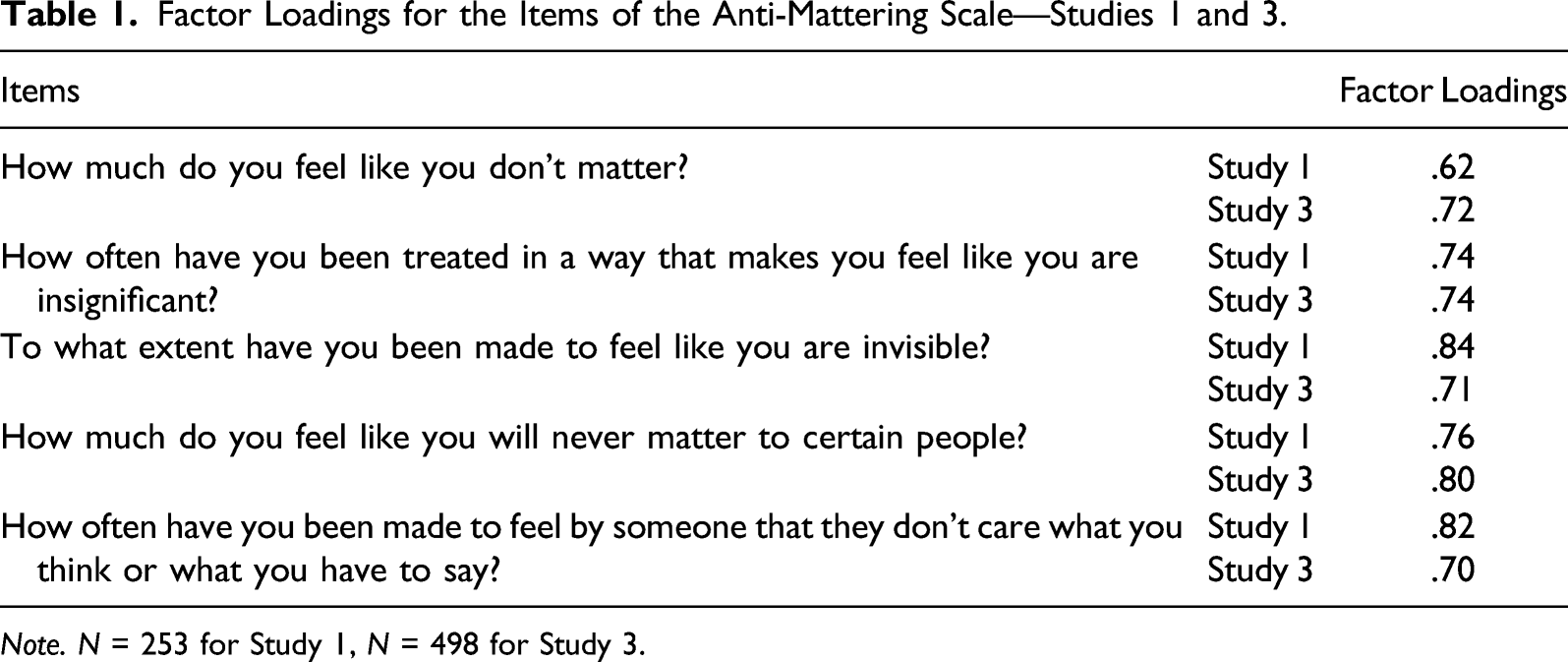
Note. N = 253 for Study 1, N = 498 for Study 3.
Factor Loadings for the Items of the Anti-Mattering and Mattering Scales—Study 1.
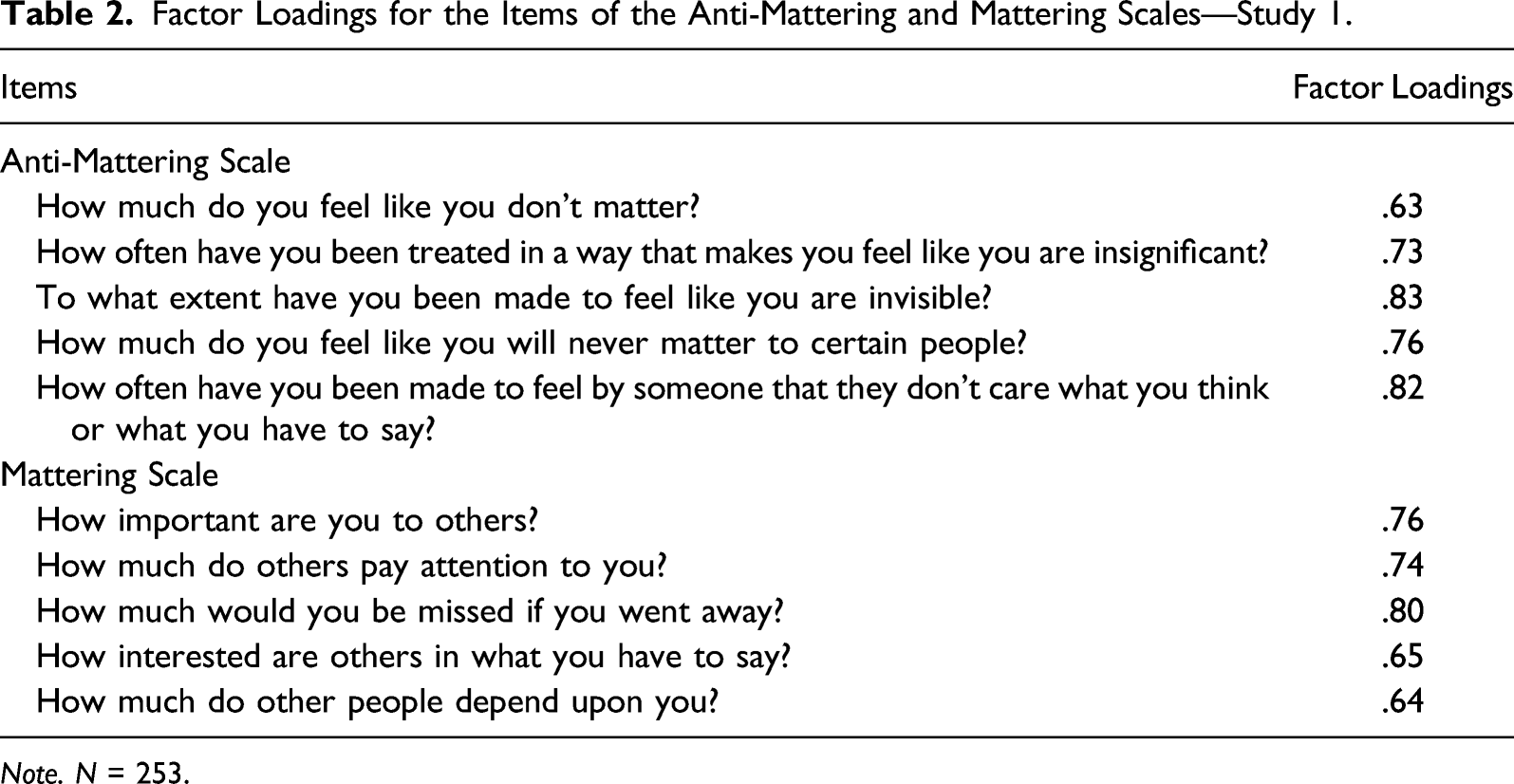
Note. N = 253.
The next CFA with anti-mattering and mattering items both included evaluated the presence of two separate, but correlated factors. This model was also an excellent fit, χ2 (34) = 43.13, p = .136, CFI = .99, TLI = .99, SRMR = .04, RMSEA = .03, 90% CI = .00, .06, pclose = .841. All items had factor loadings of .63 or higher (see Table 2). Anti-mattering and mattering were negatively correlated, but not to the degree of being polar opposites (r = −.50, p < 0.001).
Descriptive Statistics
Descriptive Statistics and Correlations Among Anti-Mattering, Mattering, and the Other Measures—Study 1.
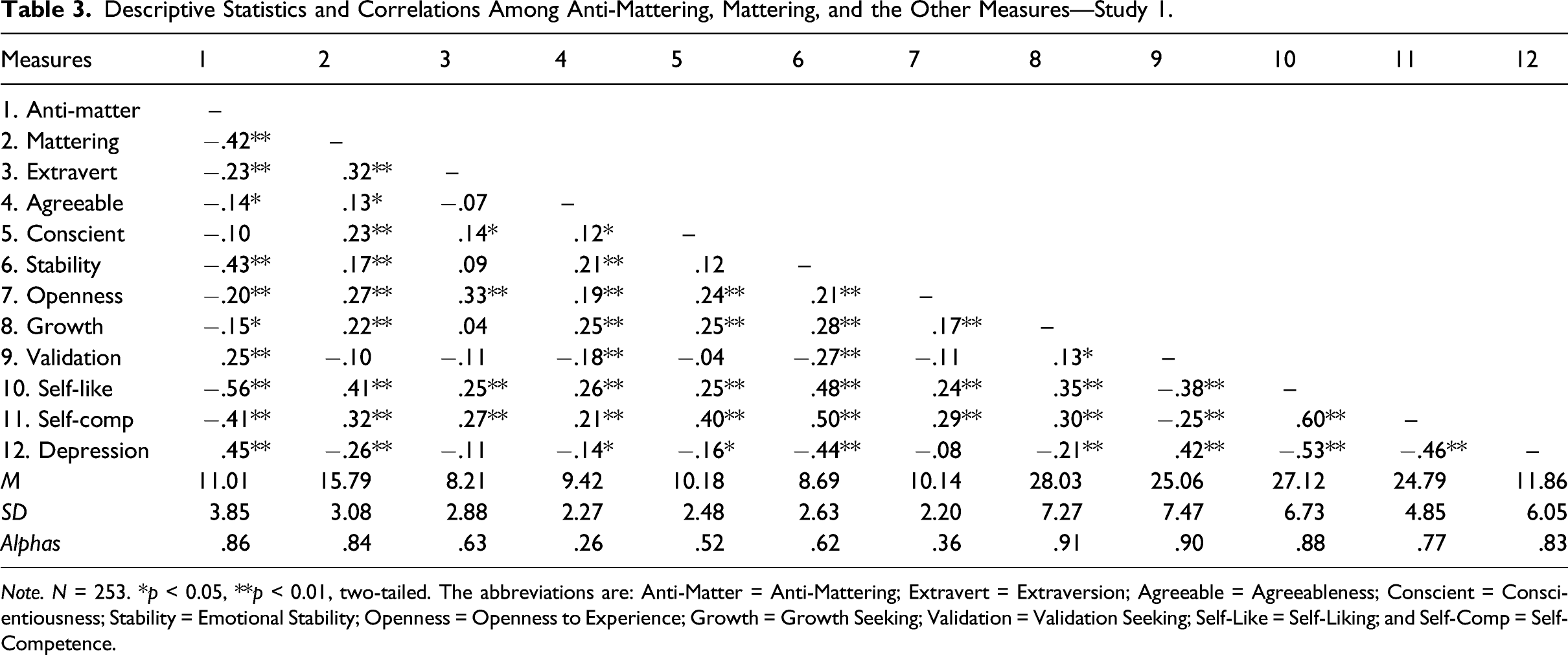
Note. N = 253. *p < 0.05, **p < 0.01, two-tailed. The abbreviations are: Anti-Matter = Anti-Mattering; Extravert = Extraversion; Agreeable = Agreeableness; Conscient = Conscientiousness; Stability = Emotional Stability; Openness = Openness to Experience; Growth = Growth Seeking; Validation = Validation Seeking; Self-Like = Self-Liking; and Self-Comp = Self-Competence.
Correlational Analyses
Table 3 depicts the correlations among the variables. Regarding the five-factor model traits, anti-mattering was negatively correlated with extraversion, agreeableness, emotional stability, and openness to experience. Anti-mattering was also associated negatively with growth seeking, self-liking, and self-competence. Additionally, anti-mattering was positively associated with validation seeking and depression.
Mattering was associated with all five-factor model traits. Mattering and anti-mattering differed in that only mattering was associated positively with conscientiousness. The other difference was that while both measures were associated with emotional stability (i.e., the neuroticism dimension), there was a much higher association between anti-mattering and low emotional stability.
Mattering was associated positively with growth seeking and both self-esteem facets and associated negatively with depression. Mattering was associated with growth seeking, but unlike anti-mattering, it was not associated with validation seeking. The link between anti-mattering and validation seeking has many potential implications that are considered in the general discussion.
Finally, a partial correlation analysis showed that anti-mattering was still significantly correlated with depression after partialling out emotional stability/neuroticism (r = .33, p < 0.01).
Regression Analysis
Summary of Hierarchical Multiple Regression for Variables Predicting Depression—Study 1.
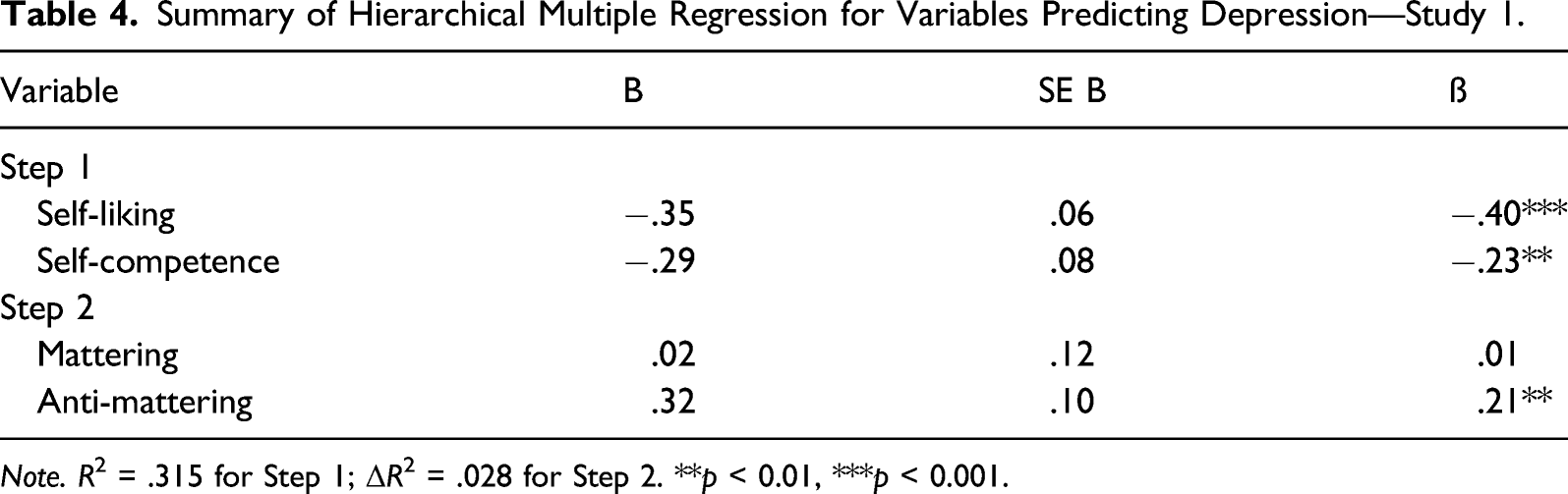
Note. R2 = .315 for Step 1; ΔR2 = .028 for Step 2. **p < 0.01, ***p < 0.001.
Path Analysis
A mediation model was tested to explore whether validation seeking mediates the link between anti-mattering and depression (see Figure 1). Because the path model is saturated (i.e., df = 0), fit indices were not useful. Rather, we were primarily concerned with the indirect (i.e., mediated) effect of anti-mattering on depression through validation seeking. Anti-mattering was positively associated with validation seeking, which was, in turn, positively associated with depression. Additionally, anti-mattering was positively associated with depression. We generated 2000 bootstrap samples to obtain 95% bias-corrected bootstrap confidence intervals to test whether the mediated effect was significant. The 95% confidence interval was .06–.23, and because this interval does not contain zero, the indirect effect is significant. Therefore, validation seeking mediated the relation between anti-mattering and depression. Mediated model of anti-mattering, validation seeking, and depression—Study 1. Note. ***p < 0.001. Standardized parameter estimates are shown. Error terms have been omitted.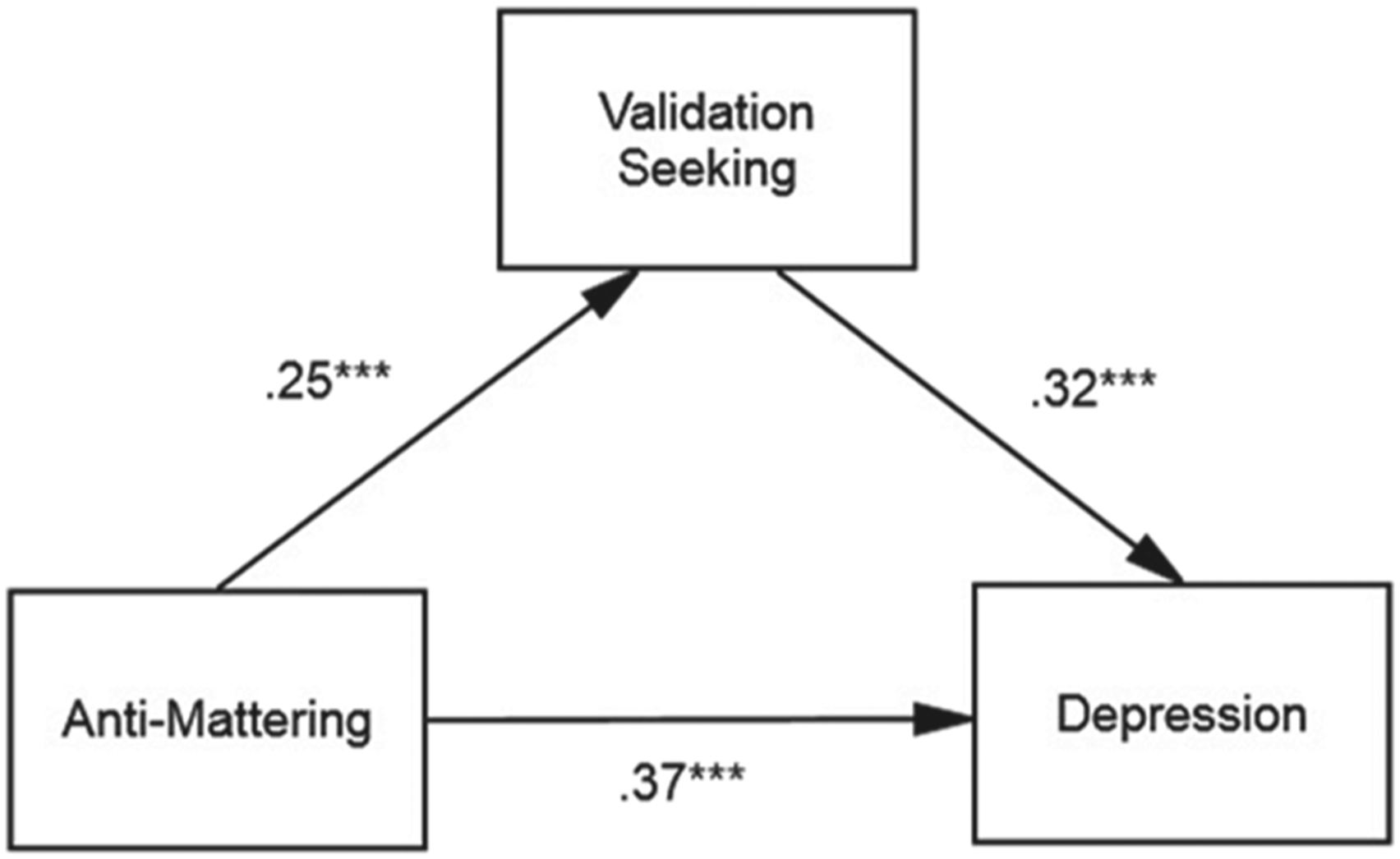
Study 2a
Our second study further examined the psychometric characteristics and correlates of the AMS. Two separate student samples were employed so we refer here to Study 2a and Study 2b. The first sample was administered another measure of broad personality traits to assess the replicability of the results found in our first study. They also completed measures of both positive affect and negative affect so that we could examine mattering versus anti-mattering in terms of whether they are both associated with not only levels of negative affect, but also positive affect.
The main focus with our second sample was to evaluate the temporal stability of the AMS, but also to establish whether anti-mattering could predict psychological distress over time. We conducted an extended analysis of the extent to which mattering relates to self-esteem, but with domain-specific measures of self-esteem that included social self-esteem.
Method
Participants and Procedure
The first sample consisted of 166 university students (63 men, 100 women, 1 person who reported “other,” and 2 unreported). Their mean age was 20.7 years (SD = 4.3). Participants were recruited and compensated in the same way as in Study 1. More than half of the students (56%) were in their first year of study, with 22.9% in their second year.
Participants were administered self-report questionnaires online in counterbalanced order after providing informed consent. The AMS and the GMS were used in this study (see Study 1, for descriptions). The following measures were also used:
Brief
International Positive and Negative Affect Schedule Short-Form
Results and Discussion
Descriptive Statistics
Descriptive Statistics and Correlations Among Anti-Mattering, Mattering, HEXACO Dimensions, and Positive and Negative Affect—Study 2a.
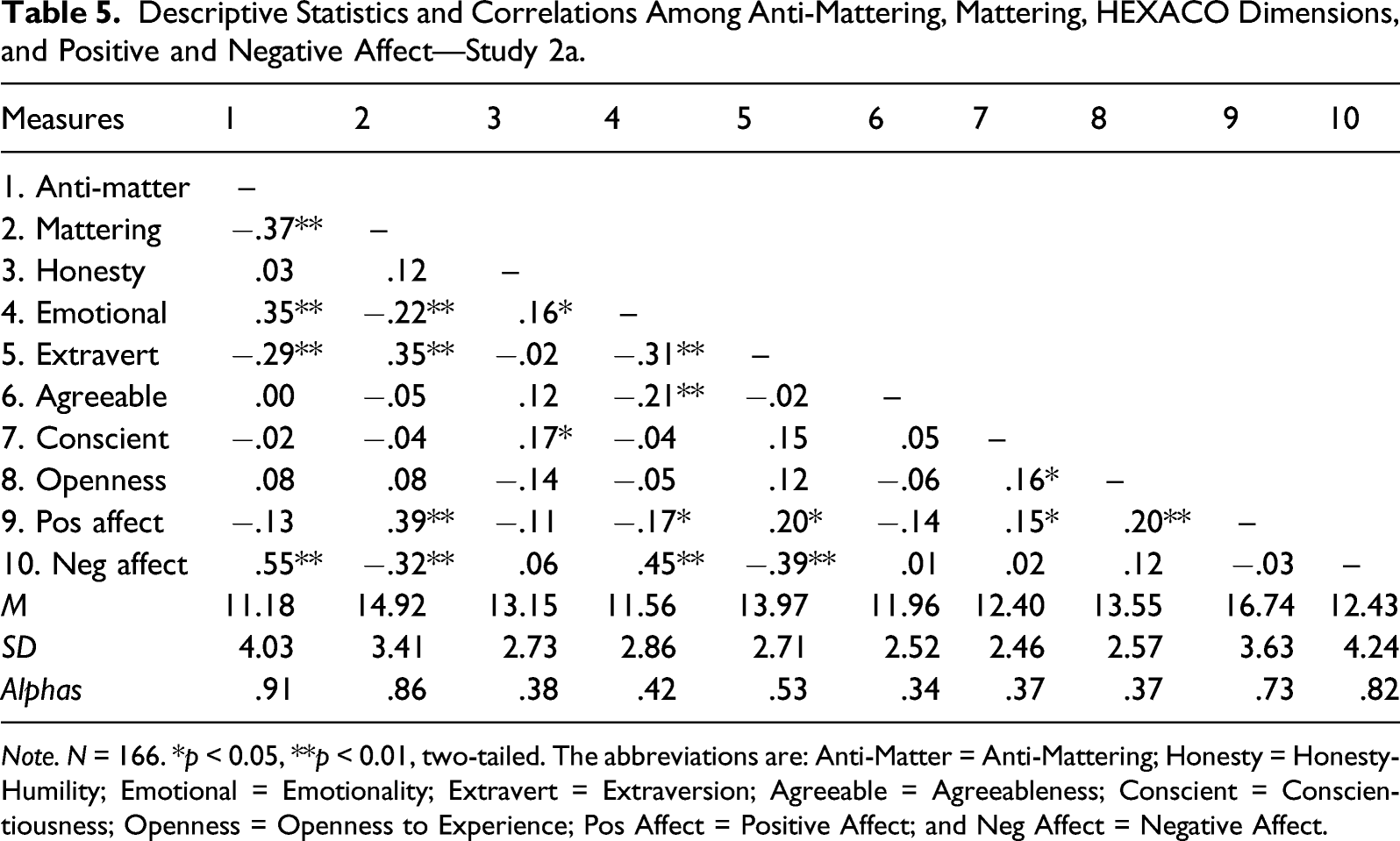
Note. N = 166. *p < 0.05, **p < 0.01, two-tailed. The abbreviations are: Anti-Matter = Anti-Mattering; Honesty = Honesty-Humility; Emotional = Emotionality; Extravert = Extraversion; Agreeable = Agreeableness; Conscient = Conscientiousness; Openness = Openness to Experience; Pos Affect = Positive Affect; and Neg Affect = Negative Affect.
Correlational Analyses
Table 5 displays the correlations among the measures. Anti-mattering was positively correlated with emotionality, and negatively correlated with extraversion. Anti-mattering was positively associated with negative affect, although it was not significantly correlated with positive affect.
Additionally, mattering was correlated negatively with emotionality, and correlated positively with extraversion. Mattering was also associated with higher positive affect and lower negative affect. The only difference in the pattern of correlations with anti-mattering and mattering was that mattering was positively correlated with positive affect, but anti-mattering was not.
We tested whether the correlation between anti-mattering and negative affect was significantly stronger than the correlation between mattering and negative affect; the correlation between anti-mattering and negative affect was indeed stronger (z = 8.47, p < 0.001).
Study 2b
Method
Participants and procedure
The participants in our second sample were assessed at two time points separated by 1 week. There were 104 participants (15 men, 89 women) at Time 1 and 80 participants (10 men, 70 women) at Time 2. Their mean age at Time 1 was 19.4 years. Participants were recruited in the same manner as in Study 1, but unique to this study, students were asked to participate each week over the course of 2 weeks. Most participants at Time 1 (64.4%) were in their first year of university, with 12.5% in their second year, and 8.7% in their third year.
Participants were administered a series of self-report questionnaires online in counterbalanced order at each time point. The AMS and the abbreviated CES-D were administered, along with the following measure:
State Self-Esteem Scale
Results and Discussion
Descriptive Statistics
Descriptive Statistics and Correlations Among Anti-Mattering, State Self-Esteem Subscales, and Depression at Each Time Point—Study 2b.
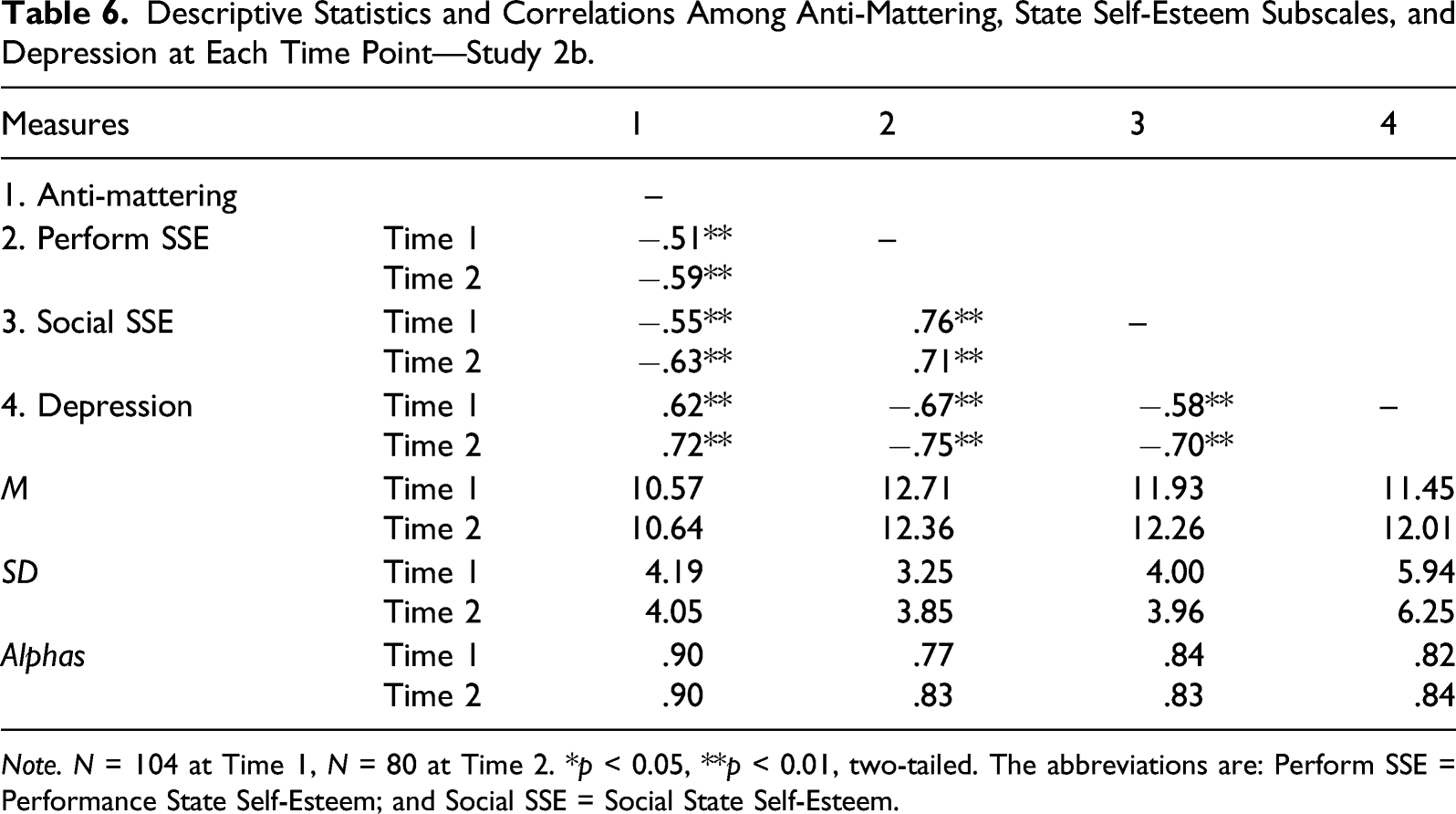
Note. N = 104 at Time 1, N = 80 at Time 2. *p < 0.05, **p < 0.01, two-tailed. The abbreviations are: Perform SSE = Performance State Self-Esteem; and Social SSE = Social State Self-Esteem.
Anti-mattering was positively correlated with depression and negatively correlated with both performance and social state self-esteem at Times 1 and 2. Performance and social state self-esteem were both negatively associated with depression across both time points.
Regression Analyses
Time 2 Anti-Mattering Predicting Time 2 State Self-Esteem
The second regression showed that Time 1 anti-mattering significantly predicted 24.3% of the variance in social state self-esteem scores, F(1, 77) = 24.77, p < 0.001. Time 2 anti-mattering predicted an additional 18.2% of the variance in social state self-esteem scores, F(2, 76) = 28.10, p < 0.001. Collectively, these results demonstrated that Time 2 anti-mattering predicted both aspects of state self-esteem at Time 2, above and beyond anti-mattering at Time 1.
Time 1 Anti-Mattering Predicting Time 2 Depression. Two hierarchical multiple regression analyses were performed to determine if Time 1 anti-mattering predicts Time 2 depression, above and beyond initial depression and both performance and social self-esteem. First, a regression was performed with Time 1 depression entered into the first predictor block, followed by Time 1 anti-mattering, and with Time 2 depression as the outcome. Time 1 depression significantly predicted 56.1% of the variance in Time 2 depression scores, F(1, 77) = 98.58, p < 0.001. Time 1 anti-mattering predicted an additional 2.6% of the variance in Time 2 depression scores, F(2, 76) = 54.15, p < 0.001. These findings indicate that anti-mattering appears to represent a vulnerability to increases in depression over time.
The next regression was performed with Time 1 performance and social state self-esteem entered into the first predictor block, followed by Time 1 anti-mattering, and with Time 2 depression as the outcome. Both state self-esteem subscales at Time 1 significantly predicted 41% of the variance in Time 2 depression scores, F(2, 76) = 26.39, p < 0.001. Time 1 anti-mattering predicted an additional 8.3% of the variance in Time 2 depression scores, F(3, 75) = 24.32, p < 0.001.
Collectively, these findings continue to attest to the unique predictive utility of elevated scores on the AMS. This accords with our contention that a sense of being insignificant and unimportant to others is a source of vulnerability linked with multiple indices of maladjustment, a negative self-concept, and less than optimal functioning.
Study 3
Study 3 evaluated how anti-mattering versus mattering related to key psychosocial indicators of adjustment (i.e., loneliness and social anxiety) among students in light of past research suggesting that lower mattering is associated with loneliness and social anxiety (Flett et al., 2016). Another key feature of this study was to extend understanding of anti-mattering from a motivational perspective by examining its link with three core psychological needs—the needs for connection, competence, and autonomy. In general, we anticipated that feelings of not mattering would be associated with unmet needs, especially with respect to connection, given how feelings of not mattering represent deficits and potential problems in relating to other people. The inclusion of these measures of core needs enabled us to evaluate whether anti-mattering could predict unique variance in key outcomes beyond unmet psychological needs.
Method
Participants and Procedure
This sample had 498 university students (117 men, 381 women) with a mean age of 19.8 years (SD = 4.1). Students were recruited in the same way as the previous studies and received the same incentive for participating. Once again, most students were in their first year of university (62.7%) or second year (20.7%). Participants were administered the AMS after providing informed consent. A subset of participants completed additional measures, which are outlined below. This subset comprised 197 students (55 men, 142 women). The following additional measures were completed over the Internet in counterbalanced order:
Basic Needs Satisfaction in General Scale
Single-Item Self-Esteem Scale
Liebowitz Social Anxiety Scale
UCLA Loneliness Scale (Russell et al., 1980). This 20-item scale assesses perceived levels of loneliness. This scale has adequate concurrent and discriminant validity, as well as good reliability, with an alpha of .94 (Russell et al., 1980).
Results and Discussion
Descriptive Statistics
Descriptive Statistics and Correlations Among Anti-Mattering, Mattering, Basic Needs Satisfaction Subscales, Self-Esteem, Social Anxiety, and Loneliness—Study 3.
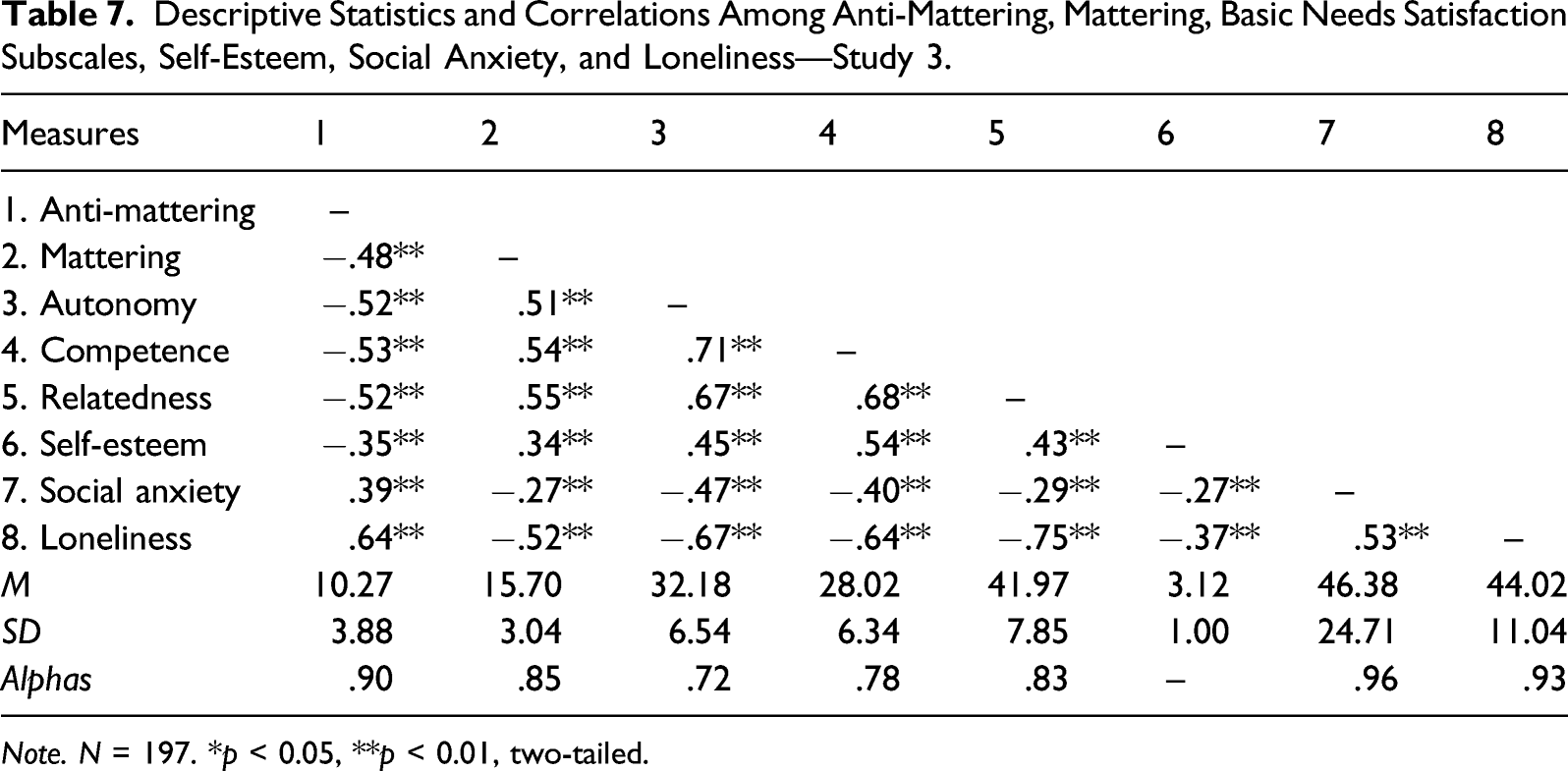
Note. N = 197. *p < 0.05, **p < 0.01, two-tailed.
Confirmatory Factor Analyses
A CFA was performed to validate our predicted one-factor solution using maximum likelihood estimation procedures. This model was a good fit, χ2 (5) = 16.56, p = 0.005, CFI = .99, TLI = .98, SRMR = .02, RMSEA = .07, 90% CI = .03, .11, pclose = .171. All anti-mattering items had factor loadings of .70 or higher (see Table 1). Taken together, the results from the present study and Study 1 provided evidence for a one-factor solution for this novel measure of anti-mattering.
Correlational Analyses
Table 7 displays the correlations among the measures. Anti-mattering was negatively correlated with mattering, and all three BNSG-S subscales. The links were comparable in magnitude for the association between anti-mattering and unsatisfied needs for autonomy, competence, and connection.
Anti-mattering was positively correlated with social anxiety and loneliness, which expands on the previous findings that anti-mattering was correlated with higher depression (Studies 1 and 2b) and negative affect (Study 2a). Further, the finding that anti-mattering was negatively linked with self-esteem is consistent with the prior studies showing that anti-mattering was related to lower self-liking and self-competence (Study 1), and state self-esteem (Study 2b).
Results from the present study also found that mattering was associated positively with all three needs subscales and with self-esteem. Mattering was also associated negatively with social anxiety and loneliness.
Regression Analyses
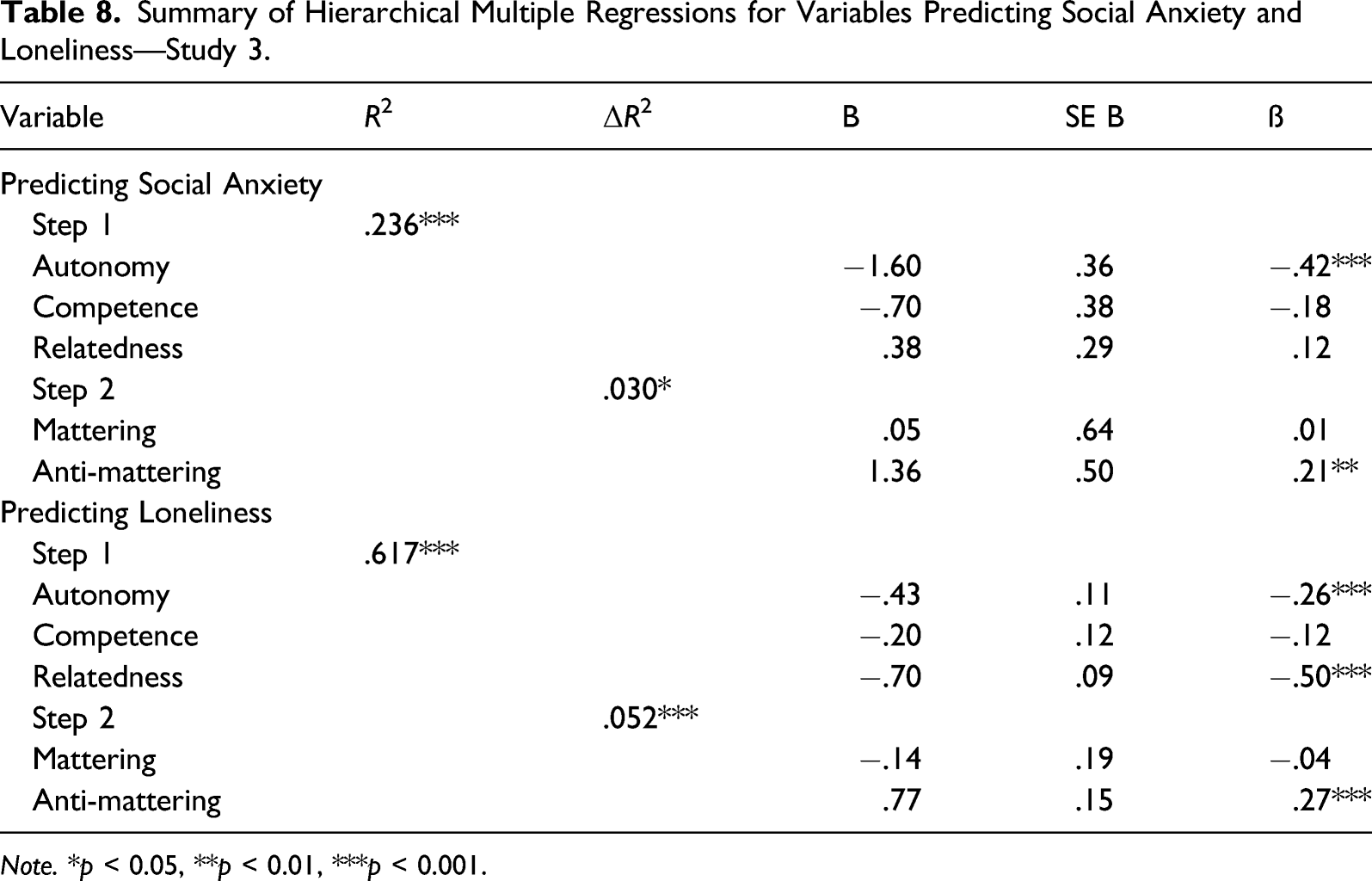
Summary of Hierarchical Multiple Regressions for Variables Predicting Social Anxiety and Loneliness—Study 3.
Note. *p < 0.05, **p < 0.01, ***p < 0.001.
The second regression was conducted with the same predictor variables but with loneliness as the outcome (see Table 8). The BNSG-S subscales predicted 61.7% of the variance in loneliness scores, F(3, 193) = 103.77, p < 0.001. Anti-mattering and mattering significantly predicted an additional 5.2% of the variance in loneliness scores, F(5, 191) = 77.27, p < 0.001. Although anti-mattering and mattering predicted significant variance in loneliness, mattering was not a significant individual predictor. The results indicated that anti-mattering is an individual predictor of both social anxiety and loneliness, over and above the basic needs satisfaction subscales.
Study 4
Study 4 had four main purposes. First, we examined the psychometric features of the AMS among adolescents and evaluated the extent to which scale scores were associated with a measure of social desirability.
Second, we examined the validity of the scale and developmental antecedents by examining the links between anti-mattering and attachment style indices. Feelings and perceptions of not mattering should be associated with various forms of insecure attachment and reduced secure attachment. Flett (2018b) observed that feelings of not mattering would arise and be linked with insecure attachment to the extent that people have not received the warm, responsive interactions that fosters and sustains a positive emotional bond. The evidence cited above linking feelings of not mattering with a history of emotional neglect suggests that anti-mattering should be linked with the development of insecure attachment.
There have been few assessments of mattering and attachment style, but Raque-Bogdan et al. (2011) did find in a sample of undergraduates that feelings of not mattering were associated jointly with anxious attachment and avoidant attachment. Flett et al. (2021) also established a link between low mattering and various indices of insecure and avoidant attachment among university students.
Comparable results were expected in the current study, but with the caveat that this research examined mattering and anti-mattering among high school students rather than university students and with a framework from Bartholomew and Horowitz (1991) that evaluated four attachment styles (i.e., secure, anxious, preoccupied, and detached). These four types reflect all possible combinations of positive versus negative model of the self and other people. For instance, anxious attachment reflects a negative view of the self and others, while preoccupied attachment reflects a negative view of the self and a highly positive view of others.
Third, we examined the extent to which anti-mattering and mattering are associated with a well-known multi-domain measure of well-being. We anticipated that anti-mattering in adolescents would be associated with low well-being and this association would still be evident after taking into account the expected positive association between mattering and well-being.
Finally, we further examined the extent to which feelings of not mattering are associated with measures tapping a negative self-concept. Specifically, we examined the extent to which elevated AMS scores were associated with self-criticism, self-efficacy, self-esteem, and dependency. Initial data with college students from Israel have linked anti-mattering with higher dependency and self-criticism (Besser et al., 2020).
Method
Participants and Procedure
Our sample comprised 134 Grade 12 students from three public high schools (72 girls, 62 boys) in the Toronto District School Board. Their mean age was 17 years (SD = 0.72).
Participation was voluntary. Students 18 years or older signed their own forms, whereas students 17 years or younger needed a parent or guardian signature to participate.
Measures
The following self-report measures were administered, along with the AMS and GMS:
The Relationship Questionnaire
Ryff’s Scale for Psychological Well-Being
Rosenberg Self-Esteem Scale
General Self-Efficacy Scale
Adolescent Depressive Experiences Questionnaire
The Marlowe–Crowne Social Desirability Scale. We used the abbreviated version of this instrument developed by Ballard (1992). It has 11 items in a true-false response format. One sample item is “I’m always willing to admit it when I make a mistake.” Higher scores represent responding in a socially desirable manner.
Results and Discussion
Descriptive Statistics
Psychometric analyses indicated that the AMS had an alpha of .77. The mean was 11.52 (SD = 3.31) for the AMS and 13.56 (SD = 2.75) for the GMS. Comparisons found no significant sex difference in GMS scores, and a marginally significant difference in levels of anti-mattering, t = 1.71, p < 0.10. Adolescent girls had an AMS mean of 11.97 (SD = 3.23) versus a mean of 11.00 (SD = 3.35) for boys.
Correlational Analyses
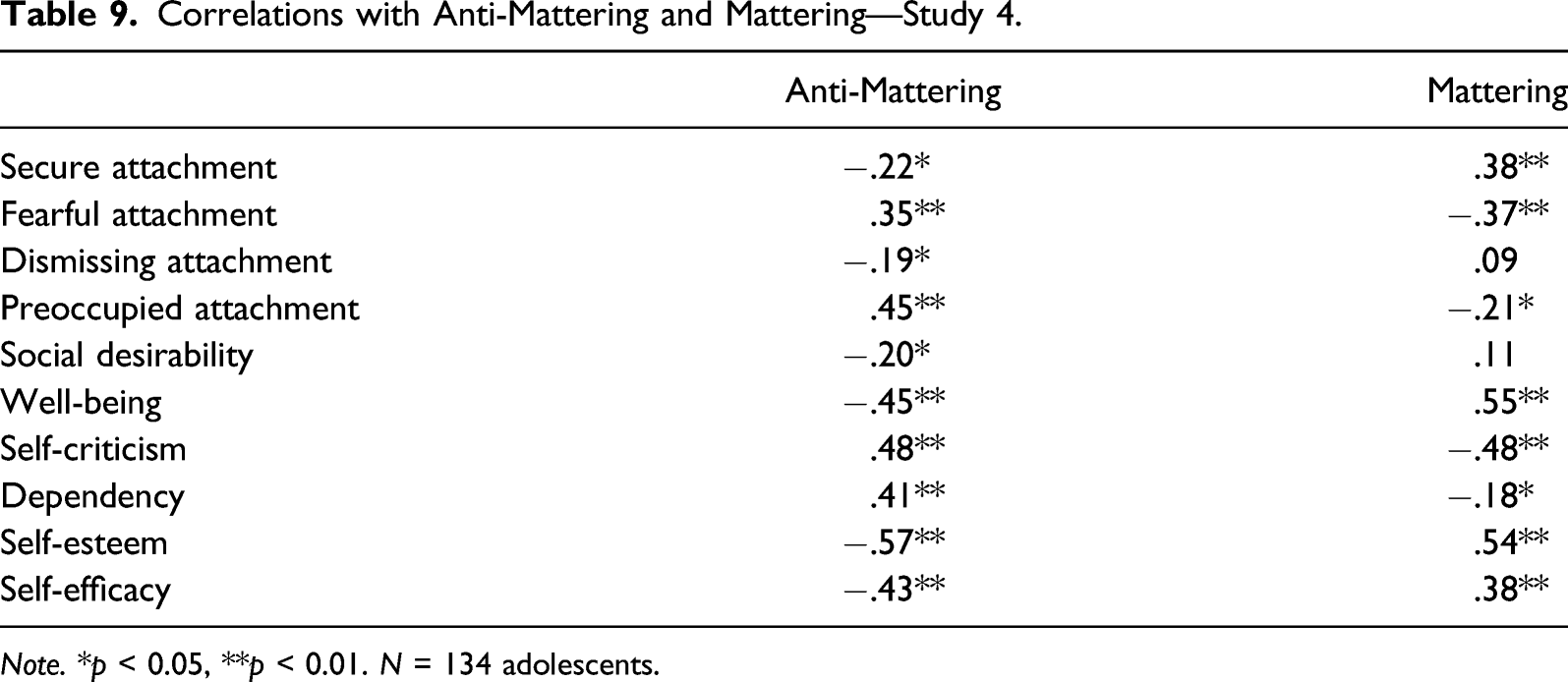
Correlations with Anti-Mattering and Mattering—Study 4.
Note. *p < 0.05, **p < 0.01. N = 134 adolescents.
Analyses with the attachment style dimensions showed that anti-mattering had its highest link with the preoccupied attachment style. Anti-mattering was also associated with fearful attachment, and to a lesser degree with the lack of a secure attachment and dismissive attachment. In contrast, mattering had its highest link with secure attachment followed by a negative association with fearful attachment and a smaller negative correlation with preoccupied attachment. Partial correlations controlling for mattering showed that anti-mattering was still linked with preoccupied attachment (r = .41) and fearful attachment (r = .45).
The correlations between self-esteem and the attachment styles evidenced a pattern that was quite comparable to the pattern with mattering. Partial correlations controlling for self-esteem found that anti-mattering was still linked significantly with preoccupied attachment (r = .37) and fearful attachment (r = .18), while mattering was still associated with secure attachment (r = .22) and lower fearful attachment (r = −.22).
As expected, there was a robust negative link between anti-mattering and overall well-being. This association was still evident though considerably lower (r = −.27) after controlling for the correlation between mattering and well-being. A hierarchical regression predicting levels of well-being showed that the four attachment styles accounted collectively for 42.3% of the variance. All attachment styles were unique individual predictors. Subsequent entry of anti-mattering and mattering accounted for an additional 9.3% of the variance, F change = 12.14, p < 0.001. Mattering was significant, t = 3.70, p < 0.001, as was anti-mattering, t = −2.17, p < 0.05.
Finally, anti-mattering had substantial negative associations with self-efficacy and self-esteem (see Table 9). There were also positive associations between anti-mattering and self-criticism and dependency. Taken together, these findings illustrate the reliability and validity of the AMS in late adolescents.
General Discussion
The current research involved the development and evaluation of a new measure of feelings of not mattering to other people. Collectively, the results across four studies attest to the presence of meaningful individual differences in feelings of not mattering. We developed the five-item Anti-Mattering Scale and showed via psychometric analyses that this inventory consists of one factor and items with an adequate internal consistency. The AMS had moderate test-retest reliability and it has items that are not largely contaminated by social desirability response bias.
Our working assumption was that mattering and anti-mattering are not simply endpoints of the same dimension. It was found across studies that the negative association between mattering and anti-mattering was clearly evident but not so large as to indicate they are simply opposites (r’s ranging from −.37 to −.48). Moreover, a related analysis of factor structure showed that when examined along with the GMS items, the AMS items represent a distinct and distinguishable factor.
It is worth noting that comparable AMS mean scores were found across our various samples. The AMS means ranged between 10.27 and 11.52 with the highest levels of anti-mattering found among our high school participants. Other data reported by Rose et al. (2019) attest to the role of feelings of not mattering in mental illness among university students. This study contrasted students living in residence with or without a history of mental health problems. Students with a history of some form of mental illness had an AMS mean of 14.16 (SD = 3.49), which is considerably elevated when contrasted with the means found in current samples; students without a history of mental illness had a much lower AMS mean of 11.21 (SD = 4.03). Collectively, these means accord with the proposed role of anti-mattering in mental health problems and suggest that feelings of not mattering may be implicated in more extensive distress and dysfunction.
Another purpose of our current research was to learn more about the nature of feelings of not mattering as a distinct element of the mattering construct. We examined the associations that anti-mattering and mattering had with broad personality traits in two studies. AMS scores were associated with neuroticism and low extraversion, but not to the extent that feelings of not mattering arguably represent defensive neuroticism. The chief difference between anti-mattering and mattering was the stronger link with neuroticism found with anti-mattering in Study 1 that was not evident when the focus was on the GMS. Our results accord with the results of a past five-factor analysis indicating that elevated GMS scores were linked with higher trait extraversion and openness and lower neuroticism (see Flett et al., 2016).
Other results with adolescents established that higher anti-mattering was associated with reports of insecure attachment. This link with insecure attachment has many potential implications. For instance, attachment-based therapeutic interventions should be modifiable and beneficial for people with high anti-mattering levels. However, we feel it is important to underscore that feelings of not mattering and attachment insecurity are far from synonymous, as reflected by our results indicating that mattering and anti-mattering predict levels of well-being beyond the variance attributable to attachment style dimensions. One reason the mattering and attachment style dimensions are related but distinguishable is that some people who feel like they matter may still be plagued by feelings of insecurity. We would expect individuals who are typically insecure but have a sense of mattering could still have bouts of insecurity; if so, they will need constant reassurance that they still matter to others.
A negative self-model is at the root of insecure attachment styles and this negativity is shared with anti-mattering given some of our other findings. For instance, we found that university students with high anti-mattering tend to be relatively low in self-liking and self-competence. Other results linked anti-mattering with lower performance and social self-esteem. The association with deficits in social self-esteem is very much in keeping with the presumed negative impact of being made to feel a sense of not mattering to others.
Our analyses of the motivational orientations and psychological needs established that anti-mattering is associated with a validation seeking orientation centered around the need to prove oneself to others. In contrast, GMS scores were associated positively, albeit weakly, with a growth orientation. We also found support for a model with validation seeking motives as a mediator of the association between anti-mattering and depression.
Additional results found that anti-mattering and mattering were comparable in terms of their strong links with measures of the need for competence, connection, and autonomy. People who feel like they do not matter appear to have substantial deficits across all three needs. The obtained associations were quite robust. Nevertheless, here it is worth noting that Flett (2018b) proposed that the need to matter and avoid feelings of not mattering to others is itself a core need of prime significance to individuals that is more specific than a general need to connect with or relate to other people. Support for this contention was obtained from analyses showing that feelings of not mattering can predict remaining variance in psychosocial outcomes after taking into account the substantial variance attributable to needing to connect and be autonomous and competent.
Perhaps our most revealing analyses were those that evaluated the predictive utility of anti-mattering beyond general mattering. Not surprisingly, the overall pattern of results confirmed that AMS scores are associated with depression, loneliness, social anxiety, and negative affect. Statistical tests focused on depressive symptoms as outcomes showed in separate analyses that anti-mattering predicted significant variance in depression beyond the variance attributable to general mattering and self-esteem.
The strong association anti-mattering had with loneliness is noteworthy because the magnitude of the correlation (r = .64) suggests that loneliness and a sense of not mattering are linked inextricably for many people. Previous research with university students also found a strong negative association between loneliness and lower GMS scores, with a correlation of −.65 being reported (Flett et al., 2016). Other results suggest ties between low mattering and a maladaptive early schema reflecting disconnection and alienation from others (see Flett, 2018b). Our current results may have added significance and implications given that loneliness is a risk factor that can actually be a cause of health problems and early mortality (Luo et al., 2012) and the prevalence and impact of loneliness is being increasingly recognized as having important public health implications (Leigh-Hunt et al., 2017). The destructiveness of loneliness in some people’s lives should be magnified considerably when loneliness is accompanied by chronic feelings of not mattering to other people. Elsewhere, we have referred to the “double jeopardy” of feeling alone and insignificant (McComb et al., 2020). Collectively, such findings point to the need for a strong emphasis on feelings of not mattering in psychological models focused on factors contributing to social disconnection and alienation.
Analyses that examined the pattern of correlations with indices of positive and negative affect were especially revealing. We found that mattering was associated with elevated positive affect and relatively low negative affect. In contrast, anti-mattering was linked robustly with negative affect and was largely unrelated to positive affect. These results point to a potentially key difference between feelings of mattering versus not mattering that parallels the orthogonality of positive and negative affect.
Collectively, our findings suggest that further use of the AMS is indeed warranted. We believe that the perception and feeling of not mattering is highly salient and perhaps self-definitional for people in life situations promoting a sense of marginalization. Such feelings may be highly salient among some people from various segments of society, including those coping with homelessness or from communities where there is a sense of society not treating them in a manner that conveys a sense of mattering (e.g., certain Indigenous communities). Given our evidence of the vast array of negative correlates of feelings of not mattering, it seems essential to begin examining anti-mattering in these contexts.
We restricted our focus to anti-mattering in general, but going forward, it makes considerable sense to evaluate context-specific measures that directly tap feelings of not mattering at work and at school and in the family. The interpersonal nature of mattering and its role in terms of connecting the self to others also suggests that mattering versus anti-mattering should be a valid distinction in understanding the nature of intimate relationships. The AMS items are worded in a manner that makes it possible to slightly modify the AMS to assess anti-mattering at home, at work, at school, and in the community. Further modifications could use the AMS themes as a starting point to create person-specific measures (e.g., not mattering to parents, not mattering to one’s partner, etc.)
There are several essential directions for future research beyond the ones already mentioned. Clearly, long-term longitudinal research is needed to examine the developmental trajectories of feelings of mattering and not mattering, including the factors contributing to stability and change in anti-mattering. The generalizability of our psychometric and substantive findings must be evaluated in people of various ages and from other cultures. Additional work is needed to further illuminate the nomological network of feelings of not mattering. Key issues to address from this perspective include the distinction between feelings of not mattering versus not belonging and the distinction between feelings of not mattering versus low perceived emotional support. Further research is needed on feelings of not mattering from a motivational perspective, including research that examines feelings of not mattering in educational and achievement-related outcomes.
In summary, the current research established that it is meaningful and important to assess individual differences in feelings of not mattering as a supplement to research on feelings of mattering. Our results across four studies with the AMS support our contention that feelings of not mattering and associated marginalization experiences are part of a complex mattering construct. Moreover, feelings and perceptions of not mattering to others represented a core negative aspect of the self and render someone highly vulnerable. Other findings indicate that feelings of not mattering are closely linked with loneliness and unmet needs. Thus, just as it is the case that mattering is an important personal resource, feelings of anti-mattering seem to constitute a powerful form of risk and vulnerability and these feelings and associated experiences can have a destructive impact on the lives of many people.
Footnotes
Declaration of Conflicting Interests
The author(s) declared no potential conflicts of interest with respect to the research, authorship, and/or publication of this article.
Funding
The author(s) disclosed receipt of the following financial support for the research, authorship, and/or publication of this article: The first author was supported by a Canada Research Chair in Personality and Health.
