



Abstract
Informality is one factor associated with solid waste management in developing countries. Studies are scarce on the implications of these informalities to macro-level circular economy (CE) adoption in these global regions. Contributing to this gap in knowledge, this study analyzed Nigeria’s informal waste management sector to appraise its contribution to the waste management value chain in the CE. It also evaluated the associated challenges and opportunities that could facilitate or hinder its adoption in macro-level CE implementation. The result of the study shows that informal waste sectors contribute significantly to the waste management value chain such as collection, transportation, sorting, upcycling, resource recovery, and recycling. The informal waste collection, which is currently the only means of collecting recyclables in Nigeria is estimated to collect about 3.35 million tonnes (Mt) in 2030 from the current value of 2.69 Mt in 2023. It has the potential to make economic savings of about $121.48 million and add a net revenue of $454. 41 million to the national economy by 2030. Given these contributions, other identified opportunities for including the informal waste sector in the macro-level CE include; providing a source of livelihood to socially marginalized urban populations while promoting environmental sustainability; providing waste collection services to unserved urban areas, creating a circular business model, creating a platform for possible transition to zero waste status, aiding the implementation of extended producer responsibility, and providing cheap input material for local industries. The challenges include harsh work conditions and social capital, non-standardized metrics for the trade of recyclables, unavailability of data, poor quality recyclables caused by not segregating waste from source, child waste picker, gender exclusiveness, and absence of novel waste treatment facilities.
Keywords
Introduction
Waste management is an essential service provided by municipalities in cities across the world. The criticality of this service to urban dwellers is informed by the adverse health and environmental implications associated with unmanaged or poorly managed solid waste (Kaza et al., 2018). Formal waste management delivery involves a series of “activities” that bring “stakeholders” together to work under public obligation in an institutionalized setting. The activities could include waste collection, sorting, transportation, storage, disposal, recycling, resource recovery, etc. The stakeholders could include municipal governments, recyclers, municipal workers, policymakers, households, private offices, international agencies, waste truck drivers, landfill managers, etc. Before now, the goal of waste management has been to ensure that the generated waste does not cause harm to the environment and public health. However, in recent times, the aim of waste management has expanded to include business and economic possibilities for achieving a circular economy (CE) (Ezeudu and Ezeudu, 2019). This is because of the growing awareness that waste is an economic resource. Urban mining, for instance, which means the systematic recovery and reuse of anthropogenic material from urban waste is now of global interest and has caught the attention of stakeholders because of the economic prospects of the recovered metals. It is suggested that urban mining for certain metals is even cheaper than mining for similar virgin resources (Zeng et al., 2018).
In developed societies, the availability of financial resources, proper community structures, information and data accessibility, and technological advancements allow for the efficient planning, implementation, monitoring, and financing of waste management (Hoornweg and Bhada-Tata, 2012). Robust institutional frameworks, efficient policy regimes, and reliable public governance also contribute to the appropriate regulation of waste management in these global locations. The waste management situation in low- and middle-income countries is however different and far from being efficient (Kaza et al., 2018; Ogwueleka, 2009). Municipalities in developing countries often lack the necessary resources and logistical means required to effectively manage and/or regulate the generated solid waste (Kaza et al., 2018; Oguntoyibo, 2012; Ogwueleka, 2009). For reasons including poverty, massive rural–urban migration, uncontrolled urbanization, rapid population growth, and the value that can be retrieved from waste, the low-income and unemployed urban population have resorted to engaging in different waste management activities, as a means of livelihood (Ezeah et al., 2013; Imam et al., 2009; Ogwueleka and Naveen, 2021). They operate parallel to the formal waste management system. However, their actual contributions to waste management are still a source of controversy in places across the world. Whether they should be recognized, disbanded, supported, or integrated into mainstream formal waste management has also generated a lot of debate and heterogeneous opinions among stakeholders such as governments, researchers, international organizations, and policymakers (Chitaka et al., 2022; Gutberlet et al., 2017; ILO, 2004; Mbah and Nzeadibe, 2017; Oguntoyibo, 2012).
Recently, the CE has increasingly been favored over the linear economy in municipal solid waste management as it promotes a regenerative and restorative approach to resource administration (Ellen MacArthur Foundation, 2023). It encourages the reuse, recycling, and resource recovery in solid waste management. CE also fosters the three pillars of sustainable development—economic prosperity, social equity, and environmental sustainability. With the focus on the product, CE can be implemented in the stages of resource extraction, production, product use, and waste management. This can occur at three levels—micro, meso, and macro levels. To determine the suitability of the informal waste management sector for the macro-level implementation of the CE—especially in developing nations where they are primarily present—their contributions to effective urban solid waste management needs to be comprehensively evaluated.
Beyond the current debates about whether informal waste management practices should be recognized along with formal waste management systems, some proponents of CE policies, like extended producer responsibility (EPR), have also perceived informal waste management practices as having an undermining impact on the policies’ ability to be implemented smoothly (Steuer et al. 2017; Talbott, 2022). Informal waste collection is often regarded as introducing inefficiency in the EPR systems due to competition from various actors collecting and managing recyclables (Leclerc and Badami, 2023). On the other hand, the informal waste workers through their various interest groups are continuously agitating for inclusive CE policymaking, where they will have a stake in the co-creation of the policies and co-production of services (Rutkowski, 2020). The most cogent explanation for these conflicts of interest includes (1) the goal of waste management has steadily expanded from safeguarding the environment and public health to incorporating business and economic opportunities in a CE where waste has become economic resources and (2) a lack of empirical data and evidence supporting the claims on the resourceful contributions of informal waste management sector to effective waste management (Mbah and Nzeadibe, 2017; Oguntoyibo, 2012; Ogwueleka, 2009). One way forward is, therefore, to re-evaluate the empirical contributions of informal waste management practices in a bid to determine their suitability for a CE (Talbott, 2022). This re-evaluation would be context-specific since the implementation of a CE at the macro level considers the unique aspects of societies along socioeconomic, political, cultural, and even geographical divides (Ferronato et al., 2019; Ngan et al., 2019). Another reason for the context-specific evaluation is that a large body of evidence has shown that the traditional methods of managing municipal solid waste, which are implemented by international donor agencies and development agencies, frequently fail in developing nations because the agencies’ inability to take into account the diverse characteristics of cities and societies (Ogwueleka, 2009).
However, studies that have been suggesting how the activities of informal waste workers can be improved or integrated into the CE programs are mainly based on their contribution to individual components of waste management systems such as recycling, collection, resources recovery, etc. (Ezeudu et al., 2021a; Ferronato et al., 2019; Gall et al., 2020; Gutberlet et al., 2017; Siman et al., 2020; Zisopoulos et al., 2023). There is a lack of studies that have empirically examined their suitability for the macro-level CE by assessing their empirical contribution to the waste management value chain. Contributing to this knowledge gap and taking Nigeria as a case study, this work aims to analyze the documented evidence (literature) on informal waste management activities in Nigeria to extract their contributions to the entire waste management value chain. In addition to the information synthesized, we employ a focus group discussion (FGD) technique to extract further contributions while also highlighting the challenges and opportunities for their integration into the macro-level CE implementation.
The following research questions were raised to guide the research objectives:
How have informal waste management activities contributed to the waste management value chain in Nigeria?
What are the economic potentials resulting from the collection and recycling of the recyclable component of urban solid waste in Nigeria by informal waste workers?
What are the challenges and opportunities for including the informal waste management sector in the macro-level CE implementation?
In essence, the current work has three main objectives which include (1) to determine the qualitative contribution of the Nigeria’s informal waste management sector in the waste management value chain that includes collection, sorting, transportation, recycling, upcycling, resource extraction, and final disposal; (2) to quantify the economic potential of informal collection of recyclables in Nigeria; and (3) to identify the challenges and opportunities for including informal waste management sector in macro-level CE planning. The current work also provides a departure point toward understanding the pros and cons of integrating the informal waste sector into the macro-level CE in a bid to achieve just and inclusive transition to the global CE. It will also be a potential addition to the literature on the enablers and barriers to CE implementation in developing countries’ context.
The rest of the article is organized as follows; in the next section, we briefly explain the concepts of an informal waste management system in the global context and CE in solid waste valorization. In the section “Methodology,” we describe the method of the study. The results of the study are discussed in the section “Results and Discussion.” We discuss the challenges and opportunities for the integration of informal waste management systems in Nigeria for macro-level CE in the section “Implications for Circular Economy Adoption.” The conclusion is drawn in the last section.
Literature/conceptual framework
Informal waste management system: An overview
According to Scheinberg et al. (2010), the term “informal waste management sector” describes people or businesses engaged in recycling and waste management activities in the private sector that are not approved, funded, recognized, supported, organized, or acknowledged by authorities in charge of solid waste management, or that operate against or in opposition to these authorities. An informal waste management system also includes the unregistered, unregulated, and casual activities carried out by individuals to provide urban solid waste management services to urban communities (Ogwueleka, 2009). The emergence of these types of activities is a response to the failure or inefficiency of the formal systems or because of unemployment and/or poverty (Afon, 2007; Wilson et al., 2006). More than 60% of global workers work in the informal sector (ILO, 2020), and about 15–20 million people globally earn their living from resource recovery from waste in the informal waste economy (Morais et al., 2022).
Informal waste management actors operate in both developed and developing countries (Medina, 2007). However, they are more prominent in developing countries, and it is even suggested that about 2% of the population of both developing and underdeveloped nations are involved in informal waste management activities (Wilson et al., 2006). The informal waste recycling has been classified according to where and how the activities take place. The major variants include (1) doorstep (household) waste pickers (2) itinerant waste buyers (street waste pickers) (3) en-route/truck waste pickers (municipal collection crew), and (4) waste picking from dumpsites/landfills (Wilson et al., 2006). The business value chain consists of the individual value chain (or family type units) at the lowermost levels ascending to recycling small- and medium-sized enterprises (SMEs), craftsmen, middlemen, brokers, agents, wholesalers, and manufacturing industry with the value of the recovered materials increasing up the chain (Adama, 2012; Lizner and Lange, 2013). These activities often include children, women, the elderly, new migrants, and the most marginalized part of society. The means of subsistence for informal waste workers include recovery, sale, or provision of direct and indirect waste management services, including collection, sorting, and disposal. (Medina, 2007).
Scholarly investigations of the informal waste sectors have initially centered on the socioeconomic dimensions of participation processes and their mechanisms, particularly with regard to natural resource management participatory action (Morais et al., 2022). However, over time, there has been a rise in research on informal waste management due to several factors, including the need for recycling as a result of the increasing volume of municipal solid waste generated, the demand from industries for inexpensive input materials, the reduction of landfill space, the development of new recycling technologies, and the growing awareness of environmental protection (Gowan, 2010; Oguntoyibo, 2012). In 2008, waste pickers adopted the word “Waste Picker” to replace the disparaging epithet “Scavenger,” as interest in informal waste management activities grew internationally (WIEGO, 2021). Waste pickers’ attendance at the First World Conference enabled this shift.
Despite this progress, municipal authorities often still consider informal waste activities a problem. The truth is that disorganized informal waste management practices have the potential to sabotage formal waste management actors’ attempts to provide efficient waste management. Waste pickers could scatter the contents of trash bins or sacks to find valuable items and fail to always replace the trash. This raises the expense of waste collection for the municipalities. Their cart may also litter the road as they transport waste from the collection points to dumpsites and can also cause traffic (Medina, 2008). On the other hand, waste management authorities may benefit from the informal waste pickers’ actions if they are structured. They can become participants in the development process, fortify their negotiating position with businesses and government, and use grassroots development to fight poverty (Gutberlet et al., 2017).
In countries like Brazil, Mauritius, and Colombia, informal waste workers have gained official status, providing them with a forum to express their views at the municipal, state, and federal levels (Afon, 2012; Gerdes and Gunsilius, 2010; Siman et al., 2020). Donations of recyclables to charity and waste picker organizations can result in corporate tax breaks in some locations, such as Mexico (Medina, 2007). Through this formalization, they can also enter official contracts to sell materials or manufactured goods or obtain access to recyclable resources from companies, industries, and neighborhood groups (Silva de Souza Lima Cano et al., 2022). Three fundamental structures can be used to organize informal waste activities and they include public–private partnerships, cooperatives, and microenterprises. In cities of developing nations where formal waste management activities are not optimally performing, thousands of informal waste workers operate microenterprises to manage waste while making a living (Umaru, 2010). For instance, research carried out in Mexico found that over 3000 informal waste workers operating microenterprises earn up to five times the minimum wage by collecting around 353,000 tons of waste annually (Medina, 2007). In Latin America, the cooperative model is prevalent. Over 500 cooperatives of informal waste workers with over 60,000 members are thought to exist in Brazil alone. An example of a public-private partnership variant exists in the Colombian city of Bogota between the municipality and the Bogota Association of Waste Pickers where the municipality supplies infrastructure, such as recycling plants, while the informal waste workers supply labor.
The concept of CE in solid waste valorization
The CE as a concept is widely believed to have emerged from the hybrid combination of several concepts earlier propagated by different scholars. Prominent among these concepts are industrial ecology, cradle to cradle, performance economy, blue economy, natural capitalism theory, and steady state economy through product cycle (Ayres, 2002; Daly, 1973; Hawken et al., 1999; McDonough and Braungart, 2002; Pauli, 2010; Stahel, 2010). Because the linear economy is ultimately linked to the loss of useful resources, the CE is regarded as a promising economic model for achieving sustainable development. It is typically applied at the different product stages such as resource extraction, product design, product consumption, and waste management stages. In waste management, CE promotes activities that ensure and promote waste minimization, waste product recycling, resource recovery from waste, waste product reuse, and sustainable end-of-life product disposal. These activities are often pursued either top down or bottom up. In top-down approach, the CE in waste management is being implemented through directives, policy implementations, and effective institutional arrangement. A typical example is the constant directives issued by the European Union on CE implementation. In bottom-up approach, the CE is implemented through process innovations and proactive product design by organizations and firms, with the motive to ease the recycling and disposal of the end-of-life products.
However, the CE activities are not often the same for all societies, since variations exist along economic, social, geographical, political and even cultural particularities. For instance, because of the highly technological-driven industrial system in the global north, the CE activities in these global regions mainly depend on product design and manufacturing (Laskurain-Iturbe et al., 2021). In addition, as an example, China’s CE model is solely dependent on sustainable urban development where secular industrial culture is being replaced with novel industrial techniques and principles (Kalmykova et al., 2018). In developing countries (except China), the CE is still neither fully implemented, adopted nor understood. The CE model operational in these countries largely lays more emphasis on waste management and waste valorization. The unique aspect of these developing regions is that their economies are largely informal, and as such the CE model is expected to be largely hinged on informality. According to the EU action plan on CE, member states should explore their specific features in designing and implementing their CE models (European Commission, 2015). It suffices to say that developing regions should also design their own CE according to their context. Following this line of thought, emerging scholarly works in the recent time have suggested ways of implementing CE in the developing global locations to their suitability considering their unique features (Ezeudu and Ezeudu, 2019; Ferronato et al., 2019; Ngan et al., 2019). Informal waste management activities, however, appear prominent in all the deliberations concerning CE in solid waste valorization in developing countries.
Methodology
We searched both SCOPUS and Google Scholar databases for academic literature on informal waste management in Nigeria. Other relevant grey publications such as publications of international organizations, policy briefs, project documents of agencies, government publications, and policy briefs were also searched for. We also perused the reference list of the selected materials for other relevant documents. The search in the databases was conducted using Boolean operators “OR” and “AND” with the keywords “informal waste activities,” “informal waste recycling,” “informal waste management,” “waste pickers,” “waste scavenger,” “informal waste disposal,” and “informal waste collection.” All search terms were conducted with the inclusion of the phrase “in Nigeria.” Retrieved materials from the search were exported to Microsoft Excel for further screening. The eligibility for inclusion includes (1) studies conducted or related to Nigeria till 2023, (2) only studies conducted in English, and (3) we excluded studies that do not report any component of waste management activities of interest such as collection, recycling, resource recovery, e-waste recovery, and policy. After duplicate materials were expunged from the study, 432 articles were selected. After the manual screening was conducted on the title and abstracts, 363 articles were further expunged. The remaining 69 articles were included in the study (see Supplemental Material).
To complement the data from the literature, the research technique of the study used a FGD approach. We chose an FGD because it uses an interactive, guided process to produce rich information about complicated experiences and the motivations underlying people’s behaviors, attitudes, and views (Carey, 1995). In the sustainability assessment field, FGD is used as a research technique to explore stakeholders’ views and perceptions of sustainable development-related matters to review existing policies and support agenda-setting and policy development (Kasemir et al., 2003; Swartling, 2007). Three levels of focus group data were collected, which include individual data, group data, and group interaction data (Duggleby, 2005). Using purposive sampling methodology, we selected 10 professionals with expertise in waste management. Purposive sampling is the most appropriate because information-rich cases will be selected to generate the most desired data (Patton, 2002). The chosen experts received invitations and informational pamphlets before the focus group session. The justification for choosing this focus group size is that there should be enough members in a focus group for the information to be diverse (Onwuegbuzie et al.,2009). The composition of the selected professionals includes two waste management professionals working in the private sector, two waste management experts working for the government, four active researchers working in the solid waste management fields, and two independent observers. The two observers are included to observe the discussions and ensure that the process is fair and impartial (McLafferty, 2004). The FGDs were held in two sessions; each lasted for 1 hour and was audio/video recorded for further analysis. The FGD was guided by themes developed in line with the literature reviewed which include:
Waste collection, sorting, transportation, and disposal
Waste recycling
Resource recovery
Waste storage and waste reuse
Waste upcycling
Policy framework and institutional arrangements
Training and awareness
E-waste
These two methods of qualitative data collection are employed to improve reliability. Furthermore, we conducted quantitative estimations of the current economic contributions of informal waste recycling in Nigeria to show its current potential. We also predict the future potential up to the year 2030. The estimation of the total municipal solid waste generated in Nigeria (now and in the future) is carried out based on the current population, population growth rate, and per capita waste generation. Although many factors influence the quantities of waste generated in cities, the three factors mentioned are the most critical to be considered when making projections of future waste quantities (Ezeudu et al., 2019; Sha’Ato et al., 2007).
The current population, P2023, and future population, P20XY of Nigeria are estimated from the 2006 census figure, P2006 which is 140,431,790 at an annual population growth index, r of 3.2% (UNFPA, 2022) using the model:

We assumed the current urban population of 53.52% (Trading Economics, 2022) will remain constant. The total urban population for the current and future years will be calculated using the model.

The municipal solid waste generation rate for Nigeria is assumed to be 0.63 kg/Capita/Day (Ogwueleka, 2013). The total quantity of urban solid waste generated in 2023, Q2023 and for future years Q20XY is calculated as:

In a typical low-income country like Nigeria, 26% of the generated urban solid waste is recyclables (Hoornweg and Bhada-Tata, 2012). The total recyclables generated for the year, 2023 R2023 and the future year R20XY will be calculated using the model:

Since informal recycling is the only available means of collecting recyclables in Nigeria, we assume that informal waste workers have a collection efficiency of 35% (Ogwueleka and Naveen, 2021). The total recyclables recovered/collected for 2023, RC2023 and any future year will be RC20XY and will be given by:

The “environmental savings” is defined as the total cost saved as a result of diverting recyclables away from the dumpsites/landfills. This includes dumping fees/tipping fees, Dfee, and other landfill avoidance costs, Lcost, and is given by:

The total dumping fee, ∑ Dfee, is the amount paid for the recyclable disposal at the dumpsite/landfill + the cost of transportation of recyclables to landfill/dumpsites. It is given by:

A value of $23/ton of waste is assumed for ∑ Dfee, (Agunwamba, 2003) (i.e., $20/ton for transportation cost and $3/ton for disposal cost).
Other landfill avoidance costs, Lcost = percentage share of maintaining the landfill for recyclables, which is considered $13.27/ton (Agunwamba, 2003). 1
The selling price of the recyclable is taken to be $142/ton (Ogwueleka and Naveen, 2021)

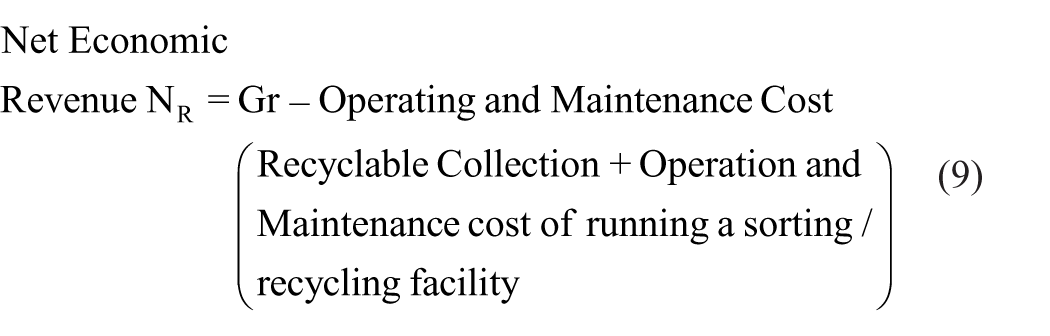
The net economic revenue is obtained by subtracting the operational and maintenance costs associated with the processing of recyclables. The operational and maintenance cost is considered 30% of the revenue generated by recyclable selling. This includes the cost of collecting recyclables, the cost of its transportation, and the cost of maintaining recycling facilities (Ogwueleka and Naveen, 2021).
The schematic methodological framework for the analysis is shown in Figure 1.
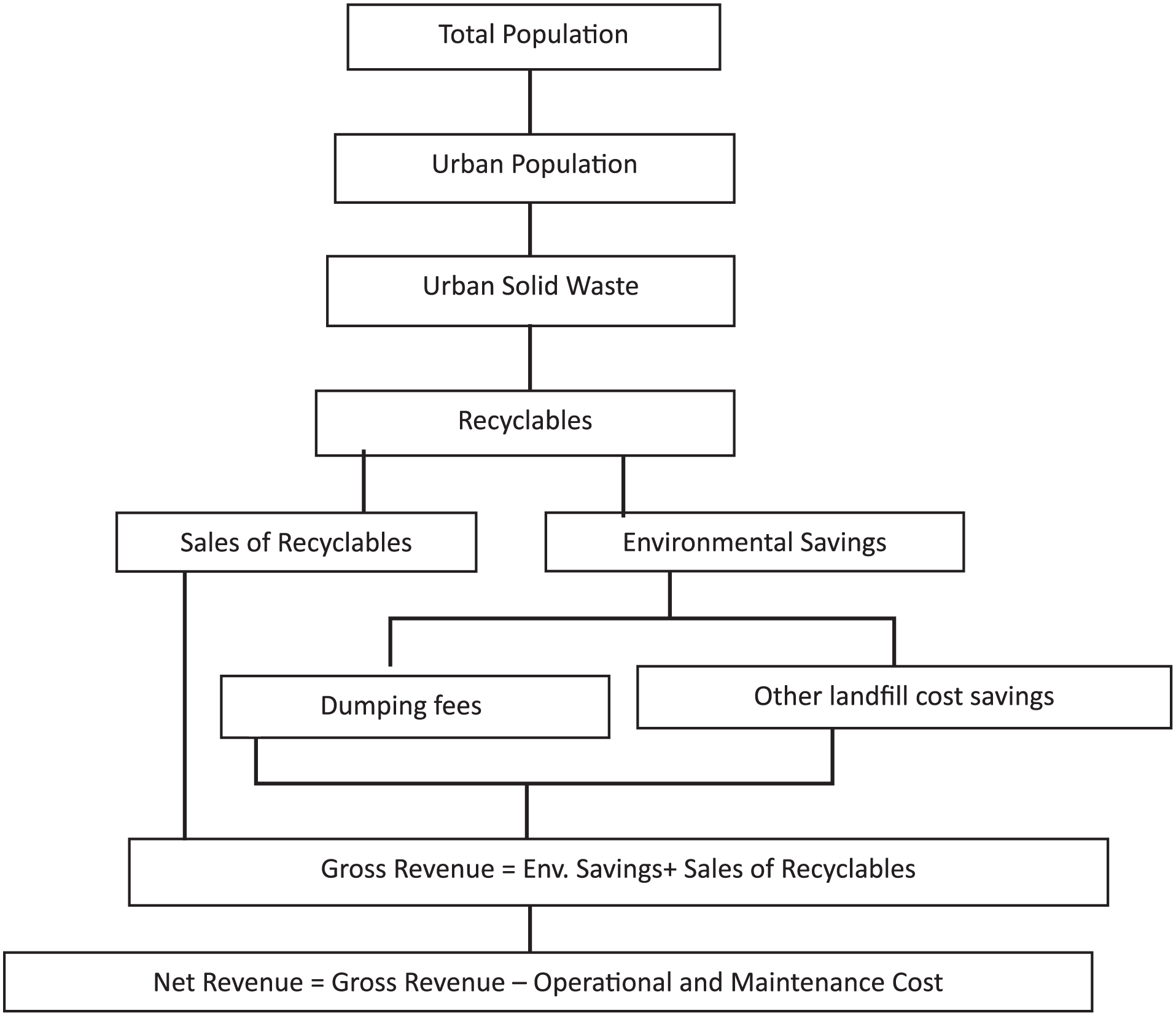
Schematic diagram for the analytical framework.
Results and discussion
Research on informal waste management in Nigeria: How it has evolved
The literature search was conducted for the period 1998–2023. Over 90% of the published articles on informal waste systems in Nigeria were published between 2008 and 2023, making this the most prolific study period in terms of publications and research on the subject. The quantitative evolution of research papers over a record period is depicted in Figure 2.
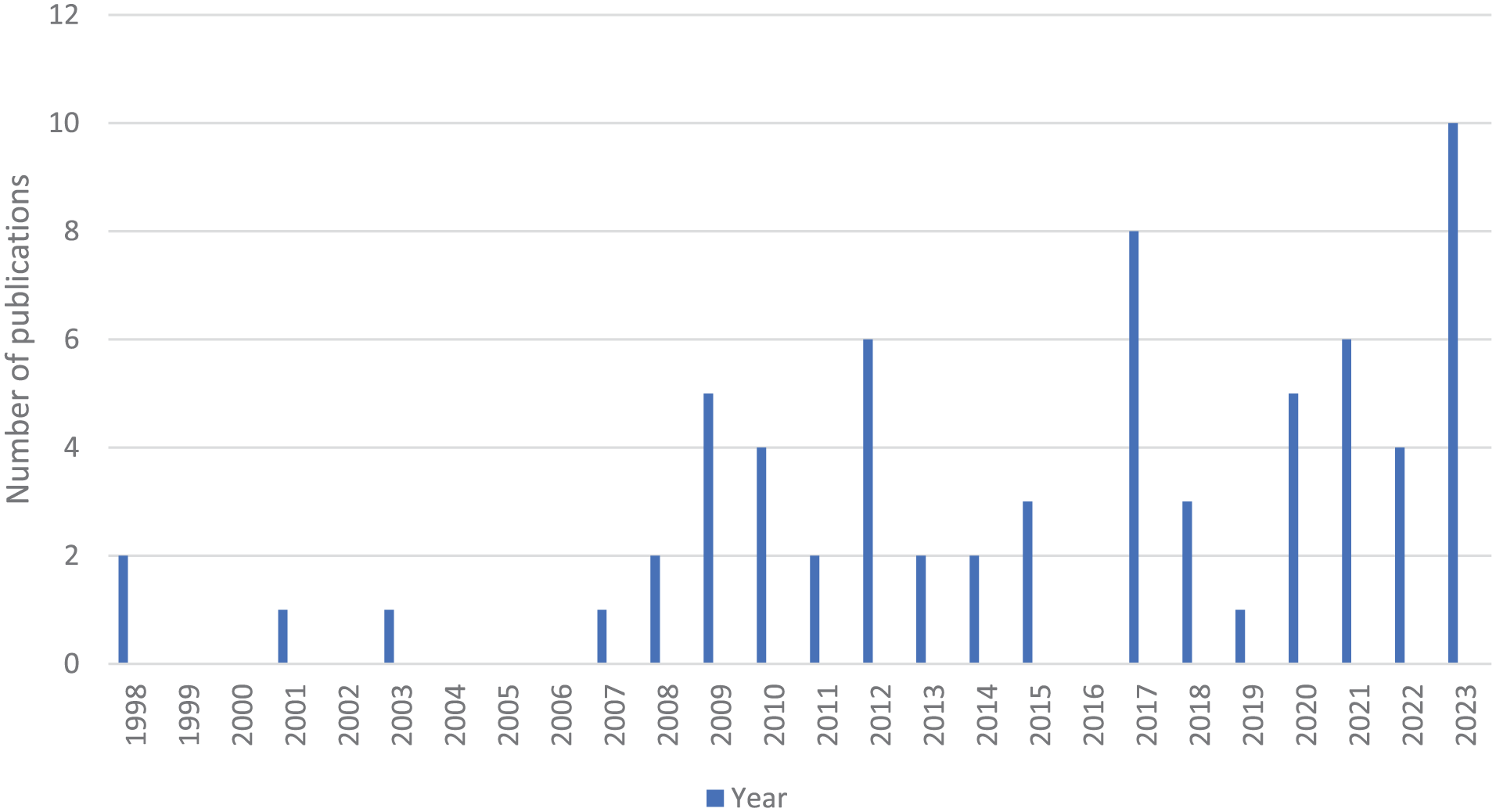
Evolution of research publications from 1998 to 2023 in Nigeria.
This progressive increase in the number of papers from 2007 to 2023 indicates that the informal waste management system in Nigeria as a topic is still expanding and receiving greater attention among the research community, particularly in different waste management activities such as recycling, sorting, disposal, waste scavenging, policy analysis, and waste collection. The result of the analysis shows that a total of 46 journals have published 69 articles on the subject between 1998 and 2023. The top three journals—Waste Management, Habitat International, and Journal of Solid Waste Technology and Management—published 13 out of the 69 articles reviewed amounting to 18.84% of the publications. In this respect, Waste Management published six of the articles, or 8.70% of the publications, and was followed by Habitat International and Journal of Solid Waste Technology and Management at 5.80% and 4.35%, respectively. The top journals and their corresponding “CiteScore” are displayed in Figure 3 within the framework of the study.
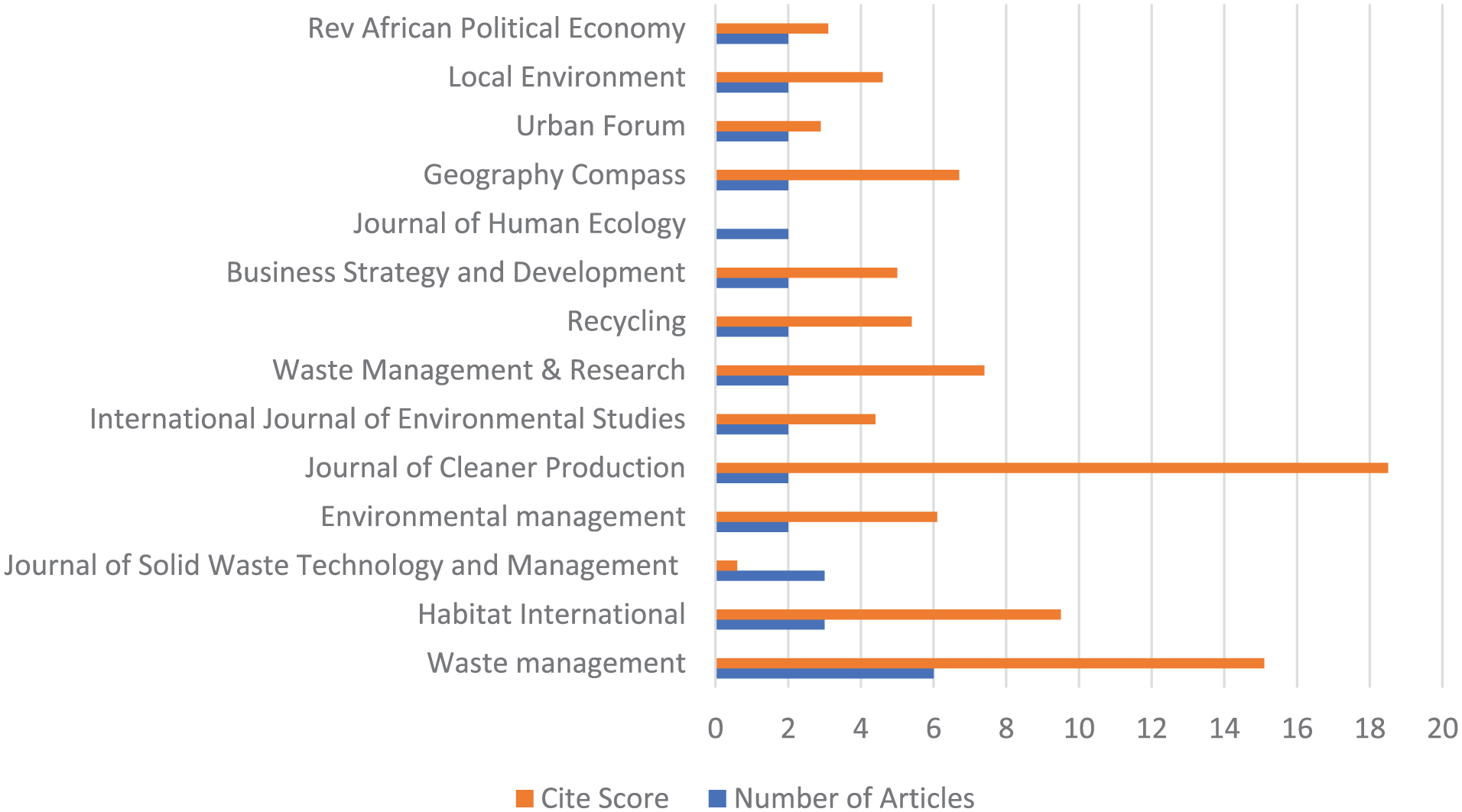
The most relevant journal by quantity and their CiteScore.
How the informal waste sector contributed to waste management
We report the outcome of the content analysis of the selected literature using data from the 69 publications reported on informal waste management in Nigeria. The current study endeavored to draw inferences and conclusions on the contributions of informal waste management on the specified waste management activities as shown in Table 1. The study used the FGD in addition to the evaluation procedure to obtain additional insights. These contributions are consistent with the examination and analysis of the FGD data that were provided and discussed in what follows.
The contributions of informal waste management activities to waste management in Nigeria.
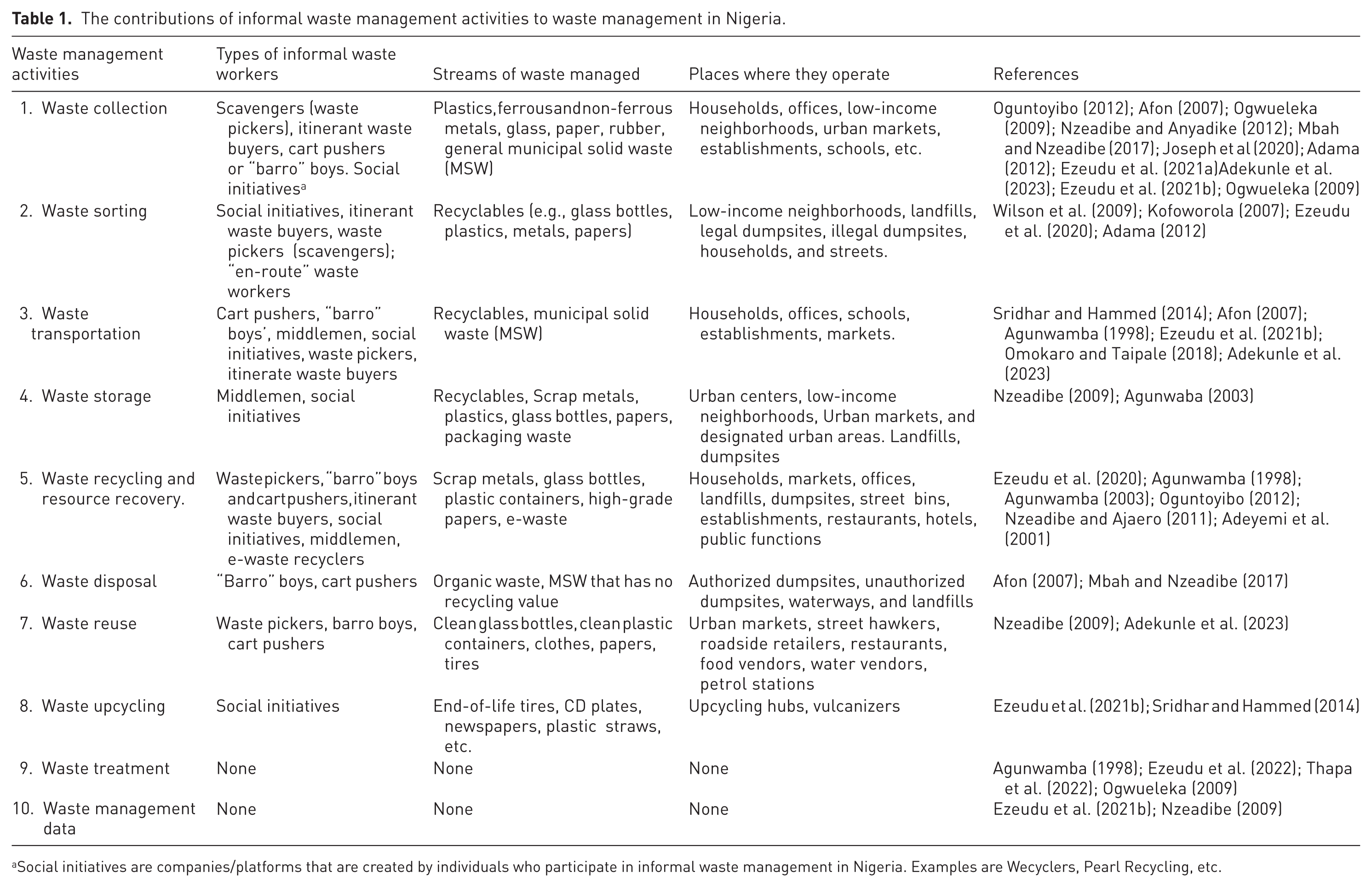
Social initiatives are companies/platforms that are created by individuals who participate in informal waste management in Nigeria. Examples are Wecyclers, Pearl Recycling, etc.
Waste collection, sorting, transportation, and storage
The process of collecting solid waste from the point where it is generated for further movement to the place where it will be processed or disposed of is known as waste collection. The common waste collection practice includes house-to-house, self-delivery to community bins, curbside pick-up, and delegated or contracted services (Ezeudu et al., 2020; Ogwueleka, 2009). The only method that is dominantly practiced in Nigeria in the formal arrangement is the self-delivery to community bin method. The formal waste management systems lack the logistics to offer other variant methods of waste collection services. Informal waste workers participate actively in solid waste collection in Nigeria and offer different methods of waste collection services to urban dwellers (Adekunle et al., 2023; Ezeudu et al., 2020). The itinerant waste buyers, for instance, move from house to house buying clean end-of-life products such as glass bottles, scrap metals, plastic bottles, etc. (Adama, 2012; Adekunle et al., 2023; Afon, 2007). In major cities like Lagos, and Kaduna, the cart pushers (locally known as “kole-kole” or “barro boys”) render waste collection services to the urban dwellers for a fee (Afon, 2007; Adama, 2012; Oguntoyibo, 2012). Cart pushers are known to serve areas not covered by formal waste collection systems in Nigerian cities (Nzeadibe and Anyadike, 2012). Cart pushers are groups of informal waste collectors operating a specially built Wheel Cart or Wheelbarrow involved in house–house waste collection for a fee. They came into waste management in the major Nigerian cities because of the ineffectiveness of government agencies in providing effective waste management. There are clear indications that several other categories of informal waste workers such as waste pickers/scavengers and social initiatives are involved in waste collection, waste sorting, and waste transportation (Adama, 2012; Adekunle et al., 2023; Ezeudu et al., 2020; Mbah and Nzeadibe, 2017; Nzeadibe, 2009; Oguntoyibo, 2012; Ogwueleka, 2009). Middlemen and social initiatives that bulk-buy recyclables maintain storage facilities for the collected recyclables. In the FGD, discussant #4 elaborated on the involvement of informal waste workers in waste collection “Their activities reduce the amount of waste that would have left uncollected, extends the life span of disposal sites/landfills as the collected recyclables away from the landfills.” The group discussion emphasized the need for the government to regulate their activities starting with officially recognizing their contributions.
Waste reuse, upcycling, recycling, and resource recovery
Resource recovery, waste reuse, waste upcycling, and waste recycling serve as appropriate methods for managing solid waste and also as ways to extract value from waste (Ezeudu et al., 2020). Nigeria has no formal waste recycling/resources recovery schemes and attempts to establish one in the past were unsuccessful (Agunwamba, 1998; Ezeudu et al., 2020; Nzeadibe and Ajaero, 2011). However, the only visible form of waste recycling and resource recovery happening in Nigeria is in the informal sector. Waste pickers recover waste from household waste bins, street waste bins, and landfills. They possess skills in waste recovery and can locate market and potential customers/buyers (Oguntoyibo, 2012). The essential motivation for informal recycling in Nigeria is economic and not necessarily for environmental benefit (Agunwamba, 2003). The poor and unemployed were motivated to recycle waste because the recovered waste could be sold to provide a means of livelihood. The itinerant waste buyers, middlemen, and cart pushers also participate in recycling and recovery. Some recovered waste can be reused by the informal waste workers or be sold to the cottage industry, which reuses them for secondary purposes. For instance, end-of-life plastic bottles are reused for selling liquid items such as oil, water, and petrol products. The social initiatives employ informal waste pickers and itinerant waste buyers to recover or buy recyclables from the urban residents. They will in turn sell those recovered recyclables to the multinational companies that use them (Ezeudu et al., 2021b). They also engage in waste upcycling. Pearl recycling, for instance, engages scavengers to collect specialized waste products such as end-of-life tires, bottles, newspapers, CD plates, straws, etc. which they upcycle into innovative products such as furniture and decorative wares (Ezeudu et al., 2021b). By 2020, the upcycling hub is reported to have upcycled over 2000 tons of waste and trained and empowered over 9800 people both directly and indirectly (Pearl Recycling 2020). FGD participant #6 contended that the greatest contributions of informal waste management in Nigeria are in the area of recycling and resource recovery. “Their contributions in recycling and recovery are visibly significant and cannot be undermined. It provides substantial income to the informal workers, thereby improving the neighborhood economy.” This fact has been reiterated in several studies conducted in other developing locations (Gutberlet et al., 2017; Medina, 2007; Velis, 2017; Wilson et al., 2009; Zisopoulos et al., 2023). The focus group interaction suggested a strong case for their recognition by providing a supportive environment for them to operate.
Waste treatment, disposal, and waste management data
Apart from a few instances of waste incineration in healthcare facilities in Nigeria (Ezeudu et al., 2022), novel waste management techniques are not adopted for waste management by municipalities in Nigeria (Agunwamba, 1998; Ezeudu et al., 2020; Ogwueleka, 2009). The standard practice is for the collected waste to be deposited in the dumpsites and landfills. The cart pushers participate actively in waste disposal as they transport the collected waste to landfills and dumpsites. However, there are reports of them disposing of the collected waste inappropriately at unapproved sites (Adama, 2012; Afon, 2007; Agunwamba, 2003). Because the informal waste workers are mainly made up of uneducated people, they do not keep records of their activities. Comprehensive data on their operations, including the amount of waste they collect daily, how many of them there are, and the socioeconomic information that goes along with it, has been challenging to get due to the government’s lack of recognition of their activities (see Table 2). In the FGD, participants #2 and #5 contributed that, the government needs to assess their economic, environmental, and social relevance by first collecting data and information on them. These data will help the government in making an evidence-based policy on their activities.
Number of informal waste workers and their respective income in Nigerian locations.
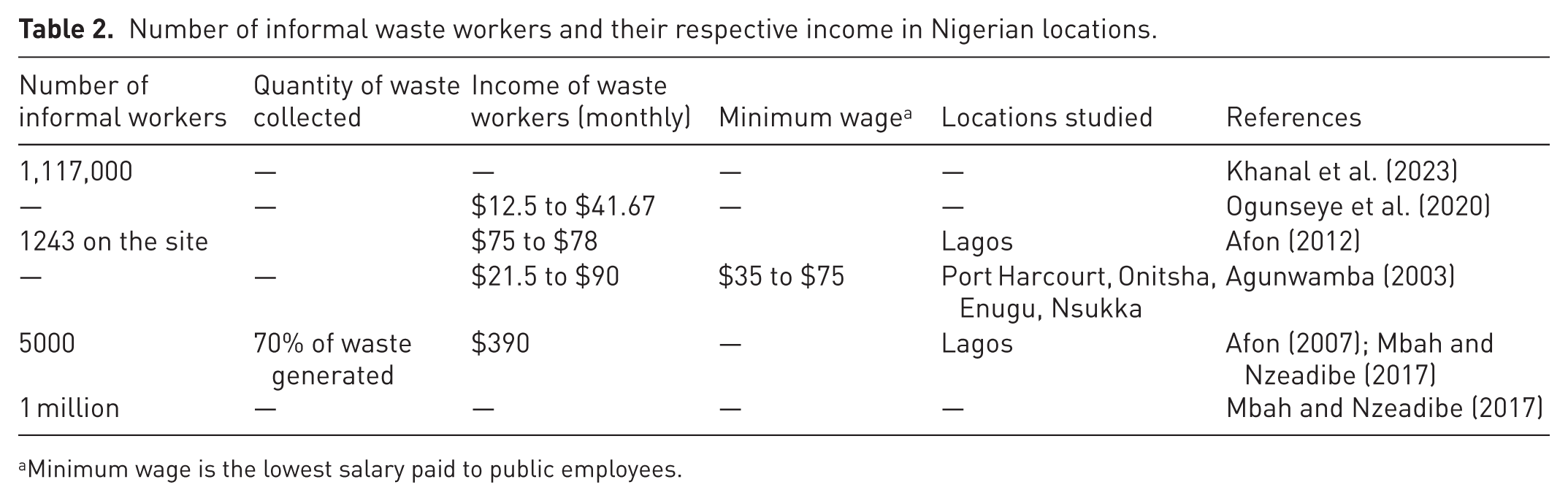
Minimum wage is the lowest salary paid to public employees.
Other essential elements of the informal waste management sector
We also analyzed the selected articles to extract definite information on the contributions of the informal waste management sector to other elements of waste management systems as the results shown in Table 3 and discussed below.
Contributions of informal waste management to other essential elements of waste management in Nigeria.
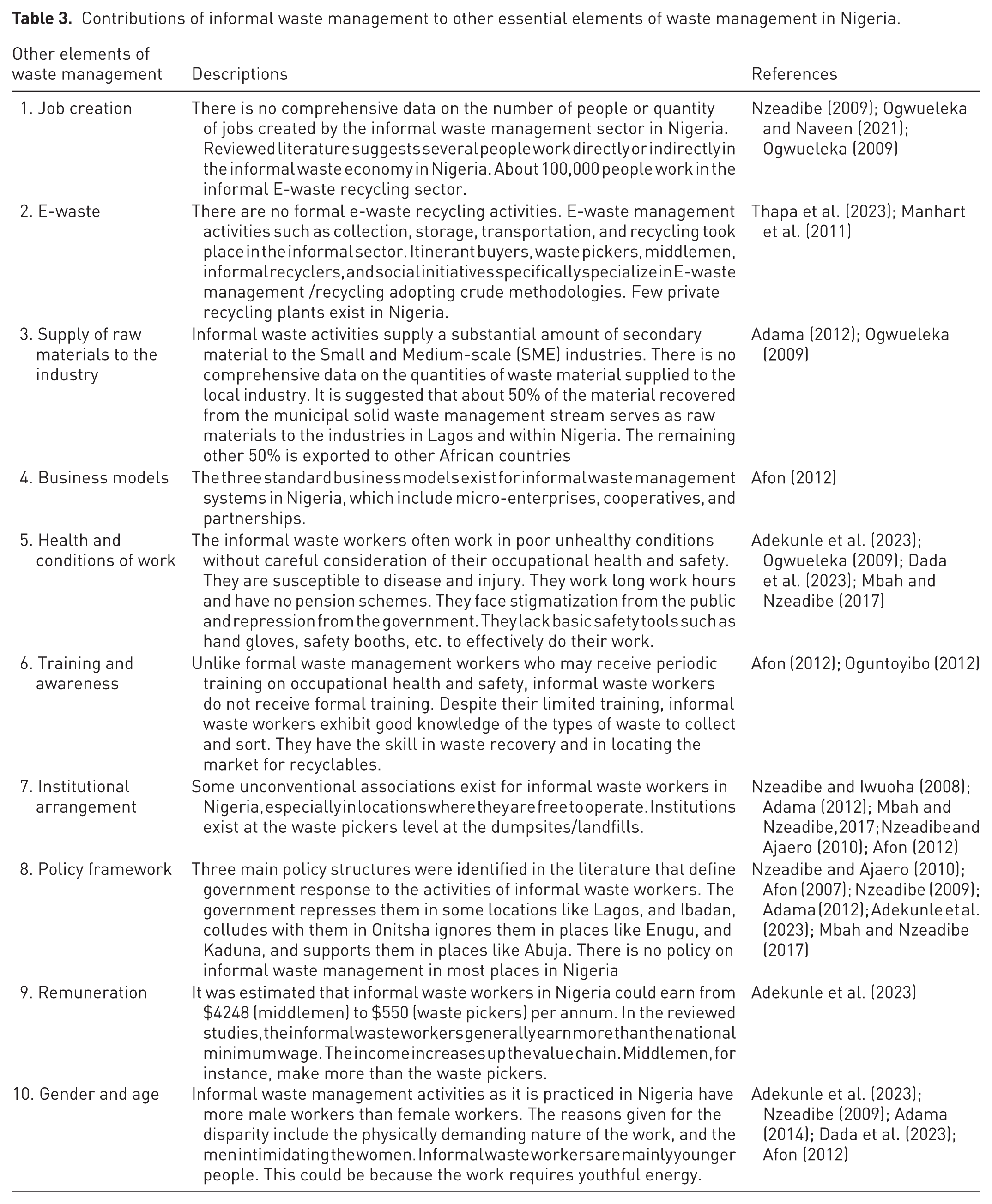
Job creation and supply of raw materials to the industry
The informal waste sector has yielded several direct and indirect jobs in Nigeria. These jobs mainly involve young people and the most vulnerable urban population (Adeyemi et al., 2001; Afon, 2007, 2012). According to Oguntoyibo (2012), informal waste activities exist for several reasons which include (1) serving as a palliative to unemployment and (2) responding to continuous industrial demand for recyclables. It is a tremendous source of input material for SMEs in Nigeria. Scrap metal, for instance, is in huge demand by local industries, and the government has banned its exportation as a way of promoting local recycling (Adama, 2012). In the commercial city of Enugu, it is noted that about 40% of the artisans and small industries receive about 48% of their raw materials from scavengers (Nzeadibe, 2009). The focus group interaction is indicative of the fact that as long as the formal waste management systems in Nigeria remain unreliable and ineffective, and the demand for cheap input material from SMEs persists, informal waste activities will continue to be an adaptive response to chronic poverty where the poor make a living from.
Business model, policy framework, and institutional framework
The business model, policy framework, and institutional arrangements are essential elements of solid waste governance in most urban societies. It is useful in providing directions and governance toward achieving effective waste management in urban centers. However, three types of institutional arrangements exist between the formal and informal waste management systems in the literature which include (1) a formal recycling value chain where the presence of informal waste activities is minimal and is mainly found in high-income countries; (2) suppressed recycling value chain where the informal sector is exploited, punished, or not recognized, and this variant is common in the upper middle, lower middle, and low-income countries; and (3) hybrid value chain commonly operated in the upper middle and lower middle countries where informal systems are officially recognized (Silva de Souza Lima Cano et al., 2022).
The policy arrangement associated with informal waste activities in Nigeria is heterogeneous as they receive divergent policy responses from different locations. Their activities have been fiercely opposed in places like Lagos (Afon, 2007); supported in Abuja (Nzeadibe and Ajaero, 2010), and ignored in Enugu and Kaduna (Adama, 2012; Nzeadibe, 2009). There is a lack of well-constituted institutional frameworks that govern the system in Nigeria. Nevertheless, like most other informal sectors, informal waste recycling in Nigeria has a well-organized business value chain comprising major actors which include waste pickers, scrap dealers, itinerant waste buyers: cart-pushers, middlemen, and micro and small enterprises, multinational companies, and social initiatives as shown in Figure 4 (Nzeadibe and Iwuoha, 2008). It is also observed that none of the modern technological tools that could enhance value creation in business delivery—such as industry 4.0—has been adopted in the informal waste trade in Nigeria. There were diverse opinions on the institutional arrangement of informal waste management during the FGD. Discussants #1 and #3 argue that the activities of informal waste workers in Nigeria are disorganized and therefore have no definite arrangements. Participants #2, #5, #6, and #7 argue that their activities are well organized, especially in the major cities of Lagos, Abuja, Kaduna, and Port Harcourt.
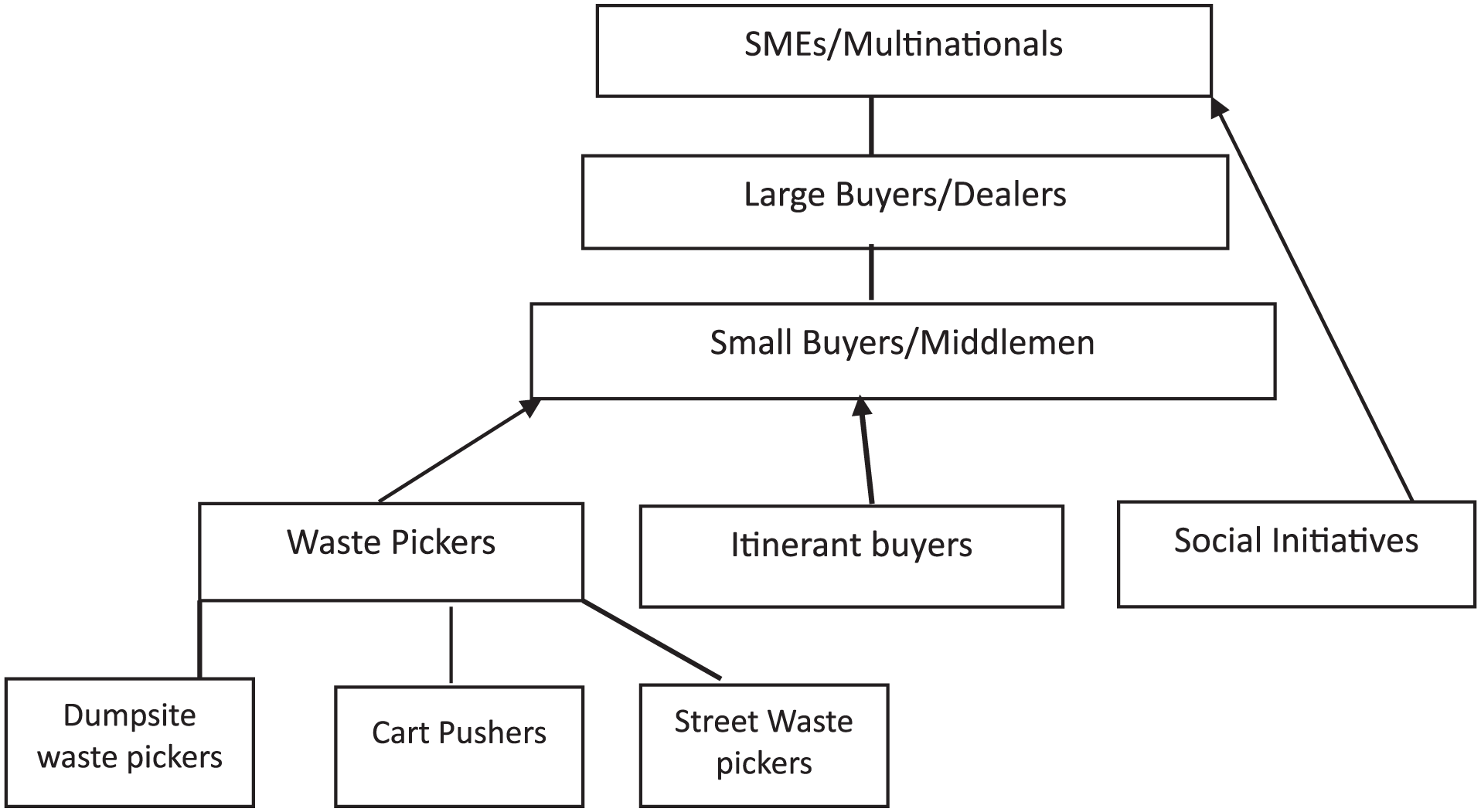
The business value chain for the informal waste recycling in Nigeria.
E-waste
E-waste is a most recent development in urban solid waste management challenges and is also the fastest-growing waste stream in the world (Nnorom and Odeyingbo, 2019). In general, e-waste as a waste stream receives special attention for three reasons (1) the high rate of its generation caused by its short life span; (2) it contains toxic and hazardous materials that have the potential for greater adverse health and environmental impacts; and (3) it contains precious metals which make it high resourceful waste. The Nigeria E-waste country report shows that 70% of all imported used electronic equipment is functional and is sold to consumers after testing. The 70% of the non-functional share can be repaired within the major markets and is also sold to the consumer. The 9% of the total imports of used equipment are non-repairable and are directly passed on to collectors and informal recyclers (Manhart et al., 2011). Nigeria’s e-waste collection and recycling initiatives are mostly structured around the primary suppliers of outdated electrical and electronic goods. According to Manhart et al. (2011), informal waste collectors handle the majority of these tasks. E-waste workers who often are referred to as e-waste scrappers specialize in collecting, dismantling, and selling valuable extracts from end-of-life electronic devices (Omokaro and Taipale, 2018). Hand tools, like pliers, hammers, and mallets, are used for extraction in open areas typically found between homes and commercial structures. They deliberately gather e-waste from commercial companies, public institutions, local consumers, and second devices imported from developed nations. Informal waste actors also participate in e-waste refurbishment where they extract components from non-functional devices and use them to repair another one. Focus group participant #1 explained that “Computer Village in Lagos, which serves as a fab lab has over 100, 000 people who participate in one form of informal e-waste recycling/recovery or the other. They collect, repair, dismantle, and refurbish electronic equipment which all contribute to waste management.”
Remuneration, gender equality, training/awareness, and health implications
The informal waste sector in Nigeria is largely dominated by male workers. The physically demanding nature of the job, stigmatization, religious inclination, gender prejudice, and antagonistic attitudes of the male workers are reported as the most significant reasons for this (Nzeadibe, 2009; Oguntoyibo, 2012). The informal waste workers are reported to have earned above minimum wage in Nigeria (Afon, 2012; Khanal et al., 2023; Nzeadibe, 2009; Oguntoyibo, 2012; Ogwueleka and Naveen, 2021). Unlike formal waste management workers who may receive periodic training on occupational health and safety, informal waste, workers do not receive formal training. The FGD unanimously agreed that despite their limited training, they exhibit good knowledge of the types of waste to collect and sort. They have the skill in waste recovery and in locating the market for recyclables.
Economic contributions
In this section, we address research question (2) by presenting the result of the analysis of the economic contributions of the activities of the informal waste sectors.
The current population of Nigeria is calculated at 239,894,497. The projected population for 2030 will be 299,073,661. The current urban population is 128,391,535, and it is estimated that the figure will be 160,064,223 by 2030.
The current urban population generates about 29.5 Mt of municipal solid waste in the year of 2023. About 7.68 Mt of this waste are composed of recyclables while 2.69 Mt are collected. It is projected that by 2030, 36.8 Mt of municipal solid waste will be generated in urban areas, 9.57 Mt will be the recyclable constituents, and 3.35 Mt will be collected (see Figure 5).
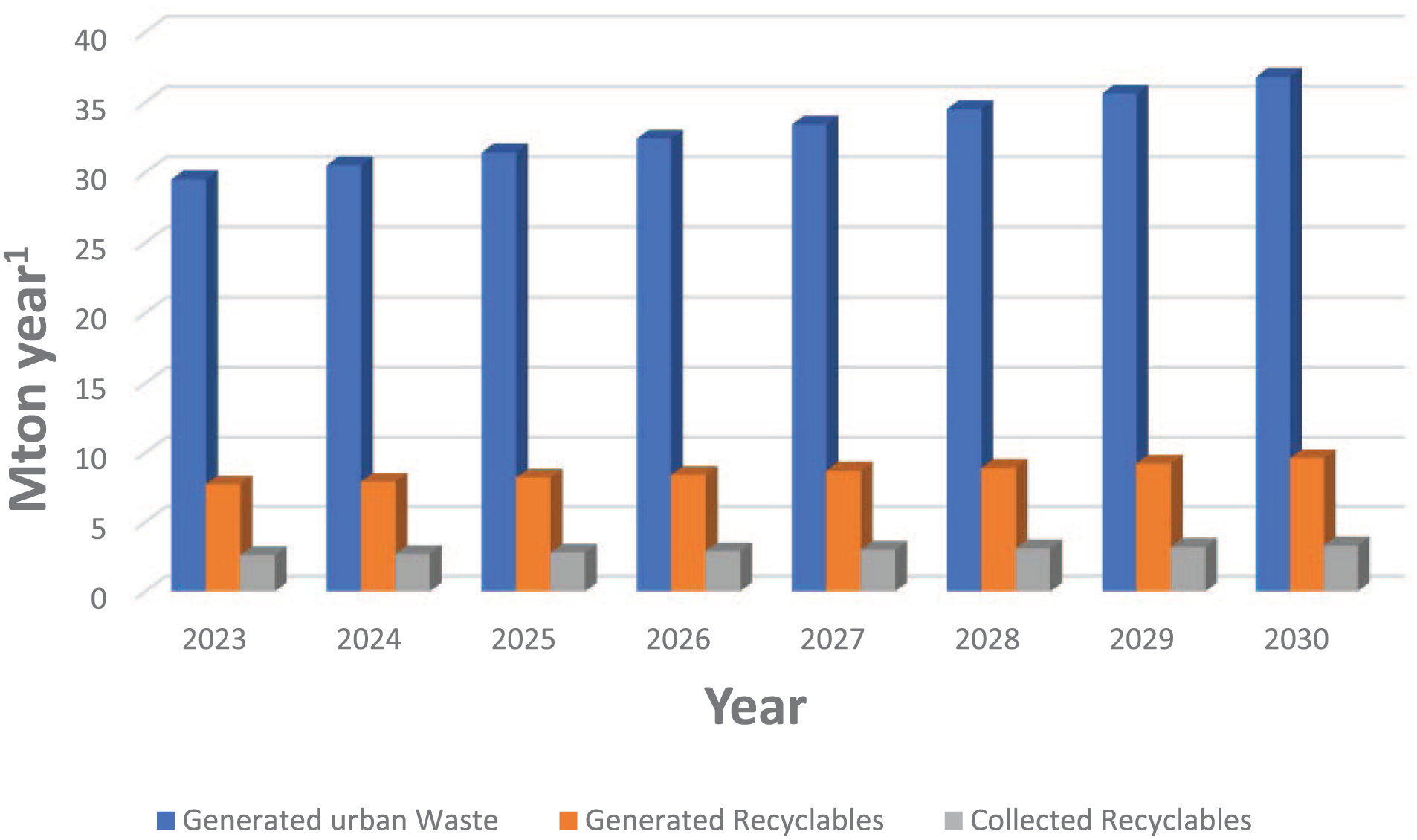
Current and projected quantities of total urban solid waste, and recyclables generated/collected in Nigeria.
The total revenue generated from the recyclables in 2023 is about $267.05 million. It is projected to reach $332.93 million by 2030. The operational and maintenance costs and revenue from the processing of the recyclables are shown in Table 4. The environmental savings resulting from not dumping the recyclables at the dumpsites/landfills are calculated for 2023 and projected for future years till 2030 as presented in Table 5.
Economic analysis of processing recyclables from urban solid waste from 2023 to 2030.
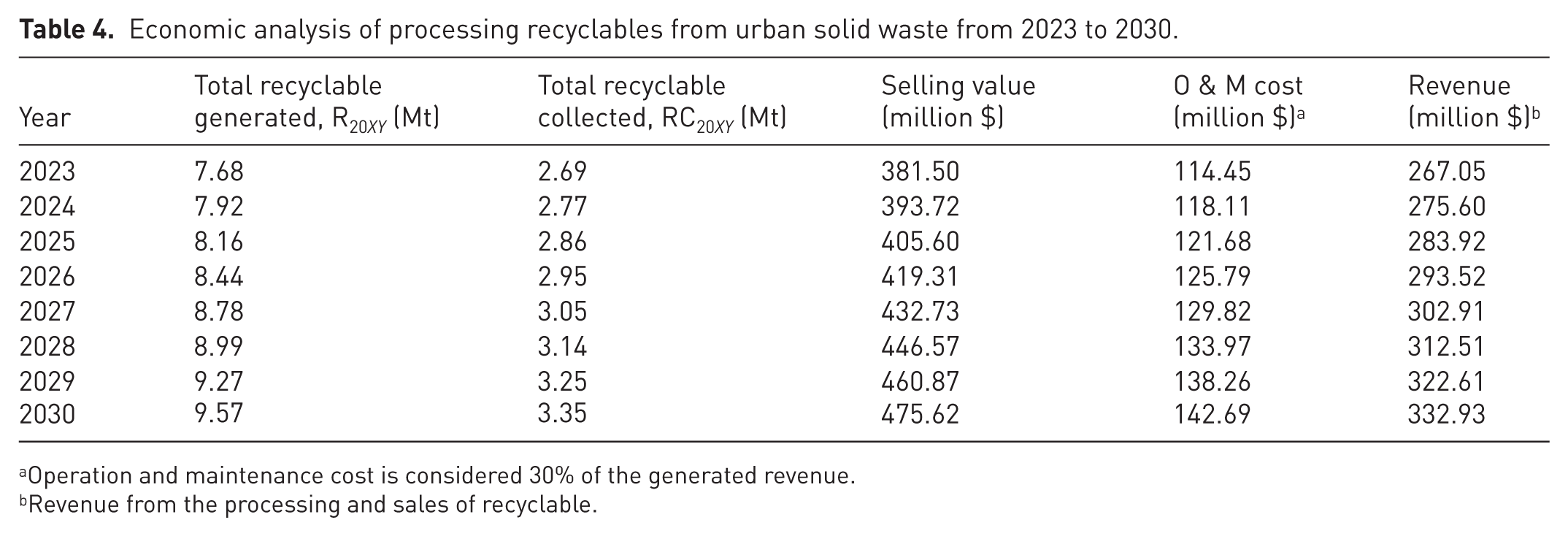
Operation and maintenance cost is considered 30% of the generated revenue.
Revenue from the processing and sales of recyclable.
Environmental savings from dumping fee and landfill avoidance cost from 2023 to 2030.
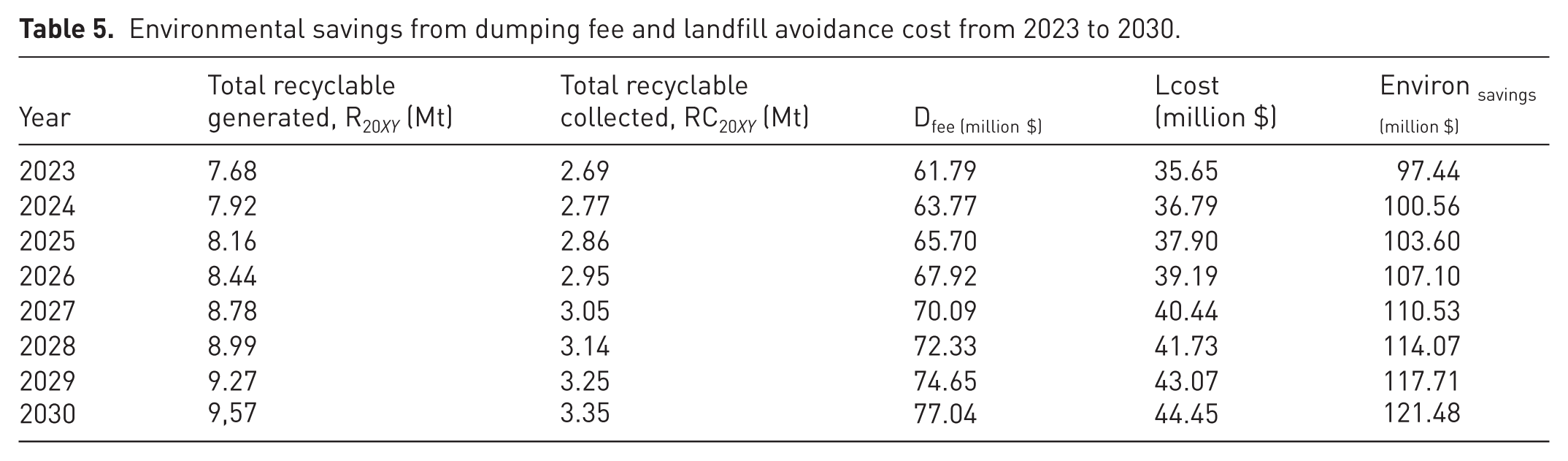
The environmental savings is calculated at $97.44 million for 2023 and $121.48 for 2030. The gross revenue for 2023 and 2030 are $478.95 million and $597.10 million, respectively. The net economic revenues are $364.50 million and $454.41 million for 2023 and 2030, respectively (see Figure 6).
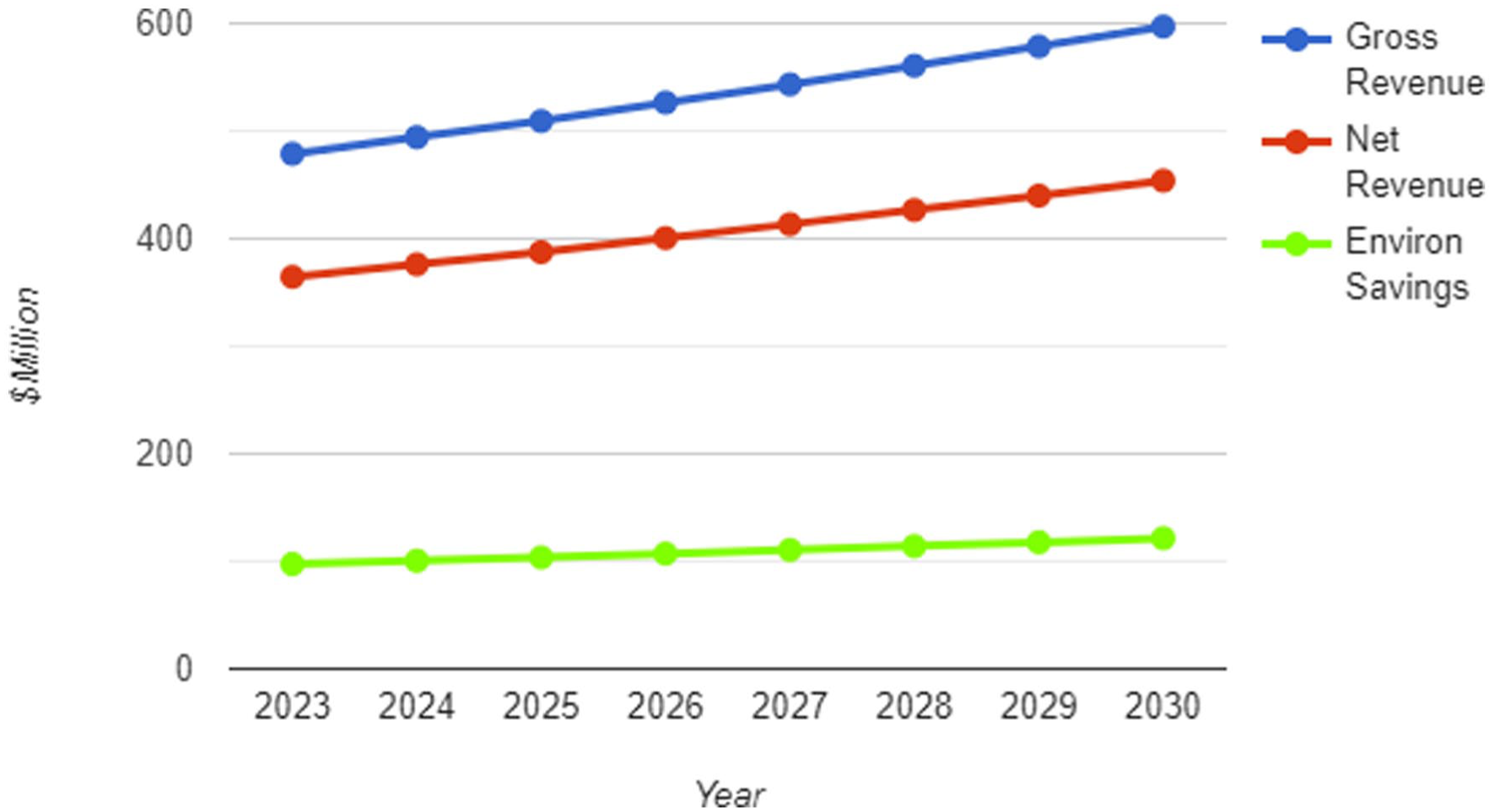
Environmental savings, gross revenue, and net revenue from 2023 to 2030.
However, this projection was done based on the waste generated in the urban areas alone, extending the waste collection services to rural areas and increasing the waste collection rate will positively influence the scenarios. As other parameters which were assumed to remain constant—such as the per capita waste generation rate, the urban population, the collection rate, etc.—improve, the calculated values will continue to increase. In addition, waste stream composition in most low-income countries is dominated by organic components, this trend changes as the country moves from low-income status to high-income status. In essence, the quantity of recyclables generated in Nigeria is expected to increase in the future as the country moves from lower-income to higher-income status. These huge savings in revenue when re-injected into the economy would create socioeconomic opportunities for the country. Alternatively, the savings and revenues accrued from the management of these recyclables could be reinvested for the improvement of the entire waste management sector in the country. Specific areas of interest could be in the acquisition of new technological infrastructures, sustainable maintenance of existing ones, public awareness, and continuous training of the staff. Consequently, direct and indirect job opportunities can be created.
Implications on CE adoption
With a focus on waste management, the CE is viewed as either the more ambitious 6R, which consists of “remanufacture,” “recover,” “redesign,” “reduce,” “reuse,” and “recycle,” or the popular 3R, which stands for reuse, recycle, and reduce (Winans et al., 2017). It is currently being regarded as a means of achieving a high waste recycling rate, economic prosperity, and social equity while minimizing the adverse impact of waste on society (Ezeudu et al., 2020). Waste management activities that could increase the waste recycling rate and make economic and environmental savings will contribute to the CE. An increase in waste recycling rate (proportion of generated waste that is recycled) is simply an indication that more waste is either reused or converted as a resource toward achieving a CE (EEA, 2023). In the European Union, where there are formal recycling programs, the introduction of a CE has led to high waste recycling rates and improvements in solid waste management.
However, in the absence of a formal waste recycling system in Nigeria, the informal waste management sector has risen to stand in this gap making significant contributions to the waste management value chain in the country as analyzed in the foregoing sections. With these contributions, however, these informal waste management activities present both challenges and opportunities for macro-level CE implementation (Velis, 2017) which we are going to discuss in what follows.
Opportunities
Informal waste activities are the only medium through which recycling and resource recovery of recyclables (technical engineered materials such as plastic, glass, metals, etc.) occur in many developing countries including Nigeria (Velis, 2017). These activities have often been going on for a long time, and cannot be trivialized or undermined, especially in this era of CE. Although the key motive for indulging in informal waste activities is economic, the practice has shown great promise in promoting the three key pillars of sustainable development which are economic prosperity, environmental protection, and social inclusiveness. Like most other informal sector activities prevalent in developing countries, they provide a source of livelihood to socially marginalized or impoverished urban populations, while promoting environmental sustainability. Social inclusiveness is an essential index in just transition to the CE. Informal waste management activities solve the issue of social inclusiveness in two folds; (1) through the activities of “barro” boys and cart pushers, the underserved segment of the urban areas where formal waste collection services are not available receive waste collection services; (2) it provides a source of livelihood to the socially excluded or socially marginalized urban populations. These urban populations mainly include the poor, unemployed, migrants, women, children, and under-employed.
Including business and economic possibilities in solid waste management is one of the essential features of the CE. The thriving activities of informal waste workers in Nigeria have shown that there is a business, for end-of-life waste products in Nigeria. This means that cheap input materials can be sourced and sold within the economy and will stay for a longer period thereby enhancing the product circularity, profitability of businesses, and indirectly contributing to the national gross domestic product (GDP). The informal waste management system has created a business value chain that is sustainable as it inserts material into the production cycle, thereby promoting CE (Oguntoyibo, 2012; Siman et al., 2020). Explaining this through the lens of a circular business model, the FGD unanimously agreed that the informal waste sector in Nigeria has created value, captured value, and delivered value while adopting the basic principles of CE which are recycling, reusing, and extending the life of products. Circular business models have been considered as a veritable means to achieve a transition from a linear economy to a CE.
The study has also shown that the informal waste recycling system in Nigeria can create a platform for a possible transition to zero waste in a CE. According to a study conducted in Lagos by Afon (2012), scavengers reduce the waste in the landfills to almost only organic, as technically engineered material waste products such as metals, paper, plastic, glass, leather, etc. are recovered for sale. The implication is that the remaining organic content which forms a huge percentage of generated waste can easily be converted to compost. However, in the absence of composting facilities, they are still being deposited at dumpsites and landfills in a linear economy model.
Collaboration among stakeholders is an essential enabler to achieving a CE (Mishra et al., 2019). This is in rhythm with the sustainable development objective which encourages multi-level collaboration toward solving global challenges (Ngan et al., 2019). Although there are absence of formal policies proclaiming support for the activities of informal waste workers in Nigeria, several levels of informal collaboration exist among the stakeholders and actors. For instance, social initiatives collaborated with waste pickers and multinational companies for the collection of certain specialized end-of-life waste products (Ezeudu et al., 2021b). Adama (2012) also highlighted levels of collaboration among the informal waste actors such as itinerant waste buyers and households, waste pickers, middlemen and agents, etc. In Lagos, the waste pickers collaborate with the landfill managers, middlemen, and other formal waste pickers on how to conduct activities at the landfill without conflicts of interest (Afon, 2012).
EPR is a CE scheme that adopts environmental policy instruments under the “polluter pay principle” to make, the producers responsible for their products throughout their life cycle. EPR is often difficult to implement in developing countries because of several factors such as unavailable producers, poor legislature, and the absence of effective formal waste collection and sorting means. These factors are largely linked to the socioeconomic disadvantages associated with developing countries which simply suggest solutions in informality. Informal waste workers could play a significant role in the implementation of EPR in Nigeria if provided with the necessary infrastructure and support (Ezeudu, 2024; Thapa et al., 2022).
The high cost of raw materials and dwindling foreign exchange rightly point to the fact that there would be continuous demand for secondary input materials from the local industry for production. The quantitative analysis shows that over 2.26 Mt and 3.35 Mt of recyclable can be collected in 2023 and 2030, respectively. This will amount to environmental savings of $97.44 million and $121.48 million while adding about $364.50 million and $454.42 million to the national economy in 2023 and 2030, respectively. Efforts toward improving the efficiency of the informal waste workers and extension of waste management services to the rural areas would further create more CE benefits such as increasing the economic revenue, creating more jobs, prolonging the lifespan of the landfills, reducing the greenhouse gas emission, and minimizing the cost of waste management for the municipalities.
Challenges
Like most informal sector activities, the informal waste workers (especially the ones at the lower value chain such as waste pickers, cart pushers, and landfill scavengers) are known to operate in unfavorable work conditions and environments. Long working hours, stigmatization, insecurity, social rejection, and poverty are factors linked to the activities (Aparcana, 2017). They do not observe basic occupational health and safety (Zisopoulos et al., 2023). They lack basic work and safety equipment such as hand gloves, safety booths, and safety apparel (Adekunle et al., 2023). Economic progress that compromises the essential part of life which is health and safety is still counterproductive for an inclusive transition to CE. The economic income could be spent on ailments and the treatment of diseases. Inclusive CE implementation must be in a safe and healthy environment. According to the FGD’s discussants #1 and #3, “recognizing or formalization of the informal waste workers would not be enough to resolve this issue of poor working conditions, rather policies on operational guidelines must also be made with effective enforcement modalities.”
The business and economic aspect of informal waste activities in Nigeria is not regulated thereby making transactional methods discouraging and unfair. There are no fixed standardized metrics for the sale of recyclables which probably makes the middlemen and actors at the top of the business value chain benefit more from them, whereas the waste pickers at the bottom of the chain are often shortchanged. According to discussant #2 of the FGD, “This has brought back the issue of social exclusiveness which could undermine the social aspects of the CE program.” It contravenes the just inclusion in the CE transition (Thapa et al., 2022). Siman et al. (2020) suggested that embedding corporate governance tools in waste pickers organizations could make them function more effectively in achieving better market pricing and other benefits alike.
CE and effective waste management require adequate data and information in Nigeria. This could help to monitor the progress and success of the program. Data are absent from both formal and informal waste management activities in Nigeria and in most developing countries. The informal waste workers are not literate enough to document their activities; therefore, precise, comprehensive, and accurate data on their activities are not available. This lack of data is complicated because of a lack of recognition by the government.
The quality of recyclables recovered is often affected by the lack of sorting of waste at the point of generation. Once the waste is mixed up, it affects the quality and grade of recyclables such as paper, packaging waste, etc. Nigeria has no official program for waste segregation from the source (Ezeudu et al., 2020). Improved sorting will yield cleaner waste for recycling thereby enhancing the recycling rates, minimizing the cost of waste collection, and reducing the quantity of waste going into landfills.
Child waste pickers are reported in cities across Nigeria (Adama, 2012, 2014). Child scavenger undermines the SGD 4 goals which seek to ensure inclusive and quality education for all. Waste scavenging could undermine the child’s education and expose them to danger.
Gender exclusiveness was significantly reported in the informal waste activities in Nigeria (Nzeadibe, 2009). Women are largely excluded in the informal waste sector due to several factors such as stigmatization and the physically demanding nature of the activities. The just transition to the macro-level CE would still be undermined until the work conditions were made fair for all-inclusiveness.
The CE in solid waste management would still not be effective without the availability of novel waste treatment techniques. The contributions made by the informal waste activities in the country could still be largely undermined if the collected waste is not properly disposed of or treated. There are reports of collected waste being indiscriminately disposed of because of unavailable disposal facilities such as transfer stations and sanitary landfills. Thapa et al (2023) reported that, even when the informal waste workers in Nigeria can retrieve the e-waste, they are unable to recycle it in an environmentally friendly manner because the expensive state-of-the-art recycling facility is not within their reach.
Conclusion and recommendations
To determine the suitability of the informal waste management sector for macro-level CE implementation in Nigeria, the current work conducted an empirical assessment of their contributions. The results show that there are increase in the interest in informal waste management in Nigeria evidenced by a surge in the quantity of article published between 2008 and 2023. With their tacit knowledge, informal waste recyclers create value by identifying, collecting, segregating, transporting, storing, disposing of, refurbishing, and recycling different waste categories in Nigeria (Ogwueleka and Naveen, 2021; Zisopoulos et al., 2023). They deliver and capture value by selling the recovered material and by providing waste management services to underserved urban populations. The quantitative analysis shows that they can collect about 2.26 Mt and 3.35 Mt of recyclables in 2023 and 2030, respectively. The environmental savings and net revenue addition to the national economy for 2023 will be $97.44 million and $364.50 million, whereas the corresponding values for 2030 will be $121.48 million and $ 454.41 million, respectively. Furthermore, its potential contributions, challenges, and opportunities for inclusion in the macro-level CE are also discussed. The opportunities include the creation of a platform for social inclusiveness, economic prosperity, and environmental sustainability, promoting a circular business model, which could promote the transition to zero waste, encourage collaboration, could aid the implementation of EPR, and provide raw material for the industry. The challenges include the poor state of social security and occupational health and safety of informal waste workers, the absence of standard metrics for trading of recyclables, unavailability of data, the poor quality of recyclables, inclusion of child waste pickers, and gender exclusiveness. Based on the contributions, the formalization and recognition of the informal waste sector are recommended for a macro-level CE in Nigeria. However, we also suggest that other supportive measures need to be in place to address the challenges such as the implementation of standard operational guidelines that will protect their health, enforcing waste segregation from source and providing state-of-the-art waste treatment and disposal facilities. We equally recommend corporate governance tools to be adopted as a measure to strengthen waste picker organizations. Adopting formal waste segregation from source is an effective method of ensuring that the high-quality recyclables are collected, whereas corporate governance tools could ensure better business self-management and efficient trade conditions that could increase the income and wages of the informal waste workers, eliminate gender exclusiveness, and the use of child labor.
There is a need to explore advantages that come with digital entrepreneurial ecosystems in providing novel solutions to the problems associated with informal waste management in Nigeria and beyond. One area to apply this is in stigmatization. Stigmatization and superstition have been identified as a factor hindering the activities of informal waste workers (Zisopoulos et al., 2023). For instance, it is believed in some quarters that recycled items are unsafe and unhygienic and the final products made from recyclables are often regarded to be of lower social status. Promoting digital entrepreneurial ecosystems such as higher digital user citizenship could eliminate these barriers. Digital literacy and digital access have been suggested as a veritable means of tackling such problems (Roshan et al., 2024). A citizenry proficient in digital technology, with improved access to mobile and internet services, can readily explore the advantages and disadvantages of market products, including those that are recycled. This capability helps to alleviate unnecessary worries regarding the safety, quality, and value of the products. Digital multisided platforms, through their networking and matchmaking elements, may facilitate the discovery and subsequent transactions with waste vendors, value chain partners, and other collaborators. The barriers resulting from disjointed supply chain, lack of resources for long distance physical connections can be broken adopting these digital solutions. Acquisition of these technologies could start with value chain members at the top of the chain such as wholesalers and manufacturers.
The smooth operation of informal waste management sectors in a CE can be facilitated by effective generation, processing, storage, and dissemination of data using digital technologies, and also through adoptions of other industry 4.0 technological solutions which could enable automations, data-driven methods to enhance efficiency, especially in resource recovery (Fatimah et al., 2020; Kristoffersen et al., 2020; Upadhyay et al., 2023). Industry 4.0 technology adapted to the specific needs of the local informal waste workers through frugal innovation could help to automate waste segregation, improve waste traceability, and optimize collection and transportation, while providing additional income to informal waste workers. The extended advantages could include reduction in the operational costs, better work conditions, improved health and safety conditions, and sustainable waste management ecosystem in the CE.
Finally, the manufacturers at the top of the informal waste recycling chain can leverage the advantages of big data analytics and responsible research and innovation to identify areas of improvement. According to Sahoo et al. (2023), these two approaches provide a synergistic advantage that could improve the implementation of CE, especially in developing countries. They could take up these roles as part of their corporate social responsibility in two ways. First, the manufacturers could create a producer responsibility organization to support the implementation of EPR where informal waste workers would be involved in the co-production of services. Second, to ensure the effectiveness and completeness of the CE, they could also invest in waste treatment facilities. Although it has been noted that the high cost of novel waste treatment facilities is the major hinderance to its deployment in most developing locations (Scarlet et al., 2015), through supportive frugal innovation schemes and the right investment in research and development, cost-effective alternatives could be developed.
Supplemental Material
sj-docx-1-wmr-10.1177_0734242X251405958 – Supplemental material for Assessing the contributions of informal waste management sector and its economic potentials in Nigeria: Challenges and opportunities for macro-level circular economy implementation
Supplemental material, sj-docx-1-wmr-10.1177_0734242X251405958 for Assessing the contributions of informal waste management sector and its economic potentials in Nigeria: Challenges and opportunities for macro-level circular economy implementation by Obiora B. Ezeudu and Uzochukwu C. Ugochukwu in Waste Management & Research
Footnotes

Funding
The authors received no financial support for the research, authorship, and/or publication of this article.
Declaration of conflicting interests
The authors declared no potential conflicts of interest with respect to the research, authorship, and/or publication of this article.
Supplemental material
Supplemental material for this article is available online.