



Abstract
Plastic waste circularity is a priority at a global level. Sustainable development goals (SDGs) set the ways to go, and the circular economy principles underlined the ‘green’ strategies to be employed. However, in practice, there is still much to do, especially in developing countries, where open burning and open dumping still represent the common way of plastic waste disposal. This review aims to analyse current plastic waste circular approaches in low-middle income settings. Seven countries were selected based on the economic level and data availability from the authors, and analysed to collect and critically discuss the actions implemented at a city level. Examples of waste minimization and recycling strategies, selective collection systems and public campaigns are reported from Africa, Asia and Latin America. First, a background analysis related to physical and governance aspects of municipal solid waste management systems of the chosen settings was conducted. The assessment was focused on the treatment processes or minimization actions. Then, the applicability of the projects to achieve the SDGs was commented on. The outcomes of the research underline the need to: (1) scale up small-scale and pilot projects, (2) disseminate good practices in more low- to middle-income settings, (3) create synergies among international partners for further replications in cities. Urgent solutions to plastic waste pollution are needed. The review presented practical actions to be implemented now to boost plastic waste circularity in developing cities.
Keywords
Introduction
Plastic pollution resulting from the mismanagement of plastic waste is a ubiquitous planetary threat (Borrelle et al., 2020). While plastic generation doubled globally to 353 million metric tonnes (Mt) between 2019 and 2000, the majority of post-usage plastic is landfilled (44%), much is mismanaged through open dumping or burning (22%), and only a small proportion (9%) is recycled (Maalouf and Mavropoulos, 2022; Velis and Cook, 2021). Uncontrolled disposal is expected to continue to rise until 2028, reaching 730 million Mt of municipal solid waste (MSW) per year, while the new infrastructure like engineered landfills, incineration plants, recycling facilities and biological treatment plants, will rise only by 2% annually under an optimistic scenario that is not enough to cover the current and future demand of MSW treatment facilities (Maalouf et al., 2020).
The accumulation rate of plastic in the environment far exceed the rate of natural removal and global clean-up efforts are not successful (Chamas et al., 2020; MacLeod et al., 2021). In addition, plastics contribute 3.4% of global emissions across their lifespan, around 90% coming from the extraction of fossil fuels (OECD, 2022). Global mismanagement of plastics through open burning and littering also releases harmful gases and microplastics that cause air pollution and contaminate aquatic environments. According to Lau et al. (2020), higher economic growth in developing countries will increase the production of plastics, resulting in 710 million Mt of plastic that will accumulate in the environment by 2040 (Wen et al., 2021). Plastic waste management initiatives have been targeting the Global South. For instance, World Bank approves 20 million USD Regional Grant to combat marine plastic pollution in southeast Asia; the International Solid Waste Association (ISWA) established a Task Force on Marine Litter to prevent plastics pollution from mismanaged solid waste in the Global South; The first United Nation Environmental Agency resolution highlighted marine litter and microplastic as an emerging global environmental problem that needed more knowledge and information (Agamuthu et al., 2019).
A Circular Economy (CE) framework for plastics products, which addresses all phases of the value chain, is considered the best possible solution to reduce the impact of exhaustive extraction of virgin resources and emissions of plastic waste in the environment (European Parliament and European Council, 2018). The concept of CE foresees the introduction of sustainability approaches into business (Murray et al., 2017), which can be achieved by using renewable energy sources and cyclic flow of materials that emphasizes redesign of products, elimination of waste, resource cycling and increased longevity of products (Ellen MacArthur Foundation, 2015). In this regard, CE is a principle to achieve many sustainable development goals (SDGs) (Sauvé et al., 2016; Schroeder et al., 2019). Additionally, CE promotes a sharing economy that maximizes material resources through cooperative participation and creation of more employment opportunities (Korhonen et al., 2018).
Despite the benefits of CE, some practical challenges are present in closing the loop. The need for economic incentives to bring post-consumption products into the manufacturing process, the higher cost of producing more durable goods, and determining the optimum way to internalize the environmental costs, represent ambitious tasks (Souza, 3). The definition and the implementation of CE actions in CE models for plastic waste management should lead to waste elimination, maximization of its value and a more efficient use of the material (Wu et al., 2021). However, three inevitable questions arise: Are those CE actions effective in developing countries? If so, how can they be implemented? What are the main challenges and barriers to their implementation at a global level? The topic should be analysed globally since sustainable plastic waste management is recognized as an international central issue (Agamuthu et al., 2019).
Limited access to capital investments may be a barrier to implementing plastic recycling and recovery processes (Robaina et al., 2020). Global South countries in Africa, Asia and Latin America suffer from poor implementation of CE actions due to the lack of infrastructure and unequal allocation of economic resources (Mama et al., 2021; Olay-Romero et al., 2020). One solution could be to encourage plastic waste conversion technologies and provide economic value to plastic waste by creating a local market (Browning et al., 2021). However, countries like China and India are more focused on establishing a development strategy encouraging foreign investment to accelerate industrial upgrading and related economic growth, rather than shifting to a CE paradigm (Wu et al., 2021). Therefore, it is clear that the transition to CE in plastic waste management cannot be achieved through optimizing waste segregation and management systems alone but must be combined with establishing a participatory process through all stages of the value chain. However, waste sorting and the involvement of the population in segregation plans is a challenge for developing countries.
Similar issues arise linked to plastic waste recycling technologies. The higher capital cost and high uncertainties in addition to the lower labour cost and localized informal sector hinder the adoption of state-of-the-art recycling technologies in developing countries. Several technologies such as pyrolysis, hydrogenolysis, dissolution-based approaches to recycle plastics chemically are available (Garcia-Gutierrez et al., 2023; Gracida-Alvarez et al., 2019; Larrain et al., 2020). However, the recycling technology mostly used is predominantly mechanical reprocessing especially for recovering materials like PET and PE.
In the last decade, several studies reviewed the state of CE and the concepts of CE (European Commission, 2019). Ghisellini et al. (2016) reviewed the features of CE from an implementation perspective at different levels. Other authors examined and compared the concepts of sustainable development and CE (Geissdoerfer et al., 2017; Millar et al., 2019). Robaina et al. (2020) analysed the efficiency of the plastic CE in European countries. Other reviews were also conducted on the indicators related to circular economies (Corona et al., 2019; De Pascale et al., 2021). However, many studies in the literature emphasized the post-consumption phase of plastics, and only a few explored the perspective from a developing country (Cruz Sanchez et al., 2020; Huysman et al., 2017). Ngan et al. (2019) provided an in-depth analysis of the strength and challenges of transitioning the general industry life cycle into CE of a developing country perspective. Su et al. (2013) conducted a case study in which they assessed the level of implementation of CE in China and examined the challenges faced by the study area in the transition stages. Similarly, the plastic waste management transformation into CE in Taiwan was assessed (Wu et al., 2021). These studies reported on the challenges to be faced in transitioning to a CE. However, no one has introduced a comparison of different plastic waste management systems in low-middle-income countries that gives evidence about practical actions that can be replicated globally to support the move to a CE of plastics. The analysis of CE applications should relate to the SDGs defined in the 2030 Agenda to identify synergies between CE and sustainable development.
This paper aims to investigate the state-of-the-art of alternative, inclusive and low-tech CE practical actions in plastic waste management in cities located in seven developing countries, where the problem of plastic mismanagement is still critical. The research objective is to identify the extent to which CE actions implemented in developing cities can potentially contribute directly to achieving a significant number of SDGs targets. Therefore, the current review seeks to contribute significantly to the few existing studies by analysing the synergies between CE actions in plastic waste management and the SDGs, which are critical for establishing long-term and replicable projects for plastic waste prevention and reuse in developing countries. The research can be of interest to decision-makers and stakeholders looking for alternative plastic waste circular systems applications to be implemented in developing cities.
Methods
Overview of the research
This study was conducted with the cooperation of 14 ISWA Young Professional Group (YPG) members interested in the plastic waste circularity field in developing settings that allowed the collection of primary data from cities in developing countries, given by present and past research. The research results from a data collection carried out and investigated from March to June 2022 by ISWA YPG members in different countries and cities.
This research entailed defining a search strategy for data collection and analysis through field studies, interviews with local stakeholders and a review of scientific literature. Specific information on effective plastic minimization and recycling actions that can be replicated in other developing cities were gathered during the review. The outcome of the analysis is a comparison among different waste circular actions towards sustainable development, underlying how SDGs can be achieved through small-scale projects focused on the development of social, environmental and economic aspects of a developing setting.
Methodological approach
This study analysed the MSW system of developing cities focusing on plastic waste management and circular actions implemented by governments, non-governmental organizations (NGOs), universities and other stakeholders. Data collected was filtered to consider actions related to social inclusion, waste minimization and recycling of MSW, with a specific focus on plastics. It is worth noting that governance, and physical aspects of the solid waste management (SWM) systems were related to MSW in general. Countries were explicitly chosen based on the direct experience of the YPG members who conducted field studies and had the opportunity to know the projects and circular actions implemented in cities. Data gathering was done through state reports, official public documents, published sources, non-structured face-to-face interviews, site visits and field observations, supplemented with reported literature. The selection of studies from scientific journals was based on the authors’ knowledge of waste management in developing countries using different academic search engines. Countries were also selected based on their gross national income (GNI) and data availability. Plastic waste was detected as the most important fraction to be valorized due to the potential value chain that can arise from its recovery and the environmental contamination that affects local ecosystems due to open dumping and burning. In particular, recyclable thermoplastics were considered for the collection of circular projects (called simply ‘plastics’ in this review). The procedure to assess plastic waste circularity in developing cities is presented in Figure 1.
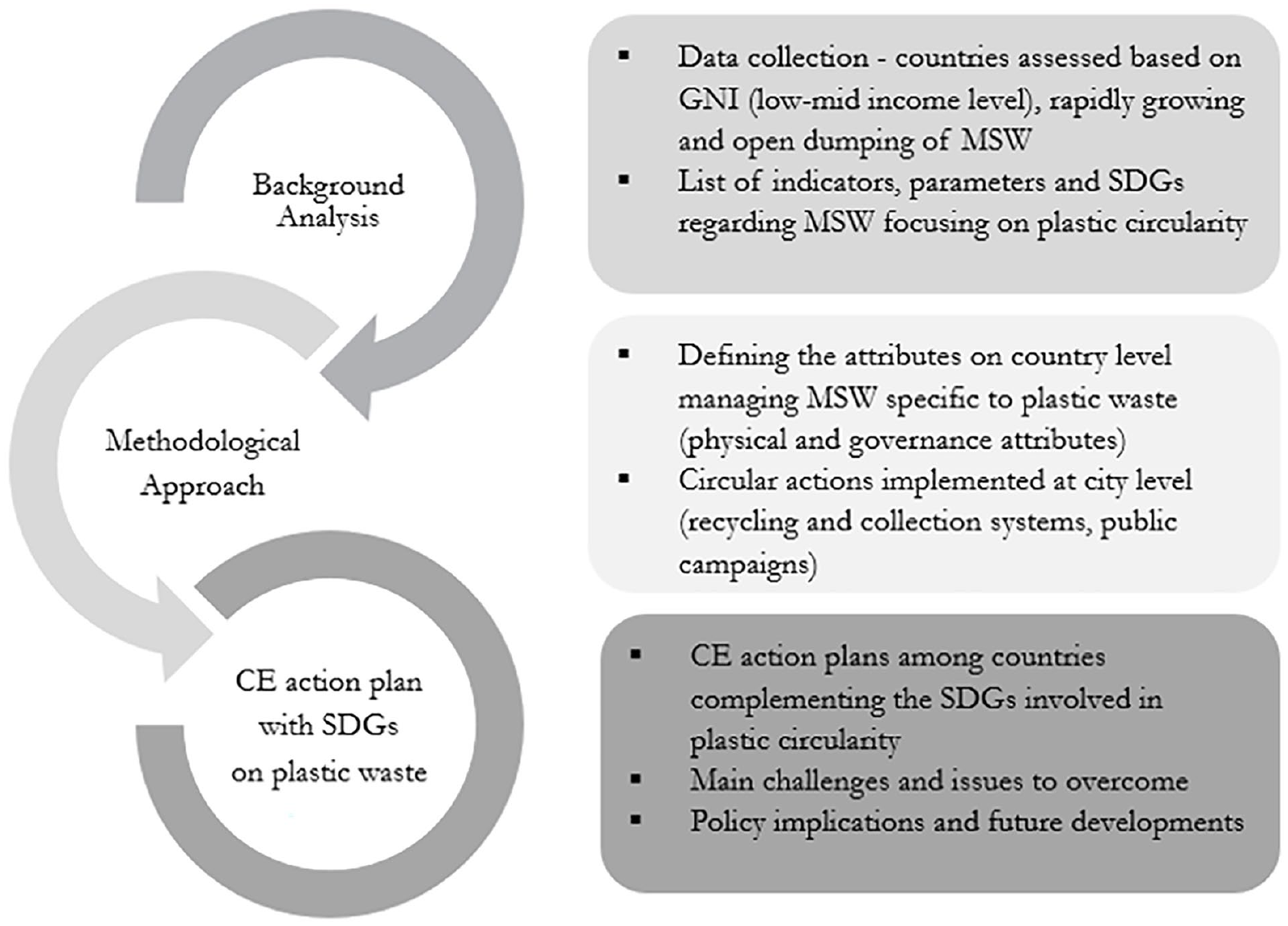
Approach followed to assess plastic waste circular actions in developing countries.
First, the background analysis was conducted to understand better the SWM framework where circular projects are implemented. Here, physical and governance attributes of the MSW management systems were collected and listed to compare the countries. Physical attributes refer to the ‘hardware’ components, such as waste collection service, waste treatment and disposal and resource value chain (reduce, reuse and recycle). The governance attribute focuses on the ‘software’, such as the inclusivity of the stakeholders, financial sustainability and pro-active policies (Wilson et al., 2015).
Second, the analysis focused on the treatment processes or minimization actions taken in developing cities of the chosen countries. Selective collection systems were also described and compared. Therefore, a specific focus was given to three main parts of the value chain:
plastic waste selective collection and sorting systems;
plastic waste treatment and recycling for potential valorization;
social inclusion and awareness for plastic waste collection and minimization.
The strategies for implementing small-scale projects, as well as the results and future developments, were presented with the aim to better understand the potential applications in other contexts.
Finally, a third step has been carried out, focusing on the CE actions described and their applicability in developing countries. The actions were evaluated in terms of their contribution to different SDGs. Then the challenges to achieve the targets of the SDGs were defined, for which the SDGs were reviewed and included in the research. The waste management actions in developing countries were assessed based on the on-field experiences. The SDGs potentially related to the improvement of resource circularity and SWM were listed, and the main challenges and issues to achieve them were described.
Policy implications and future developments for replicating the actions in other developing cities to boost CE at a global level are presented in the discussion section. Therefore, the circular actions were compared within the research to set the priorities to support appropriate plastic waste management systems at a global level.
Countries selected for the analysis
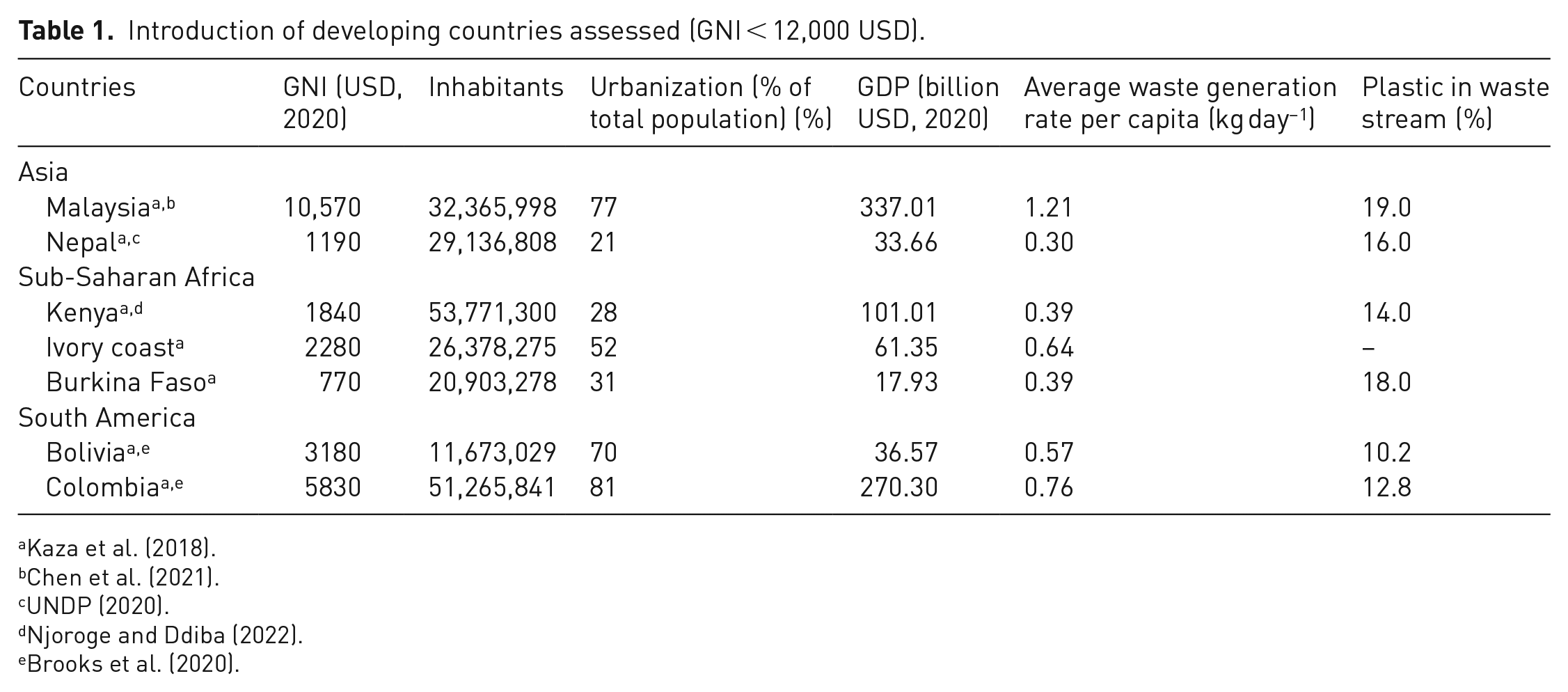
The research carried out an in-depth analysis of seven countries with a GNI of less than 12,000 USD (low-middle- and middle-income level) across different continents (see Table 1). The three areas involved in the analysis were Asia, Sub-Saharan Africa and South America. As mentioned before, countries were selected based on data availability and authors’ direct knowledge on MSW management systems, based on their current area of research, projects development and on-field studies. In particular, the two countries selected from Asia were Malaysia and Nepal; the three countries selected from Sub-Saharan Africa were Kenya, Ivory Coast and Burkina Faso; and Bolivia and Colombia were selected from South America. The average waste generation rate per capita ranges between 0.38 and 1.21 kg day−1, with a plastic amount of around 9.2–19.0%. The SWM assessment at the country level is followed by a specific city-level analysis of a major municipality in each respective country. Specific CE projects and initiatives were assessed and compared with other cities in the countries that the research selected.
Introduction of developing countries assessed (GNI < 12,000 USD).
SDGs and SWM systems’ analysis
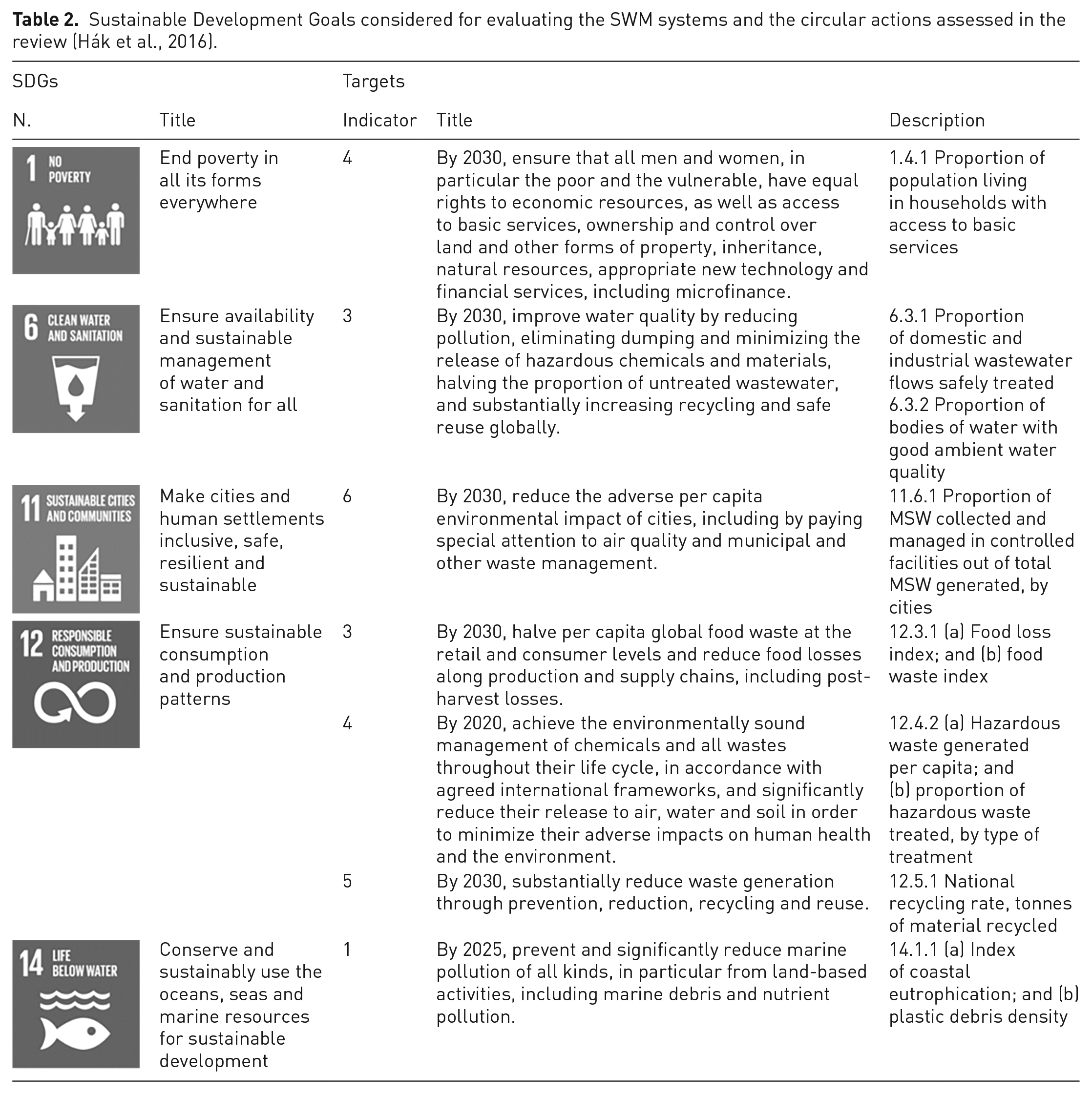
The United Nations ratified the 2030 Agenda for Sustainable Development in September 2015, along with its 17 SDGs. The management of waste, the material efficiency and the effects of waste on the environment are addressed through many goals (Hák et al., 2016). Specifically, there are four SDGs that directly or indirectly prevent, reduce and encourage the management of plastic waste, namely Clean Water and Sanitation (Goal 6), Sustainable Communities and Cities (Goal 11), Responsible Consumption and Production (Goal 12) and Life Below Water (Goal 14). SDGs’ targets that directly address SWM include access to essential services (Target 1.4), eliminating dumping to improve water quality (Target 6.3), MSW management (Target 11.6), food waste (Target 12.3), chemicals and hazardous waste, including e-waste (Target 12.4), recycling (Target 12.5) and marine litter (14.1) (Rodić and Wilson, 2017). Therefore, implementation of sustainable SWM can help meet some SDGs (Castellani et al., 2022; David Newby Associates, 2021). There are several indicators available to track development towards meeting each SDG objective. In particular, SDG indicators measure variables that will help cities and nations improve resource management; reduce and prevent environmental pollution; create businesses, jobs and livelihood possibilities; and move towards a CE (Ordaz, 2019). These indicators (see Table 2) are used in this article to assess the case studies provided in terms of SWM and to establish criteria for comparing them.
Sustainable Development Goals considered for evaluating the SWM systems and the circular actions assessed in the review (Hák et al., 2016).
Results – country assessment
MSW management – physical attributes
This section provides a general description of the physical attributes of the MSW management systems of the seven countries assessed. Table 3 summarizes the general information regarding the collection, recycling and final disposal of MSW. The amount of MSW and plastic waste generated per country is reported in Figure 2.
Definition of MSW collection, final disposal and recycling rates at the country level.
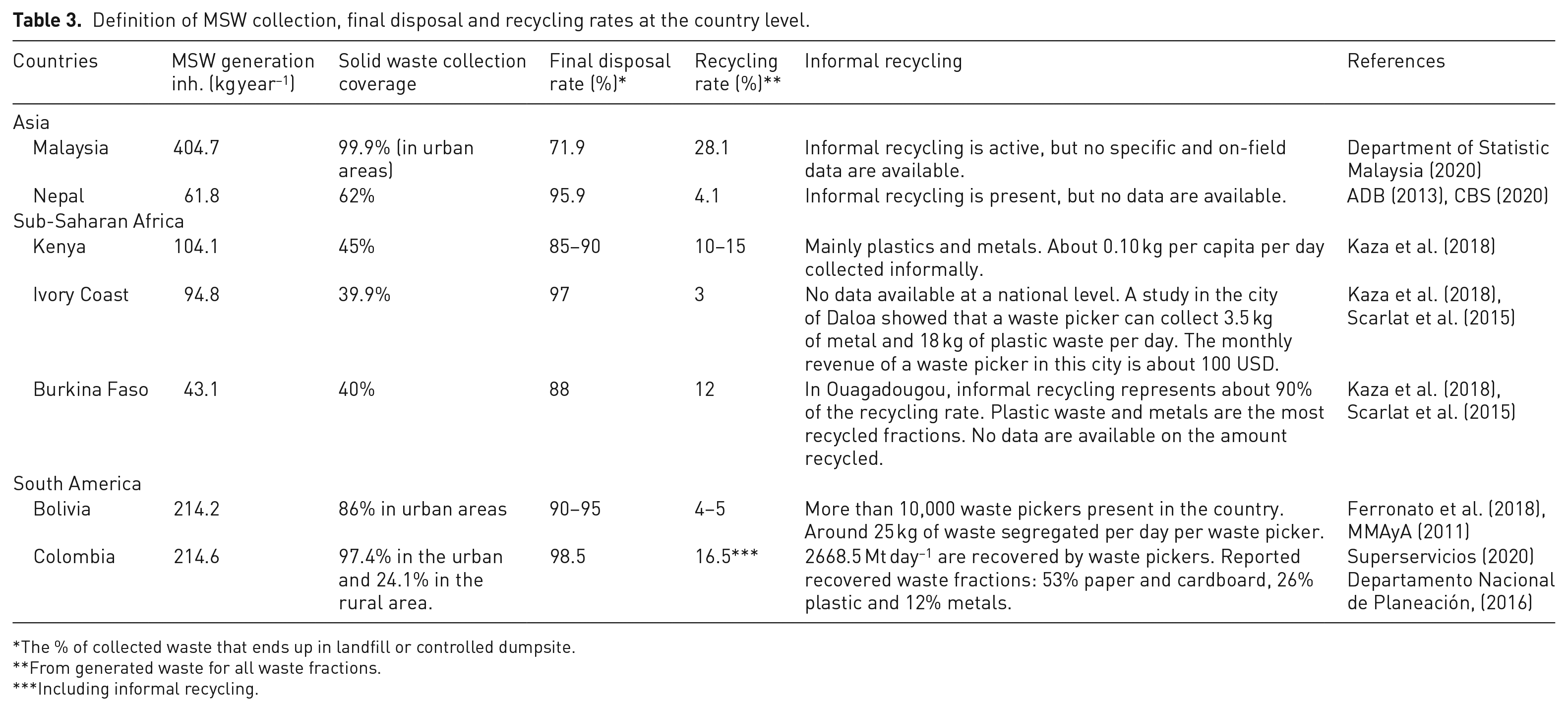
The % of collected waste that ends up in landfill or controlled dumpsite.
From generated waste for all waste fractions.
Including informal recycling.
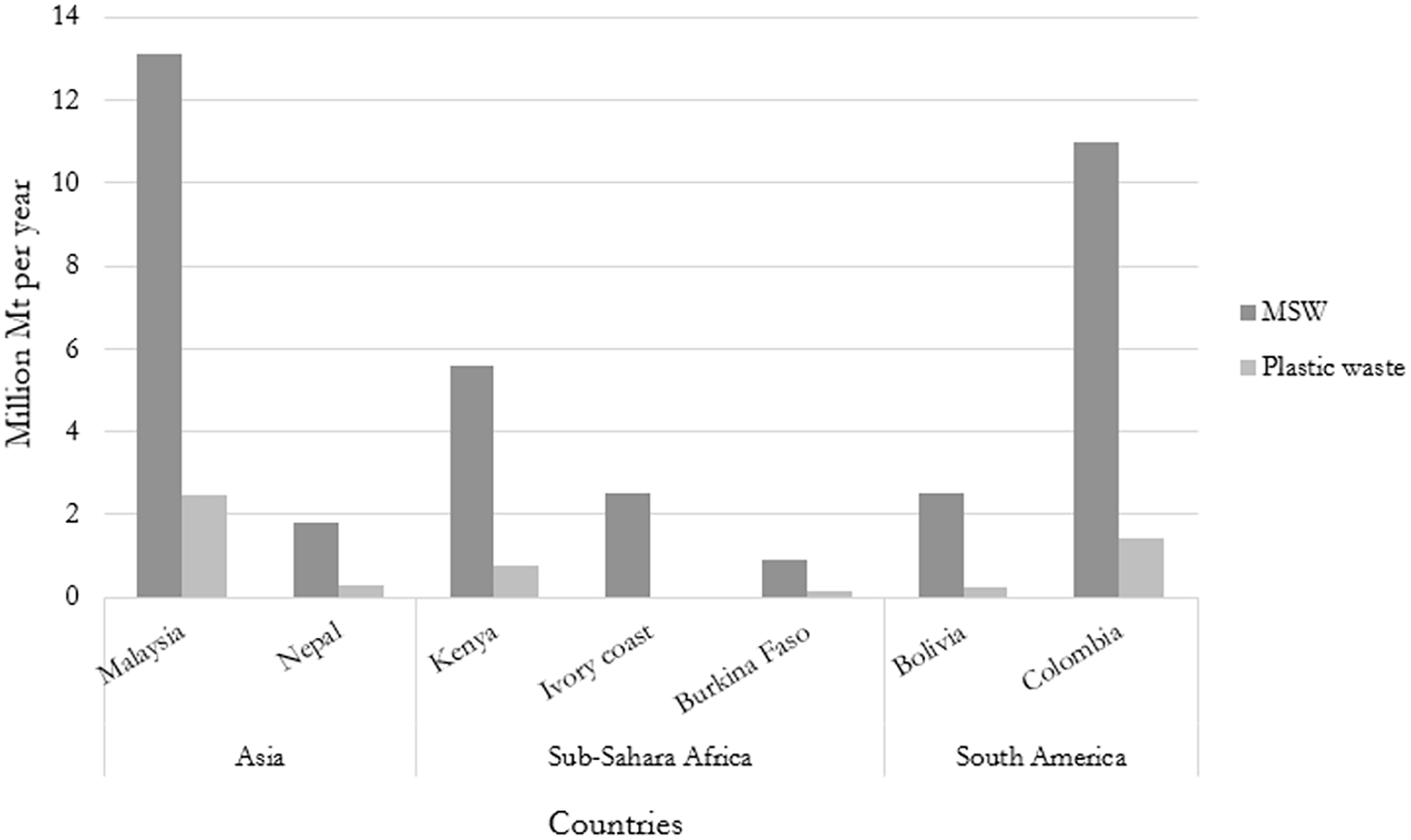
Municipal solid waste and plastic waste generated per country per year.
Asia
In Malaysia, the national SWM department estimated that the MSW generation increased from around 33,000 to 36,000 Mt day−1 between 2012 and 2017, counting about 13.1 million Mt of MSW per year. The national plan predicted the achievement of a 22% recycling rate by 2020 (Pariatamby and Bhatti, 2019). The target was accomplished in 2019 with 28.1%, increasing to 30.7% in 2020 (Department of Statistic Malaysia, 2020). However, some data are only based on the MSW managed at the municipal level, which may not be thoroughly captured. The recycling rate may also not include informal recycling by waste pickers and individually owned businesses (Chen et al., 2021). For plastic recycling, the waste volume was reported to be around 1 million tonnes in 2016, with an average recycling rate of 24% (MESTECC, 2018). The recycling rate for plastic is targeted to be 40% and 76% in 2025 and 2030, respectively (Ministry of Environment & Water Malaysia, 2021). Packaging made of PET has the highest average collection rate, achieving 36.5% in 2019. However, due to the decentralization of the waste management system in Malaysia, recycling data is not well-reported and available (Chen et al., 2021).
Nepal generates around 1.8 million Mt of MSW annually (World Bank, 2020). Organic waste constitutes 56%, followed by glass (16%), plastics (13%) and paper (8%). Despite the high amounts of recyclables in the municipal waste stream, MSW is mainly disposed of in sanitary landfill sites (Bundhoo, 2018). Nepal lacks source segregation and has a poor waste collection service (Khanal, 2021). Out of the total municipalities of Nepal, 14.2% of municipalities recycle their waste: Around 4.1% of the total waste produced is recycled (CBS, 2020; Maharjan and Lohani, 2020). Kathmandu valley generates the country’s largest quantity of waste, and it depends on the newly operated landfill, which can accommodate around 3 million m3 of waste. Small-scale anaerobic digestion plants are installed at the household level in most of the districts (Khanal et al., 2021). However, the most common waste handling practices adopted by the municipalities of Nepal are the transfer to landfill (48.6%), burning (32.1%) and piling up along the riverside (27.4%) CBS (2020). It can be estimated that the share of plastic waste is between 11% and 16% of the total solid waste in Nepal and around 600 Mt of plastic waste is dumped into landfills every day (World Bank, 2020). However, there is no uniformity in the data for the plastic waste generated in the country. The planning authorities have faced difficulty in making effective plans for sustainable plastic waste management due to the lack of waste generation data (Khanal, 2022).
Sub-Saharan Africa
Kenya generates around 5.6 million Mt of MSW per year. The MSW collection rate is low (40–50%). This ratio is linked to the country’s largest cities, which represent around 35% of the total population. In the rest of the cities, low-income and informal settlements’ waste collection systems are not in place (Anyango and Munyugi, 2018). The average MSW generation rate per capita is estimated to be 0.39 kg day−1 (Kaza et al., 2018) made up mainly of organic fractions (60–70%), plastics (15%) and paper (10%). No method for segregation at source is established at the national level. Waste is commonly disposed into uncontrolled open-burning dumpsites with leachates polluting groundwaters. The informal sector recovers only a fraction of the recyclable materials directly in these dumpsites. Currently, there are few small-scale waste treatment plants, mainly focused on organic waste. A study that quantified the amount of waste generated in Mombasa County estimated that around 14% of the generated waste is plastic (Palfreman, 2019). Based on this, it can be estimated that around 90,000 Mt year−1 of plastic waste is generated across Kenya, while just 8% of plastic waste is recovered for recycling (Kaza et al., 2018).
In Burkina Faso, MSW collection rate is also low (40%) (Scarlat et al., 2015). Open dumping remains the main treatment method (UEMOA, 2013). Only a few examples of recycling activities are in place, like in the city of Ouagadougou that has a waste treatment and recycling centre where plastic and organic waste is sorted and recycled. The organic fraction is converted into compost, a widespread practice in Burkina Faso, especially in rural areas, where households produce compost during the dry season and use it as an organic amendment (Kaza et al., 2018). The city of Ouagadougou also has a biogas plant with an installed capacity of 275 kW. According to local reports, it can be estimated that about 132,000 Mt of plastic waste is produced in Burkina Faso each year. In recent years, besides government projects, several women’s associations have developed plastic waste recycling activities with the financial support of international development agencies. However, the recycling rate remains very low in Burkina Faso’s urban centres. For example, in Ouagadougou, the capital of Burkina Faso, only 5% of plastic waste is currently recycled.
Similarly, in Ivory Coast, MSW collection rate is below 40% (Scarlat et al., 2015). Only the city of Abidjan has a sanitary landfill (located 41 km from the city centre), while other cities have open dumping sites. This landfill is equipped with a leachate collection and treatment system. Despite the high content of the organic fraction of the MSW stream in Ivory Coast (between 49% and 62%), there are still very few valorization units for this waste (Diabate and Achimi, 2020). The global recycling rate is still very low (3% of the total MSW) and mainly concerns metals and plastic fractions (Kaza et al., 2018). According to national statistics, about 200,000 Mt of plastic waste is produced annually in Ivory Coast, while only 20% of plastic is recycled and almost half ends up in open dumping sites.
South America
In 2019, following the indications provided by the National Institute of Statistics, Bolivia generated about 1.6 million Mt of waste only from big cities, 80% of which were generated from households. On average, the organic or biodegradable fraction represents 55.2% of the MSW, while the recyclable fraction is 22.1%. Urban areas produce comparatively less organic waste (around 45–48%) and more plastics (around 15%) (Ferronato et al., 2018). The estimated average coverage of the collection service in urban areas was 86%, while in small towns this was 42%. While the situation has improved in the last decade, difficulties remain in waste collection and disposal (Ferronato et al., 2021c) since open dumping is still a big issue. In 2010, around 90% of the final disposal sites were open dumping areas. This situation is still a reality in many small towns (Ferronato et al., 2020b), while big cities are developing appropriate solutions (Ferronato et al., 2019). The informal sector is also present in the country (Ferronato et al., 2021b) and lifts the recycling rate to about 4–5% nationally.
Colombia has an annual MSW generation of about 11 million Mt and disposes 32,580 Mt of waste per day, of which 45.2% corresponds to the eight most populated cities. In 2020, the final disposal of solid waste in authorized systems was estimated to be 98.5% (Superservicios, 2020). Due to land availability and operational costs, landfilling remains the most commonly used technique for final disposal (Machado and Hettiarachchi, 2020). The MSW composition is comprised of 61.5% organic, 6.6% paper and cardboard, 10.8% plastic and others (Departamento Nacional de Planeación, 2016). In 2020, Colombia generated about 1.74 million tonnes of plastic waste, representing approximately 12% of the waste stream, and the estimated mismanaged fraction was 25,000 Mt (Brooks et al., 2020). The national waste recycling rate is around 17% (Superservicios, 2020). Decree n.1077 of 2015 defines waste recovery as a complementary activity of the public sanitation service, which can be done by informal waste pickers, formal waste pickers organizations and private companies. Therefore, waste picking and collection is recognized, and legal in Colombia.
MSW management – governance attributes
This section underlines the main authority framework and the financial sustainability of the SWM systems. The timeline of laws and regulations implemented at the national level in the seven countries involved in the analysis is reported in Figure 3.
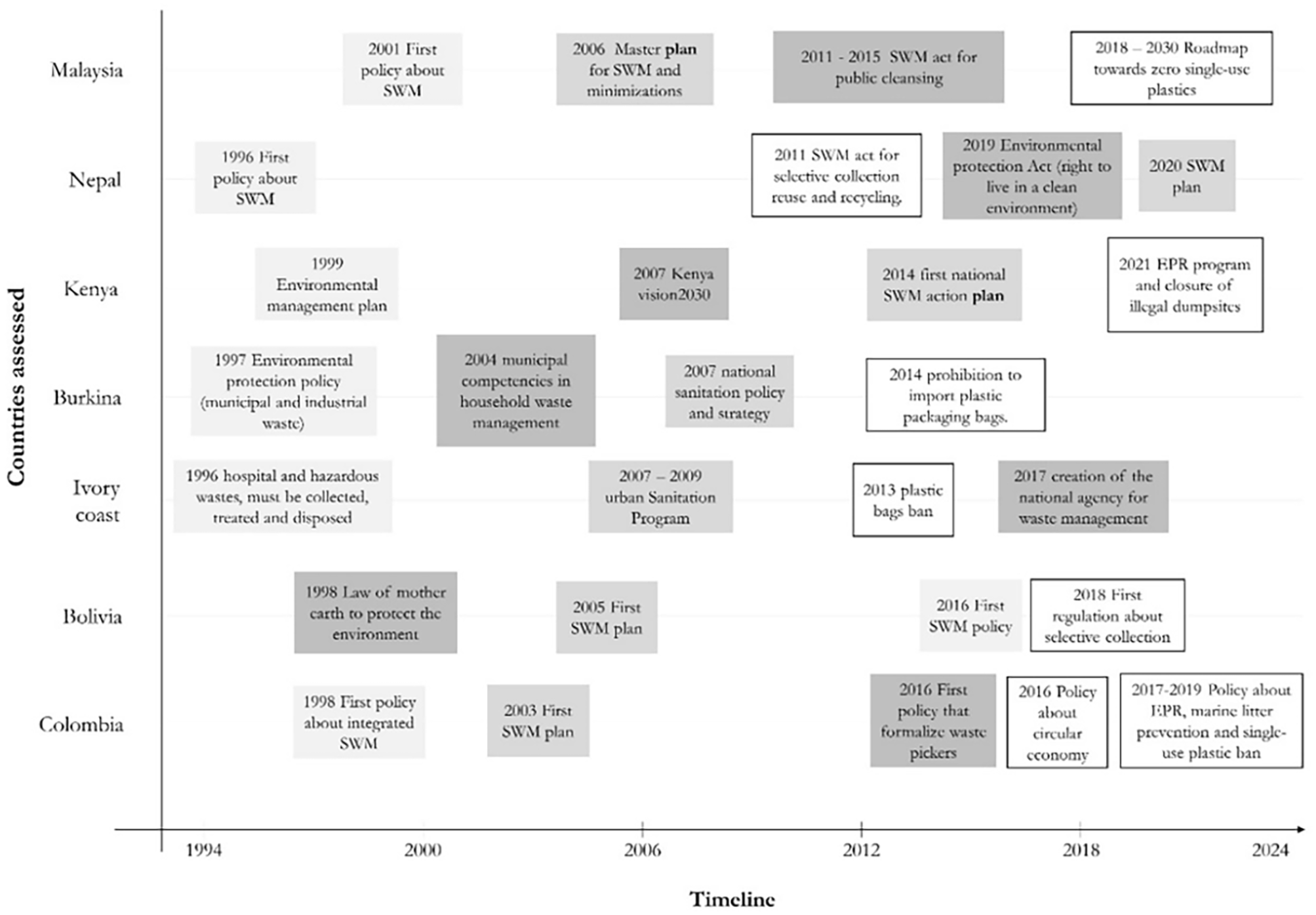
Regulations and laws implemented along the years in the seven countries analysed.
Asia
In Malaysia, the government formed the Department of Environment in 1975 to enforce the Environmental Quality Act of 1974 (Gamon and Tagaranao, 2016). In the 1990s, privatization started, and the waste collection coverage begun to differ between regions. The waste management and public MSW management services are assigned to consortiums based on regions. In some states, local authorities are permitted to manage the services on their own, separated from the federal government (Jereme et al., 2014). Malaysia is considered one of the global players in the plastic industry and is among the top ten countries with plastic waste management problems (MESTECC, 2018). The government has taken initiatives to address the issue by launching Malaysia’s Roadmap Towards Zero Single-Use Plastics 2018–2030 and Malaysia Plastics Sustainability Roadmap 2021–2030. A cost for using plastic or disposing plastic waste is also implemented in certain regions. For instance, a levy of about 0.04 USD is imposed for a single-use plastic bag to change customer behaviour (Chen et al., 2021). In 2021, Housing and Local Government Ministry announced a fee of 4 USD per tonne for imported plastic scraps brought into the country.
In Nepal, the first SWM National Policy was formulated in 1996, which identified waste as a resource and introduced waste minimization, prioritizing the role of the private sector in SWM. The SWM Act 2011 is currently prevalent in Nepal. It focuses on source segregation, and the 3 Rs of MSW management. However, only 36.5% of total municipalities have plans and strategies for waste management (CBS, 2020). The Environmental Protection Act (2019) states on the fundamental right of each citizen to live in a clean and healthy environment. The act introduces the “polluter pay principle” (PPP). Additionally, the 5-year plan for 2020 mentions establishing waste processing centres in the country. Currently, the household waste collection fee is higher in urban areas while waste is not collected from many houses in rural settings. The MSW management service fee ranges from 3.60 USD per household per year to 38 USD per year for health institutions (CBS, 2020). Most private companies charge a minimum of 35 USD per house per year inside Kathmandu Valley. The municipalities spend nearly 60–70% of the total SWM budget on collection and street sweeping, 20–30% on transport and the rest on final disposal (ADB, 2013). On average, municipalities spent 30 USD per tonne of waste from collection to disposal in 2012 (ADB, 2013).
Sub-Saharan Africa
In Kenya, governance in SWM is managed at both national and county level and divided into the three arms of government. The executive arm is in charge of the management and administrative matters. It is composed of the Ministry of Environment and Forestry, which includes the National Environment Management Authority and the National Environmental Complaints Committee (Njoroge and Ddiba, 2022). The county government is responsible to implement national SWM policies at the county level (Haregu et al., 2017). The National SWM Strategy (2014) is the most recent government action establishing a common platform for action between stakeholders to systematically improve SWM. In 2021, an updated waste legislation was launched that provides for the establishment of a Waste Management Board, mandatory EPR programmes, recovery of household waste and the closure of illegal landfills in all 47 counties. However, it is still pending approval by the responsible bodies. In low-income areas of Kenya (such as Kibera), the charges for solid waste collection and disposal services were about 8.3 USD per month while for Langata (a high-income area), it was found to be around 5.3 USD per month (Waweru and Kanda, 2012).
In Burkina Faso, the Ministry of Environment implements and monitors the government’s SWM policy. Municipalities are responsible for MSW management throughout their geographical area. However, given the limited equipment of municipalities, they often contract private operators, NGOs or associations for waste collection. Households pay on average 1.6 USD per month for collection, while transportation and landfilling costs are covered by municipalities’ budgets. Since 2007, Burkina Faso has a national sanitation policy and strategy that considers solid, liquid and gaseous waste, and the two main cities of the country have waste management master plans. Since 2014, the Law n.17-2014/AN prohibits the production, importation, commercialization and distribution of non-biodegradable plastic packaging and bags, but its implementation remains very difficult.
In Ivory Coast, almost all roles have been transferred to the Ministry of Sanitation and Waste Management, except drains, roads, public cleaning and waste pre-collection, which remains under municipal authorities’ responsibility (Diabate and Achimi, 2020). MSW management in Ivory Coast is financed by the MSW collection tax, property tax, health and environmental protection tax and the special tax on specified plastic products. Nevertheless, the resources from these different taxes do not exceed 50% of the total cost of SWM. In 2013, the government banned the use, production and commercialization of plastic bags, by Decree N.2013-327. However, the application of this Decree is difficult given the fact that the use of plastics bags is deeply rooted in the population’s habits. On the other hand, currently no practical alternatives are available (Diabate and Achimi, 2020).
South America
In Bolivia, the Environmental Law n.1333 and its regulations introduced appropriate SWM systems for the first time. The first law specifically dedicated to SWM was introduced in 2016, while in 2018 implementation began for the first regulation on MSW management and disposal. This regulation involved waste pickers as recognized actors in the SWM system and established recycling as the most important treatment to be applied. Nationwide, only 17% of municipalities have managed to implement collection fees, and the amounts that are collected only cover between 40% and 60% of the costs (MMAyA, 2011).
In Colombia, MSW management is considered a public service. The Commission of Potable Water and Basic Health is in charge of the economic regulation of the service. In 1998, the first National Policy for Integrated SWM was issued; the current version aims to be implemented between 2016 and 2030. This national directive set the basis for a holistic approach towards SWM that promotes sustainable development and a CE (Departamento Nacional de Planeación, 2016). The implementation of integrated SWM plans in municipalities was first introduced in 2003, while the inclusion of the informal recycling sector in the SWM system was made in 2016. In 2018, Regulation 1407 was issued that introduced EPR on the post-consumption of paper, cardboard, plastic, glass and metal containers and packaging. Additionally, in 2017, the national government began integrating efforts to develop the National Programme for Marine Debris Management (Brooks et al., 2020). Similarly, in 2019, the Law 1973 that regulates and bans the entry, commercialization and distribution of single-use plastic products in the Caribbean islands was issued. Lastly, in June 2022, a bill was approved that seeks to reduce the production of single-use plastics within the national territory. Regarding SWM fees, recycling activity was included in 2015. The tariff methodology allows waste pickers registered to formal organizations to charge recycling fees. For instance, in Bogotá, by the end of 2020 the recycling fee paid by households was 1.21 USD per month, while the overall service fee was around 4.67 USD, with the participation of about 23.6% of the population (DANE, 2021).
Results – Circular actions implemented at the city level
Selective collection
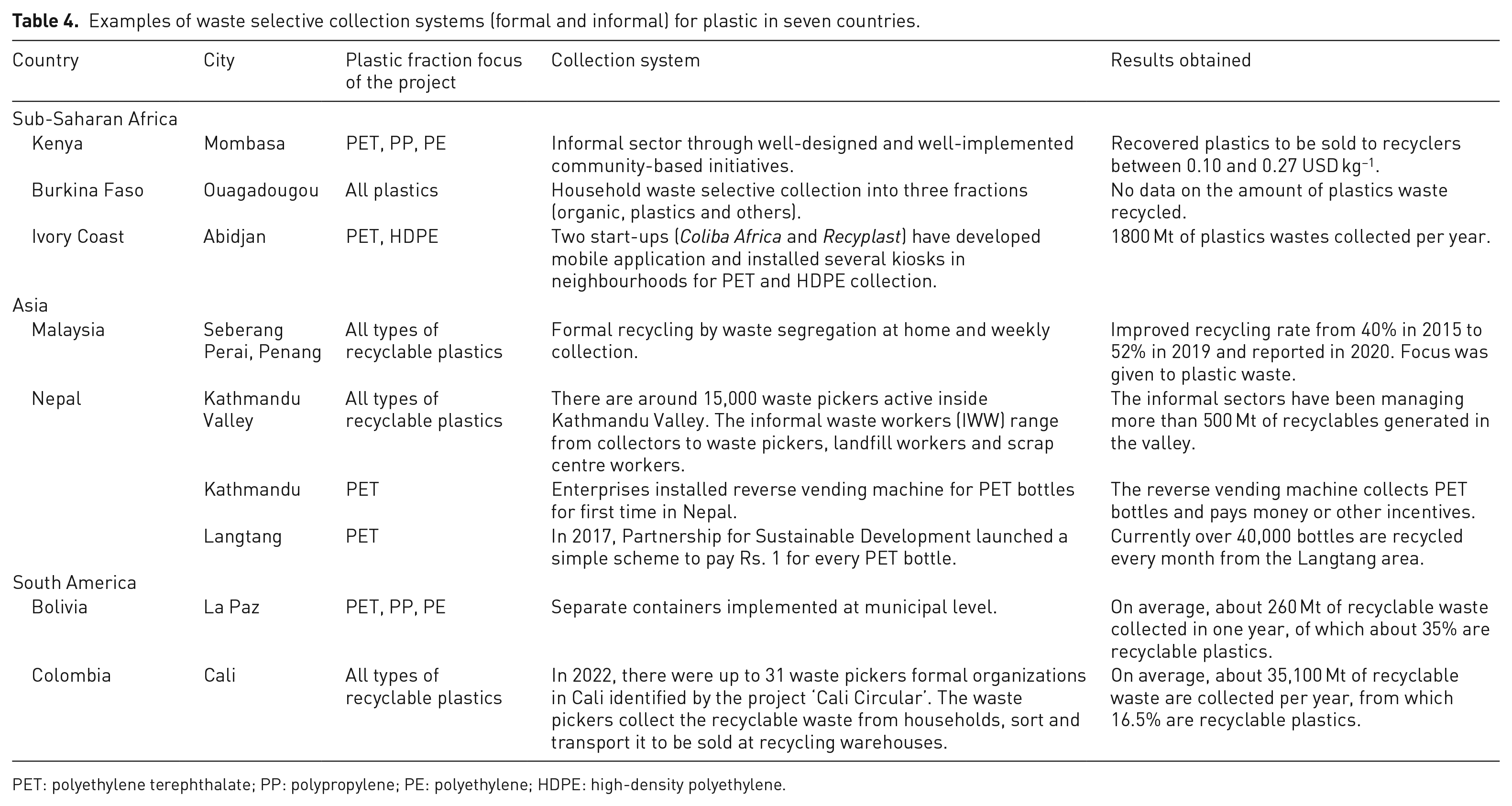
In this section, the initiatives of MSW selective collection are presented. Specific focus is dedicated to plastic waste and how this waste fraction is collected, stored and transported. Table 4 summarizes some examples of practical actions implemented in the three continents explored in this research.
Examples of waste selective collection systems (formal and informal) for plastic in seven countries.
PET: polyethylene terephthalate; PP: polypropylene; PE: polyethylene; HDPE: high-density polyethylene.
Asia
In Malaysia, starting from June 2016, Seberang Perai City Council, Penang, has imposed a law for MSW source segregation. The waste must be separated into two streams, such as mixed waste and recyclables. The latter is further classified into paper, glass, plastics and metals. However, there is no specific detailed classification for plastic fractions. The collection strategy is implemented by the council to promote waste segregation at home. The initiative may have contributed to the notable improvement of recycling rate in the region from 40% in 2015 to 52% in 2020. Segregation projects are also conducted by NGOs. For instance, a volunteer organization, the ‘Tzu Chi Merit Society Malaysia’, created recycling stations with separated bins to encourage local community to classify their own waste.
In the Kathmandu valley, Nepal, around 90% of IWW implement selective collection systems as their main source of income. These IWW collect waste from roadside, riverside, household, business places and industries, and sell the collected recyclables to scrap centres (Khanal, 2021). It is estimated that there are around 15,000 waste pickers active in the Kathmandu Valley alone. Pokhara and Itahari are two major cities of Nepal where about 15–20% of the recyclable waste is recovered by the informal sector (World Bank, 2020). ‘Samyukta Safai Jagaran’ (SASAJA) is the first organization in Nepal formed by the groups of IWW aimed to improve the living condition of the workers through integrated sustainable SWMsystems, advocating their social protection and recognition. There are around 1000 IWW associated with the organization and all members have 10–35 years of working experience. The informal sector is the only form of selective collection in the country and circular actions are focused on their activities.
Sub-Saharan Africa
In Kenya, several local and international NGOs have supported plastic waste collection initiatives through grants and as part of environmental conservation and poverty alleviation programmes. Notably, NGOs that have been traditionally involved in species and ecosystem conservation are now engaging in plastic waste advocacy and recycling interventions, geared towards the reduction of marine pollution (Njoroge and Ddiba, 2022). Nowadays, there is not a formal selective collection system established in Kenya. Different pilot projects cover this process under NGOs across the country. Plastics are collected through specific bins and recycling yards.
In Burkina Faso, the association ‘Africa Ecologie’ has set up a selective collection system in the city of Ouagadougou. Households that subscribe to the system sort their waste into three fractions (organic, plastic and other) and pay a monthly fee ranging from 1.28 to 9.63 USD for the service. The organic waste collected is transformed into compost during the rainy season and into charcoal during the dry season, while plastic waste is recycled into utilitarian and art objects.
In Abidjan, Ivory Coast, two start-ups (‘Coliba’ and ‘Recyplast’) have set up dozens of kiosks for the selective collection of PET and HDPE at different locations in the city. Pre-collectors can also sell their stocks at these collection point at a price of 0.12 USD kg−1. These start-ups have also developed mobile applications for the selective collection of PET and HDPE from households. Participating households receive internet passes or cosmetics based on the quantity of plastics wastes collected. Besides these initiatives, the Swiss Centre for Scientific Research in Cote d’Ivoire implemented a source collection project in the town of Tiassalé from 2018 to 2019. For this project, 230 households were involved for source separation of waste into two fractions: organics and inorganics. In total, 59.4 Mt of organic waste were collected and transformed into compost, which was sold to local farmers, while similar quantities of plastic waste were segregated and recycled (Yeo et al., 2020).
South America
In La Paz, Bolivia, examples of MSW segregation at the source were implemented. A manual sorting plant and controlled selective collection areas called ‘Green Points’ for gathering recyclable materials were introduced in 2014, while selective street containers were implemented for the first time in two areas of the city in 2018 as a pilot program for boosting the selective collection rate (Ferronato et al., 2020a). To date, the selective collection system using street containers improved and the number of containers located at city level increased. In these two areas of the city, in 2018, about 260 Mt of waste were collected, of which about 80–90 Mt of plastic waste were recycled (Ferronato et al., 2021a). In parallel, informal waste pickers are active in the city. It is estimated that they can segregate about 40 Mt of waste per day, where more than 50% are plastics, with about 1000 waste pickers active in the city (Ferronato et al., 2021b). The case of La Paz is the most important in the country, although other experiences are introduced in other regions.
In Colombia, for over 50 years, informal waste pickers have collected, sorted directly from the waste presentation units, transported and commercialized the recyclable wastes alongside the country (Calderón Márquez et al., 2021), with approximately 40,000 waste pickers registered in municipal census around the country. The Colombian government supports this sector through the local implementation of formal recycling programmes with the inclusion of waste pickers organizations. Due to informal waste pickers’ activities, the most frequently used vehicle for selective waste collection is the human traction cart, which has a capacity of about 0.5 tonnes. For example, in Cali, the population is served by a kerbside waste collection system, where sorting of recyclable material is performed by residents within their houses or by waste pickers. Cali has reported a total of 3109 formal and informal waste pickers (Martínez et al., 2019). The city has developed different pilot-scale campaigns to test the selective collection by including these crucial actors. In 2020, the municipality launched the project ‘Cali Circular’ led by the Secretariat of Economic Development. This is a regional innovation system that aims to design and implement a selective collection system for recyclable materials. Aiming to strengthen the interaction between the community, business, academia, formal and informal waste pickers, the #Rethink campaign was created for social media. In 2021 and 2022, the project had a total investment of 456,372 USD and 290,410 USD respectively. Within this initiative, a start-up (Wero Zero Waste) has developed a circular model for 110 commercial establishments located in the gastronomic sector of the city, which focuses on the selective collection or recycling of materials.
Minimization and recycling
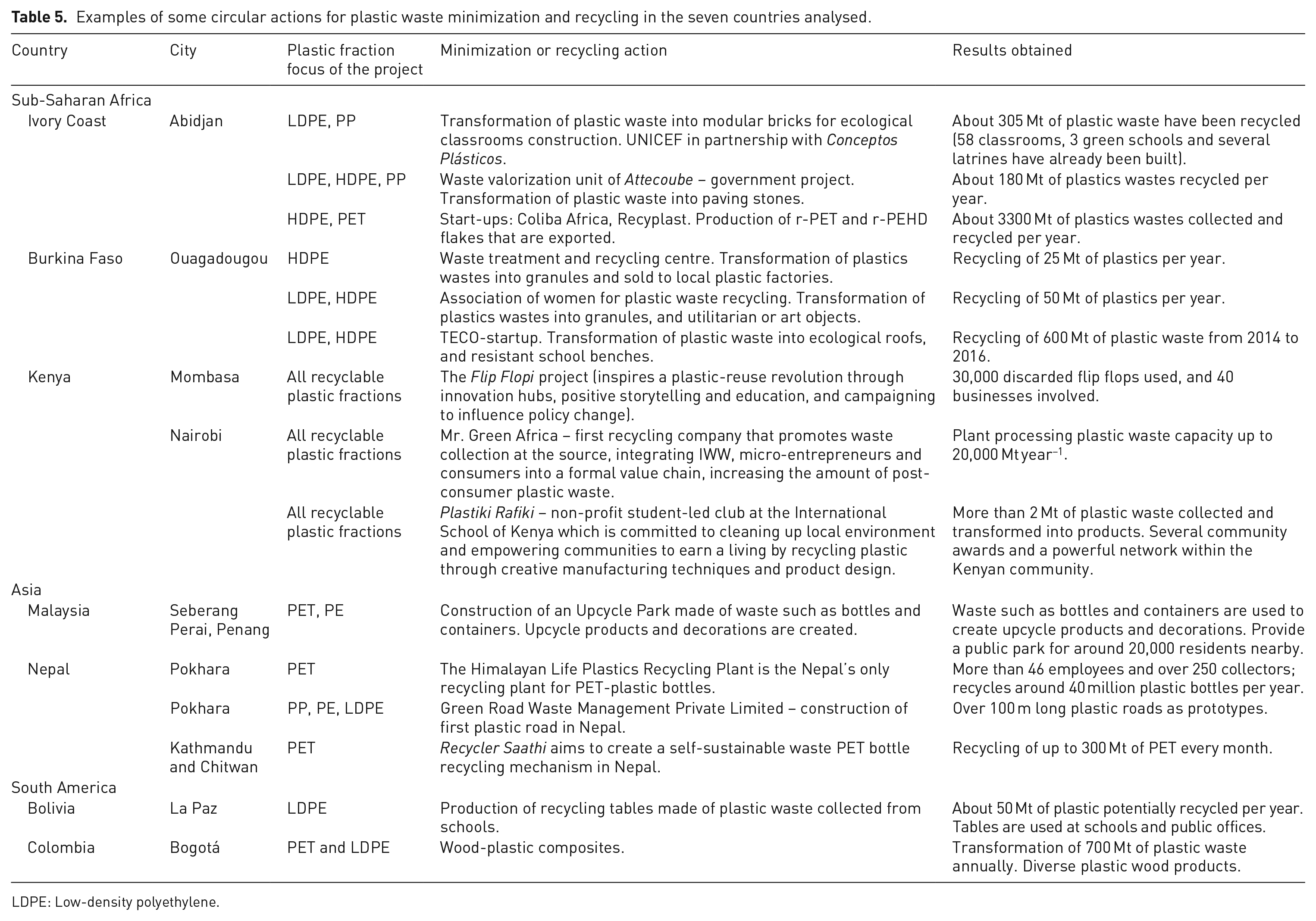
This section identified some examples of plastic waste minimization, recovery, reuse and recycling. The analysis is focused on the main technologies and solutions implemented to valorize plastic waste. Figure 4 shows some examples of plastic waste recycling systems implemented in six of the countries analysed, while Table 5 sums up the circular actions introduced in the three continents.
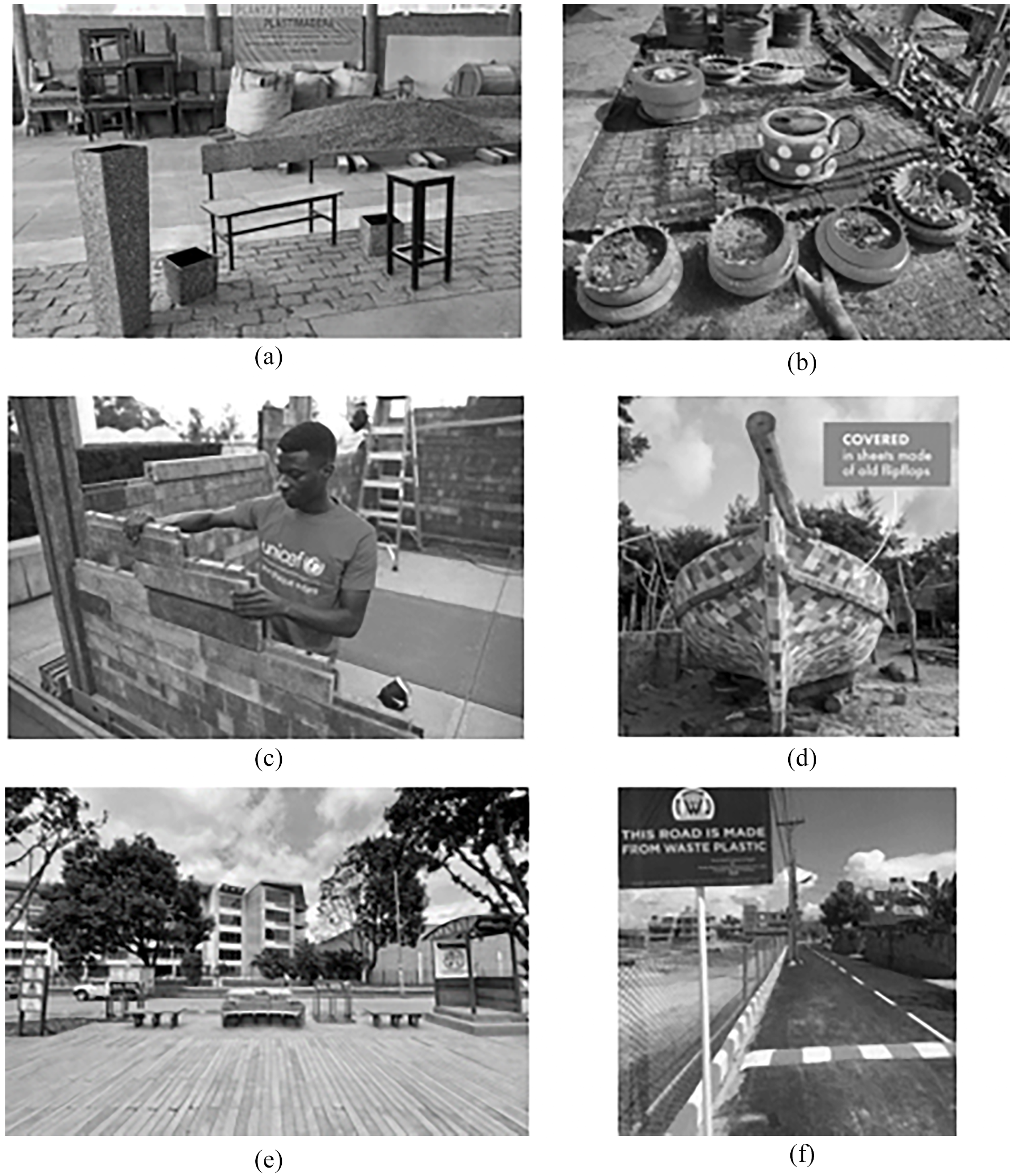
Examples of plastic waste recycling in developing contexts: (a) La Paz, Bolivia: bins and chairs made of recycled plastic waste (PP and PE), (b) Penang, Malaysia: decorations at Upcycle Park made of waste such as bottles and containers (courtesy of Seberang Perai City Council), (c) Abidjan, Ivory Coast: construction of a classroom with plastic bricks, (d) Lamu Island, Kenya: boat structure made from 7 tonnes of recycled plastic (FlipFlopi), (e) Bogota, Colombia: urban furniture made of plastic wood installed in a bike lane, and (f) Nepal: first plastic road of Nepal (Source: Courtesy of Green Road Waste Management).
Examples of some circular actions for plastic waste minimization and recycling in the seven countries analysed.
LDPE: Low-density polyethylene.
Asia
Seberang Perai, Malaysia, aims to be a carbon neutral city by 2030 and zero carbon by 2050. It was reported that the recycling rate for general waste is around 47% and 52% in 2018 and 2019 respectively. The rates are nearly double the national recycling rate. The municipality also introduced a roadmap to reduce single use plastic waste, starting from improving SWM systems until development of a new policy, and an Upcycle Park in 2018, a public area for recreational activities where decorations are made from waste. For plastic recycling, all types of recyclable plastics are collected. Among the recycling activities are Green School Workshops, which introduced waste separation at source to school students. Apart from that, the council introduces Green School Award at a district level. Part of the awarding criteria is the amount of plastic waste collected by the school.
Nepal has issued the ‘Plastic Bag Regulation and Control Directive 2011’ that prevents the production of plastic bags. Nepal has made several attempts to make rules and directives to ban plastic bags in 1998 but has failed in its implementation (Khanal, 2022). Now, Nepal has set a goal for the use of plastic per capita to be close to zero by 2030. The private sector is very active in Nepal for organising campaigns related to the management of plastic materials. Various newly established companies and start-ups have been actively involved in plastic recovery and recycling activities. However, most of these are only confined to the capital city. Apart from this, ‘Himalayan Life Plastics’ (PET recycling) and ‘Green Road Waste Management’ (plastic road) are based in Pokhara and work on PET, PP, PE and LDPE plastics.
Sub-Saharan Africa
In Mombasa, Kenya, diverse stakeholders have provided recyclers with incentives and built their capacity by providing them with skills to engage in recycling activities. External support is usually in the form of short-term projects that last about 5 years. Manufacturers have initiated recycling support programmes as part of their voluntary corporate social responsibility efforts. The Kenya Association of Manufacturers also launched the Kenya EPR Organization in 2021 to bring together players in the waste value chain to address various types of post-consumer waste (i.e. through providing incentives and subsidies to improve collection, sorting and waste processing). Other initiatives include ‘Clean & Green Kenya’ and ‘Clever Green Kenya’ to enhance plastic waste recycling through the promotion of EPR schemes and the management of post-consumer plastic waste. As an illustrative example, the FlipFlopi project creates recycled plastic boats from single-use plastics discarded products. The county is developing a framework with a specific call for action on awareness issues, infrastructure for solid waste collection and promotion of recycling capacity (with key partners, including WWF and ‘Hand in Hand’) (Njoroge and Ddiba, 2022). At the national level, the government has provided a tax exemption on the importation of recycling machines. Such tax incentives by the national government showcase the commitment of the public sector to improve private sector engagement in Kenya’s waste management.
In Ouagadougou, Burkina Faso, the central government built a waste treatment and recycling centre where plastic waste is sorted and crushed into granules, which is sold to local plastics factories. Women’s associations supported by international NGOs are also involved in the collection and recycling of plastic waste into bags and granules. Two main start-ups are involved in plastic wastes recycling in Ouagadougou: ‘Green Line Tech-BF’ and ‘TECO2’. The first transforms plastic bags (HDPE and LDPE) into distillate diesel oil, while the second transforms plastic waste (LDPE and HDPE) into ecological roofs and resistant school benches.
Abidjan, the capital city of Ivory Coast, produces around 288 tonnes of plastics wastes every day, and 5% are recycled. In recent years, various actions have been initiated by state entities, NGOs, and the private sector to increase the recycling rate of plastic waste in the city: (1) installation of numerous plastic waste recycling facilities for the production of basins and buckets; (2) construction of 10 units that recycle plastic waste into paving stones, granules and tiles (Koumi et al., 2022); (3) construction of a factory that processes plastic waste into modular plastic bricks for the construction of classrooms and schools, financed by the UN Children’s Fund, in partnership with the Colombian social enterprise ‘Conceptos Plasticos’, which represent a good example of international cooperation; (4) the creation of two start-ups that collect and transform PET and HDPE into r-PET and r-PEHD flakes. In addition to these recycling initiatives, an important network of plastic bottle commercialization has grown up in the city of Abidjan. These bottles are reused by the population as containers for food, health products or cosmetics.
South America
In La Paz, Bolivia, a project for recycling polyethylene bags was implemented in 2015. Raw materials are collected from schools, street containers and municipal ‘Green Points’ where the public disposes of selected waste streams. The plastic is then sorted by colour and material and shredded to produce plastic flakes. After the material is melted and pressed, boards are formed with which furniture is made. Recently, a project financed by the Italian Agency for Development Cooperation and led by the Italian NGO COOPI built three pilot treatment plants to support recycling actions in La Paz. One of these plants will shred and clean LDPE plastics that can be valorized. The pre-treatment phase can improve the quality of the products and increase the monetary values of the waste materials (Ferronato et al., 2022).
In Bogotá, Colombia, the Recyclers’ Association founded in 1991 integrates more than 3100 waste pickers from 19 local organizations. This association covers a wide range of activities framed in the SWM service. The Recyclers’ Association of Bogotá receives more than 500 Mt of recycling material each month. Similar to the project in La Paz, Bolivia, the plastic is transformed through the production of wood-plastic composites from polymeric materials (LDPE) that are melted and cast in metal moulds to generate a variety of components that are suitable for civil construction. The final products are picnic tables, urban furniture, pet houses, shoe racks, desk tables, among others. The Recyclers’ Association of Bogotá already has the validated technology and a purchase agreement from the industry, which will allow it to recover and transform more than 700 Mt of flexible plastics annually. In the development of this initiative, the association invested part of its revenue to purchase machinery for the expansion of the production capacity to meet the demand of the construction sector.
Social inclusion and sensitivity campaigns
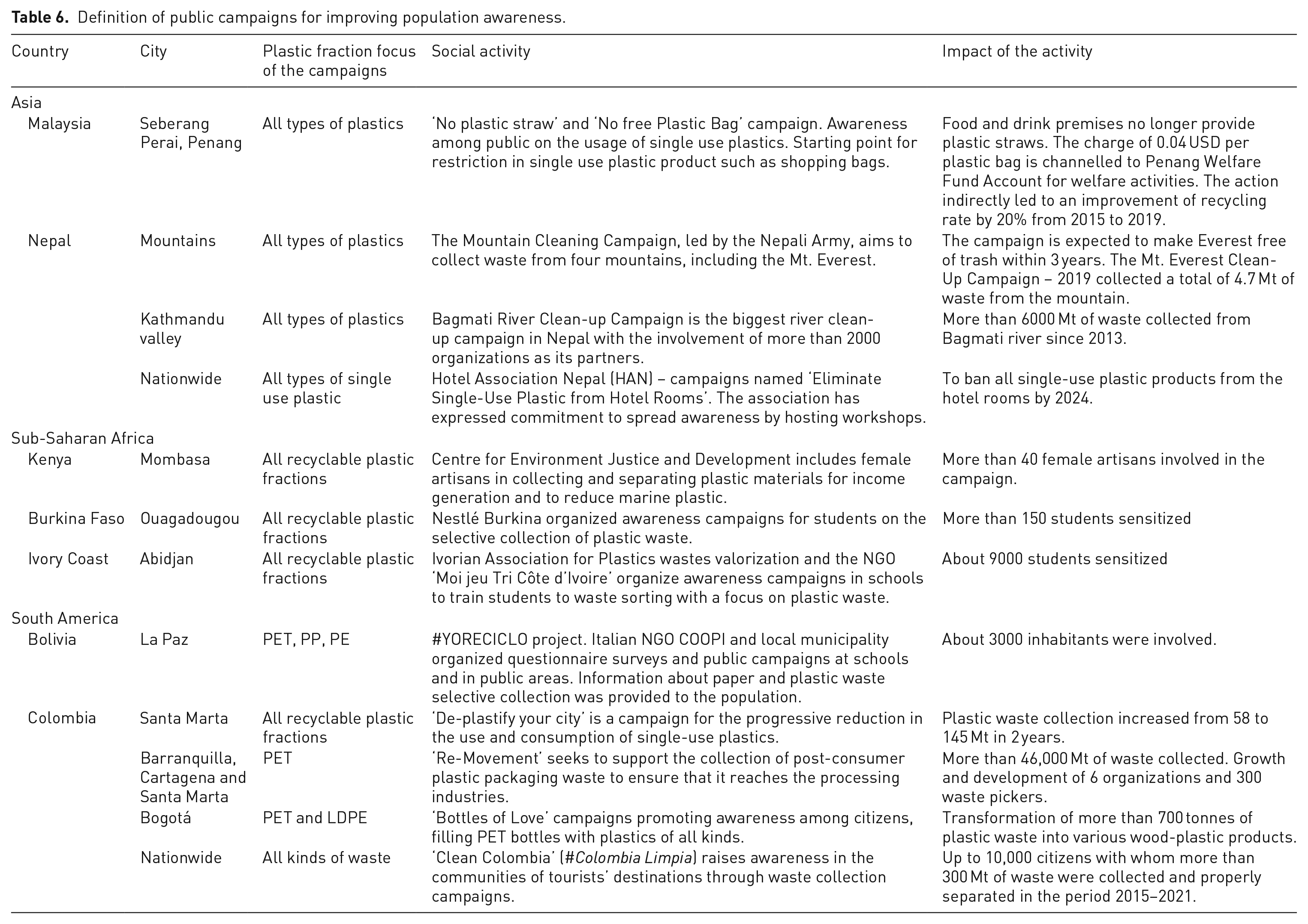
In this section, awareness campaigns, social actions and population inclusion systems are introduced. The aim is to identify potential actions to be implemented for disseminating the importance of selective collection and recycling of waste. Table 6 summarizes some examples of information campaigns carried out in cities.
Definition of public campaigns for improving population awareness.
Asia
In Malaysia, with the aim to reduce single use plastics, Seberang Perai City Council implemented ‘no plastic straw’ campaigns at food and drink premises (Penang Green Council, 2020). The straw is no longer given by default and only given to customer upon request. The premises are encouraged to use substitute products made from organic sources, as long as the alternative does not have adverse impact on the environment. The Penang state also introduced a ‘No Free Plastic Bag’ campaign to encourage public to bring their own shopping bags. Other public campaigns organized by the council are upcycle workshops at villages, green school awards and school recycling competitions. Although there is no direct result measured from the campaign or activities, the initiatives may have contributed indirectly to 20% improvement in recycling rate from 2015 to 2019 in the region.
In Nepal, the municipalities, and several communities organize clean-up campaigns. The waste segregation, composting and rooftop gardening trainings are frequently organized. People often participate in tree plantation and river clean-up programmes. There are more than 100 clean-up campaigns organized weekly in various places across the country. The ‘Bagmati River’ clean-up campaign is the biggest campaign in Nepal with the involvement of more than 2000 organizations as its partners. The river clean-up is organized every week with the participation of local government, social organizations, private companies and institutions. Apart from beauty and safety of the waterway, these clean-up campaigns have raised civil consciousness on impact of dumping garbage on public land, streets and river bodies.
Sub-Saharan Africa
In Kenya, several NGOs are providing capacity-building and private sector initiatives integrating the Kenyan communities. As an example, the Government launched a plastics pact called the ‘Kenyan Plastics Pact’. The initiative aims to find financial support to start innovation, collection, reuse and recycling of plastic waste in Kenya, including activities like workshops, awareness campaigns and recycling actions. It brings together several actors in the waste value chain such as the ‘Kenya PET Recycling Company’ (PETCO), the ‘Nairobi Waste Collectors Association’, and the ‘Kenya Organisation for Extended Producer Responsibility’ (KEPRO).
In Burkina Faso, besides the Ministry of Environment, several associations, NGOs and private companies are conducting awareness campaigns on the selective collection of household waste. For example, in June 2021, an awareness campaign on the selective collection of plastic waste was organized in three markets in the city of Ouagadougou. During this campaign, hundreds of retailers, mostly women and 150 students were trained on good waste management practices, and especially on the selective collection of plastic waste. Between 2014 and 2017, the association ‘Echanges Sahel’ have trained five pre-collector associations for household waste management and sorting in the city of Diori. Then, six intermediate collection points were constructed for waste sorting and recycling.
In Abidjan, Ivory Coast, several sensitivity campaigns have been organized. The ‘Ivorian Association for the Valorization of Plastic Waste’ and the NGO ‘Moi jeu tri’ regularly organize awareness campaigns in schools. About 9000 students were sensitized during these campaigns. In addition to these organizations, other NGOs, and start-ups conducted sensitivity campaigns in schools and neighbourhoods in the city of Abidjan. In July 2022, the start-up ‘Coliba Africa’ selected and trained 6000 plastic waste collectors operating in the informal sector in four cities (Abidjan, Tiassalé, Yamoussoukro and Bouké) to strengthen their efficiency on the ground.
South America
In La Paz, Bolivia, many public campaigns have been organized for children, operators of the municipal SWM system, and citizens. The project ‘La Paz Recicla’, implemented from 2019 to 2022, promoted recycling campaigns, seminars and technical courses (Ferronato et al., 2022). In the project framework, a public campaign called #YORECICLO was organized to involve the population: online campaigns and activities, as well as some in-person actions, involved more than 30 volunteers and 2000 citizens, including 150 children; more than 400 people attended webinars and seminars organized on the topic of MSW recycling and appropriate disposal, with particular focus on plastics, glass and carboard.
In Colombia, different awareness campaigns and social actions have been promoted by the national and local government, as well as involving operators of the MSW management system and NGOs. Nationwide, the campaign ‘Bottles of Love’ promotes awareness among citizens. Annually, 700 Mt of plastic waste are transformed into various plastic wood products with the participation of the Recyclers’ Association of Bogotá. Another important initiative is the clean-up campaign ‘Clean Colombia’ (#ColombiaLimpia), led by the Ministry of Commerce, Industry and Tourism, which aims to raise awareness in the communities of tourist destinations. About 10,000 citizens have been involved and more than 300 Mt of waste have been collected and adequately separated in the period 2015–2021. By September 2022, 17 clean-up campaigns have been carried out, collecting 119 Mt of waste, of which 32% was plastic, paper, cardboard and glass.
Results – Support to the SDGs
The improper management of plastic wastes is putting stress on current urban infrastructures and management systems (Bharadwaj et al., 2020; Jambeck et al., 2018). Building adequate facilities (i.e. waste collection, transporting, pre-processing centres, recycling systems) will raise the share of MSW generated by cities that is collected and handled. Sound management of plastic waste throughout its life cycle will reduce plastic waste pollution and protect marine life. The present study determines the effect of circular actions on achieving sustainable plastic waste management in the context of developing countries. The effectiveness of these actions is assessed by relevant SDGs and their indicators. The qualitative relation between SDGs and circular actions is reported in Figure 5.
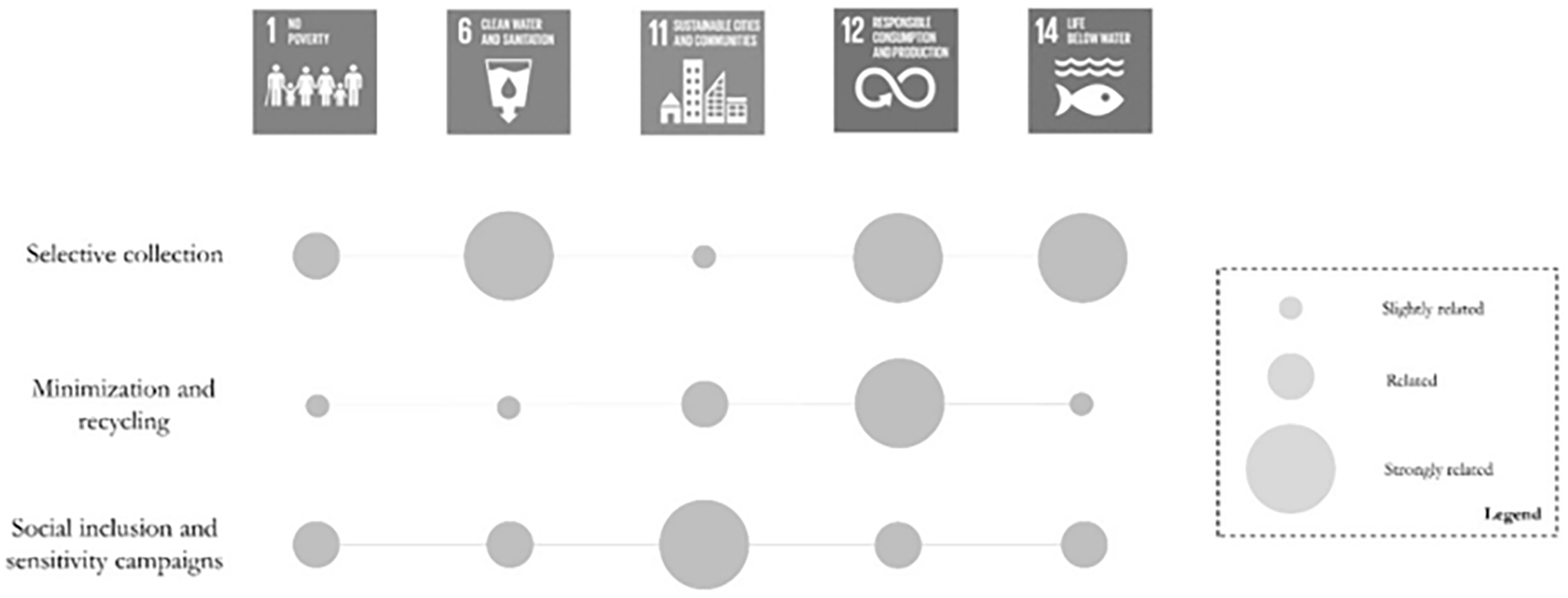
Relations between circular actions and SDGs.
Relations between circular actions and SDGs
The schemes to separate plastic waste at source help to significantly increase recycling and safe reuse of plastics, eliminate dumping of plastic waste and prevent pollution to preserve water quality (SDG 6.3 and SDG 14.1). Meanwhile, separate collection allows improving material quality for recycling (SDG 12.5), increasing national recycling rates. In some cases, waste selective collection provides affordable solutions to other challenges. For example, in Kenya and Nepal, the selective collection of plastic waste brings economic resources, as well as access to basic services, involving the informal sector and providing appropriate infrastructures in remote areas (SDG 1.4) and increases the amounts of MSW collected and managed in controlled facilities (SDG 11.6).
With respect to plastic waste minimization and recycling, the circular actions in all seven countries effectively addressed SDG 12.4, 12.5, together with SDG 11.6. The transformation of plastic waste into modular bricks and paving stones (Ivory Coast), ecological roofs and resistant school benches (Burkina Faso), upcycle parks (Malaysia), plastic roads (Nepal), tables (Bolivia) and wood-plastic composites (Colombia) results in recycling rates and the amounts of waste diverted from the landfills. Furthermore, the adopted methods to minimize plastic waste and recycling lead to sustainable management and efficient use of natural resources (SDG 12.2).
The third circular action area in this research relates to social inclusion and sensitivity campaigns. The current study found that public engagement, including capacity-building of the authorities and staff, plays a significant role in addressing the SDGs. Public campaigns for improving population awareness in the studied countries promote equity and the access to sanitation and basic services (SDG 6.3 and 11.6). In addition, it promotes safety and appropriate collection systems, reducing environmental impacts in urban areas (SDG 11.6), supporting, at the same time, waste minimization policies and awareness in food waste reduction (12.3). Moreover, organizing awareness campaigns in schools (Burkina Faso, Ivory Coast and Bolivia) leads to acquiring the information and abilities needed to support sustainable development and reducing the amount of waste disposed in rivers and water bodies (SDG 14.1).
Other SDGs to be involved
For the countries across which the study was conducted, it is evident that an SDG that specifically addresses the issue of plastics is SDG 14 (i.e. indicator 14.1.1b plastic debris density). SDG 14 on life below water calls upon nations to prevent and significantly reduce marine pollution of all kinds, from land-based activities, including marine debris, by 2025. The study carried out has pointed that international efforts have to adopt more ‘sustainable consumption’ approaches focusing on CE. Therefore, campaigns about sustainable lifestyles should be organize (SDG 4.7), to enhance awareness and institutional capacity on climate change mitigation and adaptation (SDG 13.3). Raising awareness in the communities of tourists (Colombia) and hotels (Nepal) would also encourage sustainable tourism (SDG 8.9).
The impact of plastic pollution on natural systems often points to marine ecosystems. Through proper quantification on the effect of plastic pollution on terrestrial ecosystems, SDG 15: ‘Life on land – protect, restore, and promote sustainable use of terrestrial ecosystems’ will also assume prime significance when discussing approaches to prevent leakages in natural (terrestrial and aquatic) ecosystems. The present review has also pointed out that ‘quantification’ of plastic waste generated and managed will help in setting up reduction targets and execute tangible measures.
Plastic pollution, awareness campaigns, and targeted intervention must be focused also on SDG 5: ‘achieve gender equality and empower all women and girls’. Gender equality accelerates the implementation of the UN SDGs. The attitudes towards plastics management based on gender can also be developed and targeted so accountability and execution of public awareness and training programmes can be effectively undertaken (UN Environment Programme (UNEP), 2019). In addition, decent work (SDG 8.5) for the informal sector workers who are mainly from poor and vulnerable groups can be supported. In Ivory Coast and Nepal, selective collection fosters innovative business models in the form of public–private partnerships between start-ups and municipalities, fostering innovation as well as inclusive and sustainable industrialization (SDG 9.4).
The effective development and enforcement of rules and regulations to manage better systems of SWM, especially in developing countries can foster peace, justice and strong institutions (SDG 16). In particular, it can give emphasis on the importance to develop inclusive, participatory and representative decision-making (SDG 16.7) at all levels of the supply chain of the plastic waste management system. The introduction of circular projects can foster the implementation of national policies to reinforce the institutions and the development of the principles of equity among low-income and high-income settings, reducing the child labour and women discrimination in the informal waste picking in open dumping sites. At the same time, SDG 17 is an overarching goal that focus on partnerships to act out on tackling challenges across the globe. Partnerships among the public, private sector and civil societies should be organized to support circular projects. Therefore, also this goal can be supported by the introduction of recycling and waste minimization actions.
Discussion
Comparison among countries
The plastic waste management overview in developing countries showed an imbalance in the level of development, measures and actions of plastic waste recycling towards achieving the SDGs across the seven countries studied. Countries with the highest GDP among those analysed, such as Colombia, Bolivia and Malaysia, achieved collection rates over 80% that led to recycling rates from 5% to 15%. These outcomes are favourable compared to outcomes in other countries like Kenya, Burkina Faso and Nepal.
Based on the analysis, it can be underlined that advances in SWM can be detected in Asia, although with many limitations and barriers to overcome. For example, some examples of single-use plastic bans started to be implemented. In addition, recently, MSW management plans and regulations were introduced. However, no effective full-scale applications can be found. Privatization of the system is common, but difficulties still exist in the financial sustainability of collection and disposal systems. Similar issues can be detected in Africa, where the problem is exacerbated due to a lack of effective collection systems and appropriate final disposal sites (Shi et al., 2021). Following the data collected from the African and Asian countries assessed, it can be concluded that most of the waste is disposed into open dumping sites or is burned in the open. Advanced facilities for waste sorting and recycling are missing, increasing the amount of waste uncollected or dumped into water bodies.
The two countries assessed in South America seem to have greater coverage of collection systems, along with more recognition for and data about informal waste pickers and their activities. However, open dumping is still a reality and negatively affects the local environment (Fauziah and Agamuthu, 2012). In South America, SWM is implemented at the public level. Regulations and laws are in place, identifying waste pickers as active contributors within the SWM system. However, comprehensive and affordable SWM systems are still lacking.
Main barriers to overcome and way forward
The review clearly suggested that in the countries analysed, SWM is carried out by public bodies, but NGOs and small associations are used to support the systems (although with limited financial availability). On one hand, NGOs play an important role to support the transition towards a CE. On the other, capacity-building and management support is not enough to sustain the action in the long term. Laws and regulations are quite recent (within the last 15 years), and they consider the general framework of sanitation rather than identify specific strategies for SWM. Waste segregation is mostly carried out by the informal sector in all the countries analysed. Interesting examples are available in Colombia, where the informal sector is involved within the formal system. Awareness-raising also plays an important role. However, most of the campaigns target awareness without evaluating the impact in terms of people’s behaviour change. This should be considered for support of future actions (Bortoleto and Hanaki, 2007; Ibáñez-Forés et al., 2018).
Recycling is mostly performed by NGOs or small organizations, which highlights the issue of financial sustainability. Plastic is so cheap to produce with virgin material that solely market-driven economic incentives do not emerge. It is important to share and disseminate good practices for further replication of reliable and appropriate solutions to support the implementation of appropriate recycling actions. Finally, some examples of single-use plastic minimization are introduced. However, the monitoring and control systems are not always effective. Therefore, plastic bans can be difficult to implement due to lack of alternatives to plastic goods and enforcement measures, although plastic reduction policies can represent an effective option to mitigate marine litter (Herberz et al., 2020).
Policy implications and future developments
The review showed that SWM issues, and especially plastic waste management issues, are increasingly on the political agenda, bringing a flourishment of laws and acts in various countries over the last decade to address what is considered ‘one of the biggest challenges of the urban world’ (Practical action, 2021). Specific targeted interventions to empower and educate communities and citizens are required. This must be built on ‘science-based’ target approaches to limit the usage of plastic products like use of alternative goods or adopting approaches that differ from ‘business as usual’.
Yet, the comparison between seven countries also highlighted that the interest to tackle SWM and plastic waste issues increases with rising amounts of waste produced (usually correlated with increasing income levels), which comes with higher pressure on ecosystems and society. For example, Asia is facing a massive urbanization rate and increase of the population. This growth, together with the rise of the income level, puts stress on MSW collection and final disposal systems, reduces areas available for sanitary landfill construction, and makes finding the right location of new final disposal sites challenging (Karakuş et al., 2020). In addition, plastic waste is generated in huge amounts yet segregated and recycled only in small quantities. Therefore, the first step is to support decision-makers in prioritizing plastic waste segregation and treatment to reduce plastic pollution.
Another important aspect relates to the presence of other basic services, such as sanitation and water, which may or may not already be ‘covered’. For example, in Burkina Faso, relatively little work has been carried out for SWM, but the country is grappling with challenges with other basic services too. In addition, the problem of solid waste collection, transport and treatment is linked to other basic services and infrastructures that should be guaranteed to the local population. Clean water harvesting, wastewater treatment facilities, appropriate road infrastructures, urban planning and meeting energy demand are all services that should be developed to guarantee efficient and effective SWM systems. Sustainable MSW management depends on various factors such as technology, service users, institutional units, governance and strategic policy framework (Iyamu et al., 2020), which can be also lacking in some areas of high-income countries. Holistic approaches that consider historical assessment, policy, environmental, socio-economic and technology strategy, are needed both in developing and high-income settings to support sustainable MSW management systems.
Finally, the regulation framework on SWM is still weak and it should be reinforced. However, even if more laws and acts are ‘produced’, initiative to tackle SWM and plastic waste issues remains mostly on small scale or pilot scale and does not induce systematic change in society. For a successful plastics waste fight, countries must invest in gathering qualitative and quantitative data and information about plastics, plastic pollution and effective plastic management strategies. Although plastic regulations are crucial, rules and regulations should be customized for each country’s specific conditions without copying from developed countries. For instance, policymakers can create policies that are more likely to be successful, long-lasting and enforced in their particular countries by taking cultural and socioeconomic aspects into account.
Conclusions
The current review provided insights on the social and technical issues of developing plastic waste circular actions across seven developing countries, having a direct or indirect connection to achieving SDG targets. The assessment across Asia, Sub-Saharan Africa and South America shows the need to:
(1) develop clear and coherent systems that address aspects of tracking, monitoring and reporting;
(2) adopt innovations and promote affordable, acceptable and manageable technologies; and
(3) collaborate with multiple stakeholders.
The review highlights that for a systemic change, it is essential to reduce waste generation by focusing on sustainable consumption and production practices. It includes banning certain unnecessary materials having a high littering potential, developing design standards and certifications, as well as promoting the right financing mechanism like EPR, deposit return systems for PET bottles and landfill taxes.
The review introduced effective real-world examples of plastic waste pilot projects to start working on circular actions in developing cities. The examples provided effective insights to start selective collection systems, waste minimization and treatment facilities to reduce plastic waste pollution. In addition, examples of awareness campaigns were presented, emphasizing the importance to give reliable information to the population to spread awareness among citizens.
The way to introduce appropriate solutions to improve SWM systems is often lacking, and examples of circular actions should be provided to support international NGOs, decision-makers, governments, scholars and researchers. Collecting case studies and impactful actions implemented at a global level, as well as working in synergy with a multi-stakeholder working group, can support the constant implementation of circular projects and the scale up of affordable and reliable solutions in developing cities. This review contributes to achieving this goal, providing various examples of effective circular schemes. The outcomes of the review demonstrate that the global community should prioritize interventions and implement appropriate technologies in low-income settings. This review article contributes to disseminating a global call for action to reduce single-use plastic pollution and move towards a sustainable future.
Footnotes
Acknowledgements
The authors thank the International Solid Waste Association (ISWA) and the Young Professional Group (YPG) for supporting the research.
Author contributions
All the authors contributed to the conceptualization of the review article and the definition of the methodology. N.F.: Coordination, editing, revision, bolivian case study, conclusions, first draft, submission, revision; A.M.: Supervision, text revision; A.M.: Discussion section, revision; A.S.: Method section; A.K.: Nepal case study; B.C.: Introduction section and literature review; D.Y.: Burkina Faso and Ivory Coast case study; H.J.: SDGs collection and analysis, method section; J.R.V.: Kenyan case study, discussion section; L.M.U.-M.: Colombian case study; M.S.T.: Introduction section; N.A.: Malaysian case study; R.C.: Editing and proofreading. V.J.M.: SDGs analysis and conclusions.
Declaration of conflicting interests
The authors declared no potential conflicts of interest with respect to the research, authorship, and/or publication of this article.
Funding
The authors received no financial support for the research, authorship, and/or publication of this article.
