



Abstract
Marine plastic pollution poses a pressing global concern, with significant environmental and health ramifications. Traditional waste management methods are insufficient for addressing plastic waste’s systemic challenges, necessitating a holistic, governance-focused approach to tackle the underlying drivers. In response, the concept of circular economy (CE) has emerged as a sustainable solution. In Mombasa County, Kenya, the management of marine plastics necessitates a paradigm shift towards CE. With the global acknowledgement of policies as being central to fostering the transition to CE, this study examines the alignment of policy frameworks with CE principles to address marine plastic pollution in Mombasa County, Kenya. The review developed a content analysis framework guided by the three CE principles and 10R strategies of the CE. Utilizing deductive coding, predefined codes guided the analysis. In total, 14 policy documents were analysed using qualitative content analysis and constant comparative analysis. Providing a narrative analysis, discussion was done on how the analysed policies align with the 10R strategies of CE. Findings reveal that while current policies reflect efforts to manage waste, the adoption of CE principles is fragmented, as they do not fully embrace the holistic approach of the CE. Lapses include limited emphasis on proactive design strategies, insufficient guidelines for material circulation and lack of detailed focus on regenerative aspects. The study contributes to accelerating the transition to CE by providing evidence-based policy recommendations for the national and county governments in Kenya to develop an integrated CE plan to enhance coordination, address gaps and foster sustainability in plastic waste management.
Keywords
Introduction
Plastic debris, in particular, has been identified as a global ocean concern alongside other pressing issues like climate change, sea level rise and biodiversity loss. The multifaceted nature of the marine plastics presents a significant challenge in implementing a comprehensive control measure (Billard and Boucher, 2019). With over 400 million tonnes of plastic currently produced for diverse purposes (IUCN, 2021), only 9% are recycled (Sebastian and Paul, 2021), about 14 million tonnes find their way into the ocean space (IUCN, 2021), escalating threats to ocean health. Conventional efforts, focused primarily on waste management, have not been sufficient to solve the complex, systemic challenges of plastic waste management; hence, a more holistic, governance-focused approach is needed to address the underlying drivers of the problem. In response to this growing concern, concepts like circular economy (CE) have emerged (Agamuthu et al., 2019), as the sustainable solution (Maliha et al., 2024; Nikolaou et al., 2021a), alongside the acknowledgement of policies as being pivotal in accelerating the transition to CE (Taghipour et al., 2022; Weick and Ray, 2022).
The CE, rooted in ecological economics and sustainability, addresses a wide range of current global concerns such as climate change, waste accumulation, biodiversity loss, high energy consumption (Maliha et al., 2024; Nikolaou et al., 2021b; Priyadarshini and Abhilash, 2020), among others. The CE model represents a transition from the conventional linear models of resource consumption and waste disposal, offering a holistic approach that prioritizes product design, material circulation and material recovery (Sardianou et al., 2023). As a revolutionary framework, it envisions closed-loop systems where products, materials and resources are exploited efficiently, eliminating the conventional economic systems of the ‘take-make-dispose’ approach (Ellen MacArthur Foundation and World Economic Forum, 2016).
The transition from a linear model to the circular model becomes particularly essential in the context of marine environments worldwide (Agamuthu et al., 2019), these areas are grappling with a fast- growing issue of waste accumulation. Adoption of CE is philosophically justified by an ethical imperative to address the environmental challenges posed by marine plastic pollution. Grounded in environmental ethics, it recognizes the intrinsic value of marine ecosystems and the moral responsibility to safeguard them for current and future generations. Moreover, drawing from a utilitarian perspective, the pursuit of CE principles is justified as it seeks to maximize overall well-being by minimizing harm to marine life, protecting ecosystem services and fostering sustainable resource use (Kapsalis et al., 2019; Murray et al., 2017). According to Ellen MacArthur Foundation (EMF) by 2040, a CE has the potential to: reduce the annual volume of plastics entering our oceans by 80%, reduce greenhouse gas emissions by 25%, generate savings of USD 200 billion per year and create 700,000 net additional jobs (Ellen MacArthur Foundation and World Economic Forum, 2016). Central to this is the global recognition of the role of policies in driving the transition towards a CE.
The ongoing negotiations and the development of the Global Plastics Treaty reflect a growing recognition of the urgent need to promote a CE approach to plastic use (United Nations Environment Programme, 2023). Several counties across the world are currently working towards integrating and aligning their policy frameworks with the CE principles (Weick and Ray, 2022). The study by Weick and Ray (2022) provides the overview of the regulatory landscape within the CE context highlighting the evolution of policies worldwide. It provides a detailed exploration of how different regions worldwide are actively embracing CE principles through the development and implementation of robust policy frameworks. Major global players like the European Union (EU) and China have integrated CE principles into their policy frameworks, demonstrating the efficacy of theories in practice. For instance, the EU’s Circular Economy Action Plan, introduced in 2015 and updated in 2020, incorporates Extended Producer Responsibility (EPR), shifting accountability upstream and encouraging sustainable product design (Kunz et al., 2018; Pouikli, 2020). The plan has led to significant changes in the European economy, with circular activities generating nearly EUR 155 billion in value-added and a 6% increase in jobs (Ellen MacArthur Foundation, 2020). However, these improvements are not solely due to circular policies as there are other factors to take into consideration (Ellen MacArthur Foundation, 2020). In Africa, South Africa has witnessed the implementation of circular design in manufacturing, promoting products with extended life cycles and recyclability (Desmond and Asamba, 2019; Godfrey and Oelofse, 2017). In Rwanda, stringent plastic bans have incited the adoption of circular alternatives, encouraging various biodegradable alternatives (Hakuzimana, 2021; Ogutu et al., 2023).
Within the Kenyan context, the country has made notable strides in plastic waste management, particularly through the plastic bag ban and EPR regulations. However, according to Horvath et al. (2018), the country’s circularity level in plastic material flow is relatively low, indicating a need for improved sustainability in the system. The adoption of CE strategies holds promise (Agamuthu et al., 2019), particularly in regions like Mombasa County, where economic activities are closely tied to marine natural resources and coastal tourism. Mombasa County, Kenya as the case study is strategically grounded in its geographical relevance, being a coastal region along the Western Indian Ocean (Selin, 2013). As a major economic hub and a prominent tourist destination in East Africa, Mombasa’s economic activities and tourism sector are intricately tied to its natural resources, including the marine environment. Approximately 2200 tonnes of waste is generated daily in Mombasa. However, just 65% of that quantity is collected (Wekisa and Majale, 2020). The repercussions of the waste extend far beyond visible pollution on the shores to impacting the marine environment, local economies and public health (Figure 1) (Kosore et al., 2024; NEMA, 2017; USAID-KENYA, 2024).
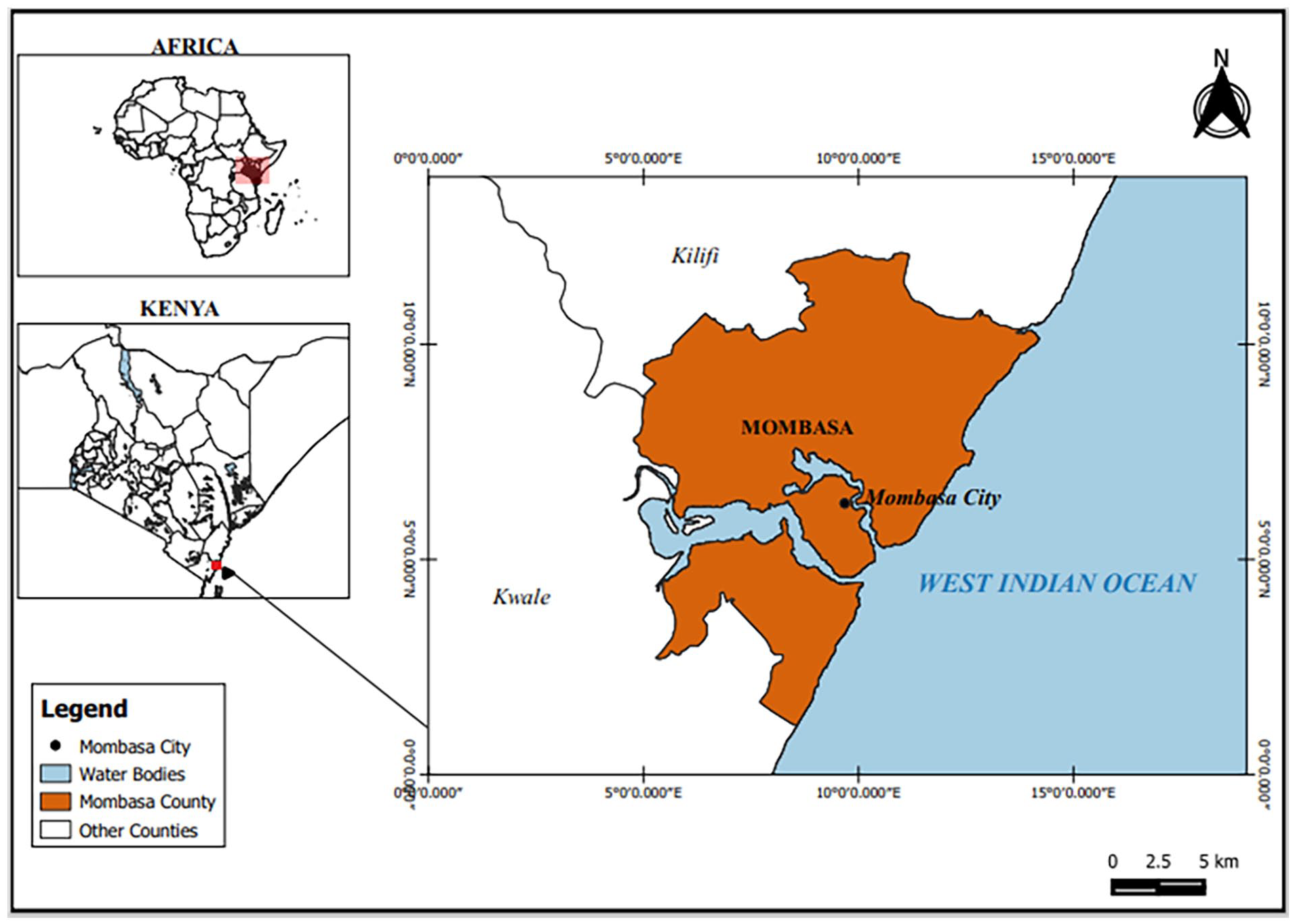
Map of Mombasa County, Kenya.
The national and county governments of Kenya have implemented various policies, strategies and plans aimed at tackling the challenge of plastic pollution and, to a certain extent, marine plastic litter (Gerphas, 2020). Among them are the National Marine Litter Management Strategy, the National Sustainable Waste Management Law and the Mombasa County Solid Waste Management Act (MCSWMA). Other broad-based regulations include a ban on the production of plastic carrier bags and restrictions on the use of certain types of plastic in specified areas. Even with these efforts, the issue persists (Kosore et al., 2024; Ministry of Environment and Forestry, 2020; USAID-KENYA, 2024), particularly evident in the accumulation of plastic waste along the coastlines in the county. For instance, 120 tonnes of plastics are generated daily and only 5% of which is recycled, the rest end up at the ocean environment (Njoroge and Ddiba, 2022; Wekisa and Majale, 2020).
Moreover, not much research has been done in the past to analyse the marine plastic policy framework and their linkages with the CE in Mombasa County. Various studies have independently addressed marine pollution and existing CE initiatives (Njoroge and Ddiba, 2022; Soezer, nd; Thùy Vân, 2021; Wekisa and Majale, 2020). Njoroge and Ddiba (2022) in their study in Mombasa County highlighted the need for continuous review and improvement of solid waste policies to align with CE principles. Local governments such as County governments have a significant responsibility in implementing CE strategies through policy-making and infrastructure development (Xue et al., 2010). In light of this, our study aims to assess the policies currently enacted or adopted by Mombasa County, Kenya in addressing marine plastic challenges, focusing on their alignment with CE principles. This research seeks to bridge the existing knowledge gap by providing insights that can guide evidence-based decision-making and aid in the development of more sustainable and effective policy strategies in the region and beyond.
Framing the CE
Contrary to the traditional approach of resource use where resources are extracted, processed, consumed and then disposed-off, the CE approach advocates a circulation of resources within the economic system focusing on closing the loop (Ghisellini et al., 2016). The CE model has roots in various historical practices, but its modern formulation gained significant traction in the late 20th century. Its theoretical formulation gained momentum in with the work of Walter R. Stahel, who emphasized the extension of product use-life and the transition towards a sustainable society (Stahel, 1982; Upadhayay et al., 2024). Turner and Pearce (1990) further distinguished between circular natural systems and linear economic systems, emphasizing sustainable resource management.
The concept has been a growing area of focus and research, with significant advancements and implementations across various sectors and regions. The revival and mainstream of the CE occurred in the 2010s, highly propelled by the establishment of the EMF and political initiatives like the Circular Economy Package from the European Commission (Geissdoerfer et al., 2017). Various definitions and interpretations exist, reflecting the diverse perspectives and approaches to implementing circular principles and the lack of concurrence with respect to its definitions and semantics (Alhawari et al., 2021; Arruda et al., 2021; Nikolaou et al., 2021b). Some definitions emphasize the circularity of resources and materials. For instance, the EMF defines a CE as ‘an industrial economy that is restorative, with the aim of eliminating waste through superior design of materials, products, systems and business models’ (Ellen MacArthur Foundation, 2013). Other definitions highlight waste reduction and resource efficiency. Hislop and Hill (2011) saw the CE as ‘a development strategy that maximizes resource efficiency and minimizes waste production, within sustainable economic and social development contexts’. Preston (2012) defined CE as an approach where ‘waste from factories becomes a valuable input to another process, and products can be repaired, reused, or upgraded instead of discarded’.
From these definitions, a converging interpretation emerges as: The circular economy, aimed at closing the loop of resource use, is an economic system that focuses on eliminating waste and maximizing resource efficiency by designing products and materials to allow for circularity, and recovery at the end of their life cycle. The contemporary understanding of the CE emphasizes the need to decouple economic growth from resource consumption and environmental degradation. At its core, the CE framework is guided by three key principles: design out waste and pollution, keep products and materials in use and regenerate natural systems (Ellen MacArthur Foundation, 2017). These principles form the foundation of the Rs CE strategies, offering a structured path for shifting towards a CE from a governance standpoint. The EU’s CE Action Plan exemplifies successful adoption of CE principles. By prioritizing actions to minimize waste and pollution, extend product lifecycles and regenerate natural systems, the EU aims to decouple economic growth from resource consumption and environmental harm, including marine plastic pollution. Through initiatives promoting eco-design, improved waste management, innovation and consumer engagement, the plan has achieved increased recycling rates and reduced landfilling (Ellen MacArthur Foundation, 2020). This stride highlights the potential of CE to eliminate waste and pollution, serving as a model for other regions, such as Mombasa County, Kenya, to follow suit in addressing environmental challenges such as marine plastic pollution.
Analytical framework
Analysing CE targets can be approached from multiple viewpoints (Khan and Akhtar, 2020; Morseletto, 2020), including: (i) material flows, economic sectors, business models (such as input-output across sectors), (ii) lifecycles (e.g. material inputs), (iii) CE metrics/indicators (e.g. material flow accounting, resource duration) and (iv) CE strategies (the R frameworks). Furthermore, Morseletto (2020) reemphasized that focusing on CE strategies is particularly essential in a governance perspective for a comprehensive analysis. The CE R-Hierarchy, also known as the R-Imperatives or R-Framework, is a tool used in the CE to visualize and understand the different stages of resource use and waste management. The hierarchy consists of various strategies, each starting with the letter ‘R’. Researchers have suggested expanding beyond the traditional 3R framework to include additional R frameworks, such as the 6Rs proposed by Sihvonen and Ritola (2015), or even more comprehensive models like the 10Rs outlined by Kirchherr et al. (2017) and Potting et al. (2017) such as Refuse, Rethink, Reduce, Reuse, Repair, Refurbish, Remanufacture, Repurpose, Recycle and Recover. For the purpose of this study, the 10 R-strategies will be used. According to Kirchherr et al. (2017), the 10R strategies from Potting et al. (2017) is the most detailed and recent. A study by Weerakoon et al. (2023) utilizes a version of the 10Rs framework to assess the implementation of CE in the Sri Lankan construction sector (Figure 2).
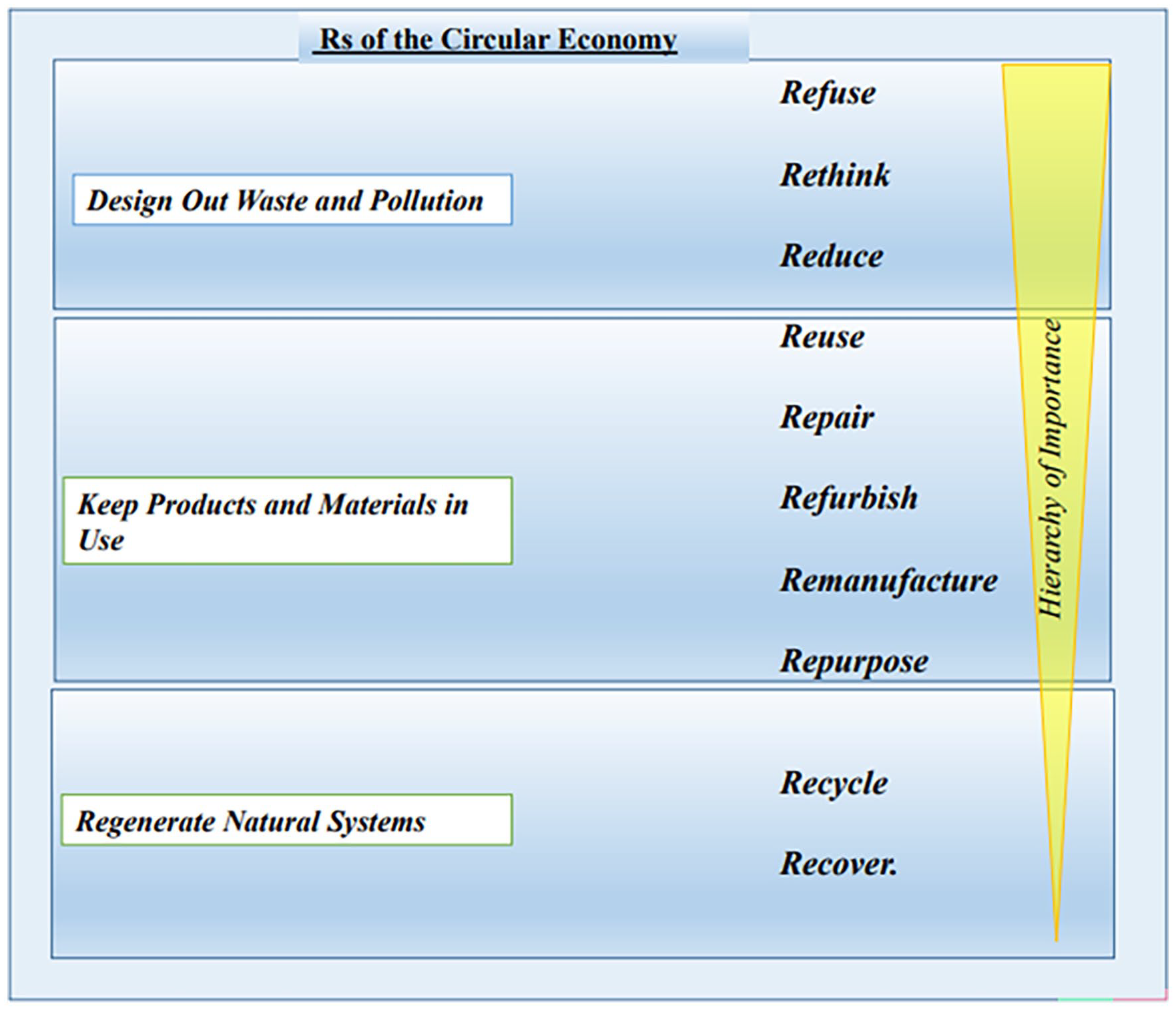
The 10R frameworks of CE.
Refuse, the very first R-strategy, focuses on the rejection of harmful materials or processes at the design phase of products (Korhonen et al., 2018). The refusal of plastics through legislative actions and consumer choices contributes to the reduction of plastic pollution and promotes the principles of the CE in waste management practices (Ogutu et al., 2023). Countries in East Africa, including Kenya, Rwanda, Tanzania and Somalia, have implemented bans on the manufacture, importation and use of various single-use plastics (SUPs) to address plastic pollution and environmental degradation. The second R-strategy, Rethink, refers to a fundamental shift in perspective and approach towards how we produce, consume and manage resources (Geyer et al., 2017; Heath et al., 2022; Weetman, nd). It involves re-evaluating traditional linear economic models that lead to resource depletion and waste generation, and instead, embracing circular principles that prioritize sustainability, resource efficiency and waste reduction. Essentially, ‘rethink’ in the CE signifies a transformative change in mind set and practices towards creating a more sustainable and regenerative economic system (Geyer et al., 2017). The third R-strategy Reduce aims at reducing the amount of resources used in the production and consumption of goods and services (Heath et al., 2022). Reducing resource consumption can be achieved through various strategies, such as designing more durable products (Malinauskaite and Erdem, 2021; Suski et al., 2023). This could involve optimizing packaging designs to minimize excess material, using thinner layers or innovative structural designs to achieve the same protective function with less plastic.
The forth R-strategy Reuse strategy advocates for extending the lifespan of products through secondary usage (Guo et al., 2023). van Dam et al. (2020) discussed the importance of ‘Design for Circular Consumption’, which involves strategies like reuse to support the CE. Initiatives like refill stations and bulk shopping allow consumers to refill containers with products like detergents and grains, reducing the need for single-use packaging (Zero-Waste Europe, 2020). Moreover, the rise of circular business models such as product-as-a-service and rental services enables consumers to access products temporarily without the need for permanent ownership, promoting resource reuse and minimizing waste generation (Bocken et al., 2016). The fifth R-strategy Repair: In CE, repairing emphasizes the importance of product maintenance to prolong usability (Guo et al., 2023). Usability maintenance is a crucial aspect of product design, ensuring that a product remains user-friendly and functional over time. Incorporating maintenance and repair considerations during the design phase is essential for creating a product that is easy to maintain and repair. This includes defining maintenance and repair scenarios, identifying necessary tools, skills and resources and pinpointing potential failures, errors or breakdowns. The sixth R-strategy, Refurbish involves upgrading or modernizing products to enhance functionality and appeal (Guo et al., 2023; Kirchherr et al., 2017). The refurbish strategy involves prolonging the life of a product by renewing and/or repairing its essential components. It is crucial to differentiate refurbishing from remanufacturing: During refurbishing, the original product identity remains intact, and it is not reintroduced to the market. In contrast, remanufacturing results in a new product with a different identity, which must meet current legal requirements for market reintroduction (Fontana et al., 2021). Refurbishing is an essential aspect of the CE, as it helps to reduce waste and conserve resources by extending the life of products and reducing the need for new raw materials. The seventh R-strategy, Remanufacture focuses on integrating intact components into new products, reducing the need for virgin materials (Guo et al., 2023; Kirchherr et al., 2017). Companies like Dell and HP have established take-back programmes for their electronic products, including plastic components, which are then remanufactured into new products or reused in their manufacturing processes (Sundin, 2019). Remanufacturing in the plastics industry highlights the growing importance of remanufacturing as a means of reducing waste and promoting sustainability. The eighth R-strategy, Repurpose entails transforming discarded components into new products with alternative purposes (Fontana et al., 2021; Guo et al., 2023). Creative initiatives such as plastic bottle greenhouses and eco-brick construction repurpose plastic waste as building materials, addressing both waste management and housing needs in communities (Forrest et al., 2019; Nikiema and Asiedu, 2022; Zaman and Newman, 2021).
Recycle, the ninth R-strategy: With recycling being a familiar concept, the rise of circularity has sparked confusion regarding their distinctions and the role of recycling in a complete CE. Therefore, it is essential to clarify what a CE entails and how recycling contributes to it. Furthermore, understanding the disparity between circularity and recycling, and the point at which recycling becomes part of CE is crucial. Recycling is a systematic process by which post-consumer materials are broken down into their constituent materials. It involves processing waste materials into new products (Guo et al., 2023), closing material loops thus reducing reliance on virgin resources. It is important to prioritize the ‘upstream’ strategies as highlighted within the technical cycle of a CE, as they retain a product’s value, whereas recycling is the backend and final option only when other strategies are no longer viable (Guo et al., 2023). In essence, recycling in CE begins at the tail end – the ‘get rid’ phase – of a product’s lifecycle. Recovery: The final R-strategy, Recovery, focuses on extracting energy or resources from waste materials (Kirchherr et al., 2017). Emerging technologies such as pyrolysis and gasification offer innovative solutions for converting various types of waste materials into biofuels, chemicals and other valuable products, contributing to a more sustainable and CE. Moreover, recovery in this context extends beyond just physical materials to encompass broader ecosystem restoration efforts (Bocken et al., 2016; Geissdoerfer et al., 2017; Ghisellini et al., 2016; Kirchherr et al., 2017),
Materials and methods
The research objective was achieved through policy document analysis. Documents analysis took place between 1 March 2024 and 1 May 2024. A total of 14 policy documents governing waste management in Mombasa County, Kenya were analysed using qualitative content analysis and subsequently constant comparative analysis.
Documents gathering
A comprehensive search strategy was employed across diverse sources, including the Kenya Gazette Platform, County Government of Mombasa website and institutional websites and repositories, for example, The Kenya Institute for Public Policy Research and Analysis (KIPPRA), National Environment Management Authority (NEMA), Ministry of Environment and Forestry. Keywords such as ‘plastics regulation’, ‘marine plastics policy’, ‘waste management policy’ and ‘Mombasa County Policies’ were utilized to identify relevant policy documents for inclusion in the review. At this stage, 21 policy documents were gathered. Relevant policy documents were selected based on predefined criteria. The inclusion criteria used included policy documents currently in use/recent enactments and availability of full-text content ensuring relevance to marine plastic management policies in Mombasa County. Only materials meeting these criteria were included for analysis. Policy documents failing to meet the inclusion criteria were excluded. Exclusion criteria included enactments before 2010, non-enactments, duplicates or content lacking substantive information. Total policy documents after exclusion were 14 as highlighted in Table 1 below.
Policy framework for marine plastics in Mombasa County, Kenya.
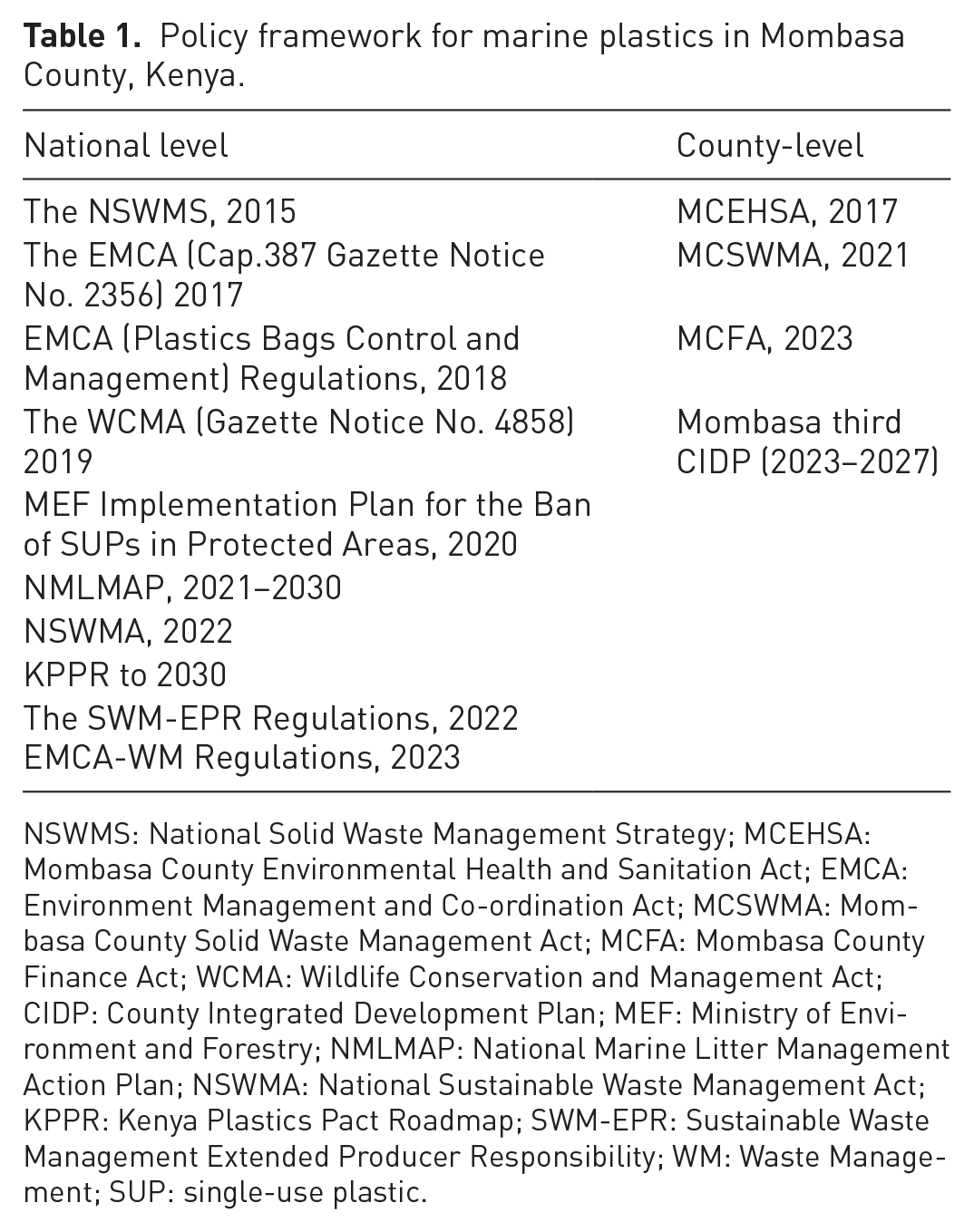
NSWMS: National Solid Waste Management Strategy; MCEHSA: Mombasa County Environmental Health and Sanitation Act; EMCA: Environment Management and Co-ordination Act; MCSWMA: Mombasa County Solid Waste Management Act; MCFA: Mombasa County Finance Act; WCMA: Wildlife Conservation and Management Act; CIDP: County Integrated Development Plan; MEF: Ministry of Environment and Forestry; NMLMAP: National Marine Litter Management Action Plan; NSWMA: National Sustainable Waste Management Act; KPPR: Kenya Plastics Pact Roadmap; SWM-EPR: Sustainable Waste Management Extended Producer Responsibility; WM: Waste Management; SUP: single-use plastic.
Content analysis framework development
To guide the content analysis, the study developed a framework from the three CE principles: Design out waste and pollution, Keep products and materials in use and Regenerate nature, coupled up with the 10R strategies of the CE: Refuse, Rethink, Reduce, Reuse, Repair, Refurbish, Remanufacture, Repurpose, Recycle and Recover alongside policy actions for each dimension. The framework in summarized in Table 2. Its use and application is detailed in section ‘Data analysis’.
CE content analysis framework.
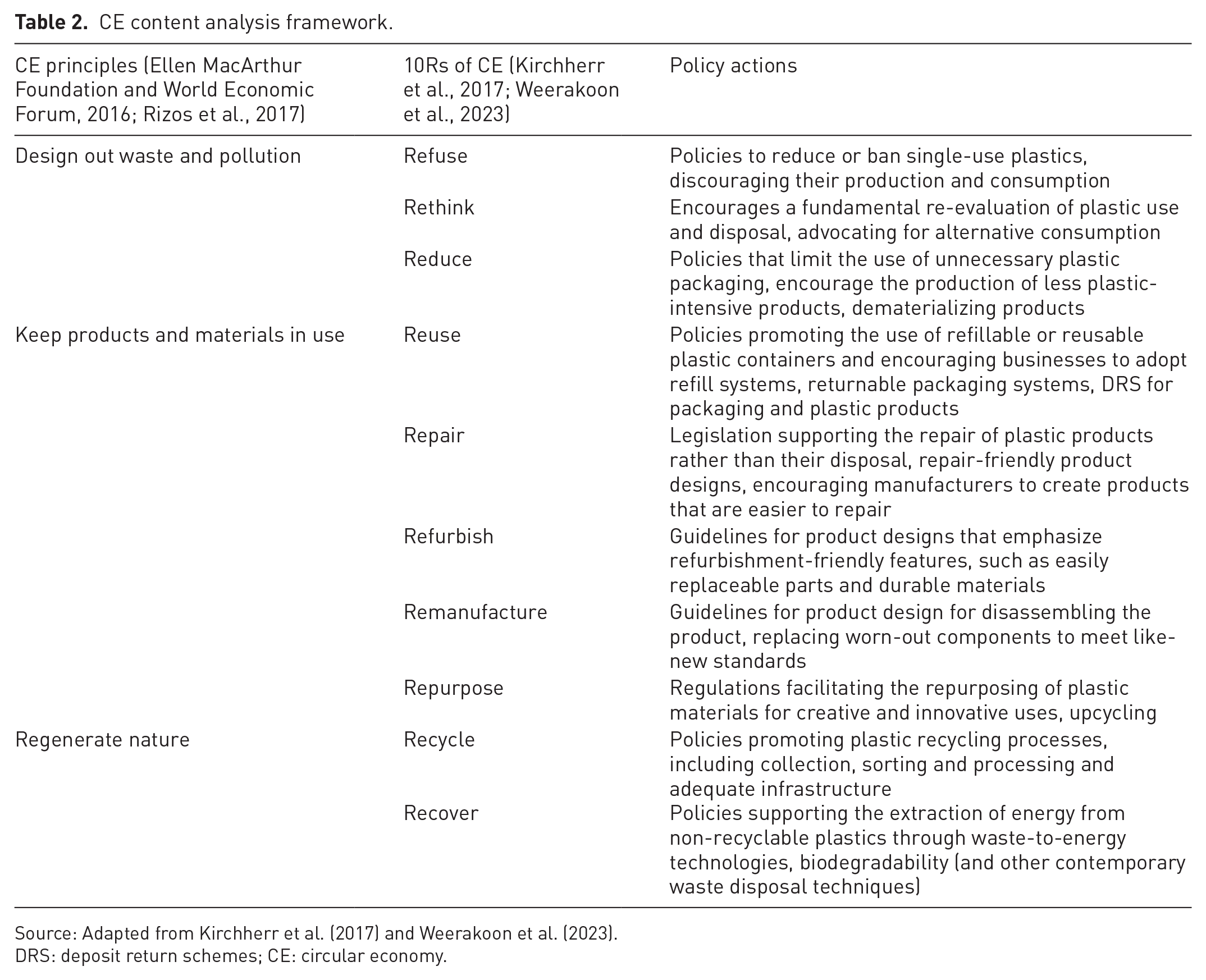
Source: Adapted from Kirchherr et al. (2017) and Weerakoon et al. (2023).
DRS: deposit return schemes; CE: circular economy.
Data analysis
Coding process
The coding process involved assigning various policy actions within a policy document with one or more codes based on alignment with the 10R strategies of the CE: Refuse, Rethink, Reduce, Reuse, Repair, Refurbish, Remanufacture, Repurpose, Recycle and Recover. Under the coding framework, the policy action within the Refuse Strategy was assigned the code ‘R1’ to denote its focus on preventing the generation of plastic waste by discouraging the production and consumption of SUPs. Similarly, Reduce assigned the code ‘R2’ to highlight its contribution to reducing waste and pollution through proactive measures such as limiting the use of unnecessary plastic packaging, encourage the production of less plastic-intensive products, dematerializing products and so on and so forth.
Interpretation and presentation of findings are in three sections highlighting each of the CE principle which are: Design out Waste and Pollution, Keep Products and Materials in Use and Regenerate Natural Systems. Discussions were done on how the analysed policies align with these principles predicated by the 10R strategies of the CE, providing a constant comparative analysis of each policy action and highlighting specific provisions or initiatives that demonstrate alignment with CE principles.
Results and discussion
CE principle 1: Design out waste and pollution
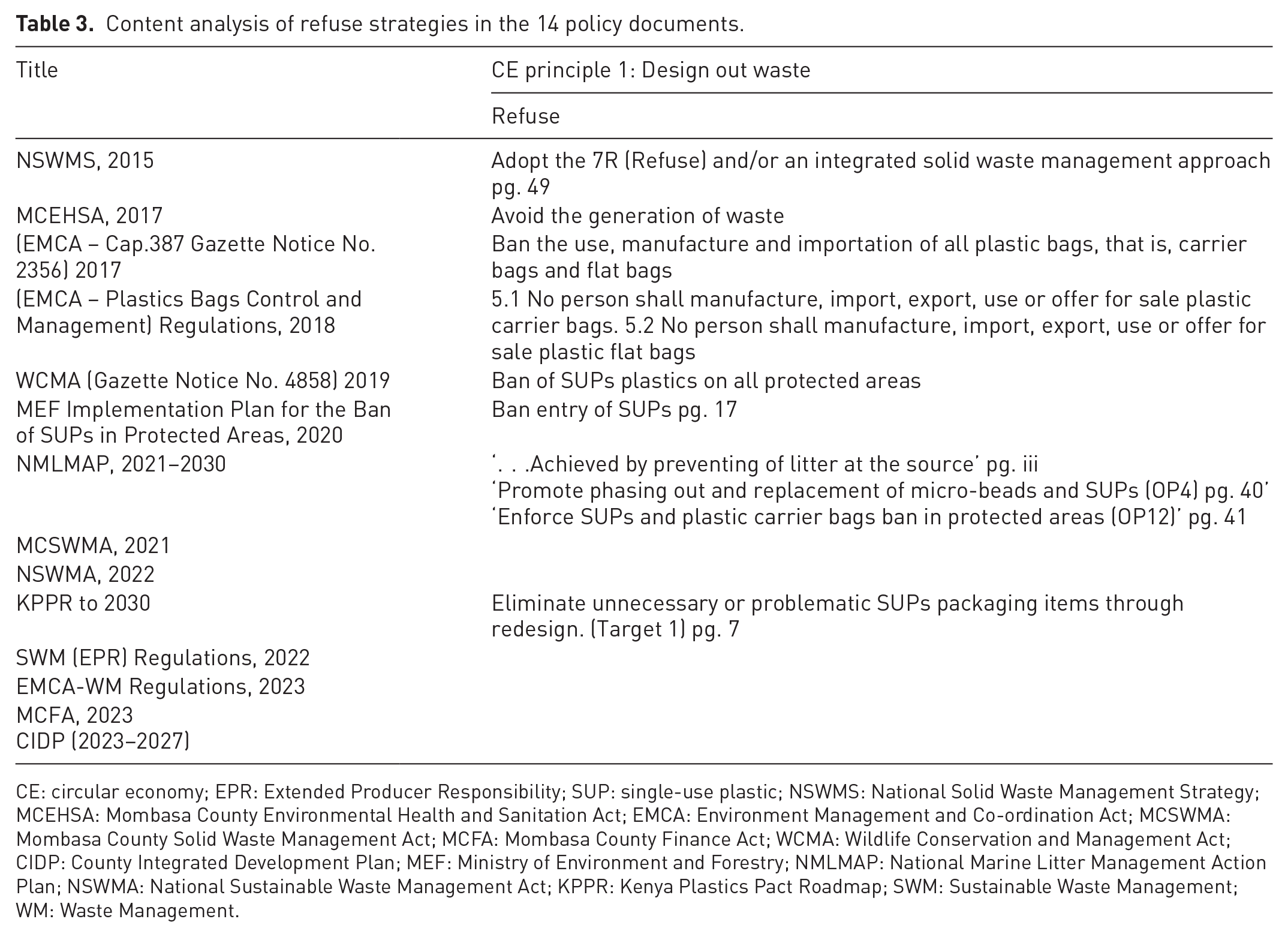
Emphasizing on the importance of designing products with their entire lifecycle in mind (Ellen MacArthur Foundation, 2017), this principle involved considering how products and materials can be designed to eliminate waste and pollution from the outset, through Refuse, Rethink and Reduce approaches (Cramer, 2017; Kirchherr et al., 2017; Potting et al., 2017). Table 3 shows the policy documents analysed and how they integrated the ‘Design out waste’ principle through various policy actions.
Content analysis of refuse strategies in the 14 policy documents.
CE: circular economy; EPR: Extended Producer Responsibility; SUP: single-use plastic; NSWMS: National Solid Waste Management Strategy; MCEHSA: Mombasa County Environmental Health and Sanitation Act; EMCA: Environment Management and Co-ordination Act; MCSWMA: Mombasa County Solid Waste Management Act; MCFA: Mombasa County Finance Act; WCMA: Wildlife Conservation and Management Act; CIDP: County Integrated Development Plan; MEF: Ministry of Environment and Forestry; NMLMAP: National Marine Litter Management Action Plan; NSWMA: National Sustainable Waste Management Act; KPPR: Kenya Plastics Pact Roadmap; SWM: Sustainable Waste Management; WM: Waste Management.
Refuse
‘Refuse’ involves actively choosing not to use plastics (Cramer, 2017; Kirchherr et al., 2017; Potting et al., 2017) and includes policy actions such as to prohibit or ban use of plastics and discouraging their production and consumption (Cramer, 2017; Kirchherr et al., 2017; Potting et al., 2017).
The adoption of the ‘Refuse’ principle within Kenya’s policies highlights efforts to address plastic pollution at its source. The NSWMS promotes rejecting SUPs, targeting environmentally harmful materials and reducing marine plastic pollution. This parallels findings by Anomat and Ibrahim (2021), who argued that addressing plastic waste at its origin is vital for fostering circularity in Kenya’s waste management systems. Similarly, the Mombasa County Environmental Health and Sanitation Act (MCEHSA) emphasizes waste prevention by addressing sources of pollution in waterways (Kibria et al., 2023), supporting the ‘Refuse’ concept. This approach aligns with Paul et al. (2016), who found that bans on specific plastic types, such as those implemented in Bangladesh, significantly reduced riverine and coastal plastic waste. The Environment Management and Co-ordination Act (EMCA) Gazette Notice No. 2356, which banned plastic carrier and flat bags in 2017, achieved over 80% enforcement success (Ministry of Environment and Forestry, 2020). The Wildlife Conservation and Management Act (WCMA) and Ministry of Environment and Forestry (MEF) further reinforce the ‘Refuse’ principle by prohibiting SUPs in protected ecosystems. These policies echo findings by the European Commission (2018), which identified similar initiatives in the EU as critical to preserving marine biodiversity. Additionally, the National Marine Litter Management Action Plan (NMLMAP) phases out microbeads and SUPs, focusing on prevention at the source, whereas KPPR advocates redesigning packaging to eliminate problematic plastics, aligning with CE principles (Ellen MacArthur Foundation, 2021). This reflects Anomat and Ibrahim’s (2021) assertion that redesign and innovation are pivotal to advancing circularity in Kenya. Collectively, these measures demonstrate Kenya’s commitment to combating plastic pollution, drawing parallels with Rwanda’s effective plastic bag ban (Njeru, 2006).
Rethink
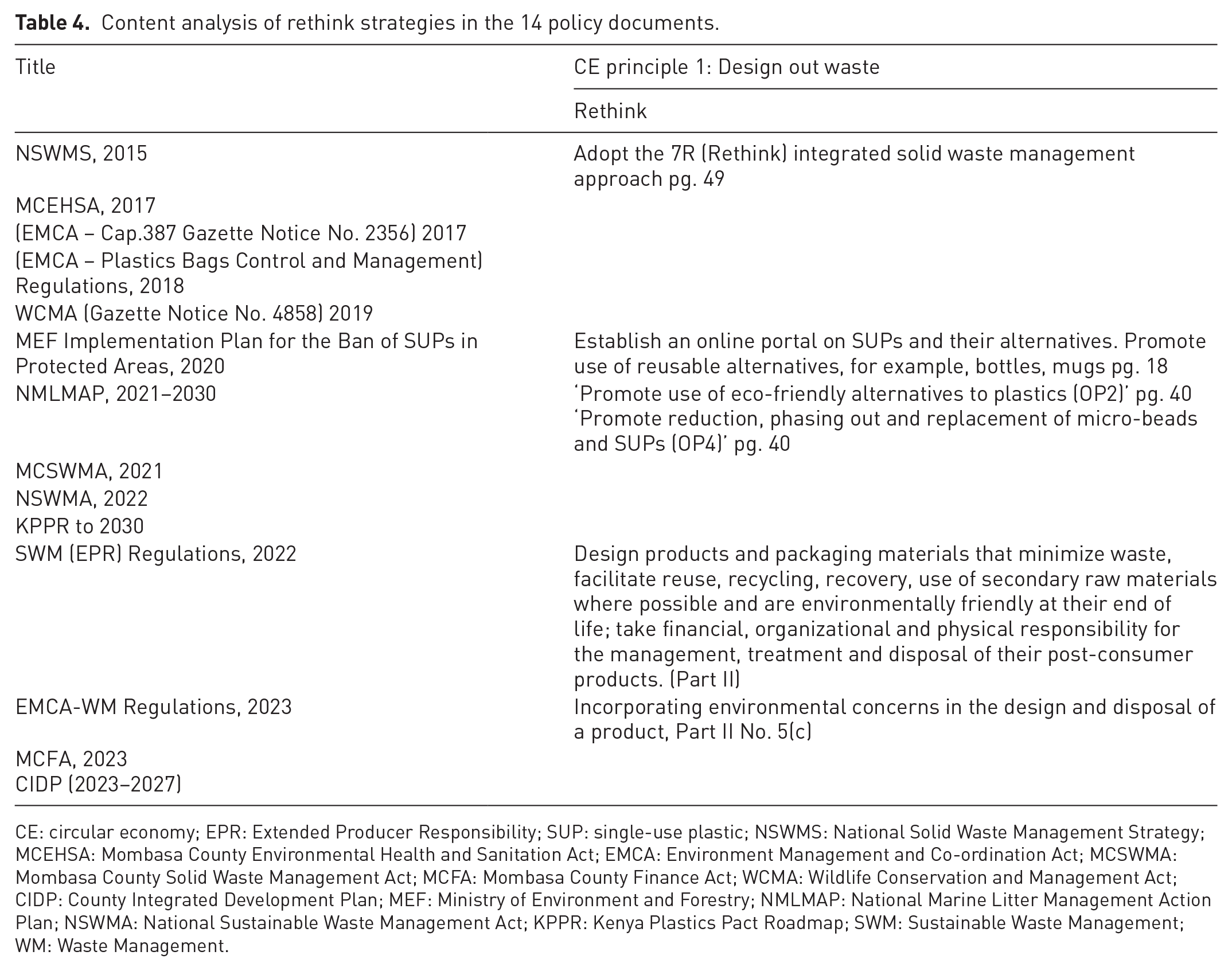
This strategy involves policy actions which encourage a fundamental re-evaluation of plastic use and disposal, advocating for exploration of various alternatives (Cramer, 2017; Kirchherr et al., 2017; Potting et al., 2017).
The 7R ‘Rethink’ principle emphasizes re-evaluating plastic use and disposal practices. While the NSWMS promotes innovation, it lacks specificity, highlighting a gap in actionable policy measures. The MEF Implementation Plan for the Ban of SUPs complements this by providing tools like the NEMA online portal, showcasing alternatives to harmful plastics. This proactive accessibility to alternatives significantly influence behaviour, a finding mirrored globally by van Franeker et al. (2011) in the Netherlands. The NMLMAPs focus on phasing out microbeads and SUPs is crucial, given their contribution to marine litter (Gallo et al., 2018), but enforcement challenges persist (Anomat and Ibrahim, 2021).The Sustainable Waste Management (SWM)-EPR Regulations place the responsibility for waste on producers, encouraging redesign practices. Complementary policies like the EMCA-WM Regulations aim to embed environmental concerns in product design. Kamau (2023) emphasized the importance of this approach for promoting circularity, whereas Anomat and Ibrahim (2021) contended that such fragmentation of policies presents significant barriers to effective implementation and the advancement of circularity efforts.
Reduce
Policy actions for reduce strategies include those that limit the production and use of unnecessary plastics and packaging, encourage the production of less plastic-intensive products, dematerializes products and providing incentives or disincentives to encourage source reduction among others (Cramer, 2017; Kirchherr et al., 2017; Potting et al., 2017).
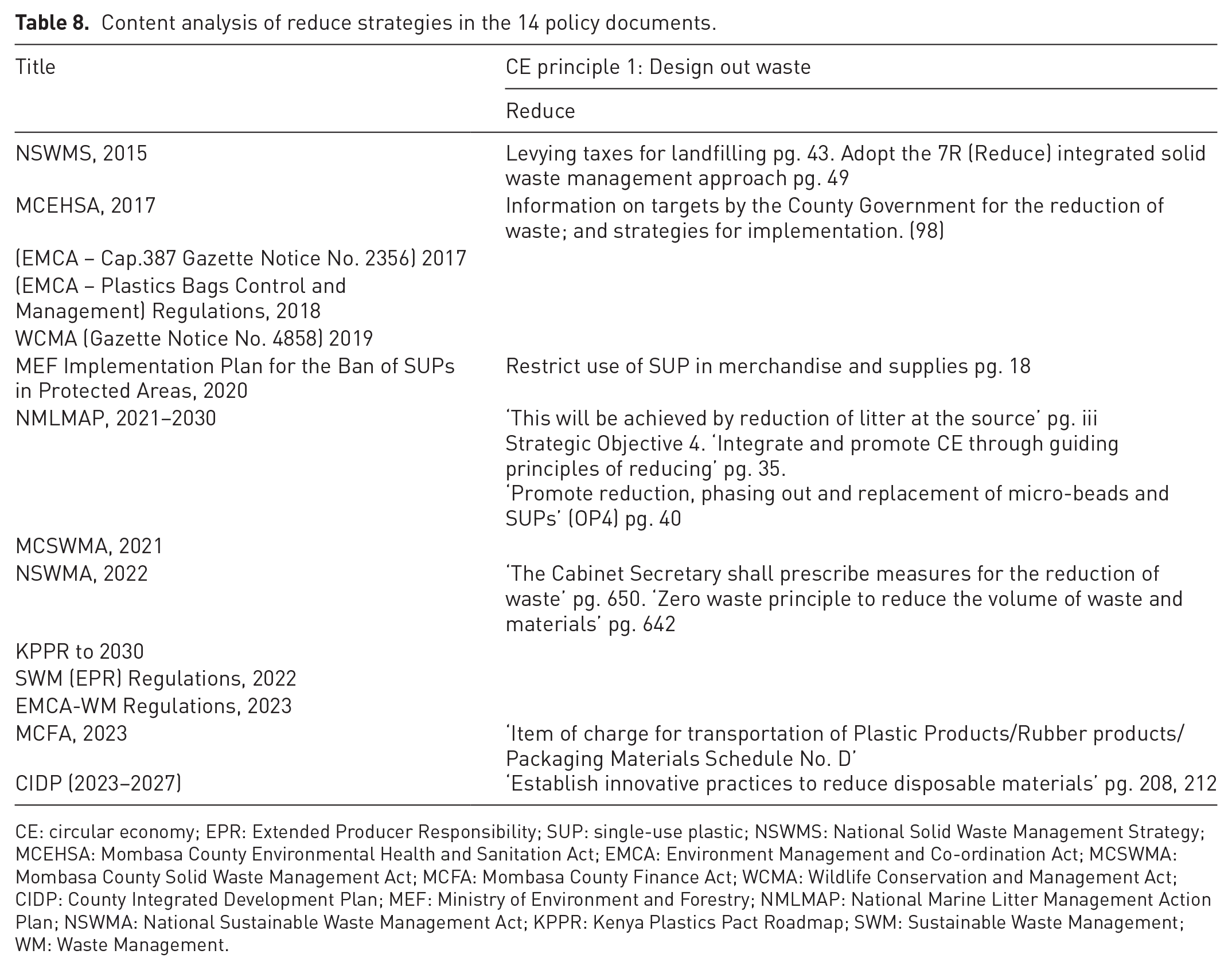
The NSWMS incorporates the ‘Reduce’ strategy by levying landfill taxes to encourage waste minimization, a strategy that parallels Sweden’s successful tax, which significantly decreased plastic waste and improved recycling rates (Hogg et al., 2010). Similarly, the MCEHSA reflects waste reduction goals at the county level. The MEF implementation plan for banning SUPs in protected areas targets waste reduction by limiting SUP use, aligning with findings from Hawaii, where similar measures reduced plastic litter in state parks (Carter, 2020). The NMLMAP further promotes source reduction by focusing on the phasing out of microbeads and SUPs. The National Sustainable Waste Management Act (NSWMA) and SWM-EPR Regulations encourage waste minimization at the design stage, whereas the MCFA discourages unnecessary plastics through transportation disincentives. Mombasa’s County Integrated Development Plan (CIDP) also encourages innovative waste reduction methods, reinforcing the ‘Reduce’ strategy. In line with global findings, Mombasa’s ‘Reduce’ strategies, such as minimizing unnecessary plastic production and promoting minimal packaging, reflect the work of Geyer et al. (2017), who found that targeted reductions can lower plastic pollution impacts by 25%. These strategies show Mombasa’s commitment to combating marine plastic pollution.
CE principle 2: Keep products and materials in use
This principle underscores the need to extend the lifespan of products and materials (Ellen MacArthur Foundation, 2017; Ellen MacArthur Foundation and World Economic Forum, 2016). This involves circulation strategies such as reuse, repair, refurbish, remanufacturing and repurposing to keep products in use for as long as possible (Cramer, 2017; Kirchherr et al., 2017; Potting et al., 2017). Table 4 shows the policy documents analysed and how they integrated the ‘Keep products and materials in use’ principle through various policy actions
Content analysis of rethink strategies in the 14 policy documents.
CE: circular economy; EPR: Extended Producer Responsibility; SUP: single-use plastic; NSWMS: National Solid Waste Management Strategy; MCEHSA: Mombasa County Environmental Health and Sanitation Act; EMCA: Environment Management and Co-ordination Act; MCSWMA: Mombasa County Solid Waste Management Act; MCFA: Mombasa County Finance Act; WCMA: Wildlife Conservation and Management Act; CIDP: County Integrated Development Plan; MEF: Ministry of Environment and Forestry; NMLMAP: National Marine Litter Management Action Plan; NSWMA: National Sustainable Waste Management Act; KPPR: Kenya Plastics Pact Roadmap; SWM: Sustainable Waste Management; WM: Waste Management.
Reuse
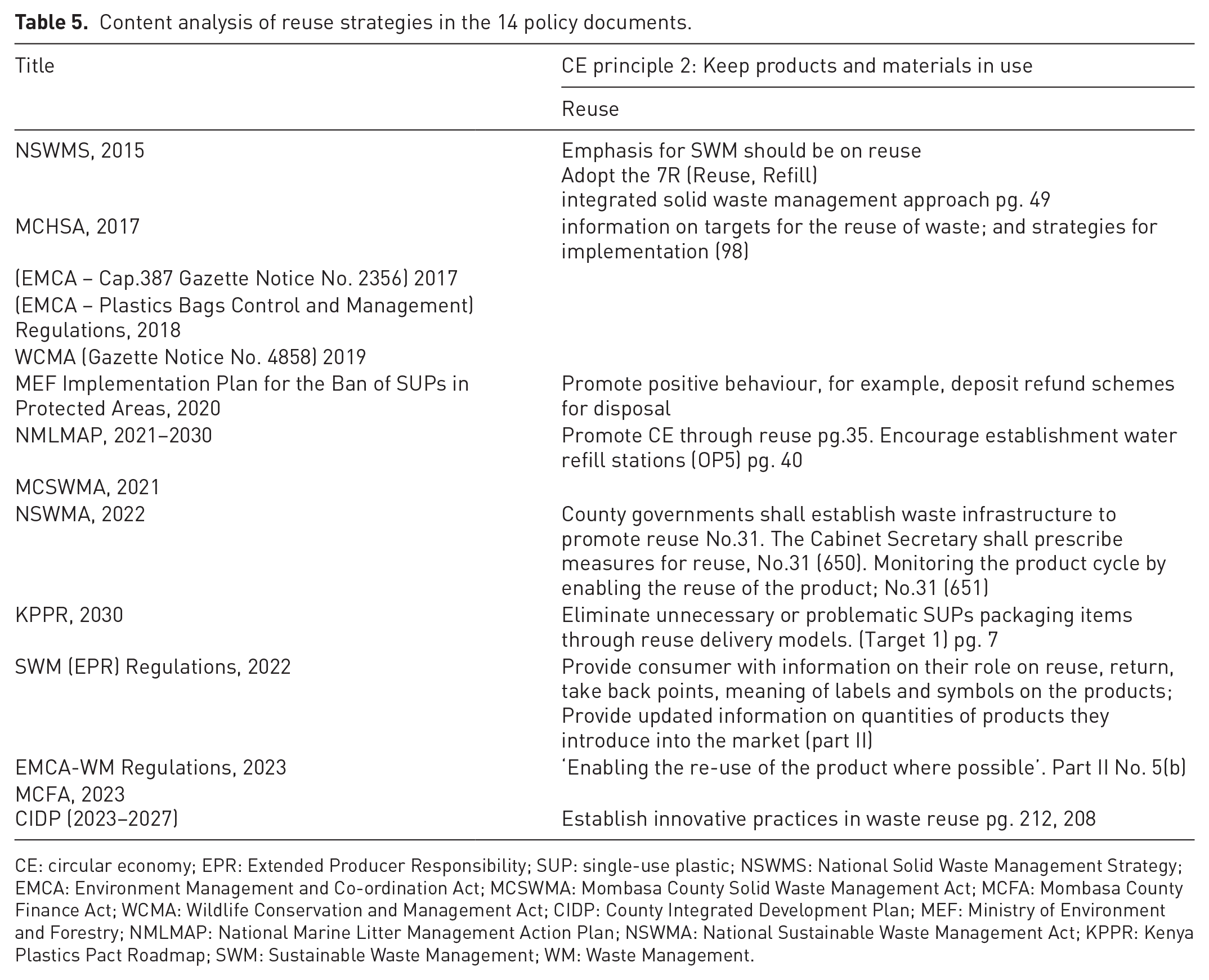
Reuse strategy encourages the resale or reuse of products and extending their lifespan (Sihvonen and Ritola, 2015). In this context, it involves policies promoting the use of refillable or reusable plastic containers, encouraging businesses and consumers to adopt refill and reuse systems, that is, returnable packaging systems among others (Table 5).
Content analysis of reuse strategies in the 14 policy documents.
CE: circular economy; EPR: Extended Producer Responsibility; SUP: single-use plastic; NSWMS: National Solid Waste Management Strategy; EMCA: Environment Management and Co-ordination Act; MCSWMA: Mombasa County Solid Waste Management Act; MCFA: Mombasa County Finance Act; WCMA: Wildlife Conservation and Management Act; CIDP: County Integrated Development Plan; MEF: Ministry of Environment and Forestry; NMLMAP: National Marine Litter Management Action Plan; NSWMA: National Sustainable Waste Management Act; KPPR: Kenya Plastics Pact Roadmap; SWM: Sustainable Waste Management; WM: Waste Management.
The NSWMS promotes reuse through the 7R principles (Reuse, Refill), aiming to reduce marine pollution by extending the lifespan of plastics. While this approach provides a broad framework, it lacks specific action-oriented policies. However, it is complemented by the MCEHSA, which supports reuse by setting county-level targets and fostering a culture of reuse. This is further reinforced by the MEF plan’s ban on SUPs and the introduction of deposit refund schemes. Additionally, the NMLMAP’s promotion of water refill stations aligns with CE principles, supporting a reduction in SUPs (Ellen MacArthur Foundation, 2017).
The NSWMA mandates waste segregation and reuse infrastructure, promoting a culture of circularity, whereas the SWM-EPR and EMCA-WM Regulations incentivize producers to adopt reuse practices. This is crucial as it encourages producers to design products for reuse and supports the broader transition to a CE. The KPPR’s goal to eliminate SUPs by 2030 supports reuse by promoting innovative reuse models. Similarly, the third CIDP’s focus on innovative reuse practices complements these policies by fostering circular measures in reducing plastic pollution.
Repair
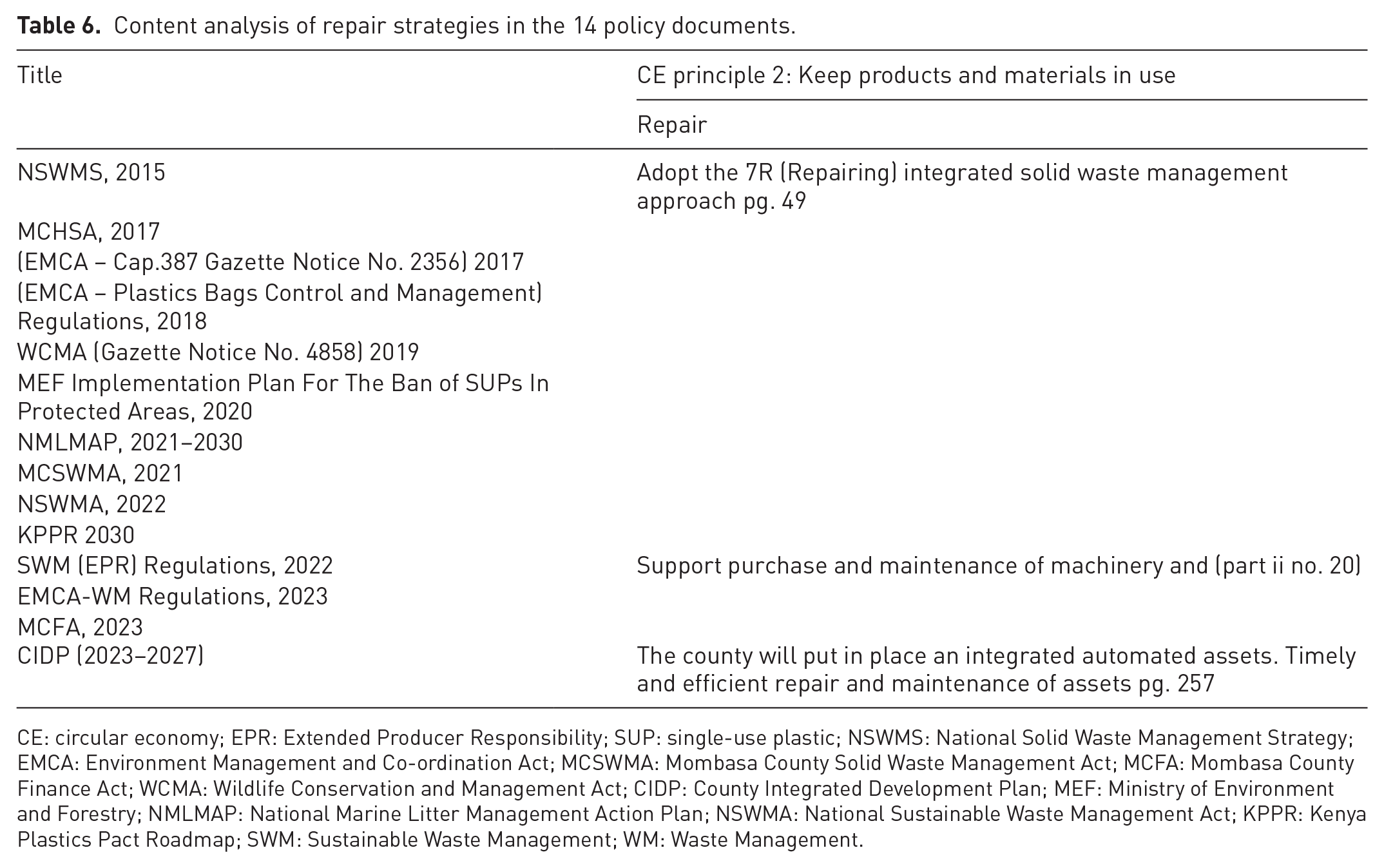
Repair emphasizes the importance of product maintenance to prolong usability (Guo et al., 2023). This involves legislation supporting the repair of plastic products rather than their disposal, repair-friendly product designs, encouraging manufacturers to create products that are easier to repair (Table 6).
Content analysis of repair strategies in the 14 policy documents.
CE: circular economy; EPR: Extended Producer Responsibility; SUP: single-use plastic; NSWMS: National Solid Waste Management Strategy; EMCA: Environment Management and Co-ordination Act; MCSWMA: Mombasa County Solid Waste Management Act; MCFA: Mombasa County Finance Act; WCMA: Wildlife Conservation and Management Act; CIDP: County Integrated Development Plan; MEF: Ministry of Environment and Forestry; NMLMAP: National Marine Litter Management Action Plan; NSWMA: National Sustainable Waste Management Act; KPPR: Kenya Plastics Pact Roadmap; SWM: Sustainable Waste Management; WM: Waste Management.
The NSWMS adoption of the 7R (Repair) strategy and its integrated solid waste management approach demonstrates a commitment to sustainable waste management. By emphasizing repair, the strategy aims to reduce waste generation by promoting the repair and reuse of products instead of disposal. This aligns with the Repair strategy’s goal of extending product lifespans, setting the foundation for other policies to adopt similar repair-friendly measures. This approach parallels the findings of Geyer et al. (2017), who emphasized the importance of repair and reuse as critical components of a CE to reduce waste and environmental impacts.
The SWM-EPR Regulations further support repair by allowing Producer Responsibility Organizations to use EPR fees for the purchase and maintenance of machinery to enhance waste collection, processing and disposal. This provision directly facilitates the repair and maintenance of equipment in the waste management chain. This aligns with the recommendations of Williams and Rangel-Buitrago (2022), who highlighted that EPR schemes play a crucial role in supporting waste management infrastructure and promoting sustainable practices, including repair and reuse. Similarly, the CIDP’s integrated automated asset management system enhances repair strategies by improving asset tracking and maintenance, ensuring efficient repairs before issues escalate into costly damages. This approach mirrors the strategies discussed by Lebreton et al. (2017), who argued that efficient management of waste and assets is essential for reducing environmental damage and promoting sustainable resource use.
While the NSWMS lays the groundwork for repair, the CIDP’s proactive asset management system strengthens this by ensuring better asset tracking and minimizing damage or wastage. In coastal regions like Mombasa, where marine ecosystems are vulnerable to plastic pollution, these repair-focused policies help extend the lifespan of plastic products, thereby reducing the flow of waste into the ocean and supporting the broader goal of minimizing marine plastic pollution. This approach aligns with the findings of Jambeck et al. (2015), who emphasized that improving waste management practices and promoting the longevity of materials is essential for addressing the global marine plastic crisis.
Refurbish and remanufacture
Refurbish strategy highlights the significance of reprocessing materials, refurbishing goods to prevent them from becoming waste (Rizos et al., 2017). It involves developing guidelines for product designs that emphasize refurbishment-friendly features, such as easily replaceable parts and durable materials. On the other hand, Remanufacture involves the process of rebuilding products to their original specifications, promoting resource conservation (Guo et al., 2023; Kirchherr et al., 2017). It involves developing guidelines for product design for disassembling the product, replacing worn-out components to meet like-new standards. While both Refurbish and Remanufacture are equally very essential phases of the circularity model, none of the policies analysed seemed to have integrated these strategies.
Repurpose
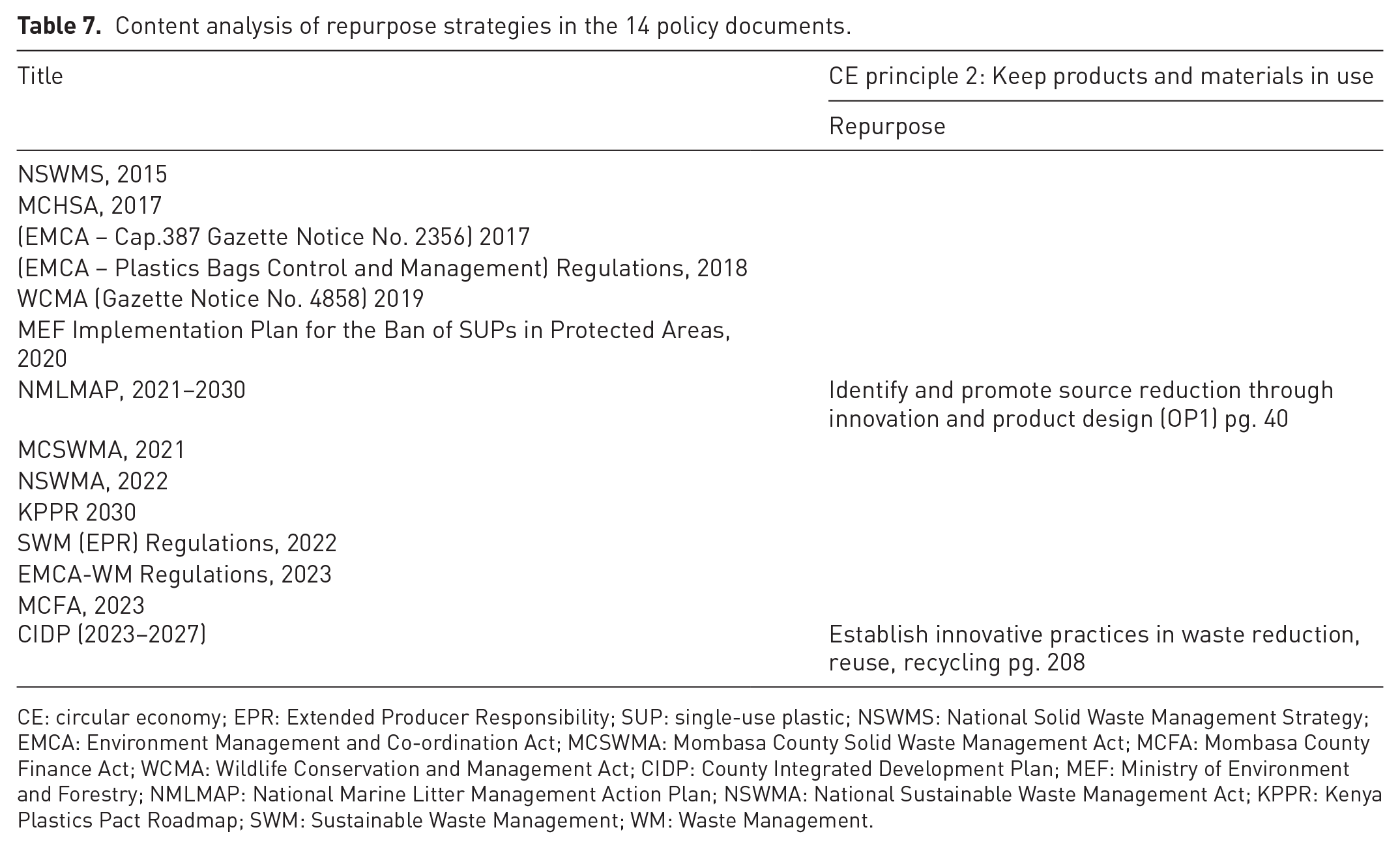
Repurpose focuses on finding new uses for materials or products that would otherwise be discarded (Kirchherr et al., 2017). It involves developing guidelines and regulations facilitating the repurposing of plastic materials for creative, innovative uses and upcycling (Table 7).
Content analysis of repurpose strategies in the 14 policy documents.
CE: circular economy; EPR: Extended Producer Responsibility; SUP: single-use plastic; NSWMS: National Solid Waste Management Strategy; EMCA: Environment Management and Co-ordination Act; MCSWMA: Mombasa County Solid Waste Management Act; MCFA: Mombasa County Finance Act; WCMA: Wildlife Conservation and Management Act; CIDP: County Integrated Development Plan; MEF: Ministry of Environment and Forestry; NMLMAP: National Marine Litter Management Action Plan; NSWMA: National Sustainable Waste Management Act; KPPR: Kenya Plastics Pact Roadmap; SWM: Sustainable Waste Management; WM: Waste Management.
The CIDP’s focus on innovative practices for waste reduction, reuse and recycling closely aligns with the Repurpose strategy. By promoting the repurposing of waste materials into valuable resources, the policy encourages community-driven creative solutions to divert materials from landfills, reducing environmental impacts. This parallels the findings of Rizos et al. (2017), who argued that innovative waste repurposing strategies can significantly reduce environmental harm by transforming waste into valuable products. Similarly, the NMLMAP’s promotion of innovation in product design and source reduction supports the Repurpose strategy by aiming to minimize marine litter through better material design, a perspective echoed by Jambeck et al. (2015), who highlighted the importance of designing products to prevent marine pollution at the source.
CE principle 3: Regenerate nature
This principle involves restoring and regenerating ecosystems and natural resources (Ellen MacArthur Foundation, 2014, 2017; Ellen MacArthur Foundation and World Economic Forum, 2016). This includes actions that promote sustainable practices and measures to replenish the resources that are used in the production of goods and can be achieved through approaches such as recycling and recovering plastic waste back into the system (Cramer, 2017; Kirchherr et al., 2017; Potting et al., 2017). Table 8 shows the policy documents analysed and how they integrated the ‘Regenerate nature’ principle through various policy actions.
Content analysis of reduce strategies in the 14 policy documents.
CE: circular economy; EPR: Extended Producer Responsibility; SUP: single-use plastic; NSWMS: National Solid Waste Management Strategy; MCEHSA: Mombasa County Environmental Health and Sanitation Act; EMCA: Environment Management and Co-ordination Act; MCSWMA: Mombasa County Solid Waste Management Act; MCFA: Mombasa County Finance Act; WCMA: Wildlife Conservation and Management Act; CIDP: County Integrated Development Plan; MEF: Ministry of Environment and Forestry; NMLMAP: National Marine Litter Management Action Plan; NSWMA: National Sustainable Waste Management Act; KPPR: Kenya Plastics Pact Roadmap; SWM: Sustainable Waste Management; WM: Waste Management.
Recycle
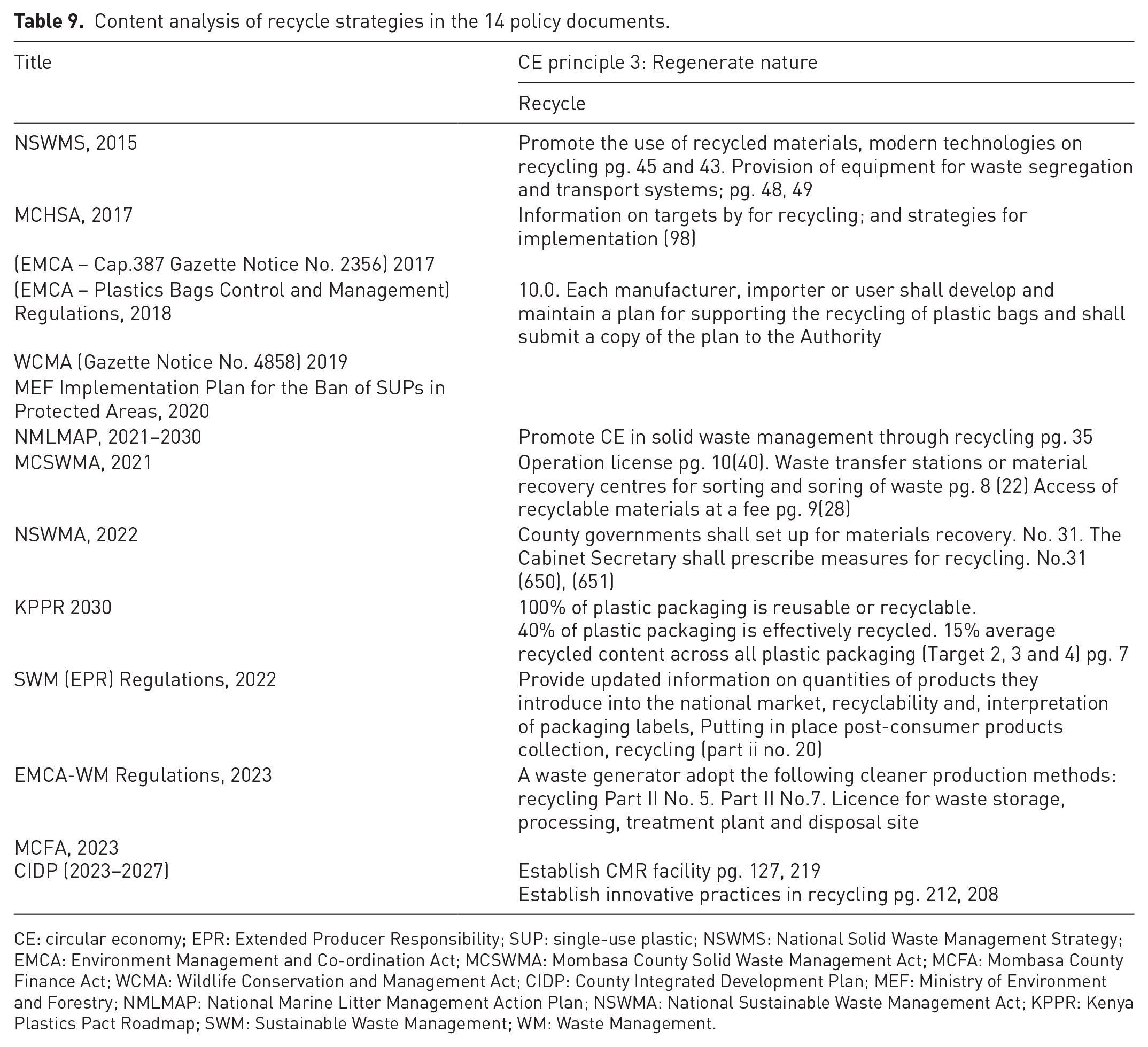
Recycling involves processing waste materials into new products (Ellen MacArthur Foundation, 2014, 2017; Ellen MacArthur Foundation and World Economic Forum, 2016), closing material loops and hence reducing reliance on virgin resources. This involves policies that promote or regulate plastic recycling infrastructure, including collection, sorting and processing (Table 9).
Content analysis of recycle strategies in the 14 policy documents.
CE: circular economy; EPR: Extended Producer Responsibility; SUP: single-use plastic; NSWMS: National Solid Waste Management Strategy; EMCA: Environment Management and Co-ordination Act; MCSWMA: Mombasa County Solid Waste Management Act; MCFA: Mombasa County Finance Act; WCMA: Wildlife Conservation and Management Act; CIDP: County Integrated Development Plan; MEF: Ministry of Environment and Forestry; NMLMAP: National Marine Litter Management Action Plan; NSWMA: National Sustainable Waste Management Act; KPPR: Kenya Plastics Pact Roadmap; SWM: Sustainable Waste Management; WM: Waste Management.
The NSWMS aligns with the Recycle strategy by promoting recycled materials, modern technologies and waste segregation. These provisions are crucial in reducing marine plastic pollution, as improper recycling leads to plastics entering oceans (Geyer et al, 2017; Jambeck et al., 2015). This parallels Jambeck et al. (2015), who argued that without effective recycling infrastructure, plastic waste escapes systems and pollutes oceans. The MCEHSA supports this by setting county-level recycling targets, reducing waste entering landfills and marine environments. While both policies emphasize recycling, they differ in jurisdiction but share the goal of sustainable practices.
The EMCA (Plastic Bags Control and Management) Regulations, requiring recycling plans for plastic bags, align with the Recycle strategy. This reflects Watkins et al. (2019), who argued that focused policies on specific plastic products enhance recycling efforts. The NMLMAP advocates CE principles, encouraging waste diversion from landfills, in line with Kirchherr et al. (2017), who argued that CE initiatives reduce waste and conserve resources.
MCSWMA’s focus on waste transfer stations, material recovery centres and accessible recyclable materials strengthens the Recycle strategy by improving recycling infrastructure. This proactive approach is supported by Guo et al. (2023), who argued that access to proper recycling facilities boosts recycling participation. Similarly, the NSWMA’s waste segregation mandate ensures effective sorting and reduces marine plastic pollution, echoing Rizos et al. (2017), who stress the importance of waste management infrastructure.
The KPPR, with targets for 100% recyclable plastic packaging, incentivizes sustainable packaging. The 40% recycling target and 15% recycled content requirement reduce plastic waste, supporting Sihvonen and Ritola (2015), who argued that such policies significantly reduce plastic waste. The SWM-EPR regulations promote transparency and efficient recycling, aligning with McCarthy and Perrault (2020), who highlighted the role of product lifecycle reporting in waste management. These policies collectively emphasize recycling and infrastructure support, reinforcing efforts to reduce marine plastic pollution.
Recover
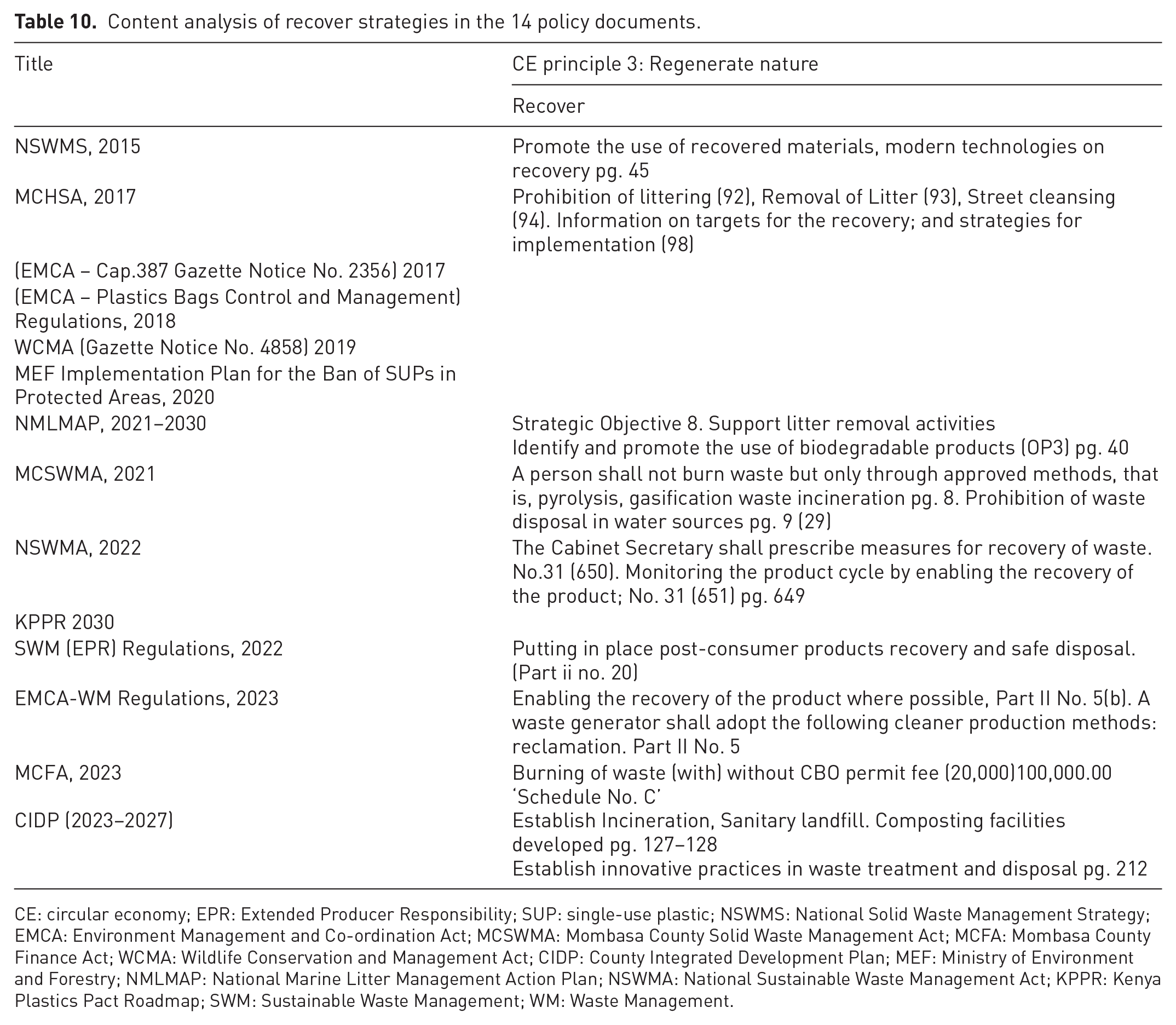
Recovery is the process of extracting resources from waste materials including energy (Kirchherr et al., 2017). In essence, it integrates both technological and biological cycles of the CE and includes policies supporting the extraction of energy from non-recyclable plastics through waste-to-energy technologies and also incentives and disincentives for safe disposal strategies or those that facilitate regeneration of natural systems (Table 10).
Content analysis of recover strategies in the 14 policy documents.
CE: circular economy; EPR: Extended Producer Responsibility; SUP: single-use plastic; NSWMS: National Solid Waste Management Strategy; EMCA: Environment Management and Co-ordination Act; MCSWMA: Mombasa County Solid Waste Management Act; MCFA: Mombasa County Finance Act; WCMA: Wildlife Conservation and Management Act; CIDP: County Integrated Development Plan; MEF: Ministry of Environment and Forestry; NMLMAP: National Marine Litter Management Action Plan; NSWMA: National Sustainable Waste Management Act; KPPR: Kenya Plastics Pact Roadmap; SWM: Sustainable Waste Management; WM: Waste Management.
The NSWMS aligns with the ‘Recover’ strategy of the CE by promoting the use of recovered materials, modern recovery technologies and energy recovery plants. This broad approach emphasizes not only waste disposal but also the recovery and reuse of materials. Similarly, the MCEHSA supports recovery by focusing on litter prevention, removal and street cleansing, thereby enabling the responsible management of waste. This approach reflects findings by Rizos et al. (2017), who argued that effective litter management and recovery practices are key to achieving circularity in waste systems. Additionally, the NMLMAP supports the ‘Recover’ strategy by promoting biodegradable products and litter removal activities, directly contributing to the recovery of materials from the environment. This aligns with Jambeck et al. (2015), who emphasized the role of biodegradable alternatives in reducing plastic waste in marine ecosystems. The MCSWMA also reflects the ‘Recover’ strategy by prohibiting harmful waste disposal practices, such as burning, and promoting methods like pyrolysis and waste incineration for recovery. This proactive stance mirrors Guo et al. (2023), who advocated for controlled waste treatment to facilitate resource recovery. The NSWMA strengthens recovery by empowering the Cabinet Secretary to mandate waste recovery measures and monitor product cycles, contributing to national-level resource efficiency. This aligns with the broader CE goal of minimizing waste and maximizing resource reuse, as argued by Sihvonen and Ritola (2015). The SWM-EPR Regulations further support this by holding manufacturers accountable for post-consumer disposal, creating economic opportunities for waste recovery. This is consistent with Kirchherr et al. (2017), who highlighted the role of EPR in fostering sustainable resource management. Finally, the MCFA’s fee responsible recovery, reinforcing the broader strategy of promoting sustainable waste management (Rizos et al., 2017). The third CIDP’s focus on sanitary landfills and composting facilities further advances recovery, offering infrastructure for reclaiming organic matter and reducing disposable waste, directly contributing to the reduction of marine plastic pollution. This comprehensive approach underscores the effectiveness of integrated recovery strategies in mitigating marine plastic pollution, as echoed by Williams and Simmons (2022), who highlighted the positive impact of coordinated waste management efforts on reducing marine litter (Table 11).
Summary of Mombasa county marine plastics policy alignment with 10Rs of the CE.
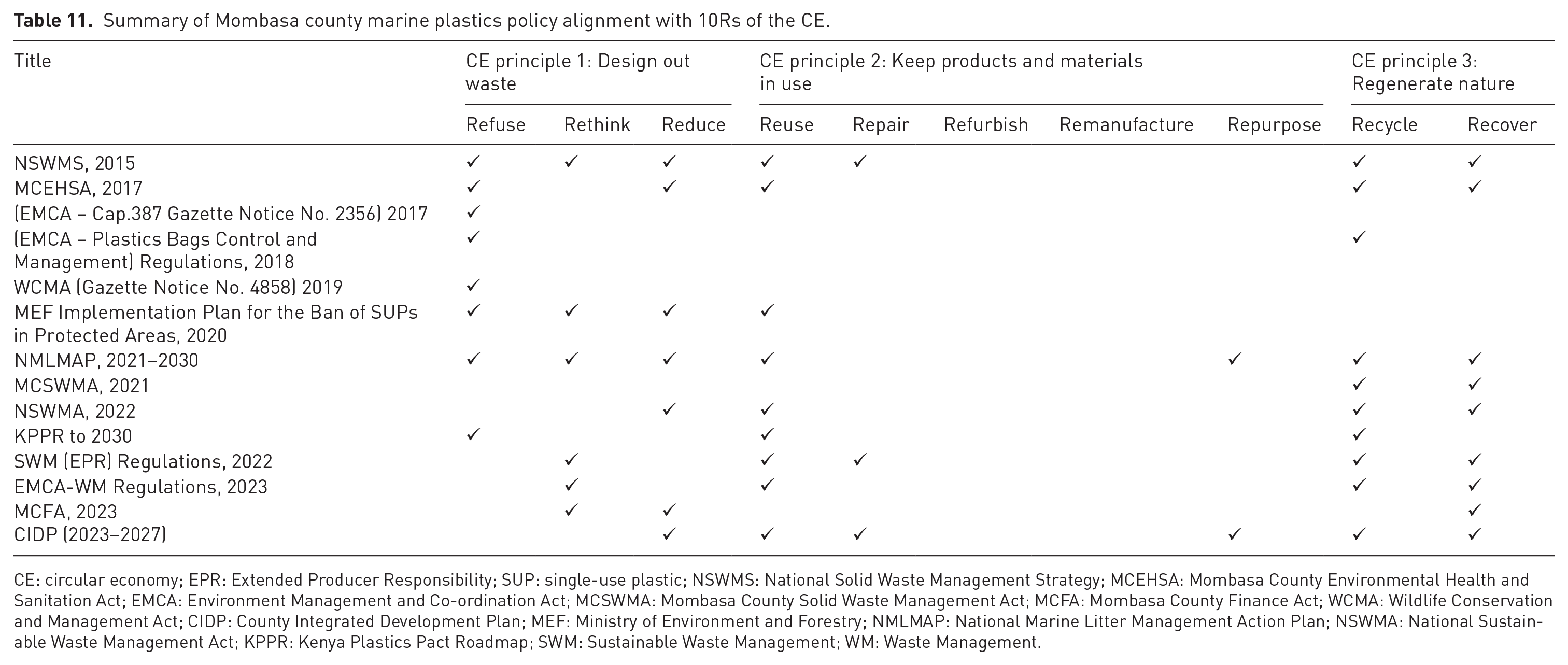
CE: circular economy; EPR: Extended Producer Responsibility; SUP: single-use plastic; NSWMS: National Solid Waste Management Strategy; MCEHSA: Mombasa County Environmental Health and Sanitation Act; EMCA: Environment Management and Co-ordination Act; MCSWMA: Mombasa County Solid Waste Management Act; MCFA: Mombasa County Finance Act; WCMA: Wildlife Conservation and Management Act; CIDP: County Integrated Development Plan; MEF: Ministry of Environment and Forestry; NMLMAP: National Marine Litter Management Action Plan; NSWMA: National Sustainable Waste Management Act; KPPR: Kenya Plastics Pact Roadmap; SWM: Sustainable Waste Management; WM: Waste Management.
Conclusion
In conclusion, this article analysed the alignment of Mombasa County’s policy frameworks with the CE principles. While individual policies reflect certain aspects of E integration, such as waste reduction strategies and resource recovery, the overall alignment remains fragmented and uncoordinated. The policies address elements of CE like refuse, rethink and reduce strategies, alongside recycling and resource recovery initiatives. However, these actions are vague and lack concrete, actionable measures. This fragmented approach across policies undermines a cohesive transition towards a fully CE. The region could highly benefit from the development of an integrated CE plan that incorporates all the three principles of the CE to address the fragmentation of CE principles among policies.
Recommendations for future studies
Future studies may undertake a comparative analysis, drawing upon experiences from other counties within Kenya or countries that have demonstrated substantial advancements in transitioning towards a CE. Furthermore, there is a need to delve into a comprehensive evaluation of the existing policy frameworks within Mombasa County concerning the management of marine plastic, with a specific emphasis on assessing their effectiveness and identifying obstacles to the integration of CE principles. This combined approach can provide valuable insights into the effectiveness, challenges and opportunities of CE strategies, guiding policy improvements in Mombasa County, Kenya and beyond.
Footnotes
Declaration of conflicting interests
The authors declared no potential conflicts of interest with respect to the research, authorship, and/or publication of this article.
Funding
The authors disclosed receipt of the following financial support for the research, authorship, and/or publication of this article: This publication is part of an M.Phil. Thesis for the programme: Blue Economy, Governance and Social Resilience, under the World Bank funded Africa Centre of Excellence in Coastal Resilience (ACECoR), University of Cape Coast, with the support of the Association of African Universities and the Government of Ghana. The authors are most grateful for the support.
