



Abstract
Sustainable and circular production models, such as the circular economy and circular bioeconomy, have become key mechanisms to leave behind the traditional linear model of food production. Under this approach and considering the waste biomass potential available in Spain and the Czech Republic, the main objective of this study is to analyse the most relevant aspects of the generation, use and regulation of agricultural waste biomass (AWB) in both countries. For this purpose, a scientometric analysis and systematic review of published research in the Scopus database were carried out. A complementary analysis of AWB management policies and regulations was also part of the methodology. The results show that Spain has published almost twice as much research as the Czech Republic. Furthermore, 91% of the retrieved research prioritizes the characterization and estimation of the potential of more than 15 AWB types. Among the main ones are olive residues, horticultural residues and wheat straw, which are used for producing organic amendments, bioenergy and biofuels. The results confirm that the reduction and valorization of AWB is an issue that has become more important in the last 13 years, mainly due to the policies and strategies for circular economy and circular bioeconomy. With this in mind, this study provides relevant information for governments on the aspects that need to be improved to advance in the valorization of AWB. This study also provides guidance to farmers on the reduction and/or recovery alternatives that they can implement to move towards sustainable and circular agriculture.
Keywords
Introduction
The 1972 United Nations Conference on the Human Environment marked the beginning of significant events related to global environmental management. Since then, the protection and conservation of natural resources have undoubtedly become a top priority (Duque-Acevedo et al., 2021). The conference report included recommendations that were approved for action at the international level. In the area of ‘Management of natural resources and their relationship with the environment’, the recommendations included one related to the control and utilization of agricultural wastes, mainly crop residues and animal wastes (United Nations, 1973).
In 2012, during the United Nations Conference on Sustainable Development (Rio + 20), emphasis was placed on the need to continue working towards achieving the Millennium Development Goals (MDGs) (2000) and moving towards more sustainable agriculture. The political report of the conference, entitled ‘The future we want’, highlighted the importance of increasing public investment to promote the adoption of sustainable agricultural practices. It also incorporated key aspects to improve waste management, including the adoption of a life cycle approach and the management of waste as a resource to increase its recovery (United Nations, 2012). Multiple research studies emphasize the importance of life cycle assessment as a tool for critically assessing the environmental impacts of agriculture and as a strategy for choosing the suitable sustainable production chain (Avadí et al., 2016; Pundlik et al., 2021; Vlachokostas et al., 2021).
In 2015, the United Nations adopted the most important and ambitious global framework for sustainability, the Agenda 2030, containing 17 Sustainable Development Goals (SDGs). SDG 2 ‘Zero hunger’ promotes sustainable agriculture and SDG 12 ‘Responsible consumption and production’ prioritizes sustainable consumption and production under the guidelines of the circular economy. The aim is to reduce waste, extend the life of products and materials, regenerate natural systems and reduce environmental pollution (United Nations, 2022). The European Union (EU) has evolved to integrate the environmental dimension into sectoral policies by reforming or issuing key policy instruments focused on sustainable and circular production models (SCPMs), such as the circular economy and circular bioeconomy (European Environmental Agency, 2018). In the context of these models, the main challenge for agriculture is to ensure the efficient use of natural resources and the prevention and reuse of biomass in the value chain to reduce negative environmental impacts (Kardung et al., 2021; Li et al., 2021).
Agricultural waste biomass (AWB) is one of the primary inputs of the circular economy and circular bioeconomy. It is a secondary raw material with a high potential that can be converted into bioenergy, biofuels and biofertilizers, among other bio-based products, through biorefinery processes (Gontard et al., 2018; Rodias et al., 2020). The action plan of the bioeconomy strategy ‘Innovating for Sustainable Growth’ issued by the EU in 2012 prioritized investment in research and innovation over specific actions to improve knowledge on the availability and potential of AWB for manufacturing high-value-added products (European Commission, 2012). The new bioeconomy strategy ‘strengthening the connection between economy, society and the environment’ (2018) also prioritizes Research and Innovation for the deployment of innovative solutions for the production of new and sustainable bio-based products (European Commission, 2018)
Recent research shows that an enormous amount of AWB is produced annually worldwide (~4 billion tonnes/year), representing a favourable outlook in terms of utilization and valorization (Patzschke et al., 2020). Hamelin et al. (2019) quantified the waste biomass potential in the EU-27 and found that 13 European countries have the highest amount of waste available (above 20 PJ y−1). Among these countries are the Czech Republic and Spain. Because of the above, the main objectives of this study are as follows: (1) To analyse the evolution and main characteristics of the scientific production of AWB in Spain and the Czech Republic. (2) To evaluate the main types of AWB studied and the valorization alternatives proposed for Spain and the Czech Republic. (3) To identify the main environmental measures and/or actions established to reduce and recover AWB in Spain and the Czech Republic.
The results of this research contribute to raising the importance of SCPMs in agriculture. Also, on the main AWB management practices that can be adopted by farmers. The findings could also be an indicator of the impact of policies on waste management, circular economy and circular bioeconomy.
Materials and methods
Description of the main stages of the process
Scientometric analysis and systematic analysis were the two main methods employed to analyse the scientific production on AWB in Spain and the Czech Republic. A total of 206 research papers were retrieved from the Scopus database, one of the central repositories of peer-reviewed scientific literature (Elsevier, 2020). This database is suitable for the evaluation process because of its broad content coverage in all research fields (Pranckutė, 2021; Zhao et al., 2022). Scopus’ intelligent tools made it possible to obtain a broad and complete summary of the research for both countries. In addition, lists were created, and metadata was processed in Excel files from which the studies obtained for each country were reviewed one by one, 164 for Spain and 42 for the Czech Republic. The first stage consisted of revising the titles and abstracts of the retrieved studies, followed by selecting those specifically related to the topic under study. The final sample included 81 studies for Spain and 9 for the Czech Republic. Then, from the CSV files with the metadata of the last samples obtained from Scopus, a scientometric analysis was carried out, one of the most widely used methods to evaluate the structure and evolution of scientific production (de Sousa, 2021; Murillo et al., 2021; Ulloa-Murillo et al., 2022). Using VOSviewer, version 1.6.16, specialized software for scientific mapping (Wang et al., 2021; Wong, 2018), keyword co-occurrence network with an overlay visualization was constructed. The third stage of the process consisted of a systematic review of the study as a complementary analysis. This method is one of the most widely used in different areas of knowledge to examine the scientific literature’s quantitative and qualitative aspects and obtain specific information on a particular subject (Linnenluecke et al., 2020; Ricciardi et al., 2020).
For this reason, in the databases prepared for the scientometric analysis, specific information was included for each study on five previously defined variables of interest (Figure 1). The abstract, methodology and conclusions of these publications were the main fields considered for the systematic review. In the case of the Czech Republic, the analysis was complemented by reports and project reports obtained from the websites of official bodies. The final phase of the study consisted of a review and analysis of the main regulatory and management tools on the use, recovery and exploitation of AWB. Figure 1 shows the detailed list of the procedures that were part of the stages described above.
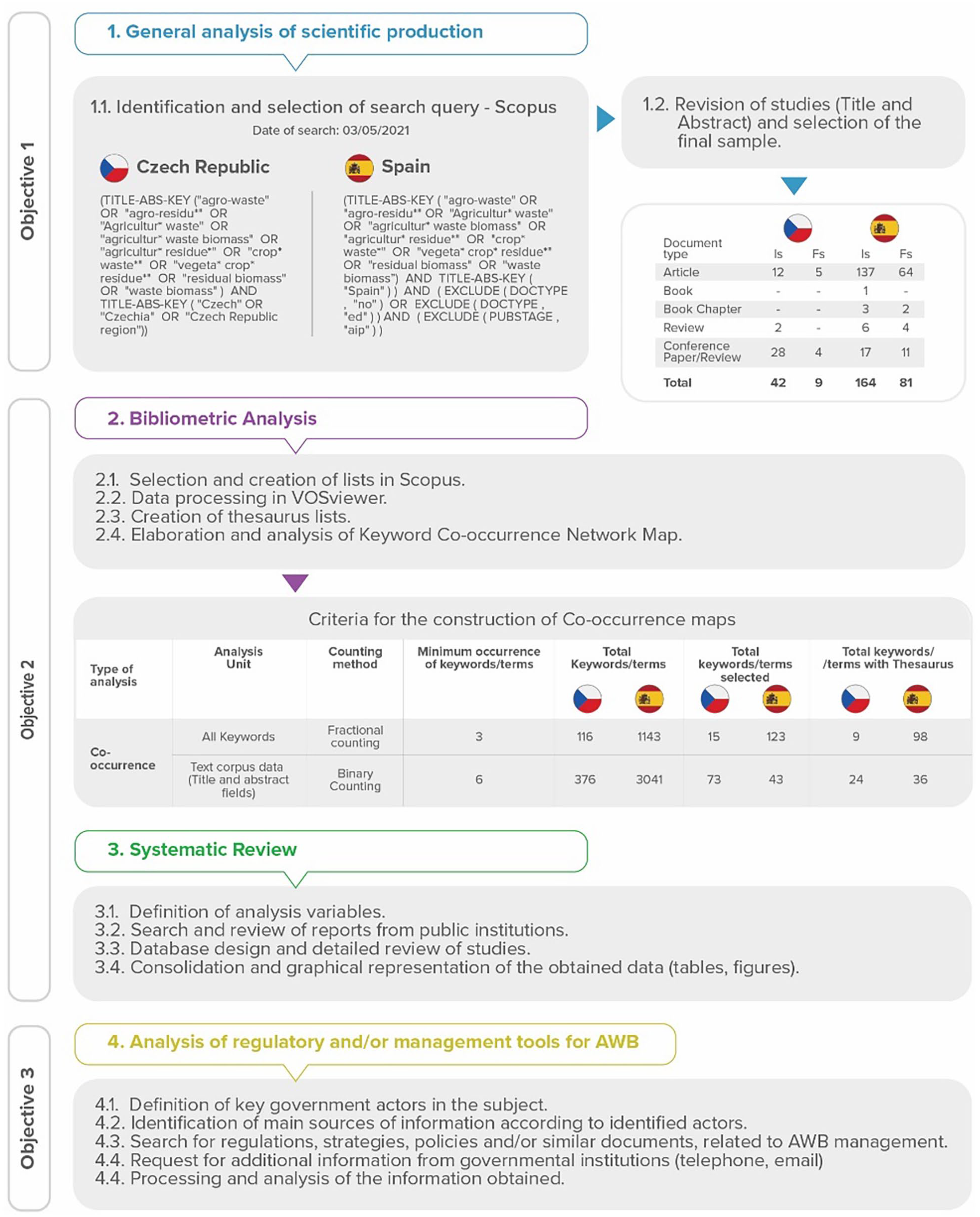
Main stages of the study preparation process.
Results and discussion
Characterization and evolution of scientific production
Characterization of studies – Spain
From the studies analysed, 91% focus on the characterization and estimation of the potential of one or several types of specific AWB for obtaining different kinds of products. Other studies (6%) make a more general analysis of AWB, such as estimates of the potential supply or quantification of AWB produced by different crops (Parra et al., 2001). Some of these studies use other assessment methods, such as geolocalization (Cintas et al., 2018; de Wit and Faaij, 2010; Hamelin et al., 2019; Velázquez-Martí et al., 2013). They also include identifying and characterizing the AWB (Álvarez et al., 2015) and projections for the future of this type of waste (Hamelin et al., 2019). To a lesser extent, other research studies show the benefits of pre-treatment of AWB to improve its characteristics and enhance its utilization (Colomer-Mendoza et al., 2012; Gallego Fernández et al., 2019).
Characterization of studies – Czech Republic
From the retrieved studies where the main focus was the characterization and quantification of biomass potential, it is possible to observe the implementation of different techniques such as geographic information systems (GIS) for yield assessment of other residual biomass feedstock (Havlíčková et al., 2009). In addition, the biomass potential was modelled using innovative methods and algorithms, confirming that agricultural waste as a source of energy has good potential in the Czech Republic (Vávrová et al., 2014). Finally, biomass potential is determined using different models such as the biomass competitiveness model, which allows, among other aspects, to predict the economic competitiveness of the biomass utilization for bioenergy (Vávrová et al., 2018). Valorization of AWB plays an essential role in the proper setting of targets in waste biomass management and its prospective transformation into bio-based products, which, according to the retrieved information, are currently directed mainly to bioenergy and biogas production.
Evolution of scientific production – Spain
The first article, ‘Biogas technology developed and evaluated by ENADIMSA’, which focuses on using waste biomass as an energy source, was published in 1985 (Garcia et al., 1985). The latest study, ‘Role of organic amendment application on soil quality, functionality and greenhouse emission in a limestone quarry from semiarid ecosystem’, has as its primary objective the use of organic amendments for soil restoration, produced from different types of composts, among them vegetable compost from greenhouse crop residues (Soria et al., 2021).
The trend in publications in Figure 2 shows that until 2006 an average of 2 articles were published per year. From 2007 onwards, there is a slight increase in publications, which remains at an average of 5 per year until 2021. 2010 reported the highest number of publications (10%), followed by 2018 (9%). Thus, 77% of the studies were published in the last 13 years, a similar trend identified by previous studies (Duque-Acevedo et al., 2020b). As highlighted in this study, the increase in publications is an indicator of the vital role of policies on sustainable development, MDGs in 2000 and SDGs in 2015, especially those European strategies related to the circular bioeconomy (2012).
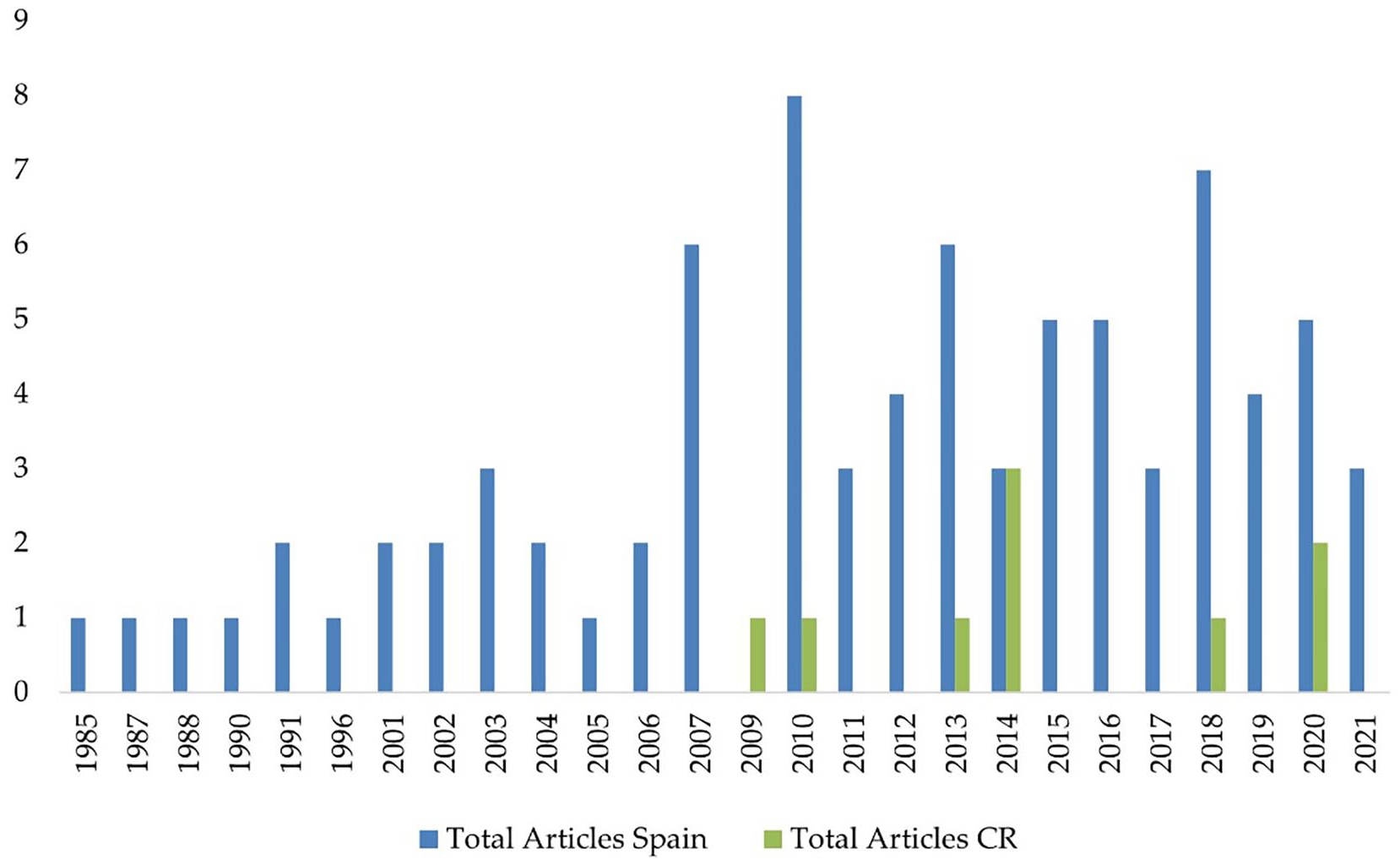
Evolution of scientific production on AWB in the Czech Republic and Spain.
The EU Framework Programme for Research and Innovation, Horizon 2020 (2014–2020) has been the main funding source for EU bioeconomy strategies (2012 and 2018). Specific actions related to research and innovation on AWB quantification and valorization have materialized through projects under the ‘Societal challenges’ action line of the Horizon 2020 programme (European Commission, 2018). This has favoured publications on this topic. For the period 2021–2024, the EU included the bioeconomy among the key strategic orientations for research and innovation (Horizon Europe) (European Commission, 2021a).
Evolution of scientific production – Czech Republic
According to Figure 2, it is possible to observe that the interest for this issue in the Czech Republic appeared in 2009, when the first publication (Scopus indexed) related to the interest subject appeared, entitled ‘Methodology of analysis of biomass potential using GIS’. This article aimed to assess the potential use of different biomass sources based on its assigned yields published in 2009 (Havlíčková et al., 2009).
In 2014, a growing interest is clear due to an increase in the number of published articles with an annual average of three publications. The article ‘Biomass potential — Theory and practice: Case example of the Czech Republic region’ is the last registered publication (2020) and it is focused on the determination of biomass potential for energy purposes, and it discussed the potential risks associated with the estimation of the biomass production (Knápek et al., 2020).
General analysis of keywords: Scientometric analysis
The terms used in the search equation were not included among the keywords selected to construct the co-occurrence map. Figures 3 and 4 represent the keyword network using an overlay visualization, which reflects the average citation of the descriptors selected by the authors and those indexed in the Scopus database. The stronger the relationship between two terms, the closer they are positioned near one another. The terms size and colour show the keywords average citation effect within the publications. Some concepts were unified in the list of keywords to obtain the final lists with the thesaurus loaded into the VOSViewer software. The main criteria for unification were as follows: similarity of meaning of the words, terms in the plural and singular form and those with references to scientific names, which were already registered under common names, as in the case of plants and tree species. The complementary analysis based on text corpus data included 60% of the most relevant terms in research titles and abstracts.
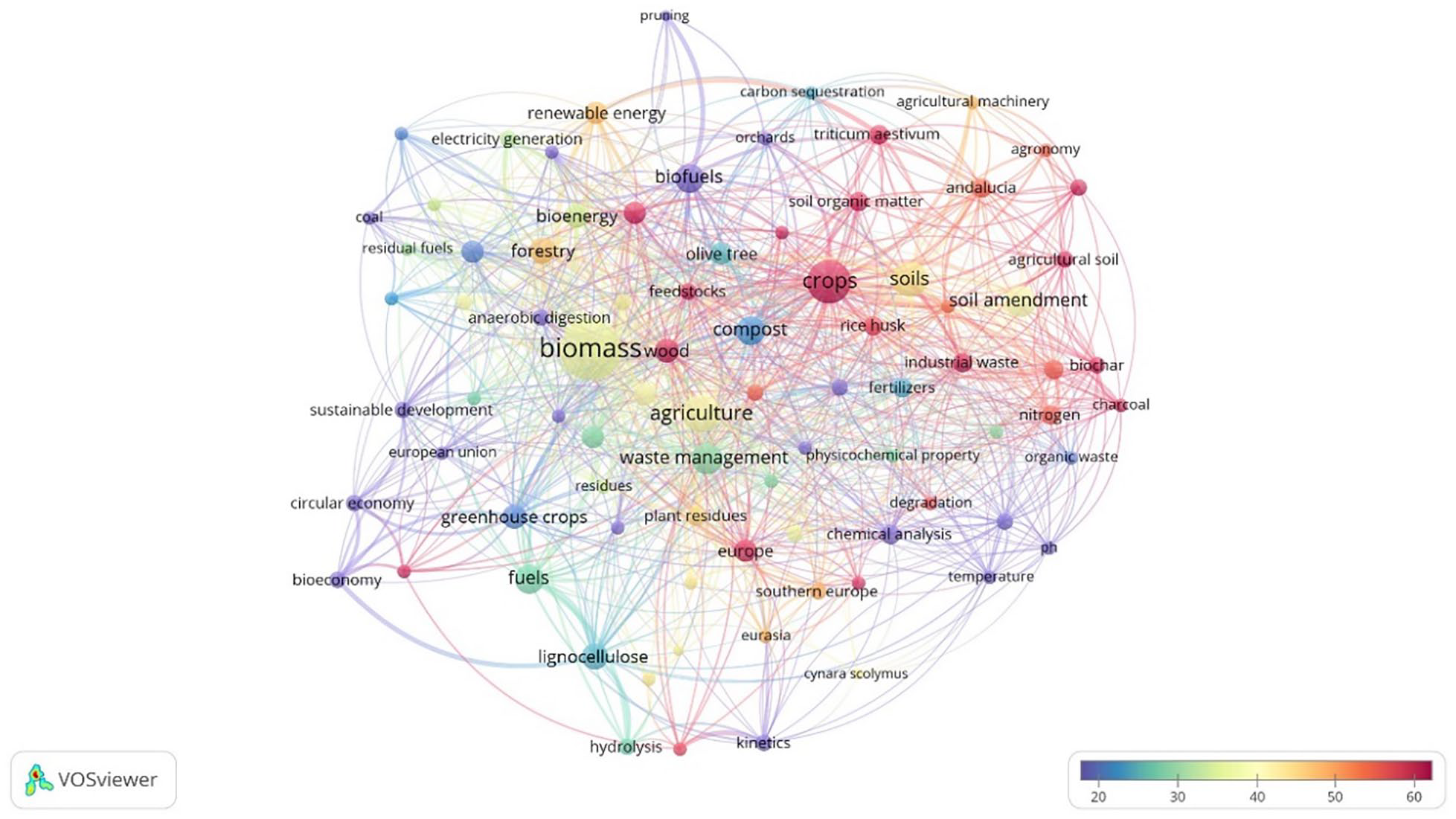
Keyword co-occurrence network map for Spain.
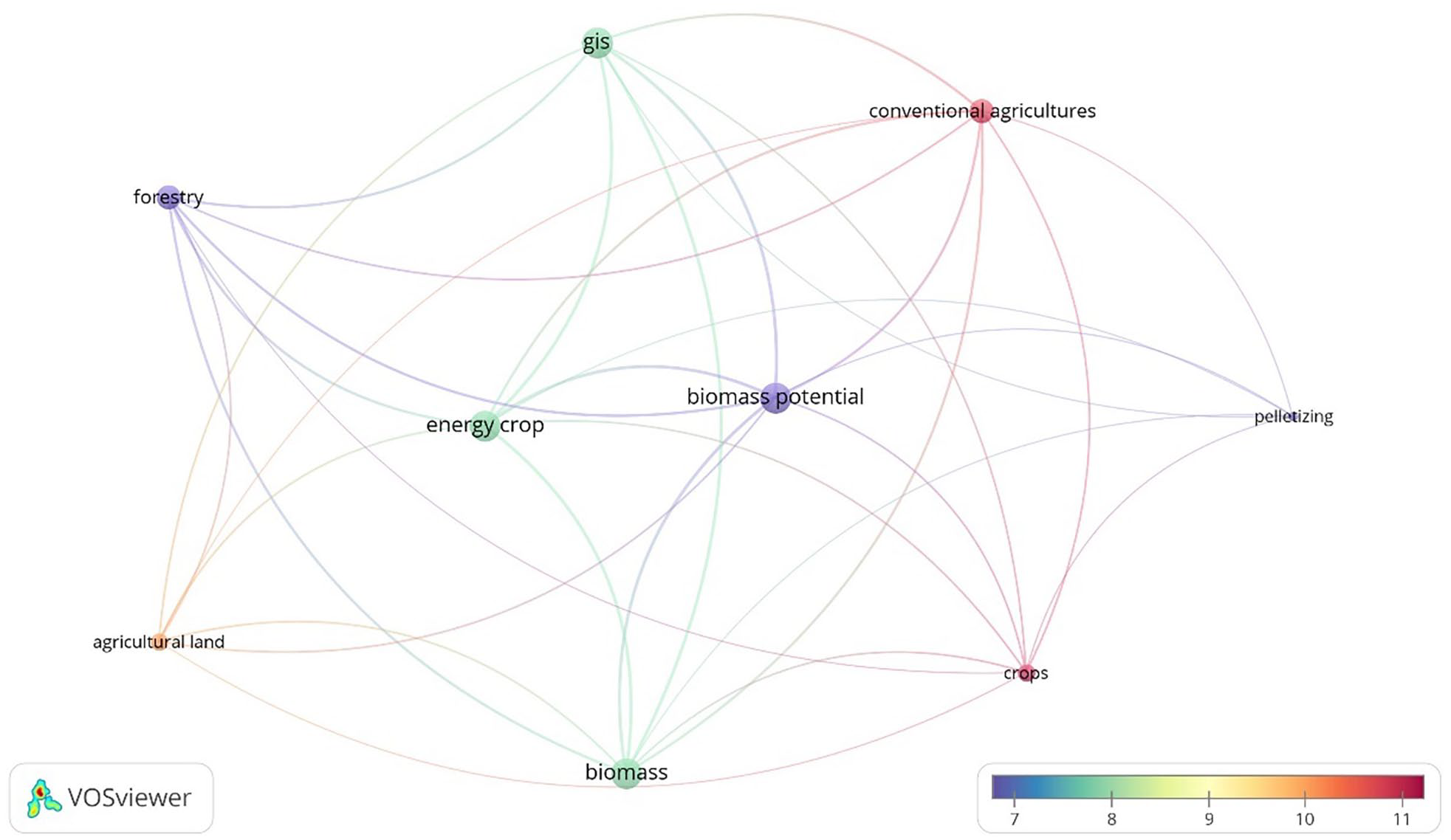
Keyword co-occurrence network map for the Czech Republic.
Keyword co-occurrence analysis for Spain
In all, 98 terms were included in the network, forming five large clusters (Figure 3). In the first cluster, the term biomass is the most relevant term in the whole network with an average of 38 citations. 38% of the publications prioritize this term to refer in a general way to the different types of agricultural biomass residues that are the subject of analysis in the research (Antolín et al., 1996; Soltero et al., 2018). The term crops reported an average of 62 citations, and was included in 25% of the studies, groups together residues from different types of crops studied for their potential to produce bio-based products. For example, waste from olive tree crops is one of the most studied, which explains why the term olive tree is relevant in the network. Another term associated with this is Andalusia. This region has the largest concentration of olive trees cultivation in Spain (García-Maraver et al., 2012), meaning that this is one of the largest generators of AWBs from olive oil production (García-Jaramillo et al., 2014).
Other cereal crops such as wheat and rice are prioritized in the analysis, given the abundance and potential of the residues they generate, especially wheat straw and rice husk, with an average of 56 citations. Greenhouse crops are another of the main types of waste prioritized in the research. The previously mentioned residues have a high fibre, cellulose, lignin and hemicellulose content, which is why the term lignocellulose appeared (Jiménez and González, 1991). Also, they are prioritized for the production of fuels or biofuels such as ethanol (Faraco and Hadar, 2011). These by-products are also used to produce soil amendment such as compost and biochar, among other fertilizers.
Similarly, this type of AWB is used to a lesser extent for bioenergy production. It is important to highlight other terms that appear on the network, such as sustainable development, circular economy, bioeconomy (with an average of 15, 20 and 16 citations, respectively), which are considered strategic pillars for improving research and innovation on the valorization and exploitation of biomass resources (Hamelin et al., 2019). The relevance of the policy initiatives on this issue that the EU has established makes this international body a benchmark for such research. This analysis follows a similar trend to the results of other more general investigations (Duque-Acevedo et al., 2020b).
Keyword co-occurrence analysis for the Czech Republic
The keyword co-occurrence network was constructed based on author and indexed keywords; it is formed by nine items, which were grouped into two clusters (Figure 4). The node with the highest frequency was biomass potential, which appeared in 88% of the publications with an average of seven citations; this term is associated with the broad possibility for biomass valorization; the term biomass, with an average of eight citations, is related to the different alternative agricultural residues used as feedstock among the studies. Cluster 2 comprises three nodes with similar frequencies, conventional agriculture, pelletizing and crop (with an average of 10, 7 and 16 citations, respectively); this term corresponds to different crops studied, such as cereals and rape (Brassica napus).
Systematic analysis variables
Main types of AWB – Spain
More than 15 types of AWB were studied in the research analysed (Table 1). 32% of these publications prioritize the analysis of pruning residues and olive pomace (olive pulp and pits) resulting from the olive oil extraction process in olive oil mills (Campos et al., 2020; García Maraver et al., 2010; Gómez et al., 2010). The production of this type of residue has increased considerably in recent decades, mainly in the countries of the Mediterranean basin, where olive oil production has traditionally been concentrated (Gómez et al., 2010). Spain produces nearly 50% of the total volume of olive oil, making it the world’s leading producer (Ministerio de Agricultura, Pesca y Alimentación, 2021a; Pulido-Fernández et al., 2020). Industrialization and the development of advanced technology for oil extraction have led to increased production of AWBs in this sector (Gómez et al., 2010). The first research that analyses alternative uses for pruning waste and/or olive pomace dates back to 1991 (Jiménez et al., 1991). The appropriate management of this type of AWB has been one of the producers’ priorities in this sector (Gómez et al., 2010).
Main types of AWB analysed for Spain.
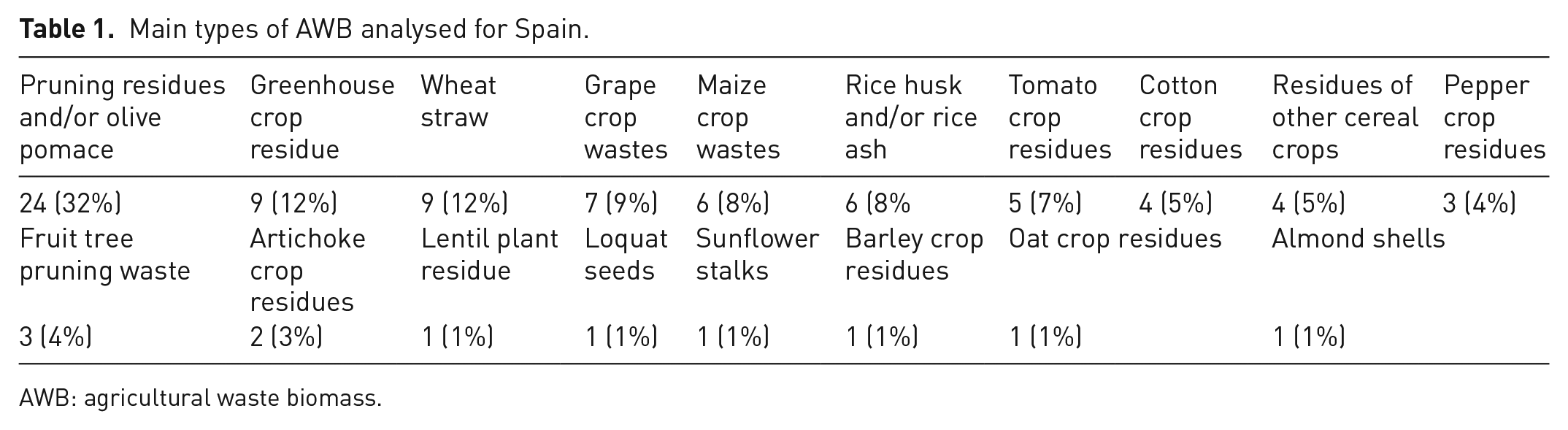
AWB: agricultural waste biomass.
Greenhouse crop residue is the second most studied type of AWB. Among the main crops producing this biomass are tomato, pepper, aubergine, cucumber, courgette, melon, green bean and watermelon. These crops are mainly grown in the Mediterranean basin. They have become more important in recent years, especially in Spain, where the largest area of greenhouses in the world is located (Valera et al., 2017). At the end of the cycles of these crops, a large amount of fruit and vegetable waste is produced, mainly plant remains and detritus. For example, in the province of Almeria, tomato and pepper crops generate more than 50% of the residual biomass (Duque-Acevedo et al., 2020a). This calls for proper management and improvements in its use, given its significant potential as a secondary raw material for new bio-products (Callejón-Ferre et al., 2011; Moreno et al., 2021; Pérez et al., 2003). The first study that analysed this type of waste was published in 2001 (Parra et al., 2001).
Wheat straw was prioritized as well as greenhouse crop residue in 12% of the studies analysed. Wheat and maize have historically been the cereals with the highest production worldwide and are also the main generators of AWB, which has been the subject of studies for more than 60 years. Approximately 6 million hectares of cereals are cultivated in Spain. In addition, durum and soft wheat are among the main types of cereals distributed over a large area of Spanish territory (Ministerio de Agricultura, Pesca y Alimentación, 2021b).
Wheat straw is abundant at the end of crop cycles, and its composition of mainly lignocellulosic materials makes it a valuable by-product for the energy industry (Jiménez et al., 1991; Sastre et al., 2015). Some studies have quantified the overall (theoretical) potential of AWB in Europe, highlighting wheat straw as one of the main streams with the highest potential (Hamelin et al., 2019). To a lesser extent, other types of AWB from cereal crops such as rice, maize and oats have been evaluated in the studies as secondary feedstock (Table 1). However, 20% of the articles discuss AWB generally, without specifying any one type of residue. Other studies analyse more than one type of residue. Research suggests that Spain has large areas that are moderately attractive for the high potential and low cost of AWB (de Wit and Faaij, 2010).
Main types of AWB – Czech Republic
From the studies carried out in the Czech Republic, the general category AWB was used in 55% of the retrieved studies, including different approaches, such as the connection between local agriculture and biogas plants, through the use of agricultural waste or purposely grown crops as a feedstock from local farms (Chodkowska-Miszczuk et al., 2020; Kodymová, 2014).
As biomass is considered to be an essential renewable energy source, its potential determination was established by stating further development should be based on the use of agricultural waste (mainly straw) after the deduction of straw used in the farm uses (e.g. ploughed straw) and biomass from forestry (Knápek et al., 2020; Vávrová et al., 2014). The highest demand for biomass production based on its use is animal feeding and human consumption, for bioenergy production maize silage is mainly used (Pulkrábek et al., 2019). The studies which specified the type of residual biomass used included straw from conventional agriculture crops such as cereals and rape (Havlíčková et al., 2009; Havlíčková et al., 2010; Vávrová et al., 2014).
The central primary agricultural residue in the Czech Republic is cereal or rapeseed straw. The availability of these residues is mainly derived from the experimentally determined residue-to-product ratio. The study carried out by Zednicek (2020) reported the data obtained to estimate total residue yields depending on the crop type, representing its primary residues theoretical potential. In addition, this study included results of a survey carried out with farmers on their straw management. This found that 84% of them revealed to use the straw for their own purposes (ploughing it back and animal bedding). Those respondents who sell the straw (only 15%) reported that the price is a decisive factor (34%). Most of it is directed to animal bedding when the biomass is sold, followed by feed usage and in minor proportion as a feedstock to incineration plants (55, 21 and 16%, respectively).
In addition, the survey asked respondents how much straw they considered should stay on the field, and found that there was no consensus about the amount. Around 38% believed that all should stay, 13% considered that 75% and the rest believed less than 50%. According to the author, this constitutes a barrier in sustainable farming practices, directly affecting the possibility of transforming the residual biomass into high-value-added applications.
Main alternatives for the valorization of AWB – Spain
From the selected studies, 33% prioritize organic amendments, mainly compost, biochar and, to a lesser extent, other types of organic fertilizers as an alternative for the recovery of AWB (Manyà et al., 2007; Serranti et al., 2018; Soria et al., 2021). Pruning waste, olive pomace, greenhouse plant waste and cereal crop residues are the main types of biomass destined for this recovery alternative (Callejón et al., 2010). Most of these studies, which were carried out between 2001 and 2021, highlight that these types of amendments contribute to improving agricultural land, counteracting soil degradation processes, preventing erosion processes and even improving crop yields (Alburquerque et al., 2013; Boulal et al., 2011; López-Piñeiro et al., 2007).
The production of biofuels, especially biogas, bioethanol and pellets, was in the same proportion as the main objective of 25 of the 81 studies analysed (García Maraver et al., 2010; Koukoulas, 2007; Soltero et al., 2018) (Figure 5). Almost all the types of AWB indicated in Table 1 have been considered for obtaining these biofuels. These include olive pruning and olive pomace residues, greenhouse plant residues, cereal and fruit crop residues, and sunflower stalks, among other types of AWB (Armesto et al., 2002; Bonilla et al., 1990; Garcı́a-Ibañez et al., 2004). These 25 studies were carried out between 1990 and 2021, which confirms that this type of use has been one of the most studied and implemented as an alternative for reducing and recovering AWB.
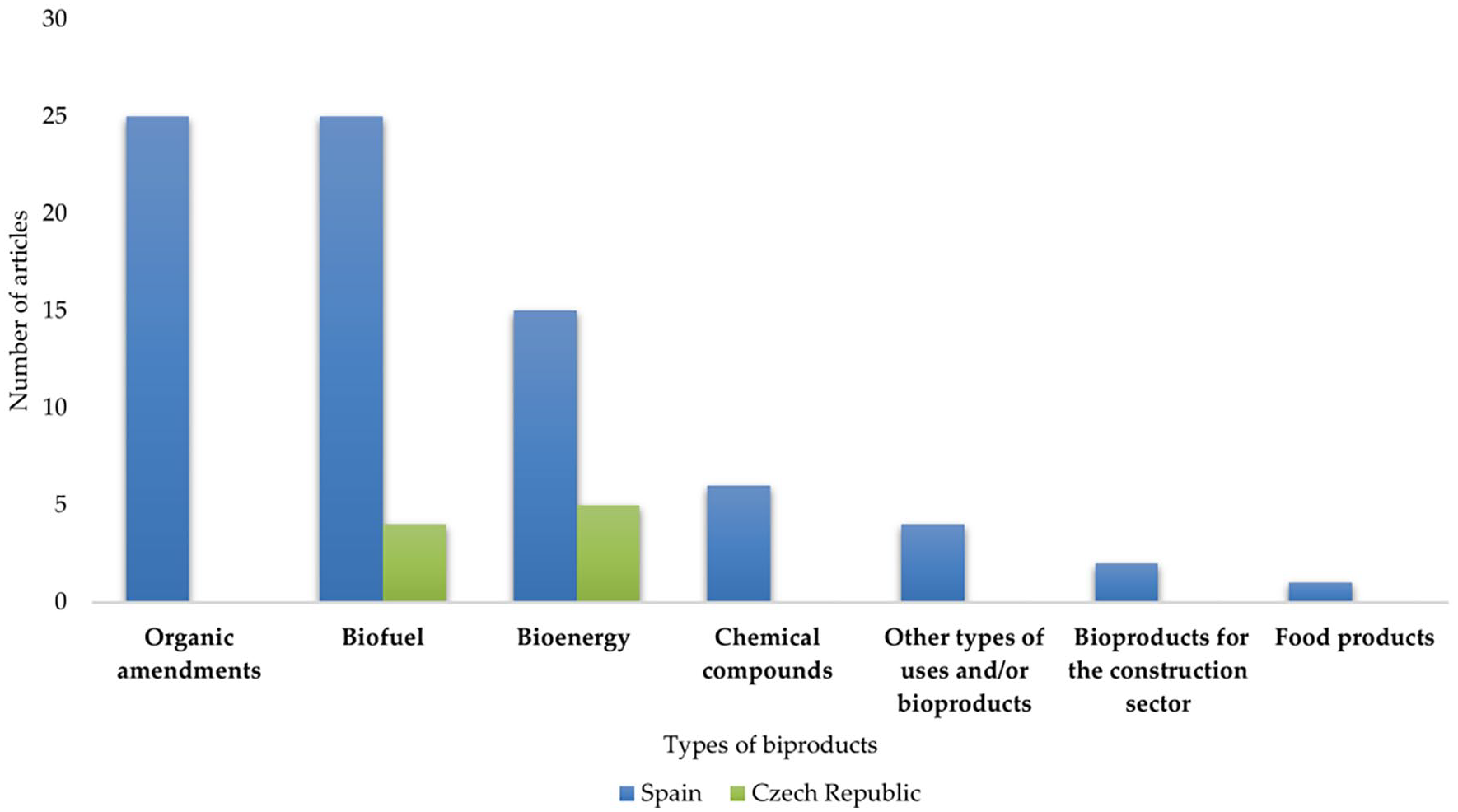
Main types of bio-based products for Spain and the Czech Republic.
Bioenergy production is relevant for 20% of the research. A wide variety of different types of AWB are also used to obtain this type of bio-based products (García-Maraver et al., 2012; Mendívil et al., 2015; Perea-Moreno et al., 2020). 8% of the studies analyse the production of chemical compounds such as bioactive compounds, polyphenols, phenols, antioxidants and enzymes (peroxidase) (de Castro and Capote, 2010; Muíño et al., 2017; Pérez Galende et al., 2012; Romero-García et al., 2016). The main bio-based products obtained in 5% of the research were materials for biofumigation, bio removal of heavy metals and nematode control. Other liquid and solid compounds with various applications were also obtained (PiedraBuena et al., 2006). The latter studies, which represent 16% of the research, have been carried out between 2010 and 2020. This indicates that in the last 10 years, other types of uses have begun to be explored beyond only the production of biofuels and bioenergy, which have historically been the two main alternatives for the valorization of AWB (Duque-Acevedo et al., 2020b).
In 1987 and 1988, two research studies (3%) were carried out on the use of rice husk and/or rice ash for the production of building materials such as cement ash and concrete blocks (Salas et al., 1987, 1988). However, recently, some studies have continued to analyse the potential of this type of AWB for obtaining additives for cement, among other types of high-added value bio-based products (Andreola et al., 2020; Tchakouté et al., 2020). In addition, artichoke crop residues have been used as a secondary raw material for cheese production (Barbagallo et al., 2007).
Main alternatives for the valorization of AWB – Czech Republic
The retrieved studies from the Czech Republic registered two different valorizations of AWB alternatives, which were the transformation for biogas and bioenergy production as an additional source of energy; it was also identified that the produced digestate after processing the agricultural wastes has a major use as organic fertilizer, this contributes to improving the organic fertilizer management in agriculture or in the municipal sphere (Kodymová, 2014; Pastorek et al., 2013). Although biogas production is the main focus of 45% of the studies (Figure 5), which included the use of pellets made from agricultural waste (wheat and rice straw and hay), the syngas produced after the gasification process could be used for liquid fuel synthesis (Najser et al., 2014).
The potential of agricultural waste for bioenergy production was also assessed in 55% of the studies. The first publication is from 2009, and it was focused on the analysis of biomass potential in the Czech Republic using GIS (Havlíčková et al., 2009). It was found that the sustainable energy potential from agricultural biomass is firmly restricted to the energy demand. However, as the focus on the need for alternative renewable energy sources increases, it will encourage the introduction of new technologies and, in turn, increase the attention to crop residues for energy production (Simon and Wiegmann, 2008). The economic modelling for the estimation of competitiveness of biomass versus coal utilization for energy production allowed to identify the necessity of measures aimed to decrease the costs, to guarantee the competitiveness of the produced pellets against brown coal for energy production (Vávrová et al., 2018).
According to the Ministry of Agriculture, biogas and biomethane production should be produced from waste biomass and biodegradable waste, contributing to the reduction of adverse impacts of dedicated biomass cultivation on agricultural land water other environmental components (Czech Ministry of Agriculture, 2019).
Principal policies, strategies and action plans on AWB management
In compliance with the provisions of Regulations (EU) No. 1305/2013 and 1308/2013, the Czech Republic and Spain have included agro-environmental and climate measures in rural development programmes at the national or regional level (Ministerio de Agricultura, Pesca y Alimentación, 2019). They have also established national guidelines that include environmental actions to be carried out by Fruit and Vegetable Producer Organizations (FVPOs) (European Commission, 2021b). These eligible actions and/or measures contribute to achieving different environmental objectives, such as AWB’s reduction and/or valorization. Figure 6 summarizes the general framework on policies, strategies, programmes and other instruments promoting the reduction and/or valorization of AWB in Spain and the Czech Republic.
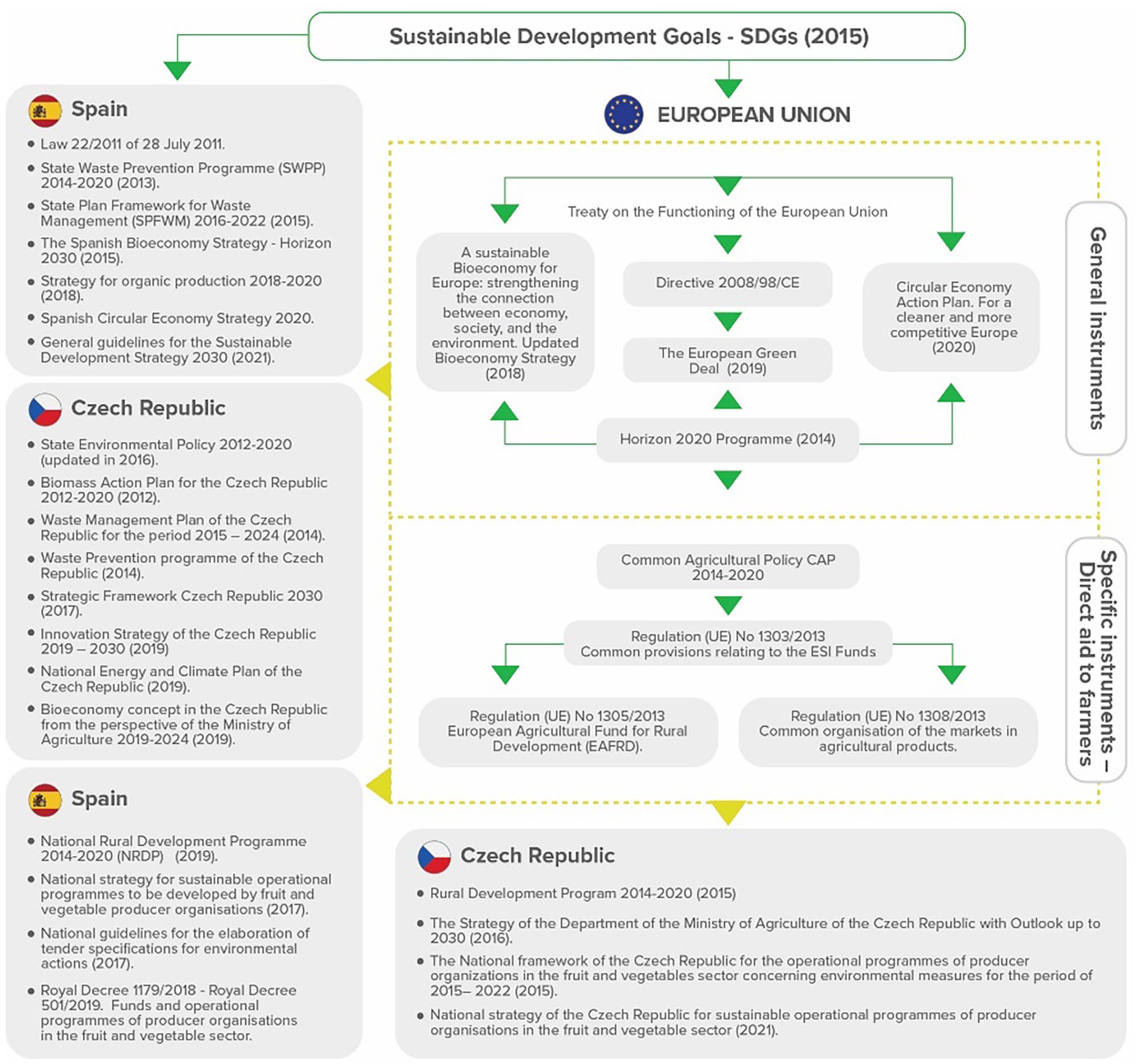
Main regulatory and management instruments on AWB.
Spain
In terms of waste policy, Spain is committed to waste prevention following the provisions of the EU Waste Framework Directive. Since 2013, it has had a Waste Management Plan and a Waste Prevention Programme with the main objective to decouple the increase in waste from economic growth (Ministerio de Agricultura Alimentación y Medio Ambiente, 2013) (Figure 6).
On the other hand, the bioeconomy strategy promotes the recovery of biological waste and by-products as raw material for further production processes to improve resource efficiency. It also stresses that the sustainable use of biomass resources produced in the agro-industry and food sector allows for creating new business areas in the rural sector. It also highlights the importance of improving technology to facilitate the recycling and recovering raw materials (Ministerio de Economia y Competitividad, 2015).
The conservation and preservation of the environment is a cross-cutting objective of rural development policy. This general framework includes specific strategic lines that favour sustainable development. For example, one of the EAFRD priorities defined in this document is the promotion of resource efficiency, low carbon and climate change resilient economy in the agricultural sector. This results in a series of measures based on the principles of the circular economy and bioeconomy. These include agri-environment climate and organic agriculture (European Union, 2013).
Based on these guidelines, the autonomous communities have developed their own rural development plans and other regulatory instruments that contain the specific operations that are part of the agro-environment and climate and organic farming measure. These instruments include the regulatory bases for granting subsidies to farmers who are not part of a producer organization (PO) and who implement practices related to these operations.
Among the operations defined by the autonomous community of Andalusia, for example, are those related to sustainable systems for intensive horticultural crops and cut flowers in greenhouses, which include four specific actions. Three of them are focused on the reduction and valorization of AWB. The first is aimed at carrying out green manures by incorporating plant residues generated on the farms.
The second action is the use of compost from plant waste, which has been recovered in authorized treatment and/or recovery plants. The third related action is the use of biodegradable raffia instead of conventional raffia as a strategy to facilitate the treatment and subsequent composting or use as green manure of the AWB (Consejería de Agricultura, 2017). These actions are part of the sustainable and circular agricultural model. In addition to contributing to AWB reduction, they promote its valorization to obtain bio-based products, which in this particular case improve soil structure and fertility. In addition, farmers who implement these measures reduce consumption of mineral fertilizers and the fees for the disposal of AWB while avoiding environmental impacts associated with production processes.
The National Strategy for Sustainable Operational Programmes to be developed by FVPOs defines a series of measures and actions that are eligible within the framework of the Operational Programmes presented by these organizations. One of these measures is aimed at environmental objectives. In the national guidelines document concerning environmental actions, 10 groups of actions are included, one of which has as its primary objective waste reduction. Among the measures included in this group are the use of biodegradable raffia on the farm, the recovery of organic waste generated in the production, processing, packaging of the product for dispatch and marketing stages.
The treatment, recovery and classification of waste and biogas production using organic waste and by-products from the production and processing of fruit and vegetables also form part of these actions. Other related actions are part of the objective of improving or maintaining soil quality, such as incorporating pruning waste into the soil or placing it on the soil to improve its organic matter content and combat erosion, the use of compost of vegetable origin, and carrying out green manuring using waste from the farm itself in greenhouse horticulture (Ministerio de Agricultura y Pesca, Alimentación y Medio Ambiente, 2017).
According to information from the Ministry of Agriculture, Fisheries and Food, Spain had 532 FVPOs and 9 Associations of Producer Organizations. Cooperative Society, Agricultural Transformation Societies, Limited Companies and Public Limited Companies are the primary legal forms. The fruit and vegetable area of the FVPOs is 781,199.76 ha. In all, 453 FVPOs have operational programmes in force.
Czech Republic
The Czech Republic does not currently have a circular economy or bioeconomy national policy; however, active conversations around this topic have been ongoing in the country – one of the targets is to establish the Strategy ‘Circular Czechia 2040’ and the country has also committed to implementing changes towards this direction in existing policies, programmes and plans. The Czech Republic has a well-developed legal framework related to management of waste and resources, including the Ministry of Agriculture (MZE) Strategy with a view to 2030, approved by Government Resolution No 392 of 2 May 2016, which seeks for the long-term vision of the MZE. The National Conceptual Document Strategic Framework Czech Republic 2030 was approved by the Government Resolution No 292 on 19 April 2017 (INCIEN, 2019; Organisation for Economic Cooperation and Development, 2021).
In addition, official initiatives including bioeconomy principles have been developed: the Biomass Action Plan for the Czech Republic 2012–2020, the National Energy and Climate Plan for the Czech Republic and the Food and Nutrition Security Strategy 2014–2020, Policy of Territorial Development of the Czech Republic, Waste Management Plan of the Czech Republic for the period 2015–2024 and the Waste Prevention programme of the Czech Republic (Czech Ministry of Agriculture, 2019). The Innovation Strategy of the Czech Republic for 2019–2030 is a crucial document that includes measures to support research and innovation (Hájek et al., 2021; Organisation for Economic Cooperation and Development, 2021) (Figure 6).
From the previous national strategies, it can be seen that the Czech Republic includes the economic, social and environmental dimensions of the circular economy and bioeconomy principles. Therefore, in the spirit to promote the use and practice of bioeconomy principles at the enterprise and public administration level, the Platform for Bioeconomy of the Czech Republic was created in 2018.
The Action Plan for Biomass in the Czech Republic for the period 2012–2020 defines the appropriate measures and principles for the efficient and effective use of the energy potential of biomass. Among the energetically usable biomass from agricultural production is residual biomass composed mainly of straw (sourced from cereals and oilseed rape), targeted biomass (maize, rape) and permanent grass. The use of straw contributes to the energy balance through the production of biofuels; besides its energy potential, another advantage is a low cost for residual biomass.
Despite the local nature of biomass cultivation, its central energy use predominates in heating plants and electricity. The Plzeň heating plant is the largest heating plant using targeted agricultural and forest biomass (straw, forest waste) in the Czech Republic. Its energy production (electricity and heat) is characterized by a large current consumption of biomass (>200,000 tonnes/year ) and thus there exists a relatively large dependence on its permanent availability.
The potential of residual biomass for direct combustion and biogas production was calculated in the total amount of 71 PJ per year (including by-products of primary agricultural production: cereal and rape straw, livestock excrement, by-products from biofuel production and by-products from grain cleaning). The most important portion corresponds to residual cereal straw with a potential of 45.3 PJ. High energy benefits and low costs associated with residual biomass highlight their potential contribution to achieving the 2020 targets.
The Rural Development Programme for the Czech Republic prioritizes, among other things, the renewal, preservation and improvement of agricultural and forestry ecosystems. It also prioritizes the effective use of resources and support for the transformation towards a low-carbon economy. Following the guidelines of this general framework, the National Strategy of the Czech Republic for Sustainable, Programmes of Producer Organizations in the Fruit and Vegetable Sector – (FVPOs) was created (Buchtová et al., 2021). In addition, the national framework containing the environmental measures for the operational programmes of the FVPOs was also created.
Environmental measures in this national framework include actions to increase soil fertility and prevent soil erosion. Other measures relate to integrated production and organic farming, which promote environmentally friendly farming methods. Specific measures on the reduction and valorization of AWB are not included in this document (European Union, 2021).
According to the Ministry of Agriculture information, there are other subsidy mechanisms other than those under Regulation (EU) No 1308/2013, which promote the implementation of measures to reduce and improve AWB by farmers.
Currently, there are 21 FVPOs identified and/or registered in the MZE, including one transnational FVPO. These organizations exist mainly in two legal forms: cooperatives and companies (Limited companies and self-regulatory organization), and all of them count with an operational program. The FVPO had in 2019 a cultivated area of 10,507 ha.
Discussion of the main results
All the variables analysed yielded relevant results, although with notable disparities between the two countries, mainly concerning the number of publications and the evolution of scientific production. Spain, with almost 90% of the publications in the sample, has been studying AWB since 1985. On the other hand, the Czech Republic began to report in scientific databases this subject 24 years later. Several factors could influence this, for example the difference between the area devoted to agriculture, the types of crops, and the type and quantity of AWB produced. The values of these indicators are much higher in the case of Spain. This is mainly because, in the south of Spain there are two key regions the province of Jaén, one of the territories with the highest production of AWB from the world’s largest olive oil industry (Hamelin et al., 2019). Likewise, the province of Almeria has the most significant concentration of horticultural greenhouses worldwide (Duque-Acevedo et al., 2020a). As a result, the main types of AWB identified (olive pruning waste, olive pomace, greenhouse crop waste) come from these industries.
Multiple investigations have emphasized the potential of this type of biomass for producing a wide variety of bio-based products (Duque-Acevedo et al., 2020a; García Martín et al., 2020; Hamelin et al., 2019). Especially for the production of biofuels and bioenergy, two of the main types of bio-based products obtained from the analysis (García-Maraver et al., 2012; Romero-García et al., 2016). In the case of the Czech Republic, the production of these bio-based products from cereal crop straw (Havlíčková et al., 2009; Havlíčková et al., 2010; Pastorek et al., 2013; Vávrová et al., 2014) has been studied. Other studies confirm that this type of AWB, due to its high concentration of lignocellulose (80%), has been the most widely used for producing bioenergy and biofuels (Duque-Acevedo et al., 2020b, 2021). It is possible that in the case of the Czech Republic, some characteristics of cereal residues limit their use for other types of utilization (Bernas et al., 2020). In addition, in 2017, the Czech Republic was one of the countries with the highest number of agricultural biogas plants per million inhabitants (Komor and Bujanowicz-Haraś, 2020). This could be one of the reasons for the prioritization of bioenergy as a bio-based product. Residues from the agricultural sector, mainly from cereal crops, play a key role in the growth of bioenergy production. Between 3% and 14% of the total global energy supply could be obtained from AWB (World Bioenergy Association, 2019).
In the case of Spain, it is evident that the use of AWB for manufacturing other types of bio-based products, such as organic amendments, compost and biochar, has diversified. This may be because olive and greenhouse fruit and vegetable crop residues have a more significant potential for manufacturing this bio-based product (Duque-Acevedo et al., 2020a; Galic and Bogunovic, 2018; López-Piñeiro et al., 2007). In addition, the regulations governing the operational programmes of POs in the fruit and vegetable sector in Spain include specific actions for the recovery of AWB, such as the incorporation of plant residues into the soil, green manure with residues from the farm itself and the use of compost of plant origin, among others (Ministerio de Agricultura, Pesca y Alimentación, 2018; Ministerio de Agricultura y Pesca, Alimentación y Medio Ambiente, 2017). These specific regulatory instruments deriving from higher standards and strategies focused on sustainable and circular development encourage research on the characterization and identification of alternatives for using AWB.
Although both countries have developed a comprehensive framework of policies, strategies and action plans on AWB management, the specific strategies for a circular bioeconomy, which Spain has implemented since 2015, are likely to promote scientific interest and support for funding of research and innovation projects and programmes. A recent study showed that the EU through the European Regional Development Fund, whose main objective is to strengthen socio-economic cohesion in the EU, and the Horizon 2020 Framework Programme, the EU’s main research and innovation programme are among the main sources of funding for AWB-related research in the framework of the circular economy and bioeconomy (Duque-Acevedo et al., 2020b).
Concerning the focus of the research, it is evident that both Spain and the Czech Republic have prioritized the characterization and estimation of the potential of AWB. This is considered a key aspect in determining the feasibility of using this type of biomass for the production of bio-based products. The use of AWB in producing some bio-based products such as bioenergy can be complex, which is why it is essential to analyse the energy parameters, among other variables associated with the process (Bernas et al., 2020; Nunes et al., 2020). Similarly, knowledge about the amount of AWB available in the regions is a crucial aspect of the supply chain for the production of bio-based products such as biofuel (Fernández-Sarría et al., 2019).
Conclusions
The reduction and valorization of AWB is an issue that has become increasingly important over the last 13 years. One of the indicators of this trend is the increase in research analysing the potential of different AWB for transformation into a wide variety of high-value-added products. However, this trend is not the same in all countries, as evident in Spain and the Czech Republic. The importance of this issue is also reflected in the wide variety of AWB types analysed for utilization. More than 15 types of AWB were used in the research as secondary raw materials for bio-based products. The main ones include olive pruning residues, olive pomace, greenhouse crop residues and wheat straw.
The main alternatives for the valorization of AWBs are organic amendments, followed by biofuels and bioenergy production. These bio-based products are also prioritized as an alternative in the Czech Republic, where mainly straw from cereal and rapeseed crops is used to produce biogas, pellets, organic amendments and bioenergy. Undoubtedly, wheat remains one of the most important sources of waste biomass worldwide and has enormous potential for the energy industry.
The reduction and maximum utilization of AWB are global environmental policy priorities. International policy and management frameworks in this area have evolved significantly, especially in Spain and the Czech Republic; essential roadmaps have been developed to move towards more sustainable and circular food systems. However, Spain has developed specific instruments for the Circular Economy and the Bioeconomy that can be key in terms of reduction and/or valorization of AWB. Future research could analyse the projects and programmes funded under these policies to determine whether they include actions that encourage research on the reduction and/or valorization of AWB. Similarly, a comparative analysis on the number of European projects implemented by both countries that have included research on AWB reduction and/or valorization.
It is possible that some research focusing on AWB in Spain and the Czech Republic does not specifically include some of the terms used in the search equation of this study. Therefore, the selected data may not represent the totality of research on this topic, which could also be considered for future research. In addition, including the sponsor of the funds as a variable of analysis could provide guidance on the relevance of government policies and strategies in this area.
Footnotes
Acknowledgements
The authors would like to thank the University of Almería for a predoctoral contract issued by the university in 2018.
Declaration of conflicting interests
The authors declared no potential conflicts of interest with respect to the research, authorship and/or publication of this article.
Funding
The authors disclosed receipt of the following financial support for the research, authorship and/or publication of this article: Czech University of Life Sciences Prague for the financial support from the European Regional Development Fund (project NUTRISK no. Z.02.1.01/0.0/0.0/16_019/0000845).
