




Abstract
The fashion industry is one of the most important industries for the world economy, but is also one of the most polluting. Some fashion companies have been adopting circular economy initiatives to combat this. Circular fashion (CF) results in cleaner production and reduces textile waste, but depends on consumer collaboration. Several studies analysing consumer CF issues worldwide have been recently published, but these studies are not common in emerging countries. This paper seeks to investigate the relationships between Brazilian consumers and CF. The methodology comprised a systematic literature review and survey. The main results show that, although young consumers are willing to change their clothing consumption habits and believe that fashion companies should be more sustainable, most of them never get involved in circular actions in the fashion chain. This paper seeks to fill a research gap on Brazilian CF, and contribute to both literature and the fashion industry in developing countries.
Keywords
Introduction
The fashion industry is one of the most significant industries in the global economy, with worldwide annual sales totalling more than $450 billion (Resta et al., 2016; B. Wang et al., 2020). The fashion industry underwent significant changes in 2020 due to the coronavirus pandemic. Almost three-quarters of all listed fashion companies reported losses, which were some of the worst to date (Amed and Berg, 2020). Fashion companies need to reduce complexity and find ways of increasing full-priced sell-through to decrease inventory levels by taking a demand-focused approach to their assortment strategies (Amed and Berg, 2020).
In addition to problems associated with the Covid-19 pandemic, which increased waste generation and made waste management even more difficult (de Aguiar Hugo and da Silva Lima, 2021; Moraes et al., 2021), the fashion industry is also under pressure to become more sustainable, since it is one of the most polluting and socially challenged industries in the world, as many nonrecoverable materials and blends are used in clothing. The fashion industry also uses a lot of water and dangerous chemicals during manufacturing processes. Additionally, it has a poor human rights record (Provin et al., 2021). Although some fashion products can be recycled or donated to charity, industrialization and fast fashion trends make the clothing pollution problem much more severe, especially during the manufacturing, sales, distribution and use phases (Hu et al., 2014). Specific laws are necessary for proper waste disposal (Paes et al., 2017), because waste also negatively impacts landfills in the form of methane emissions and groundwater pollution from toxic leachate (Han et al., 2017). These waste management techniques must be monitored for sustainability (Alves et al., 2021; Moraes et al., 2020).
The fashion industry needs to eliminate pollutants released into the environment to reduce environmental problems. Clothing should be designed to last longer, and the way fashion products are designed, sold and used needs to be reconsidered. Recycling systems need to be improved so the industry can recapture lost material value and eliminate negative impacts from disposing items. Resources should be more effectively used, and renewable inputs should always be the first choice (Atalay Onur, 2020; Ellen MacArthur Foundation, 2017). These changes would advance the fashion industry towards circular principles.
Circular economy (CE) was proposed as a sustainable alternative to current linear economic systems, extraction-manufacturing-disposal methods, and as a substitute for recirculating material resources for developing new products (Singh and Ordonez, 2016). CE also includes new business strategies, promoting new understandings of design principles and slowing the pace of consumption (Forman and Carvalho, 2018). Moreover, innovative industries might benefit from new circular value creation (Repp et al., 2021).
However, circular strategies also require consumer engagement. Communication strategies focusing on specific pro-environmental behaviour could be effective in persuading people to adopt more pro-environmental practices, resulting in positive spill overs (Ha and Kwon, 2016). Consumers need to be informed on sustainable fashion product solutions via labels or using information campaigns (Friedrich, 2021), since more consumer education and more consumer information on fashion sustainability will influence their behaviour and purchasing patterns more (Blazquez et al., 2020).
Understanding consumer evaluations on green products helps reduce the need for using raw materials in the future (Adıgüzel and Donato, 2021). Many studies conducted worldwide prove that consumers are in favour of these practices, as exemplified by Adıgüzel and Donato (2021), who found that consumers favour upcycled and recycled luxury products to unsustainable luxury products. Chaturvedi et al. (2020) also found that people proudly wear sustainable clothing, even though it is more expensive than normal clothing.
These studies are not common for developing countries like Brazil, where many fashion industries are still stuck in linear models. Developing countries are trying to find ways of migrating to circular models, but there are few studies in these countries. Kirchherr and van Santen (2019) analysed 160 EC papers and found that only 5% focused on emerging economies. Emerging economies are global centres of production, and Brazil is already a driver of consumption (Galatti and Baruque-Ramos, 2019). The Brazilian textile and apparel industry is a sector worth investigating, since Brazil ranks fifth amongst the largest textile producers in the world, and fourth amongst the largest clothing producers in the world (Abit, 2018).
This paper seeks to investigate the relationship between Brazilian consumers and circular fashion environmental issues, to determine what consumers think about new consumption ideas, and how willing they are to change towards sustainable fashion. The research method was a systematic literature review (SLR) and survey. The data were collected using SLR to conduct the survey to fill a research gap on Brazilian circular fashion and to contribute to literature and the fashion industry for developing countries.
This paper is divided into seven sections. The introduction is presented in section “Introduction.” Section “Fashion circular economy initiatives” presents a brief background on CE initiatives in the fashion industry. Section “Methodology” presents the methodology and section “Results” presents the results. Section “Discussions” presents the discussions and section “Conclusions” presents the conclusions, followed by the limitations of this study and recommendations for future studies. This is followed by the acknowledgments, the references, and appendices.
Fashion CE initiatives
Several CE practices have already been adopted in fashion industry production systems to minimize the environmental problems generated by the sector. These practices fit well within three key CE principles, that is, reusing, recycling and extending product-lifespans (Colucci and Vecchi, 2021). Reduction practices and/or resource preservation practices could also be added to this list as sustainable strategies for reducing environmental impacts (Colucci and Vecchi, 2021).
One reduction practice implemented by the fashion industry is reducing raw material consumption, which optimizes material resources to use only what is necessary to reduce waste (Todeschini et al., 2017). Reducing raw materials implies using techniques for efficiently cutting fabric patterns, for example, patchwork to optimize available materials (Mishra et al., 2020). This can be done using material management practices to reduce environmental impacts (Talay et al., 2020).
Another reduction initiative fitting into resource preservation is reducing natural resources and chemicals. Fashion companies have adopted technologies that reduce natural resource consumption, like water, and that reduce chemicals used in productive processes (Claxton and Kent, 2020; Talay et al., 2020).
Slow fashion consumption reduction is another reduction initiative to extend garment lifespans. Companies that adopt slow fashion practices generally use more local infrastructures and reduce production to smaller batch sizes by using traditional craft techniques and locally produced materials (Blazquez et al., 2020). This practice is meant to extend clothing use, for example, clothing should be created to be used and valued for as long as possible, by using items that consumers already own, withholding from purchasing more clothing in quick succession (Freudenreich and Schaltegger, 2020), thereby reducing over consumption promoted by fast fashion.
Second-hand clothes and rented clothes are some examples of reuse. These practices extend product lifespans and reduce fashion production (Colucci and Vecchi, 2021; Durrani, 2018), since clothes are made to last and be valued for as long as possible (Freudenreich and Schaltegger, 2020). Reuse also includes resource preservation techniques that reuse natural resources by employing water recapture systems, heat recovery systems, or CO2 recovery systems, or by reusing raw materials, for example, leather scraps, cotton waste, wool scraps or reused fabrics (Colucci and Vecchi, 2021).
Textile recyclers reuse or reprocess used clothing, fibrous material, and clothing waste recovered from manufacturing processes (Hu et al., 2014). New technologies are currently being developed to help recycling processes, for example, classification technologies that use sorting equipment to classify fabrics by fibre type (Sandvik and Stubbs, 2019). Another example is prototype chemical recycling to reprocess mixed fibres and cotton textiles waste back into fibres (Norris, 2019).
Furthermore, essential functions must be considered when using commercial textile-to-textile recycling technologies, for example, traceability, transparency, standardization, automatization and connections with different stakeholders or processes (Sandvik and Stubbs, 2019). The first step for recycling, reusing or reprocessing used clothing is collecting textile waste. Some fashion companies, like H&M and Renner S.A., use reverse logistics for unwanted consumer clothing, setting up collection points in their stores (H&M, 2018; Renner, 2021).
Another sustainable practice that fashion industries are implementing is using natural fibres to make products 100% biodegradable (Brydges, 2021). Gucci introduced 100% biodegradable shoes made from APINAT, and Stella McCartney launched a shoe collection made from biodegradable bio-plastic (Moorhouse and Moorhouse, 2017). Also, there are vegan fashion products that use production approaches that deliberately refrain from using raw materials of animal origin (Todeschini et al., 2017).
Methodology
The selected research method was a SLR and survey. SLR helps identify relevant academic literature in a particular research area, and critically evaluates the selected topic (Siemieniako et al., 2021). A survey collects primary data from individuals, which is useful for collecting general information on people’s experiences (Hair et al., 2003).The methodology was organized using the following three steps: data collection, data analysis and synthesis (Enomoto and Lima, 2007; Tranfield et al., 2003).
The databases chosen for the SLR searches were the ISI Web of Science (WoS) and Scopus, which are indexed databases that allow users to export necessary metadata to perform bibliometrics (Gonçalves et al., 2018). The search period for the two databases was from January to May 2021. The keywords used were: ‘circular economy’ and ‘fashion industry’ or ‘fashion retail’ or ‘fashion supply chain’ or ‘fast fashion’. The search returned 729 publications in the WoS and 54 in the Scopus database, resulting in 783 articles listed in a number of publications per year.
From the 783 publications, we decided to apply exclusion criteria using some refinement filters such as document type (only articles), a language filter (only texts in English and Portuguese) and year of publication (only articles published between 2011 and 2021). After applying these filters, the result was 509 publications for both databases.
The titles and abstracts from the 509 articles were carefully read to identify relevant records for this review, and the first screening was based on analysing the titles and abstracts. Then, we excluded 426 papers that did not meet our inclusion criteria, which were to fit the research scope for CE in the fashion industry. Some articles were on circular economies but for different sectors, while the other seven were not available for full reading. When the authors could not reach a consensus, the full paper was analysed and discussed. Next, the snowball sampling technique was employed to identify the most relevant references that were not retrieved in the initial sample, considering the most cited studies that fit the research scope, using the same screening process. The result was a final sample of 66 articles (WoS Ω Scopus and WoS υ Scopus) resulting from this process.
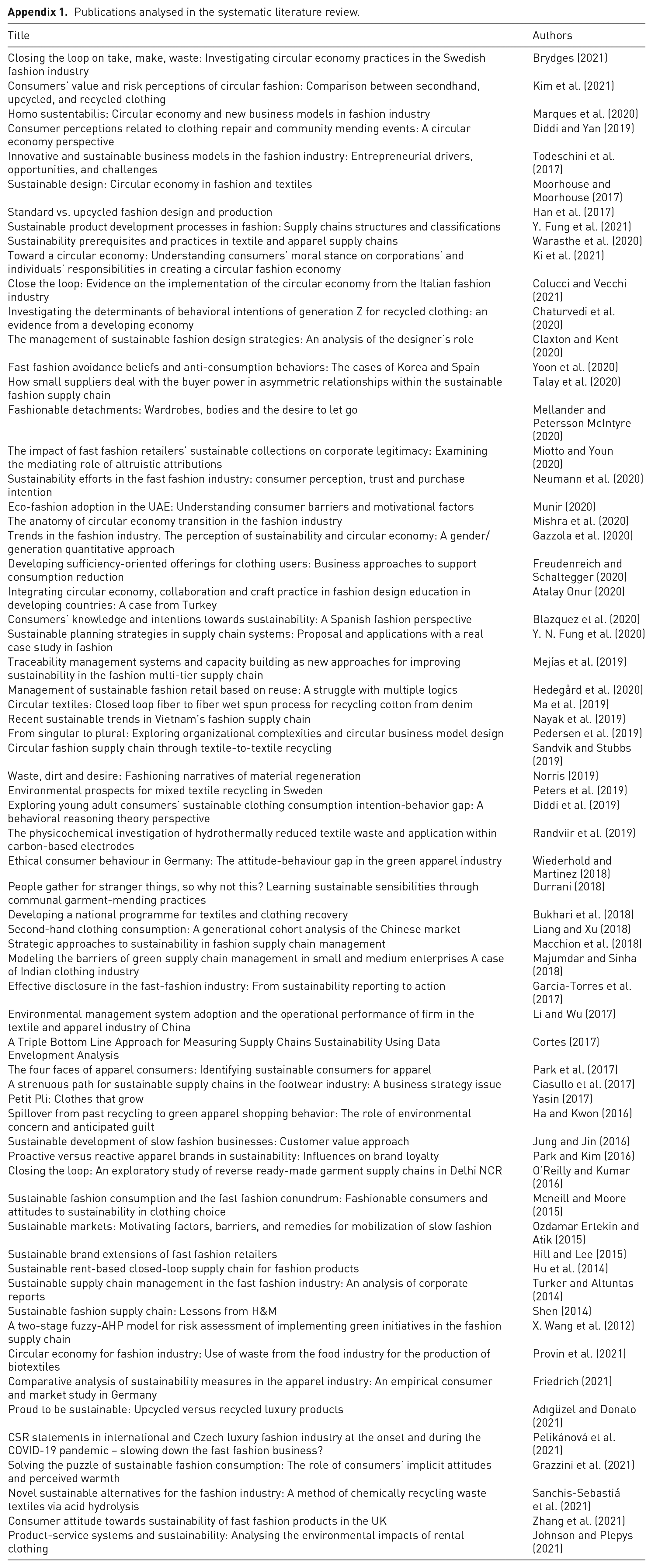
The final phase of SLR consists of a detailed analysis of each preselected article from the previous stages. Sixty-six publications (Appendix 1) were read and analysed to collect information used for carrying out the survey and to compare the results in the discussion. This process is illustrated in Figure 1.
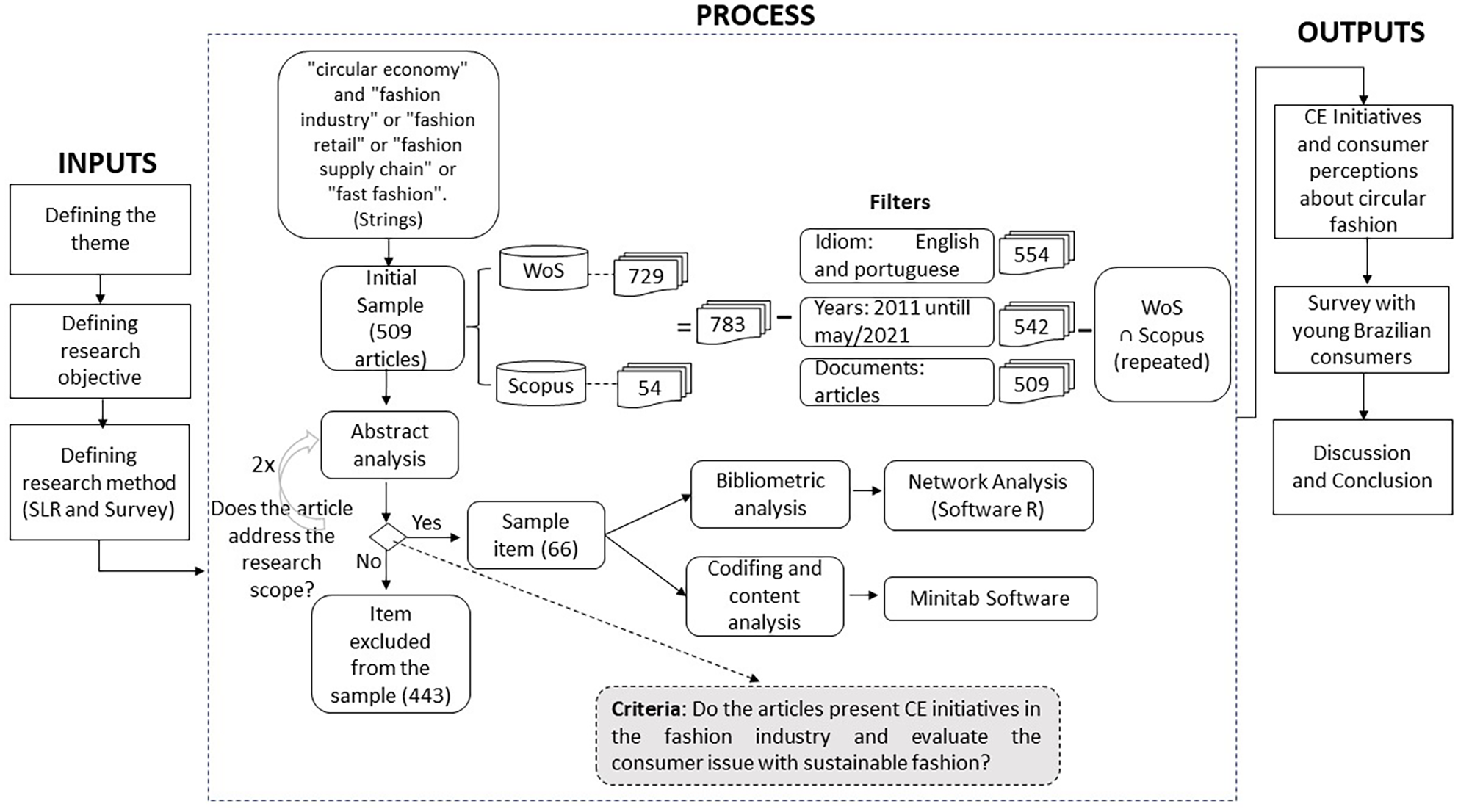
Flow diagram for the SLR.
The survey was conducted using a structured questionnaire with 39 questions formulated using Google Forms (Appendix 2). The questionnaire was sent to undergraduate and graduate students from 22 Brazilian universities located in different states, via email and social networks, from May to August 2021. We obtained 102 valid responses for analysis. We believe that the low adherence level to the survey was due to the Covid-19 pandemic. Brazil was going through a very troubling period at the time this study was conducted, and many of these universities were closed, thereby hindering more student participation.
The student answers were collected using a Likert scale ranging from 1 to 5, with 1 being ‘strongly disagree’ and 5 being ‘strongly agree’. There were also objective questions that offered alternative answers and questions to which the student could expound upon. These questions were aimed at getting to know the student’s knowledge on issues related to post-consumption reverse logistics, CE, correct disposal for clothing at some stores, and fashion consumption behaviour (clothes, shoes, accessories, etc.).
Results
Metadata from the WoS and Scopus databases resulted in 66 articles in the final sample for number of publications per year. The number of publications has grown over time, as shown in Figure 2.
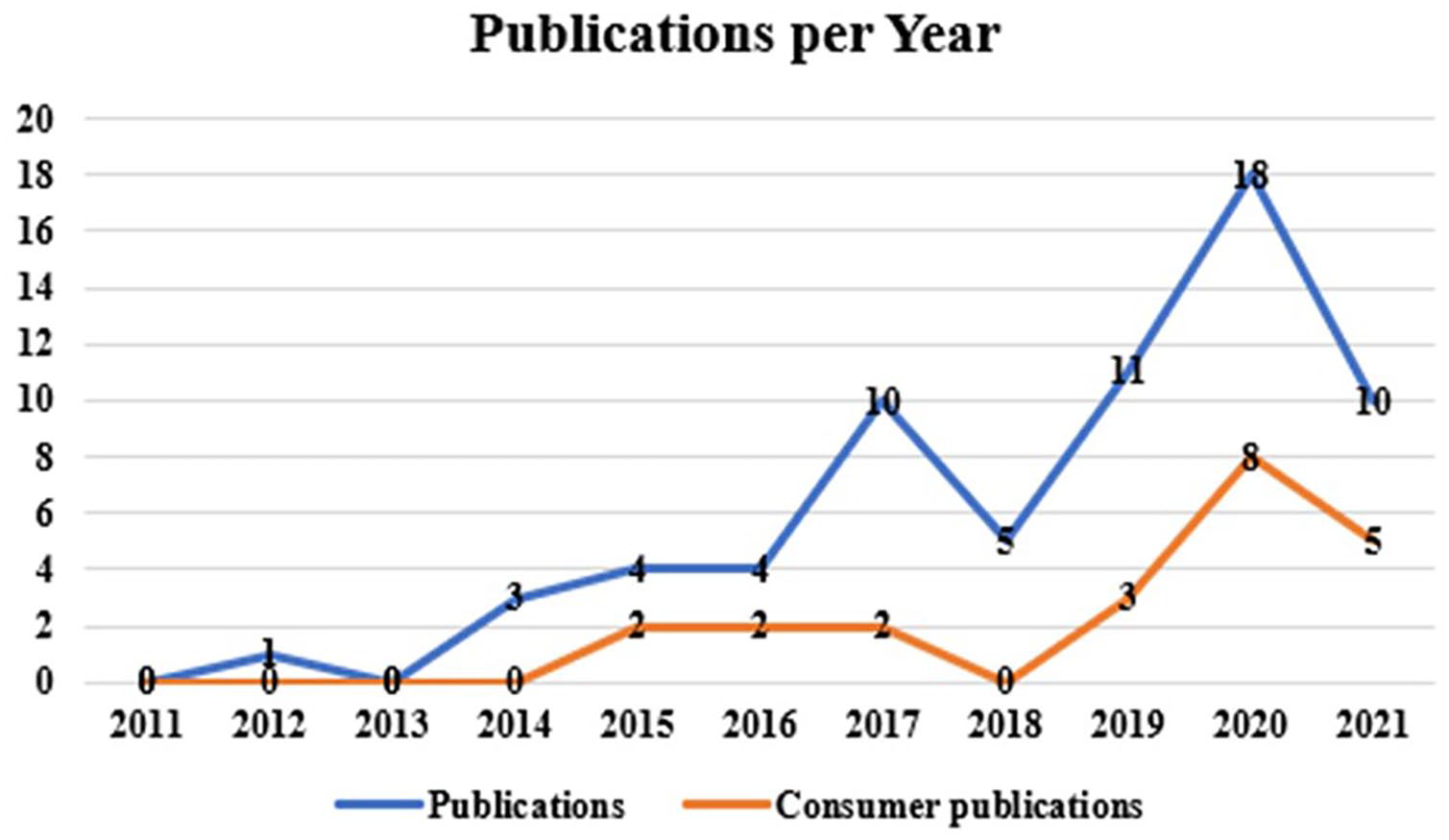
Publications per year up to May 2021.
The graph also shows more publications that analysed consumer behaviour relative to circular initiatives adopted by the fashion industry. Consumer studies are becoming more important in light of the Covid-19 pandemic, which has slowed the fashion industry (McMaster et al., 2020). Of the 66 articles analysed, 22 addressed this issue, showing the importance of this type of research. These 22 papers are described in Table 1 along with the countries where the studies were published.
Consumer studies and respective countries.
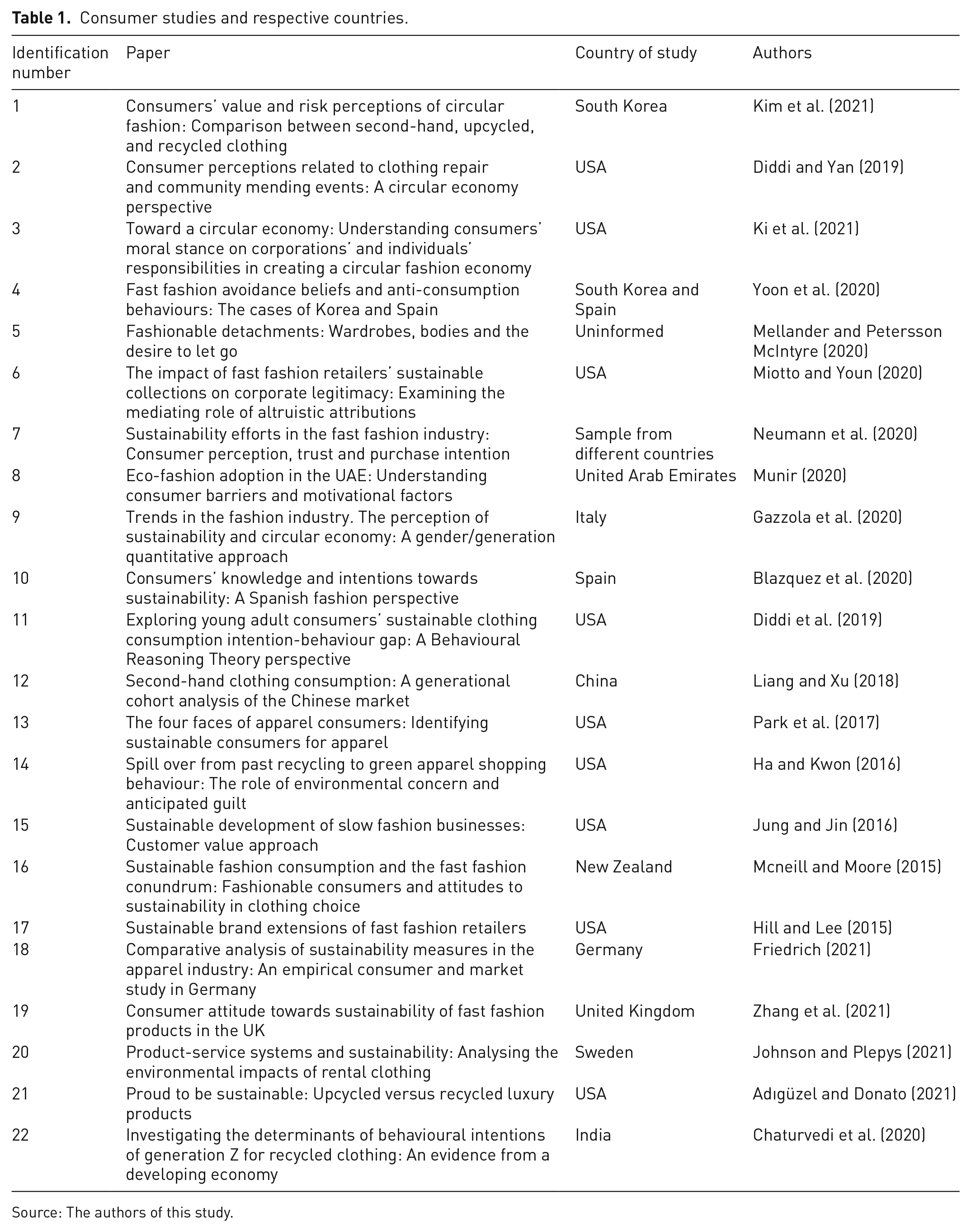
Source: The authors of this study.
Table 1 shows that the United States dominates research on consumer fashion. We can also observe that there is a lack of research for emerging countries. During the last three decades, countries like Brazil, Russia, India, China and South Africa have been undergoing fast urbanization, generating significant increases in waste (Gonçalves et al., 2018; Y. Wang et al., 2016).
Possibly, one reason why emerging countries are less studied is the lack of a sustainability transition. According to Geissdoerfer et al. (2017), CE is seen as a condition for sustainability, and as a beneficial relation. However, sustainability transitions involve far-reaching changes throughout different sectors: technological, material, organizational, institutional, political, economic and sociocultural (Markard et al., 2012) considering not only the usual economic factors but also the social and environmental in order to ensure the perpetuity of the enterprise (Nadae and de Carvalho, 2019).
However, CE can lead to some adversities for emerging economies, since negative employment effects for countries involved in apparel production are higher, the more upstream the activities (Repp et al., 2021). Therefore, it is important that more research be carried out in these countries, to find a balance between social, environmental and economic factors, since they are major contributors to global pollution.
Furthermore, academic research on CE has just begun to emerge, and this is why it is still fragmented, mainly at the applied level (Korhonen et al., 2018). Kirchherr et al. (2017) carried out a study of 114 definitions for the CE, and found that some authors possess wrong knowledge surrounding this concept, as they entirely equate CE with recycling, for example. Therefore, studies that consult the general public at large are very significant, since even scholars in the area are sometimes mistaken with respect to CE concepts.
The 22 publications described in Table 1 took different approaches and analysed consumer relationships with renting or purchasing second-hand, recycled, repaired clothing, or clothing made from natural materials. Other studies have surveyed consumer perceptions of sustainable fashion companies and slow fashion. Some papers analysed consumer awareness and their pro-environmental behaviour in relation to fashion.
Figure 3 gives a summary of the objectives of this study according to the numbering proposed in Table 1, which identified each author and article name. This figure also includes a paper that carried out a case study at a Brazilian fashion company, which is the only company in Brazil that is a signatory to the 2020 Circular Fashion System Commitment (Ostermann et al., 2021).
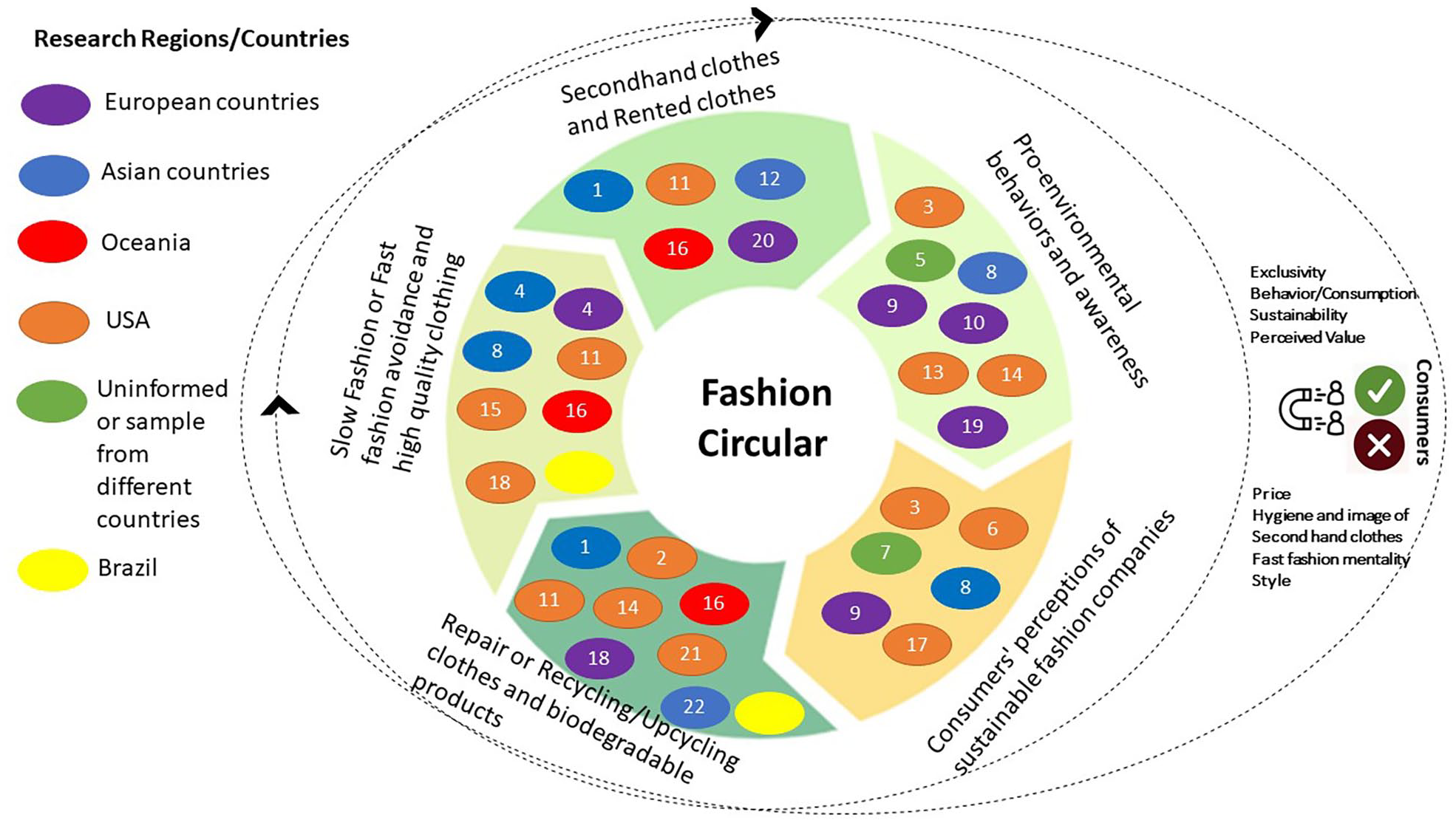
Article proposals.
Figure 3 shows that articles address more than one objective, for example, paper 8 by Munir (2020), which analysed consumer perceptions on slow fashion and sustainable companies, and their environmental behaviour. Figure 3 also lists the main analysed SLR characteristics that attract and/or distance consumers from circular fashion.
According to the studies, the main criteria that bring consumers closer to sustainable fashion can be summarized by three factors, which are associations with sustainable causes, exclusivity and perceived product value. Clothing style, high prices, hygiene concerns for second-hand clothes and fast fashion mentalities were obstacles that keep consumers away from sustainable fashion.
Since 2019, many fast fashion companies have been on the decline, and this could indicate that consumer fast fashion mentalities are also on the decline. Simultaneously, however, Shein has slowly become the biggest online retailer, and one of the biggest fast-fashion brands in the world. From 2018 to 2021, the brand exponentially grew its revenue by 700%, from $2 to $15.7 billion, compared to $21.5 and $21.2 billion for Zara and H&M, respectively (UOL, 2022).
By contrast, we currently also see several emerging fashion companies that are seeking to be more sustainable, for example, Revoada and Ecoalf. Revoada is a Brazilian sustainable fashion company that uses discarded tire tubes and umbrella fabric as source raw material (Revoada, 2022), but the company it still relatively little known among the general populous. The survey results are presented below to better understand young Brazilian consumers relative to circular fashion.
The survey was applied to undergraduate and graduate students from 22 Brazilian universities (12 public universities and 10 private universities). One hundred two responses were obtained from 39 graduate students and 63 undergraduate students. Most of them came from engineering courses (56%), but there were also students who were studying law, administration, accounting sciences, etc. With respect to gender, the responses were balanced, since we obtained 52 male, and 50 female responses. We also registered the age of the students and the state where the university was located. Figure 4 shows a graph for responses on level of education and generation, and Figure 5 shows a graph of responses from different regions in Brazil.
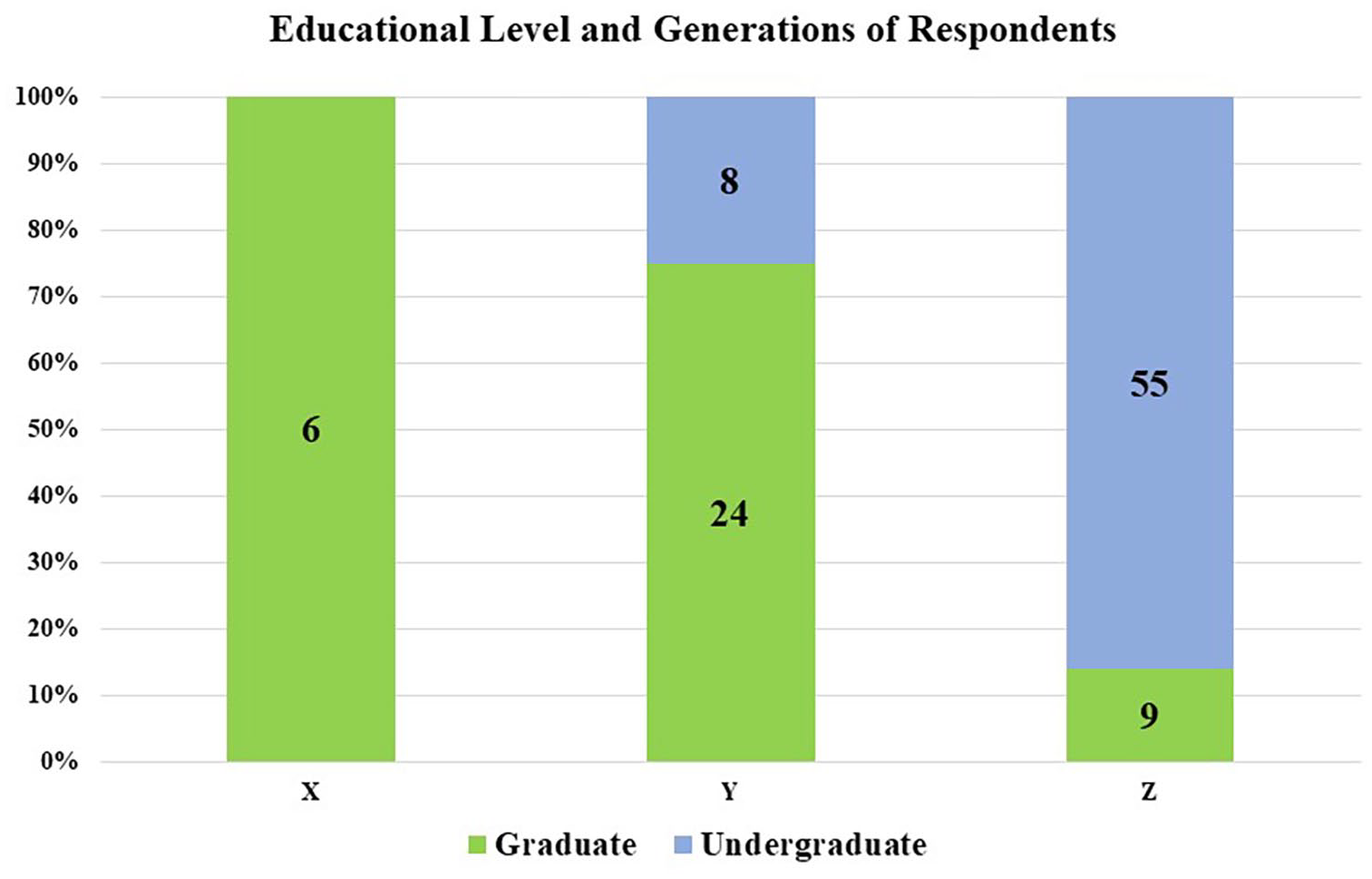
Level of education and generation of respondents.
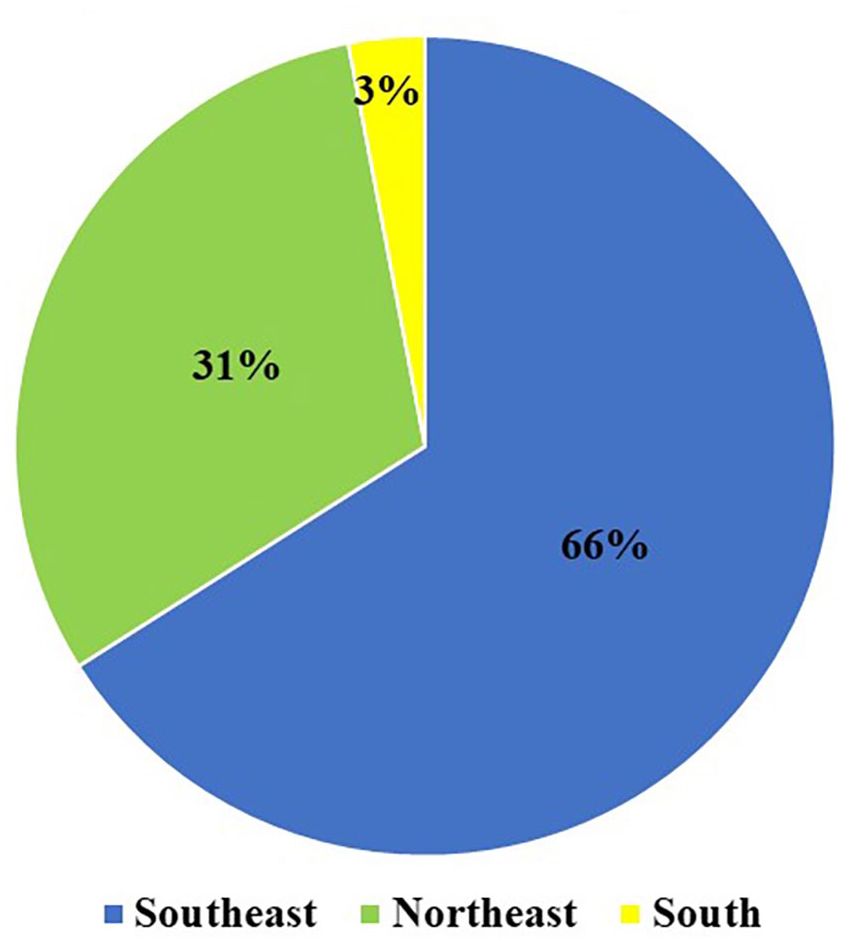
Regions of Brazilian respondents.
Figure 4 shows that there were respondents from generation X (not the focus of this study). Despite the low level of Gen-X participation in the survey, we decided to keep them in the sample, since their age group (generation) is relatively similar to respondents from generation Y.
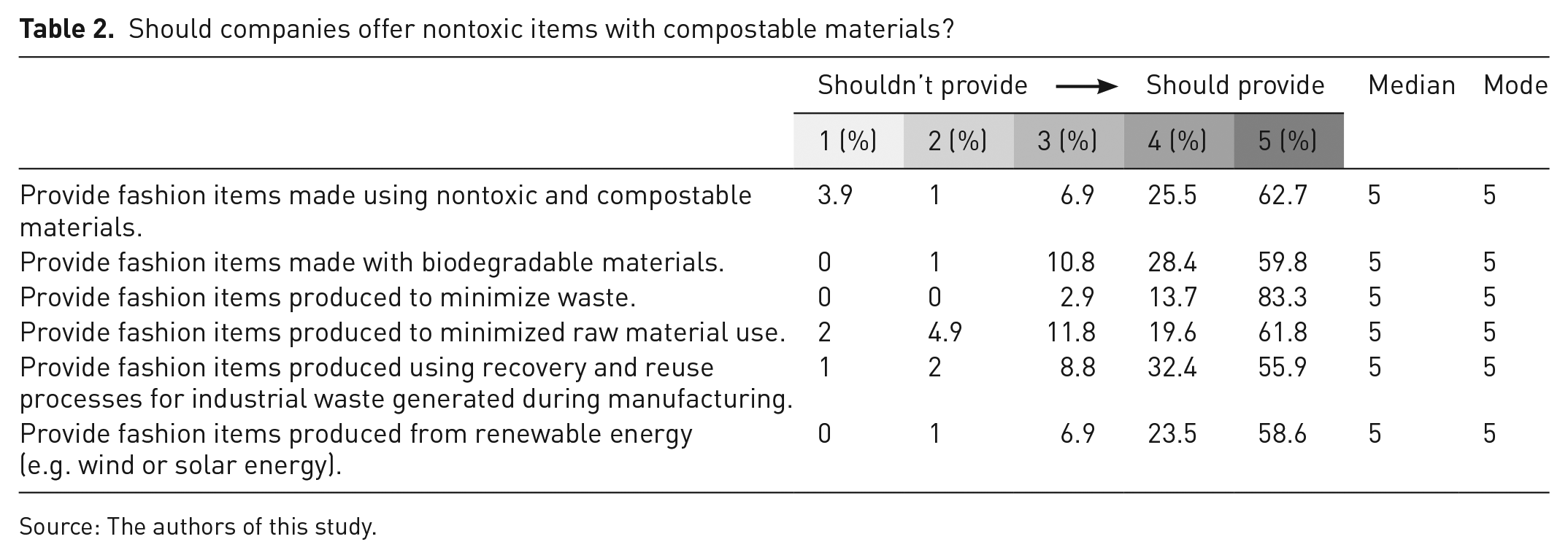
The first group of questions analysed if participants think fashion companies should offer items produced with nontoxic and biodegradable materials made using cleaner production processes. Table 2 shows the results of these questions.
Should companies offer nontoxic items with compostable materials?
Source: The authors of this study.
The results show that consumers are aware of the importance of offering fashion items produced more sustainably, since most participants chose alternatives 4 and 5 (should provide).
According to this study, fashion companies should provide items produced to minimize waste, since 97% (sum of the percentages for alternatives 4 and 5) of all students think this is very important, while the remainder were neutral. This is a significant result.
Participants were also concerned with the materials used to produce fashion items. Around 63 and 62% of respondents thought that fashion companies should provide products made using nontoxic and compostable materials, and which are produced to minimize waste (respectively).
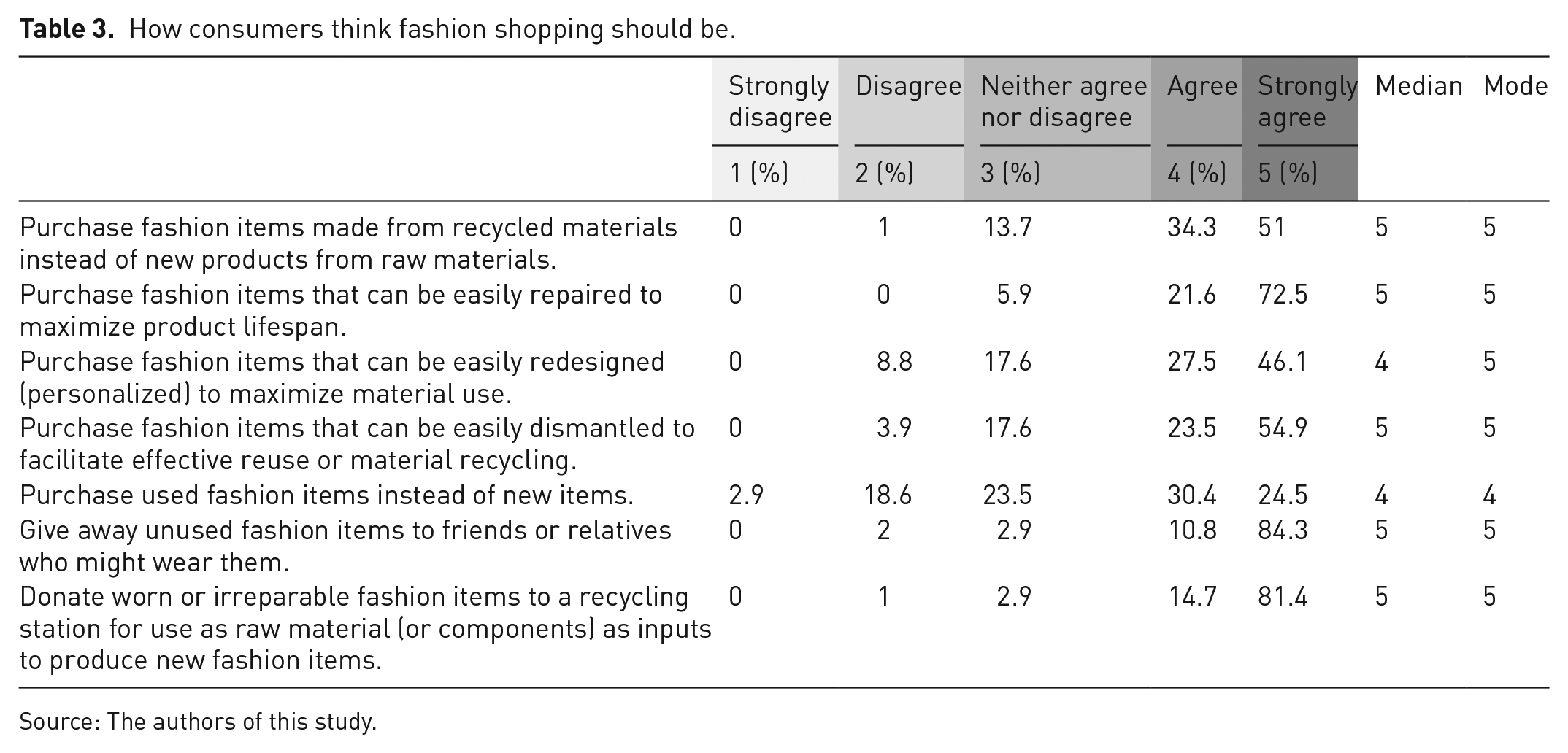
The second research group looked at how consumers think shopping for fashion items should be. The results are shown in Table 3.
How consumers think fashion shopping should be.
Source: The authors of this study.
Table 3 also shows that consumers are worried about sustainability in fashion shopping since the answers are more concentrated around 4 and 5 (agree and strongly agree).
We should note that most people seek to donate clothes they no longer use, or to recycle unusable products. Furthermore, most consumers are willing to buy fashion items that extend product lifespans with fabrics made from more sustainable materials.
The most heterogeneous question, in terms of responses, was related to second-hand purchases. Consumers are still not completely comfortable with this style of shopping.
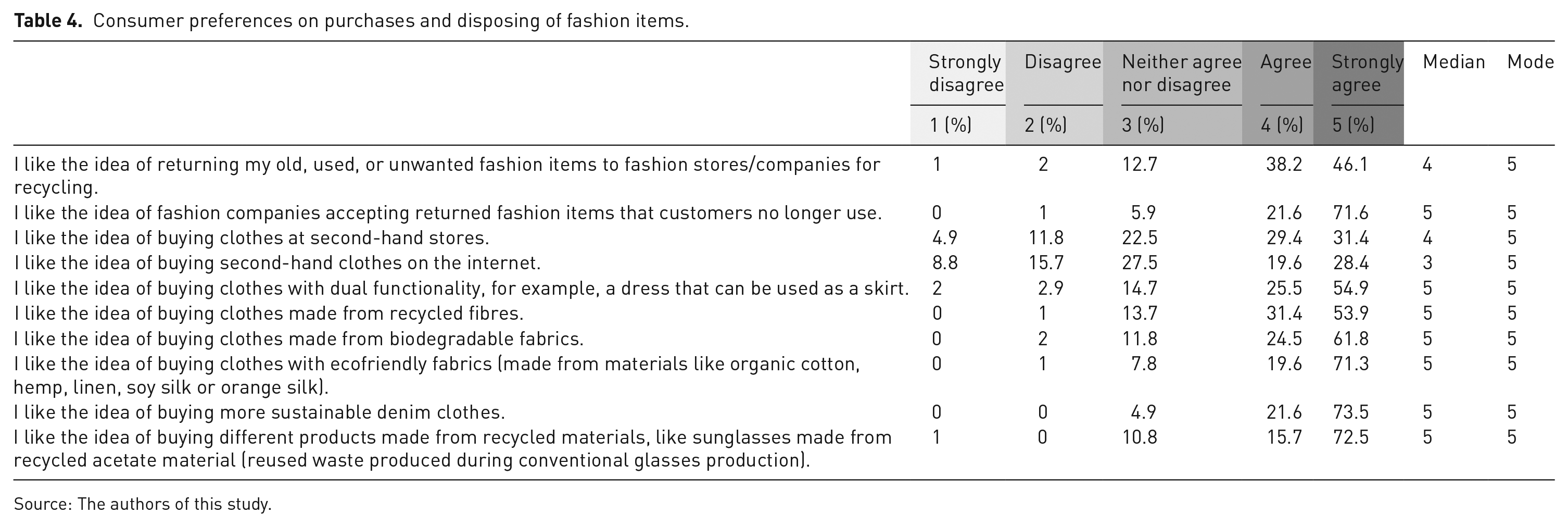
Table 4 evaluate consumer willingness to change fashion consumption habits, and the probability of engaging in correct disposal programs for apparel items.
Consumer preferences on purchases and disposing of fashion items.
Source: The authors of this study.
Table 4 shows that, although answers were still concentrated towards 4 and 5, there was a greater distribution of answers among the options provided. The worst results were related to issues dealing with purchasing second-hand clothes, given fewer answers towards 4 and 5, and a more divergent response field.
The participants favoured the last three questions most, that is, buying ‘clothes with ecofriendly fabrics’ (71.3%); ‘buying more sustainable denim clothes’ (73.5%); ‘buying different products made from recycled material’ (72.5%). This last question showed interesting results because the question ‘I like the idea of buying clothes made from recycled fibre’ received the worse result (53.9%) compared to alternative 5 (strongly agree). This shows that people do not perceive recycled clothing as being the same as other recycled products.
Another issue showing good results was ‘I like the idea of fashion companies accepting returned fashion items that customers no longer use’ (71.6%). However, only 46.1% strongly favoured returning their old, used, or unwanted fashion items to fashion stores/companies for recycling, as per the first question. This can be problematic, since participants want companies to be more sustainable, but consumers are not willing to collaborate and engage with sustainable practices, thereby discouraging green actions at fashion companies.
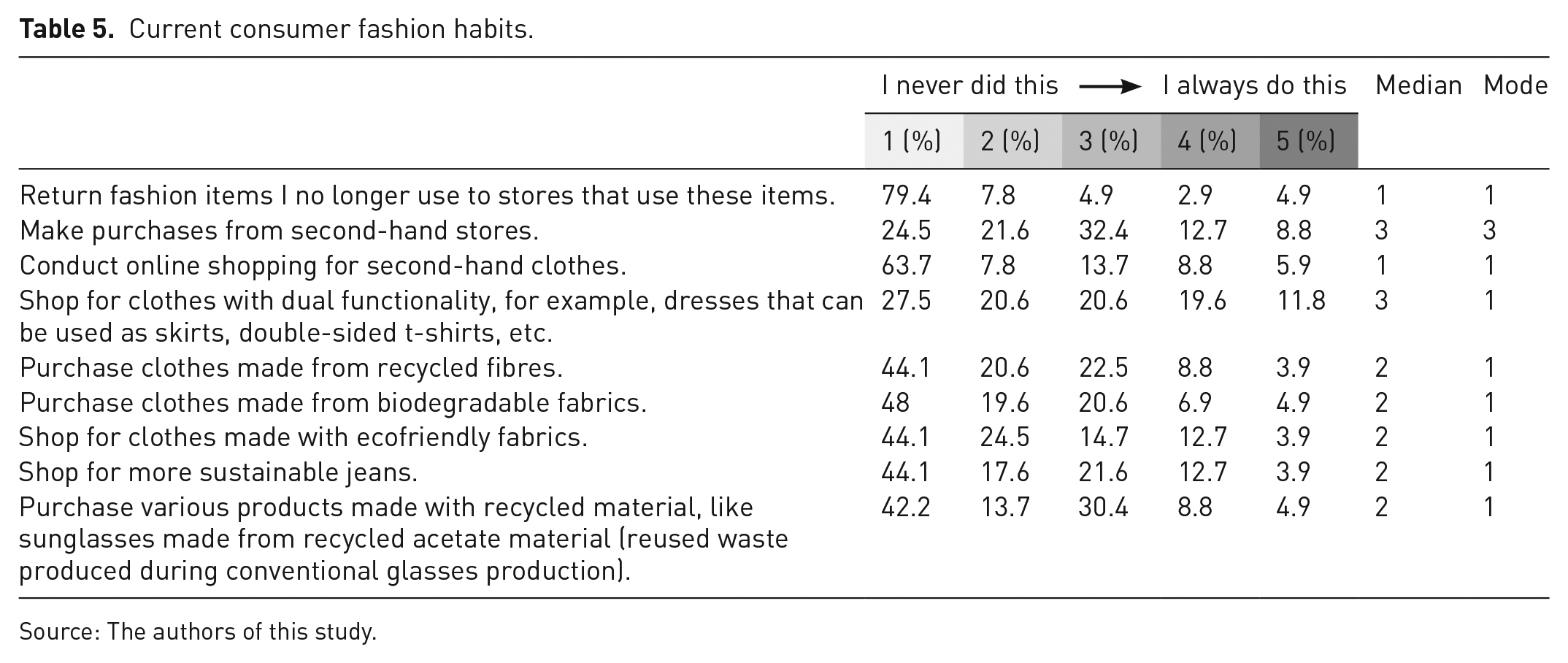
Table 5 asks what participants do with their purchased fashion items and how they discard items they no longer use.
Current consumer fashion habits.
Source: The authors of this study.
Different from the previous tables, most answers were not situated towards options 4 and 5 in Table 5. Most students (79.4%) have never returned clothes they no longer wear to stores that collect this type of waste, as per the first question. This significant result may be because many people are not aware of these initiatives promoted by some fashion companies, or because they live in cities where stores do not offer this service, since larger fashion store chains are normally located in big cities.
Another expressive result deals with online shopping for second-hand clothing, since almost 64% of all participants never purchased online second-hand clothing. Once again, we see that people are still very reluctant to wear clothes that once belonged to someone else.
The circular initiative that respondents practiced most was ‘Shopping for clothes with dual functionalities’, at 31.4% (sum of the percentages for alternatives 4 and 5). However, this result is far below desirable levels for building efficient circular fashion economies and does not guarantee that people will buy this type of clothing to be more sustainable, since it may simply be a matter of financial savings.
Questions dealing with sustainable jeans, or recycled, biodegradable and ecofriendly materials showed similar results, at around 44% for alternative 1 (I never did this). We believe that this is due to the lack of supply for these types of products at Brazilian fashion stores, or little promotion of sustainable fashion items and consequently, consumers are unaware of the existence of green fashion items. Therefore, it is very important for the organization to share information and knowledge both internally and externally (Nadae et al., 2015).
Discussions
A SLR and survey were carried out and the main results from the survey were compared with results from publications analysed in the SLR. The results of this study were similar to results found in literature, as shown in Figure 6.
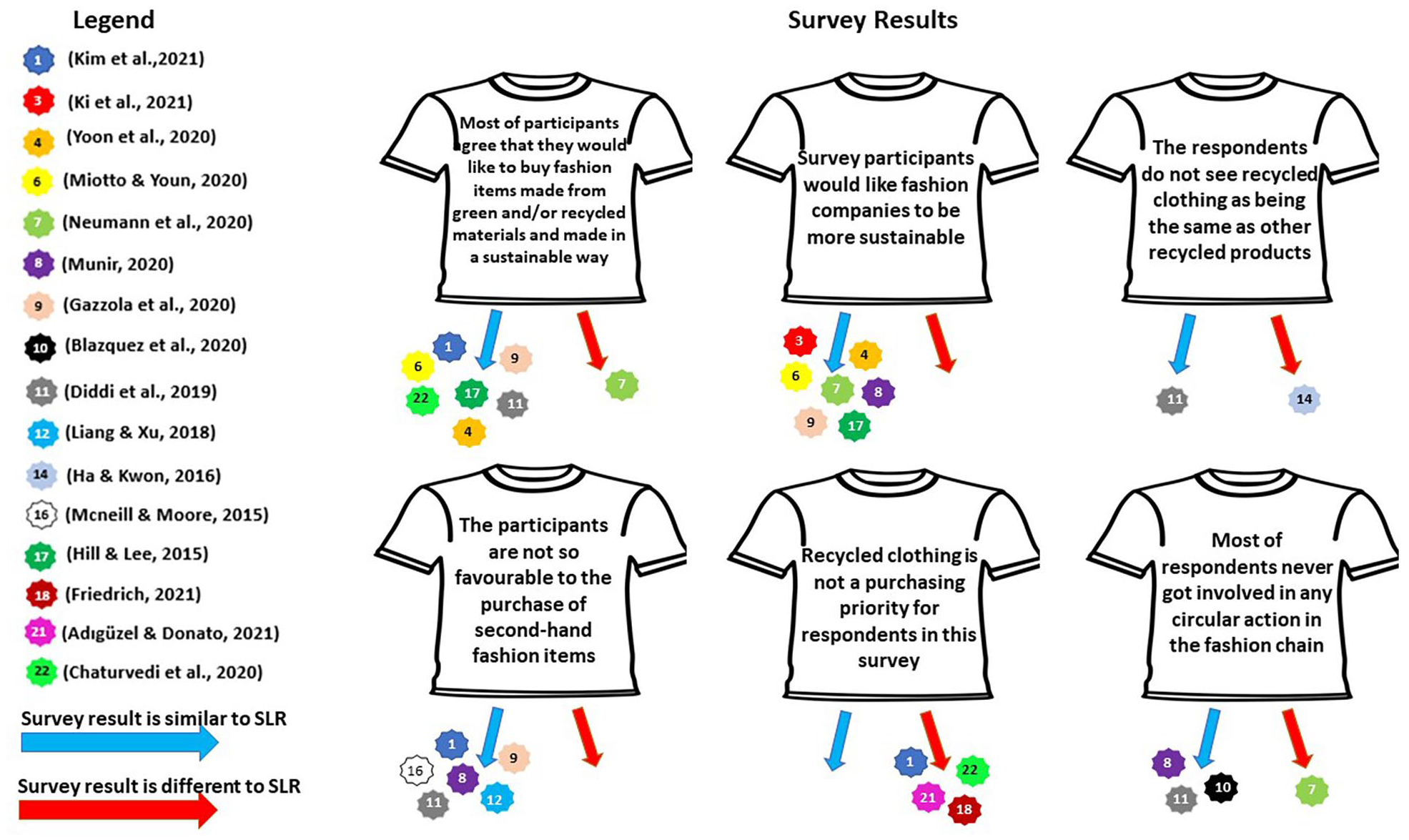
Are the survey results similar to the SLR results?
The first result of this study is that survey participants would like fashion companies to be more sustainable, because most believe that they should provide cleaner products made using environmentally responsible materials. This corroborates a study by Vahdati et al. (2015), who showed that the more consumers perceive that companies are taking responsibility for sustainability, the greater the consumer propensity for adding value to these companies and their sustainable products. Furthermore, when a brand opts to be more sustainable, people tend to view it in a better light (Hill and Lee, 2015).
This study also showed that young (generations Z and Y/millennials) consumers are more concerned about the sustainability of their fashion purchases, since most agree that they would like to buy fashion items made from green and/or recycled materials made sustainably. This result corroborates studies by Kim et al. (2021), Yoon et al. (2020), Chaturvedi et al. (2020), and Gazzola et al. (2020). According to these studies, younger generations are more interested in sustainability fashion issues, prefer buying sustainable brands, and are willing to spend more for green products.
Moreover, we can infer that people do not view recycled clothing the same as other recycled products. Participants in a study by Diddi et al. (2019), identified as being engaged in sustainable activities, like recycling. However, these orientations did not transfer to clothing consumption. This may be because consumers believe that circular fashion may be less durable or of poorer quality, less valuable, or present sanitary risks, since the products are made from discarded materials (Kim et al., 2021; Munir, 2020; Sheth et al., 1991).
Sanitary risks may also be responsible for participant distaste towards purchasing second-hand fashion items. Some papers verified that participants were worried about hygiene and contamination risks from previous owners of second-hand clothes (Diddi et al., 2019; Munir, 2020). Furthermore, clothing is still very much related to social status or image. For many consumers, choosing these types of clothes is antithetical to their aspirations of being seen with higher social status (Gazzola et al., 2020; Liang and Xu, 2018; Munir, 2020). However, participants in this study were more willing to buy second-hand clothes compared to Chinese, since 10% reported being willing to entertain this idea (Liang and Xu, 2018).
Therefore, we can infer those second-hand and recycled clothes are not priority purchases for the participants in this study, since the results showed lower adherence to level 5 responses (strongly agree) regarding purchase intentions. With respect to recycled clothing, this result was slightly different from results found in Kim et al. (2021), since 78.4% of surveyed South Koreans were willing to buy recycled clothes, contrasted with 53.9% of the Brazilians who participated in this study. Similarly, Friedrich (2021) asked German consumers about their willingness-to-pay levels and their slow consumption, recycling, petrochemical clothing, and bioplastic clothing preferences. They found that most respondents preferred recycled clothing.
While students like the idea of fashion companies accepting returned fashion items that customers no longer use, they are not willing to return their items to fashion stores for recycling to the same degree. This may be because discarding these items may in some way be related to letting go of their dreams and aspirations for the future (Mellander and Petersson McIntyre, 2020). Companies cannot make their supply chains truly sustainable unless consumers accept responsibility for returning their unwanted clothing (Ki et al., 2021). Therefore, it is important to encourage this initiative to increase adherence to circular causes.
The last finding of this study is that, although consumers are willing to change their clothing consumption habits and believe that fashion companies should be more sustainable, most never get involved in circular actions in the fashion chain. This contradiction was highlighted by other studies as well, that found that many participants are aware of sustainable fashion, yet these factors do not seem to play a key role in their final decision-making processes (Blazquez et al., 2020; Henninger, 2015). Moreover, lack of incentives for purchasing eco-fashion, the limited availability of sustainable fashion items, and unfamiliarity with sustainable clothing lines (Blazquez et al., 2020; Munir, 2020; Neumann et al., 2020) aggravate these issues.
This study contributed to literature on CE principles for the fashion sector, and to fashion companies that need consumer feedback to promote more sustainability. This paper fills a gap on Brazilian circular fashion and contributes to literature on developing countries.
Conclusions
The fashion industry, for the most part, still operates using a linear model mainly driven by fast fashion (de Aguiar Hugo et al., 2021). However, some circular initiatives are slowly being implemented in this industry. So, this study sought to analyse the behaviour and opinions of Brazilian consumers relative to circular fashion environmental principles, since Brazil has been little studied in this area.
In general, the survey results corroborate most of the results from previous studies. However, Brazilian respondents do not consider recycled clothing to be a shopping priority. This result shows the need for more awareness and environmental education campaigns for the Brazilian public. Extra marketing efforts and raising awareness could be the main strategies for overcoming CE barriers (Hartley et al., 2022).
In Brazil, waste separation and recycling policies are still very little used among the general population. In most Brazilian homes, waste is mixed and discarded together. So, if there is no drastic change by local governments to encourage selective collection, Brazilians will likely remain unaware of more sustainable consumption alternatives.
This paper fills a research gap on Brazilian circular fashion, and contributes to literature and the fashion industry for developing countries. We hope that this study can positively influence both consumers and fashion companies in adopting new circular ideas to mitigate environmental impacts caused by current production chains.
Limitations and future studies
The study was conducted for undergraduate and graduate students at different Brazilian universities and is limited in that it does not account for a wide range of generations, since it is known that young people are more likely to adhere to sustainable causes.
Thus, different generations and different social classes could be studied, since little research on circular fashion of this nature has been carried out in Brazil. We also suggest that questions on monthly income and spending levels for fashion items be added to the surveys to verify how relevant fashion is for Brazilian consumers.
Moreover, the survey focused on CE environmental principles. This is also a limitation of the study, since CE social issues are a topic that should be studied more in emerging economies, given contradictions regarding job creation, as per (Kirchherr, 2021). So, future research should also investigate this topic.
Footnotes
Appendix
Publications analysed in the systematic literature review.
| Title | Authors |
|---|---|
| Closing the loop on take, make, waste: Investigating circular economy practices in the Swedish fashion industry | Brydges (2021) |
| Consumers’ value and risk perceptions of circular fashion: Comparison between secondhand, upcycled, and recycled clothing | Kim et al. (2021) |
| Homo sustentabilis: Circular economy and new business models in fashion industry | Marques et al. (2020) |
| Consumer perceptions related to clothing repair and community mending events: A circular economy perspective | Diddi and Yan (2019) |
| Innovative and sustainable business models in the fashion industry: Entrepreneurial drivers, opportunities, and challenges | Todeschini et al. (2017) |
| Sustainable design: Circular economy in fashion and textiles | Moorhouse and Moorhouse (2017) |
| Standard vs. upcycled fashion design and production | Han et al. (2017) |
| Sustainable product development processes in fashion: Supply chains structures and classifications | Y. Fung et al. (2021) |
| Sustainability prerequisites and practices in textile and apparel supply chains | Warasthe et al. (2020) |
| Toward a circular economy: Understanding consumers’ moral stance on corporations’ and individuals’ responsibilities in creating a circular fashion economy | Ki et al. (2021) |
| Close the loop: Evidence on the implementation of the circular economy from the Italian fashion industry | Colucci and Vecchi (2021) |
| Investigating the determinants of behavioral intentions of generation Z for recycled clothing: an evidence from a developing economy | Chaturvedi et al. (2020) |
| The management of sustainable fashion design strategies: An analysis of the designer’s role | Claxton and Kent (2020) |
| Fast fashion avoidance beliefs and anti-consumption behaviors: The cases of Korea and Spain | Yoon et al. (2020) |
| How small suppliers deal with the buyer power in asymmetric relationships within the sustainable fashion supply chain | Talay et al. (2020) |
| Fashionable detachments: Wardrobes, bodies and the desire to let go | Mellander and Petersson McIntyre (2020) |
| The impact of fast fashion retailers’ sustainable collections on corporate legitimacy: Examining the mediating role of altruistic attributions | Miotto and Youn (2020) |
| Sustainability efforts in the fast fashion industry: consumer perception, trust and purchase intention | Neumann et al. (2020) |
| Eco-fashion adoption in the UAE: Understanding consumer barriers and motivational factors | Munir (2020) |
| The anatomy of circular economy transition in the fashion industry | Mishra et al. (2020) |
| Trends in the fashion industry. The perception of sustainability and circular economy: A gender/generation quantitative approach | Gazzola et al. (2020) |
| Developing sufficiency-oriented offerings for clothing users: Business approaches to support consumption reduction | Freudenreich and Schaltegger (2020) |
| Integrating circular economy, collaboration and craft practice in fashion design education in developing countries: A case from Turkey | Atalay Onur (2020) |
| Consumers’ knowledge and intentions towards sustainability: A Spanish fashion perspective | Blazquez et al. (2020) |
| Sustainable planning strategies in supply chain systems: Proposal and applications with a real case study in fashion | Y. N. Fung et al. (2020) |
| Traceability management systems and capacity building as new approaches for improving sustainability in the fashion multi-tier supply chain | Mejías et al. (2019) |
| Management of sustainable fashion retail based on reuse: A struggle with multiple logics | Hedegård et al. (2020) |
| Circular textiles: Closed loop fiber to fiber wet spun process for recycling cotton from denim | Ma et al. (2019) |
| Recent sustainable trends in Vietnam’s fashion supply chain | Nayak et al. (2019) |
| From singular to plural: Exploring organizational complexities and circular business model design | Pedersen et al. (2019) |
| Circular fashion supply chain through textile-to-textile recycling | Sandvik and Stubbs (2019) |
| Waste, dirt and desire: Fashioning narratives of material regeneration | Norris (2019) |
| Environmental prospects for mixed textile recycling in Sweden | Peters et al. (2019) |
| Exploring young adult consumers’ sustainable clothing consumption intention-behavior gap: A behavioral reasoning theory perspective | Diddi et al. (2019) |
| The physicochemical investigation of hydrothermally reduced textile waste and application within carbon-based electrodes | Randviir et al. (2019) |
| Ethical consumer behaviour in Germany: The attitude-behaviour gap in the green apparel industry | Wiederhold and Martinez (2018) |
| People gather for stranger things, so why not this? Learning sustainable sensibilities through communal garment-mending practices | Durrani (2018) |
| Developing a national programme for textiles and clothing recovery | Bukhari et al. (2018) |
| Second-hand clothing consumption: A generational cohort analysis of the Chinese market | Liang and Xu (2018) |
| Strategic approaches to sustainability in fashion supply chain management | Macchion et al. (2018) |
| Modeling the barriers of green supply chain management in small and medium enterprises A case of Indian clothing industry | Majumdar and Sinha (2018) |
| Effective disclosure in the fast-fashion industry: From sustainability reporting to action | Garcia-Torres et al. (2017) |
| Environmental management system adoption and the operational performance of firm in the textile and apparel industry of China | Li and Wu (2017) |
| A Triple Bottom Line Approach for Measuring Supply Chains Sustainability Using Data Envelopment Analysis | Cortes (2017) |
| The four faces of apparel consumers: Identifying sustainable consumers for apparel | Park et al. (2017) |
| A strenuous path for sustainable supply chains in the footwear industry: A business strategy issue | Ciasullo et al. (2017) |
| Petit Pli: Clothes that grow | Yasin (2017) |
| Spillover from past recycling to green apparel shopping behavior: The role of environmental concern and anticipated guilt | Ha and Kwon (2016) |
| Sustainable development of slow fashion businesses: Customer value approach | Jung and Jin (2016) |
| Proactive versus reactive apparel brands in sustainability: Influences on brand loyalty | Park and Kim (2016) |
| Closing the loop: An exploratory study of reverse ready-made garment supply chains in Delhi NCR | O’Reilly and Kumar (2016) |
| Sustainable fashion consumption and the fast fashion conundrum: Fashionable consumers and attitudes to sustainability in clothing choice | Mcneill and Moore (2015) |
| Sustainable markets: Motivating factors, barriers, and remedies for mobilization of slow fashion | Ozdamar Ertekin and Atik (2015) |
| Sustainable brand extensions of fast fashion retailers | Hill and Lee (2015) |
| Sustainable rent-based closed-loop supply chain for fashion products | Hu et al. (2014) |
| Sustainable supply chain management in the fast fashion industry: An analysis of corporate reports | Turker and Altuntas (2014) |
| Sustainable fashion supply chain: Lessons from H&M | Shen (2014) |
| A two-stage fuzzy-AHP model for risk assessment of implementing green initiatives in the fashion supply chain | X. Wang et al. (2012) |
| Circular economy for fashion industry: Use of waste from the food industry for the production of biotextiles | Provin et al. (2021) |
| Comparative analysis of sustainability measures in the apparel industry: An empirical consumer and market study in Germany | Friedrich (2021) |
| Proud to be sustainable: Upcycled versus recycled luxury products | Adıgüzel and Donato (2021) |
| CSR statements in international and Czech luxury fashion industry at the onset and during the COVID-19 pandemic – slowing down the fast fashion business? | Pelikánová et al. (2021) |
| Solving the puzzle of sustainable fashion consumption: The role of consumers’ implicit attitudes and perceived warmth | Grazzini et al. (2021) |
| Novel sustainable alternatives for the fashion industry: A method of chemically recycling waste textiles via acid hydrolysis | Sanchis-Sebastiá et al. (2021) |
| Consumer attitude towards sustainability of fast fashion products in the UK | Zhang et al. (2021) |
| Product-service systems and sustainability: Analysing the environmental impacts of rental clothing | Johnson and Plepys (2021) |
Appendix 2
Acknowledgements
The authors would like to thank the Coordination for the Improvement of Higher Education Personnel (CAPES), the Foundation for the Promotion of Science in the State of Minas Gerais (FAPEMIG) and the Brazilian National Council for Scientific and Technological Development (CNPq), for the financial support given to the projects that supported the development of this study.
Declaration of conflicting interests
The authors declared no potential conflicts of interest with respect to the research, authorship, and/or publication of this article.
Funding
The authors received no financial support for the research, authorship, and/or publication of this article.
