




Abstract
The residential construction sector in New Zealand and worldwide is experiencing increased criticism for generating substantial waste that poses environmental concerns. Accordingly, researchers have advocated implementing residential construction waste reduction (RCWR) strategies as a sustainable solution to managing construction waste (CW). This article aims to provide a comprehensive overview of RCWR by analysing 87 articles from the Scopus database using bibliometric and critical review methods. The co-occurrence analysis of keywords revealed five clusters, in which five main themes emerged: (i) waste generation and management performance, (ii) prefabrication and life cycle assessment concepts, (iii) design concepts, (iv) circular economy and (v) decision-making concepts. The findings suggest that sustainable practices such as designing for waste reduction, prefabrication, waste quantification, three-dimensional printing and building information modelling can effectively achieve RCWR. The study also highlights the benefits of RCWR, including reducing environmental impacts, and identifies management, economic, legislative, technology and cultural barriers that affect the implementation of RCWR strategies. These results provide valuable insights to support future policy formulation and research direction for RCWR in New Zealand.
Keywords
Introduction
Residential construction has a fundamental role in boosting employment, economy and social development (Arestis and González-Martínez, 2015; Li et al., 2013a), contributing significantly to natural resources and material consumption worldwide (Hossain and Poon, 2018). The volume of materials used for constructing new residential dwellings in New Zealand has more than doubled in the past 30 years, from around 820,000 tonnes to over 2 million tonnes (Nelson et al., 2022). Along with material consumption, construction activities generate vast amounts of waste (Wuyts et al., 2019). Past research suggests that construction waste (CW) forms around 35% of the global solid waste (Liu et al., 2020).
Material use consumption is unevenly distributed worldwide and is closely linked with rapid urbanisation and population growth. The forecasted trend of urbanisation and population growth in developing economies until 2050 is expected to increase demand for residential construction and material consumption (Aslam et al., 2020; Marinova et al., 2020; Zhong et al., 2021). According to the Building Research Association of New Zealand (2020), CW accounted for half of the total waste sent to landfills in New Zealand, totalling over 3.6 million tonnes annually. Notably, the residential construction sector played a significant role, contributing 60% of the total construction value in 2020 (Ministry of Business, Innovation and Employment, 2021). The volume of residential CW in New Zealand was estimated at 347 thousand tonnes in 2021, with 267 thousand tonnes ending in landfills (Nelson et al., 2022). Consequently, addressing this challenge remains an ongoing concern for the construction industry and the sustainability efforts in the built environment.
Moreover, the existing linear economic model exacerbates induced pressure on natural resources due to the excessive demand for extracting raw materials on one end and excessive waste disposal on the other end, exceeding the capacity of ecosystems (Ghaffar et al., 2020). Global policies acknowledge the urgent need for the construction industry to reduce material waste and the depletion of resources. For instance, China increased scrutiny over implementing effective CW reduction practices through housing development projects’ design and construction phases (Li et al., 2022). In addition, the United Kingdom strengthened compliance controls on implementing the waste management law and constantly increased landfill tax and CW disposal costs (Osmani, 2012). Furthermore, the European Commission (2022) enacted the ‘waste framework directive’ in 2008, citing CW reduction as one of the main objectives for achieving a circular economy and resource efficiency in Europe.
Likewise, ‘Waste reduction’ is the prime focus of the New Zealand government’s quest to transition into a circular economy and emission reduction target (Ministry for the Environment, 2021a). As a result, the New Zealand government has expanded the scope of the landfill levy to include landfills that receive CW (Ministry for the Environment, 2021b). These measures prioritise adopting a circular economy approach to promote the sustainable utilisation of construction materials. The circular economy model aims to maintain the continuous flow of products and materials, diminishing the reliance on new materials and reducing detrimental environmental effects (Stephan and Athanassiadis, 2018).
Although policy and regulatory changes have been implemented to promote and improve CW reduction, the limited progress raises significant concerns. As a result, researchers are increasingly dedicating their efforts to enhancing the knowledge and practices of CW reduction. Several studies have focused on CW reduction, albeit with different emphases. De Magalhães et al. (2017) studied CW reduction in infrastructure projects, whereas Osmani et al. (2008), Ding et al. (2018), Wang et al. (2015) and Banihashemi et al. (2018) focused on improving CW reduction during the design stage of construction projects. Some studies have found that conventional construction methods and practices are hindering the successful reduction of CW (Abarca-Guerrero et al., 2017). However, to promote collaborative efforts and encourage the involvement of stakeholders towards implementing sustainable waste management practices (Chammas et al., 2020; Nasaruddin et al., 2008), there needs to be a better understanding of the benefits and barriers to reducing CW in New Zealand.
Numerous studies have already contributed novel insights to research concerning CW in residential construction in New Zealand, for example, Domingo and Batty (2021). However, there is a shortage of comprehensive reviews focusing explicitly on residential construction. Furthermore, the current body of literature has not systemised the concepts of residential CW, impeding the formulation of effective strategies. Additionally, there is a lack of contemporary insights into emerging methodologies and the prospective benefits and barriers to implementing CW reduction strategies in the residential construction sector in New Zealand, necessitating the urgency to address this knowledge gap.
This research, therefore, aims to conduct a comprehensive and systematic review of existing research in the field of residential CW reduction. Accordingly, utilising the term ‘residential construction waste reduction’ (RCWR) reflects the primary focus of this review. The research objective is to explore the concepts of RCWR by addressing the following research questions:
RQ1: What is the state of art in RCWR?
RQ2: What are the sustainable practices of RCWR?
RQ3: What barriers and benefits should be considered in implementing RCWR in New Zealand?
RQ4: What insights can New Zealand acquire for future direction?
The findings from this article are expected to yield valuable information for policymakers to formulate future RCWR and shift towards a circular economy. Embracing construction practices in a circular economy model will enhance New Zealand’s competitiveness by shielding businesses from material shortages and price volatility. Consequently, the shift to a circular economy stimulates the development of innovative business opportunities and more efficient residential construction approaches. The benefits and barriers of implementing RCWR practices contribute to prioritising circular economy policies. Moreover, the review findings would provide researchers with deeper insights into RCWR.
Methodology
This article combines bibliometric and critical review analysis methods to provide a comprehensive systematic review of existing literature. The method comprises three core steps: collecting prior studies, analysing the data and conveying the results. These steps were modelled and adjusted from the methodologies proposed by Nazari et al. (2021) and Pizzi et al. (2020). The methodology flow is illustrated in Figure 1.
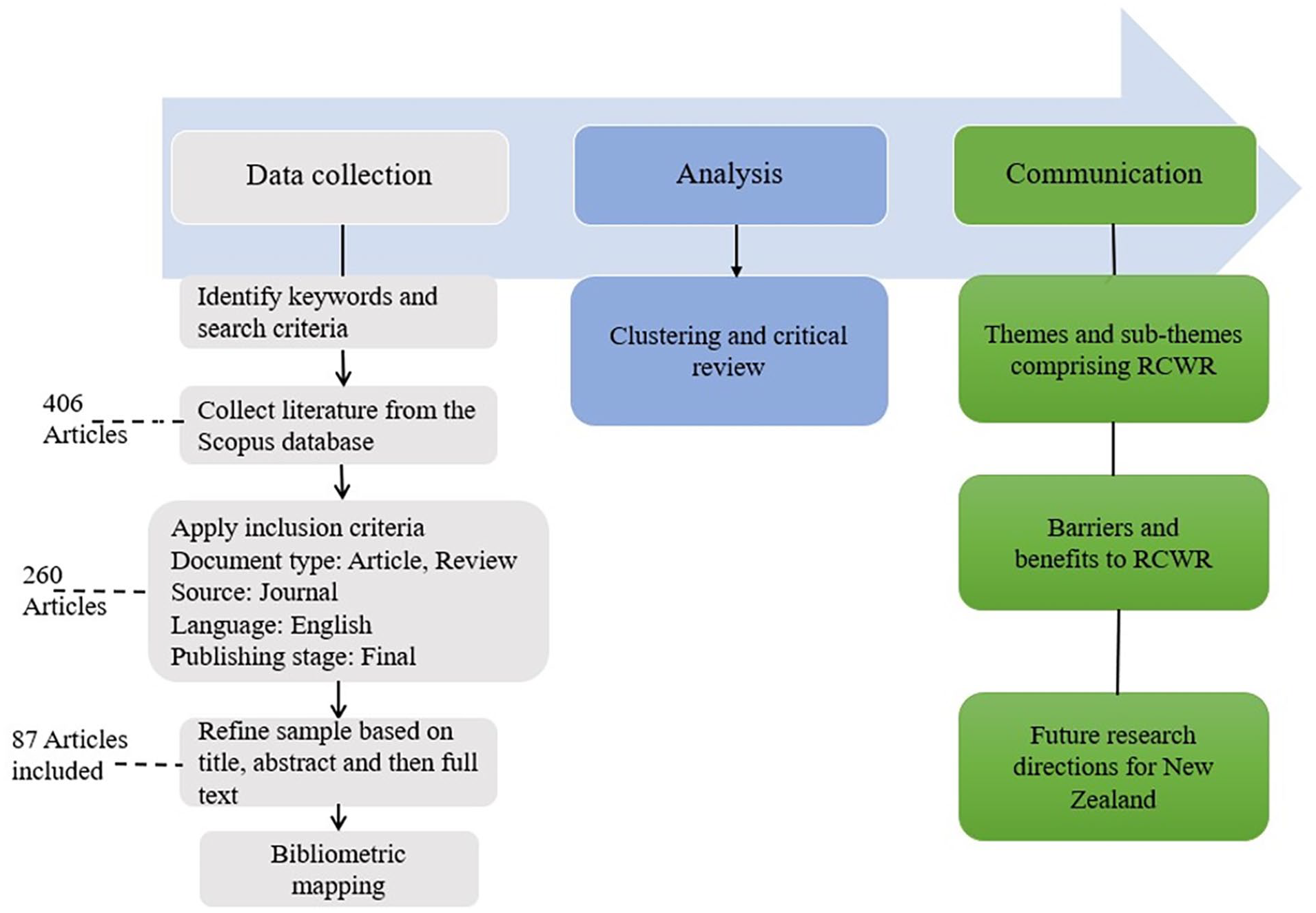
Methodology flow.
Data collection
The data collection process follows a systematic search strategy restricted to the Scopus database through identified keywords and inclusion criteria. Elsevier Co. developed the Scopus database, which offers abstract reading and access to full-text documents (Burnham, 2006; Schotten et al., 2017). The main features of the Scopus database are extensive document coverage and quality. Scopus is the only database with large-scale peer-reviewed articles in all disciplines (Schotten et al., 2017). Compared to other databases, Scopus has the most coverage for recent and peer-reviewed articles (Chadegani et al., 2013). Peer-reviewed articles establish the credibility of research findings and reduce bias (Soderberg et al., 2021). Furthermore, Scopus supports using bibliometric tools over collected data (Sweileh, 2018).
Keyword search is the most critical step in bibliometric analysis because of the significant impact on the study results. Generally, identifying the search criteria requires (i) using generic literal concepts (e.g. ‘construction waste’), (ii) using Boolean operators to narrow or broaden the research area (e.g. AND, OR), (iii) using Truncation technique using symbols such as: *, (e.g. waste minimi* = waste minimisation, waste minimisation). This article used all the options mentioned. Using a comprehensive set of keywords, we aim to ensure that our literature review covers various relevant publications. This approach helps us capture a more holistic view of the research landscape on the chosen topic, ensuring the inclusion of all significant studies and allowing for a more thorough analysis of the research domain.
Initially, a basic search with general keywords was performed on Scopus as follows: (‘construction waste reduc*’ AND ‘residential’). Only nine documents were retrieved. A fundamental literature review was conducted to find related generic literal terms to extract the maximum number of articles available in the RCWR area. Firstly, although this research focuses only on CW, literature tends to group the waste products from demolition and construction activities together (Park and Tucker, 2017). Hence, the term ‘construction and demolition waste’ will be used. Moreover, the publication related to waste reduction would alternatively use a different expression to refer to its fundamental concepts in their work aspect. For example, Ajayi et al. (2014) mentioned that waste reduction is a strategy in CW management that minimises waste at the source.
Waste reduction is the optimal approach in the waste hierarchy following the 3Rs principle (reduce, reuse, recycle) (Kabirifar et al., 2020). Some literature mentioned prevention strategies as powerful tools in CW reduction or minimisation (Esin and Cosgun, 2007; Laovisutthichai et al., 2022). Moreover, Umar et al. (2017) revealed that CW reduction could be achieved through the ‘zero waste’ principle. Other literature highlighted waste reduction as one of the objectives of the ‘circular economy’ (Organisation for Economic Co-operation and Development, 2020).
In addition, keywords such as: ‘sustainable construction’ and ‘sustainable built environment’ have been increasingly regarded for promoting sustainable waste management practices, including waste reduction (Dahiru et al., 2012; Del Río Merino et al., 2010). Hence, the final keywords combination applied for the search criteria is: (((‘Construction waste’ OR ‘construction waste management’ OR ‘construction waste minimi*’ OR ‘waste prevent*’ OR ‘source reduc’ OR ‘construction and demolition waste’ OR ‘construction and demolition waste management’ OR ‘waste reduc*’ OR ‘material* waste’ OR ‘waste minimi*’ OR ‘3Rs principle’ OR ‘zero waste’ OR ‘reduc* waste’) OR (‘sustainable built environment’ OR ‘circular economy’ OR ‘sustainable construction’) AND (‘residential build*’ OR ‘hous* construction’ OR ‘residential construction’ OR ‘residential project*’ OR ‘residential build* construction’))).
The keywords-based search in Scopus returned 406 related publications. An initial filter criterion was created with limitations to include only fully published articles, document type of review and article and document source of journals. Journal articles and reviews are peer-reviewed, achieving the objectives of systematic reviews in reducing bias and improving data quality (Paez, 2017). Moreover, only publications in the English language are selected because it is the spoken language in New Zealand and the most dominant in the international scientific literature (Rao, 2019). After applying the initial filter criterion, 260 articles were retrieved. Regarding the search period, the search concluded in March 2022. Therefore, only articles published up to March 2022 were included in the review.
Further reading to the title and abstract, then the full text to refine the resulting articles based on the research objectives, 87 articles were included. Only articles focused on residential construction and related waste reduction were included. Articles related to the waste reduction of demolition or renovation in residential construction projects were excluded. For example, Sobotka et al. (2019), Cha et al. (2012) and Zhang et al. (2021). The distribution of the annually published articles included in the review is shown in Figure 2.
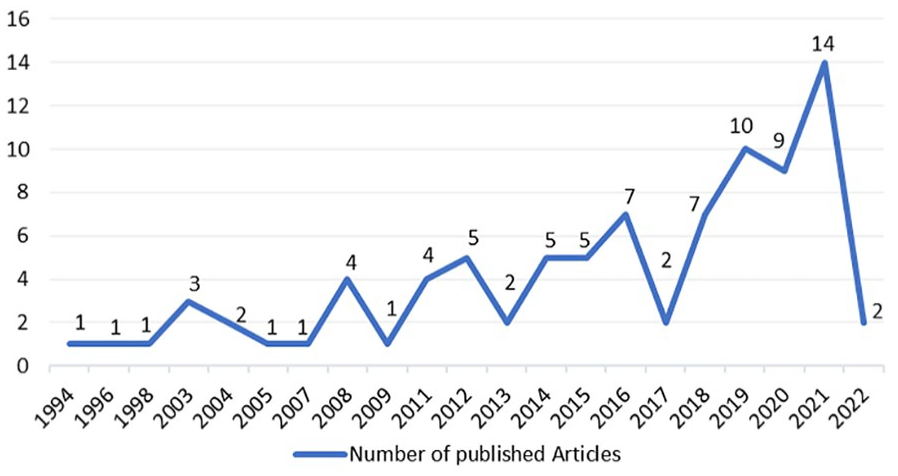
The number of published articles included per year.
Bibliometric mapping
Bibliometric mapping is a quantitative systematic literature review that follows a consistent, comprehensive and evident-based approach to retrieve, systematise and statistically analyse data (Norouzi et al., 2021). Bibliometrics offers quality and quantity indicators valuable in ranking and comparing concepts robustly and reliably (Castillo-Vergara et al., 2018). A fundamental characteristic of this technique is generating a visual map of bibliometrics to envision the emergence of a specific research topic and its gradual structural development. Additionally, bibliometric maps are valuable for understanding the trending research themes and recent research interests over time (Linnenluecke et al., 2020). In this article, the selected bibliometric mapping is the keywords mapping based on the co-occurrence of keywords.
The keywords co-occurrence map is a valuable tool that effectively supports data mining and illustrates the main topics within the selected research area (Wang et al., 2020b). The visual mapping of keywords and their relationship displays the knowledge and order rationale of research themes (Jin et al., 2019). To create the keywords co-occurrence map, the unit of analysis is set to the ‘all keywords’ and ‘full counting’ method. A minimum of three is set for the occurrence of the keyword. Of the 909 keywords, 108 met the threshold. For each of the 108 keywords, the total strength of co-occurrence links with other keywords is calculated by VOSviewer. The keywords with the greatest total link strength selected are 108.
The next step is data cleaning to verify selected keywords, remove duplicates, and provide a more understandable and defined keyword analysis. Hence, general terms such as ‘construction’, ‘demolition’ and ‘waste’ were removed. Keywords with similar idiomatic expressions, for example, ‘construction materials’ versus ‘building material’, ‘residential building’ versus ‘residential buildings’ versus ‘residential construction’, were included in a subsequent round. As a result, 37 keywords in total were included.
Analysis
Cluster analysis and critical review
The included keywords are visualised and clustered in Figure 3 based on the number of keyword occurrences using the VOSviewer. The keywords cluster map shows state-of-the-art advancement in RCWR. Furthermore, it helps to find how different subfields are interconnected and find the potential opportunities for bridging the gaps between subfields.
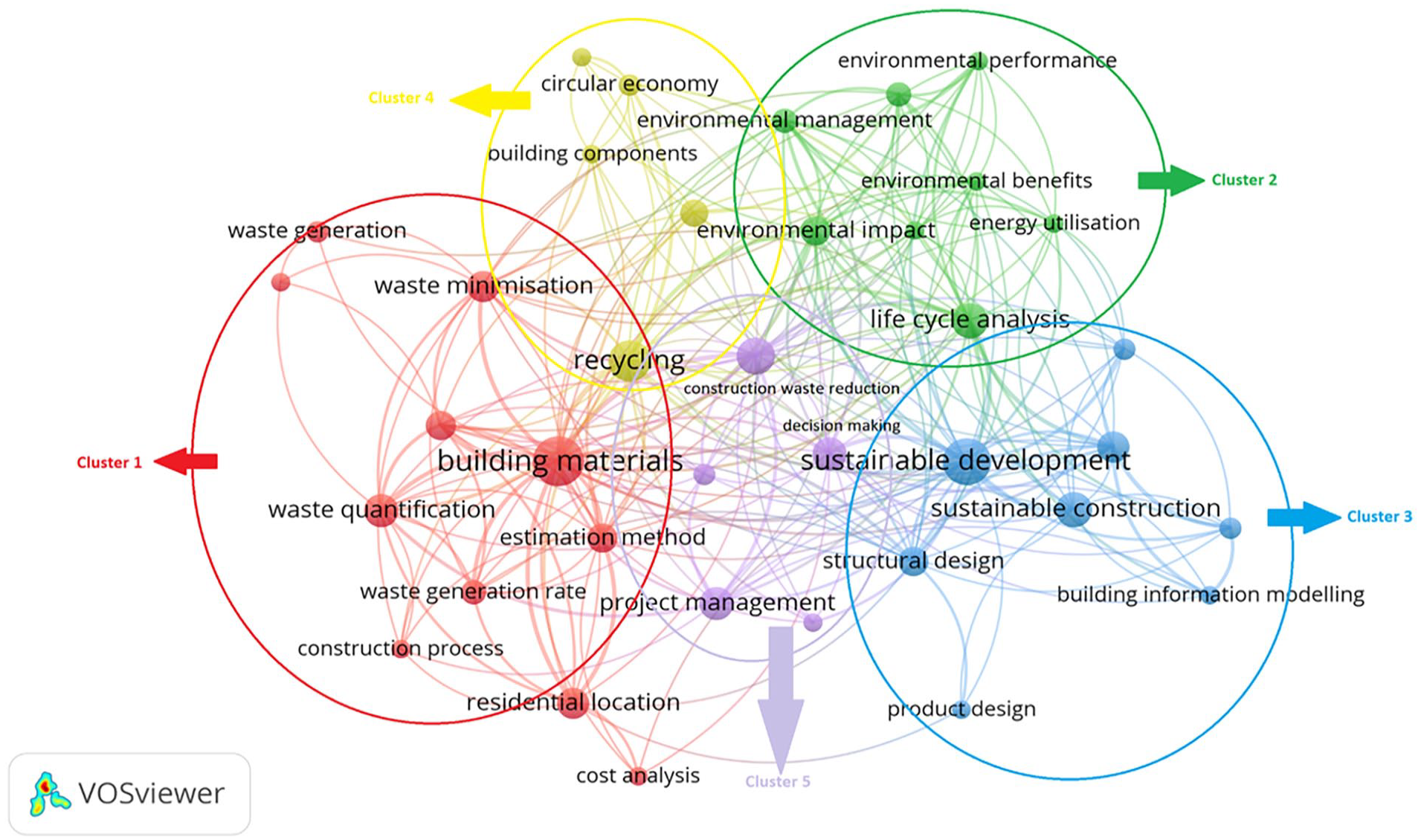
Clusters based on keyword occurrences map.
This article proposes using combined methods of cluster analysis and critical review to give an in-depth analysis of the RCWR review. Cluster analysis is a technique for statistical data analysis and knowledge discovery used to identify the semantic themes hidden in the textual data (Daud et al., 2010). The keywords are clustered by the correlation among terms, simplifying the formulation of themes (Li et al., 2018). Additionally, the generated theme of each cluster is based on the keywords of the articles cited in the cluster and represents the cluster’s focus. However, some critical articles could be overlooked because of the small number of related keywords. Therefore, a critical review was conducted to eliminate subjective interpretation, gain reliable knowledge and overcome the limitations of co-occurrence analysis in answering the research questions.
Based on the cluster analysis results in Figure 3, several clusters highlight the keywords of fields of study focused on RCWR. The keywords in RCWR can be classified into five themes as follows: cluster 1: waste generation and management performance; cluster 2: prefabrication and life cycle assessment (LCA) concepts in RCWR; cluster 3: design concepts in RCWR; cluster 4: recycling and circular economy and cluster 5: decision-making concepts in RCWR. Subsequently, these clusters are discussed to construct a holistic view of RCWR research.
Figure 4 represents the density visualisation that distinguishes the keywords of interest in RCWR research from the other terms (Ranjbar-Sahraei and Negenborn, 2017). The red hot spot areas with the highest occurrence of keywords are building material, sustainable development, recycling and sustainable construction. These keywords are pivotal due to their distinct contributions to RCWR and their prevalence in advancing novel research.
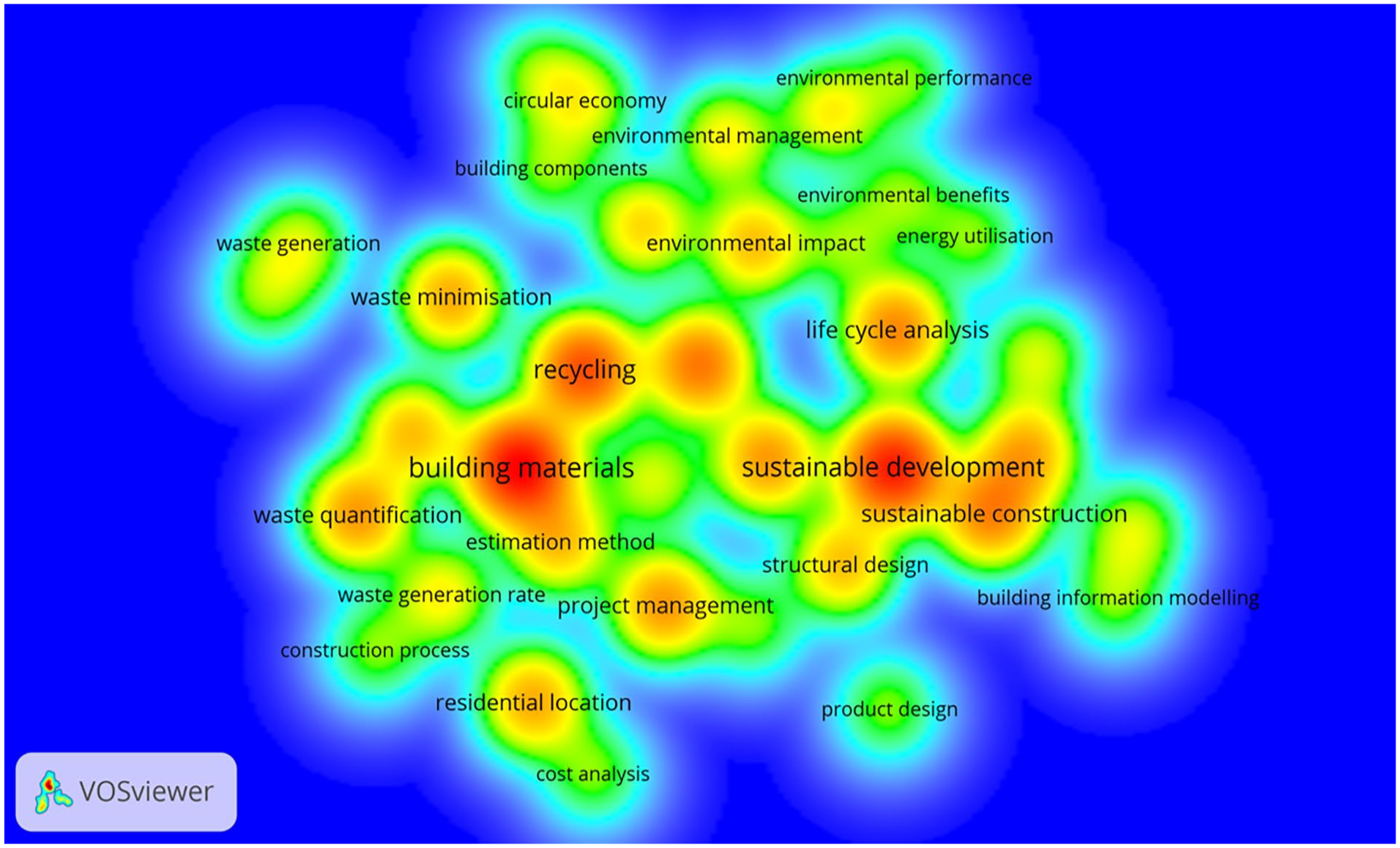
Density visualisation for the keywords of interest in RCWR research.
To complement the keywords cluster analysis, Figure 5 illustrates the evolution of the keywords for the RCWR research to understand the trend of the research timeline and determine future research directions (Ranjbar-Sahraei and Negenborn, 2017). A significant increase in publications after 2016 could be due to the United Nations issuing the globally adopted 2030 Agenda for Sustainable Development. The rise in publications and the frequency of relevant keywords indicate the ongoing efforts to align RCWR research with achieving sustainable development goals (SDGs). The recent and future hot spot keywords in research themes are circular economy in cluster 4, decision-making in cluster 5 and building information modelling (BIM) in cluster 3 (see Figures 3 and 5).
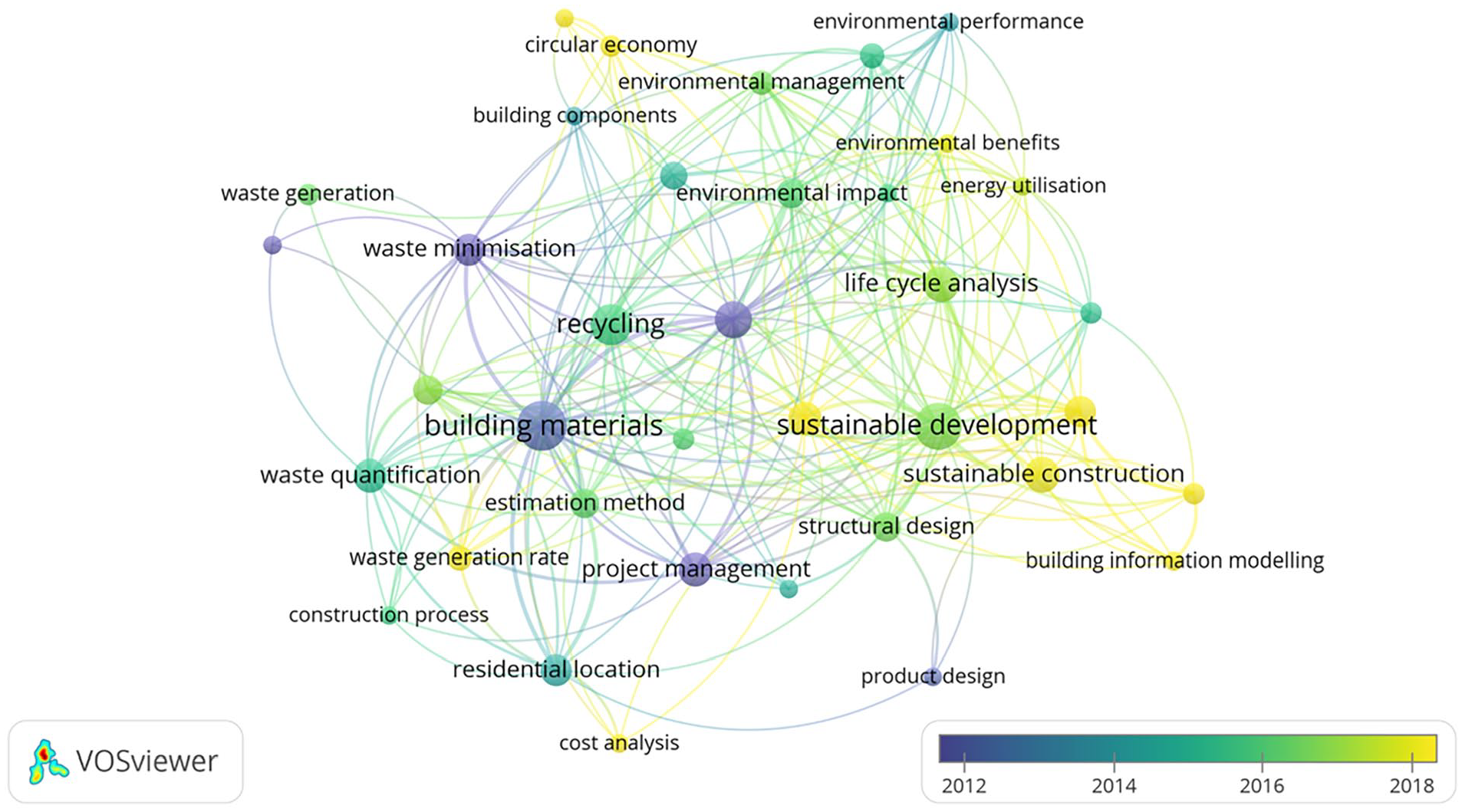
The evolution of the keywords of interest in RCWR research.
Cluster 1: Waste generation and management performance
Several studies have suggested that estimating CW is critical information in decision-making regarding CW management performance. A pivotal study by Seeboo (2022) revealed that CW generation and waste management performance are affected by decisions related to the characteristics of residential design, mainly the selection of building materials and the floor area size. Domingo and Batty (2021) argued that estimation methods of CW generation have limitations due to the differences in design, construction methods and building materials in various residential projects. Therefore, researchers have formulated estimation methods and identified indicators to examine CW generation and understand the effects on CW management performance. The floor area is the most widely used indicator for estimating CW generation in RCWR literature. A few examples are Sáez et al. (2014), Sáez et al. (2015), Li et al. (2013b) and Domingo and Batty (2021) developed CW generation rates based on the weight of waste per floor area. In addition, Fernandes da Paz et al. (2019) highlighted that waste generation and floor area size are inversely related. However, Maués et al. (2020) described the number of floors as a prime indicator for CW generation. Furthermore, Wang et al. (2020a) found that CW generation rates vary at the same construction stage because of the differences in construction methods applied. Therefore, the advice of including indicators for CW generation by construction stage, introduced by Fernandes da Paz et al. (2019) and Katz and Baum (2011), is a valid argument.
Numerous studies have been published within the nomenclature keyword ‘waste quantification’, which comprehends estimating, forecasting or quantifying CW generation (Maués et al., 2020). Forecasting CW generation is a vital requirement of the project waste management plan that enables designing informed and early RCWR goals and strategies (Maués et al., 2020; Quiñones et al., 2021). A practical and project-specific waste management plan that includes all construction phases is significant in optimising RCWR (Poon et al., 2004a; Ratnasabapathy et al., 2020). For instance, the availability of data about CW quantity and composition provides the correct information for waste reduction planning before commencing construction work. It guides the formulation of policies and prioritisation of waste management strategies (Mália et al., 2013; Subramaniam et al., 2018). In addition, correct and rich information about the CW type, quantity and construction stage helps identify proactive measures for high-priority waste materials and allows benchmarking sustainable residential construction practices (Kelly & Hanahoe, 2008; Villoria Sáez et al., 2012).
Tailoring an RCWR plan should aim for an adequate selection of building materials that reduce waste generation and energy and raw materials consumption (Bissoli-Dalvi et al., 2016). A suitable selection of residential building materials establishes efficient CW reduction and improves the overall environmental benefits (Cherian et al., 2020). Thus, the concept of material control in RCWR has been introduced by optimising the design, procurement and installations and on-site management strategies (Poon et al., 2004b). Building materials have received intense research interest concerning the relation to RCWR; see Figures 4 and 5. Identifying indicators for residential building materials optimises waste reduction and helps benchmark the most wasteful and challenging materials to reduce (Mahpour et al., 2019). A deeper understanding of residential locations’ characteristics, particularly land-use regulations and geographical characteristics (Fulton et al., 2020; Umar et al., 2018), supports sustainable construction practices that positively benefit waste and cost reduction. The residential project’s time and cost, choice of materials, technological aspects and design are the barriers to adopting sustainable practices (Poon et al., 2003). Since residential construction projects are time-critical, the RCWR plan must consider the time factor and apply procurement strategies focused on waste reduction (Tam et al., 2007).
Cluster 2: Prefabrication and LCA concepts in RCWR
The existing conventional methods and building materials in residential construction are causing considerably severe environmental impacts (Wang et al., 2020a). Prefabrication is receiving growing interest as a residential construction method that supports waste reduction at the source and enhances sustainable environmental performance (Hao et al., 2021; Jiang et al., 2019; Zhai et al., 2014b). Unlike conventional methods, prefabrication in residential construction is significant for achieving sustainable development due to balancing environmental and economic benefits (Nan & Jie, 2020). Furthermore, using prefabricated components in residential construction has benefits (Hao et al., 2021) in (i) achieving effective RCWR, (ii) reducing the cost of CW management and (iii) minimising the environmental and social impacts of CW.
A detailed examination of prefabricated materials in residential construction showed a significant reduction in materials use and contributed to low energy consumption (Cherian et al., 2020). Likewise, Kedir and Hall (2021) suggested that materials designed through prefabrication improve the overall residential project lifecycle by contributing to RCWR and materials consumption. However, Sáez et al. (2014) pointed out that packaging waste hindered efficient waste reduction when using prefabricated material. Hence, the study suggested optimising procurement strategies by pursuing less packaged materials, complying with manufacturing guidelines for material transportation and installation, partnering with suppliers to reduce waste, and performing on-site reduction strategies. The prefabrication technique of precast design in structural elements has achieved RCWR successfully. However, one problem with this technique is the limited application to only residential designs of repetitive and standard features (Baldwin et al., 2009). Moreover, steel and timber prefabricated structures are proven to achieve satisfactory waste reduction and energy efficiency rates (Aye et al., 2012).
Moreover, the concept of LCA emerged recently and is generally employed to evaluate the environmental impacts or benefits of residential construction methods and materials. For example, Kakkos et al. (2020) employed LCA to evaluate the potential of utilising waste materials as secondary resources in residential construction. On the one hand, it contributes to RCWR; on the other hand, it maximises environmental protection and energy efficiency. Llatas et al. (2021) argued that existing research using the LCA method is particularly interested in evaluating the benefits of non-prevention measures that deal with CW after being produced, which requires waste treatment methods such as recycling and reuse. The study endorsed scenarios focusing on preventing waste before it is generated by designing and implementing RCWR strategies at the source.
Cluster 3: Design concepts in RCWR
The concept of sustainable construction includes the principles of economic, environmental and social sustainability (Tatjana et al., 2021). Thus, residential design decisions must respond to people’s needs and maximise the environmental and economic benefits. On the other hand, design decisions in RCWR are associated with material selection (Seeboo, 2022) and achieving source reduction needs efficient design approaches such as design for deconstruction and prefabrication (Ratnasabapathy et al., 2020).
The design for the RCWR approach observed in studies applied the concept of information theory, thus incorporating mathematical algorithms to optimise waste reduction in design. For example, Manrique et al. (2011) applied such an approach in frame design and endorsed a wood waste reduction result. The study concluded that material waste reduction contributes to economic and environmental benefits, which promotes sustainable construction. However, using algorithms could increase complexity and limit the method’s applicability. Another application is the barcode approach to control and reduce on-site CW through incentives (Li et al., 2003).
BIM is an assessment tool helpful in managing digitised data across the project lifecycle and guiding design decision-making (Georgiadou, 2019). BIM’s benefits are optimising design planning and reducing material waste (Liu et al., 2018), such as developing material passport tools with BIM (Honic et al., 2019). A material passport is a tool that details building material installation during construction and recovery alternatives at the end-of-life stage (Atta et al., 2021). Software tools, such as BIM, enhance the design process and RCWR performance. For example, Quiñones et al. (2021) proposed that BIM is a valuable tool for estimating CW during the early design stages. Furthermore, Georgiadou (2019) argued that existing research repeatedly addressed BIM advantages in promoting collaboration and integration of innovative processes despite the benefits of BIM in RCWR.
Poor design decisions contribute 30% of generated CW (Seeboo, 2022). Specifically, design decisions related to the residential build design and structural components. Material waste reduction could be achieved by optimising the architectural panels’ design and manufacturing process (Rausch et al., 2021). Lekan and Segunfunmi (2018) and Wang et al. (2020a) supported this view and indicated that efficient designs requiring no design alteration or rework significantly reduce CW. Residential design approaches adopting information modelling enable designers to visualise complex design and construction processes, leading to more efficient design approaches (Baldwin et al., 2009). In addition, considering LCA in terms of cost, environmental and social impacts supports informed decision-making by designers (Baldwin et al., 2008).
Another efficient design approach is three-dimensional printing (3DP) technology. The implementation of 3DP technology has been endorsed in obtaining sustainable residential construction design (Singh et al., 2021; Zhang et al., 2019). However, the main limitation of 3DP is that the printability and quality of 3D printed material depend on the functionality and mechanical features of the required material, presenting a potential limitation (Zhang et al., 2019). To overcome this limitation, the quality of mixed materials and printing specifications can be improved to enhance printability. 3DP offers several benefits to sustainable residential construction practices, including waste reduction and the ability to produce materials with high-precision design characteristics, resulting in reduced construction costs and increased efficiency (Tahmasebinia et al., 2018, 2020).
Cluster 4: Circular economy
The central theme in this cluster is that the transition into a circular economy is facilitated by achieving RCWR and developing sustainable construction practices that promote recycling and efficient resource consumption (Quiñones et al., 2021). Furthermore, the shift into applying the concepts of circular economy to stages of materials manufacturing and residential design and construction will achieve higher rates of reusing and recycling and lead to RCWR instantly (Shooshtarian et al., 2021). The interest in the circular economy concept has emerged recently and is a hot research spot in RCWR; see Figures 4 and 5.
Performing efficient recycling and reduction strategies starts with a CW management plan in the design phase that includes incentives to promote implementation (Kakkos et al., 2020). Alternatively, for on-site practices, CW sorting is the best way to optimise the number of recycled materials (Sáez et al., 2014). Hence, allocating an adequate number and size of bins in working site areas is significant to recycling practice (Sáez et al., 2014). Consequently, poor site management practices hinder efficient waste data collection, and recycling decisions are cost-driven instead of environmental benefits (Lau et al., 2008). At the same time, cost minimisation is a direct benefit of waste reduction (Bossink and Brouwers, 1996). A further suggestion is to identify and prioritise materials for recycling in the waste management plan (Boser and El-Gafy, 2011).
Enhancing CW sorting, promoting financial incentives for recycling, and imposing fees on CW landfills were suggested to boost the economic performance of RCWR (Hao et al., 2019). Moreover, integrating multiple waste reduction strategies would achieve more desirable outcomes in RCWR (Hao et al., 2019). A key concept in recycling is enabling the recovery of materials wastes and keeping them in use, establishing the linkage between recycling, circular economy and RCWR (Arab et al., 2021). Waste trading is another RCWR strategy, allowing material wastes to be reused, recycled and recovered from landfills (Ratnasabapathy et al., 2020). Thus, waste trading promotes circularity and efficiency by reselling and exchanging waste materials, coupling value with waste.
Preventing waste generation, also termed waste prevention, is the optimal objective over recycling and could be enhanced through the design phase. However, recycling could be challenging for some materials, such as wood waste, because the contamination risk requires high technological innovation and cost to facilitate materials recovery (Kern et al., 2018). Thus, investigating and evaluating influential factors concerning residential design and on-site installation of wood materials helped implement strategies that resulted in significant waste reduction.
Facilitating the reusing of building components and materials reduces CW and allows for recycling to enhance the potential of circularity (Arora et al., 2019; Lehmann, 2012). Furthermore, understanding the material flows of residential construction opens new ways to how waste is created and what construction methods need to be optimised, which could significantly reduce waste and change the industry’s behaviour.
Material flow analysis assesses the stock and flow of building materials, CW generation and material recyclability in residential construction (Condeixa et al., 2017; Tazi et al., 2021). In addition, the method helps examine the circularity potentials of residential building materials. Information collected about the consumption, use and landfilled residential building materials offers new perspectives in evaluating the construction processes and improving source reduction strategies (Tazi et al., 2021).
Cluster 5: Decision-making concepts in RCWR
The highlight of this cluster is that developing decision-making tools to support sustainability and RCWR in residential construction should include environmental, economic and social indicators along with stakeholder satisfaction. Improving decision-making in designing and selecting building components enhances sustainability performance and RCWR. Gilani et al. (2022) developed a tool to assess sustainability in facade design and selection, emphasising stakeholder integration and bias elimination in indicator definition.
The social criteria are often overlooked in decision-making tools for sustainability in residential construction. Shooshtarian et al. (2021) highlighted the need to understand end-users requirements in residential construction decision-making and sustainable planning. Following this concern, the study suggested that current decision-making frameworks have become inadequate because of the failure to assess the social aspect of sustainable residential construction. A decisive aspect of social sustainability indicators in residential construction is the functionality and resilience of the architectural residential design (Fatourehchi and Zarghami, 2020). Therefore, making decisions related to the environmental sustainability of design, which includes RCWR, must consider end-user satisfaction with the architectural design.
The rise in environmental awareness and costs associated with CW management necessitates sustainable decision-making in residential construction practices (Gavilan and Bernold, 1994). The study suggested that decision-makers need information about sources of CW to assess efficient planning for source reduction. Furthermore, Gavilan and Bernold (1994) argued that indicators representing environmental criteria have limited effect in most decision-making models because of the challenging environmental impact quantification.
Current environmental assessment tools have limited performance due to differences in issues, criteria and weighting (Wallhagen and Glaumann, 2011; Wu et al., 2016). For example, Yan et al. (2012) challenged the decision-making assessment criteria in green residential buildings for allocating higher weight to energy efficiency than CW reduction. In addition, multiple stakeholders with different interests are responsible for creating residential construction for environmental benefit (Wallhagen and Glaumann, 2011). RCWR is one of the environmental benefits of applying innovation in residential construction (Sitek and Tvaronavičienė, 2021). However, the cost could hinder the implementation of RCWR practices; hence, it is vital to budget the CW management cost earlier in project planning (Jingkuang et al., 2012; Sun et al., 2019; Umar et al., 2018). For example, Liu et al. (2019) indicated that integrating budgeting for CW reduction in bidding is valuable in informed decision-making because of assigning responsibilities, realising the economic benefits of RCWR and promoting efficient recycling-reusing strategies.
Sufficient RCWR can be enhanced through adequate project management strategies such as efficient material time delivery and storage and sustainable procurement to prevent loss and enhance material reuse (Umar et al., 2018). In addition, improvement in waste management practices requires support in regulation, policy formulation and innovative technology, which incorporate a responsibility to multiple stakeholders. An earlier study by Jaillon and Poon (2008) aimed to assess prefabrication’s sustainable aspects (economic, environmental and social). Results indicated that an associated increase in cost when adopting a sustainable construction method is balanced by reducing waste, time and site activities, resulting in improved quality and environmental performances.
Communication
The identified vital themes provide an in-depth understanding of the state of the art in RCWR, which comprehensively addresses RQ1. The analysis also sheds light on sustainable construction practices for achieving RCWR in response to RQ2. In response to RQ3, ‘RCWR benefits’ and ‘RCWR barriers’ sections identify and explore the barriers and benefits integral to implementing RCWR, offering valuable insights for overcoming challenges and maximising benefits.
Themes and sub-themes comprising RCWR
The presented literature review generated interconnected themes and sub-themes that comprise RCWR concepts, as illustrated in Table 1. After identifying and interpreting the dominant theme of each cluster, more specific sub-themes were derived and categorised. Quantifying CW was found to be a necessary step preceding design, as valuable information about the material waste composition and weight is critical in design features. Thus, materials of higher waste profile could be prioritised, and construction methods could be evaluated to avoid wasteful features and optimise RCWR earlier in design. Consequently, design decisions characterise the weight and composition of residential CW.
Themes and sub-themes comprising RCWR.
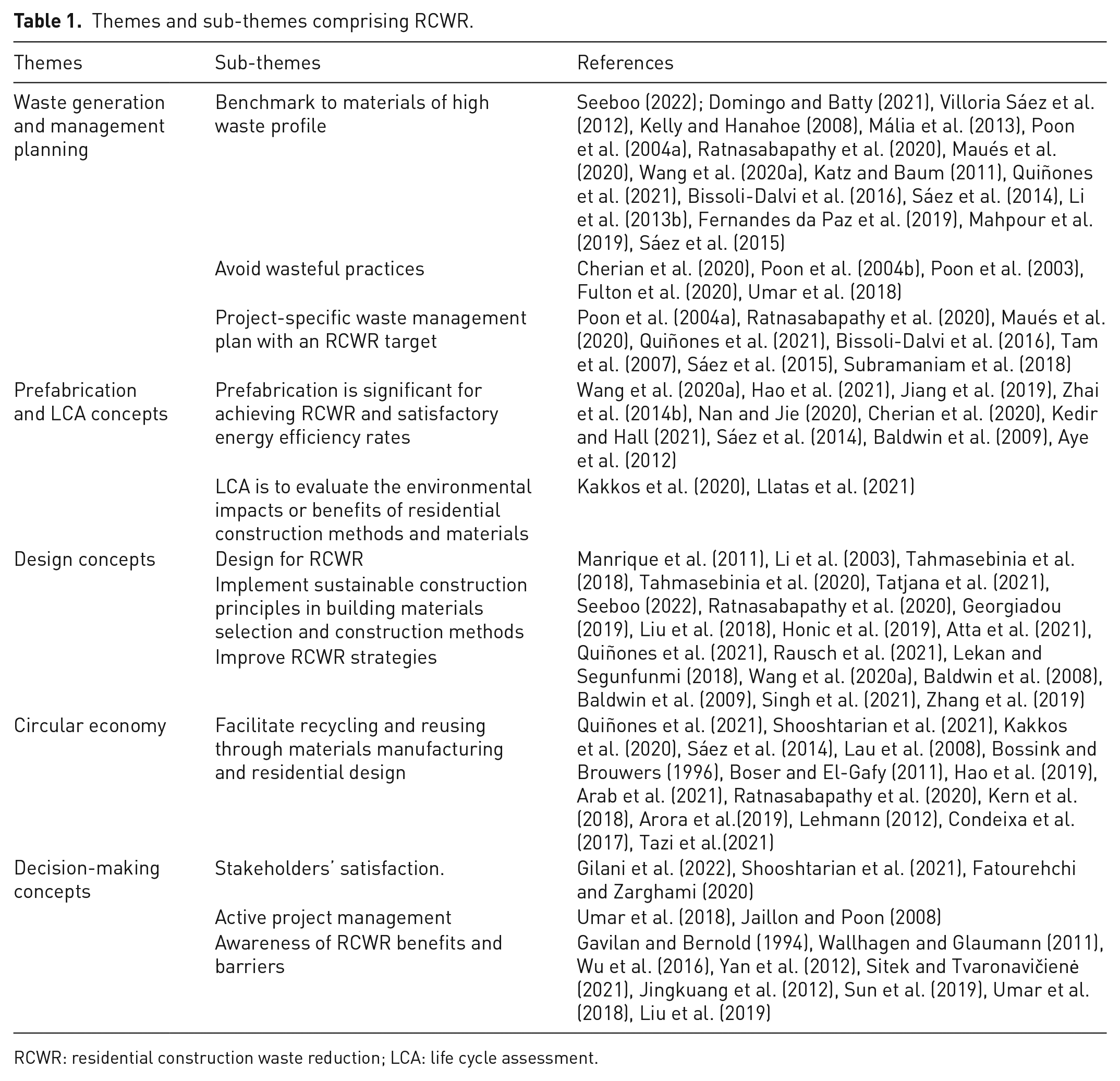
RCWR: residential construction waste reduction; LCA: life cycle assessment.
Moreover, concepts related to residential design decisions can be categorised into construction methods and building materials. These aspects must be assessed based on economic, environmental and social principles to ensure sustainable construction. A key finding is that residential design decisions must respond to stakeholders’ needs and maximise the environmental and economic benefits. To address policy and regulation issues, stakeholders’ satisfaction is required to guide RCWR. However, RCWR needs more legislation and an incentive strategy. The review also revealed a lack of engagement and understanding of stakeholders’ roles in RCWR, which hinders collaboration and partnerships.
The literature suggests that optimising residential design, promoting material recyclability and reducing waste directly benefit RCWR and the circular economy transition. The analysis reveals that sustainable construction practices supporting RCWR design include BIM, 3DP, design for deconstruction and prefabrication or off-site manufacturing. Implementing these practices has led to high rates of source waste reduction and less waste sent to landfills. Recycling has also been recognised as a sustainable practice contributing to RCWR and the circular economy. However, waste avoidance through implementing design for waste reduction practices is essential for RCWR. In addition, effective waste management planning during the initial stages of residential construction projects can contribute to better RCWR performance. Therefore, sustainable procurement strategies and on-site practices, particularly waste sorting, are encouraged and recognised as effective measures for increasing RCWR rates.
The environmental assessment based on the two primary concepts of environmental benefit and impact is critical to decision-making. LCA is the most sustainable and effective practice for pursuing environmental assessment. However, the review suggests that the environmental assessment should be through the project lifecycle and against unique criteria for RCWR.
RCWR benefits
Reducing the environmental impacts of residential CW is notably recognised as a benefit and driver for New Zealand’s commitment to reducing emissions and promoting sustainable development. Although several reviewed articles have not directly mentioned the benefits of RCWR, the reported benefits are related to the application of RCWR practices due to the increasing interest in evaluating the environmental impact of such practices. A summary of the benefits of achieving RCWR is reported in Table 2, serving as a guide for policymakers and stakeholders in New Zealand’s residential construction sector to promote and implement sustainable practices of RCWR.
Summary of benefits of achieving RCWR.
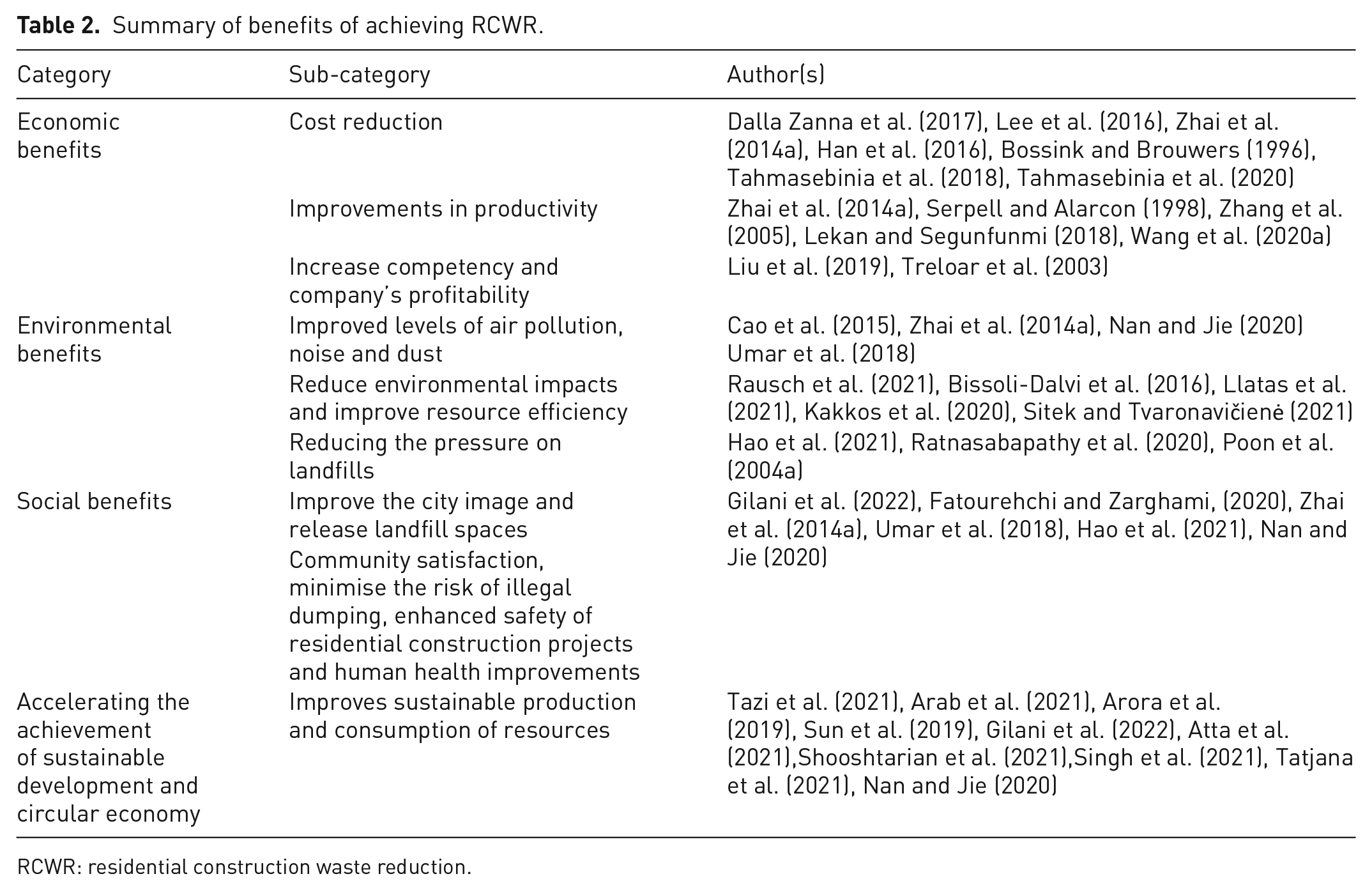
RCWR: residential construction waste reduction.
For instance, Cao et al. (2015) reported that waste reduction from adopting prefabrication contributed to a reduction in resource consumption (35.82%), health damage (6.61%) and ecosystem damage (3.47%). Moreover, Nan and Jie (2020), Umar et al. (2018) and Zhai et al. (2014a) have reported improved levels of air pollution, noise and dust contributing to improvements in human health. In addition, reducing waste would reduce landfill pressure (Poon et al., 2004a; Ratnasabapathy et al., 2020) due to the increased potential for recycling and reusing building elements (Zhai et al., 2014a). As a result, releasing landfill spaces improves the city’s image, contributes to community satisfaction, minimises the risk of illegal dumping and improves human health.
The economic benefits of RCWR are linked to achieving cost reduction, productivity improvements and increased company competency and profitability. For example, Han et al. (2016) reported that adopting BIM reduced material waste with a total cost saving of 4.3% and cut the project’s period by 15 weeks earlier. In addition, early residential project delivery increases the competency and profitability of companies (Zhai et al., 2014a). Moreover, Zhang et al. (2019) reduced up to 80% of labour costs, 60% of CW and 70% of production time by implementing 3DP concrete. Furthermore, productivity benefits are linked to RCWR concepts of efficient design that eliminate the need for rework (Lekan and Segunfunmi, 2018; Wang et al., 2020a).
Increasing research efforts are devoted to linking sustainable development, circular economy and energy efficiency with RCWR; see Figures 4 and 5. According to Singh et al. (2021), improvements in material consumption achieve the SDG of resource consumption-SDG 12. Similarly, Tazi et al. (2021) linked improvements in waste reduction rates and the production and consumption of raw residential construction materials to climate change mitigation, which comprises SDGs 11, 12 and 13. Furthermore, by boosting circular thinking, the consumption of raw materials is minimised, whereas manufacturing materials and end-of-life options for residential construction materials have a less environmental impact.
RCWR barriers
For New Zealand to enable RCWR, more profound knowledge of the barriers that could hinder implementing reduction practices is required. The reviewed studies have identified various barriers from different perspectives, summarised and categorised in Table 3. By addressing these barriers, policymakers, researchers and practitioners can develop effective strategies to overcome barriers and promote RCWR.
Summary of barriers to achieving RCWR.
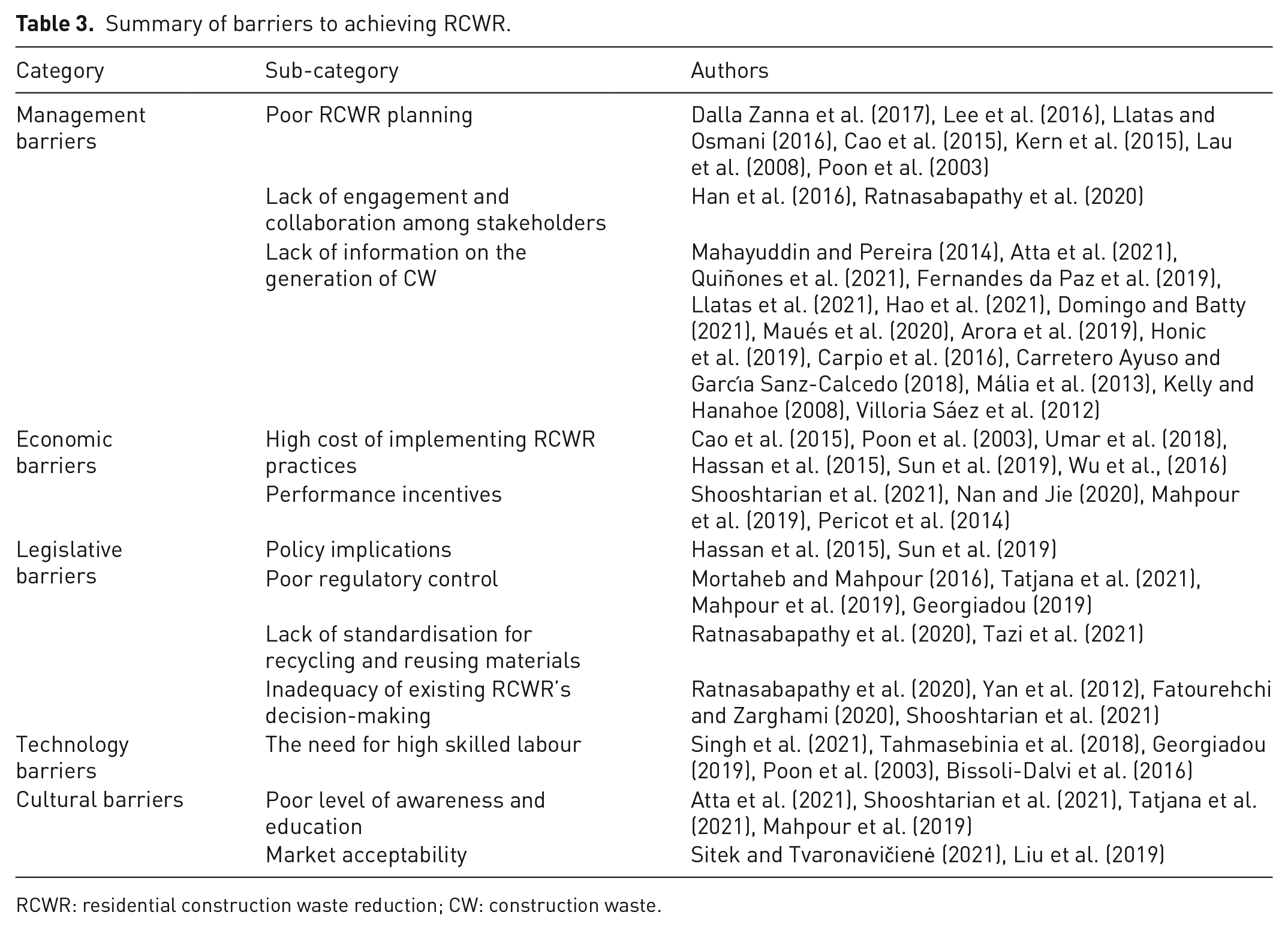
RCWR: residential construction waste reduction; CW: construction waste.
Management barriers
Enabling RCWR is being hindered by several management barriers. According to Dalla Zanna et al. (2017) and Lee et al. (2016), efficient planning for RCWR lacks a waste plan that includes well-defined and measurable goals and targets for waste reduction. Kern et al. (2015) suggested that waste reduction could be embedded in the arrangements and contractual documents to establish responsibility and commitment. Furthermore, the lack of information on the generation of CW has been broadly discussed. The performance of RCWR management plans and practices could be improved by understanding CW characteristics and indicators for CW generation. Furthermore, a lack of quantitative information hinders the designing of effective RCWR strategies in the residential project plan (Cao et al., 2015; Llatas and Osmani, 2016). Poor RCWR planning also includes poor site management practices critical to achieving RCWR, such as waste sorting and adequate handling of materials (Lau et al., 2008; Poon et al., 2003).
Stakeholders play a critical role in achieving RCWR. However, the lack of practical tools that promote stakeholder involvement in implementing the concepts of RCWR could be a barrier to building collaborations in this area (Han et al., 2016; Ratnasabapathy et al., 2020). Hence, Gilani et al. (2022) suggested that developing a practical decision-making framework to integrate stakeholders’ interests in RCWR could enhance stakeholders’ involvement. In addition, recent literature criticised the lack of policy regulation and performance incentives that promote CW reduction among stakeholders (Mahpour et al., 2019).
Economic barriers
The economic impacts of RCWR have not been widely explored yet. For instance, Umar et al. (2018), Cao et al. (2015), and Poon et al. (2003) have reported that the high costs of implementing waste management practices could limit achieving RCWR. The increased costs are related to additional labour to sort CW on-site, given that residential projects are limited in time and cost, or the associated costs of applying emerged technologies (Wu et al., 2016). Therefore, Jingkuang et al. (2012) suggested a budget plan for RCWR implementation. Moreover, Shooshtarian et al. (2021) and Nan and Jie (2020) highlighted that the lack of financial incentives and the high cost of recycling hinder the adoption of sustainable practices. Hence, Nan and Jie (2020) suggested developing a rewarding scheme to overcome this barrier.
Legislative barriers
Policy formulation and regulation significantly stimulate the interest in RCWR and guide its progress (Mahpour et al., 2019; Mortaheb and Mahpour, 2016). For example, Tatjana et al. (2021) suggested regulating the environmental impacts of construction activities, whereas Georgiadou (2019) described the legislation as the key to driving a change in the industry.
Formulating effective policies and regulations needs support from decision-making tools. However, existing decision-making tools are limited to sustainability assessment in residential construction and lack a complete RCWR tool (Fatourehchi and Zarghami, 2020; Shooshtarian et al., 2021). Moreover, the reviewed literature addressed that these tools have not yet fully implemented the social criteria.
Literature addressed a lack of RCWR criteria in sustainability assessment tools. For instance, Sun et al. (2019) highlighted the low weights for waste management in the green building certification tool, which limits the ability to design practical RCWR strategies. Hence, there is a need for more robust policies in green building that solely target RCWR criteria.
Policies might cause implications such as rising costs and a lack of knowledge regarding the impacts of CW and the possibilities of reduction (Hassan et al., 2015). Therefore, policy formulation must focus on raising awareness and promoting knowledge in RCWR. Mahpour et al. (2019) and Hassan et al. (2015) suggested motivating stakeholders about the environment and sustainable CW management practices.
Technology barriers
Emerging technologies, such as 3D printing, actively contribute to achieving RCWR. However, the specialised knowledge and highly skilled labour required to operate these technologies can increase costs and pose integration challenges with existing practices (Georgiadou, 2019; Poon et al., 2003; Singh et al., 2021; Tahmasebinia et al., 2018). One suggested approach is to develop user-friendly tools that provide clear information, which can be a viable alternative to non-complex projects (Bissoli-Dalvi et al., 2016).
Cultural barriers
The poor level of awareness and education about the RCWR benefits and sustainable practices among stakeholders was found to be a barrier to the uptake of RCWR practices, creating resistance to changing the culture of conventional methods (Atta et al., 2021; Mahpour et al., 2019; Shooshtarian et al., 2021; Tatjana et al., 2021). The level of awareness and education plays a crucial role in changing the stakeholder’s behaviour and the market demand towards adopting more sustainable building materials and practices (Liu et al., 2019; Sitek and Tvaronavičienė, 2021). Market demand can shape the accessibility and acceptability of RCWR in the industry.
Future directions for RCWR in New Zealand
This section addresses RQ4 with insights that give New Zealand a clear trajectory for future directions in RCWR, guiding policy and practice. New Zealand can acquire valuable insights from prior implementations of construction practices and policies in other countries by comprehending the concepts of RCWR. Thus, New Zealand can identify areas that require improvement to make informed decisions for shifting towards a circular economy. Additionally, highlighting the future direction for RCWR can provide New Zealand with valuable knowledge and steer the development of processes and practices that emphasise long-term sustainability within the residential sector.
Residential CW displays significant variations in weight and composition. These differences are attributed to various factors, such as the building’s design features, construction methods and materials. Thus, informed design decisions, sustainable construction practices and early waste management planning are essential for enabling RCWR in New Zealand.
As the reviewed literature indicates, estimating CW generation is deeply rooted in design concepts and critical to RCWR planning. Identifying indicators for estimating CW is necessary to advance knowledge of the practices and materials that primarily influence CW generation. In New Zealand, the recent study by Domingo and Batty (2021) sheds light on the importance of considering factors such as the size of the residential construction project, the type of construction materials used and the construction methods employed to enhance design for waste reduction outcomes. New Zealand can enhance the adequacy of data on residential CW by implementing a standardised system with clear guidelines for quantifying and reporting waste and by regularly monitoring and evaluating the waste data to identify areas for improvement and track progress towards tailored RCWR targets.
Future research could examine the effectiveness of substituted materials and sustainable construction practices, such as prefabrication, and assess the potential benefits of achieving RCWR in New Zealand. In this regard, there has been a recent increase in momentum for using prefabrication (Brown et al., 2020; Ghose et al., 2017; Luo and Shahzad, 2020) and LCA (Moradibistouni and Gjerde, 2017) in New Zealand. Prefabrication and LCA can play a vital role in waste reduction and establishing a circular economy in residential construction. Researchers could explore the benefits of using energy-efficient and recycled building materials and construction methods to enable RCWR in New Zealand.
Policy planning in New Zealand could promote RCWR through prefabrication and LCA, explore the feasibility and potential benefits of implementing circular economy principles in prefabricated components and develop guidelines and standards for sustainable prefabrication practices and materials selection. Case studies could also demonstrate the barriers and opportunities for adopting such practices in the residential sector while considering the impact of policy and regulatory frameworks on incentivising sustainable practices.
To enhance the environmental, social and economic benefits of RCWR, sustainable construction principles should be incorporated into the overall residential construction process. Various assessment tools have been created through previous research to facilitate sustainable decision-making. Nevertheless, decision-makers in New Zealand must be aware of the factors influencing RCWR and the stakeholders’ interests to develop alternatives and assess trade-offs effectively. Although the literature acknowledges the presence of various stakeholders, identifying the key stakeholders in RCWR has not been established yet. Decision-makers and policy formulators in New Zealand could benefit from qualitative and quantitative research identifying and examining factors influencing the adoption of RCWR strategies.
The literature has paid limited attention to the social criteria despite the impact on residential design and waste reduction. In addition, the lack of quantitative knowledge about the economic benefits is a significant barrier to adopting circular economy principles. Therefore, stakeholders need to comprehend the economic benefits of RCWR through the lens of the circular economy model by evaluating various case studies on successful business practices.
Conclusion
The high rate of CW sent to landfills is a growing challenge to achieving strategic waste management and sustainability goals in New Zealand and many developed countries. Simultaneously, the residential construction sector has been experiencing increased criticism about generating the highest levels of CW due to the continuous surge in housing demand. Despite efforts to reduce CW, a gap in the literature exists regarding RCWR.
This article employs a combined bibliometric and critical review methodology based on keyword occurrences to systematically review articles related to RCWR published in the Scopus database. The review covers 87 articles and identifies five key themes: (i) waste generation and management performance, (ii) prefabrication and LCA concepts in RCWR, (iii) design concepts in RCWR, (iv) circular economy and (v) decision-making concepts in RCWR. The analysis also highlights the importance of sustainable construction practices such as prefabrication, 3DP and BIM in achieving RCWR at the source.
Moreover, the direct environmental benefits of RCWR were identified as reducing the environmental impact of residential construction, reducing existing pollution levels and improving human health. Although the economic benefits were mainly linked to profitability and productivity, achieving RCWR supports the three tenets of sustainability (i.e. social, economic and environmental), emission reduction targets and circular economy. On the other hand, the barriers to achieving RCWR were categorised into management, economic, cultural, communication, legislative and technology barriers.
This article emphasises the importance of establishing a standardised measuring and reporting system for residential CW quantification and improving RCWR planning in New Zealand. Insights for future research and policy formulation suggest exploring the feasibility of circular economy principles in prefabricated components, developing guidelines for sustainable prefabrication practices and materials selection and conducting case studies to identify barriers and opportunities for adoption. Finally, decision-makers in New Zealand could benefit from research examining factors influencing the adoption of RCWR strategies.
Although a systematic analysis of current RCWR research has been conducted, several limitations must be acknowledged. Firstly, the sourced publications were restricted to the Scopus database, which may have limited the scope and broadness of the collected data. Secondly, there is a potential error in the data-cleaning step due to the similarity of idiomatic expressions. Thirdly, the threshold for keyword co-occurrences was set at three occurrences, which may have influenced the clustering and visualisation of the keywords if a different threshold had been used. Additionally, the publication trend suggests an annual increase in recent years. Future research could focus on publications after March 2022 to enhance recent findings in RCWR.
The findings of this review offer comprehensive knowledge of the concepts and trends in RCWR research. This review provides valuable insights for researchers and practitioners seeking to advance sustainable practices, deepen their understanding of waste reduction in the residential construction sector and for policymakers looking to formulate policies supporting RCWR’s future strategies. By addressing these limitations and utilising the knowledge gained from this review, there is potential to make further progress towards achieving more sustainable and efficient RCWR practices in New Zealand.
Footnotes
Declaration of conflicting interests
The authors declared no potential conflicts of interest with respect to the research, authorship, and/or publication of this article.
Funding
The authors disclosed receipt of the following financial support for the research, authorship, and/or publication of this article: This research has been supported by Auckland University of Technology (AUT), New Zealand, with an AUT Doctoral Scholarship.
