



Abstract
Open dumping and burning of solid waste are common practices in low-income countries. On small and touristic islands, the problem is exacerbated due to the additional volume of waste amount generated by tourists. This article presents how, using Nosy Be island in Madagascar as a case study, waste recovery and recycling can be fostered by tourism to tackle the waste challenge. About 95% of the waste of Nosy Be is openly dumped, discarded to sea or openly burned. Field analysis, interviews with local stakeholders and waste flow analysis served as methodological tools to assess the current solid waste management (SWM) system of Nosy Be. Stakeholder mapping and involvement as well as first exchange among local and international actors provided the basis to identify key practice and opportunities. Research findings highlight the importance of active participation and involvement of local partners supported by international experts, to suggest how touristic centres can serve as core of circular approaches. The article presents potential circular models to be implemented in Nosy Be, taking tourism as the entry point including the aspects of financial support, separated waste flows and the interest in ‘green tourism marketing’. This case study underlines how international cooperation, touristic activities and common efforts can potentially help low-income communities improve their SWM practices.
Keywords
Introduction
Severe development challenges, environmental degradation and the loss of biodiversity are prevailing issues in Madagascar (Hänke et al., 2017), considered to be the tenth poorest country in the world (Ventura, 2020). Deforestation, climate change and the steady growth of the population are worsening the living condition of citizens, increasing environmental degradation and the reduction in natural ecosystems (Ajanaku and Collins, 2021).
Deficient solid waste management (SWM) in the country also contributes to environmental degradation. It is estimated that about 3.2 million tonnes of waste are generated in Madagascar each year (Ratolojanahary et al., 2015), which is mainly openly dumped or openly burned, thus polluting water resources, increasing marine litter and emitting black carbon as well as other greenhouse gases (Ferronato and Torretta, 2019).
Tourism contributes to environmental pollution in developing countries, especially on islands and low-income settings (Arbulú et al., 2015; Pham Phu et al., 2019; Qin et al., 2021). This is due to the lack of functional infrastructures and services (Mohee et al., 2015), and the inflow of more and unexpected waste types generated by tourists that otherwise would not occur on site (Tsai et al., 2021). In particular, the overall increased solid waste generation is coupled with the increased waste flow of plastics, used batteries, rubber and diapers, among others (Bashir and Goswami, 2016; Chaabane et al., 2019).
Touristic activities and substandard waste mismanagement contribute significantly to environmental pollution. For instance, in Tidung Islands, Jakarta, Indonesia, where tourism is one of the most notable sources of plastic waste, with up to 84% of the total, leading to an ‘extremely dirty’ clean-coastal index, a measurement tool for coastal cleanliness, suggesting that tourism is unsustainable (Hayati et al., 2020). In Tortola, British Virgin Islands, trends show increasing solid waste volumes, exceeding the limits of the island’s SWM capacity, resulting in open burning and dumping of waste (Georges, 2006). In Green Island, Taiwan, the large influx of tourists has augmented waste generation, overloading the capacity of the local SWM system and decreasing the projected lifespan of the existing sanitary landfill (Chen et al., 2005). This is also the case in Nosy Be, a small touristic island located in the northern part of Madagascar. Its yearly touristic inflow is in a similar range of magnitude as the number of inhabitants of the island, resulting in significantly higher generation of both solid and liquid wastes, and much higher emissions of pollutants into the atmosphere and local water bodies than the resident population would contribute on its own.
Literature on SWM in touristic islands in low-income countries is scarce, and trying to build and learn from previous successes is therefore difficult (Joseph and Prasad, 2020). Touristic activities are typically considered a burden for those responsible for SWM but can also be viewed as an opportunity to identify solutions for improving SWM systems. The tourism sector represents a factor that can foster sustainable development and waste valorization, given the specific waste types generated, as well as the vested interest in a clean environment. In addition, improved SWM systems can be financed/funded by levying some sort of tax on tourists to offset their incremental additional impacts on the waste management infrastructure. For example, in Sandals Emerald Bay, Bahamas, a 1-year project on food and cooking waste recycling was initiated in the framework of Hotels’ green certification (Sealey and Smith, 2014).
This research in Nosy Be island not only contributes to assessing the main challenges, but also identifies opportunities for improvement using tourism as the driving force to add recycling and other actions to create a local circular economy in place of the substandard status quo. The research aims at answering a planning question: ‘Which planning steps could be followed and which criteria should be analysed in order to identify and implement circular projects in low-income touristic islands?’ The underlying hypothesis is that entities catering to tourists, such as hotels, resorts and restaurants, can be drivers for improvement towards sustainable SWM systems given benefits of a clean and pleasant environment and their capacity to fund improvements. The article suggests and discusses the applied theoretical framework and a methodological approach to evaluate and create waste value chains that can lead to the implementation of circular development cooperative projects in small touristic islands. Besides the advance for academia and science, this research also has the goal to conceptualize a project proposal for funding by international cooperation.
Methods
Case study
Nosy Be is located at south latitude 13° 21′ and east longitude 40° 21′, about 8 km far from the coast of Madagascar, in the Mozambique channel. The population of the district, which is equivalent to the island itself, is around 70,000 inhabitants, which increases to about 100,000 during tourist periods. Nosy Be has a total area of about 242 km². The urban area of Nosy Be consists of two main cities: Andoany and Dzamandzar. Andoany, also known as Hell-Ville, is the main town on the island. With about 20,000 inhabitants, Dzamandzar is the second town. The remaining area is scarcely populated except for hotels scattered around, in particular on the west coast. On the east coast, Ylang oil production sites and other agricultural sites dominate the landscape. The whole island suffers from poor water and sanitation systems, as well as a lack of infrastructure and basic services. Power supply is generated from diesel engines that due to technical issues are randomly intermittent. The general healthcare system is in poor condition as it is the local hospital. Health services are generally provided by and are dependent on international non-governmental organizations (NGO) with their expertise and funding. An international airport is located on the island that facilitates the arrival of international tourists. Administratively, the district and island are under the jurisdiction and responsibility of the municipal government of Nosy Be located in Hell Ville.
Research steps
The study followed four main steps (see Figure 1). The first step relates to the study of local reports and other documents as well as review of the scientific literature to put the scope and objective of the study into a wider contextual framework. Field research followed as a second step, to evaluate the current SWM system and practices, the environmental impact of waste on the island, and to identify and map the current and potential stakeholders. This field research step comprised observations throughout all SWM stages, from generation to collection, recycling and disposal, as well as selected interviews with authorities, local SWM practitioners and directors of touristic facilities. At the same time, potential partners for future circular solutions, such as waste minimization, recovery and recycling, were also identified during this phase.
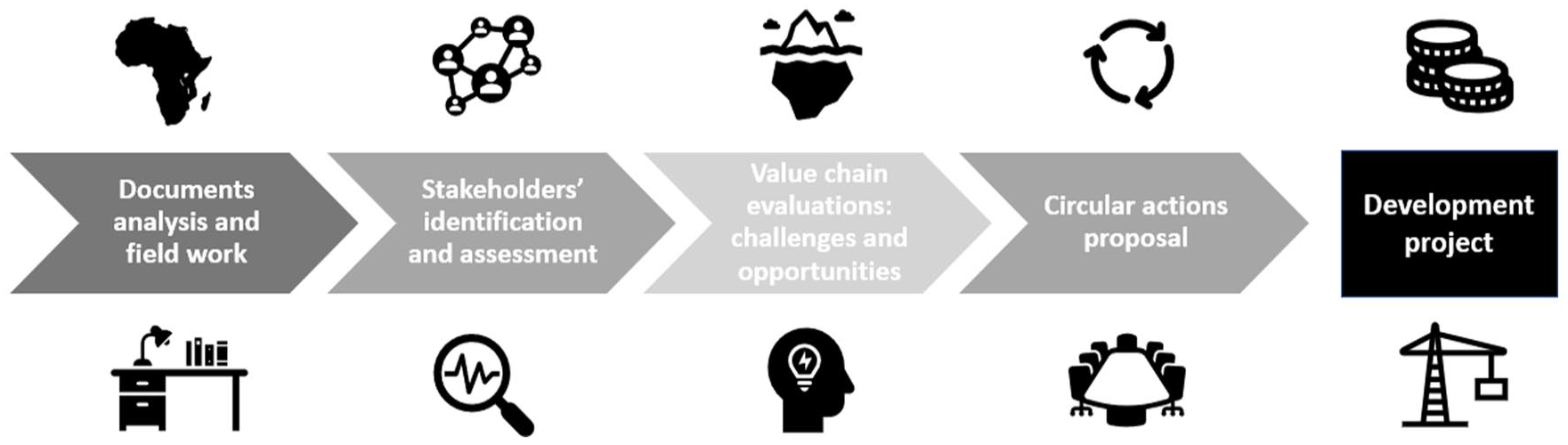
Scheme of the research procedure conducted in Nosy Be.
The third step of the research, based on results from research steps 1 and 2, aimed at identifying priority hotspots for improvement and potential waste value chains that might be introduced locally. List of waste practices, stages and streams allow us to identify the main issues and potential improvements to be carried out, based on the perceived severity of impact. Finally, the fourth step was related to the conceptualization and identification of circular economy patterns to be implemented in Nosy Be, presenting these to stakeholders for evaluation and prioritization, thus considering local needs, potential markets for recycled products and the know-how already in place.
Documents analysis and field work
Before visiting Nosy Be, literature and documents were obtained for initial study, and online interviews were organized and held with local partners before meeting them in Nosy Be. The aim was to sketch a first overview of the physical and governance aspects of the SWM system, following the Integrated Sustainable Waste Management framework (Batista et al., 2021; Wilson et al., 2015). This also comprised analysis of past and present projects, with the wider focus on SWM or recycling.
Documented data on SWM in Nosy Be were found to be very limited. Only one specific manuscript published in 2013 by the PIC (Pôles Intégrés de Croissance, a public entity in charge of managing the financial support given by the World Bank) provided some specific data on waste characterization and generation (Rasolomanana and Docoure, 2013). This information was used to estimate and analyse the SWM system in terms of waste flows and waste materials that might potentially be recycled.
In parallel to the study of specific local documents, a broader literature review was conducted to identify and compile scientific articles on SWM issues in Madagascar. The Scopus database was used for this review, searching for publications between 2007 and 2021, and keywords such as ‘Madagascar’ AND ‘solid waste’ OR ‘biomass residues’ OR ‘circular economy’ OR ‘waste’ OR ‘dumpsite’ OR ‘solid waste management’ OR ‘open burning’ OR ‘sludge’. Based on these search criteria, only six scientific articles were identified. None are related to Nosy Be and only three focused on waste management, social inclusion and valorization of solid waste scraps (mainly biomass).
Five weeks of field research was then carried out, from July to August 2022. This involved interviews with local stakeholders, observational site visits and primary data collection to capture local SWM dynamics. Meetings and interviews were organized with actors that could potentially be involved in the future project in their function of waste generators, collectors, users or managers. At organizational level, five local non-profit associations, two public entities, five hotels and two schools were identified, and interviews held with their directors. Furthermore, a sawmill and carpenter manager and two Ylang oil producers were identified and interviewed given that this agricultural sector is closely connected to waste management, and possible synergies were deemed feasible. Site visits and observations were included. In particular, the final disposal sites located throughout the island, municipal collection areas and the transport vehicle management site were visited. Villages and towns, hotels, sawmills, Ylang oil producers and markets were visited to assess current management issues and local needs.
Qualitative and quantitative waste flows were developed based on the information gathered. The aim is to schematically present the SWM system and to identify potentially valuable waste streams (Zeller et al., 2019). The quantitative waste flow diagram was developed and visualized through the Software Stan® (TU Wien, Austria), able to introduce processes and flows that can be presented with the Sankey method (Cencic and Rechberger, 2008).
Stakeholder identification
Besides the stakeholders involved in the current system, also those interested in alternative SWM systems to be implemented in Nosy Be were analysed based on desk and field research (dos Muchangos et al., 2017). As suggested by other authors (Lederer et al., 2015; UN-Habitat, 2016), a stakeholder matrix was developed, highlighting:
the priority of each stakeholder;
the contribution to an alternative SWM system;
the potential opposition to its application and
engagement of each actor/stakeholder.
Then, the potential role in the waste value chain was discussed, as well as how they can be interested and who can be effectively involved in the future pilot project.
Value chain evaluation and proposal for circular actions
After the stakeholder assessment and SWM system description, a number of solutions to introduce a circular economy of discarded resources were proposed based on an analysis of the literature. Technical support and scientific support were provided to contextualize potential on site and small-scale recycling systems for resource circularity specific to low-income settings (da Silva and Wiebeck, 2020; Lohri et al., 2017) and to specific waste materials.
Priority was given to those solutions that can mitigate highest severity of impacts, that are locally feasible and can satisfy the local demand for recycled products. Therefore, besides considering potential environmental, health and resource benefits criteria of economic sustainability, management and organization aspects, as well as social benefits, were analysed. It aims to underline the drivers and the advantages that can justify the implementation of the pilot projects. After the identification of potential pilot projects to be implemented in Nosy Be, the opportunities and challenges, as well as the stakeholders potentially interested in the action, were identified.
For the proposed new potential value chains applicable in the context of Nosy Be, a complete circular economy was designed for each recycling and recovery system (Pires and Martinho, 2019). The theoretical conceptualization and identification of intervention proposals were schematically presented in circular models to be adapted to specific contexts (Ferronato et al., 2019). Therefore, the outcome of the analysis gives the chance to design resource circularity systems in Nosy Be, based on the local opportunities and challenges, to be replicated and adapted in developing small touristic islands.
Results
Current waste management in Nosy Be
Physical component
Qualitative assessment
The general and qualitative description of the SWM system of Nosy Be is shown in Figure 2. Every type of waste (e.g. healthcare waste, chemicals, hazardous, municipal and garden waste) is currently managed in the same way. At the point of waste generation, four different system configurations can be identified:
a) waste is openly burned in backyards;
b) waste is disposed of in bins or home containers for subsequent collection;
c) food waste and garden waste are home composted, and the other waste is collected and disposed of in bins or home containers for subsequent collection (this approached is however mainly practiced in few, high-income households and schools) and
d) recyclables (typically metal scraps and polyethylene terephthalate (PET) bottles) are sold to the informal recycling sector, while the other waste is collected and disposed of in bins or home containers for subsequent collection.
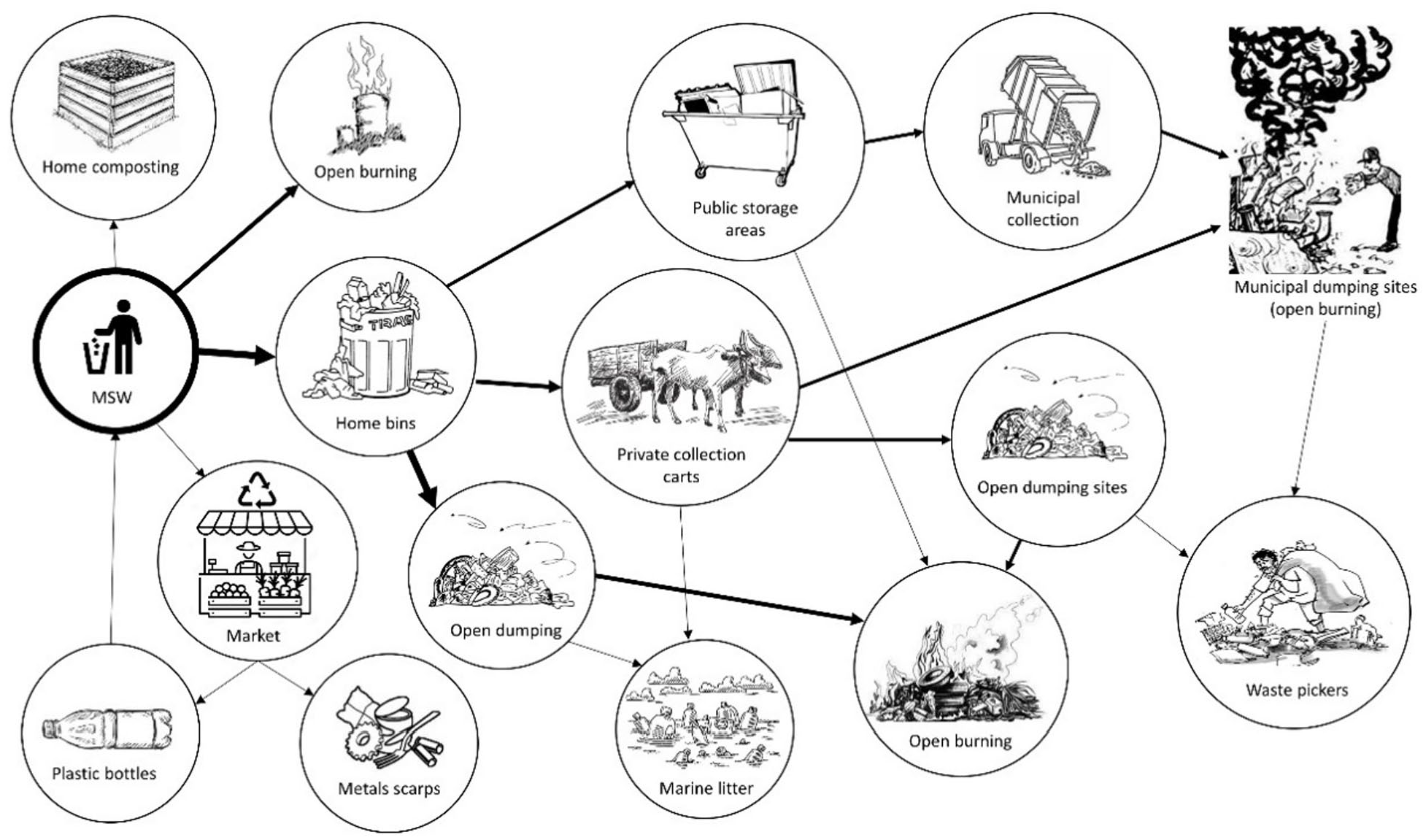
Qualitative waste flow analysis of Nosy Be. Arrow thickness qualitatively represents the mass flow: bigger thickness stands for a potentially higher amount of waste.
Once mixed waste is placed in bins for collection, waste can follow three other possible pathways. Either it is brought to public storage areas, mostly available in cities; else it is collected by a private collection service with carts (practice mainly used by high-income households); or the waste is directly openly dumped near roads or onto open lands. The waste located in public storage areas is then gathered by the municipal collection system and disposed of in one of the municipal open dumping sites, or is openly burned at indiscriminate sites. The waste collected by private collection carts transport and dispose of the waste into the sea, in open dumps or in municipal open dumping sites, where some waste pickers might sort and recover some metal scraps or goods. In both cases, the waste is later openly burned. No sanitary landfills or controlled SWM systems are in place.
Quantitative evaluation
Based on qualitative SWM analysis and on data availability on official documents, the quantitative waste flow can be designed. The flow is shown in Figure 3. In 2013, household waste amounted to around 1.1 kg inh−1 (means per inhabitant) day−1 for Hell Ville, varying from 0.5 to 2 kg inh−1 day−1. Waste from farms, workshops, commercial areas, ports, distilleries, petrol stations, among others (non-household waste) was estimated to be around 2.4 tonnes day−1 for the whole island. According to the estimates based on the 2013 report, tourist establishments generate about 18.1 tonnes of waste per day, equal to about 60% of the waste generated at municipal level. This shows the high relevance of tourism on SWM in Nosy Be. Another source of waste is the airport waste. Assuming that each passenger generates about 100 g of waste, it can be estimated that an annual quantity of about 5.6 tonnes of waste per year can be generated, of which over 50%wt. consists of polymeric materials. For the whole island, it was estimated a total of about 50–55 tonnes of waste generated per day for 2013, equal to about 18,000–20,000 tonnes per year, which shows variation according to the touristic seasonality. The local municipality estimated a similar waste generation rate and total amounts for 2022. However, no other statistics or primary data are available.
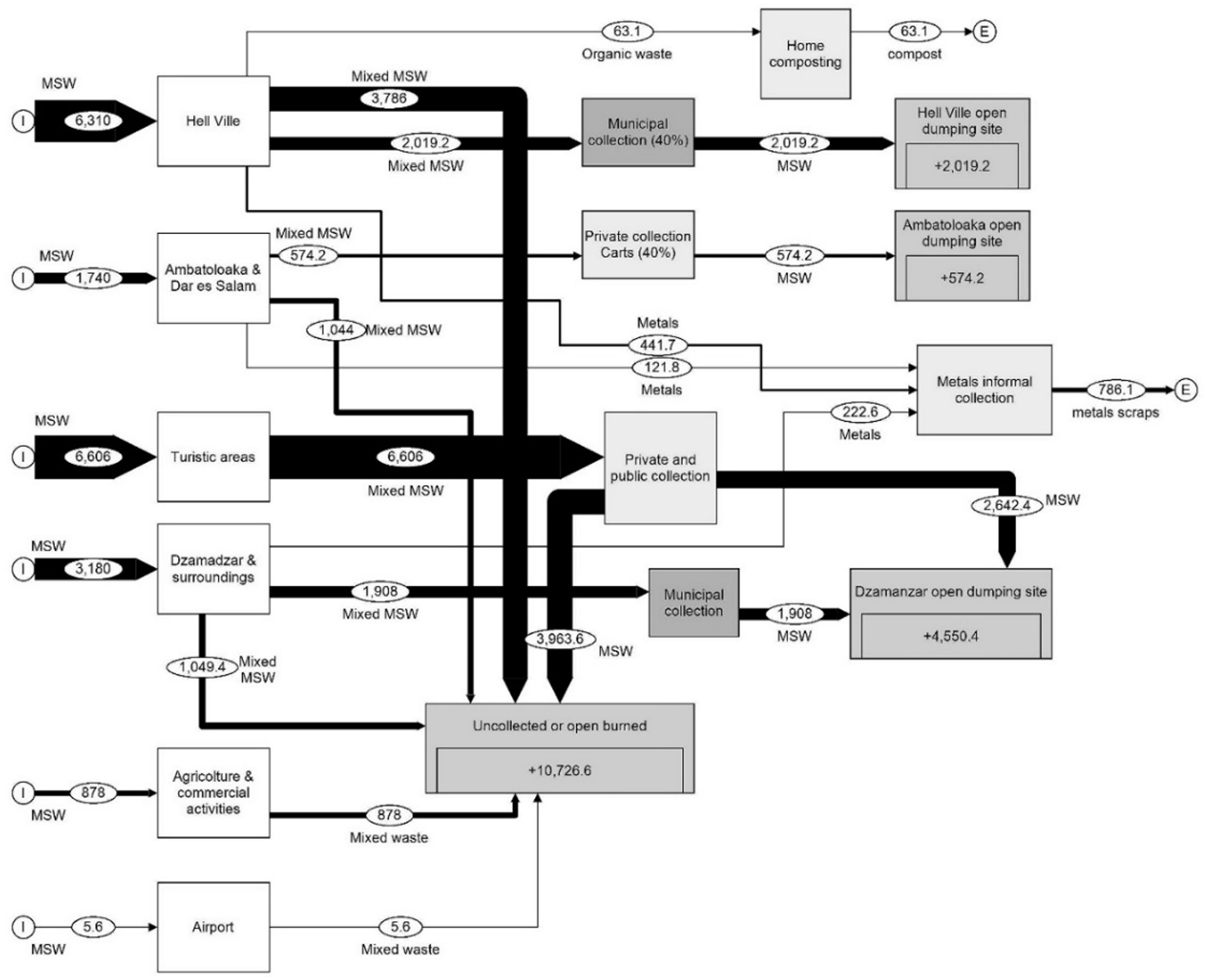
Quantitative waste flow analysis of Nosy Be (data of 2013, flows based on the field work of 2022).
Waste characterization
The waste fractions mainly generated in Nosy Be in 2013 were organic (74.3%), plastics (9%) and wood waste (10.7%). Similar composition can also be assumed for 2022, although no primary data are currently available. Other waste fractions generated on the island are metals (0.7%), textiles (2.1%), paper and cardboard (1.4%), bones (1.1%) and other fractions, such as aggregates, batteries and sponges (0.7%). Regarding liquid waste, such as used cooking oil produced by hotels and restaurants, it can be estimated that, on average, 5 L can be produced per week in medium dimension restaurants. Therefore, it can be estimated that about 2.5 m3 of used cooking oil is produced per week when considering about 50 formally recognized restaurants located in the urbanized area of the island.
Collection and final disposal
Storage and collection facilities are generally quite poor. A public utility and the local municipality are the entities in charge to provide the SWM public service. The public utility counts about 12 staff and one collection lorry, while the municipality counts with around 60 staff and two collection trucks and two tractors. The current number of trucks and staff is not sufficient to guarantee waste collection coverage for the whole Nosy Be. As a consequence, some local associations started to implement clean-up campaigns and autonomous collection systems, sometimes supported by international NGOs and donors. However, the COVID-19 pandemic stopped the implementation of some of these practices. Three main final disposal sites are located in the island. They are all operated as open dumping sites, where waste is usually openly burned. It can be estimated that about 95% of the waste is openly burned or openly dumped.
Waste valorization
As mentioned in the qualitative waste flow, a few examples of waste valorization are visible in the island. Waste picking from open dumping sites is commonly conducted by informal sector workers, but is limited to the collection of metal scraps and reusable goods or materials. Metal is the only waste fraction for which an existing market value exists. Metal scraps are segregated by households or sorted from mixed waste by waste pickers. These are then collected and stored and when sufficient amounts are available in bulk, they are transported to the mainland, to the capital city, where industrial recycling activities are located. It can be estimated that 95–100% of metals in waste are currently recycled, which amounts to about 790 tonnes of metals collected and recycled per year. Some organic waste is home composted. However, such practices seem to be carried out mainly in high-income households. It can be estimated that less than 1% of the waste globally generated in Nosy Be and generated in urban areas is home composted. Glass is taken back (returnable bottles), and glass pots are reused. Therefore, glass waste seems not to be a critical issue.
Governance
Generally speaking, SWM Governance suffers from lack of resources, legislation and low priority level on the public agenda. From a financial point of view, waste collection fees are implemented however not uniformly enforced. About €75 are collected per month from 4 to 5 stars hotels with average capacity (80–120 beds), while about €7.5 month−1 are collected from high-income households. The revenues from the collection fees obtained cover less than 30% of the costs of the public collection service. As a result, it is common that gasoline is not always available for the trucks, truck maintenance cannot be carried out or operators are not always paid their regular salary. In cases where local associations are recognized by the local government and they support the municipalities with private resources and service provision, a collection tariff of about €6.5 month−1 is collected from commercial activities and €2.5 month−1 from households. However, many of these associations rely on voluntary participation of the associates, making the system unreliable and financially unsustainable especially during the COVID-19 pandemic.
Enforcement, monitoring and evaluation systems are not in place, due to the lack of know-how, limited financial resources and lacking regulations. If any regulations are in place, they are most often not even known by the users or providers and they are not enforced. As a result, user inclusivity is low and waste information for the public is unavailable. No strategic nor master plan has ever been developed and the only financial support is given by the World Bank through the PIC, which supports some pilot actions or private activities to encourage sustainable agriculture and tourism.
Stakeholder analysis
The stakeholder identification and analysis focused on an objective to introduce improved alternative SWM systems. In total, 14 stakeholders were identified as shown in Supplemental Table S1. The priorities of each actor, the contribution that it can give to improve the SWM systems, the opposition in terms of difficulties and barriers as well as the way to be engaged were analysed and are shown. It can be underlined that the main barrier identified is the aspect of financial sustainability and the need to have source of income for all the partners involved. This priority issue was set as a key criteria when considered to start implementing sustainable SWM systems and to draft project proposals that are able to incentivize the application of circular systems.
Value chain of discarded materials
Small-scale low-tech and low-cost pilot solutions were given preference in a first instance, due to the existing lack of infrastructural and industrial systems capable of treating and recycling waste at large scale. In addition, the overall limited organizational and financial capacity and the unreliable power and energy supply have been taken into account. This is also justified by the low amount of waste generated in the island and poor urban planning, which cannot guarantee the sustainability of large-scale centralized treatment plants (Song et al., 2014). Therefore, to introduce waste value chains in Nosy Be, emphasis should be given to:
valorize local opportunities in waste recycling and recovery;
start on-site treatment systems to avoid transport of waste to the mainland, which is too expensive and logistically difficult in Madagascar;
generate a local market to support the local economy;
introduce sustainable energy sources at local level and
create and support social cooperatives, giving support to the association of women.
From the field research and documents review, it was possible to deduce that the main waste fractions available for recycling in Nosy Be are organic waste (leftovers of food preparation), wood waste (from sawmills and carpenters), plastic waste (packaging and plastic bottles) and used cooking oils (used for frying food). It is suggested that the potential waste recycling and recovery project(s) should focus on these waste fractions, considering the amount generated and their potential recyclability. Supplemental Table S2 reports the potential waste fractions to be valorized, the outputs, the potential developments and challenges to overcome, and the stakeholders potentially interested in the action.
Wood waste, cardboard and tree pruning can be shredded and mixed to obtain a homogenized feedstock. The material can then be used for manufacturing particleboards that can be employed for furniture or other non-structural products (Souza et al., 2018). Wood waste can also be used to produce briquettes for heating and cooking (Ferronato et al., 2022a). Based on local energy demand, it is considered more feasible and useful for the context to employ woody waste as fuel for the local community or commercial production activities.
Due to their organic nature, used cooking oil can either be used to manufacture soap (Félix et al., 2017), mixed with bitumen to improve its characteristics (Li et al., 2019), or converted into biodiesel (Foteinis et al., 2020). Considering the small waste amounts, difficulties with construction of new infrastructure and lacking industries, converting used cooking oil into biodiesel was not considered a feasible option. Soap production on the other hand may be the most affordable and low-tech solution. Soap can be sold to touristic areas and can generate a local economy supported by associations of women.
Food waste can be valorized in different ways. In all, 13 biowaste treatment technologies, grouped into four categories, are described by Lohri et al. (2017). Physiochemical and thermochemical treatment options can be excluded due to the high-tech required for the treatment and the potential issues that might arise in its application. Direct animal feeding might be an application, and it is already practiced in some areas, but it does not allow much value to support the local economy. Vermicomposting (Nova Pinedo et al., 2019) and black soldier fly treatment (Mahmood et al., 2021; Mertenat et al., 2019), although already implemented in low-income countries, are not considered feasible in Nosy Be, as the products (protein and fishmeal) have limited local demand and applications. Small-scale anaerobic digestion plants and composting can be considered the most appropriate solutions to provide alternative energy sources to local communities and fertilizers for gardening (Surendra et al., 2013). Food waste can be mixed with zebu dung to increase the quality of the product and to improve the biogas generation yield (Ojo, 2021).
Plastic waste mainly generated in Nosy Be seems to be characterized by the fractions high-density polyethylene (HDPE), low-density polyethylene (LDPE), PET and polypropylene (PP). PET plastic bottles can be used as construction material in the form of eco-bricks bounded with mortar as a masonry wall by filling the bottles with soil, sand or plastic waste (Dadzie et al., 2020). LDPE water sachets can be used to form plastic bonded sand blocks (Kumi-Larbi et al., 2018), while HDPE, LDPE and PP plastics can be used to produce plastic roof tiles once shredded, melted and located in moulds (Balcom et al., 2021). Other recycling systems are available but require industrial activities that are not present on the island. In Nosy Be, it is quite difficult to introduce innovative building materials, therefore, employing polyolefins to produce panels that can be used to build chairs, tables, pots or other furniture that can be sold and introduced in hotels, restaurants or public areas.
Circular economy pilot projects
To ensure reliable upstream and downstream value chains, waste generators, providers of the service selected and customers of the final recycled product need to be identified and involved. The waste generator and the customer for the recycled product could potentially be the same entities. Waste generators should fulfil the following requirements:
guarantee adequate waste segregation at source and a separate waste collection system;
provide enough quantities of waste to guarantee the future demand of the market (big generators);
be able to pay for collection services to financially support recycling activities;
have environmental and social incentives for improving waste management (environmental and social drivers) and
be potentially interested in using sub-products generated from recyclable materials or to foster public participation (economic drivers).
Based on these characteristics, the tourism sector is considered a key actor, which besides being a waste generator can also be a buyer of products. Hotels and restaurants can thus be the drivers of circular economy actions also thanks to their financial and funding capacity (tourists coming from high-income countries), organizational skills and source of waste. In the following four sections, we reported on potential circular economy models that can be introduced in Nosy Be, and that should be considered for support by international associations or private funders.
Briquettes from wood waste and tree pruning
General framework
Hotels produce high amounts of garden waste from tree pruning and garden maintenance. They can provide the waste for conversion into briquettes. Sawmills and carpenters can be additional waste providers (see Figure 4). Sawdust and wood chips are generated constantly, from more than 40 recognized sawmills on the island. Both materials can be collected by local associations involved in the SWM systems. On the other hand, the same association active in waste collection and transport can be also involved in managing the recycling system. Small-scale shredding machines for garden waste and briquetting technologies have a low technical complexity and can easily be introduced. Briquettes can be sold to Ylang oil producers since they already employ wood or charcoal as a fuel for the distillation of the oil from Ylang flowers. Briquettes can be used in heating systems, increasing the energy efficiency.
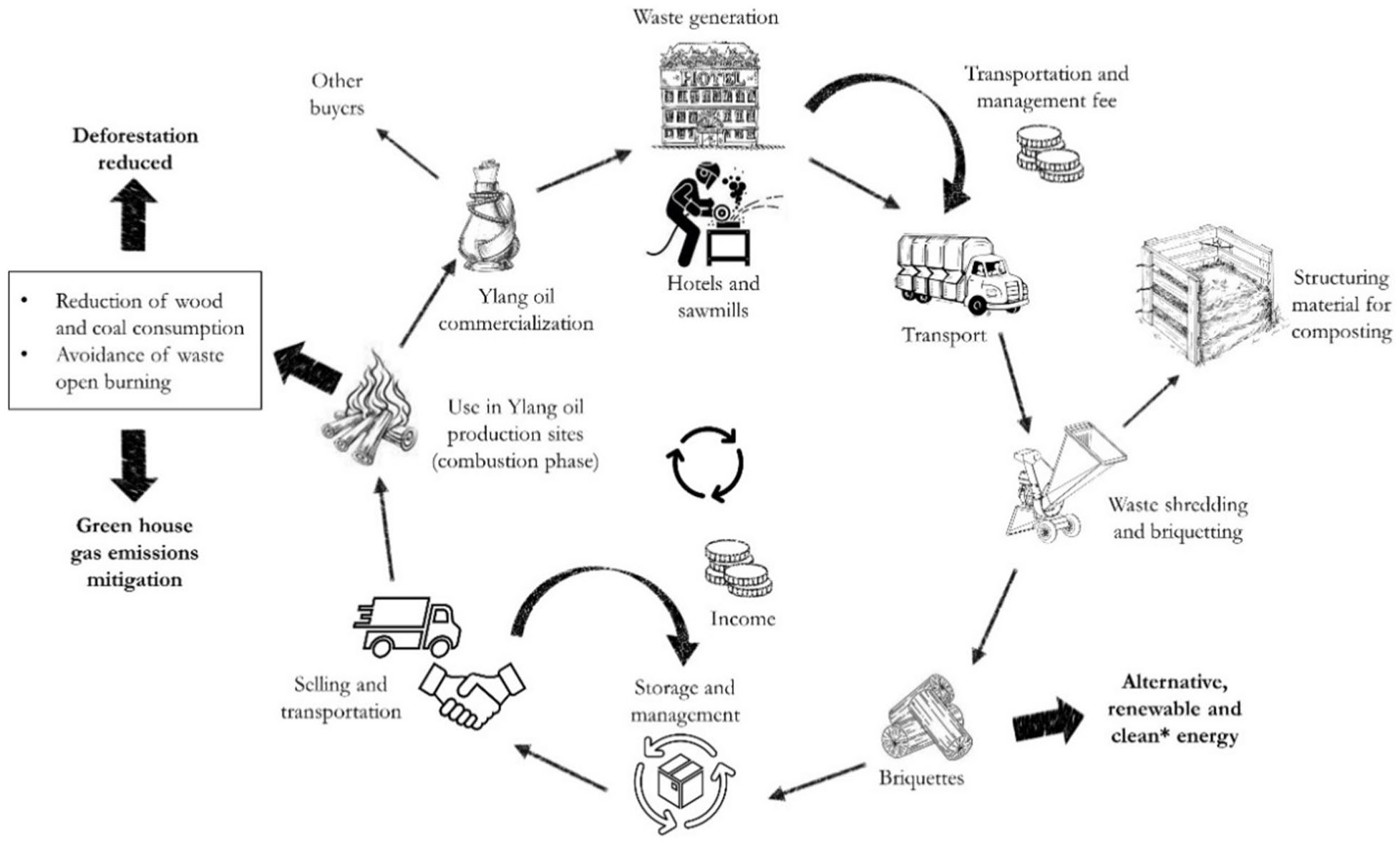
Wood waste and tree pruning circularity in Nosy Be.
Financial sustainability
Generators can pay for the transportation and management since they already pay for moving the waste from the source of generation to the final disposal site. This circular pattern can be sustainable thanks to the collection fee paid by the generators and thanks to the sale of the briquettes to the Ylang oil producers. However, economic feasibility should be assessed more in detail in terms of (i) transportation costs and (ii) price of the fuel. Both should not be higher than the current situation. This is achievable as the involvement of local associations can reduce operational costs since they do not target maximum profit, but rather improvement of local living conditions.
Benefits
The creation of new jobs and a new source of income represents the first benefit of the system. In addition, the use of wood waste for other purposes allows us to reduce waste open dumping and open burning, mitigating the impacts to population health. In addition, deforestation is also alleviated, and an alternative energy source is introduced into the system.
Soap produced from used cooking oil
General framework
Used cooking oil is mainly generated from hotels and restaurants. They can be the providers of the waste (see Figure 5). Specific containers can be supplied for oil collection (e.g. used water PET bottles) and a selective collection should be introduced. Local associations can be the ones that collect the filled containers, providing the used oil to local association of women. These can be the soap producers, providing the know-how and small capital to start a small-scale production system. Used cooking oil can be used to replace at least 50% of the virgin oil (i.e. palm oil, coconut oil) in soap production, while the soap can be sold to the same hotels.
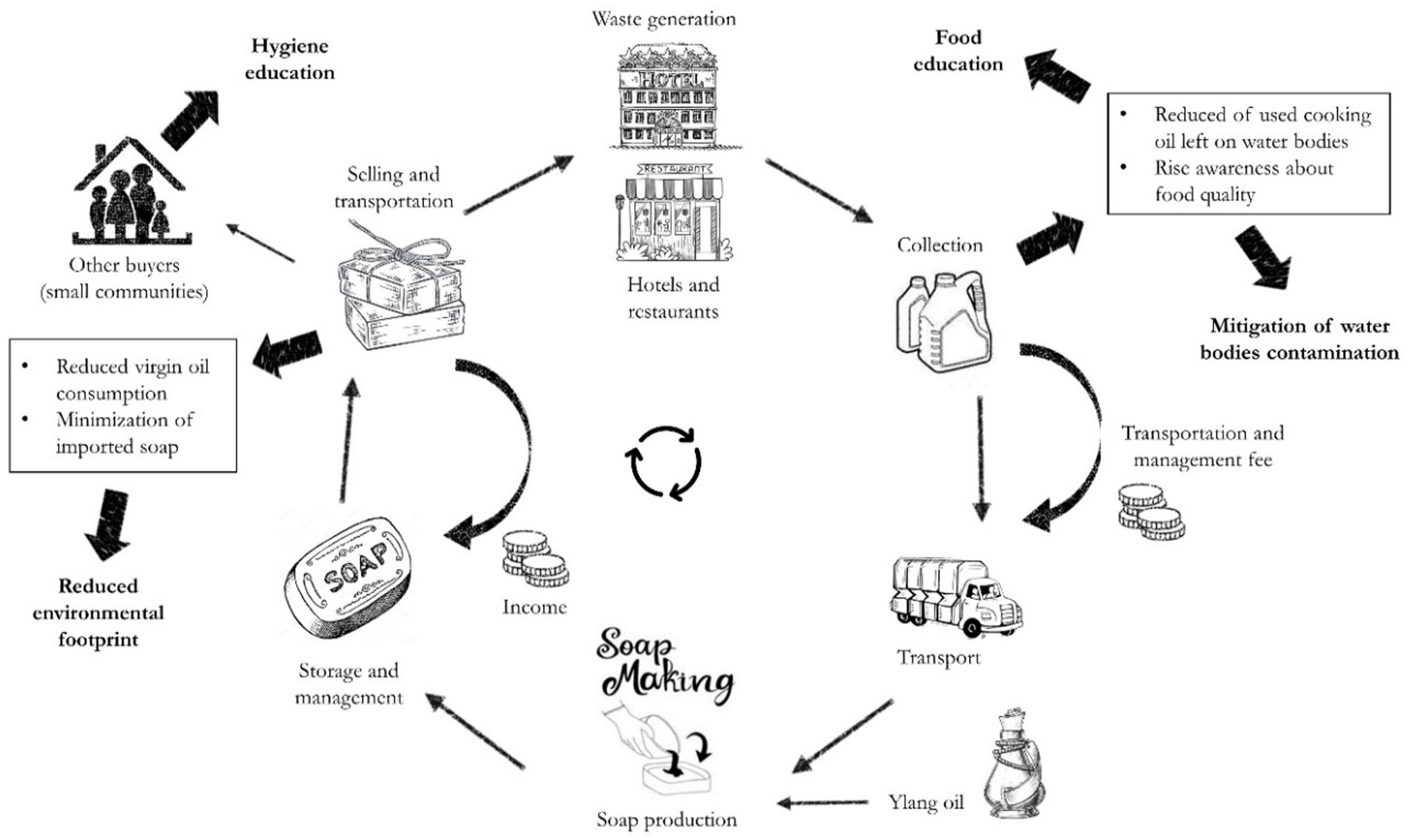
Used cooking oil circular model to be implemented in Nosy Be.
Financial sustainability
The system can be financially sustainable thanks to the engagement of hotels and touristic areas that are able to pay for the collection service. In addition, selling soap based on used cooking oil can contribute to financial sustainability to the circular system. Although the quality of the soap might decrease, the soap price is also lower when compared to imported soap. A detailed analysis of the market should be carried out, as well as the analysis of social acceptance.
Benefits
Despite the low quality of used cooking oil, local communities are used to employ it to dress rice and general meals. Therefore, the collection of used cooking oil and its use for other applications can reduce the consumption of used cooking oil for food preparation, strengthening population health and nutritional education. Alternatively, avoiding disposal of used oil in the sea shall reduce contamination of water bodies and thus create a more favourable environment for tourism. Collection and use of used cooking oil for other purposes can be reinforced through public campaigns and education in schools. At the same time, soap production from local associations can be the driver to start hygiene awareness campaigns, giving or selling this soap to local communities or schools, giving them knowledge about the importance of handwashing.
Biogas from food waste and zebu manure
General framework
Food waste is generated mainly from hotels and restaurants. Waste can be collected in separate bins, mixed with zebu dung to co-digest the waste and produce biogas (see Figure 6). The small-scale anaerobic digestors can be located near school canteens to use the biogas for cooking purposes. The same school can also be a source of food waste to be valorized locally. Waste can be collected and transported by a local association involved in SWM and it can be delivered to the digestion system. If properly trained and informed, the same association can be the operator of the digesters, or they can teach to the school maintenance staff how to operate and manage the biogas units and how to employ biogas. Then, the digestate can be composted with the addition of green structural material, also obtained from the tree pruning shredded from the briquettes production system. Composted digestate can be used to fertilize small community-based vegetable gardens, or it can be delivered to local farmers or hotels. Vegetables grown with the help of digestate can be used in the same school canteen, closing the circular loop.
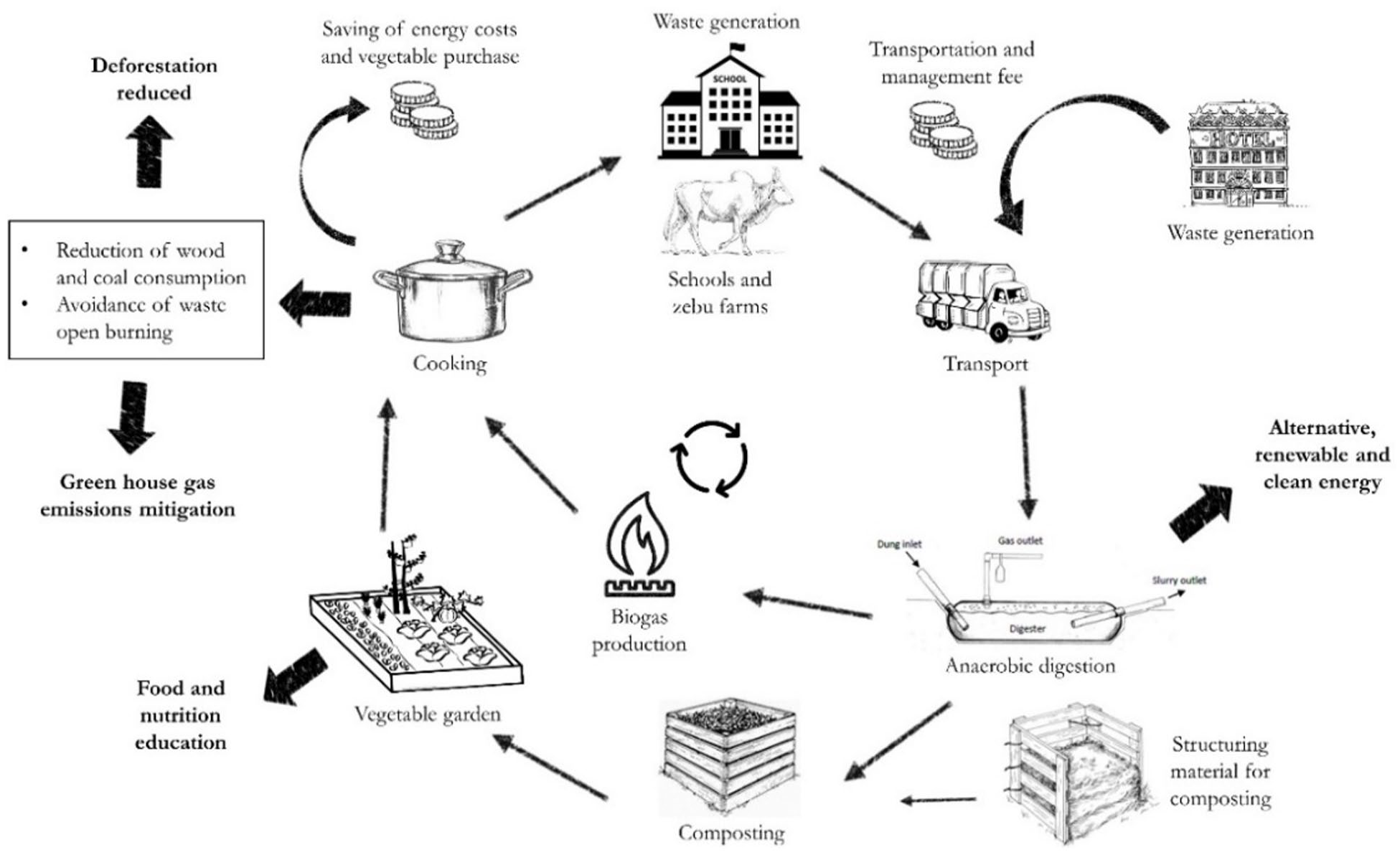
Food waste and zebu manure circularity in Nosy Be.
Financial sustainability
The collection and management system can be potentially paid by the hotels. The collection fee should cover the cost of transportation and treatment of the waste. Hotels located near the school should be prioritized to reduce transportation costs. On the other hand, schools can benefit from the reduction in wood and coal consumption, which is usually bought in local markets. In addition, the production of vegetables at schools can save money when buying food or it can be a source of income.
Benefits
Biogas production can reduce the use of wood and charcoal to cook. This allows decreasing deforestation and reduce greenhouse gas emissions. At the same time, the production of vegetables from community gardens can support the introduction of nutrition awareness practices, and it can be the driver to teach the children how to prepare meals, how to recycle and how to protect the environment.
Plastic panels from plastic waste
General framework
Plastic waste is mainly produced from touristic facilities, like hotels and restaurants. Both hotels and local communities can be the waste generator to be involved in the project (see Figure 7). The separate collection, which should be implemented with the introduction of public campaigns, can be carried out by local associations that can take the lead in processing the waste. Once segregated per plastic fraction, plastic can be shredded, melted, moulded and finally converted into plastic panels that can be used to produce furniture. Therefore, plastic panels can be sold to local carpenters that might be interested in using alternative materials instead of wood to produce tables, chairs, among others. The same plastic furniture can be used by hotels, schools or public facilities.
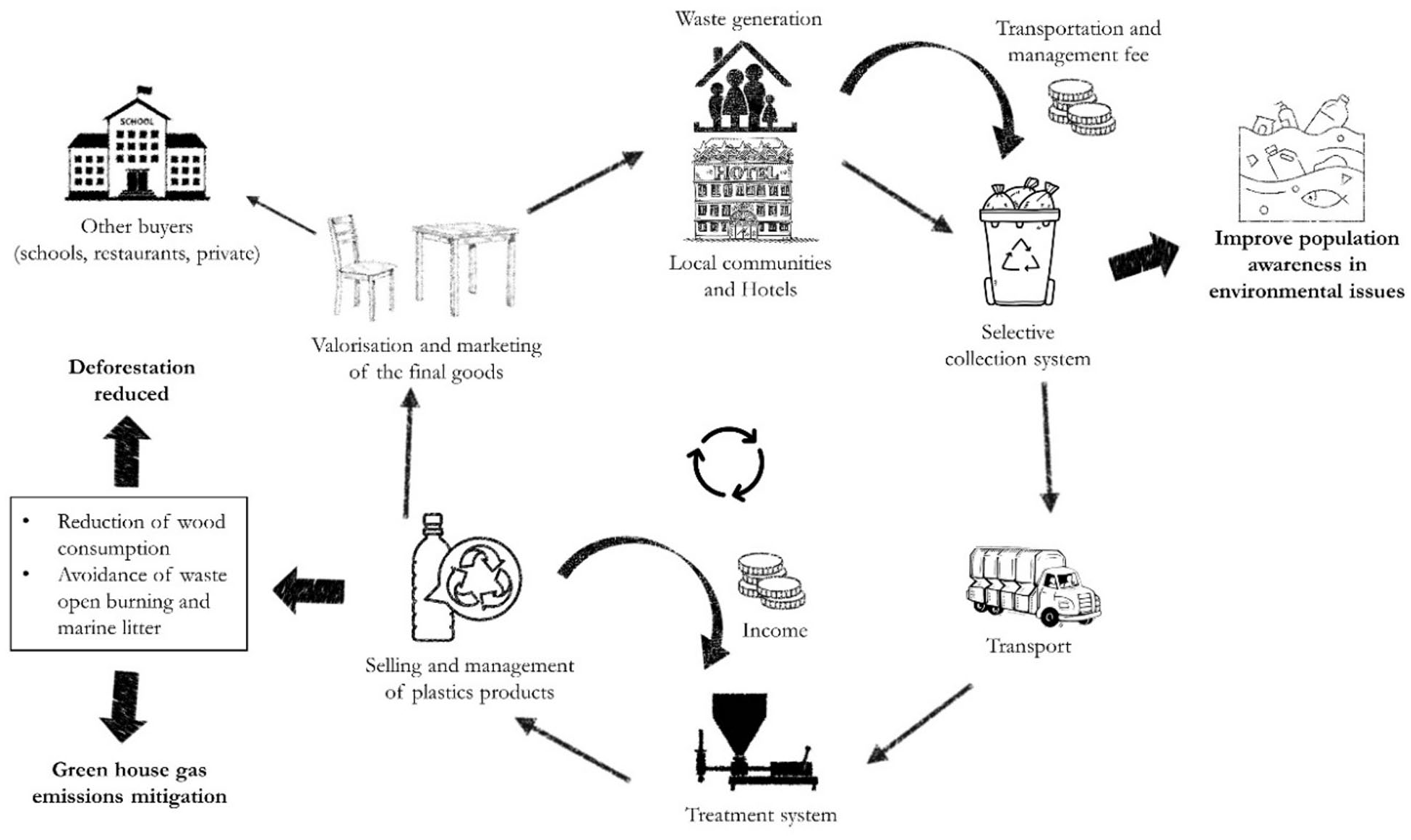
Plastic waste circular model identified in Nosy Be.
Financial sustainability
The fee paid by hotels and touristic areas should cover the transportation costs and part of the treatment system. Additionally, panels can be bought by carpenters used to build furniture made of wood. The products can be finally sold to hotels, high-income citizens or public offices that can be interested in introducing ‘green’ products into their house or commercial activities.
Benefits
The system allows us to start alternative ‘green’ markets of furniture and goods made of recycled plastics. Therefore, new jobs as well as capacity-building can be introduced in Nosy Be. At the same time, wood consumption is reduced, contributing to mitigating deforestation and ecosystem degradation. Finally, plastics are collected and valorized safely, reducing marine litter and waste open burning, which affect the local fauna and increase the negative effects of climate change.
Discussion
Tourism as circular driver
Tourism is a factor that exacerbates the problem of environmental contamination as touristic activities can contribute to almost 50% of the waste generated in Nosy Be. Nonetheless, tourism can also be seen as an opportunity as it generates recyclable and exploitable waste fractions, as well as bringing a significant economic flow into the local context. Therefore, the circular projects as proposed here were developed by following the principles by which:
tourism can contribute to the economic sustainability of the collection and recycling system and
large quantities of waste can be collected separately from hotels and restaurants, as waste flows can be better managed and stored.
At the same time, recycling practices can strengthen the concept of ‘ecotourism’, supporting hotels’ sustainability practices and respective marketing measure which again can attract a greater number of international guests.
After COVID-19, re-launching tourism, using sustainability and ‘green’ actions as desirable principles, is considered a significant factor of attraction. Environmental awareness is increasing at global level and represents a driving force for sustainable economic growth. It is undisputed that sustainable development is a driver for economic development of low-income countries, especially of Madagascar, one of the countries with high environmental and social risks due to the impacts of climate change (Vieilledent et al., 2016).
There are issues that affect, however cannot be solved by circular projects. These regard overall SWM and other basic services and infrastructure planning and operations, as well as implementation and enforcement of policies and regulations. Nosy Be faces a rapid and unregulated urban development, poor road management, lack of water supply and sanitation systems and services, intermittent energy supply, weak security control and lack of financial credit availability by recognized financial institutions. Such challenges impact and increase the risk when introducing new economic activities. These potential barriers must be carefully considered when drafting a circular project proposal while also paying special attention to minimizing the potential for illegal personal gain by individuals in positions of power.
To ensure synergies with national local government objectives, it is key to engage with this level and support drafting and the introduction of effective regulations, as well as strengthening the ability to plan, implement and maintain appropriate infrastructures. Decentralized small-scale solutions with low technical complexity might be suggested to support the overall SWM system.
Call for action
Despite all local challenges, improvements are desperately needed. Open burning and open dumping are negatively affecting local environment and public health, damaging the ecosystem of Madagascar, one of the most important countries in the world in terms of number of species (Vences et al., 2009). International assistance can use the entry point of touristic activities, showing responsibility of the international tourism sector, and as demonstrated in this article, it can be the potential driver of change. Bottom-up approaches should be encouraged, starting from local associations and economic opportunities already in place. At the same time, the support of local and national government level must also be considered, to frame and legitimize a transition to new technical solutions.
Next steps are to develop a detailed business plan encompassing economic, social and environmental impacts, to quantify the benefits of circular economy actions. Life cycle assessment of each circular project should be encouraged (Ferronato et al., 2020). Finally, social mobilization and awareness raising must be considered, directed towards the local population and the tourist flow arriving in Nosy Be. Projects will require external funding for a certain ‘incubation’ time to prove their feasibility and adaptability to the context. Successful circular economy projects can then be disseminated and replicated throughout the Malagasy context, especially in areas with a strong tourist attraction.
Conclusions
The analysis conducted in Nosy Be introduced criteria and steps that can be followed to implement development projects in low-income touristic islands. The outcomes of the field work and the theoretical framework introduced in this article underline that an implementation of small-scale development projects driven and partnered by the tourism sector can help the transition towards a circular SWM. Tourism can contribute to the financial sustainability of the system, given the economic potential of tourists mostly visiting from high-income countries. Hotels involved in these circular projects obtain value and benefits from these improvements in terms of green marketing and sustainable tourism. The circular patterns presented demonstrate that there is a market, stakeholders and available waste material in Nosy Be, although costs assessment and real management issues have not been assessed yet and would follow through small-scale pilot actions. Introducing small-scale recycling and recovery systems can be beneficial for many reasons:
They demonstrate that waste can become a resource at community level and it is not necessarily only a problem;
They show how the local market and creation of sustainable and appropriate jobs can be enhanced and
They prove to be more efficient and a low-cost management of waste in a context where monitoring and control are mainly absent.
On balance, the waste recycling and recovery actions proposed for Nosy Be can be used as a reference to replicate similar actions in other small islands to boost the sustainable management of resources and the mitigation of environmental, economic and social impacts.
Supplemental Material
sj-docx-1-wmr-10.1177_0734242X231187561 – Supplemental material for Can tourism support resource circularity in small islands? On-field analysis and intervention proposals in Madagascar
Supplemental material, sj-docx-1-wmr-10.1177_0734242X231187561 for Can tourism support resource circularity in small islands? On-field analysis and intervention proposals in Madagascar by Navarro Ferronato, Adeline Mertenat, Christian Zurbrügg and Vincenzo Torretta in Waste Management & Research
Supplemental Material
sj-docx-2-wmr-10.1177_0734242X231187561 – Supplemental material for Can tourism support resource circularity in small islands? On-field analysis and intervention proposals in Madagascar
Supplemental material, sj-docx-2-wmr-10.1177_0734242X231187561 for Can tourism support resource circularity in small islands? On-field analysis and intervention proposals in Madagascar by Navarro Ferronato, Adeline Mertenat, Christian Zurbrügg and Vincenzo Torretta in Waste Management & Research
Footnotes
Acknowledgements
The authors thank the Rotary Club of Nosy Be, in particular Andrea Cardarelli, and the Rotary Club Roma, in particular Laura Dolcetta, as well as the local actors involved in the solid waste management system of Nosy Be, for the logistic support of the on-field analysis.
Declaration of conflicting interests
The authors declared no potential conflicts of interest with respect to the research, authorship and/or publication of this article.
Funding
The authors disclosed receipt of the following financial support for the research, authorship and/or publication of this article: This publication was produced with the financial support of the Rotary Foundation Club Roma, San Marino, Geneve, Carrara e Massa and Pompei. Its contents are the sole responsibility of the authors and do not necessarily reflect the views of the Foundation. Open access publication was possible thanks to financial support by Eawag.

Supplemental material
Supplemental material for this article is available online.
References
Supplementary Material
Please find the following supplemental material available below.
For Open Access articles published under a Creative Commons License, all supplemental material carries the same license as the article it is associated with.
For non-Open Access articles published, all supplemental material carries a non-exclusive license, and permission requests for re-use of supplemental material or any part of supplemental material shall be sent directly to the copyright owner as specified in the copyright notice associated with the article.
