




Abstract
The notion of circular economy (CE) strengthens the approach to sustainable development (SD). It is perceived that the adoption of CE can unlock half a trillion dollars of economic value in India by the year 2030. However, embracing the CE concept can be considered a panacea to the existing issues associated with solid waste management (SWM). The proposed study explores current waste management practices and assesses the inadequacy to infer the CE as a solution for successful waste management practices. The work provides an overview of SWM in India and emphasizes the inclusion of CE in the Indian SWM sector. The comprehensive review depicts existing, and emerging waste management approaches to form a CE by processing the waste efficiently and fuelling an SD movement. The cradle-to-cradle approach in CE, national solid waste compliances/legislation, key initiatives taken by the Governments, and the influence of industry and legal framework on CE were also discussed. The work will facilitate policy and decision-makers to include CE in the Indian SWM sector.
Keywords
Introduction
Various nutrient cycles like carbon, nitrogen and so on present in the ecosystem maintain balance to sustain the life system on the earth (Stahel, 2016). However, these ecosystem cycles are in a constant state of stress due to anthropogenic activities. It is projected that the global demand for resources from the ecosystem point of view will be doubled by 2050, leading to significant pressure on natural resources (UNEP, 2017). Due to the unsustainable production and consumption practices, the planet is becoming a dwelling unit of waste debris. On top of that, the escalated growth rate of the human population combined with the rapidly growing urbanization and increased living standards have further triggered the situation (Kanojia and Visvanathan, 2021). The high consumption rates of ecosystem stresses, and resource scarcity warrant more sustainable and environment-friendly approaches. The linear economy-based traditional approach ‘take, make, use and dispose of’ will not sustain in the long run. Hence, there is an urgent need to shift from the existing linear economy-based practices towards sustainable practices to avoid exceeding the earth’s biophysical limit (Geissdoerfer et al., 2017; Lieder & Rashid, 2016; Steffen et al., 2015).
The escalating population growth, surging goods and resources consumption and high living standards resulted in the generation of a massive quantum of solid waste. Among solid waste streams, municipal solid waste (MSW) generated from aggressive industrialization, household, institutional, commercial activities, rapid urbanization, high consumption patterns of common masses and the high living standard is posing a serious threat to the surrounding ecosystem (Golomeova et al., 2013; Sharholy et al., 2008). The sustainable management of MSW is a multidisciplinary problem that connects the social, environmental and economic pillars of sustainability (Rodić and Wilson, 2017). Addressing such multidisciplinary issues require a holistic approach and delinking the existing linear economy model with a subsequent transition towards a close loop economy. Such transition will further facilitate progress towards attaining sustainable development (SD) goals (SDGs) (Sharma et al., 2021).
As per the estimate, globally, the annual generation of MSW will be around 2.59 billion tonnes (BT) by 2030 and 3.4 BT by 2050, with emission of 2.38 BT of CO2-equivalent per year by 2050 (Kaza et al., 2018; The World Bank, 2020). The urban area alone is responsible for around 75% of the earth’s resources and energy consumption leading to 80% of global CO2 emissions (Muñoz and Navia, 2021). In India alone, around 150 to 170 million metric tons of MSW are generated, containing a larger segment of compostable, biodegradable (40–60%) and inert (30–50%) materials (Mohan et al., 2016; Nanda et al., 2021; Sharholy et al., 2008). The composition and quantity of MSW generated in India vary compared to the western countries; and around 70% of the urban solid wastes generated in India are dumped in open areas, covering 60,000 hectares of land, leading to grave concern about the sustainable environment (Kulkarni, 2020; Mohan et al., 2016). It was also reported that the relative proportion of the biodegradable waste in MSW generally decreases with an increase in socioeconomic status. Rural households were found to generate more biodegradable waste than urban households (Kolekar et al., 2016). It is evident that the developing economies lack good solid waste management (SWM) practices, lack reuse and recycling infrastructure and have low waste collection ratios, a high rate of waste ending in dumpsites and illegal landfilling (Bui et al., 2022). Thus, the current practices adopted for waste management in developing economies are incompetent to manage the huge volumes of waste and require immediate interventions (Diaz, 2017; Kumar et al., 2009). Table 1 depicts the organic waste generated and its quantity in India based on various surveys and available literature.
Total organic waste generated in India.
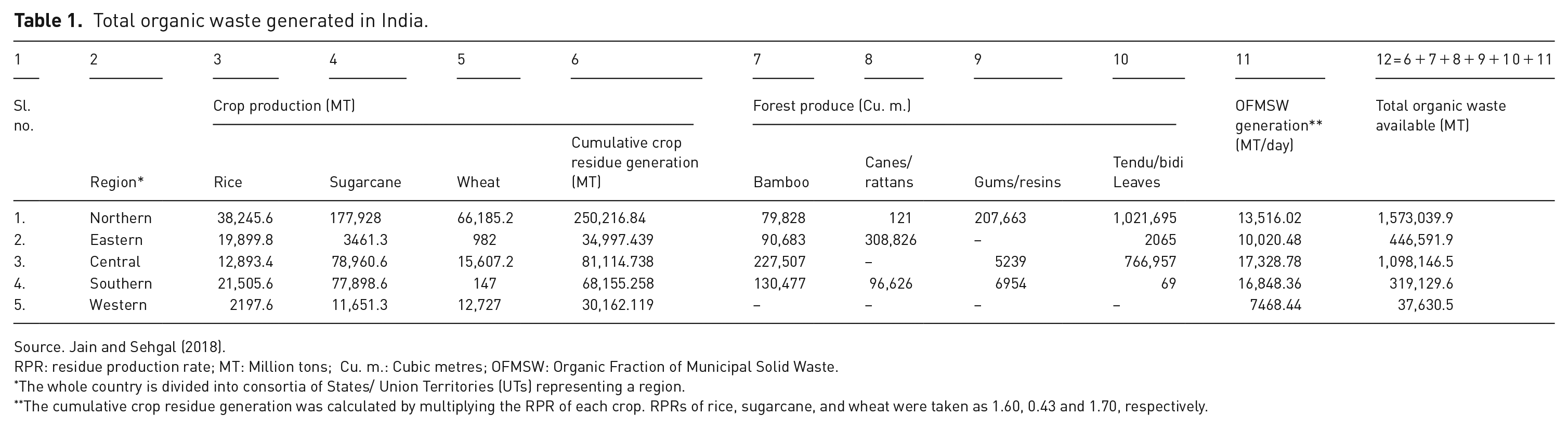
Source. Jain and Sehgal (2018).
RPR: residue production rate; MT: Million tons; Cu. m.: Cubic metres; OFMSW: Organic Fraction of Municipal Solid Waste.
The whole country is divided into consortia of States/ Union Territories (UTs) representing a region.
The cumulative crop residue generation was calculated by multiplying the RPR of each crop. RPRs of rice, sugarcane, and wheat were taken as 1.60, 0.43 and 1.70, respectively.
A comprehensive overhaul of the existing waste management plan is the need of the hour. Major policy, social and technology interventions related to the adoption of circular economy (CE) in MSW management sector are reasonably necessary, which may result in enhancing the economic and environmental performance of this sector. Understanding the direct and indirect economic and environmental impacts is a critical task for the scientists. This acts as a foundation for planning and developing the nation’s environmental policies. State-of-the-art comparison of MSW management in the era of CE was elaborated in detail by Tsai et al. (2020). Geissdoerfer et al. (2017) also advocated that the concept of CE can play a riveting role in the implementation of a closed-loop system in the existing waste ecosystem. It will be achieved by processing the products/materials/components after their end of service life into valuable resources for manufacturing other products/materials/components. Hence, it is necessary to curtail the waste volumes and assess the requirement for virgin raw materials. It is now high time for developing countries to start focusing on CE as a model for facilitating waste, energy recovery and policy-creating tools exclusively for MSW management and recovery (Muñoz and Navia, 2021). This can change the logic of economics involved by reusing what one can; by changing production with sufficiency, repairing what is broken, remanufacturing what cannot be repaired, and recycling what cannot be reused. Implementation of the CE will prove to be a panacea for poor waste management, generate novel forms of employment, markets, and services, and be the best possible carrier for achieving a sustainable future (Murray et al., 2017). However, transforming the existing linear economy model in manufacturing and consumption activities, which is practiced from the industrial revolution era into a CE, is a complex task. The transition towards CE requires a methodological, more flexible, decentralized approach, particularly for MSW management in emerging economies (Paes et al., 2019; Traven, 2019). Further, the readiness of the urban local bodies (ULBs) to transform their MSW management systems under the CE concept also requires investigation (Kanojia and Visvanathan, 2021). Though the CE approach seems reliable and applicable for tackling MSW management issues in the developing economy, it requires stakeholders, the framing of regulations and financial sustainability (Ferronato et al., 2019).
The thought of CE has been outlined identically in the line of the industrial ecosystem, comprising initiatives at two levels: single business, which constitutes the study of clean production at the firm level, similar to the work on eco-industrial initiatives conducted by Yuan and Shi (2009); inter-firm constellations at the level of the supply chain, which is signified by eco-industrial parks and having an industrial symbiosis in the cities/municipal corporations, thus integrating the industrial metabolism (Murray et al., 2017). According to Malinauskaite et al. (2017), converting waste into energy could be one of the keys to CE, which is also a part of the European Union’s action plan adopted in 2015 for the CE aiming to foster sustainable production and consumption patterns. However, considering the linear economy, which is understood as ‘take, produce, consume and dispose of’, the concept of CE is understood as the one in which the value of raw materials, resources and products is retained for a longer duration. The CE approach minimizes waste generation and reduces the excessive exploitation of resources. The CE is becoming the buzzword, and the work published by the researchers in the domain of SWM by incorporating the CE approach has gained the attention of waste managers and policymakers worldwide (Bertanza et al., 2021).
Various initiatives are taken by the Government of India (GoI) right from the Gram Panchayat to ULB levels of the country. However, it is observed that there is no such policy in India that directs the SWM sector in the country to work in a closed-loop, that is, lack of enforcement of the law, which binds the citizens to utilize the resources in an optimum way and produce minimal waste. Figure 1 depicts the present scenario of managing wastes in India and proposes a CE approach in the Indian context.
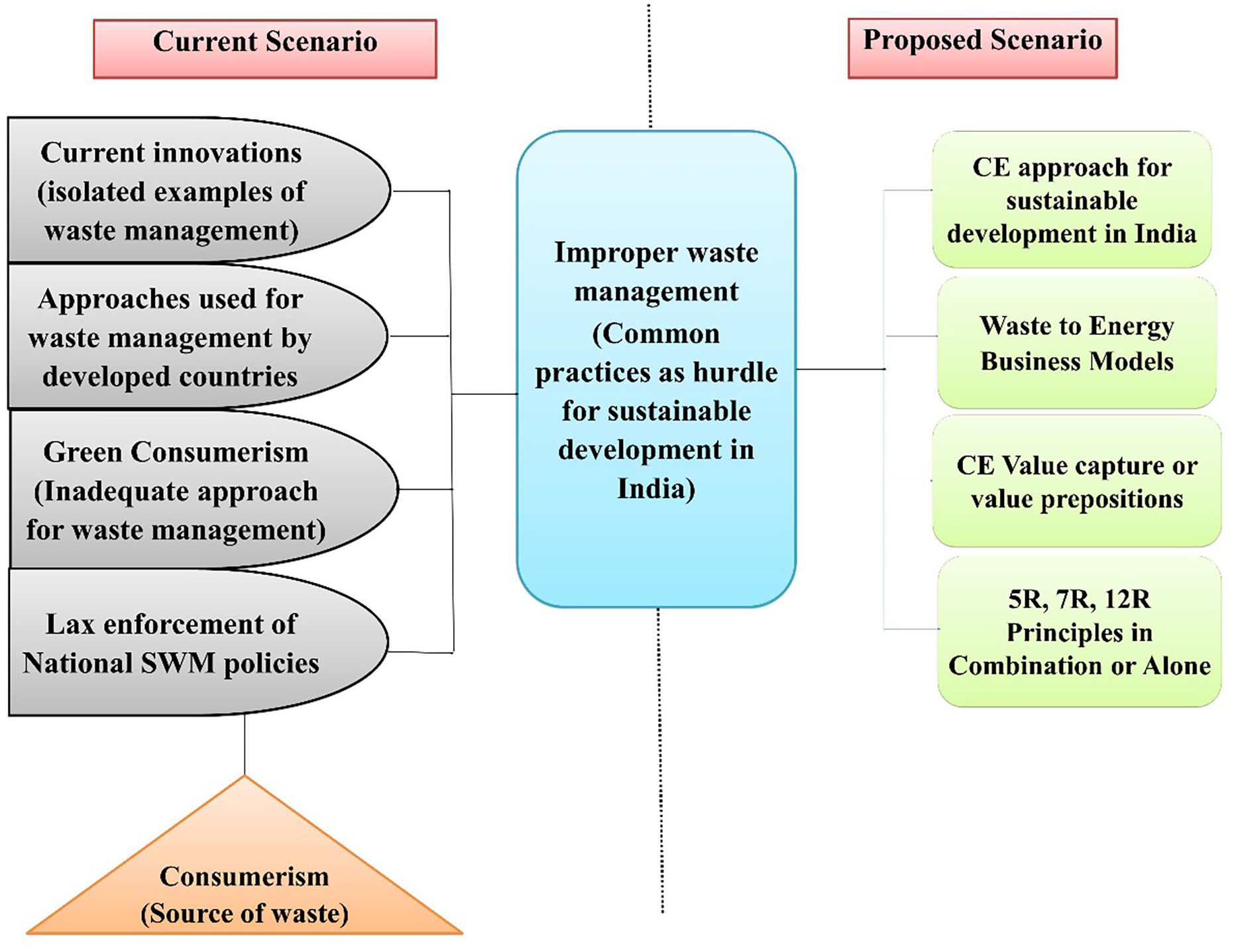
Inclusion of the concept of CE in prevailing solid waste management practices. CE: circular economy.
This article emphasizes understanding the CE concept and its various approaches for its inclusion in the Indian SWM sector, keeping SDGs in the frame. The value chain and the value realization potential of the solid waste with different CE models are also discussed later. The key governmental initiatives, the policies and the inclusion of industries for waste management are also discussed in the article. Towards the end of the article, the gaps to be filled for implementing the CE model have been discussed.
Concept of CE
Cradle-to-cradle approach
The 2nd thermodynamics law asserts that ‘the energy can neither be created nor destroyed; it can be converted from one form to another’. It may be inferred that energy transfers in the system or in-universe are cyclical. Similarly, in nature, the bio-geochemical processes show cyclic behaviour, like the water cycle nutrients (carbon, nitrogen) cycles. However, the duration for completion of one complete cycle may differ from substance to substance, and laps within the cycle may differ from phase to phase. For instance, it takes around nine days for the water to complete one cycle in the atmosphere and the ocean; it takes about 37,000 years to complete the cycle. Similarly, the life-supporting elements show cyclic behaviour, such as atmospheric oxygen, which takes 3.7 million years. In contrast, nitrogen and phosphorus take four years each in the soil to complete the transformation of one cycle from one form to another (Murray et al., 2017).
It is inferred that the shorter the cycle duration, the more likely the element\substance tends to change. Therefore, atmospheric carbon is more susceptible to change compared to atmospheric oxygen. Thus, the rate of flow (flux) plays a critical role in biogeochemical cycles. CE is analogous to natural cycles, and the law of conversion can be utilized in the usual anthropogenic activities and processes (Llorach-Massana et al., 2015). The cradle-to-cradle (C2C) approach is established on closing the loop principle and completely aligns with CE. It is based on three qualitative principles, which are discussed hereunder.
a. Waste equals food – It states that the system should be designed such that waste generated from one process is utilized as a nutrient/source of energy from subsequent processes, thereby creating a closed system or loop that surrounds all.
b. Energy from current solar income – According to this principle, optimum solar energy utilization should be done, thus reducing the dependency on conventional resources, including the consumption of fossil fuels.
c. Celebrate diversity – The C2C comprehends diversity as an environmental, economic and cultural problem having a strong inter-relation among them (Llorach-Massana et al., 2015).
Life cycle assessment (LCA) and C2C approaches can be considered complementary methods to address the issues related to CE and MSW. The LCA of the MSW management value chain via the C2C approach help to identify different environmental hotspots (Atta et al., 2020). The plethora of studies on LCA of MSW management to assess the ecosystem impacts, available options and required strategies in the context of developing economy are available in the literature (Cheela et al., 2021; Khandelwal et al., 2019; Sharma and Chandel, 2017; Yadav et al., 2018). Such studies will help identify the social, environmental and economic issues associated with MSW management to achieve SDGs (Rodić and Wilson, 2017).
Indeed, the C2C approach envisions unceasing usage of resources by preventing chemicals of emerging concern, thus facilitating the valorization of materials over various technical and biological cycles. The LCA approach permits recognizing the intermediate milestones to be attained and providing a quantitative assessment of ecological impacts, thus both require achieving the idea set through the concept of C2C. It was noticed that one of the significant challenges for overcoming the LCA field inside the CE context is the quantification of benefits from the process of recycling, both in terms of replaced materials and class of the secondary materials (Zinck et al., 2018).
CE in virtue with SD goals
The CE has marked its presence in the global market and is emerging as a widely accepted solution to the world’s most burning issues, such as global warming, climate change, environmental degradation and so on. The CE strikes right at the root of the concerning problem, as its design nullifies the concept of waste generation and pollution in the process. Schroeder et al. (2019) suggested that CE could prove to be a promising way to achieve the goals of agenda 2030. As of 17 SDGs, nearly 10 goals are indirectly or directly linked with MSW management (Pujara et al., 2019). Thus, adopting CE approaches in MSW management will help us achieve these SDGs. The CE covers the multiple SDGs on its implementation in the existing scenario, thus addressing the SDGs 6, 8, 11, 12, 13, 14 and 15. Indeed, CE-based practices have great potential to achieve a substantial number of SDGs (Schroeder et al., 2019). Even in recent COVID-19 pandemic circumstances, progress towards achieving SDGs by CE-based SWM approaches is well explored (Neumeyer et al., 2020; Sharma et al., 2021). Undoubtedly, the CE could prove to be a solution in the pursuit of sustainable living. It can be achieved only when the big players and stakeholders take the initiative to divert funds and persuade governing bodies to catalyse the implementation of CE by promoting interdisciplinary research (Pomponi and Moncaster, 2017). In the Indian context, the linkages between SD and CE (SD) via exploring the role of waste management, renewable energy sector, and enabling frameworks and policy setup were investigated by Priyadarshini and Abhilash (2020).
Energy and resource recovery from solid waste
The European Union calls for waste management to be changed into sustainable material management. The idea is to embed the CE principles, increasing the dissemination of renewable energy, improving energy efficiency and flattening the dependability of the union of imported resources, thus ensuring economic prospects and long-term competitiveness (Malinauskaite et al., 2017). The waste to energy (WTE) can be a key to CE, which enables the long-term value of resources, products and materials (Malinauskaite et al., 2017). The waste prevention policies integrated recycling schemes combined with WTE facilities can have a viable role in the CE framework if aligned adequately with its targets (Vakalis et al., 2021). In fact, economic, energy and environmental benefits from WTE can be gained via promoting the CE-based regulatory and technological measures (Tsai, 2019). Though the WTE is at the bottom of the waste hierarchy pyramid, it plays a crucial role in complementing and facilitating CE (Van Caneghem et al., 2019). The studies related to WTE and CE adoption are available; for instance, Allevi et al. (2021) analysed a CE-based model and framework for waste collection from municipalities and its reuse by companies for thermal energy production, electricity and other goods in a sustainable way.
Various thermal waste processing technologies constitute thermal degradation of waste materials into solid, liquid and gaseous products with the discharge of heat energy (Kumar et al., 2015). The major thermal processing methods include mass-burn incinerators, gasification/pyrolysis and plasma-arc gasification. Similarly, energy recovery from waste materials can be made by applying various biological processing methods involving the utilization of microorganisms to produce biogas through anaerobic digestion and nutrient-rich compost through composting. Apart from these techniques, the physical processing methods comprising separation, shredding and drying of biodegradable wastes, known as refuse-derived fuel (RDF), can also be applied. The detailed literature on WTE technologies towards CE is available elsewhere (Boloy et al., 2021; Istrate et al., 2021).
Methodology espoused in the study
The present study was carried out by systematically reviewing the secondary data acquired from published literature comprising research articles, technical reports and documented work. Online databases such as Google Scholar, Science Direct and Scopus were utilized, and specific keywords like ‘Circular Economy’, ‘Solid Waste Management’ and ‘Bio-economy’ were searched. To further narrow these sources, studies were referred that focus on (a) application of CE in the solid waste, Argo waste and other organic waste streams; (b) papers that discuss the compliance and initiatives undertaken by Governments. Additionally, several papers and books were consulted to define the terms and concepts of the CE, SDGs and sustainability (Figure 2). The purpose served by this review was to analyse the overall SWM system in India and assess the applicability of the CE approach in the Indian context.
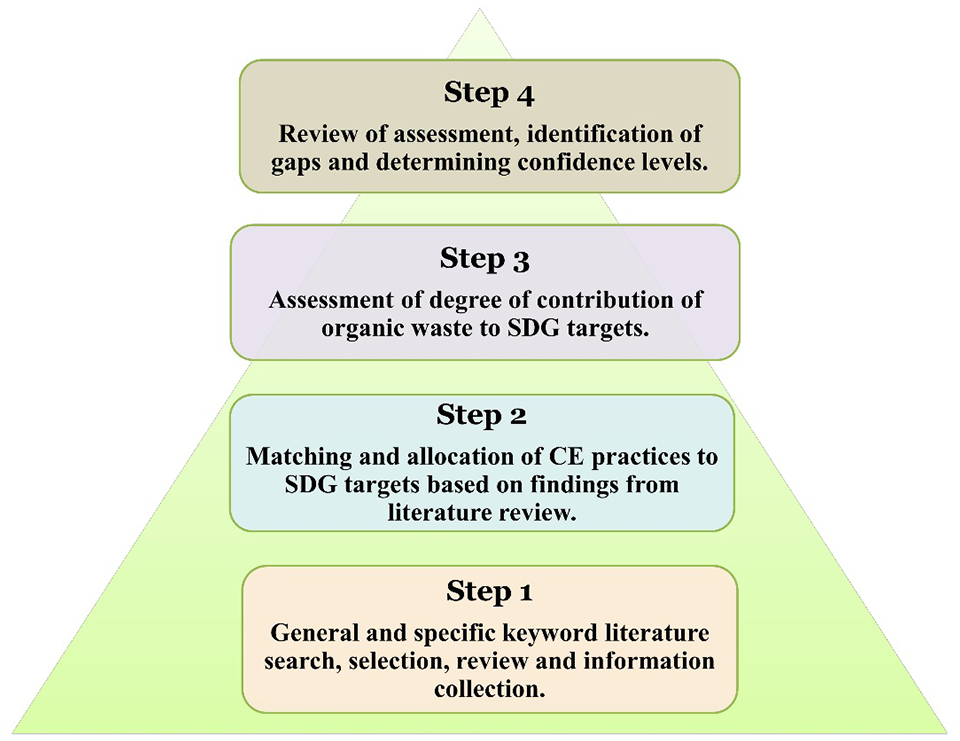
Research methodology espoused in the present study.
Enacted legislation and laws on waste management in India
In 1972, the Parliament of India (PoI) enacted the ‘Wildlife Protection Act 1972’ to preserve and protect the environment and wildlife (flora and fauna). This act allows state governments to transform the ecologically sensitive areas into wildlife sanctuaries and national parks. In the subsequent years, PoI has come up with several laws, legislation and rules to strengthen the movement of persevering the environment and nature by keeping the concept of waste management in the mainframe. In 1972, India was among 122 signatory nations at the United Nations (UNs) Conference in Stockholm, Sweden, and pledged to embrace the 26 principles concerning environmental development in the national policies and governance. In 1974, the GoI enacted the Water (Prevention and Control of Pollution) Act, and in 1981, the Air (Prevention and Control of Pollution) Act, which led to the foundation of various regulatory institutions and testing laboratories like the State Pollution Control Board (SPCB); Central Pollution Control Board (CPCB); Central and State Water Laboratories for the pursuit towards SD. In 1986, GoI enacted the Environment (Protection) Act 1986, which eventually became an umbrella act in waste management. Soon after that, Hazardous Wastes (Management and Handling) Rules, 1989 came into place that defines hazardous waste based on characteristics of the trash that possibly poses threats to the environment or health of the handler of waste. Also, the act formalized the responsibilities of producers, occupiers, importers and exporters of hazardous wastes for its collection, packaging, labelling, transportation, storage, processing and discarding. The central/state pollution control boards are vested with the power to authorize and suspend the enduring authorizations in case of violations of rules by the proponents (Ministry of Environment, Forests, and Climate Change (MoEFCC), 2021).
In 1991, the Public Liability Insurance Act was legislated that provides insurance cover against the accidents caused due to mishandling of hazardous waste. On 17 June 1995, the ‘National Environment Tribunal’ was constituted under the National Environment Tribunal Act, 1995, for the swift disposal of matters related to compensation for the damages and adversities that arose from the accidents caused due to mishandling of hazardous waste. Later, the Biomedical (Waste Management & Handling) Rules, 1998 were enacted to formalize the biomedical waste generated, and Plastics Manufacture, Sale and Usage Rules, 1999 along with Plastic Waste Management Rules, 2016 to regularize the manufacturing and consumption of plastics, especially in packaging and carrying the various commodities in the form of carrying bags.
The most significant step taken by the GoI in the turf of waste management is the enactment of MSW (Management and Handling) Rules, 2000, which aimed to formulate and implement the waste management rules in the region under the jurisdiction of municipal authorities. In 2016, a massive transformation of existing acts and new laws was observed. These acts were incorporated to fill the existing loopholes in the waste management system practiced in the country and deal directly with the enforcement of waste management (MoEFCC, 2021).
Solid waste compliances in India
In the recent past, CE has emerged as a solution for addressing various issues associated with waste management; however, it has not been completed, but it has managed to find a place in the plans of policymakers (Brennan et al., 2015). The CE has also become a vital domain for research, with a steep rise in the number of articles and journals involving the concept of CE in recent years. Various multinational companies throughout the globe are also progressively aware of the opportunities assured by the CE approach and have begun understanding the potential for themselves and their backers. Although the concept of CE and its significance for academia, policymakers and companies is known, the conceptual connection between the CE and sustainability still seems to be fuzzy (Geissdoerfer et al., 2017).
The necessity to conserve and safeguard the environment, ecosystem and sustainable utilization of natural resources is echoed in the Indian constitutional framework. The Indian Constitution under Part IVA (Art 51A-Fundamental Duties) imparts a responsibility to every individual citizen to shield and maintain the natural environment. Additionally, Part IV (Art 48A-Directive Principles of State Policies) of the Constitution of India specifies that the respective states shall strive to keep and improve the environment and protect the wildlife and forests of the country.
There were numerous regulations framed for environmental safeguard, even before India’s independence. However, the requisite boost towards environmental safeguard came after the UNs Conference in Stockholm. After the Stockholm Convention, the National Council for Environmental Policy and Planning was established in 1972 in the Department of Science and Technology to create a governing body for looking after the issues associated with the environment. This Council further advanced into a full-fledged MoEFCC. The MoEFCC was constituted in 1985, the prime administrative body in the country today for the regulation and assurance of the environmental safeguard and laid down the regulatory and legal framework. From the 1970s, several environmental regulations were put in place. The MoEFCC and the Central and State Pollution Control Boards (CPCBs; SPCBs) collectively form the governing and organizational core of the sector.
Key initiatives by the GoI
The countries like India, Brazil and the United States follow a bottom-up approach to waste management. The EU has adopted binding targets on managing the municipal and other industrial wastes and has enforced all the member states to set goals and implement the strategies for recycling at least 65% of the discarded waste materials and not dumping more than 10 % of the waste into the landfills by the year 2030. These goals involve reusing and recycling up to 75% of the packaging plastics, and the EU platforms also manage food waste, thereby encouraging the CE (Geng et al., 2019).
India also signed the Paris agreement in 2015, where they set three targets for a safe and sustainable ecosystem. The commitments made by India in the Paris agreement include the following:
○ To decrease the greenhouse gas emissions by 33 to 35% of what it was in 2005 till 2030.
○ To achieve 40% of power capacity by using nonfossil fuel-based sources.
○ To develop an extra carbon sink by 2030 of 2.5 to 3 billion tonnes of CO2 equivalent by further expanding the forest cover.
In the recent past, SWM has gained significant attention from the local gram panchayats administering the villages to the ULBs administrating the urban areas and cities of the country. A surge in several agreements and partnerships working in the SWM sector has been observed in the Indian cities. These agreements comprise private-private, community-public and public-private cooperation. Figure S1 depicts an alliance structure composed of various parties to encourage sustainable waste management.
The National Solid Waste Association of India (NSWAI) is a non-profit organization working in the domain of SWM comprising biomedical, toxic and hazardous wastes in India. The NSWAI was formed in 1996, which supports the MoEFCC, New Delhi, in several areas of SWM for framing policies and chalking multiple action plans. It is assigned to amassing the information and data associated with SWM from the ULBs to organize and broadcast the data to a website directly linked to the national and international organizations. Another regulatory framework for sustainable waste management is connected to the actions taken by the GoI for managing waste under Swachh Bharat Mission (SBM), Jawaharlal Nehru National Urban Renewal Mission and Urban Infrastructure Development Scheme for Small & Medium Towns.
The Honourable Supreme Court of India took the major and the foremost decision in 1998, which ensured the creation of a proficient committee for studying the scenario of SWM in Indian cities. This Committee recognized various scarcities or gaps in the prevailing SWM system in India and made an Interim Report in 1999 on SWM practices for urban parts of the country. Another major initiative, following sections 3, 6, and 25 of the Environment Protection Act of 1986, as well as based on the commendations by this Proficient Committee, the MoEFCC of the GoI came out with MSW (Management and Handling) Rules, 2000. These rules aim to standardize and implement SWM policies in urban areas. According to these guidelines, the municipal authorities will be accountable for enforcing regulations and developing the required infrastructure for MSW management. Later, these governing authorities were supposed to submit an annual comprehensive report on the management of waste in case of a cosmopolitan city to the Secretary in charge of the Department of Urban Development of the concerned state or in case of all other towns and cities to the District Magistrate or Deputy Commissioner of the concerned region. Recently, National Institution for Transforming India Aayog, an apex body to formulate an action plan, came up with a policy plan to accelerate CE and resource efficiency (RE). The task force policy initiatives by the Ministry of Finance, GoI on Sustainable Public Procurement also try to push the agenda of CE (Liu & Ramakrishna, 2021).
In recent times, the GoI has launched several large-scale national campaigns like SBM, Waste to Energy as a part of its commitment for effective management of waste and pollution in India. Emphasis has also been laid on setting several Centres of Excellence for implementing scientific, sustainable and technological solutions for pollution and waste management (Waste to Wealth Mission | Invest India, 2022).
Influence of industry and legal framework on CE
The fate of CE implementation in the industrial sector directly depends upon the characteristics (scale, type and nature) of the industry. As stated earlier, the industry can be as small as an emerging start-up, entrepreneurship and a massive full-scale manufacturing plant. This variation in the size of sectors has induced complexity in implementing CE at the industrial level. It may prove to be a challenge for existing trades. Still, at the same time, it has created opportunities for new firms that can provide the services for existing enterprises to implement the concept of CE in their operational system (Ferronato et al., 2019).
For assessing the performance of the firm in virtue of CE implementation, a firm-specific indicator sheet should be formulated, which will cover all the vital parameters consisting of the 3R principle, economy and technological aspects and ecological and social well-being. Conversion of the resource and energy efficiency must be achieved in line with CE (Zhang et al., 2019). Lahti et al. (2018) reviewed the latest research published on SD and free enterprise and concluded that free enterprise opens a new market for durable and environment-friendly goods. Further, entrepreneurship can be a vital tool to channel sustainable products and processes and could be a feasible way for prevailing ecological and social concerns.
Entrepreneurs could be a forerunner in the induction of CE in the current scenario by adopting the concept of entrepreneurship’s efficacy. It is the process of amelioration of a linear system into a circular network (Fan et al., 2019). With the rise of entrepreneurship in the field of sustainable goods and services, society will get more aware and responsible. In this regard, governments worldwide have developed several incentive programs to support sustainable and green businesses and entrepreneurs working in the concerned and allied fields (Fan et al., 2019).
For holistic implementation and ensuring the smooth functioning of the green-sustainable market, relevant recommendations in the policies and governance are required. The key recommendations are international collaborations among universities, organizations, and industries, incentivizing CE compliance goods and practices, and access to low-cost technology for entrepreneurs. CE can further be applied in the renewable energy sector. Synergizing CE and renewable energy can encourage environmental sustainability, and at the same time, it will create new job and business opportunities (Antoniou et al., 2019).
Value realization potential of CE model
As per Accenture’s estimate of the CE model, about half-a-trillion-dollar worth of India’s GDP can be guarded by adopting the model of CE in 2030, and 4.5 trillion dollars. In a business-as-usual scenario where the ongoing practices of the linear economy are followed, and no new policies are implemented, then around 697 billion dollars of GDP will be at risk by the year 2030, whereas adapting the improved and sustainable technologies will reduce the size of this risk up to 382 billion dollars (Figure S2) (Jain et al., 2018).
The CE model aims to eliminate under-utilized waste streams or assets. These can be categorized into four parts:
i. Wasted resources refer to those materials and energy that cannot be regenerated.
ii. Wasted capacities refer to products and assets not utilized to full potential.
iii. Wasted lifecycles refer to products that reach their end of lifecycle early.
iv. Waste embedded values refer to the components, material, or energy not recovered from waste streams.
Accenture estimated that by adopting the concept of CE and eliminating these four types of waste, and widening the new opportunities of inclusion of technology and sustainability, a new business option could be created, which values out to be around 4.5 trillion dollars of global GDP in 2030 (Figure S3) (Jain et al., 2018).
Challenges in the implementation of CE from the industrial sector perspective
In the recent past, studies relating to entrepreneurship and SD have been conducted. Hall et al. (2010) comprehensively reviewed the contribution made in the past, arising research field with a future perspective. Entrepreneurship is utilized as a remedy for social and environmental concerns by providing a way for sustainable products and processes. However, the nature of entrepreneurship will play an important role, and uncertainty is yet to be studied. Effect on CE adoption practices by small and medium enterprises can be studied by considering several aspects like sociocultural condition, institutional realities and so on. Schaltegger et al. (2012) studied sustainable innovation conditions and types of sustainable entrepreneurship. Stringent regulations and rigid regulatory framework with the business requirement is a crucial challenge for management. The promotion and implementation of any newly developed innovations depend upon the business leaders.
A survey (Heshmati, 2017) reviewed the consequences of a green economy and studied green economy transition with the advantages and disadvantages of green entrepreneurship in Turkey. The minimum level of activity, a smaller number of support programs, less green capacity, availability of private capital, faulty education system with stringent cultural norms, lack of control with improper implementation, lack of awareness about green entrepreneurship and lack of public knowledge about purchasing of green products pose as barriers and challenges to the green economy. Entrepreneurship can play a vital role in making progress towards the renewable energy sector. Innovation in the field of entrepreneurship and developing a culture for this is a big challenge. It is observed that various platforms are calling their business, labour and society leaders to change to a CE by supporting RE and overcoming challenges of the policy thereby creating jobs, increasing growth and promoting business models for evaluation of resources with RE improvement in terms of incentives (Neumeyer & Santos, 2018). Setting the objectives, monitoring progress, the effect of decision making on the environment and resources and reviewing subsidies harming the environment, moving towards a CE by promoting recycling and forming an efficient framework for efficient resource products, implementing green procurement should be taken forward by the members. The barrier that halts enterprises from innovation is financial, legal and guide towards investments for developing new business models (Donner et al., 2021; Rizos et al., 2016).
Fan et al. (2019) concluded that ‘entrepreneurship’ and ‘sustainable development’ are the two critical factors for socioeconomic development. A comparison of correlation between these two factors in the European context is studied for two scenarios of efficiency-driven and innovation-driven countries before and after the global economic crisis. York and Venkataraman (2010) reviewed the solution for environmental degradation by proposing an entrepreneurship model for new profit ventures addressing new regulations and corporate social responsibility. The study conducted by Pacheco et al. (2010) finds that achieving the sustainability cost for setting norms and rules plays a vital role. Meek et al. (2010) observed the influence of incentives provided by the government and social norms on sustainable entrepreneurship.
Effect of the legal framework on CE
Considering the CE approach, the focus should be on the reuse and recycling of wastes. To encourage the development of CE, all the stages in the lifecycle of any product should be considered, including the design, manufacture, use and reuse phases. Various types of legal questions arise while developing a CE. It is evident that multiple questions regarding national waste will arise and need to be answered. At some point, this may appear whether still a law for waste management is required when there are rules that should govern no waste from the material and product instead of laws associated to waste. The design of a product or its intended use can be more important than the law related to it (Xavier et al., 2019). The Eco-design directive should be broadened for developing the CE, or rather the principle of Extended Producer Responsibility should be modified as per the Indian scenario.
Overview of SWM in India: Scope for the inclusion of CE
With the advent of industrialization, India is transforming from an agrarian economy to a major manufacturing hub and service provider in the Asian subcontinent, which has also accelerated the urbanization movement. Currently, there are 7935 towns and 435 urban agglomerations in the country (Census of India, 2011), and the same goes for the MSW generation. According to the survey piloted by the Central Institute of Plastics Engineering and Technology (CIPET), it is projected that 27,018 tons per day (TPD) of MSW is generated from 23 cities, and it requires about 1450 km2 of land for its disposal (Joshi and Ahmed, 2016). In the present conditions, the waste is getting generated at a faster pace than any other environmental pollutants, including greenhouse gases (GHGs) (Mathews and Tan, 2016). Thus, MSW is turned into a quagmire for urban dwellings; and in these regions, the municipal authorities are accountable for all the management of waste-related practices, including collection, separation, transportation and safe clearance of solid waste (SWM Rules, 2016). However, in reality, the conduct of these practices is often done in an unscientific and haphazard manner. The significant reasons of this menace are improper land use as well as infrastructure, low financial and technical potential, lack of proper implementation of rules, lack of coordination amongst authorities, lack of political priorities and lack of policies (Ravindra et al., 2015).
The primer steps that should be followed in designing the effective and efficient MSWM system is the analysis of the composition and generation rates of waste produced from a particular area because the waste composition and generation rates could vary from place to place, as they depend on the location, lifestyle, food habits, rituals, literacy rate and climatic conditions of the specific regions (Srivastava et al., 2015). It plays an active role in the selection of the waste treatment process. To cover this aspect, three studies were conducted in India for waste characterization, that is, by CPCB, CIPET, National Environmental Engineering Research Institute and the Federation of Indian Chambers of Commerce and Industry. Table 2 depicts waste generation and composition in various cities of India conducted by various organizations and researchers.
Waste generation and composition in various cities of India.
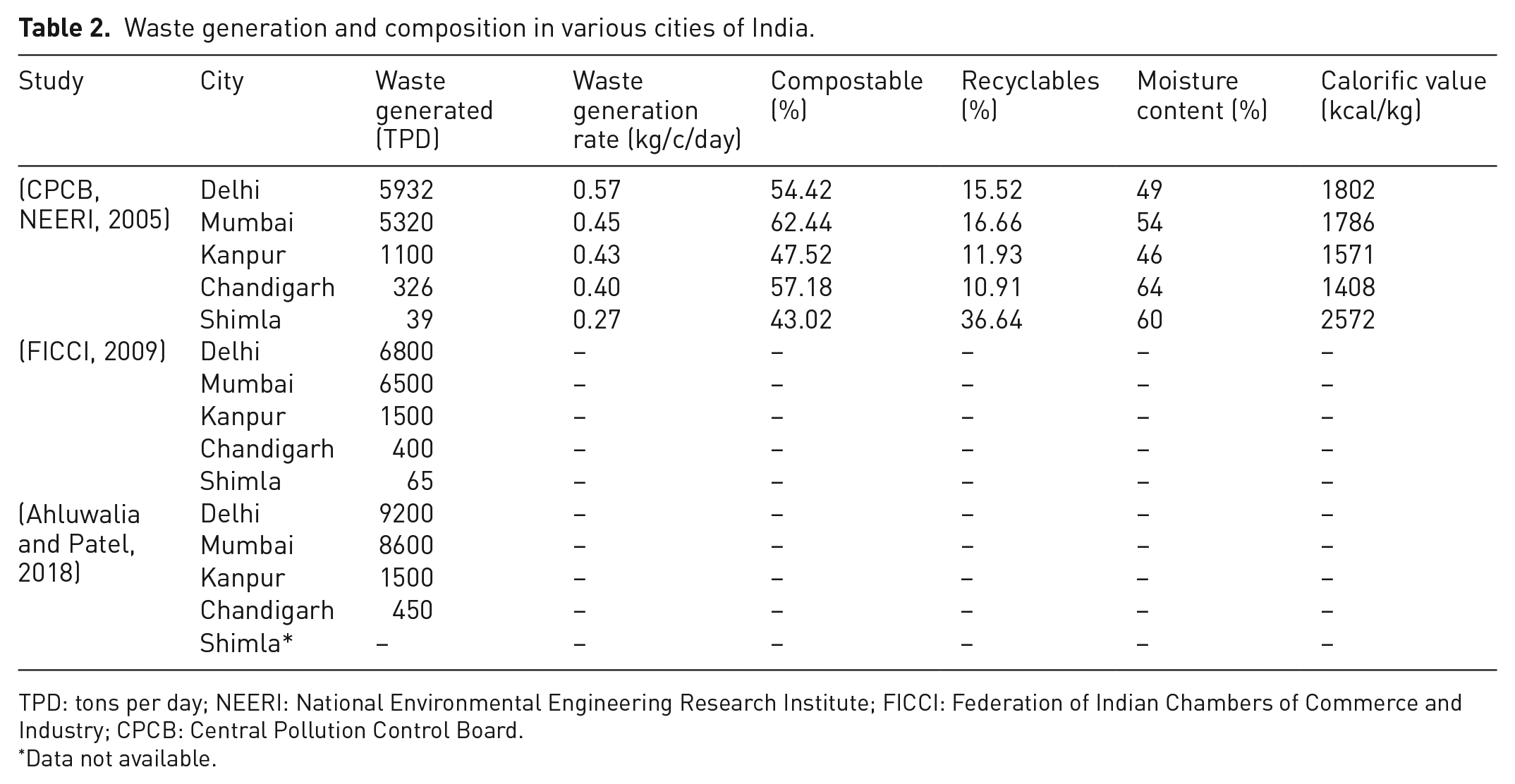
TPD: tons per day; NEERI: National Environmental Engineering Research Institute; FICCI: Federation of Indian Chambers of Commerce and Industry; CPCB: Central Pollution Control Board.
Data not available.
From all the conducted studies, it was observed that a significant portion of waste is biodegradable and ranges from about 45% to 55% of the total waste advocating the high moisture content range (42–58%), which is followed by the combustibles accounting for 20–30% and the residual constitutes of inert substances. Table 3 highlights the waste generation and its projections for various classes of cities in India.
Waste generation and its projections for various class of cities in India.
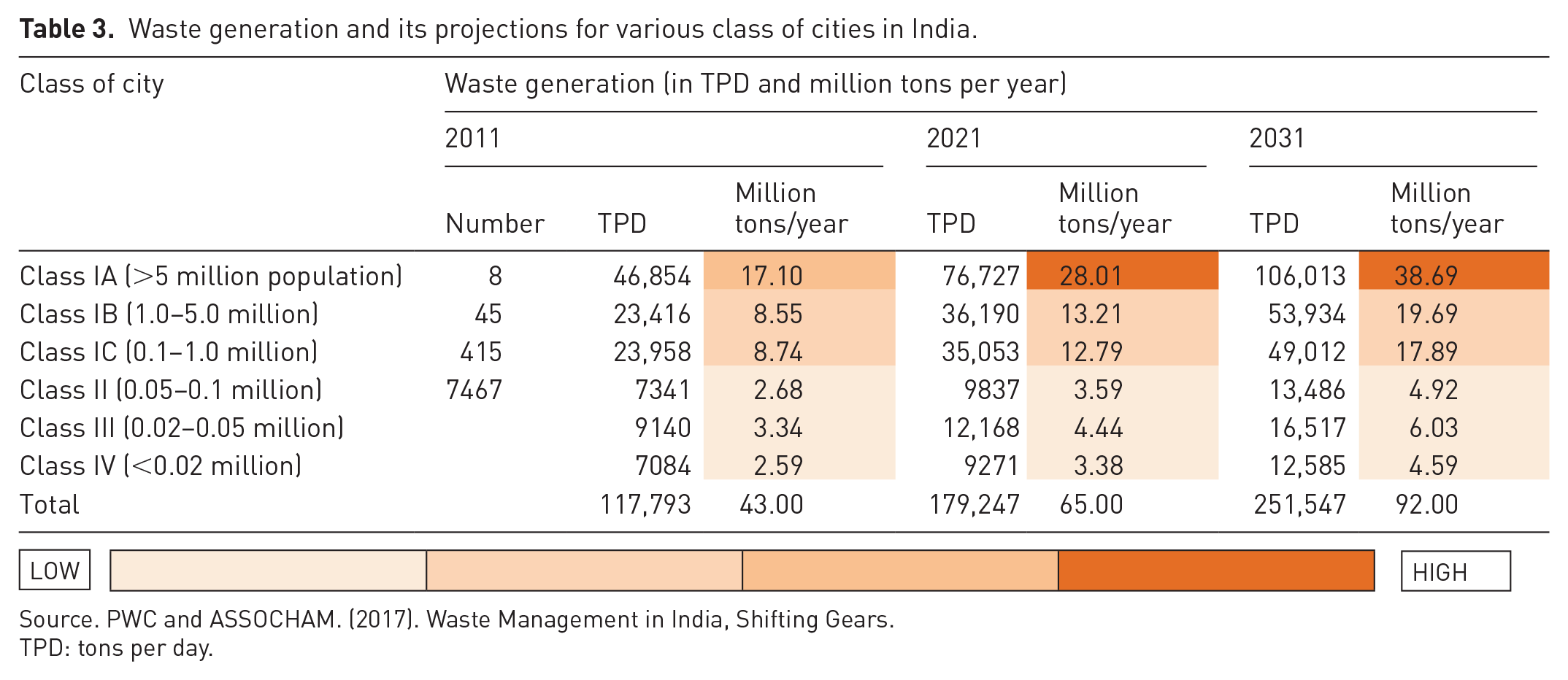
Source. PWC and ASSOCHAM. (2017). Waste Management in India, Shifting Gears.
TPD: tons per day.
The results for the generation of waste and future projection advocated that implementing the biochemical processes for waste treatment like composting, vermin-composting and anaerobic digestion could be preferable, and the remaining inorganic constituents can be utilized as RDF for energy recovery or can be incinerated.
In accordance with various policies, such as Hazardous Waste (Management, Handling and Transboundary Movement) Rules, 1989; Biomedical Waste (Management and Handling) Rules, 1998; MSW Management and Handling Rules, 2000; now rules are updated, and E-waste (Management and Handling) Rules, 2011; only the inert portion and the remnants of waste treating (organics) are permitted to be disposed of. On the contrary, more than 90% of the MSW is dumped into the landfills (Swati et al., 2018), and that too without segregation which causes the generation of leachate by the decomposition of the organic waste, causing severe problems related to the contamination of groundwater and health risks to the workers at the landfill site. The conventional practice of SWM in the Indian context is shown in Figure S4, while Figure 3 depicts the recommended SWM plan for Indian conditions, embracing the CE approach and closing the loop.
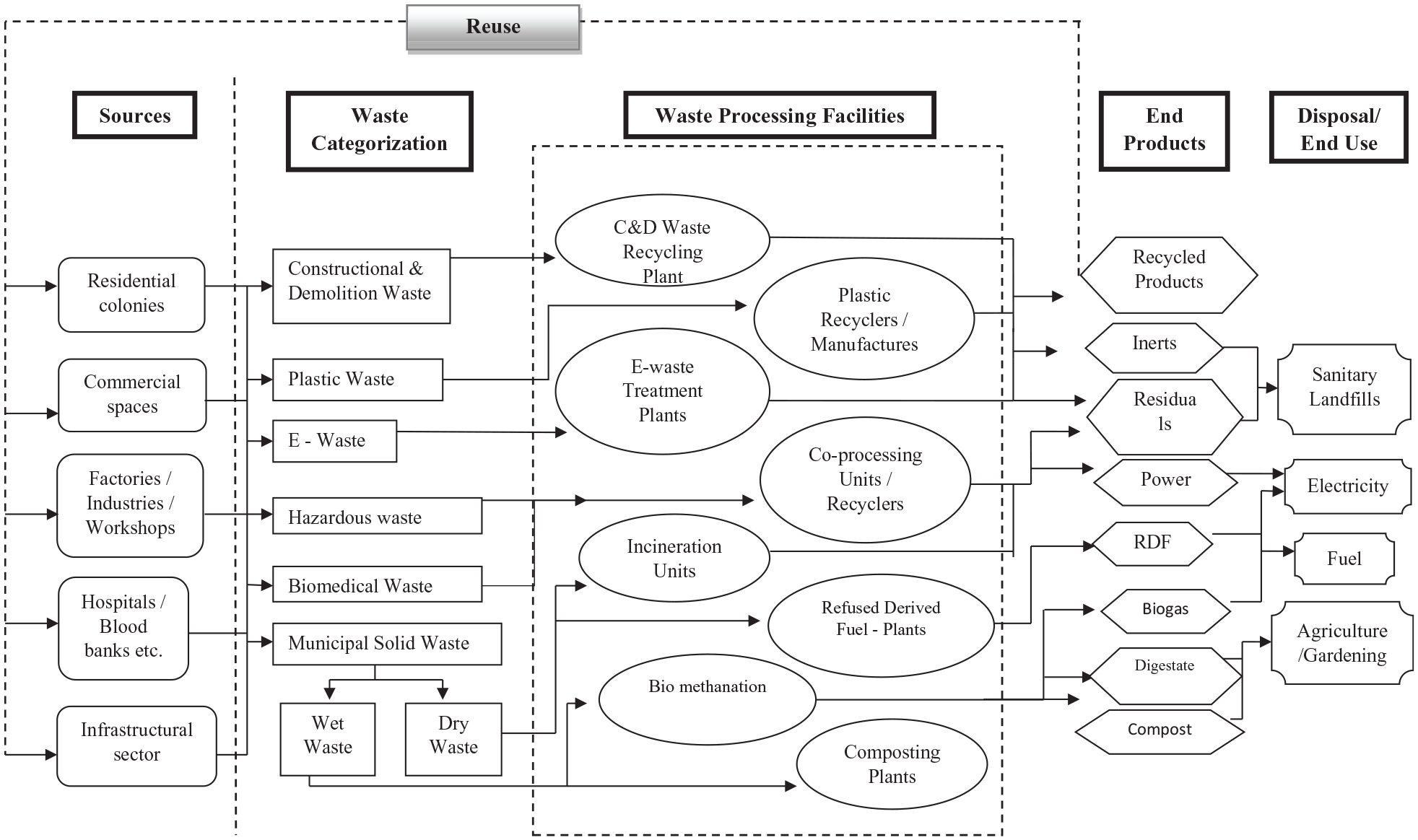
Recommended SWM plan in the Indian scenario. SWM: solid waste management.
However, many novel and innovative techniques in MSW treatment have been adopted by various municipalities throughout the country, like the deployment of 500 tons capacity RDF plant by Chandigarh municipality, which turns recyclable and combustible constituents (20–30%) of MSW into useful fuel having calorific value 2500 to 3000 kcal/kg with the moisture content of 10% to 30% (Ravindra et al., 2015).
In the city of Pune, situated in Maharashtra state, the plasma arc gasification plant having a waste processing capacity of 70 tons, was set up in 2010 to generate 2.4 megawatts (MW) of electricity from the waste. However, only 1.7 MW of power is produced due to the low calorific value and higher moisture content of the waste used (Srivastava et al., 2015). Despite this, plasma arc gasification technology holds great potential in the field of energy generation from waste. Apart from this, the incineration plant with a waste processing capacity of 2000 TPD was set up by the North Delhi Municipal Corporation in 2017 at Narela, New Delhi, to generate 24 MW of electricity. The plant was expected to provide relief to the overflowing landfill sites in Delhi. Despite the sincere efforts made by the municipalities, NGOs, entrepreneurs and public bodies in the MSWM, there is still a long way to overcome the enormous amount of waste in the country. Thus, the CE approach can be most appropriate for a country like India to develop a sustainable waste management model since optimum utilization of resources will be done. For this, employment of an integrated waste management approach that stands on the foundation of source segregation of waste and utilizes the biochemical and thermo-chemical processes in an integrated manner should be done, which might result into least burden on the landfills thereby enhancing scope of energy generation from waste (Sarc et al., 2019).
Value chain for MSW
MSW possesses great potential for energy as well as material recovery. As per the Ministry of New and Renewable energy estimates, there is a potential to generate 1400 MW of power; however, only 1.5% of this capacity has been utilized so far (Energy Alternatives India, 2012).
Modak (2018) presented a value chain that represents the potential to recover energy and cost from one ton of MSW. It indicated that the organic portion of MSW can be utilized in making compost, electricity and biogas. The value of compost from 1 ton of MSW comes out to be around 729 US$ (assuming 1$ = 73.36 INR), and additionally, 15.3 tons of fertilizer can be saved every year. The biogas generation potential from 1 ton of MSW comes out to be approximately 8244 US$, and additionally, 5400 m3/year of GHG emissions can be saved. Similarly, electricity generation potential from 1 ton of MSW comes out to be approximately 3238 US$, and 5400 m3/year of greenhouse emissions can be saved (Figure S5). Apart from this, selling various recyclables present in MSW can result in monetary gains; the value of paper comes out to be around 17 US$, for rubber, it is around 43 US$, and for metals and plastics, it comes out to be around 154 US$ and 32 US$, respectively.
Possible gaps in execution of CE concept in India
Implementing the CE concept in India in the waste management stream has various organizational, social and legislative constraints. These gaps are to be addressed immediately by the concerned authorities so that the sustainable and cost-saving option of CE can be applied at a broader scale in India. The identified gaps are listed hereunder.
a) Lack of presence of effective Government policies, which could be changing in the context of CE
The GoI has introduced several policies in the recent past; however, none of the oriented policies proved to be a game changer. There is an urgent need to raise more favourable policies or launch campaigns for organizing the sectors associated with solid waste recycling, thereby involving the rag pickers and other human scavengers, enhancing waste collection efficiency, and having positive social impacts.
b) Absence of a common platform for interaction between entrepreneurs and global experts on various concepts of CE
To boost the implementation of the CE concept in India, there is a need to develop a suitable platform for proper interaction and exchange of ideas at national and international levels. Such a platform can aid in connecting the budding entrepreneurs and the experts, which may have positive impacts.
c) Excessive reliance on the linear economy model
The mind set to extract raw materials, manufacture a product out of it, use it and throw it is a linear economy model. This approach may seem alright in the short-term, but this is not the way to go considering the sustainability perspective. There is a need to include the recycled materials gradually and effectively into the raw materials, which will reduce the burden on the extraction of raw materials and help to incorporate the concept of CE without compromising the quality.
d) Limited academic-business collaboration
The concept of CE can be executed swiftly if there is a good collaboration between academic institutions and business owners. The conceptualization of ideas can be done by the academic personnel; however, due to the lack of funds and the practical experience essential for executing these ideas, the academic institution tends to fail. Hence, the academic-business collaboration can speed up the implementation of the CE model.
e) Absence of new models to adapt or replicate the concept of CE on a wider scale in India
India being new to CE, lacks experience in implementing CE models. A trial and tested approach would have significantly boosted the execution of the CE concept in the Indian scenario.
f) Lack of awareness among citizens to adopt or understand the 6R concept
The CE concept can prove to be a game changer if the citizens get a better understanding of it. India has been facing issues when it comes to implementation of waste management strategies, and this concept of CE will not be any exception. If the common masses are made aware of and realize the importance of the CE approach, it may produce some greater results soon.
Conclusion
In today’s scenario, effective and sustainable management of waste has become extremely challenging in different economies due to the varying proportions and composition of waste. The concept of CE and its alignment with SWM and SDGs provides novel insights and approaches. The CE approach can be considered best suited for its implication in the Indian waste management scenario. The work attempts to understand the concept of CE adoption in SWM sector in the Indian context by considering several legislative frameworks and initiatives taken by the GoI. Further, the current waste management practices, waste management inadequacy, and inferring the CE as a solution for successful waste management practices are also discussed. The current article also provides the cradle-to-cradle approach in CE, its various goals, and the recovery of energy and resources from the discarded materials by employing the CE approach. It is expected that the national solid waste compliances, enacted legislation, key initiatives taken by the GoI, and the influence of industry and legal framework on CE will facilitate the Indian SWM sector transition towards CE-based practices. However, before the inception of CE in the Indian waste management sector, analysing its feasibility by considering the available waste processing facilities and thorough economic evaluation is of paramount importance.
Supplemental Material
sj-docx-1-wmr-10.1177_0734242X221126718 – Supplemental material for Circular economy approach for sustainable solid waste management: A developing economy perspective
Supplemental material, sj-docx-1-wmr-10.1177_0734242X221126718 for Circular economy approach for sustainable solid waste management: A developing economy perspective by Ashootosh Mandpe, Sonam Paliya, Vidyadhar V Gedam, Shubham Patel, Lakshay Tyagi and Sunil Kumar in Waste Management & Research
Footnotes
Acknowledgements
The authors would like to thank the Director, Indian Institute of Technology Indore (India), for giving permission to write this review.
Declaration of conflicting interests
The authors declared no potential conflicts of interest with respect to the research, authorship, and/or publication of this article.
Funding
The authors received no financial support for the research, authorship, and/or publication of this article.

Supplemental material
Supplemental material for this article is available online.
References
Supplementary Material
Please find the following supplemental material available below.
For Open Access articles published under a Creative Commons License, all supplemental material carries the same license as the article it is associated with.
For non-Open Access articles published, all supplemental material carries a non-exclusive license, and permission requests for re-use of supplemental material or any part of supplemental material shall be sent directly to the copyright owner as specified in the copyright notice associated with the article.
