




Abstract
Background
Experimental evidence has shown sensory and cognitive changes in old age can affect everyday decision-making. Environmental supports may play an important role in mitigating negative impacts.
Objective
This study aimed to (a) identify challenges older adults face in everyday decision-making, (b) assess how environmental supports influence decision-making performance, and (c) explore strategies older adults use to support everyday decision-making.
Methods
Twenty-six older adults in the UK participated in think-aloud interviews while performing decision-making tasks under varied visual clarity and note-taking conditions. Follow-up discussions probed everyday decision-making challenges and supports.
Results
‘Comprehension’ and ‘process’ challenges were most frequent. Clearer presentation improved overall performance, with fewer reading challenges. Note-taking reduced calculation challenges but increased comprehension challenges, making no difference to overall performance. Support strategies used in everyday life included note-taking, and sensory and social support. Findings indicate decision-making declines in older adults are multifaceted, shaped by sensory, cognitive, and socio-emotional factors.
• A novel application of the think-aloud methodology to derive insights into real-time decision-making challenges older adults face, and the impact of environmental supports on these challenges. • Enhancing perceptual clarity shows promise for supporting older adults’ decision-making, evidenced through improved task performance, most notably by reducing reading challenges.
• It is important to recognise the multifaceted challenges older adults face in everyday decision-making and tailor environmental supports to the individual and task demands. • Older adults and practitioners supporting older adults could use the findings to tailor environmental supports addressing the sensory and cognitive needs of older adults to improve their everyday decision-making and wellbeing.What This Paper Adds
Applications of Study Findings
Introduction
Good decision-making ability is central to maintaining independence in later life and is embedded in many daily activities like shopping or managing finances (Raimo et al., 2024). However, age-related declines in perception (e.g. vision and hearing) and cognition (e.g. attention and working memory) can make decision-making more challenging. As the population ages (WHO, 2024), understanding the everyday decision-making challenges older adults face and identifying strategies that support their autonomy and wellbeing becomes increasingly important.
While decision-making has been widely studied using experimental methods, less is understood about how older adults manage everyday decisions such as purchasing items, choosing healthy foods, making travel plans, and prioritising tasks. These decisions can be affected by a combination of cognitive, emotional, environmental, and social factors (Strough & Bruine de Bruine, 2020). Some types of decision-making remain stable or improve in older age due to increased knowledge, experience, and emotional processing, while others become more challenging (Del Missier et al., 2020). Age-related sensory declines mean more cognitive effort is needed to interpret unclear written and spoken information (Roberts & Allen, 2016). Concurrently, declines in working memory can lead to difficulty in more cognitively demanding judgement and decision-making tasks (Del Missier et al., 2024).
Tasks placing high demand on working memory can be especially problematic for the oldest-old, who may struggle to hold and process multiple criteria simultaneously (Del Missier et al., 2013). For example, the ‘Applying Decision Rules’ (ADR) task from the adult decision-making competence test requires participants to select a product (e.g. a DVD player) based on tabular information and a set of predefined requirements (Bruine de Bruin et al., 2007). Age-related declines in performance on these tasks may not only reflect cognitive limitations but also strategic shifts such as reduced information searching (Mata & Nunes, 2010) and greater difficulty applying decision rules (Bruine de Bruin et al., 2007).
Environmental support can help mitigate age-related deficits in memory (Craik, 2022), though its role in supporting decision-making is less explored than its role in memory research. Two promising forms of decision-making support are (1) improving perceptual clarity of decision materials to reduce the cognitive burden of decoding impoverished perceptual information (Roberts & Allen, 2016) and (2) reducing information that must be held in working memory while making a decision (see Badham & Hamilton, 2020, for a review).
Improving perceptual clarity – such as through better size, contrast, and layout or reducing background noise – can enhance comprehension (Mitzner & Rogers, 2006; Warrington et al., 2018) and reduce cognitive load (Roberts & Allen, 2016; Schneider & Pichora-Fuller, 2000). This could be particularly beneficial for older adults experiencing age-related sensory decline (Billig et al., 2020). In parallel reducing working-memory demands aligns with cognitive offloading research, which shows that external aids such as note-taking or using digital tools can help externalise information and reduce the demands on working memory (Cole & Balasubramanian, 1993; Risko & Gilbert, 2016). Intentional offloading has been shown to improve performance on memory tasks across age groups by freeing up cognitive resources needed for active processing, such as binding and integrating new information (Gilbert et al., 2023; Li et al., 2025). Moreover, evidence suggests age-related deficits in information search behaviour are reduced when older adults are encouraged to write down the information they find (Cole & Balasubramanian, 1993). These environmental supports can also be understood within broader gerontological models, such as selective optimisation with compensation (Baltes & Baltes, 1990), which suggest that older adults compensate for age-related changes by adopting supportive strategies. However, evidence is limited on whether older adults adopt these strategies in their everyday life, perceive them as useful, and how they impact real-life decision-making and wellbeing.
Although prior research has identified age differences in decision-making ability (Bruine de Bruin et al., 2015), relatively little is known about how older adults arrive at their responses or the challenges they encounter during everyday decision-making. Beyond laboratory paradigms, gerontological research on everyday problem-solving shows that older adults often rely on experiential strategies, heuristics, and collaborative approaches (Patrick & Strough, 2004; Strough et al., 2002). However, laboratory studies typically present information under optimal conditions – clearly visible, high-contrast, and free from noise – which may mask struggles older adults encounter in real-world environments where information is frequently small, unclear, or presented amid auditory distractions (e.g. nutrition labels or unclear phone lines). Older adults may compensate for age-related declines through increased effort or alternative strategies (Craik, 2022), achieving comparable accuracy to younger adults. However, accuracy alone does not capture the broader consequences of decision-making becoming slower or more effortful, including tendencies to avoid, delay, or defer decisions as cognitive demands increased (Crawford et al., 2022; Nolte & Löckenhoff, 2023). There remains a need to understand the real-time processes older adults use when navigating everyday decisions, the strategies they employ to manage challenges, and the barriers that hinder the uptake of potentially supportive tools. For example, reluctance to adopt assistive technologies such as hearing aids may reflect not only cognitive barriers but also concerns about social perception (Ekberg & Hickson, 2025).
Addressing these gaps, we conducted a qualitative study using think-aloud interviews with semi-structured discussions to (a) identify the types of challenges older adults face in everyday decision-making, (b) assess how environmental supports such as visual clarity and note-taking influence decision-making performance, and (c) explore strategies older adults use in everyday life to support decision-making.
Methods
Design
Participants completed a think-aloud interview (Ericsson & Simon, 1980; Noushad et al., 2024; Willis, 2004) in which they verbalised their thought processes while completing decision-making questions adapted from the ADR task (Bruine de Bruin et al., 2007) and Newest Vital Sign health literacy task (Rowlands et al., 2013). These questions were presented under two visual clarity conditions (clear vs. less-clear). Participants also completed questions with and without the ability to make written notes. The tasks required integration of reading comprehension, applied numeracy, and logical reasoning, supporting executive processes including monitoring/supervisory control, response inhibition, working memory updating, goal maintenance, and selective attention. They were selected because they capture common cognitive demands across two everyday decision-making domains – consumer purchasing and health-related nutritional judgement – that are both familiar and consequential for older adults’ daily lives (Del Missier et al., 2012). A semi-structured follow-up discussion followed, exploring decision-making challenges and sources of support in everyday life.
A favourable ethics opinion was provided by the Schools of Business, Law and Social Sciences Research Ethics Committee at Nottingham Trent University. All participants completed consent forms prior to the conduct of the interviews.
Participants
Twenty-six participants aged 75 years and older were recruited from the Birmingham 1000 Elders Group, a panel of 500 community-dwelling older adults. The use of this group meant participants were likely to be familiar with research participation and that they had higher educational attainment than the general population, which may introduce selection bias. Data saturation was assessed through field notes, with no new themes or information emerging by the 26th interview. Participants with medically diagnosed cognitive impairment were excluded.
Information was collected on individuals’ age group (75–79, 80–84, and 85 and over), sex (male, female), and socioeconomic status proxied by the Index of Multiple Deprivation (IMD) decile, where decile 1 represents the most deprived areas and decile 10 the least deprived. These variables were used to purposively sample participants. We also collected information on education level (highest level of attainment) and self-rated general health, hearing, and vision (measured on 5-point Likert scales from 1 = ‘very poor’ to 5 = ‘excellent’); however, these characteristics were not used for sampling. Participants were reimbursed with a £25 voucher and travel expenses.
Materials and Procedure
The think-aloud component focused on capturing participants’ real-time reasoning processes and identifying challenges with task completion. To examine the influence of perceptual and working memory support, the decision-making tasks were systematically varied in terms of visual clarity and the ability to make written notes. The first task was a Purchasing Decision task, adapted from the ADR component of the A-DMC (Bruine de Bruin et al., 2007), in which participants selected a product (TV or laptop) based on tabular information and a set of stated preferences (Figure 1). The second was a Nutrition Decision task, adapted from the UK version of the Newest Vital Sign health literacy test (Rowlands et al., 2013), requiring participants to answer questions related to a nutrition label (ice cream or granola bars) (Figure 2). Example purchasing decision task Example nutrition decision task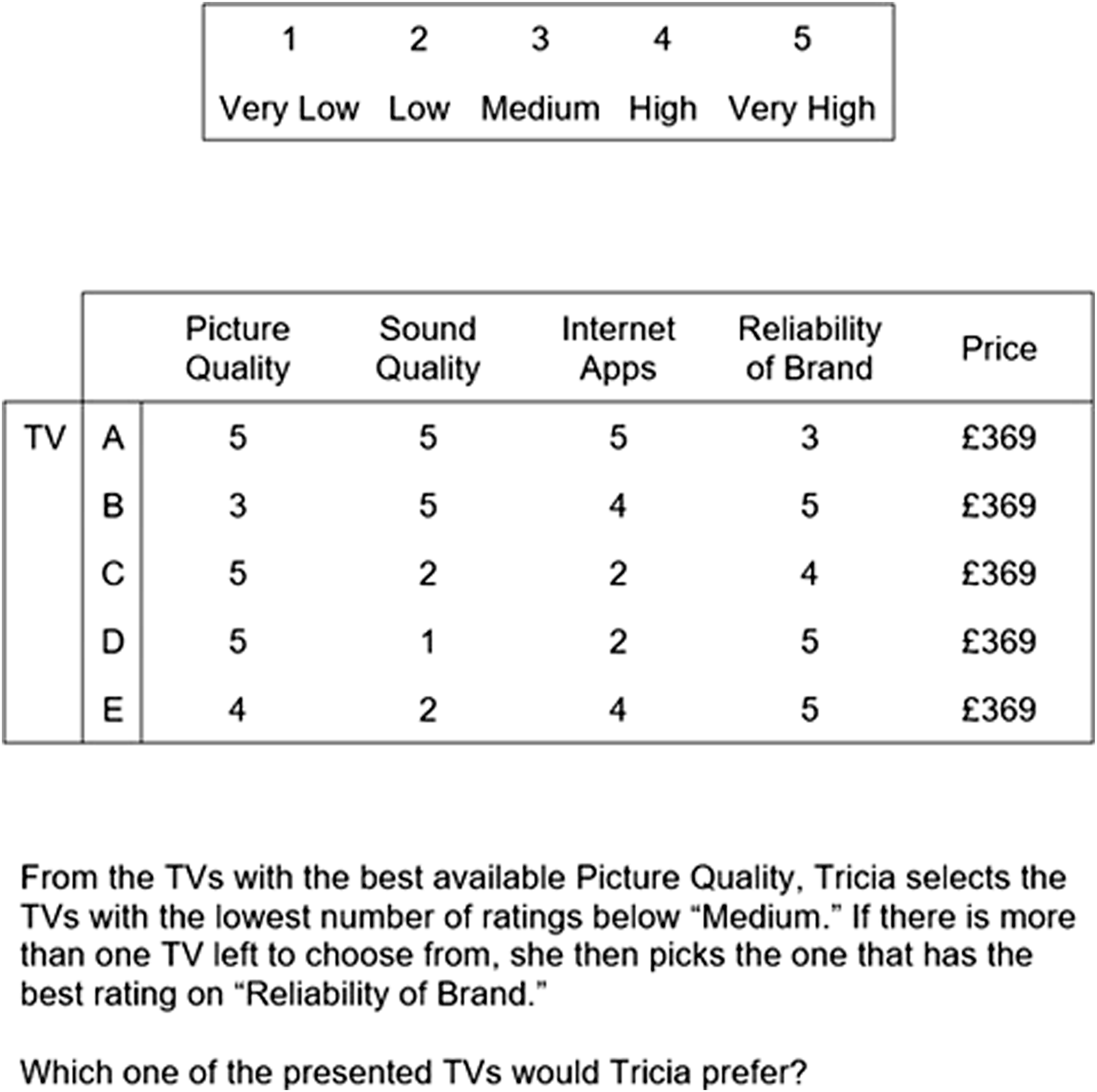
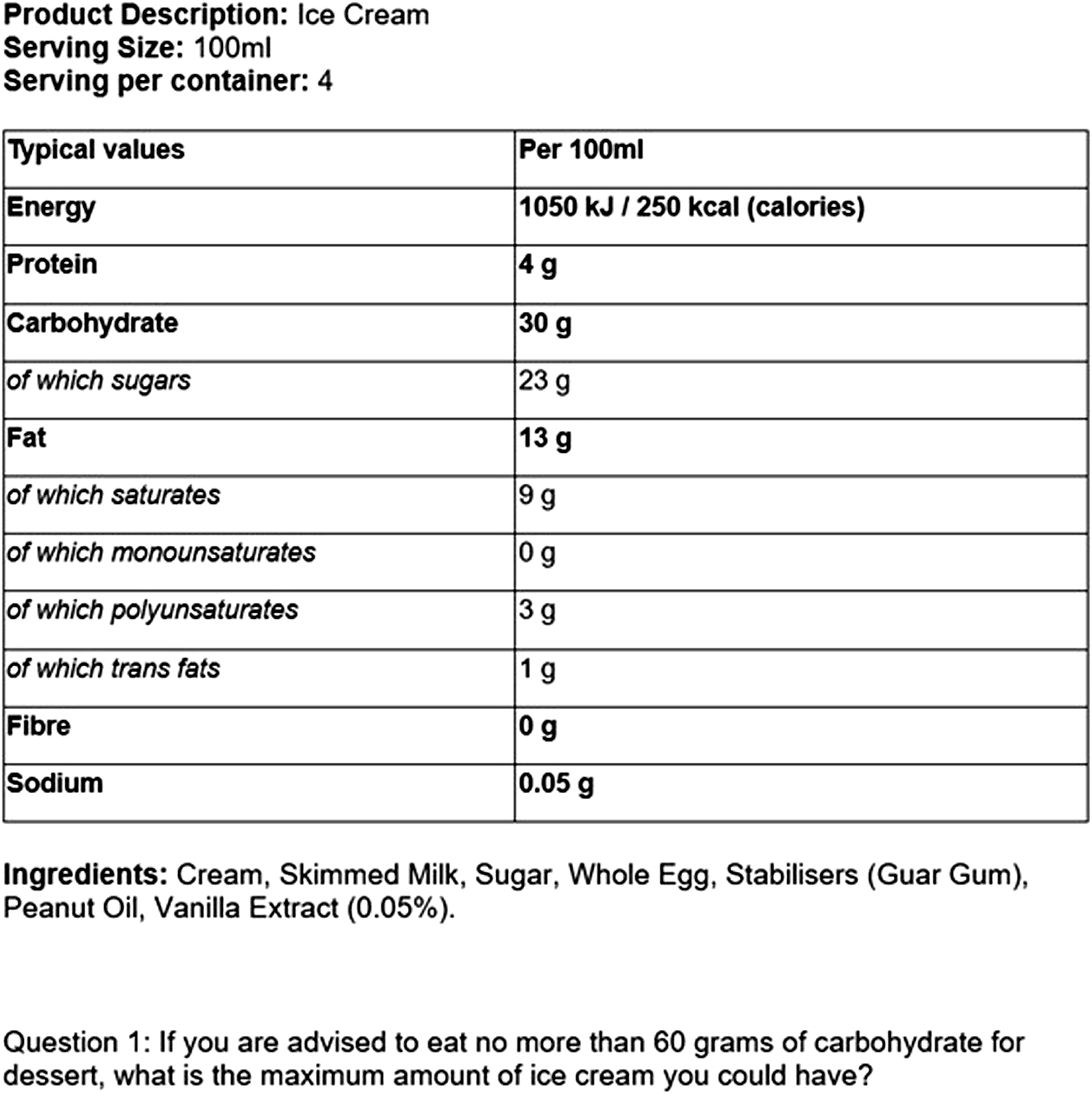
One-to-one interviews were conducted between October and December 2024 at a University Campus or in participants’ homes, depending on participants’ preference and needs. The procedure was identical across settings. Two warm-up exercises were completed: a window-counting task (Willis, 2004) and a demographic questionnaire. Participants then completed four purchasing decision questions and four nutrition decision questions on a laptop through Gorilla Experiment Builder (Anwyl-Irvine et al., 2020), with half of the questions presented clearly (black font, large size) and half presented with reduced clarity (grey font, smaller size, see Figure S1). The clarity manipulation was delivered on-screen to match an online experimental study using the same clarity manipulation (Atkin et al., 2026., in review). Subsequently participants completed eight equivalent paper-based questions, with note-taking permitted in half of the questions to alter working memory demands. Paper-based versions of the question allowed older adults to make written notes in a natural and familiar way, without altering the underlying task materials. The order of the clear/less-clear and note-taking/no-note-taking questions was counterbalanced across participants to address order effects. Within each task, half of participant completed the clear/with-notes conditions first, while the remaining participants completed the less-clear/no-notes conditions first.
Follow-up questions focused on older adults’ everyday decision-making experiences, challenges, sources of support, and subjective perceptions of wellbeing. The topic guide is provided in Table S1.
All interviews were audio-recorded and transcribed verbatim for analysis.
Analysis
Think-aloud transcripts were analysed using a deductive coding framework (Table S2), with an inductive thematic approach used for the full transcript.
The deductive coding framework focused on (1) Accuracy, (2) Reasoning Process, and (3) Challenge Source. ‘Accuracy’ was coded as either the answer being correct or incorrect. For questions requiring multiple components, a response was only considered correct if all required elements were provided. ‘Reasoning Process’ was coded as (i) Logic – analytical or deliberative reasoning (Strough & Bruine de Bruine, 2020); (ii) Heuristic – experiential or affective reasoning, such as experienced-based knowledge (Strough & Bruine de Bruine, 2020); and (iii) Guess – minimal or no justification provided. Multiple reasoning types could be assigned. Where participants arrived at a correct answer with notable difficulty, this was coded as a ‘struggle’.
Where answers were incorrect or correct but with a struggle occurring, ‘Challenge Source’ was noted as (i) Reading – misreading or incomplete reading of task information; (ii) Comprehension – misunderstanding the question or how to answer in the intended way; (iii) Knowledge – a lack of requisite knowledge to answer the question; (iv) Process – difficulties in applying the required procedural steps to reach an answer, such as failing to follow criteria sequentially or losing track of previously filtered options; (v) Calculation – mistakes with, or inability to perform, required arithmetic operations; and (vi) Response – inappropriate or incomplete formatting of the final answer. Again, multiple codes could be assigned.
The framework was piloted on three transcripts by four raters (SP, HA, CA, and KR), during which the raters discussed all discrepancies and refined the framework through consensus. The framework was then applied to all transcripts by one rater (SP), with coding discussed regularly with the wider research team. An inductive thematic analysis was conducted on the full transcript, with codes developed iteratively relating to decision-making challenges, supports, and impact on wellbeing. This involved identifying initial codes, grouping and regrouping them based on conceptual similarity, and reconstituting the data under new headings as patterns emerged. Coding was performed by SP with input and discussion from the wider research team to refine the framework.
Results
Participant Characteristics
Characteristics of the 26 participants are reported in full in Table S3. Briefly, the age of the participants ranged from 76 to 89, with 8 (31%) participants aged 75 to 79, 13 (50%) aged 80 to 84, and 5 (19%) aged 85 and over. Fourteen participants (54%) were female and 12 (46%) male. The range of IMD deciles was from 1 (most deprived) to 10 (least deprived), with a mean of 5.42. Twelve (46%) participants had Master’s degree level education or higher, while mean self-rated health, hearing, and vision were 3.8, 3.7, and 4.0 on the 5-point scales, respectively (where 1 = ‘very poor’ and 5 = ‘excellent’).
Accuracy and Decision-Making Processes in the Decision-Making Tasks
Think-Aloud Coding Frequencies
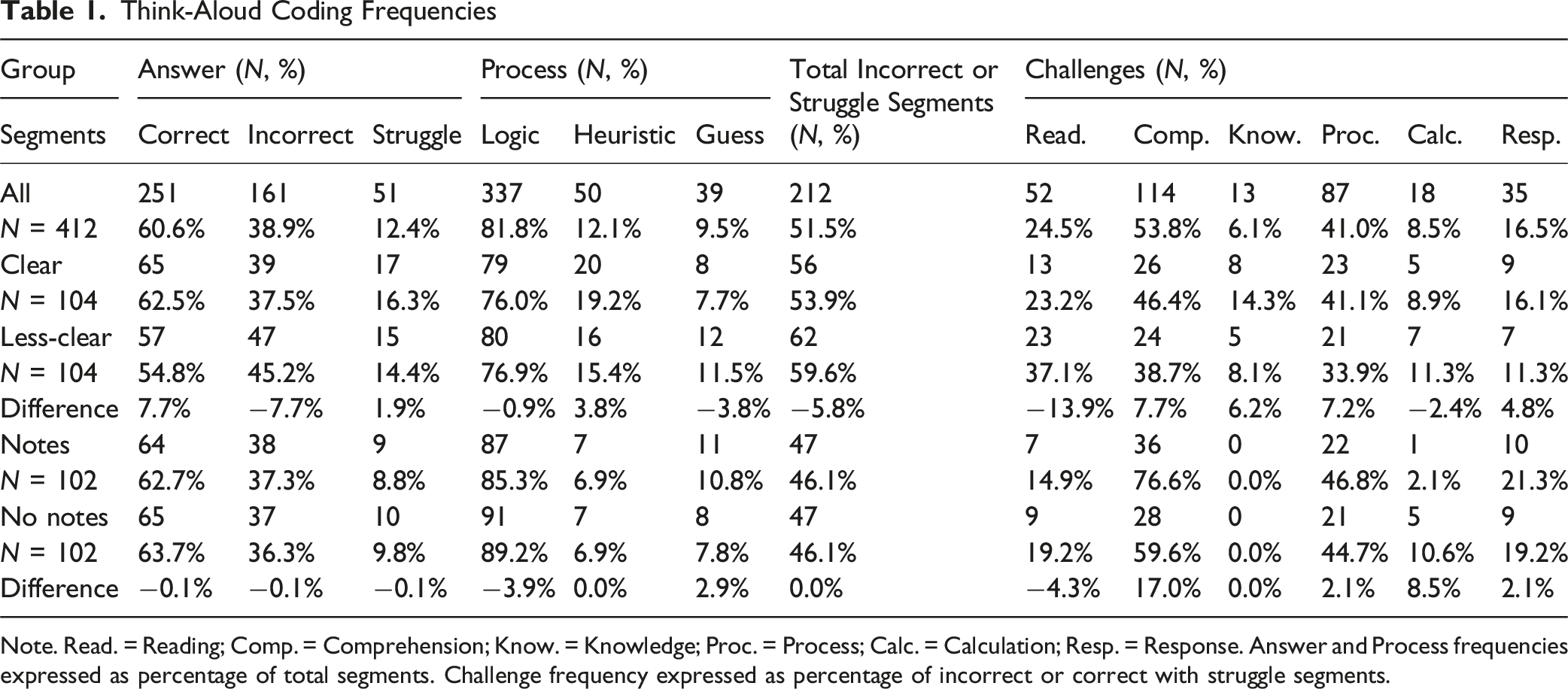
Note. Read. = Reading; Comp. = Comprehension; Know. = Knowledge; Proc. = Process; Calc. = Calculation; Resp. = Response. Answer and Process frequencies expressed as percentage of total segments. Challenge frequency expressed as percentage of incorrect or correct with struggle segments.
Logic was the most frequently used reasoning process (82%), followed by heuristic (12%) and guess (10%). Challenge codes were applied only to segments that were either incorrect (n = 161) or correct-with-a-struggle (n = 51). From these 212 segments, 329 challenges were identified with multiple sources of error or struggle often present. The most frequent challenge types were comprehension (54%), process (41%), reading (25%), response (17%), calculation (9%), and knowledge (6%).
Effects of Visual Clarity and Note-Taking
Correct responses were more frequent in the clear condition compared with the less-clear condition (63% vs. 55%), although a participant-level McNemar test indicated this accuracy difference was not statistically significant (exact p = .14). The proportion of incorrect or correct-with-a-struggle was 6 percentage points lower (54% vs. 60%). Descriptively, the largest difference in challenge types was with reading challenges 14 percentage points less frequent in the clear condition (23% vs. 37%).
Performance was similar across note-taking conditions (63% correct with notes, 64% correct without; McNemar exact p = .79), and the proportion of incorrect/struggle responses was identical (46%). Descriptively, comprehension challenges were more frequent with notes (77% vs. 60%) while calculation challenges were less frequent (2% vs. 11%).
Sources of Task Challenges
Table 2 details the sources of task challenges observed during the think-aloud interviews. Reading challenges were observed across both task types. In the purchasing tasks, these typically involved overlooking one or more options which met the criteria, misreading the criteria, or missing instructions such as the number of required responses – ‘Oh it’s asking for two? Oh I see, I didn’t realise I had to do two…’ (P19, Q4). In the nutrition tasks, participants often missed key details such as serving size details or ingredients list – ‘Penicillin. It doesn’t say that there’s penicillin in there…. I don’t know. Can I put “don’t know”?’ (P31, Q6). Think-Aloud Exemplar Quotes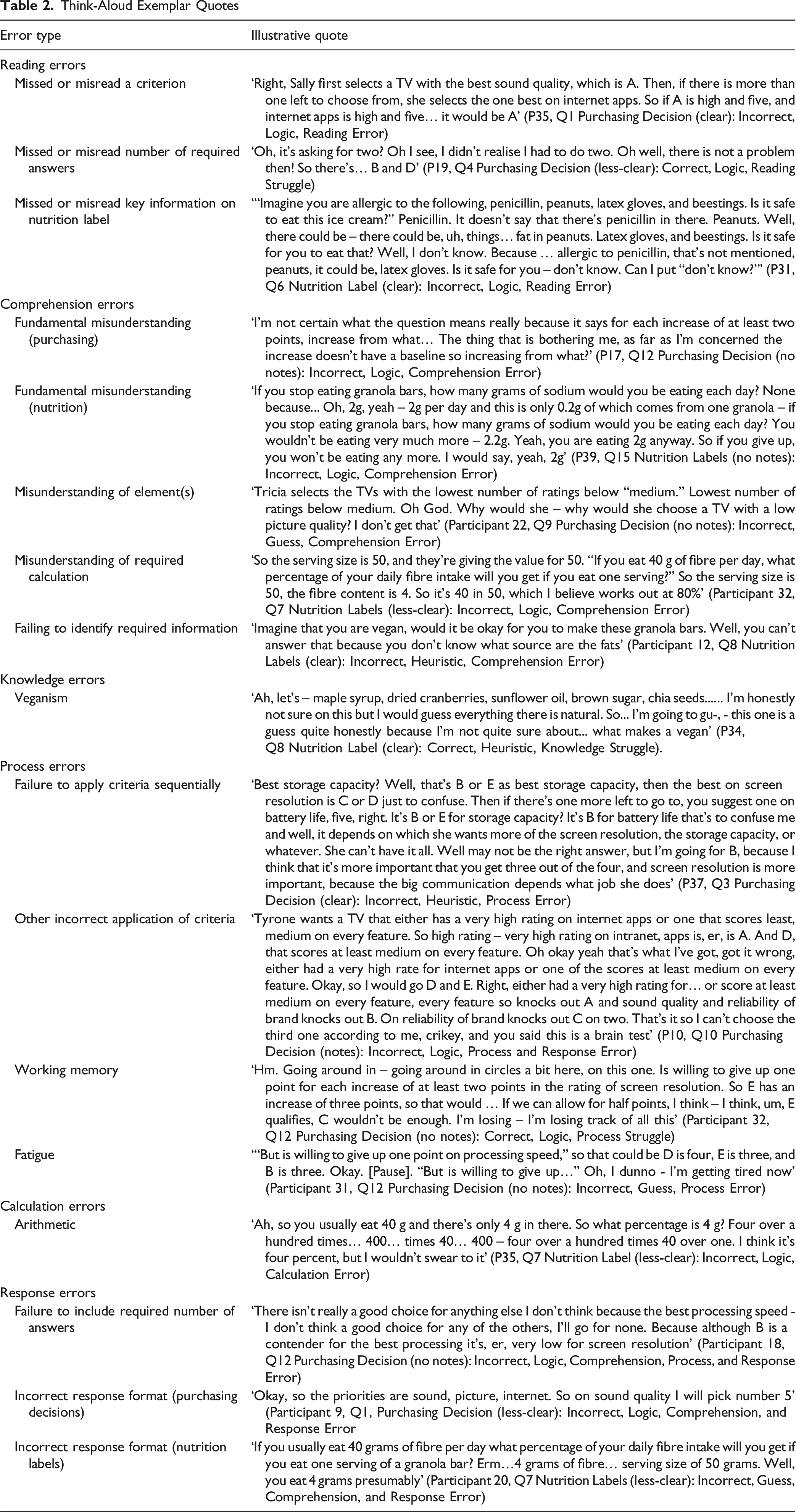
Comprehension challenges were the most frequent and often reflected fundamental misunderstandings of task logic or information presented. This was particularly evident with the final purchasing decision question, with many participants expressing confusion about the concept of a baseline for the comparison – ‘It says for each increase of at least two points. Increase from what?... The thing that is bothering me, as far as I’m concerned, the increase doesn’t have a baseline so increasing from what?’ (P17, Q12). Other comprehension issues include misinterpreting specific criteria (e.g. ‘the lowest number of ratings below “Medium”’).
Knowledge challenges were most evident on questions about dietary restrictions. In such cases, participants often relied on heuristics, sometimes successfully: ‘I would guess everything there is natural… This one is a guess quite honestly because I’m not quite sure about what makes a vegan’ (P34, Q8).
Process challenges were more prevalent in purchasing questions, with participants often struggling to apply decision criteria sequentially, defaulting to heuristics to choose between options – ‘Best storage capacity? Well that’s B or E… Then the best on screen resolution is C or D just to confuse… It’s B for battery life that’s to confuse me as well. It depends, does she want more screen resolution, storage capacity, or whatever? She can’t have it all. Well, it may not be the right answer, but I’m going for B, because I think that’s more important that you get three out of four, and screen resolution is more important’ (P37, Q3). Other issues included misapplying ‘either/or’ criteria and working memory limitations such as forgetting previously ruled out options – ‘Going around in circles a bit here… I’m losing track of all this’ (P32, Q12). Fatigue-related lapses were also observed, particularly in later tasks.
Calculation challenges were most frequent on the nutrition label questions requiring arithmetic. Some participants noted that the inability to make notes increased the difficulty of these questions – ‘So you’ve got to take 0.20 off that, and, um, mathematics verbally is not my best, so it looks like it’s sort of like around 1.05’ (P26, Q15).
Finally, response challenges typically involved failing to provide the required number of answers in multi-response purchasing tasks. Notably, participants often preferred to leave answers blank rather than guess – ‘There isn’t really a good choice for anything else… I’ll go for none’ (P18, Q12). Less frequent response errors included using incorrect formats (e.g. number instead of letters) or providing answers in the wrong units for nutrition questions.
Wider Challenges in Everyday Decision-Making
The themes derived from the inductive coding analysis under the topics of challenges, supports, and wellbeing are provided in Figure 3, with detailed exemplar quotes provided in Table S5. Themes from inductive coding analysis relating to everyday decision-making for older adults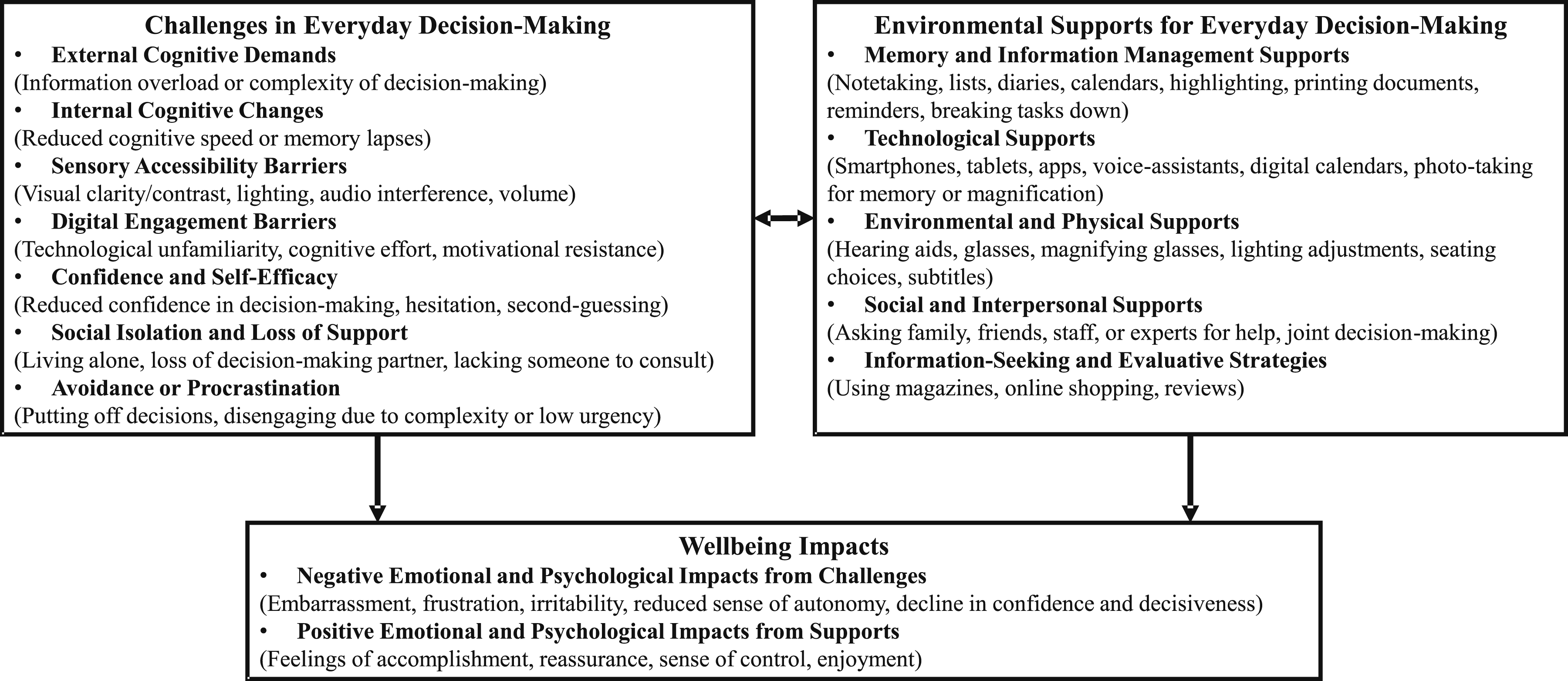
Participants described a range of challenges that shaped their everyday decision-making experiences. One recurring issue was ‘external cognitive demands’, which reflects the challenges older adults face when navigating environments saturated with information and choices. Participants spoke of feeling overwhelmed with the abundance of options, particularly in digital contexts, leading to feelings of confusion, frustration, and decision fatigue. As one participant reflected, ‘There is so much information coming at everybody, I find that really, really hard to cope with’ (P11). Another noted the contrast with earlier life, saying, ‘It was simpler when you didn’t have to make so many decisions’ (P35).
Alongside external demands, participants also described ‘internal cognitive changes’, such as declines in memory and slower processing speeds, which made decision-making more effortful. One participant likened to experience to a mental spiral: ‘You’re sort of going round and round in making your decisions, and you just can’t get to the centre’ (P26).
‘Sensory accessibility barriers’ – particularly related to vision and hearing – limited older adults’ ability to engage fully with their environments. Participants described difficulties with visual clarity, such as small print on packaging and medication labels, which sometimes led to disengagement from reading tasks: ‘It’s so tiny, that, as you get older, your eyesight isn’t so good… It was something I just couldn’t read. Even though I’m short-sighted, and I took my glasses off, I just couldn’t read it… I gave up’ (P3). Auditory barriers, such as background noise or echoing in social settings and public venues, were also common, and they were noted to interfere with communication and comprehension. These sensory limitations not only affected practical decision-making but also contributed to feelings of exclusion or embarrassment in social situations: ‘I will have to ask people to repeat themselves, which I find embarrassing’ (P4).
‘Digital engagement barriers’ were present in buying technologies and using technologies for decision-making. While some participants attributed these challenges to cognitive declines and the rapid pace of technological evolution, others were resistant to adopting new technologies, citing a lack of interest or relevance; ‘It’s not that I’m not capable of learning it, I’m just not interested… I don’t want to waste my time on a computer’ (P38). This was sometimes framed as a lifestyle choice, with a preference relying on younger family members when it came to technology.
A number of participants also described a decline in their ‘confidence and self-efficacy’ when faced with everyday decisions. Participants reported a sense of hesitation or second-guessing, even with previously routine decisions such as booking travel, as one participant reflected, ‘Years ago, I’d have done this without thinking at all… your confidence goes a bit as you get older’ (P38, F).
‘Social isolation and loss of support’ were also highlighted as impactful by older adults. The loss of spouses or other trusted partners was cited as a significant emotional and practical challenge, as one participant explained, ‘When my husband was alive, he used to do things… now … the buck stops with me’ (P11). Others noted that without someone to reflect with, decisions could feel more overwhelming or impulsive: ‘Sometimes now I’m a bit impetuous, and so I’ll just do that, buy that, you know?’ (P5).
Finally, some participants described a tendency towards ‘avoidance or procrastination’, particularly if a task felt non-urgent or non-essential, as one participant reflected, ‘I tend to need a precipice, which is stupid but there you go’ (P10). Whilst this was often framed humorously, it reflected a deeper disengagement from tasks that lacked urgency.
Strategies and Supports for Everyday Decision-Making
A variety of strategies and supports were described by participants that helped them navigate everyday decisions, often in direct response to the challenges. These ranged from practical tools to interpersonal support and were often embedded in participants’ routines and preferences.
A common strategy was the use of ‘memory and information management supports’, such as lists, calendars, and reminders. These tools were often used to address external cognitive demands and internal cognitive changes, as one participant shared, ‘Because of decline in cognitive function, short-term memory, the danger is not writing things down as it occurs… So we’ve got notices around the house’ (P17). Others described such strategies as not only functional but also emotionally reassuring: ‘I find it useful to keep notes, and if I haven’t got a pen handy, I tend to get a bit irritable’ (P32).
While these tools were often used to support short-term memory more generally, participants also described using them to support decision-making directly, particularly when comparing options or making complex choices. For example, one participant explained, ‘You’re often trying to compare things and if it gets very complex I would make notes with a pen and piece of paper’ (P18). Even for smaller decision, such as choosing a restaurant, participants used notes to filter options: ‘ started going down the Tripadvisor list, and I started noting those which seemed to pass the test that I was looking for’ (P34). Furthermore, although note-making did not improve task performance overall in the present study, several participants felt it made the tasks easier. One participant noted ‘It’s easier if you can use and pen and paper … it’s difficult holding things in your head without actually using your hands’ (P35). Another remarked during the laptop-based tasks, ‘See, if I was doing this in a shop I would have a paper and pencil!’ (P19).
Some participants also embraced ‘technological supports’ to address cognitive challenges and support decision-making and manage information. Smartphones, tablets, apps, and voice assistants were used to set reminders or record details. Technology was also commonly reported as a way to enhance visual clarity. For instance, one participant described using a magnifying glass app to read small print: ‘I’ve got a magnifying glass app… I was using it this morning… for things I couldn’t read that were too small’ (P23), while several referenced zooming in on photos. Technology was also used to support purchasing decisions, with one participant describing using software to tabulate options and compare ratings and prices: ‘I do compose a sheet and try to tabulate things… it’s usually price that’s the governing factor’ (P26). Therefore, while not all participants felt confident using technology, those who did found it to be a valuable tool for navigating everyday tasks.
Alongside using technological supports to address sensory barriers, participants reported using a range of ‘sensory supports’, including hearing aids, glasses, magnifying glasses, and strategic seating choices. These adjustments helped mitigate the effects of sensory decline and enabled better access to information. One participant explained, ‘I often use a magnifying glass… or take a picture and zoom it up if I’m out’ (P26). Another described choosing where to sit based on hearing ability: ‘Because my one ear is better than the other… I would just try to sit at one end of the table so that my right ear was [facing people]’ (P24).
‘Social and interpersonal support’ also played an important role in decision-making. Many participants described turning to family members, friends, or trusted others for advice, especially when making more complex or unfamiliar decisions. As one participant reflected, ‘I’m about to change my mobile phone… why should I find out when I’ve got experts in the family?’ (P38). Some participants who no longer had their partner also referenced an increased reliance on other family members to support their decision making.
Finally, beyond support from family and friends, many participants reported engaging in ‘information-seeking and evaluative strategies’ by conducting research and comparisons to inform their decisions. Trusted sources such as Which? were frequently mentioned, with participants often expressing a preference for independent reviews over retailer websites: ‘I quite rate the recommendations or non-recommendations in “Which?”. I don’t trust any reviews on a supplier’s website’ (P9). In some cases, participants cross-referenced multiple sources and consulted family members to validate their choices, as one participant explained, ‘I looked that up on a Google search… And then I looked it up on “Which?”… And then I did also ask someone else’ (P32). These behaviours reflect a deliberative approach to decision-making, with participants actively seeking reliable information to reduce risk and make informed choices.
Wellbeing Impacts
Participants’ reflections on decision-making revealed an interplay between decision-making challenges, supports, and emotional wellbeing. These impacts were not limited to the moment of decision-making but also extended into broader feelings of identity, autonomy, and satisfaction.
Some participants described experiencing ‘emotional discomfort’, bringing together a range of emotional and psychological responses that reflect the challenges and vulnerabilities older adults face when making decisions. These emotional responses were not only reactions to immediate difficulty but also reflections of a broader sense of loss of confidence, ease, and former abilities, as one participant reflected, ‘There are a lot of things that I used to be able to do very well. I’ve got no patience with myself, and it really irritates me that it takes me so long to do things which I find hard to factor in how long it’s going to take’ (P11).
In contrast, many participants also described ‘positive emotional impacts’ when using strategies that helped them manage decision-making more effectively. These supports – particularly written reminders and to-do lists – were not only practical but also emotionally rewarding, with one participant sharing ‘It’s so satisfying ticking things off. Sometimes, I even write lists for things I’ve already done!’ (P1).
These reflections highlight the emotional impact of everyday decision-making in later life. Whilst challenges can undermine confidence and contribute to feelings of vulnerability, the use of supportive strategies can help to restore a sense of agency and wellbeing.
Perceived Impact of Think-Aloud Procedure
At the close of each interview, participants were asked whether thinking aloud had influenced their task performance. Approximately half reported it was helpful, describing that verbalising their thoughts supported their focus or reasoning. As one participant noted, ‘Actually it kind of helped me to think-aloud… If you’re going to recommend help for older people, tell them to think-aloud, it just helps!’ (P36). Several participants also mentioned they naturally talk to themselves when completing everyday tasks, particularly when information requires reconsideration or comparison: ‘I think I always, sort of, have thought things out loud, especially if I’ve got to rethink. If it’s straightforward, maybe not, but if I’ve got to think about different aspects, yes’ (P25).
Only three participants felt thinking aloud was detrimental, with one participant noting they found it stressful, whilst another felt it added to the task burden ‘It was an extra chore to have to voice what you’re thinking. I forgot to say what I was thinking, and then had to remember I’ve got to say what I’m thinking’ (P18).
Discussion
This study used think-aloud interviews and a thematic analysis to identify the multifaceted challenges older adults face in everyday decision-making, and the environmental supports that help address these challenges. While participants answered 61% of the decision-making tasks correctly, 20% of these incurred struggles. Comprehension and process challenges were most frequently recorded (54% and 41%). Task performance was better when information was presented clearly compared to when visual clarity was reduced (63% vs. 55%), largely due to a reduction in reading challenges (23% vs. 37%). For note-taking, a decrease in calculation challenges was offset by an increase in comprehension challenges. Thematic analysis showed older adults faced multiple challenges in everyday decision-making, which they manage through a range of environmental, technological, and sensory supports, seeking social and interpersonal support, and information seeking-strategies.
Cognitive Challenges and Strategies
Performance on decision-making tasks such as those used in this study is typically associated with numeracy (Peters et al., 2006). However, the think-aloud analysis indicated challenges to task performance were not only due to calculations, but they were also multifaceted, including difficulties with comprehending the question (54%), following logical process to derive the answer (41%), reading the question (25%), choosing an appropriate response (17%), calculating answers (9%), and having sufficient knowledge (6%). This is the first study that provides a window into these challenges and offers an insight into the conscious aspects of everyday decision-making processes.
Thematic analysis highlighted broader cognitive, environmental, and social barriers older adults face in their everyday decision-making. Internal cognitive changes, including working memory decline and slower processing, are well established in the ageing literature (Spreng & Turner, 2019), and they were identified by participants as factors that affected their everyday decision-making. In everyday decisions, participants reported that cognitive difficulties were exacerbated by external cognitive demands, describing information overload and complex choice environments as overwhelming and fatiguing (Bruine De Bruin et al., 2016).
Age-related declines in working memory suggest older adults may benefit from making notes when completing decision-making tasks to reduce the cognitive demands of holding information in mind (Risko & Gilbert, 2016). In the interviews, participants referred to using notes in their everyday lives (e.g. writing to-do lists and calendar reminders) and reflected on the positive impact they felt this had both in terms of addressing cognitive ability changes and providing a sense of control and wellbeing. However, somewhat unexpectedly, participants did not show improved performance when note-taking was permitted. While calculation errors became less frequent, this was offset by an increase in comprehension errors. Potentially, the requirement to make notes added an additional task burden (Piolat et al., 2005) that interfered with focus on the decision-making task. Note-taking strategies may therefore be beneficial for tasks involving calculations, and for older adults who have the cognitive capacity to manage an additional task-burden but may be detrimental when trying to comprehend complex information.
Sensory Challenges and Support Strategies
Participants reported difficulty with vision and hearing interfered with information accessibility, which contributed to feelings of frustration, embarrassment, and disengagement. The think-aloud tasks further revealed that when visual clarity was reduced task performance was negatively impacted, with this unclear information being associated with an increase in reading challenges (Mitzner & Rogers, 2006; Warrington et al., 2018). These typically involved not reading or identifying all information, suggesting that a small drop in clarity was sufficient to reduce older adults’ willingness to engage with written materials.
Participants reported using a range of supports to address challenges with vision and hearing, including using magnifying glasses, strategic seating, and engaging with technology for purposes such as zooming in on unclear information. While this is positive, older adults may not make full and timely use of sensory support to address declines in perception and cognition. For example, the average delay in adopting a hearing aid is 8.9 years (Simpson et al., 2019). Further research is needed to assess whether earlier and more comprehensive use of sensory support could ameliorate older adults’ decision-making challenges.
Socio-Emotional Challenges and Support Strategies
Many older adults also expressed that a lack of a decision-making partner in later life, often due to bereavement, hindered their decision-making abilities (Strough et al., 2002). This contributed to reduced confidence and self-efficacy in decision-making. Countering this, many participants noted they would rely on family members for advice or decision delegation, particularly around purchasing decisions involving technology. Most older adults also sought information from trusted sources, such as the consumer magazine Which?, and would combine their own research efforts with advice from friends and family when making purchasing decisions. This deliberative approach to decision-making, in which advice from others is incorporated, is associated with better decision accuracy (Bonaccio & Dalal, 2006) and reflects evidence that advice-seeking can support wellbeing and longevity (Delaney et al., 2018).
Practical Implications
The findings of this study suggest steps that older adults can take to ease their own decision-making, as well as steps that practitioners and organisation can take to support older adults’ decisions.
Older adults can improve the clarity of written information by wearing correct glasses for the task, using magnifiers, improving lighting, or using technology to zoom or access clearer sources of information. For spoken information, they can use hearing aids, reduce background noise, or ask others to face them, repeat information, or speak more loudly. Older adults may also find it helpful to use written notes or print out information to reduce working-memory demands when decisions involve multiple pieces of information.
Practitioners and organisation can support older adults’ decision-making by increasing the font size and contrast of written materials, simplifying layouts, and providing clear summaries or structured decision aids. Allowing opportunities for older adults to record key information during interactions may also help reduce cognitive load and strengthen decision-making confidence. Such steps may reduce reading and comprehension difficulties when navigating complex choices and promote autonomy in everyday decisions.
Limitations and Future Research
Findings should be considered in the light of study limitations. Firstly, the think-aloud method requires participants to verbalise thoughts during tasks; while all did so, some needed simple prompts (e.g. ‘please keep talking’), which may disrupt thoughts and impact performance. Although researchers are advised to minimise intervention, future work may regard elaboration probes as a strength. Elaboration probes (specific, guided questions) provide opportunities to gain insights into specific difficulties (e.g. processes and comprehension) and elicit richer verbalisation through researcher acknowledgement (Aujla et al., 2020; Noushad et al., 2024).
Secondly, the think-aloud procedure may have influence on task performance. Around half of the participants indicated it was helpful, while three found it detrimental, consistent with evidence that verbalisation can either increase cognitive load (Fox et al., 2011) or support performance by enhancing focus, reducing reading challenges, or providing multimodal cues (Guo & Dobkins, 2023; MacLeod et al., 2010).
Thirdly, the deductive coding was conducted by a single rater, although the framework was piloted with four raters and refined through consensus, and coding decisions were discussed with the wider team throughout. Nonetheless, multiple independent raters would have added further reliability.
Fourthly, although we purposively sampled by socioeconomic status, the sample had higher education attainment than the general population. Future research should include older adults with less formal education to fully understand the prevalence of decision-making challenges in the broader population.
Fifthly, by design, the study was not powered for inferential testing. Participant-level McNemar checks indicated no significant differences in accuracy across the clarity and note-taking conditions. As such, differences reported should be viewed as descriptive trends. Relatedly, wellbeing impacts reported in this study reflect participants’ subjective accounts descried in interviews and should be interpreted as perceived emotional responses.
Finally, as individuals with cognitive impairment were excluded, future research could examine how these challenges and support needs apply to older adults with mild cognitive impairment or early-stage dementia to help determine whether additional or distinct forms of support are needed.
Conclusion
Decision-making is important for wellbeing and remaining socially and physically active in older age. The ability to make decisions can be affected by a combination of sensory, cognitive, and socio-emotional factors that change with age. Enhancing perceptual clarity shows promise for supporting older adults’ decision-making. However, given the multifaceted challenges associated with everyday decision-making, it is important to tailor the environmental supports to individuals’ sensory, cognitive, and socio-emotional needs, as well as to the specific demands of the decision-making task.
Supplemental Material
Supplemental Material - Multifaceted Declines in Everyday Decision-Making in Older Adults: A Think-Aloud Study
Supplemental Material for Multifaceted Declines in Everyday Decision-Making in Older Adults: A Think-Aloud Study by Samuel J. Perry, Katherine L. Roberts, Christopher Atkin, Stephen P. Badham, and Hareth Al-Janabi in Journal of Applied Gerontology
Footnotes

Ethical Considerations
Ethical approval was provided from the School of Business, Law and Social Sciences Research Ethic Committee at Nottingham Trent University. All participants completed consent forms prior to the conduct of the interviews.
Author Contributions
KLR, HA, and SPB conceptualised the study and were responsible for funding acquisition. SJP conducted the investigation and formal analysis, with input from KLR, HA, CA, and SPB. HA led the supervision of the study, with support from KLR and SPB. SJP and CA were responsible for the provision of resources and software. SJP led the visualisation of the study results with support from HA. All authors contributed to validation of the study. SJP prepared the original manuscript, with all authors contributing to reviewing and editing the final manuscript.
Funding
The authors disclosed receipt of the following financial support for the research, authorship, and/or publication of this article: This work was supported by UK Research and Innovation (UKRI: MR/Y01054X/1 to K.L.R, H.A., & S.P.B).
Declaration of Conflicting Interests
The authors declared no potential conflicts of interest with respect to the research, authorship, and/or publication of this article.
Data Availability Statement
The authors will consider reasonable requests for fully anonymised transcript data.
Supplemental Material
Supplemental material for this article is available online.