




Abstract
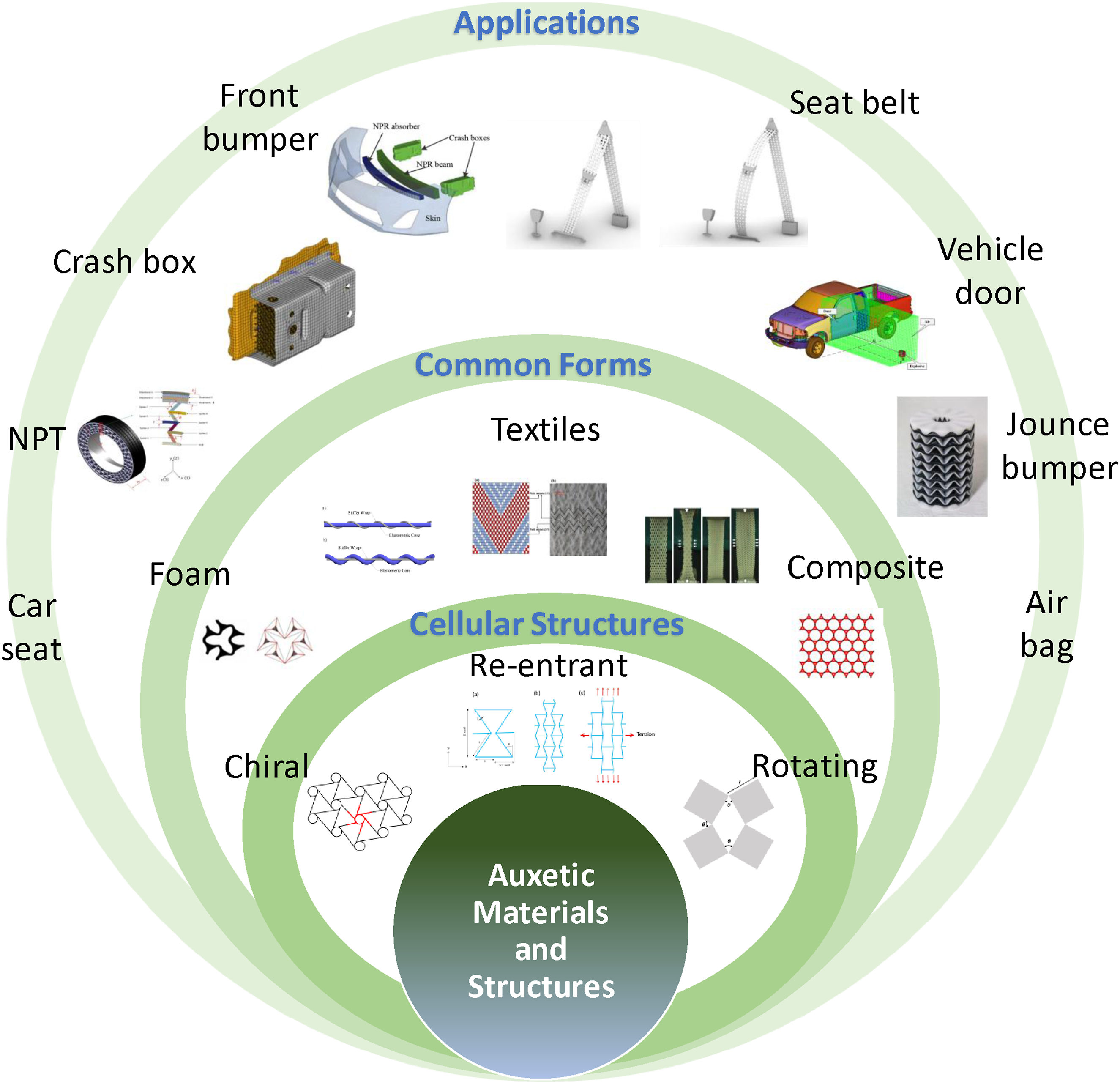
Auxetic materials have gained prominence due to their ability to absorb and dissipate energy, making them valuable for enhancing safety and performance in automotive components and crash protection systems. This article aims to provide an overview of the current and potential applications of auxetic materials and structures in the automotive industry. The exploration began with an elucidation of concepts and the characteristic cellular structure of auxetic materials. It then delved into the common forms of auxetic materials, encompassing auxetic foams, auxetic composites, and auxetic textiles. Subsequently, specific applications of auxetic structural materials in the automotive realm were enumerated, such as non-pneumatic tyres, crash boxes, front bumper systems, jounce bumpers, and vehicle doors. Finally, a detailed discussion addresses the challenges and future potential of auxetic textiles in the automotive industry, with a focus on innovations like auxetic seat belt webbings, airbag fabrics, and car seat covers. The findings aim to inspire further research and development in this field.
Introduction
The Poisson’s ratio ( The behaviours under direct load: (a) normal material; (b) auxetic material.
24
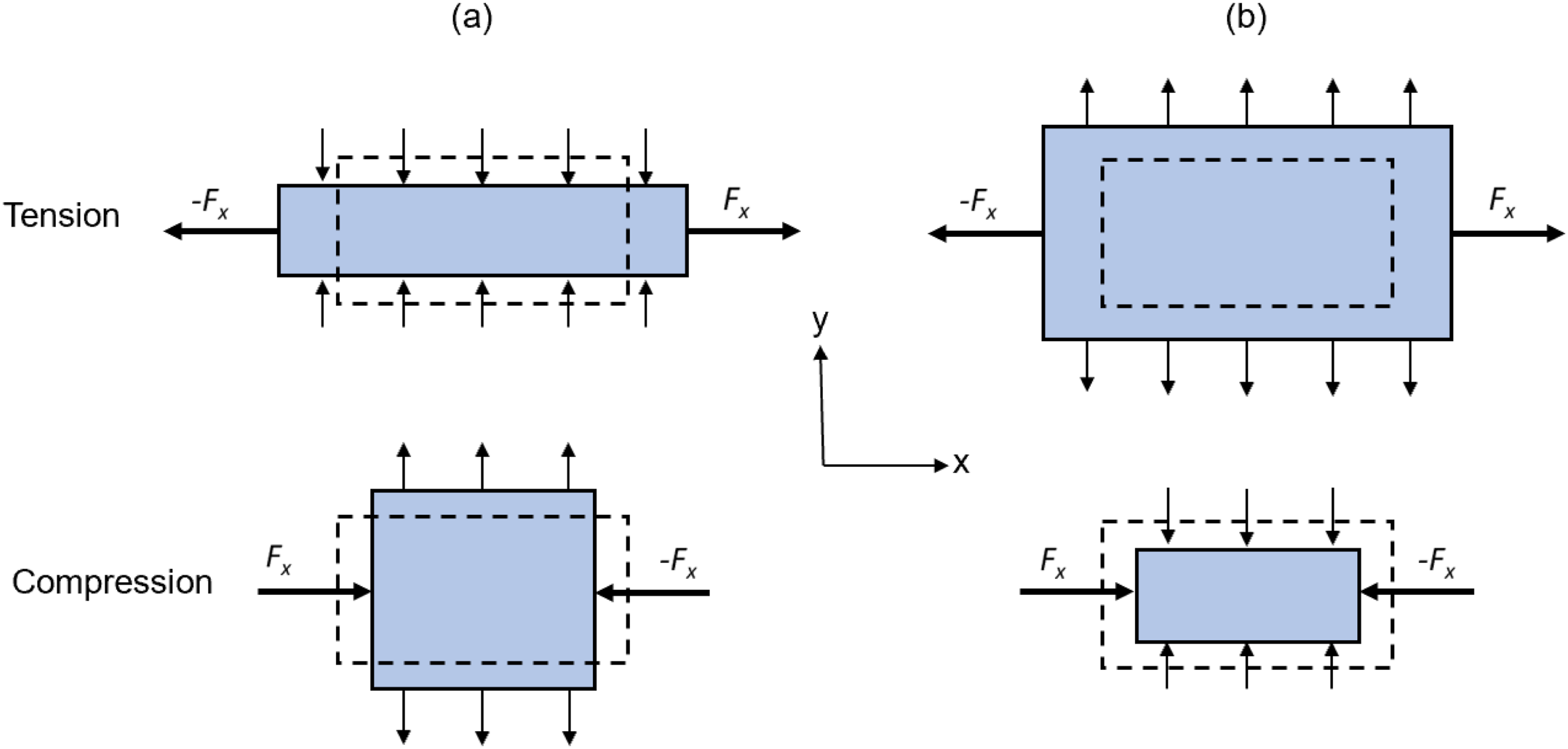
The exploration of cellular auxetic structures began with Gibson and colleagues in 1982, who studied a silicon rubber re-entrant honeycomb structure.12,13 Since then, the concave re-entrant honeycomb structure, serving as a representative model, has been extensively researched through a combination of numerical simulations, theoretical analyses, and experiments to understand its deformation behaviours and properties. The first is research on Young’s modulus (E) and Poisson’s ratio.
14
Poisson’s ratio is calculated according to equation (1). Young’s modulus can be calculated based on the stress–strain curve (Figure 2)15,16 from the stresses and strains at two points on the line OA, such as M and N (equation (2)). These are two important mechanical parameters of the elastic materials because from them, it is possible to calculate shear modulus G (equation (3)) and bulk modulus K (equation (4)). Subsequent research includes dynamic mechanical behaviours,
17
impact stress,
18
deformation modes under impact, and the dynamics of explosive loads.19–22 These studies are also based on the stress–strain curve to determine the TDE, TPM, ADF, and PDF indexes.
23
The TDE refers to the total deformation energy generated in plastic region (equation (5)), where F(ε) represents the direct force and ε denotes the sample deformation. The TPM is determined by dividing the TDE by the mass of the sample (m) under test (equation (6)). The ADF is determined as the average direct force over the deformation length (equation (7)). And, the PDF, also known as the peak direct force, represents the highest recorded value of the direct force throughout the test. These results deepen our understanding of the impact resistance and efficient energy absorption capabilities of auxetic materials and structures, highlighting their immense potential across various applications such as aerospace, military, and notably, automotive. According to statistics from the WHO in 2023, around 1.19 million deaths occur annually as a result of road accidents, which is alarming. Therefore, the use of auxetic materials and structures in automotive components and crash protection systems is essential to enhance occupant safety. Stress–strain curve of the elastic materials.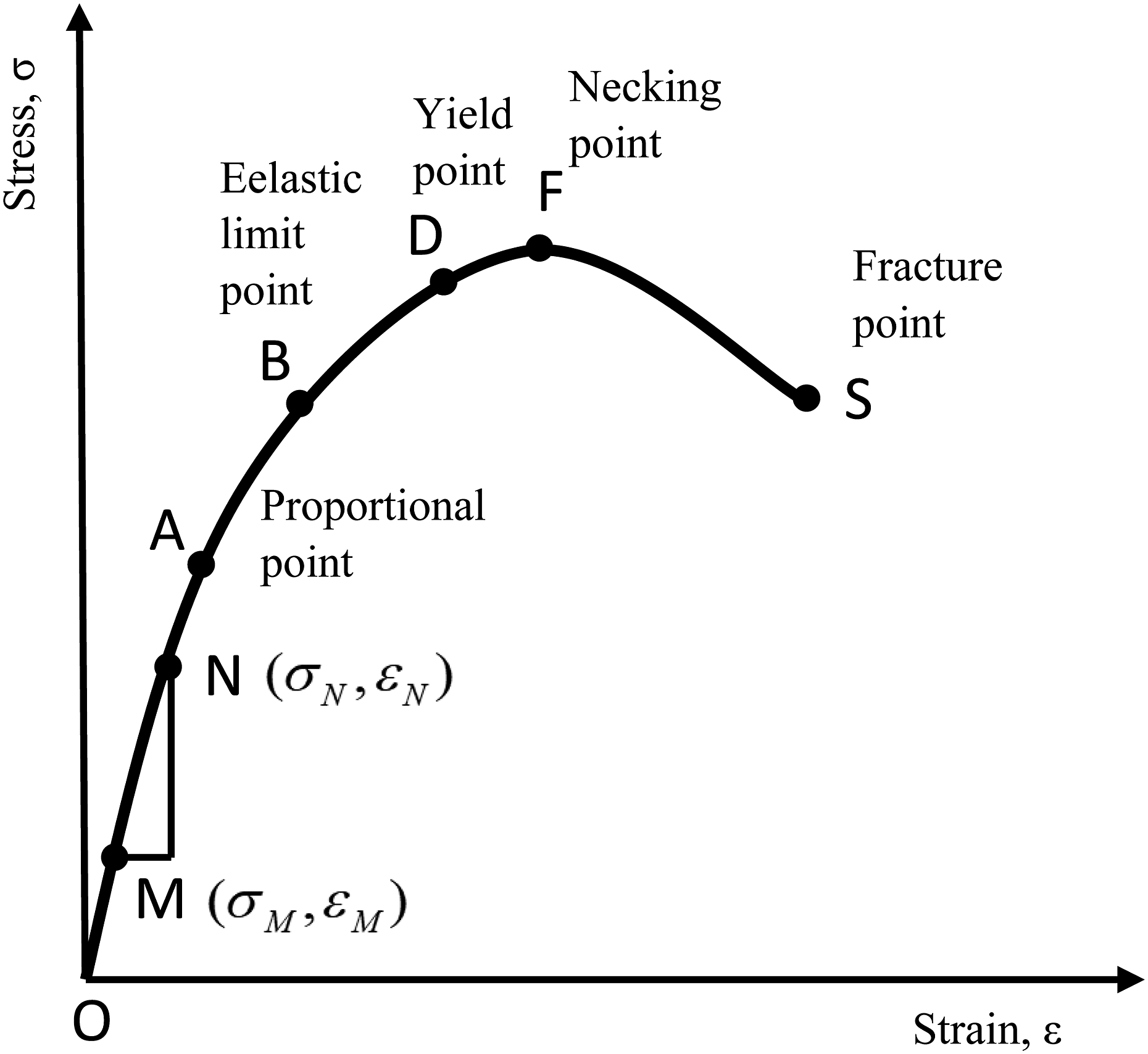







This article offers a comprehensive overview of auxetic materials and structures, emphasizing their applications within the automotive industry. The discussion is structured into fine key sections: An introduction to the mechanical designs of typical auxetic cellular structures, including re-entrant honeycomb structures, chiral structures, and rotating structures; an exploration of common forms of auxetic materials and structures, such as auxetic foams, auxetic composites, and auxetic textiles; a presentation of typical automotive industrial applications of auxetic materials and structures, encompassing components like non-pneumatic tyres, crash boxes, front bumper systems, jounce bumpers, and vehicle doors. These components are manufactured in foams and composites form and play critical roles in energy absorption and enhancing occupant safety during various types of collisions; finally, identification of technical challenges and potential applications of auxetic textile structure in the automotive industry, with special attention given to areas like auxetic seatbelt webbings, auxetic car seat covers, and auxetic airbag fabrics production, deemed crucial focal points for future research endeavours.
Cellular structures
Cellular structures such as re-entrant honeycomb, chiral, and rotating models serve as the fundamental building blocks for the production of common forms of auxetic materials and structures. The following section explores the most prevalent types of cellular auxetic materials and structures in detail.
Re-entrant honeycomb structure
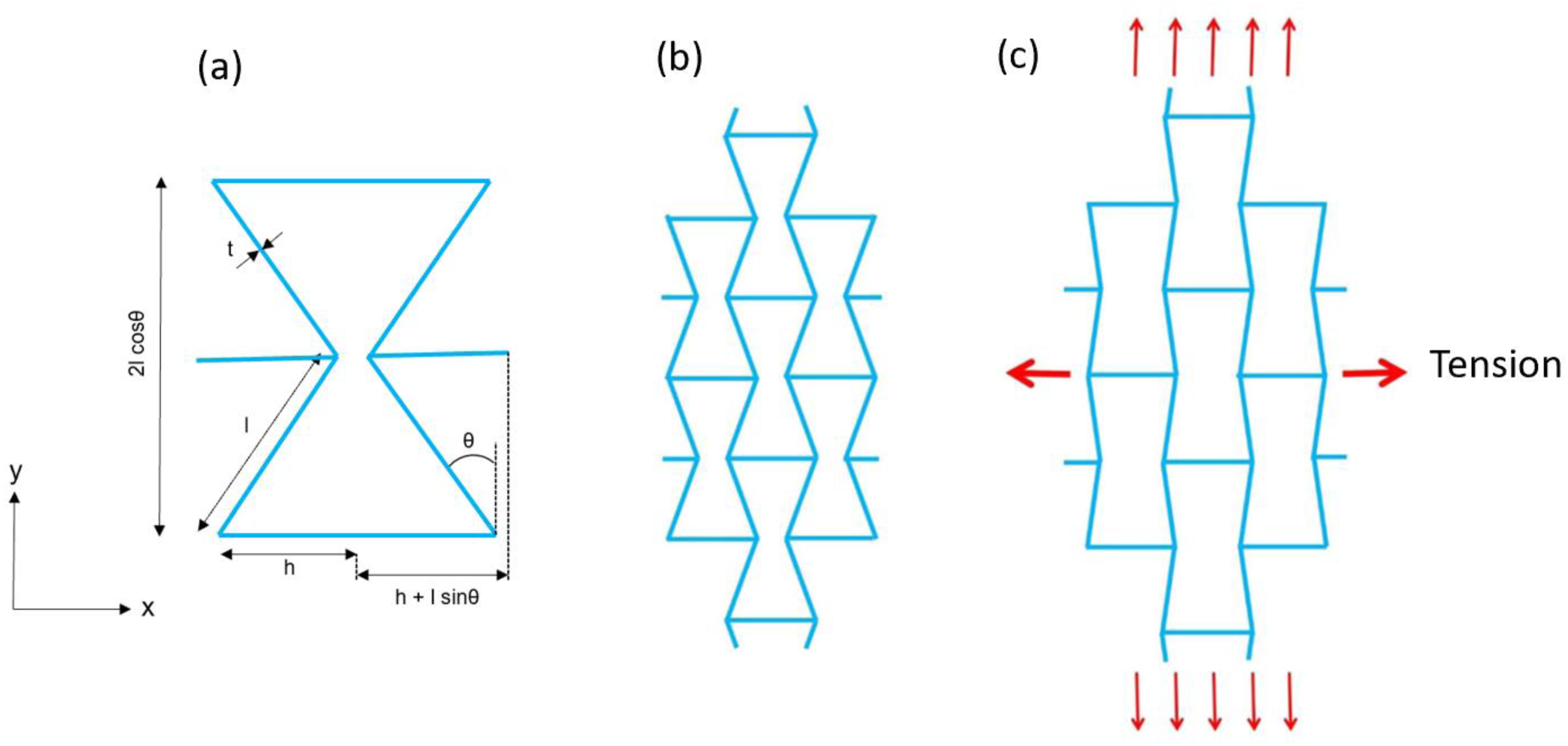
The introduction of the 2D re-entrant honeycomb structure (Figure 3) by Gibson et al.
13
in 1982 marked a significant breakthrough in cellular auxetic design. Subsequently, Masters et al. published a theoretical model to predict elastic constants by considering honeycomb cell deformation through stretching, flexure, and hinging.25,26 When a tensile load is applied along the axial direction, the diagonal ribs rotate vertically, causing the structure to expand laterally and achieve the NPR effect. In 2007, the theory proposed by Gibson was again proved by Bezazi et al., who employed both analytical methods and finite element based-methods to determine the in-plane Poisson’s ratio and Young’s modulus of a novel centre-symmetric honeycomb structure subjected to single-axis loading.
27
Later, in 2017, Hu et al. derived equations to compute the Poisson’s ratio and Young’s modulus for a 2D NPR honeycomb structure, presented as equations (8) and (9).
28
Additionally, Larsen et al.
29
explored compliant micro-mechanisms and structures with NPR using numerical topology optimization. This approach enabled engineers to specify elastic properties and achieve optimal structures, as evidenced by an optimized 2D re-entrant triangular model of Saxena et al.
30
The transition from 2D to 3D re-entrant honeycomb structures was investigated. Schwerdtfeger et al.
31
crafted a 3D structure featuring a hexagonal super-lattice pattern, demonstrating NPR in various directions. Evans et al.
32
reported the insights into the auxetic behaviour of three-dimensional open-celled foams by the finite element model. Later, Yang et al.
33
combined finite element and experimental analysis demonstrated that the modulus, Poisson’s ratios and yield strength of the 3D re-entrant cellular structure control via geometrical designs. Hengsbach et al.
34
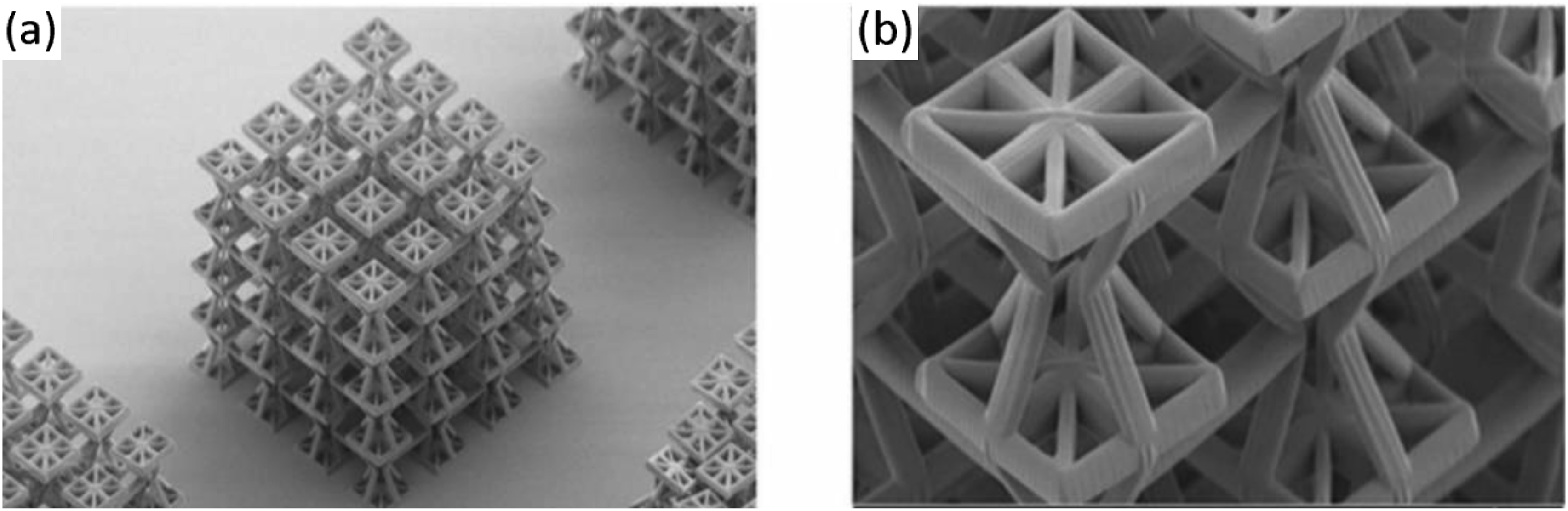
also introduced a new method to produce the 3D re-entrant structure (Figure 4), which is direct laser writing. Wang et al.
35
used the finite element models of this structure to develop the cylindrical NPR structure, with the purpose of application in damping devices. Li et al.
36
introduced a versatile 3D augmented re-entrant cellular structure, allowing for a wide adjustment of the Poisson’s ratio from negative to positive. Harkati et al.
37
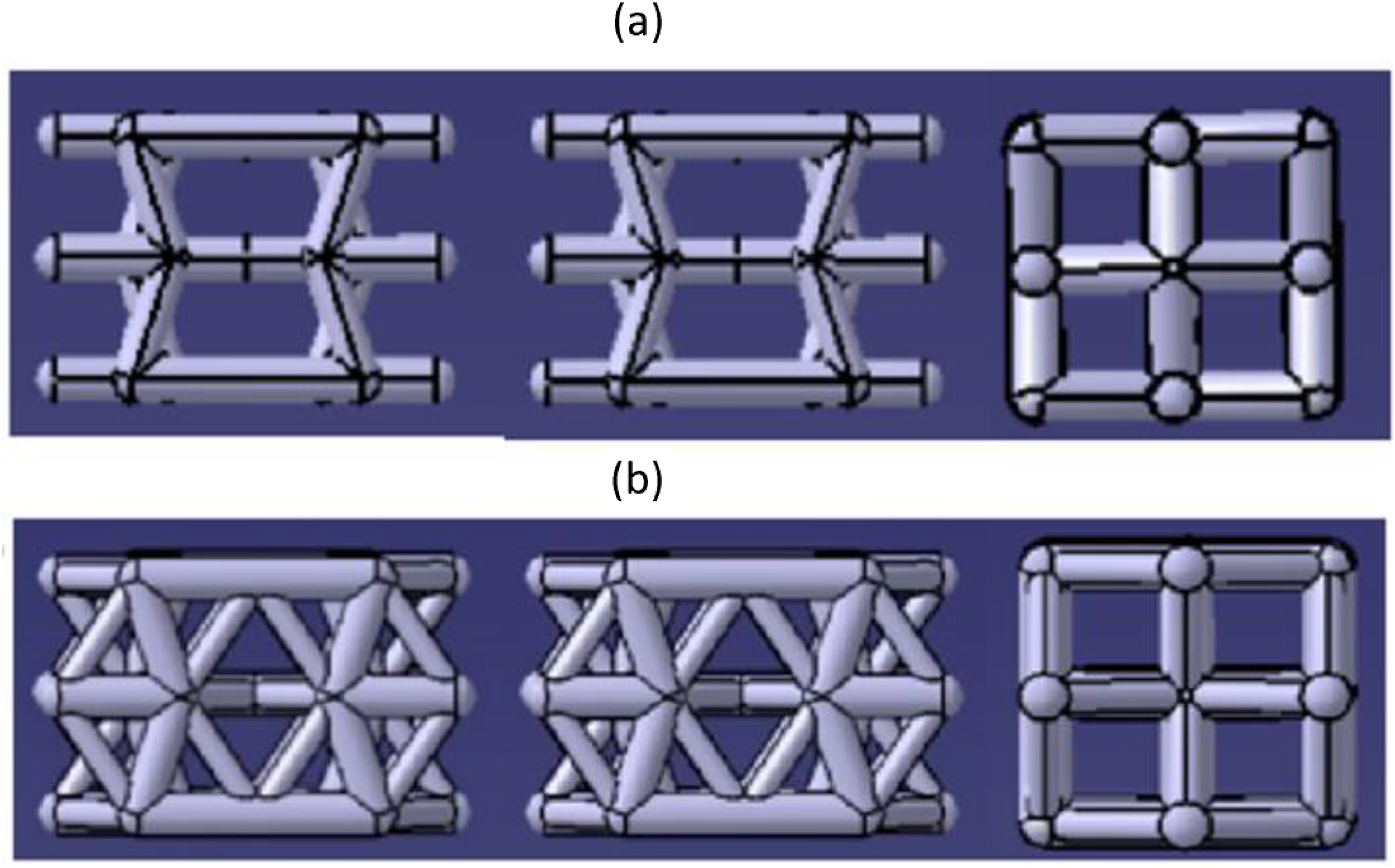
presented a multi-entrant NPR honeycomb structure, conducting a parametric investigation into the structure’s behaviour with variable stiffness and Poisson’s ratio effects. In addition, the enhancement of 3D auxetic lattice structure has been studied by integrating narrow struts into a 3D re-entrant lattice structure (Figure 5). The outcomes of these researches present promising possibilities for applications requiring auxetic materials with both negative Poisson’s ratio and high stiffness.38–41 The 3D re-entrant model: (a) general structure; (b) zoomed-in image.
34
The 3D unit cell structure: (a) re-entrant; (b) enhanced.
38


Chiral structure
The chiral NPR structure comprises a core node and the spokes. When apply force on the structure, the winding and unwinding of the spokes around the core node, each cell structure undergoes a torsional effect, leading to either contraction or extension of the entire structure, thus producing the auxetic effect.
42
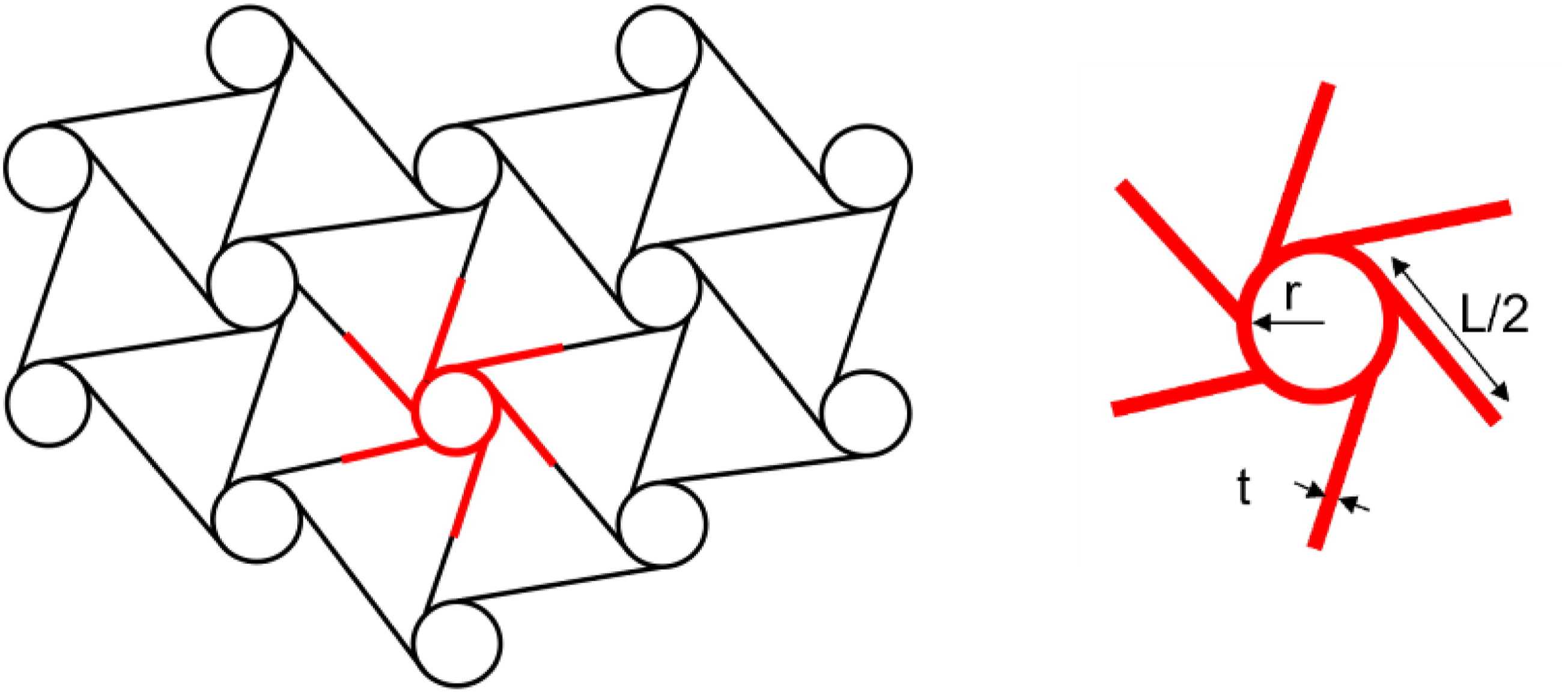
The inaugural chiral structure, as illustrated in Figure 6, was introduced by Prall and Lakes.
43
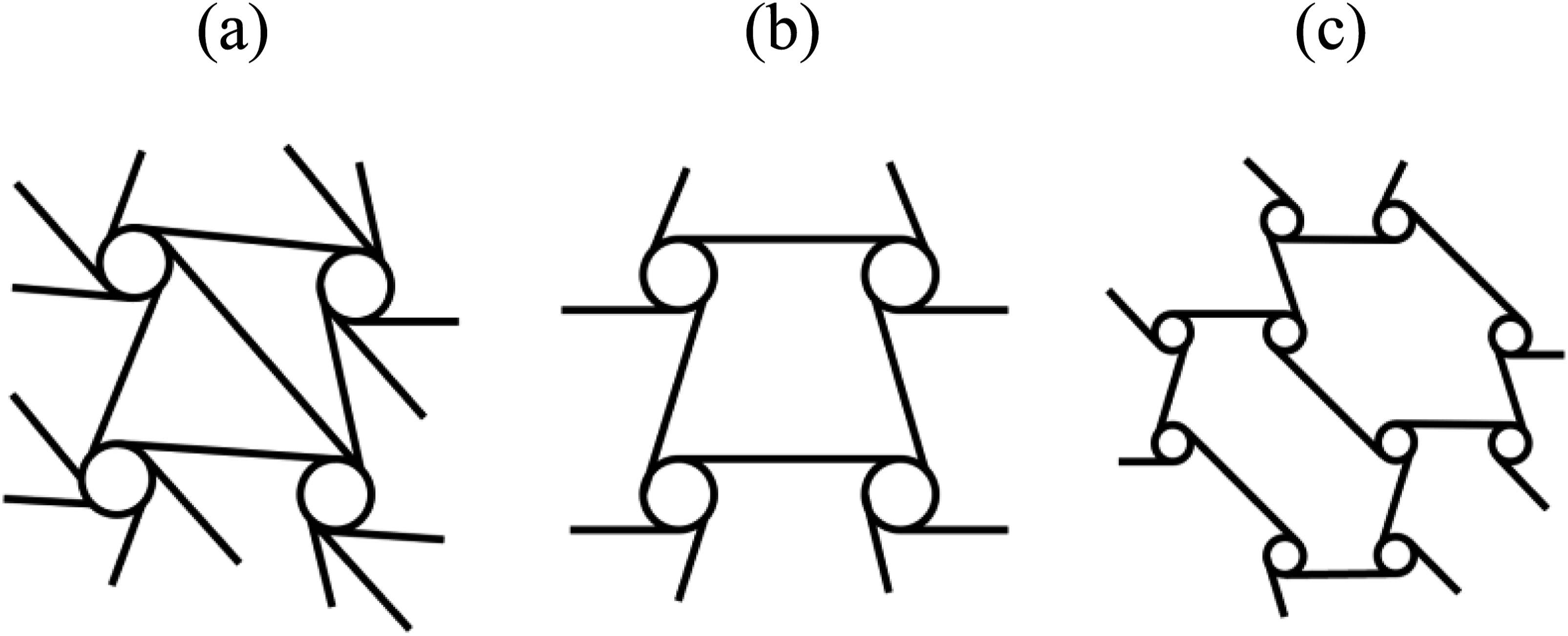
Their study showed that the in-plane Poisson’s ratio (v) was −1, and the in-plane Young’s modulus (E) is calculated according to equation (10), with t as thickness and L as the length of the ligament, while r is the radius of the ring, and Es is the intrinsic Young’s modulus of the cell walls. This seminal research served as a catalyst for subsequent explorations in this domain. Alderson and collaborators
44
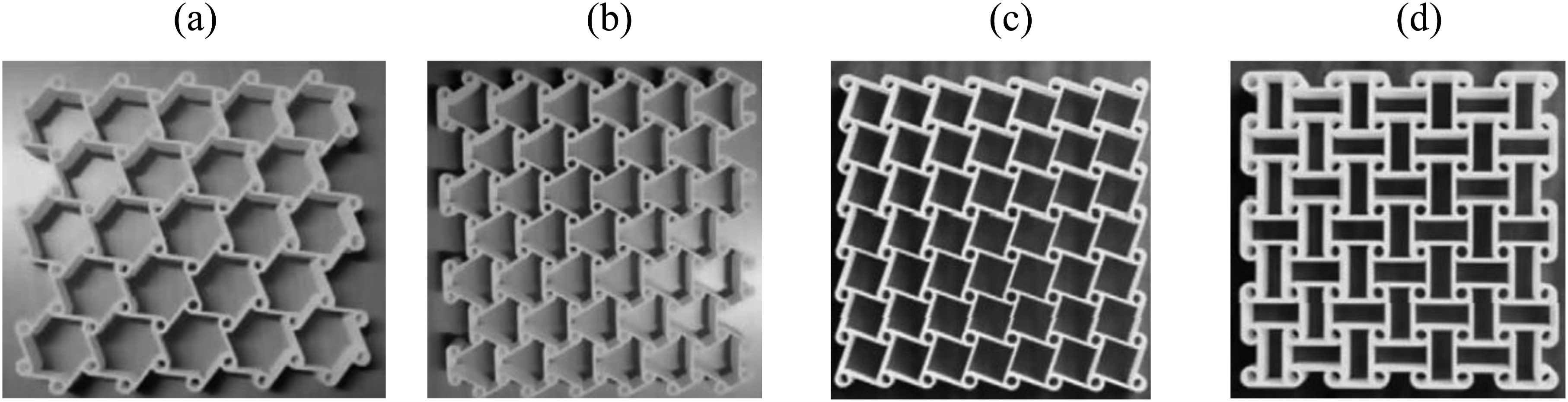
delved into the study of various chiral structures, including three-ligament chiral structures, three-ligament anti-chiral structures, four-ligament anti-chiral structures, and six-ligament anti-chiral structures (Figure 7). They established the connection among elastic modulus, Poisson’s ratio, and the geometric parameters of these structures based on their elastic properties. In 2008, Grima et al.
45
conducted a new chiral auxetic structures, termed meta-tetrachiral, constructed using chiral building blocks and illustrated in Figure 8. In another study about anti-tetrachiral system, Gatt et al.
46
demonstrated that the rigidity of a structure can be modified without affecting the Poisson’s ratio, with these changes being influenced by the geometry and material properties of the structure. Subsequently, Gatt et al.
47
explored the connection mode between core node and spokes in anti-tetrachiral structures using finite element methods. Additionally, Dilek and Buket recently conducted a study on curved composite sandwich materials with cores designed in hexachiral, tetrachiral, and anti-tetrachiral configurations. The results revealed that the impact energy absorption capabilities of the hexachiral structure are superior.
48
Hexachiral structure with the node radius r, the cell wall thickness t, and the length straight ligaments L.
43
Chiral structure: (a) tri-chiral; (b) anti-tri-chiral; (c) tetra-chiral; and (d) anti-tetra-chiral.
44
Meta-tetrachiral systems with: (a) six spokes in node; (b) four spokes in node; (c) three spokes in node
45
.
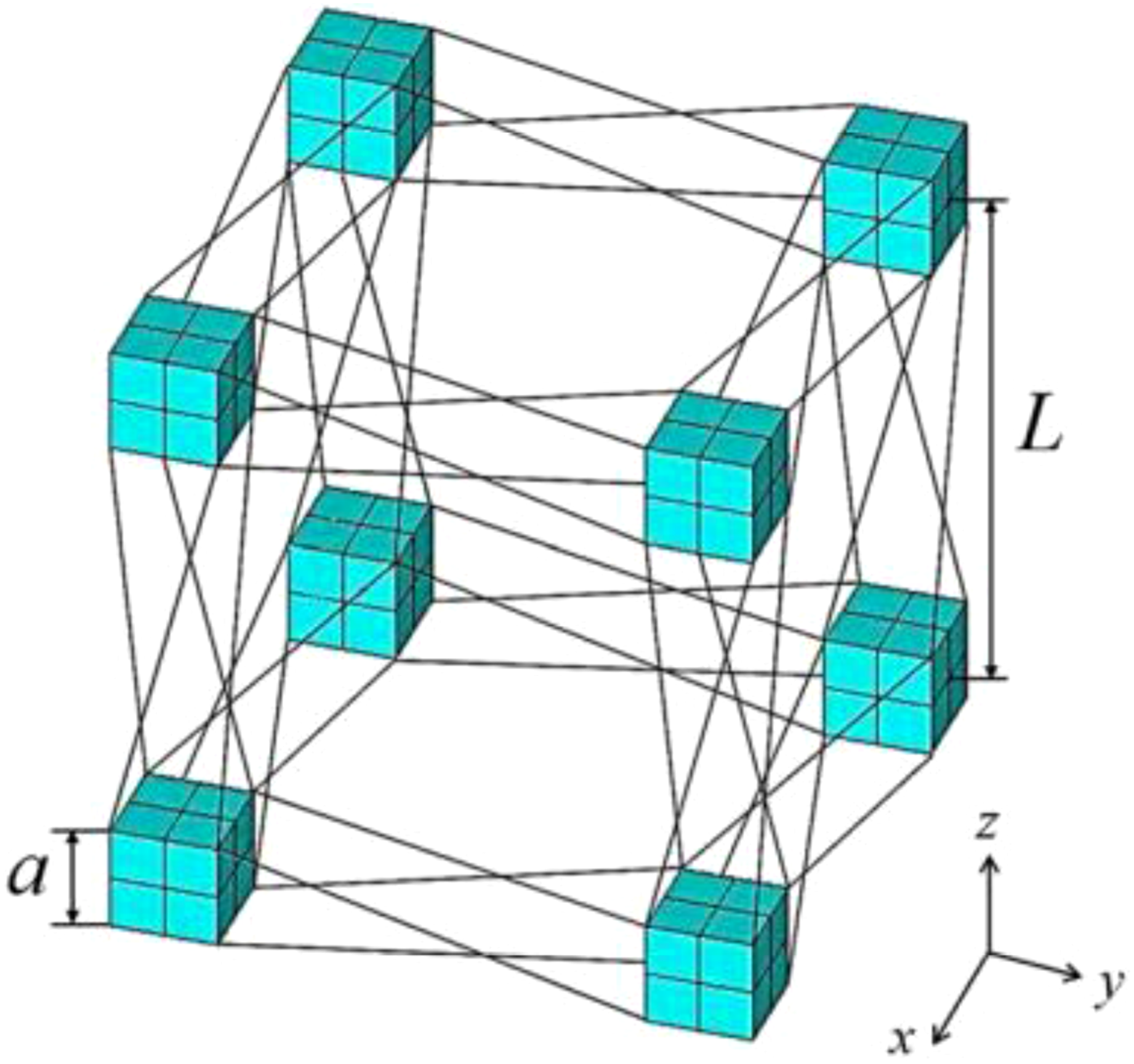
In addition to 2D chiral models, 3D models have also been studied. For instance, Ha et al.
49
proposed three-dimensional chiral lattices with an NPR (Figure 9). These chiral lattices, featuring numerous cubical nodules, underwent finite element analysis, revealing a Poisson’s ratio ranging from negative to zero, dependent on specific geometry. In a recent development, Huang et al.
50
presented a three-dimensional anti-tetrachiral model that exhibiting NPR behaviour. The research indicated a strong correlation between the Young’s modulus, Poisson’s ratio, and the structure’s geometry. The chiral lattice configuration.
49

Rotating structure
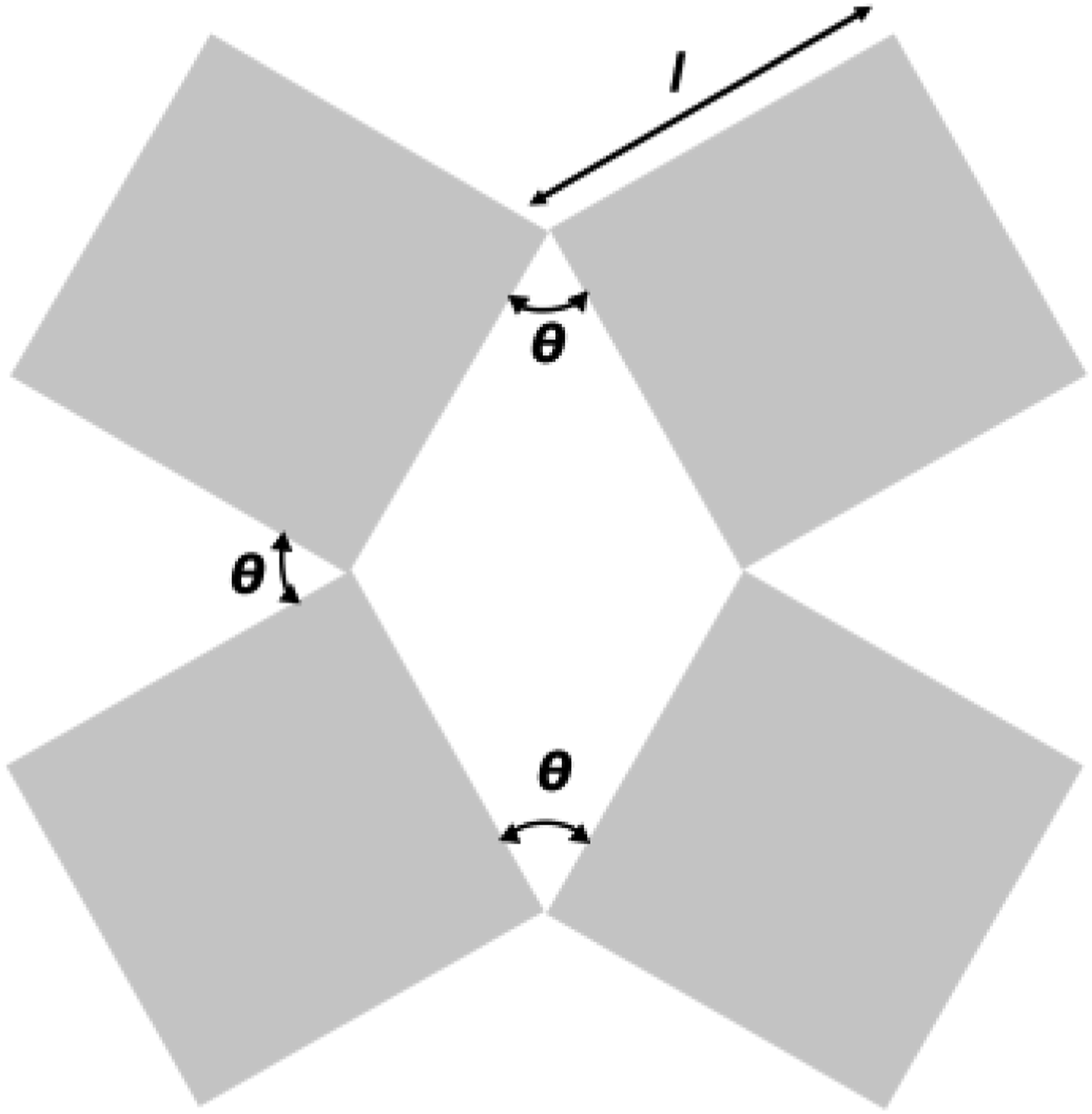
Another typical cellular structure of auxetic materials and structures is the rotating structure. Auxetic rotating structures are constructed using models that incorporate both stiff and partially stiff (rigid and semi-rigid) design, where these units are connected at specific vertices. Upon the application of a tensile load, torque is produced in the stiff units, causing them to rotate and lateral movement in the partially stiff hinges, resulting in the extension of the structure and obtaining the NPR effect.26,51 Grima et al.
52
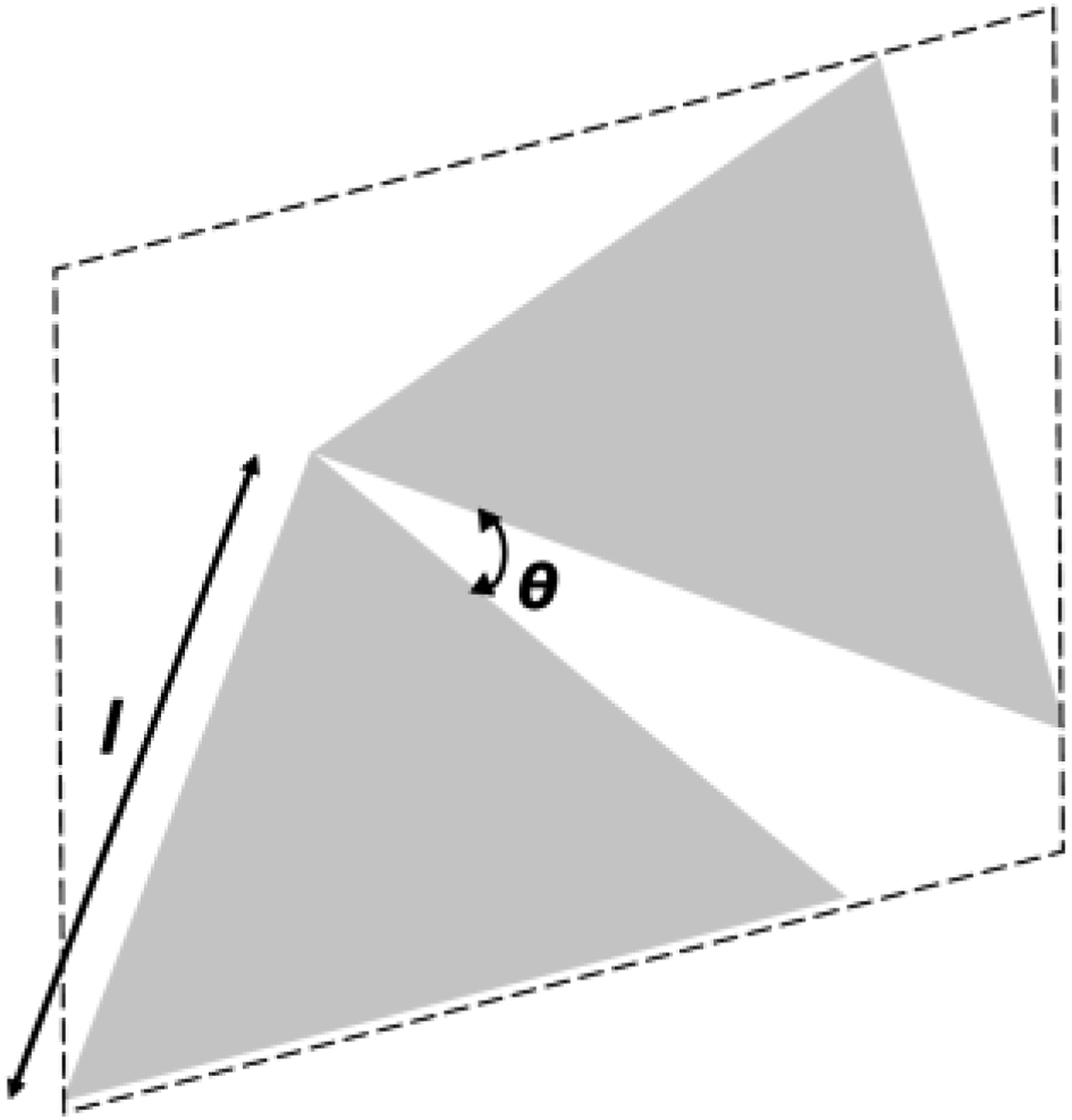
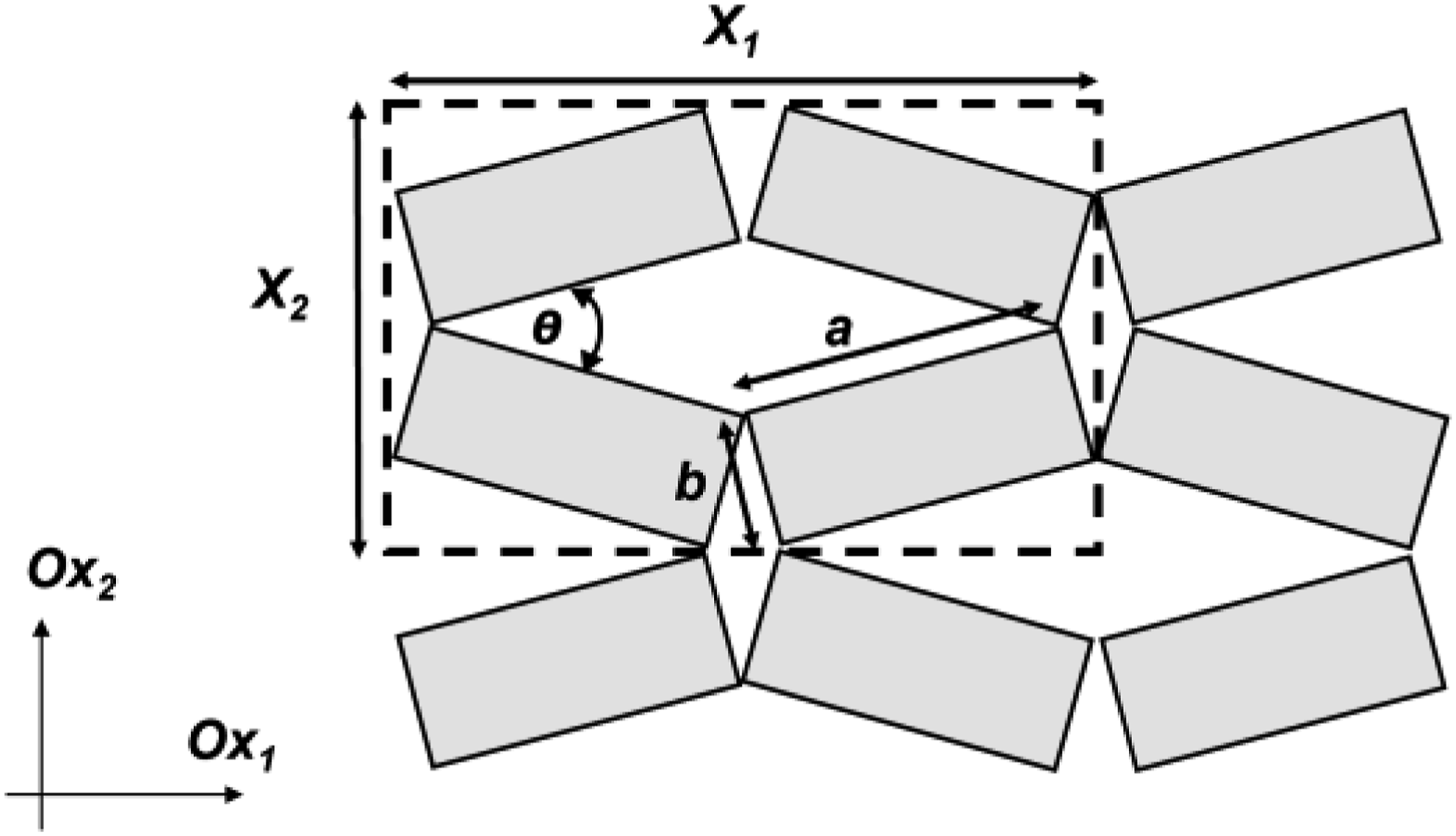
introduced a configuration of rigid squares (Figure 10). The Poisson’s ratio (v) and Young’s modulus (E) of the model can be expressed using equations (11) and (12), respectively. Subsequently, the author and collaborators have also proposed rotating auxetic models of triangles (Figure 11), rectangles (Figure 12), rhombi, and parallelograms.53–55 Extending their exploration, Grima et al.
56
introduced a semi-rigid squares model. The result showed in significant alterations to the mechanical properties of the model. Rotating square model
52
. Rotating triangle model model.
53
The rotating rectangles model.
54


Research conducted by Alderson, Rafsanjani, Dudek, and Kim, has also contributed to the growth of rotating models. Alderson et al.,
57
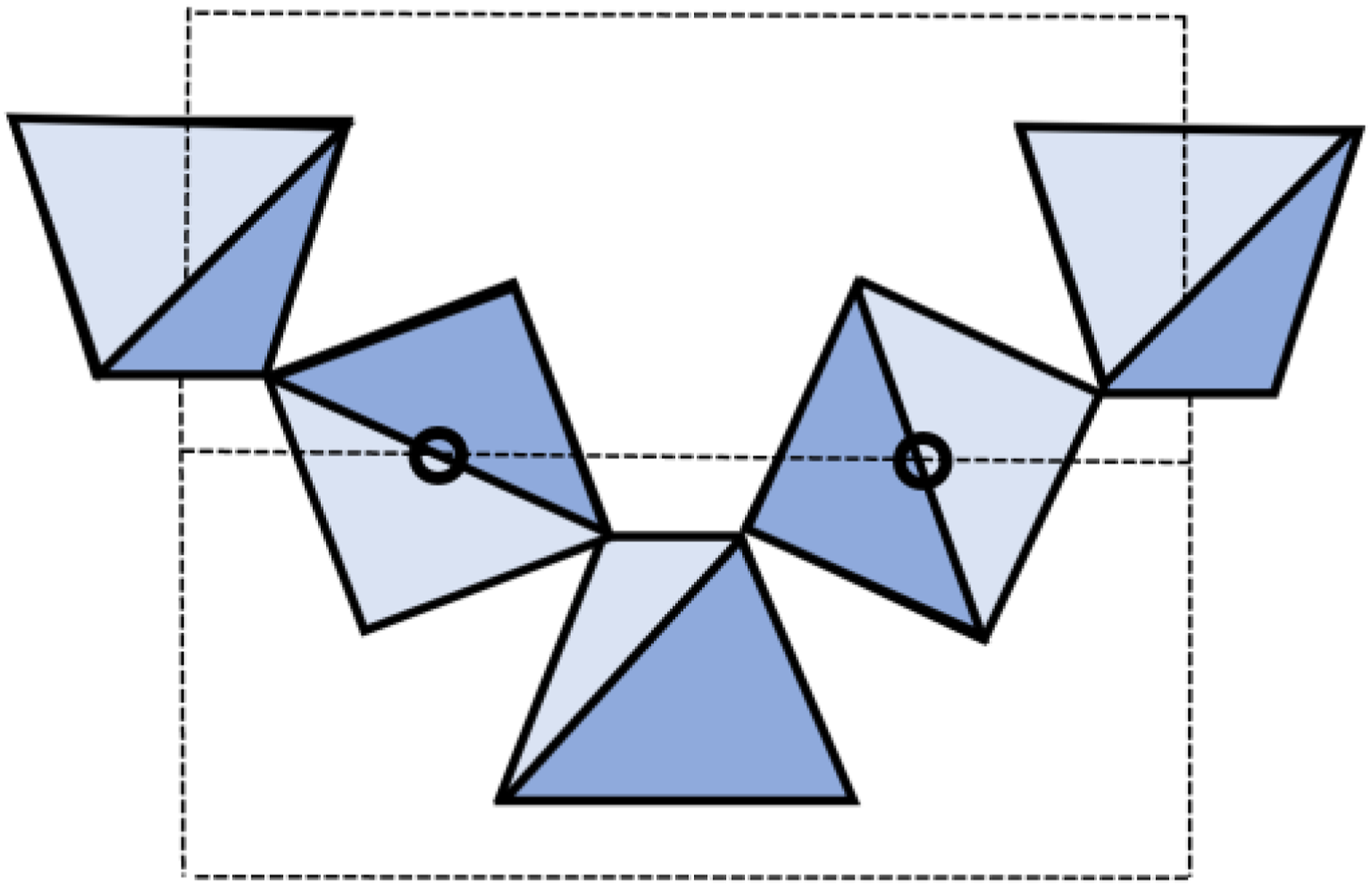
explored NPR performance in the α-cristobalite model (Figure 13). They considered rotation, maintenance of shape with size change, and concurrent rotation and dilation, all contributing to auxetic responses. Drawing inspiration from historical geometric patterns, Rafsanjani et al
58
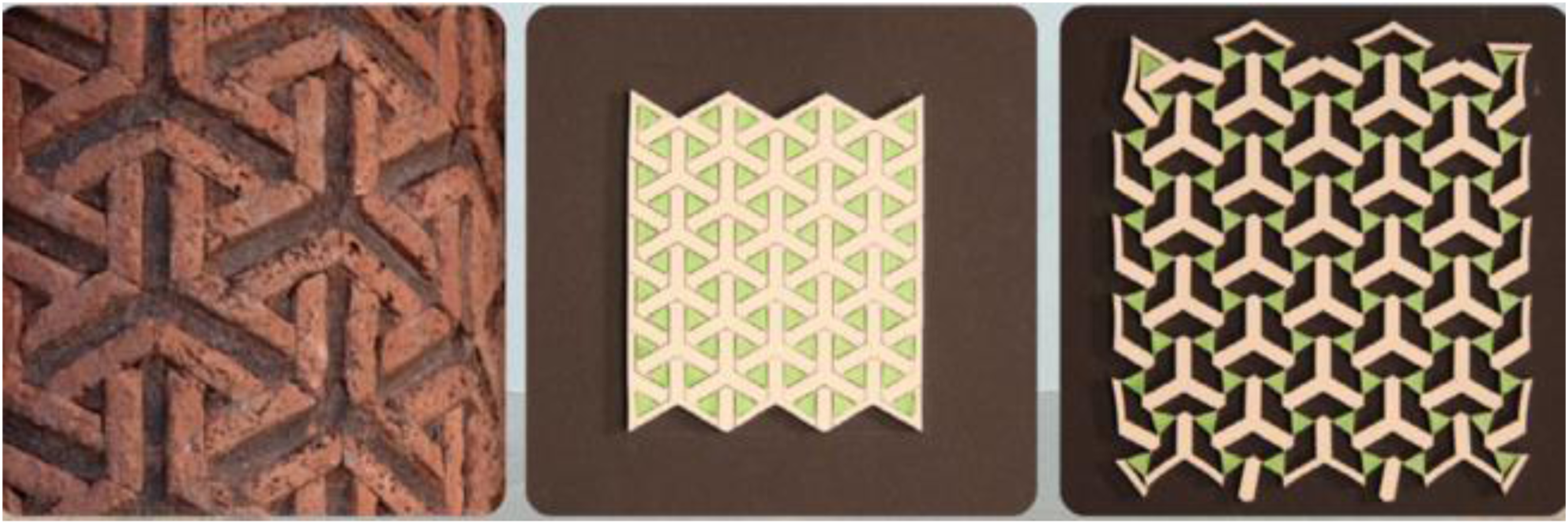
introduced a new planar mechanical metamaterial (Figure 14) that can adjust its expandability, stiffness, and bistability by manipulating the geometry of the fundamental cut profiles. Using a dynamics methodology, Dudek KK et al.
59
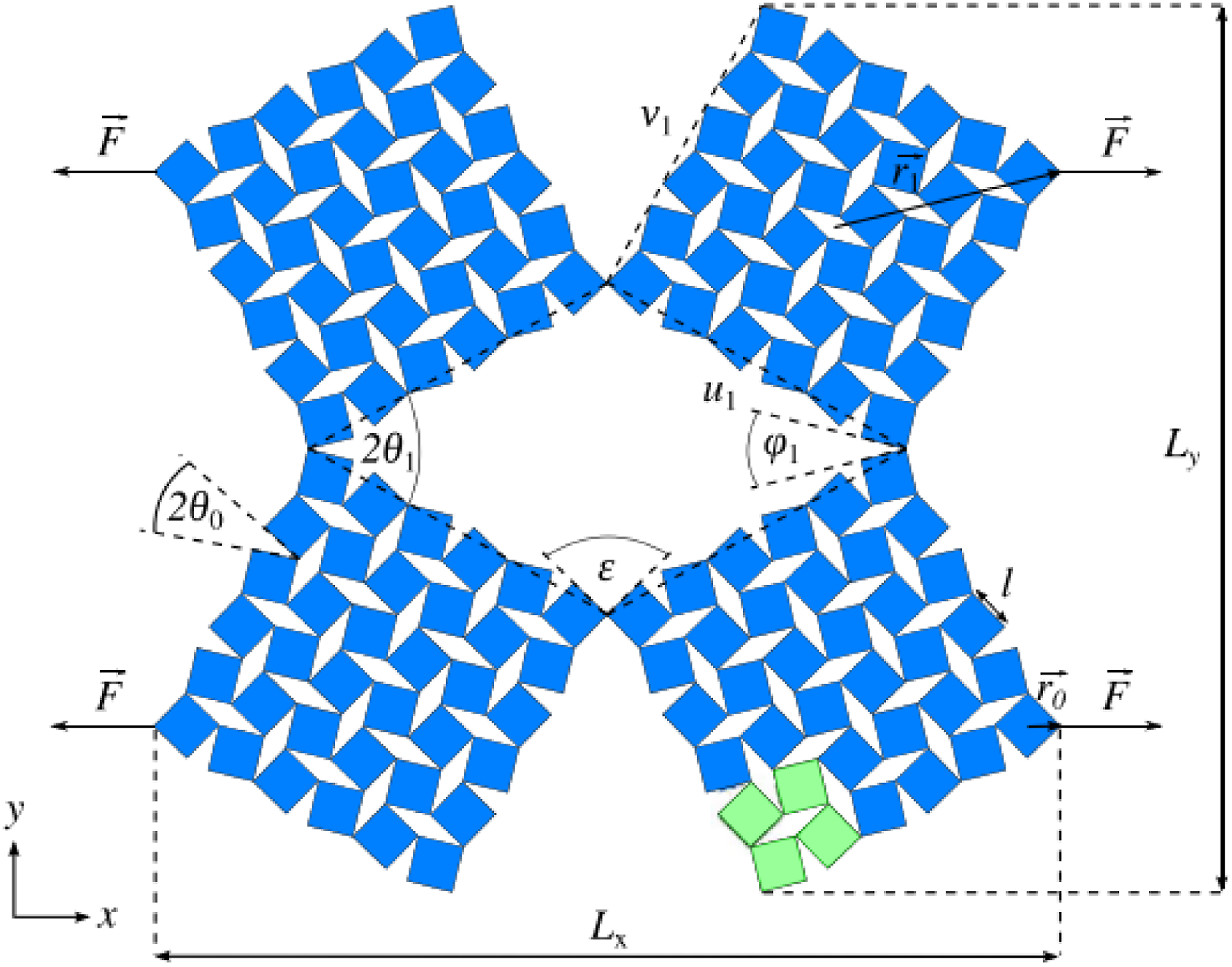
investigated the deformation behaviour of NPR hierarchical rotating square models. Research demonstrates that by manipulating the resistance to rotational movement of hinges within the system, the mechanical properties, deformation behaviour, and configuration of the structure for a specified applied force can be controlled (Figure 15). This allows for increased tunability without the need to alter the geometry of the system. Kim J et al.
60
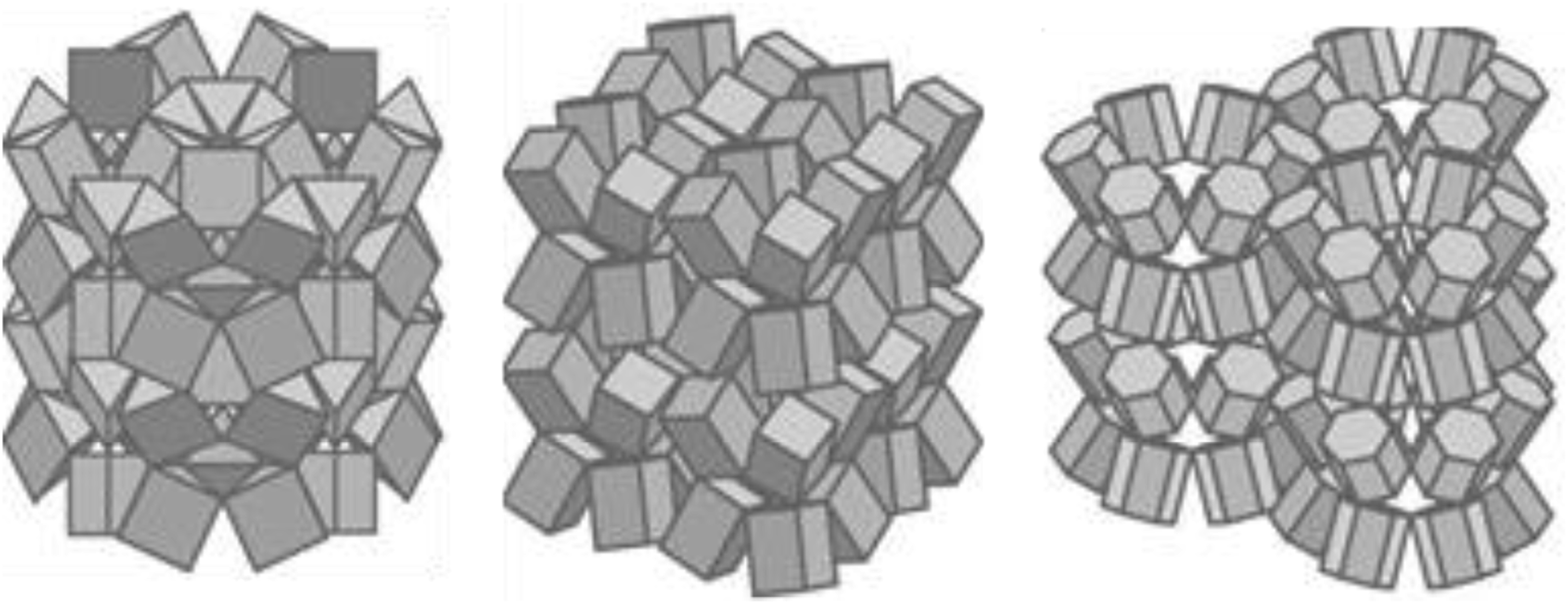
proposed 3D models created with regular polygonal prisms include triangular, square and hexagonal (Figure 16). The study formulated Poisson’s ratio equations for each model and demonstrated, through analysis and numerical methods, that the models display NPR characteristics under specific geometrical specifications. The α-cristobalite rotating tetrahedral model.
57
Ancient geometric motifs and bistable auxetic mechanical metamaterials.
58
The two-level hierarchical auxetic model.
59
3D rotating structure.
60
Common forms
Auxetic materials are produced in three main forms: auxetic foam, auxetic composite, and auxetic textiles. Auxetic foam is produced using a specialized cellular network structure, while auxetic composites combine various cellular auxetic materials. Both forms are used in the automotive industry for applications in anti-collision and sound insulation. Auxetic textiles, which include fibres, yarns, woven, knitted, and nonwoven fabrics, are crucial for creating highly flexible and adaptable auxetic materials. These auxetic textiles hold potential applications in the automotive industry.
Auxetic foams
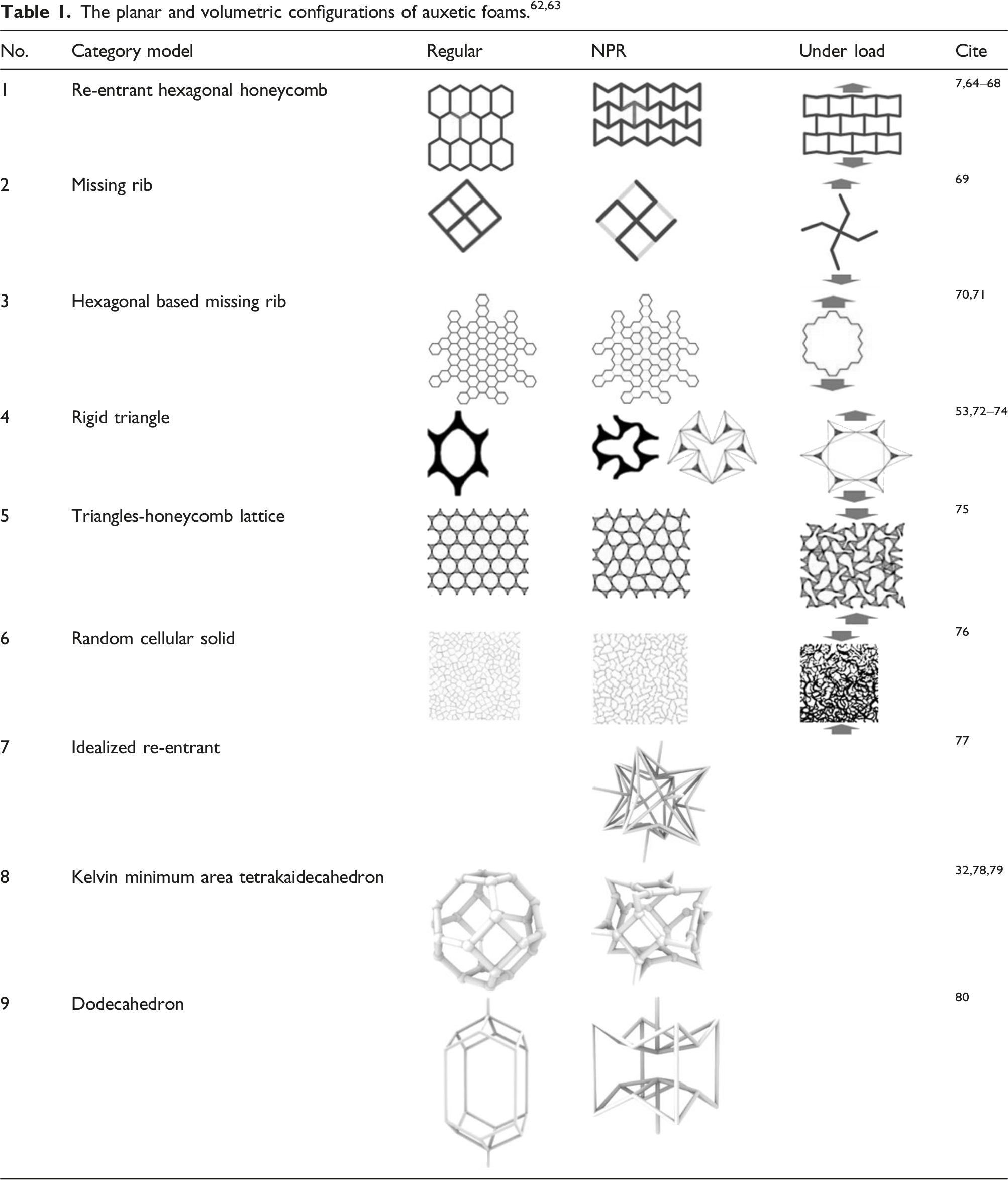
In 1987 Lakes 7 successfully fabricated auxetic foam. The study produced a polyurethane foam with an NPR of approximately −0.7, through a thermo-mechanical methodology. Lakes’ success paved the way for the birth and rapid development of many new design methods. We can mention the foam materials theory of Gibson and Ashby 61 Foam materials theory helps predict and understand the basic mechanical properties of foam materials based on their underlying structure, thereby optimising the design and use of foam materials in a variety of applications.
Auxetic composites
Similar to composite materials, auxetic composites are crafted to blend the benefits of auxetic materials with other substances, aiming to enhance mechanical properties, bolster impact resistance, trim weight, and widen application versatility. In 1984, Herakovich 92 conducted pioneering research on composite laminates. The study suggested that Poisson’s ratios could be positive or negative based on fibre arrangement. Further studies focus on research to investigate and enhance the properties of auxetic composites, such as investigate the viscoelastic properties, 93 examine the elastic properties, 94 eliminate delamination and brittleness, 95 improve the Young’s modulus, 96 change in the conductivity, 97 restore fractured and cracks, 98 and enhance energy absorption, tensile strength, and compression properties. 99
In addition, research on applying new methods to fabricate auxetic composite materials has also been conducted. Tatlier et al. 100 introduced a modelling approach to explore the NPR properties of compressed fused fibrous networks, highlighting the critical influence of compression and anisotropy on auxetic behaviour in such materials. Valentini et al. 101 utilized carbon dioxide gas produced during yeast fermentation and the gelation process of the liquid rubber matrix to create durable auxetic rubbers. This composite material can alter its Poisson’s ratio from negative to positive under tensile stress. Boldrin et al., 17 employing comprehensive techniques such as full-scale Finite Elements, Component Mode Synthesis sub-structuring, 3D printing, and scanning laser vibrometry, investigated the dynamic behaviour of auxetic gradient composite hexagonal honeycombs. Cristiano Veloso et al. developed a MATLAB algorithm tailored for designing auxetic laminates in both in-plane and through-the-thickness configurations. This algorithm is based on the micro and macro-mechanic relationships derived from Maxwell’s method for lamina and Kirchhoff’s plate theory. The results were compared with benchmark cases from the literature, demonstrated high accuracy and consistency. 102
Besides, new auxetic composite materials are also created. Zorzetto et al. 103 created a novel composite material by integrating two fundamental cellular structures with distinct Poisson’s ratios. The results revealed that even a small fraction of re-entrant components could significantly enhance stiffness at a consistent overall relative density. Bubert et al. 104 developed a passive one-dimensional morphing aircraft skin, incorporating an elastomer fibre-composite surface layer advocated by a flexible honeycomb structure, both demonstrating near-zero in-plane Poisson’s ratios. In the study by Chen et al., 105 a flexible skin made of fibre-reinforced composite with in-plane auxetic behaviour was fabricated and examined. Freshly, Hu et al. 98 produced innovative hydrogel-elastomer NPR composites, observing that hydrogel integration could provisionally restore fractured ligaments and cracks in the composite. Silva et al. 106 ingeniously employed recycled rubber from discarded tyres to craft re-entrant auxetic structures and performed initial examinations. This innovative approach enhances the toughness and mechanical strength of polymeric composites when incorporating waste tyres, aligning with the ongoing trend of sustainable development.
Auxetic textiles
Auxetic fibres
Auxetic fibres are a type of polymeric material known for their remarkable mechanical properties, which surpass those of other polymers in both strength and flexibility.28,107 These fibres are particularly well-suited for use in fibre-reinforced composites, making them an excellent material choice for various applications.108–114 In 2002, Alderson and his colleague developed polypropylene (PP) fibres that showcased auxetic behaviour by utilizing a modified melt spinning technique. The NPR obtained in their experiment was −0.6. ± 0.05. 115 To achieve large-scale production and ensure consistent quality, optimizing production parameters is crucial. Therefore, Alderson et al. have been producing auxetic PP fibres using large-scale extruders under different conditions, including extrusion temperature, screw speed, feed rate, and cooling conditions. The aim is to study the effects of these processing parameters on the fibres. 116 Then, Alderson’s research team 117 successfully achieved the first industrial-scale production of auxetic PP fibres using an extruder. The study demonstrated that the produced fibres exhibited excellent reproducibility and auxetic behaviour across an expanded strain range of up to 5%, exceeding the limits formerly documented for lab-scale extrusions performed at reduced extruder thermal conditions. The highest observed negative Poisson’s ratio was −0.86. Moreover, the optimized manufacturing technique for polypropylene fibres can be adapted to other polymer-based fibres, such as polyester and polyamide, with the potential to exhibit NPR behaviour.118,119
Auxetic yarns
Auxetic yarns can be created using a special yarn structure with non-auxetic fibres. The first structure of an auxetic multifilament construction was proposed by Hook and Evans,
120
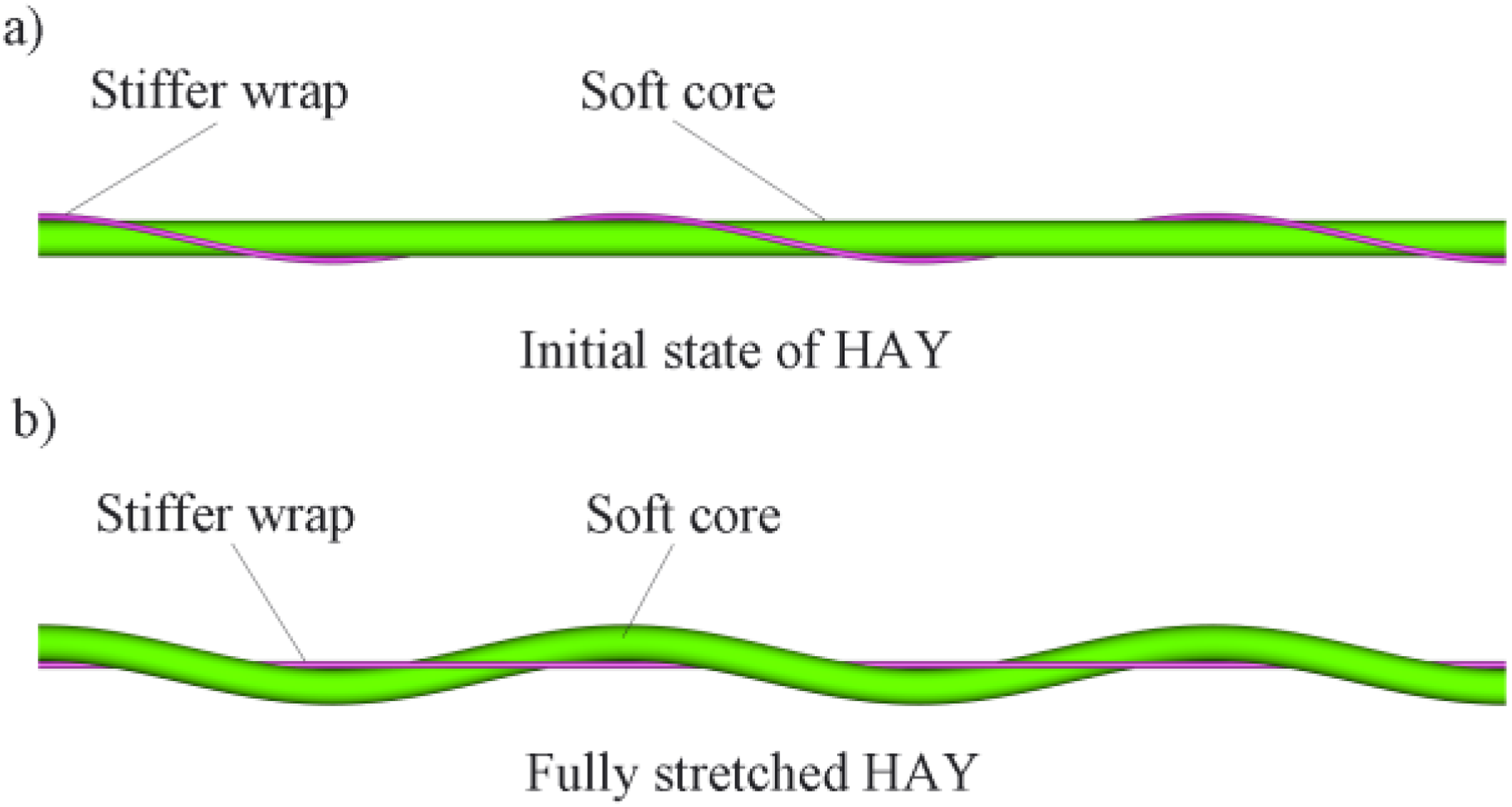
which was a helical auxetic yarn (HAY) structure. The construction consists of a thin, stiff yarn that is helically wrapped around a thicker, soft-core yarn. When the HAY is elongated along its length, the stiff wrapping yarn unbends, which causes the soft-core yarn to coil helically encircling it,121–123 as illustrated in Figure 17. Then, Miller et al.
111
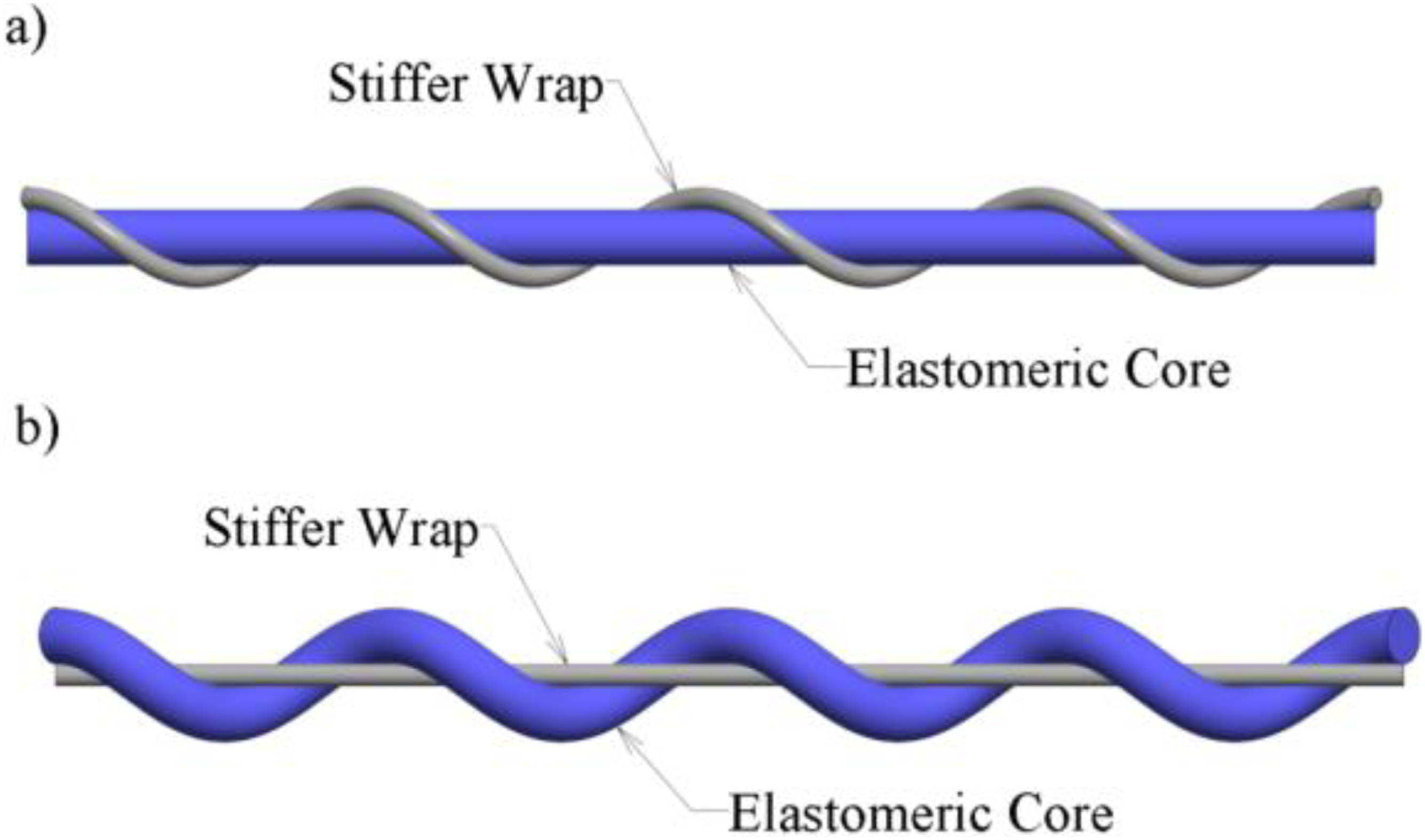
developed a new structure called Double Helix Auxetic Yarns (DHY), which resembles the structure of HAY. This yarn is created by combining two types of yarn: a stiffer and thinner wrap yarn alongside a thicker, straightforward elastomeric core yarn. When the DHYs are stretched, the core-yarn’s elastic property causes it to expand laterally. Once the stretching force is removed, the DHY returns to its original helix shape, as depicted in Figure 18. Miller and co-worker
124
also created the DHY with the same structure by employing carbon yarn as the outer layer and a stretched nylon yarn as the central strand. In another study conducted by Ullah et al.,
125
multifilament yarns made of nylon and polypropylene were used as the core while wrapping yarns made of Dyneema and Kevlar were adopted. Numerous studies on HAY have shown that a higher core-to-wrap diameter ratio, a greater modulus ratio between the elements, and a smaller initial wrapping angle of the wrap yarn lead to a greater maximum NPR.122,125–130 Additionally, Bhattacharya et al.
126
discovered that the modulus ratio of the elements must be sufficiently high to produce an NPR behaviour, yet sufficiently low to prevent the occurrence of the indentation issue. Their findings indicate that indentation reduces the maximum negative Poisson’s ratio of HAYs. To address this issue, they recommended using a multifilament wrap element rather than a monofilament wrap element because of their differing deformation mechanisms. These parameters can be modified based on the intended application to optimize the NPR performance of HAY. HAY model: (a) under no strain and (b) under peak strain.
62
DHY model: (a) Under no strain and (b) under peak strain.
111
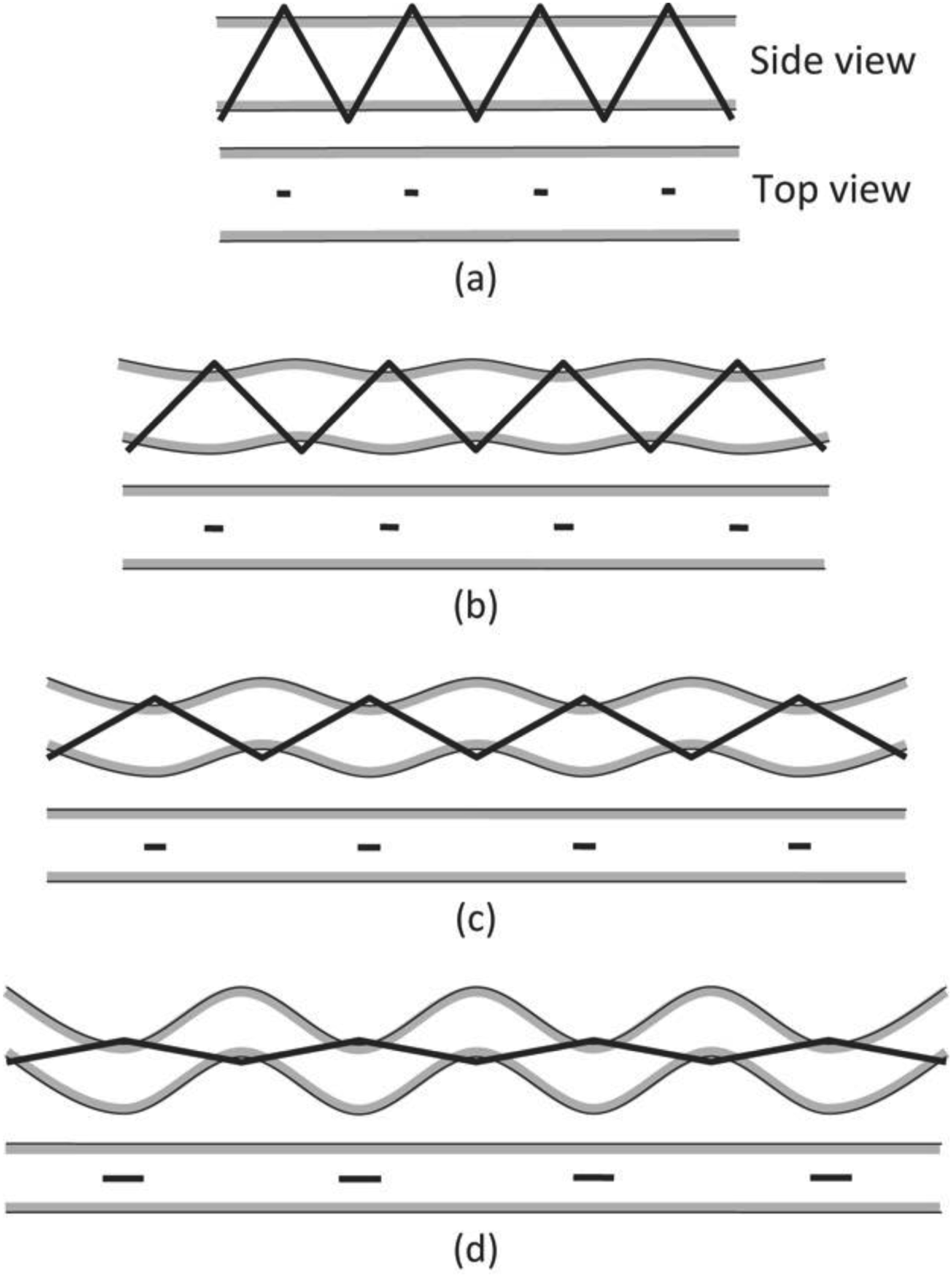
A significant challenge for HAY and DHY lies in ensuring a uniform wrap angle throughout both the manufacturing process and their usage. This problem arises because of the tendency of the wrap ply to easily slip over the core ply, as shown in Figure 19, which stems from the management of tension utilized on both plies.124,131,132 To address these shortcomings, Lim has developed a new type of yarn, known as semi-auxetic yarn (SAY), which is a modified version of the auxetic helical yarn, as outlined in Figure 20. This was achieved by stitching a thin cord in a triangular pattern through an elastic fat cord. The results of the experiment showed that the Poisson’s ratio of the yarn was affected by two factors: the first half angle of the thin cord and the Poisson’s ratio of the thick cord.
130
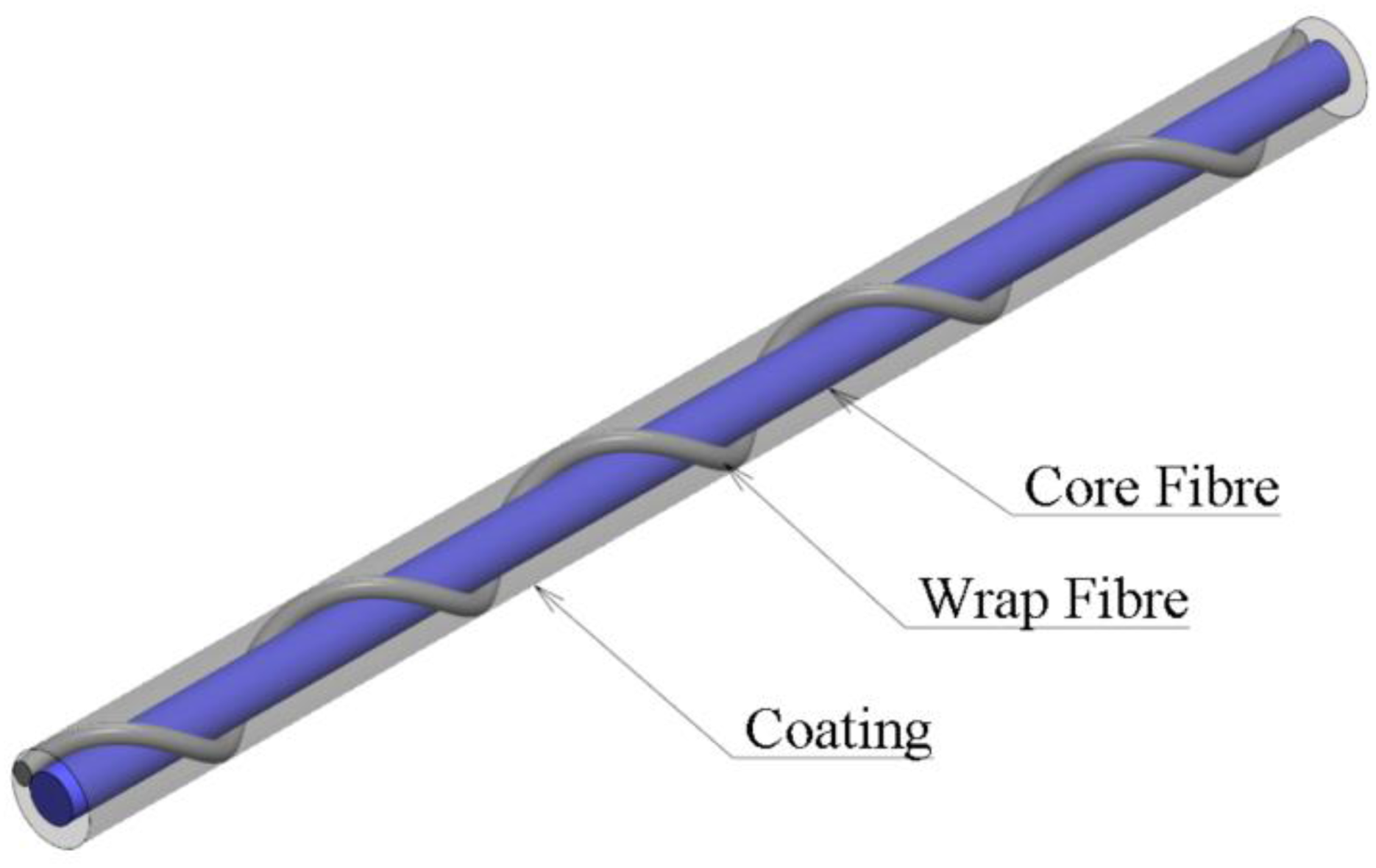
At the same time, Zhang et al
133
developed a three-part NPR yarn. This yarn comprised a rigid wrap yarn as the first part, helically coiled around an elastomeric core yarn as the second part, and enclosed by a sheath as the third part, as presented in Figure 21. The thickness of the coating on the third component has an impact on the auxetic behaviour of this yarn type. This could be utilized as a fresh configuration parameter to adjust both the Poisson’s ratio and modulus of this innovative composite reinforcement for various applications. However, the structure of the yarn may be limited by the silicone sheath. Moreover, the auxetic behaviour reduces as the sheath coating thickness increases. An alternative form of NPR yarn is the helical auxetic plied yarn (APY), introduced by Ge et al.
134
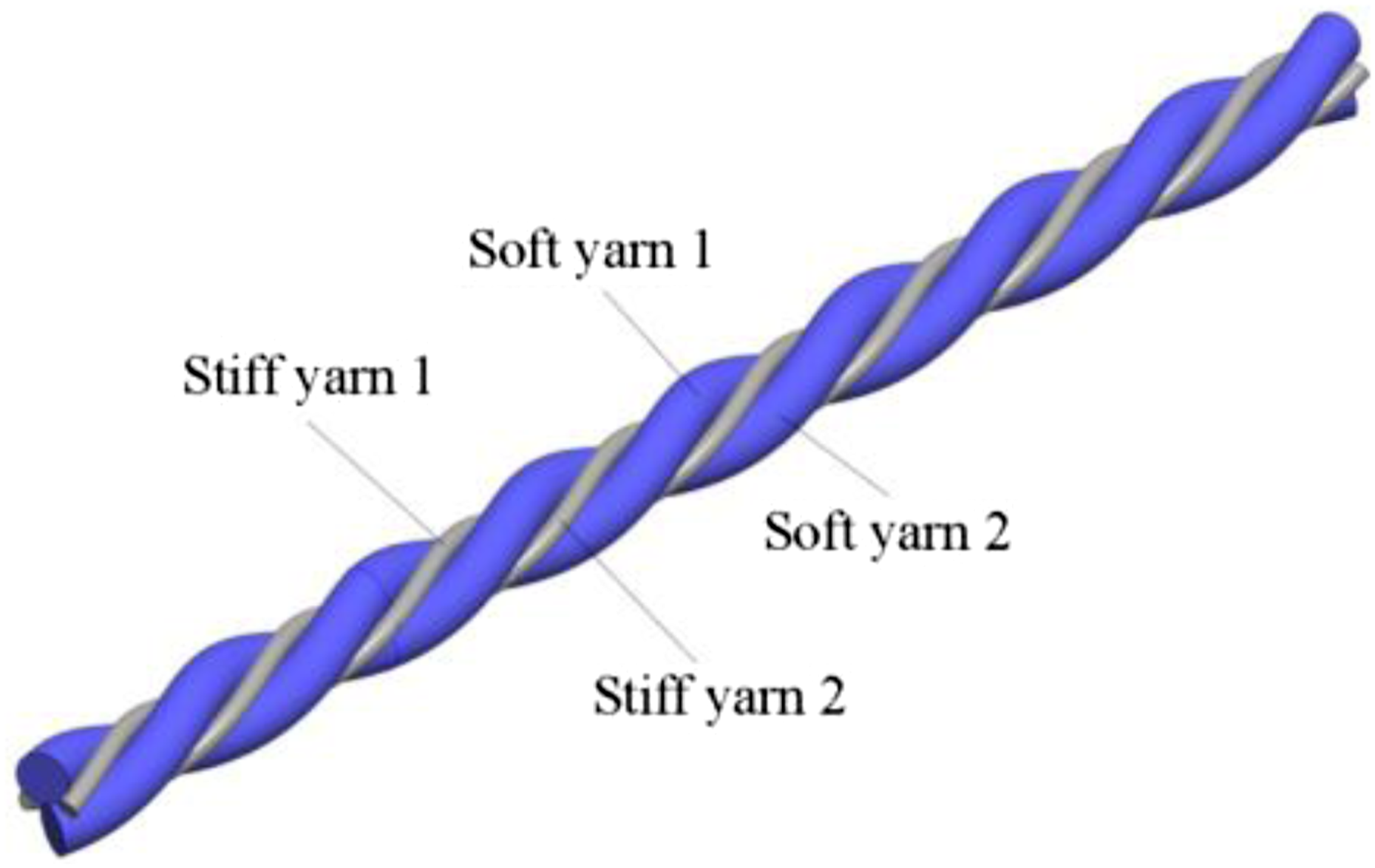
The APY was created using a matching, uniform number of soft and stiff yarns, arranged in a specific configuration. A common example of this is a four-ply yarn structure, comprising two soft yarns and two stiff yarns with varying diameters and modulus, designed to achieve NPR behaviour, as indicated in Figure 22. In 2022, Razbin et al.
135
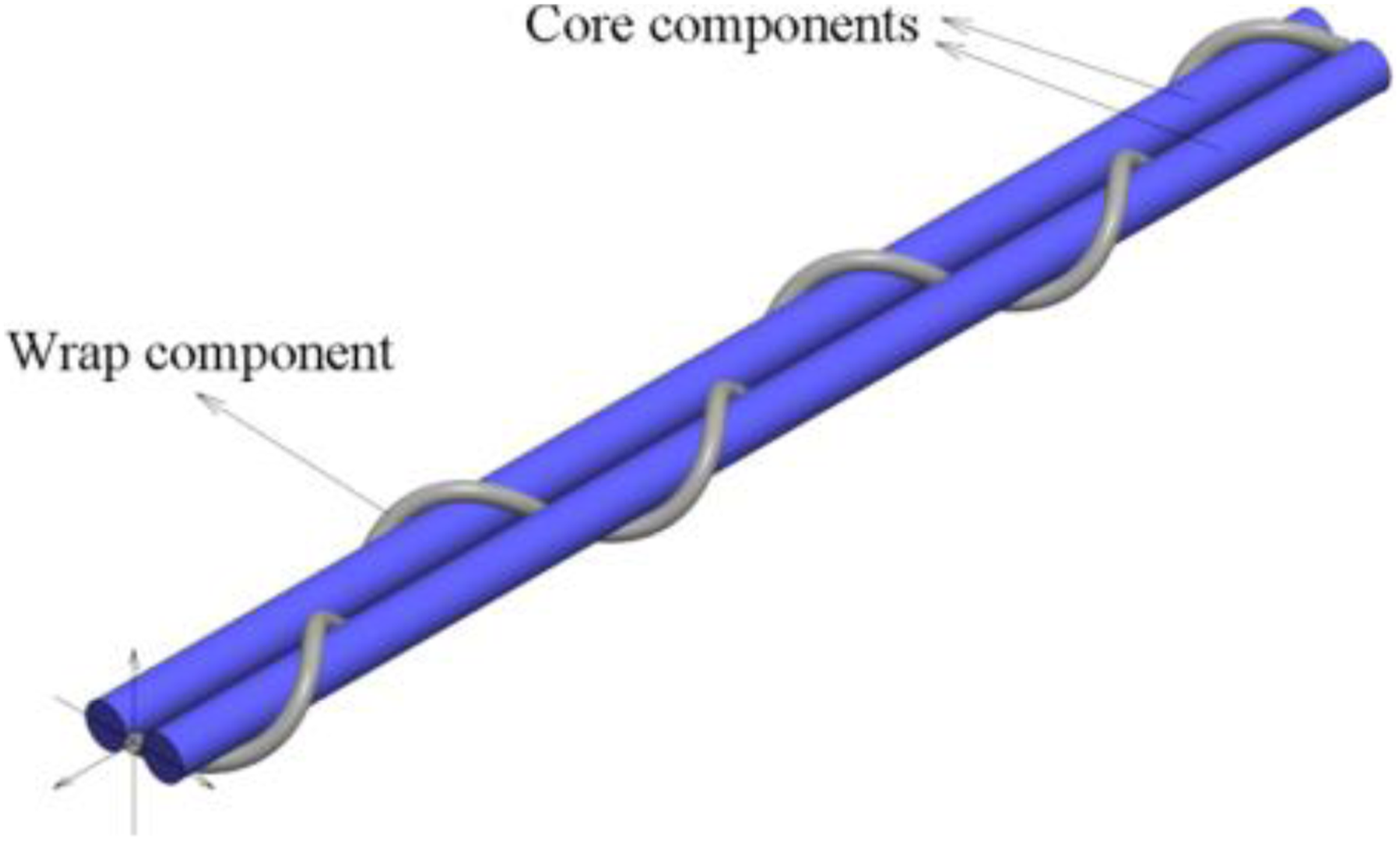
presented an innovative design for producing auxetic yarn, referred to as the “double-core helical auxetic yarn.” This design is an adaptation of HAY and SAY structures, utilizing braiding technology. It comprises two identical soft yarns as core parts and a stiff yarn as the wrapping part, as observed in Figure 23. Poor conformance between the wrap and the core using conventional spinning technology.
62
Three-component auxetic structure.
130
Schematic illustrations of the side and top view of a semi-auxetic yarn: (a) no elongation, (b) with slight elongation, (c) with moderate elongation, and (d) with extensive elongation.
130
4-Ply NPR yarn.
134
Double-core helical NPR yarn.
135

Auxetic fabrics
Auxetic woven fabrics (AWFs)
Auxetic fabrics can be created using specially designed auxetic yarns, which are woven in a conventional pattern. These fabrics have unique mechanical properties, which make them suitable for filtration or energy-absorbing applications.
62
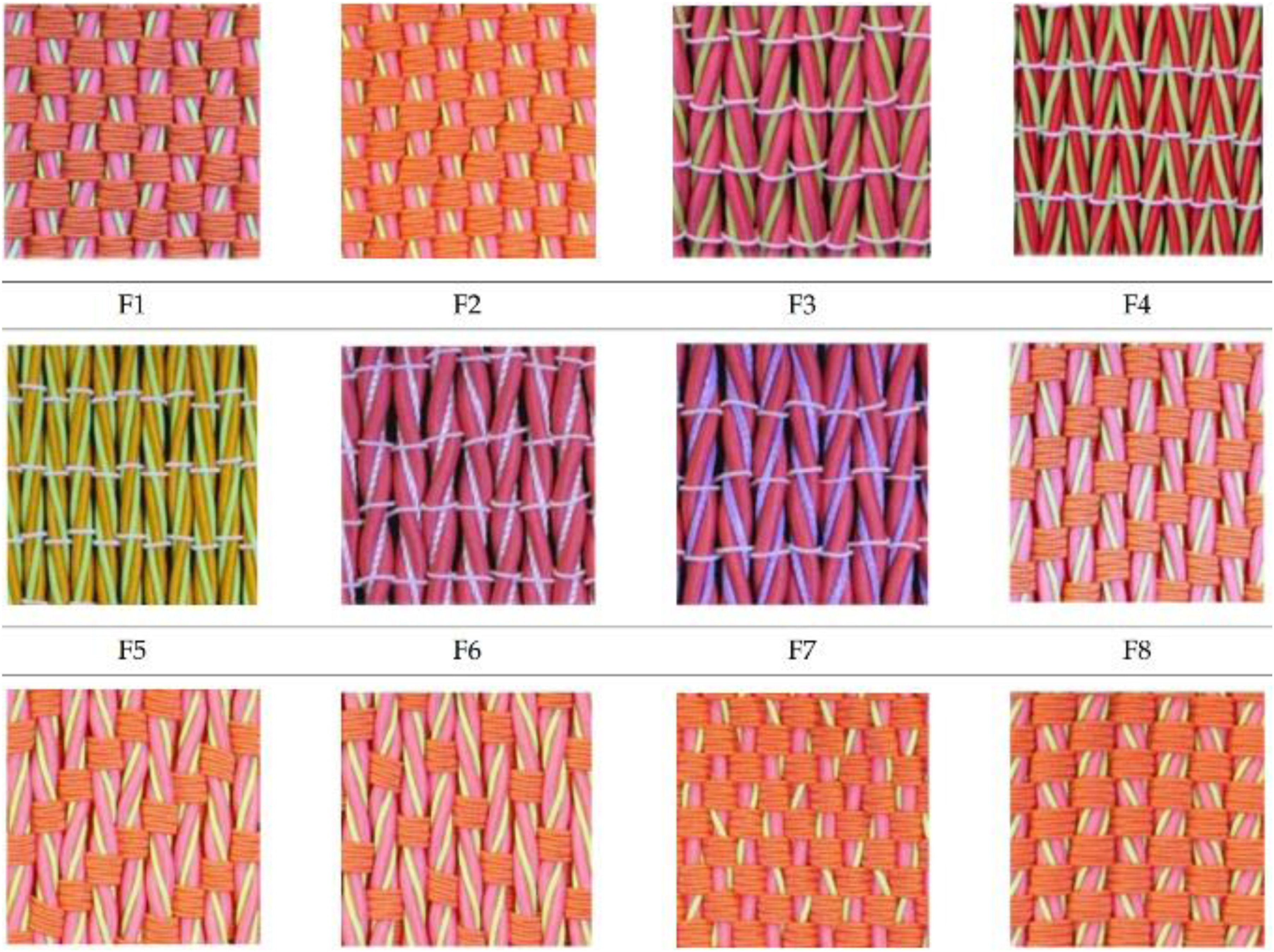
In a study conducted by Sum Ng. and Hu in 2018, auxetic plied yarns were utilized to create auxetic woven fabrics. The research involved the incorporation of four-ply auxetic yarns into various woven fabrics with distinct design parameters in investigating their NPR behaviour, as depicted in Figure 24.
136
In 2020, Gao et al.
137
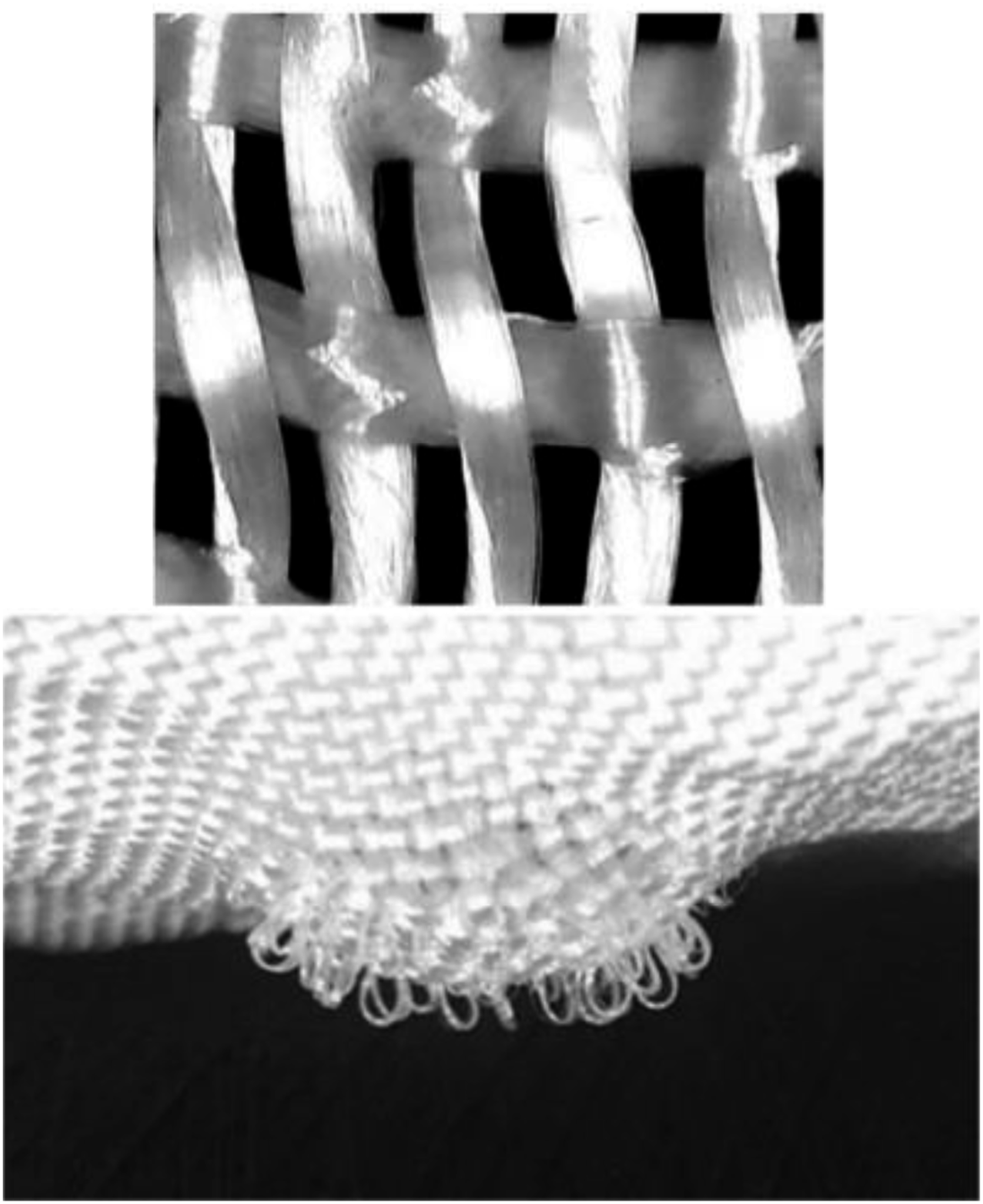
conducted a study to investigate the prospective applications of auxetic textiles. They produced HAY and AWFs to investigate the impact of yarn and fabric parameters on the auxetic properties of the engineered fabrics. The HAYs were made by wrapping a conventional polyamide multifilament ply over a highly elastic polyurethane multifilament ply, with different parameters used to optimize the auxeticity and structural stability. The HAY was then selected as the warp and weft yarns for weaving the plain-woven fabric. AWFs structure and Surface of AWFs after the impact test are shown in Figure 25. Images of woven NPR fabric created from plied auxetic yarns.
136
AWFs configuration and it´s surface after impact test.
137
Later, in 2022, Gao and Chen 138 developed woven fabrics using HAY and conducted a study on the key parameters affecting Poisson’s ratio while stretched. For the auxetic yarn, a highly elastic polyurethane multifilament was used as the core, wrapped in conventional nylon 6,6. Different wrapping angles of HAY were chosen for the weft, while nylon 6,6 was used as the binder for the HAY in the warp during the weaving of a plain-woven fabric. The findings of this study indicated that increased float lengths in weave structures, along with smaller wrapping angles and reduced diameters of the auxetic yarn, and decreased tensile stiffness of the warp yarn resulted in improved NPR behaviour. This research provides valuable insights for future studies aimed at optimizing the factors for fabricating NPR woven fabrics.
Auxetic woven fabrics can also be created by blending traditional yarns with auxetic geometry. Researchers have developed bi-stretch auxetic woven fabric using foldable and re-entrant hexagonal geometry. Until now, the manufactured AWFs using these geometries have found applications in clothing where improved shape fit and comfort are desired.
62
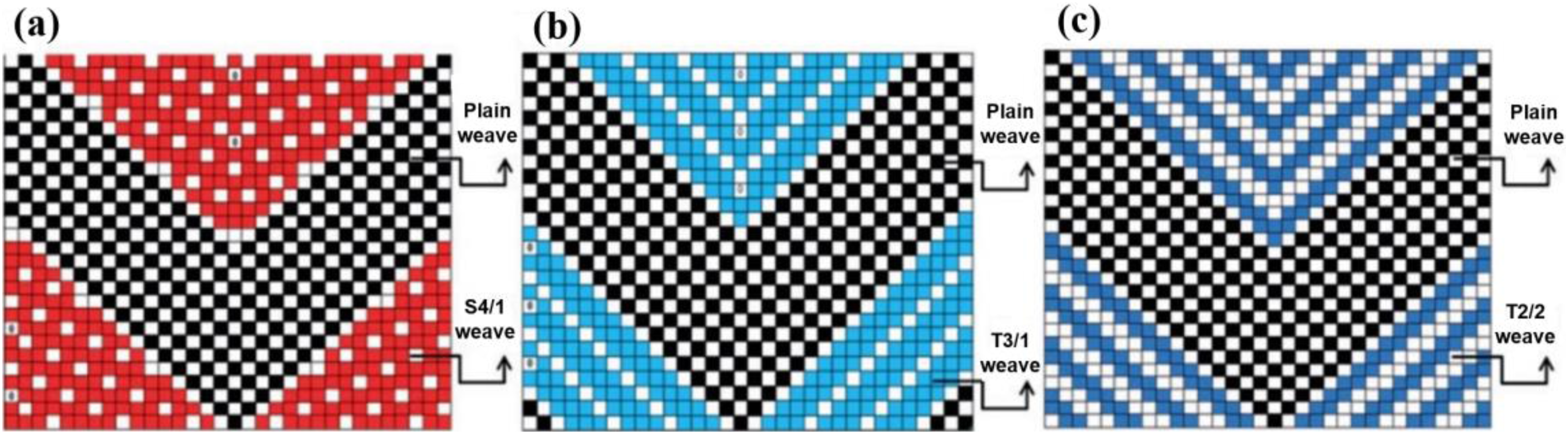
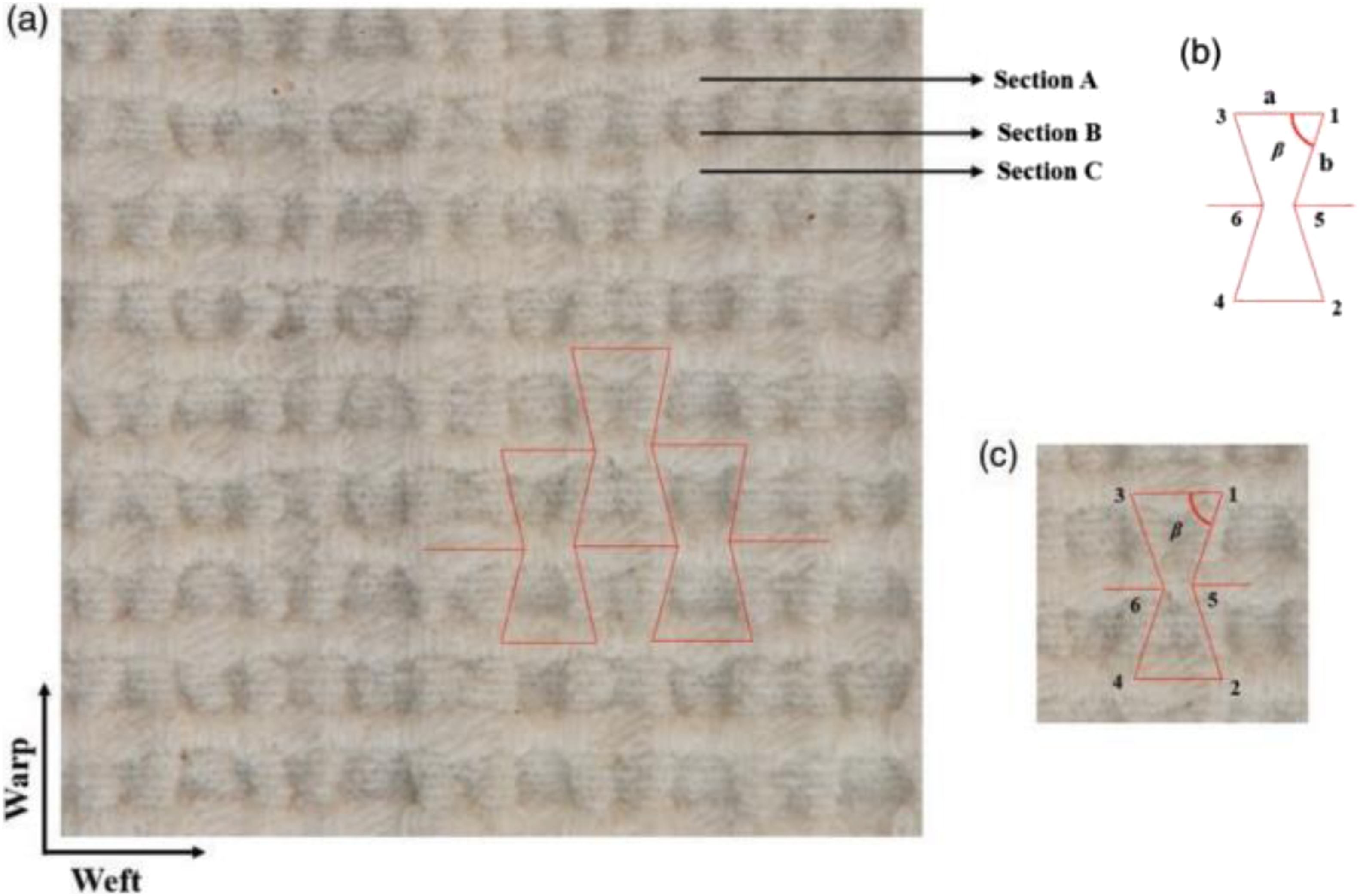
Specifically, Cao et al. (2019) introduced a novel category of bi-stretch woven fabrics with NPR properties, utilizing traditional elastic and non-elastic yarns and standard looms. Bi-stretch auxetic woven fabrics were initially devised using a foldable geometry, as presented in Figure 26.
139
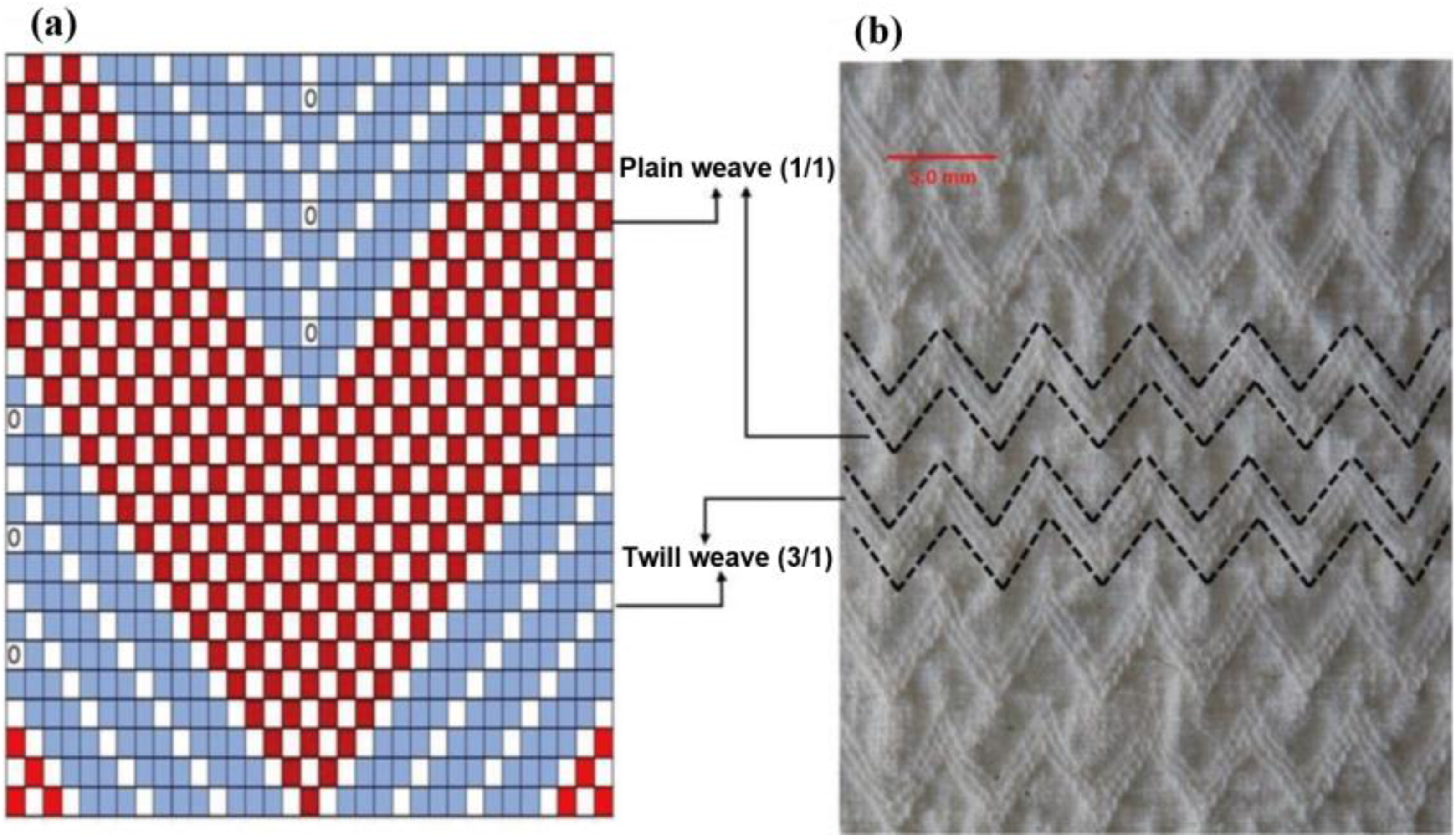
Subsequently, Kamrul et al.
140
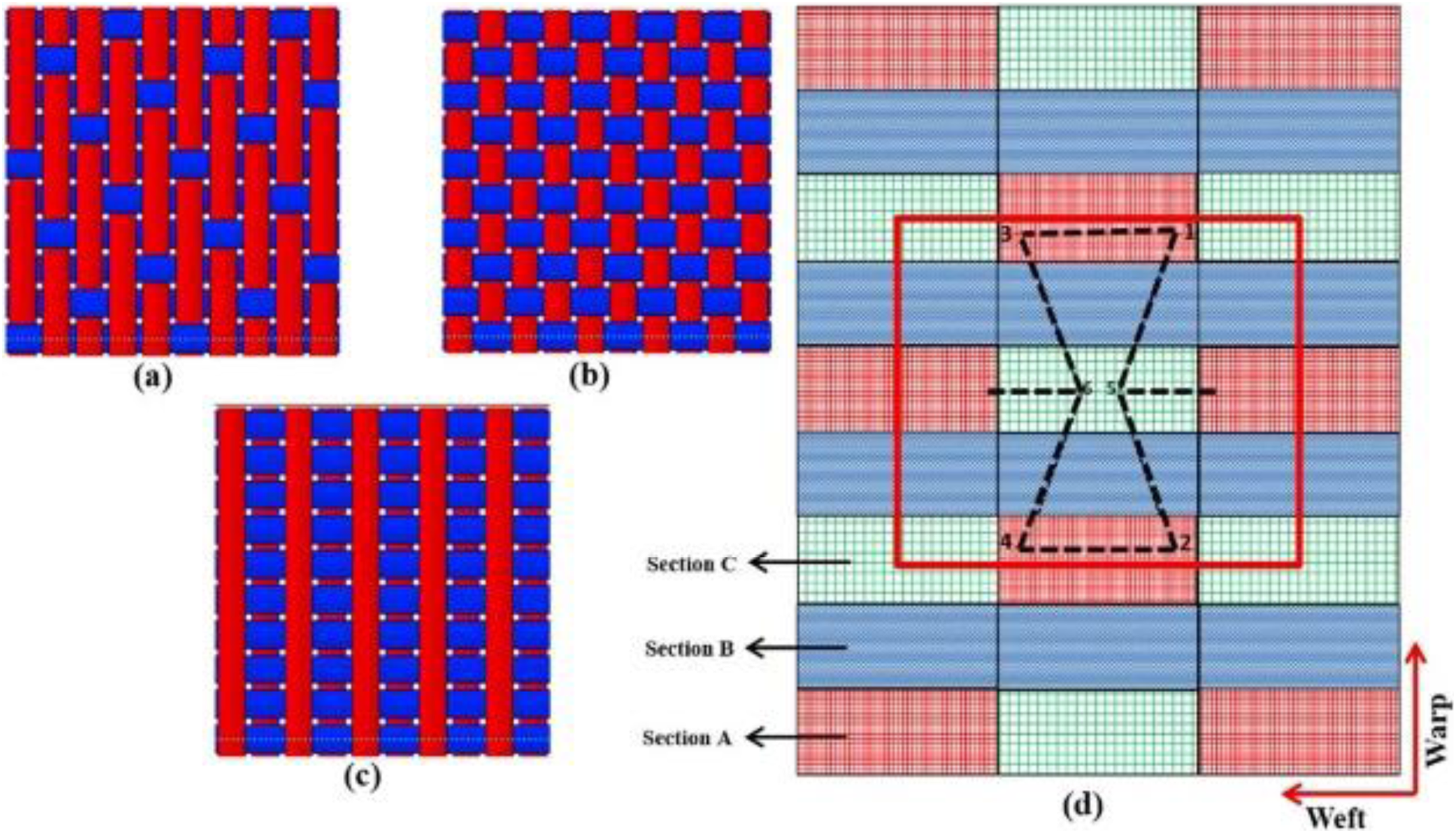
also introduced an AWFs derived from a double-directional parallel in-phase zig-zag foldable geometry, as shown in Figure 27. Additionally, Zulifqar and Hu141,142 suggested a different geometric model for auxetic woven fabrics derived from re-entrant hexagonal geometry (AWF-REH) and formed a relationship linking Poisson’s ratio and the tensile deformation exerted on the fabrics. This structure was initially created using re-entrant hexagonal geometry, blending loose and tight weaves, as seen in Figure 28. Following this, the AWF-REH was produced using both non-elastic and elastic yarns on a rapier weaving machine, depicted in Figure 29. Bi-stretch NPR woven with combination of plain weave and: (a) Satin 4/1; (b) Twill 3/1; and (c) Twill 2/2.
139
The unit cell of Bi-stretch NPR woven with foldable geometry: (a) the diagram, and (b) the the outlines.
140
Assembly of re-entrant hexagonal geometry: (a) weave in part A; (b) weave in part B; (c) weave in part C; (d) distribution of loose and tight weaves.
141
A bi-stretch AWFs designed with REH geometry: (a) the fabric surface, (b) the hexagonal unit cell, and (c) the basic unit of the fabric.
142
Auxetic knitted fabrics (AKFs)
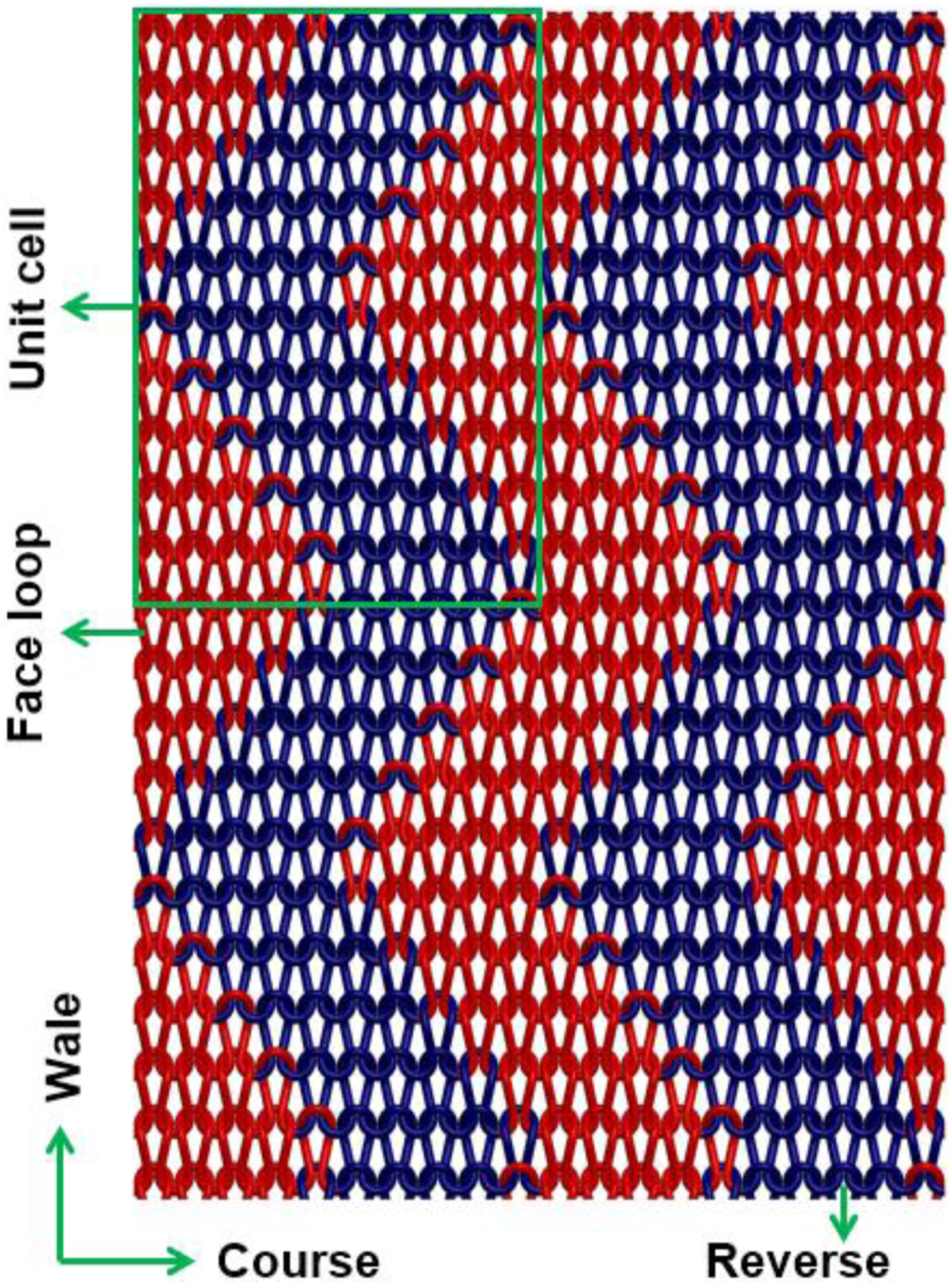
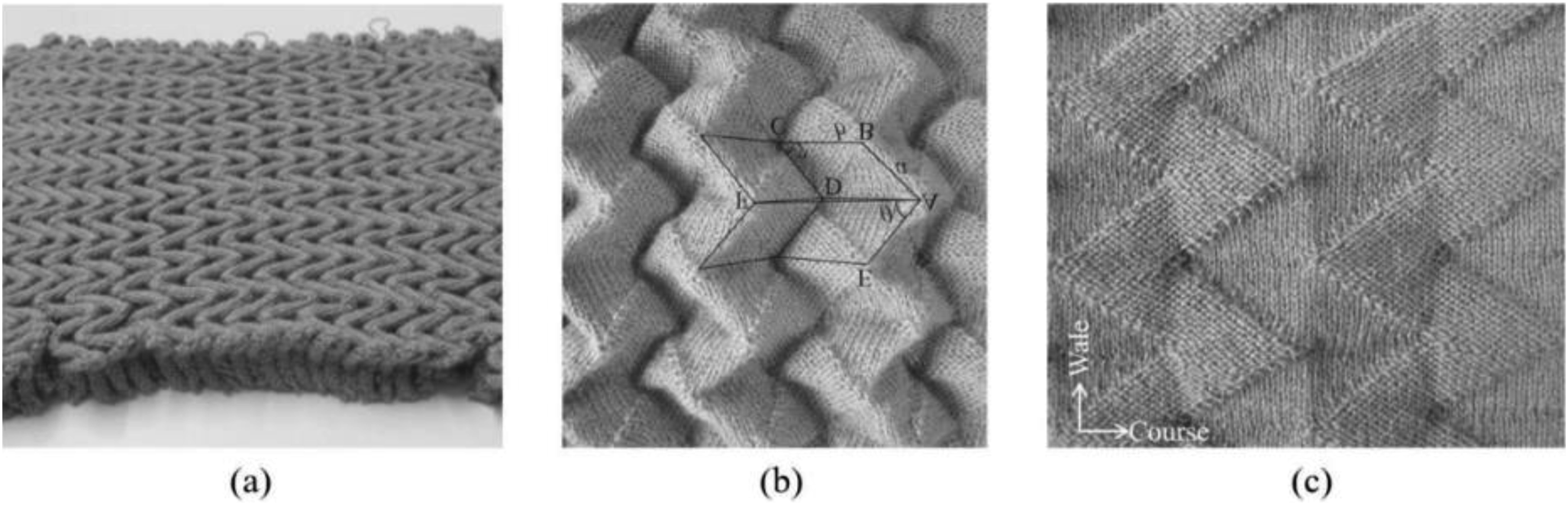
The folded knitted NPR fabrics are designed on the basis of an origami structure, achieved through the combination of the face and back loops within the fabric’s structural configuration, as illustrated in Figure 30. Even though the unique knitting pattern starts off as flat due to weft-knitting technology, the fabric is inclined to curl and adopt a three-dimensional shape after the knitting process. This occurs because of the structural imbalance between the face and reverse loops. When the fabric is stretched in a single axis, the folded structure unfolds and may extend in the perpendicular direction, creating an in-plane NPR behaviour, as demonstrated in Figure 31. Additionally, researchers have created various alternative forms of weft-knitted NPR fabrics, such as those with the rhombus-shaped grid re-entrant,
143
re-entrant hexagon,
144
and rotating and double-headed arrow structures.
145
Origami geometrical structure.
146
Auxetic weft-knitted fabric in foldable structure with different phases: (a) no tension, (b) under tension, (c) completely extended.
146
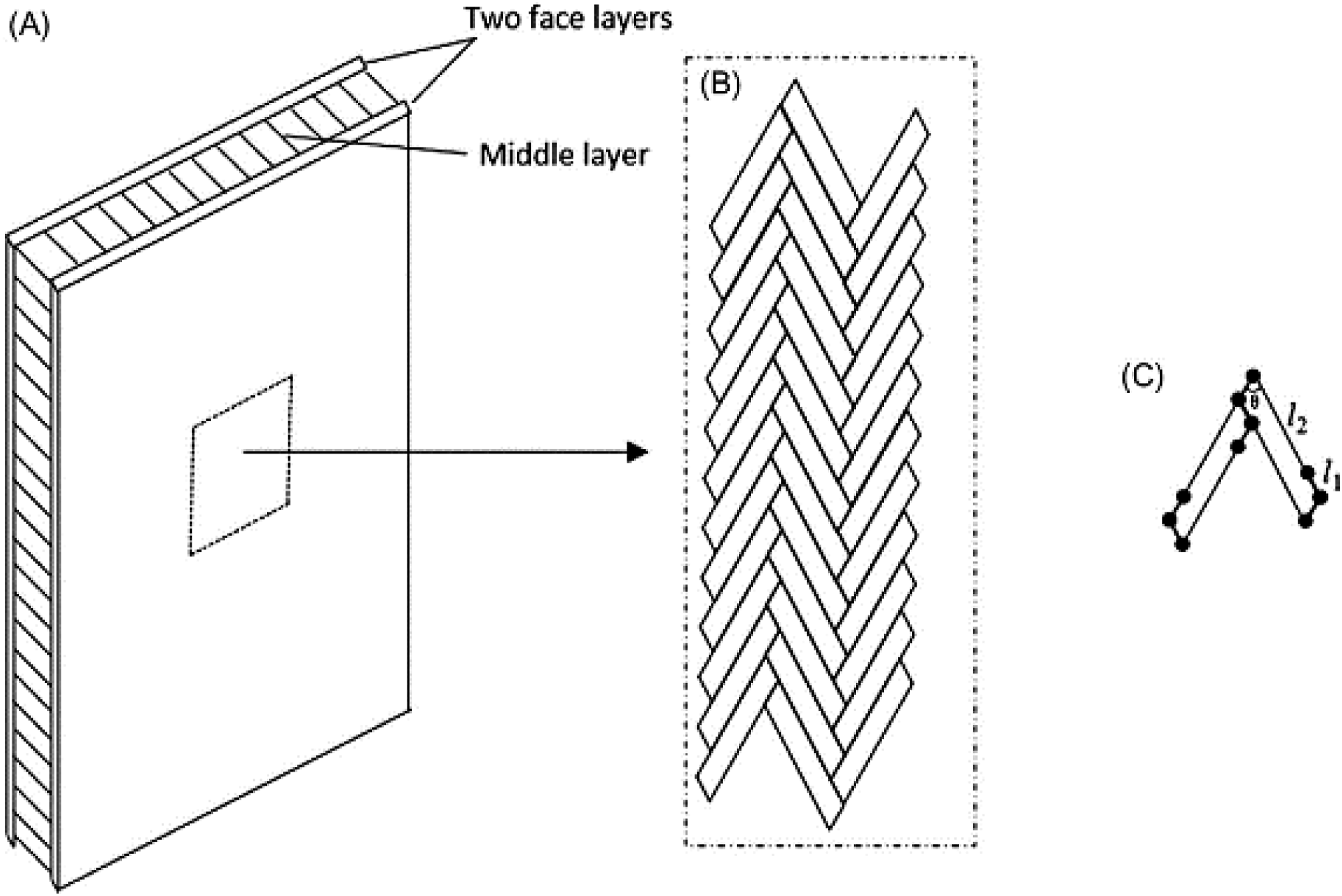
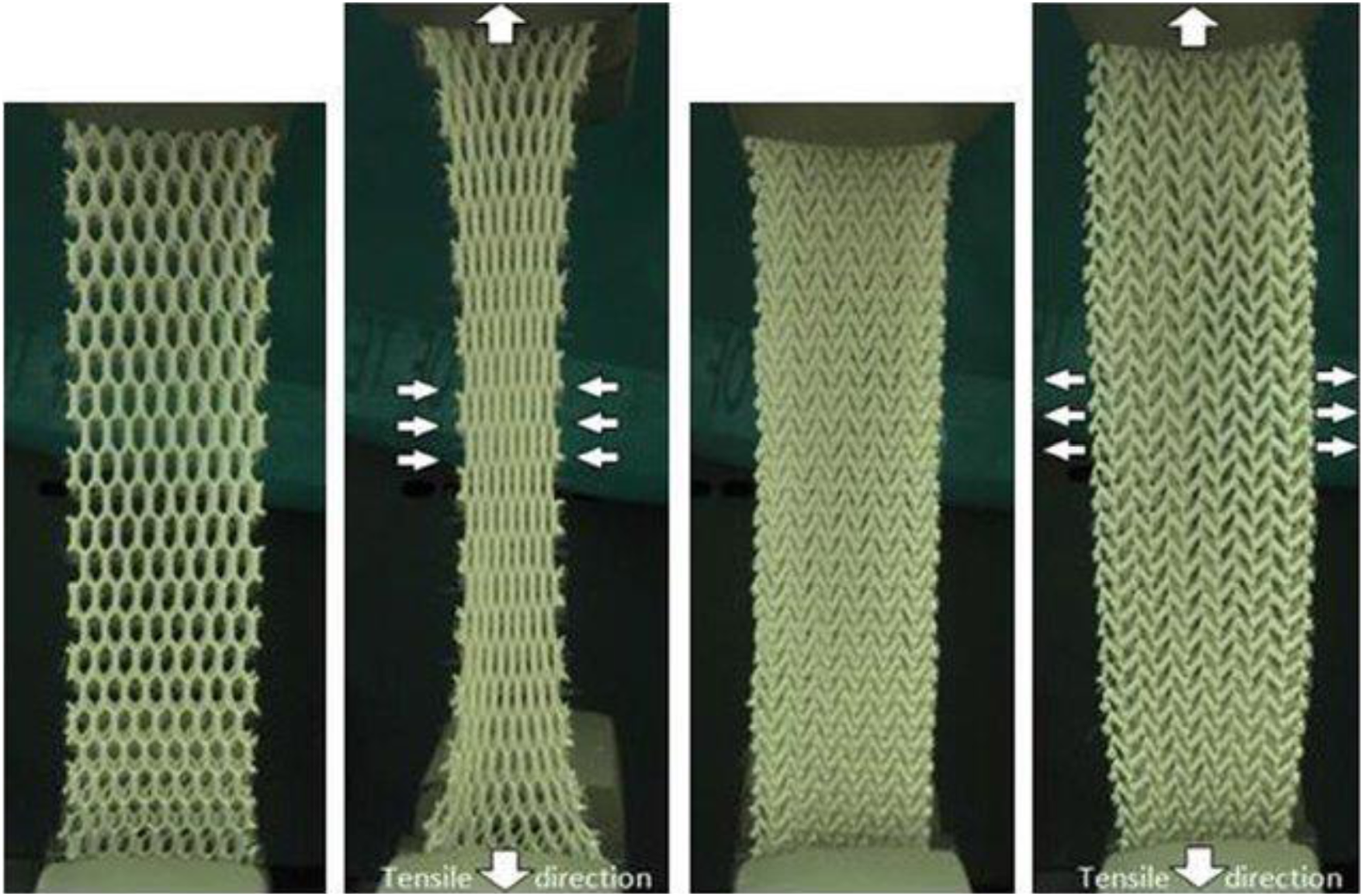
Along with weft-knitted, warp-knitted designs may likewise be employed to create auxetic structures. Wang et al. (2014, 2017) developed 3D warp-knitted fabrics using spacer structures, as illustrated in Figure 32. These garments demonstrated NPR behaviour across all planes and the thickness dimension. However, the highest NPR effect was observed when the fabric was stretched in the weft orientation, as demonstrated in Figure 33. Furthermore, these fabrics exhibited exceptional moldability and compressive properties, rendering them particularly well-suited for use in protective clothing for humans.147,148 Auxetic warp-knitted spacer fabric: (a) the muti-layer fabric, (b) structure of face layers (b), (c) structure of unit cell.
147
Comparison between conventional and auxetic spacer fabrics.
147
Auxetic textile composites
Auxetic textile preforms, which include auxetic fibres, yarns, and fabrics, may serve to create NPR textile composites with a range of different properties. To enhance the auxetic effect and mechanical properties in both AWFs and AKFs for use in industrial sectors, researchers have proposed using advanced-performance yarns, optimizing the production process of AWFs and AKFs, and utilizing these AWFs and AKFs for composite fabrication. In this section, we will also introduce auxetic textile composites composed of AWFs and AKFs. Miller et al. (2009) were the first to create a composite laminate with an NPR using auxetic woven fabrics constructed from double helical yarns and a silicone rubber gel matrix. In their study, the wrapped yarn was Ultrahigh Molecular Weight Polyethylene, while the core yarn was made of polyurethane. The designs were constructed using a plain weave, with the DHY used for the weft and meta-aramid yarn used for the warp. 111 Subsequently, in 2012, Miller et al. developed NPR composite laminates by saturating AWFs made from DHY with polyester resin. To create the DHY, they used a core made of monofilament nylon yarn wrapped in a low tow count carbon yarn. 124 Liu (2019) used Miura-origami patterns featuring a unique arrangement of the face loops and back loops in a zig-zag form to fabricate auxetic knitted fabrics for impact-protective applications. 149 Three types of yarns, specifically aramid, polyester multifilament, and low-melting-point polyester multifilament yarns, were employed. Steffens et al. (2020) examined and analysed the effect behaviour based on the energy approach of weft-knitted configurations, including a jersey and an NPR composite using advanced-performance yarns such as para-aramid and hybrid designs. They effectively transferred the NPR from the reinforcing NPR textile to the composite, demonstrating enhanced total energy absorption under various impact loads compared to jersey-reinforced composites. Furthermore, incorporating high-stiffness filaments in the manufacture of the NPR weft-knitted garments significantly improved the NPR in the composite, outperforming hybrid materials. 150
Applications of auxetic materials and structures in the automotive industry
This section presents researched applications of auxetic materials in the automotive industry, namely non-pneumatic tyres, crash boxes, font bumper systems, jounce bumpers, and vehicle doors. The auxetic structure is integrated into the non-pneumatic tyre structure to provide greater flexibility and adaptability on different road surfaces. This not only enhances driving safety but also improves the driving experience by reducing vibrations and noise from the road. In the realm of crash safety, auxetic materials find their place in the construction of crash boxes and front bumper systems. These materials absorb impact energy more efficiently than conventional materials, mitigating collision damage and safeguarding vehicle occupants. Moreover, auxetic materials are utilized in jounce bumpers, contributing to smoother rides by effectively dampening shocks and vibrations, thus enhancing overall vehicle comfort and handling. Additionally, vehicle doors featuring auxetic materials benefit from increased resistance to impact and deformation, bolstering structural integrity and ensuring passenger safety in the event of a side collision.
Non-pneumatic tyre
Dunlop introduced the first commercial pneumatic bicycle tyre in 1888. While pneumatic tyres are lightweight, energy-efficient, and have low stiffness and contact pressure, they face issues like susceptibility to flats, maintenance needs, and complex manufacturing. As a result, engineers have developed non-pneumatic tyres (NPTs), which replace air with elastomers or polygon-like spokes that endure cyclic tension-compression loading. 151 These spokes require high stiffness and elasticity, which conventional materials struggle to provide. However, materials displaying an NPR offers a promising solution to overcoming these challenges.
The first to mention is the study of Ju et al.
152
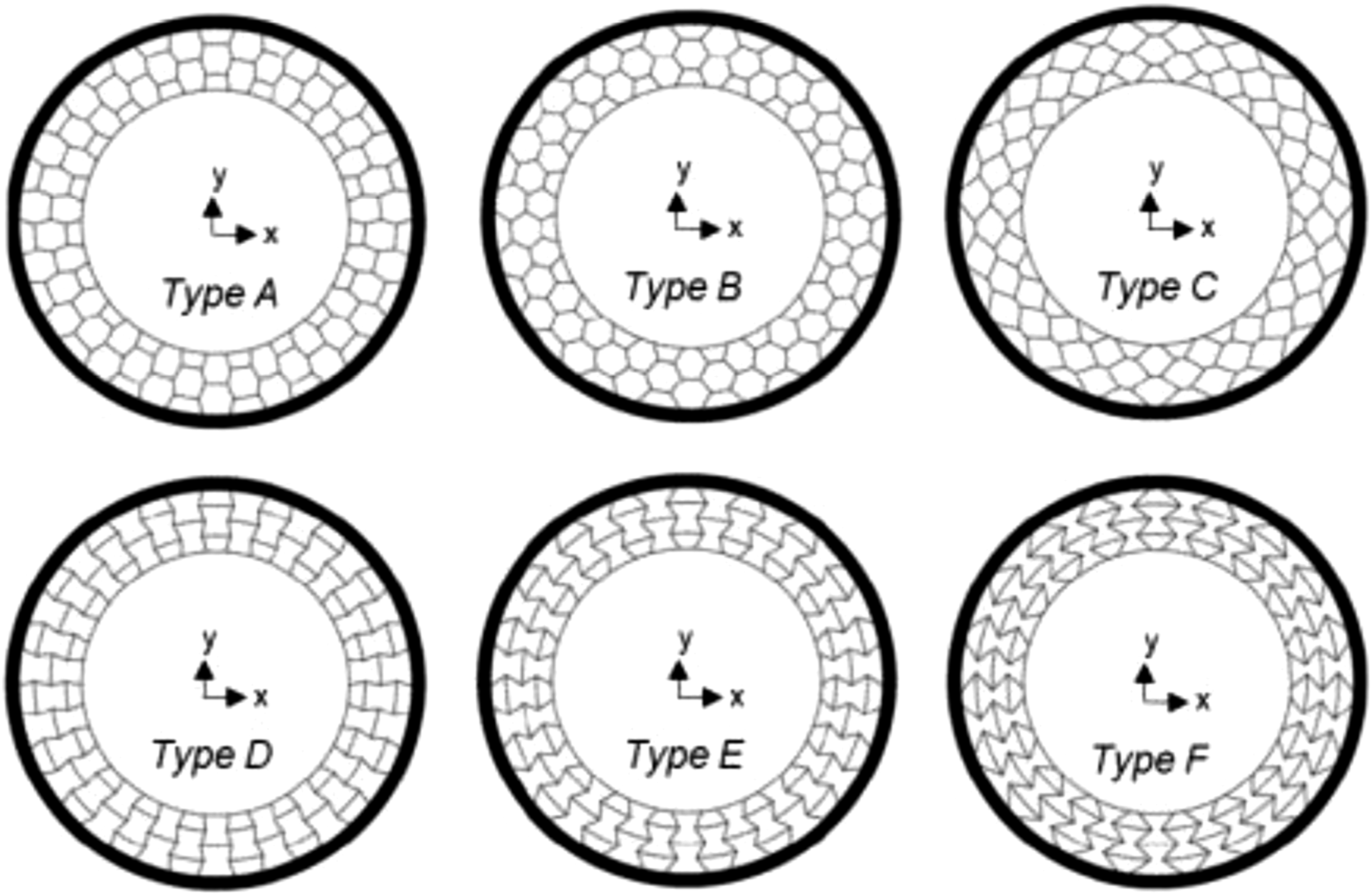
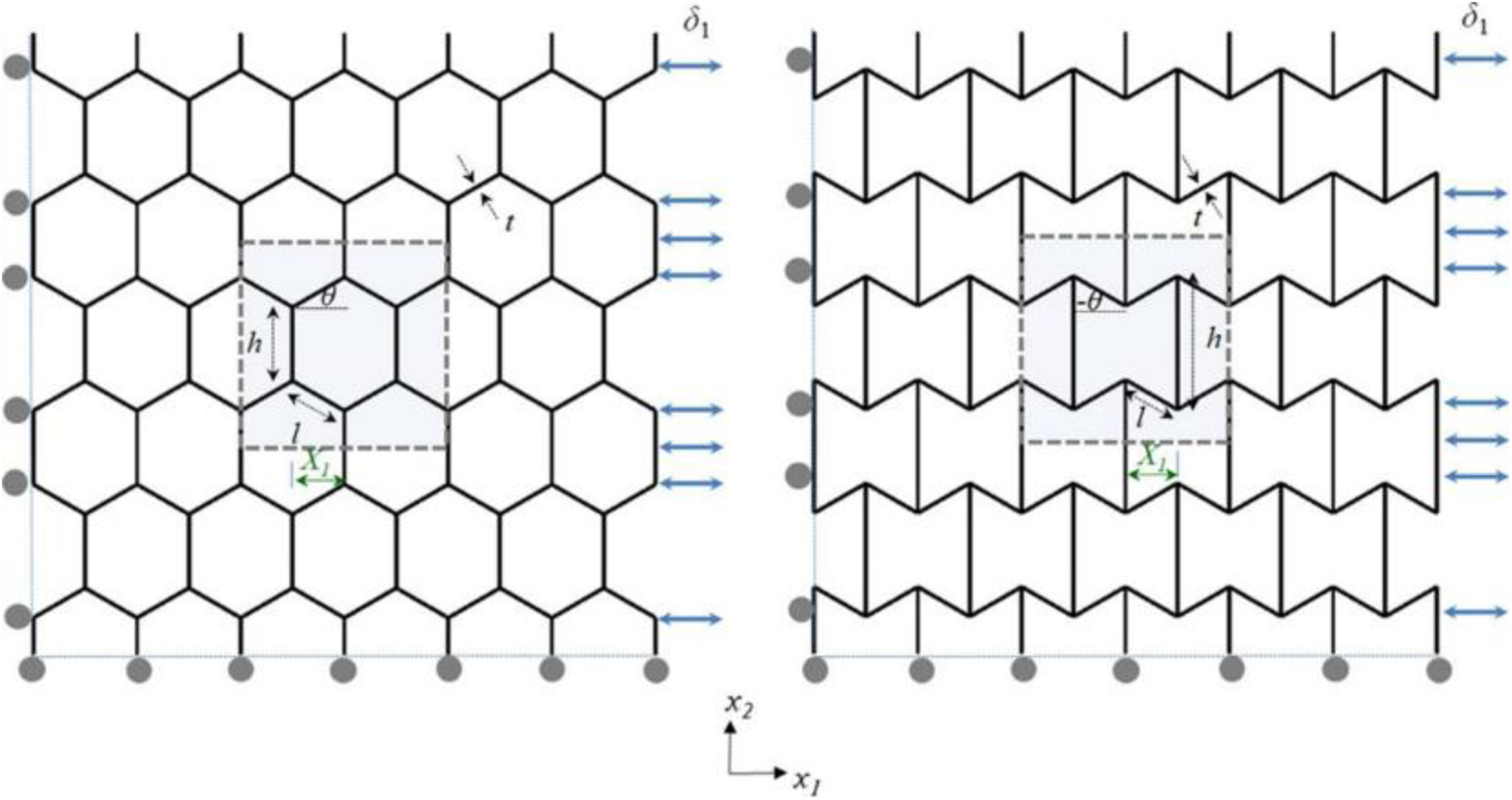
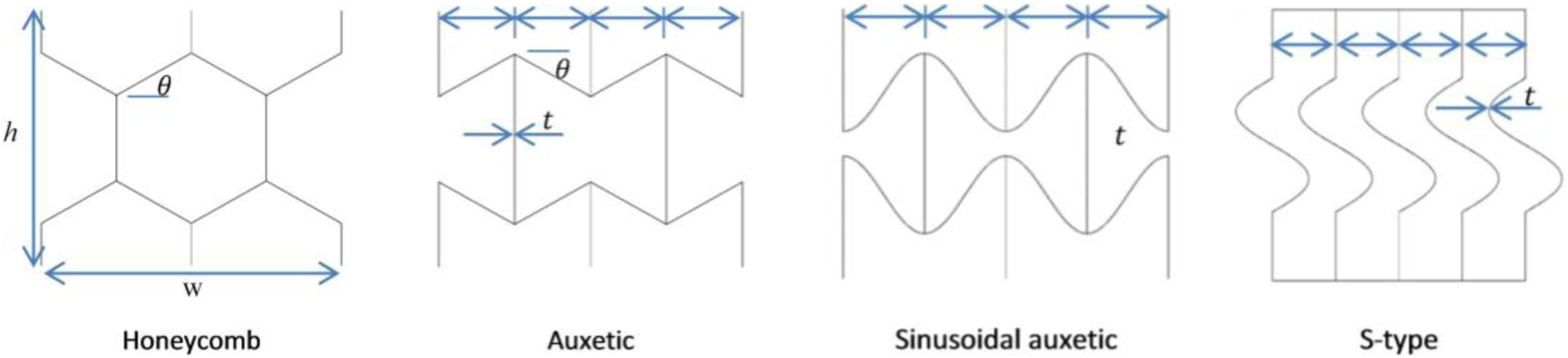
The study employed finite element methods to design honeycomb spokes for NPTs as a replacement for air in traditional tyres. They tested six honeycomb configurations, including regular and auxetic types (Figure 34), finding that the proportion of the unit cell’s length to its height (l/X1) significantly affected NPTs flexibility (Figure 35). Regarding the cell angle, it can be divided into two cases. In the case where honeycomb geometries have the identical unit cell wall thickness (t), the NPR spokes exhibited a force-deformation behaviour similar to conventional counterparts. An enhancement in the cell angle θ extent induced in-plane adaptability, leading to a reduced reaction force. Building on this foundation, Shankar P et al.
153
optimized the meso-structure of NPTs to meet specific design requirements. They developed a new S-type structure (Figure 36) and applied optimization algorithms such as particle swarm, genetic, and FAST–SIMPLEX. The results show that the optimised S-type satisfies the criteria of 10% shear flexure at a 10 MPa equivalent shear modulus with a wall thickness of 0.411 mm and a peak value of 0.608. Besides, the study also showed that FAST–SIMPLEX algorithm effectively identified the parametric scenarios that optimise the shear flexibility for a specified equivalent shear modulus across meso-structures. The regular (Types A, B, C) and auxetic (Types D, E, F) honeycomb spokes.
152
The hexagonal honeycombs unit cell.
152
Four meso-structure configurations.
153
Advancing this research, Yoo S. et al.
154
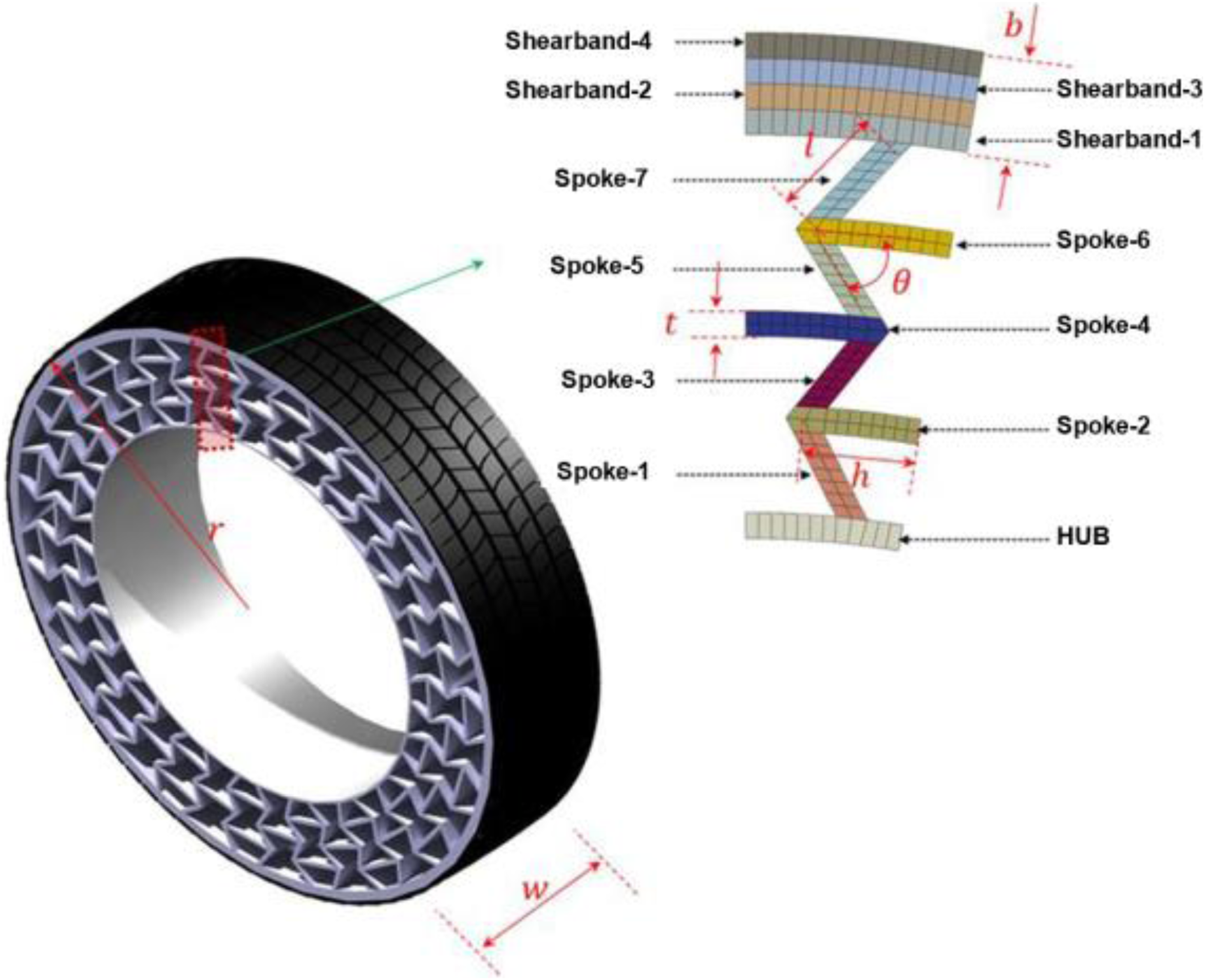
used a heat-mechanics model to assess heat increase in an auxetic with re-entrant hexagonal spokes (Figure 37). By combining deformation-related hysteresis with thermal transfer modelling, they successfully developed a numerical tool capable of evaluating both rolling energy dissipation and the resulting internal thermal production in a non-pneumatic tyre. Finally, Wu TY et al.
155
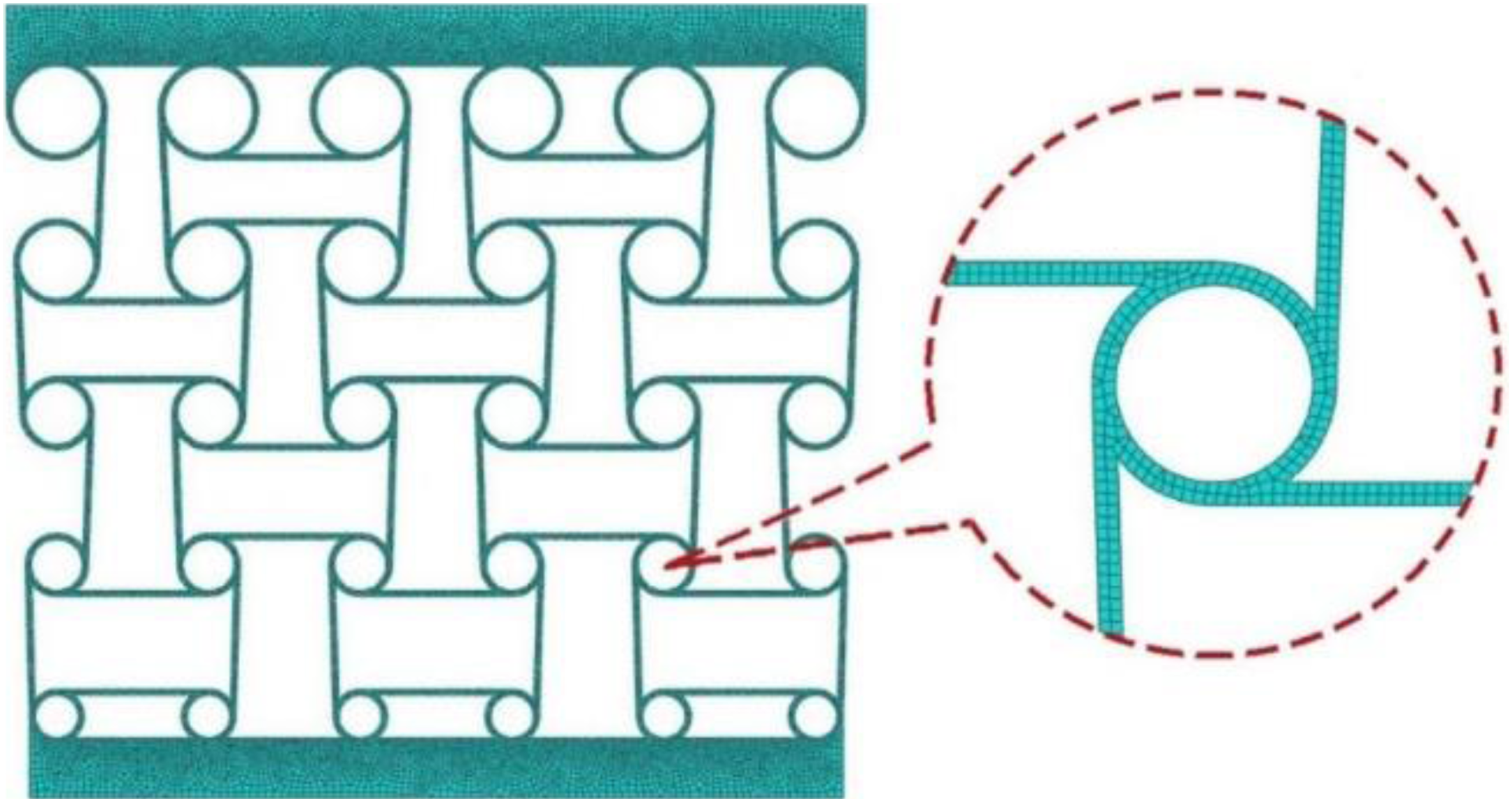
introduced a NPTs design incorporating a gradient anti-tetra-chiral structure, replacing traditional pneumatic components. Through theoretical and simulation analyses, they confirmed that this structure has a high load-carrying capacity and can support various engineering applications (Figure 38). Together, these studies progressively enhanced the structural, optimization, and thermal analysis aspects of NPTs, establishing a solid foundation for the practical design and application of non-pneumatic tyres. The NPTs with a re-entrant hexagonal spoke.
154
The gradient anti-tetra-chiral structure model.
155
Crash box
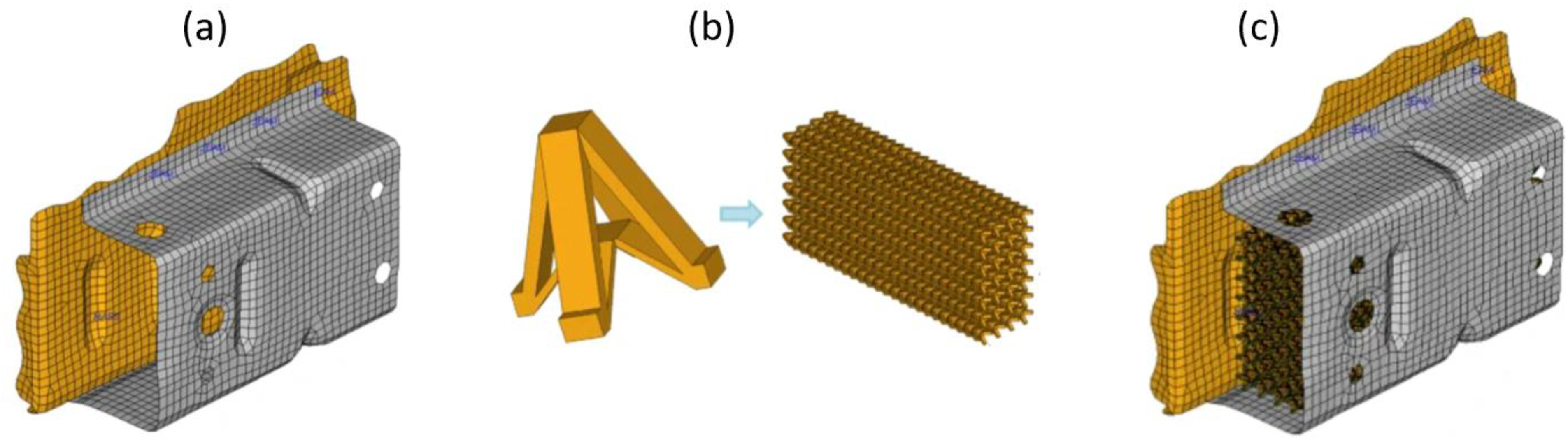
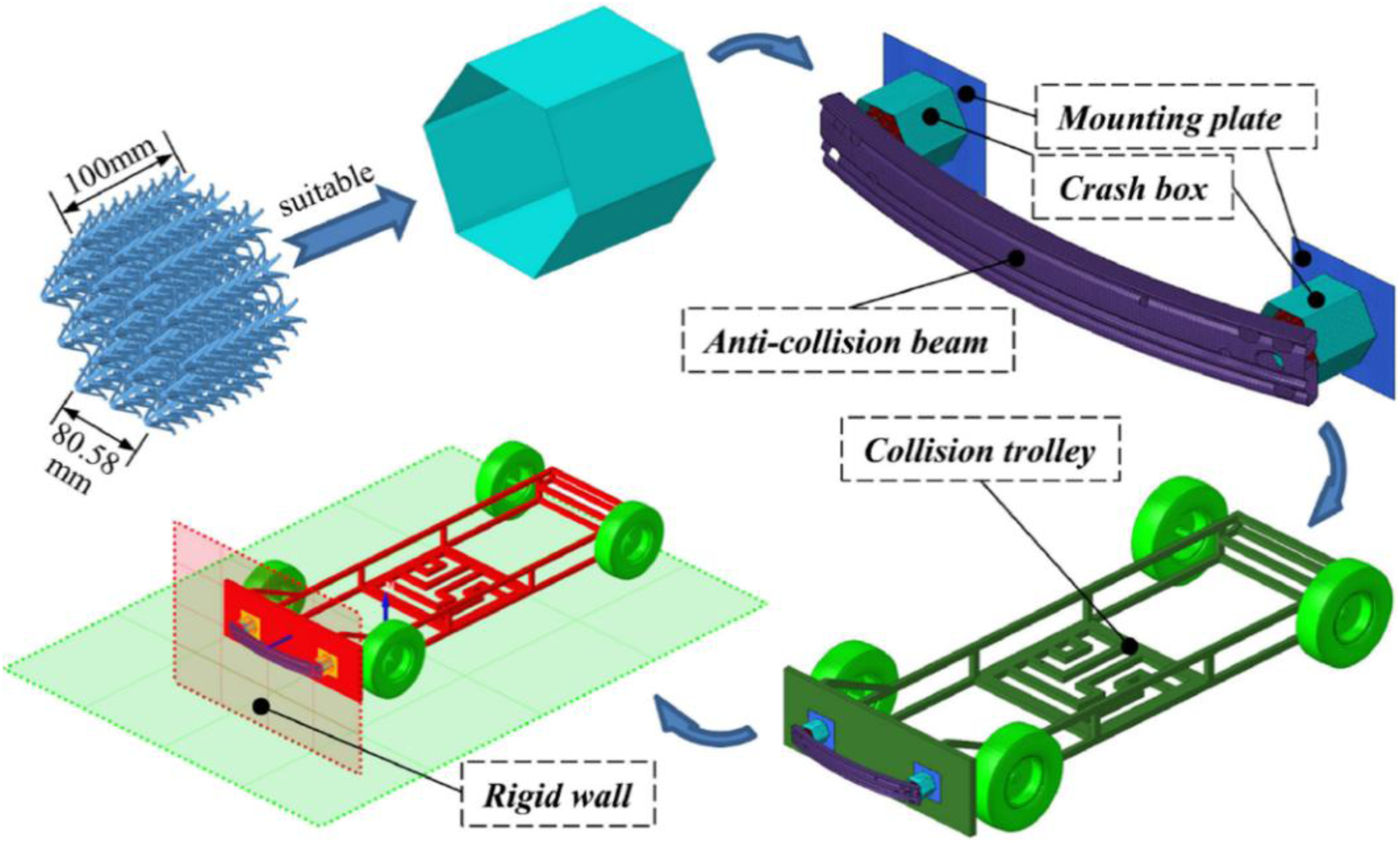
The crash box is a key component in vehicle crashworthiness, significantly impacting energy absorption. While traditional optimization methods for crash box design face limitations due to restricted design space, recent studies have introduced innovative designs. These new designs leverage the unique deformation and energy absorption characteristics of materials with a negative Poisson’s ratio, improving the energy absorption performance of conventional crash boxes. In the research conducted by Zhou et al.,156,157 a ground breaking NPR crash box was designed using a multi-objective genetic algorithm. This design integrates an NPR structure-filled core with a traditional crash box (Figure 39). A parameterized model was created for efficient optimization, validated against a traditional finite element model. Using the non-dominated sorting genetic algorithm-II, the team optimized the NPR cell structure, significantly improving crash box performance. The study demonstrates that combining parameterized modelling with multi-objective algorithms effectively enhances crashworthiness. FEM model: (a) the traditional crash box; (b) 3D NPR cell structure; and (c) the NPR crash box.
157
Other studies have also applied auxetic structures in crash box designs to improve crashworthiness. Wang et al.
158
developed a crash box with a 3D NPR core based on a hexagonal cellular structure. Simulations showed that this design enabled smooth, controllable deformation for effective energy absorption, optimized through a tailored algorithm. Similarly, Fengxiang Xu et al.
159
created an NPR honeycomb crash box inspired by horn structures, known for impact resistance. Their finite element analysis indicated that this biomimetic design, when compared to traditional shapes, significantly improved crashworthiness. Further advancing the field, Ziyu S. et al.
160
introduced a 3D double-arrow structure based on the hexagonal crystal system (Figure 40). Using experimental, theoretical, and numerical methods, they examined deformation, fracture, rebound, and energy absorption. The findings revealed that the hexagonal dual-arrow configuration featuring NPR showed increased stiffness and plateau strength, allowing for superior capacity to absorb energy during axial compressive loading, despite reduced deformation and plateau enhancement area. Moreover, comparison with conventional crash boxes via trolley collision experiments demonstrated the auxetic crash box’s exceptional ability to dissipate energy and notable enhancement in crashworthiness. The auxetic crash box model in the frontal bumper.
160
Font bumper system
Statistically, front collisions are the most common in automobile accidents.
161
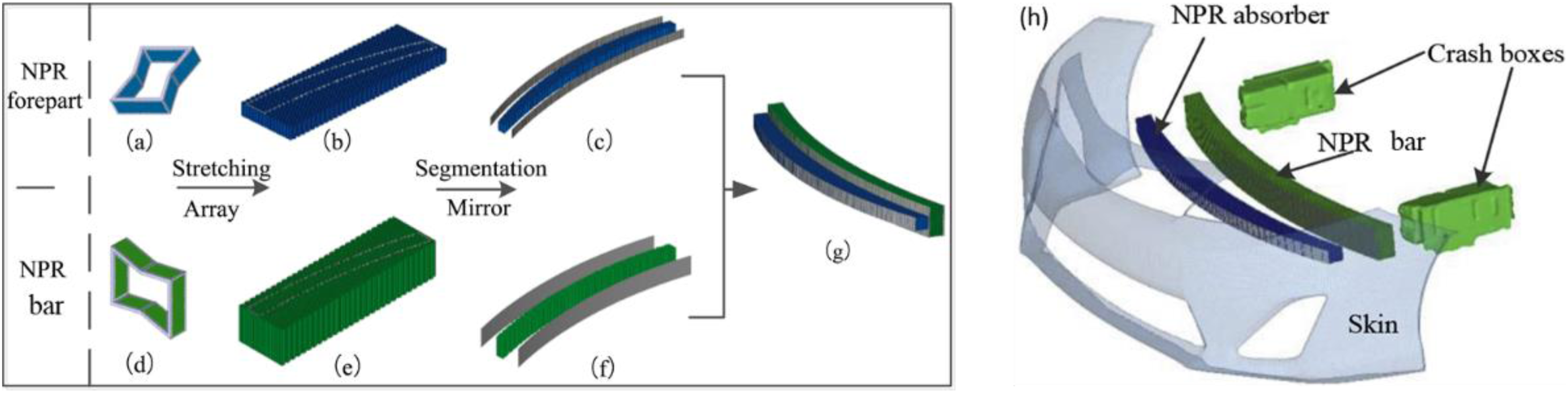
In these situations, the bumper system, positioned at the vehicle’s forefront, serves as the initial point of impact with an object to protect both the vehicle and pedestrians. Therefore, the bumper system needs to exhibit sufficient stiffness and strength to ensure it absorbs kinetic energy from the collision. However, meeting all these requirements simultaneously proves challenging for traditional bumper systems. Recognizing this limitation, Wang CY et al. studied an innovative bumper system comprising a auxetic bar and an auxetic absorber (Figure 41). The auxetic bar aims to enhance the vehicle’s frontal impact resistance, incorporating numerous inner hexagonal cellular structures arranged periodically. Simultaneously, the auxetic absorber, positioned between the bumper bar and the outer panel, is designed to safeguard pedestrians’ lower legs in collision accidents. Simulation results indicate that the overall efficiency of the auxetic bumper system, optimised through electronic search algorithms, has been notably enhanced, showcasing excellent performance in both pedestrian safety and vehicle impact resistance.156,162,163 The modelling of auxetic absorber: (a) unit cell, (b) blank, (c) thin shells; and The modelling of auxetic bar: (d) unit cell, (e) blank, (f) thin shells; (g) auxetic bumper; and (h) auxetic front bumper system model.
163
Jounce bumper
The jounce bumper (Figure 42(a)), initially designed to prevent full compression of suspension components during sudden impacts from heavy loads, potholes, curbs, or road obstacles, has become a key component of modern vehicle suspension systems. Typically made from hyper-elastic materials like rubber or polyurethane, these bumpers are essential for absorbing impact energy and improving noise, vibration, and harshness performance. They can also function as auxiliary compression springs when approaching the maximum load.164,165 Achieving an optimal load-displacement curve is critical for effective suspension design. However, traditional jounce bumpers often fail to meet these requirements, prompting the exploration of materials with an NPR as a potential solution.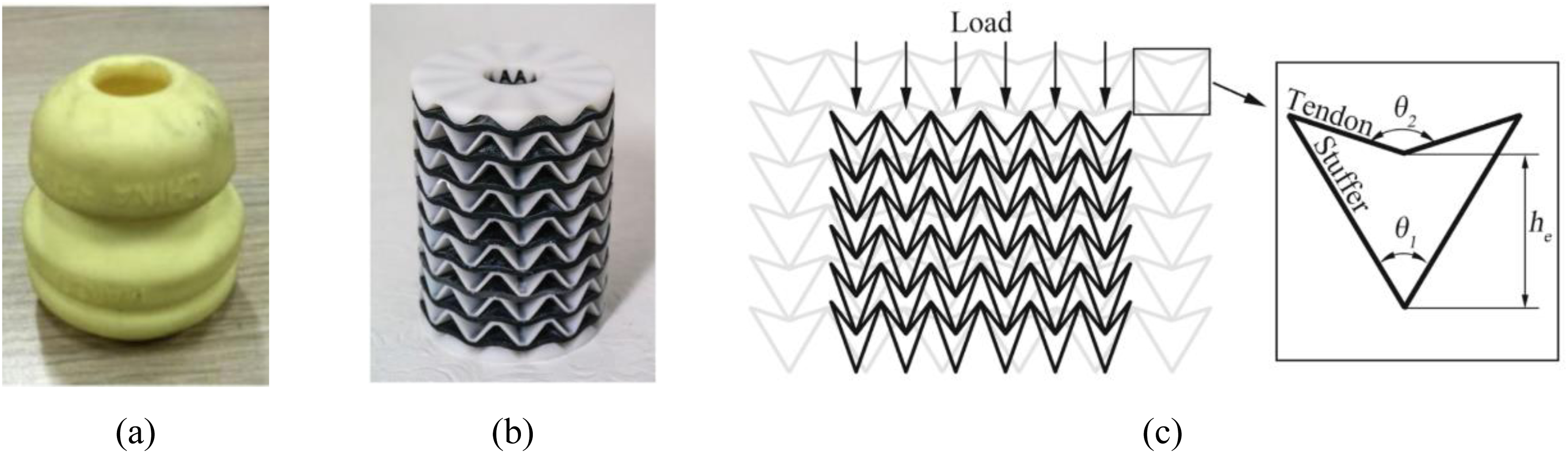
Wang et al. published a series of studies on this problem. First, they used both numerical and experimental methods to fabricate NPR jounce bumpers with double-arrow structures (Figure 42(b) and (c))166,167. Then, Wang et al. investigated how design features and material properties affect the load-deformation relationship of NPR jounce bumpers. They concluded that factors such as the number of cells and layers notably influence the displacement at which hardening occurs, with all factors impacting the structural rigidity across various deformation phases. 168 In another study, they incorporated NPR jounce bumpers into digital models of double wishbone and multi-link suspension systems for single-wheel motion tests. The findings showed that NPR jounce bumpers produced a more favourable wheel force versus jounce height profile without the need to adjust free travel, optimizing suspension space. 169 Additionally, comfort tests under bump road conditions were conducted using an optimization approach combining a hybrid Genetic algorithm and Sequential Quadratic Programming. Virtual ride simulation results show reduced maximum vertical acceleration, improving the vehicle’s overall ride comfort. 170
Vehicle door
The standard car door, made of a window, outer and inner panel, frequently faces issues of unstable deformation and insufficient energy dissipation during the explosion impact event. This can lead to excessive penetration of the inner panel into the cabin, resulting in severe passenger injuries. Traditional solutions, such as structural optimization or adding energy-absorbing materials like aluminium foam or honeycomb, have limitations due to design space and material constraints. To address this challenge, Wang et al.
171
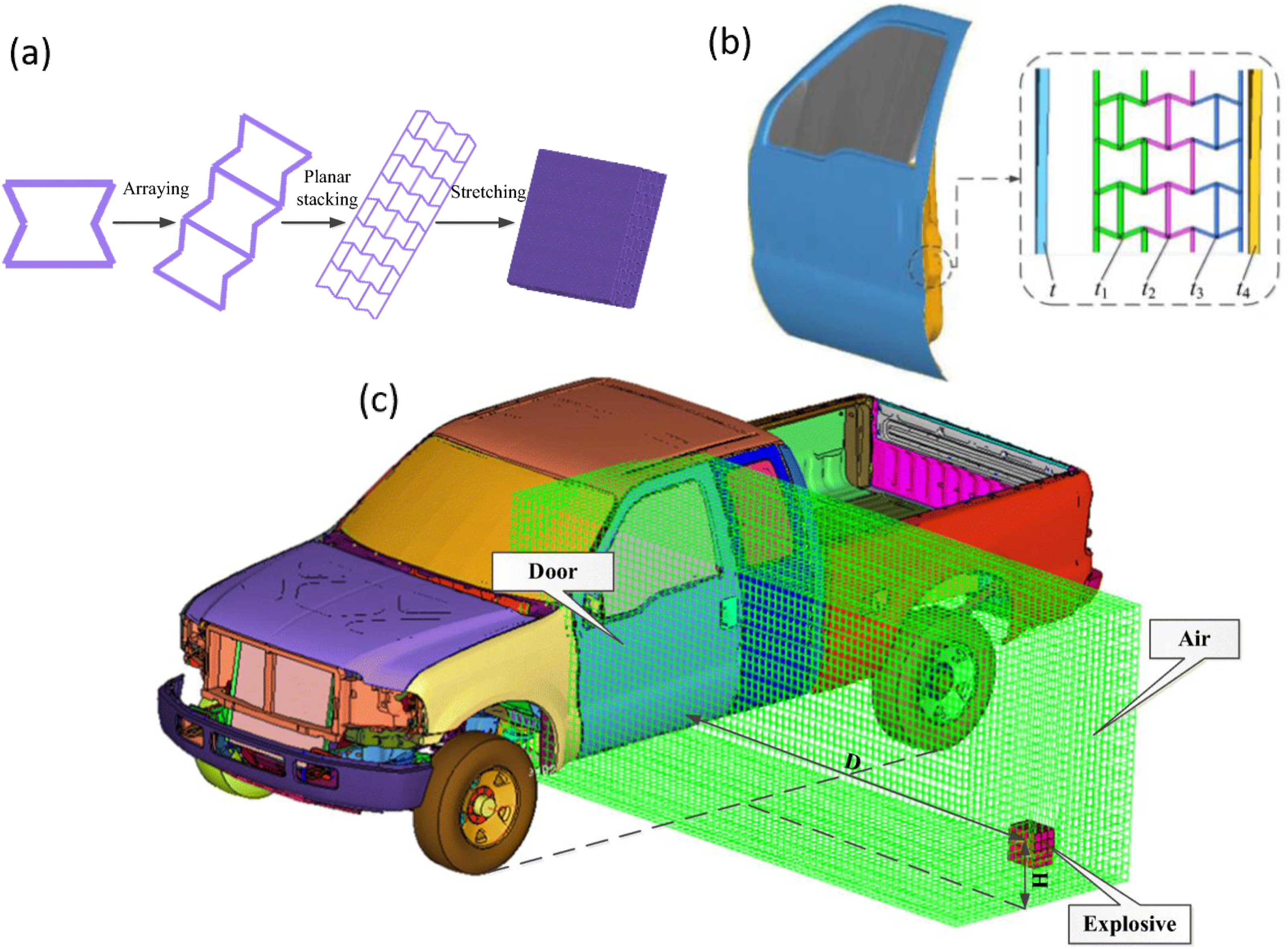
introduced the concept of an NPR explosion-proof door. This design incorporates an NPR material with a graded composition the inner core section among the outer and inner panels, with varying thicknesses in different gradient layers to optimise energy absorption and impact resistance (Figure 43). Mathematical models were developed to optimise objectives such as inner panel penetration, energy dissipation of the NPR core structure, and the mass of the door. Then, utilising an adaptive hybrid multi-objective particle swarm optimization algorithm, a comprehensive optimization process was carried out for the new explosion-resistant door. Simulation results demonstrated significant improvements over traditional doors, with reduced inner panel intrusion by 9.5%, increased total energy absorption by 3.5%, decreased inner panel acceleration by 34.1%, and enhanced energy absorption of the NPR inner core structure by 9.1%. Additionally, a slight reduction in the door’s mass was achieved post-optimization. These results provide important guidance for the development and optimization of explosion-proof doors. Modelling of (a) auxetic internal structure; (b) auxetic explosion- resistant door; and (c) explosion simulation using FEM.
171
Challenges and potential applications of auxetic materials and structures in the automotive industry
The challenges
Through the aforementioned research, it is clear that auxetic materials and structures possess significant for automotive applications. However, there are some challenges that arise for the application of auxetic materials in automobiles as show below.
For existing research
Current studies on auxetic materials remain fragmented and lack cohesive integration. Research efforts on Non-Pneumatic Tyres, crash boxes, and bumper systems are still in their infancy when it comes to industrial implementation. Most other studies are confined to theoretical exploration, simulations, or conceptual frameworks. This limitation stems from the complexity of auxetic material production technologies, which, during the initial stages of industrialization, require substantial financial and human resources.
For potential applications
Auxetic textiles hold significant potential for applications like seatbelt webbing, airbag fabrics, and car seat covers. However, they have not been fully explored in these contexts yet. This is largely because traditional textile materials have been used to manufacture these components and have generally performed adequately, leading to a reluctance to adopt new materials without clear advantages. As a result, the challenge lies not only in developing manufacturing technologies for auxetic textile products but also in convincing investors, who may lack sufficient motivation to adopt these innovations. This underscores the need for robust scientific research to demonstrate the feasibility and cost-effectiveness of such investments compared to the potential benefits.
The potential applications
Despite these challenges, they also offer opportunities to guide future research directions. At the same time, with advancements in production technologies, optimizing costs for the industrial-scale manufacturing of auxetic materials is entirely feasible. Some development directions and potential applications of auxetic materials and structures in the automotive industry can be highlighted as follows. (1) Prioritizing research on technology and production processes to bridge the gap between theoretical understanding and practical implementation, such as casting, welding and mechanical assembly processes. (2) Conducting further theoretical and experimental investigations into various types of negative Poisson’s ratio structures to elucidate their energy absorption and deformation mechanisms, going beyond the current focus on the honeycomb re-entrant structure. (3) Textile materials, including knitted, woven, and nonwoven fabrics, play a significant role in the automotive industry by being applied to various surfaces of the car interior. Textile materials find extensive use in automobiles in the following areas: upholstery (front seat, rear seat, X-seat), carpets, pre-assembled interior components including door kick panels, boot linings roof linings and insulation, tyres, safety service (seatbelt and airbag), filter materials, and acoustic absorption in the engine area.172,173 Many applications require distinct physical and mechanical characteristics, and exploiting the benefits of auxetic textiles in various applications will create new opportunities for the vehicle industry.
Auxetic seat belt webbings
The first thing to mention is the seatbelt webbings, an important part of seat belt systems, often known as safety belts, have become a standard feature in all types of cars and other vehicles. The seatbelt webbings have crucial features such as good retraction behaviour, high load-bearing capacity, abrasion resistance, temperature resistance, the ability to be removed and reinstalled, UV resistance, low weight, flexibility, and extensibility. Especially, webbing em|ployed in seat belts for vehicles must possess strong absorption or attenuation of the impact force imparted to the person during an accident. 174 Therefore, the seat belt systems can keep occupants stable in their seats when the vehicle stops suddenly or experiences an impact, preventing sudden backward movements and reducing the risk of injury. According to statistics from the National Highway Traffic Safety Administration, in 2017 seat belts saved approximately 14,955 lives and could have saved an additional 2,549 lives if individuals had been wearing seat belts at the time of the accident.
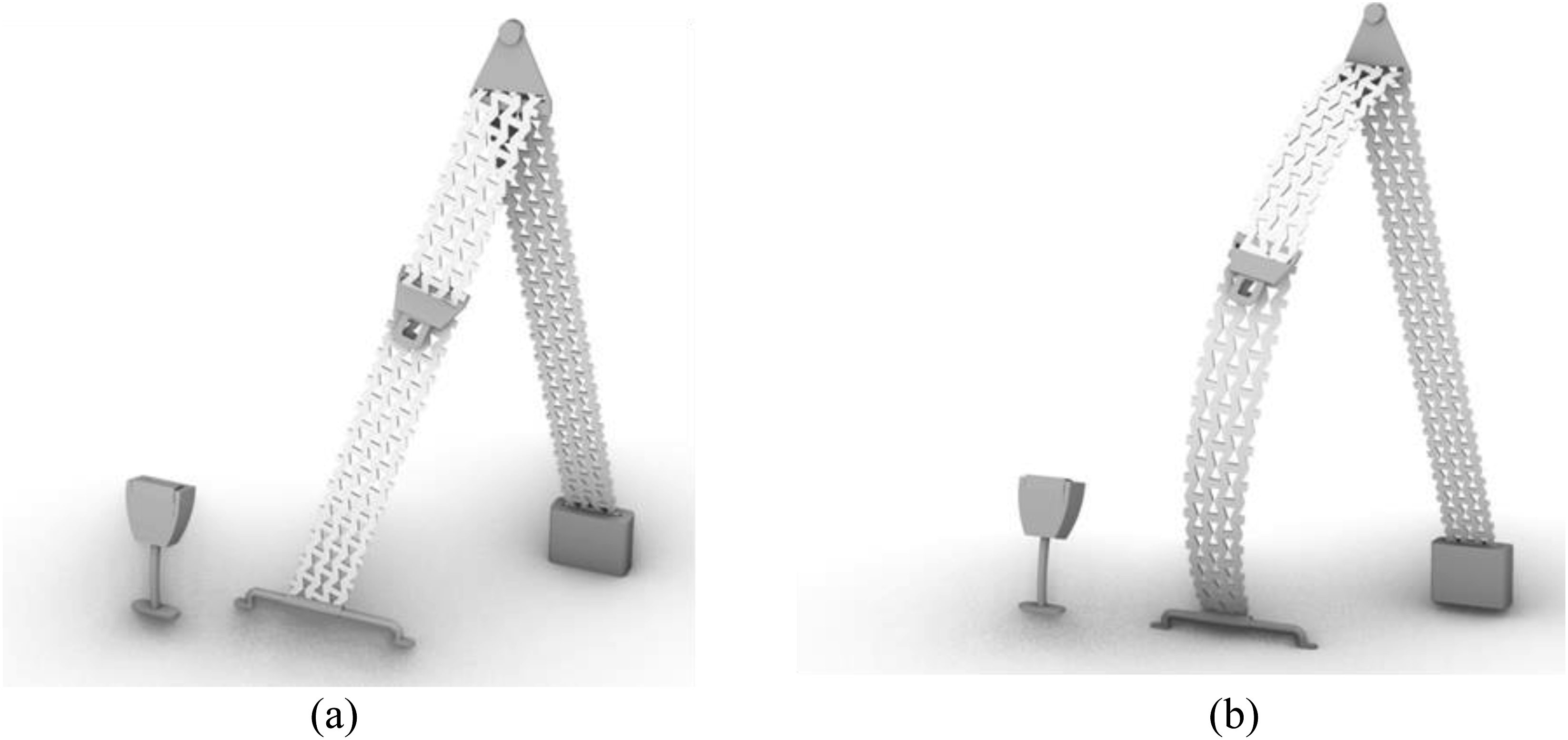
However, despite their benefits, safety belt webbings have been known to cause injuries to occupants. In accidents, the seatbelts are tightened, leading to a decrease in the width of the webbing, leading to a decrease in the load-bearing area, and a sharp increase in the force exerted on the body of the sitter and driver, causing mechanical injuries such as chest fractures, shoulder fractures, and internal organ damage. This weakness of current webbings can be overcome by replacing traditional materials with materials with negative Poisson’s coefficient, a material with energy absorption properties and it will expand in the original square direction with the direction of force applied to it. That counterintuitive deformation increases the contact area between the seat belt and the occupants’ body, helping to disperse force and reduce injury. As in the study by Chang Q. and colleagues
175
proposed a design of three-point seat belt webbings with auxetic characteristics (Figure 44). The study uses a finite element analysis model with a seatbelt webbing model and a simple structure of a human chest to simulate the occupant protection performance of the auxetic seatbelt and compare it with the performance of a traditional seat belt webbings. The above simulation results show that auxetic webbing properties are better able to protect vehicle occupants in a collision than traditional webbings. Under the condition of equal resistance, the auxetic seat belt becomes wider under tension, the contact area with the chest-shaped impact object increases, and the contact stress decreases, thus minimising compression deformation. 3D auxetic seatbelt model: (a) in a rest state; (b) in expanded state.
176
While research on NPR seatbelts is currently limited to simulation, it is clear that the seatbelt material used does not correctly reflect real-world uses, which commonly use polyester and nylon fibre. As a result, NPR seatbelt designs may struggle to maintain durability, longevity, and seamless interaction with other vehicle components. Therefore, it is essential to consider using auxetic textile structures in the design of NPR seatbelt webbings.
Auxetic airbag fabrics
Next, airbags offer additional protection and are one of the most important automotive safety features. They are primarily intended to deploy in crashes to protect the driver and passengers and limit injuries. However, injuries can still occur when a person is exposed to an airbag at a high speed and with a high impact force while the bag is completely inflated. To avoid catastrophic injuries, it is necessary to improve the performance of airbag cushions. As a result, the textile material used in the airbag is critical to achieve this. To function properly, airbag materials must have high mechanical qualities and meet specific quality standards. These parameters include having a small fabric thickness, low specific fabric weight, high tensile strength, high tear strength, high elongation, minimal air permeability, high heat capacity, good resistance to ageing, good folding behaviour, enhanced energy absorption, superior coating adhesion, reliability in hot and cold environments, compact packaging, minimized skin abrasion, high temperature heat stability, clear of knots, splices, spots, and broken ends.177–179 If the auxetic structure can be converted into the textile material used to manufacture the airbag, it will greatly reduce possible injuries thanks to the special features of auxetic textiles. Thus, airbags are another prospective application area for auxetic textiles. Exploring the possibilities of auxetic textiles in airbags could lead to substantial advances in car safety.
Auxetic car seat covers
Lastly, passenger safety is not the only important factor when it comes to car travel. Comfort is also crucial, and textile fabrics contribute greatly to achieving this. Car seats that are designed to be ergonomic and keep the body in a proper seating posture are essential, but it is also important to ensure that passengers do not experience bodily fatigue caused by discomfort from prolonged sitting.180,181 The comfort of interaction between the body and seat is largely dependent on the cushioned area, which is usually made up of fabric, and leather. Car seat cover materials must be light and UV resistant, high tear strength, mould resistance, low water porosity for easy cleaning, amazing resilience, and crease resistance to meet the product’s usage requirements.182–185 Furthermore, in addition to the seat cushion, the seat cover fabric must have anti-indentation ability to ensure that passengers do not become tired after sitting in a car seat for an extended period and that the seat surface is not distorted, extending the seat’s life. This problem can be rectified by incorporating auxetic structures into seat cushions and upholstery fabrics. This is a promising use for auxetic textiles, particularly for seat cover spacer fabric.
Conclusions
This article seeks to offer a structured overview of the exciting world of auxetic materials and structures in the automotive industry. Outstanding results are listed as follows: (i) First, the article has outlined the relationship between mechanical parameters and the properties of elastic materials, namely, E, v, G, and K. In particular, the study has highlighted indices such as the TDE index, TPM index, ADF index, and PDF index for assessing the energy absorption capacity and impact resistance of auxetic structures in car accidents. (ii) Second, the study thoroughly presented the structural parameters and deformation mechanisms of typical auxetic cellular structures, including re-entrant, chiral, and rotating structures. This establishes a foundation for the mechanical designs of practical applications and serves as the basis for optimising auxetic structure algorithms. (iii) Third, the common forms of auxetic materials and structures, including auxetic foams, auxetic composites, and auxetic textiles, are extensively discussed regarding their development history and contemporary advancements. Each form possesses distinct advantages in terms of hardness, elasticity, flexibility, and weight. Hence, comprehending these common forms is pivotal as it provides a foundation for their suitable application. (iv) Fourth, the practical applications of auxetic materials and structures in the automotive industry were explored. By illustrating specific examples, the article delves into decoding how auxetic materials and structures are integrated into key structural parts of cars, such as non-pneumatic tyres, crash boxes, font bumper systems, jounce bumpers, and vehicle doors. (v) Finally, the article points out the potential prospects for further applications of auxetic textiles in the automotive industry, including seat belt webbings, airbag fabrics, and car seat covers.
Footnotes
Author contributions
D. Truong: Writing – original draft, Validation, Methodology, Investigation, Conceptualization. H. Nguyễn: Writing – original draft, Validation, Methodology, Investigation, Data curation. R. Fangueiro: Supervision, Writing – review & editing. F. Ferreira: Supervision, Methodology, Writing – review & editing, Formal analysis. Q. Nguyễn: Supervision, Conceptualization, Methodology, Writing – review & editing, Formal analysis.
Declaration of conflicting interests
The author(s) declared no potential conflicts of interest with respect to the research, authorship, and/or publication of this article.
Funding
The author(s) disclosed receipt of the following financial support for the research, authorship, and/or publication of this article: This work has been supported by the European Union under the Next Generation EU, through a grant of the Portuguese Republic’s Recovery and Resilience Plan (PRR) Partnership Agreement, within the scope of the project GreenAuto: Green Innovation for the Automotive Industry – “Agenda Mobilizadora GreenAuto,” aiming the mobilization of the production technologies industry towards of the reindustrialization of the manufacturing industrial fabric (Project ref. nr. 02 – C05-i01/2022; Total project investment: 118.461.005,00 Euros; Total Grant: 2.269.549,89 Euros).

Data Availability Statement
The data can be provided upon request.