




Abstract
This article examines to what extent multiple facets of pre-childbirth job satisfaction affect women's labor market outcomes after first childbirth in the UK. Using the British Household Panel Survey (BHPS) we find that higher levels of overall job satisfaction increase the probability of returning to work sooner, and to the same job, during the sample period. Satisfaction with job security, work hours and the work content - but not with pay – are important determinants of mothers’ employment choices. We discuss the role of job satisfaction on women's ability to combine work and family responsibilities, and related aspects of job quality.
Despite women's rising numbers in higher education and increased earning potential, their employment rates still lag well behind those of men across Western societies, due primarily to women permanently or temporarily withdrawing from the labor market after becoming mothers (Nieuwenhuis et al., 2012). Women's time out of the labor force has important implications for their career opportunities, future economic trajectories and social protection in old age as extended employment breaks may lead to a deterioration of general human capital (Mincer & Ofek, 1982), and firm-specific human capital (Becker, 1962). Women's absence from the labor market after childbirth often results in a motherhood wage penalty, which describes a negative association between motherhood and wages even after accounting for human capital and labor market experience (e.g., Anderson et al., 2002; Avellar & Smock, 2003). Women who return to work part-time may face additional pay and career penalties as a result of lost hours of work (Costa Dias et al., 2018), limited career progression (Harkness et al., 2019) and marginalization within organizations, by assigning part-time workers to less important or less demanding tasks (Golden, 1996). Mothers’ labor market participation after childbirth has been found to depend on a number of individual-level and macro-level aspects (for a recent review, see Newton et al., 2018), such as the economic need for the mother's income (Edwards, 2005), personal preferences and attitudes (Crompton & Harris, 1998; Marks & Houston, 2002; Rahim, 2014), social attitudes (Park et al., 2013), and country-specific family policies - including maternity and parental leave policies - and the availability and cost of childcare (e.g., Kreyenfeld & Hank, 2000; Ondrich et al., 2003; Pronzato, 2009; Saurel-Cubizolles et al., 1999; Ulker & Guven, 2011; Vlasblom & Schippers, 2006). In the present analysis, we consider a potential factor affecting mothers’ labor market attachment which has heretofore attracted little attention in the literature, namely their job satisfaction prior to commencing maternity leave.
The study aims to contribute to the literature by filling a gap in our understanding of how job satisfaction affects women's labor market outcomes in the context of childbearing. Using job satisfaction as a measure of women's work attitudes and their perceptions of current employment conditions, we examine whether higher pre-childbirth job satisfaction increases labor market attachment after childbirth. We argue that women with higher levels of job satisfaction before childbirth are more likely to return to work after childbirth. The contribution and strength of this paper lie in the use of longitudinal data and methods to explore the short- and long-term effects of prior job satisfaction on women's labor market attachment after childbirth. Moreover, we take a more nuanced approach than previous studies by also differentiating between a return to the same or a different job, and full-time versus part-time work; choices that strongly determine women's career opportunities and potential wage penalties (Harkness et al., 2019). Finally, we examine satisfaction with particular job aspects, such as its security, pay, hours, and the content of work. Overall, our study provides a nuanced and comprehensive assessment of how women's perceptions of pre-childbirth employment conditions impact their post-childbirth employment choices.
Job Satisfaction and Quality of Work
Job satisfaction has been conceptualized by Kalleberg (1977) as workers’ affective orientation towards their jobs which is determined by workers’ evaluation of their work in the context of their life circumstances and values. The concept captures an attitude towards overall job circumstances, reflecting the sum of satisfactions and dissatisfactions towards specific aspects of the job. Kalleberg thus conceptualizes job satisfaction as a unitary concept, acknowledging its multidimensional causes.
In that sense, job satisfaction can be seen as closely connected to the notion of quality of work. Indeed, in line with earlier research, it can be expected that features associated with low-quality jobs, such as job insecurity, low pay, unpredictable or long hours, are relatively unsatisfying for workers (Buddelmeyer et al., 2015). As a simple and straightforward concept, job satisfaction was in fact one of the first ways in social science research to measure the quality of working life (e.g., Davis, 1977; Seashore, 1974). It allows researchers to capture subjective evaluations of objective job characteristics. In contrast, job quality scholarship, which has been rapidly growing over recent years, is based on the premise of evaluating objective aspects of work (e.g., Gallie, 2007; Green & Mostafa, 2012; Leschke & Watt, 2008). However, in practice, assessment of job quality often relies on workers’ self-reports. While self-reporting might approach objectivity, or ‘hard facts’, with respect to working hours or contract type, it necessarily involves subjective assessment of less tangible aspects of work, such as prospects for career progression, scope for autonomy or perceptions of health risks (Burchell et al., 2014).
Previous studies have found that job satisfaction depends on a variety of factors, some of which are closely linked to the work environment and reward structure (Holtzman & Glass, 1999). Extrinsic factors such as income, work hours, and promotions, but also intrinsic factors like the work itself, autonomy at work, social contacts at work and work-life balance have all been found to correlate with job satisfaction (e.g., Andrisani, 1978; Clark, 1996; Cornelißen, 2009). Reported job satisfaction is also associated with working time and the match between actual and desired work hours (Wooden et al., 2009), which may be particularly important for new mothers who attempt to combine work and family obligations.
However, several studies have highlighted the lack of correlation, in some instances, between measures of job quality and job satisfaction showing, for example, that highly satisfied workers may not necessarily be employed in high-quality jobs (e.g., Clark, 1997). More generally, differences in job quality between different groups of workers are often not reflected in differences in job satisfaction in a predictable way (Muñoz de Bustillo et al., 2011). Different explanations for this apparent contrast have been put forward in the literature, including adaptative preferences, differences in individual expectations from employment (e.g., Clark, 1997), or in the way different job characteristics are valued (Bender et al., 2005). For these reasons, we do not consider job satisfaction to be a measure of objective quality of work, but a measure of the affective and cognitive feelings that individuals derive from their experiences on the job (Hausknecht et al., 2008; Kalleberg, 1977) which were shown by Rose (2003) to be based on a rational evaluation of utility on the part of workers.
Thus far, job satisfaction has been primarily researched from an organizational performance perspective, with various studies looking for a link between individual work attitudes and desirable contributions to one's work role such as increased efficiency or reduced absenteeism (Harrison et al., 2006; Wright, 2006). However, as a subjective measure, which reflects individuals’ work attitudes and perceptions of current employment conditions, job satisfaction is arguably an important factor in determining labor market behavior at the individual level. In this study, we aim to further our understanding of how women's pre-childbirth assessments of their jobs, that is their overall job satisfaction as well as satisfaction with particular aspects of work, can affect their labor market outcomes after childbirth.
Job Satisfaction and Return to Work
As an indicator of women's perceptions of employment conditions, job satisfaction is assumed in this study to affect mothers’ timing of returning to work. We interpret this association in the context of an employment relationship framework in which, as part of the contract of employment, workers exchange labor effort for a reward (Gallie et al., 1998). Here, job satisfaction represents an evaluation of advantage in holding a given post against a benchmark of labor market alternatives in terms of matching what women consider important and what will contribute towards their well-being (Agassi, 1982; Brown et al., 2012; Rose, 2003). Job satisfaction can, therefore, be indicative of how well women's job characteristics match their labor market requirements at a time of conflicting work-life priorities, and may determine their labor market behavior (Andrisani, 1978; Clark et al., 2012; Green, 2010; Lambert et al., 2001). Higher levels of job satisfaction prior to childbirth may suggest achievement of labor rewards and reflect a positive evaluation of the compatibility of paid work with other life goals such as motherhood, therefore providing strong incentives for a return to work after childbirth (Holtzman & Glass, 1999). Job satisfaction, for instance, was found to increase the likelihood of returning to work after the birth of a first child in three longitudinal studies conducted in France, Italy and Spain (Saurel-Cubizolles et al., 1999). However, the study only considered the time period up to the child's first birthday and, therefore, did not provide any insights into the more long-term effects of prior job satisfaction on female labor market attachment. In the present study, we hypothesize that: prior higher job satisfaction increases the likelihood of returning to work sooner after the birth of a first child during the sample period (H1). Women who are more satisfied with their jobs prior to childbirth are more likely to find employment rewarding and they are therefore less likely to consider alternatives, such as withdrawing from the labor market.
The question remains which particular job characteristics, and women's satisfaction with these, influence labor market attachment after childbirth. Some researchers argued that women may trade off aspects of job quality to fulfill their dual roles as mothers and workers (e.g., Laurijssen & Glorieux, 2013). This was confirmed by Piasna & Plagnol (2018) who, using data from the European Working Conditions Survey, found that new mothers in employment trade career prospects and intrinsic job quality for secure jobs with good quality of working time. Therefore, women who are satisfied with these aspects of their jobs might perceive that they are better able to reconcile work and family obligations, and they are thus more likely to return to work sooner. Our study aims at understanding which work characteristics are perceived important for new mothers by exploring satisfaction with multiple aspects of work.
Previous research has demonstrated that both male and female employees, particularly married women (Clark, 2001), who report lower levels of job satisfaction are more likely to look for other employment (Cornelißen, 2009), and quit their jobs (e.g., Clark, 2001). Rahim (2014) finds that factors such as job tenure and job satisfaction increase the opportunity costs of maternity leave and reduce time out of paid employment. Whether women want to return to their previous job is also likely to depend on how well the characteristics of their work match their expectations about combining paid employment and care responsibilities. A German study that employs data from the personnel records of a large company found a positive association between return to work after childbirth and higher wages, longer tenure, and an above average number of promotions prior to the birth of a first child (Fitzenberger et al., 2016), implying that good job matches prior to birth result in a quicker return to work. These good matches would likely be reflected in higher levels of job satisfaction. The same study also found that women were more likely to have children at times when they are doing well in their careers, suggesting a selection effect. In a French sample, women's perception of their work as rewarding, higher job satisfaction and having no desire to change jobs were associated with significantly higher odds of returning to work within the first year after childbirth (Wallace & Saurel-Cubizolles, 2013).
In the present study, we hypothesize that: prior higher job satisfaction increases the likelihood of women returning to the same job after leave as opposed to moving to a different job or not returning to paid employment during the sample period (H2). If women's jobs do not match their requirements at the time of birth, women may be more inclined to change jobs towards an alternative that better rewards their needs. Finally, we expect that: prior higher job satisfaction increases the likelihood of women returning to full-time as opposed to part-time employment or not returning to paid employment after leave (H3). Women who are not satisfied with their jobs may be more likely to reduce working hours to allow a better reconciliation of work and family life (Gallie & Russell, 2009).
Methods
Data
The study employed 18 waves (1991–2009) of the British Household Panel Survey (BHPS) (University of Essex, 2019), a longitudinal sample that is representative of the adult population in the UK (Brice et al., 2010). The survey was suited to the purposes of this study as it contained data on women's fertility and work histories as well as information on their reported job satisfaction. Moreover, the analysis required at least 3 years of observations per new mother, which made the long-running BHPS more suitable for this analysis than other longitudinal surveys.
We restricted our sample to women aged 18 to 45 who had a first child during the observation period, were in paid employment up to 12 months before childbirth, but were not in paid employment at the time of birth. We did not include women who were self-employed prior to childbirth as there is evidence that job satisfaction – and also some of its determinants - differs significantly between self-employed individuals and those in paid employment (e.g., Hytti et al., 2013; Millán et al., 2013), and maternity leave policies vary between the two groups. We excluded women younger than 18 to focus on prime working ages. Women over 45 were also excluded as their likelihood of transitioning into parenthood is lower than that of younger women. We only included first births because the causal mechanisms on women's employment decisions associated with the birth of the first child are likely to differ from subsequent births (Pronzato, 2009). Also, job satisfaction levels have been found to decrease after the birth of the first child (Georgellis et al., 2012) and second births are thus potentially not comparable to first births for the purpose of this analysis.
The final sample consisted of 696 women who provided 16,668 person-months observations. 76% of these women returned to paid employment during the observation period while 24% of cases were right censored as they did not complete a transition back to paid employment during the observation period (Table 1).
Descriptive Statistics.
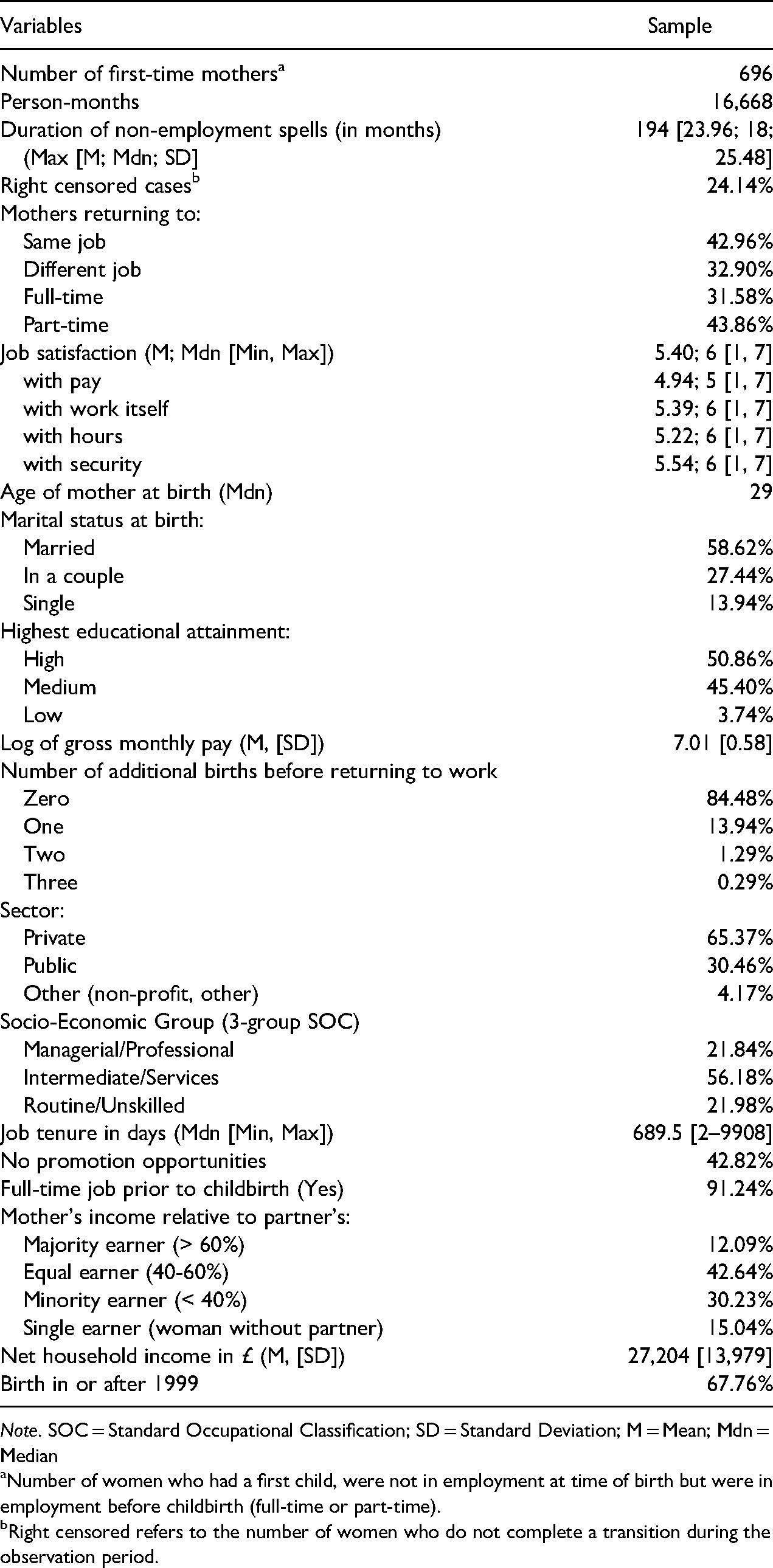
Note. SOC = Standard Occupational Classification; SD = Standard Deviation; M = Mean; Mdn = Median
Number of women who had a first child, were not in employment at time of birth but were in employment before childbirth (full-time or part-time).
Right censored refers to the number of women who do not complete a transition during the observation period.
Measures
The dependent variable in this study was ‘re-entry into paid employment’, measured as the time elapsed (in months) from the birth of the first child until first re-entry to paid employment, hereafter also referred to as ‘out of paid employment spell’. This includes spells of maternity leave, family care and unemployment. For cases where the exact date of entry into paid employment was missing we considered the interview date at which the woman was again in paid employment after childbirth. This imputation procedure may have led to an over-estimation of the duration of the break from paid employment for these women resulting in delayed re-entries into the labor market when compared to other studies (e.g. Pronzato, 2009). However, sensitivity analyses comparing women with exact dates and imputed dates yielded similar results. Therefore, to retain a larger sample, all women were included. We further distinguished whether women returned to the same job or to a different one, and whether they returned to work full-time or part-time. Overall, ‘out of paid employment’ spells ranged from a minimum of 1 to a maximum of 194 months.
The main independent variable denoted a woman's self-reported job satisfaction during her last year of employment prior to childbirth. Women were asked to rate their satisfaction with their present job overall on a scale ranging from not satisfied at all (1) to completely satisfied (7). Table 1 shows that median and mean job satisfaction are high (Mdn = 6, M = 5.40) which is consistent with other studies that also report high levels of job satisfaction amongst workers (see for instance, Muñoz de Bustillo et al., 2011). The distribution of the variable is negatively skewed (-1.48). A large proportion of women (40%) report a job satisfaction level of 5 or lower. Although the use of a single item measure could be questionable (e.g., Rose, 2003), Wanous et al. (1997) find that the use of a single item indicator for overall job satisfaction is statistically acceptable. To account for the potential multifaceted nature of job satisfaction, we also considered four variables available longitudinally in the BHPS that measure extrinsic and intrinsic dimensions of job satisfaction: with total pay, security, the work itself and work hours. Three of these variables (i.e., pay, security and work itself) are often cited by employees as priorities when accepting a job (Rose, 2003). The Cronbach's alpha of a measure that combines these four aspects revealed questionable internal consistency (α = .66), which is consistent with the notion that jobs commonly present trade-offs between various desired characteristics, and only a small proportion is uniformly ‘good’ or ‘bad’ (Holman, 2013). We thus opted to use these measures of job satisfaction separately. Consistent with Rose (2001), correlation analyses (Online Appendix Table A1) show that the single item of overall job satisfaction is strongly correlated with satisfaction with work itself (r = .748, p < .001) and moderately correlated with satisfaction with work hours (r = .552, p < .001), security (r = .456, p < .001) and pay (r = .482, p < .001). The simultaneous inclusion of these variables with overall job satisfaction in the regression models introduces potential issues of multicollinearity. Therefore, these variables were modeled separately from overall job satisfaction, first individually and then together, which allowed a more nuanced consideration of how different facets of job satisfaction impact women's return to work after childbirth.
The model further included other individual and household level variables, such as the number of additional births during the out of paid employment period. As a robustness test, analyses were repeated by right censoring women with additional births during the out of paid employment period, yielding similar results (Online Appendix Table A2). The models also included marital status to account for the effect of having an additional source of income and a possible division of roles and responsibilities (Schober, 2013). Net household income quartiles were added as a proxy for economic security. As the woman's relative contribution to household income may be a significant determinant of the decision to return to work, we created a variable with four outcome categories to take into consideration women's share of household income and partnership status. Here, women were classified as ‘majority earners’ (earning > 60% of household income), ‘equal earners’ (earning 40–60% of household income), ‘minority earners’ (earning < 40% of household income), or ‘single earners’ (earning 100% of household income with no partner). Additional models were run restricting the sample to only couples and including variables that measure spousal income and spousal working hours. The reduction in sample size (N = 521) resulted in a loss of statistical power. Hence, although coefficients and standard errors remained similar, the job satisfaction measure was not statistically significant in these models. Sensitivity analyses were conducted to ascertain that this loss in significance was not due to the new control variables but only due to the reduced sample size, confirming the latter (Results are available upon request).
We accounted for women's educational attainment as previous studies found highly educated workers to be more likely to return to work after childbirth (Drasch, 2013) as well as to report lower job satisfaction, which likely reflects their increased expectations (Clark, 1996). The original BHPS education variable was re-categorized to indicate low (less than secondary education = 1), medium (secondary education or equivalent = 2), and high (higher education = 3) educational attainment. A three-category socio-economic group (SEG) variable based on the Standard Occupational Classification (SOC) was used to distinguish between skilled and non-skilled workers.
The model also included pre-childbirth job characteristics, namely the sector (private, public or other), work hours (full-time or part-time employment), job tenure (length of time in the current job in days) and opportunities for promotion (yes or no). It is noteworthy that the removal of outliers for job tenure, i.e. those women who reported more than 5,000 days in the job (n = 4), did not change the results in our model, so they were retained. Women's personal pre-childbirth income was included in log form to correct for skewness of the data and to minimize the potential impact of outliers. It is possible that women who are more satisfied with their jobs are employed in occupations that provide job security, career opportunities, and higher incomes, and these characteristics may incentivize women to return to work earlier than mothers in low quality jobs. The inclusion of these variables helped to ‘net out’ the unobserved factors that are correlated with job satisfaction and therefore addressed selection bias (Burgess et al., 2008; Desai & Waite, 1991).
The analysis further included a dummy variable indicating whether children were born in or after 1999, the year in which, following EC directives, job protection and parental leave were introduced in the UK – a substantial change in family policy (Pronzato, 2009). All variables are described in Table 1.
Analytical Strategy
We used event history analysis methods to estimate whether pre-childbirth job satisfaction increased women's probability of returning to work at any given time after childbirth. These methods are commonly used to explain or predict the occurrence and timing of events (Allison, 1984). The event under study (and thus the dependent variable) was the timing of return to paid employment from other types of labor force status such as family care, maternity leave or unemployment. Timing of return to paid employment was measured at (monthly) discrete time intervals. Therefore, the analytical techniques chosen reflected the discrete nature of the data.
To describe the sample distribution for event occurrence, we used a non-parametric descriptive method, namely the life table method, and interpreted its statistical summary measures, i.e., the median survival time and the survival functions. The survival function showed the proportion of women who had not yet re-entered paid employment (i.e., “survived” the out of paid employment spell) until a certain point in time. The median survival time, 18 months, corresponded to 50% of the survival function and indicated the time at which 50% of the sample had not yet experienced a return to paid employment (Table 1). Log-rank tests for equality of survival functions were performed to ascertain statistically significant differences between survival curves.
We ran discrete-time complementary log log (cloglog) models with random effects to estimate whether job satisfaction increased women's probability of returning to work after childbirth. These models are considered to be equivalent to a continuous time proportional model for discrete data and derive estimates of parameters describing the continuous time hazard while making allowance for the discrete nature of the data (Steele, 2005). A normally distributed random effect (εi) was included to account for unobserved heterogeneity bias (Allison, 1984).
The hazard model can be formulated as:

To assess the shape of the baseline hazard, a polynomial specification was adopted where time was added as a linear, quadratic and cubic effect. It also let us determine whether the effect of job satisfaction weakened or strengthened over time. Models interpreting the interaction of job satisfaction with time are presented in Online Appendix Table A3. Results were expressed as odds ratios (OR) with odds ratios above 1 indicating that higher levels of the independent variable are associated with a higher probability of returning to work. Conversely, odds ratios below 1 indicate a lower probability of returning to work.
Competing risks models in the form of multinomial logistic regression models were run to examine whether job satisfaction increased the probability of different labor market outcomes after childbirth: not returning to the labor market, returning to the same job, starting a different job, returning to work full-time or part-time.
Results
In our data, 75.8% of women returned to work after the birth of their first child during the survey period. In particular, 32% returned to work full-time and 44% part-time; 43% returned to the same job, and 33% started a different job (see Table 1). Women returning to the same job or full-time after childbirth took, on average, shorter breaks from paid employment than women switching jobs or returning part-time.
Figure 1a presents survival curves by levels of overall job satisfaction over the first 200 months of life (around 16 years) of the first child. For simplicity, we only illustrated three levels of reported job satisfaction, which correspond approximately to the three job satisfaction tertiles in our dataset. The survival curves show that during the first 14 months after first childbirth prior higher job satisfaction did not significantly reduce mothers’ time out of work in the UK. In other words, mothers with higher levels of job satisfaction did not return to work sooner than less satisfied mothers within that period. However, after 14 months, mothers who were prior to childbirth more satisfied with their jobs returned to work sooner than less satisfied mothers (χ2 = 7.37, df (2), p < .05). Hence, the effect of prior overall job satisfaction was only noticeable beyond the end of paid leave (less than a year throughout the survey period) and after the end of the job-protected period when many women would have to find new employment.
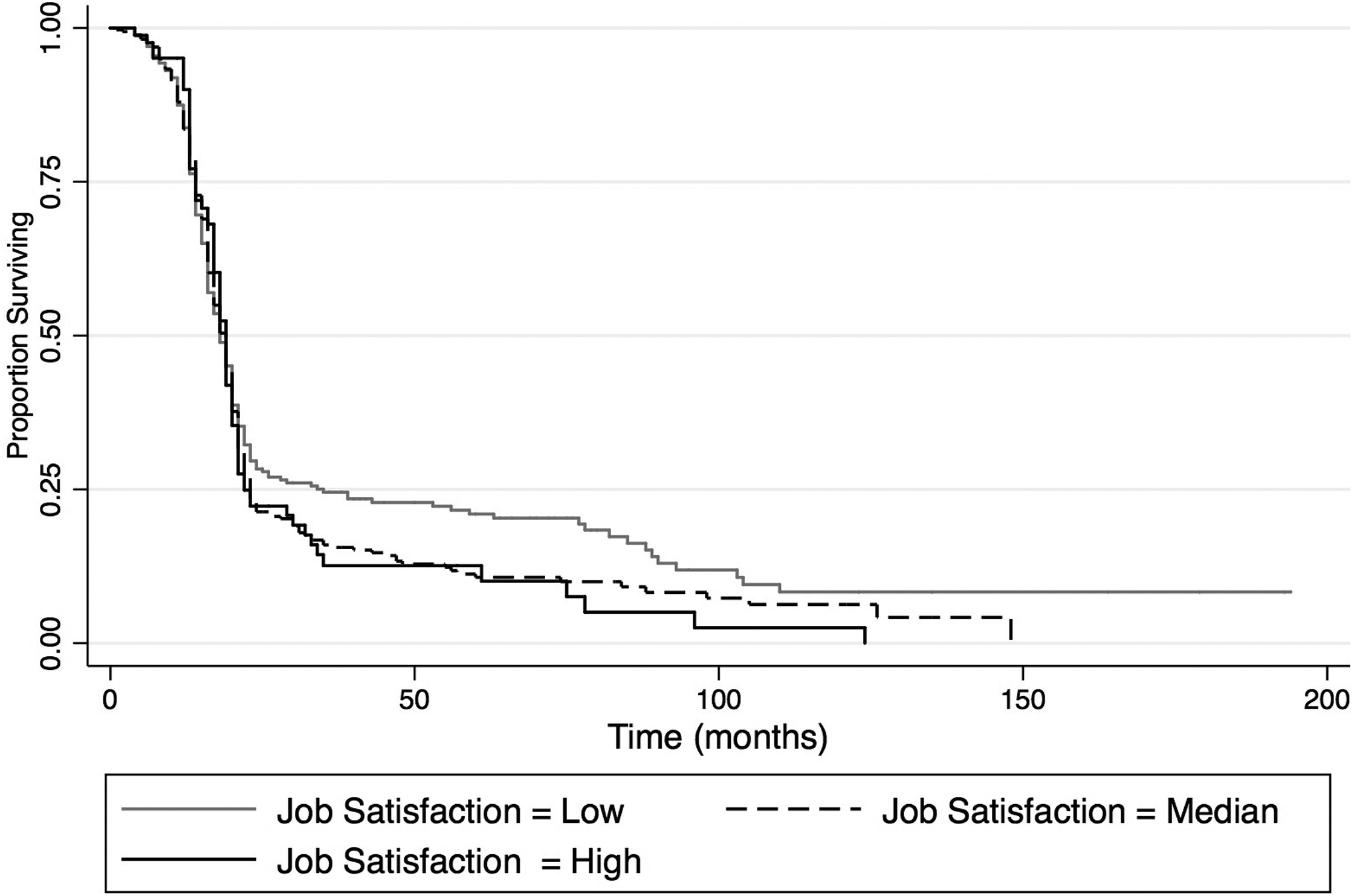
Survival Curves by Level of Job Satisfaction. Note. Job satisfaction ranges from 1 (low) – 7 (high). Only three levels of satisfaction are represented which correspond to job satisfaction tertiles: the top job satisfaction tertile (7), the middle tertile (6) and the bottom tertile (1-5, which is here represented by a job satisfaction level of 5).
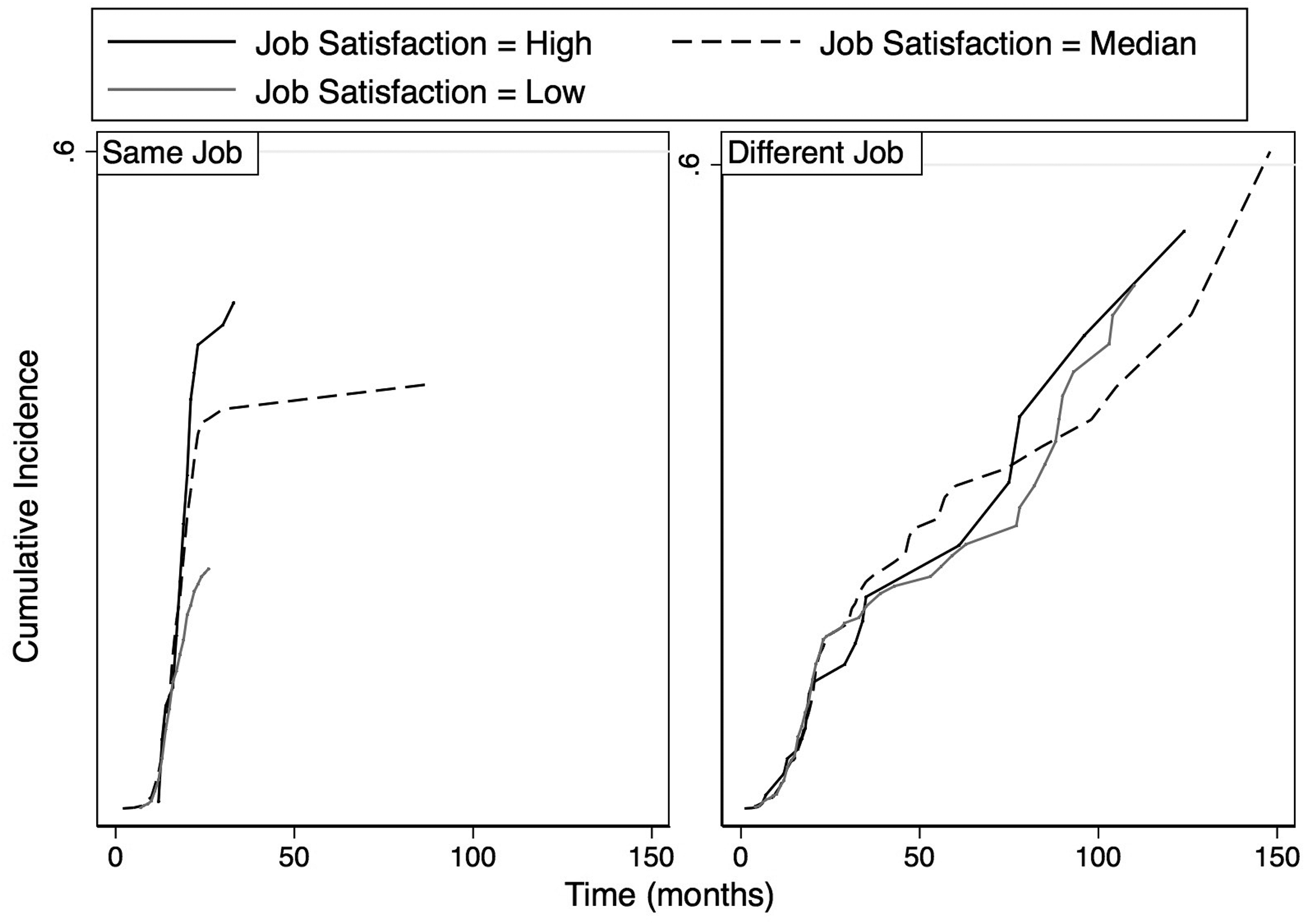
Cumulative Incidence Function by Job Satisfaction and Type of Return to Work: Same or Different Job. Note. Job satisfaction ranges from 1 (low) – 7 (high). Only three levels of satisfaction are represented which correspond to job satisfaction tertiles: the top job satisfaction tertile (7), the middle tertile (6) and the bottom tertile (1-5, which is here represented by a job satisfaction level of 5).
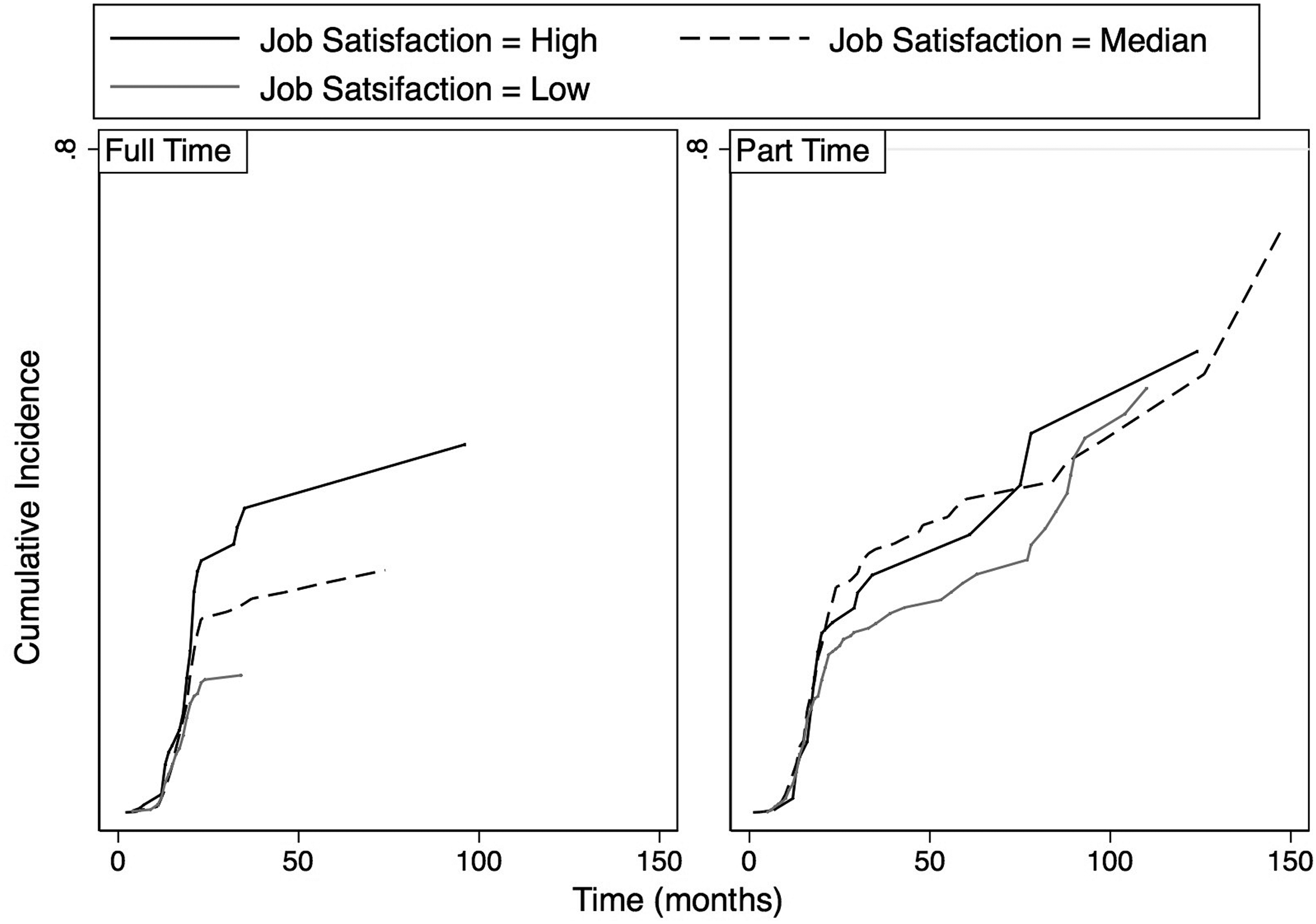
Cumulative Incidence Function by Job Satisfaction and Type of Return to Work: Full-Time or Part-Time Employment. Note. Job satisfaction ranges from 1 (low) – 7 (high). Only three levels of satisfaction are represented which correspond to job satisfaction tertiles: the top job satisfaction tertile (7), the middle tertile (6) and the bottom tertile (1-5, which is here represented by a job satisfaction level of 5).
Figure 1b shows the cumulative incidence function by levels of overall job satisfaction and by type of return to work (same or different job). The graphs show that after the initial 14-months period women with higher job satisfaction prior to childbirth were more likely to return to their previous job than women with lower levels of job satisfaction. Similarly, women with lower levels of job satisfaction were more likely to return to a different job than women with higher levels of job satisfaction.
We did not observe noticeable differences in pre-childbirth overall job satisfaction between those returning to full-time and those returning to part-time employment (Figure 1c).
Event History Analysis
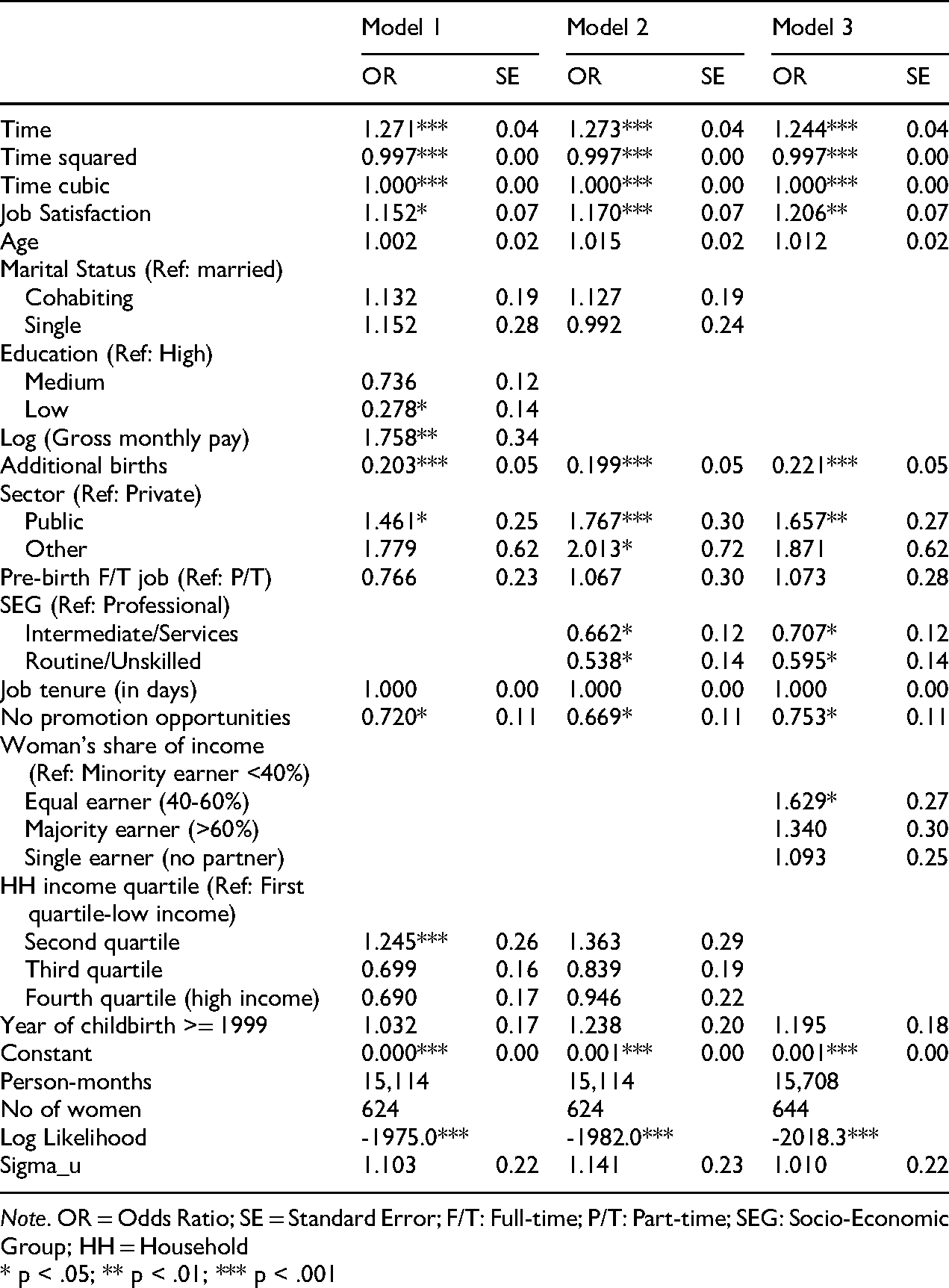
In Model 1 of the random-effects discrete-time cloglog models, we included individual-level characteristics, pre-childbirth job characteristics and household characteristics (Table 2). In Model 2, we added the respondent's socio-economic group (SEG) as a proxy for professional skills. Education and personal income were not included in this model due to collinearity. Spousal characteristics were added in Model 3. The hazard function of these models indicated that mothers’ probability of returning to work increased as children grew older, but this effect became weaker over time. In all models, higher overall job satisfaction increased the probability of returning to work sooner after childbirth. Models interacting job satisfaction with time confirmed the survival curves (Online Appendix Table A3). To illustrate the magnitude of the difference between levels of job satisfaction, we performed post-estimation models which showed that women who reported the lowest levels (1–4) of job satisfaction (16% of the sample) were 32% less likely to return to work in the observation period compared to women who reported the median score (6) of job satisfaction (48% of the sample). Women who reported the highest level (7) of job satisfaction (12% of the sample) were 21% more likely to return to work than women who reported the median score.
Random-effects Complementary Log Log Models Predicting the Risk of Returning to Work
Note. OR = Odds Ratio; SE = Standard Error; F/T: Full-time; P/T: Part-time; SEG: Socio-Economic Group; HH = Household
* p < .05; ** p < .01; *** p < .001
All three models showed that additional births before returning to work decreased the probability of re-entering paid employment. With regards to pre-childbirth job characteristics, working in the public sector increased the probability of returning to work sooner compared to employment in the private sector. Prior full-time employment did not seem to affect the timing of re-entry. Model 2 also showed that women in intermediate/services or non-skilled jobs were less likely to return to work compared to those in professional jobs. Women's share of household income also mattered for labor market attachment with those earning a similar income as their partner being more likely to return to work compared to those earning less than their partners.
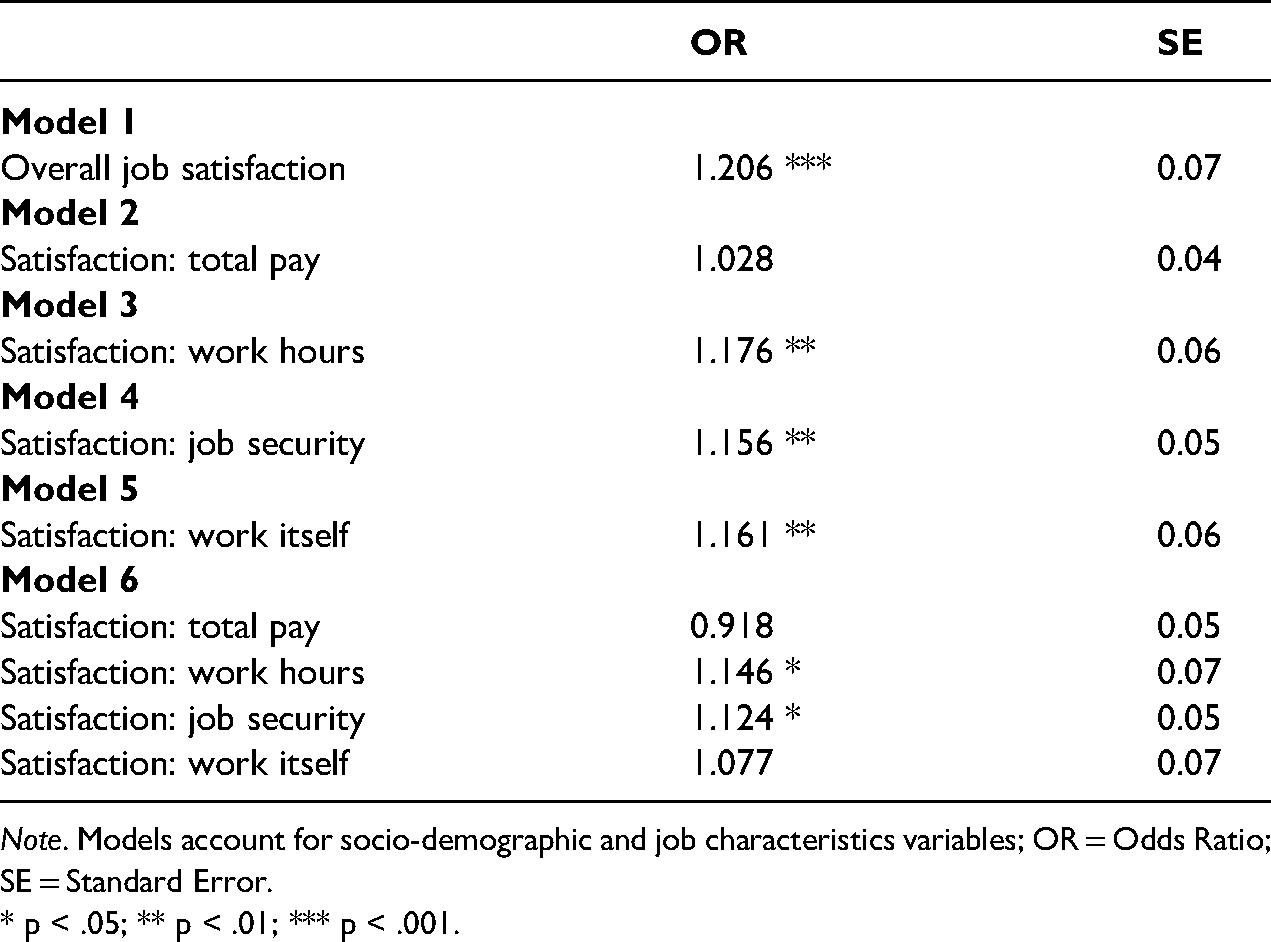
To test to what extent satisfaction with different aspects of work is associated with women's labor market attachment, we ran additional models with four satisfaction measures (pay, work itself, security and work hours) and the same covariates previously used in Table 2 Model 3. A summary of these findings is presented in Table 3. The inclusion of these job satisfaction variables individually (Models 2–5), showed that satisfaction with work hours (OR = 1.176, p < .05), satisfaction with job security (OR = 1.154, p < .05) and satisfaction with the work itself (OR = 1.161, p < .05) reduced time spent outside paid employment after childbirth. With the inclusion of these variables simultaneously (Model 6), only satisfaction with hours and satisfaction with security remained statistically significant.
Random-effects Complementary Log Log Models Predicting the Risk of Returning to Work by Type of Job Satisfaction.
Note. Models account for socio-demographic and job characteristics variables; OR = Odds Ratio; SE = Standard Error.
* p < .05; ** p < .01; *** p < .001.
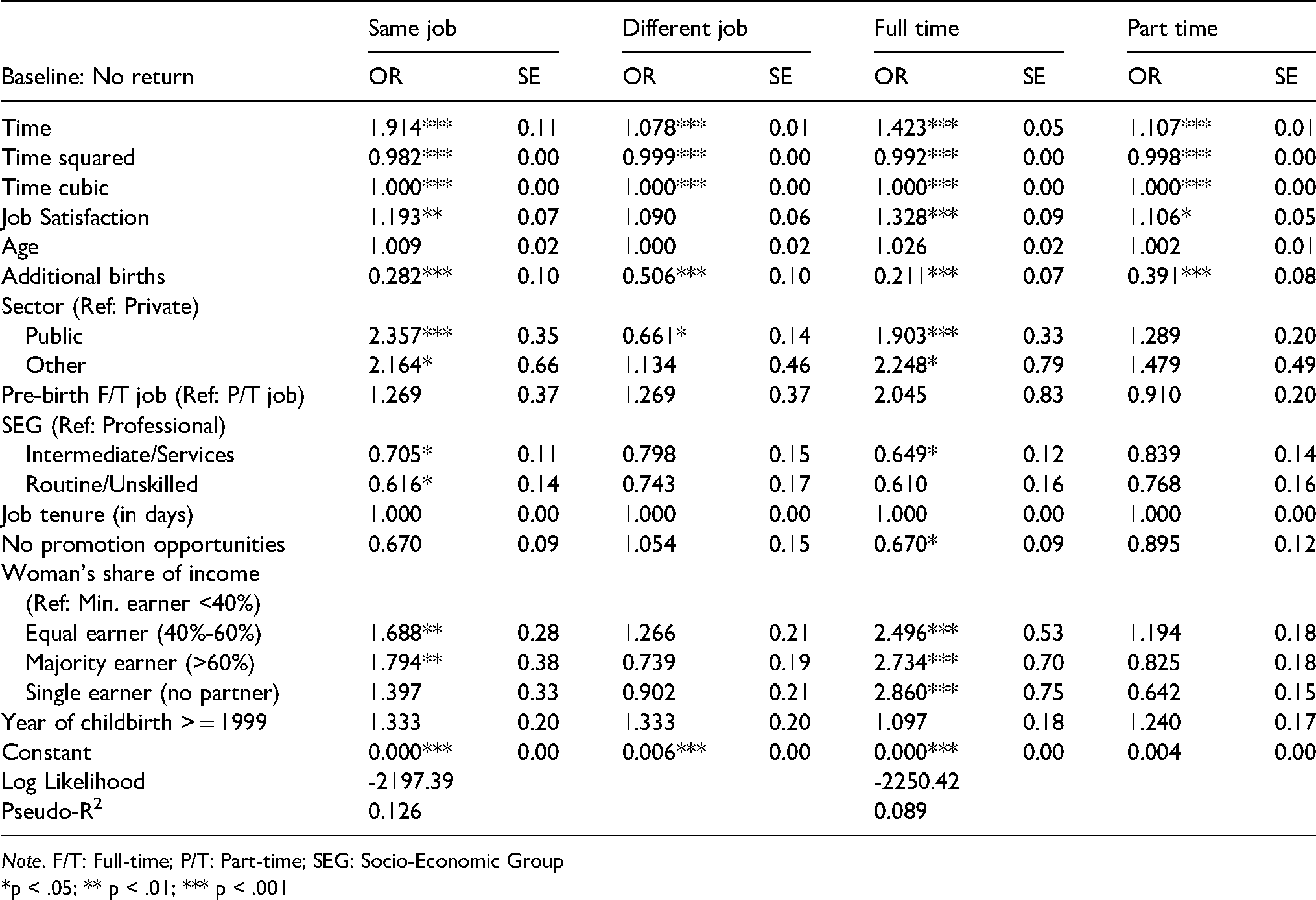
Table 4 presents results from the competing risks models predicting the probability of returning to the same or starting a different job, and returning to full-time or part-time employment (See Online Appendix Table A4 for alternative model specifications). Higher levels of overall job satisfaction increased the probability of returning to the same job compared to not returning to work (OR = 1.193, p < .05). In contrast, higher levels of overall job satisfaction did not increase the probability of changing jobs after childbirth (OR = 1.090, p > .05). Moreover, higher overall job satisfaction increased the probability of returning to work for both full-time (OR = 1.328, p < .05) and part-time employment (OR = 1.106, p < .05), although the effect is stronger for full-time employment.
Multinomial Logistic Regression Models Predicting the Risk of Returning to the Work by Type of Return to Work (N = 15,708)
Note. F/T: Full-time; P/T: Part-time; SEG: Socio-Economic Group
*p < .05; ** p < .01; *** p < .001
Higher personal income increased the probability of returning to the same job after childbirth compared to not returning to work but there was no association between personal income and starting a different job after childbirth (Table 4). Interestingly, women who worked in the public sector were more likely to return to the same job compared to not returning to work (OR = 2.357, p < .001) and, similarly, they were less likely to change jobs after childbirth (OR = .661, p < .05). Public sector employment increased the probability of returning to full-time (OR = 1.903, p < .05) but not to part-time employment (OR = 1.289, p > .05). We tested whether the effect of women's pre-childbirth job satisfaction on labor market attachment varied by sector (public versus private) by including an interaction effect in the multinomial model. However, the results were not statistically significant and were therefore not included in the final models in Table 4.
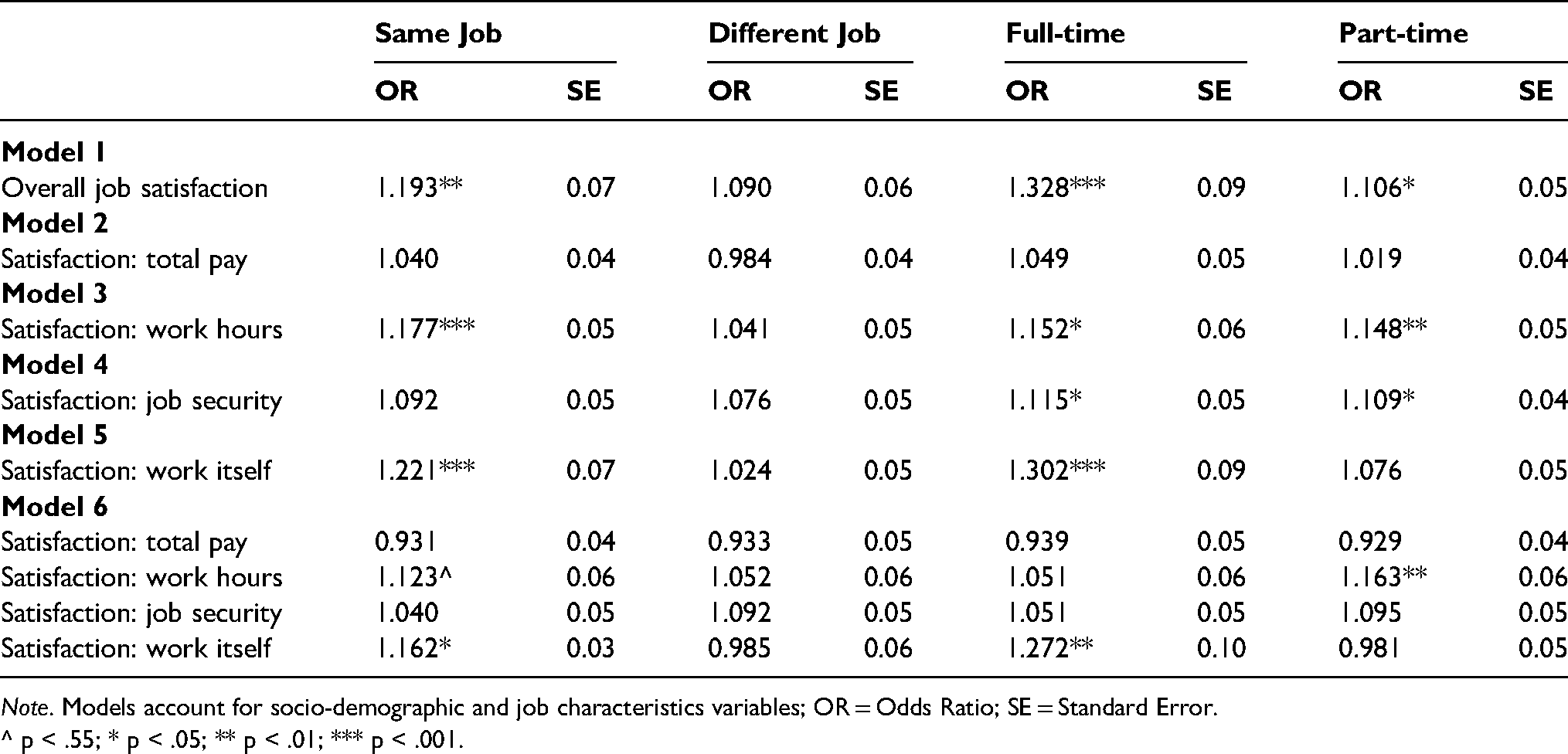
Our analysis of how different dimensions of job satisfaction impact women's return to work (Table 5) demonstrated that satisfaction with work hours (OR = 1.177, p < .05) and satisfaction with the work itself (OR = 1.221, p < .05) increased the probability of returning to the same job compared to not returning to work. Furthermore, satisfaction with work hours and satisfaction with job security increased the probability of returning both full-time and part-time in similar measure. However, satisfaction with the work itself increased the probability of returning to work to full-time jobs only (OR = 1.302, p < .05).
Multinomial Logistic Regression Models Predicting the Risk of Returning to Work by Type of Return to Work and By Type of Job Satisfaction.
Note. Models account for socio-demographic and job characteristics variables; OR = Odds Ratio; SE = Standard Error.
^ p < .55; * p < .05; ** p < .01; *** p < .001.
Discussion
This study investigates the impact of prior job satisfaction on women's timing of re-entering paid employment after the birth of a first child in the UK, as well as other employment decisions such as changing jobs or work hours after childbirth. The analysis contributes significantly to the literature on female labor market attachment in that it provides a multifaceted and longitudinal assessment of how women's subjective evaluations of their working conditions, namely their job satisfaction, impact their labor market outcomes after childbirth. Women who are not satisfied with their pre-childbirth employment may be more likely to seek alternatives that provide better perceived rewards, such as withdrawal from the labor market, a change of jobs, or a change in working hours.
First, we hypothesized that prior higher job satisfaction increases the probability of returning to paid employment sooner after the birth of a first child during the sample period (H1). Consistent with our expectations, the findings show that higher job satisfaction increases the probability of women's return to employment after childbirth. However, this effect is only visible more than a year after childbirth. The absence of an effect of job satisfaction within the first year of the child's life suggests that other factors, including maternity and parental leave provisions, financial constraints, limited and costly child care options, or social norms, may play a more important role in determining how long British women stay out of paid employment in the first year following childbirth (Newton et al., 2018). In line with previous research by Piasna & Plagnol (2018), we consider multiple facets of job satisfaction which shows that women's subjective evaluations of their job security, hours at work and the work itself are indeed important determinants of their timing of return to work. The probability of returning to work is higher for women who have higher levels of satisfaction with the security of their jobs, their working hours and the work itself, compared to women with lower levels of satisfaction. However, the association with satisfaction with pay is not statistically significant. This may further reinforce the trade-off argument according to which women return to jobs that are perceived to allow them to combine work and family responsibilities, even at the expense of lower earnings.
Second, it was hypothesized that prior higher job satisfaction increases the probability of women returning to the same job as opposed to choosing a different job after leave or not returning to paid employment (H2). Indeed, our study shows that prior higher job satisfaction increases the likelihood of returning to the same job compared to not returning to work but we find little evidence that lower job satisfaction increases the probability of changing jobs. This demonstrates that job satisfaction increases attachment not only to employment in general, but specifically to women's pre-childbirth job. Furthermore, it is satisfaction with work hours and satisfaction with the work itself that are the main drivers behind women's return to the same job.
Third, it was hypothesized that prior higher job satisfaction increases the probability of women returning to work full-time as opposed to returning to work part-time or not returning to paid employment at all (H3). In agreement with other studies (e.g., Nieuwenhuis et al., 2012) our study shows that a large percentage (43%) of women return to work part-time after childbirth. We find that prior higher job satisfaction increases the probability of returning to the labor market for both full-time and part-time employment (compared to no return during the sample period), although the effect is slightly stronger for women returning full-time. These patterns are sustained when considering facets of job satisfaction, with satisfaction with the work itself being the only strong determinant of returning full-time. Therefore, the observed reduction in working hours cannot be necessarily attributed to lower levels of job satisfaction and other factors may be at play.
Policy Implications
This study highlights the importance of considering women's perceptions of their employment conditions – as reflected in self-reported job satisfaction - to predict their labor market outcomes after childbirth. The findings have important implications for policy. However, in considering job satisfaction from a policy perspective, the improvement of job satisfaction should perhaps not be considered as an end in itself. Increasing job satisfaction is a poor policy lever and could be achieved, for instance, by lowering workers’ expectations or increasing appreciation of a current job through worsening labor market conditions and increasing between-worker competition for jobs (Burchell et al., 2014) .We thus argue that in any policy debate job satisfaction should be considered as a subjective evaluation of one's job derived from the quality or desirability of its features, and it is the underlying quality of a job that should be targeted by policy and regulation.
Consistent with earlier findings, our study confirms that employment before childbirth is an important determinant of women's labor market attachment (Harkness et al., 2019). In particular, Piasna & Plagnol (2018) suggest that the quality of women's work affects female labor market participation after childbirth as high-quality jobs facilitate work and family life reconciliation. Our study shows that women's attachment is affected by their overall job satisfaction, and in particular by satisfaction with the content of work, how secure their job is and whether their work hours fit their life circumstances. Lack of job security has been associated with poor quality jobs which are often characterized by non-standard work arrangements, e.g., short-term contracts (Kauhanen & Nätti, 2015), that increase women's precarity in the labor market. In this context, labor market regulation is key for providing inclusive protection of and equal rights for workers irrespective of the type of contract. Furthermore, poor working time quality, often measured by non-standard or unpredictable working hours, puts strain on family well-being (Davis et al., 2008) and restricts women's ability to combine paid work and family obligations after childbirth (Clark, 2000; Crompton & Lyonette, 2006; Drobnič & Guillén Rodríguez, 2011; Green & Mostafa, 2012). Provisions that set upper limits on the number of working hours and improve their predictability and workers’ scope for flexibility in determining their own schedules, are some of the measures that can improve satisfaction with working hours and thus positively impact mothers’ decision to return to paid employment after childbirth (Warren, 2021).
Nevertheless, the delayed effect observed in our study of job satisfaction on women's timing of return to work suggests that there are competing factors influencing women's labor market decisions post childbirth. This finding underscores the importance of leave policies, as women's assessments of their jobs have an important impact on their return once leave provisions terminate.
Our findings support the view that a combination of employment policies that address job quality and supportive family policies may assist women in evaluating labor market alternatives and encourage a return to work after maternity leave. Mcrae (1993) and Waldfogel et al. (1999) point to the importance of reconciliation policies, which in several countries, including the UK, were found to improve women's labor market attachment by promoting conditions that allow them to reconcile work and family obligations. However, there is still considerable scope for family policies to allow women more choices with regards to employment decisions after childbirth. One important avenue is a reduction of gender differences in work and care patterns, such as the length of parental leaves or the availability of flexible work options, although this requires eliminating barriers to the access of these policies. For instance, while flexible working arrangements have been found to help women remain in paid employment after childbirth (Chung & van der Horst, 2018), a large-scale survey of employers revealed that most requests for flexible work are mostly submitted by women (Department for Business, Innovation & Skills, 2014), suggesting a reinforcement of gendered division of paid and unpaid work. Therefore, policies should address both pull and push factors that keep new mother in or away from employment (Newton et al., 2018).
Limitations
The present analysis has some limitations due to the nature of the data and available measures. While we acknowledge that job quality and job satisfaction are multifaceted and closely interlinked concepts, we are not aware of any datasets for the UK that allow studying these concepts jointly and from a longitudinal perspective. Therefore, we were restricted to the use of a single-item subjective measure of overall job satisfaction and four specific indicators of job satisfaction, and it is unclear how these indicators correlate with objective aspects of job quality in our sample. Nevertheless, our results align with Piasna & Plagnol (2018) findings pointing to some degree of association between women's perceptions of their quality of work and their objective job characteristics.
Furthermore, the measure of job change was computed using the start date of a new job. If a woman was promoted or changed employment grades during maternity leave, this would have been recorded as a new start date. This means that some of the changes observed after childbirth might not necessarily imply a change in jobs but rather a change in position within the same job, which could reflect occupational downgrading rather than changes in employment.
Conclusion
Despite these limitations, the present study significantly contributes to existing research on women's return to work after childbirth by considering the role of pre-childbirth job satisfaction in women's labor market decisions. The results indicate that job satisfaction – conceptualized as women's perceptions of their pre-childbirth employment conditions – is a factor that should not be neglected if the goal is to increase female employment rates overall. Policies that improve work and employment conditions could therefore significantly affect mothers’ perceptions of their jobs and increase labor market attachment.
Supplemental Material
sj-docx-1-wox-10.1177_07308884221087988 - Supplemental material for Job Satisfaction and Women's Timing of Return to Work after Childbirth in the UK
Supplemental material, sj-docx-1-wox-10.1177_07308884221087988 for Job Satisfaction and Women's Timing of Return to Work after Childbirth in the UK by Julia M. Gumy, Anke C. Plagnol and Agnieszka Piasna in Work and Occupations
Supplemental Material
sj-docx-2-wox-10.1177_07308884221087988 - Supplemental material for Job Satisfaction and Women's Timing of Return to Work after Childbirth in the UK
Supplemental material, sj-docx-2-wox-10.1177_07308884221087988 for Job Satisfaction and Women's Timing of Return to Work after Childbirth in the UK by Julia M. Gumy, Anke C. Plagnol and Agnieszka Piasna in Work and Occupations
Supplemental Material
sj-docx-3-wox-10.1177_07308884221087988 - Supplemental material for Job Satisfaction and Women's Timing of Return to Work after Childbirth in the UK
Supplemental material, sj-docx-3-wox-10.1177_07308884221087988 for Job Satisfaction and Women's Timing of Return to Work after Childbirth in the UK by Julia M. Gumy, Anke C. Plagnol and Agnieszka Piasna in Work and Occupations
Supplemental Material
sj-docx-4-wox-10.1177_07308884221087988 - Supplemental material for Job Satisfaction and Women's Timing of Return to Work after Childbirth in the UK
Supplemental material, sj-docx-4-wox-10.1177_07308884221087988 for Job Satisfaction and Women's Timing of Return to Work after Childbirth in the UK by Julia M. Gumy, Anke C. Plagnol and Agnieszka Piasna in Work and Occupations
Footnotes

Supplemental Material
Supplemental material for this article is available online.
Author Biographies
References
Supplementary Material
Please find the following supplemental material available below.
For Open Access articles published under a Creative Commons License, all supplemental material carries the same license as the article it is associated with.
For non-Open Access articles published, all supplemental material carries a non-exclusive license, and permission requests for re-use of supplemental material or any part of supplemental material shall be sent directly to the copyright owner as specified in the copyright notice associated with the article.
