




Abstract
Objective:
This study aims to examine routine day-to-day suicide reporting in the Canadian media, giving a descriptive overview of the tone and content of news articles. The primary objective is to assess adherence to responsible reporting of suicide recommendations in news articles about suicide. A secondary objective is to categorize these articles according to their focus. A tertiary objective is to compare guideline adherence across the different categories of articles.
Methods:
We collected news articles containing the keyword “suicide” from 47 Canadian news sources between April 1, 2019, and March 31, 2020. Articles were read and coded for their adherence to responsible reporting of suicide recommendations. Articles were also allotted into categories according to their focus and primary suicide discussed. Frequency counts and percentages of adherence were calculated for all key variables—both overall and by category of article. Chi-square tests were also conducted to assess for variations in adherence by category of article.
Results:
The procedures resulted in 1,330 coded articles. On the one hand, there was high overall adherence to several recommendations. For example, over 80% of articles did not give a monocausal explanation, glamourize the death, appear on the front page, include sensational language, or use discouraged words. On the other hand, there was low adherence to other recommendations, especially those related to putatively protective content. For example, less than 25% included help-seeking information, quoted an expert, or included educational content. Cross-category analysis indicated that articles about events/policies/research and Indigenous people had the highest proportions of adherence, while articles about murder-suicide and high-profile suicides had the lowest adherence.
Conclusions:
While a substantial proportion of articles generally adhere to suicide reporting recommendations, several guidelines are frequently underapplied, especially those concerning putatively helpful content. This indicates room for improvement in the responsible reporting of suicide.
Introduction
Suicide is a major public health issue and a leading cause of death worldwide. 1 The determinants of suicide are complex; however, several epidemiological studies indicate a phenomenon known as suicide contagion or “copycat” suicide. This can refer to a general rise in suicide mortality after a high-profile celebrity suicide 2 –4 or a more localized rise in suicide mortality after a suicide in a discrete social environment (e.g., detention centers). 5 The role of the media in contributing to suicide contagion in the general population has long been a topic of research. 6,7 This has given rise to a concept known as the Werther effect, which is a term used to refer to the subphenomenon of suicide contagion arising from exposure to suicide coverage in the media. 8
Indeed, a large corpus of research indicates that a Werther effect can occur when media reports about suicide include content that is (i) nonfictional; (ii) repeated and/or prominent, especially front-page or headline placing; (iii) reporting a celebrity suicide; (iv) describing the suicide method in detail; (v) referring to the suicide in monocausal or fatalistic language, for example, “inevitable”; or (vi) romanticizing the death. 9 –18
In response to such knowledge, various organizations have developed best practice guidelines to promote responsible reporting on suicide (RRS). This concept was developed to encourage journalists to write about suicide in a manner that avoids content that may contribute to a Werther effect, while simultaneously encouraging reporters to write about putatively protective elements such as suicide prevention interventions and sources of help. 19 Organizations that have developed RSS guidelines include supranational bodies such as the World Health Organization (WHO) 20 as well as national organizations in the UK, 21 Australia, 22 and the United States. 23
In Canada, 2 sets of RSS guidelines have developed somewhat independently. The first were produced by the Canadian Psychiatric Association in a policy paper in 2009 (updated in 2017) containing 14 recommendations about content to include or avoid when reporting suicide. 24 The second were developed by a group of Canadian journalists in 2014 in a booklet known as Mindset, containing 14 “do” and “do not” type recommendations for reporting suicide. 25
All these guidelines share many commonalities though they do not overlap completely. For example, the Canadian Psychiatric Association (CPA) and WHO guidelines suggest that journalists avoid front-page placement of suicide stories as well as details about the location—recommendations not contained in the Mindset guidelines. That said, both sets of Canadian guidelines (and the WHO guidelines) recommend that journalists avoid (i) including detail about the method, (ii) sensationalizing/ romanticizing the suicide, and (iii) using inappropriate language such as “successful” suicide.
Similarly, all these guidelines recommend that journalists include putatively protective elements such as information about where to seek help. Moreover, the guidelines encourage journalists to educate the public about suicide issues. For example, the CPA guidelines call on journalists “to seek advice from suicide prevention experts and consider including quotes,” while the Mindset guidelines recommend that journalists “do look for links to broader social issues.” In other words, the guidelines tend to balance recommendations to avoid information known to contribute to the Werther effect with recommendations for the pro-active inclusion of helpful information which could be protective. 7 This approach aims to simultaneously prevent any Werther effect, while fostering positive behaviors such as service utilization.
Given this situation, it is important to monitor the media’s adherence to core suicide reporting guidelines, as low adherence may contribute to a Werther effect, whereas high adherence may play a role in suicide prevention. 26,27 In Canada, a few studies have assessed adherence to suicide reporting guidelines in the media; however, these studies had limitations, with one limited to articles about a single celebrity suicide (Robin Williams), 28 while another was limited to articles from a single city (Toronto). 16 Moreover, both these studies report data from 2014 or before, meaning they are somewhat out of date. That said, both studies indicate room for improvement. For example, the Robin Williams study found that 24% of articles went into detail about the method used, while the Toronto study found that 50% gave the suicide method in the text.
Of note, much research on media and suicide has focused on celebrity suicides 15 such as the suicide of Robin Williams. 2 –4 However, these stories only represent a small proportion of articles about suicide that circulate in the media. 9,13,29 There has been less research on the ordinary day-to-day coverage of suicide by local and national journalists. Such research is important, as evidence suggests that journalists often experience ethical challenges and conflicts in the routine reporting of suicide. For example, journalists are often motivated to report suicide responsibly, but this can clash with wider professional values such as full disclosure of information and truth-telling. 30 Indeed, qualitative interviews of journalists frequently reveal that that this clash can be especially intense for certain categories of suicide such as a murder-suicide. 31,32 This suggests that particular categories of suicide may be especially challenging to report, perhaps leading to differential patterns of adherence to RSS guidelines according to suicide characteristics.
As such, this study aims to examine routine day-to-day suicide reporting in Canada, giving a descriptive overview of the tone and content of a wide range of news articles. The primary objective is to assess adherence to responsible reporting of suicide recommendations in news articles about suicide. A secondary objective is to categorize articles about suicide according to their focus and primary suicide discussed. A tertiary objective is to compare guideline adherence across different categories of suicide.
Methods
To meet these aims, we set out to collect news articles about suicide from a broad range of local and national Canadian media over a 1-year period. All news articles were retrieved using Factiva, an online database which contains articles from a wide range of Canadian media. Articles were collected from 47 Canadian news sources comprising of 3 national newspapers (e.g., National Post), 6 online only news websites (e.g., CBC News), and 38 high-circulation metropolitan or regional newspapers (e.g., Toronto Star). All articles in these sources mentioning the term “suicide” from April 1, 2019, to March 31, 2020, were retrieved for analysis. We focused on news articles in these sources given their high-circulation and wide consumption as well as their wider cultural influence in Canadian society. 33
Variables
In order to assess guideline adherence, we created a coding schema consisting of 12 key variables, drawn from the existing literature and listed below. Variables 1 to 8 are based on recommendations that aim to reduce putatively harmful content, whereas variables 9 to 12 are based on recommendations that encourage putatively protective content. The headline includes the word “suicide” or a synonym, for example, “shot himself” (yes/no). The article is located on the front page (not applicable/yes/no). The article mentions the suicide method used (yes: alludes to method, e.g., asphyxiation /yes: a passing mention, e.g., hanging/yes: detailed description/no). The article mentions the suicide location (yes/no). The article gives a monocausal explanation of suicide (yes/no). The article glamourizes/romanticizes the death, e.g., describing it as “heroic” (yes/no). The article includes sensational language, for example, “suicide hotspot” (yes/no). The article uses discouraged words/phrases, for example, “committed” suicide (yes/no). The article provides help-seeking information, for example, a helpline number (yes/no). The article includes a quote by a suicide expert (yes/no). The article includes a quote by the suicide bereaved (yes/no). The article tries to educate the public about suicide (yes/no).
The above variables have been linked by a variety of studies to the Werther effect 9 –18 and were drawn from core recommendations co-occurring across the guidelines most relevant to the Canadian context, namely, the CPA, Mindset, and WHO guidelines.
In addition to assessing adherence to core recommendations, we classified each article into categories according to (1) focus of piece and (2) primary suicide(s) discussed. Focus of piece describes the overarching topic of the article: (i) suicide death, (ii) suicide attempt, (iii) fictional suicide, (iv) event/policy/research related to suicide, or (v) other. Primary suicide discussed refers to the type of person(s) who is the main subject of the article: (i) local community member; (ii) high-profile person, for example, celebrity; (iii) murder-suicide; (iv) group of individuals; (v) fictional person; (vi) Indigenous person or group; or (vii) not focused on individuals. Additionally, age and gender of the suicide discussed were recorded when available.
Training and Coding
All articles were read and coded by the first author who was trained and supervised by the other authors. This training included (i) reading the guidelines and seminal articles on the topic, (ii) in-depth coding tutorials, and (iii) multiple-coding of articles following this initial training, enabling the calculation of interrater reliability scores for the 12 key variables.
This initial multiple-coding involved the independent reading and coding of 20 different articles by the first 2 authors. The average κ score was 0.73. Individual κ scores ranged from 0.29 (educates about suicide) to 1.00 (suicide in headline, front page placement, glamourizes death, uses discouraged words). The only other item with a κ less than 0.6 was “the article gives a monocausal explanation” (0.35). This led to further training, focused on the clarification of coding procedures for variables with a low κ score. After this second round of training, another multiple coding exercise was conducted by the first 2 authors, leading to an increased average κ score of 0.83 (range 0.55 to 1.0) with perfect agreement on 6 variables. After this process, the formal coding commenced, with ongoing regular supervision to discuss the coding.
In terms of practicalities, new articles were collected and coded daily throughout the study. First, each article was screened for inclusion in the study. Articles were excluded if they (i) mentioned suicide only in passing, (ii) used suicide metaphorically, for example, “political suicide,” (iii) focused upon suicide-bombing, (iv) focused on euthanasia, or (v) were exact duplicates of a previous version in the same news source. All other articles were used as data. Second, the first author carefully read the articles assessing for the presence or absence of the 12 key variables outlined above, also establishing the focus and primary suicide discussed, with scores entered into Excel. Third, frequency counts and percentages were calculated for each variable at study completion—both overall and by article category. Data were then exported into R Statistical Software, 34 where χ2 tests were conducted to assess for variations in adherence to each guideline by (i) focus of the article and (ii) primary suicide discussed.
Results
A total of 7,646 articles were retrieved over a 12-month period. After applying exclusion criteria and removing duplicates, a final sample of 1,330 articles was retained for analysis (see Figure 1). In terms of focus, 56% of articles focused on a suicide death, while 27% of articles focused on suicide-related events/policies/research. In terms of primary suicide discussed, local individuals made up 31% of articles, while 23% of articles discussed murder-suicide. Only 14% discussed a high-profile suicide (see Table 1).
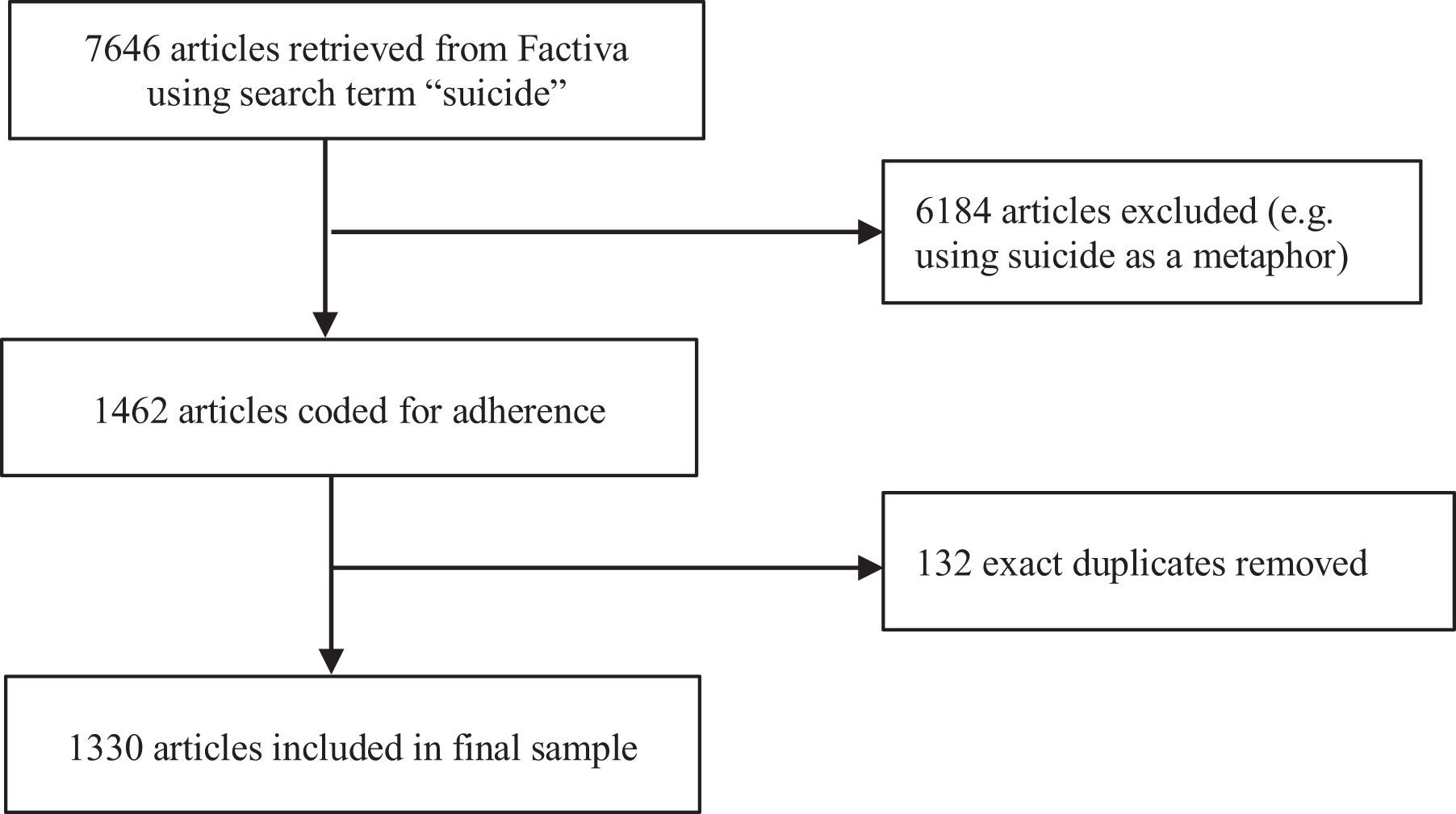
Flow of articles. Chart depicting inclusion/exclusion process for articles obtained from major Canadian news sources, April 1, 2019, to March 31, 2020.
Article Characteristics.
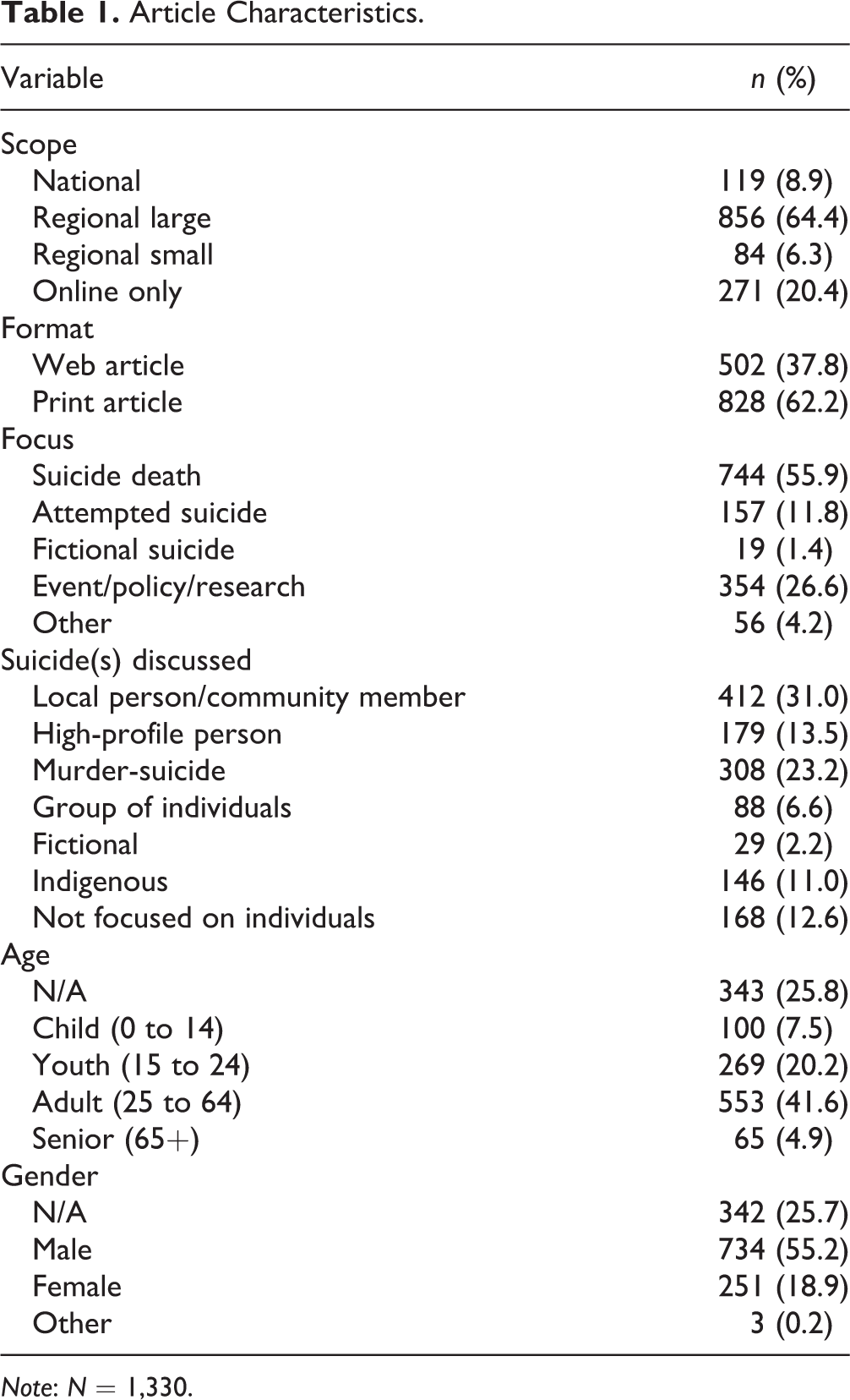
Note: N = 1,330.
Overall frequencies and percentages of key variables are presented in Table 2. On the one hand, there was high adherence to several recommendations. For example, over 90% of articles did not give a monocausal explanation or glamourize the death. Furthermore, over 80% of articles did not include sensational language, use discouraged words, or appear on the front page. On the other hand, there was low adherence to other recommendations, especially those related to putatively protective content. For example, less than 25% included help-seeking information, quoted an expert, or educated the reader about suicide. Moreover, around 40% mentioned the suicide location or the suicide method.
Overall Adherence to Common Reporting Recommendations.
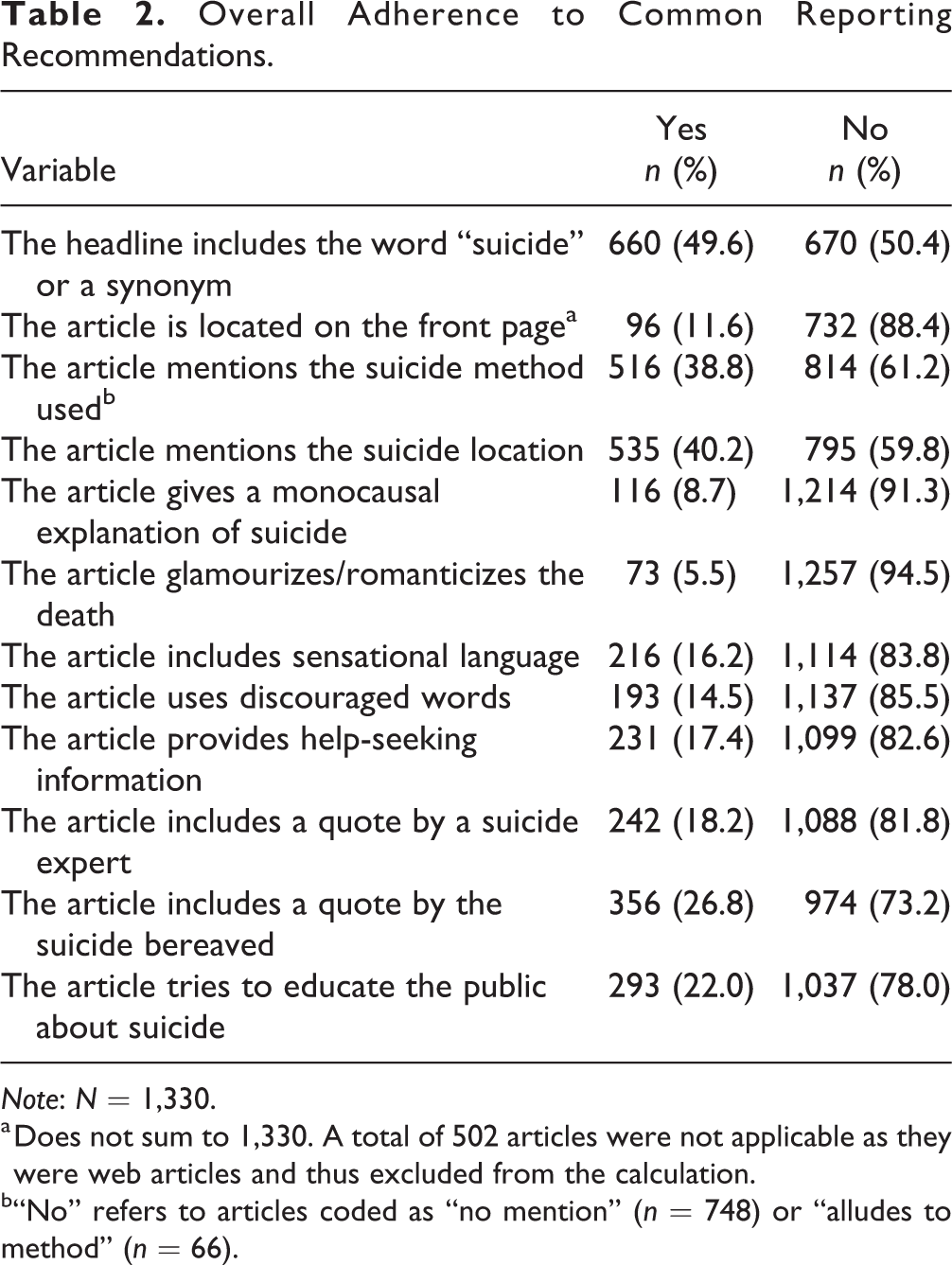
Note: N = 1,330.
a Does not sum to 1,330. A total of 502 articles were not applicable as they were web articles and thus excluded from the calculation.
b“No” refers to articles coded as “no mention” (n = 748) or “alludes to method” (n = 66).
Table 3 shows the proportions of articles adhering to the key variables by article focus. The χ2 analysis indicated a significant difference between the 3 main categories of article for 11 of the 12 variables. Overall, adherence was noticeably higher for event/policy/research articles—with adherence highest in this category for 10 of the 11 significant variables. For example, around 99% of these articles did not give a monocausal explanation of suicide, nor glamourized/ romanticized suicide—a much higher figure than articles about suicide death or attempted suicide. Relatedly, over 50% of these articles attempted to educate about suicide, while just under 50% included a quote by an expert, and almost 30% included a helpline number—again much higher than figures for articles about suicide death and attempted suicide.
Proportion of Articles Adhering to Reporting Recommendations, by Article Focus.a
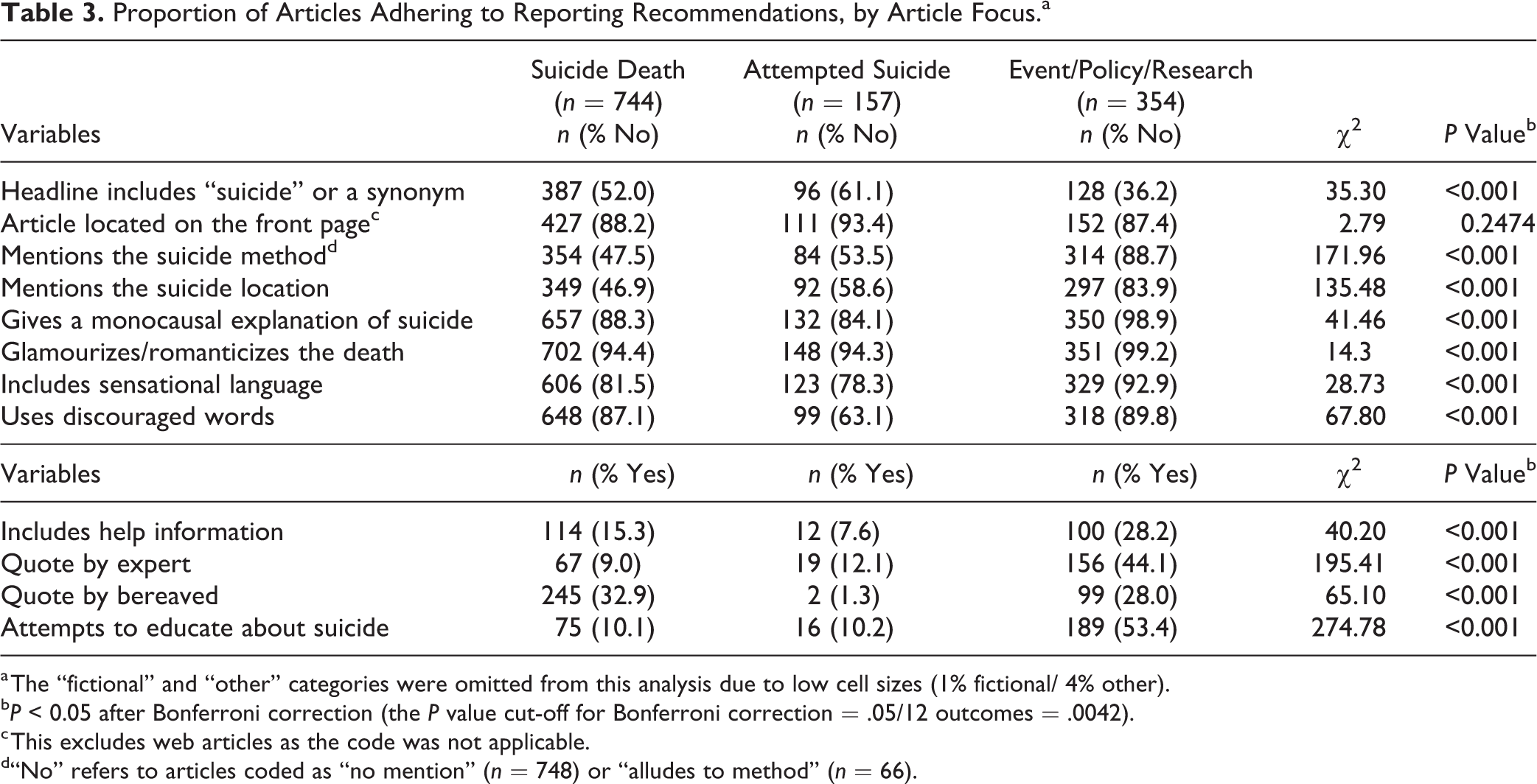
a The “fictional” and “other” categories were omitted from this analysis due to low cell sizes (1% fictional/ 4% other).
b P < 0.05 after Bonferroni correction (the P value cut-off for Bonferroni correction = .05/12 outcomes = .0042).
c This excludes web articles as the code was not applicable.
d“No” refers to articles coded as “no mention” (n = 748) or “alludes to method” (n = 66).
The figures for suicide death and attempted suicide are generally similar, for example, only 10% in both categories attempt to educate about suicide and both describe the method in around 50% of articles. That said, a higher proportion of articles about attempted suicide used discouraged words and omitted help-seeking information, whereas a higher proportion of articles about a suicide death mentioned the suicide location.
As can be seen in Table 4, the χ2 analysis indicates significant differences between the 5 categories of primary suicide discussed for 10 of the 12 variables. The highest proportions of adherence to the guidelines were seen in articles about Indigenous people or those not about individuals, with almost all proportions higher in these 2 categories—across all 10 significant variables—compared to the other 3 categories. For instance, 100% of articles in both these categories avoided glamourizing suicide, while around 87% of articles in these categories did not detail the method used. Similarly, 32% of articles in the Indigenous category attempted to educate about suicide, and just under 20% included help information or an expert quote.
Proportion of Articles Adhering to Reporting Recommendations, by Primary Suicide Discussed.a
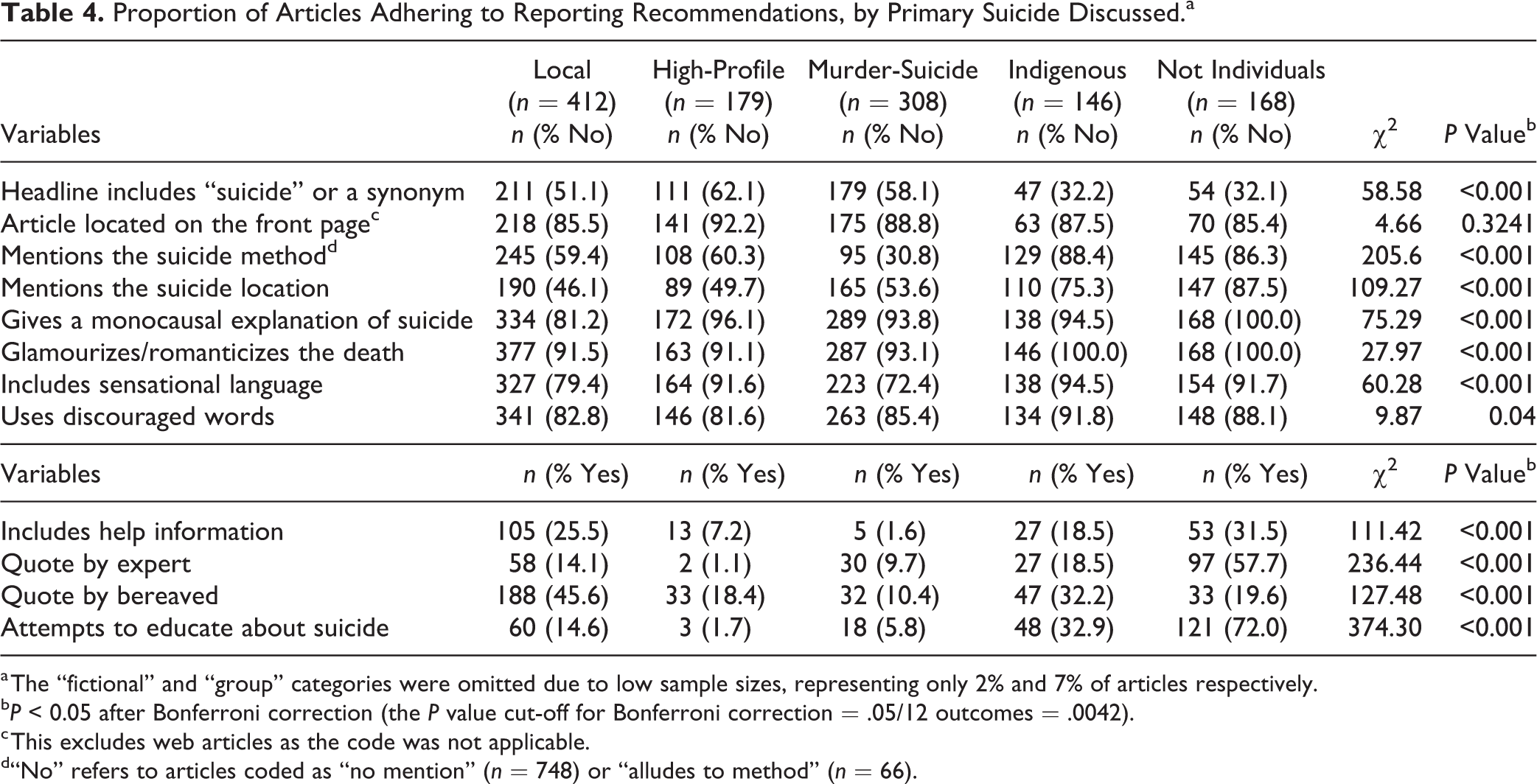
a The “fictional” and “group” categories were omitted due to low sample sizes, representing only 2% and 7% of articles respectively.
b P < 0.05 after Bonferroni correction (the P value cut-off for Bonferroni correction = .05/12 outcomes = .0042).
c This excludes web articles as the code was not applicable.
d“No” refers to articles coded as “no mention” (n = 748) or “alludes to method” (n = 66).
In contrast, articles about a high-profile suicide or a murder-suicide tended to have the lowest proportions of adherence, with all of the lowest scores in the 4 putatively protective variables occurring in these 2 categories. For example, only 2% of murder-suicide articles include help-seeking information, and only 6% attempt to educate about suicide. Similarly, low figures are seen in articles about high-profile suicides, where only 7% include help-seeking information, and 2% include attempts to educate about suicide. Relatedly, almost 70% of articles about murder-suicide detail the method used, while just under 30% use sensational language.
Discussion
In general, a substantial proportion of articles indicated high adherence to several suicide reporting recommendations measured in this study; however, some recommendations were frequently underapplied. Interestingly, the highest adherence is to the recommendations that ask journalists to omit or avoid certain words, portrayals, or details. For example, journalists rarely (i) glamorized the suicide, (ii) described the method used, (iii) placed the article on the front page, (iv) used sensational language, or (v) included discouraged words. Evidence discussed in the introduction indicates that such reporting could mitigate any Werther effect. 9 –18
In contrast, there is markedly lower adherence to recommendations related to the proactive inclusion of putatively helpful information and content. For example, only about 1 in 4 articles included help-seeking information, educated the reader about suicide, or included quotes from experts. As such, any new outreach work with journalists should emphasize the importance of including such educational content; while continuing to avoid language, words and details that could contribute to the Werther effect.
These findings can be compared with the Sinyor et al. 16 study discussed in the introduction that assessed adherence to suicide reporting guidelines in the Toronto media from 2011 to 2014. Some of the variables were measured in both studies, allowing for a limited comparison to examine change over time. Worryingly, this comparison indicates that certain variables worsened. For example, 50% of articles in this study included “suicide” in the headline, up from 27%; while 5.5% of articles glorified/ romanticized the suicide in the present study, up from 0.7%.
However, other variables showed some improvement. For example, monocausal explanations dropped from 15% to 9%, while inclusion of the suicide method in the text dropped from 50% to 39%. Likewise, the Sinyor study found that only 2% of articles included “community resources,” while 17% included help-seeking information in this study. Such improvements are welcome, but the low proportions of adherence to the putatively protective recommendations in this study still indicate much scope for more responsible reporting of suicide.
Cross-category Comparisons
The study found significant variation in guideline adherence according to the category of article. Notably, articles about events/policy/research (as well as articles not focused on an individual) showed higher adherence to the guidelines in comparison to articles about suicide deaths or suicide attempts. This may be because such articles typically appear as feature articles, giving more space and flexibility to explore suicide in a nuanced manner, including interviews with experts and discussion of interventions. 30 Contrariwise, “episodic” articles about an actual suicide are typically briefer and can pose particular ethical challenges to journalists who can experience a clash between a desire to report suicide responsibly and a desire to fully disclose information and “tell the truth.” 30 –32
Interestingly, the study found that adherence tended to be higher in articles about Indigenous people. This could be explained by a high sensitivity to the issue of Indigenous suicide in Canada—an issue recently described by the House of Commons as a national “crisis” due to persistent high rates of suicide in some Indigenous communities. 35,36 This sensitivity may be reflected in the more responsible reporting of Indigenous suicide witnessed in this study.
Of note, this consistent pattern of responsible reporting of Indigenous suicide indicates that Canadian journalists are in fact practiced and diligent in adhering to RRS guidelines in certain categories of suicide, implying that journalists frequently deploy a range of strengths and skills in reporting Indigenous suicide. This suggests a real potential for improvement in reporting other categories of suicide, such as high-profile suicides and murder-suicides.
Indeed, the study found that adherence was particularly low in articles about murder-suicide. Of note, murder-suicides often result in lengthy trials and inquests, and some research indicates that journalists can feel compelled to report such official material verbatim (which is often a matter of public record), thereby enacting professional values of public interest reporting, truth-telling, and full disclosure of information, which may clash with RRS guidelines. 30,31 Whichever, the results overlap with existing literature, indicating that murder-suicide is a category that poses particular challenges to journalists, and further guidance and training beyond generic RSS guidelines may be necessary to help journalists deal with this sui generis suicide category.
Finally, the category of “high-profile” suicide is worth discussing, especially as results can be compared with the study of RSS guideline adherence in the Canadian media after the 2014 death of Robin Williams presented in the Introduction. 28 Worryingly, the “high-profile” category tends to have very low adherence to some variables, especially putatively protective content, with only 1% including a quote by an expert, and 2% attempting to educate about suicide. Importantly, a comparison with the Robin Williams study indicates a worsening in some variables. For example, 60% of the “high-profile” articles in this study did not detail the method, compared to 76% in the Robin Williams study, while 7% of high-profile articles in this study included help resources, compared to 27% in Robin Williams study. These figures are concerning, given the robust evidence linking high-profile suicides to the Werther effect. 10,13 –16
Limitations of the Study
This study has some limitations. First, we relied on a single search term “suicide,” meaning that we may have missed articles that used other terminology, for example, “took his own life.” Second, the search was restricted to a 12-month epoch that may have contained distinctive events, for example, a large proportion of murder-suicides (23%—compared to 10% in the Sinyor et al. 16 study), meaning results may not be generalizable to other epochs. Third, the study was restricted to Canadian media and did not measure U.S. media, which has a large penetration in Canada. Fourth, the study did not include alternative or social media, which is playing an increasingly important role in the news landscape. Fifth, χ2 tests were conducted to explore variations in adherence by type of article. Such an elementary approach was in line with the overarching aim of the study, which was to provide a descriptive overview rather than the formal testing of hypotheses, but this approach does lack some nuance. That said, the findings offer evidence-informed hypotheses that can be used in future media research and analysis.
Conclusion
This study examined day-to-day suicide reporting in the Canadian news media over a 1-year period. Analysis indicated that a substantial proportion of articles do adhere to many suicide reporting recommendations, especially recommendations to omit and avoid certain details. However, several guidelines are frequently underapplied, especially those related to the proactive inclusion of putatively helpful educational content and information.
Interestingly, articles about suicide events/policy/research and Indigenous people had higher adherence to the guidelines. This indicates that there are times when journalists are particularly sensitive and diligent in using their strengths and skills in the responsible reporting of suicide. As such, journalists should be encouraged to adopt such a sensitive and diligent approach in the reporting of other suicides, particularly murder-suicides and high-profile suicides, which tended to have lower rates of adherence. This may improve the responsible reporting of suicide, which may in turn reduce the Werther effect.
Footnotes
Authors’ Note
The data for this study consists of news media articles published in Canadian news media that were obtained via paid subscription to the Factiva software. Due to reasons of copyright and proprietary, we cannot make this data publicly available in a supplemental file.
Acknowledgments
We would like to thank the Mental Health Commission of Canada for funding the study. We would particularly like to thank Karla Thorpe and Mike Pietrus for support and assistance throughout the study.
Declaration of Conflicting Interests
The author(s) declared no potential conflicts of interest with respect to the research, authorship, and/or publication of this article.
Funding
The author(s) disclosed receipt of the following financial support for the research, authorship, and/or publication of this article: This research was funded by the Mental Health Commission of Canada.
