




Abstract
Background:
Evidence suggests that suicide mortality increases after high-profile suicide deaths. Indeed, suicide in the United States increased disproportionately after the suicide by suffocation of well-known comedian Robin Williams in August 2014. Such increases are often attributed to irresponsible media coverage of the suicide contributing to “copycat suicides.” However, recent research indicates that the mainstream Canadian media have significantly improved their suicide coverage, with high fidelity to suicide reporting guidelines after Williams’ death. As such, the aim of the present study is to examine suicide mortality in Canada after Robin Williams’ suicide.
Methods:
We obtained deidentified monthly suicide count data from January 1999 to December 2015 stratified by age, sex, and method of suicide from Statistics Canada. We used time-series analyses to estimate the expected number of suicides in the months following Robin Williams’ death. This was done using a seasonal autoregressive integrated moving averages (SARIMA) method. Expected suicides were then compared with observed suicides.
Results:
August 2014 was the month with the highest number of suicides from 2010 to 2015. The time-series model indicated a 16% increase in the expected number of suicides during the months from August to December 2014 inclusive. Moreover, males over 30 had the greatest number of excess suicides, and suicides by suffocation (the method used by Robin Williams) were also higher in August and the following months.
Interpretation:
Suicides increased in Canada after Robin Williams’ death, despite the improved mainstream media coverage witnessed in other studies. Other factors (e.g., social and alternative media) may have contributed to the observed increase in suicide.
Suicide is a major public health issue across the globe and remains a leading cause of premature death in Canada. 1 Some research indicates that suicide mortality increases following the high-profile suicide of a celebrity or peer. 2,3 This is alternatively known as copycat suicide, imitative suicide, the Werther effect, or suicide contagion.
Such increases in suicide mortality are frequently attributed to sensational and detailed media coverage of the high-profile suicide. 4 It is posited that vulnerable consumers of such sensational media coverage may identify with the celebrity and their struggles, especially when the celebrity is portrayed as prestigious by the media and identified as such by the consumer. 5 This identification maybe further amplified when media consumers perceive a high degree of similarity between themselves and the prestigious celebrity (e.g., similarity regarding age, sex, and perceived personality traits). 5,6 Mesoudi 5 calls these 2 psychological mechanisms “prestige bias” and “similarity bias,” arguing that both these mechanisms may increase suicidal ideation and copycat suicidal behaviour among at-risk individuals.
Such identification with the deceased can explain why copycat suicide behaviours are frequently concentrated in those who share similar demographics to the deceased celebrity, especially in terms of age and sex. 7,8 Moreover, prestige and similarity may interact to affect the method used in copycat suicides, as some research indicates an increase in prevalence of the method used in a celebrity suicide in the period following this suicide. 3,4
In Canada, 1 study reported increased suicide mortality after the suicide of a well-known Quebec journalist, especially in the municipality where he was found dead. 9 This study involved a content analysis of news reports of this suicide, finding that these reports often did not follow best practice reporting guidelines from the American Suicidology Association. 10 A more recent study identified significant associations between media reports of suicide and subsequent deaths by suicide in Toronto. 11 Increased suicide mortality was associated with several media content factors, including reports of celebrity suicides, articles about older adult suicides, and detailing the method used in the suicide.
In the United States, a recent study found a 10% excess increase in suicide in the months after the suicide of Robin Williams, a major global celebrity, above and beyond an already increasing population-level suicide rate. 12 This increase could be due to irresponsible reporting of the death in the US media, notably a tendency to detail the methods used and romanticize the individual and the subsequent suicide. In line with the previously discussed literature on similarity and prestige, this US study found that excess suicides were concentrated in middle-aged men, the same demographic as Robin Williams.
In an attempt to prevent suicide, the Mental Health Commission of Canada (MHCC) has initiated a series of ongoing interventions to try and improve media coverage of suicide. This includes the production of Mindset, a short glossy booklet detailing best-practice guidelines in reporting suicide and mental health issues. 13 Mindset was completed in early 2014 and over 5000 copies were distributed to newsrooms and journalists across Canada, and it is freely available online.
Mindset contains a chapter about suicide, listing 14 specific recommendations about suicide reporting. A recent study analyzed fidelity to these guidelines in Canadian newspaper reports about Robin Williams’ suicide, 14 finding that 85% of these reports (n = 66) in the 30-day period following his death followed 10 or more of the 14 recommendations, indicating high fidelity. Only 25% went into detail about the method used, and only 14% romanticized the act. This introduces an opportunity to examine whether responsible media reporting of celebrity suicides can minimize the commonly observed increase in suicides in the following months.
As such, the primary aim of this study is to examine suicide mortality in Canada in the immediate months after Robin Williams’ death. We hypothesize that suicide mortality in Canada did not increase after Williams’ death, contrary to the 10% increase in the United States, due to the high fidelity to the Mindset guidelines observed in the mainstream Canadian media. A secondary aim is to assess patterns of suicide mortality in these months by age, sex, and suicide method to investigate whether any excess suicides were concentrated in middle-aged men dying by suffocation, as predicted by the previously discussed suicide contagion literature.
Methods
Methods used in this study are analogous to those used by Fink et al. 12 examining suicide mortality in the United States after Robin Williams’ suicide. We obtained deidentified monthly suicide count data from January 1999 to December 2015 stratified by age, sex, and method of suicide from Statistics Canada. This was rounded to the closest multiple of 5 by Statistics Canada according to their standard data-processing procedures. We then conducted a series of time-series analyses to determine the expected number of suicides in the months following Robin Williams’ death, which could then be compared to observed suicides to assess for an unexpected increase.
Observed suicides from January 1999 to December 2011 were analyzed using a seasonal autoregressive integrated moving averages (SARIMA) method. The analyses were conducted in 3 phases: 1) assessment of mean, variance, and seasonality; 2) investigation of autocorrelation; and 3) model autoregressive and moving averages parameters. This 3-phase approach was used to form a model that could predict the number of actual suicides in subsequent months while accounting for seasonal and yearly variation. As expected based on prior analyses, the autocorrelation function (ACF) and partial autocorrelation function (PACF) graphs of monthly suicide counts demonstrated a strong linear and seasonal variation; differencing the population parameters between successive years and months removed the seasonal variation and linear trends, respectively. The model that provided the lowest Akaike information criterion (AIC) and Bayesian information criterion (BIC) was chosen to best model the data generation process. The ACF and PACF plots and comparison table with fit indices of the models are given in Supplemental File 1 in the online version of this article.
To assess the difference in observed suicides and expected suicides following Williams’ death on August 14, 2014, we used an SARIMA (0, 1, 1) × (0, 1, 2)12 to model the observed number of suicides from January 1999 to July 2014 and forecasted the expected number of suicides and 95% prediction intervals (PIs) from August 2014 to December 2014. This model was tested for sensitivity in predicting observed suicides from January 2012 to December 2013. The model was then applied to the year 2014 to predict expected suicides (and 95% PIs) before and after Williams’ death in early August 2014. The predicted number of suicides was then compared with observed suicides to assess for any unexpected and unpredicted changes in suicide mortality. Finally, data were stratified by age, sex, and suicide method to assess for differential patterns of excess suicide. All analyses were conducted using R version 3.5.1.
Results
Figure 1 shows the monthly suicide counts from 2010 to 2015. August 2014 (the month of Robin Williams’ suicide) was the month with the highest number of absolute suicides during those 6 years. Moreover, suicides from September to December 2014 were higher than the analogous months in any previous year.
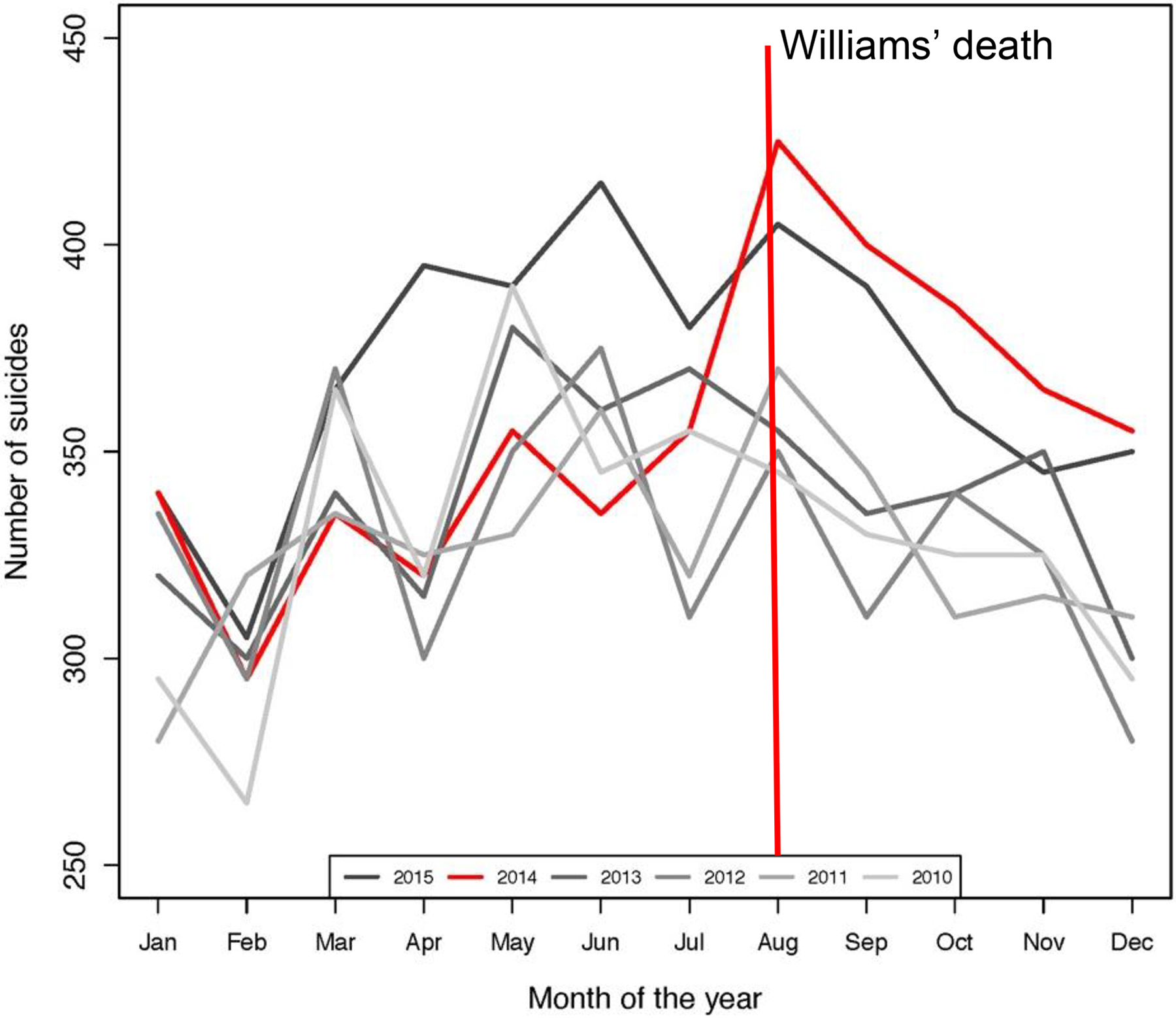
Monthly number of suicides in Canada, 2010 to 2015.
Predicted and Observed Suicides
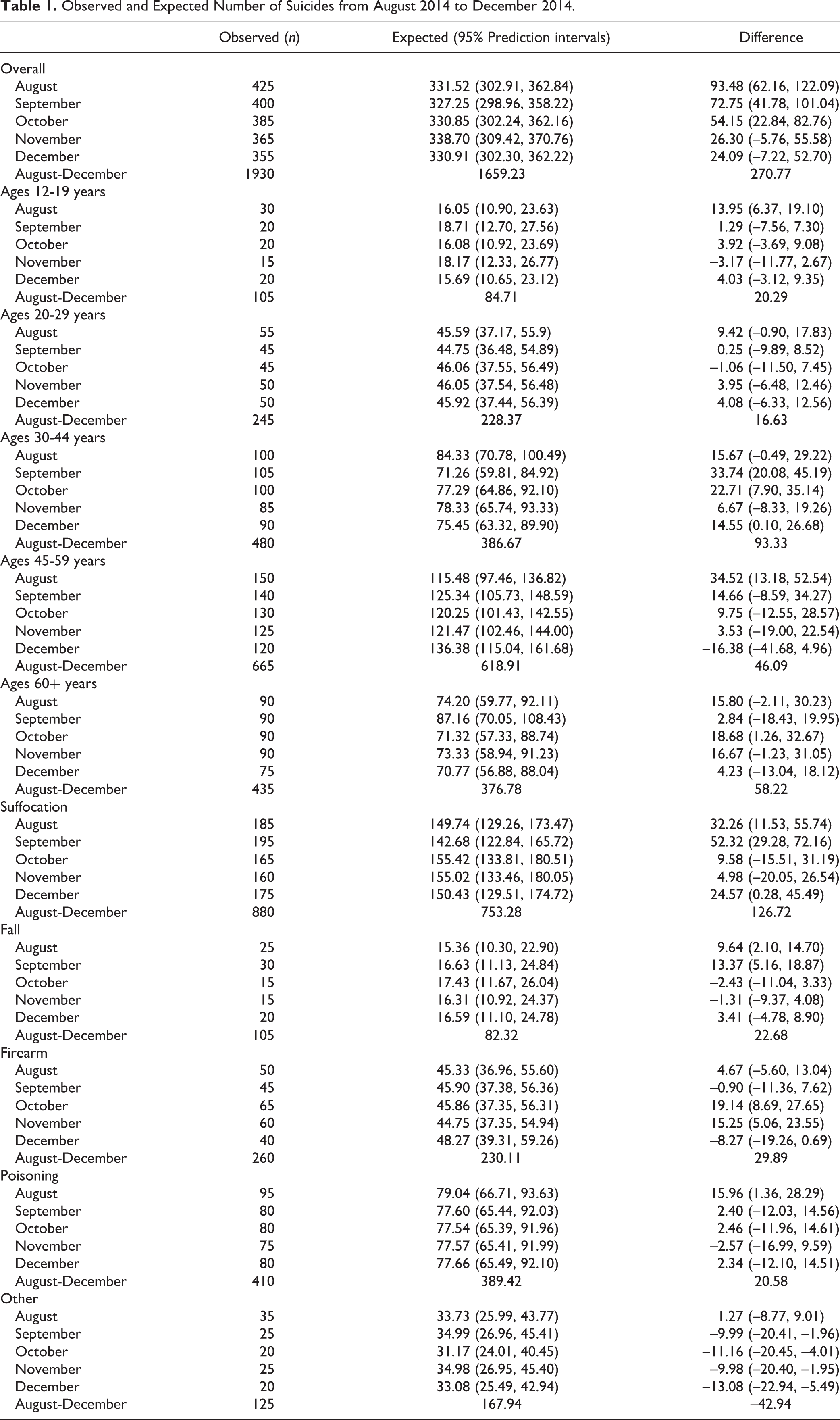
Figure 2 and Table 1 show the predicted and observed number of suicides in the months that followed Williams’ death in 2014. Although the predicted number of suicides and observed suicides followed parallel trends from January to July 2014, a much higher number of suicides were observed, compared to the predicted counts, in August 2014. The time-series model indicated an expected 1659 suicides from August to December 2014; however, 1930 suicides were observed in that period, suggesting an excess of 271 cases (16.32% increase). The observed suicides in the months August, September, and October were well above the upper-level 95% prediction interval and significantly higher than the analogous months in previous years.
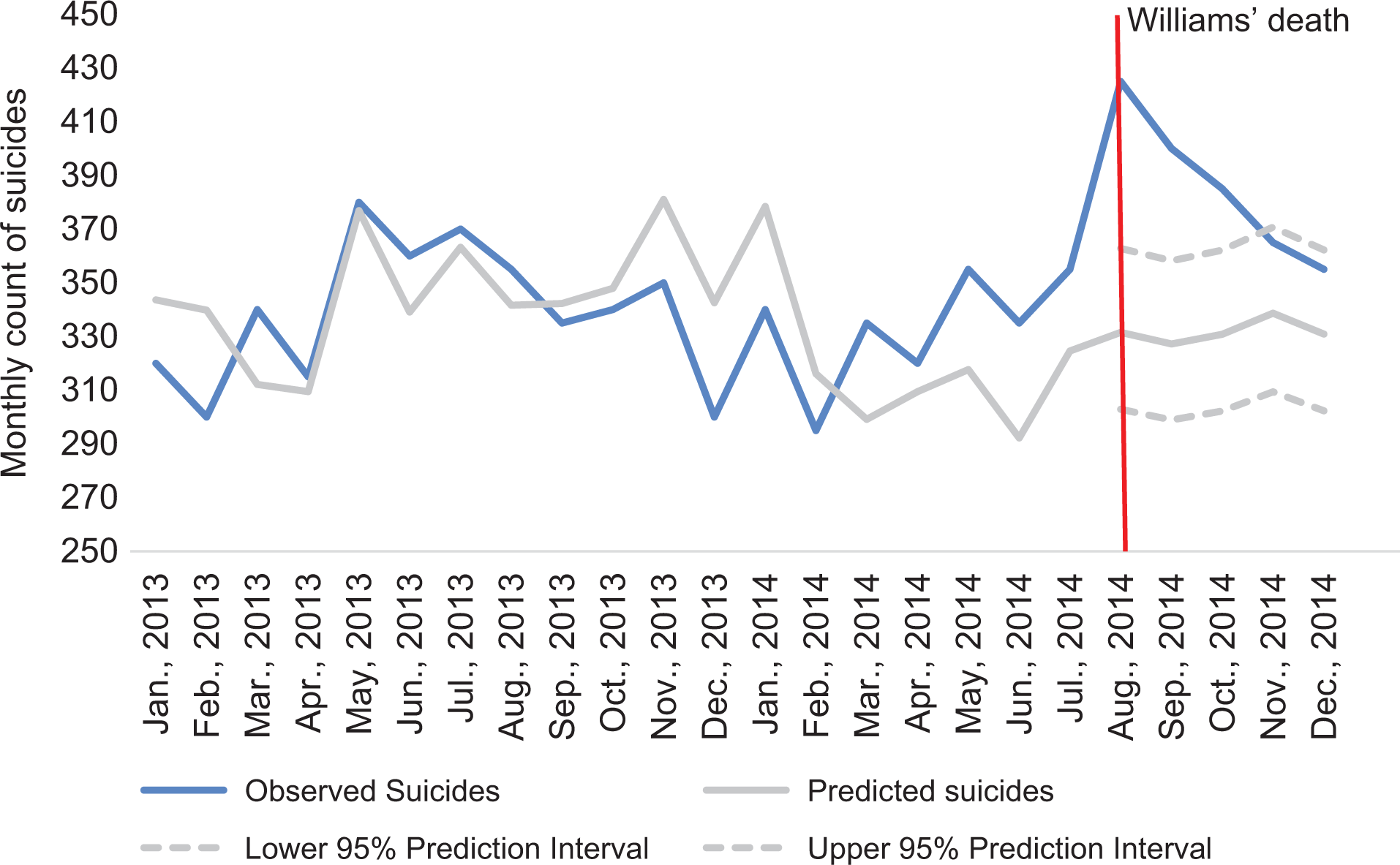
Observed and predicted monthly count of suicide, 2013 to 2014.
Observed and Expected Number of Suicides from August 2014 to December 2014.
Stratified Analysis
We stratified suicides by age, gender, and suicide method (see Figure 3 and Table 1). Figure 3 shows that the observed number of male suicides from August to December 2014 was significantly higher than the predicted number, consistently exceeding the upper 95% PI. In contrast, the number of female suicides exceeded the upper 95% PI in August, September, and October, intersecting with the predicted number of suicides in November. Table 1 shows that all age groups showed a higher number of suicides in August to December 2014, but this was particularly marked in people aged 30 and over. Relatedly, the actual number of suicides by suffocation (the method used by Williams) was significantly higher than that predicted by the model.
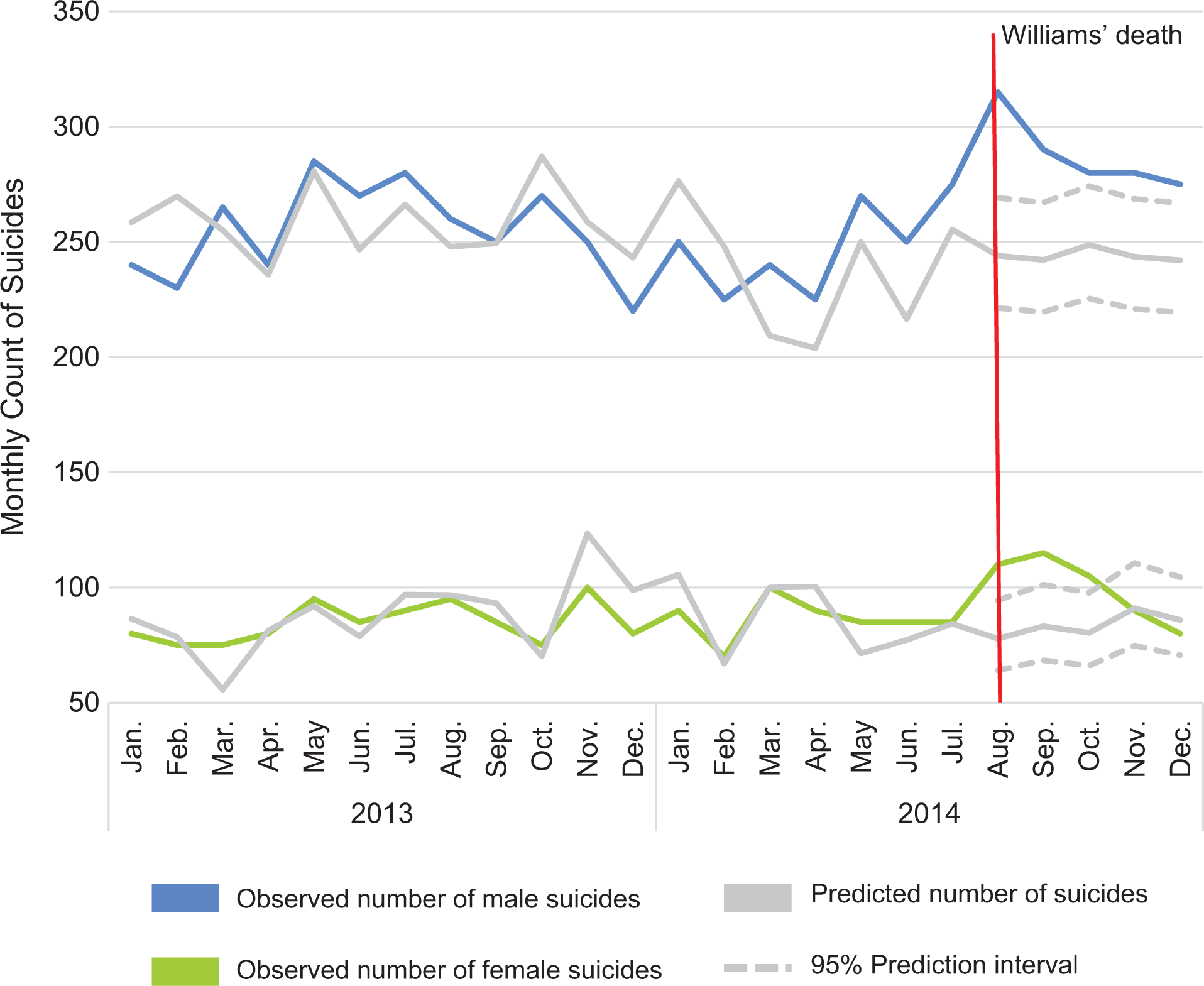
Observed and predicted monthly count of suicide stratified by sex, 2013 to 2014.
Validity Test
The results from the validity test used data from January 1999 to August 2013 for forecasting suicides from August 2013 to December 2013 (Figure 4). These indicate that the predictive model is highly sensitive, with a close overlap between observed and expected suicides for each month. Importantly, observed rates from August 2013 to December 2013 lie well within the 95% PIs.
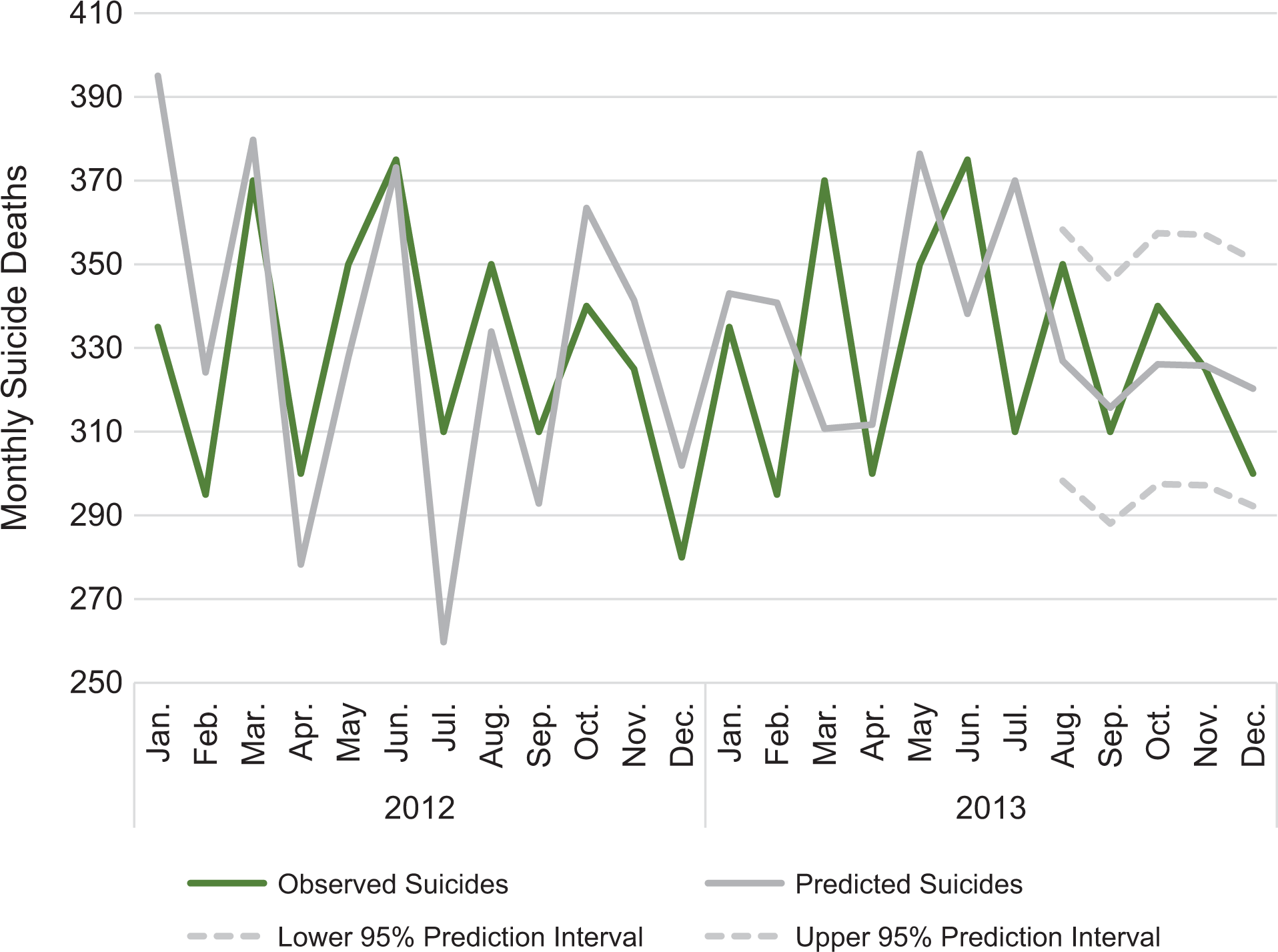
Model validity test comparing observed and predicted number of suicides in the 2 years prior to Robin Williams’ death, 2012 to 2013.
Interpretation
We found an increase in suicide mortality in Canada in the months following Robin Williams’ death. The suicide rates in these months were higher than those observed in the analogous months in previous years and higher than the predicted number of suicides based on time-series predictions. Excess suicides were concentrated among men 30 years of age and older, with an excess of suicides by suffocation, as predicted by the suicide contagion literature discussed in the introduction. 3 –5 These results are inconsistent with our hypothesis that suicides would be stable after Robin Williams’ death due to the high fidelity to the Mindset reporting guidelines observed in the Canadian media in a previous study. 14
These findings are consistent with other Canadian 9,11 and international studies, 2,3 which found evidence for excess suicide mortality after celebrity suicides. In particular, our results parallel the spike in suicides observed in the United States in the months after Williams’ death. 12 This excess suicide mortality in Canada is somewhat surprising, given that a previous study indicated that Canadian newspapers maintained high fidelity to the Mindset best practice guidelines on reporting suicide after Robin Williams’ death, with 85% (n = 66) following 10 or more of the 14 guidelines in the 30-day period following his death. 14 Indeed, other recent studies have indicated that mainstream Canadian media have significantly improved their coverage of suicide and mental health issues in general in recent years. 15 –17 This raises 5 separate issues.
First, the Canadian media did not follow the guidelines 100% of the time. Even though the observed violations consisted of a small proportion, it is possible that repeated violations can have a large negative impact on vulnerable readers, especially if these violations are egregious. For example, 24% (n = 16) of the articles went into details about the methods used, which has been linked to suicide contagion in many studies. 2,11 There is unlikely to be a simple dose-response relationship between fidelity to the guidelines and magnitude of impact on suicide behaviour. More research is necessary to better explore this relationship within sets of guidelines such as Mindset.
Similarly, the 14 recommendations listed in Mindset may not be entirely appropriate or sufficient in preventing suicide. The 14 guidelines cover many areas that have been identified as affecting suicide contagion, for example, “do not go into detail about the method used.” 5 That said, some of the recommendations are mostly grounded on common sense and theoretical postulates, rather than on empirically tested principles, for example, “don’t say the person ‘committed’ suicide.” Expanded, attenuated, or revised recommendations could have a different impact on suicide reporting and subsequent suicide mortality.
Second, merely reporting a high-profile suicide could lead to excess suicides, even if such reports are mainly sensitive and responsible. Indeed, some non-Canadian media guidelines recommend caution in reporting suicides at all. For example, the World Health Organization guidelines tell media professionals, “Don’t place stories about suicide prominently and do not unduly repeat such stories.” 18 Likewise, the South Korean Ministry of Health Suicide Reporting Guidelines ask journalists to “minimize reports on suicide.” 19 Mindset takes a contrary view, with one guideline stating, “Do not shy away from writing about suicide. The more taboo, the more the myth.”
Interestingly, several studies indicate that educational efforts with journalists can lead to a massive increase in the number of reports about suicide, including a 2-fold increase in 6 years in Australia 20 and a 4-fold increase in 3 years in Switzerland. 21 In the present study, we did not measure suicide reporting longitudinally, but a previous Canadian study indicated a 2-fold increase in reporting about mental health issues per se from 2005 to 2015. 15 Paradoxically, it is possible that an increase in volume of stories may increase suicidal behaviour by bringing this issue to prominence among vulnerable media consumers, even if the articles tend to follow recommendations. Indeed, a well-known study found a decrease in suicides after a reduction of articles reporting suicide in Austria. 22 As such, the value of prioritizing versus minimizing reports of suicide needs further research.
Third, some research indicates a large decline in newspaper readership and television viewing in Canada and elsewhere. 23,24 In contrast, there has been a massive increase in alternative media and social media consumption. Indeed, a recent industry report noted that Canadians are “spending more time visiting websites via desktop computers than anyone else in the world.” 25 Similarly, another survey found that the average Canadian spends over 4 hours per day consuming online social media. 26
While evidence suggests that the mainstream media in Canada have been significantly improving their coverage of suicide and mental health issues, there has been a lack of research of analogous coverage in social media and alternative media. Indeed, social media and alternative media contain a large variety of material related to suicide. Some material is positive, promoting helpful discussion and raising awareness of this important public health issue, while other material can be graphic, detailed, romanticizing, and glorifying. 27 As such, social and alternative media accounts of Robin Williams’ suicide may have been more sensational than the sensitive accounts in Canadian newspapers, playing a role in subsequent suicidal behaviour, but further research is necessary to investigate such speculation.
Fourth, it should be noted that Canada is saturated with US media, and many Anglo-Canadians consume US media voraciously. 28 This includes mainstream media outlets such as television, radio and online news, and social and alternative media. 23 It may be that Canadians’ knowledge, beliefs, behaviours, and attitudes about Robin Williams’ suicide are influenced by US media reports. However, to our knowledge, there has been no content analysis of US media reporting of Robin Williams’ suicide or analysis of reach of such reports into Canada. This implies the need for rigorous content analysis of US media reports of suicide per se, but particularly Robin Williams’ suicide, to assess fidelity to suicide reporting guidelines.
Fifth, it is possible that the high fidelity to the Mindset recommendations in the Canadian media actually led to a tapered increase of suicides, such that excess suicides would have been even higher with more irresponsible and sensational reporting. In other words, the observed high fidelity to Mindset may have prevented higher rates of suicide mortality and suicidal behaviour. However, this is impossible to assess in the present study, and further longitudinal research would be necessary to assess such possible effects.
There are limitations to this study. It cannot be stated with certainty that the death of Robin Williams caused an increase in suicide rates in Canada from August to December 2014. The observed increase in suicides could be due to abnormally random variation or to an unidentified confounding event. Although we cannot entirely rule out that these findings were due to abnormally random variation or to an unidentified confounding event, we find this unlikely for 2 reasons. First, the strength of the effects, as well as the overlap with the results from the United States, imply that Robin Williams’ suicide may have been a factor in the observed increase. Second, we investigated the validity of our model to accurately predict suicide counts during the same period (August to December) in 2013, the year prior to Williams’ death. The accuracy of the prediction in the validity test provides confidence that the model was correctly specified, suggesting it is unlikely that our findings result from abnormally random variation or model misspecification.
Another limitation is that according to its standard processing procedure, Statistics Canada rounds off stratified suicide statistics to the nearest 5. By rounding the true counts to the nearest 5, the reported number of suicides within each stratum may differ from the true count by ±2 deaths. Because any rounding of the true count is expected to vary randomly for each count within each stratum, the time-series model should produce unbiased estimates. Nonetheless, any measurement error caused by rounding would result in loss of precise information that may have affected the precision of estimates, particularly in strata with few observed numbers of suicides (e.g., 25 suicides from falling occurred in August).
A final limitation relates to the temporal units used in this study. Some older research indicates that excess suicides related to the Werther effect peaks at 3 days, with a progressive tapering in the following weeks. 28 Our study design used monthly units, which cannot capture daily manifestations of the Werther effect. That said, these older studies were conducted before the massive proliferation and diversification of media in recent years worldwide, including the rise of the Internet, social media, and 24-hour news. All of this can keep prominent news on the public agenda for weeks and months. Indeed, the results of our study, as well as those of the analogous US study, 12 suggest that the Werther effect window may have expanded in this age of social media.
To conclude, this study indicates excess suicide mortality in Canada after the death of Robin Williams. These findings overlap with other international and Canadian studies indicating excess suicides after a high-profile death by suicide. Such excess suicides have traditionally been blamed on irresponsible and sensational reporting by the mainstream media. However, in this case, the Canadian mainstream media reported Robin Williams’ suicide with high fidelity to national suicide reporting guidelines (Mindset). We note that social and alternative media sources are rapidly proliferating and replacing the mainstream media as a “go-to” source of information. These social and alternative media could have both positive and negative effects with regards to suicide contagion, but this is currently underresearched. As such, there is an urgent need for more research examining the changing landscape of media consumption and suicide risk, with a strong focus on the role of social media on suicide contagion.
Supplemental Material
Supplemental Material, supp_file_one_c_j_psych_robin_williams - Suicide Mortality in Canada after the Death of Robin Williams, in the Context of High-Fidelity to Suicide Reporting Guidelines in the Canadian Media
Supplemental Material, supp_file_one_c_j_psych_robin_williams for Suicide Mortality in Canada after the Death of Robin Williams, in the Context of High-Fidelity to Suicide Reporting Guidelines in the Canadian Media by Rob Whitley, David S. Fink, Julian Santaella-Tenorio and Katherine M. Keyes in The Canadian Journal of Psychiatry
Footnotes
Acknowledgments
We thank the Mental Health Commission of Canada for funding the study.
Data Access
The data for this study are not publicly available and were obtained for a fee from Statistics Canada. Interested readers can gain access to the raw data by contacting Statistics Canada.
Declaration of Conflicting Interests
The author(s) declared no potential conflicts of interest with respect to the research, authorship, and/or publication of this article.
Funding
The author(s) disclosed receipt of the following financial support for the research, authorship, and/or publication of this article: The study was funded by a grant (no grant number) from the Mental Health Commission of Canada to Rob Whitley (principal investigator). David Fink is supported by a National Institute of Drug Abuse (NIDA) training grant, number T32DA031099.

Supplemental Material
Supplemental material for this article is available online.
References
Supplementary Material
Please find the following supplemental material available below.
For Open Access articles published under a Creative Commons License, all supplemental material carries the same license as the article it is associated with.
For non-Open Access articles published, all supplemental material carries a non-exclusive license, and permission requests for re-use of supplemental material or any part of supplemental material shall be sent directly to the copyright owner as specified in the copyright notice associated with the article.
