




Abstract
Objective
Evidence suggests that the media can play a role in preventing suicide, as well as contributing to suicide contagion. As such, the primary objective is to assess adherence to responsible reporting of suicide recommendations in news articles about suicide over time. A secondary objective is to assess whether reporting changed significantly during the COVID-19 pandemic. The tertiary objective is to assess overall patterns regarding types of suicide reported.
Methods
We collected news articles with the keyword “suicide” from 47 Canadian news sources between April 1, 2019, and March 31, 2023. Articles were coded for adherence to key responsible reporting of suicide guidelines. Frequency counts and percentages of adherence were calculated for all key variables. Time series analyses using a Generalized Linear Autoregressive Moving Average model assessed for adherence trends over time, including measuring for any changes during the COVID-19 years.
Results
Study procedures resulted in 3,232 coded news articles. Overall, the results indicate that adherence to the guidelines has moderately improved over the course of the 4-year period. This is especially true for recommendations regarding avoiding putatively harmful content, such as detailed descriptions of the suicide method. Similar improvements were seen in adherence to guidelines related to the inclusion of putatively helpful content, with significantly more articles providing help-seeking information. However, in the final year of the study, less than a third of articles included educational content about suicide, help-seeking information, or quotes from suicide experts. Reporting of suicide during the COVID-19 period showed some positive improvements; however, these were not sustained after the pandemic ended.
Conclusions
On the plus side, adherence to responsible suicide reporting guidelines improved over the 4-year period, especially for recommendations concerning putatively helpful content. However, there remains room for improvement regarding the inclusion of putatively protective content such as including help-seeking information, educating about suicide, and quoting experts.
Introduction
Suicide remains a significant public health issue, with approximately 4,500 people in Canada dying by suicide every year. 1 The determinants of suicide are varied and complex; nonetheless, considerable epidemiological research reveals a phenomenon of suicide contagion or “copycat” suicide. This can manifest as a general increase in suicide rates following a highly publicized celebrity suicide2–4 or a localized surge in suicide mortality after a suicide in a discrete social environment. 5
The influence of the media in contributing toward suicide contagion in the general population has been extensively studied, giving rise to a concept known as the Werther effect.6,7 This term refers to the impact on suicide contagion arising from exposure to a certain type of suicide coverage in the media. 8 Research indicates that a Werther effect can occur in response to both fictional and nonfictional portrayals of suicide and may be more likely to occur when they include (i) repeated and/or prominent depictions, especially placed on the front-page or headline; (ii) reporting on a celebrity suicide or other highly identifiable individual; (iii) description of suicide method(s) in detail; (iv) suicide presented using monocausal or fatalistic language; and/or (v) romanticizing depictions.9–19
Conversely, the media can have a positive influence on consumers when reporting issues related to suicide, for example by raising awareness that suicide is preventable or directing people to available suicide prevention and mental health resources.16,17 In particular, articles that focus on survival in the face of suicidal crises (including resilience and recovery stories) have been demonstrated to reduce suicidality among media consumers. 17 This latter phenomenon is known as the Papageno effect.
Given this existing body of knowledge, various national and international organizations have developed and disseminated best practice guidelines to promote responsible reporting on suicide, including the World Health Organization (WHO). 20 There are two main sets of guidelines developed in Canada. The first was created by the Canadian Psychiatric Association (CPA) in 2009 (updated in 2017), containing recommendations about content to include or avoid when reporting suicide. 21 The second was developed by Canadian journalists in 2014 (updated in 2017 and 2020) in a booklet called Mindset. These guidelines include recommendations with accompanying explanations for reporting suicide and suicide issues, typically containing “do” and “do not” type bullet points. 22
These sets of guidelines share many commonalities, typically recommending journalists to avoid (i) including details about the method; (ii) sensationalizing or romanticizing the suicide, and (iii) using inappropriate language such as “successful” suicide. Similarly, they recommend that journalists include putatively protective elements such as (i) information about where to seek help; or (ii) educative content about suicide issues. As such, it is important to examine media adherence to suicide reporting guidelines, as low adherence may contribute to a Werther effect, while high adherence may foster a Papageno effect.23,24
In Canada, a small body of research has assessed adherence to suicide reporting guidelines in the media. For example, one study examined adherence after the suicide of Robin Williams. 25 Other studies, led by Sinyor and colleagues, assessed adherence in the Toronto media market, including media that is national in scope such as the National Post and The Globe and Mail.16,26 All these studies indicate higher adherence in some variables compared to others, and both show room for improvement. For example, the Robin Williams study found that 73% of articles did not give help-seeking information, while 24% of articles went into detail about the method used.
Similarly, an analysis of adherence to suicide reporting guidelines within 47 Canadian news sources over a 12-month period produced 1,330 coded media articles, again showing mixed results. 27 On the one hand, over 80% of articles did not give a monocausal explanation, include sensational language, or use discouraged words. On the other hand, there was low adherence to recommendations related to putatively protective content, with less than 25% including help-seeking information or educational content.
The aforementioned studies have contributed to a growing literature; however, there remains a lack of longitudinal research examining suicide portrayal in a broad range of regional and local media across Canada. Assessing time trends is important and has implications for corrective action, such as the development of educational interventions. Thus, the broad aim of the present study is to investigate adherence to responsible reporting of suicide guidelines over a multiyear period.
One unforeseen variable that affected the study was the COVID-19 pandemic, which occurred during the early years of data collection. Several organizations and experts raised concerns that the pandemic could impact suicidality, calling for renewed suicide prevention efforts, including responsible reporting on suicide.28–31 Such calls may have shifted coverage during the pandemic, which we set out to measure and analyze.
Given this situation, the primary objective is to assess adherence to responsible reporting of suicide recommendations in news articles about suicide over time. A secondary objective is to assess whether reporting changed significantly during the COVID-19 pandemic. The tertiary objective is to assess overall patterns regarding types of suicide reported.
Methods
To meet these aims, we collected news articles about suicide from a broad range of Canadian media over a 4-year period. We gathered news articles using Factiva, an online news database which contains articles from a wide range of Canadian media. However, Factiva eliminated a few of the included news sources from its database during the last year of the project, meaning that some of the selected online news sources became unavailable. We therefore used Google News to locate and retrieve articles from these news sources in the last year of the study period.
We selected 47 major English-language Canadian news sources (see Appendix 1), comprising three national newspapers, six major news websites and 38 metropolitan and regional newspapers. During the study period, The Lethbridge Sun Times became inaccessible in Factiva and Google News. Thus, from June 2022 onwards there were 46 news sources. All articles mentioning the word “suicide” from April 1, 2019, to March 31, 2023, were retrieved for analysis.
Coding
All articles were read and coded by two research assistants. The first research assistant coded the articles from April 2019 to September 2021 and the second one (JC) from September 2021 until the end of the study period. In a test of inter-rater reliability, both research assistants coded articles independently for each metric after supervision and training from the corresponding author (RW). The average κ score was 0.82 (range 0.44–1), which is evidence of excellent agreement. 32
The coding consisted of a two-step process. First, each article was carefully read and screened for inclusion in the study. Articles were excluded if they (i) mentioned suicide only in passing; (ii) used suicide as a metaphor, for example, “political suicide”; (iii) focused upon suicide-bombing; (iv) focused on euthanasia; or (v) were exact duplicates of a previous version in the same news source. All other articles were used as data. Second, the research assistants carefully reread the included articles assessing for the presence or absence of key responsible reporting of suicide guidelines using a purposely-built coding sheet.
Variables
To evaluate adherence, we developed a coding schema comprising key guidelines, listed below. Variables one through eight correspond to recommendations designed to mitigate potentially harmful content, while variables nine through 11 pertain to recommendations promoting potentially protective content. Nine of the variables are “yes/no” responses, while two included multiple responses:
The headline includes the word “suicide” or a synonym, for example, “shot themself” (yes/no). The article is located on the front page (not applicable/yes/no). The article mentions the suicide method used (yes-alludes to method e.g., “asphyxiation”/yes-a passing mention e.g., “hanging”/yes-detailed description/no). The article mentions the suicide location (yes/no). The article gives a monocausal explanation of suicide (yes/no). The article glamourizes/romanticizes the death, for example, describing it as “heroic” (yes/no). The article includes sensational language, for example, “suicide hotspot” (yes/no). The article uses discouraged words/phrases, for example, “committed suicide” (yes/no). The article provides help-seeking information, for example, a helpline number (yes/no). The article includes a quote by a suicide expert (yes/no). The article tries to educate the public about suicide and related issues (yes/no).
These variables (and their categorization as potentially protective or harmful) were derived from fundamental recommendations common to guidelines with relevance to the Canadian context, that is, those from the WHO,
20
the CPA,
21
and Mindset.
22
For example, the 2017 CPA guidelines state “seek advice from suicide prevention experts and consider including quotes,” while the 2023 WHO guidelines state “do educate the public with the facts about suicide and suicide prevention.” Moreover, these variables have been categorized as potentially protective in recent studies assessing suicide reporting.33,34
Furthermore, each article was categorized based on two criteria, namely, the focus of the piece and the primary suicide(s) discussed. The focus of the piece delineates the overarching topic of the article, categorized as: (i) suicide death, (ii) suicide attempt, (iii) fictional suicide, (iv) event/policy/research related to suicide, or (v) other. The primary suicide discussed pertains to the type of individual(s) who is the main subject of the article, classified as: (i) local community member, (ii) high-profile person (e.g., celebrity), (iii) murder-suicide, (iv) group of individuals, (v) fictional person, (vi) Indigenous person or group, or (vii) not focused on individuals. Additionally, when available, the age and gender of the suicide discussed were documented.
Data Analysis
Data
The “Days” variable was coded numerically: April 1, 2019, was considered Day 1, April 2, 2019, was considered Day 2, and so on. The last day, March 31, 2023, was considered Day 1,461. In total, 998 days had at least one coded news article about suicide.
A COVID-19 pandemic binary (i.e., indicator or dummy) variable was coded as 1 for days between March 12, 2020, and September 1, 2021, effectively considering the pandemic as ongoing during days 274–606. These 18 months were chosen as they represent the height of the pandemic, and the latter date was chosen as a cut-off as Canadian educational institutions returned to in-person classes that week, signalling some return to normality. To prevent steep jumps in the model, the COVID-19 indicator variable was smoothed using R function stats::loess(COVID indicator ∼ Days, degree = 2) with default settings. The predicted values from the loess smoothers were used as the COVID-19 variable in the Generalized Linear Autoregressive Moving Average (GLARMA) model. COVID-19 effects reported for the models were robust to smoothing (see below).
The Placement variable was binary-coded as 1 if placement was on the front page and 0 otherwise. The Suicide Method variable was binary-coded as 1 if the suicide method was mentioned in detail and 0 otherwise. All other variables were collected as 0–1 binary variables and thus were not recoded.
Modelling
The 11 daily time series of n realizations of “success” or “failure” were modeled as daily measures of binomial random variables, where n corresponds to the number of articles analyzed on a given day. To account for auto-correlational structures and time-dependence, a GLARMA model was chosen, estimated using the glarma package. 35
Lags for the Moving Average component of the model were accounted for order 1 and order 2. No lags for the Autoregressive component were deemed necessary. These lag parameters were chosen after evaluating model diagnostics for a handful of plausible choices. The order 1 and 2 theta lags for most variables were highly significant, except for a few cases which were close to P < 0.05 threshold. In all cases, the Auto-Correlation Function plots showed adequate residual temporal correlations. The residuals used during fitting were measured on the Pearson scale and showed no worrisome patterns when plotted.
The retained model form was glarma::glarma(y = y, X = X, thetaLags = c(1,2), type = “Bin,” residuals = “Pearson”), where y contained 2 columns, the number of “successes” and the number of “failures” for a given day; X contained a column of 1 s for the model intercept, a column with Days variable coded numerically as described above, and a final third column with the predicted values of the smoothed COVID-19 indicator variable as described above. Poisson and Negative binomial variables were also used for the GLARMA model.
The default Likelihood-Ratio Tests and Wald tests provided for the GLARMA model component were all highly significant, indicating it captured important temporal complexity in the data, except for Placement, the only variable where this was not true. This suggests that the additional complexity of using GLARMA might not have been necessary to properly assess the temporal trends of the Placement variable only, but was highly impactful for all other variables.
In the spirit of inferential conservatism, the alpha significance threshold was adjusted using Bonferroni's correction for 11 tests. All analyses were done using R version 4.3.2 (2023-10-31 ucrt). 36
Results
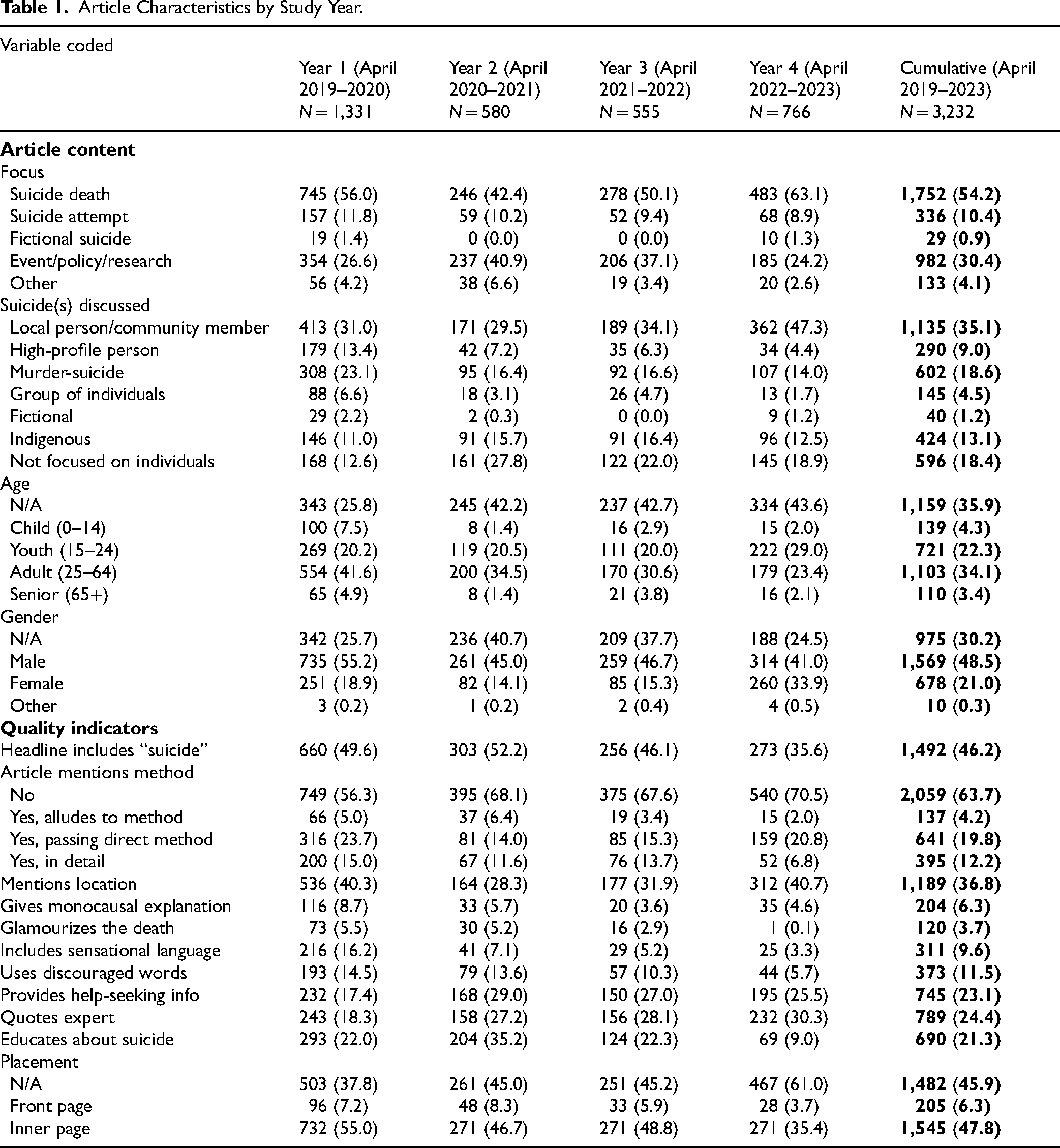
A total of 3,232 articles were retrieved and retained for analysis over the 4-year period. In terms of focus, 54% of articles focused on a suicide death, while 30% focused on suicide-related events/policy/research. In terms of primary suicide discussed, local individuals made up 35% of articles, while 19% discussed murder-suicide and 13% were not focused on individuals; 9% discussed a high-profile suicide (see Table 1).
Article Characteristics by Study Year.
The time series analyses show that adherence to the guidelines has moderately improved over the course of the study, with nine of the 11 guidelines having significant improvement (see Figures 1–3, and Table 2). For example, there was a significant increase in articles including a quote by a suicide expert and in those providing help-seeking information, while there was a significant decrease in articles using sensational language, discouraged words, glamourizing the death, or including the word “suicide” or a synonym in the headline. Moreover, there was a significant decrease in articles mentioning the suicide method in detail, giving a monocausal explanation of suicide, or front-page articles, although adherence to these guidelines remained high throughout the study period.
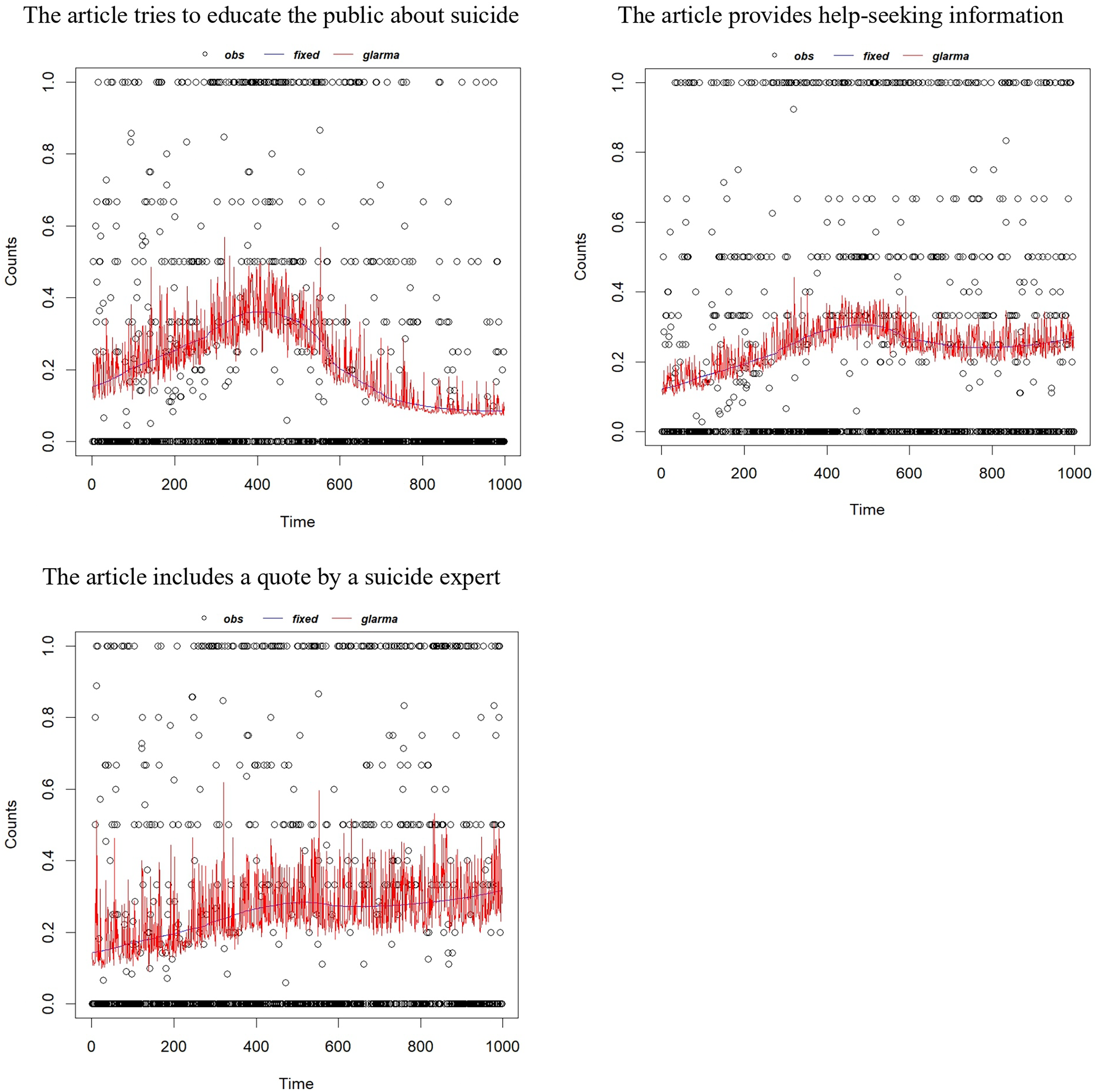
Time trends regarding variables related to potentially protective proactive content.1,2
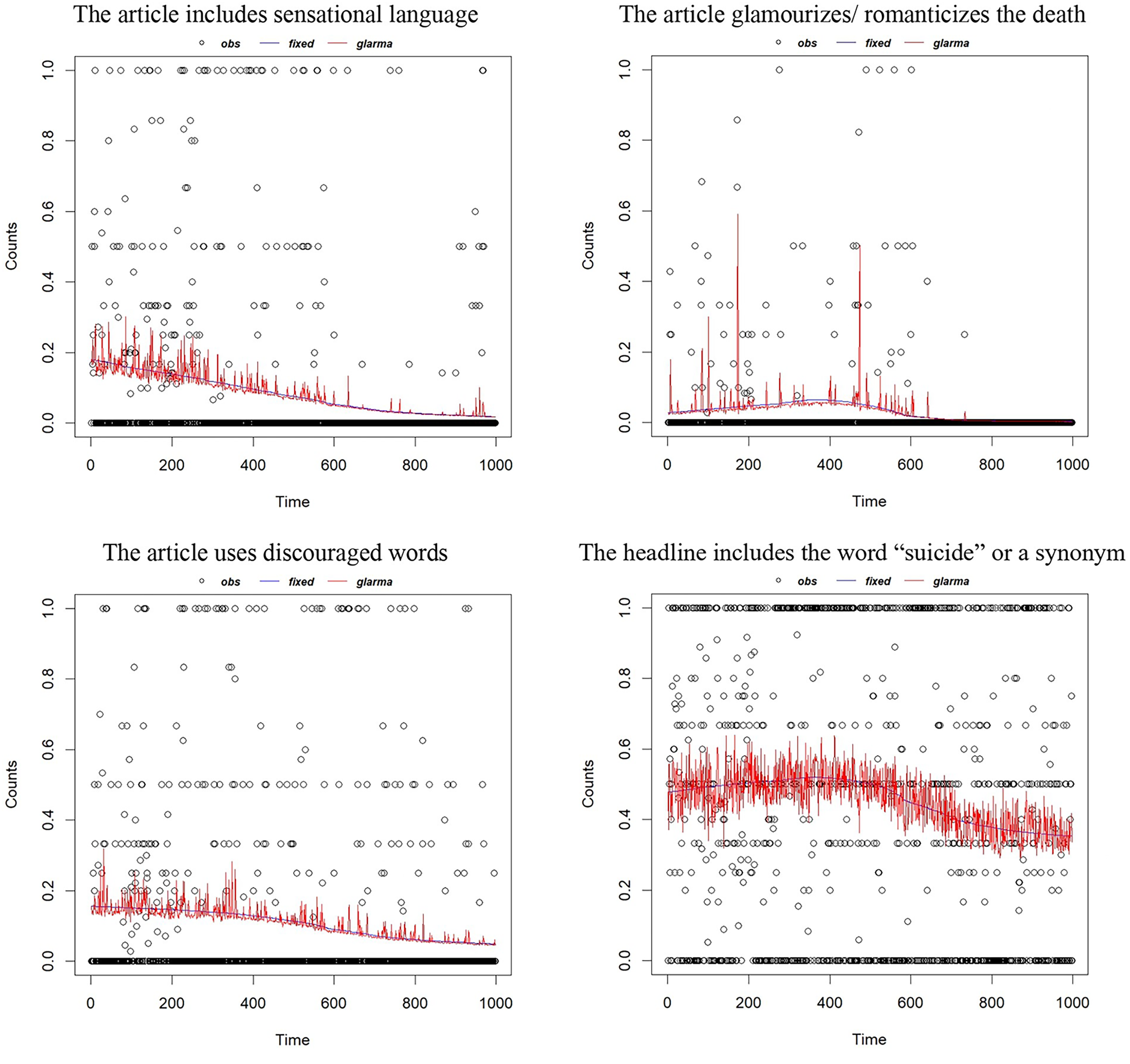
Time trends regarding variables related to discouraged linguistic content.
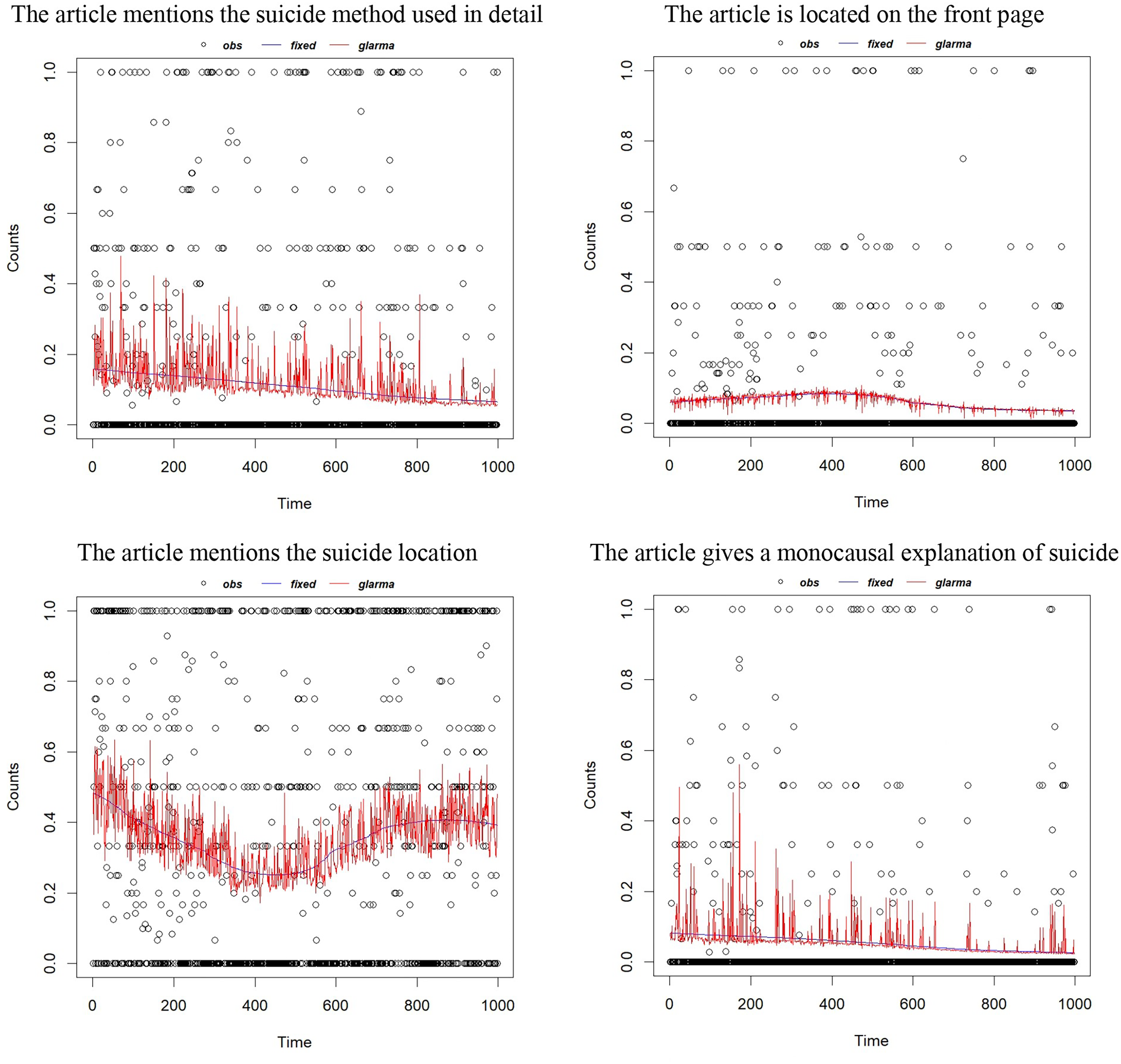
Time trends related to variables related to discouraged practices.
Estimates, Standard Errors, and P Values for all 11 Guidelines Measured.
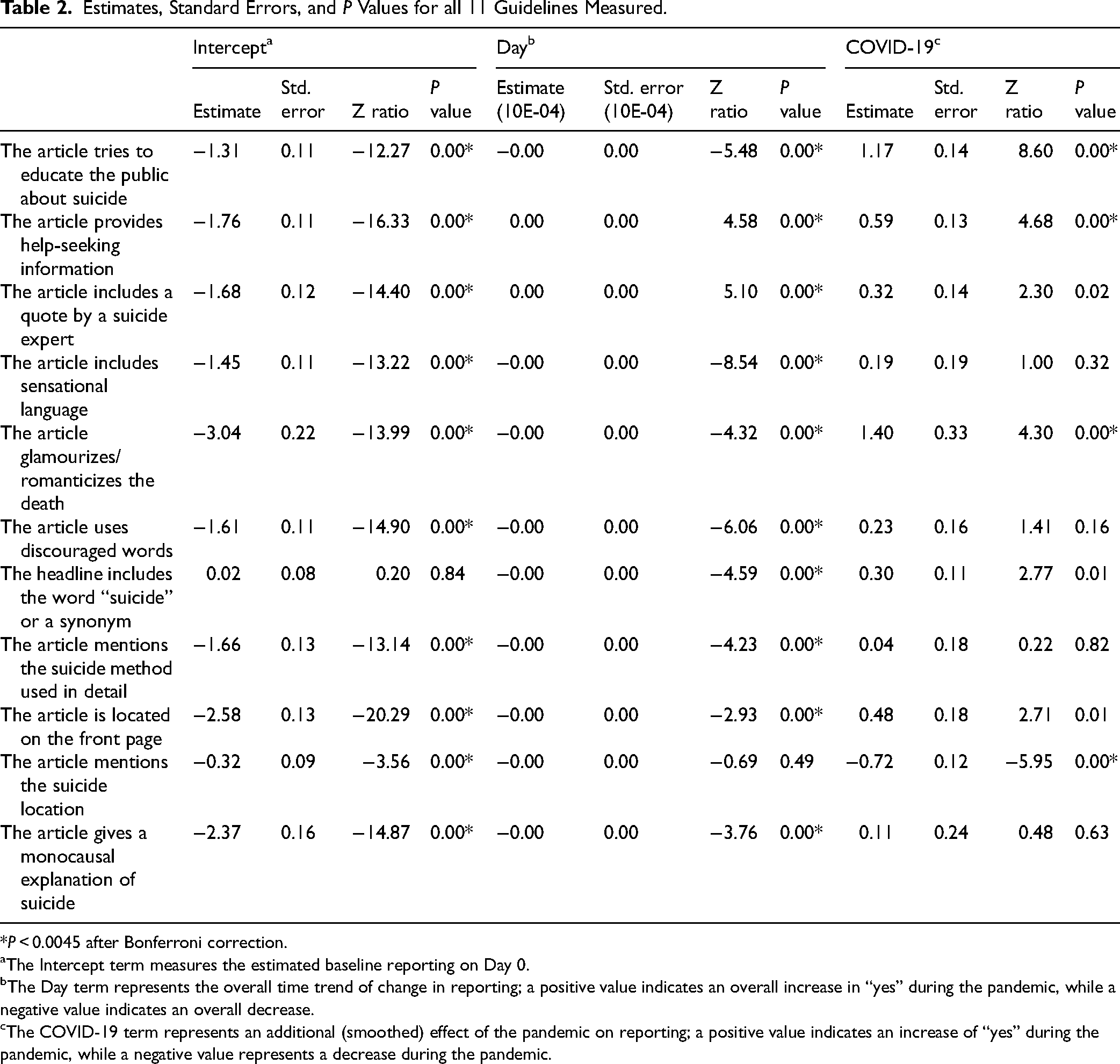
*P < 0.0045 after Bonferroni correction.
The Intercept term measures the estimated baseline reporting on Day 0.
The Day term represents the overall time trend of change in reporting; a positive value indicates an overall increase in “yes” during the pandemic, while a negative value indicates an overall decrease.
The COVID-19 term represents an additional (smoothed) effect of the pandemic on reporting; a positive value indicates an increase of “yes” during the pandemic, while a negative value represents a decrease during the pandemic.
While most variables showed improvements, one variable significantly worsened over the study period: educating the public about suicide. This was not a simple linear decrease, but an initial upward trend significantly peaking during the COVID-19 period, followed by a subsequent downward trend after COVID-19 (see Figure 1 and Table 2).
Interestingly, such improvements during the COVID-19 period were also seen with some other guidelines. As seen in Figure 1, the percentage of articles providing help-seeking information peaked during the pandemic. Similarly, articles mentioning the suicide location reached their nadir during this period (see Figure 3). However, there was a small but significant increase in articles glamourizing suicide during the COVID-19 period (see Figure 2 and Table 2).
In terms of article content, patterns showed some variation over the years, usually because of differences in newsworthy suicides during a certain year (see Table 1). For example, reporting on murder-suicides decreased over time (14% in Year 4 vs. 23% in Year 1). Interestingly, the proportion of event/policy/research articles increased over the first 36 months, likely due to the focus on the COVID-19 pandemic, but decreased over the last year as the situation improved. Of note, the number of suicide articles halved from Year 1 (n = 1,331) to Year 2 (n = 580), perhaps due to other news priorities during the beginning of the COVID-19 pandemic. The count increased slightly in Year 4, reaching 766 articles.
To close the results, it is worth examining suicide reporting in the final year of the study. On the plus side, a negligible number of articles glamourize or sensationalize suicide, and less than 10% describe in detail the method used, give monocausal explanations, or use discouraged words. All these represent improvements from Year 1. That said, only 9% educate the public about suicide, 26% provide help-seeking information, and 30% quote an expert, meaning there remains room for the better incorporation of potentially protective content.
Discussion
The key finding of this study is that adherence to the guidelines has moderately improved over the course of the 4-year period. This finding is especially true for recommendations urging journalists to omit or avoid certain words, portrayals, or details. For instance, there was a downward trend in articles (i) including sensational language; (ii) glamourizing the death; (iii) using discouraged words; (iv) including the word “suicide” or a synonym in the headline; (v) describing the suicide method in detail; (vi) giving a monocausal explanation of suicide, and (vii) articles located on the front page. This is a positive development, as such content has been associated with a Werther effect, as discussed in the introduction.9–18
Improvements can be seen in adherence to guidelines related to the inclusion of putatively helpful content. For example, there was an upward trend in articles providing help-seeking information and in those including a quote from a suicide expert. This is encouraging, as the inclusion of such content may be linked to a Papageno effect.16,17
However, there remains room for improvement, particularly regarding recommendations related to the inclusion of putatively helpful information, which remained relatively low, even in the final year of the study. For example, less than a third of articles included (i) educational content about suicide; (ii) help-seeking information; or (iii) a quote from a suicide expert.
These findings converge with the Sinyor et al. study, 26 comparing adherence of articles focusing on suicide in the Toronto media market before and following the implementation of a national media engagement initiative. Indeed, the Sinyor study found a decrease in articles containing putatively harmful content and an increase in those containing putatively protective content, while noting the room for improvement regarding adherence to some variables, such as avoiding describing the suicide method in detail.
Another key finding of this study relates to responsible reporting of suicide during the COVID-19 pandemic. Seven of the 11 variables showed no significant change during the COVID-19 period. However, significantly more articles provided help-seeking information and tried to educate the public about suicide during COVID-19. These findings converge with another study indicating that articles about suicide related to COVID-19 in Canada contained significantly more putatively helpful content than articles about suicide unrelated to COVID-19. 37 It may be that the COVID-19 pandemic heightened awareness of suicide among journalists, prompting them to adhere more closely to responsible reporting of suicide guidelines. 31 However, our study indicates that some of these gains have been lost since the end of the pandemic.
Limitations of the Study
This study presents some limitations. First, our article retrieval process was limited to the use of the search term “suicide,” potentially overlooking relevant articles using other terms, such as “took their own life.” Second, we were limited to the articles available on the Factiva database, some of which became unavailable during the study period, prompting us to use a different retrieval method (Google) for some news sources at the end of the study. Third, the study exclusively focused on Canadian media, omitting U.S. media, which has significant influence in Canada. Fourth, the determination of the COVID-19 period start and end dates was somewhat arbitrary, as there were no official dates marking the pandemic's onset and conclusion. Fifth, all news sources were treated equally, though their impact likely varies based on size and reach. Lastly, the study's exclusive focus on mainstream traditional media overlooks other important forms of media consumption, such as social media, which plays an increasingly important role in the news landscape. We strongly recommend that future research examine social media, as many people now rely on it exclusively for news.
Finally, we selected the 11 variables based on recommendations that commonly appear in the different sets of guidelines, categorizing them accordingly as potentially protective or potentially harmful. However, one Austrian ecological study found that a spike in articles reporting “expert opinion” and “epidemiological facts” were positively associated with short-term suicide rates, 17 suggesting such content may be harmful rather than protective. The authors explained this correlation by noting that these articles “tended to be intertwined with unfavourable, sensationalist contents.” Clearly, their variables “expert opinion” and “epidemiological facts” overlap with our own variables “include an expert quote” and “educate the public,” suggesting that we may have miscategorized them as potentially protective.
Nevertheless, it is important to note that this study collected data in Austria in 2005, a very different reality from Canada in the present. For example, there has been considerable education and resources targeted at Canadian journalists on responsible suicide reporting, which includes admonitions to avoid sensationalist content. This may have been successful, given that less than 1 in 10 articles in the present study (and only 3% in the final year) contained sensational content, suggesting that the “intertwining” observed in the Austrian study is rare in the present study. That said, a limitation of the present study is that it did not include qualitative content analysis of the type of content conveyed by experts, nor type of education provided. Further qualitative research could examine sub-themes within these two categories to better assess whether content is harmful or protective.
Conclusion
This longitudinal study examined suicide reporting in Canada over 4 years. Time series analyses indicated that overall adherence to responsible suicide reporting guidelines improved over time. Improvements are especially marked in guidelines which emphasize sensitive language use and omission of certain details that might contribute toward suicide contagion. However, there remains room for improvement in including putatively helpful content, such as help-seeking information. Future interventions should encourage journalists to use their expertise to further diversify their writing about suicide so that it contains informative and educational information that may help prevent suicide.
Supplemental Material
sj-docx-1-cpa-10.1177_07067437241309677 - Supplemental material for A Time-Series Analysis of News Media Coverage of Suicide in Canada from 2019 to 2023: Une analyse de séries chronologiques de la couverture responsable du suicide par les médias au Canada de 2019 à 2023
Supplemental material, sj-docx-1-cpa-10.1177_07067437241309677 for A Time-Series Analysis of News Media Coverage of Suicide in Canada from 2019 to 2023: Une analyse de séries chronologiques de la couverture responsable du suicide par les médias au Canada de 2019 à 2023 by Juliette Careau, Justin Bélair and Rob Whitley in The Canadian Journal of Psychiatry
Footnotes
Acknowledgments
The authors would like to thank the Mental Health Commission of Canada for funding the study. The authors also thank Lara Antebi for her assistance in the early stages of the project.
Data Access
The data for this study consists of news media articles published in Canadian news media that were obtained via paid subscription to the Factiva software. Due to reasons of copyright and proprietary, we cannot make this data publicly available in a supplemental file.
Declaration of Conflicting Interests
The authors declared no potential conflicts of interest with respect to the research, authorship, and/or publication of this article.
Funding
The authors disclosed receipt of the following financial support for the research, authorship, and/or publication of this article: This research was funded by the Mental Health Commission of Canada (Commission de la santé mentale du Canada).

Supplemental Material
Supplemental material for this article is available online.
References
Supplementary Material
Please find the following supplemental material available below.
For Open Access articles published under a Creative Commons License, all supplemental material carries the same license as the article it is associated with.
For non-Open Access articles published, all supplemental material carries a non-exclusive license, and permission requests for re-use of supplemental material or any part of supplemental material shall be sent directly to the copyright owner as specified in the copyright notice associated with the article.
