




Abstract
Background
Long non-coding RNAs (lncRNAs) in serum were useful and promising biomarkers for diagnostic and prognostic application. Herein, we investigated the serum lncRNA LINC00339 expression and its role in nasopharyngeal carcinoma.
Methods
In this study, we recruited a cohort of 129 nasopharyngeal carcinoma patients, 68 patients with nasopharyngitis, and 80 healthy controls. Serum LINC00339 levels were measured by reverse transcription-quantitative polymerase chain reaction. Receiver operating characteristic (ROC) and Kaplan–Meier curve analyses were conducted to evaluate th e clinical role of LINC00339. The effects of linc00339 on cellular activities were measured using CCK-8 and Transwell assays.
Results
We observed that serum LINC00339 expression was upregulated in nasopharyngeal carcinoma patients and closely associated with tumor node metastasis stage, lymph node metastasis, and overall survival rate. Meanwhile, ROC analysis showed serum LINC00339 had diagnostic value to distinguish nasopharyngeal carcinoma patients from healthy individuals and nasopharyngitis patients. Silencing of LINC00339 could repress cellular behaviors by targeting miR-152.
Conclusion
This study clarified that LINC00339 was upregulated in nasopharyngeal carcinoma, and that serum LINC00339 may act as a diagnostic or prognostic marker, and a hopeful therapeutic target for patients with nasopharyngeal carcinoma.
Introduction
Nasopharyngeal carcinoma (NPC) is a kind of malignant tumor originating from the epithelium of human nasopharyngeal mucosa, which mainly occurs in the posterior wall and lateral wall of the nasopharyngeal top. 1 Radiotherapy is the most promising and effective treatment for early-stage patients due to its sensitivity to radiation. 2 The survival outcome of early-stage NPC patients is good, and the progress of radiotherapy and chemotherapy makes the 5-year overall survival rate of some patients reach 80%. 3 The gemcitabine, cisplatin, and immunotherapy are standard first-line treatments for advanced NPC. 4 However, the outcomes for patients at the middle or late stage are still far from expectations, mainly due to distant metastasis and recurrence of tumor cells. The pathogenesis of NPC has not been fully defined, and it is currently believed to be the result of the interaction between genetic and environmental factors; Epstein-Barr virus infection is also believed to be an important factor. 5 Exploring molecular markers significantly related to the diagnosis, treatment, and prognosis of NPC is of great significance for improving its diagnosis and treatment.
Approximately 97% of human genes are non-coding genes, and non-surface transcripts include long non-coding RNA (lncRNA) and microRNAs (miRNAs), among which lncRNAs are a group of non-coding RNAs that cannot encode proteins and are longer than 200 nucleotides. Increasingly, studies have demonstrated that lncRNAs play an important role in the formation and progression of tumors as a new regulatory factor, which has become a research hotspot in the field of cancer.6,7 Some lncRNAs are abnormally expressed in NPC and play a key role by altering the expression of their specific targets—miRNAs or messenger RNAs.8,9 For instance, lncRNA FAM225A facilitates NPC cell proliferation, migration, tumor growth, and metastasis by binding to miR-1275 and miR-590-3p and upregulating ITGB3. 10 LINC00339, a new budding lncRNA, is abnormally expressed and associated with clinical features in many diseases, including tumors.11,12 LINC00339 functions as an oncogenic role in multiple cancers, such as hepatocellular carcinoma, 13 glioma, 14 and non-small cell lung cancer. 15 The evidence implies that LINC00339 may also have key roles in the progression of NPC. However, whether LINC00339 has a regulatory role in NPC remains unknown.
Herein, the serum LINC00339 expression was examined in Chinese NPC patients and healthy controls. Then the clinical implication and the prognosis of LINC00339 expression in NPC patients were analyzed. The biological role of LINC00339 in NPC cells was also explored.
Materials and methods
Participants
This study was approved by the Medical Ethics Committee of Qingdao Chengyang People's Hospital (IRB number: 2017-011). All the participants signed written informed consent before sampling. A total of 129 patients with histologically diagnosed NPC (age range: 30–75 years; 2017 AJCC staging system) who were admitted to Qingdao Chengyang People's Hospital from June 2017 to June 2019 were enrolled in this study (76 males and 53 females). At the same time, 68 nasopharyngitis patients (age range: 27–72 years) were also enrolled in this study (39 males and 29 females). Patients with nasopharyngitis were diagnosed based on patients’ clinical symptoms and computed tomography scans. Also, 80 healthy individuals (age range: 28–73 years) who underwent physical examination in our hospital were selected as the healthy control (48 males and 32 females).
The inclusion criteria for NPC patients were: (a) all patients underwent nasopharyngeal biopsy and were pathologically confirmed to be primary NPC; (b) no chemoradiotherapy or biological therapy was received before inclusion in the study; (c) the patients had no serious dysfunction of the heart, liver, or kidney, and were able to tolerate chemoradiotherapy; and (d) patients had complete available medical records and follow-up data.
Sample collection
All the participants volunteered to provide serum samples. A total of 3 mL venous blood was collected from participants, centrifuged at 3000 r/min for 10 min to separate serum, and stored at −80°C for later use.
Cell line culture and transfection
The human NPC cell lines C666-1, NPC-TW01, NPC-TW04, and NPC-BM1, and one human nasopharyngeal epithelial cell NP69 were obtained from the Cell Bank of Shanghai Institutes for Biological Sciences (Shanghai, China). All cells were maintained in DMEM (Gibco) with 10% FBS (Gibco) at 37°C in a 5% CO2 atmosphere.
Small interference RNA of LINC00339 (si-LINC00339) and small interference negative control (si-NC) were obtained from GenePharma (Shanghai, China). The transfection was performed in NPC cells using lipofectamine 2000 (Invitrogen). After 24 h of transfection, the expression of LINC00339 was validated in each group and subsequent experiments were carried out.
LINC00339 expression detection
Total serum RNA was extracted by TRIzol reagent (Invitrogen) from serum samples and cell lines. Reverse transcription was performed using a Primescript RT reagent kit with gDNA Eraser (Takara, Dalian, China). The polymerase chain reacton (PCR) was performed using ABI SYBR® Green PCR Master Mix (Takara). The LINC00339 levels were assessed with the 2−ΔΔCt method and normalized to GAPDH.
Cell proliferation assay
NPC cells (3000 cells/well) were seeded in 96-well plates after transfection. The cell proliferation was measured using CCK-8 (Dojindo, Kumamoto, Japan) at 0, 24, 48, and 72 h. The absorbance was measured at 450 nm using a microplate spectrophotometer.
Transwell migration and invasion assays
The abilities of cell migration and invasion were assessed using Transwell (pore size 8 μm) assay. The upper and lower chambers were filled with fetal bovine serum (FBS)-free medium and complete medium with 10% FBS that were separated by a polycarbonate membrane. For invasion assay, Matrigel (BD) was precoated in the upper chamber. Established NPC cells in suspensions were seeded in the upper chamber. After 48 h of culture, the cells on the lower surface were stained with crystal violet and counted under a light microscope.
Bioinformatics analysis and dual-luciferase activity assay
The target miRNAs of LINC00339 were predicted using online algorithms lncRNASNP2 (http://bioinfo.life.hust.edu.cn/lncRNASNP#!/). The wild-type LINC00339 (wt-LINC00339) sequences containing miR-152 binding sites or mutant LINC00339 (mut-LINC00339) sequences were amplified and cloned into the pmiR-GLO vector (Promega, Beijing, China). Then the wt-LINC00339 or mut-LINC00339 were transfected into NPC cells with miR-152 mimic or mimic negative control (NC). After 48 h of transfection, the activities of luciferase were determined by a dual-luciferase reporter assay system (Promega).
Statistical analysis
Data were analyzed using one-way ANOVA with the help of GraphPad 7.0 or SPSS 26.0. Kaplan–Meier survival curve and log-rank test were used to analyze the prognosis of patients with NPC. A Multivariate Cox proportional risk regression model was used to explore the factors affecting the prognosis of patients with NPC. Receiver operating characteristic (ROC) curve and area under the ROC curve (AUC) were conducted to measure the diagnostic performance of the LINC00339. P < 0.05 was considered statistically significant.
Results
The LINC00339 expression in different groups and its diagnostic performance
The demographic information (age and sex) of the three groups (healthy, nasopharyngitis, and NPC) has no statistical difference. Compared with healthy controls (1.006 ± 0.162), the serum LINC00339 expression levels in nasopharyngitis patients (1.026 ± 0.184) have no statistical difference, while the levels in NPC patients (1.579 ± 0.351) were upregulated (P < 0.001, Figure 1(a)). Subsequently, we analyzed the diagnostic performance of LINC00339. As shown in Figure 1(b) and (c), serum LINC00339 levels could distinguish NPC patients from healthy controls (AUC = 0.932) and nasopharyngitis patients (AUC = 0.918).
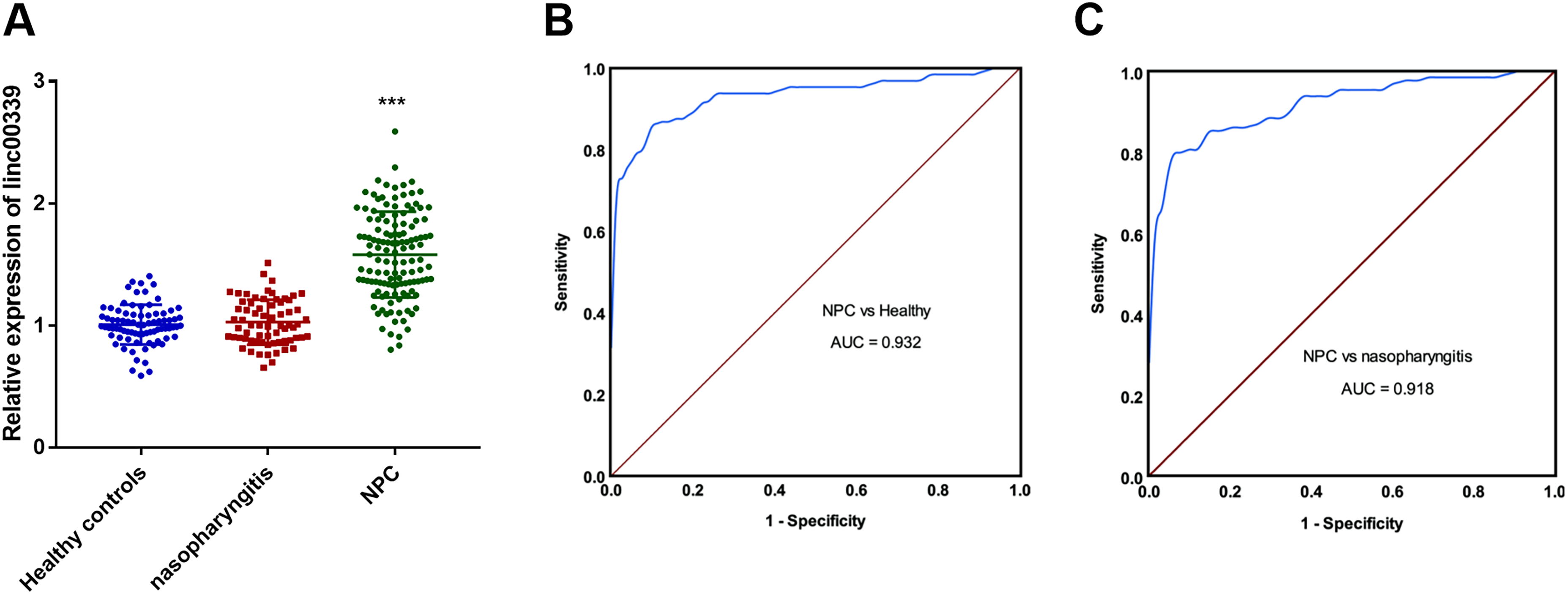
The serum LINC00339 levels in NPC patients. (a) The serum LINC00339 levels were higher in NPC patients than in healthy controls and nasopharyngitis patients. ***P < 0.001. (b) The serum LINC00339 expression levels could distinguish NPC patients from healthy individuals. AUC = 0.932. (c) The LINC00339 levels could distinguish NPC patients from nasopharyngitis patients. AUC = 0.918.
Relationship between serum LINC00339 levels and clinical characteristics of NPC patients and its prognostic value
The relationship between serum LINC00339 levels and clinical features of patients was analyzed. The results showed that serum LINC00339 levels have no significant correlation with age, sex, T stage, histologic type, and infiltration depth. The higher tumor node metastasis (TNM) stage (P = 0.005) and lymph node metastasis (P = 0.011), the patients have a higher LINC00339 level rate (Table 1).
Relationship between the expression of LINC00339 in serum and clinical features in patients with NPC.
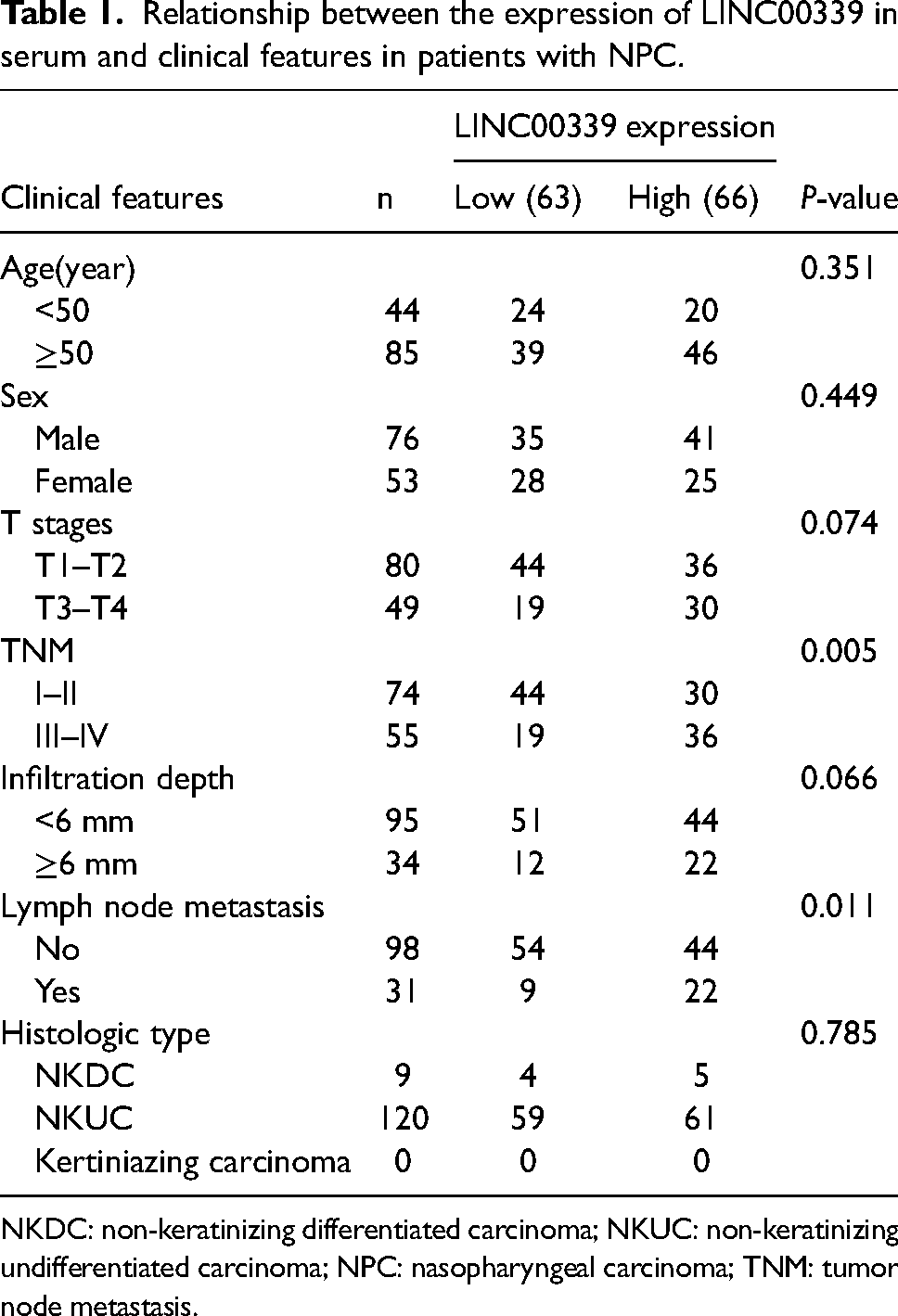
NKDC: non-keratinizing differentiated carcinoma; NKUC: non-keratinizing undifferentiated carcinoma; NPC: nasopharyngeal carcinoma; TNM: tumor node metastasis.
The Kaplan–Meier curve showed that patients with high serum LINC00339 levels had a shorter overall survival rate (log-rank P = 0.016, Figure 2(a)). The multivariate Cox analysis results showed that high serum LINC00339 expression was a prognostic risk factor in NPC (P = 0.009, Figure 2(b)).
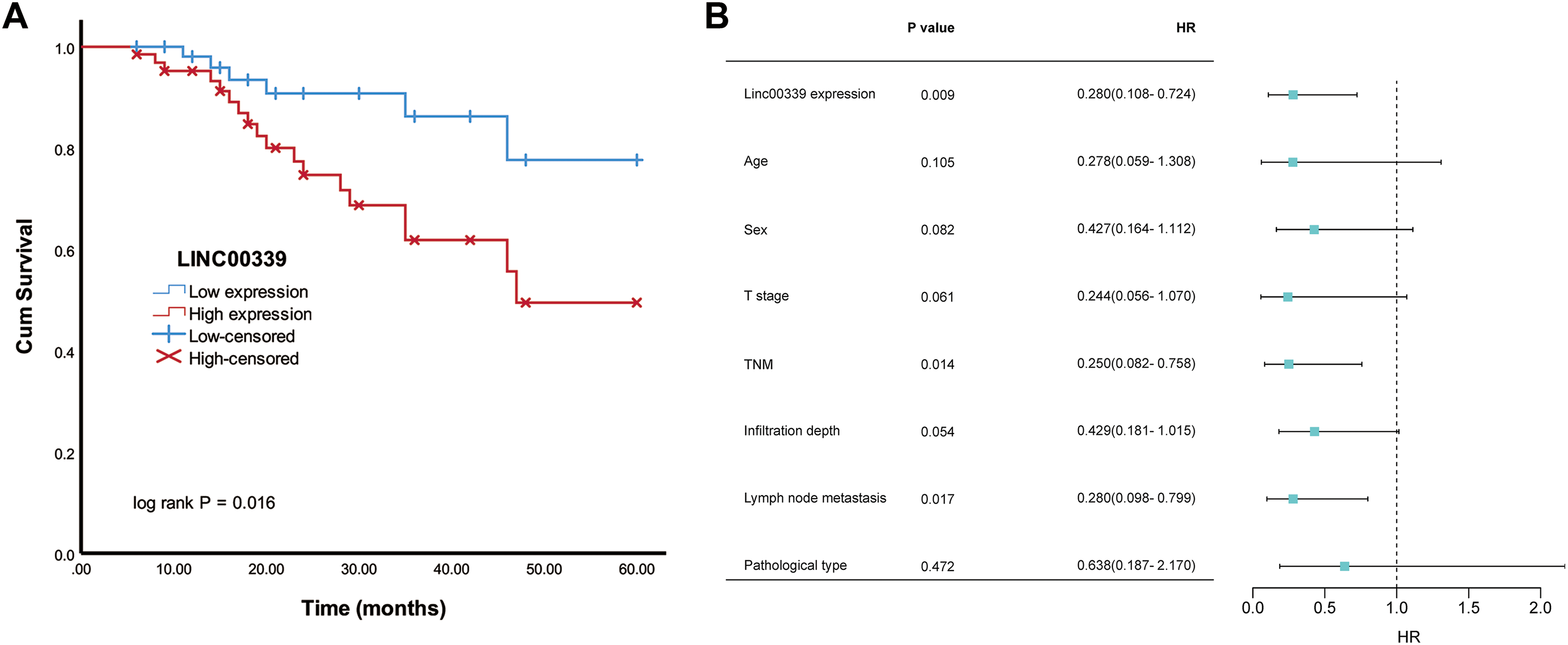
A Kaplan–Meier curve was conducted to analyze the prognostic performance of LINC00339 in NPC patients. (a) Patients with high LINC00339 levels have a shorter overall survival rate. Log-rank P = 0.016. (b) Multivariate Cox analysis showed that LINC00339 expression, TNM, and lymph node metastasis were prognostic risk factors for NPC patients.
The cellular behaviors of LINC00339 in NPC cells
The LINC00339 expression levels were detected in NPC cells and the levels were higher in NPC cells compared with normal cells NP69 (P < 0.01, Figure 3(a)), especially in C666-1 and NPC-BM1 cells (P < 0.001). The si-LINC00339 decreased the LINC00339 levels in C666-1 and NPC-BM1 cells (P < 0.001, Figure 3(b)). Silencing of LINC00339 decreased the cell proliferation potential (P < 0.01, Figure 3(c) and 3(d)), and the downregulation of LINC00339 decreased the cell migratory (P < 0.01, Figure 3(e)) and invasive abilities (P < 0.001, Figure 3(f)).
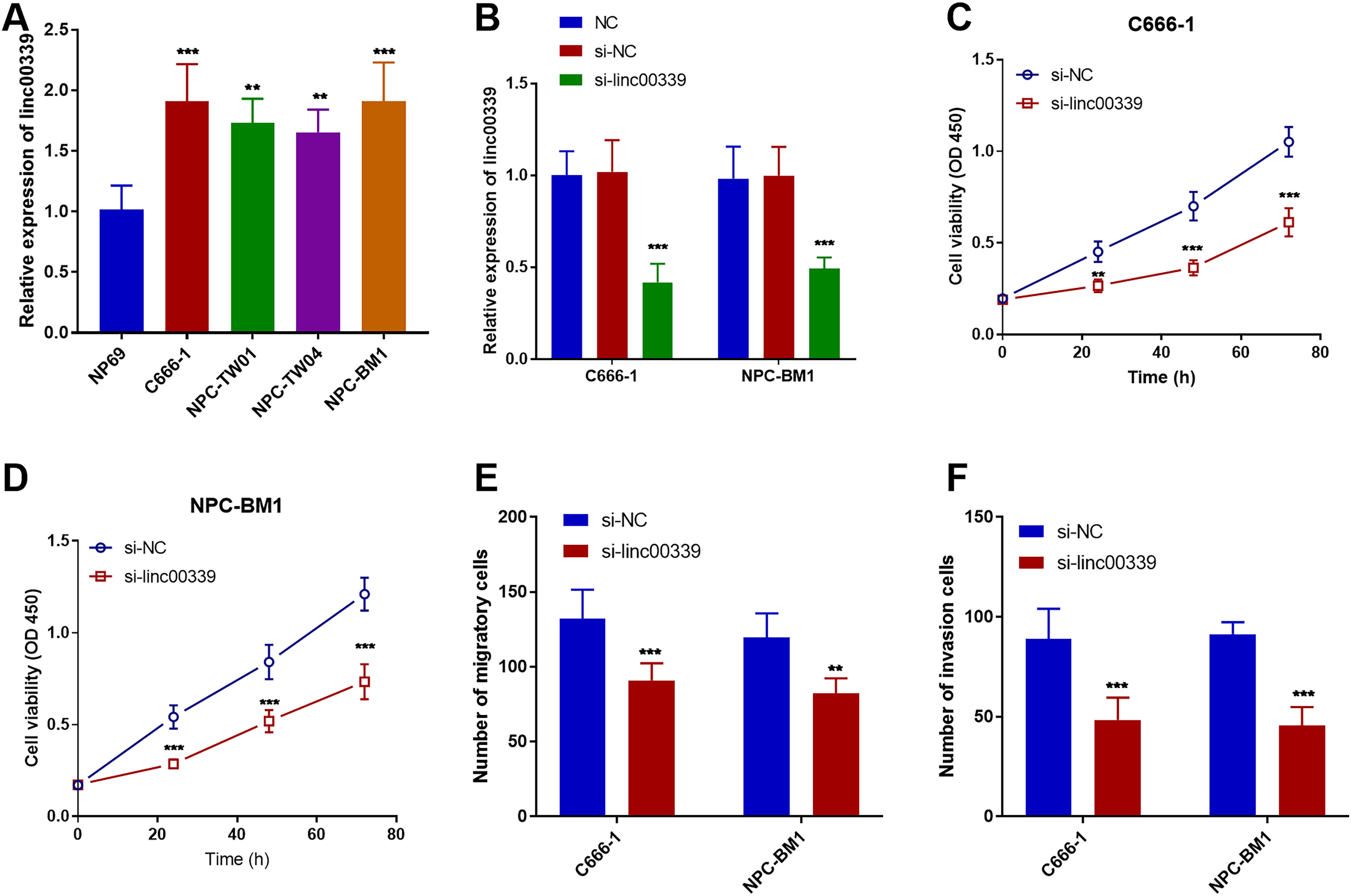
LINC00339 expression levels in NPC cells. (a) The levels of LINC00339 were higher in NPC cells than that in normal NP69 cells. ***P < 0.001 vs. NP69 cells. (b) The si-LINC00339 decreased the LINC00339 expression levels in C666-1 and NPC-BM1 cells. ***P < 0.001 vs. NC. (c) and (d) Silencing of LINC00339 decreased cell proliferation abilities. **P < 0.01, ***P < 0.001, vs. si-NC. (e) and (f) Knockdown of LINC00339 decreased cell migratory abilities (e) and invasion capacities (f). **P < 0.01, ***P < 0.001, vs. si-NC.
miR-152 was a direct target miRNA of LINC00339
The online algorithm lncRNASNP2 was used to predict the downstream miRNAs and miR-152 has binding sites with LINC00339 3′-UTR (Figure 4(a)). The serum miR-152 levels were negatively correlated to serum LINC00339 levels in NPC patients (Pearson r = −0.538, P < 0.001, Figure 4(b)). Moreover, miR-152 levels were upregulated in LINC00339 knockdown NPC cells (P < 0.001, Figure 4(c)). The dual-luciferase reporter assay confirmed the interaction relationship between LINC00339 and miR-152 in NPC cells (P < 0.01, Figure 4(d) and (e)).
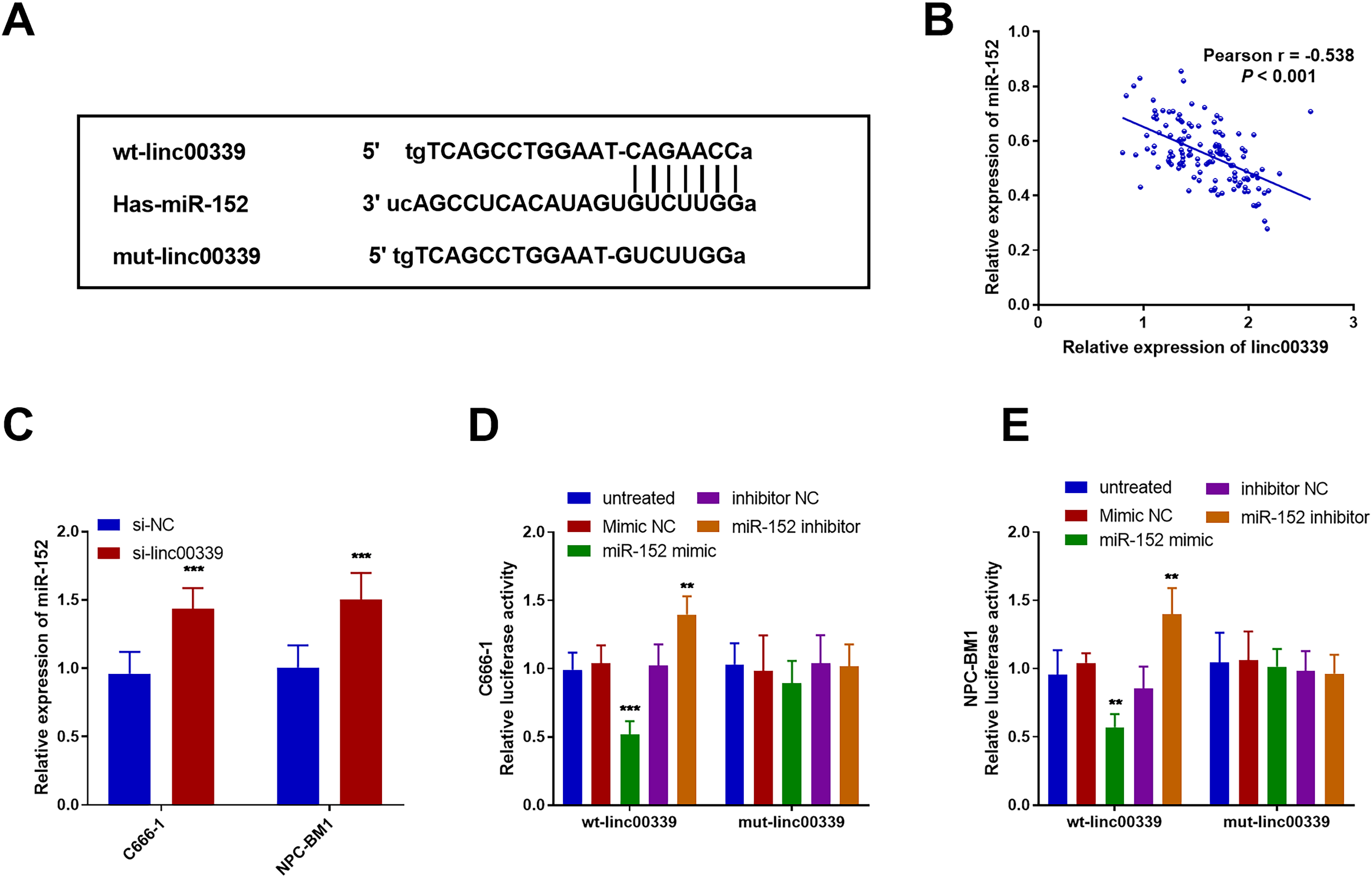
The correlation between miR-152 and LINC00339. (a) The binding sites between miR-152 and LINC00339. (b) The serum LINC00339 expression levels were negatively related to serum miR-152 levels in NPC patients. Pearson R = −0.538, P < 0.001. (c) The LINC00339 expression levels were increased in LINC00339-knockdown NPC cells. ***P < 0.001 vs. si-NC. (d) and (e). The dual-luciferase reporter assay confirmed the relationship between miR-152 and LINC00339. **P < 0.01, ***P < 0.001 vs. untreated cells.
Discussion
In this study, the serum LINC00339 expression was upregulated in NPC patients and could distinguish NPC patients from healthy individuals and nasopharyngitis patients. The high LINC00339 expression was correlated with high TNM stage, lymph node metastasis, and shorter overall survival time. Silencing of LINC00339 may decrease cellular activities by targeting miR-152.
An increasing number of tumor-related lncRNAs have been discovered, and studies have indicated that the same lncRNAs play different roles in different tumors and diseases.16,17 Some lncRNAs contain miRNA-binding sites that can act as decoys for miRNA molecules to prolong mRNA conversion. LINC00339 was dysregulated in digestive system cancers, nervous system cancers, reproductive system tumors, and some clinical characteristics.14,18–20 For instance, high LINC00339 expression in hepatocellular carcinoma tissues was associated with TNM stage, tumor size, metastasis, and survival rate. 13 Because the early symptoms of NPC and rhinitis are very similar, it is easy to be misdiagnosed as rhinitis. Early diagnosis of NPC from nasopharyngitis may improve the prognosis of patients with NPC. In this study, serum LINC00339 expression was upregulated in NPC patients and associated with TNM stage and lymph node metastasis, while it did not correlate with age, sex, T stage, histological type, and infiltration depth, which may be biased by the sample size. Based on the different expressions, the ROC curve showed that serum LINC00339 expression could distinguish NPC patients from healthy individuals and nasopharyngitis patients with high AUC values. These findings suggest that serum LINC00339 expression may have diagnostic significance in NPC.
Moreover, LINC00339 expression in tumor tissues was associated with patients’ overall survival in non-small cell lung cancer, 21 hepatocellular carcinoma, 13 and breast cancer. 20 Herein, serum LINC00339 was observed to be related to NPC patients’ overall survival, which suggests that LINC00339 may be a potential prognostic predictor in NPC. LINC00339 expression was upregulated in colorectal cancer tissues, correlated with patients’ clinicopathological features, facilitated proliferation, and inhibited apoptosis of colorectal cancer cells by targeting miR-218. 22 To explore the functional role of LINC00339 in NPC, CCK-8, and Transwell assays were carried out. We observed that the silencing of LINC00339 could suppress cell proliferation potential, migration capacities, and invasion abilities. These data revealed that LINC00339 may have an oncogenic role in NPC.
LINC00339 could act as an oncogene in various cancers by targeting miR-1182, 23 miR-497, 24 miR-377-3p, 25 and miR-152. 13 In the current study, an online algorithm lncRNASNP2 predicted that miR-152 was a direct target miRNA of LINC00339 in NPC. miR-152, a member of the miR-148/miR-152 family, was a tumor suppressor gene related to cell proliferation, migration, and invasion in human cancers by regulating target genes. 26 For instance, miR-152 was dysregulated in several types of cancer, such as prostate cancer, 27 colon cancer, 28 and non-small cell lung cancer. 29 In NPC, miR-152 was downregulated in NPC tissues and cell lines and could repress tumor cell proliferation, migration, and invasion by targeting MAFB30 or DNMT1. 31 Thus, LINC00339 may have an oncogenic role in NPC by regulating miR-152.
There are several limitations in this study. First, the LINC00339 expression levels were detected in serum samples. The conventional treatment for NPC patients is chemoradiotherapy or biological therapy. In future studies, tissue samples will be collected and confirm the LINC00339 expression in NPC. Moreover, we will pay more attention to clinical appearance on the present basis. Additionally, the influence of LINC00339 on cellular activities was carried out in NPC cells. In vivo experiments will take into account future studies, especially in detailed mechanism experiments.
In conclusion, serum LINC00339 expression might have diagnostic and prognostic performance in NPC. LINC00339 could function as a promoting role in NPC by facilitating cellular activities by targeting miR-152. LINC00339 may be a clinical predictor, and this study provides a new theoretical basis and research direction for the treatment of NPC. The discovery may shed a novel light and a theoretical basis on the pathogenesis of NPC and supply potential prognostic predictors for the treatment of NPC patients.
Footnotes
Acknowledgements
Not applicable.
Authors’ contributions
XQ and YT designed the research study. LY and ZW performed the research. XQ and YT provided help and analyzed the data. XQ and YT wrote the manuscript. All authors contributed to editorial changes in the manuscript. All authors read and approved the final manuscript.
Declaration of conflicting interests
The authors declared no potential conflicts of interest with respect to the research, authorship, and/or publication of this article.
Ethics approval and consent to participate
The study protocol was approved by The Ethics Committee of Qingdao Chengyang People's Hospital (IRB number: 2017-011) and followed the principles outlined in the Declaration of Helsinki. In addition, informed consent has been obtained from the participants involved.
Funding
The authors received no financial support for the research, authorship, and/or publication of this article.
