




Abstract
Purpose
To explore the relationship between breast cancer susceptibility gene 1 (BRCA1) expression and the prognostic value of platinum-based chemotherapy for stage II–IV non-small cell lung cancer (NSCLC).
Methods
PubMed, Web of Science, Embase, and Cochrane Library were searched from inception to August 2021, for retrieving literature related to BRCA1 expression and prognostic value of platinum-based chemotherapy in NSCLC patients. Stata 15.0 was employed for statistical analysis.
Results
A total of 15 articles were included. Compared with the low BRCA1 expression, its high expression negatively affected the overall survival of NSCLC patients treated with platinum-based chemotherapy (hazard ratio (HR) = 1.53, 95% confidence interval (CI): 1.01–2.31, P < 0.05). No significant difference was identified in the effect of both low and high BRCA1 expression on event-free survival (HR = 1.73, 95% CI: 0.98–3.05, P > 0.05). Subgroup analysis showed that significant differences existed in overall survival and event-free survival in Caucasian population; that is, compared with low BRCA1 expression, its high expression negatively affected the overall survival (HR = 1.79, 95% CI: 1.15–2.79, P < 0.05) and event-free survival (HR = 2.39, 95% CI: 1.43–3.97, P < 0.05). Nevertheless, there were no significant differences in overall survival and event-free survival in China.
Conclusion
BRCA1 expression is correlated with the prognostic value of platinum-based chemotherapy for stage II–IV NSCLC patients. In Caucasian population, compared with low BRCA1 expression, its high expression has a negative effect on the overall survival and event-free survival in stage II–IV NSCLC patients after platinum-based chemotherapy; however, this correlation was not found in China.
Introduction
Lung cancer is the leading cause of death due to cancer among men, being the second main cause among women after breast cancer. 1 According to the latest global cancer statistics, there were 18.1 million new cancer patients, and cancer killed 9.6 million patients worldwide in 2018, with lung cancer-caused deaths accounting for 18.4% of the total deaths. 1 Non-small cell lung cancer (NSCLC) is the most important pathological type of lung cancer, accounting for 80–85% of all lung cancer, with a 5-year survival rate of less than 20%.2,3 The vast majority of patients with lung cancer are diagnosed at an advanced stage (stage IIIb or IV) and have lost the chance to receive radical surgery.4,5 Therefore, chemotherapy-based comprehensive treatment is currently the main treatment for such patients. Platinum-based chemotherapy remains the standard-of-care for most patients affected by advanced NSCLC.6,7 Hence, it is essential for the prognosis of patients that the indicators related to the clinical outcome of platinum-based chemotherapy be explored in NSCLC patients.
Breast cancer susceptibility gene 1 (BRCA1) localized on human chromosome 17 is associated with the development of familial breast and ovarian cancer; it consists of 24 exons, of which 22 can encode an intranuclear phosphorylated 220kD protein consisting of 1863 amino acid residues, and the protein has the conserved amino-terminal RING finger domain and carboxyl-terminal transcriptional activation domain (TAD). BRCA1 gene abnormalities have been demonstrated in many human cancers, including breast, ovarian, prostate, and lung.8–11 On the one hand, BRCA1 can eliminate the apoptotic phenotype caused by a series of DNA-damaging agents such as cisplatin, thereby increasing the resistance of tumor cells to these drugs; on the other hand, it can increase the sensitivity of anti-microtubule drugs such as paclitaxel to cause apoptosis.12,13 A 2013 meta-analysis 14 showed that low BRCA1 expression was beneficial to the chemosensitivity of cancer patients to platinum-based drugs in cancer patients, and to both overall survival (OS) and event-free survival (EFS). In addition, there are many new studies on the correlation between BRCA1 expression and the prognostic value of platinum-based chemotherapy for NSCLC.15–18 Therefore, this study aims to systematically assess the relationship between the expression of BRCA1 and the prognostic value of platinum-based chemotherapy for stage II–IV NSCLC, thus providing evidence of evidence-based medicine for the clinical treatment of NSCLC.
Methods
Literature retrieval
PubMed, Web of Science, Embase, and Cochrane Library databases were searched from inception to August 2021, for retrieving English literature related to BRCA1 expression and clinical outcomes of platinum-based chemotherapy in NSCLC patients. The search strategy was as follows: “lung cancer” OR “lung carcinoma” OR “NSCLC” OR “non-small cell lung cancer” AND “BRCA1” OR “breast cancer susceptibility gene1”. The language was limited to English. Two researchers completed the literature retrieval then cross-checked the retrieval results.
Inclusion and exclusion criteria
Inclusion criteria
The inclusion criteria for literature were as follows: (a) The original data were published; (b) the study subjects were patients with stage II–IV NSCLC diagnosed by surgery, mediastinoscopy, bronchoscopy, or needle biopsy; (c) the literature related to BRCA1 expression and the prognostic value of platinum-based chemotherapy for stage II–IV NSCLC; and (d) polymerase chain reaction (PCR) or immunohistochemistry (IHC) was used as the detection method.
Exclusion criteria
The exclusion criteria for literature were as follows: (a) literature not related to NSCLC; (b) animal studies or cell line studies; (c) studies on non-platinum-based chemotherapy; (d) abstracts or reviews; and (e) studies with Newcastle–Ottawa Scale (NOS) score less than 6 stars.
Quality evaluation
The quality of the included studies was evaluated by using NOS. 19 Literature scored less than was considered as low-quality literature, and 6 stars and above were considered as high-quality literature. This meta-analysis only included the literature of high quality.
Data extraction
The extracted data mainly included: (a) general data: first author, publication time, country; (b) basic characteristics of the study subjects: sample size, detection method, clinical stage, number of cases with different BRCA1 expression; (c) effect measure: after platinum-based chemotherapy in NSCLC patients, comparison of hazard ratio (HR) of OS and EFS (progression-free survival, disease-free survival, and time to progression) between low and high BRCA1 expression.
Statistical analysis
Stata 15.0 was employed for statistical analysis. HR and its 95% confidence interval (CI) were used as the effect measure for evaluating the relationship between BRCA1 expression and the prognostic value of platinum-based chemotherapy for NSCLC. If no specific HR was given in the literature, but the survival curve was given, Engauge Digitizer was utilized to extract the data of the survival curve, and then to calculate HR and its 95% CI. Heterogeneity among studies was analyzed by using the Q-test. In case of heterogeneity (I2 ≥ 50%, or P ≤ 0.05), random-effects model (REM) was applied to pool the data; otherwise (I2 < 50%, and P > 0.05), fixed-effects model (FEM) was adopted. Publication bias was assessed using funnel plot and Egger's test If there was heterogeneity among studies, subgroup analysis on ethnicity, tumor stage, pulmonary resection, and detection method was carried out to determine the source of heterogeneity. Finally, a sensitivity analysis was performed to verify the robustness of the obtained conclusions.
Results
Literature retrieval results
On completion of a comprehensive search of each database and cross-checking of the retrieved articles, the researchers read the articles and then screened them strictly according to inclusion and exclusion criteria and quality control. Finally, 15 articles were included in this meta-analysis,15–18,20–30 including 2597 patients with stage II–IV NSCLC. The specific screening process is shown in Figure 1, and the basic characteristics of the included literature are displayed in Table 1. All of the included studies had a NOS score greater than 6, which is considered to be of high quality.
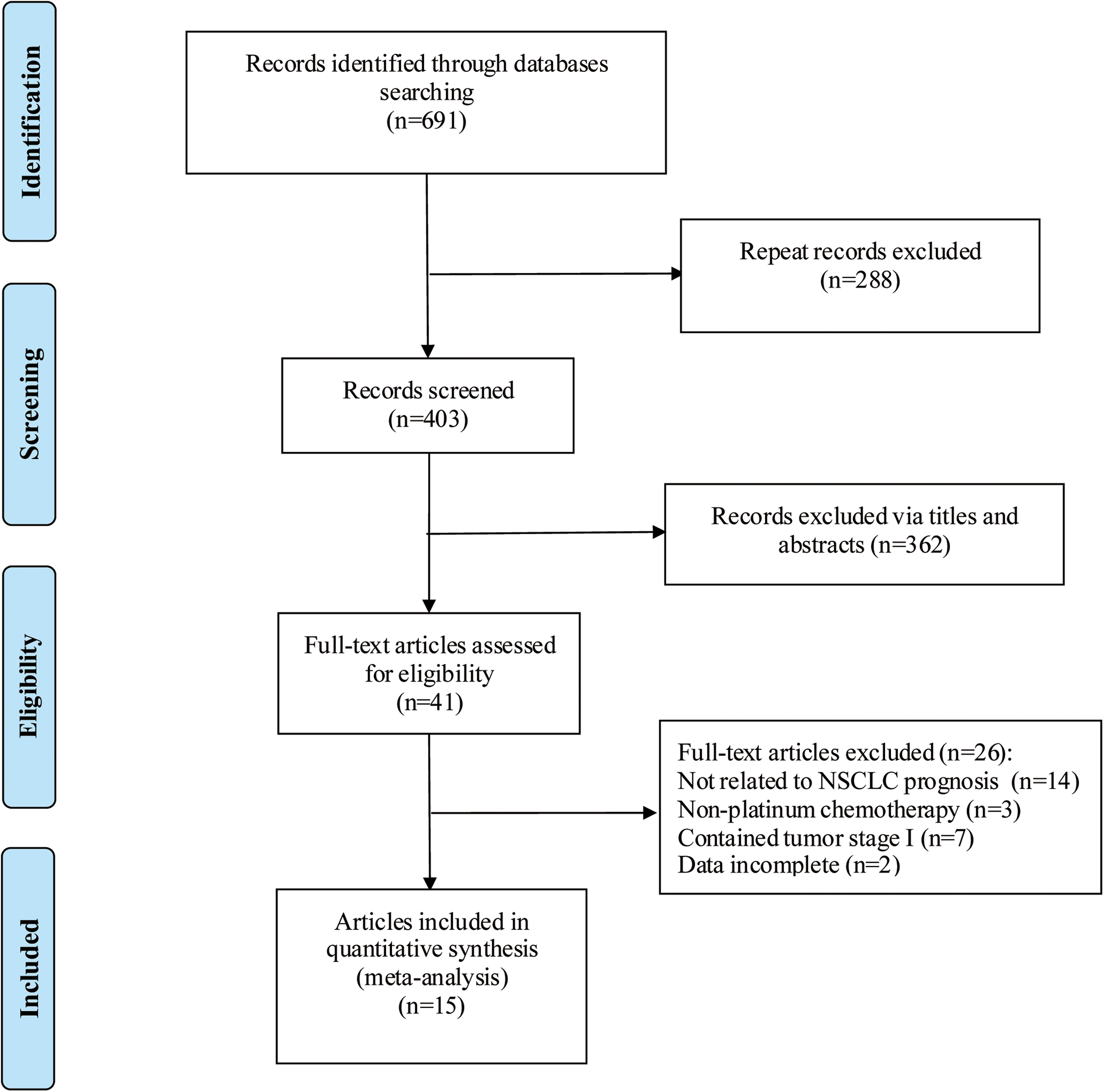
Flow diagram of the included studies.
Basic characteristics of the included studies.
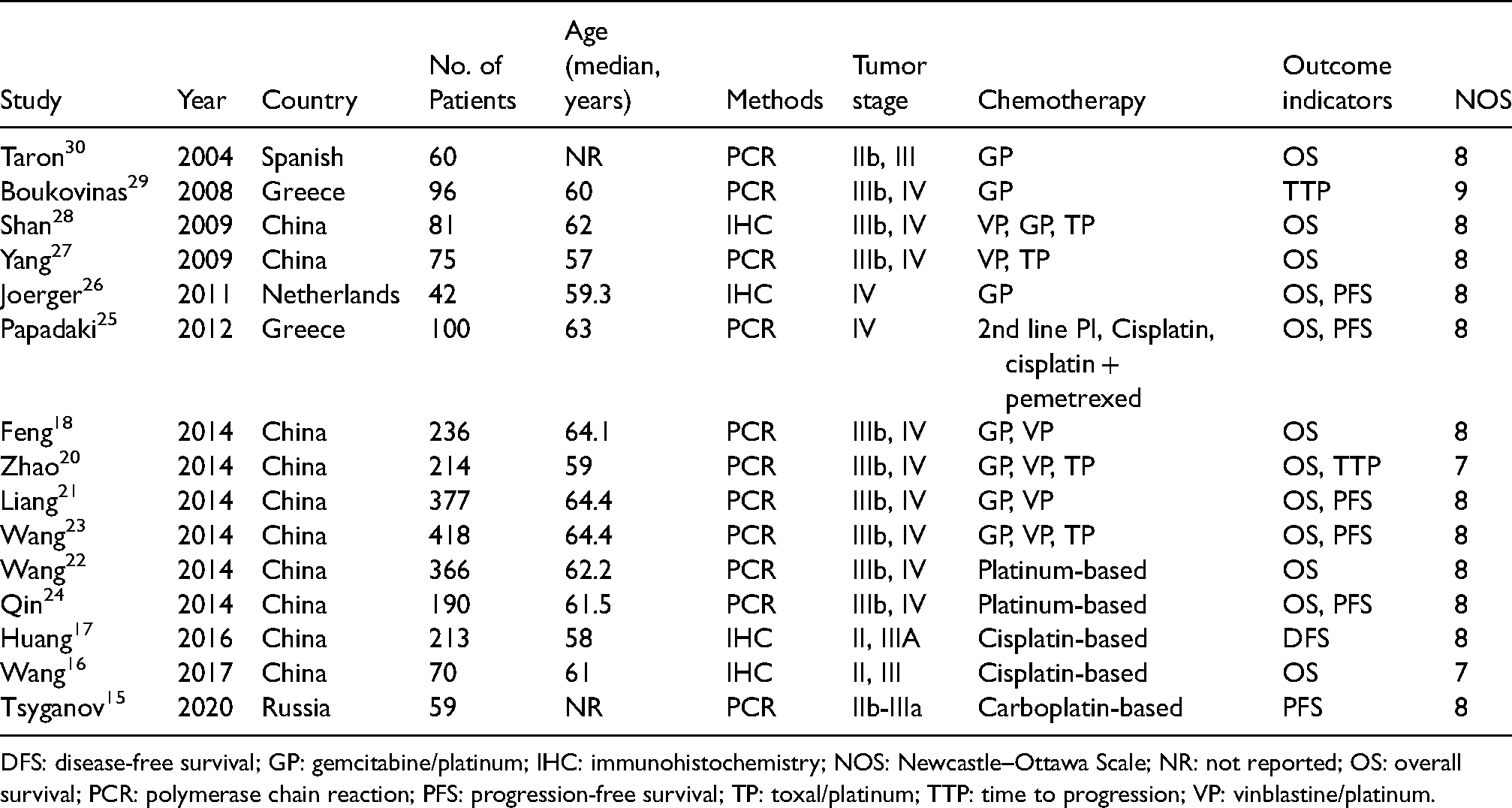
DFS: disease-free survival; GP: gemcitabine/platinum; IHC: immunohistochemistry; NOS: Newcastle–Ottawa Scale; NR: not reported; OS: overall survival; PCR: polymerase chain reaction; PFS: progression-free survival; TP: toxal/platinum; TTP: time to progression; VP: vinblastine/platinum.
Relationship between BRCA1 expression and OS after platinum-based chemotherapy for NSCLC
Twelve studies16,18,20–28,30 reported BRCA1 expression and OS after platinum-based chemotherapy in patients with stage II–IV NSCLC. The heterogeneity among studies was high (I2 = 86.3%, P < 0.01), so the REM was used (Figure 2). The results showed that compared with the low BRCA1 expression, its high expression negatively affected the OS of stage II–IV NSCLC patients treated with platinum-based chemotherapy (HR = 1.53, 95% CI: 1.01–2.31, P < 0.05). Further, subgroup analysis on ethnicity showed that in the Caucasian population, heterogeneity was significantly reduced (I2 = 27.3%, P > 0.05), and the difference in OS was statistically significant (HR = 1.79, 95% CI: 1.15–2.79, P < 0.05). However, no marked difference was found in OS in the Chinese population (HR = 1.43, 95% CI: 0.87–2.35, P > 0.05). Subgroup analysis on the detection method and tumor stage IIIb–IV showed no significant decrease in the heterogeneity. The OS of resectable16,22,23,30 and inoperable20,24–26 NSCLC patients after platinum-based chemotherapy was clearly reported in four studies. For OS, there was no significant decrease in heterogeneity in subgroup analyses of both operable and inoperable NSCLC patients treated with platinum-based chemotherapy. Two papers25,26 including only patients with stage IV NSCLC showed that high BRCA1 expression significantly reduced OS in patients with advanced NSCLC to platinum-based chemotherapy compared to low BRCA1 expression (HR = 1.68, 95% CI: 1.19–2.37); no heterogeneity was found (Table 2).
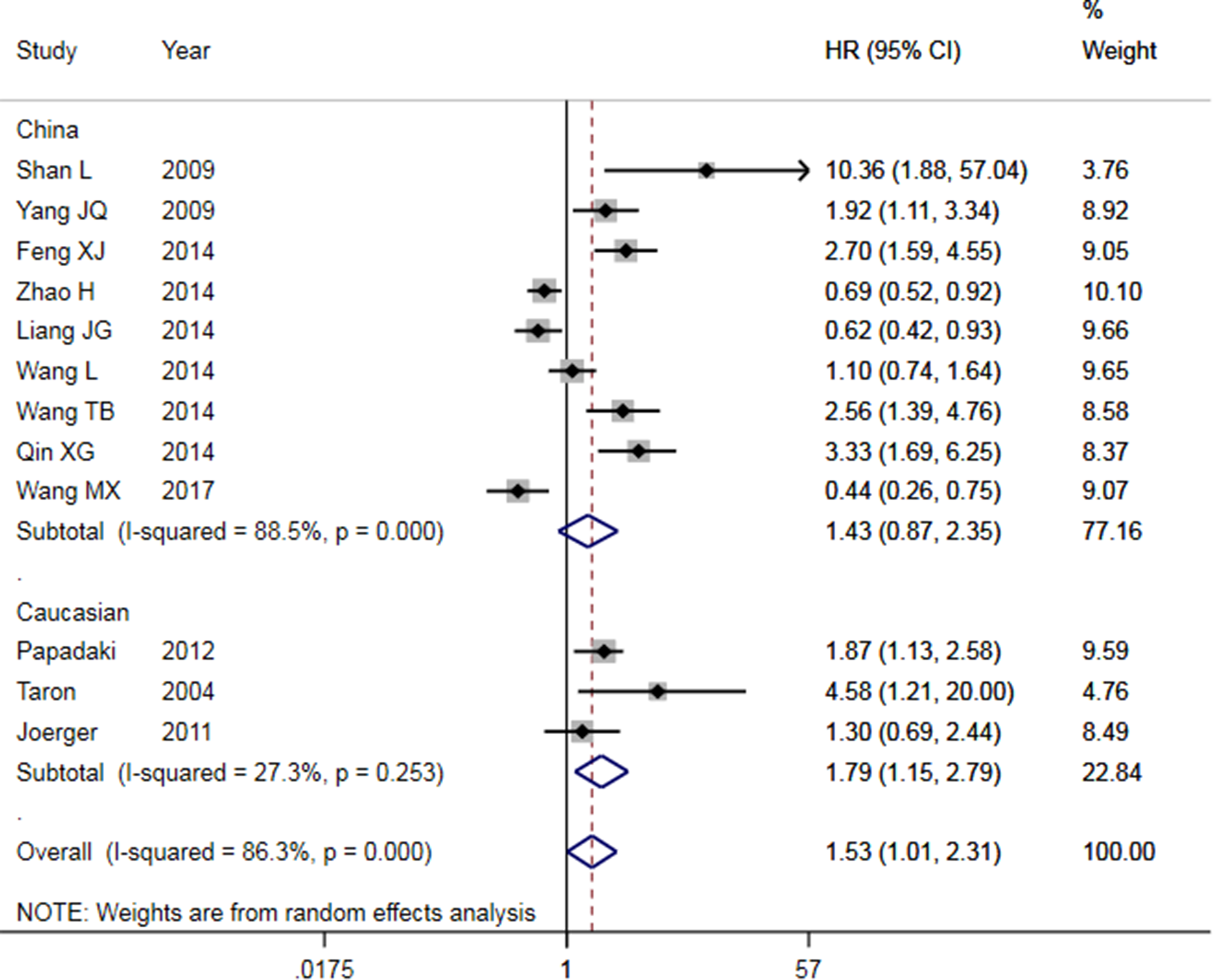
Forest plot of OS associated BRCA1 expression with platinum chemotherapy in patients with stage II–IV NSCLC.
Subgroup analysis of OS-associated BRCA1 expression with platinum chemotherapy in patients with stage II–IV NSCLC.
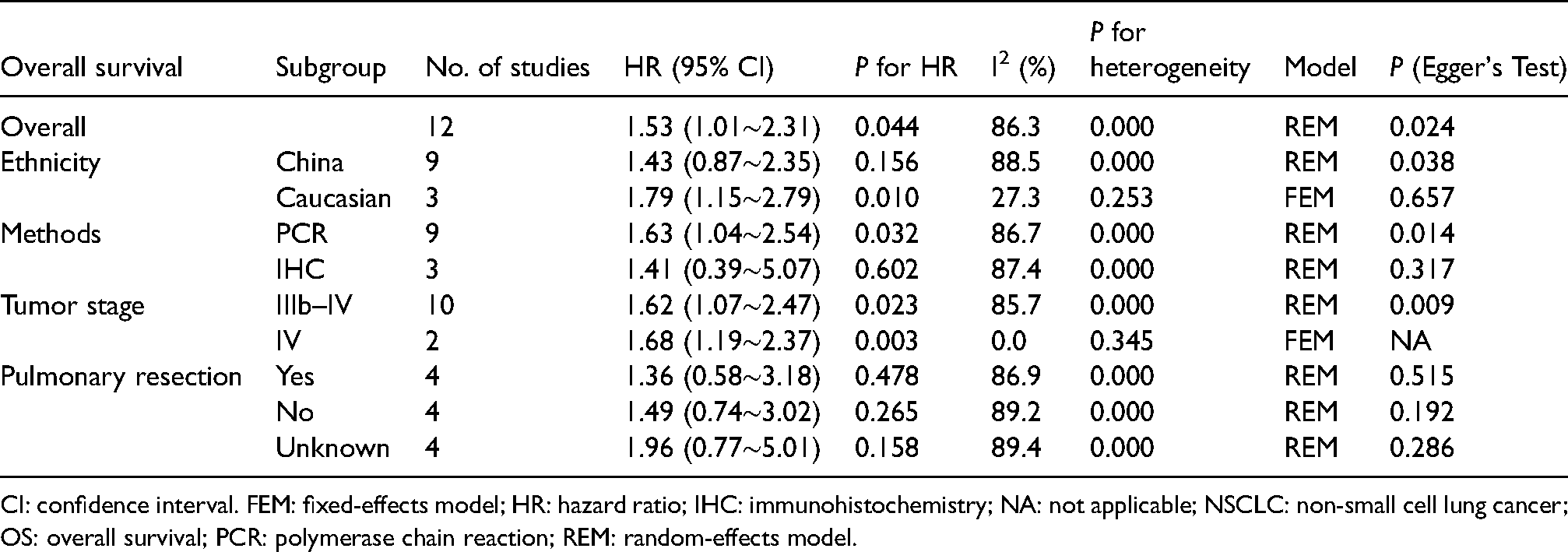
CI: confidence interval. FEM: fixed-effects model; HR: hazard ratio; IHC: immunohistochemistry; NA: not applicable; NSCLC: non-small cell lung cancer; OS: overall survival; PCR: polymerase chain reaction; REM: random-effects model.
Relationship between BRCA1 expression and EFS after platinum-based chemotherapy in NSCLC
Nine studies15,17,20,21,23–26,29 reported BRCA1 expression and EFS after platinum-based chemotherapy in patients with stage II–IV NSCLC. The REM was adopted for the high heterogeneity among studies (I2 = 86.3%, P < 0.01), (Figure 3). The results showed that no significant difference was identified in the effect of both low and high BRCA1 expression on EFS (HR = 1.73, 95% CI: 0.98–3.05, P > 0.05). Subgroup analysis on ethnicity showed that heterogeneity was significantly reduced in the Caucasian population (I2 = 34.4%, P < 0.05), and the difference in EFS was statistically significant (HR = 2.39, 95% CI: 1.43–3.97, P < 0.05). That is, high BRCA1 expression had a negative effect on the EFS of this population after platinum-based chemotherapy; however, no significant difference was found in the EFS in the Chinese population (HR = 1.29, 95% CI: 0.57–2.91, P > 0.05). Subgroup analysis on detection method and tumor stage showed no significant decrease in the heterogeneity (Supplemental Table 1). Three15,17,23 and five articles,20,24–26,29 respectively, have clearly reported EFS after platinum chemotherapy in resectable and inoperable NSCLC patients. For EFS, no significant decrease was found in heterogeneity in subgroup analyses of both operable and inoperable NSCLC patients treated with platinum-based chemotherapy.
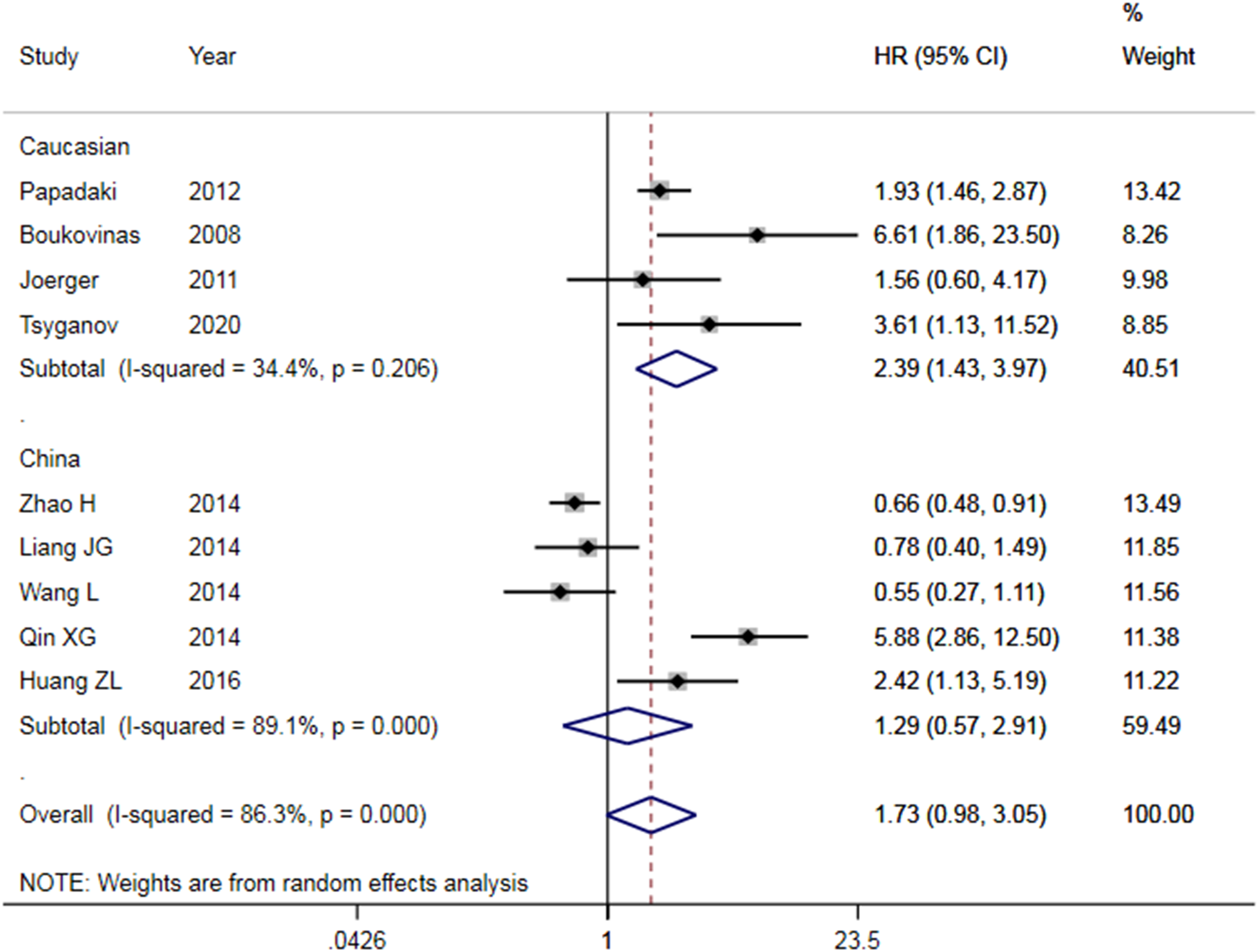
Forest plot of EFS associated BRCA1 expression with platinum chemotherapy in patients with stage II–IV NSCLC.
Publication bias
In the analysis of BRCA1 expression and OS after platinum-based chemotherapy in patients with stage II–IV NSCLC, the funnel plot was generally symmetrical (Supplemental Figure 1(a)), and Egger's test showed P = 0.024. In the analysis of BRCA1 expression and EFS after platinum-based chemotherapy in patients with stage II–IV NSCLC, the funnel plot was also generally symmetrical (Supplemental Figure 1(b)), and Egger's Test showed P = 0.221. Collectively, there was some publication bias in the analysis of OS and EFS.
Sensitivity analyses
A meta-analysis was performed again after eliminating each included study one by one, for analyzing the effect of each study on the overall conclusion. In the sensitivity analysis of OS, removal of any of the seven studies18,22,24,25,27,28,30 influenced the original conclusion, and the difference became statistically insignificant (Supplemental Figure 2(a)). In the sensitivity analysis of EFS, removal of any of the three studies20,21,23 significantly changed the original conclusion, and the difference became statistically significant (Supplemental Figure 2(b)). Therefore, there was some instability to the conclusion obtained from the analysis of OS and EFS.
Discussion
This meta-analysis was carried out to explore the correlation between BRCA1 expression and the prognostic value of platinum-based chemotherapy for stage II–IV NSCLC. According to the results, low BRCA1 expression is beneficial to OS and EFS after platinum-based chemotherapy in patients with stage II–IV NSCLC. BRCA1 is a tumor suppressor gene that can inhibit cell proliferation, cell growth through multiple signal transduction pathways, and mediate damage repair through direct interactions with other repair factors or through other genes in DNA regulatory pathways. 31 BRCA1 expression affects the prognostic value of platinum agents in NSCLC, which may be achieved by affecting the chemosensitivity of NSCLC patients to platinum agents. 14 High BRCA1 expression is associated with platinum resistance, and the mechanism may be that its high expression enhances cell repair capacity and therefore increase the resistance of cells to chemotherapy. 32
This meta-analysis included 15 studies containing data on BRCA1 expression and the prognostic value of platinum-based chemotherapy for stage II–IV NSCLC. The results showed that there was significant difference in OS, but not in EFS, and the analysis of both OS and EFS presented high heterogeneity. In the Caucasian population, the differences in OS and EFS were statistically significant with low heterogeneity; in other words, in patients with stage II–IV NSCLC, high BRCA1 expression negatively affected OS and EFS after platinum-based chemotherapy. However, no marked differences were found in OS and EFS in the Chinese population, and the heterogeneity was not significantly reduced. Additionally, subgroup analysis on detection method, pulmonary resection, and tumor stage confirmed that these three were not the major sources of heterogeneity. Funnel plots of both OS and EFS were generally symmetrical, and the Egger's test for OS showed a statistically significant difference, indicating some publication bias in this study. Sensitivity analysis proved that after removal of any of the 7 articles18,22,24,25,27,28,30, the difference in OS had no statistical significance, while after removal of any of the 3 articles20,21,23, the difference in EFS had statistical significance. Collectively, there is a correlation between BRCA1 expression and the prognostic value of platinum-based chemotherapy in patients with stage II–IV NSCLC, but in consideration of the robustness, the conclusion on their correlation still needs to be treated with caution. A meta-analysis by Yang et al. 14 in 2013 demonstrated that high BRCA1 expression was not conducive to OS and EFS in NSCLC patients at stage I–IV after platinum-based chemotherapy. This study only included patients with stage II–IV NSCLC, and obtained consistent conclusions as that of Yang et al. 14 By contrast with the 2013 meta-analysis, this study made a more detailed classification of tumor stage, and included more recently published literature. Moreover, the subgroup analysis in this study found that there were marked differences in OS and EFS in the Caucasian population, with no significant heterogeneity.
This study still has some limitations. First, the number of included articles was small, which may influence the robustness of the conclusions. Second, only studies published in English are included in this study, which may lead to some publication bias. Third, the funnel plots and the Egger's test show that there is some publication bias in this study. Fourth, sensitivity analysis shows some instability in the analysis of OS and EFS. Also, limited by the included literature, we could not perform separate a subgroup analysis for each tumor stage of NSCLC. For OS and EFS studies, only two25,26 and one 25 published study included only patients with stage IV NSCLC, respectively. No more evidence is available on whether patients with advanced inoperable resectable NSCLC have the same prognostic difference from platinum-based chemotherapy based on BRCA1 expression as those with surgically resectable NSCLC.
Conclusions
There is a correlation between BRCA1 expression and the prognostic value of platinum-based chemotherapy for stage II–IV NSCLC. Especially in the Caucasian population, compared with low BRCA1 expression, its high expression has a negative effect on the OS and EFS in stage II–IV NSCLC patients after platinum-based chemotherapy; however, this correlation has not been found in the Chinese population. Despite the above limitations, this study demonstrates that BRCA1 expression levels can be used as a prognostic indicator for patients with stage II–IV NSCLC after platinum-based chemotherapy. More large-scale and high-quality studies that include different ethnic groups are still required to further confirm the relationship between BRCA1 and the prognostic value of platinum-based chemotherapy for patients with NSCLC.
Supplemental Material
sj-tif-1-jbm-10.1177_03936155221088882 - Supplemental material for BRCA1 expression associated with the prognostic value of platinum-based chemotherapy for stage II–IV non-small cell lung cancer: A meta-analysis
Supplemental material, sj-tif-1-jbm-10.1177_03936155221088882 for BRCA1 expression associated with the prognostic value of platinum-based chemotherapy for stage II–IV non-small cell lung cancer: A meta-analysis by Zhenhua Huang and Gang Xiong in The International Journal of Biological Markers
Supplemental Material
sj-tif-2-jbm-10.1177_03936155221088882 - Supplemental material for BRCA1 expression associated with the prognostic value of platinum-based chemotherapy for stage II–IV non-small cell lung cancer: A meta-analysis
Supplemental material, sj-tif-2-jbm-10.1177_03936155221088882 for BRCA1 expression associated with the prognostic value of platinum-based chemotherapy for stage II–IV non-small cell lung cancer: A meta-analysis by Zhenhua Huang and Gang Xiong in The International Journal of Biological Markers
Supplemental Material
sj-docx-3-jbm-10.1177_03936155221088882 - Supplemental material for BRCA1 expression associated with the prognostic value of platinum-based chemotherapy for stage II–IV non-small cell lung cancer: A meta-analysis
Supplemental material, sj-docx-3-jbm-10.1177_03936155221088882 for BRCA1 expression associated with the prognostic value of platinum-based chemotherapy for stage II–IV non-small cell lung cancer: A meta-analysis by Zhenhua Huang and Gang Xiong in The International Journal of Biological Markers
Footnotes
Author contributions
XG: Substantial contribution to the conception and design of the work, manuscript drafting; ZHH: Acquisition, analysis, and interpretation of the data; XG and ZHH: Revising the manuscript critically, final approval of the version to be published.
All authors have read and approved the final article.
Declaration of conflicting interests
The author(s) declared no potential conflicts of interest with respect to the research, authorship, and/or publication of this article.
Funding
The author(s) received no financial support for the research, authorship, and/or publication of this article.

Supplemental material
Supplemental material for this article is available online.
References
Supplementary Material
Please find the following supplemental material available below.
For Open Access articles published under a Creative Commons License, all supplemental material carries the same license as the article it is associated with.
For non-Open Access articles published, all supplemental material carries a non-exclusive license, and permission requests for re-use of supplemental material or any part of supplemental material shall be sent directly to the copyright owner as specified in the copyright notice associated with the article.
