



Abstract
Background:
Production-to-consumption linkages are important to improve consumption of nutrient-rich foods to tackle malnutrition. However, understanding specific contextual factors influencing production, distribution, and consumption in rural communities is necessary.
Objective:
To explore household-, farm-, and market-level factors affecting consumption of nutrient-rich foods among producer and nonproducer households in Bihar, India.
Methods:
We conducted focus group discussions (FGDs) and key informant interviews (KIIs) in producer and nonproducer households of Gaya and Nalanda districts in Bihar to examine factors affecting production and consumption of red lentils, green leafy vegetables (GLVs), milk, eggs, and chicken. Through the KIIs, we identified distribution chains and elicited market-level challenges faced by producers, sellers, and consumers. Data were translated, transcribed, and analyzed thematically using NVivo version 9.
Results:
Findings from 27 FGDs indicate that consumers and producers were aware of the importance of nutrient-rich foods to health and the necessity of prioritizing their consumption in children. Food preferences, social factors, seasons, religions, and livestock epidemics influenced consumption. Among producers, consumption was mainly dependent on own production. Nonproducers perceived that production could help overcome the barrier of affordability and improve consumption. Data from 69 KIIs indicated that markets were unfavorable in terms of profitability for producers, spoilage and losses for market players, issues of accessibility, and availability for consumers.
Conclusions:
A local context-specific multipronged approach such as understanding sociocultural factors, own production, and local markets influencing consumption needs to be examined further to improve consumption of nutrient-rich foods among agricultural communities in India.
Plain language title:
Constraints and Facilitators in Production, Markets, and Consumption of Nutrient-Rich Foods in Bihar, India
Plain language summary:
Consumption of nutrient-rich foods such as red lentils, green leafy vegetables, milk, eggs, and chicken are essential to maintain balanced diet intake. In this qualitative study, we examined household-, farm-, and market-level factors that affected consumption of nutrient-rich foods among households that produced and not produced these food items in Bihar state, India. Group discussions were conducted among members of households that produced nutrient-rich foods and those that did not produce these food items. The group discussions helped identify challenges in production and consumption. Interviews were conducted with people involved in selling the nutrient-rich food items in the markets. These interviews enabled us to map the various levels food items have to pass from the food producer till it reached the consumer and the challenges faced during the course. From the group discussion, we found that consumers and producers were aware of the importance of nutrient-rich foods to maintain good health and the necessity of prioritizing their consumption in children. Food preferences, social factors, seasons, religions, and livestock epidemics influenced consumption at the household level. Producers of a particular food item were dependent on own production for consumption. Affordability was a key barrier to consumption, particularly among nonproducers. The common perception was that if they were able to produce a food item, it could help overcome the barrier of affordability and improve consumption. There were various unfavorable components in markets that interfered with the profitability for producers, including spoilage and losses, accessibility, and availability for consumers. We conclude that there is a need to understand local-context specific factors such as sociocultural factors, own production, and local markets that influence the consumption of nutrient-rich foods among agricultural communities in India.
Background
Efforts to reduce undernutrition in agriculture-based communities across low- and middle-income countries have emphasized on the importance of production-to-consumption linkages. 1,2 Agriculture is the main source of livelihood for rural populations in most resource-constrained settings, where about 80% of food is produced by smallholder farmers. 3 Such farmers are mainly engaged in low-intensity/low-yield production that limits intake of high-value foods. At the same time, poor access to markets contributes to low profits for their produce. 3,4 This has important implications in a country like India where small (1–2 hectares) and marginal (<1 hectare) farmers constitute 86% of land holdings. 5
It is important to understand regional contextual factors influencing production-to-consumption linkages. Factors such as low diversity in agricultural production, low profits from farming, inequitable intrahousehold food allocation, poor market access, and high and fluctuating prices of nutrient-rich foods contribute to their low consumption. 2,6 Furthermore, a disconnect between agricultural and nutrition policy and practice too exists, 7 with agricultural policies in India mainly focusing on increased production of rice and wheat rather than on nutrient-rich foods such as pulses, fruits, vegetables, and animal foods, leading to limited supply and higher prices of diverse foods. 2
It has been argued that increasing agricultural production of diverse foods can lead to increased diversity of intake, resulting in more supply of nutrient-rich foods locally, with the potential to improve affordability, accessibility, and availability for consumers. 2 However, this is not automatically the case. For example, although milk production has substantially increased over the years, per capita consumption levels are still low at 85.4 g/d, while the world’s average intake is 162.7 g/d. 2 This is despite the fact that the household allocation of monthly expenditure for milk in rural India remains high at 8%, next only to expenditure on cereals. 8 Therefore, it is important to understand the factors that influence the production–consumption linkage.
This linkage is quite complex with several factors playing a role. Emerging evidence has highlighted the importance of farm production diversity and access to markets to improve diet diversity. 9 Market price of food items 10 and market food diversity that vary from market to market and across seasons 11 may be important factors that determine the role of markets in promoting dietary diversity. Apart from farm production diversity and market access, the actual cost of a healthy diet also determines household diet diversity and household food security. 12 Based on the Planetary Health Diet, a reference dietary pattern recommended by the Eat-Lancet Commission in 2019, the actual cost of diets as against the cost of an environmentally sustainable healthy (largely plant sources, less animal source) for 4 districts in India, which included a district in Bihar was $3.30 per person per day if the cheapest food item was bought, while it was over $5.00 per day if the foods purchased within a food group are considered at average cost. 13 In some instances such as pulse consumption, the higher income households tend to consume more compared to lower income households. 6
We examine the production-to-consumption linkages in Bihar, a state among the 10 leading Indian states in pulse 14 and milk production. 15 It is reasonable to expect better consumption of these nutrient-rich foods in Bihar, routed through affordability, accessibility, and availability. However, 40% of children below 4 years are stunted and/or anemic in Bihar, 16 while in rural Bihar, approximately a quarter of the adult population has a less than normal body mass index (men: ∼24%, women: ∼27%). 17 While food insufficiency and low-diet quality are not the only determinants of such adverse nutritional outcomes, actions intended to work through promotion of agricultural production require an understanding of the local agroeconomic context of populations most at risk. The objective of this qualitative study was to examine the influence of household-, farm-, and market-level factors on consumption of nutrient-rich foods among producer and nonproducer households in rural Bihar.
Methods
Study Setting and Design
The study was undertaken in two districts, Gaya and Nalanda of Bihar state, India. These districts were chosen because of their high production and consumption 8,18 of nutrient-rich foods like red lentils, green leafy vegetables (GLVs), milk, egg, and chicken, which were the main foods of interest for this study. Furthermore, interactions with government officials and nongovernmental organizations (NGOs) working in these areas revealed that relatively good markets facilitating trade of agricultural produce existed and that these districts had not had any large-scale agriculture/nutrition interventions. Focus group discussions (FGDs) to explore household-, farm-, and market-level factors that affected consumption of nutrient-rich foods and KIIs to construct farm-to-consumer distribution chains of nutrient-rich foods were conducted.
Conceptual Framework
A social-ecological model 19,20 that provides an understanding of dynamics between individual, household, community, and societal factors as well as public policy components that influence each other resulting in a particular outcome was conceptualized as the framework. We used this model to guide the qualitative study to examine contextual factors at multiple levels of household, farm, and market that could influence consumption of nutrient-rich foods, leading to improved nutritional status as the outcome (Figure 1).
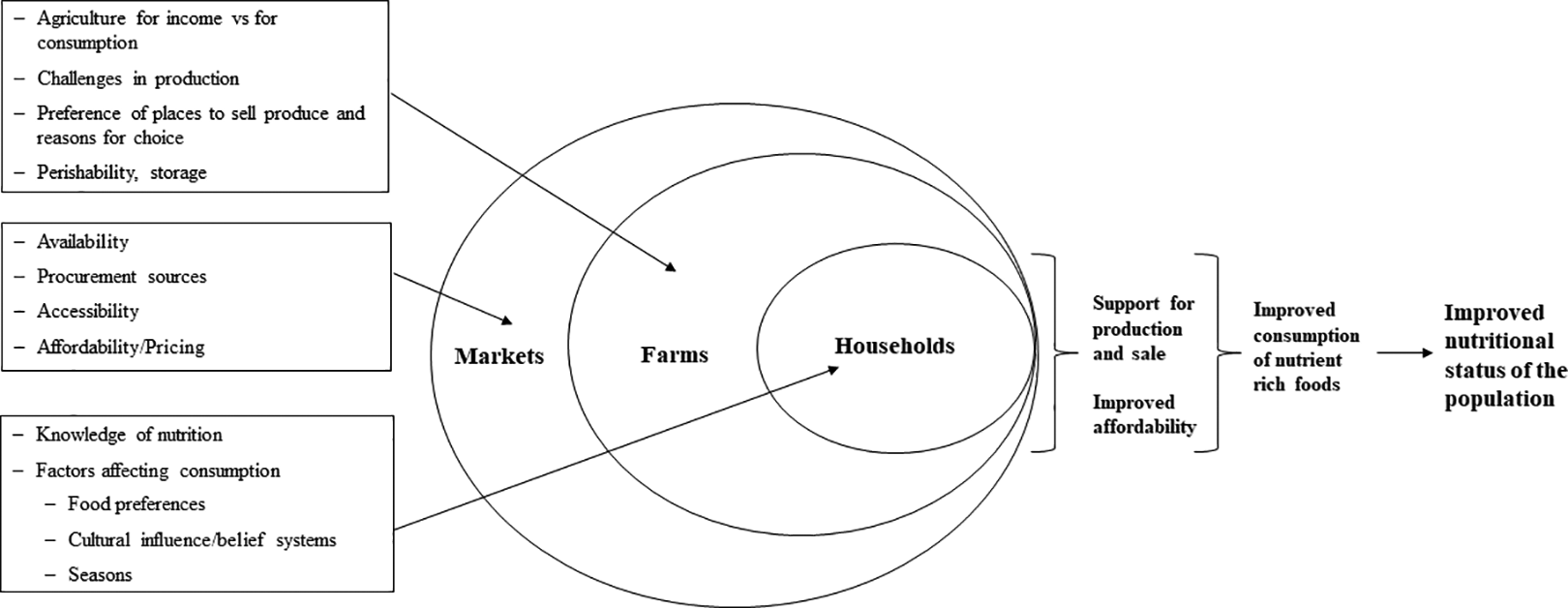
Social-ecological framework to identify factors affecting consumption of nutrient-rich foods.
Study Sample and Participants
Focus group discussions
Focus group discussion (FGD) guides were developed for each participant group (8–11 participants in each group), and discussions were conducted separately for producer and nonproducer groups of any of the 5 nutrient-rich foods, stratified by gender. We estimated that 24 FGDs were sufficient to reach data saturation: 16 FGDs with producers; 4 each among those involved in the production of red lentils, GLVs, milk, and eggs/chicken; and 8 FGDs with nonproducers; and 4 each among salaried/owning land but not producing nutrient-rich foods, and daily wage laborers.
The FGD participants among producers (referred to as Group 1 in the presentation of results) were marginal but sustainable farm producers, with land used for the cultivation of pulses (red lentils) and GLVs as well as those possessing livestock for production of milk, chicken, and eggs. The nonproducers were either salaried or those involved in the cultivation of other agricultural produce apart from the nutrient-rich foods included in our study (referred to as Group 2 in the presentation of results) and daily wage laborers (referred to as Group 3 in the presentation of results). The FGD participants were recruited through convenience sampling.
Key informant interviews
A series of key informant interviews (KIIs) were conducted in each district to construct farm to consumer distribution chains separately for red lentils, GLVs, milk, egg, and chicken for each of the districts (as depicted in Figure 2). A consumer of each nutrient-rich food was first interviewed and through them we traced the sources of procurement, leading to the producer of that particular nutrient-rich food. The KIIs were done in both districts but restricted within each district for all nutrient-rich foods. The distribution chain from production to consumption was constructed from the KIIs, starting with the consumer and their source of procurement, and then tracking backward. For example, for a particular food item, a consumer was first asked the usual source of purchase. Subsequently, the sources of procurement (market players) were traced. We also gleaned information from the shopkeeper/retailer on the source of purchase of the particular food item and the types of customers they catered to. In each of the distribution chains (Figures 3 –7, refer Results section below), the lines with arrows indicate the sources of procurement and the dark lines indicate the most common source of procurement for the consumers. The gray cells denote the key player with whom the interview was conducted. The sources of procurement were identified as “near” if it was within the same block (within 3 km) and “far” if it was in a different block from where the consumer lived (more than 3 km). Towns and villages are indicated in the chain. Villages with less than 100 households were classified as small villages and those with more than 100 as large villages.
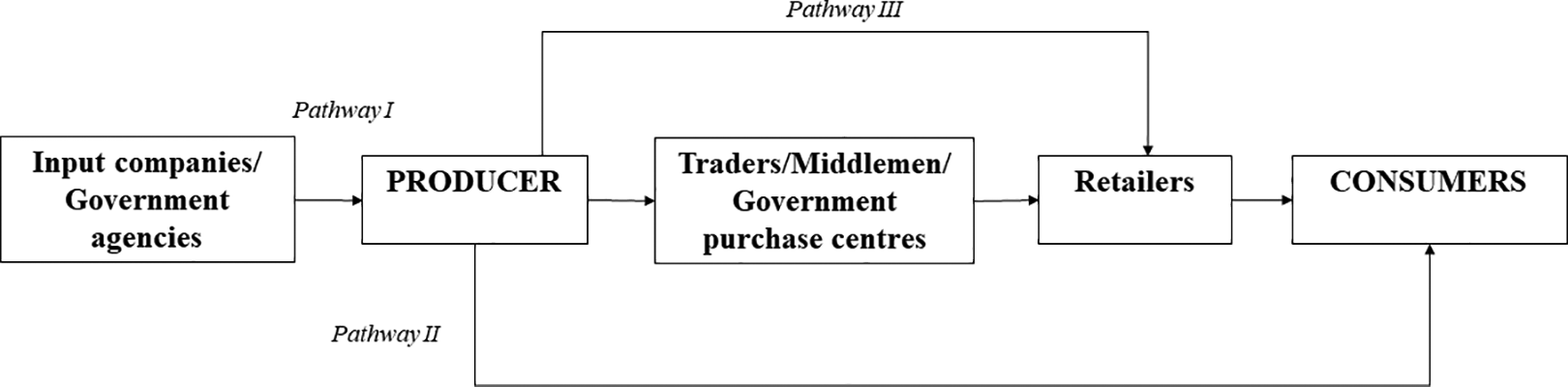
A sample distribution chain.
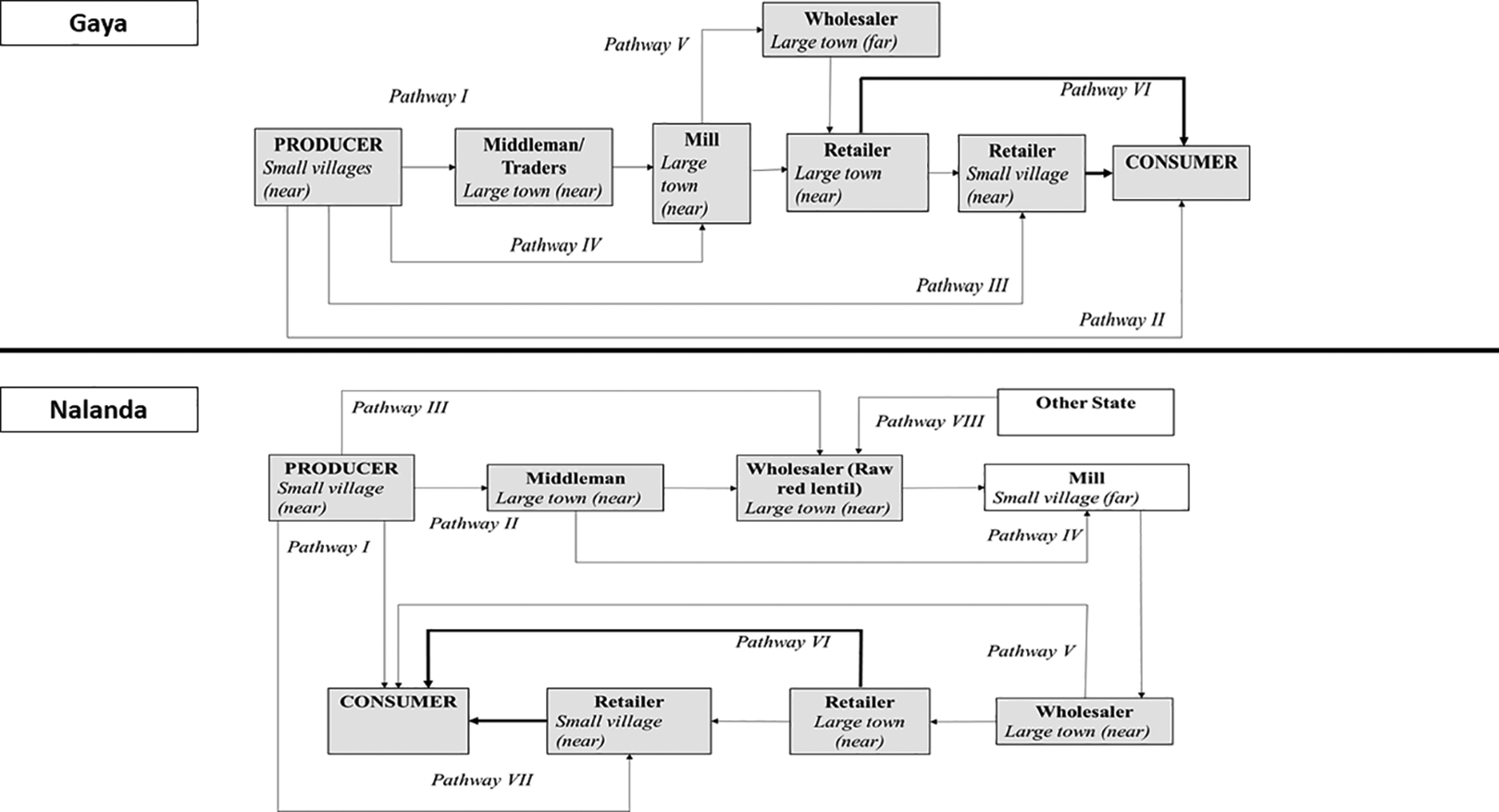
Distribution chain for red lentils in Gaya and Nalanda. Dark lines indicate most common source of procurement for the consumers. Gray cells indicate key player with whom the interview was conducted. Near indicates within the same block where the consumer lived (within 3 km). Far indicates different block from where the consumer lived (more than 3 km).
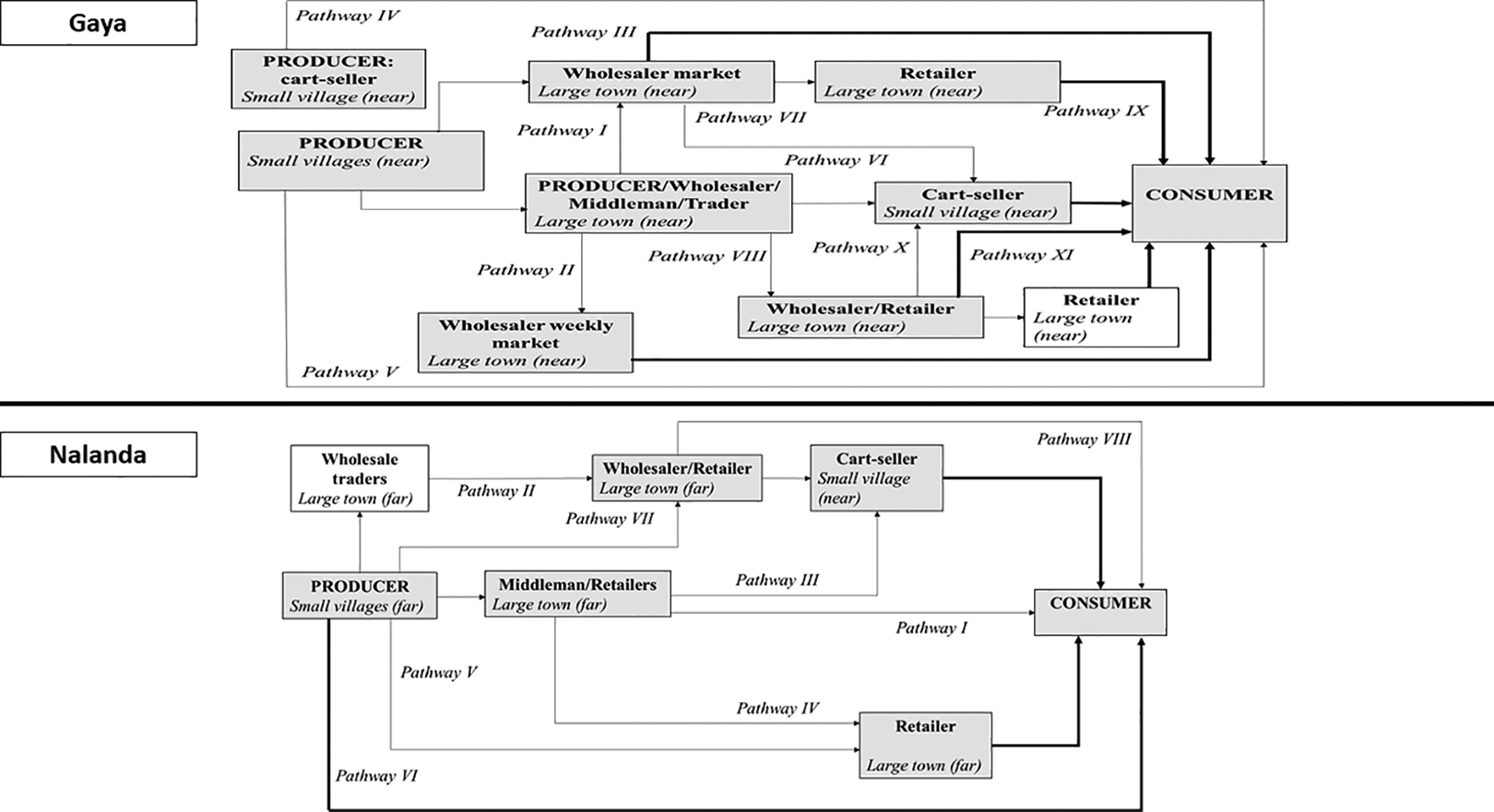
Distribution chain for green leafy vegetables in Gaya and Nalanda. Dark lines indicate most common source of procurement for the consumers. Gray cells indicate key player with whom the interview was conducted. Near indicates within the same block where the consumer lived (within 3 km). Far indicates different block from where the consumer lived (more than 3 km).
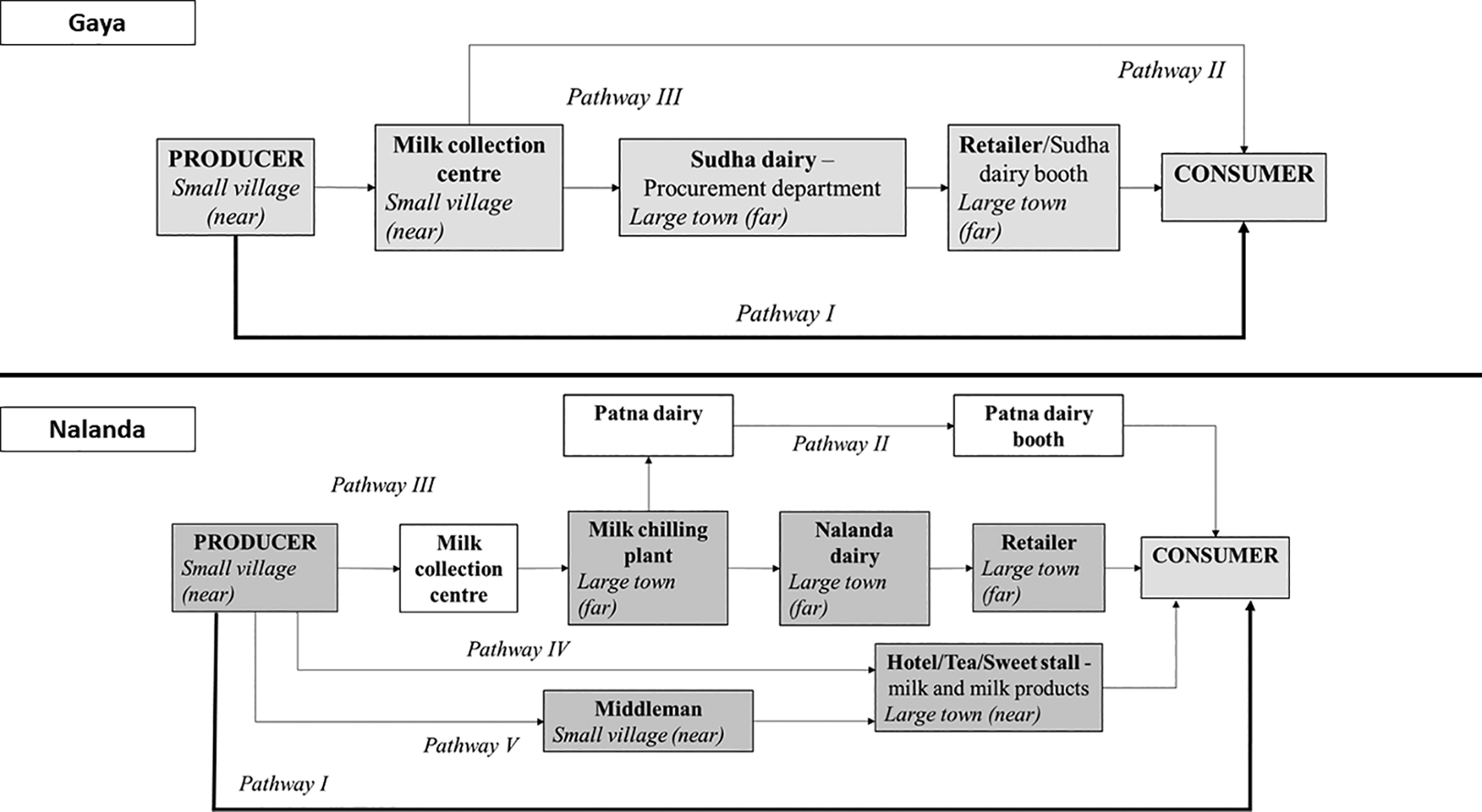
Distribution chain for milk in Gaya and Nalanda. Dark lines indicate most common source of procurement for the consumers. Gray cells indicate key player with whom the interview was conducted. Near indicates within the same block where the consumer lived (within 3 km). Far indicates different block from where the consumer lived (more than 3 km).
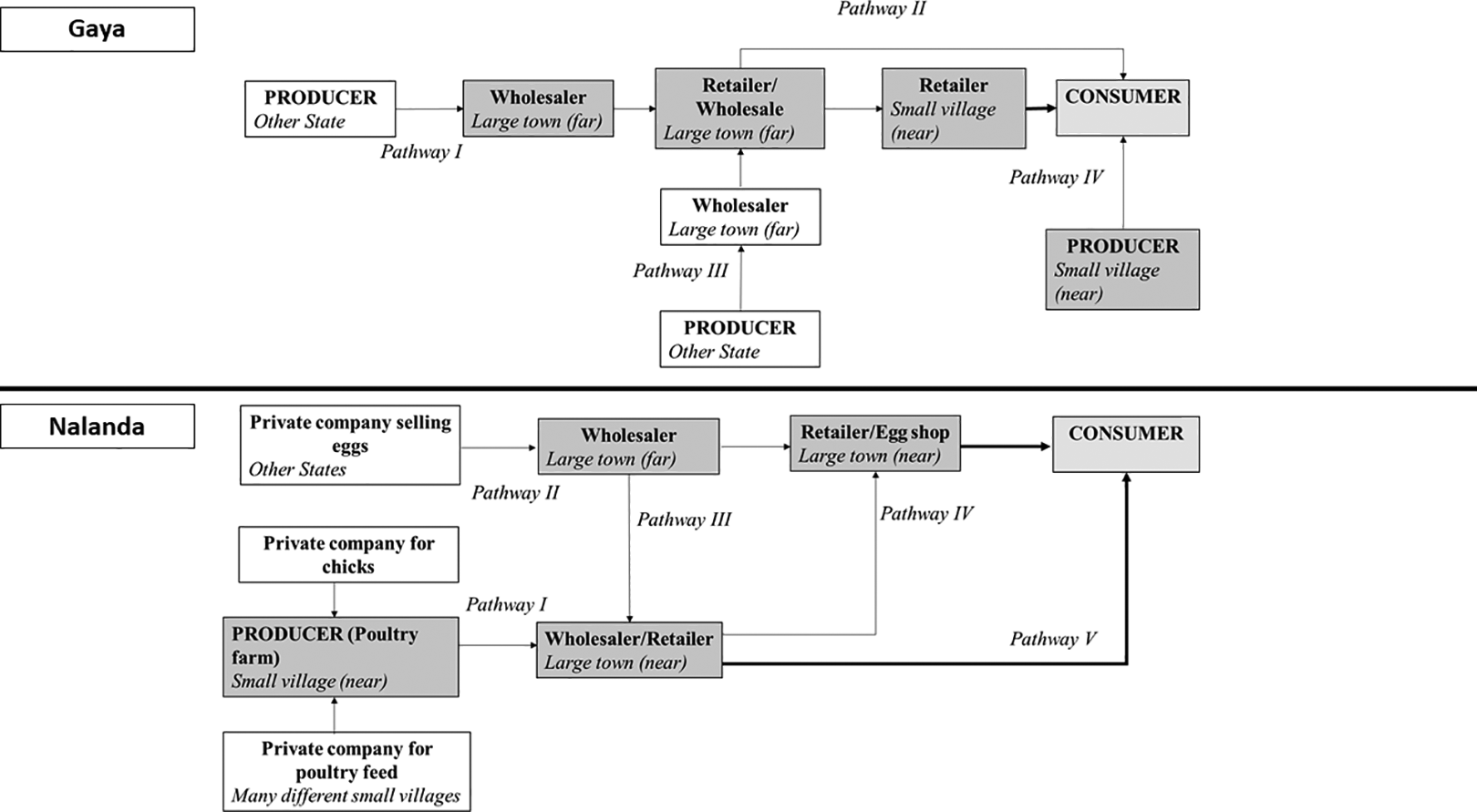
Distribution chain for eggs in Gaya and Nalanda. Dark lines indicate most common source of procurement for the consumers. Gray cells indicate key player with whom the interview was conducted. Near indicates within the same block where the consumer lived (within 3 km). Far indicates different block from where the consumer lived (more than 3 km).
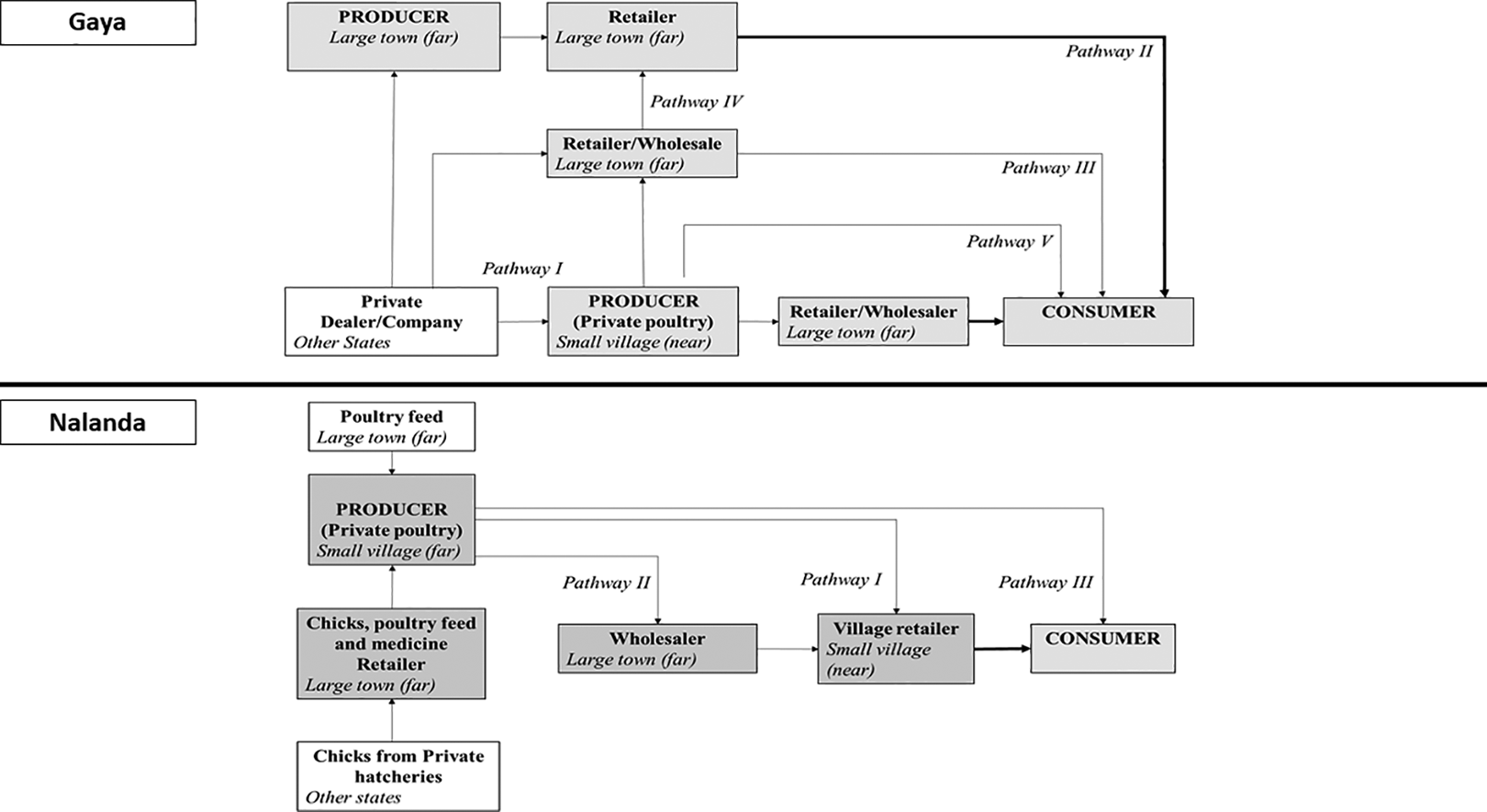
Distribution chain for chicken in Gaya and Nalanda. Dark lines indicate most common source of procurement for the consumers. Gray cells indicate key player with whom the interview was conducted. Near indicates within the same block where the consumer lived (within 3 km). Far indicates different block from where the consumer lived (more than 3 km).
Ethical Considerations
Prior to the commencement of the study, ethical approval from the Institutional Ethics Committee at St. Johns Medical College and Hospital (Bengaluru, India) was obtained from local regulatory agencies in Bihar. Written informed consent was obtained from the participants prior to the start of interviews. No monetary compensation was disbursed to the participants.
Data Collection
Household sociodemographic details including age, religion, caste, education, and monthly household income were collected from producers and nonproducers. The FGD guides sought information on the production and sale of produce, economic benefits, food preferences, purchase, and consumption apart from questions focusing on availability, procurement sources, and accessibility of nutrient-rich food items. To construct distribution chains for each food, the consumer was first contacted by the interviewer, followed by others in the chain, leading finally to the producer.
A group of 12 researchers identified by an external data collection agency, with experience of at least 2 years in conducting qualitative interviews, were trained on the study materials over a 5-day period. Eight of the most competent interviewers were selected based on their assessment through role-plays done at the end of the training.
The data collection materials were translated from English to Hindi and were used to conduct pilot FGDs. Piloting of the guides focused on ease of administration/response, comprehensibility of questions, and any gaps or redundancies. Debriefing was performed after the pilot FGDs, and final revisions were made to the guides. Data were collected from January 2019 for 2 months. All FGDs and KIIs were audio-recorded with permission. Discussion notes were also taken by a note-taker.
The FGD guide used open-ended questions in a flexible format to allow them to add questions or change the order according to the flow of dialogues. The FGDs took between 45 and 60 minutes, while individual KIIs took approximately 20 minutes to complete. All discussions and interviews were conducted in Hindi, while some participants also responded partly in the local Bhojpuri. The FGDs were conducted in a public area in the respective villages, while KIIs were conducted in the homes of consumers and at the workplace of various market players.
Data Analysis
The FGDs and KIIs audio files were anonymized and coded for the participant’s and transcriber’s ID. All audio files were translated from Hindi/Bhojpuri to English. The transcriptions of all FGDs and KIIs were done verbatim and checked for accuracy and completeness of translations into English by 2 researchers. English transcripts were imported into NVivo version 9 and thematically analyzed. 21 Interim findings from the first 10 interviews were reviewed to assess whether any adjustments were required for data collection in the final interviews. The key thematic areas explored for FGDs included identifying household-, farm-, and market-level factors that affected consumption of nutrient-rich foods as indicated in the study conceptual framework. The themes were derived through repetitive reading of the FGDs and KIIs to identify patterns in the data for each food item of interest in our study. The data from the KIIs were used to construct distribution chains and examine challenges faced by producers, market players, and consumers of nutrient-rich foods. One author (ST) constructed the coding framework, coded, and analyzed the data, while another author (SS) reviewed the coding reports and the analyzed data.
Results
We conducted a total of 27 FGDs to reach saturation, defined as no new information arising in relation to the main thematic areas (Table 1). For chicken and egg producers, due to smaller numbers, both men and women participated in the same group. A total of 69 KIIs were done to construct distribution chains for each of the nutrient-rich foods.
Number of FGDs Among Producers and Nonproducers of Nutrient-Rich Foods.
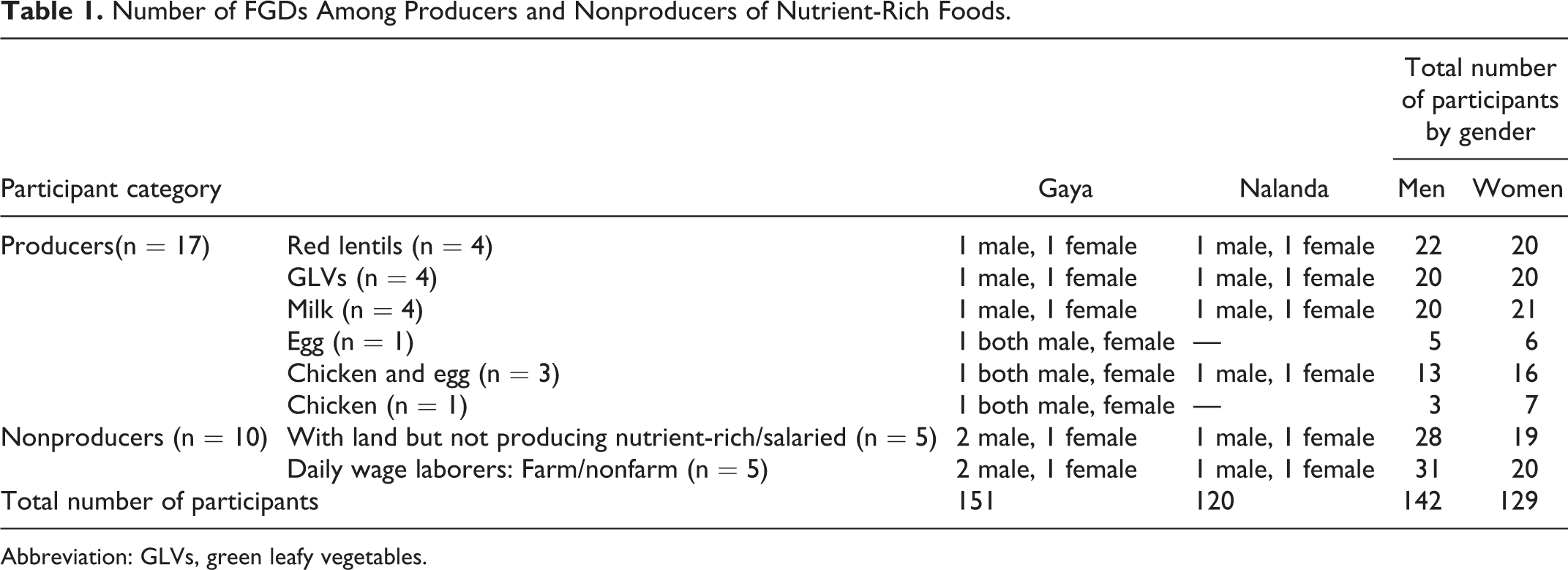
Abbreviation: GLVs, green leafy vegetables.
Sociodemographic Profile of FGD Participants
The sociodemographic details of the FGD participants are given in Table 2. Most producers (52%) and nonproducers (58%) with land but not producing nutrient-rich foods/salaried were educated up to secondary school, while 59% of the daily wage laborers were illiterate. Average monthly household income among producers (Group 1) was Rs 5000 (∼USD 66.6 as of 2022) and that among salaried people or nonproducers with land but not producing nutrient-rich foods (Group 2) and daily wage laborers (Group 3) was Rs 4000 (∼USD 53.3 as of 2022).
Sociodemographic Profile of FGD Participants.
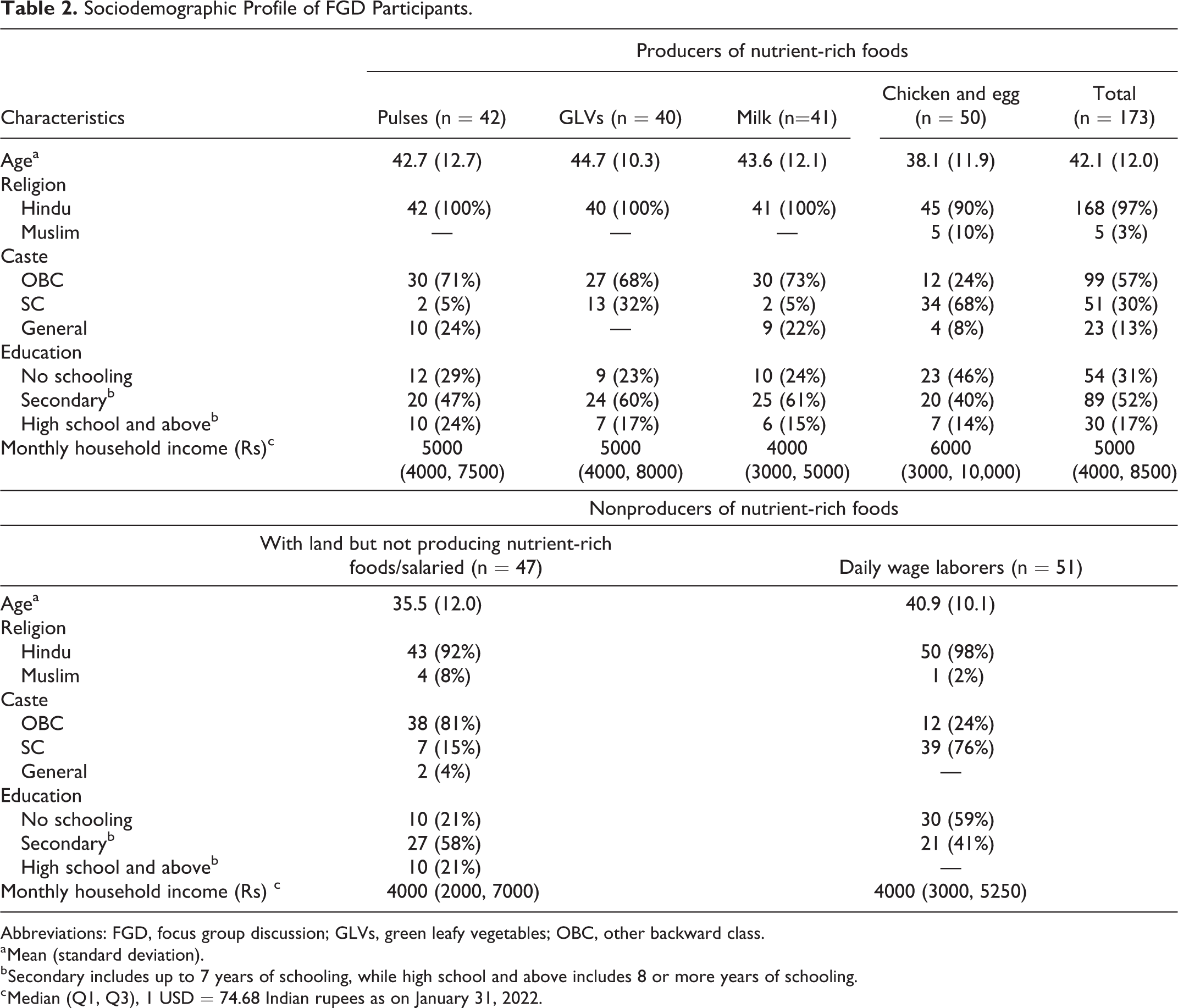
Abbreviations: FGD, focus group discussion; GLVs, green leafy vegetables; OBC, other backward class.
a Mean (standard deviation).
b Secondary includes up to 7 years of schooling, while high school and above includes 8 or more years of schooling.
c Median (Q1, Q3), 1 USD = 74.68 Indian rupees as on January 31, 2022.
Producers from our study were mainly marginal farmers (94% owning <1 hectare land) or had few livestock and produced other crops/vegetables alongside the ones selected for this study (Table 3), while nonproducers who owned land were marginal farmers cultivating crops like paddy, wheat, and vegetables other than GLVs or mainly relied on income from salaried jobs. Daily wage laborers were employed for less than half of a month.
Land/Livestock Ownership and Main Occupation Among FGD Participants.
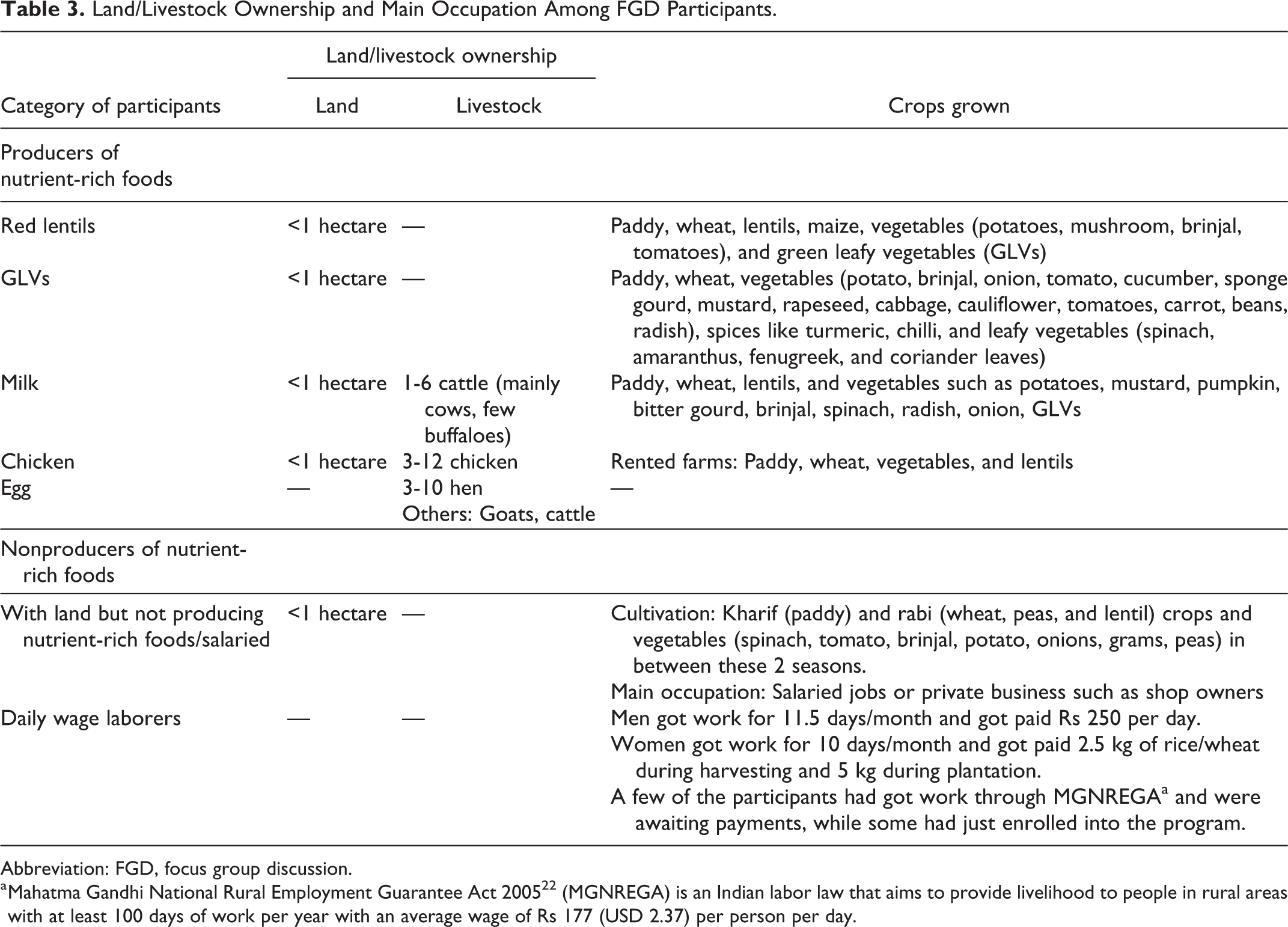
Abbreviation: FGD, focus group discussion.
a Mahatma Gandhi National Rural Employment Guarantee Act 2005 22 (MGNREGA) is an Indian labor law that aims to provide livelihood to people in rural areas with at least 100 days of work per year with an average wage of Rs 177 (USD 2.37) per person per day.
Household-Level Factors
Knowledge and awareness of importance of consumption of nutrient-rich foods
Our findings indicate that most participants, both producers and nonproducers, were aware about the various types of nutrient-rich foods and the health benefits they offer. Among a majority of the participants, there was consensus that consumption of nutrient-rich foods was important to maintain good health, provide nutrition, and prevent diseases, weakness, dizziness, and other health issues. Women (Group 2, Gaya) mentioned that nutrient-rich foods gave “all kinds of vitamins to the body,” “were tasty to eat,” and “kept the stomach full.” However, a few nonproducers reported that they bought only a few food items that were affordable and were not aware about the various types of nutrient-rich foods and their health benefits.
Most participants perceived nutrient-rich foods to be important for proper physical and mental growth of their children and so all nutrient-rich foods were prioritized for children’s consumption: If the child will not get proper nutrition, then he can suffer from malnutrition. He’ll not progress. The memory power, the remembering capacity gets reduced, when he suffers from malnutrition. (Man, Group 1, Chicken, egg producers, Nalanda) If the mother will eat well then she can give milk to her children properly. Here the mothers can’t fill their stomach with food then how can they feed their children milk and make them healthy? (Man, Group 1, GLVs producer, Nalanda)
Sociocultural and environmental factors negatively affecting consumption of nutrient-rich foods
Food preferences, social factors, seasons, religion, and livestock epidemic were considered by participants as important factors that affected their consumption of nutrient-rich foods.
– Food preference: Taste was the oft-quoted factor linked to their consumption of certain foods, specifically of milk, GLVs, and chicken. A few participants reported not consuming these even if cooked at home; some reported that non-vegetarian foods were preferably consumed once every 10 to 15 days, mainly because this was the general practice followed by their families.
– Social factors: Most FGDs reported that food that was prepared in the house was consumed by all family members in similar quantities. However, a few women reported generally consuming lesser quantities of food as they usually ate whatever was remaining after serving children, men, and elders in the family.
– Religion: Religious beliefs determined the consumption of non-vegetarian foods by a household. Among most Hindu participants, non-vegetarian foods were not consumed while celebrating religious festivals or when on a religious pilgrimage.
– Seasons: Some foods items were considered as “heat-producing” or “cooling” for the body, while some were consumed depending on the season. For example milk, eggs, and chicken were preferred for consumption in winter as they were considered to be “heat producing” for the body. Some food items like GLVs were consumed more in winters when production was high.
– Livestock epidemic: One of the oft-quoted factors affecting consumption of chicken was concern about repeated reporting of bird flu in the area and fear of consuming infected bird’s meat. The practice of culling birds to contain epidemics of bird flu also affected the availability of chicken in local markets.
Household-level challenges
Affordability of nutrient-rich foods was a major barrier in consumption among participants in all participant groups. Nonproducers, particularly, were solely dependent on markets for their consumption wherein affordability was a determining factor for purchase. Daily wage laborers, in particular, had no stable livelihoods, and this affected consumption. We do not have money for food. All our day passes by thinking what to eat the next day. If we lose this work, then how will we have food tomorrow. (Man, Group 3, Gaya) People are struggling to buy vegetables, let alone chicken. They are living a hard life. (Man, Group 2, Nalanda) Children want to eat fish, chicken, egg, milk, but the only restraint is money. If the mother has money, then only she can feed the children. (Woman, Group 2, Gaya) Sometimes if we make up our mind then once or twice every 15 days or so, if we get eggs and all, then it’s fine for us, but we don’t because we don’t have money. (Woman, Group 1, Milk producer, Gaya) If we want to eat chicken, we think a lot before it. There is money problem. (Man, Group 1, Milk producer, Nalanda) I stopped drinking milk as I am not able to afford the money for medicines. Where will I get the money for milk from? (Woman, Group 1, Red lentils producer, Gaya)
Farm-Level Factors
A total of 173 producers of nutrient-rich foods participated in the FGDs, including men (n = 83) and women (n = 90; Table 1). Producers described household consumption based on their type of production activities and the various challenges faced during the process of production.
Production of nutrient-rich foods prioritized for household consumption
All producers stated that consumption of nutrient-rich foods was mainly dependent on their production as it was unaffordable to purchase them for their regular household consumption. We produce milk to drink it, such that at least our children might get milk. If we don’t produce, then our children will not be able to get it. (Woman, Group 1, Milk producer, Gaya) We can’t buy eggs for the children, as they are very costly. We keep hens in the house so that the children can get eggs. If the children catch a cold or fever or they are ill, we give them eggs. (Woman, Group 1, Egg producer, Gaya) If something remains after fulfilling our family requirements, only then do we sell something. (Woman, Group 1, Egg producer, Nalanda) If they (chicken) are few in number, we consume it. If more, then we sell it. (Woman, Group 1, Chicken producer, Nalanda) Whatever we grow, we eat that. We don’t use pesticides much, even when our crops gets affected…. We first keep for ourselves, then if there is excess, we go for the market. (Man, Group 1, GLVs producer, Gaya) If we procure 2 litres of milk then we sell 1 litre to the dairy, and the 1 litre which gets saved we give it to our children. (Woman, Group 1, Milk producer, Gaya) If the food produced is barely 4 kg, then it is only enough to sustain, we won’t sell. (We sell if) for example if somebody falls sick, to take him to the doctor we have only this as source of income. (Man, Group 1, Red lentils producer, Nalanda)
So the milk which you produce, do you sell it somewhere as well?
No.
It isn’t even enough for eating, from where will we sell it?
It’s hardly enough for eating.
Towards the end, it isn’t even enough for us. (Women, Group 1, Milk producers, Gaya).
Nonproducers perceived that if they were producers, their consumption of nutrient-rich foods might increase. If someone doesn’t have a cow, she doesn’t drink milk. If she keeps a cow, then she will surely drink. (Woman, Group 2, Gaya) We will cultivate vegetables first because we can’t get it every day. We can’t live without vegetable but if we don’t get milk every day, still it will be fine. (Woman, Group 2, Nalanda) See we want to raise cow but we don’t have enough space. See we don’t have enough space for ourselves; how we will keep cow. (Man, Group 2, Gaya) If we harvest green leafy vegetables then we will sell them in the market. After selling them, if something is left, then we will eat that at home. We can do like that. (Man, Group 3, Gaya)
Farm-level challenges
Producers reported encountering numerous challenges in production that can have a negative impact on their consumption. Unavailability or difficulty availing subsidies and obtaining loan from banks, faulty compensation practices, cost and supply of electricity and water, providing fodder for cattle and facility for cattle sheds, veterinary/animal husbandry support, the need for laborers and high cost of labor, need for space and capital for poultry farming, need for training in production activities, unfavorable weather conditions, destruction of crops by pests or disease, and livestock epidemic were some problems cited (details in Table 4). They expressed a need for support in production inputs such as loans/subsidies from banks, price regulation of fertilizers and pesticides, improved irrigation facilities, and veterinary services.
Farm-Level Challenges Faced by Producers of Nutrient-Rich Foods.
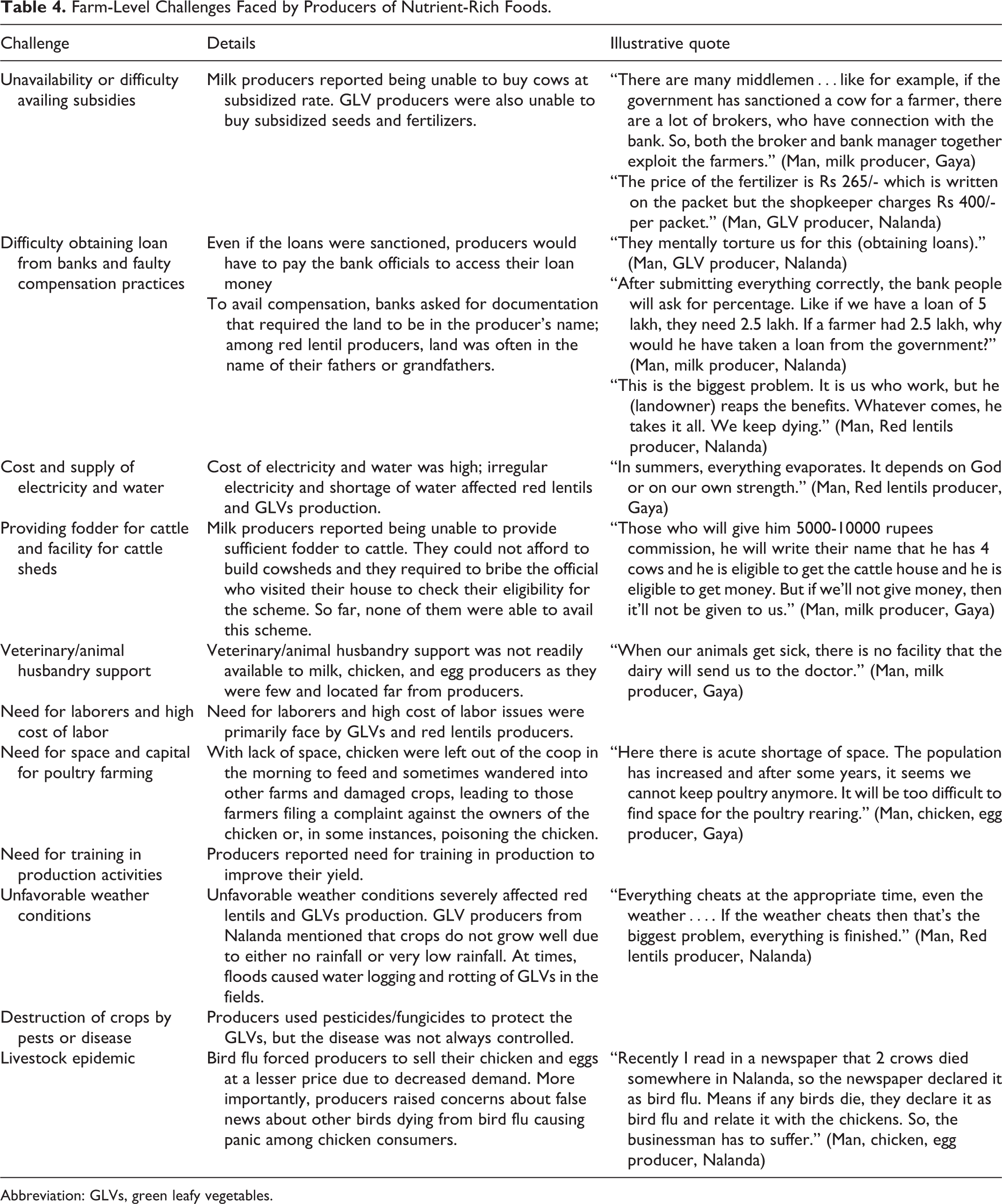
Abbreviation: GLVs, green leafy vegetables.
Market-Level Factors
Preferred markets for selling and purchasing nutrient-rich foods
The producers sought markets where their produce was profitable to sell, whereas consumer preference of markets was based on accessibility and availability/convenience.
Local producers sold red lentils and GLVs to traders/middlemen at large towns located near producers’ village (Figures 3 and 4). The market for sale of milk was the most structured in terms of milk collection centers (MCCs) that were set up by the government in villages that had a high milk production (Figure 5). Chicken and egg were generally not sold, and consumers often preferred to come to villages to buy chicken or eggs (Figures 6 and 7).
Among consumers, red lentils were mainly bought from village retail shops. Although rates were higher than at the wholesalers/town market, it saved them time and transportation cost, and they usually purchased small quantities (Figure 3). The GLVs were bought from local producers and cart-sellers for the same reasons (Figure 4). In addition, consumers cited that GLVs needed to be prepared the same day as no storage facilities such as a refrigerator were available and hence were preferably bought from nearby sellers. Red lentils and GLVs were bought from markets from nearby towns only when other household supplies were also purchased or when larger supplies were needed and when sufficient money was available to buy larger quantities.
Consumers quoted a village-level demand for locally produced milk because of the availability of credit facility, the high quality of milk, and proximal availability (Figure 5). During periods of larger requirements, such as in case of visit by house guests, some consumers bought milk pouches from the village shop or from MCCs. Local consumers generally felt that packaged milk was costly and of lower quality compared to milk procured directly from producers in the village. Chicken and eggs for routine consumption were bought from markets, and these in turn were bought by wholesalers mainly from other states (Figures 6 and 7). The preferred mode of purchase of chicken was mainly from retailers at weekly markets, while eggs were bought on retail from village shops. Accessibility through improved transportation facilities to get to the weekly markets was considered a facilitator for purchase of nutrient-rich foods, particularly chicken.
Market-level challenges
Producers and market players such as retailers and wholesalers of nutrient-rich foods reported several challenges that affected not just their profits but also had implications on affordability for consumers.
Market-level challenges faced by producers
The main challenge faced by producers in selling nutrient-rich foods at the markets was getting a profitable rate. It was implied that low rates affected the producers ability to invest in the next production cycle as well as their purchasing power to consume nutrient-rich foods. Price regulation by the government was only for milk and red lentils. The price of milk set by the MCCs was based on its fat content; however, most milk producers did not get milk of high-fat content as it varied based on several factors such as seasons, fodder, health, and gestation, for the same quantity, resulting in low prices. Producers deemed it unfair that the method of pricing milk was based on its fat content. The quantity of fat that the government has decided is like exploitation in nature. We are not getting the actual value of our labour, for our production. We’re doing a helpless business. (Man, Group 1, Milk producer, Gaya) Milk is being bought at the rate of water. (Man, Group 1, Milk producer, Gaya) They buy from us at whatever rate they wish to. We sell them because we are helpless. (Man, Group 1, Red lentils producer, Gaya) It’s green vegetables. If we don’t sell it today, it will rot by tomorrow. So, we have to sell it anyhow, even if we face losses. (Woman, Group 1, GLVs producer, Gaya) We are taking care for the whole year and providing them food and at the end of the year we are getting 500 rupees per chicken, which is very less. (Woman, Group 1, Chicken producer, Nalanda)
Perishability and storage
Among producers, perishability and storage were challenges to deal with for milk and GLVs with no fridge or storage facility available, but were not cited as problems in relation to red lentils, eggs, and chicken. Some milk producers reported disruption in sale of milk to MCCs as with frequent strikes vehicles were unable to collect milk from villages. In such instances, producers either sold milk to local consumers or made milk products (condensed milk, clarified butter, cheese) for household consumption. Milk was also stored overnight by boiling and placing in a pot or bucket that is kept hung in the house. Seasonally produced GLVs were plucked daily for household consumption during the 3 months of production in a year. Lack of storage facility and wilting of GLVs, if left unsold for the day in markets, resulted in their sale at very low prices. Unsold vegetables were not brought back home for consumption.
Owing to the various challenges, a few producers felt that they may discontinue production; however, the majority reported that they would persist with production for their household consumption. If we don’t cultivate, how will we survive? How will we eat?. (Woman, Group 1, GLVs producer, Gaya) We get angry (when poultry dies due to disease) and we want to stop (rearing poultry) but then we feel like if we have them, we can feed eggs to our children; we do not have to go outside to buy them if we have them in our house. (Woman, Group 1, Egg producer, Gaya)
Market-level challenges faced by market players
Key challenges for market players included spoilage; high costs of production, labor, and transportation; and retail-level losses due to low demand. High labor charges, labor shortages, and unavailability of vehicles for transportation were cited by market players for red lentils (traders/middlemen). The wholesalers reported the problem of storage space being infested with rodents that ate up a large part of the stock. Retailers and wholesalers for GLVs faced major challenges with spoilage and the drastic fluctuation within the same day in the selling price by evening when GLVs wilt. Furthermore, they incurred losses when the supply of GLVs was more and sales less.
A cooperative milk dairy, a key player that collected and distributed milk, reported high transportation cost for rural markets and low sales, as most people bought milk from local producers or they themselves owned cattle. Milk was distributed to retailers, who reported that unsold milk and leaked or spoilt milk packets meant that they had to bear the loss.
At poultry farms, chicks are bought from the states of Jharkhand, Uttar Pradesh, and West Bengal. During transportation, chicks, unlike grown chicken, sometimes died or got injured. High production cost and retailers and wholesalers defaulting on payments were factors contributing to losses by producers. In addition, retailers and wholesalers faced losses due to low demand. Demand was 3 times more for a chicken retailer who cleaned and cut the chicken for sale compared to those who did not. Further losses were incurred if chicken were not sold as storage facility was not available. Eggs were bought from other states, mainly Punjab, Andhra Pradesh, Jharkhand, and Karnataka. Retailers and wholesalers bore the brunt for losses due to breakage of eggs during transportation. During summer, spoilage of eggs was high and demand was low. All of these factors contributed to the increase in price of nutrient-rich foods and thus reduced affordability for the consumers.
There are constraints in the production-to-consumption linkages of nutrient-rich foods in terms of profitability for producers, spoilage/losses for market players, and affordability for consumers; however, consumption is prioritized for children and own/household production facilitates consumption among producer households.
Discussion
Using the social-ecological model, this qualitative study provides an understanding of important household-, farm-, and market-level factors that influence the consumption of nutrient-rich foods. Factors across all levels affected consumption of nutrient-rich foods. The key factors influencing consumption were knowledge of health and nutrition benefits and sociocultural factors at the household level, challenges to own production at the farm level, and convenience and affordability at market level. The main constrains in production-to-consumption linkages that affected consumption of nutrient-rich foods were low profitability for producers that affected their purchasing power, spoilage/losses for market players, and affordability for consumers.
At the household level, participants from our study were aware of the importance of consumption of nutrient-rich foods, even though most of them had not been informed or had attended any nutrition awareness programs. This finding is in contrast to other Indian studies that have indicated that knowledge of consumption of nutrient-rich food is low among the rural poor 23,24 or that larger farmers were more aware about nutrient-rich foods. 25 A recent report focusing on India’s prospects for achieving the Sustainable Development Goal 2 (SDG2) of achieving zero hunger by 2030 indicated that there is a rising demand for consumption of nutrient-rich foods. 2 This demand is, however, not met with sufficient consumption due to high and fluctuating prices for these foods. 2 The challenge with affordability is particularly severe among daily wage laborers whose livelihoods are the most unstable. This is not surprising, as an analysis of a nationally representative rural price and wage data on men and women to estimate the least cost of satisfying India’s national dietary guidelines and to assess the affordability of their diet relative to wages for unskilled laborers showed that 63% to 76% of the rural poor could not afford the recommended diet. 26 Significant increases in food prices in recent years have further undermined food security and livelihood of the most vulnerable populations by eroding their already limited purchasing power. 27 Some of these problems could probably be mitigated by including nutrient-rich foods within the public distribution system. 2
Producers from our study, who were mainly marginal farmers, emphasized their preference to consume nutrient-rich foods from their own production and sold only the excess produce. Participants prioritized household consumption mainly because of the nutritional value coupled with them finding it unaffordable to buy nutrient-rich foods from the market. However, own production may not be sufficient for consumption and households depend on markets to purchase various food items that constitute a healthy diet. A study in India revealed that on an average own-farm production contributes 23% of food from mainly starchy staples, while market purchases contributed to 77% of calories consumed from diverse and nutritious foods. 11 Food items sold by producers fetch them a low rate. Low rates affected not only the producers ability to invest in the next production cycle but also their purchasing power to consume nutrient-rich foods.
At the farm level, own production was an important factor for consumption of nutrient-rich foods. While some studies have pointed out that improved household production of nutrient-rich foods supports not only improved consumption but can also be a livelihood option, 28 -30 some studies have indicated that consumption from household production may be insufficient to meet nutritional requirements. 6 Improved consumption has been reported particularly for livestock production. A case study of 8 low- and middle-income countries including India showed that encouraging livestock production could not only contribute to meeting nutritional requirements in poorer households (particularly among children) but also provide an opportunity for livelihoods in these communities. 28 Similarly, young children from households that rear cattle and chickens consumed more milk and eggs. 29,30 On the contrary, such increase in consumption was not shown for pulses. In a study comparing district-level pulse production and consumption across India, it was found that the per capita consumption of pulses was about 50% of recommended intake (80 g/d) even in high-producing districts. 6 The reason for the low consumption from own production can be because of the preference among marginal farmers to sell their produce to boost income. 25
Low productivity by marginal farmers affected household food security, 31 and measures are needed to be taken to mitigate this issue. 31,32 The need for governmental support for agricultural inputs (seeds, fertilizers, pesticides/insecticides, irrigation), access to subsidies, access to low-interest loans, and a fair price for their produce to make production of nutrient-rich foods a sustainable livelihood is critical in supporting smallholder farmers. 31,32 Studies from India and other South Asian countries have demonstrated that diet diversity and consumption of nutrient-rich foods can be improved through increased knowledge of nutrition, women empowerment, enhancing production and crop diversification at the farm level, promoting cultivation of nutrient-rich fruits and vegetables in nutrition gardens, and supporting interventions to promote access to animal foods. 33,34
At the market level, consumers showed preference for local produce, while producers sought markets where they could get a profitable rate for their produce. The poor local market pathways resulted in consumers and producers having to spend time and transportation cost at larger town markets for their purchase and sale, respectively. This in turn affected affordability for consumers and profitability for producers. Indian farmers have been traditionally selling their produce at Agricultural Produce Market Committees (APMC) or “mandis” to licensed traders and commission agents leading to low prices for markers produce. 35 Smallholder farmers face several challenges in selling their produce due to low economies of scale, little bargaining power, poor connectivity to markets, and insufficient information about prices and quality standards, especially in case of perishables like vegetables, fruits, and livestock products. 2 The varying market structures as described through the distribution chains of each of the nutrient-rich foods may also contribute to the various market level factors that affect consumption.
The rural market distribution chains may probably be tailored to focus on nutrition as an outcome with a seamless system of supply and demand linkage ensured so that the nutritional intake of local consumers are improved. 36 Local market access is a key factor that promotes procurement and sale of produce by producers. 37 In rural Ethiopian households, for most nutrient-rich foods, subsistence production was less than the amount used for household consumption and households resorted to market purchase to meet this requirement. 38 It has been shown that producers preferred to sell their produce to local consumers, as seen in an exploratory study conducted in 4 distinct agroecological landscapes of India, and this may be a solution for smallholder farmers in the future. 36 Producers cooperatives that promote collective farming could possibly result in sufficient produce for local consumers. Such collectives have been advocated to become a norm in local food systems as it benefits both the producers in terms of profitability and consumers in terms of demand for consuming local produce. 36 Strengthening rural markets to provide nutrient-rich foods for rural populations is, therefore, critical in meeting their nutritional requirements. 11 Encouraging aggregate models such as farmer producer organizations (FPOs) could be essential to improve farm price realizations. 2 Through FPOs, smallholder farmers can jointly access credit, inputs, technology, and markets, thereby benefiting from scale economies without expansion of land ownership. 2 This in turn could encourage higher production and higher profitability of nutrient-rich foods.
In 2019, the Eat-Lancet Commission recommended international and national commitment to make healthy diets available, accessible, and affordable through improvements in food production, improved markets and reductions in food loss and waste, investment in public health information and sustainability education, implementation of food-based dietary guidelines, and using health care services to deliver dietary advice and interventions. 39 Agricultural policies and nutrition-sensitive investments along the food supply chain, nutrition-sensitive social protection policies to increase the purchasing power and affordability of healthy diets, and policies enhancing behavioral change toward healthy diets have been recommended. 12 Further insights into context-specific issues that could contribute to improved consumption of nutrient-rich foods are required: (1) sociocultural factors that affect consumption of nutrient-rich foods; (2) quantities of household consumption from own production versus selling; (3) feasibility of production of nutrient-rich foods by nonproducers by forming farmers collectives, for example, cattle rearing wherein those interested were given a cow on subsidy with a shed and fodder at subsidized cost or poultry farming on government land in villages; (4) mapping of rural markets for availability of nutrient-rich foods; (5) feasibility of strengthening village-level distribution chains for these foods; and (6) nutrient-rich food buying behavior among agricultural communities.
Our study findings should be interpreted in light of its limitations. First, the study being exploratory in nature with information gathered through FGDs, we were relying on participants perception of their consumption. Information about the effects of price on consumption of locally available food versus those from other states were not probed as we were not aware about that difference at the time of data collection. The study was conducted in one state of India, and these findings can be context specific, whether the findings can be extrapolated to other regions needs to be evaluated. Another limitation of our study was that we examined constraints and facilitators with respect to a specific food item among producers; however, examining this in context of production diversity would have been beneficial in understanding producers’ decisions about buying food items that they did not produce and/or producers decisions about production of specific food groups. Both quantitative and in-depth qualitative research are needed to probe further to validate our findings and to understand the local-context specific production-to-consumption linkages that can potentially increase consumption of nutrient-rich foods and enhance diet quality among agricultural communities in India.
Conclusions
Production-to-consumption linkages are complex, and clear evidence linking agriculture to nutritional outcomes is limited for diverse low-income contexts. There are constraints in production-to-consumption linkages of nutrient-rich foods in terms of profitability for producers, spoilage/losses for market players, and affordability for consumers; however, consumption is prioritized for children and own/household production facilitates consumption among producer households. Understanding local context specific factors affecting consumption, such as a population’s knowledge of importance of consumption of nutrient-rich foods on health, sociocultural factors influencing consumption, own production and consumption, and local market access and consumption needs to be examined further to improve consumption of nutrient-rich foods among agricultural communities in India.
Footnotes
Acknowledgments
The authors thank all the study participants for their time and to DCOR agency for their efforts in data collection for the study.
Author Contributions
SMT conceptualized and implemented the study, supervised the data collection, conducted data analysis, and wrote and finalized the manuscript. TT conceptualized and implemented the study, supervised the data collection, reviewed data analysis, and cowrote and finalized the manuscript. SM conceptualized the study and reviewed the manuscript, ATJ conceptualized the study and reviewed the manuscript, PW conceptualized the study, and cowrote and finalized the manuscript. SS conceptualized and implemented the study, supervised the data collection, reviewed data analysis, and cowrote and finalized the manuscript. All authors read and approved the final manuscript.
Declaration of Conflicting Interests
The author(s) declared no potential conflicts of interest with respect to the research, authorship, and/or publication of this article.
Funding
The author(s) disclosed receipt of the following financial support for the research, authorship, and/or publication of this article: This study has been funded by the Bill and Melinda Gates Foundation (grant number: INV-008242 / OPP1194964).
