




Abstract
Background:
Within food-based approaches to improve nutrition during the first 1000 days of life, improved formulations of food products and the use of animal source foods, such as fish, are 2 widely cited strategies; however, there are few examples where the 2 strategies are combined. Furthermore, although small indigenous fish are highly nutritious and available to the poor in many regions of the world, their importance is often overlooked.
Objective:
To document the development of 2 nutritious fish-based food products in Bangladesh: a chutney for pregnant and lactating women (PLW) and a complementary food (CF) for infants and young children (6-23 months), including potential contributions to recommended or desirable nutrient intakes in the first 1000 days, processing methods, and nutrient composition.
Methods:
Local nutrient-rich ingredients and simple processing methods based on traditional knowledge (for the chutney), and a literature review (for the CF), were selected and trial batches produced. Products were analyzed for nutrient composition using standard analytical procedures and results compared with recommended or desirable nutrient intakes for women and children.
Results:
Both products could contribute significantly to micronutrient intakes of PLW (24% of iron and 35% of calcium recommended intakes) and macro- and micronutrient intake of infants and young children (≥65% of vitamin A, ≥61% of zinc, and 41% of iron desirable intakes) when consumed in the proposed serving size.
Conclusion:
Inclusion of small indigenous fish as an underutilized animal source food in combination with other local nutrient-rich ingredients in food products represents a promising food-based strategy to improve nutrition, with many additional potential benefits for communities involved in production, and therefore warrants further investigation.
Keywords
Introduction
Globally, 842 million people are undernourished, and more than 2 billion people are deficient in micronutrients.
1,2
A significant portion of this burden is found in Bangladesh where 24% of women (ever married, aged 15-49 years) have a body mass index below the healthy range (18.5-25 kg/m2), 42% have anemia, 51% of children under 5 years are anemic, and 41% of children are stunted.
3
Key contributing factors to undernutrition in low-income countries, including Bangladesh, are low dietary diversity in the diets of women and low nutrient density of traditional complementary foods (CFs) for infants and young children.
4
–6
There is global consensus that the first 1000 days of a child’s life, from conception through age 2 years, including the transition from exclusive breast-feeding to the introduction of CFs with continued breast-feeding at 6 months of age, provide a “critical window of opportunity” to promote optimal growth and development of infants and young children and to prevent growth faltering, micronutrient deficiencies, and childhood illness. Current food-based efforts to improve the nutrient intake of women and children during the 1000 days include the use of fortified foods and supplements such as micronutrient powders, nutrition education targeting dietary diversity and improved complementary feeding practices, and biofortification of staple foods such as rice. However, these have had mixed results with issues around access, acceptability, uptake, sustainability, and bioavailability of nutrients.
7
–9
Despite broad efforts to improve dietary diversity in Bangladesh, 59% of women and 58% of children under 2 years consume inadequately diverse diets.
10
In recognition of the limitations of solely home-based approaches to dietary diversification strategies, the World Health Organization (WHO)/United Nations Children’s Fund (UNICEF) Global Strategy for Infant and Young Child Feeding makes the following recommendation: … low-cost complementary foods, prepared with locally available ingredients using suitable small-scale production technologies in community settings, can help to meet the nutritional needs of older infants and young children. Industrially processed complementary foods also provide an option for some mothers who have the means to buy them and the knowledge and facilities to prepare and feed them safely.
11(p9)
The aims of this article are to document the rationale for product development, recipe formulation, proposed processing methods, nutrient composition and to estimate the potential contribution of each product to recommended nutrient intakes (RNIs) for PLW and desirable nutrient intakes from CFs for infants and young children, when consumed in the proposed serving sizes. In addition, the potential role of these products in food-based approaches for the prevention and treatment of undernutrition, further optimization strategies, potential production and distribution models, global applicability, and the next steps for future development are also discussed.
Guiding Principles for Product Development
The literature on recommended ingredients, nutrient composition, and processing methods for CFs in low-income countries is prolific. However, guidance on food products for PLW is far less advanced. In selection of ingredients and processing methods for both products proposed here, the following characteristics were used as guiding principles: high content of micronutrients (particularly iron, zinc, calcium, vitamin A, vitamin B12, and essential fats, which are of public health concern in Bangladesh 17,20,21 ), high energy density (particularly for the CF), inclusion of animal source food, low content of antinutrients such as phytates and polyphenols, cultural acceptability including taste and texture, ease of preparation to reduce women’s time burden, affordability and availability, and hygienic safety. 14 Simple processing methods with limited equipment were also prioritized in order to develop products with potential for local community-based production requiring minimal capital investment. Guidelines within relevant Codex Alimentarius Commission standards, 22,23 the WHO/UNICEF review of complementary feeding in low-income countries, 24 and updates to this review 25 were also considered for the CF; however, to the authors’ knowledge, no such equivalent guidelines for food products specifically for PLW are available.
Selection of Ingredients
Small indigenous fish species
Small indigenous fish species (SIS) were selected as the primary ingredient for both food products for several reasons. Firstly, fish is by far the most widely available and frequently consumed animal source food in Bangladesh and is therefore the obvious choice for cultural acceptability and availability. 26 Secondly, the nutritional benefits of fish are 3-fold: (1) SIS, consumed whole with head and bones are nutrient rich, providing animal protein, essential fats, iron, zinc, calcium, vitamin A, vitamin B12, and other nutrients; (2) these nutrients are highly bioavailable; and (3) due to the “meat” factor, inclusion of fish enhances bioavailability of nutrients from other ingredients. 14 Thirdly, drying of fish is a common practice in many areas of Bangladesh and is a suitable preservation method for use in food products, particularly as it serves to extend shelf life, thereby reducing the effects of seasonality of fish supply. Dried fish also provides a concentrated source of micronutrients (nutrient density), is well liked, and commonly consumed across all income groups in Bangladesh. 26 Lastly, although dried fish is consumed more frequently than any other category of fish, the quantity consumed, particularly by vulnerable groups, including women and young children is low. For example, although fish are generally considered by mothers and caregivers as a healthy food and good for growth, fish are often not introduced to infants and young children due to negative perceptions about the suitability of its texture, especially for infants aged 6 to 8 months. 27 Furthermore, rural Bangladeshi mothers in Northern Bangladesh have been shown to have very low fish intake (12.8 g/d). 28 These examples indicate that there is significant opportunity to increase fish intake in these target groups through consumption of fish-based food products of suitable taste and texture.
Fish chutney
The fish chutney is based on a traditional “achar” or pickle recipe, which is commonly served with rice and vegetables, and resembles various savory condiments served in many cuisines globally. Jat puti fish (Puntius sophore), an SIS, was selected for inclusion in this recipe as it is a rich source of iron, calcium, zinc, vitamin B12, and essential fatty acids 18,29 and is widely available from capture fisheries. Garlic, onion, chili, and salt were included for taste and acceptability and also for their preserving properties, extending the product shelf life. Soybean oil was selected for inclusion because it is a core ingredient in condiments of this nature, is widely available in Bangladesh, has a desirable fatty acid profile, and contributes to the overall energy content of the product. 30,31
Fish-based CF
The CF is based on the traditional rice-based porridge used in Bangladesh, with added ingredients to enhance the nutritional quality. Darkina fish (Esomus danricus), an SIS, was selected particularly for its very high iron content and also calcium and zinc content. 29 The OSP was selected for inclusion because it is a rich source of provitamin A carotenoids and has a sweet flavor and pleasing color, which improves product acceptability. The benefits of OSP to address vitamin A-deficiency have been recognized globally and efforts to establish large-scale production of β-carotene-rich varieties of OSP in Bangladesh are expanding through the work of the International Potato Center and Bangladesh Agricultural Research Institute, indicating that it will become increasingly available. 32 Soybean oil was selected for inclusion because it has a desirable fatty acid profile in terms of omega-3 and omega-6 content, it contributes significantly to energy density of the product and is widely available. 30,31
Methods
Processing Methods
For the fish chutney, Bangladeshi women familiar with preparing “achar” or pickled condiments were consulted on the various processing methods. For the CF, a literature review was conducted, using a combination of “fish,” “complementary food,” “weaning,” “local,” and “processing” as search terms in PubMed database. Reference lists in pertinent article were also searched, and relevant processing methods described were used as a guide. 33 –38 The processing methods for both products were then tried and tested, under the guidance of a food technologist, in a home kitchen for the fish chutney and at a local laboratory for the CF and was guided by what would likely be acceptable in the community (eg, it was thought that only a small quantity of dried fish in the CF would be culturally acceptable). Final processing methods selected for product development are presented in the results section. The fish chutney was produced using a gas cooktop and handheld stone grinder. The CF was produced using a custom-built fan-forced electric oven, industrial pin mill machine (Hitech, model number HWP, Zhejiang, China), sifting screener machine (Jiangyin Kaiyue Machinery Manufacturing Co Ltd, model number ZS, Jiangyin, China), and an industrial single-screw extruder (Jinan Dayi Extrusion Machinery Co Ltd, Jinan, China).
Sampling
A trial batch of each food product was produced for analysis of nutrient composition. The fish chutney was produced in a home kitchen (batch size approximately 3 kg) and then packaged in sealed plastic containers of 240 g each (8 individual serves of 30 g each). The CF was produced by Mark Foods factory (batch size approximately 30 kg) in Dhaka, Bangladesh and then packaged in individual serve sachets of 30 g each. The trial batch size of the CF was larger than the fish chutney due to a minimum quantity required for extrusion. Two containers of chutney (16 individual serves) and 16 individual sachets of CF were randomly selected from the trial batch for laboratory analysis.
Analysis of Nutrient Composition
Nutrient composition of the 2 fish-based products was analyzed at AsureQuality Limited Laboratory, New Zealand. Prior to analysis, individual samples were combined and homogenized before being subsampled. Energy, protein, fat, vitamin B12, and folate were analyzed using standard methods per the Association of Official Analytical Chemists. Iron, zinc, and calcium were analyzed by inductively coupled plasma (ICP) optical emission spectrometry. 39 Iodine was analyzed by ICP mass spectrometry. 39 Fatty acid composition was analyzed by gas liquid chromatography. 40 Analysis was conducted for 45 fatty acid components, but only selected fatty acids of interest are presented in the results. β-Carotene was measured by alkaline saponification, extraction, chromatography, and spectrometry. 41 A conversion factor of 1 µg retinol activity equivalent (RAE) = 12 µg β-carotene was used to present the composition in microgram RAE. 42 All samples were analyzed in duplicate and are presented here as the mean.
Potential Contribution to Recommended or Desirable Nutrient Intakes
The RNIs vary considerably throughout the trimesters of pregnancy and stages of lactation. Here, an average RNI throughout pregnancy and the first 12 months of lactation was calculated for each nutrient of interest. 43 –46 The RNIs for infants and young children also vary considerably from birth to 2 years of age and are dependent on breast milk intake. The quantity of nutrients that should be provided by CFs (derived from desirable nutrient densities of CFs) to meet daily growth and development needs can be estimated as the total daily RNIs less the nutrients provided through breast milk, in this case, assuming average breast milk consumption and average milk composition. 25 Note, however, that there is considerable variation in desirable nutrient densities for CFs depending on whether US dietary reference intakes or the WHO/FAO RNIs are used, and as such, these should not be considered as reference values. 25 Recommendations for lipid intake from CFs, in order to achieve a total lipid intake of between 30% and 45% of total energy, are 0% to 34%, 5% to 38%, and 17% to 42% of energy from CF for infants and young children, aged 6 to 8, 9 to 11, and 12 to 23 months, respectively. Here, the midpoint of each range was used and then converted to grams of lipid from CF per day (assuming 37 kJ energy/g lipid). 47 The RNIs for fatty acids are provided as a percentage of total energy (not energy required from CFs), as in the current study, the average fatty acid composition of breast milk (data on which would allow quantification of the remaining amount required from CFs) has not been investigated.
Results
Recipe Formulation and Processing Methods
The proposed compositions of the 2 fish-based food products are shown in Table 1 and the preliminary processing methods are outlined subsequently.
Composition of Fish-Based Chutney and Fish-Based Complementary Food.
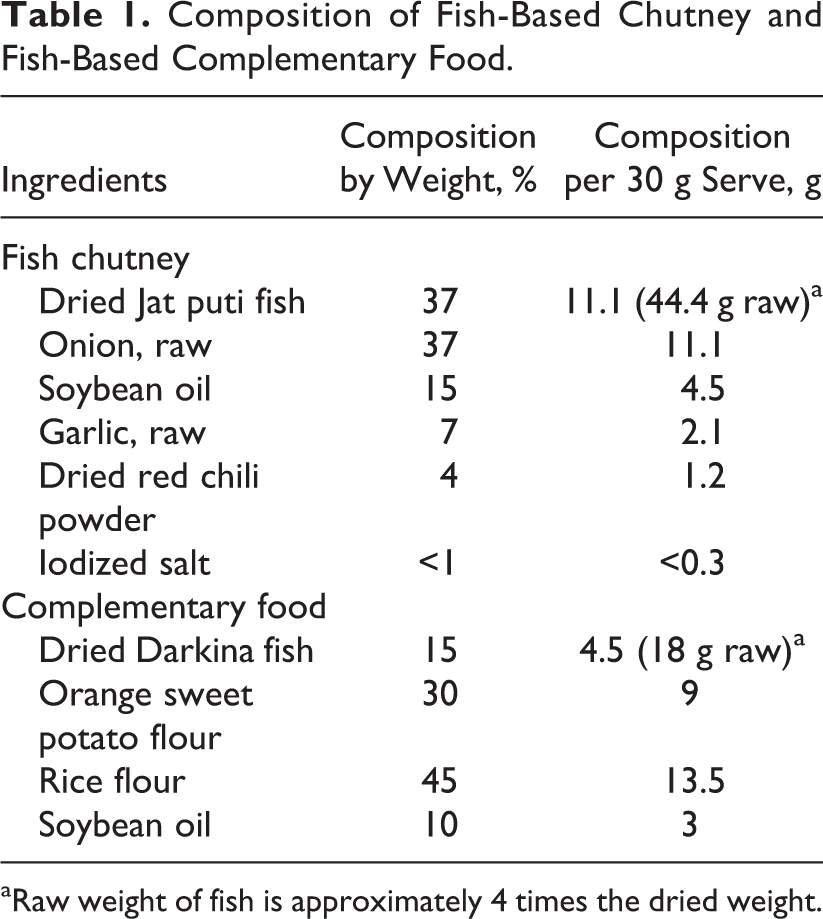
aRaw weight of fish is approximately 4 times the dried weight.
Fish chutney
Dried fish are soaked in water for approximately 30 minutes to be softened and then roughly ground using a handheld stone grinder. Garlic is peeled and chopped and then ground into a paste using a few drops of water. Onions are peeled and chopped and then fried in soybean oil on medium heat until translucent. Ground fish and garlic are then added to the onion and fried for approximately 5 minutes. Salt, chili, and a little water are added and fried for approximately 20 minutes, until the water has evaporated.
Fish-based CF
Darkina fish are washed in clean water and oven-dried at 60°C for approximately 24 hours, until a moisture level of 10% to 12% is reached. Dried fish are then ground into a powder and sieved to ensure uniform particle size. The OSP is peeled, trimmed, and washed to remove all dirt, then sliced into chips approximately 2 mm in width and blanched at 85°C for 5 minutes to enhance color retention. The chips are then oven-dried at 60°C for approximately 24 hours, until a moisture level of 10% to 12% is reached. Dried chips are ground into flour. Rice is parboiled, milled, and polished before being ground into flour. Dried fish powder, OSP flour, rice flour, and soybean oil are mixed in the specified proportions and sifted to ensure a uniform particle size of <420 µm, then extruded which allows precooking of the product and improves food safety. The extruded product is then sieved again as mentioned previously.
Proposed Serving Size and Acceptability
Fish chutney
The proposed serving size for PLW is 30 g (approximately 1 heaped tablespoon) of chutney per day, which is equivalent to 44 g of raw fish, and is recommended to be served as an accompaniment to main meals such as boiled rice with vegetable curry. This serving size was selected to mirror typical quantities of other similar condiments such as achar consumed by women and was considered to contain ample nutrients. The fish chutney was tested for acceptability among PLW and nonpregnant, nonlactating women in terms of taste, texture, aroma, appearance, and overall impression, and was found to be well liked.
Fish-based CF
The daily proposed serving size of the CF for infants aged 6 to 11 months is a single portion of 30 g dry product, and for young children aged 12 to 23 months, 2 portions of 30 g dry product (total of 60 g dry product/d), which is equivalent to approximately 18 and 36 g of raw fish, respectively. These serving sizes were selected to be consistent with recommended quantities of CFs and to provide nutrients consistent with Codex Alimentarious Commission guidelines. 23,48 These serving sizes are specifically designed as a supplement to the local diet and to be given in addition to family foods, with continued breast-feeding. In the home, the premixed product is to be mixed with boiled water and served as a porridge. The CF was taste tested among mother and infant dyads and was found to be well accepted, although some participants disliked the odor. In further production trials, the odor was found to be greatly reduced by omitting the extrusion step in processing and cooking the dry product in the home by boiling with water.
Nutrient Composition and Potential Contribution to RNIs
Fish chutney
The nutrient composition of the fish chutney and the potential contribution to RNIs for PLW are shown in Table 2. Results show that the chutney, consumed in the proposed serve size, contributes significantly to micronutrient RNIs, most notably, 35% for calcium and 24% for iron. The total fat content (10.3/100 g) was somewhat lower than might be expected, given that soybean oil composed 15% by weight of the ingredients, and the dried fish should have been a further source of fat. The total protein content (13.6/100 g) was also somewhat lower than what might be expected, given the high proportion of dried fish in the chutney (37% by weight). With respect to the fatty acid profile, the chutney had a moderate content of α-linolenic acid (ALA, 430 mg/100 g), low content of docosahexaenoic acid (DHA), no detected quantity of eicosapentaenoic acid (EPA), and a very high content of linoleic acid (LA, 4770 mg/100 g).
Nutrient Composition of Fish Chutney and Potential Contribution of a Daily Serve to Recommended Nutrient Intakes.
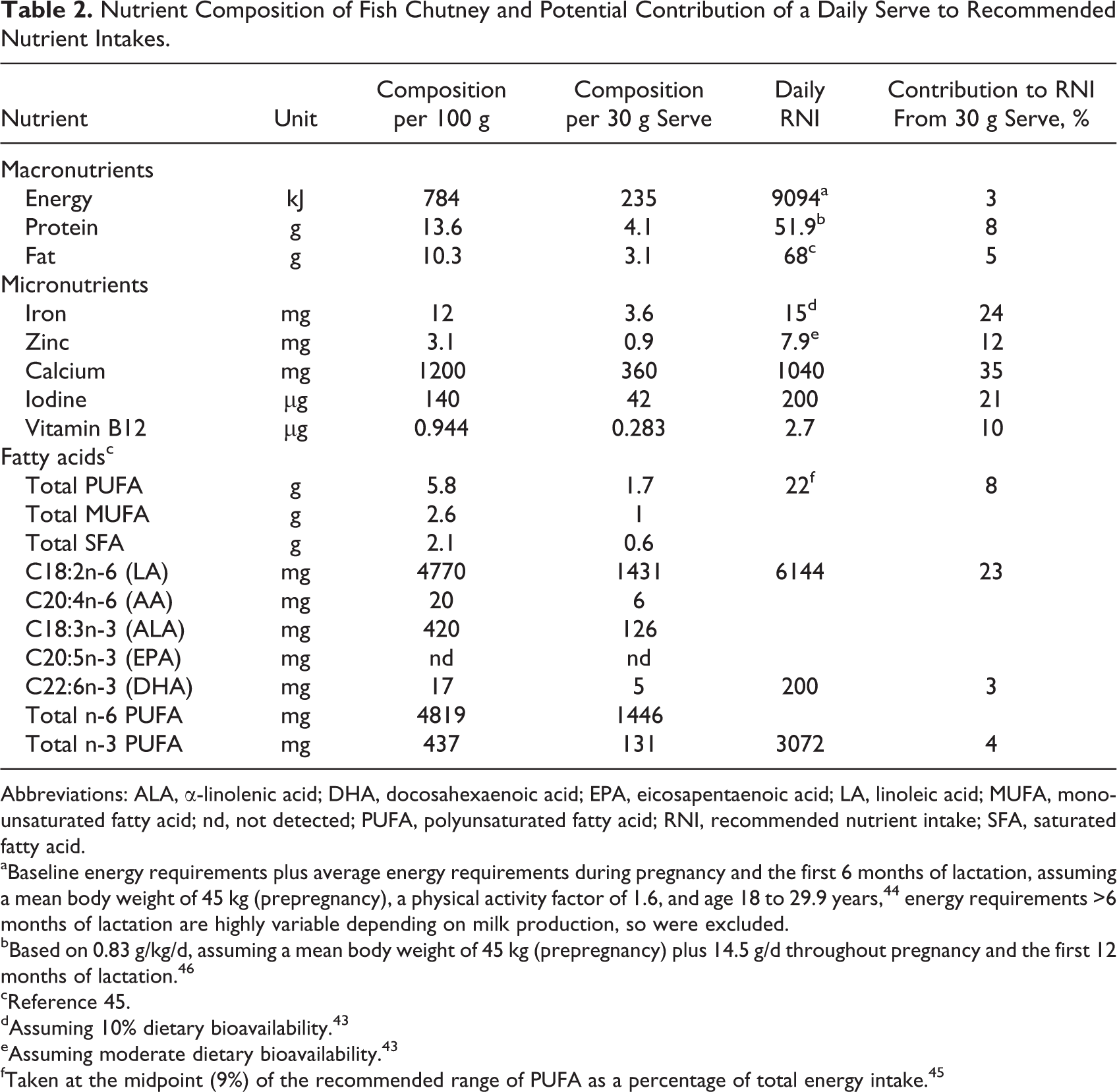
Abbreviations: ALA, α-linolenic acid; DHA, docosahexaenoic acid; EPA, eicosapentaenoic acid; LA, linoleic acid; MUFA, monounsaturated fatty acid; nd, not detected; PUFA, polyunsaturated fatty acid; RNI, recommended nutrient intake; SFA, saturated fatty acid.
aBaseline energy requirements plus average energy requirements during pregnancy and the first 6 months of lactation, assuming a mean body weight of 45 kg (prepregnancy), a physical activity factor of 1.6, and age 18 to 29.9 years, 44 energy requirements >6 months of lactation are highly variable depending on milk production, so were excluded.
bBased on 0.83 g/kg/d, assuming a mean body weight of 45 kg (prepregnancy) plus 14.5 g/d throughout pregnancy and the first 12 months of lactation. 46
cReference 45.
dAssuming 10% dietary bioavailability. 43
eAssuming moderate dietary bioavailability. 43
fTaken at the midpoint (9%) of the recommended range of PUFA as a percentage of total energy intake. 45
Fish-based CF
The nutrient composition of the fish-based CF and the potential contribution to desirable intakes for infants and young children are shown in Table 3. The CF, consumed in the proposed serve sizes, provided 41% to 63% of energy, 118% to 179% of protein, and 68% to 114% of fat requirements required from CFs, dependent on the age of the child (assuming average breast milk intake). In terms of micronutrient content, the proposed serve sizes exceeded 100% of desirable calcium intakes for all age-groups; and vitamin A, iron, and zinc intakes for children 12 to 23 months. A tolerable upper intake level (the highest average daily intake level that is likely to pose no risk of adverse health outcomes) for calcium for infants aged 7 to 11 months has not been established, however, the proposed serving for infants 12 to 23 months is well within acceptable limits (2500 mg/d 42 ), assuming average breast milk intake. Proposed serving sizes for vitamin A (600 µg RAE), iron (40 mg), and zinc (7 mg) are also well within tolerable upper intake levels, assuming average breast milk intake. 42 For infants, aged 6 to 11 months, the recommended serving size would meet 65% to 77% of desirable vitamin A intake, 61% to 63% of desirable zinc intake, and 41% of desirable iron intake. Of note is that for infants, aged 12 to 23 months, the contribution to vitamin A substantially increases from 65% at 9 to 11 months to 334% at 12 to 23 months. This is due to the considerable drop in the RNI for vitamin A during this period, attributable to the different methods of estimating RNIs for these age-groups, which are constrained by the available evidence. 25 Table 3 also shows that the fish-based CF contributed substantially to fatty acid requirements, particularly the long-chain omega-3 fatty acids, ALA (46%-78%), and DHA (27%-47%). This formulation is consistent with Codex Alimentarius Commission guidelines for macronutrient composition of formulated CFs for older infants and young children (energy density of ≥17 kJ/g, protein content of 6%-15% energy, and fat content of ≥20% energy). 23
Nutrient Composition of Fish-Based Complementary Food and Potential Contribution of Daily Serve Size to Desirable Nutrient Intakes.
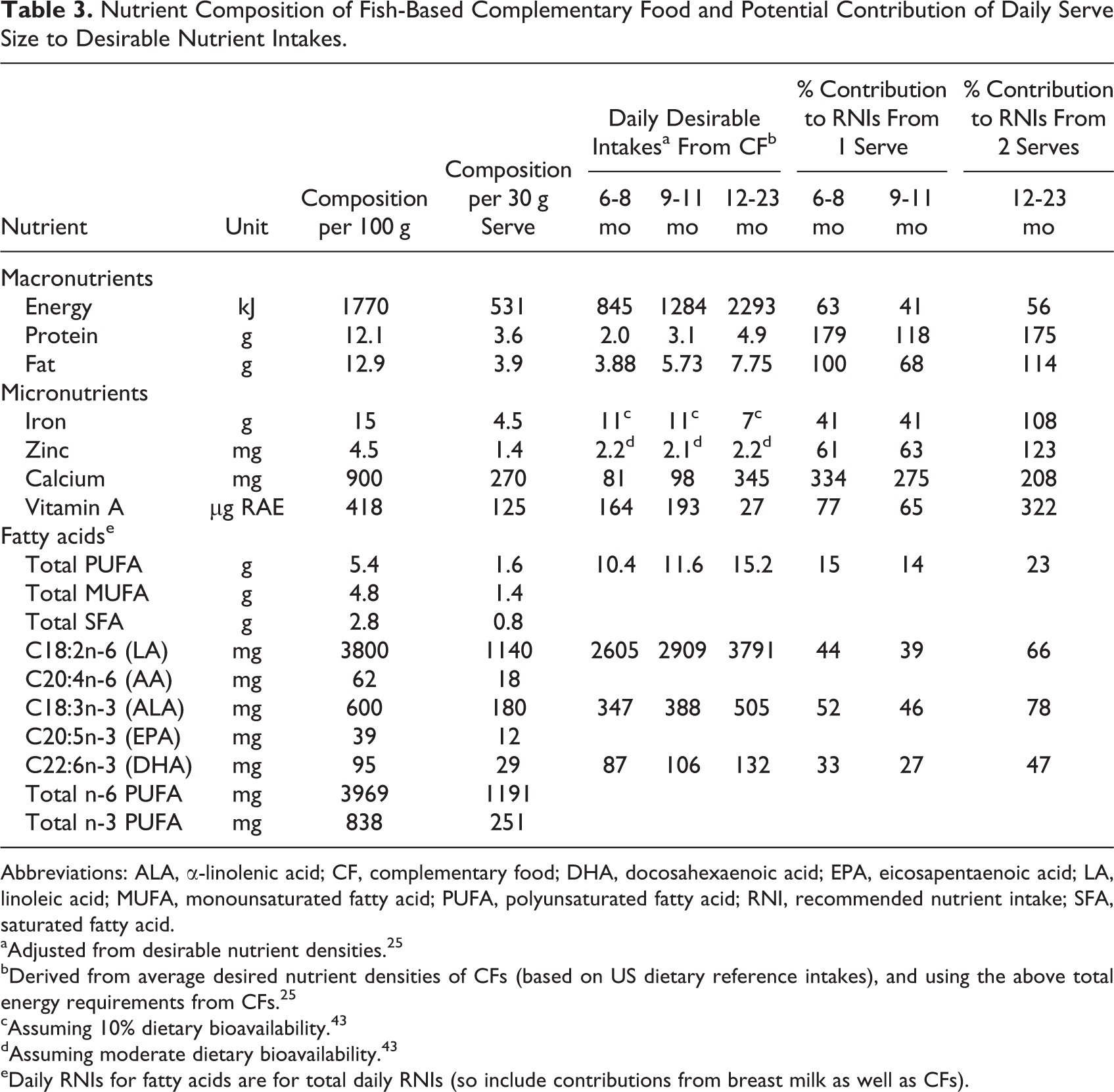
Abbreviations: ALA, α-linolenic acid; CF, complementary food; DHA, docosahexaenoic acid; EPA, eicosapentaenoic acid; LA, linoleic acid; MUFA, monounsaturated fatty acid; PUFA, polyunsaturated fatty acid; RNI, recommended nutrient intake; SFA, saturated fatty acid.
aAdjusted from desirable nutrient densities. 25
bDerived from average desired nutrient densities of CFs (based on US dietary reference intakes), and using the above total energy requirements from CFs. 25
cAssuming 10% dietary bioavailability. 43
dAssuming moderate dietary bioavailability. 43
eDaily RNIs for fatty acids are for total daily RNIs (so include contributions from breast milk as well as CFs).
Discussion
The results show that SIS and other local nutrient-rich ingredients and simple processing methods can be used to formulate highly nutritious and acceptable food products, particularly suitable for the first 1000 days of life. The fish chutney contributes significantly to micronutrient RNIs for PLW but less so to macronutrient RNIs. However, this is consistent with the concept of the chutney being served as an accompaniment to main meals (likely to provide significant amounts of energy and protein). The chutney has very high iron content and makes a significant contribution to the daily RNI (24%) from 1 serve. This is particularly important in Bangladesh, given the high prevalence of anemia among women (42%), and the finding that 83% of breast-feeding rural women had an inadequate dietary intake of iron. 3,4 The chutney also contributes significantly to essential fatty acid requirements, although there is scope to optimize this further. Of note is that breast milk is the main source of polyunsaturated fatty acid (PUFA) in the diets of breast-fed children, the content of which is largely dependent on the mother’s diet. 17 In Bangladesh, the PUFA content of breast milk has been shown to be low, linked to low dietary intake of PUFA-rich foods, so improvement in this aspect of the diet of PLW is likely to be of significant importance to the development of the child. A single serve of this fish-based chutney would more than triple the equivalent raw fish intake, compared to that of rural mothers in Northern Bangladesh. 28 Dietary diversity among women in Bangladesh is poor, with 59% of women consuming inadequately diverse diets (<5 food groups daily). Assuming that the single limiting food group for many of these women is animal flesh foods, theoretically, consumption of this fish chutney by the 29% of women who are consuming only 4 food groups daily, could reduce dietary inadequacy to a national prevalence of <30%. 10
The results also show that the fish-based CF contributes significantly to both macro- and micronutrient desirable intakes for infants and young children. The iron and zinc content is particularly impressive, given the tendency of CFs in low-income countries to be deficient in these nutrients. 15 In particular, contributions to iron and zinc RNIs are in stark contrast to a study in Bangladesh, which used linear programming to model diets and found that nutrient requirements for infants and young children could not be realistically met without fortification. 49 The study was limited in that it was based on nutrient composition from international databases, so it is not reflective of the unique nutrient composition of local foods, some of which, such as SIS, are particularly rich in several micronutrients of importance. This is a significant finding and indicates that dried small fish may indeed be a key food for achieving micronutrient adequacy for infants and young children in Bangladesh.
Furthermore, the potential nutritional contribution of this CF may be even greater than the laboratory analyses indicate. Firstly, due to the “meat factor”—the biochemical mechanisms of which are still unclear, inclusion of fish in this CF would enhance the absorption of nonheme iron from other ingredients in the food. 14 Secondly, the daily RNIs for fatty acids presented in Table 3 refer to total daily RNIs, including contributions from breast milk, because, to the authors’ knowledge, recommendations for composition of fatty acids in CFs have not been defined. This means that the values shown are perhaps less impressive than the potential contribution of this CF to requirements from CFs (excluding contributions from breast milk). The composition of fatty acids is of particular interest in relation to the essential role of fatty acids in cognitive development in infants and young children. 17 Thirdly, the contribution to desirable vitamin A intakes may also be higher than results indicate, as results only reflect the contribution to vitamin A from β-carotene (as this was the only vitamin A component analyzed). The CF is likely to contain other components of vitamin A, given the known composition of dehydroretinol in Darkina fish and Jat puti fish, 50 and the composition of other provitamin A carotenoids in OSP. 51
As mentioned earlier in relation to women, dietary diversity among infants and young children in Bangladesh is also poor, with 58% consuming an inadequately diverse diet (<4 food groups daily). Again, assuming that the single limiting food group for many of these infants and young children is animal flesh foods, theoretically, consumption of this CF by approximately 25% of children who are consuming only 3 food groups daily, could reduce the national prevalence of dietary inadequacy to <33%. 10
Strategies to Further Improve Nutritional Value of the Fish-Based Products
Although the products presented in this article have the potential to make significant contributions to RNIs and desirable intakes, depending on the quality of the overall diet of women and children, nutrient gaps may still remain. There is scope to further optimize nutritional value of the food products and more closely match RNIs or desirable intakes, for example, through alteration of serving size, inclusion of biofortified raw materials, or substitution of ingredients. For example, several research groups are working toward development and release of biofortified high zinc rice varieties and higher β-carotene OSP varieties in Bangladesh, which could be substituted in the fish-based CF to increase nutrient contributions. 52 Substitution of ingredients could also improve the fatty acid profile. For example, the fatty acid composition of the fish chutney as presented here is less desirable in relation to low and zero content of DHA and EPA, respectively, and the high content of LA, given that diets high in LA can inhibit synthesis of DHA and that LA inhibits incorporation of long-chain PUFA into tissue. 53 The high content of LA in the chutney is likely due to inclusion of soybean oil, so the option for using an alternative oil with a lower LA content that is also accessible and culturally acceptable, such as mustard oil, should be investigated. 30 Inclusion of other nutrient-rich SIS or a combination of SIS with more desirable fatty acid profiles may also be an option, depending on availability. The WHO-developed software—Optifood—based on linear programming could be a useful tool for optimizing the nutritional value of the food products, using local nutrient composition data, within certain context-specific constraints. 38
Furthermore, the effect of different processing methods on nutrient composition of the final products should also be considered. For example, the fish chutney recipe proposed here uses dried fish obtained from the market (which is sun dried). Other work has shown that sun drying destroys the vitamin A content in a particular SIS, 54 although it is unknown if other methods such as oven-drying would have the same effect. This may have implications for suitability of production in small-scale versus industrial settings.
Production Models and Potential Distribution Channels
One key feature in development of these products was selection of local ingredients and simple processing methods in order to ensure products were suitable for small-scale or local community-based production, which would maximize employment opportunities and local benefits to the economy. There are numerous examples globally of women’s groups and local enterprises successfully establishing production of similar products. 55 –58 Small-scale farmers could be contracted to produce all raw plant-based ingredients (as all are grown locally), and fisherfolk could be contracted to supply small fish from sustainable capture fisheries. Another promising source of raw fish for production is the polyculture of SIS with carps in homestead pond aquaculture—a food production system developed and promoted by WorldFish and others. 50 Rural women’s groups, using a community business model could be engaged in initial processing of ingredients, for example, solar drying of SIS and OSP, and (with modifications to processing methods) even the entire production process of the 2 fish-based products. This is currently being piloted in a project implemented by WorldFish. 59 There are many potential channels for distribution of these fish-based products, the scale of which may dictate the production model. For example, if production is community based, focusing on small-scale producers or women’s groups for processing and distribution, this model would lend itself to local commercial sales including traditional sales outlets and alternative sales models such as the CARE rural sales programme, which employs local women who earn a commission and sell products door to door. 60 On a larger scale, and potentially requiring a shift to industrial processing (which can still maintain local benefits through supply of raw ingredients), distribution channels could include national food programmes and emergency response food rations such as those of the World Food Programme, US Agency for International Development Food for Peace, and US Department of Agriculture Food for Progress programmes. The ready-made garment industry in Bangladesh, which employs millions of young women, and in some cases provides child care services, can also be an appropriate and targeted avenue for distribution of these products. 61 Ingredients and proposed serving sizes could be modified as necessary and used in school-feeding programmes or as a therapeutic food in clinical and community health services for rehabilitation of children with moderate and severe acute malnutrition.
Global Relevance
The specific ingredients were selected for their relevance in the context of Bangladesh, but the broader concept of the use of underutilized animal source foods (specifically SIS) and other local, nutrient-rich ingredients in the development of nutritious food products is applicable to many regions in the world. Indeed, some work is already under way, such as the WinFood study which, in Cambodia, investigated the use of 2 local SIS (Esomus longimanus and Paralaubuca typus) in combination with spiders, rice, and other ingredients, and in Kenya, investigated the use of a local SIS (Rastrineobola argentea) in combination with edible termites, amaranth grain, and other ingredients. 36,38 The concept is also applicable to other countries in the Great Lakes region of Africa such as Uganda and Tanzania and in West Africa where consumption of small dried fish is common, especially among the poor. Lessons can be learned from the large number of industrially processed fortified CFs in developing countries in terms of large-scale production and distribution models. 62
Next Steps
WorldFish is currently trialling production, distribution, and acceptability of these 2 products among approximately 300 households in Bangladesh. 59 A business model to determine the feasibility of different production models and distribution channels for the fish-based products should be developed, taking into consideration lessons learned from other international examples. 62 In future, the efficacy and effectiveness of these fish-based food products for improving nutrition in the first 1000 days, including impacts on cognitive development should be tested and the feasibility for expansion to other regions facing similar challenges should be investigated. The concept presented here also represents a significant opportunity for collaboration between the Consultative Group on International Agricultural Research (CGIAR) centers and others, in linking nutrition with agriculture, fisheries, and aquaculture as a comprehensive and cross-disciplinary strategy to address food and nutrition insecurity, particularly in the first 1000 days.
Conclusion
The results shown here demonstrate that use of local, underutilized animal source foods (specifically SIS) with other nutrient-rich ingredients and simple processing methods can be used to formulate highly nutritious and acceptable food products that can be particularly useful for targeting improved nutrient intake during the first 1000 days of life. There is scope to improve the nutritional value of these products further by substituting ingredients, and in the case of the CF, use of biofortified ingredients such as high zinc rice and high β-carotene OSP. The simple processing methods and use of local ingredients ensure that these products are suitable for local production with significant local economic and social benefits for communities. The products may also be suitable for industrial processing (which can still maintain local benefits through supply of raw ingredients) and scaled distribution through various channels including national food distribution programmes, commercial sales, school feeding programmes, and modification for use in the treatment of moderate and severe acute malnutrition. The concept of these local fish-based nutritious food products is applicable to many other countries in Asia and Africa where consumption of small fish is common, and context-specific opportunities for expansion of this concept should be investigated.
Footnotes
Authors’ Note
The contents and opinions expressed herein are those of the authors and do not necessarily reflect the views of the US Agency for International Development or the US Government. This work is a contribution to the CGIAR Research Programs (CRPs) on Aquatic Agricultural Systems (AAS) and on Agriculture for Nutrition and Health (A4NH).
Acknowledgments
The authors wish to thank the International Potato Center for assistance in providing high β-carotene-rich OSP for production trials and guidance on processing methods. Also, the authors acknowledge the assistance of Mr M. A. Wahed, former head of the Nutritional Biochemistry Laboratory, International Centre for Diarrhoeal Disease Research, Bangladesh, for his guidance on food safety and quality testing and procedures; Mr Khandaker Aminul Kabir, formerly employed at the Bangladesh Rice Research Institute for sourcing and preliminary processing of rice flour; and Dr Md. Nurul Islam, Department of Food Technology, Bangladesh Agricultural University for preliminary assistance in trialling techniques for production of the fish-based CF.
Declaration of Conflicting Interests
The author(s) declared no potential conflicts of interest with respect to the research, authorship, and/or publication of this article.
Funding
The author(s) disclosed receipt of the following financial support for the research, authorship, and/or publication of this article: The work reported in this article was partially funded by the US Agency for International Development (USAID) Feed the Future initiative, through the Aquaculture for Income and Nutrition (AIN) project, implemented by WorldFish, in Bangladesh.