




Abstract
Background:
The rural district of Ntchisi is in the central region of Malawi. Among children aged 6 to 23 months, the stunting prevalence is 40% to 50%. To address this high prevalence, the World Food Programme, with cooperating partners, supported the Government of Malawi to implement an integrated stunting prevention program entitled The Right Foods at the Right Time from 2013 to 2018.
Objective:
To provide implementation lessons learned from systematic documentation of how the Scaling Up Nutrition (SUN) movement, combined with other international and national initiatives and policies, was translated into tailored programming.
Methods:
During program conception, early design, and implementation, this descriptive study systematically documented the process of translating SUN principles and government policies into an operational stunting prevention program in rural Malawi.
Results:
We identified 8 factors that contributed to successful translation of policy into program activities: (1) well-structured National SUN framework, (2) reliable coordination platforms and district ownership, (3) systematic and evidence-informed program design, (4) multiple forms of data used to inform program planning, (5) multisectoral implementation approaches to stunting prevention, (6) innovation in technology to improve overall program efficiency, (7) systematic collaboration among diverse stakeholders, and (8) strong public health nutrition capacity of program team members.
Conclusions:
Lessons from this nutrition program in Ntchisi, Malawi, provide one case illustrating how the SUN movement, government policies, and global evidence base can be operationalized into tailored programming for improving nutrition.
Keywords
Introduction
Approximately 155 million children under 5 years (U5) have chronic undernutrition and 58 million of them live in Africa. 1 Stunting, being too short for one’s age, is the most common indicator of chronic undernutrition. Stunting often begins in utero and manifests itself during the first 2 to 3 years of life. In addition to stunting, chronic undernutrition leads to poor cognitive development, lower educational achievement, negative behavioral outcomes, and reduced human capital in adulthood. 2 -5 If not addressed, the detrimental effects of chronic undernutrition during these early stages of development are largely irreversible. 6
The 2012 Copenhagen Consensus, drafted by the world’s most renowned economists, declared that fighting malnutrition should be the top developmental priority because of its cost effectiveness to increase human capital and improve lives and livelihoods. 7 Since then, combating chronic undernutrition, recently with a focus on stunting prevention, has seen increased political attention, donor support, and organizational willpower. 8 -10 The Scaling Up Nutrition (SUN) movement, to which 55 countries and counting are signatories, 11-12 demonstrates the political willpower to fight undernutrition. Additionally, the World Health Assembly endorsement of the Comprehensive Implementation Plan on Maternal, Infant and Young Child Nutrition, which specifies a global target for reducing stunting by 40% by 2025 13 ; the launch of the United Nations Secretary General Zero Hunger Challenge 14 ; the nearly 100 multisectoral signatories of the Nutrition for Growth Summit commitment 15 ; and the launch of the public–private partnership The Power of Nutrition 16 further underscore the renewed global focus on fighting undernutrition.
Nonetheless, more deliberate action is needed to reach global targets. At the current rate of global stunting reduction, by 2025, the number of stunted children is estimated to be 127.4 million, which is 27.4 million more than the global target. 8 Furthermore, although the prevalence of stunting in Africa would decline based on these estimates, current population growth would result in an increase of approximately 5 million stunted children on that continent. 8 Therefore, international organizations are working to translate the support and willpower for combating undernutrition into concrete action at local levels. Among those is the World Food Programme (WFP), which is a key partner in the SUN movement and the United Nations Secretary General’s Zero Hunger Challenge. 17 World Food Programme has food distribution structures that provide platforms for tailored responses to meet specific nutritional needs in more than 80 countries, putting it in a unique position to effectively reach vulnerable populations, with equity, through nutrition-specific and nutrition-sensitive programming.
Adequately addressing undernutrition takes more than political willpower and additional dollars. Stunting, in particular, is a condition determined by numerous factors with complex etiology. 18 Stunting prevention programming thus requires a similarly comprehensive response. This response should include evidence-informed, integrated, and multisectoral interventions, 19 which combine on-the-ground operations with sound design, implementation, and monitoring and evaluation (M&E) components. Together, these components should be grounded in a solid theoretical framework and driven by human and organizational capacities from federal to frontline levels. 20,21
Interventions to address stunting are often described in primary impact papers stemming from rigorous evaluations, yet there remains a dearth of well-documented operational experiences from which lessons can be learned and translated to other settings. 9,22 -26 Documentation of evidence on how to deliver and implement programing is needed to support further action including more numerous and sustained commitments. 9,27 The Lancet special series on Maternal and Infant Nutrition published in 2013 called for more data to support global action. 9 The 2014, 2015, and 2017 Global Nutrition Reports also highlight the need for more information from program learning to improve effectiveness of scaling-up interventions. 23, 24
Malawi was the first country to join the SUN movement globally, and locally it started a multisectoral, multistakeholder effort called SUN 1000 Special Days. Malawi’s The Right Foods at the Right Time is an example of programming that built in a process for systematic documentation of implementation-related experiences for sharing lessons broadly. Therefore, we sought to synthesize those experiences in this manuscript to describe how the SUN movement, combined with other international and national initiatives and policies, was translated into action to address stunting in rural Malawi, as well as to illustrate key factors throughout the program cycle that contributed to successful implementation.
Methods
Country Context and Nutrition Situation
Since the first national survey to report such data in 1981, the prevalence of stunting in Malawi has been well above the World Health Organization threshold of 37%, which is considered to be a severe public health problem. 28 -30 Rapid population growth of 3% per annum means that, in real terms, the number of children suffering from stunting has increased in recent years. 31 Currently, nearly 1 million Malawian children U5, almost half of all children in this age-group, are stunted. Approximately 12% of children U5 suffer from underweight, and 3% suffer from wasting. 30 Furthermore, anemia is a severe public health problem affecting 63% of children between 6 and 59 months. 32 Infant and young child feeding indicators suggest that 29% of Malawian children aged 6 to 23 months receive the minimum number of meals per day; only 25% consume acceptable dietary diversity; and fewer than 8% receive a minimum acceptable diet (MAD). 30,33,34 Morbidity rates are indicative of the scale of this problem: Malaria is the number one cause of mortality in children U5 35 ; and 20% to 30% of children U5 have diarrhea or fever at any given time in Malawi. 34
The Right Foods at the Right Time
Between 2012 and 2018, the WFP provided technical and logistical support to the Government of Malawi’s Right Foods at the Right Time, programming to address chronic undernutrition during the critical First 1000 Days of child growth and development. 36 Programming was tailored to the Ntchisi context and designed using data generated from multiple sources, including stakeholder engagement activities, literature reviews, mapping exercises, and multiphased formative research, which has been published in detail elsewhere. 37 Activities were implemented through a large-scale, community-based intervention in partnership with the nongovernmental organization, World Vision Malawi, and other stakeholders at the district level—all in effort to support the Malawi Government within the SUN movement.
The primary objective of Right Foods at the Right Time in Ntchisi was to prevent stunting in young children under 2 years of age. Secondary objectives were implementation-related, intended for global lessons learned: (1) leveraging lessons to support and improve stunting prevention programing; (2) generating tools and guidance for prevention programing; and (3) influencing the national and global scale-up of prevention programing by documenting good practices, models, and evidence of impact. All program activities were aligned with Malawi’s National Health Research Agenda in which nutrition is one of the top 5 research priorities (2012-2017). 38
Activities central to The Right Foods at the Right Time included a social and behavior change communication (SBCC) campaign targeting health workers, community leaders, households, and caregivers to improve practices related to maternal diets, infant and young child feeding, and hygiene. The multichannel SBCC campaign also provided tailored messaging around the distribution of both a fortified blended food for the treatment of moderate acute malnutrition in pregnant and lactating women, as well as a small-quantity, lipid-based nutrient supplement (SQ-LNS) for children aged 6 to 23 months. The 20 g serving of SQ-LNS provided 108 kcal and contained proteins, lipids, carbohydrates, and key micronutrients (amino acids, vitamins and minerals) needed to fill the identified nutrient gap during this important period of early child development. 39
The Right Foods at the Right Time was designed to include robust M&E, whose processes have previously been described in detail elsewhere. 40 In short, the program utilized a novel electronic monitoring system, which allowed staff to track beneficiary registration and participation with near real-time updates disaggregated by relevant criteria such as SQ-LNS distribution point. The monitoring system was also designed to periodically assess program performance through built-in, postdistribution monitoring surveys conducted every 4 months. Throughout the program, external evaluation teams conducted qualitative process evaluations, as well as longitudinally measured child health and nutrition impact indicators (eg, linear growth) at multiple time points (base-, mid-, and end-line). Both process and impact findings have been reported in several published papers. 41 -43
Data Collection—Process Documentation
World Food Programme documented the process of translating SUN principles into an operational stunting prevention program. This was comprised of deliberate actions at various levels throughout the program cycle.
Headquarters level (Rome, Italy)
A technical team from WFP headquarters supported the Malawi country office and Ntchisi suboffice to systematically document inputs and processes from the early stages of the program. This team, consisting of a program manager, an M&E expert, and a nutrition advisor, incorporated technical nutrition and program-related knowledge from globally trusted sources into programming at the country and district levels. The team held weekly phone calls with the country office and made site visits approximately every 2 months, documenting the process of the SUN rollout.
The WFP headquarters team also supported the country office and suboffice in the production of monitoring surveys, including training of enumerators, data collection, data analysis, and report writing. Additionally, this Rome-based team was responsible for donor reporting 3 times per year.
Regional bureau level (Johannesburg, South Africa)
The WFP regional bureau for Southern Africa supported efforts for lessons learned by providing technical input and facilitating dissemination of programmatic information to other countries in the region. This collaboration allowed for regional knowledge sharing directly with the country office team.
Country office level (Lilongwe, Malawi)
The Lilongwe-based country technical team included a senior nutritionist, a nutrition program officer, a nutrition officer designated as SUN support, an M&E officer, and staff members from logistics, procurement, vulnerability analysis and mapping, finance, and administration. This multidisciplinary team was formed as the cornerstone of The Right Foods at the Right Time whose activities were multisectoral. The country team communicated regularly with the Ntchisi suboffice staff, including technical support around design and implementation, as well as helping to contextualize emerging monitoring data in the context of national and international guidelines and evidence. The country team also supported headquarters and suboffice teams with M&E survey reports, policy briefs, and other reporting needs. The team ensured close contact with the district-level stakeholders.
Country suboffice level (Ntchisi, Malawi)
The WFP established a suboffice in Ntchisi district and was responsible for supporting program implementation based on beneficiary feedback, stakeholder requirements, and real-time monitoring data. The suboffice also produced regular stakeholder mapping reports, which provided insights to the global and national teams reflecting beneficiary knowledge, attitudes, and practices for programming adjustments as needed.
Data Analysis
After 2 years of implementation, a team member at each level took stock of program progress to date. All available program documentation, including program reports, postdistribution monitoring surveys, and internal case studies, was then aggregated at WFP headquarters for synthesis. Using an inductive qualitative approach, key themes were identified in these program documents, based on frequency of repetition or relative importance to program facilitation. Collaborating with government and partners, these themes were then pared down to 8 primary factors, falling into 4 categories, which we summarize in this article.
Results
Eight primary factors were identified as important for implementation success. They can be categorized into 4 primary themes (Table 1).
Summary of Key Factors Identified as Important for Successful Programming in Malawi.
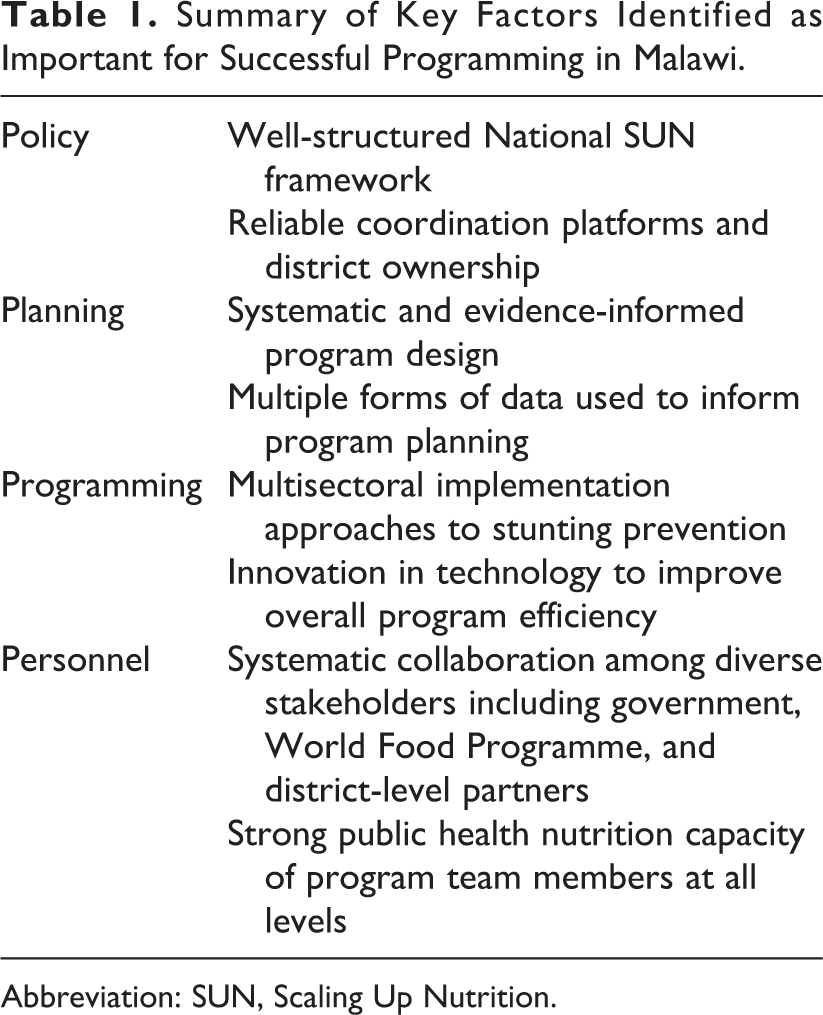
Abbreviation: SUN, Scaling Up Nutrition.
Policy
Well-structured national SUN framework
In 2011, Malawi was the first country to join the SUN movement. However, the government had already been prioritizing nutrition and specifically the prevention of chronic undernutrition. The Malawi Department of Nutrition, HIV and AIDS developed a National Research Strategy (2009-2014), which articulated countrywide strategies to address undernutrition. The strategy had a special emphasis on chronic undernutrition and was a vital framework for SUN programming within the country. The Malawi Government also developed policies and strategic plans for other related sectors such as Agriculture and Food Security, Health, Education, Gender, and Youth Development, in order to create an enabling environment and integrated approach for the implementation of nutrition interventions.
To facilitate the translation of policy into action, the Government of Malawi’s Department of Nutrition, HIV and AIDS, with support from the in-country development community and other in-country stakeholders, led a consultative process to develop the National Nutrition Education and Communication Strategy. Malawi synthesized its internal emphasis on the prevention of chronic undernutrition with the global SUN framework into a multisectoral, multistakeholder effort called the SUN 1000 Special Days movement. A national SUN taskforce was assigned to oversee all national nutrition programming in accordance with SUN 1000 Special Days. This taskforce comprised representatives from the governmental sectors of Health, Agriculture, Information, Trade, and Gender; United Nations agencies; academia; civil society; donors; and private sector actors. The taskforce had a clear focus and mandate because of Malawi’s National Research Strategy and its Nutrition Education and Communication Strategy, both of which gave priority to understanding and improving child undernutrition.
The early and consistent commitment by government and stakeholders at the national level to address chronic undernutrition was a cornerstone for rolling out SUN activities at the district level. The communication strategy outlined a list of steps for rolling out SUN activities, which, coupled with the strong national support for the SUN movement and stunting prevention programming, facilitated well-organized local action.
Reliable coordination platforms and district ownership
Following the model of the national SUN taskforce and the Nutrition Education and Communication Strategy (NCES) strategy, WFP supported government initiation of SUN activities in Ntchisi by establishing a District Nutrition Coordinating Committee (DNCC). This nutrition-focused committee supported the SUN rollout and all other nutrition-related activities, leading to sound coordination and clear nutrition governance. The DNCC had ownership of, and was engaged in, the process and progress of the stunting prevention program. WFP advised the DNCC on feasible and potentially impactful nutrition actions. Guidance and leadership from WFP (cochairing, interpreting policy, providing technical and logistical support) helped the DNCC better coordinate with stakeholders and prioritize nutrition actions. The engagement of the district commissioner (head of the district government) was also vital to program success. Such leadership resulted in better district- and community-level coordination, engagement, a shared vision on nutrition, and capacity strengthening; it also facilitated local level ownership of nutrition activities.
Planning
Systematic and evidence-informed program design
The Right Foods at the Right Time activities were aligned with global movements and initiatives, such as SUN, Renewed Efforts Against Child Hunger and undernutrition (REACH), and the Global Health Initiative. World Food Programme, the donor agency, and an external consulting group, designed the program systematically by asking key design questions and considering evidence-informed and research-based answers to draw early design conclusions (Table 2). Data used for decision-making were gathered from government, key stakeholders, nutrition and health surveys, vulnerability and analysis mapping documents, and up-to-date scientific literature at that time. 44 Also, WFP convened a group of international nutrition experts to assist in the interpretation of the evidence and provide technical and programmatic recommendations. WFP also consulted its existing 2012 Nutrition Policy, which at the time was based on current scientific evidence and aligned with other international initiatives for the reduction of undernutrition among vulnerable groups. 45 This planning process lasted 9 months and resulted in a detailed logic model, published elsewhere, that would guide implementation. 40
Guiding Design Questions Framework Used for Early Planning Among Stakeholders.
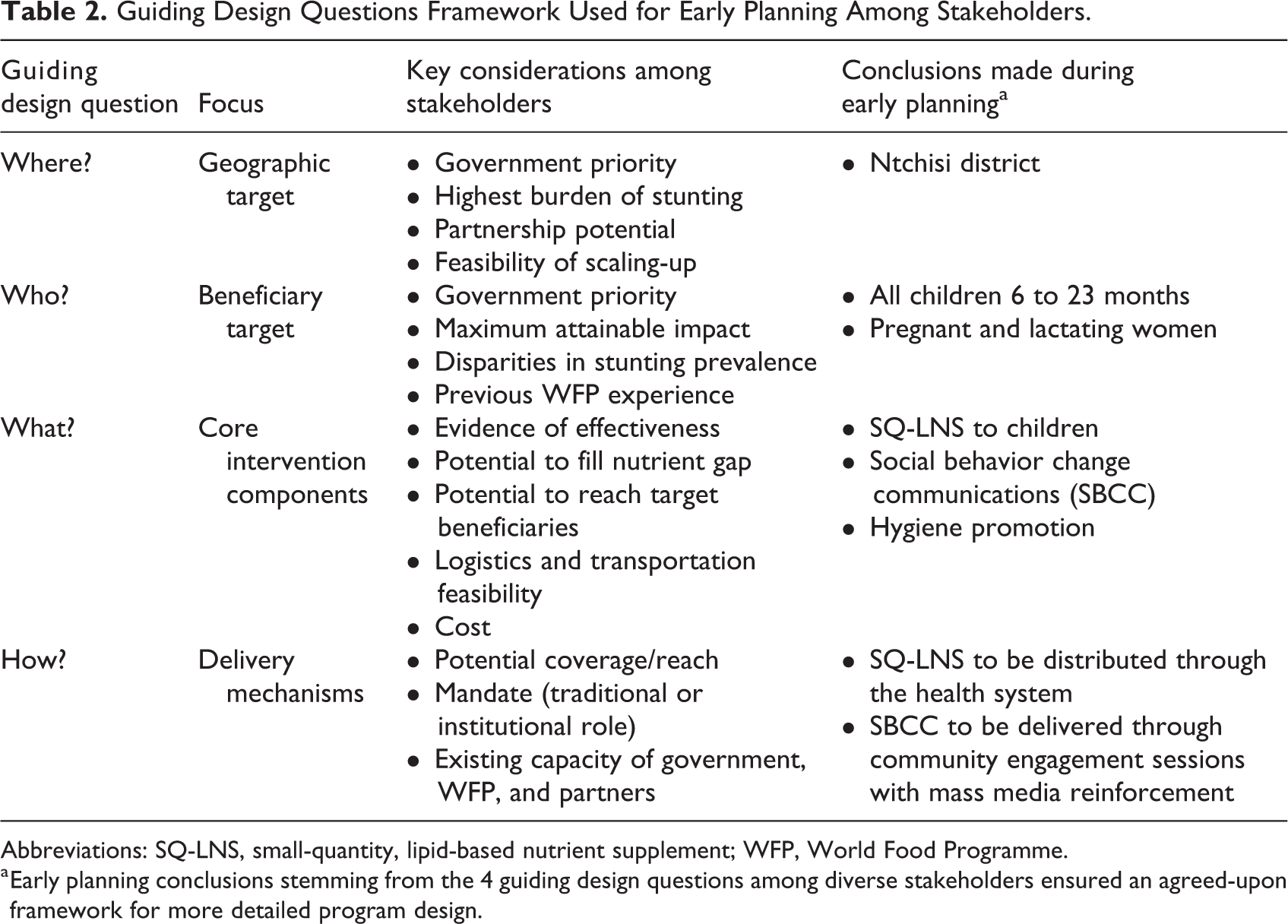
Abbreviations: SQ-LNS, small-quantity, lipid-based nutrient supplement; WFP, World Food Programme.
a Early planning conclusions stemming from the 4 guiding design questions among diverse stakeholders ensured an agreed-upon framework for more detailed program design.
Multiple forms of data used to inform program planning
After the initial design phase was complete, the government, WFP, and partners gathered district-level data to further inform program planning. Three important government-led initiatives in data collection included (1) nutrition stakeholder and activity mapping, (2) a bottleneck analysis, and (3) in-depth, participatory formative research to inform a context-specific SBCC strategy with creative briefs for tailoring communication materials. 37,46
The objective of the stakeholder and activity mapping exercise was to understand the scope and scale of existing nutrition activities in the district. The exercise organized those on-going maternal and child nutrition interventions into 3 categories: (1) SBCC, (2) micronutrients and deworming, and (3) complementary and therapeutic feeding. As part of the activity, stakeholders were identified, including both state and nonstate actors, to identify possible collaborations for implementation. The results informed the initial work plan of the district level SUN taskforce, which we believe improved coordination throughout implementation.
The bottleneck analysis, which followed A Lot Quality Assurance Survey methodology, benchmarked the progress and gaps in the implementation of current and past nutrition interventions. Representing various sectors, all stakeholders working in the district supplied data on activities, identified the main bottlenecks in intervention programming, and suggested effective actions for improvement. This process helped build consensus around the necessary district-level nutrition actions to take during The Right Foods at the Right Time. These actions were also costed, and the results were used to ensure that all the partners agreed to contribute financially to the district-level plan. Where gaps existed, WFP sought additional funding in preparation for programming.
The SBCC strategy developed from the formative research prescribed tailored messages, varied communication channels, and locally developed materials for improving infant and young child feeding practices, with a focus on improving MAD and Minimum Dietary Diversity, as well as ensuring low intra-household sharing of SQ-LNS and improved health and hygiene practices. 37,46 From 2015 to 2017, internal program monitoring found consistent improvements in process indicators of core activities (eg, program coverage), as well as gains in short-term psychosocial outcomes (eg, caregiver knowledge) and improvements in more complex behavioral outcomes (eg, dietary diversity; Tables 3, 4, and 5) . Other similar results were also found during an externally led process evaluation. 43
Process Indicators Reflecting Program Coverage in Ntchisi, Malawi (2015-2017).a
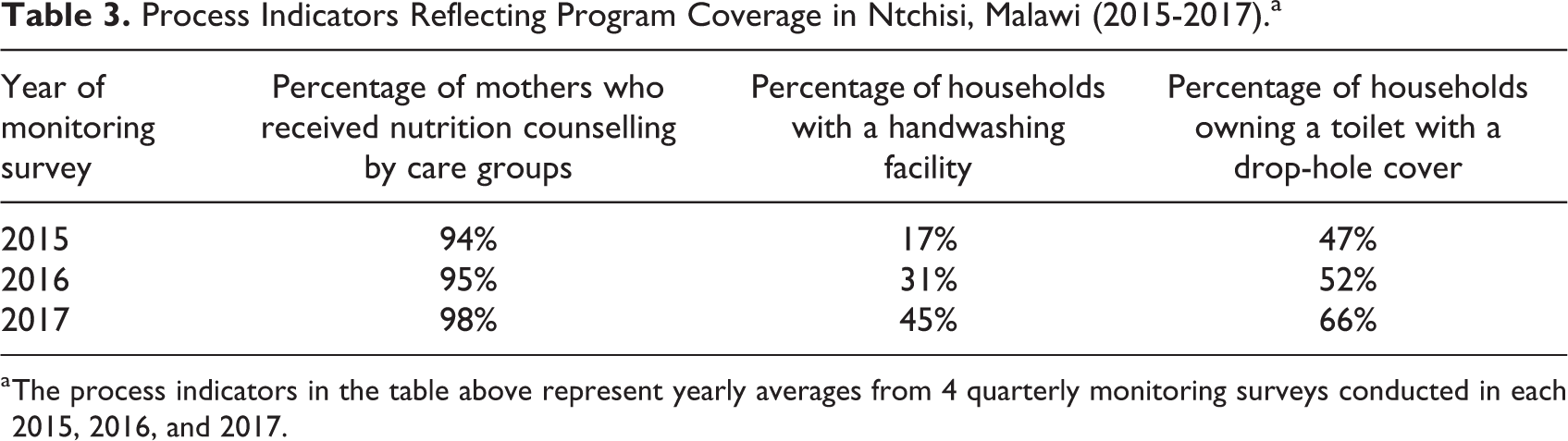
a The process indicators in the table above represent yearly averages from 4 quarterly monitoring surveys conducted in each 2015, 2016, and 2017.
Psychosocial Outcome Indicators Reflecting Caregiver Knowledge in Ntchisi, Malawi (2015-2017).a
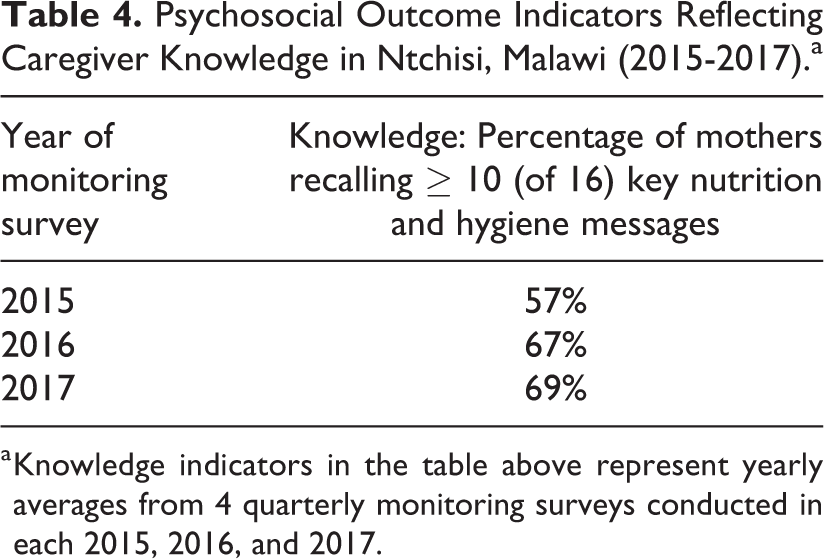
a Knowledge indicators in the table above represent yearly averages from 4 quarterly monitoring surveys conducted in each 2015, 2016, and 2017.
Behavioral Outcome Indicators of Dietary Practices in Ntchisi, Malawi (2015-2017).a
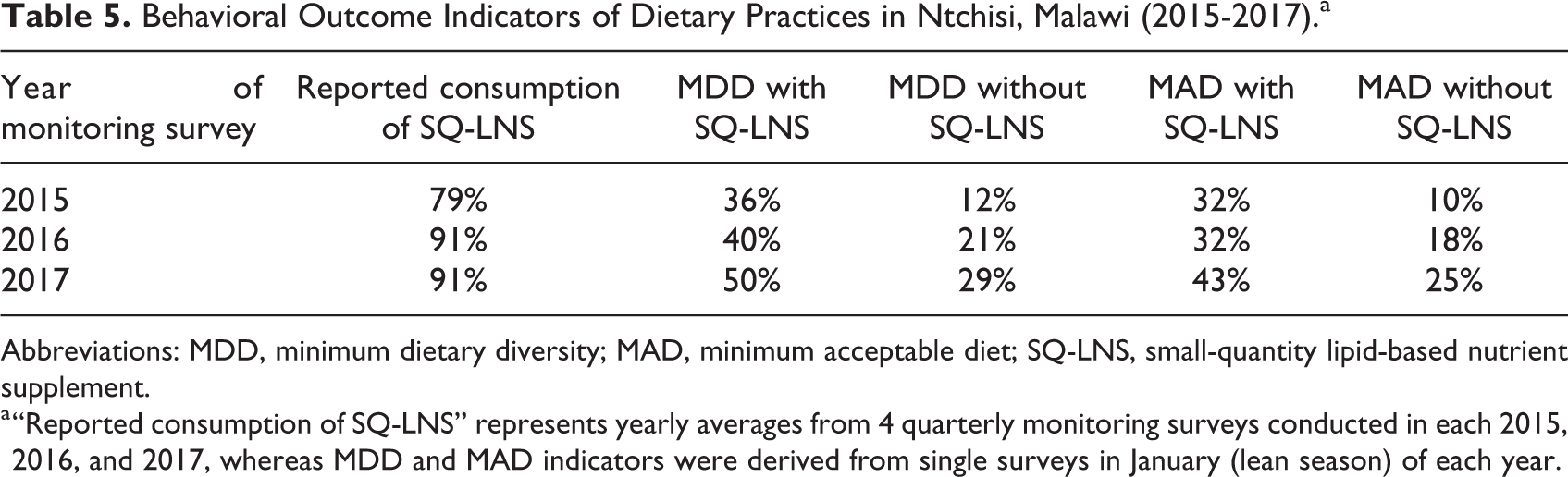
Abbreviations: MDD, minimum dietary diversity; MAD, minimum acceptable diet; SQ-LNS, small-quantity lipid-based nutrient supplement.
a “Reported consumption of SQ-LNS” represents yearly averages from 4 quarterly monitoring surveys conducted in each 2015, 2016, and 2017, whereas MDD and MAD indicators were derived from single surveys in January (lean season) of each year.
Programming
Multisectoral approaches to stunting prevention
Collaboration among diverse, yet complementary partners increased the overall commitment of stakeholders to program success. Figure 1 depicts a guiding coordination structure used to align team members of The Right Foods at the Right Time, a framework which we found very useful for aligning diverse stakeholders based on their respective roles, responsibilities, and relationships to the program.
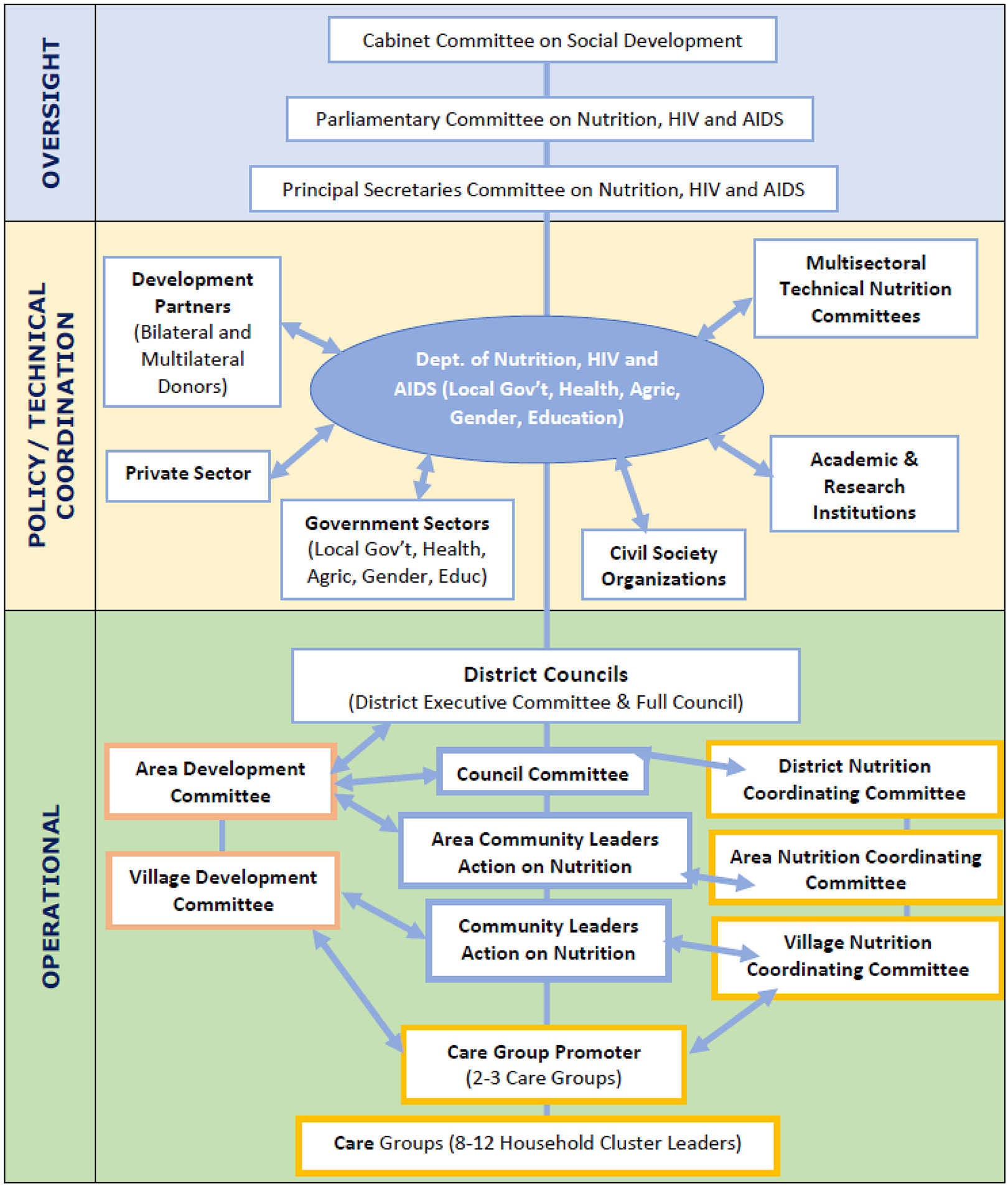
Guiding coordination framework during the Right Foods at the Right Time.
WFP reviewed potential high-impact interventions for stunting prevention and analyzed which activities were best suited for implementation directly versus indirectly (eg, advocacy). Maintaining the focus of the program on the goal of stunting prevention, and not only on the activities being directly implemented by WFP, enhanced the quality of the rollout and facilitated comprehensive support to government. Further, WFP worked closely with the DNCC on innovative strategies for stunting prevention, including engagement across a wide range of sectors such as agriculture, water, education, gender, and community development.
The engagement of the DNCC led to a strong district ownership of the program, leveraging the commitment to address stunting. District Nutrition Coordinating Committee representatives were present at functional Area Nutrition Coordination Committees at the subdistrict level to ensure full integration within the local governance structure and to provide oversight of nutrition at the subdistrict level. The Ntchisi DNCC has been recognized within Malawi as a model for nutrition governance. Intragovernmental learning within Malawi has allowed the Ntchisi experience to be leveraged for increased nutrition governance in other districts. Ntchisi has hosted numerous cross-district field learning missions, including visits from the Parliamentary Committee of Nutrition, HIV and AIDS; national universities; other districts’ DNCC groups; Malawi’s national SUN taskforce; Southern African Country learning; and several donor missions.
World Vision, WFP’s cooperating partner on the ground, held a central role in the program. They were involved in the planning phase of different program elements, implemented program activities at field level, facilitated registration of beneficiaries at distributions, and supported SQ-LNS distribution. World Vision also carried out nutrition-sensitive activities specific to its expertise, including distribution of small livestock and vegetable seeds. Additionally, World Vision led the “training of trainers” sessions, training Care Group supervisors on SBCC activities. These messages were then conveyed to Care Group volunteers who, in turn, targeted each household enrolled in the program with interpersonal communications.
Care Groups were identified as an integral community-based channel of communication during formative research. The Care Group Model utilizes a community cascade approach, training community volunteers who subsequently pass on their knowledge to households in specific catchment areas. 47 This approach is used to reach remote areas where government extension workers are lacking in number and it allows for the sustained contact and counseling needed for behavior change. At the design stage, stakeholders conducted a review of Care Group Models to understand what aspects could be tailored to the Ntchisi context.
In The Right Foods at the Right Time, the Care Group Model was build on several key pillars: (1) Care Groups as a center of convergence for development, (2) multisectoral coordination, (3) harmonization of Care Group volunteers’ incentives (T-shirts and chitenges—locally worn sarongs), (4) district level supportive monitoring of Care Group supervisors/facilitators, (5) quality control of trainings, (6) enhanced coverage of the program activities, (7) reporting and information sharing directly with beneficiaries, and (8) linkages of the Care Groups with local governance structures. The percentage of enrolled mothers who received one-on-one nutrition counselling by Care Group volunteers was consistently high between 2015 and 2017 (Table 3).
Innovation in technology to improve program efficiency
A robust M&E system, providing important evidence on program process and impact, was central to this program, whose design has been detailed previously. 40 This system was underpinned by a comprehensive logic model, depicting the relationships among inputs, activities, intended outputs and outcomes, and impacts of the program, and how they would be measured.
The M&E system also included a dashboard composed of 3 separate yet complementary systems that allowed for quick-response data generation and timely course corrections: (1) SCOPE, WFP’s digital solution for real-time participant registration and tracking; (2) postdistribution monitoring surveys, conducted on tablets providing near-real time data on output and outcome indicators; and (3) monthly performance monitoring of output indicators by World Vision. All data were synchronized to a centralized server and immediately available to authorized personnel through the dashboard, which allowed for timely identification of weaknesses and necessary programmatic adaptations.
Two examples illustrate improved efficiency through the use of this technology. First, almost full deletion of inclusion errors during distribution of SQ-LNS due to improved beneficiary targeting through SCOPE. If a beneficiary (in this case the primary caregiver) came to redeem the nutritional product twice, the system would report this error and redemption would not be possible. If a child had graduated from the program (ie, aged over 24 months), the system would not allow redemption either. During the 6th distribution (July 2014), the inclusion error was 21% versus 0% on the 26th distribution (March 2016). We estimate that the reduction in inclusion errors resulted in saving 30 metric tons of potentially misdistributed SQ-LNS—the equivalent of $100, 000 savings (USD) per year.
Secondly, from January to November 2014, SQ-LNS was distributed at 12 health centers and 15 extended distribution points. By December 2014, the number of distribution points had increased to 80 (12 health centers and 68 extended distribution points) to expand program coverage. The decision to add additional distribution points was based on postdistribution monitoring survey and SCOPE-generated data which reported both monthly attendance rates and individual caregiver distances to distribution points through built-in Geospatial Information Systems. Such data allowed for follow-ups that targeted nonparticipatory households to increase program attendance. These combined actions led to an increase in participation rates from 85% in July 2014 to 93% in July 2017. The average rate of eligible beneficiaries who attended program distribution from January 2014 to January 2018 was 82%. For comparison, this number is higher than the United Nations Children’s Fund vitamin A coverage target of 70%, which is a value considered sufficient to see a public health impact on vitamin A status, while being realistic to achieve during implementation. 48 Achieving a high program coverage, relative to other global targets such as vitamin A, may be considered another measure of program success.
To further inform programming, several small-scale qualitative studies were budgeted, planned, and carried out at key times when implementation was facing participation and behavior change challenges, specifically. One example is a 2015 study that sought to understand the reasons for discordant results of relatively high caregiver knowledge but persistently suboptimal infant and young child feeding practices, despite on-going SBCC activities and high program coverage. 49 The qualitative approach allowed for the inclusion of community member voices, which broadened our understanding of the context in which mothers were making decisions about their child’s nutrition and care; the inclusion of program staff participants offered a comparative perspective toward program delivery and implementation, both of which allowed for program adjustments. Additional monitoring findings, which also helped inform programming, are discussed elsewhere in further detail. 43
Personnel
Strong collaboration at local level
The WFP suboffice in Ntchisi had a nutritionist, field assistants, an information technology assistant, and support staff. Staff from the country office in Lilongwe frequently worked in the suboffice to support specific activities, such as technical leadership in vital governmental meetings, the mass registration of beneficiaries, and PDM surveys. The district commissioner and the members of the DNCC maintained constant communication with WFP and other partners through monthly committee meetings and regular bilateral meetings. Our experience is that this close relationship fostered a shared sense of purpose and ownership, helping to facilitate programmatic action when necessary.
On a monthly basis, World Vision reported SBCC-related process indicators, which included: (1) reporting on the percentage of Care Groups meeting at least once a month (target 100% to show target communities are mobilized/informed of the nutrition intervention) and (2) reporting on percentage of health staff successfully completing SBCC trainings (target being 85%) to ensure health staff, community leaders, peer groups, and so on were trained according to the guiding SBCC strategy. 46 The targets for both output indicators were reached throughout 2015, 2016, and 2017 across most months, giving the program more confidence to invest in the formation of an increasing number of Care Groups from 2014 (268 Care Groups) through 2015 (479 Care Groups), 2016 (513 Care Groups), and 2017 (610 Care Groups) to widen coverage. These process results may be another indication of implementation success.
Strong nutrition capacity at multiple levels
The nutrition capacity of WFP at both the national and district levels was crucial in supporting the SUN rollout. This capacity allowed regular technical dialogue on complex nutrition-related challenges and solutions at the country level, as well as when communicating with headquarters and the donor on a weekly basis. Also, WFP worked with Malawi Governmental nutrition experts in the Department of Nutrition, HIV and AIDS and across the Ministry of Health in this exchange. Government expertise of nutrition-related issues at both the country and local levels allowed for positive bidirectional communications during program design, planning, and rollout phases. WFP’s position as a cochair of the nutrition donor group in Malawi, which provides a platform for improved communication and advocacy for nutrition, allowed for regular nutrition technical discussions among WFP, government, and partners throughout this program. These communications among multiple stakeholders positively influenced the SUN rollout by maintaining momentum for action and by supporting constant programming improvement through strong technical backstopping at various levels of influence.
Discussion
The implementation of nutrition-related activities in Ntchisi district is a unique example of successfully operationalizing the global SUN movement at a local level. At multiple levels, from WFP Headquarters in Rome to the WFP suboffice in Ntchisi, the WFP invested resources in documenting both the implementation processes and context-specific factors which supported the SUN rollout in this setting. This article summarizes key aspects of The Right Foods at the Right Time that, based on our involvement, synthesis, and reflection, were important factors allowing this initiative to succeed not only in this rural Malawi context but also may be considered for similar programming globally.
We identified 8 key factors that facilitated a smooth implementation process and organized them into 4 primary categories: policy, planning, programming, and personnel (Table 1). Our findings from Malawi support much of the theoretical literature that has suggested similar components be considered when scaling-up international health interventions more generally. 50,51 Our lessons learned from The Right Foods at the Right Time may be applied to other similar nutrition programs within the SUN movement.
At the policy level, our findings indicate that local action benefited from a national SUN framework adopted by government which provided the impetus for policy-makers to prioritize chronic undernutrition among other competing health demands also requiring resources. Political leadership and willpower, in the form of public commitments, such as that to the SUN movement in Malawi, is a cited, but from the authors’ experiences, underappreciated element for successful health and nutrition programs wishing to scale up. In a 6-country study that analyzed the political and institutional determinants of addressing maternal and child undernutrition, Acosta and Fanzo found that 2 success factors were: (1) framing nutrition as part of the national development agenda and (2) the direct involvement of the Executive Branch of government. 51 In Malawi, in 2013, the Executive Branch of government was very committed to maternal and child undernutrition, a critical facilitating factor for The Right Foods at the Right Time programming. To be sure, for more than 15 years until November 2014, the Malawi government’s Department of Nutrition, HIV and AIDS was in the Office of the President and Cabinet, underscoring the strong political will toward nutrition in this country context.
Just as country-level policy is important, so too is local-level ownership. In Malawi, the already-established DNCC, whose mandate included governing district-level SUN activities, was an existing pillar that WFP built upon to gain buy in and steer toward action. Local autonomy has been cited as a critical factor contributing to ownership and sustainability of health programs. 50 In addition, The Right Foods at the Right was endorsed by and supported by the district commissioner of Ntchisi, a nutrition champion whose support facilitating smooth programming from design through evaluation stages. Local politicians who work in democratic political structures and are directly accountable to their citizens’ demands can be integral for supporting and facilitating successful nutrition programming. 9,51
The enabling policy environment in Malawi increased our confidence that with systematic and evidence-based planning, The Right Foods at the Right Time had a sound foundation from which activities could be implemented smoothly. Furthermore, we found that aligning the local policy environment with global nutrition movements and initiatives, such as REACH and the Global Health Initiative, facilitated collaboration between the various experts working on this program at global, national, and district levels. 52 During early planning, we also found that the generous time built into the front end of The Right Foods at the Right Time enabled us to synthesize relevant information to tailor the guiding implementation model, including in-depth analysis of the current evidence base and information gathering from nutrition experts and community members. Our own experience has been that such time built into planning and design is not commonplace in public health interventions where formative phases may be abbreviated due to budgetary concerns, donor timelines, and other constraints.
Other nutrition researchers have also found that building a thorough planning period is essential for competently designing large-scale nutrition programs. 27,26,53 Each local population and context is unique, thus rendering a “blueprint approach” not suitable for scaling-up health or services. 54 In our case, the government of Malawi’s stakeholder and activity mapping exercise, its bottleneck analysis for understanding existing gaps in nutrition coverage, and the thoroughly conducted formative research all proved important for informing and tailoring the SUN activities to the Ntchisi, Malawi context. 37 Those activities were only made possible through intentional design decisions that allowed the necessary resources, ample time, and resources to inform program activities.
During program implementation, WFP advocated for improving the quality of complementary health activities to maximize the intended overall impact on stunting prevention. 19,55 This advocacy effort resulted in a renewal of district-level activities focused not only on nutrition but also on health, including hygiene (eg, handwashing promotions), parasite control (eg, deworming services), and reproductive health services (eg, provision of iron folic acid tablets). The multisectoral nature The Right Foods at the Right Time may help explain why program exposure resulted in significant reductions in malaria and fever prevalence. Although the impact evaluation did not find a significant impact on stunting when comparing program and control groups, some positive behavioral outcomes were found, including improvement in caregiver knowledge of breastfeeding and complementary feeding, higher mean child dietary diversity scores, and higher reported handwashing. 41,42 Both health and nutrition activities were implemented in a multisectoral approach, which given the complex etiology of chronic undernutrition may have more potential than sector-specific programing. 56
Data informed every step of program planning and implementation in Ntchisi. The emphasis on regular data generation through electronic beneficiary tracking and enhanced M&E allowed WFP, government, and partners to continually improve programming as opportunities and challenges arose in real-time. 36,40,43 Our experience is consistent with that from Bangladesh where investment in a real-time monitoring system, coupled with frequent process evaluations, allowed for timely program adjustments. 57 Well-resourced M&E, including the appropriate use of available technologies, is considered a key criterion for successful public health programming. 21,58,59 Our experience in Malawi further substantiated this claim.
Fortunately, The Right Foods at the Right Time comprised diverse stakeholders who were aligned from the start with strong collaboration and constant communication at all levels. WFP supports activities that correspond to its own nutrition capacity and collaborates with other partners and sectors to leverage that expertise for maximizing population-level benefits. Like others, we found that fostering active collaborations, through establishment of formal nutrition coordinating bodies and other built-in engagement activities, played an important role in this scale up. 60,61 Similarly, at a personnel level, strong capacity, through provision of resources for adequate training and hiring, at global, national, and local levels, resulted in human capacity as a strength rather than a weakness in The Right Foods at the Right Time. Considered to be a common weak link in programming, human capability to effectively scale-up nutrition is critical in integrated, multisectoral programs. 9,20,62,63
Factors to consider when implementing integrated nutrition programs will vary by the type and complexity of programming, as well as the context in which they exist. 21 Nonetheless, our experiences in The Right Foods at the Right Time rollout in Ntchisi, Malawi, provide one example of how the global SUN movement can be operationalized locally to address child malnutrition. The SUN movement in Ntchisi is focused on sustainable and durable solutions leading to a better nourished and stronger, economically sound Malawi. Given the Lancet’s most recent synthesis of evidence describing the effectiveness of available modalities to address undernutrition, including SQ-LNS, now is an opportune time for effective translation of evidence-based policies and guidelines into impactful programs globally. 64 Lessons from this scaling-up experience in Malawi may be translated to other settings where the political, organizational, and functional dimensions may be similar; doing so may be a small, yet critical operational step toward addressing the high burden of global maternal and child undernutrition.
Footnotes
Authors’ Note
This manuscript presents findings from secondary review of internal program documents and thus no ethics permissions were needed.
Acknowledgments
The authors are most grateful to the program participants and their families in Ntchisi, Malawi. The authors also thank the World Food Programme staff in Malawi and Italy for their continued support and for working tirelessly to implement this program. Additionally, we would like to extended appreciation to the core cooperating partners at the local level, World Vision, and most importantly the District and National Government of Malawi for successfully launching this comprehensive stunting prevention program.
Declaration of Conflicting Interests
The author(s) declared the following potential conflicts of interest with respect to the research, authorship, and/or publication of this article: All authors were directly involved with the program planning, implementation, or monitoring as World Food Programme staff or consultants.
Funding
The author(s) disclosed receipt of the following financial support for the research, authorship, and/or publication of this article: Children’s Investment Fund Foundation.
