




Abstract
Two studies, ENGINE (Empowering New Generations to Improve Nutrition and Economic opportunities) and Growth through Nutrition, were conducted in the same 4 regions of Ethiopia approximately 5 years apart. A similar protocol using a quantitative and qualitative survey of key informants at the subnational level was used to explore barriers and facilitators for implementation of the country’s national multisector nutrition plan. Noticeable differences were observed, including a change in the perception of the nutrition problems in pregnant women and preschool aged children and greater awareness of the multisector plan. Poor coordination and collaboration were still noted in both time periods. A key issue highlighted was the need to keep up the momentum for multisector approaches to improve nutrition in the policy agenda.
Introduction
The Government of Ethiopia (GoE) is committed to improving the nutritional status of its population. Ethiopia was one of the first countries to participate in the Scaling up Nutrition Movement (SUN), and as a SUN “early riser” country, Ethiopia stressed both nutrition-specific and nutrition-sensitive approaches to alleviating malnutrition and improving nutritional status. Indeed, the GoE has made significant progress in advancing nutrition. Between 2000 and 2019, based on Demographic Health Survey (DHS) data, 1,2 stunting decreased from 58% to 37%, and during the same time period, underweight was reduced from 41% to 21%.
The GoE has also demonstrated a strong policy commitment to nutrition through development of a National Nutrition Strategy (NNS) in 2008, followed by a National Nutrition Program (2008-2015). The follow-on, National Nutrition Program II (NNP II) was launched by the GoE in December 2016, and includes the Seqota Declaration, a high-level commitment to ending child undernutrition by 2030.
There is increased awareness in Ethiopia that, at both the global and national levels, investment in nutrition is key to development of human capital. Both NNP’s have emphasized the establishing and strengthening of the national and subnational multisectoral coordination bodies as critical in achieving their stated goals.
Policy and Governance for Food Security and Nutrition
Policy and a governance structure to drive actions in food security and nutrition are affected by actors, institutions, societal contexts, knowledge, evidence, framing, capacities, and resources. The importance of each of these factors varies across countries. Political commitment and political will for nutrition is often low. Repeatedly, there are examples of where Multi-Sector Nutrition Plans exist on paper but are infrequently or only partially implemented. 3
The literature is clear that technically sound approaches to address food insecurity and malnutrition by themselves are often not sufficient to effectively implement solutions. 4 Policy and governance issues are identified as important, and sometimes more important, than scientifically tested approaches to food security and nutrition. Two studies carried out in Ethiopia 5 years apart provide a rare opportunity for insights into a range of policy and governance issues that are relevant to implementation of multisector nutrition plans.
In 2011, the ENGINE (Empowering New Generations for Improved Nutrition and Economic Opportunities) project was launched. Subsequently, in 2016, the Feed the Future Ethiopia Growth through Nutrition Activity was begun. Both projects were designed and implemented in collaboration with the GoE and focused on multisector nutrition approaches to improve food security and eliminate malnutrition, particularly in pregnant women and preschool aged children.
The purpose of the present study was to compare results at regional and the woreda (local) levels to ascertain changes, if any, in barriers and constraints to the implementation of multisectoral nutrition plans comparing results from ENGINE and Growth through Nutrition. Data from each of the woredas from the ENGINE study were aggregated within the 4 regions. As already indicated, each of the 4 regions included in the ENGINE research were the same as those included in the Growth through Nutrition study; the specific woredas themselves, however, were different.
Methods
Policy and governance research was conducted under ENGINE to elicit insights from among key policy makers and stakeholders about how a range of policies and programs are translated from the design phase (on paper) to the implementation phase. 5 Interviews were conducted with key informants at the subnational level in 2012-2013 under ENGINE and focused on governance structures with an emphasis on facilitators and constraints to implementation. The interviews were done in 4 regions: Southern Nations, Nationalities, and Peoples' (SNNP), Oromia, Amhara, and Tigray. The ENGINE research was conducted during the early phases of NNP I.
The Growth through Nutrition policy and governance research was launched in 2017, with the aim of evaluating the process of the government’s multisectoral nutrition plan and resulting implementation experiences. This research was conducted shortly after the beginning of the NNP II.
ENGINE and Growth through Nutrition used a similar protocol to further investigate policy and governance issues; the Growth through Nutrition research was conducted in the same 4 regions as the ENGINE research: the SNNP, Oromia, Amhara, Tigray regions.
Design of the Study
The ENGINE study used structured interviews at the subnational level; a total of 307 interviews were conducted. 5 A purposeful sample of 4 regions, 2 zones from each region and 2 woredas from each zone, was used. Interviews were conducted from December 2012 to July 2013.
The ENGINE study employed a structured questionnaire and interviewed key informants who were purposefully selected for the information. The sectors selected included individuals in health; agriculture; education; finance and economic development; women, children and youth affairs; and social protection. The selection of people for interviews was based on the position held; positions most directly involved in the NNP were the basis of selection.
Key informants were selected based on their knowledge of the policy landscape in Ethiopia. All information contained in the interviews was confidential. Interviews were conducted anonymously following structured interview guides, allowing for easy aggregation of results. The study was approved by the Institutional Review Board (IRB) at Tufts University, as well as the IRB in Ethiopia overseen by the Ethiopian Nutrition Research Institute. A signed consent form was obtained from the interviewees.
The Growth through Nutrition study contained a quantitative component based on structured interviews as well as a qualitative portion with key informant interviews and purposive sampling. Ten woredas in the 4 study regions of Ethiopia that were a part of focused multisector coordination technical support activities targeted by the prior ENGINE project were selected. Four of these 10 woredas included in ENGINE were selected from the group of “model” woredas, which received support in setting up coordination boards as well as routine follow-up. Four additional “non-model” woredas were selected from the ENGINE woredas that received support in establishing the coordination boards but did not receive the routine follow-up. These (model and nonmodel) woredas were the intervention woredas. In addition, 4 non-ENGINE woredas which received no ENGINE support were included in the study as nonintervention woredas, purposefully selected from the same regions for comparison to the intervention woredas, for a total sample of 12 woredas.
The data collection in the Growth through Nutrition study was done through key informant interviews at the woreda level using a standardized, structured questionnaire in the local language. There were 6 interviews in each woreda representing a purposive sample of individuals involved in policy-making and governance from the various woreda level NNP implementing sector offices. The sectors included health, agriculture, water and energy, education, finance, and economic development. Signed informed consent was obtained from all interviewees. The study received IRB clearance from Tufts University and support from relevant Ethiopian bodies.
A series of questions was used for all subnational level interviews. The questions were clustered into 3 domains: Nature of the nutrition problem Decision-making and ownership of the NNP Challenges in implementing the NNP
It is worth emphasizing that the answers in both the ENGINE and Growth through Nutrition surveys consisted of the perceptions and opinions of key informants.
The ENGINE policy study was conducted in 2012-2013 and the Growth though Nutrition policy study was conducted during late 2017-2018. A comparison of ENGINE versus Growth through Nutrition research provides the opportunity to assess change or progress on key issues involving the success of Ethiopia’s national nutrition plans over a 4-to-5-year time period. This comparison between ENGINE and Growth through Nutrition studies involves data at the subnational level.
Results
Nature of the Nutrition Problem
The ENGINE study was conducted in the early stages of implementation of the NNP I; the project therefore was interested in an assessment of the perceived nature of the nutrition problem in Ethiopia. The original results were stratified by respondent categories: Government, Non-Governmental Organization (NGO), Donor, Academic/Researcher. 5
There was a general consensus in the ENGINE study that food insecurity, undernutrition, and micronutrient deficiencies were seen as the major nutrition problems. Stunting was identified as the most significant form of malnutrition. At the time, these results were not viewed as particularly surprising since discussions leading up to the development of the NNP had emphasized these 3 factors. The major drivers of malnutrition identified by respondents were low diet diversity, poor maternal and childcare practices, and low awareness of nutrition.
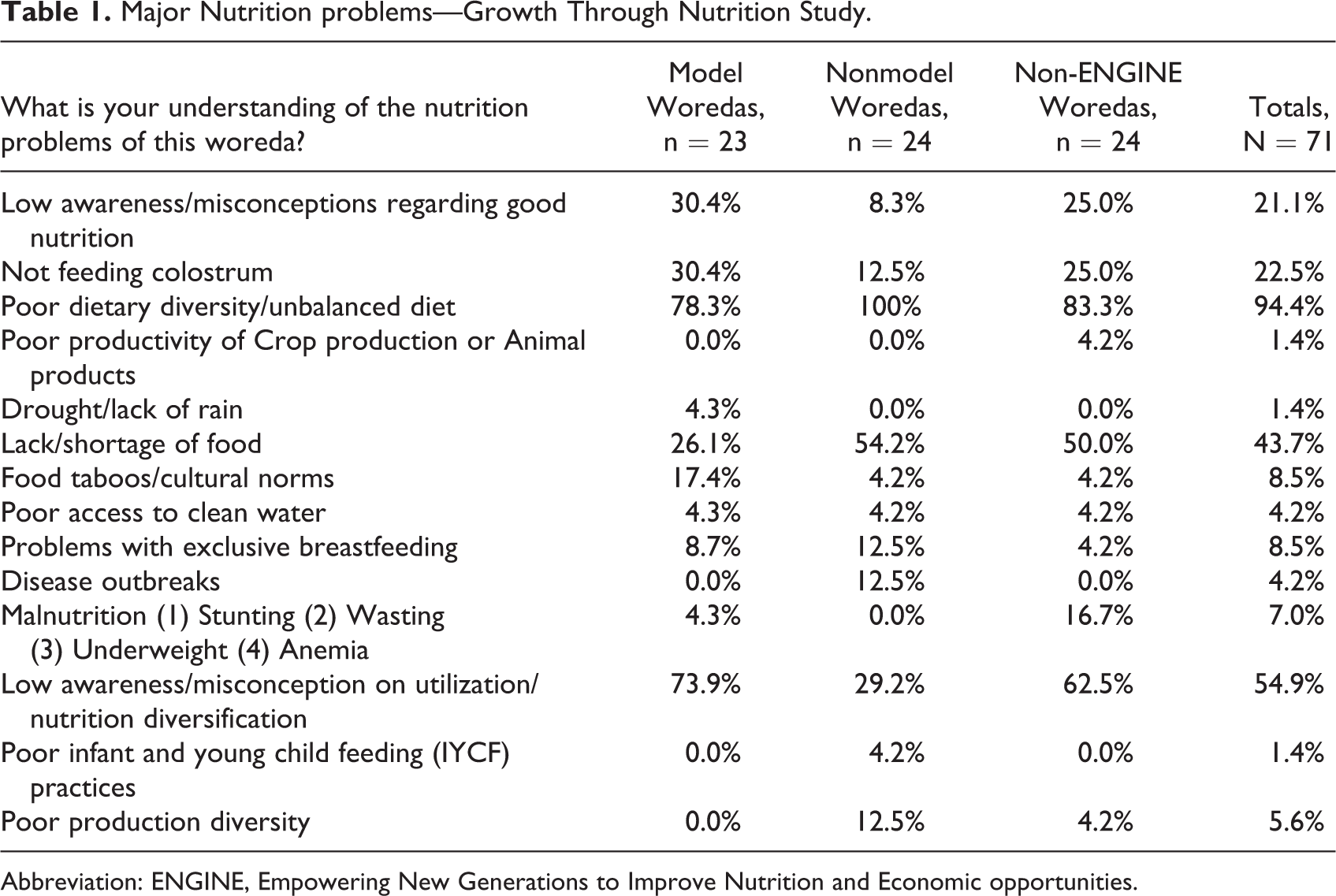
The policy study conducted under Growth through Nutrition in late 2017-2018 revisited how the major nutrition problems are perceived. Table 1 presents the data by model, nonmodel, and non-ENGINE woredas; the final column is the summary of all woredas in the 4 regions. As shown in Table 1, among all woredas/regions (last column), lack of awareness, not feeding colostrum, poor dietary diversity, shortage of food, and low awareness continue to be significant issues. Unlike the earlier ENGINE study results, food shortages are noted as a problem (43.7%) in the woredas in each of the 4 regions; although malnutrition (stunting, wasting, underweight, and anemia) are reported in the woredas as problems, the levels are dramatically lower than in the earlier ENGINE study ranging from 0% to 16.7%. Thus, the perception of the major nutrition problems has changed over the 5-year period. The results discussed thus far are not contradictory findings, but rather reflect how interpretation of information can be affected by the specific time period.
Major Nutrition problems—Growth Through Nutrition Study.
Abbreviation: ENGINE, Empowering New Generations to Improve Nutrition and Economic opportunities.
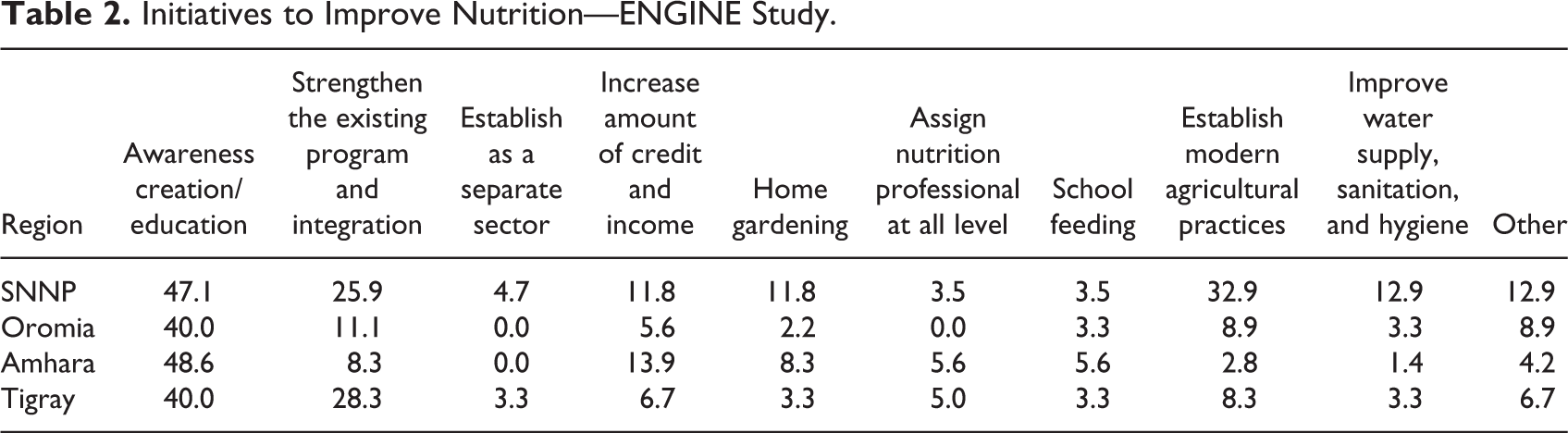
Given the perception of the nature of the nutrition problem at the regional level in ENGINE, it is not surprising that creating awareness of nutrition/education is the most commonly proposed initiative in each of the 4 regions, ranging from 40% to 48.6% (Table 2). This response dwarfs any of the other responses given.
Initiatives to Improve Nutrition—ENGINE Study.
The data (not shown) from Growth through Nutrition continue to emphasize awareness creation and education as the most common nutrition initiatives in all 4 regions.
Ownership of the Nutrition Plan
The NNP I stressed a multisectoral approach to addressing specific nutrition problems. It was therefore important in the early stages of the NNP I that local level officials were aware of the existence of the GoE nutrition plan; in the ENGINE data reported earlier, only 10% to 22% of respondents in each of the 4 regions were aware of the NNS and NNP I. 5 Again, this may not be surprising since the ENGINE study was conducted when the NNP I was fairly new. Within those groups that were aware of the NNS and NNP I, it was the health and agriculture sectors that were most involved; the health sector dominated involvement in the NNS, ranging from 38% to 94%.
Ownership of the NNP I and NNP II is important as one factor in the effective launch of activities at the woreda level. This issue was explored in several ways.
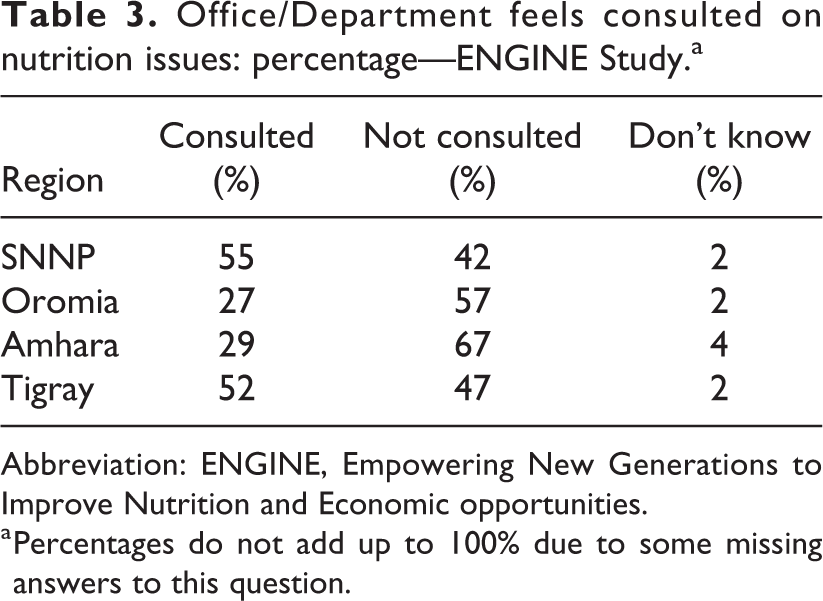
Table 3 assesses the extent to which respondents in ENGINE were consulted on nutrition planning, especially the multisector plan. The data in Table 3, in general, suggest that respondents in SNNP and Tigray regions were more likely to be consulted than individuals in the other 2 regions. Other data not presented here suggest that it is the health sector in each region that was most likely to be consulted; this finding is reinforced by other ENGINE data that suggest in the early years of the NNP I, the multisector actions were viewed as “owned” by the Ministry of Health. 5
Office/Department feels consulted on nutrition issues: percentage—ENGINE Study.a
Abbreviation: ENGINE, Empowering New Generations to Improve Nutrition and Economic opportunities.
a Percentages do not add up to 100% due to some missing answers to this question.
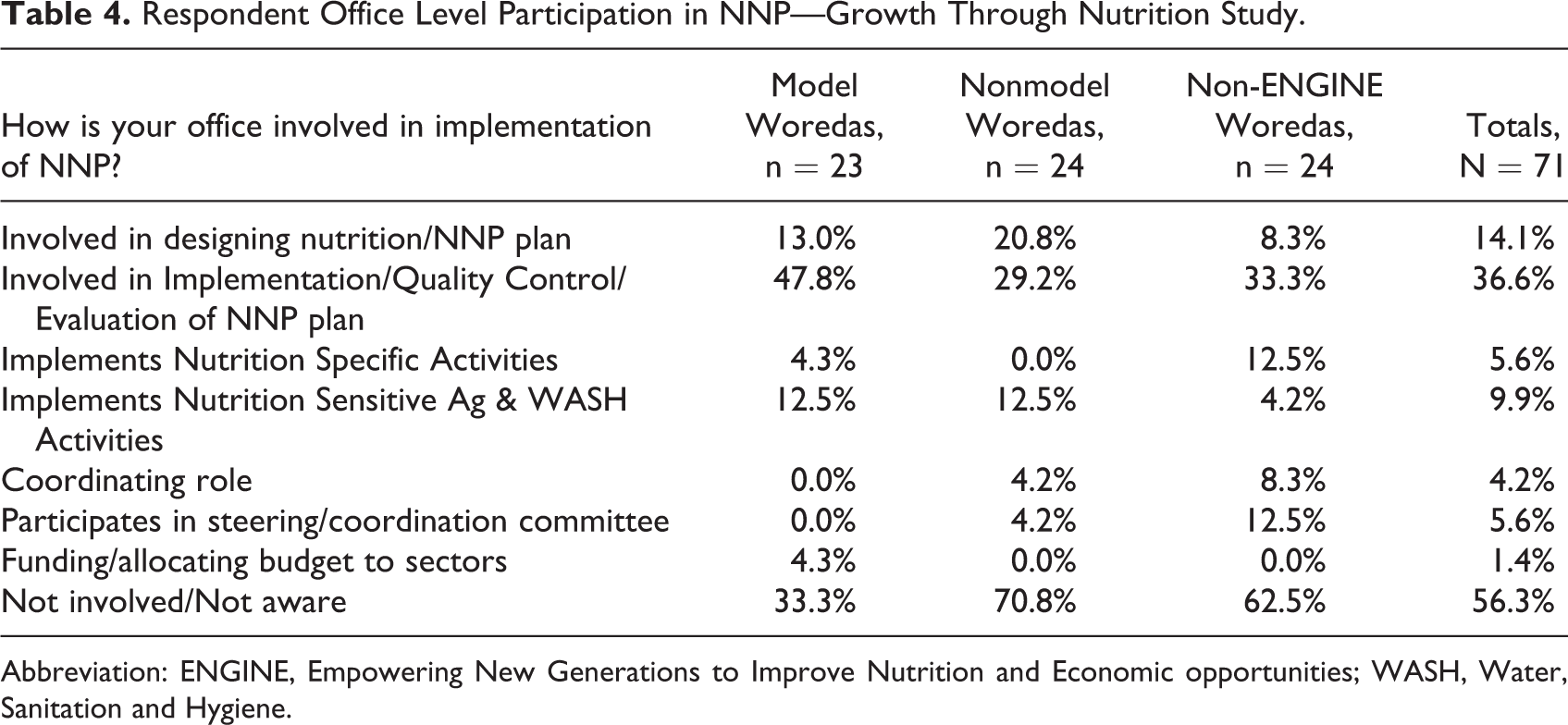
Table 4 revisits this issue 5 years later. The situation appears not to have changed dramatically with, on average, 56.3% of all respondents indicating no involvement/no awareness of the NNP; this varies, however, from 33.3% in model woredas to 70.8% for nonmodel and 62.5% in the non-ENGINE woredas. Thus two-thirds of respondents in model woredas were involved in some way in the multisector plan. One interpretation of this finding is that model woredas with more intensive technical assistance from the Growth through Nutrition project were able to more effectively engage in decisions around the NNP. For example, 47.8% of the model woredas (Table 4) were involved in implementation/quality control/evaluation of the NNP, as compared to 29.2% in the nonmodel and 33.3% in the non-ENGINE woredas.
Respondent Office Level Participation in NNP—Growth Through Nutrition Study.
Abbreviation: ENGINE, Empowering New Generations to Improve Nutrition and Economic opportunities; WASH, Water, Sanitation and Hygiene.
Challenges
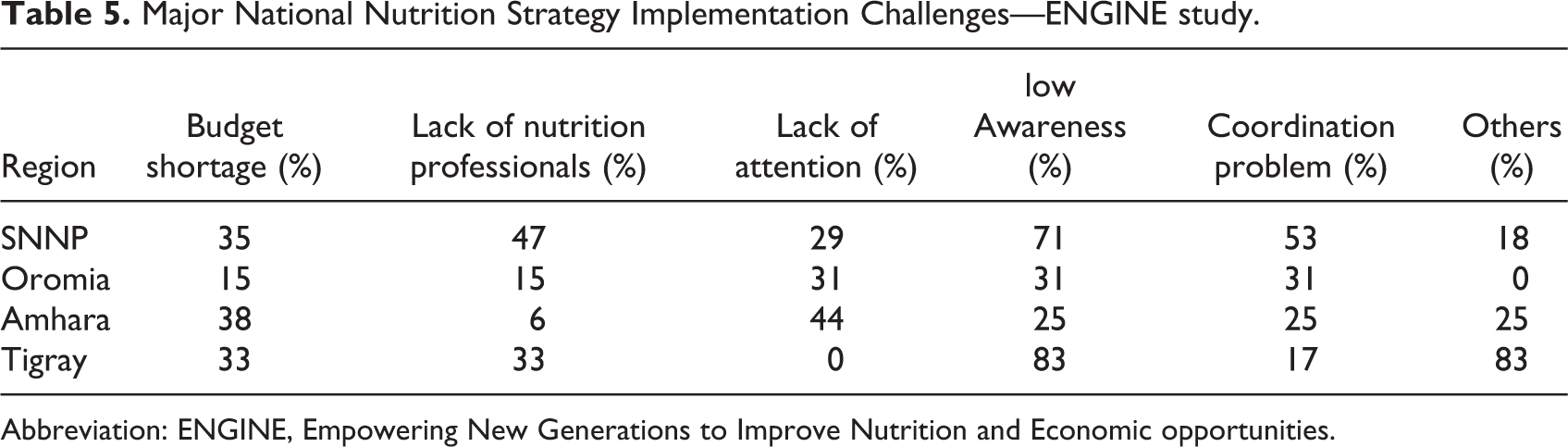
The main challenges for success of the NNP identified in the 2012-2013 ENGINE study included budget, lack of nutrition professionals, lack of attention to nutrition (except in Tigray region), low awareness, and poor coordination (Table 5). The significance of each of these factors varies by region. For example, the need for an adequate budget by region ranges from 15% (Oromia) to 38% in Amhara (Table 5).
Major National Nutrition Strategy Implementation Challenges—ENGINE study.
Abbreviation: ENGINE, Empowering New Generations to Improve Nutrition and Economic opportunities.
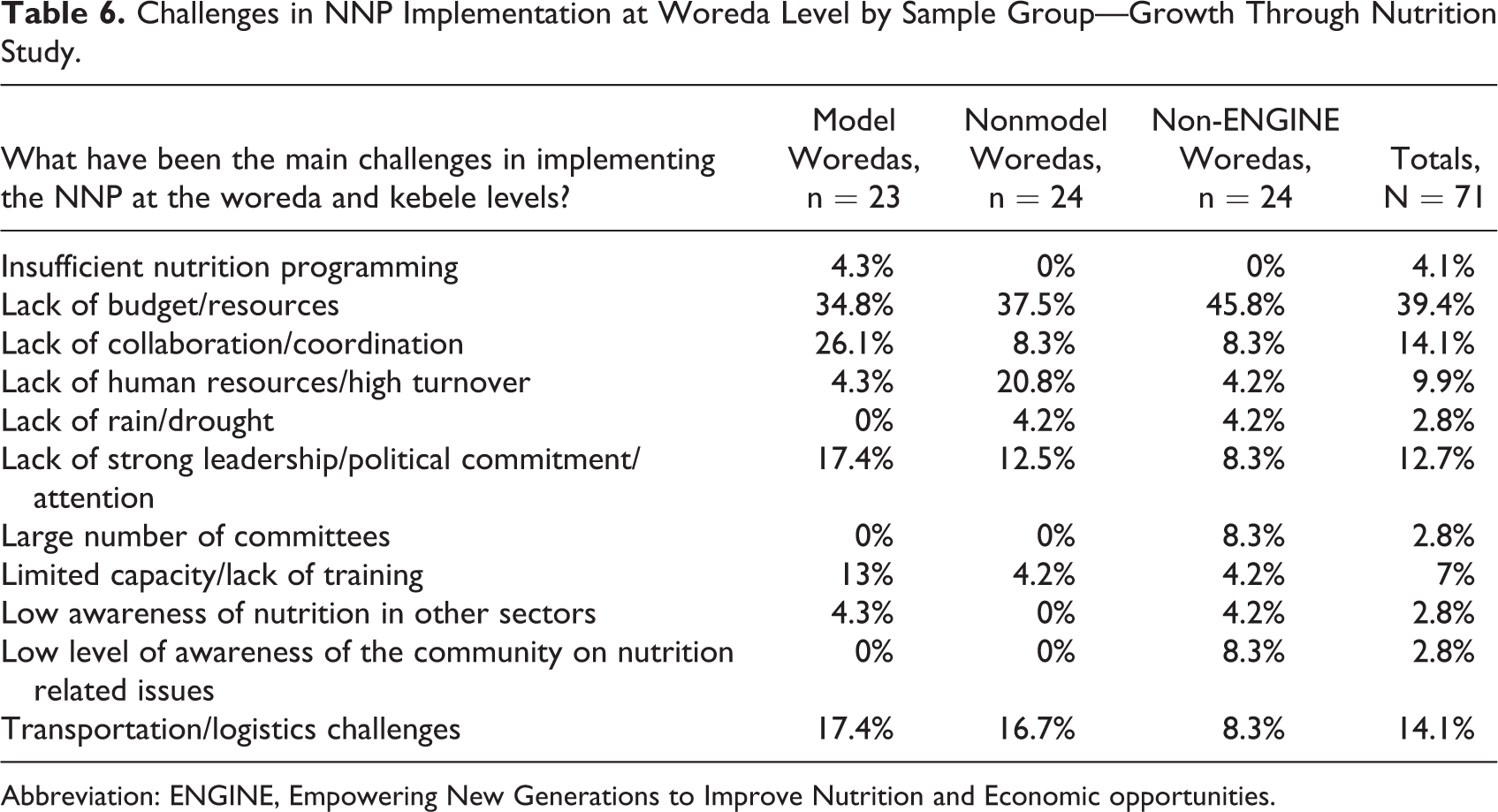
The same question was asked in the 2017-2018 survey (Table 6). The results differ from the earlier survey period. Budget is still a major challenge noted with, on average, 39.4% of woreda level respondents in all 4 regions indicating lack of financial resources as a challenge. Other factors identified in the earlier ENGINE survey appear less of a constraint. For example, only 9.9% identified human resource issues as a challenge (Table 6) compared to 47% in SNNPR and 33% in Tigray regions in 2012-2013 (Table 5).
Challenges in NNP Implementation at Woreda Level by Sample Group—Growth Through Nutrition Study.
Abbreviation: ENGINE, Empowering New Generations to Improve Nutrition and Economic opportunities.
There is a dramatic difference between the 2 time periods related to awareness of the NNS and national nutrition plans. In the earlier period, from 25% to 83% of respondents noted lack of awareness as a significant challenge in implementation of the NNP I. By 2018, this had plummeted to 2.8%. Many factors undoubtedly account for this difference. The nutrition strategy and nutrition plans were no longer in their infant stages in 2018, and implementers at the woreda level had experience in implementation.
Closely related to the low awareness is the lack of attention to nutrition and the NNP I. Three regions—SNNPR (29%), Oromia (31%), and Amhara (44%)—listed the lack of attention to nutrition as a significant issue in the initial stages of NNP I (Table 5). By 2018, only 12.7% of all woredas felt that lack of attention to nutrition was an issue.
Effective collaboration and coordination are factors critical to the success of multisector nutrition plans. Indeed, this issue was reported as a key constraint in 2012-2013, ranging from 17% to 53% (Table 5); by 2018, only 14.1% of all respondents perceived lack of coordination as an issue (Table 6)—this ranges from 8.3% in nonmodel and non-ENGINE woredas to 26.1% in model woredas.
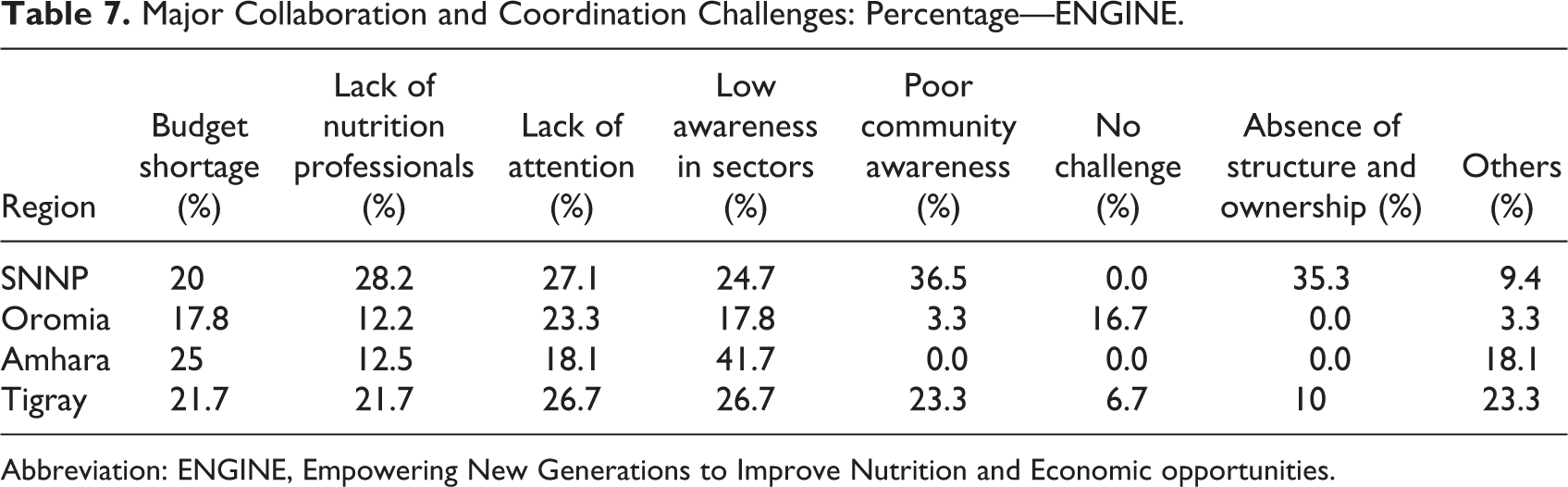
To be effective, NNP I and II rely on effective collaboration and coordination. Table 7 outlines the perceived challenges to collaboration from the ENGINE study. Some of the same factors that were identified as barriers to effective implementation are also noted as challenges for collaboration and coordination. Worth noting, the absence of structure and ownership was identified as a challenge only in SNNPR (35.3%) and Tigray (10%) regions; Oromia and Amhara did not perceive a coordinating structure as a constraint.
Major Collaboration and Coordination Challenges: Percentage—ENGINE.
Abbreviation: ENGINE, Empowering New Generations to Improve Nutrition and Economic opportunities.
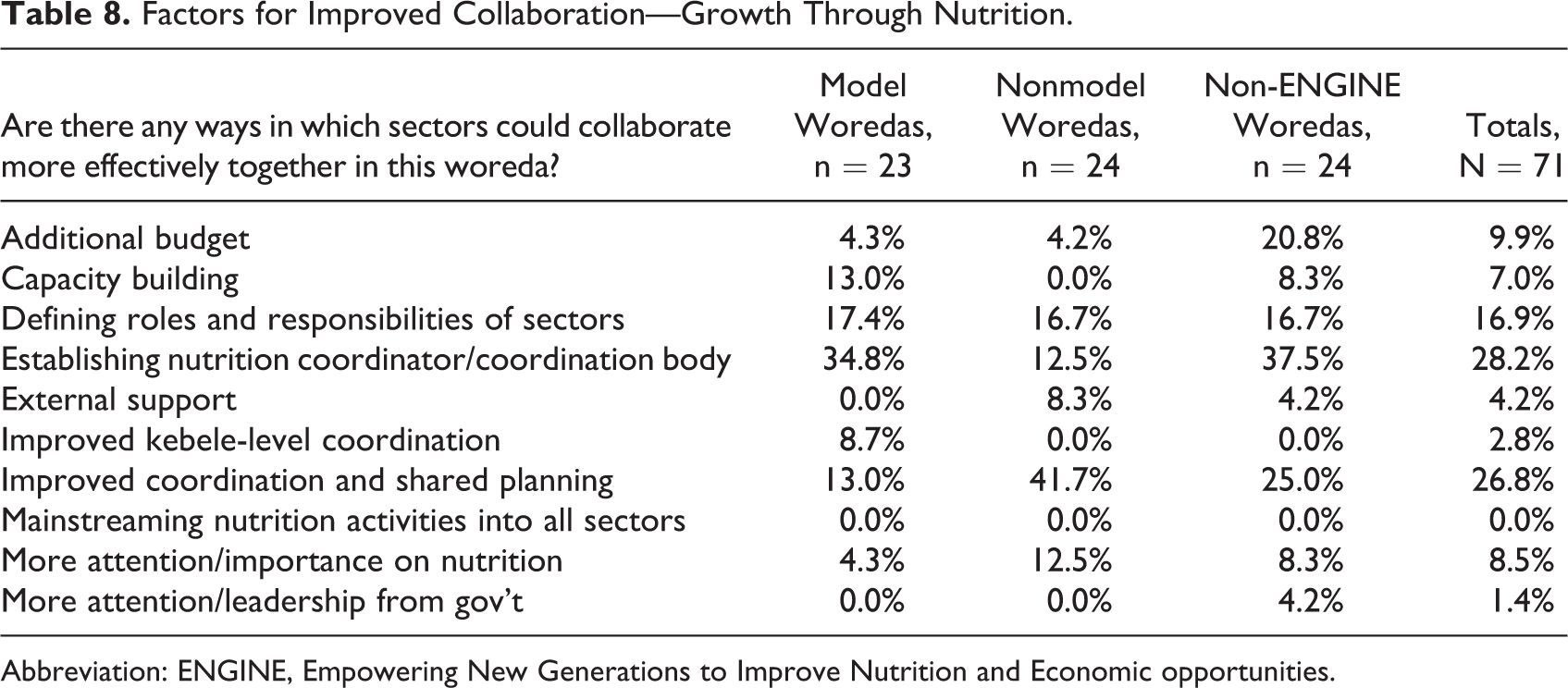
By 2017-2018, two key factors dominate the responses for improved collaboration (Table 8). The need for a nutrition coordinator/coordination body (28.2%) and the necessity for improved coordination and shared planning (26.8%), both are viewed as critical. It is worth noting that only 13.0% of model woredas reported improved coordination and shared planning as a barrier.
Factors for Improved Collaboration—Growth Through Nutrition.
Abbreviation: ENGINE, Empowering New Generations to Improve Nutrition and Economic opportunities.
Discussion
Multisector plans to improve food security and nutrition are now part of many countries’ national policy landscapes. The Ethiopian NNS and NNP I and II are clear examples of this. The historical approach to ending malnutrition relied almost exclusively on targeted nutrition interventions. The multisector approach to alleviating malnutrition and food insecurity is based on evidence that direct nutrition interventions, by themselves, are unlikely to achieve progress in meeting the Sustainable Development Goals (SDG), in particular SDG 2—zero hunger and improved food security and elimination of malnutrition in all forms. 6
The study conducted in Ethiopia under the ENGINE program examined the facilitators and constraints to implementing a multisector nutrition program. 5 Results indicate that awareness of the multisectoral plans at the subnational level under ENGINE was extremely limited. This was problematic, since much of the implementation of the NNP occurs at the subnational level.
Fortunately, progress has been made in the subsequent years. Awareness of the nutrition plans which was low in 2013 increased dramatically from 14% in 2013 to 43.7% in 2017-2018. Even more impressive is the fact that the model woredas increased awareness of the NNP to 66%. Clearly this is only one variable to measure success. However, if sector staff are not aware of a specific program, it is unlikely that programs will be developed. Asked if continuing awareness was a challenge to future implementation going forward, only 2.8% of respondents in the regions under Growth through Nutrition reported this as a barrier.
Staffing constraints for implementation have taken on lower importance over time with only 9.9% of the 4 regions reporting this as a barrier in the later period of the study. Lack of attention to the NNP also changed substantially from 35% in ENGINE to 12.7% in Growth through Nutrition. Poor coordination is a critical barrier to launching an effective multisector program; only 14.1% reported lack of coordination as a limiting constraint to the NNP under Growth through Nutrition.
Taken together these results reflect several phenomena. First, the multisector plans have existed for several years, so it is not surprising that there would be more awareness. It is the consistency of progress based on awareness, ownership, collaboration, and more attention to nutrition that suggest a package of policy and governance issues that are important in the sustainability of efforts. A challenge going forward will be to build on progress made and continue the high-level support that the multisector nutrition programs have garnered.
Footnotes
Acknowledgments
All authors contributed to the analysis in this article; E.K. and M.K. led the writing of each version of the article. Thank you to Jennifer Stickland who provided editorial support for the article. This publication was made possible through support provided by Feed the Future, the U.S. Government’s Global Hunger and Food Security Initiative, through the US Agency for International Development, under the terms of agreement No. AID-663-A-11-00017. The opinions expressed herein are those of the authors and do not necessarily reflect the views of the US Agency for International Development.
Declaration of Conflicting Interests
The author(s) declared no potential conflicts of interest with respect to the research, authorship, and/or publication of this article.
Funding
The author(s) received no financial support for the research, authorship, and/or publication of this article.