



Abstract
Background:
Good cognitive function is important for school-age children. Although essential fatty acids play a main role in cognitive functions, their intakes are assumed as inadequate among developing countries including Myanmar. However, there is still lack of evidence to show whether they are problem nutrients.
Objective:
This study aimed to determine the problem nutrients in the diets of Myanmar primary schoolchildren and to formulate food-based recommendations (FBR) to optimize the intake of these micronutrients.
Methods:
A cross-sectional study was conducted at 3 primary schools in Nyaungdon Township of Myanmar. A 1-week dietary intake assessment was done on 7- to 9-year-old (n = 100) primary schoolchildren. A linear programming approach using the World Health Organization Optifood software was used to assess the nutrient intake and develop FBRs.
Results:
The prevalence of stunted growth, wasting, and being underweight in the students were 28%, 18%, and 28%, respectively. The intake of calcium, vitamin B1, folate, iron, omega-3 fatty acids, eicosapentaenoic acid, and docosahexaenoic acid was insufficient. Locally available nutrient-dense foods that include water spinach, carp fish, duck egg, garden pea, and shrimp were selected to develop FBR to increase the intake of problem nutrients.
Conclusion:
The linear programming analysis showed that the primary schoolchildren have difficulty meeting nutrient recommendations given locally available foods, especially iron and essential fatty acids which are important for cognitive performance of schoolchildren.
Keywords
Introduction
Around (60%) of the school-aged children (6-12 years old) are living in developing countries, and they are hindered in their learning process due to malnutrition. 1 In Myanmar, among 51 million of total population, estimated 8.5 million (around 17%), are schoolchildren. More than half of them (59%) are primary schoolchildren, 2 the proportion of population that cannot be ignored. Mostly, the health and nutrition survey in Myanmar does not include the schoolchildren instead focus on children younger than 2 years of age which is considered critical periods of life. So nutritional data of schoolchildren are very limited. 3 Adequate and good nutrition is the basic foundation for schoolchildren to succeed both in school and in their life and for achieving quality education. 3
Nutrients are the building blocks for neurodevelopmental processes of the brain. There are 3 factors that explain the effect of nutrients on cognitive performance: (1) precursors for neurotransmitter; (2) sources of vitamins and minerals that are coenzymes for neurotransmitters; and (3) effect of dietary fat on neuronal membrane and myelin sheath. 4,5 Not only micronutrients but also macronutrients, especially the essential fatty acids (EFA), play major roles in the development of the brain, particularly alpha-linolenic acid (ALA) and linoleic acid (LA). 4
Essential fatty acids are given the label “essential,” as they cannot be synthesized in the body and, therefore, need to be provided from the daily diet. Polyunsaturated fatty acids (PUFAs) are the main EFAs that include omega-6 fatty acids (LA) and omega-3 fatty acids (ALA). Following ingestion through the diet, omega-6 fatty acid is converted to arachidonic acid and omega-3 fatty acid is converted to eicosapentaenoic acid (EPA) and docosahexaenoic acid (DHA) in the body. Among them, DHA is critical for brain and cognitive function. 6
Furthermore, intake of EFAs is more likely to be inadequate if total energy intake is insufficient because in such cases, EFA is being used to compensate for energy expenditure instead of performing other specific functions. 7 As it is important for schoolchildren to have good cognitive functioning, their diets should contain optimal levels of nutrients to fulfill the growth and development of the brain. There were studies that identified the problem nutrients using linear programming (LP) approach for children younger than 2 years. 8 -12 But none of these include EFAs and none of these was done for primary schoolchildren.
The primary purpose of this study was to determine the problem nutrients in the diets of Myanmar primary schoolchildren and to formulate food-based recommendations (FBRs) to optimize the intake of these nutrients. An LP approach was used to allow multiple constraints to be taken into account simultaneously, such as cost, nutrient content, and cultural eating patterns. Since the LP approach can analyze 13 nutrients at a time in addition to energy, protein, and fat, the study considered the 5 types of EFAs (total PUFA, omega-3 fatty acids, omega-6 fatty acids, EPA, and DHA) and other nutrients (calcium, vitamin C, vitamin B1, vitamin B12, folate, iron, and zinc) with high potential to benefit cognitive performance according to literature review. 5,13 -15
Methods
Study Area
The study was conducted in the Nyaungdon Township, Ayeyarwady Region of Myanmar, which has the second highest infant mortality rate (87 per 1000 live births) and under-5 mortality rate (105 per 1000 live births) in the country, according to the 2014 Myanmar Population and Housing Census. 16 The nutritional status data of under-5 children in this region showed that 38% had stunted growth, 28% were underweight, and 10% exhibited muscle wasting—higher than the national figures which is 29% stunting, 19% underweight, and 7% wasting. 17
Study Design
The study was a cross-sectional study using the World Health Organization (WHO) Optifood software (version 3.3.3.0) with an LP approach to formulate FBRs focusing on EFAs. The required dietary and food price data were collected by dietary and market survey.
Study Population
The study population was primary schoolchildren aged 7 to 9 years. In Myanmar, primary education starts at 6 years of age (grade I) until 9 years of age (grade IV) in general. So, the study population was students who were attending grade II to grade IV. The caregivers or mothers of the participating children were interviewed about dietary data and background characteristics.
Recruitment of the Study Population
Inclusion criteria:
– Apparently healthy (7-9 years of age)
Exclusion criteria: – Diagnosed with chronic disease that can affect their dietary intake. – Severely wasted child (weight-for-height z-score < −3 standard deviation [SD])
Sample Size and Sampling Procedures of the Survey
One hundred (n = 100) primary schoolchildren (7- to 9-year-old) were recruited for assessment of their 1-week dietary consumption pattern based on estimation of the mean serving sizes of foods consumed with 10% relative precision, a 95% confidence interval, and 50% of the population SD, including a 4% attrition rate. 12,18
Nyaungdon Township, which was selected randomly, is one of the 33 Townships of Ayeyarwady Region, and it is 900 meter square wide. There are total 53 village tracts, 211 villages, and 211 schools (one school for each village). Among total 37 849 schoolchildren, 22 835 were primary schoolchildren. The 3 village tracts from the Nyaungdon Township were selected randomly based on the criteria of closely comparable socioeconomic statuses collected from key informants in the related area. Schoolchildren and their caregivers were selected randomly from the schools of the selected village tracts.
For the market survey, the data collection was conducted at one main market from each selected village tract to assess the food availability, accessibility, and affordability in the study area.
Dietary Data Requirement for Optifood Analysis
From the dietary survey, the list of food items consumed by ≥ 5% of the schoolchildren over a 1-week period, the percentage of the schoolchildren who consumed a particular item of food, the median serving size for each food item in grams/day and the food consumption pattern per week (low, average, and high) for specific food items, subgroups, and groups were obtained. The cost of each food item per 100 g of edible food was obtained from the market survey. For the nutrient content of each food (per 100 g), the Vietnam food composition table and the United States Department of Agriculture (USDA) food composition table were used because both include the EFA contents of foods.
As first priority, Vietnam food composition table was used because the food of Vietnam and Myanmar are not very much different compared to USDA. If the food consumed by the students could not be found in Vietnam food composition table or EFA content was not mentioned in Vietnam food composition table, USDA was used. The nutrient values of these 2 food composition tables were put into Nutrisurvey (2007) and used accordingly.
Data Collection
The sociodemographic characteristics of the students (age, sex, grade of the schools, religion, and family income) were collected at the schools from their parents or caregivers through an interviewer-administered questionnaire.
For anthropometry, the weights and heights of the schoolchildren were measured by standardized methods. 19 Body weight was measured in light clothing and without shoes to the nearest 0.05 kg on a portable battery-powered digital scale. Height was measured without shoes to the nearest 0.1 cm using a wooden board with a measuring tape and a movable headboard. Measurements were repeated in duplicate, and the mean of the 2 measurements was taken. The 1-week dietary consumption pattern of the schoolchildren was collected by 3 dietary assessment methods (a single 24-hour dietary recall, a 12-hour weighed diet record with a 12-hour dietary recall, and a 5-day food record) from the schoolchildren and their parents or caregivers.
Single 24-hour dietary recall
The schoolchildren together with their caregivers were asked to recall their exact food and beverage intake during the previous 24 hours by the trained enumerator. The days of the interview were arranged to equally represent all days of the week to reduce variation related to differential consumption pattern of the participants. The estimated food portion size from 24-hour recall was validated against food portion sizes from 1 day weighed diet record. For the food that was not listed in the weighed diet record, the food from the lunch box of the students was weighed to obtain portion size.
Twelve-hour weighed diet record
All the foods and beverages that the children consumed at school (9
Five-day food record
The structured open-ended record form including predefined food groups with options for other food group items at 5 times for meals (breakfast, lunch, and dinner with 2 snacks) were distributed to all the caregivers. They were instructed to note down all types of foods and drinks consumed by their children for the next 5 days. The trained enumerator visited and checked every day for completeness and correctness of the record. For the illiterate caregiver, the enumerator helped to fill the record. The caregivers were interviewed to recall in case the dietary data are incomplete or forget to record.
The market survey was conducted in 3 local markets, where the caregivers commonly visited for availability of the local foods and their estimated costs per 100 grams portion size. Two samples of typical foods consumed by the schoolchildren were bought from each market, and the cost per 100 g edible portion was calculated. 12 The data were collected by trained basic health staffs of Ministry of Health and Sports, Myanmar.
Data Analysis
Statistical Analysis
The sociodemographic characteristics of the primary schoolchildren were analyzed with SPSS version 20. The anthropometric data were analyzed with WHO Anthroplus software (2011).
For the anthropometric data, the z-scores of weight for age, height for age, and body mass index for age were calculated using the WHO Anthroplus software and WHO growth reference data. 19 The data were analyzed by using SPSS software for Windows, version 20.
Development of FBR
The FBRs were developed using the WHO Optifood software based on an LP approach. Protein, fat, thiamine, vitamin B6, vitamin B12, folate, vitamin C, calcium, iron, zinc, omega-3 fatty acids, omega-6 fatty acids, EPA, DHA, and total PUFAs were analyzed with the Optifood software. For the recommended dietary intakes of the nutrients including EFAs, the WHO/ Food and Agriculture Organization of the United Nations (FAO) recommendations were used. 20
Four phases in the Optifood analysis were used to develop the optimized FBR. Food variables expressed in 3 types (food items, food group, and subgroups) were put into Optifood software as well as food portion and food price. Briefly, in the first phase, the draft set of FBR was formulated, and problem nutrients were identified. Problem nutrients are those that cannot meet 100% of the recommended nutrient intake through an optimized diet. In the second phase, a series of LP models were analyzed to assess the adequacy of the nutrients in draft FBR by minimizing (called worst-case scenario) and maximizing (called best-case scenario) the selected nutrient levels, including the diet cost. 9 In this phase, the key problem nutrients (nutrients in the best-case scenario which did not achieve 100% of the desired nutrient levels) and the dietary inadequacy (nutrients in the worst-case scenario which did not achieve 65% of the desired nutrient levels) were identified. 9
In phase III, the nutrient-dense foods were identified by the LP approach to achieve the desired nutrient levels and formulate alternative FBRs. In phase IV, the best set of FBR that could provide the lowest cost with high nutrient value was selected as a recommendation. The recommendations were expressed as the frequencies of specific food items and the food portion sizes to be consumed per week.
Informed Consent
Before participation in the study, written informed consent from the parents or caregivers and the school principal were obtained by signing in the consent form. For the schoolchildren, the written accent form was provided and signed by them. The detailed procedures of the study were explained to the schoolchildren and their parents or caregivers for ensuring their willingness to participate in the study until completion of the study.
Ethics
Ethical clearance was obtained from the Committee of the Medical Research Ethics of the Faculty of Medicine, the University of Indonesia (no. 510/UN2.F1/ETIK/2016) and the Ethics Review Committee on Medical Research Involving Human Subjects, Department of Medical Research, Ministry of Health and Sports, Myanmar (no. 005916/ Ethics/ DMR/ 2016/089).
Results
Table 1 shows median age of the students was 8 (7-9) years. The proportion of grade II students was 42%, grade III was 29%, and grade IV was 29%. There was not much difference between boys and girls (48% and 52%). Almost all (99%) of the students were Buddhists. The majority of the students were Kayin (78%), which is 1 of the 7 major ethnic groups in Myanmar and 22% were Myanmar ethnic. One-third of the students’ mothers were housewives, and the other 2-thirds were laborers and farmers. Most of the students’ fathers were laborers and farmers (40% each). The mean weight of the students was 22 kg, and the median height was 121 cm. Regarding nutritional status, 37% of the children were underweight (7% severely underweight), 28% of the students had stunted growth (3% severely stunted), and 18% of the students exhibited muscle wasting (1% severe wasting). The students with severe malnutrition were referred to the nearest health center.
Background Characteristics of the Primary School Children.
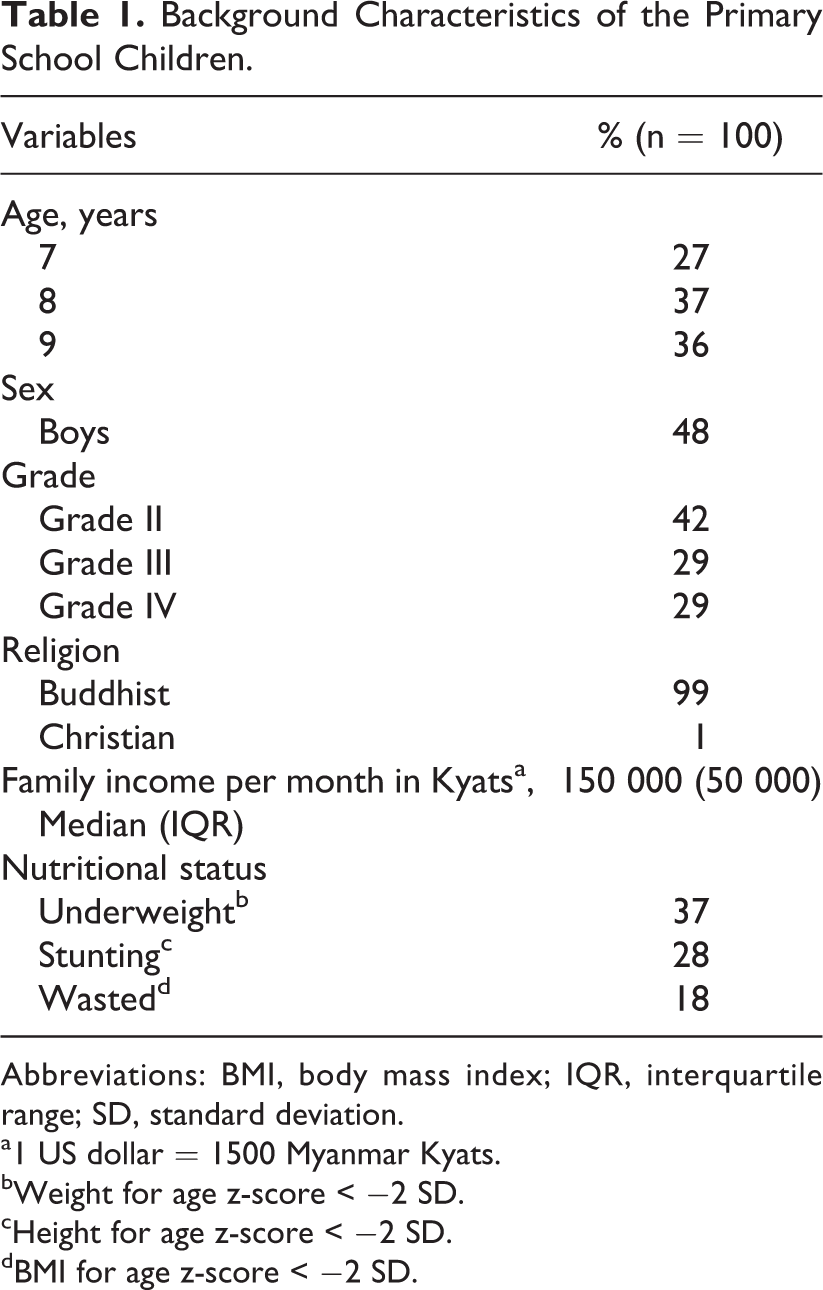
Abbreviations: BMI, body mass index; IQR, interquartile range; SD, standard deviation.
a1 US dollar = 1500 Myanmar Kyats.
bWeight for age z-score < −2 SD.
cHeight for age z-score < −2 SD.
dBMI for age z-score < −2 SD.
Food Consumption Pattern
Table 2 shows the 1-week dietary consumption pattern of the primary schoolchildren. According to the dietary survey, there were 79 food items commonly consumed by the students during the 1-week period. These 79 food items resulted from the analysis of 5-day food record in which the food consumed by more than 5% of the students was listed. Among them, the grain and grain products group (rice) had the highest frequency of consumption per week (19 servings/week). The meat, fish, and eggs group (MFE) had the second highest frequency (5 servings/week). The MFE group contained 14 items, of which carp fish was consumed by almost all of the students (97%).
Food Consumption Pattern of the Myanmar Primary School Children in Terms of Food Groups.
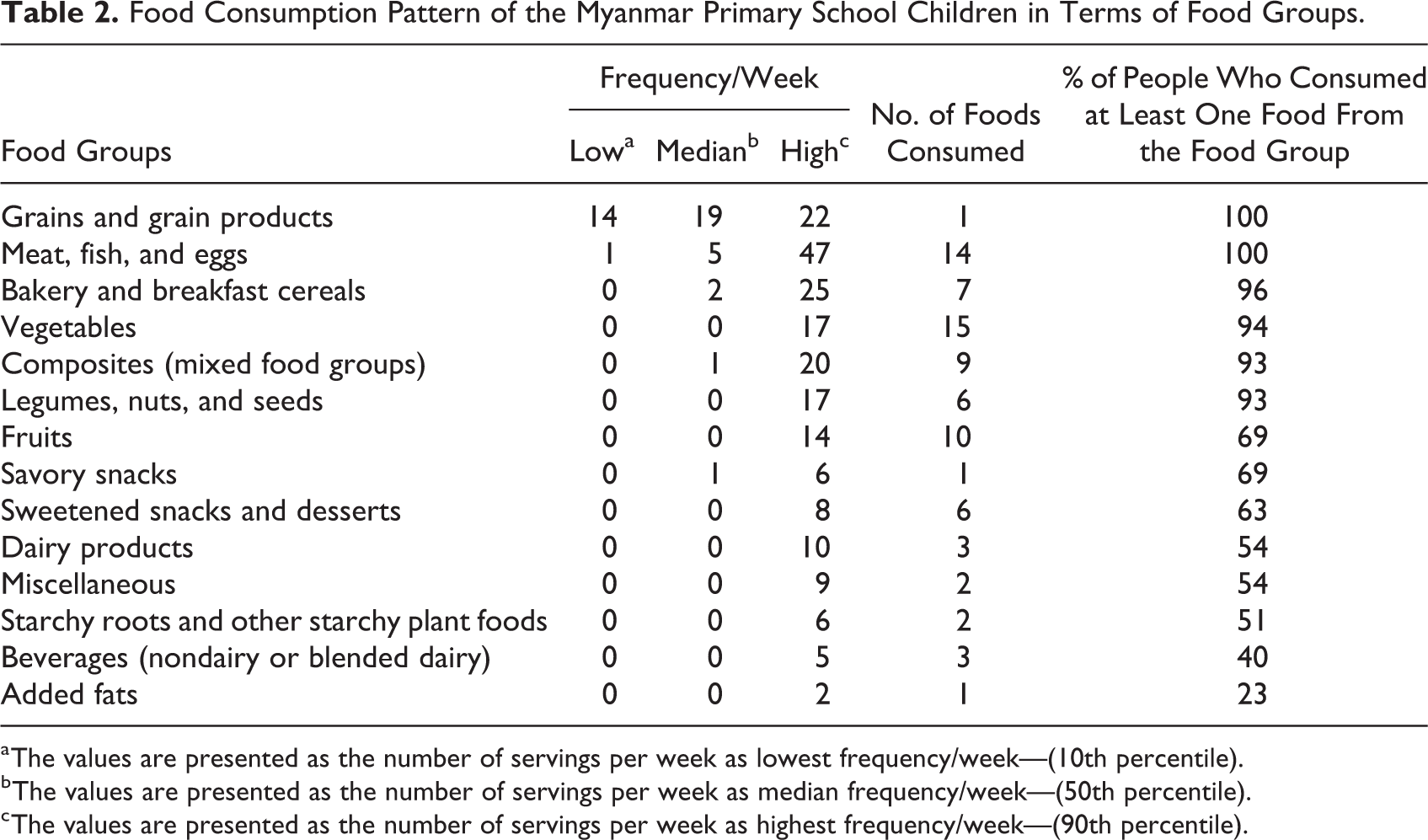
a The values are presented as the number of servings per week as lowest frequency/week—(10th percentile).
b The values are presented as the number of servings per week as median frequency/week—(50th percentile).
c The values are presented as the number of servings per week as highest frequency/week—(90th percentile).
With regard to vegetable consumption, 94% of the students consumed 15 varieties of vegetables. However, the frequency was inconsistent so that median frequency of consumption per week is zero. Among them, water spinach and bottle gourd were the most commonly eaten foods. Legumes, nuts, and seeds group, especially garden peas, chickpeas, and tofu, were consumed by 93% of the students. Almost 70% of the students ate items from the fruit group (14 items), since many fruits were in season during the time of data collection.
Development of the FBR
Table 3 shows the results of median dietary intake of the students from single 24-hour recall and FBRs from Optifood analysis. The median dietary intake of the students showed most of the nutrients were below half of recommended nutrient intake (RNI). Although PUFA intake was high, it was seen that omega-6 had higher intake than omega-3; consequently, the conversion form of omega-3 (EPA and DHA) become 0% of RNI. almost all of the nutrient-dense foods, which were based on mostly consumed food, contributed to omega-6 (Table 4).
The Median Dietary Intake of the Students From Single 24-Hour Recall and Final Food-Based Recommendation From Optifood.
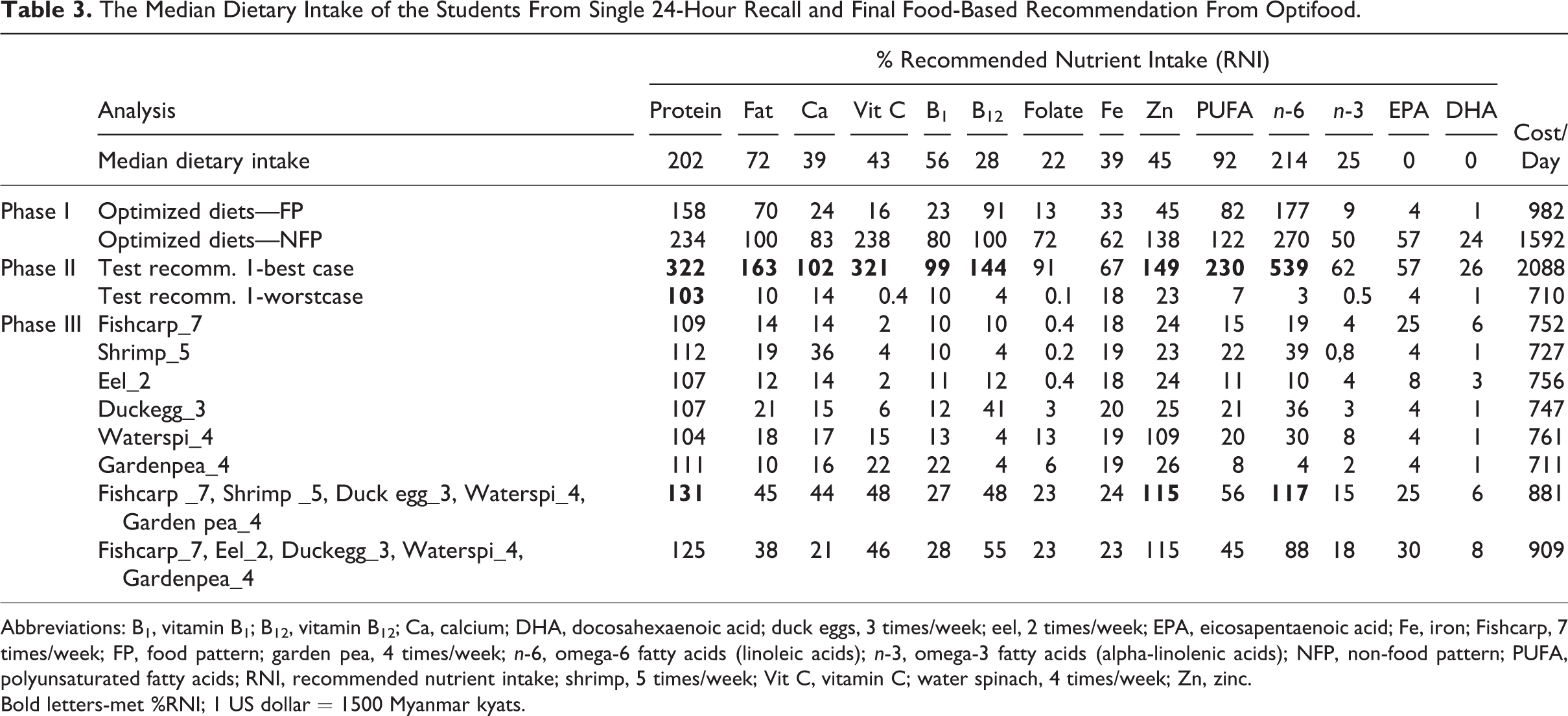
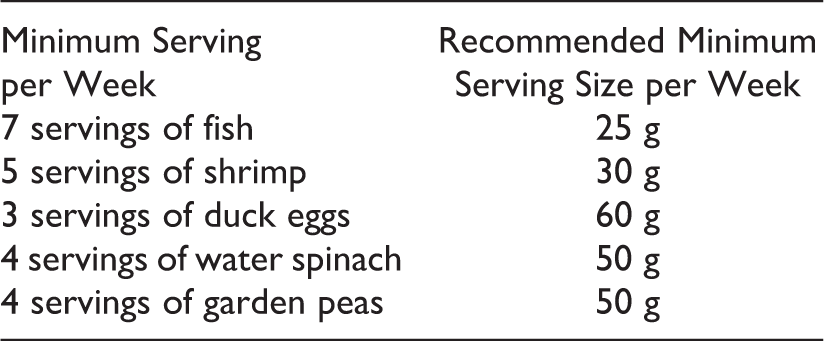
Abbreviations: B1, vitamin B1; B12, vitamin B12; Ca, calcium; DHA, docosahexaenoic acid; duck eggs, 3 times/week; eel, 2 times/week; EPA, eicosapentaenoic acid; Fe, iron; Fishcarp, 7 times/week; FP, food pattern; garden pea, 4 times/week; n-6, omega-6 fatty acids (linoleic acids); n-3, omega-3 fatty acids (alpha-linolenic acids); NFP, non-food pattern; PUFA, polyunsaturated fatty acids; RNI, recommended nutrient intake; shrimp, 5 times/week; Vit C, vitamin C; water spinach, 4 times/week; Zn, zinc.
Bold letters-met %RNI; 1 US dollar = 1500 Myanmar kyats.
The Contribution of Food Items to at least 5% of the RNIs of Nutrients (Nutrient-Dense Food) in Primary School Children in Myanmar.a
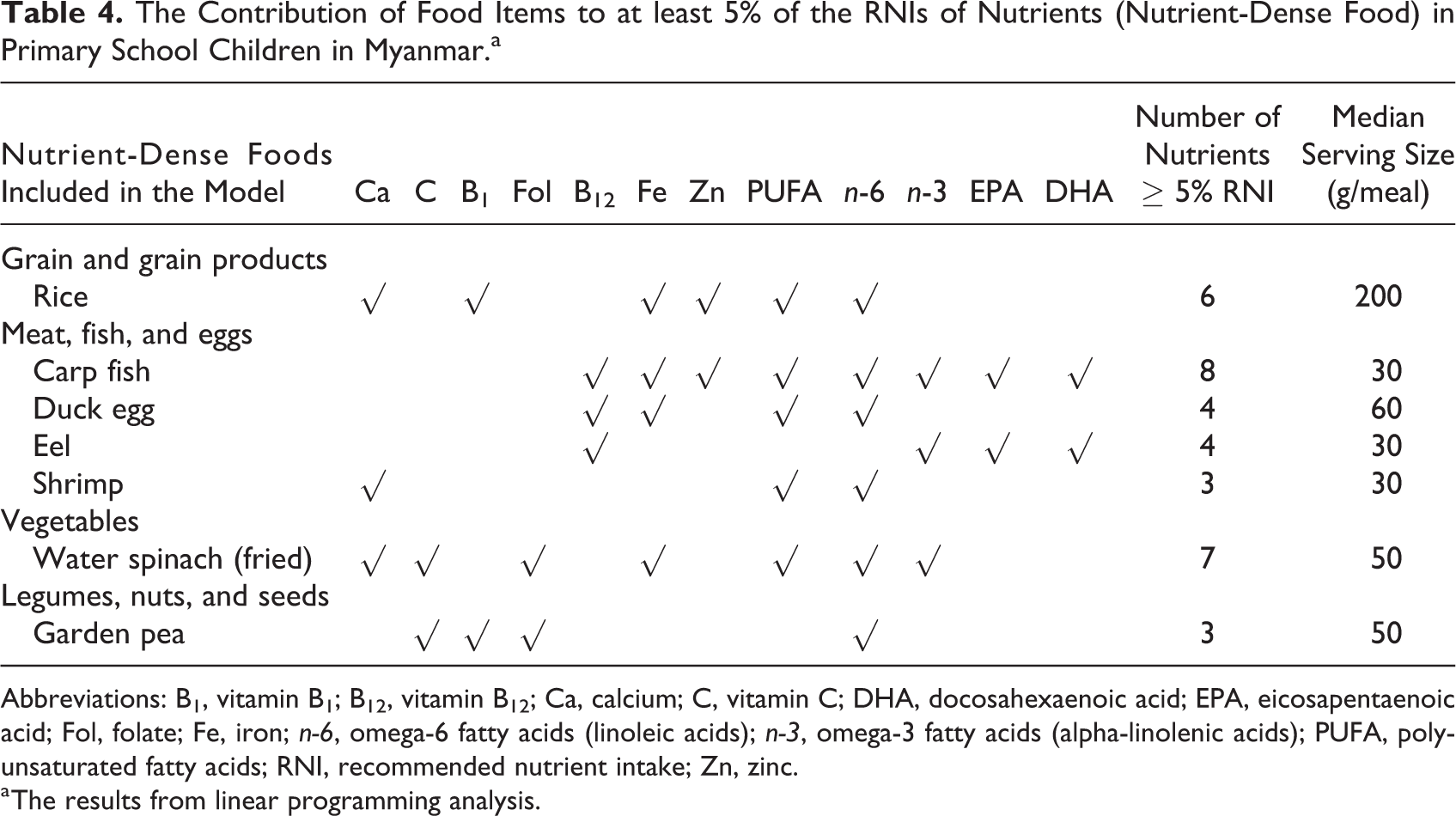
Abbreviations: B1, vitamin B1; B12, vitamin B12; Ca, calcium; C, vitamin C; DHA, docosahexaenoic acid; EPA, eicosapentaenoic acid; Fol, folate; Fe, iron; n-6, omega-6 fatty acids (linoleic acids); n-3, omega-3 fatty acids (alpha-linolenic acids); PUFA, polyunsaturated fatty acids; RNI, recommended nutrient intake; Zn, zinc.
a The results from linear programming analysis.
Phase I produced optimized diets that achieved nutrient levels ranging from 24% to 270% of RNI of different nutrients by local foods at a cost of 1592 Myanmar kyats (approximately US$1.2) per day. The problem nutrients that could not achieve 100% RNI of the WHO/FAO recommendations (problem nutrients) were calcium, vitamin B1, folate, iron, omega-3 fatty acids, DHA, and EPA. The consumption of protein was adequate, meeting the animal to plant protein ratio of 3:1.
In phase II, the maximized or best-case scenario, iron, folate, omega-3, EPA, and DHA still remained as problem nutrients (absolute problem nutrients), since they could not achieve 100% RNI by eating local foods, although the RNIs could be met for vitamin B1 and calcium (partial problem nutrients). The achieved nutrient levels ranged from 26% (DHA) to 539% (omega-6). In minimized or worst-case scenario, all of the nutrients except protein could not meet 65% of the RNI which means dietary inadequacy.
In phase III, nutrient-dense foods (Table 3) were selected depending on their contribution to the analyzed nutrients, especially the problem nutrients. The foods with the highest frequency of consumption per week were water spinach, carp fish, duck eggs, eels, garden peas, and shrimp. These selected nutrient-dense foods were added individually or in combination to produce 8 alternative sets of FBRs.
In the 2 combination sets of FBRs, apart from protein, zinc, and omega-6, the nutrients could not achieve 65% of the RNI for the minimized or worst-case scenario diet. When comparing these 2 combination FBRs, the first combination was selected as the best set of FBR with the energy contribution of 1396 kcal/day, and cost of the combination of FBR was 881 Myanmar kyats (US$0.6) per day. This FBR was selected with 3 considerations: (1) The selected combination had a higher calcium content (almost twice) than the other combination sets; (2) its cost was lower than another combination with a similar level of nutrients; and (3) the inclusion of shrimp was more preferable than eel according to the suggestions of the parents. The following food combinations were recommended in the best set of FBR:
Discussion
This is the first study that has been used to model FBRs for school-aged children and also included EFAs. It identified the actual nutrient gaps and explored the problem nutrients in an objective way for primary schoolchildren in Nyaungdon Township of Myanmar.
The nutritional status of schoolchildren is not still listed as a top priority for research as well as for policy makers, especially in low- and middle-income countries, although it has a high impact on their physical and mental development. In the current study, 28% of the students were found to have stunted growth. Therefore, the students were in the state of chronic undernutrition which needs to take interventions during infancy. Also, 18% of the students exhibited muscle wasting, and 30% of the students were underweight. These values are higher than those shown by another cross-sectional study in Myanmar primary schoolchildren in which 9% showed stunted growth and 15% showed muscle wasting. 21 This study was done in 369 primary schoolchildren of grades III and IV at 4 primary schools which represents 4 geographical regions of Myanmar (delta, costal, hilly, and plain regions). In both studies, the nutritional status of Myanmar primary schoolchildren was shown to be a critical public health problem. 22 However, the sample size in the current study was too small to conclude significant observations about anthropometric outcomes.
According to the South East Asian Nutrition Survey (a cross-sectional study of 6-12-year-old school-aged children), in 4 Southeast Asian countries—Indonesia, Malaysia, Thailand, and Vietnam—19.2% of children surveyed had stunted growth, 10.3% were classified as thin, and 21.6% were underweight. 23 Therefore, undernutrition has become a public health problem among the school-aged children of the Southeast Asian region, and nutritional programs should focus more on this group.
In regard to the dietary consumption pattern from Optifood, rice was the main part of meals and is considered an essential staple food in Myanmar. The MFE group was found to be consumed frequently which could be due to the cheaper price compared to other urban cities, as agriculture and livestock sector in the study area are being developed. After consideration of the frequency of consumption during a 1-week period and the contribution of nutrients in the consumed foods, duck eggs, water spinach, carp fish, eels, and garden peas were selected as nutrient-dense foods. The market survey also showed that these foods are easily available, acceptable, and affordable foods in the study area. Although eel was found to be rich in vitamin B12, omega-3 fatty acids, EPA, and DHA, the students did not like it much because of its small bones. The price of the eel is also higher than other foods. Therefore, eel was excluded from the final FBR.
Among the problem nutrients, iron was the most common problem nutrient among the children in Myanmar. This finding contradicted a previous study conducted in Malawi which developed FBR for 3- to 6-year-old children using the LP approach, with calcium and zinc being the most limiting nutrients. 11 However, the findings were consistent with a study in Cambodia which used an LP analysis to determine whether 4 formulated complementary foods could fulfill the nutrient gaps in 6- to 11-month-old infants. The problem nutrients in this study were thiamin, niacin, folate, and iron, and the formulated complementary foods foods failed to fulfill the nutrient gaps. 24
A study in Myanmar using an LP analysis with the WHO Optifood software showed that iron, zinc, folate, calcium, and niacin are the problem nutrients among 12- to 23-month-old children. This was also the first study to use the Optifood software in Myanmar. 10 This study discussed iron deficiency as being the result of limited consumption of chicken liver, which was believed to lead to hookworm infestations. Our study found that another factor contributed to iron deficiency—beef, one of the main iron-rich foods, is not allowed to be eaten in the study area due to cultural reasons. This fact was found while interviewing with local leaders during situation analysis. Additionally, the consumption of pickle tea leaves in the study area might have influenced the presence of iron deficiency, since pickle tea leaves contained phytate which inhibits iron absorption. 10 Iron deficiency among schoolchildren has also been found in other Asian countries, namely, Cambodia, 25 Thailand, 26 and Vietnam. 27
The uniqueness of this study is that PUFA, omega-6 fatty acids, omega-3 fatty acids, EPA, and DHA were analyzed with the Optifood software to determine the adequacy of their intake. Among the EFAs, PUFA and omega-6 fatty acids were able to fulfill the desired nutrient levels of the WHO/FAO recommendations. The findings regarding EFAs are consistent with a secondary analysis study of national data from Indonesia which investigated the intake of EFAs intake in 4- to 12-year-old children. 28 In this study, the level of EFAs (PUFA, omega-6 fatty acids, omega-3 fatty acids, EPA, and DHA) also could not reach the WHO/FAO recommended level. As in the current study, the Indonesian study found milk and eggs to be rich sources of omega-6 fatty acids and omega-3 fatty acids.
The total fat intake contributed to 3.6% of the total energy intake, while the total PUFA intake contributed to 1.3% of the total energy intake. The ratio of omega-6 to omega-3 fatty acids was 5.4:1, which is consistent with the ratio suggested by WHO/FAO (5:1-15:1) which means that the intake of vegetables and meat was balanced. However, the intake of omega-3 fatty acids did not reach the recommended level. This could be explained by the location of the study area, which is far from the sea, so there is no easy access to sea fish that are rich in EFAs. Individuals in the study area consume only freshwater fish, mostly farm-raised fish. Additionally, iron deficiency should be taken into consideration, as it acts as a cofactor for the synthesis of PUFA which can delay the conversion rate of EFA.
An important limitation in this study was the food composition tables that were borrowed from Vietnam, and the USDA, which could have led to the overestimation of EFA intake, since the Myanmar food composition table had incomplete information.
In addition, the findings highlighted that the primary schoolchildren in the study were in a state of high prevalence of malnutrition. The LP analysis indicated that the primary schoolchildren in the study area have difficulty meeting nutrient recommendation, given locally available foods. This finding from LP analysis was consistent with the median intake of the students resulting from single 24-hour recall. Although the best set of FBR is within their dietary consumption pattern, feasibility study is needed whether they can follow this FBR or not.
Additionally, the food availability in this region is very sparse which gives limited options for choosing nutrient-dense foods. Also, the lunchboxes brought to school can only contain easy-to-prepare foods and cannot contain a variety of food. This underlines the poor socioeconomic conditions, which mean that the parents of these children do not have spare time to cook proper meals since they have to go to work.
In summary, LP showed that the primary schoolchildren in Nyaundon Township of Myanmar have difficulty meeting nutrient recommendations, given locally available foods, especially iron and EFAs, which are important for cognitive performance of schoolchildren. There have been many published studies on the positive benefits of iron and EFAs on the cognitive performance of school children. 29 -36 However, nutrition promotion programs are challenging. It was seen that the best-modeled FBR set from LP was still unable to meet at least 65% RNI for many nutrients, and in the “worst-case scenario” diet, FBRs may not be the best way forward. Therefore, the results of the study suggest alternative strategies for nutrition promotion programs (fortification or supplementation) in addition to the promotion of the optimized FBR to complement the nutrient gaps produced by the problem nutrients so as to improve not only the nutritional status of the students but also their cognitive performance, and consequently, their academic performance.
Footnotes
Authors’ Note
Le Thandar Soe, Umi Fahmida, Agus Firmansyah, Ali Nina Liche Seniati designed the research. Le Thandar Soe collected the data in Myanmar. Le Thandar Soe and Umi Fahmida analyzed the data using linear programming approach with WHO Optifood software. Le Thandar Soe wrote the manuscript with the support of Umi Fahmida, Agus Firmansyah, Ali Nina Liche Seniati. Umi Fahmida, Agus Firmansyah, Ali Nina Liche Seniati reviewed the paper and provided feedback. All authors read and approved the final content.
Acknowledgments
The authors thank Department of Nutrition, Universitas Indonesia for supporting the study. The authors thank Ministry of Health and Sports; and Ministry of Education, Myanmar, for giving permission for implementation of the study. Also, the authors thank local government officials for their full support in field work. The authors would like to show gratitude to school teachers, schoolchildren, and their family for participation and cooperation during data collection.
Declaration of Conflicting Interests
The author(s) declared no potential conflicts of interest with respect to the research, authorship, and/or publication of this article.
Funding
The author(s) disclosed receipt of the following financial support for the research, authorship, and/or publication of this article: This study was supported by a DAAD (German Academic Exchange Service) scholarship (grant number A/14/92 995). DAAD had no role in the design, analysis or writing of this article. Publication of this study was funded by the Ministry of Education and Culture Government of Indonesia (SEAMEO RECFON DIPA 2019).
