



Abstract
Background:
Food insecurity is a growing public health issue and a barrier to students achieving adequate nutrition. Data regarding food insecurity among university students in Nigeria are scarce.
Objective:
The study assessed the prevalence of food insecurity and associated factors among university students, southeast Nigeria.
Methods:
A cross-sectional survey of 398 randomly selected students recruited from 2 universities in southeast Nigeria was conducted. Food security status was assessed using the 10-item US Household Food Security Scale Module. Anthropometric measurements and sociodemographic data were collected. Multivariate logistic regression was used to identify factors associated with food insecurity.
Results:
A majority of the students were categorized as food insecure. Of this, about 35.7% and 45.0% were considered to have low and very low food insecurity, respectively. Food insecurity was significantly associated with monthly allowance, daily amount spent on food, and source of income. The odds of food insecurity was significantly higher for students whose fathers were farmers (4.6, 95% confidence interval [CI]: 1.453-14.737), but lower for those whose mothers were farmers (0.18, 95% CI: 0.059-0.564).
Conclusion:
The result provides an insight into the food security status of university students in Nigeria. The prevalence of food insecurity was high among the students. Therefore, further studies involving different urban and rural (and/or public and private) universities in Nigeria are suggested in order to have a deeper understanding of the magnitude and contributing factors among this population group.
Introduction
Food is a universal human right and an important determinant of health. 1,2 Achieving food security is necessary for the attainment of the sustainable development goals (SDG) 1 and 2 of ending all forms of poverty as well as hunger and malnutrition by 2030, respectively. 2 Food security is defined as “when all people, at all times, have physical, social and economic access to sufficient, safe and nutritious food which meets their dietary needs and food preferences for an active and healthy life.” 3 Food insecurity (FI), on the other hand, is experienced when people are economically unable to purchase sufficient quantities of food or balanced meals that they need. 3,4 Globally, FI is a growing public health issue and a barrier to achieving adequate nutrition. 5,6 The threat of FI is more in low- and middle-income countries (especially in sub-Sahara Africa and Southeastern and Western Asia), where the burden is huge 7,8 and national prevalence is high. 9 The vast majority of the world’s hungry people live in low-income countries, with approximately 60% being food insecure. 2
The issue of FI among university students has not received adequate attention. 6 Survey data report that FI exists among university students and is a barrier to students’ well-being and success. 10 The ability of students to excel in their academics relies strongly on sound nutrition, 11,12 and this may be compromised if periods of FI persist. 13 University students face many challenges in school, which make them vulnerable to FI. 14 Reports revealed that they lack consistent access to affordable and nutritious food 15 and engage in unhealthy eating habits, which act as a barrier to making healthy food choices . Food insecurity has the potential to impact negatively on academic performance, health, and mental status (eg, depression, stress, and anxiety) of university students. 10,14,16 -18 University students are also at greater risk of overweight/obesity, poor dietary choices, and physical inactivity. 19
Factors identified as being associated with FI among university students are not fully understood. However, a conceptual framework for FI derived from results on a few studies on university students outlined factors such as financial hardship, cooking skills, poverty, and unemployment. 20 Another model developed by Gaines et al 21 reported student-specific risk factors, including increased cost of housing and tuition, 22,23 low income, inadequate financial resources, poor food management skills, increased reliance on borrowed money, and ineligibility for food assistance programs. 24 Marital status and spending patterns were also reported as risk factors for FI in college students. 6 Improved knowledge, skills, and participation in food assistance programs were factors shown to improve food security status of university students. 6,20
Findings from high-income countries suggests that university students are at risk of FI, 10,21,23,25 with estimates ranging from 12.7% to 46.5% in Australia and 39.2% in the United States, respectively. 16 Food insecurity range of 11% to 38.3% has been reported for university students in South Africa, a high-middle income country. 26 In Nigeria, FI is a major challenge with over 70% of the population reported to be food insecure. 27 To our knowledge, no published scientific work has examined FI among university students in Nigeria. Most published data on FI in Nigeria focused on rural/farming 28,29 and urban households 30 or children. 31,32 Estimates of 71% and 79% FI have also been reported among rural and urban households, respectively, in Nigeria. 33
Given the magnitude of the problem, it is important to assess food security status to identify populations, subgroups, or regions with particularly severe conditions. 34 The young adult population (aged 18-35 years) who make up about one-third (31.7%) of the total population in Nigeria 35 are a valuable and understudied group to target food security status before they transit to independence. These population are regarded as emerging adults and therefore lack food management knowledge and skills, thus increasing their risk of FI. 6,20,24 Assessing the magnitude and scope of the problem as experienced by students on different campuses in Nigeria will provide baseline data and basis for intervention. To fill this knowledge gap, this study assessed the prevalence of FI, as well as potential factors associated with FI among university students, southeast Nigeria.
Methods
Study Participants and Sampling
This descriptive cross-sectional survey was designed to examine FI and associated factors among university students in southeast Nigeria. Data were collected from students attending 2 public universities (University of Nigeria Enugu campus [UNEC] and Imo State University [IMSU]) between May and July 2017. The 2 universities were purposively selected from a list of public universities in southeast Nigeria, based on availability of previously published results on household food security status in the areas. Furthermore, both universities share similar sociocultural characteristics and are centrally located in the urban capital city of the states they represent. The 2 universities also do not offer any form of meal subsidy to students.
An estimated total population of 31 000 students (IMSU = 20 000 and UNEC = 11 000) were enrolled in the 2 universities as of 2017 when this study was conducted. Sample size calculation was based on the formula: n = zp (100 − p)/x2, 36 where x represents the desired precision of 5%, z is standard normal deviate taken as 1.96, p is the assumed prevalence of FI among households in southeast Nigeria (70%) 28,37,38 and a 10% nonresponse rate. Estimates from the sample size calculation showed that at least 184 participants were required to obtain a statistically representative data. However, the final sample size was more than this as a total of 398 students from both universities were included in this study.
Probability sampling was employed to select students from the 2 universities. Potential participants were approached through executives of student unions, clubs, and faith-based organizations on campus to interact with and distribute questionnaires to their members. A date was set by the executives to meet with students at the meeting venues. The students were approached during the meeting sessions and informed about the study. Students from across all academic levels and disciplines were eligible to participate in the study. At each meeting session, students who were willing to participate in the study were selected randomly through balloting. Once a student was selected through this process, an informed consent form was signed and the student completed the self-administered questionnaire on the spot (approximately 15 minutes to complete) and returned same to the researchers and research assistants. Eligibility for the study was students aged ≥18 years and enrolled in the undergraduate program for at least 1 academic session. The ethics committee of the Federal Medical Centre, Umuahia, gave permission for the study.
Data Collection
Four research assistants were trained on questionnaire administration and anthropometric measurements.
Questionnaire
A structured questionnaire was used to elicit information on sociodemographics, including age, gender, marital status, academic year, place of residence, monthly allowance, the amount spent on food daily, mode of obtaining food, and source of income. The 10-item US Household Food Security Scale Module (HFSSM) 39 was used to assess students’ food security status. A group of lecturers with expertise in the area of food security validated the questionnaire. Feedback was received and incorporated into the questionnaire. The validated survey instrument was pretested on 30 students from Michael Okpara University of Agriculture, Umudike, to check for clarity and correct understanding of the questions. Results from the pretest were however not included in the final data analysis.
Anthropometry
Participant weight and height were measured by trained research assistants following standard procedures. 40 The anthropometric instruments were calibrated using known weight and height calibration measures before each day’s measurement. Weight was measured to the nearest 0.1 kg using a portable Hanson weighing scale (H902 model; Ireland), and height was recorded to the nearest 0.1 cm using a portable stadiometer. Body mass index (BMI) was calculated using weight and height measurements. Participants were classified as underweight (BMI = <18.5kg/m2), normal (BMI = 18.5-24.9 kg/m2), overweight (BMI = 25.0-29.9 kg/m2), and obese (BMI ≥30 kg/m2). 41
Assessment of food security status
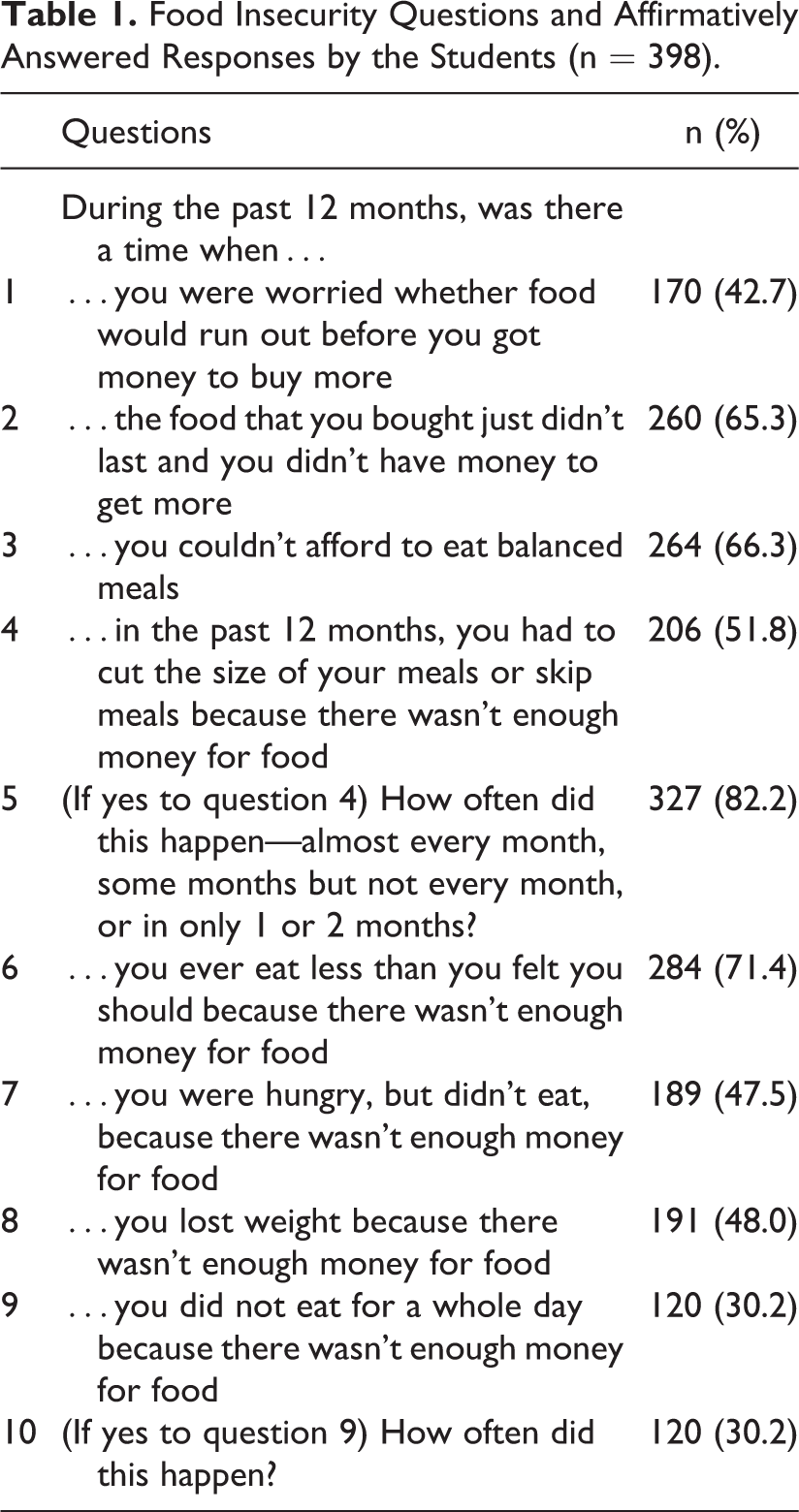
A self-administered questionnaire consisting of an adapted 10-item US adult HFSSM designed to assess food security status over the past 12 months was used. 39 A response of “yes, often, sometimes, almost every month” and “some months but not every month” was scored as affirmative responses, while responses such as “never or no” was scored as 0 (Table 1). The sum of affirmative responses was used to generate a raw score (range: 0-10). Scores were then categorized into 4 severity levels as follows: high (0), marginal (1-2), low (3-5), and very low (6-10) food security. The food security status was further collapsed into food secure (0-2; high and marginal) and food insecure (3-10; low and very low) for ease of interpretability of data.
Food Insecurity Questions and Affirmatively Answered Responses by the Students (n = 398).
Statistical Analysis
Statistical Package for Social Sciences (SPSS version 25) was used for data analysis. Descriptive statistics were used to summarize sociodemographic and related characteristics. Bivariate associations between FI and other factors were determined using χ2 test. Multivariate logistic regression was further used to assess factors associated with FI. Results were expressed as odds ratios with 95% confidence intervals (CIs). A P value of ≤.05 was considered statistically significant.
Results
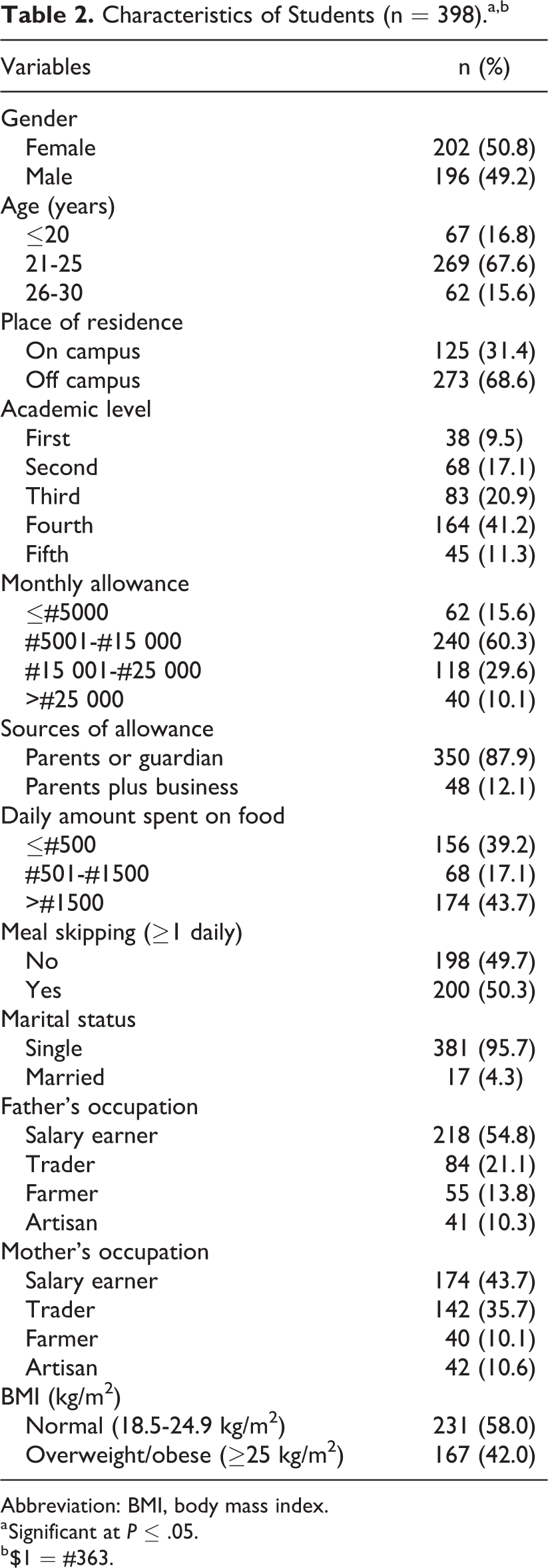
Characteristics of the study participants are presented in Table 2. A total of 398 students were recruited for the study. There was an almost equal distribution of males (49.2%) and females (50.8%). The majority were single (95.7%), 67.6% were aged 21 to 25 years, and 68.6% live off campus. More than half (60.3%) were given a monthly allowance of #5000 to #15 000 ($14-$42) and a majority received income from parents/guardian (87.9%). Parents of the students were mostly salary earners (54.8%, fathers; 43.7%, mothers). Students were spread across all academic years with most (41.2%) in the fourth year of study. More than half (58%) were in the normal range of BMI (24.49-29.9 kg/m2).
Characteristics of Students (n = 398).a,b
Abbreviation: BMI, body mass index.
a Significant at P ≤ .05.
b $1 = #363.
Figure 1 represents the food security status of the students. More than one-tenth (11.8%) of the students were highly food secure, 7.5% marginally food secure, 35.7% experienced low food security, and 45% were very low food secure. The overall FI rate was 80.7%.
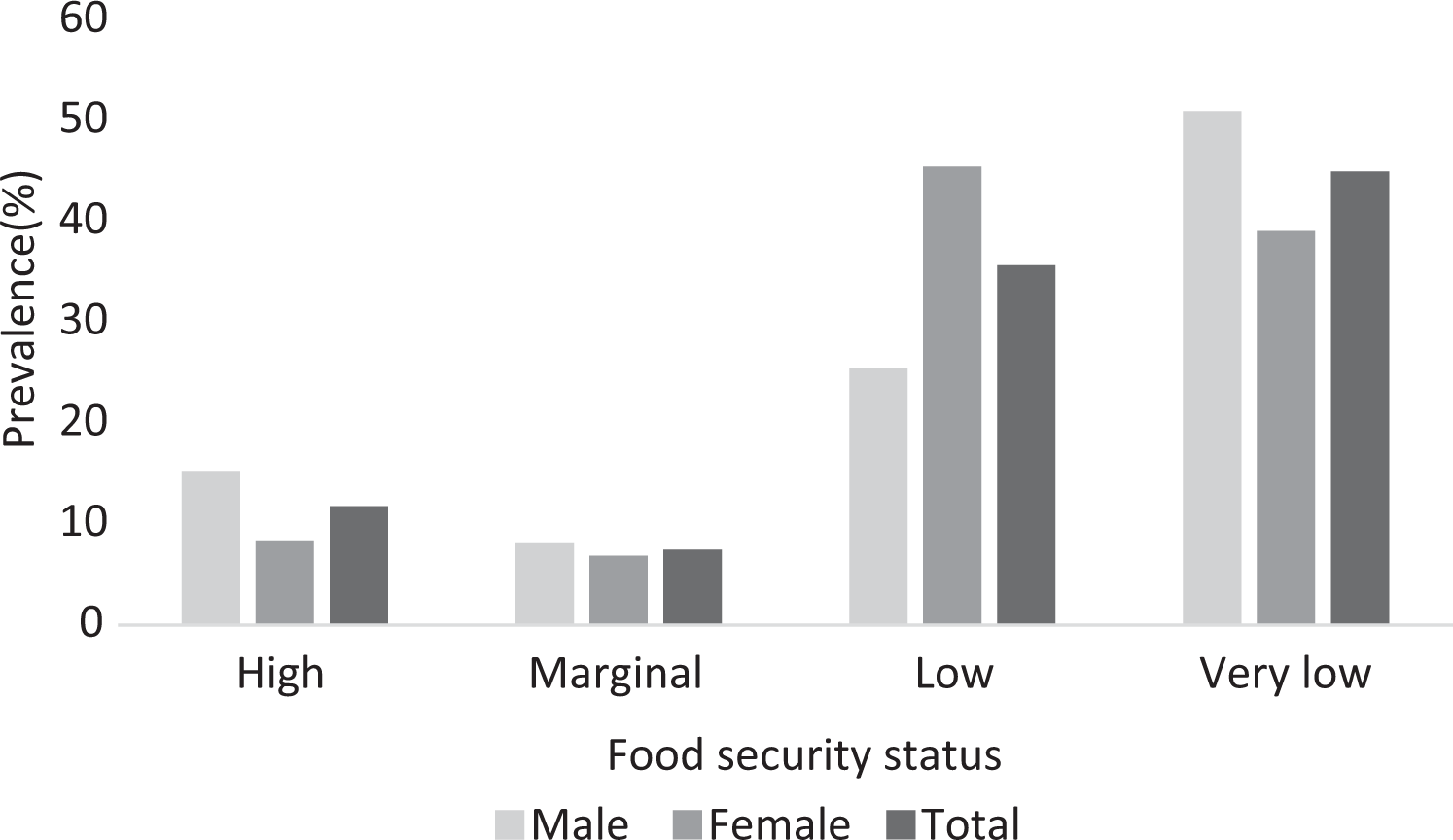
Food security status of university students.
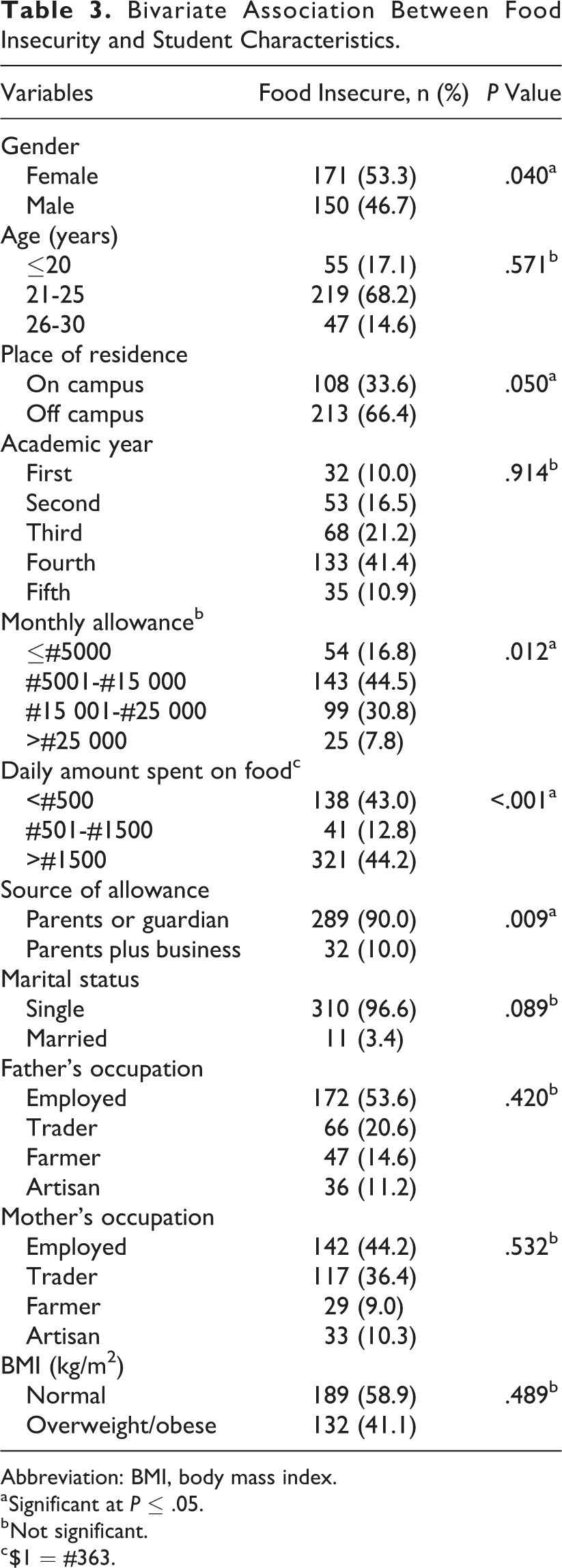
Table 3 represents the bivariate association between FI and characteristics of the students. Food insecurity was significantly associated (P < .05) with gender (P = .040), place of residence (P = .050), monthly allowance (P = .012), daily amount spent on food (P = .001), and source of allowance (P = .009).
Bivariate Association Between Food Insecurity and Student Characteristics.
Abbreviation: BMI, body mass index.
a Significant at P ≤ .05.
b Not significant.
c $1 = #363.
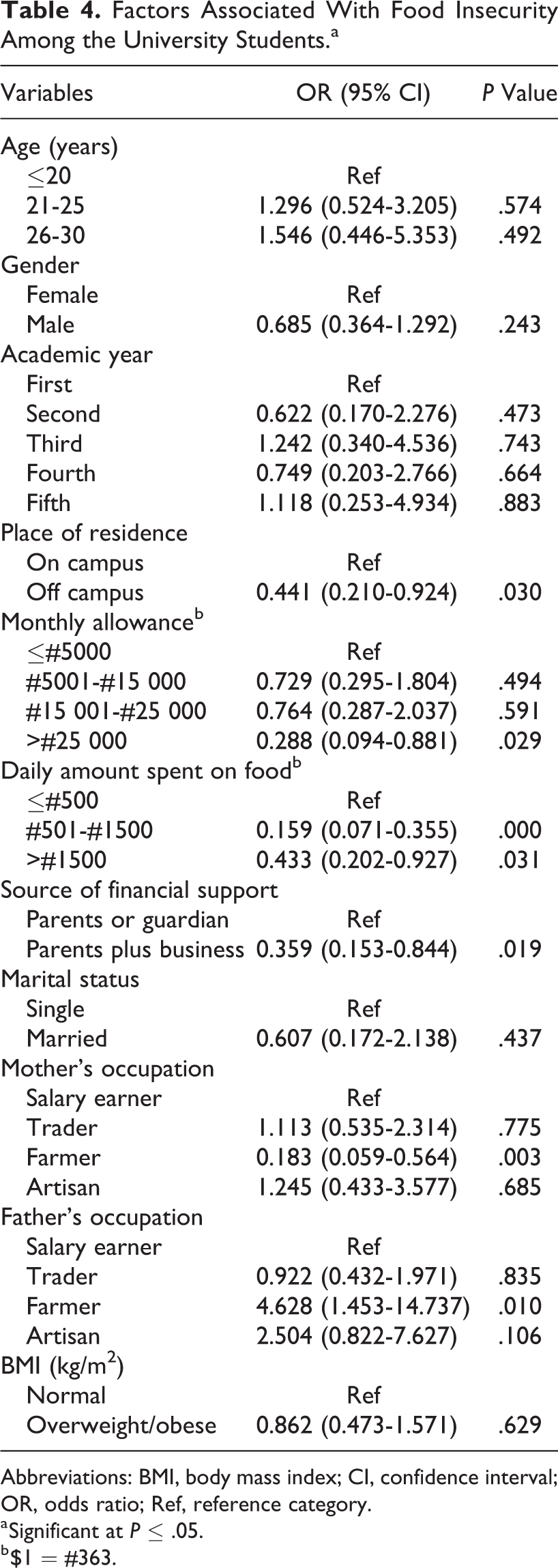
Table 4 summarizes the results of factors associated with FI in the multivariate logistic regression model. Results revealed that monthly allowance, the source of allowance as well as parents’ occupation (father and mother) were the main factors associated with FI.
Factors Associated With Food Insecurity Among the University Students.a
Abbreviations: BMI, body mass index; CI, confidence interval; OR, odds ratio; Ref, reference category.
a Significant at P ≤ .05.
b $1 = #363.
The likelihood of being food insecure was higher 3.3 (95% CI: 1.133-10.186) for students whose fathers were farmers as compared to those whose fathers were salary earners. On the other hand, students whose mothers were farmers had lower odds of FI as compared to salary-earning mothers. Students receiving a higher monthly allowance (>#25 000) had lower odds of FI as compared with those on low monthly allowance (>#5000). Likewise, students who receive income from parents/guidance in addition to engaging in other forms of businesses/jobs had lower odds of FI as opposed to those who receive financial support only from parents/guidance. Place of residence had a trend of association with FI but was not significant (P = .059). Associations of FI with age, gender, academic year, marital status, and BMI were not significant.
Discussion
Little research in middle- and high-income countries has documented food security status of university/college students; to the best of our knowledge, this is the first published study to document FI and associated factors among university students in Nigeria. Despite the importance of food security to good health and nutrition, this research area has been neglected in some population groups in Nigeria and may have implications for achieving the SDGs 1 and 2 of ending poverty, hunger, and malnutrition, respectively. In Nigeria, over 70% of households are food insecure. 33 Likewise, the prevalence of FI was even higher in our sample, with over 80% of students reporting one form of FI. The high rate of FI as observed in our sample is reflective of previous reports among different population groups in Nigeria. 27,28,30-32,38 The prevalence of FI was much higher than 65% 9 and 65.3% 42 reported among South African university students in Free State and Kwazulu-Natal, respectively. The difference in FI rates between university students in Nigeria and South Africa may be attributed to the fact that students in the cited South African universities were receiving government financial aid as opposed to our study participants who were not receiving any form of financial support from the government. In high-income countries, lower FI rates (48% and 38%) were reported among university students in Australia 43 and the United States, 44 respectively. The higher prevalence rate in our study compared to the Australian and US studies could be explained by differences in demographics and sample characteristics. Although different studies used varying measuring scales to assess food security status, university students in this study nonetheless seemed to be at higher risk of FI compared to previously reported data among Nigerian households. This is of concern given the relative risk of inadequate food available to university students. This could in turn impact on their nutritional status and academic performance during their course of study in the university. Therefore, addressing the issue of FI among university students should be a major challenge to stakeholders and policy makers in order to improve educational attainment and social security of these students upon their graduating from the university.
Income is an important determinant of FI. 45 In this study, students’ monthly allowance had an influence on FI. Students receiving higher monthly allowance were less likely to be food insecure as compared to those given lower allowance. The association between FI and monthly allowance can be explained by the fact that the students who receive higher allowance may be able to make more choices in terms of food selection and can afford to spend a greater percentage of their allowance on food. This finding is consistent with a study which found that lower income was associated with FI. 46 Similarly, Nord and Hopwood 45 noted that FI and family income are closely related such that poor families are more prone to FI compared to others.
The daily amount spent on food was significantly associated with FI. Students who spend more on food had lower odds of being food insecure as compared to those who spend less on food. Armah and Dharod found that food insecure households spend less money on food at grocery stores and this according to the study is a strong predictor of poor availability of fruits and dark green vegetables at home. 47 Another study reported that an additional increase in monthly spending on food is associated with an increase in the purchase of more nutritious foods, as well as lower FI among food aid recipients. 48
Another factor that was associated with FI in our study was the source of financial support for the students. Food insecurity was significantly less in students who in addition to receiving income from parents or guardian also engage in other forms of businesses or jobs. This was corroborated by a study which noted that the ability of students to engage in other income yielding tasks aside from money been given by parents or relatives can affect food expenditure and thus improve food security. 9 Similarly, another study found that students who depend solely on parents or guardians for money are likely to have insufficient money to purchase adequate food compared to those who have other sources of income. 42
Parent’s occupation was a significant predictor of FI among the students. The likelihood of being food insecure was higher for students whose fathers were farmers as compared to those whose fathers were salary earners. This finding may be explained by the fact that fathers are responsible for financial management of the household; thus, as farmers, they may sell off all their farm produce to take care of other family needs. Findings with regard to mother’s occupation (farming) and FI reflect the fact that farming as an occupation for mothers could actually lead to reduced FI among the studied students. Consistent with our results, Mohammadzadeh et al 49 found a significant relationship between FI and job status of mother and head of household.
In the literature, there are studies indicating an association between FI and place of residence or housing status. 23,24,50 In this study, residing off campus was only marginally associated with FI. Findings from a South African University reported that food was expensive on campus, thus forcing students to acquire food elsewhere. 51 Similarly, a study found that the university campus environment contributes to poor eating behaviors and provides limited access to grocery stores. 52 A plausible explanation for this result could be that students who stay on campus may find it difficult to access the nearest place to purchase food items by walking or taking a bus. Furthermore, accessibility combined with availability may give off-campus students better chances to choose from available food sources from the neighborhood. On the contrary, other studies have found that students living off campus were at greater risk of FI than those who live on campus. 23,24,50
Our result showed that the association of gender with FI was not significant. Studies from developed countries, however, suggest that girls are more likely than boys to experience FI. 20,53 The reason was attributed to the fact that young men are more likely to be employed and thus can use those resources to purchase food outside the household. Again, young men are also able to spend substantially more time outside their homes and are therefore more likely to be able to seek food elsewhere compared to young women. 54,55
The rate of overweight/obesity reported in this study was similar to that reported for college students in the United States (33%). 15 Findings from this study, however, suggest that FI was not associated with overweight or obesity. Our result is consistent with others that found no association between FI and weight status of college students in the United States 15 and Australia. 56 Hughes et al, 50 on the other hand, found that students who experienced FI were more likely to report losing weight and less likely to rate their health as very good compared to the food secure students. Food insecurity, however, poses a threat to the health of students and may lead to overweight and obesity due to consumption of cheap, high-energy and low nutrient–dense foods, resulting in high-energy intake and weight gain, and increasing the risk of developing noncommunicable diseases. 57,58
Limitations of this study include the reliance on students’ self-report of food security questions, which could lead to recall bias and misinterpretation of questions. For example, we used a 12-month reference period for FI rather than the 30-day reference and this could have led to recall bias. The cross-sectional nature of the study rules out the assessment of causal relationship between FI and associated factors. Again, the 10-item US HFSSM has not been previously validated in the study population. It is, therefore, suggested that the questionnaire is validated in further studies. Despite these limitations, the study provides a significant contribution to the food security status of university students given the paucity of data among the population group. The study strength lies in the fact that it is the first to document FI and associated factors among university students in Nigeria.
Conclusion
Results of this research showed that FI is associated with monthly allowance, the daily amount spent on food, student’s source of income, and parent’s occupation. Considering the high prevalence of FI reported in this study, further research is necessary to evaluate the level of FI among university students in other campuses in Nigeria with the aim of generating enough evidence as regard FI and informing policy makers of FI problems in institutions of higher learning in Nigeria. Qualitative research is also advocated to give more insight into the food security situation of university students in Nigeria.
Supplemental Material
Supplementary_file_(1) - Food Insecurity and Associated Factors Among University Students
Supplementary_file_(1) for Food Insecurity and Associated Factors Among University Students by Patricia Ukegbu, Blessing Nwofia, Uchechi Ndudiri, Nnenna Uwakwe and Ada Uwaegbute in Food and Nutrition Bulletin
Footnotes
Authors’ Note
Ulkegbu, PO, contributed to conception and design, critically revised manuscript, and agrees to be accountable for all aspects of work ensuring integrity and accuracy. Nwofia, B, and Uwakwe, N, contributed to acquisition and interpretation and drafted manuscript. Ndudiri, U, contributed to acquisition and drafted manuscript. Uwaegbute, AC, contributed to conception and design, critically revised manuscript, and gave final approval.
Acknowledgments
The authors acknowledge the cooperation of students of the University of Nigeria, Enugu campus, and Imo State University who participated in the study.
Declaration of Conflicting Interests
The author(s) declared no potential conflicts of interest with respect to the research, authorship, and/or publication of this article.
Funding
The author(s) received no financial support for the research, authorship, and/or publication of this article.

Supplemental Material
Supplemental material for this article is available online.
References
Supplementary Material
Please find the following supplemental material available below.
For Open Access articles published under a Creative Commons License, all supplemental material carries the same license as the article it is associated with.
For non-Open Access articles published, all supplemental material carries a non-exclusive license, and permission requests for re-use of supplemental material or any part of supplemental material shall be sent directly to the copyright owner as specified in the copyright notice associated with the article.
