




Abstract
Background:
Most coffee in Ethiopia is produced by smallholder farmers who face a daily struggle to get sufficient income but also to feed their families. At the same time, many smallholder coffee producers are members of cooperatives. Yet, literature has paid little attention to the effect of cooperatives on combating food insecurity among cash crop producers including coffee farmers.
Objective:
The objective of the study was to investigate how coffee cooperative membership may affect food security among coffee farm households in Southwest Ethiopia.
Methods:
The study used cross-sectional household data on income, expenditure on food, staple food production (maize and teff), and utilization of improved inputs (fertilizer and improved seed) collected from 256 randomly selected farm households (132 cooperative members and 124 nonmembers) and applied an inverse probability weighting (IPW) estimation to assess the impact of cooperative membership on food security.
Results:
The result revealed that cooperative membership has a positive and significant effect on staple food production (maize and teff) and facilitated technological transformation via increased utilization of fertilizer and improved seeds. Nonetheless, the effect on food expenditure and income could not be confirmed.
Conclusion:
Findings suggest a trade-off between coffee marketing and input supply functions of the cooperatives, impairing their true food security impact from the pooled income and production effect.
Introduction
There has been a growing concern by the international community about the prevalence of food insecurity in coffee-growing areas of the world. Food and Agricultural Organization (FAO) 1 shows that of the 34 countries listed as in food crisis or at risk due to high food prices, over one-third (38.2%) are coffee-producing countries. Empirical work by Mendez et al, 2 Bacon et al, 3 Fujaska, 4 Gross, 5 and Morris et al 6 confirm that more than 50% of farmers are not in a position to meet their basic food needs in the coffee-growing regions of some Latin American countries, including Nicaragua, Mexico, Guatemala, El Salvador, and the Dominican Republic. Beghin and Teshome 7 calculated that 43% of coffee-growing households experience food insecurity in Southwest Ethiopia.
Regions that primarily produce cash crops such as coffee are among the ones that experience the worst undernutrition in developing countries, resulting in poor productivity levels, low school performance of children, and a poor health situation in farming families. 8 Cost of Hunger in Africa 9 estimates that the cost of malnutrition in Africa extends to the levels between 1.9% and 16.5% of the countries’ gross domestic product (GDP). In a response, multiple donor-sponsored initiatives are being undertaken to leverage food and nutrition-sensitive agriculture in the developing world through various mechanisms which include nutritive food production, income, and gender impact pathways. 10,11 The position of cash crop farmers in nutrition-sensitive agriculture is particularly interesting.
Smallholder cash crop production may influence the farmers’ food security in at least 2 ways. Food crops may be substituted by cash crops (and hence negatively affect food availability), or food expenditure levels may increase as a result of the crop sales and as such increase food accessibility. This expenditure effect is mentioned as an important impact pathway for leveraging nutrition-sensitive agriculture in developing countries; income gains resulting from high-value markets may contribute to improved nutrition via influencing diet and other nutrition-relevant expenditures. 10,11 Other studies 12 –14 also noted an improved nutritional impact from increased agricultural income. The study by Kennedy and Cogill 15 evaluated the effects of a shift from maize to sugarcane on agricultural production, income, expenditure, consumption, and health and nutritional status in Kenya. The result revealed a substantially higher income for sugarcane farmers, which were spent on nonfood expenditures such as housing and education and hence didn’t appear to produce nutritional benefit in the household. However, the increased income positively affected household calorie consumption. Another study by Anderman et al 16 in rural Ghana came up with negative relation between food security and cash crop production and attributed the trade-off to the increasing food prices and competing activities for land.
There are also many factors that affect cash crop revenues, income, and households’ food security. These include biophysical features of the crop such as a long maturation period and sensitivity, and pests and diseases. Farmers employ several adaptive and risk reduction strategies such as crop diversification to cope with risks of harvest failures and income decline. Others include risks associated with markets. Cash crop sectors are often challenged by oligopsonic market. Price volatility is also inherent in cash crop and agricultural markets in general. Some studies reveal the possible benefits of farmers from collective action via their cooperatives and strong competitions among processing and exporting companies. However, adequate infrastructure and strong institutions (eg, market information systems) are crucial in reducing transaction costs and improving market integration for income and price-stabilizing mechanisms to work. In a situation where these institutions are weak, investments are needed to enhance agricultural development that contributes to food security. 17 In this article, we study whether multipurpose cooperatives that support both coffee and food production contribute to food security.
The relationship between coffee production and food security is complex. 2,3,18,19 First, with the prospect of escaping from what is often seen as a poverty trap of subsistence agriculture, many producers reduce subsistence food production and invest more of their resources in coffee and other cash crops. They seem to accept the gamble that cash crop production may generate extra money which will allow for additional food purchase, while food will not be produced on the farm. Second, since most coffee-growing households receive only one annual “paycheck” for their crop, they face the trouble of smoothing consumption and hence distributing the lump-sum throughout the following year to meet all of their household needs until the next harvest. Furthermore, in years of low coffee prices, the income that farmers get from coffee is less than most farmers’ annual expenditure needs (shelter, food, farm investments, education, health care, debt payment, etc.). This will reduce the money available for food.
Third, it is not feasible to switch production back and forth between coffee and food crops; there is a great incentive for producers to continue growing coffee once the coffee plantation is established since the crop is perennial and requires substantial capital investment. Fourth, the price variability in global markets for coffee and food is high. For example, international coffee prices reached an all-time high in 2012 (ICO, 2012 cited in Caswell et al 18 ) almost simultaneously with price spikes for standard food staples (FAO, 2012 cited in Caswell et al 18 ). Yet, coffee prices are volatile. At a time of high food and/or low coffee price, producers with large investments in coffee can be left with a surplus of a crop they cannot eat. 2,18,19 Under varying degrees of household-specific transaction costs and risk-taking behavior, there can be various patterns of peasants’ response to the change of cash and food crop price ratio which can often be attributed to motives related to constrained market access. For example, the study by De Janvry et al 20 indicated the sluggish response of farmers to the relative price increase of cash crops and rigidities in food production and consumption. The chronic inelasticity of supply response by peasant households was then explained as a structural feature associated with missing markets and not as an intrinsic behavioral characteristic of peasants. The study also pointed out the key role of technological change in food production to enhance cash crop production. Hence, the relationship between coffee (and cash crops in general) production and food security is critical in view of agricultural development supported by smallholder farmers. 19,21,22
Cooperatives could play a critical role in both food security and value addition to coffee. Four perspectives emerge from the findings of various articles (eg, Chambo, 23 Nugusse et al, 24 Fisher and Lewin, 25 Vuthy et al 26 ): first, by means of pooling supply purchases and sales, coffee cooperatives can help to decrease price risks and enhance bargaining power and market access of members. Members may earn a better income that guarantees more and diverse food purchases. Second, cooperatives enhance the dissemination of improved technologies such as inputs and improved agricultural practices which could maximize potential food production. Third, cooperatives can serve as information and awareness creation platforms, which could promote knowledge on livelihood diversification strategies. Finally, cooperatives may ease access to a variety of funds held by stakeholders outside the direct coffee value chain, such as government subsidies, donor funds, and research and development. At the same time, food security and other welfare impacts of cooperatives depend on their ability to deliver good quality services and to put a comprehensive and well-organized governance systems in place that enable them to deal with various internal and external challenges in their operation.
We try to qualify how membership of multipurpose cooperatives could contribute to food security of its member households through its possible effect on food availability (by considering staple food production) and accessibility (by its impact on expenditure) in Ethiopia. Mixed results are reported on the impact of cooperative membership on food security. For example, Nugusse et al 24 and Vuthy et al 26 found a positive significant impact of cooperatives on the food security among members in northern Ethiopia and Cambodia, respectively. Other studies 27 –29 showed how cooperative membership helped to reduce poverty, implying a likely significant effect on food security. A study by Bolwig et al 30 confirms the substitution effect mentioned above and found that members of organically certified coffee cooperatives in tropical African countries substituted food production by coffee. Others found no effect of cooperatives on food security: Churk 31 did not find an impact of cooperatives on the livelihood of member farmers in Makungu Ward Iringa, Tanzania, while Addai et al 32 could not show an effect of farmer-based organization on technical efficiency of maize across various agro-ecological zones of Ghana.
The Ethiopian cooperatives, of which coffee farmers are members, are typically established for multiple purposes—hence referred to as multipurpose. These cooperatives provide services such as input supply and technical support, but they are also dedicated to coffee marketing and certification of coffee production (fair trade, organic, and others). Accordingly, the hypothesis tested in this article is that coffee cooperatives improve the food security situation of member farmers by increasing productivity of food crops through the provision of improved production inputs and technical advices as well as improved income (and hence increased purchasing power) from better market access and enhanced cooperative prices.
Data of members of coffee cooperatives in Southwest Ethiopia are compared to a control group of nonmembers using inverse probability weighting (IPW) estimation techniques since this model allows retaining almost all the observations to construct counterfactuals as compared with matching techniques. 33 We consider several outcome variables linked to food security, namely, production and yield of maize and teff (staple food crops in the area), amount of improved seeds used for the selected staple food crops and fertilizer applied (as proxies for technological innovation), and income and expenditure on food.
In our view, this study adds to the food security literature in at least 3 ways. First, the article draws attention to multipurpose cooperatives in Ethiopia which render services to both food production and coffee and to link their activities to food security. As far as we know, this association is not yet made. Second, the study helps to draw implications to the broader research direction on how cooperatives could fit within a nutrition-sensitive agriculture. Third, by applying IPW estimation, this article introduces an efficient tool to assess treatment effects.
Methodology
Method of Data Collection
This study has been undertaken in the Jimma and Kaffa zone of Southwest Ethiopia using data collected from a sample of coffee farm households and a control group of nonmembers of the cooperative. A 3-stage procedure was used to sample households for this study. The first stage encompasses purposive selection of 6 weredas/districts based on coffee production and concentration of cooperatives from the 10 coffee-producing weredas of the 2 zones. In the second stage, with the help of the respective wereda cooperative agency, purposive selection of cooperative kebeles from each wereda was made using accessibility as criteria. In our understanding, those cooperatives that require a 3- to 4-hour walk on foot to be reached due to the absence of roads are considered as inaccessible. Once the accessible cooperatives kebeles are identified in each wereda, they were further categorized/stratified into certified and uncertified kebeles. Then, a random selection of 1 kebele from the certified and another from the uncertified category/strata (total of 2 kebeles) was made from each wereda, which resulted in a total of 12 cooperative kebeles from the 6 sampled weredas. In the third stage, the households were stratified on the basis of their membership status. Thereafter, 132 members and 124 nonmember coffee-producing households (the control group) were randomly selected across from the 12 cooperative kebeles.
Twelve trained enumerators interviewed the respondents using a structured questionnaire with different sections on household characteristics, farm characteristics, food crop production and input utilization, expenditure on food, income, and cooperative membership. Other sources of information such as key informant interviews, focus group discussions with selected farmers, and surveys among the sampled 12 cooperatives (both certified and uncertified) were used to supplement the information obtained from the household survey.
Analytical Framework
Econometric model
Both descriptive and econometric tools were used to assess the impact of coffee cooperative membership on food security. Independent sample t tests were used to compare members and nonmembers in terms of the selected outcome variables, household and farm characteristics. ANOVA post hoc test compared the characteristics of members across the different cooperatives.
Propensity score matching is often used to estimate the incremental effects of participation in a program when only cross-sectional data are available. Compared to parametric regressions, semiparametric estimators such as matching allow for heterogeneous effects and a more flexible use of covariate information by compressing these into a single parametric function called a propensity score. 34 A propensity score is defined as the probability of exposure to treatment conditional on observed covariates. It is used to balance covariates between the treatment and control groups. 34 Matching by propensity score allows creating a balance of covariates by pairing—matching—observations from the treated and control groups on the basis of similar propensity scores. The difference in the average treatment effect is then calculated as the difference in outcomes between the matched groups. 33 However, the drawback of matching algorithm is that it frequently neglects a substantial proportion of the population to construct counterfactuals through balancing the confounding variables. 33
Following the recommendation of Cassel et al, 35 Rosenbaum 36 , and Hirano and Imbens, 37 we applied IPW estimations adjusting for the confounding cases to estimate the food production effect of coffee cooperative membership. An IPW assigns greater weight to the control group with higher estimated likelihoods of participation, while matching estimation assigns greater weight to the members of the comparison group with estimated propensities that more closely look like those of the participants. 34 The IPW is acknowledged for having less varying results compared to the different forms of matching (kernel matching, nearest neighbor matching, and local linear regression matching). As such, it retains all the cases to construct comparison groups, thus increasing the ability to generalize from the result. 33 Unlike kernel matching, IPW does not require a bandwidth choice and this can also be an advantage in terms of computational and researcher time. 34 The average treatment effect estimate using IPW can be given as follows: 33

where
Assessing the extent to which the model balances the treatment and the control group is critical. According to Curtis et al, 33 there are 2 ways of checking the balancing of covariates. One is to check the distribution of predicted probabilities (propensity scores) by treatment group. The distributions between the treatment and control group should overlap, which suggests that one or more baseline covariates are predictive of the treatment selection. The other option is to show that the distributions of the baseline covariates between the treated and the control group are similar. Accordingly, we constructed graphs that show both the overlapping distribution of the propensity scores and the similar distributions of the covariates (see Appendices A and B).
Definition of Variables
The Rome Declaration on World Food Security states that “Food security exists when all people, at all times, have physical and economic access to sufficient, safe and nutritious food to meet their dietary needs and food preferences for an active and healthy life” (FAO, 1996 cited in Morris et al 6 ). In this regard, cooperatives are assumed to contribute to both physical and economic access of food through enhanced production (by providing information, inputs, and facilitating technology adoption) and improving income (by increasing commercialization and price), respectively (see also Section 1 of this article). We consider farm-level production and yield of maize and teff (the 2 most important staple food crops in the area) and amount of improved seed and fertilizer used in the production of these staple food crops as 1 group of food security indicator variables to reflect the availability effect of cooperatives. Expenditure on food and income are considered to account for the economic access effect of cooperatives for preferred and nutritionally healthy food. Two types of income have been considered for this study: total agricultural income obtained from coffee and noncoffee sources and income from coffee alone. The selected outcome variables were also used in other studies (eg, Morris et al; 6 Fisher and Lewin 25 ).
Variables used to generate propensity scores
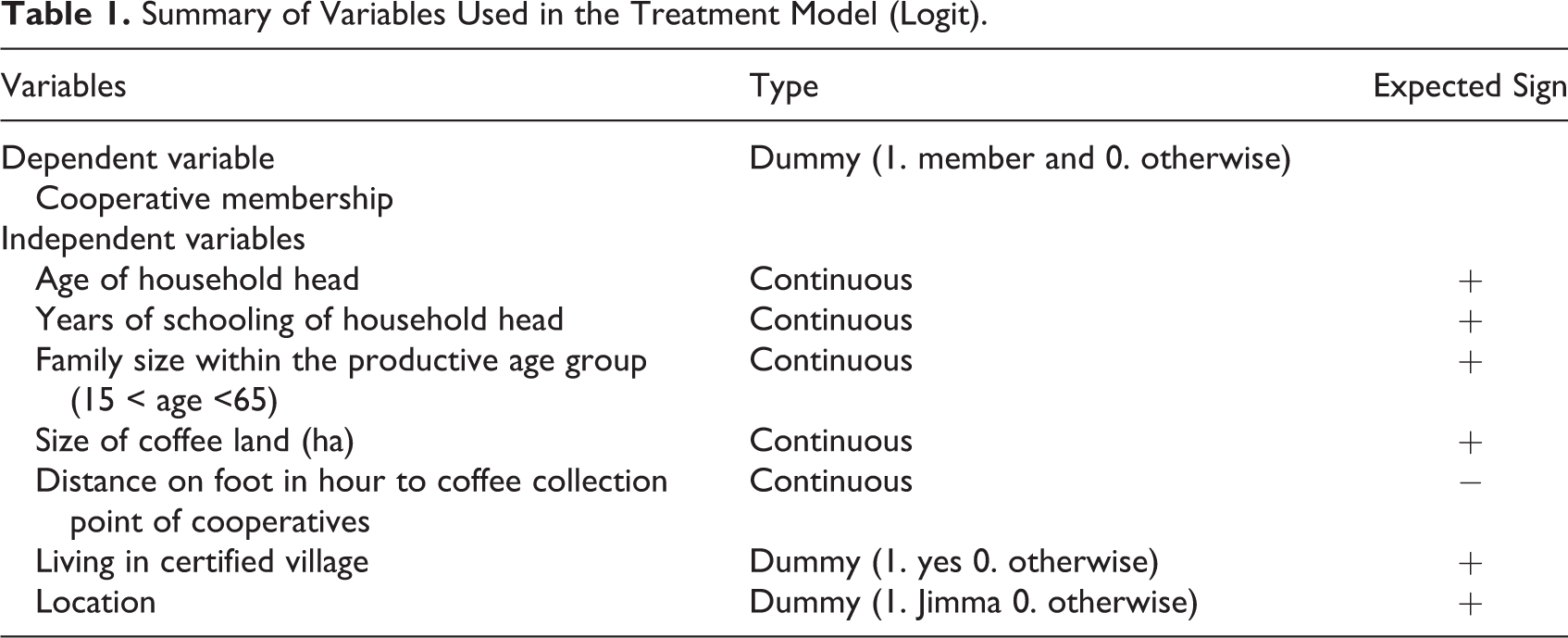
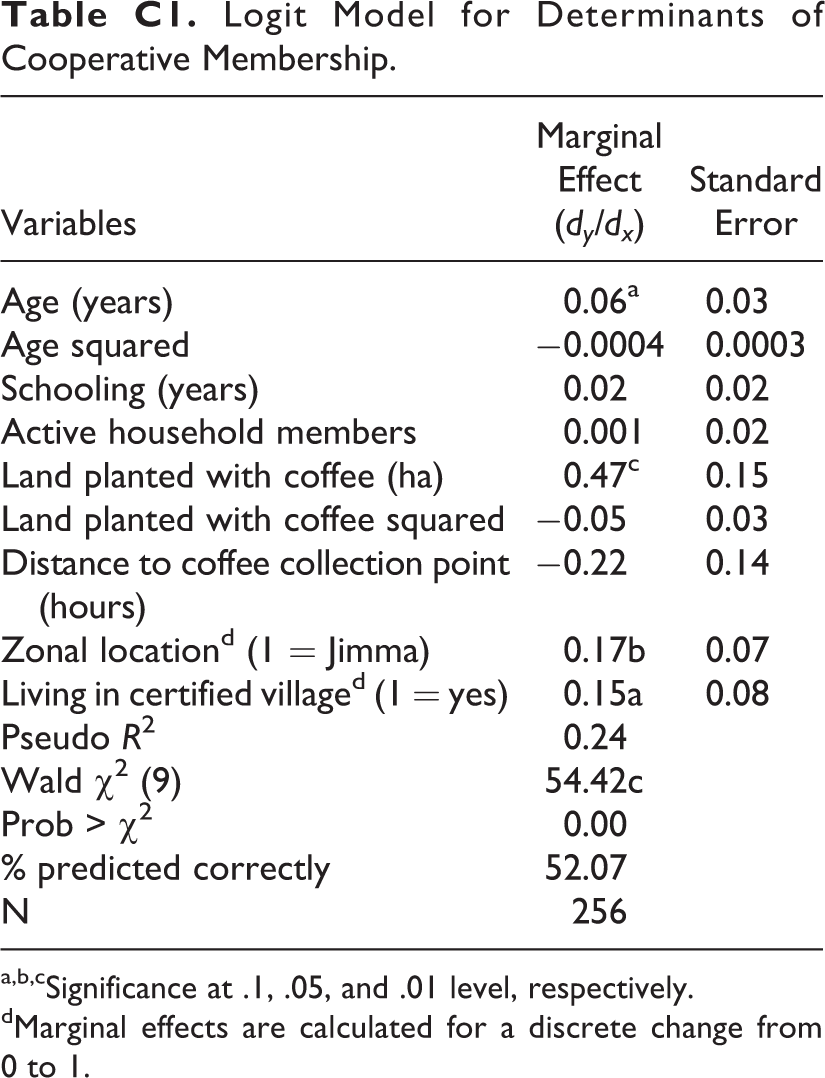
A dummy variable for cooperative membership (coded 1 if the interviewed household was member of a cooperative, 0 otherwise) was used as the dependent variable in the logit model which was estimated to generate propensity scores for each of the observations (see Results in Appendix C). The selection of the independent variables for determining cooperative membership was made based on literature. Both household and farm characteristics were included as independent variables. With regard to the household characteristics of cooperative membership, Bernard et al, 38 Bernard and Spielman, 39 and Abebaw and Haile 40 have shown a positive relation of age with cooperative membership. Bernard and Spielman 39 and Verhofstadt and Maertens 29 showed the positive association of education level and number of active household members with the likelihood of cooperative membership. In terms of farm characteristics, Bernard et al, 38 Bernard and Spielman, 39 Fischer and Qaim, 41 and Abebaw and Haile 40 found a positive relationship between the size of the landholding and cooperative membership. This effect may also be strengthened by the fact that some of the cooperatives in the study area set a minimum coffee land size (0.25 or 0.5 hectare) as a requirement for membership. Mixed results are reported in literature on the relation of market or road distance and cooperative membership. Fischer and Qaim 41 and Abebaw and Haile 40 showed a direct and significant link between cooperative membership and the distance to the nearest road while Verhofstadt and Maertens 29 found a significant negative effect of market distance on cooperative membership. In this study, we hypothesize an inverse relation between distance to the cooperative’s coffee collection point and the probability of cooperative membership, as farmers who live nearby the cooperative may potentially benefit more from the marketing services that the cooperative provides.
Finally, zonal and certified village dummy variables were introduced to capture other institutional, market, and socioeconomic heterogeneities between the sample zones and villages that might otherwise remain unobserved. Tables 1 and 2 summarize variables used to generate propensity scores and measure food security, respectively.
Summary of Variables Used in the Treatment Model (Logit).
Outcome Variables Used in the IPW Estimation.
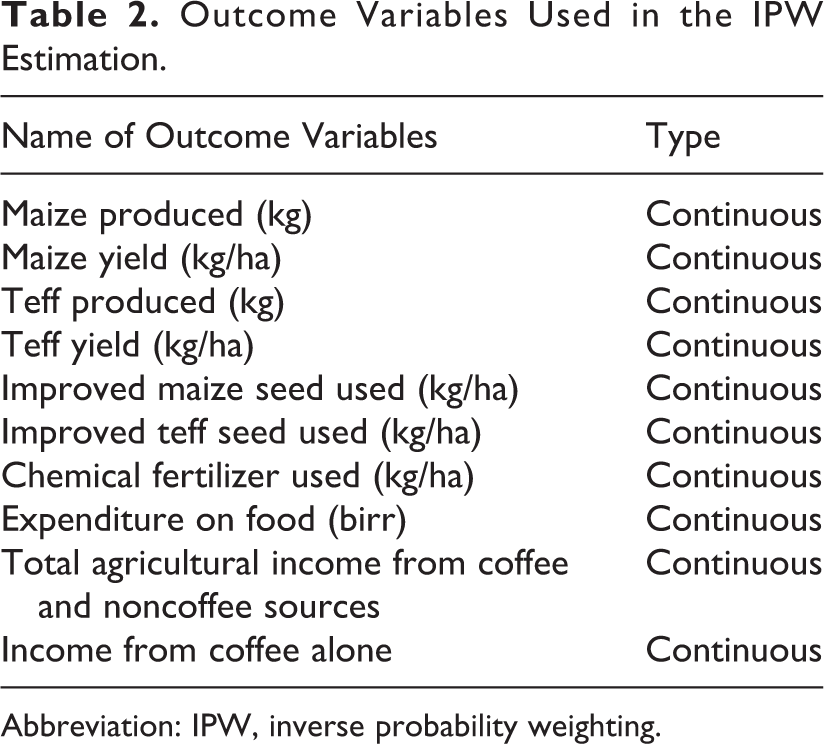
Abbreviation: IPW, inverse probability weighting.
Descriptive Results
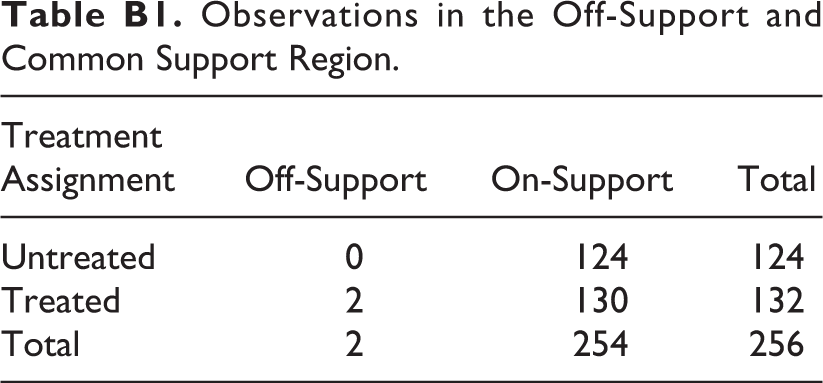
Table 3 compares household and farm characteristics between cooperative members and nonmembers before and after balancing. The results suggest that there was a significant difference between members and nonmembers in terms of age, size of coffee land, living in certified village, and level of ranking of risk of price volatility on coffee income. Before balancing, members were relatively older, lived in certified village, and had a substantially large size of coffee farm land. But, after balancing, these differences were found to be statistically insignificant (Table 3). The differences between members and nonmembers in terms of other household and farm characteristic variables (years of schooling, family size in the productive age group, distance to coffee collection point of cooperatives and location) were statistically insignificant before and after balancing. Thus, the overall result suggests the coherence of all confounding household and farm characteristic variables between members and nonmembers after balancing which in turn signifies the technical feasibility of the study to assess the effect of cooperative membership per se on the selected outcome variables of food security. Furthermore, the fact that 98.5% (130 out of 132) of observations in the treatment group are in the common support region signifies the effectiveness of our balancing (Table B1 in Appendix B).
Comparative Descriptive Household and Farm Characteristics, Before and After Balancing.
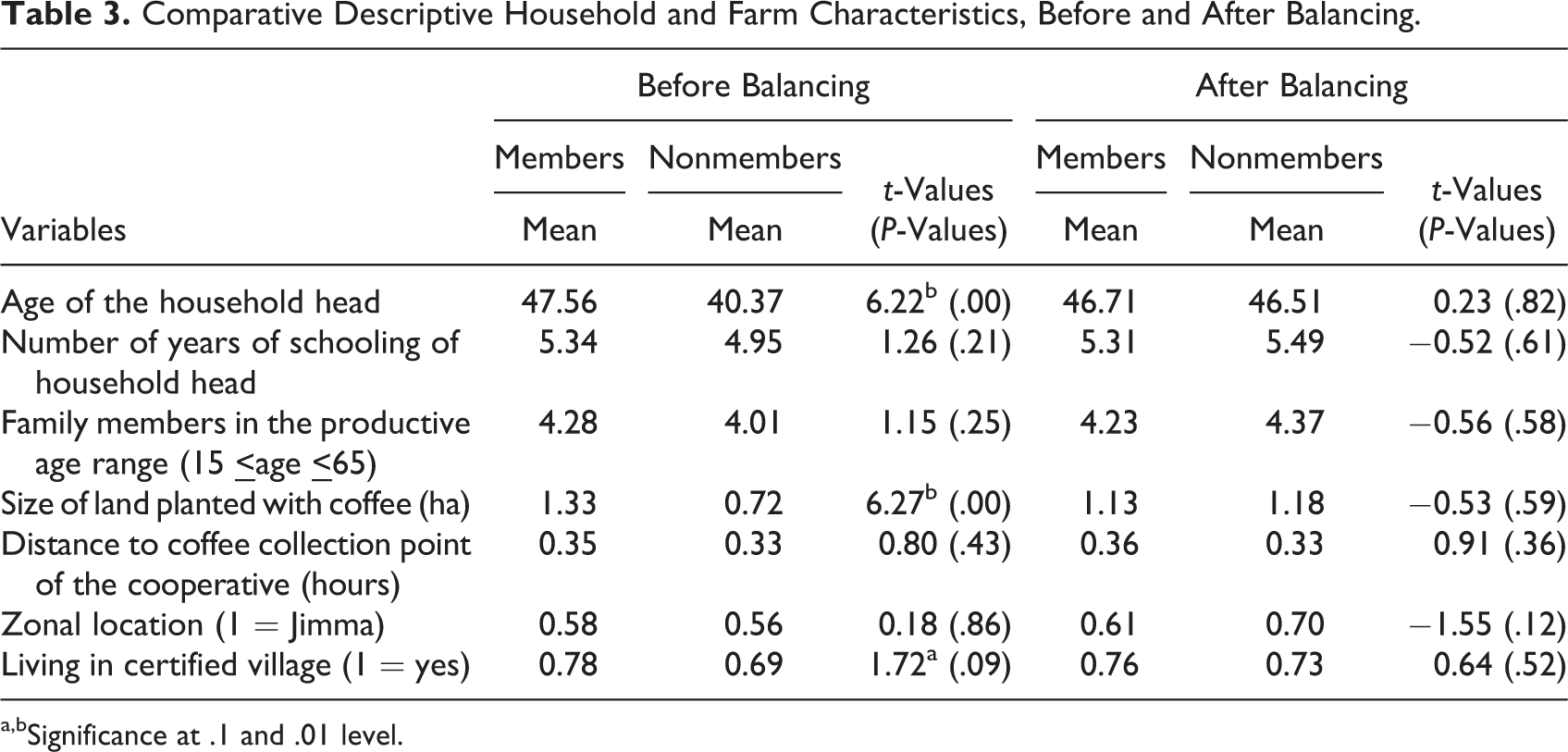
a,bSignificance at .1 and .01 level.
Econometric Results
The IPW estimation of the impact of cooperative membership on food production and expenditure of coffee farm households is presented in Table 4.
Estimated Treatment Effect of IPW Model for the Impact of Coffee Cooperative Membership on Food Production and Expenditure.
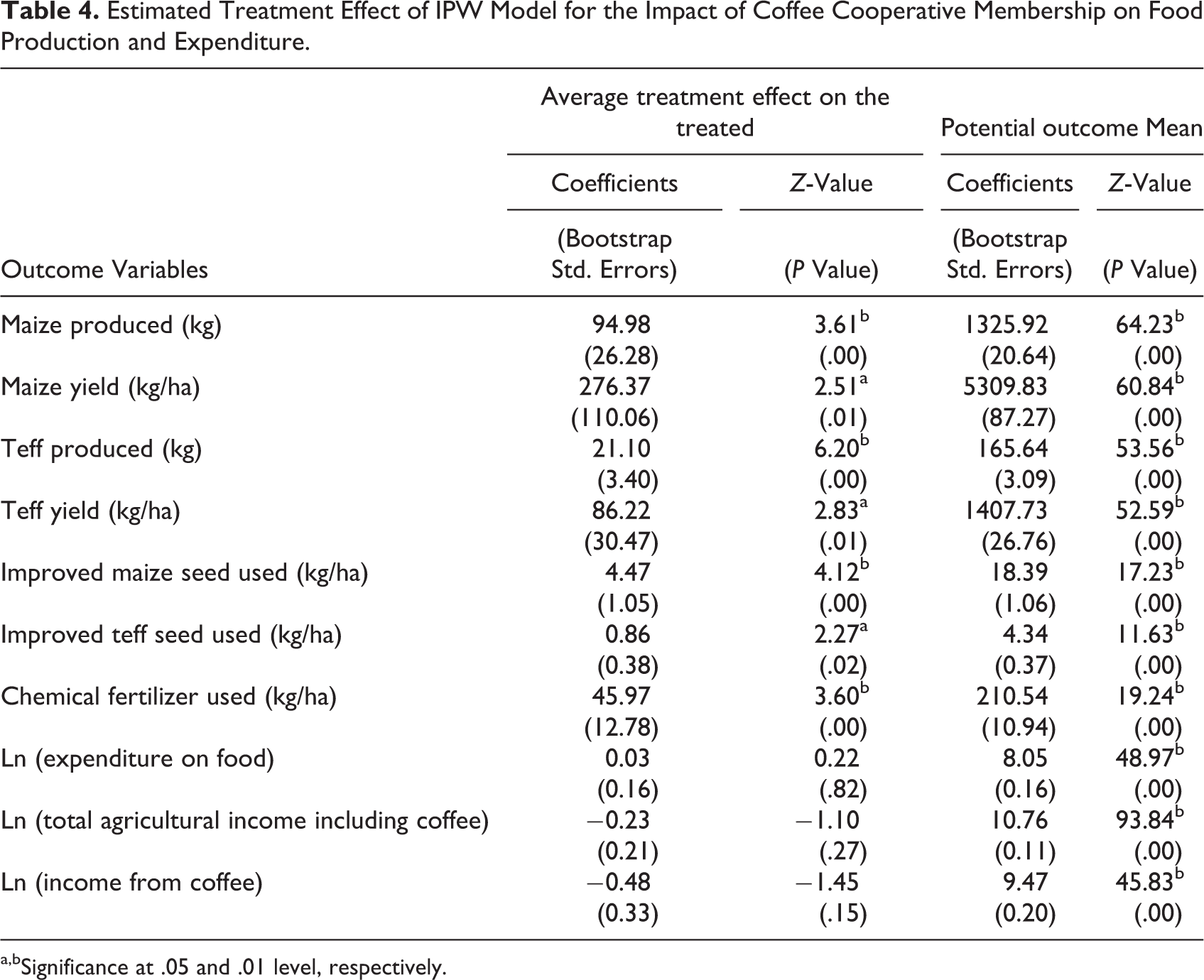
a,bSignificance at .05 and .01 level, respectively.
The results suggest that cooperative membership has a strong and positive impact on production and productivity of maize and teff as well as on the input variables. More specifically, the amount of maize produced, maize yield, and amount of teff produced and teff yield would lower by 94.98, 276.37, 21.10, and 86.22 kg, respectively, if farmers would not be members of cooperatives. Similarly, utilization of improved maize and teff seed and purchase of chemical fertilizer would be lower by 4.47, 0.86, and 45.97 kg, respectively, if farmers had abandoned cooperative membership. Nonetheless, the effect of cooperatives on food expenditure and income was not statistically significant.
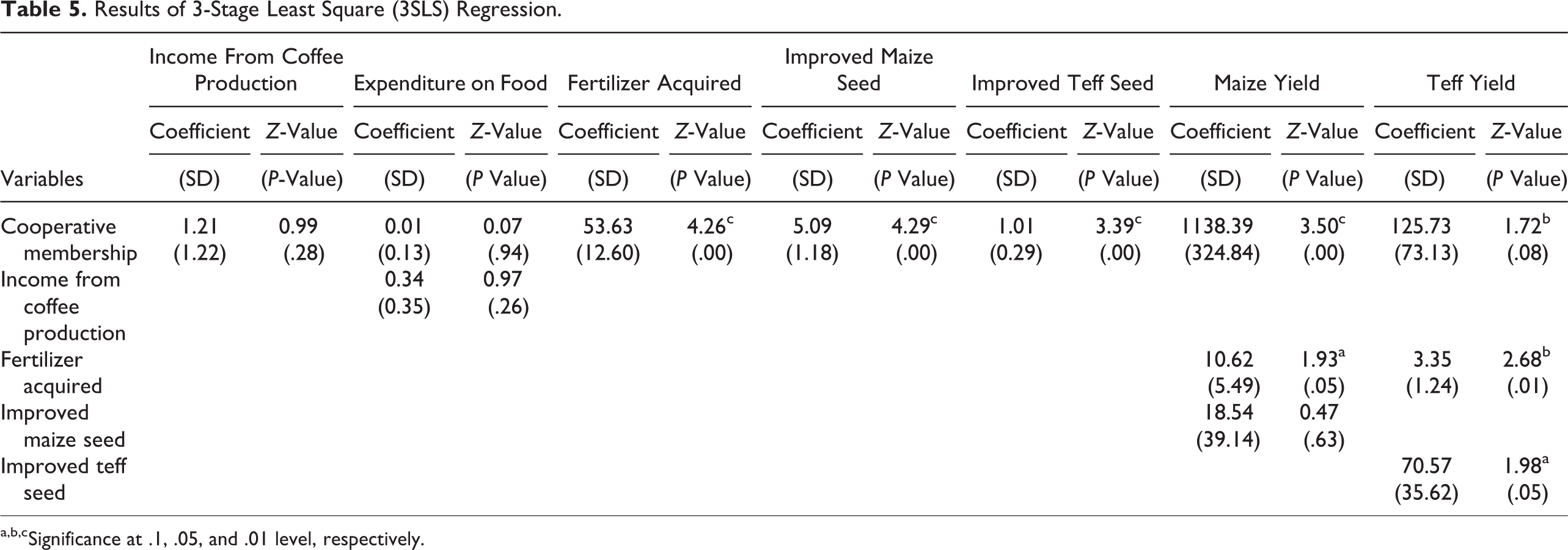
Apart from the IPW estimation, we additionally employed 3-stage least square (3SLS) regression to see the multiple simultaneous effect on income from coffee production, food expenditure, and staple food crops production (Table 5).
Results of 3-Stage Least Square (3SLS) Regression.
a,b,cSignificance at .1, .05, and .01 level, respectively.
The results of 3SLS appear to exhibit similar substantial effect of cooperative membership on input utilization and yield of staple food crops but insignificant effect on income and food expenditure. The relation between income from coffee production and food expenditure was also found to be insignificant showing that the increase in coffee income is more likely to be spent on nonfood items, a common phenomenon in most cash crop-growing areas. Significant effect of input usage (fertilizer usage and improved seed) was also observed on the yield of the selected staple food crops in the area.
Discussion
The hypothesis formulated in the introduction is partly confirmed. Cooperative membership contributed to food production, but not to increase expenditure on food. The results suggest that coffee cooperatives provide an environment suitable for food crop production by means of facilitating the dissemination and adoption of inputs, particularly improved seed and chemical fertilizer. Several studies 28,41 –44 have documented the significant contribution of cooperatives to facilitate innovation and access to technology. Because almost all coffee farm households still derive the largest portion of their food from own production using their food plots, the results confirm the relative better position of cooperative farmers in food production as opposed to the nonmembers. This may lead to a better food security position. Such a positive effect of coffee cooperatives on food production can be explained by their multipurpose nature. Other than coffee marketing, cooperatives in this study are involved in facilitating the production of food crops through the provision of improved technological inputs at a fair price. The findings are in line with the result of other studies (eg, Nugusse et al, 24 Fisher and Lewin, 25 Vuthy et al 26 ).
Coffee cooperatives were found to have no significant impact on food expenditure and income obtained by their members. Despite the substantially higher production and yield effect of cooperative membership on staple food crops, the insignificant income effect is more likely to emanate from the spillover effect of insignificant coffee income differences between members and nonmembers which in turn can be attributed to different structural and contextual problems including difficulties in accessing working capital, low managerial capacity, corruption, and unnecessary government intervention and control of cooperatives’ operation. 44 Farmers buy additional foods (eg, rice, sorghum, sugar, and cooking oil) that are not produced by their plots, but the expenditures are not significantly influenced by cooperative membership. Consumption smoothing behavior can partly explain such limited spillover effect of cash production to food consumption. Cash crop-producing farmers usually compromise expenditure on food and are more likely to invest their income on nonfood items such as housing and other large household expenditure items. The study by Kennedy and Cogill 15 confirmed the likelihood of cash crop (sugarcane) farmers to invest more on nonfood items such as housing and education when their income increases.
Cooperatives in the Jimma area were also found to have more effect on maize production and adoption of technological innovation (improved seed and fertilizer) than those located in the Kaffa area. This can be attributed to the proximity of cooperatives to different service providing organizations which support farmers and their organizations through training, donations, and others.
Our findings have 2 important implications. First, it suggests a trade-off between different cooperative functions: technology transfer/input provision and improved income. These gaps are also documented in literature. For example, Bernard et al 38 found that marketing cooperatives in Senegal and Burkina Faso performed better in providing advice and information while their effect on financial services and material investment was minimal. Fischer and Qaim 41 showed substantial impact of marketing cooperatives on the level of commercialization and income of banana farmers in Kenya while no effect on price was found. Chagwiza et al 44 found a positive and significant impact of dairy cooperatives in disseminating technological innovations in Ethiopia (Selale) despite their negligible effect on price. Our findings reveal that coffee cooperatives in Southwest Ethiopia are good at providing inputs, but weak in fetching a better income which might impose some limitations on the overall success of the cooperatives to improve the livelihoods of member farmers in the area.
Second, since the current definition of food security goes beyond food availability based on food production and includes economically accessing nutritionally appropriate and preferred food from market purchase, the significant production and input effect of cooperatives illustrate the leverage of cooperatives to contribute to physical food access only while their overall performance to achieve the true food security from the joint production and income effect still remains doubtful.
Despite the functional trade-offs they exhibit, cooperatives can be considered as relevant institutional avenues to pave the way for improved food security and rural livelihood in Ethiopia and other developing countries provided that the different structural and contextual situations are conducive for their operation.
Conclusion
Within the spectrum of the available potential interventions, cooperatives are often seen as one of the best options to support food production and generate income among smallholders. Despite the increased attention for collective action in production and marketing of high-value crops, literature gives less emphasis to investigate the relation between membership in cash crop cooperatives and food security. We used food crop production and yield, input utilization, expenditure on food, and income as indicators for food security and applied an IPW estimation to investigate the impact of coffee cooperative membership on these indicators of food production and expenditure among farm households in Southwest Ethiopia. The results suggested that cooperatives have a substantial effect in increasing the production and yield of the selected staple food crops (maize and teff) and accessing productivity enhancing inputs, specifically improved seed and chemical fertilizer. Nonetheless, no effect was found on food expenditure and income.
Other than having physical access to food through own production, economic access to nutritionally appropriate and preferred foods from market purchase is also a prerequisite to attain food security. This calls for leveraging the income effect of cooperatives so as to increase the purchasing power of member farmers, which would allow them to acquire diverse and preferred type of food from the market. We recommend financial empowerment and structural change in the organization of cooperatives to actualize a sizable income effect of cooperative membership. That is, there should be a smooth environment for cooperatives to get easy access to loans and credit with a relatively lower interest rate and longer repayment periods. This could allow cooperatives to strengthen their bargaining power in the market and pay farmers directly for their coffee. Furthermore, the income effect of cooperatives in the study area may be improved if they are designed as entrepreneurship-driven cooperatives which depart from the traditional member patronage to member-investor mode of cooperation where the latter provides incentives to sustain the cooperatives and motivates to take risk for expanding equity capital and rate of return on investment. Such transformations could also attract qualified entrepreneurial leaders and managers who can implement good governance, transparency, accountability, and members’ satisfaction which cooperatives seem to miss in the study area. Similar recommendation was also forwarded by Chambo 23 in his report on the role of agricultural cooperatives for food security and rural development. Cooperatives can also be more effective if the current policy and legislation which give more privilege to the government to control than freeing the cooperative movement are revised. There should be an explicit adjustment to reduce government rule and control in the operation of cooperatives for their long-term welfare impact on member households.
Our findings may not be universally applicable to all coffee cooperatives, as the settings in which they operate could differ. We therefore suggest more extensive cooperative food security studies in other coffee-growing areas. More studies should also be done on the consumption and diet effect of cooperative membership. We also recommend future studies to show the food security effect of cooperative membership using panel data, as food security situation in most rural areas of developing countries are time variant depending on various natural and human calamities.
Footnotes
Appendix A
Appendix B
Observations in the Off-Support and Common Support Region.
| Treatment Assignment | Off-Support | On-Support | Total |
|---|---|---|---|
| Untreated | 0 | 124 | 124 |
| Treated | 2 | 130 | 132 |
| Total | 2 | 254 | 256 |
Appendix C
Logit Model for Determinants of Cooperative Membership.
| Variables | Marginal Effect (dy/dx ) | Standard Error |
|---|---|---|
| Age (years) | 0.06a | 0.03 |
| Age squared | −0.0004 | 0.0003 |
| Schooling (years) | 0.02 | 0.02 |
| Active household members | 0.001 | 0.02 |
| Land planted with coffee (ha) | 0.47c | 0.15 |
| Land planted with coffee squared | −0.05 | 0.03 |
| Distance to coffee collection point (hours) | −0.22 | 0.14 |
| Zonal locationd (1 = Jimma) | 0.17b | 0.07 |
| Living in certified villaged (1 = yes) | 0.15a | 0.08 |
| Pseudo R 2 | 0.24 | |
| Wald χ2 (9) | 54.42c | |
| Prob > χ2 | 0.00 | |
| % predicted correctly | 52.07 | |
| N | 256 |
a,b,cSignificance at .1, .05, and .01 level, respectively.
dMarginal effects are calculated for a discrete change from 0 to 1.
Acknowledgment
We would like to thank the consulted experts of cooperative agencies and bureau of agriculture, cooperatives’ management, farmers, and the enumerators in Jima and Kaffa zone of Southwest Ethiopia for helping us to get all the required information. The authors are grateful for The Netherlands Organization for International Cooperation in Higher Education (NUFFIC) for financing this research project.
Declaration of Conflicting Interests
The author(s) declared no potential conflict of interest with respect to the research, authorship, and/or publication of this article.
Funding
The author(s) disclosed receipt of the following financial support for the research, authorship, and/or publication of this article: This research was funded by The Netherlands Organization for International Cooperation in Higher Education (NUFFIC).