




Abstract
Background:
Livestock can promote resilience in low-income communities through a number of pathways. Livestock development programs seek to amplify these benefits but often fail to consider the costs to intended beneficiaries or the effect of prevailing gender norms.
Objective:
To explore perceptions of livestock ownership among female smallholder livestock keepers in Nyanza Region, Kenya, and unpack how the distribution of livestock benefits and investments varies by gender within households.
Methods:
We used multiple ethnographic techniques, including Photovoice, a photo-elicitation interview method, focus group discussions, and pile sorts, with female smallholder livestock owners (n = 18) participating in an ongoing cohort study. Transcripts were coded using a combination of a priori constructs and grounded theory.
Results:
We found that livestock benefited households by providing financial security, food security, social benefits, and human time and labor savings. However, these benefits largely promoted long-term household resilience rather than immediate gains. Livestock ownership also had major costs to household time and labor, which were overwhelmingly borne by women and children. Despite this investment, women had limited livestock ownership rights, decision-making power, control over income, or access to meat.
Conclusions:
Our findings suggest that livestock ownership requires significant investments of household time and labor, which disproportionately burden women. Prevailing gender inequalities may therefore constrain the net benefit of livestock ownership for many women and their households in some contexts. Livestock development programs must assess both program benefits and costs at multiple levels to ensure that women’s participation in livestock production leads to improved individual and household outcomes.
Introduction
Livestock production is an important livelihood strategy for many poor households in low-income countries. An estimated 70% of the world’s 1.4 billion “extreme poor” raise livestock in some capacity, 1 including nearly 320 million people in sub-Saharan Africa. 2 Livestock (note 1) can provide income, high-quality animal source foods, draft power, numerous sociocultural benefits, and serve as a repository for stored wealth, among other functions. 2,3 Livestock may also play a key role in promoting household resilience and the ability “to mitigate, adapt to, and recover from shocks and stresses in a manner that reduces chronic vulnerability and facilitates inclusive growth.” 4,5
Because of the diverse utility of livestock and their potential to mitigate household shocks, livestock has been identified as providing a potential “pathway out of poverty.” 6 Rural development programs therefore often include livestock interventions as a component of their overall strategy to improve household welfare and resilience. Such programs may seek to enhance livestock productivity (eg, through improved management techniques), improve access to livestock-related markets, or increase livestock ownership by the very poor (eg, through livestock asset transfers or subsidies).
Although approaches and targeted outcomes may vary, these livestock-based interventions generally seek to improve household welfare through 3 pathways: (1) increased household income generation from the sale of animals and animal products; (2) improved household food security through animal source food production, crop production, and enhanced food purchasing power; and (3) empowerment of women by giving them knowledge and control over productive assets and a sense of belonging (Figure 1). Indeed, there is some evidence that livestock programs can result in increased income 7 -13 and increased consumption of animal source foods. 8,9,14 -21 However, one or both of these benefits were not realized in other programs, 10,12,14,22 -25 and scientifically rigorous evidence for improvement in household welfare via women’s empowerment is lacking.
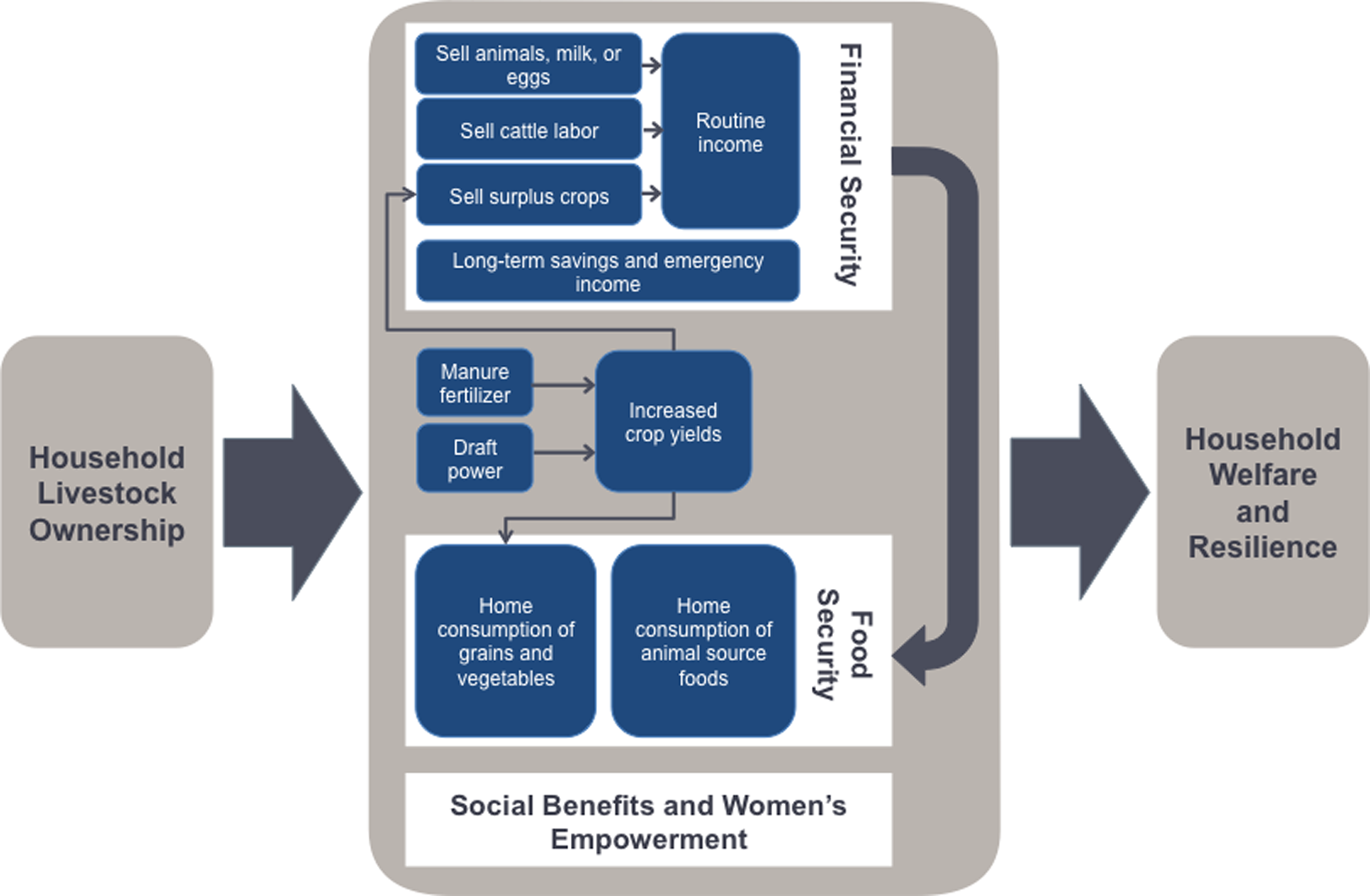
Commonly held understanding of the pathways from household livestock ownership to improved household welfare and resilience.
Two key considerations are largely absent in the current discourse about the impact of livestock development programs on the rural poor, particularly on women. First, most interventions largely ignore the significant investments that livestock ownership requires of households, including the investment of time, energy, money, and other household resources (eg, land, water). The time and energy costs are of particular concern because there is ample evidence that livestock care is commonly the responsibility of women. 26 -29 As such, livestock interventions may inadvertently add to women’s already heavy workload. 11,28,30,31 Second, few livestock development programs consider how livestock benefits are distributed among individuals within households. Numerous studies have found that sociocultural norms in many settings may limit women’s participation in livestock ownership, 27,32,33 decision-making, 17,32,34,35 control of income generated from livestock production, 35 -37 and consumption of animal source foods. 22,38 Together, these findings suggest that men may disproportionately benefit from livestock development, while women are disproportionately burdened by investing time and energy in their care. It is therefore critical to understand how people use, invest in, and benefit from their livestock—and how this varies by gender—in order to tailor appropriate livestock interventions that meet the needs and values of intended beneficiaries.
Therefore, our first objective was to explore the benefits and costs of livestock ownership as perceived by female smallholder livestock keepers in Nyanza Region, Kenya. Our second objective was to identify how the distribution of livestock benefits and investments varies by gender within households. Our findings suggest that livestock development programs must consider existing gender norms and disparities much more broadly and integrate gender-sensitive approaches into both project design and evaluation to ensure their impact on both women and their households.
Methods
Study Area
This research was conducted in Kisumu and Migori counties of Nyanza Region, Kenya, from September 2013 to May 2016. The areas are predominantly inhabited by Dholuo-speaking members of the Luo ethnic group who mostly practice Christianity. 39 Family structures are largely patrilineal, patrilocal, and sometimes polygamous. 40 Rural families typically live together in a traditional homestead (dala), consisting of a man, his wife or wives, their children, and the wives and children of his married sons. 40 In some cases, the homestead has a traditional granary (dero) and central cattle pen (kul), which serve both functional purposes and as a visible symbol of wealth or class.
Traditional labor roles in Luo communities were assigned based on gender, where men participated in mostly outdoor activities (eg, grazing animals, hunting, building houses) and women were responsible for all activities inside the home (eg, caring for children, cooking, fetching firewood and water, food provisioning). Children contributed to the household economy—boys working with their fathers and girls performing domestic chores with their mothers. In the precolonial Luo home, women were expected to oversee the day-to-day workings of the home with relative autonomy. 41 Commercial farming and the transformation to a cash economy, however, have eroded women’s traditional independence and authority within the home, making them more financially dependent on their husbands. 41 Women’s experiences today are often shaped by gender inequalities in terms of income-generating potential, asset and resource ownership, decision-making power, control over earnings, and permissive attitudes toward domestic violence. 42 While women are sometimes engaged in off-farm economic activities (eg, casual work in gardens or as domestic laborers, selling items at market on a small scale), men are expected to provide for the majority of the household’s cash needs. 41
The largest urban center in Nyanza region is Kisumu, the third largest city in Kenya, 39 providing a large local market for agricultural and livestock products. Traditionally, the Luo have practiced a mixed economy, and both crop farming and livestock keeping are important livelihood activities. Indeed, the primary occupations in the region remain crop dominated, mixed, and pastoral agricultural activities, and people are mostly self-employed. 42 While 65% of Kenyan households own livestock (43% urban, 80% rural), livestock ownership is especially common in Nyanza, where 75% of households own animals. 43 Livestock are often among a household’s most valuable assets (see Supplementary Material 1 for the approximate market value of various livestock types).
Nyanza is one of the most food-insecure regions in Kenya. 42 Kisumu and Migori counties have the third and fourth highest prevalence of HIV in the country (19.3% and 14.7%, respectively, compared to 6.0% nationally 44 ), and Nyanza region has the highest under-5 mortality rate in the country. 42
Study Context
Data were collected within the context of the Pith Moromo (Luo for “Enough Feeding”) study, an observational cohort study examining the health consequences of food insecurity during pregnancy and early childhood (Clinicaltrails.gov ID: NCT02974972). Briefly, pregnant women (N = 371) were purposively recruited at antenatal clinics by HIV and food insecurity status using the Individual Food Insecurity Access Scale (IFIAS) 45 and followed from ≤30 weeks gestation to 9 months postpartum. Food insecurity was common in the cohort, with 60% of women reporting moderate or severe household hunger (per the Household Hunger Scale 46 ) and a mean IFIAS of 12.7 (standard deviation 7.32). Data were collected in 7 health facility catchment sites spanning urban (Kisumu), peri-urban (Migori, Rongo, and Nyahera), and rural areas (Ongo, Macalder, and Nyamaraga) in Nyanza.
Participant Enrollment
The importance of livestock in household food and economic security emerged in the formative research stage of the Pith Moromo study. To expand on these livestock-related themes, we sought to further unpack the gendered nature of livestock ownership, decision-making, caretaking, and the distribution of livestock benefits within households in a targeted substudy. The 4 most rural catchment areas in the Pith Moromo study, Nyahera, Ongo, Nyamaraga, and Macalder, were purposively selected because of greater livestock ownership. These areas are culturally and ethnically homogeneous and do not have any notable differences in their social, political, and economic ways of life. Four or five women from the cohort residing in livestock-owning households were randomly recruited from each catchment area. Of the 18 total women recruited, 1 woman completed only the first of 3 visits because her family moved beyond the study area. Initial data analysis occurred concurrent with data collection, and the final sample size was determined upon saturation, that is, when no new themes were emerging.
Data Collection
Two primary ethnographic techniques were facilitated by an anthropologist (P.M.): Photovoice and pile sorts. Photovoice is a participant-led research methodology in which participants are asked to take photographs on a theme and reflect on the images, first in individual interviews and subsequently in focus group discussions. 47 At the first Photovoice visit, women were given digital cameras and trained in their use. They were asked to capture images to answer the following question: “What do the different animals that you own mean for your life and that of your family?” An in-depth interview lasting 20 to 30 minutes was conducted with each participant at the time the camera was distributed, which followed an interview guide (Supplementary Material 2). Approximately 3 to 4 days later, a follow-up interview was conducted, during which photographs were shown on a computer screen and the participant was asked to describe what was happening in the image and why they captured it. Finally, a focus group discussion was held with participants in each catchment area. For this, each participant selected 3 to 4 photographs they had taken to discuss with the group. While individual interviews provided rich insight into individual experiences free of outside influence, the focus group discussions elicited lively group conversations that provided participants the opportunity to compare, contrast, and expand on their own experience.
Pile sorting is another participant-driven method that seeks to explore themes within a given cultural domain to better understand participants’ values, perceptions, and beliefs and how they organize that information. 48 With this method, researchers ask individuals or groups to sort cards, objects, or images according to how they understand the items to be related to one another and then explain why they were organized in that way. 48
Structured pile sort activities were conducted with participants individually (n = 17) at the end of the second Photovoice visit. Participants were provided with 8 cards, each with a unique image: a man, a woman, a goat, a sheep, a cow, a chicken, a pig, and a rabbit (Supplementary Material 3). The participant was asked to perform 5 different sorts (Supplementary Material 4). The first 2 sorts were ordered ranking pile sorts using the 6 animal cards only, where participants were asked to rank species from “most” to “least.” The last 3 sorts were matching exercises, in which participants were asked to place each animal under the man, the woman, or both, according to how they understood the question.
All interviews were conducted in Luo, audio-recorded, and transcribed and translated into English for analysis.
Data Analysis
All interviews and focus group discussions were coded using Dedoose (version 7.1.3; SocioCultural Research Consultants LLC, Los Angeles, California, www.dedoose.com). Codes were developed using a combination of a priori constructs and grounded theory, an inductive research methodology. 49 First, 3 authors (A.M., S.E.D., and S.L.Y.) identified themes in a subset of the narratives and developed an initial coding structure. A.M. then applied these codes to all transcripts, adding new codes as new themes emerged. S.E.D. then reviewed the coding and further modified the coding structure. Discrepancies were resolved through discussion among the authors until a final coding structure was agreed upon (Supplementary Material 5) and applied to all transcripts. The unit of analysis was a mention, and thematic salience was determined by the number of mentions of each theme.
Pile sorting data were analyzed using Excel (version 14.6.8; Microsoft Corporation, Redmond, Washington). For the rank-ordering activities, each species was scored “1” (for “most”) through “6” (for “least”) for each participant, and the mean was taken across species for each question. For the matching pile sort activities, each species/gender combination was scored as either “1” (if women were involved in the ownership, care, or decision-making for an animal) or “0” (eg, if they were not), and the proportion of participants scoring each species/gender combination as “1” was reported.
Ethical Standards Statement
All phases of this study were approved by the institutional review board at Cornell University and the scientific ethical review board unit at Kenya Medical Research Institute. Written consent was obtained from all participants prior to participation.
Results
Participants were 18 to 35 years old (mean 26.4), with 1 to 8 children (mean 3.8). All but 2 of the women were married, 5 in polygamous households, and all were breastfeeding a child 6 to 12 months old at the time of enrollment into this substudy (Table 1). Chickens were the most commonly owned livestock type (owned by 17 of 18 households, with a mean of 8.1 birds per poultry-owning household), followed by cattle (16/18 households, mean = 4.1 per household), goats (8/18 households, mean = 2.6 per household), sheep (7/18 households, mean = 3.4 per household), donkeys (2/18 households, mean = 2.0 per household), and ducks (2/18 households, mean = 2.5 per household). No participants owned pigs, rabbits, or other poultry.
Characteristics of Participants in Qualitative Research on Livestock Ownership in Nyanza Region, Kenya, by Catchment Area.a
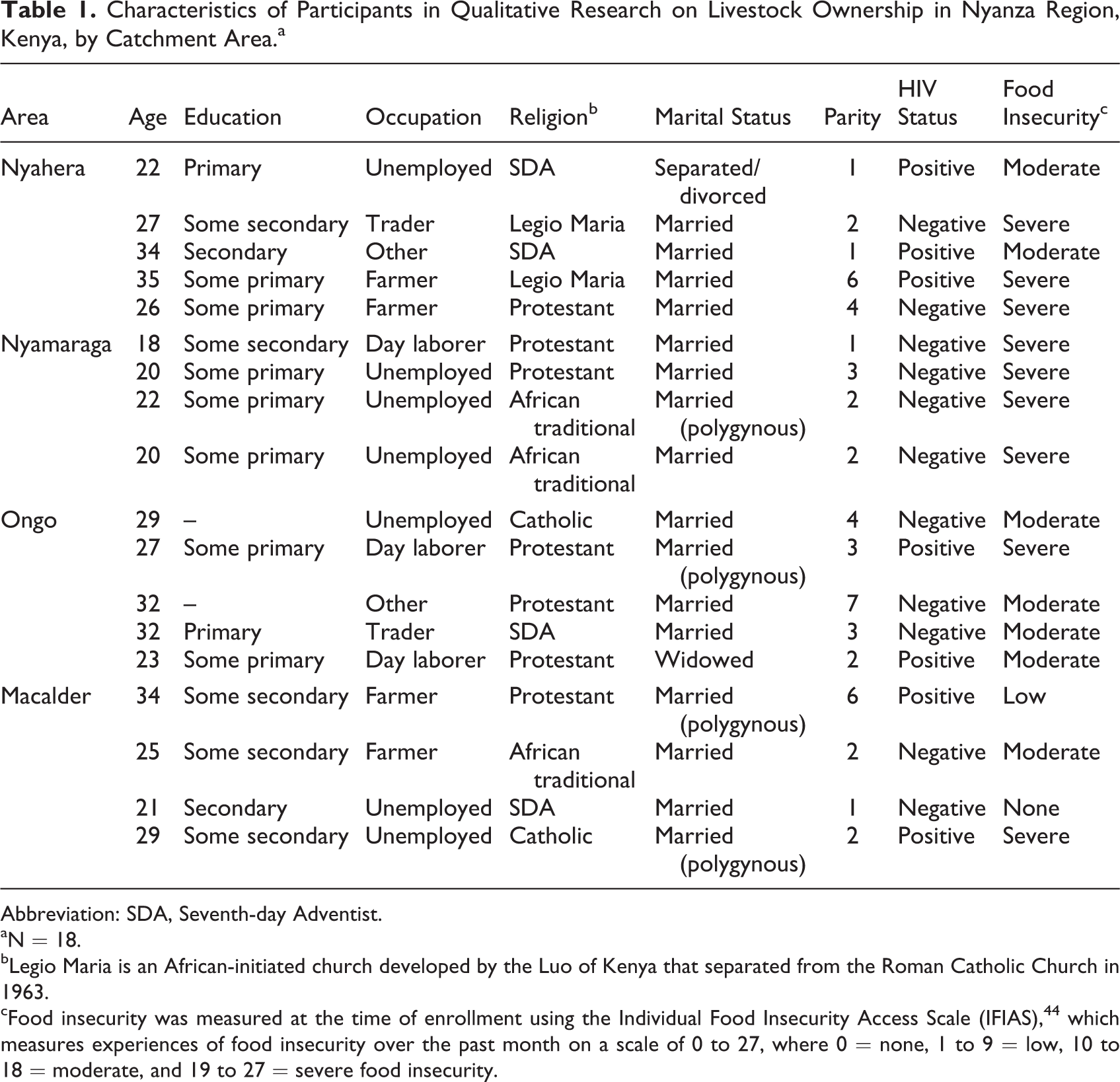
Abbreviation: SDA, Seventh-day Adventist.
aN = 18.
bLegio Maria is an African-initiated church developed by the Luo of Kenya that separated from the Roman Catholic Church in 1963.
cFood insecurity was measured at the time of enrollment using the Individual Food Insecurity Access Scale (IFIAS), 44 which measures experiences of food insecurity over the past month on a scale of 0 to 27, where 0 = none, 1 to 9 = low, 10 to 18 = moderate, and 19 to 27 = severe food insecurity.
Perceived Benefits of Livestock Ownership to Household Welfare
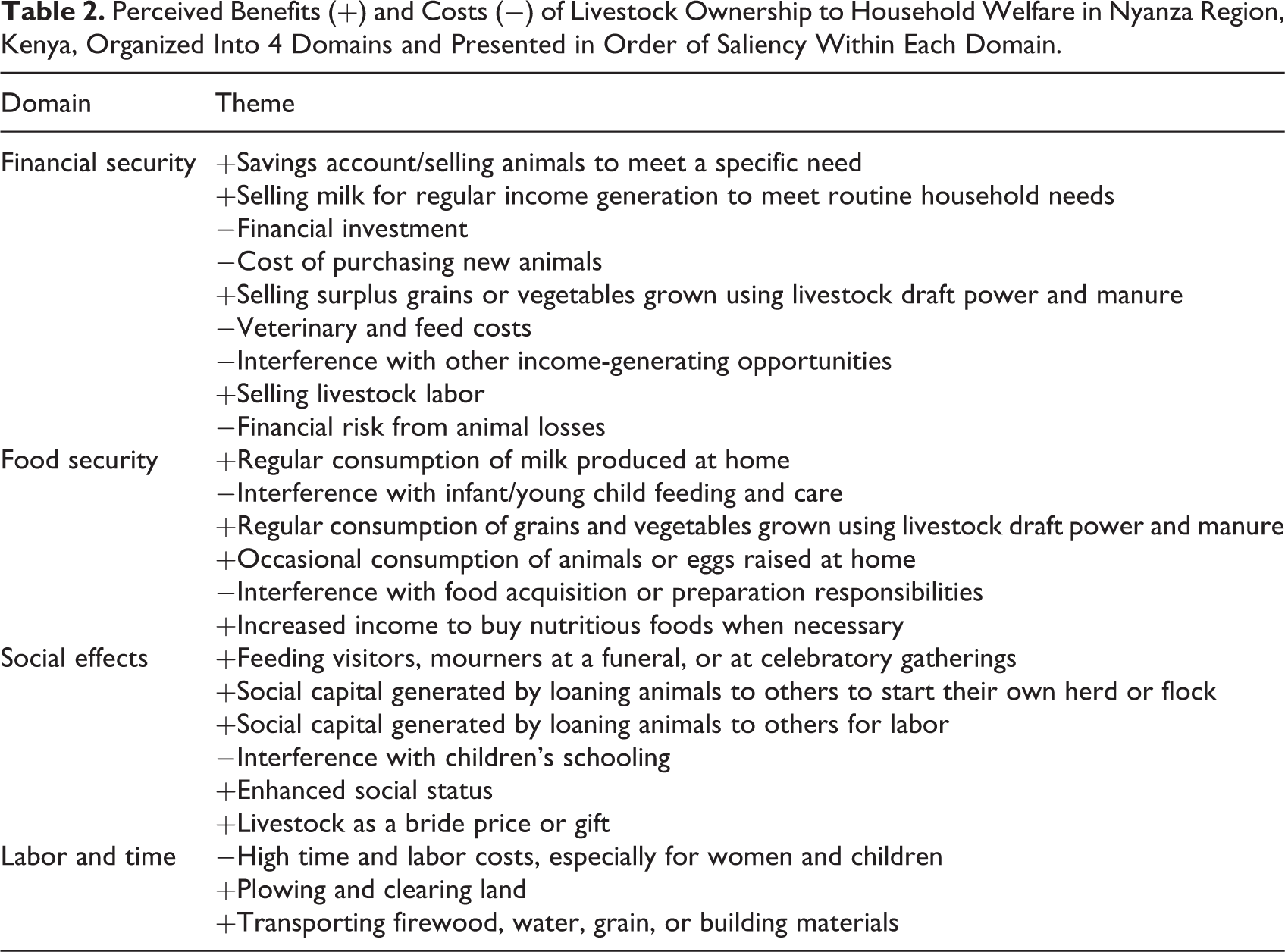
Participants described livestock ownership as benefiting household welfare through 3 major pathways: financial security, food security, and social benefits. A fourth, less prominent theme was the use of livestock for labor and transportation, which benefited households by decreasing time and human labor expenditures on certain activities (Table 2).
Perceived Benefits (+) and Costs (−) of Livestock Ownership to Household Welfare in Nyanza Region, Kenya, Organized Into 4 Domains and Presented in Order of Saliency Within Each Domain.
Financial security
Financial security was by far the most salient theme that emerged for why households kept livestock. Income was generated from livestock in 3 ways: (1) selling animals, (2) selling renewable animal products (milk or eggs), and (3) using animals for plowing or other labor to generate income. No households reported income from fiber, manure, or terminal animal products (meat or skins). With the exception of milk sales, which provided daily financial benefits, income was not generated from livestock on a routine basis. Only 1 woman described selling live chickens as a business to generate a regular source of income. More commonly, animals were sold occasionally to meet a specific household need or address a specific problem. The most frequently cited reasons for selling animals were to pay school or medical fees, to buy children’s school uniforms or supplies, or to buy staple foods and small household necessities, such as soap. If there is any problem in the house, like if there are some things the children need in school, or if I need some money, I sell chickens. At times when a child becomes sick at night […] I get some hens and sell them. […] When I have no food and I don’t want the children to go hungry, I get some chickens to sell and buy flour and food for my children. (32-year-old trader) I raise the goats so that in case I have an emergency like a funeral or medical bill and I need a lot of money, I can take one goat and sell it to pay for the emergency. (22-year-old farmer) I don’t have stress because I know that if I have an emergency, I can sell one of them. (20-year-old farmer) When you have no livestock like chicken then that is a loss, because if there is a problem, you will not have anything to defend you from those problems. (32-year-old trader) When I bought [this goat] I never had any livestock. I hope that as it gives birth, the kids will be able to increase and form a herd and they can—in the long run—be sold to buy a cow. After buying a cow, I can now come out of poverty. (32-year-old trader)
Food security
Livestock provided food security in 3 distinct ways: (1) the provision of meat, milk, and eggs for home consumption; (2) increased crop yields through the provision of draft power and manure fertilizer (as previously discussed); and (3) provision of income for purchasing food (as previously discussed).
Women said they occasionally slaughtered a chicken if they did not have any vegetables or fish at home to eat with ugali, the Kenyan staple food made of maize flour, and lacked either the money or time to buy it. Other reasons for eating animals were to add variety to the diet or satisfy a craving for meat, often done at the request of a husband or child. However, by far the most common reason for slaughtering a chicken was to feed a visitor, especially if he or she arrives unexpectedly (see “Social Benefits” subsequently).
Most women agreed that goats, sheep, and cattle were only slaughtered at special occasions, reflecting the value of these animals to the household, and some women said there are no circumstances when it is appropriate to slaughter a cow. Even chickens were not routinely slaughtered by some women, especially in poor households. Where I live, killing chicken is not easy for some. You only slaughter chicken during Christmas [laughing]. That is when you slaughter chicken. (19-year-old farmer) It is advisable that when chickens lay eggs you don’t interfere with the eggs by taking them away every day for food. You need to leave them, because eventually they will hatch into more chickens. (29-year-old, unemployed) We were told in the hospital that milk is a balanced diet […] So when you lack any nutrient, you drink the milk and you can get the nutrients. (34-year-old farmer)
Social benefits
Participants highlighted a number of important social benefits of livestock, where animals are used as tools for reinforcing relationships or observing important cultural practices. By far the most commonly cited reasons for slaughtering animals were for social purposes, including feeding visitors (as one woman said, “Whenever you have a visitor, you have to prepare chicken for them.”), feeding mourners at a funeral, or celebrating holidays, weddings, or other festive occasions.
A few women mentioned the role of sheep and cattle as bride prices. Livestock were also often gifted or loaned by friends and family, reinforcing social relationships. Many participants mentioned that they first began rearing livestock when they received an animal from a friend or family member as a loan. One woman, for example, was loaned 1 hen, and after it hatched 4 chicks, she kept 2 and returned the hen with the other 2 chicks to the original owner. Another woman explained that after caring for a friend’s cow for a number of years, she was allowed to keep one of the cow’s calves, which allowed her to begin her own herd: You may find that my friend has a cow. Then she tells me, “I have a cow that I would like to lend to you.” […] So I see most of the livestock keeping starts with someone lending you their livestock. (32-year-old businesswoman) If you don’t have your own cattle then it becomes very difficult to plow your farm. You keep begging people who own them to help you, but they just take you round. It is humiliating. (20-year-old, unemployed) You see, in this community, if you don’t have these cattle then people don’t regard you in high esteem. (29-year-old, unemployed)
Labor and time
In addition to providing draft power, cattle and donkeys could perform other physically demanding tasks, saving significant energy and time expenditures by household members. For example, collecting firewood, fetching water, and transporting grain to and from the mill are labor-intensive activities that are traditionally the responsibility of women. In households with cattle or donkeys, the labor can be performed by animals, often under the direction of men or boys. You may take your maize to the mill, and [the donkey] carries it. You mill your maize and then it carries back for you. Even water—it carries water too. The donkey does a lot of work. (22-year-old, unemployed)
Perceived Household Costs of Livestock
Investment of household labor
Participants perceived the investment of time to be the costliest aspect of livestock ownership, even more so than the physical demands, which were often quite energy intensive. Cattle were perceived to be by far the most time- and labor-intensive livestock; 12 of 16 cattle-owning women ranked them as the most time-consuming livestock (Figure 2). The most tedious job is moving around with cattle looking for grass […] especially during the dry season. […] Where I stay we [also] usually have water shortage problems, so I have to move several miles to take them to drink at the nearest watering point. Sometimes I have to fetch for them water and bring it home for them to drink. (20-year-old, unemployed)
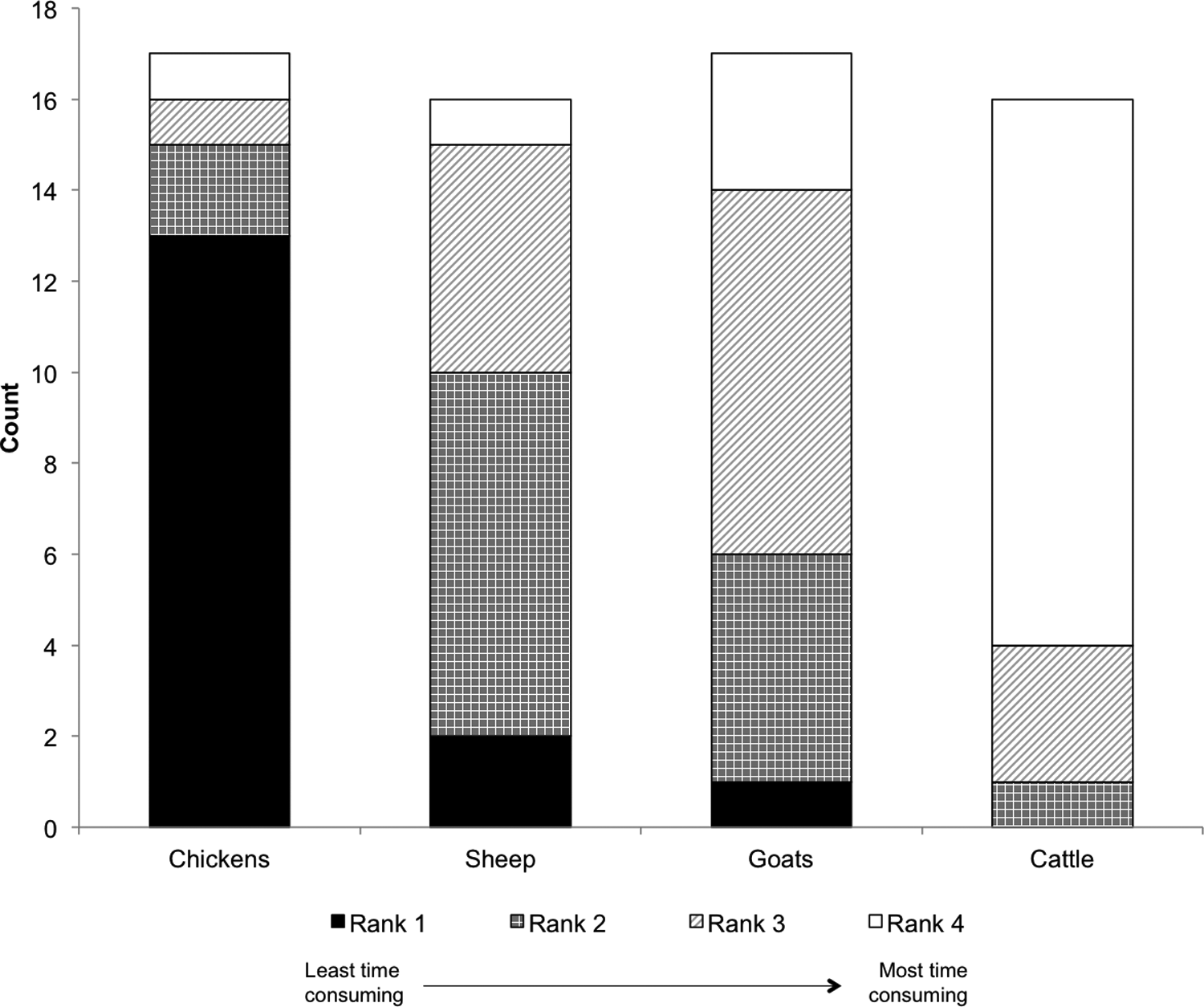
Pile sort, order ranking activity—Perceived women’s time burden, by species. Most participants ranked chickens as the least time consuming and cattle as the most time consuming livestock species, with goats and sheep in between (n = 17). Not all participants ranked all species; ranking of pigs and rabbits not shown because few participants ranked them.
Sheep and goats similarly required significant effort; women generally ranked goats and sheep as the second or third most time-consuming species for women (Figure 2). Most participants used the tethering method, where the animal is tied by the horns, neck, or foot to a stake or tree to graze, which allowed women to do other household tasks while the animals fed. However, women said they needed to be frequently monitored to ensure the animals are not injured while tethered (eg, attacked by dogs, tangled in the tether), and water had to be fetched and carried to them.
Chickens were perceived to require little time or effort to care for, demanding only a small bowl of water and, in some cases, occasional maize or supplementary feed; 15 of 17 chicken-owning participants rated them as the least or second-to-least time-consuming livestock (Figure 2). For chickens, when I wake up in the morning, I pour maize on the veranda, they eat and go away to feed by themselves […] Chickens are easy to take care of. (34-year-old farmer)
Investment of other household resources
After investment of household labor, the most commonly mentioned cost of livestock was the cost of purchasing animals. Most participants used income from a job or other business to purchase animals. Some participants mentioned that the limited capital available to women constrained their ability to raise livestock independent of their husbands. When asked why women so rarely own larger livestock, one woman replied: It is one’s income that enables someone to own a cow or a goat or a sheep. […] Most women do not earn much […] The men can work hard and look for different means of getting money, which is not possible for women. (21-year-old housewife) Cows are like human beings […] if they are sick, you have to look for a veterinarian as soon as possible, just like you would if your child was sick. There are times when you get really stressed out, especially when they lack appetite and refuse to eat. (32-year-old businesswoman)
Modifying Effects of Gender Inequality on Livestock Benefits
The results presented earlier detail the perceived benefits and costs of livestock ownership at the household level. Within the household, however, gender inequality modified the perceived impact of these benefits and costs in 4 key ways: unequal division of livestock labor, gendered livestock ownership rights and decision-making power, gendered control over livestock income, and inequitable allocation of animal source foods within the home.
Unequal division of livestock labor
Livestock caretaking tasks were distinctly gendered (Table 3). All participants agreed that most cattle responsibilities were traditionally “men’s work,” while milking was almost always “women’s work.” Notably, despite this accepted division of livestock labor, many women said that in practice, they were responsible for the traditionally “male” duties of caring for cattle, including the time-intensive activities of grazing and herding them to water. Women also played a significant role in fetching water, collecting grass, and cleaning shelters for cattle. This was especially common among widows who had become the heads of household or lived in polygamous households. However, even women with partners said that their husbands had work responsibilities outside the home, leaving much of the cattle work to them. This is consistent with pile sort results, where cattle were consistently ranked as the most time-consuming livestock for women (Figure 2) and women were said to be responsible for the majority of cattle caretaking (Figure 3). […] if he is away I can’t just sit back and let [the cattle] go without food. I have to step in and ensure they are fed or taken to graze in the field. I also have to ensure they drink water and clean their pen […] If he is around he will do it, if he is not in, I’m the one who will do it. (18-year-old day laborer)
Traditional Livestock Caretaking Responsibilities by Gender and Age in Nyanza Region, Kenya, as Described During In-Depth Interviews.a
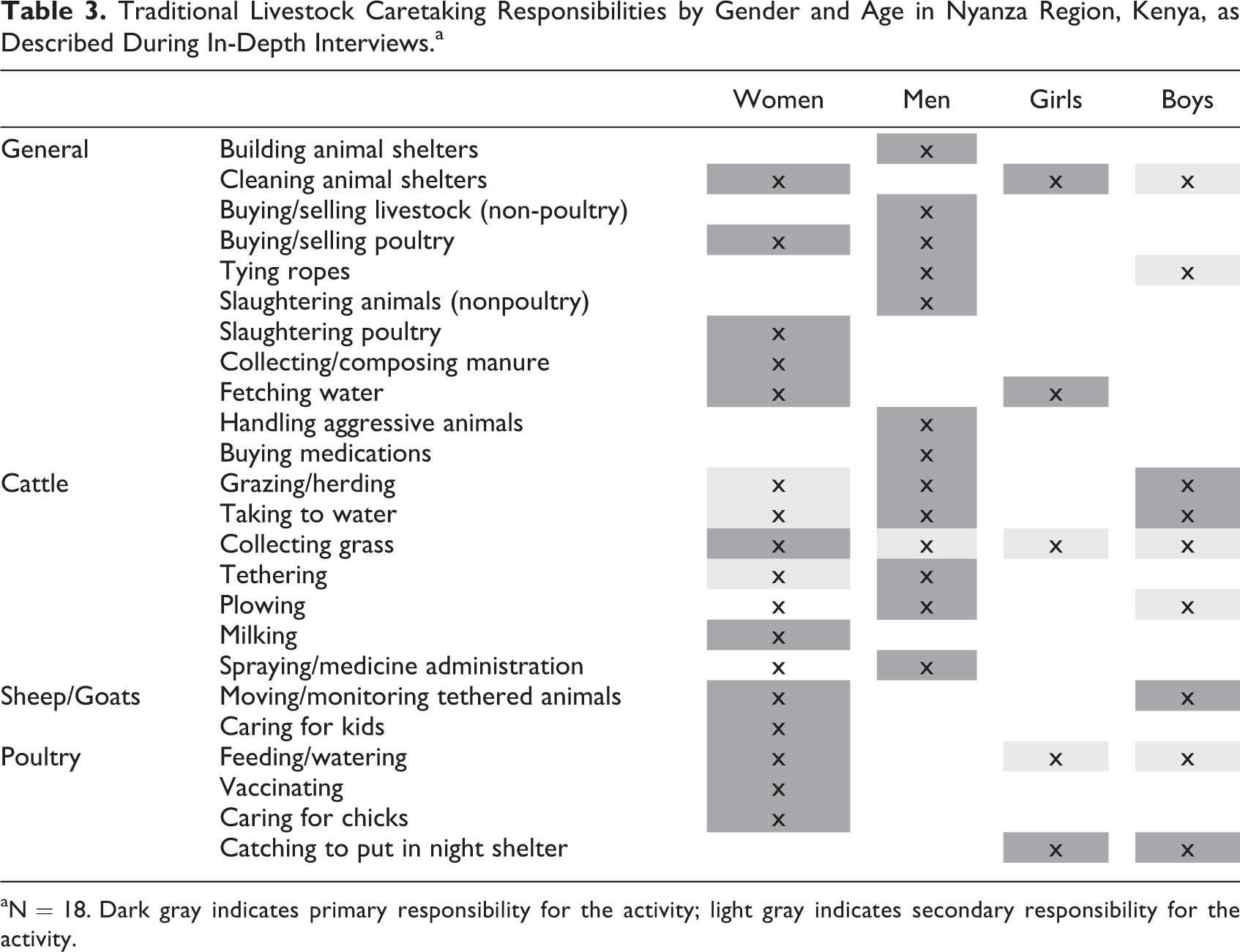
aN = 18. Dark gray indicates primary responsibility for the activity; light gray indicates secondary responsibility for the activity.
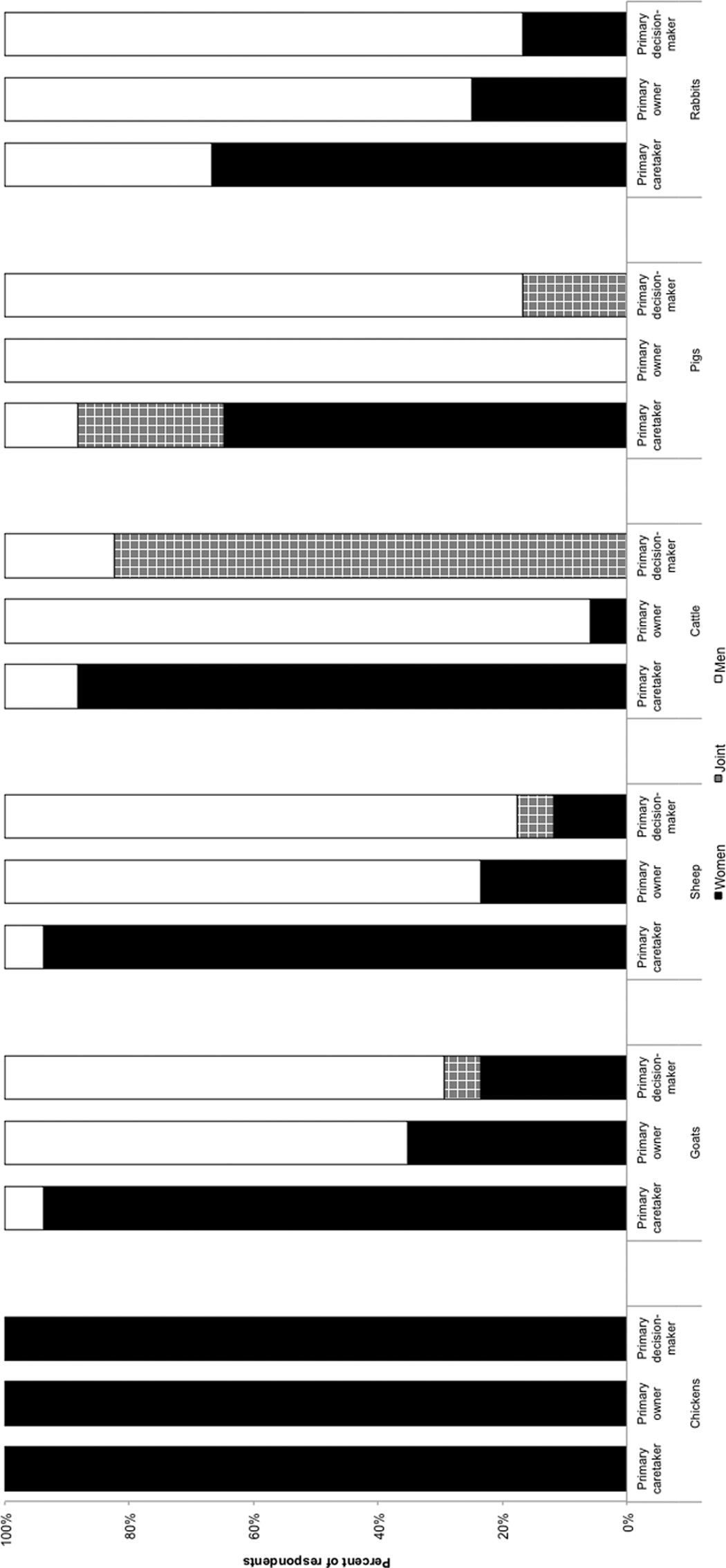
Pile sort, matching activity—Gender of primary livestock caretaker, owner, and decision maker, by species. Nearly all participants agreed that in practice, despite the traditional division of livestock labor, women are responsible for the majority of livestock caretaking duties, while men are the primary owners and decision makers for most livestock species (n = 17).
Similarly, the day-to-day care for all other livestock was nearly always the responsibility of women. Again, women said this was because men were occupied by work outside the home (eg, farming, mining, motorbike taxi service), while women have responsibilities that keep them at the homestead. The man is never home since he has gone to fend for the family and comes back late at night. This therefore forces you as a woman to take care of the animals. The man can only help you over the weekends when he’s free. (29-year-old housewife) I cannot deny the child to go to school. He is someone who does not go back to school in the afternoon [because he is still young]. When he goes to school in the morning he comes back at 12 pm. So once he has eaten lunch, he takes over from there [grazing cattle] until 6 o’clock in the evening. (21-year-old housewife) When my kids are on holiday they are the ones who usually [graze the cattle]. When they resume school, I do all the work. Because they come from school late, they cannot graze the cows as well. […] It forces me to go herding. (32-year-old businesswoman) It is [a lot of work] for the mother of the home. Because you will be up and down, up and down, taking care of the children, taking care of the sick, taking care of the chicken, taking care of the cow […] so you will be responding to each and every call. (34-year-old other occupation)
Nearly all women agreed that the time spent caring for livestock can interfere with other responsibilities at home, including preparing meals, feeding or caring for infants or young children, fetching water or firewood, and other income-generating activities. The fact that I take care of the livestock makes me go to the market late, such that when I get to the market I find my customers lamenting that I am so late […] At times, after taking the cows to drink from the river, then I cannot do anything. So you take care of them and you short the time for market. (25-year-old farmer) At times you lack someone to help you babysit when it is time to milk. It will therefore force you to put her down even if she is crying until you finish milking. (34-year-old farmer) At times, I don’t have ready food that I can cook very fast and the time to go grazing has reached […] So in such a case I just decide to just go grazing and let the children sort [lunch for] themselves. And at times, when cooking becomes challenging to them, then they just go back to school without food. (34-year-old farmer)
Gendered livestock ownership and decision-making power
Women’s ability to own and control livestock assets varied by livestock type. In pile sorts, men were typically considered to be the owners of all livestock except chickens (Figure 3), and this was corroborated in interviews and focus groups. When asked why women did not typically own other livestock species, the most common explanation was that men are owners of the home, so they also own everything within it. […] the man is the head of the woman. Hence, what belongs to a woman really belongs to the man […] For the bigger livestock like sheep, goats, and cows, the ownership is with the man, even if I’m the one who bought it, because if you disagree and have to leave his home, you won’t go with the sheep. (18-year-old day laborer) I bought [the goat], but because I have brought it to the home, it now belongs to both of us. Even though it is mine, when I lack money and I want to sell it, then I have to ask him. I cannot sell it without his knowledge. (32-year-older trader) I inquire from my husband. I tell him, “I want to sell [a chicken] because I don’t have money.” […] Then he allows me to go and sell […] I cannot sell [the chickens] without asking him even though they are mine, I cannot sell. (32-year-older trader)
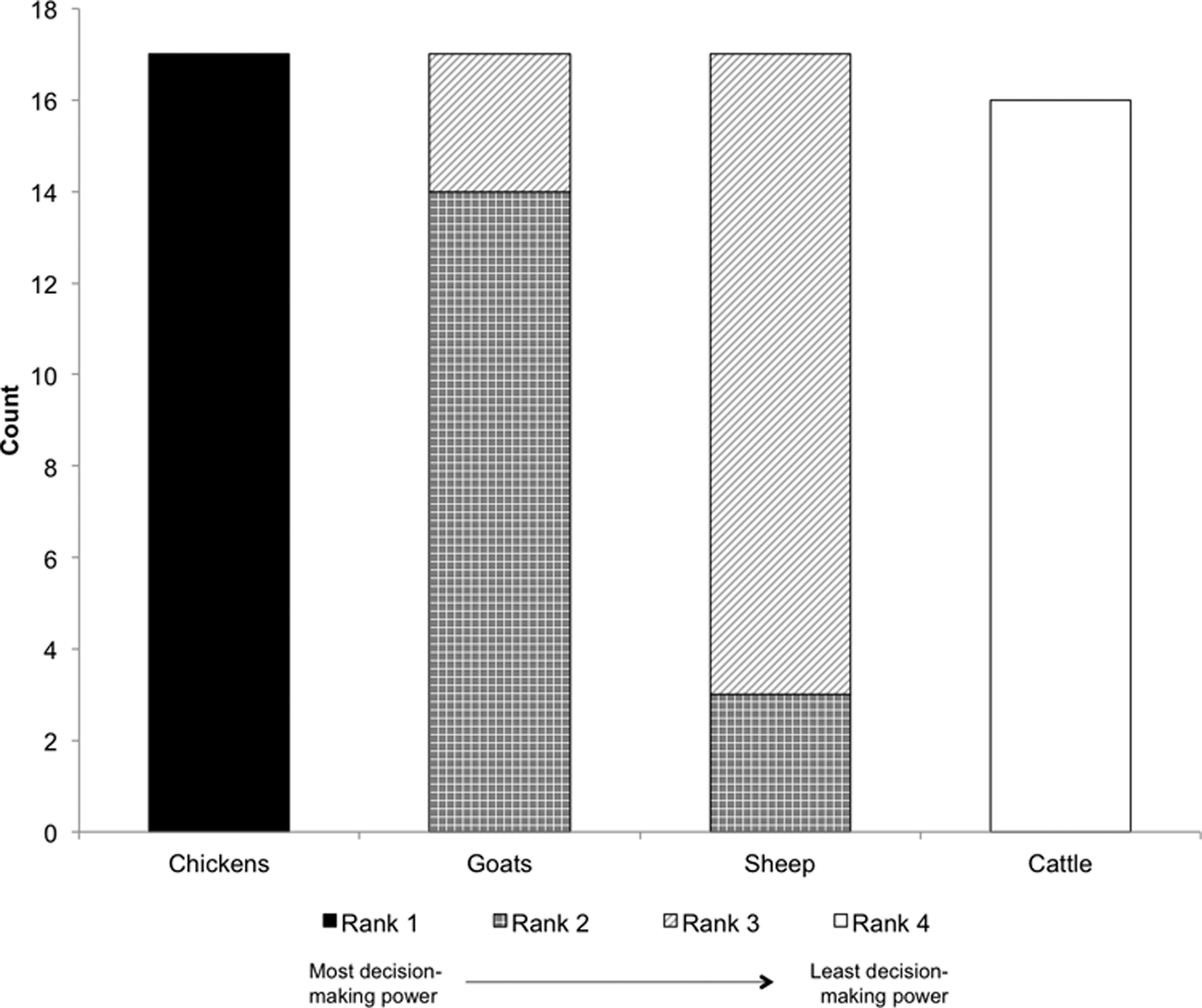
Pile sort, order ranking activity—Degree of women’s participation in decision-making, by species. Participants consistently ranked chickens as the species over which women have the most decision-making power (rank 1) and cattle as the species over which they have the least decision-making power (rank 4; n = 17). Not all participants ranked all species; ranking of pigs and rabbits not shown because few participants ranked them.
Although nearly all women perceived men to be the “owners” of cattle, most felt that the decision to sell or slaughter cattle was a joint decision between husband and wife. Decisions about chickens, sheep, and goats less commonly required consultation with a spouse. There are problems that are so pressing one is forced to take a cow to the market. In my case, I can talk to my husband first and tell him about the problem. Then we discuss […] so we can brainstorm about the issue and if there is nowhere else we can get the needed money from, we sell the cow as a last resort to sort that problem. (21-year-old housewife) He only has a say over the cows but not the milk. The cow is his such that even if you are the one who bought it as a woman, it remains his. But for the milk, I am the owner such that even if some woman comes and I give her all the milk, then no one will question me. (27-year-old day laborer)
Gendered control over income generated by livestock
Most women reported that men controlled the income generated from livestock sales. In cases where an animal was sold to address a specific household need or problem, men generally retained any surplus cash. That money he does not give it to you. He tells you he has sold your cow, but the money he won’t give you. […] He will sell that cow and go to solve a problem [for you], but the money he won’t give you to touch with your own hands. (22-year-old, unemployed)
Similarly, in many of the households where cattle were rented out for plowing, men retained all but a small proportion of the income. Few women saw direct financial benefits of this activity for their households. A lot of money is acquired during plowing. […] He plows a lot of farms, because in the area, he is the only one with cattle that plow. […] He uses the money from plowing […] He can only bring me some sugar. (22-year-old, unemployed) The women who milk are the one who keep the money and the men are not involved. […] They do not get involved in our milk. (20-year-old, unemployed) I am the one who keeps [the money from milk sales]. I use it on household needs such as soap, cooking oil, salt, and such small things. […] Some also goes to the fund raising [savings group]. (27-year-old day laborer) If you ask him how things went [selling an animal at market], he will ask what business that is of yours as a woman and that there is no sense in what you are asking. So he will not answer you. But if you have understanding, then he has to bring [the money] so that you can decide together what to do. (27-year-old day laborer)
Unequal allocation of animal source food
Although providing animal source food was a commonly mentioned benefit of owning livestock at the household level, individual access to meat, milk, and eggs varied by gender and age. Only 1 woman said that animal source foods are allocated equally among all family members, and she acknowledged that this practice was not common in her community. In terms of meat, nearly all women agreed that men should be served either choice pieces or larger portions of meat when an animal is slaughtered for home consumption. Some women said this was just “a rule,” but most said it was a way of respecting her husband’s position as the head of household and preventing marital problems. He is the head—therefore he has to get the best […] because he brought you from your mother’s home, took you to his home, and you live on his land. (29-year-old housewife) I am the one who has been caring for the chicken, I am the one who cooked it, then I only eat parts like the neck. All the drumsticks and other best parts belong to the head of the home. Even the children just eat the intestines and other parts like the legs. If [my husband] opens the bowl and realizes that those [good] parts are missing, he will have a problem—in fact he can slap me. [Men] are in front at eating time, but not when it comes to rearing the chicken. (34-year-old other occupation)
Perceived Net Value of Livestock Ownership
Participants disagreed on whether or not the benefits of livestock ownership justified the investments they made in caring for them. Among the 9 women who felt the benefits outweighed the costs, women said that the actual monetary costs of livestock care were only occasional (eg, to spray cattle for parasites), making them manageable. Many of these women said that livestock that reproduce quickly (chickens, goats, and sheep) were especially worthwhile because they were able quickly accumulate more livestock assets. They acknowledged that livestock demanded a lot of their time and labor but noted that livestock that are well cared for are more productive and profitable, increasing their returns. The work I do of taking care of the animals is profitable. Especially if you take care of the animals well, [then] they reproduce fast, and in case you have a problem you have something to sell and use. (29-year-old housewife) […] we work so hard […] and then when they are being sold, it is very little. Maybe you have taken it to a buyer who is not even competent. You have an urge for school fee, [so] you will go for that [price], not realizing that the amount that you have been using in taking care of this animal has been much. (34-year-old other occupation)
Discussion
In sum, participants in this study perceived livestock ownership to benefit household welfare through 4 main pathways, by providing (1) financial security, (2) food security, (3) social benefits, and (4) time and labor savings (Table 2). However, participants principally valued livestock for their role in promoting long-term household welfare and resilience. Additionally, prevailing gender inequalities diminished these benefits for women. The investment of household time and labor by women and children in the care of livestock was significant, and women had limited livestock ownership rights, decision-making power, control over livestock income, and access to meat.
Our findings generally support the common narrative about the broad benefits of livestock ownership to long-term household resilience but suggest that, in some contexts, traditional gender norms modify the impact of livestock on household welfare. Indeed, in places where women disproportionately bear the time costs and have limited access to the benefits, the overall net benefit of livestock ownership may be constrained for many women and their households. Previous research supports the notion that in many mixed crop–livestock production systems, men and women share responsibility for many of the tasks related to caring for ruminants but that women generally contribute relatively more labor than do men and children. 29,50,51 Notably, while the gendered division of labor for most tasks varies by region, culture, and socioeconomic contexts, tasks related to the processing, allocation, and marketing of milk are—across contexts—frequently done exclusively by women. 50,51 With the exception of milk, men are largely the primary decision makers for livestock; women are sometimes consulted or responsible for day-to-day decision-making, but their role often diminishes with increasing value of the animals. 37,50 Research from Ghana, Cameroon, Kenya, Peru, and Indonesia reports that women have little to no ownership rights over ruminants, 37,50 while in many low- and low–middle-income countries, women are often the sole owners of poultry. 34,51,52 In their detailed exploration of the local meaning of “livestock ownership” in Tanzania, Ethiopia, and Nicaragua, Galiè et al. reported numerous reasons for the gender norms that reinforce traditional livestock ownership, including the biblical decree that a man is the “head of household” and therefore has ultimate authority over all household assets, women’s lack of education or knowledge needed to care for livestock, women’s physical weakness, and that livestock ownership would interfere with women’s household chores and child care. 32 Kristjanson et al. note that while poor women in mixed crop–livestock systems throughout the world do own livestock, the kinds of livestock they keep and their control over the benefits from those livestock vary widely. 53
In light of our findings, we have developed a conceptual framework that reflects the complex relationship between livestock ownership and household welfare and resilience, which may be suitable for investigating gendered aspects of livestock ownership and care elsewhere (Figure 5). This framework highlights 3 particularly important themes revealed by our research. First, the role of livestock as a social instrument linked to resilience has potentially been undervalued by researchers and development practitioners. The ability of an individual or household to avoid or adapt to stresses and shocks—whether from extrinsic social, political, economic, or climatic changes or from disturbances within the household, such as crop loss or the death of the primary income generator—is intricately linked to the strength of their social networks. 5,54 Livestock ownership provides households with an important mechanism for linking themselves with other members of their community, allowing them to loan or gift animals, provide labor, properly greet visitors, or host friends and family for celebrations or funerals.
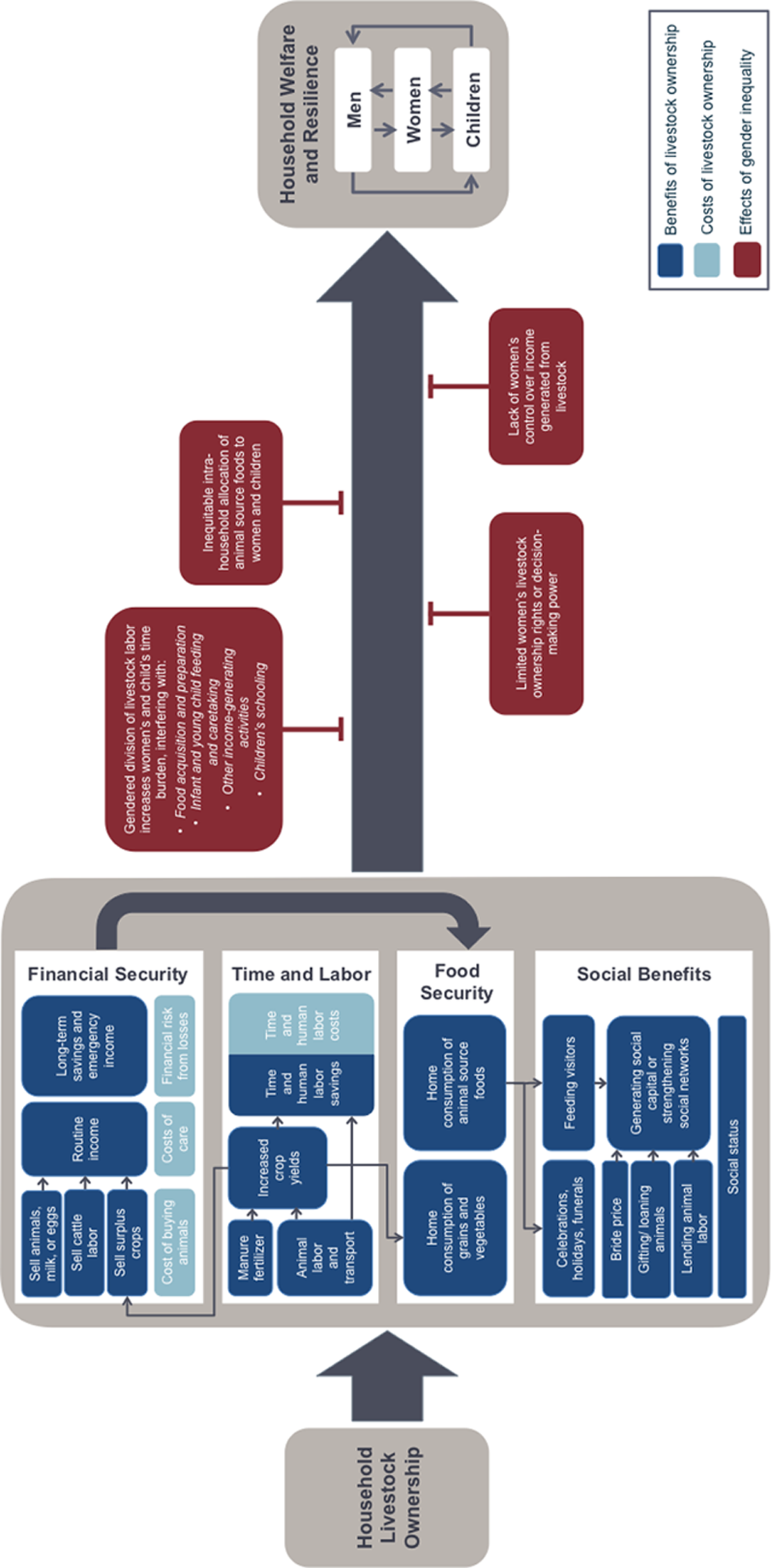
Modified conceptual framework illustrating the benefits and costs of livestock ownership and potential modifying effects of gender inequality on the relationship between livestock ownership and household welfare. The benefits (dark blue boxes) and costs (light blue boxes) of household livestock ownership may be modified, attenuated, or eliminated by the effects of gender inequality (red boxes) and are experienced differently by individual members of a household based on their gender and age.
The second revelatory finding in this study is the complex relationship between livestock ownership and human labor and time. On one hand, livestock labor from cattle and donkeys clearly benefited households by increasing the amount of land they could farm and replacing household labor (eg, carrying firewood or water). On the other hand, livestock care contributed significantly to women’s workloads, and nearly all participants acknowledged that this added burden could conflict with their other responsibilities. This is largely consistent with the literature on agricultural production generally, which suggests that there are complex and unpredictable trade-offs between increasing agricultural productivity and well-being, which may disproportionately affect women due to the time-consuming nature of female-dominated work. 55 Women commonly manage increased agricultural time burdens by decreasing rest and leisure time, reducing time spent on food preparation and feeding, and delegating tasks to other members of the household, including children. 55 Female livestock keepers in this study employed all of these time management techniques, and further research is needed to determine how this time stress modifies the impact of livestock ownership on household welfare (eg, through increased child labor, early weaning, worsened maternal psychological health).
Third, with few exceptions, women described having limited ownership rights, decision-making power, control over livestock income, or access to meat. These gender-specific constraints faced by female farmers are well recognized in both crop farming 56 and livestock production. 17,22,27,32 -37 Previous work has suggested that women’s relatively insecure livestock ownership and use rights, along with their high time and labor costs, make livestock a riskier or less desirable asset for women. 53
One interesting exception to this that we found was that the majority of women reported that the end use of cattle was a decision that should be made jointly by both husband and wife, which was rarely true for other species of livestock. This may reflect the high economic and social value of cattle and, therefore, the gravity of the decision to sell or slaughter them. Further research is needed to more closely examine the importance of joint decision-making for the use of cattle and what it means in the larger context of women’s empowerment. Notably, women reported having full control over milk use and income; however, previous research warns that increasing intensification of dairy production can diminish women’s traditional control over milk, with negative impacts on women empowerment. 17,36,53
Our findings have multiple implications for development organizations seeking to utilize livestock as a mechanism for improving household welfare. First, our data suggest that, with the exception of milk production, livestock ownership in this context affects long-term household vulnerability and resilience more than routine incomes or diets. The idea that livestock make an important contribution to animal source food consumption and improved diets in low-income settings is widespread. 2 Previous research in sub-Saharan Africa supports our finding that cattle ownership is associated with increased home dairy consumption, 18,57 -59 particularly if the animals are at least partially female owned. 33 However, the multipurpose utility of livestock requires a daily cost–benefit analysis on the part of livestock owners, who must weigh the many demands of their households against their limited resources. 60 As a result, livestock-owning families in many smallholder systems do not necessarily consume animal products (except milk) at home on a routine basis, 3 even within the context of livestock development programs. 14,23,24,61 -63 Income benefits of livestock programs are more commonly reported 61,62 but are not always consistent 10,14,63 and are frequently measured on an annual basis. Organizations must therefore carefully consider how livestock are used by farmers in their target population in order to understand how they might benefit from a livestock program and how those benefits will be perceived, utilized, and valued.
This finding additionally suggests that impact evaluations of livestock development programs may need to alter their metrics to better capture how livestock allow beneficiaries to better respond to shocks and stressors. For example, if chickens are utilized mostly as a “living savings account” and secondarily as a social instrument in a particular population, a vaccination program to prevent large die-offs of village chickens may result in larger flock sizes but have relatively modest increases in household consumption of chicken, meat, or eggs and monthly income. Program evaluators might conclude that the program had little impact on household welfare by the outcomes of interest they determined a priori. However, a closer look might reveal that program beneficiaries are better able to send their children to school and buy them uniforms and supplies. A woman with a large flock of chickens may also feel more confident and less vulnerable knowing she will be able to prepare a good meal for a visitor to her home or pay medical fees for a sick family member. In this case, the expectations of program developers did not align with the actual way in which the target population utilizes and values village chickens; therefore, the outcomes they defined as being important did not match those perceived by the intended beneficiaries.
The second programmatic implication is that cultural norms in some contexts may limit women’s access to livestock benefits and disproportionately assign the majority of livestock care to women, constraining the net benefit of livestock ownership for many women. Many development organizations mention gender or women’s empowerment as a theme of their programs; however, our data suggest that a broader gendered perspective should be integrated into both livestock project design and monitoring and evaluation plans. Furthermore, this gendered lens must consider both the potential benefits of a program and the investments that it demands from participants. Women are increasingly targeted as beneficiaries for livestock interventions, but too often, programmatic gender goals consist solely of increasing women’s participation in livestock production. Already, approximately two-thirds of poor livestock keepers are women, 2 suggesting entry into livestock ownership is not the only barrier that limits women’s ability to benefit from livestock.
Program designers should carefully consider how gender norms (eg, labor roles, control over incomes, intrahousehold allocation of animal source foods) might modify the impact of an intervention, both on women and on the household as a whole. The potential impact of livestock asset transfers, for example, on women’s time use, stress levels, and infant caretaking capacity, is infrequently considered or measured. Program designers should also consider that women are often limited in their access to land, extension services and information, animal health services, savings, insurance and credit, and markets 53 and make specific plans for addressing these barriers to ensure long-term program impact. As suggested by Reddy et al, 64 gender goals in livestock development programs should be linked to the broader goals of gender equality and women’s empowerment in agriculture, as captured in the 5 domains outlined by the Women’s Empowerment in Agriculture Index (production autonomy and decision-making power, resource ownership and control, control over income, leadership, and time use), all of which are affected by livestock. 65
A third programmatic implication is that monitoring and evaluation plans for livestock interventions should measure impact at the individual level, as well as at the household level, in order to elucidate both positive and negative impacts of such programs. While the word “empowerment” was never mentioned by participants in this study, their narratives suggest that there is a real risk that livestock, especially larger livestock, could actually disempower women by substantially adding to their time burden while having no effect on their decision-making power or control over use of income. Program impact analysis therefore needs to include a specific gendered lens to determine not only women’s “ownership” of different livestock types or the proportion of women participating in the program but their decision-making power over livestock and livestock products, control of livestock-generated income, access to home-produced animal source foods, and livestock labor allocation relative to other activities. 66
Finally, it is worth noting that no participant perceived the risk of exposure to zoonotic pathogens as a potential disbenefit to livestock ownership. Indeed, one woman even said she likes to feed her child goat milk because it is “cleaner” than cow’s milk and didn’t pose any risk of illness, while others mentioned feeding cracked eggs to their families without any apparent concerns of food-borne disease. Although a full review of the literature is beyond the scope of this article, there is increasing evidence that livestock ownership can negatively affect child nutritional outcome and growth through exposure to fecal pathogens. 67 Additionally, low- and middle-income countries likely experience a high burden of food-borne disease as a result of structural challenges and poor regulatory enforcement, and livestock products are particularly risky. 68 Livestock interventions must integrate food safety and hygiene education alongside livestock management best practices education to manage the risks associated with livestock ownership and production.
These results should be interpreted within the context of some limitations. First, this is a substudy embedded within a larger cohort study examining the health consequences of food insecurity during pregnancy and early childhood. As such, our sample consisted exclusively of women with young children and may neglect the distinct experiences of livestock ownership among childless women, older women, and women with older children. Additionally, due to the sampling strategy of the primary study, HIV-positive and more food-insecure women are overrepresented in this substudy, and it is possible that these characteristics affected their experiences with livestock. Second, for convenience, we purposively selected the 4 most semi-rural catchment areas for inclusion in this substudy, and our findings may not extend to urban livestock owners. Finally, our results and framework represent the experiences of women in the rural Kenyan context in households for which livestock production is not the primary income-generating activity. The actual benefits, costs, and modifying effects of gender (Figure 5) will vary in other contexts, even within Kenya (eg, among pastoralists, urban livestock keepers).
In conclusion, there is a range of benefits and costs of livestock ownership, and individual members of a household may experience them differently based on their gender or age and prevailing cultural norms. In this particular setting, women shoulder most of the burden of livestock care but have relatively limited access to or control over the benefits. Figure 5 provides a useful framework that can be adapted to other contexts to explore the myriad of benefits and costs of livestock ownership and modifying effects of gender inequalities within a given setting in order to inform the design of people-centered interventions. 69 Going forward, we encourage careful attention to how individuals, as well as households, are impacted by livestock ownership to ensure that those who are in greatest need of the resources livestock can provide are the ones to benefit.
Footnotes
Authors’ Note
No funder had any role in the design, analysis, or writing of this paper. The content is solely the responsibility of the authors and does not necessarily represent the official views of the National Center for Research Resources, the National Institutes of Health.
Acknowledgments
The authors are extremely grateful to the study participants, nurses, and trackers for their time and dedication to this project. The authors would also like to acknowledge the work of Ann Lei, who illustrated the cards used in the pile sort activities. The authors also thank Kathryn Fiorella, Godfred Boateng, Marianne “Vicky” Santoso, and the members of the CENTIR Research Group for their comments on earlier drafts of the manuscript.
Declaration of Conflicting Interests
The author(s) declared no potential conflicts of interest with respect to the research, authorship, and/or publication of this article.
Funding
The author(s) disclosed receipt of the following financial support for the research, authorship, and/or publication of this article: This work was supported by the National Institutes of Health (S.L.Y., award number K01 MH098902), the Einhorn Discovery Grant (A.M.), and the Cornell University College of Arts and Sciences Undergraduate Research Program (A.M.).
Supplemental Material
Supplementary material for this article is available online.
Note
References
Supplementary Material
Please find the following supplemental material available below.
For Open Access articles published under a Creative Commons License, all supplemental material carries the same license as the article it is associated with.
For non-Open Access articles published, all supplemental material carries a non-exclusive license, and permission requests for re-use of supplemental material or any part of supplemental material shall be sent directly to the copyright owner as specified in the copyright notice associated with the article.
