




Abstract
Background:
There is global consensus that a strong policy response is essential for addressing the dual burden of malnutrition. However, policy makers in low- and middle-income countries may perceive a conflict between food supply policies to combat persistent undernutrition and more recent recommendations for policies addressing rising rates of diet-related noncommunicable diseases (NCDs).
Objective:
This article explores the potential to use policy space analysis to identify food supply policy opportunities for addressing both undernutrition and diet-related NCDs and to support improved policy coherence.
Methods:
We conducted an exploratory policy space analysis to identify opportunities and constraints for integrated nutrition policy with respect to the food supply in India, where a dual burden of malnutrition has been well documented. We conducted a review of food supply policies and 27 key informant interviews (16 with stakeholders active in India’s national nutrition policy space, and 11 with policy makers and experts in food supply policy).
Results:
The analysis suggests several opportunities for an integrated food supply policy agenda, including targeting common foods of concern (such as highly processed foods) and foods that present common benefits (such as fruits and vegetables), and scaling up existing small-scale policy initiatives that support the availability of nutrient-rich foods. Challenges include policy inertia and competing priorities within the economic sector.
Conclusion:
This scoping study indicates that the policy space analysis framework used here can help to identify specific, contextually appropriate policy options and strategies for strengthening public health nutrition policy within sectors responsible for food supply policy.
Introduction
The global nutritional context presents a paradox of significant persistent undernutrition coexisting with rising rates of diet-related noncommunicable diseases (NCDs) in many low- and middle-income countries (LMICs), known as the “dual burden of malnutrition.” 1 -6 Undernutrition burdens are high globally: More than 200 million children younger than 5 years have undernutrition, and over 2 billion people are at risk of nutritional deficiency. 7 Child and maternal undernutrition was responsible for 1.4 million deaths and 6.7 of global disability-adjusted life year in 2010. 8 At the same time, NCDs now cause 63% of deaths globally, with 80% of these deaths occurring in LMICs where a much larger proportion of these deaths are premature. 9 Macroeconomic simulations indicate that productivity loss due to cardiovascular disease, chronic respiratory disease, cancer, diabetes, and mental health could be as much as US$47 trillion over the next 2 decades, representing 75% of global gross domestic product (GDP) in 2010. 10
Although the reasons underlying dietary practices and nutrition status are complex, addressing the availability and affordability of healthy relative to less healthy foods is one important dimension of enabling consumers to improve their diet quality: a critical determinant of both undernutrition and NCDs. 11 -16 Reducing dietary risk factors for NCDs will require increased individual consumption of fruits, vegetables, whole grains, and other minimally processed foods and decreased consumption of foods high in fat, salt, and sugar. 8,17,18 This, in turn, requires a steady, sustainable, and affordable supply of healthy foods, a stark contrast to the current global food supply, which is delivering cheap, convenient, and unhealthy foods more effectively than healthy foods. For example, a recent study estimated that global fruit and vegetable supply falls 22% short of population needs (not including consumer wastage). 19 This is reflected in stagnant intakes of micronutrient-rich whole grains, fruit, and vegetables and rising intakes of fat, salt, sugar, and highly processed foods and beverages. 20 -22
As part of a comprehensive policy response to the global NCD epidemic, the World Health Organization’s Global Action Plan for the Prevention and Control of NCDs recommends policy interventions that target the food supply. 9 This includes a wide range of agricultural, fiscal, retail, and economic policies that affect production, processing, and distribution of food and that have potential to increase the availability and affordability of healthy, relative to less healthy, foods. However, for policy makers in LMICs, these policies may be seen as contrasting or even conflicting with the historical focus of food supply policies in LMICs on preventing and reducing hunger, a policy focus that continues to prevail due to persistent, high rates of undernutrition. 23,24 Pursuing policies to improve the food supply for NCD prevention has thus remained a secondary priority in many LMICs.
However, the historical food supply policy focus regarding hunger and undernutrition has in fact mainly been on providing adequate calories rather than nutrition. Headey and colleagues 25 describe this as “calorie fundamentalism.” This raises concerns that—although calorie consumption is one important input into nutritional outcomes—policy options that support other essential nutritional inputs that contribute to diets rich in diverse micro- and macronutrients can be overlooked, resulting in continued high prevalence of stunting and micronutrient deficiencies as well as contributing to overweight and NCDs. 25 Thus, despite an apparent policy conflict, there are likely to be commonalities between the food supply policies required to address undernutrition 23,26,27 and those targeting the prevention of diet-related NCDs. 12,28 In particular, there are clear synergies with respect to the nutritional quality of the food supply rather than simply quantity of calories produced. 4,29
Although government policy and public investment are only 2 of many factors influencing the food supply in a market context, governments can play an important leadership role in incentivizing the production of nutritious foods. 30 Haddad and colleagues highlight food policies to address availability and affordability of nutritious foods as a critical component of interventions to reduce the dual burden of malnutrition. 16
This exploratory study aimed to explore the use of policy space analysis to identify an integrated food supply policy space for addressing both undernutrition and diet-related NCDs, focusing on India as a case study. India’s dual burden of malnutrition (Box 1) has been well documented at the national, community, and household level, 31 -36 as it has the need for a concerted policy approach to address both undernutrition and diet-related NCDs. 27,37,38 A “policy space” approach has not been applied to this issue previously, and this study was designed to also assess its potential as a helpful lens for identifying specific policy opportunities within the existing policy and political context.
The Dual Burden of Malnutrition in India.
Rates of underweight and stunting among children in India remain high, at around 40% to 50%, 39,40 while the prevalence of childhood and adolescent overweight is rising, with recent estimates of around 20% to 25% in urban areas. 41,42 Undernutrition and micronutrient deficiencies also remain a significant problem among women, although the prevalence of overweight and obesity among adults is continuing to rise, particularly among the nonpoor. 32,36,43,44 Diet-related NCDs are also a significant concern among adults in India. Diabetes prevalence ranges from 3% in rural areas to over 8% in urban areas, with a total of 62.4 million Indians living with diabetes. 45,46 Economic losses in India due to cardiovascular disease have been estimated at US$2.25 trillion from 2012 to 2030. 47 This nutritional situation has developed at the same time as increasing consumption of unhealthy fats, refined cereals, and “ultra-processed foods” and low affordability and availability of fruit, vegetable, and pulse. 35,48
Policy Space Analysis
As described above, public health nutrition presents a challenge to policy makers: It requires addressing the seemingly contradictory problems of under- and overnutrition and also engaging effectively with the various sectors that govern the food supply. This exploratory study aimed to identify opportunities for improving the coherence of food policy with respect to nutrition, and we designed our study to encompass both nutritional considerations and policy maker perspectives.
We conducted an exploratory policy space analysis to identify opportunities and constraints for integrated nutrition policy with respect to the food supply in India, informed by a political economy analysis approach and drawing on a policy space analysis framework that has been used previously in public health policy analysis. 49 Policy space (Box 2) analysis focuses on understanding policy priorities and identifying opportunities and constraints to strengthening policy agendas. 50 Similarly, political economy analysis encourages engagement with politics, context, and practicalities in understanding policy making and drawing on experiences and opinions of policy stakeholders themselves. 51
Policy Space.
Policy space refers to “the freedom, scope, and mechanisms that governments have to choose, design, and implement public policies to fulfill their aims”. 52(p105) In the context of a multisectoral policy issue such as nutrition, policy space spreads across multiple sectors and multiple actors within sectors, and it is thus essential to consider food and nutrition policy from a political economy perspective.
Methods
This national level exploratory study was conducted in India from October to December 2013. The research was narrowly focused to enable us to pilot the usefulness of the analytical framework and the potential for integrating food supply policy to address both undernutrition and NCDs; an additional aim of the study is to inform further research in this space. We focused on food supply policies as a key area influencing food availability and affordability, which are important drivers of consumption. We also focused on policy making at the national level, as while implementation is important, our primary interest was in understanding issues of agenda setting and decision-making in shaping current (and potential) policy directions. This project was approved by the University of Sydney Human Research Ethics Committee, and under ongoing institutional review board research approval held by the International Food Policy Research Institute, New Delhi.
The research was conducted in 2 steps. First, we sought to identify the potential for using the food supply to address the dual burden of malnutrition in India and to identify dietary patterns and foods of relevance to both undernutrition and diet-related NCDs. The lead author conducted 16 key informant interviews with stakeholders active in India’s national nutrition policy space, with varied expertize in undernutrition and NCD prevention. Initial interviewees were identified within key nutrition institutions and alliances at the national level such as the Nutrition Coalition of India, International Food Policy Research Institute–New Delhi, Public Health Foundation of India, Nutrition Foundation of India, and Right to Food Campaign and through using a snowball sampling approach (S.Ka., P.M., and S.Kh. were included in the interview sample). Interviews were semistructured and asked about respondents’ opinion on common risks and benefits of dietary patterns and foods to tackle both undernutrition and NCDs.
Second, we collected information on policy space for an integrated food supply approach to nutrition, seeking to identify specific policy opportunities and constraints. This component was focused solely on the national policy space, as food supply policy making (although not implementation) is highly centralized in India. We first conducted a review of key policy documents in sectors governing the food supply (trade, investment, public distribution, agriculture, food processing, and finance), focusing on the commodities identified in phase 1. To identify relevant policies, we searched Government of India websites and Google using key commodity terms together with “policy” and “India.”
This phase was augmented by in-depth interviews with policy makers and experts in food supply policy. The lead author conducted 11 in-depth interviews with senior bureaucrats in food processing, planning, agriculture, and trade and nongovernmental experts in food subsidies, investment, agriculture, and trade. Interviewees were recruited through formal letters to government agencies with food supply policy responsibilities (agriculture, economic planning, food processing, trade) and subsequently through snowball sampling. Interviews were semistructured, based on policy space and priority setting frameworks, 50,53 and asked about relevant policies (to confirm the document review had captured all relevant policies), the impact of current food supply policies on key commodities identified through phase 1 interviews, factors considered in policy making and framing, and barriers and opportunities regarding an integrated food supply policy approach to nutrition.
Interviews for phase 1 and phase 2 lasted for 40 to 60 minutes and were recorded where permission was granted (23 of the 27 interviews). Written informed consent was obtained from all interviewees. Detailed notes were taken during each interview, which were then written up as detailed summaries immediately afterward, using the recordings where possible.
We analyzed the interview data using a policy space analytical framework (Figure 1). This framework has previously been used for policy space analyses in development 50 and public health 49 research and highlights the interplay between context, policy characteristics, and agenda-setting circumstances in policy change. The lead author hand coded the interview data for themes using this framework, with information triangulated using the documents reviewed. Findings were reviewed by the research team, and the themes identified were refined and clarified. The findings presented below are from both the interview data and policy review document (policy review documents are cited in text where data are derived from these rather than interview).
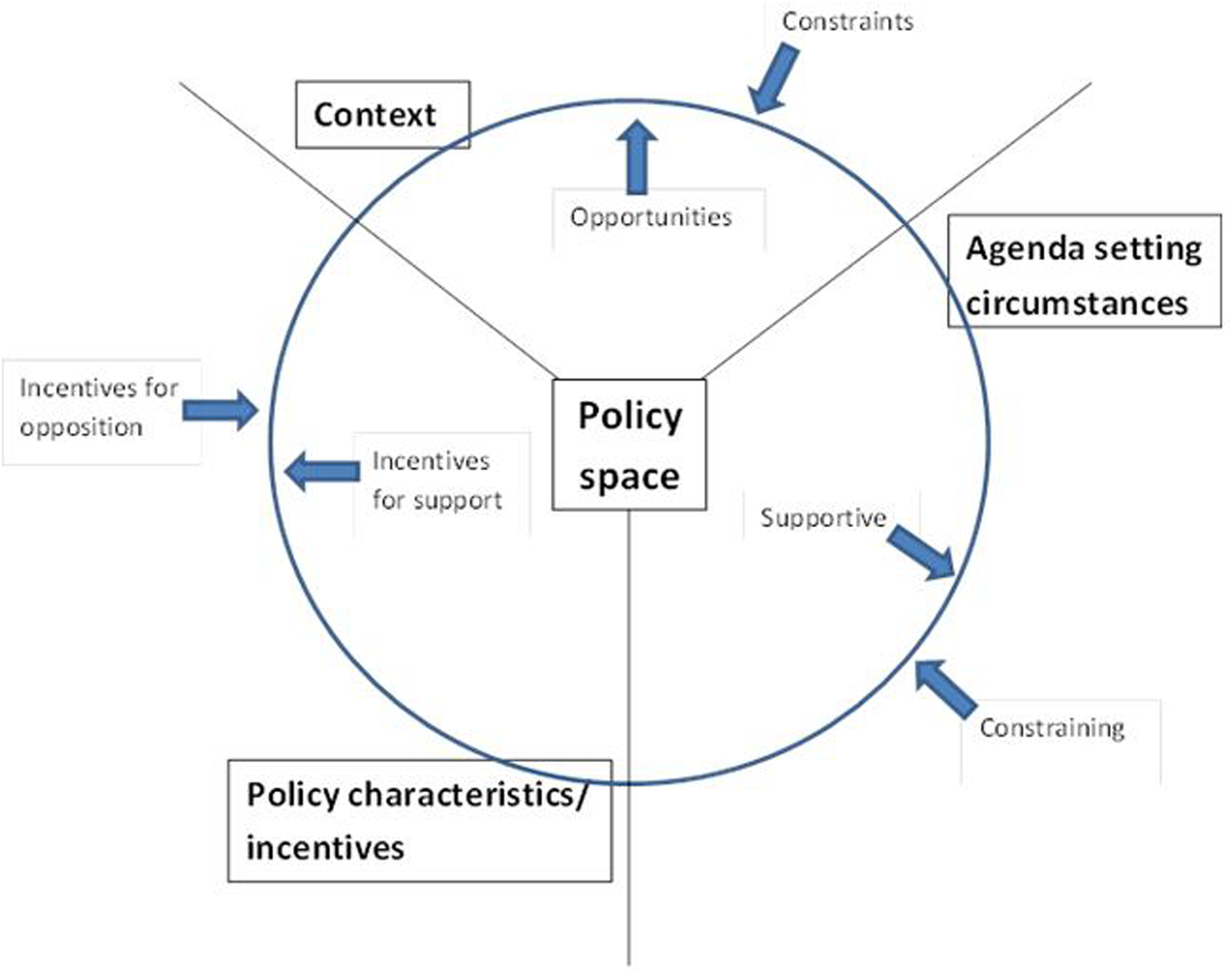
Factors affecting policy space. Adapted from Grindle and Thomas. 50
Results
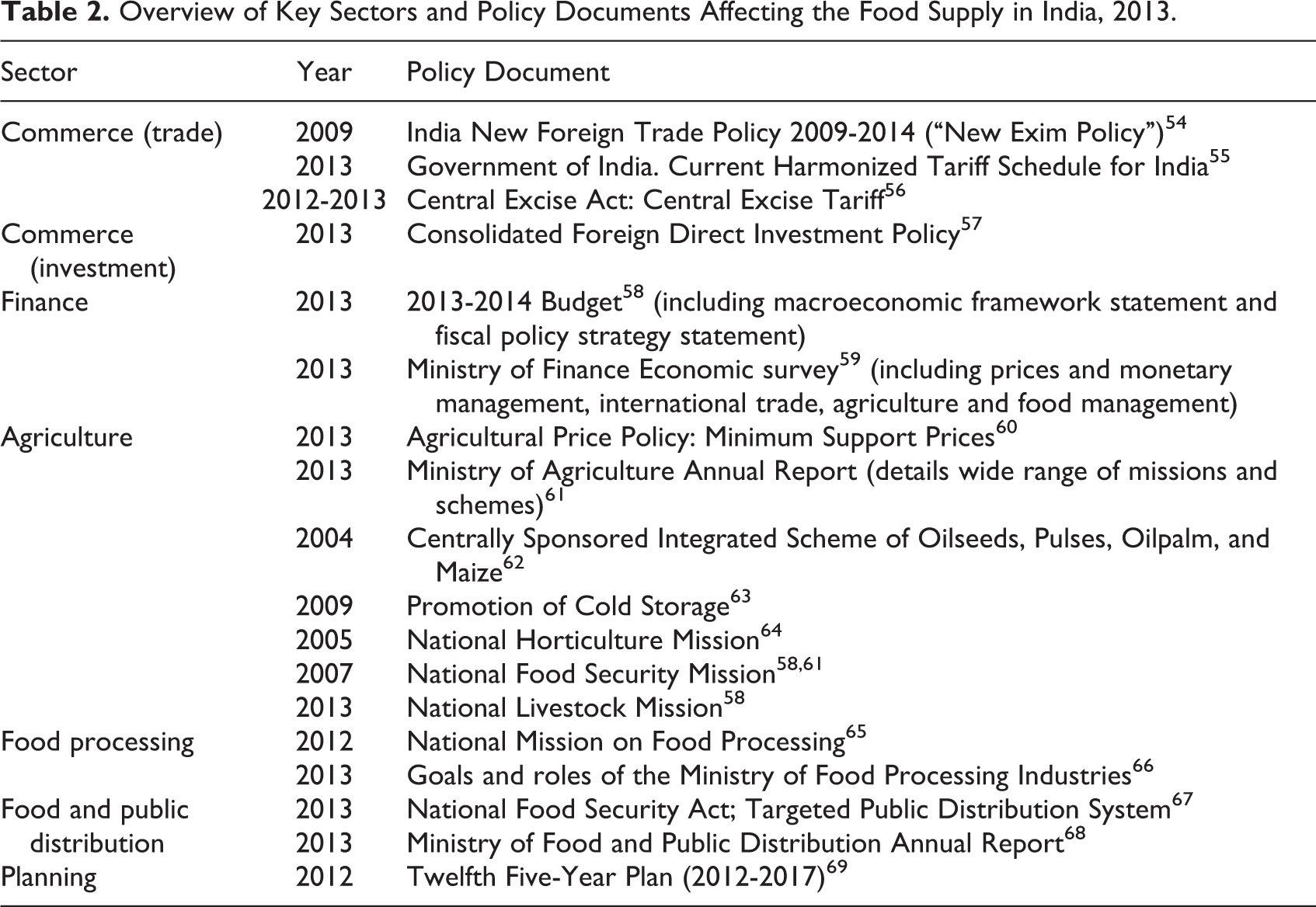
The main government agencies with responsibility for governing the food supply in India are the Ministry of Agriculture (primary production), Ministry of Commerce and Industry (trade and investment), Ministry of Food and Public Distribution (distribution), and the Ministry of Food Processing Industries (processing), as well as the former Planning Commission (strategic direction and economic policy). In this section, we first present a summary of the key commodities relevant to both undernutrition and the prevention of diet-related NCDs in India, based on phase 1 interviews. We then present a synthesis of the policy space analysis findings (Table 1), based on both the policy review (see summary list in Table 2) and key informant interviews from phases 1 and 2 of the research.
Analysis of Policy Space for an Integrated Food Supply Approach to Under- and Overnutrition in India.
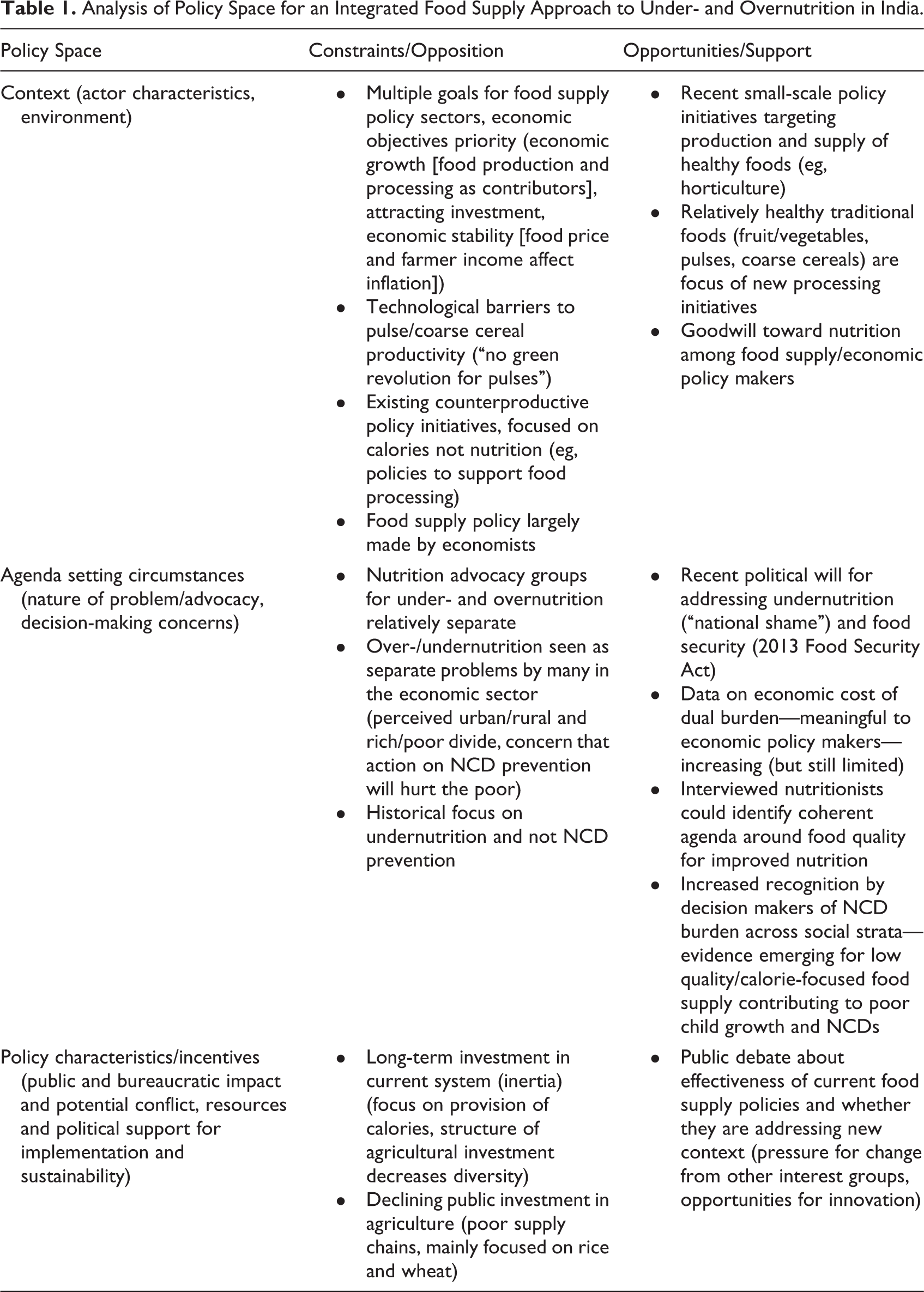
Overview of Key Sectors and Policy Documents Affecting the Food Supply in India, 2013.
A Food Supply to Reduce Undernutrition and Prevent Diet-Related NCDs
Although undernutrition and diet-related NCDs are often seen as separate problems in India, all interviewees active in India’s national nutrition policy space were able to identify an integrated food supply policy space for this dual burden; in particular, a common need for dietary diversity and diet quality. The primary commodities that were identified by almost all interviewees as beneficial for both reducing undernutrition and NCD prevention were fruits, vegetables, pulses, and coarse cereals, and a large proportion of respondents also mentioned nuts, milk, eggs, healthy oils, and fish. These foods contribute to reduced risk of undernutrition through provision of micronutrients and protein and also form part of a healthy diet, with many protective against diet-related NCDs. 70 Calorie-dense but nutrient-poor foods (namely, refined cereals, unhealthy fats, sugar, and highly processed snack foods) were identified as presenting common risks, adding little nutritional value to the diet other than calories and being recognized as dietary risk factors for NCDs. A related concern was the use of calorie-dense, nutrient-poor processed foods (such as biscuits) as weaning foods, potentially contributing to both childhood malnutrition and NCD risk in later life. The second phase of the research thus focused on policies governing the supply of the key commodities (fruits, vegetables, pulses, and coarse cereals) and calorie-dense but nutrient-poor foods.
Policy Space analysis: Context
The context dimension of the policy space analysis considers the environmental context as well as the actors involved (Table 1). Interviewees highlighted the important roles that food supply policies play in economic policy making in India, through contributing to maintaining price stability and keeping inflation low. These policies also support the agricultural sector, which contributes substantially to GDP (around 18%). 71 As a result, nutrition was only one—often minor—consideration in food supply policy making. The challenge identified by the focus on economic policy objectives was one of garnering political priority for nutrition in a multisectoral context, which requires coordinated action from several sectors.
In line with this, the document review (Table 2) identified some potentially counterproductive policy interventions with respect to the dual burden of malnutrition, which were likely to support improvements in calorie availability and accessibility but make a limited contribution to improved nutrition or even be counterproductive to NCD prevention objectives to reduce intake of processed foods high in fat, salt, and sugar. In particular, a growing policy focus on promoting food processing, through direct support for food processing initiatives by the Ministry of Food Processing Industries, 66 as well as liberalization of foreign direct investment (FDI) in food processing and multibrand retailing, 57 occurring with limited consideration of nutrition, despite their potential to increase availability and affordability of highly processed foods, snacks, and beverages. For example, FDI in the retail sector has been very limited by restrictive policies, and modern supermarket penetration was reported to be only 7% in Delhi in 2010; there is thus significant potential for increase in liberalization of FDI policies regarding multibrand retailing. 72 There is also a national agricultural policy focus on increasing production of palm oil, 62 which has a high saturated fat content.
The policy context was also characterized by technological barriers to increasing production of crops other than staple cereals, and in particular, high nutritional quality foods such as pulses, fruit, vegetables, and coarse cereals, which were highlighted by interviewees from the agricultural sector. Although these crops remain competitively productive on marginal land, they have not benefited from the advances in agricultural and supply chain technology that have substantially increased yields from rice and wheat on prime farmland (mainly related to the Green Revolution). These limited advances in technology—combined with significant public investment in rice and wheat production over other commodities—have contributed to declining availability and affordability of fruits, vegetables, and pulses in India.
However, the policy context also appeared to be characterized by goodwill toward improving nutrition among food supply policy makers. The interviewees from the economic sector all acknowledged the importance of nutrition in achieving development goals. This suggested an ongoing opportunity to build on the current momentum to expand support for the prevention of diet-related NCDs in addressing the changing nutritional context.
Another opportunity presented by the policy context was a range of positive, although consistently very small scale, policies that support the availability of nutrient-rich foods and could contribute to the prevention of both undernutrition and diet-related NCD. Agricultural missions directed at pulses 62 and horticulture (in particular, fruit and vegetable production), 64 and inclusion of coarse grains and pulses into the public distribution system in some states, 67 support domestic availability and affordability of healthy, minimally processed commodities. These are relatively small investments, particularly when compared to the massive investments in rice and wheat production, but represent an existing infrastructure supporting nutrient-rich food production and distribution. Similarly, some current trade policies, such as temporary removal of duty on import of pulses 55 and excise tariffs on confectionary 56 contribute to the relative affordability and availability of healthier unprocessed/primary food as compared to less healthy and highly processed foods. These positive initiatives support access to high-quality diets and need to be protected.
In addition, food processing policies and requirements placed on FDI in the retail sector both support investment in cold chain infrastructure for fruit and vegetables. 57 Although these policy initiatives are currently general (not targeted specifically to fruit and vegetables, but encompassing these commodities), there may be an opportunity to provide specific incentives for the development of value chains that support accessibility of fresh fruit and vegetables. There has also been small-scale public support through the Ministry of Food Processing for new initiatives to process and package healthy traditional coarse grains, such as ragi and millet, 65 which interviewees identified as a response to growing consumer demand. There may be opportunities to tailor or earmark some of this existing funding to enhance and specifically support value chain development for healthier commodities.
Policy Space Analysis: Agenda-Setting Circumstances
The “agenda-setting circumstances” dimension of the policy space analysis framework considers the nature of the problem and advocacy, as well as concerns affecting decision makers (Table 1). In India, the advocacy groups for undernutrition and diet-related NCD prevention were seen as relatively separate. There was a strong perception among food supply policy makers that undernutrition is a critical priority and that addressing diet-related NCDs would require different and contradictory policies. Many respondents from the economic sector raised concerns that prevention of diet-related NCDs required policies contrary to those needed to reduce undernutrition; for example, that NCD prevention required people to “eat less,” whereas reducing undernutrition required individuals to “eat more.” In contrast, nutritionists identified the concept of “quality” food—in other words, nutritionally dense foods, rather than calories—as being a potential basis for an integrated agenda, recognizing the important role that dietary quality and nutrient-dense foods play in preventing both aspects of malnutrition. For example, fruits and vegetables are beneficial for all forms of malnutrition, in contrast to highly processed foods or refined carbohydrates (energy dense, nutrient poor).
However, interviewees from the nutrition policy sector emphasized that the political context for nutrition in India has been characterized by growing political will for improving nutrition, as evidenced by recent statements by the then-Prime Minister regarding the “shame” of malnutrition 73 and the passing of the new Food Security Act in 2013, 67 the integration of nutrition in the election manifesto of the ruling party, 74 and the launch of “nutrition missions” in several large states in India. This changing context has been supported by strong nutrition advocacy, for example, via the Leadership Agenda of the Coalition for Sustainable Nutrition Security, 75 and strengthened demands by rights-based networks for food security. In addition, the ability of diverse stakeholders active in India’s national nutrition policy space to articulate a coherent agenda regarding reducing undernutrition and preventing diet-related NCDs indicated that there may be future opportunities for joint advocacy. However, much of the advocacy and convergence of advocacy and discourse around nutrition in India has been in relation to undernutrition and not to NCDs, the dual burden of malnutrition, or healthy diets more broadly.
Potential opportunities for increasing recognition of the dual burden of malnutrition on the policy agenda might arise from increased availability of economic data on the dual burden of malnutrition. Interviewees identified that data on economic impacts of malnutrition (although currently limited) are likely to be influential for policy makers in the economic sector. Interviewees from both the nutrition and economic sectors also cited a growing awareness (and evidence) that the NCD burden is affecting not just the wealthy but is apparent across social strata, particularly among those dwelling in urban slums.
Policy Space: Policy Characteristics/Incentives
The third dimension of the policy space analysis framework considers policy characteristics and incentives specific to the policy issue (Table 1). Food supply policies in India reflected an historical and successful focus on ensuring affordability and availability of staples. The primary aim of food supply policies continued to be centered around maintaining staple food price stability, mainly through minimum support prices and public distribution for rice and wheat. 67,76,77 Sustained investments over the past half-century in the provision of calories, in particular via these 2 key crops, have resulted in agricultural and food distribution systems that offer limited support for diversity and nutrient-rich agricultural products such as fruit, vegetables, coarse grains, pulses, and animal source foods. This policy investment in calories has in some ways been a success, having been accompanied by a shift in undernutrition mainly from acute malnutrition to chronic malnutrition (primarily stunting and micronutrient deficiencies). However, this policy focus contributed to a cheap and readily available supply of refined carbohydrates and will not address the current dual burden of malnutrition; this trend presents a lose–lose situation in which neither micronutrient deficiencies nor NCDs are likely to be tackled. The challenge presented by this focus on calories was one of policy inertia, where entrenched institutional structures, perceptions of the problem, and patterns of policy investment make it difficult to alter the status quo.
Specific constraints identified by interviewees include the fact that there has been long-term investment in infrastructure and administration to support the current food supply policies in India. This investment dates from the 1960s and represents a sunk cost. It has thus created a disincentive for structural policy change that would shift public investment toward foods that would optimize nutritional outcomes. In addition, there has been declining investment in agricultural infrastructure and technology, linked to the technical barriers to agricultural change that were highlighted above. This has had a reinforcing effect through reducing public sector capacity to enhance agricultural production of healthier commodities.
The interviewees also highlighted current incentives for food supply policy changes arising from public debate regarding social welfare and the right to food. 78 There has been growing pressure—and opportunities for policy innovation—aimed at increasing efficiency, transparency, and diversity in the public distribution system. 65 There may be opportunities for nutritionists to engage in these debates, highlighting the importance of these policies for nutritional outcomes. There may also be significant potential for innovation arising from this cross-sectoral policy debate, which would benefit from explicit recognition of the new nutritional context that India faces. This open discussion of reform may provide an opportunity for increased consideration of nutrition objectives related to the dual burden of malnutrition in food supply policy making.
Conclusions
This exploratory research suggests there are many opportunities for food supply policies in India to address the dual burden of malnutrition. Drawing on policy analysis theory, the policy space analysis framework proved helpful for highlighting a range of structural, political, and policy factors that create challenges and opportunities for food policy space to address food supply issues relevant to both undernutrition and the prevention of diet-related NCDs. Key challenges are that the governance of the food supply lies within the economic and agricultural sectors and is thus subject to competing priorities and that there can be significant policy “inertia” that supports the status quo, as the result of long-term historical policy investment in a more calorie-oriented approach to nutrition. However, opportunities arise from the fact that the dual burden of malnutrition and growing burden of NCDs are now well established and supported by evidence that there are common dietary patterns and specific foods that are of concern (or present common benefits) for both forms of malnutrition and that there is an increasingly strong leadership agenda regarding undernutrition in India. In addition, it may be possible for the scaling up of existing small-scale policy initiatives that support the availability of nutrient-rich foods to be the focus of advocacy for nutrition-sensitive food supply policies.
The research suggests 4 primary implications for strengthening nutrition policy in India. First, there is a clear opportunity to develop strategies to modify or mitigate the effects of counterproductive policies. Such policies may only require minor modifications to improve their impact on nutrition, for example, integrating nutritional considerations into food processing support. Second, increasing technical and financial support for the production of healthier foods (where needed) is an administratively straightforward approach to expanding availability within existing governmental priorities. Using advocacy to highlight existing small-scale interventions, or opportunities to tailor current programs to better support nutrition, gives policy makers specific and feasible options for optimizing nutrition outcomes. Third, those advocating for improved nutrition need to engage with the concerns and priorities of economic policy makers (as the responsible sector), for example, through presenting clear data on the economic implications of NCDs and the need and potential benefits of acting concurrently to reduce undernutrition and prevent diet-related NCDs. Fourth, the research also highlights the potential for joint advocacy for reducing undernutrition and NCD prevention to garner political attention for the dual burden of malnutrition. Other opportunities for joint approaches may arise from the potential for nutrition advocates to join with related interest groups who are advocating for policy change in relation to the food supply, such as current policy debates on the public distribution system. This would be effectively supported by an integrated research agenda that brought together experts in food security, undernutrition, and NCD prevention from basic science, epidemiology, economics, and food policy perspectives.
Limitations of the Research
The findings presented here are from an exploratory study, which has identified the usefulness of policy space analysis in this research area and provided indicative information on the possibility of pursuing an integrated food supply policy approach to nutrition. However, the study is limited by the relatively small number of interviewees, particularly considering the size and complexity of the government and the food supply in India. The study is also limited as a point-in-time analysis of policies in a constantly changing policy space. For example, the current (new) government of India has identified reform of the PDS as a policy priority and plans to review and restructure the current system to reduce inflation and increase efficacy. 79
Global Implications
This research has 2 main global implications for nutrition policy and research. First, the method used here enabled in-depth assessment of the political, contextual, and policy landscape for nutrition in India, and enabled the identification of specific areas for policy advocacy and action. This scoping study thus indicates that political economy-focused research, and in particular, the policy space analysis framework, can help to identify specific, contextually appropriate policy options and strategies to support consideration of the dual burden of malnutrition in economic policy making. This method may be useful for research in other LMICs seeking to identify concrete policy opportunities to improve nutrition and to engage effectively with political and policy agendas that are instrumental in shaping the food supply.
Second, the findings suggest that it is very possible to pursue an integrated food supply policy agenda to support a more coherent approach to the dual burden of malnutrition. A key positive outcome of this research is the identification of specific opportunities to strengthen food supply policies in ways that benefit nutrition. These opportunities arise primarily from recognition that increased availability and affordability of nutrient-rich foods will contribute to both reduced undernutrition and prevention of diet-related NCDs. Such an integrated approach to food supply policies would support reductions in undernutrition but also ensure that policies do not inadvertently contribute to diet-related NCDs by delivering a food supply that is calorie rich but nutrient poor. 37 However, strong global economic agendas and a globalized food supply create common challenges for improving the healthfulness of the food supply. Findings from this study that are likely to have global resonance include focused advocacy regarding economic implications of the dual burden of malnutrition, the potential to build on existing (healthful) food supply initiatives, and opportunities to join with related agendas in the social welfare or environmental arenas.
Footnotes
Acknowledgments
The authors would like to acknowledge the interviewees for generously sharing their time and expertise. We also acknowledge the two anonymous reviewers, and the support provided by Ms Neha Kohli.
Declaration of Conflicting Interests
The author(s) declared no potential conflicts of interest with respect to the research, authorship, and/or publication of this article.
Funding
The author(s) received no financial support for the research, authorship, and/or publication of this article.