



Abstract
Background:
Remittance income is rising rapidly in most low- and middle-income countries. Despite nutrition being a key policy priority for health and development, we know little about the effect of remittance income on diets and nutrition.
Objective:
To identify the effect of remittance income on nutrition.
Method:
Systematic review of English-language studies providing information on the impact of remittances on food consumption, food expenditure, or measures of nutritional status, using a narrative synthesis approach for analysis. We searched the English-language published and gray literature using key words “remittances,” “nutrition,” and “diets.”
Results:
This systematic review identified 20 studies that examined the effect of remittance income on food consumption, dietary intake, and nutritional status, 2 of which were qualitative studies. Overall, the quality of the studies was weak to moderate. These studies show that remittances can increase access to (purchased) food and may have a consumption smoothing effect, reducing households’ vulnerability and leading to improved food security and reductions in underweight. However, remittances appear to have little effect on markers of chronic undernourishment. The studies also suggest that the extra income from remittances may compound trends toward purchasing less healthy (nontraditional) foods that are associated with the nutrition transition.
Conclusion:
There is an urgent need for further research on the effect of remittances on nutrition and diets, with remittance income forecast to rise rapidly into the future. Programs to ensure that those households receiving remittances move beyond just meeting sufficient calories and improve dietary quality could create nutritional benefits.
Introduction
The increased movement of people associated with globalization means that remittance income (income from absent household members working domestically or internationally) is becoming a significant source of income in many low- and middle-income countries (LMIC). In 2012, officially recorded international remittance that flows to developing countries reached an estimated US$401 billion and are expected to continue to increase at over 8% per annum. 1 Remittance income comprised a quarter to half of gross domestic product (GDP) for the highest remittance receiving countries in 2011: Tajikistan (47%), Liberia (31%), the Kyrgyz Republic (29%), and Lesotho (27%). 1 The effect of remittances on health and development is contested. 2 –4 Some argue that the household-level labor force reductions associated with migration, the unsustainable nature of remittance income, and the potential for “public moral hazard” (in which governments neglect traditional responsibilities for health and development) outweigh any benefits. 2 However, scholars increasingly point to the benefits of enhanced economic growth, poverty reduction, risk mitigation, and shock reduction that come with external income. 3,4 The Bill and Melinda Gates Foundation recently recommended that the G20 improves the ease of remitting funds to improve health and development. 5
Despite this, we know little about how remittance income is perceived and used in relation to food consumption and, more specifically, its effect on dietary patterns. Understanding the possible impact of remittances on nutrition is important, given global concern about poor nutrition in the context of health and development. 6 The global volume of remittance income and its continuing high rate of increase mean that public health nutritionists need a better understanding of the implications for population nutrition. One area of particular concern is the possibility that remittances may interact with the emerging dual burden of malnutrition—the growing prevalence of coexisting under- and overnutrition in many LMIC. 7 –9
However, in most studies that consider the effect of income on consumption, total consumption is aggregated; conversely, in studies that consider the effect of income on health, total income is often aggregated, so it is not possible to discern the role of remitted income. Based on existing knowledge of relevant factors affecting food consumption and nutritional status, 10 –14 it is likely that remittances primarily affect nutrition through their effect on total household income and expenditure—which includes expenditure on food (Figure 1). We identified 3 relevant outcome measures as food expenditure (the first point of effect of remittance income on nutrition-related decisions), food consumption, and nutrition-related anthropometry (measures of body weight and height, with the main composite indicators being stunting [chronic undernutrition]), wasting [acute undernutrition], and body mass index [undernutrition and overweight]). It is possible that remittance income is used no differently to any other source of income with respect to food purchase and consumption; however, remittance income may be directed by the remitter for specific uses 15 and is generally not a consistent or reliable source of income. 16 As such, it may be perceived and used differently to other sources of income. There may also be gendered influences on the use of remittance income.
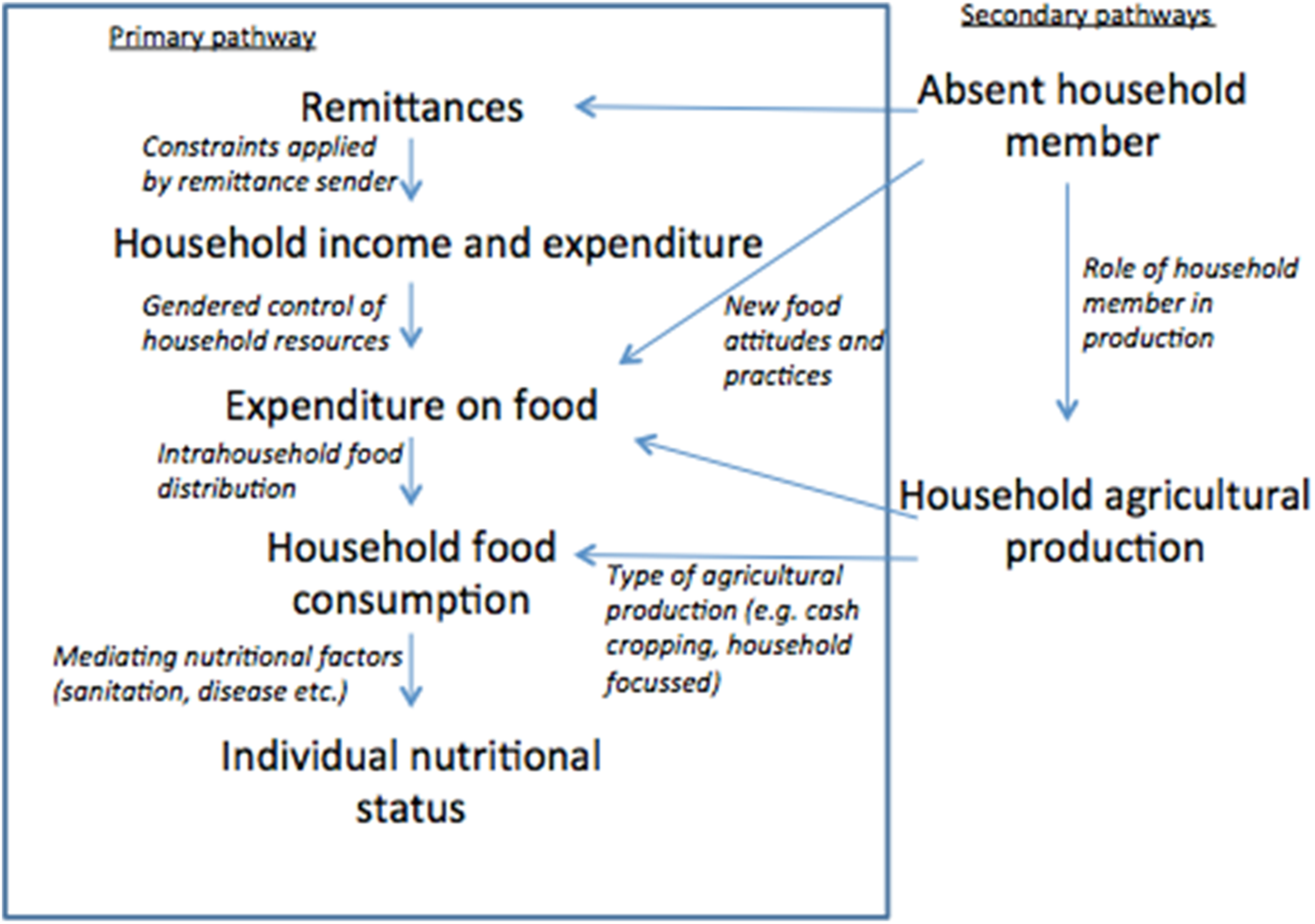
Probable pathways for the effect of remittances on nutrition.
The effect of remittances on nutrition is tightly interwoven with other dimensions of migration (Figure 1), such as the introduction of new attitudes and knowledge by returning migrants, and the absence of household members in relation to child care and food production. 17 Because remittance income is the result of an absent adult household member—potentially an agricultural worker and/or carer—it may thus contribute to a shift in consumption from home-grown to purchased food due to both labor force and additional income effects. 11 However, despite a significant literature on the effects of migration on nutrition, 17 the effect of migration on nutrition via remittances specifically is still only hypothesized and may have both positive and negative effects. In this review, we focus solely on the evidence for the effect of remittances on diets and nutrition, in order to unpack these possible effects and the pathways.
Policy and program decision makers need to be enabled to consider remittances in developing effective public health nutrition interventions. This systematic review of the impact of remittances on nutrition represents a first step toward improved understanding of the role of remittances in population nutrition and potential opportunities to support improved nutrition in the context of rising remittances.
Review Method
The authors based the systematic review on standard Cochrane systematic review methods. 18 The strengths of this approach for health-focused systematic reviews are its use of prespecified eligibility criteria in order to address a specific research question, and its aim to minimize bias using explicit, systematic methods. The review was designed to answer the question: “What is the effect of remittances on nutrition?” Inclusion criteria for this review were studies using specific data on remittance income; studies explicitly providing information on the impact of remittances specifically on aspects of food consumption, food expenditure, or on measures of nutritional status; and studies reported in English. There were no inclusion criteria based on date or on methodology, such as study type or quality.
Search terms were “remittance and nutrition” and “remittance and diet” and were applied in subject-relevant academic databases in November 2012. The search strategy was defined with high sensitivity but low specificity using broad terms such as “diet” and “nutrition” to capture as much relevant literature as possible. Each database was searched by 2 authors independently, and the search results were compiled using Endnote (© 2014 Thomson Reuters). In May 2013, after preliminary analysis, the authors included gray literature searches, in particular, to investigate academic reports by the World Bank and the International Food Policy Research Institute (IFPRI) as institutes with recognized expertise in the area, which publish high-quality reports. The authors used the same search strategy for Google Scholar, which indexes World Bank reports (reviewing the first 20 pages or 200 titles from each search), and the IFPRI e-library.
The search strategy yielded a total of 1151 academic articles and reports: PubMed (6), Web of Science (23), AGRIS (12), Proquest Social Sciences (552), CAB Abstracts (28), EconLit (6), SCOPUS (209), Science Direct (82), Google Scholar (58), and the IFPRI e-library (175). (Note that these numbers exclude duplicates within each database but retain duplicates across databases).
Five hundred and thirty-nine articles were excluded as duplicates, leaving 612 for title review (Figure 2). A further 388 articles were excluded on the basis of title, mainly articles addressing nutrition in the remittance of cancer, including 6 articles not published in English. This left 224 papers for abstract review, of which 73 papers met criteria for full text review. Excluded papers mainly addressed either remittances or nutrition and addressed the other aspect tangentially or in passing. Fifty-three of these papers were excluded based on full text review, most because they did not include specific data regarding the effects of remittances separately to the effects of migration, leaving 20 papers for inclusion.
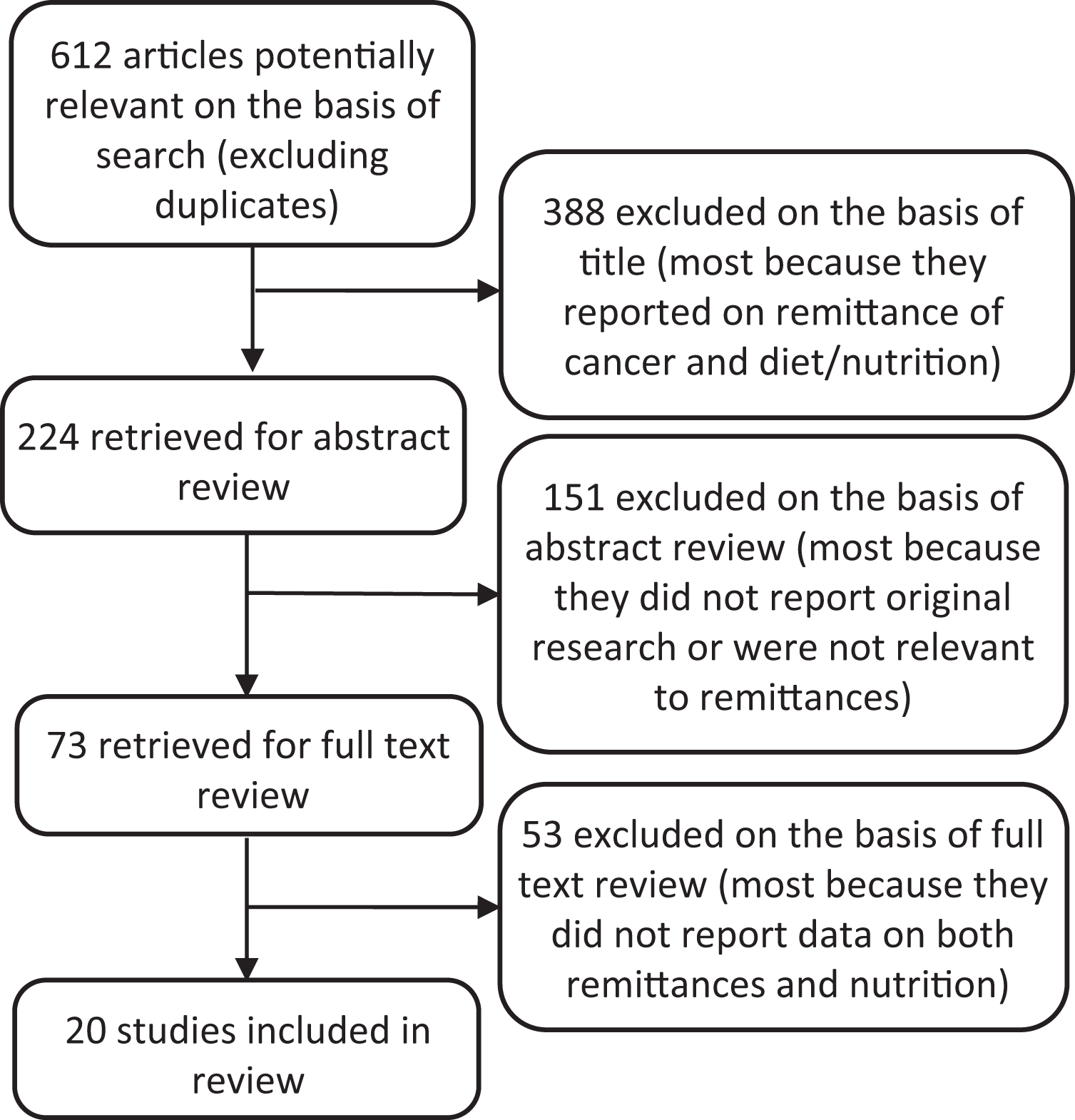
Systematic review process.
The authors used a narrative synthesis approach to analyzing the findings of the paper, given the diversity of studies. 19 This approach allows for review of diverse study types and involves describing the findings of an analysis or review using an integrated critical perspective. We also assessed study quality using the criteria from 2 study assessment checklists: the Effective Public Health Practice Project Quality Assessment Tool for Quantitative Studies 20 and the Critical Appraisal Skills Programme (CASP) Qualitative Checklist. 21
Results
The systematic review generated 20 studies, from Latin America (9), Africa (3), Asia (5), and Eastern Europe (3). Four studies were based on data from Mexico, 22 –25 3 from Nepal, 16,26,27 and 2 from Ecuador. 28,29 The remaining studies are from Nigeria, 30 Kenya, 31 Mali, 32 Jamaica, 33 El Salvador, 34 Guatemala, 35 Philippines, 36 Indonesia, 37 Moldova, 38 Bosnia Herzegovina, 39 and the Ukraine. 15 Nepal and Moldova received the highest remittances among these countries as a proportion of GDP in 2012, both over 24%. 40 El Salvador, Bosnia and Herzegovina, Jamaica, and Guatemala received remittances to the value of 10% to 20% of GDP, and the Philippines, Nigeria, Mali, Ukraine, Kenya, Ecuador, Mexico, and Indonesia less than 10%. The Philippines, Mexico, and Nigeria received the highest absolute amount of remittances, all receiving over 20 000 million in US dollar equivalent.
The study methodologies varied widely (Table 1). Of the quantitative studies, 10 studies used nationally representative household survey data, 16,22,23,26,28,29,33,35,38 one of which was longitudinal. 25 Four studies used panel survey data for households, 32,34,36,37 3 used quantitative household (village-based) surveys, 24,30,31 1 used a qualitative household (village-based) survey, 27 and 1 used in-depth interviews with migrant families and policy makers, nationally and abroad. 15 All but 3 of these studies were rated moderate in terms of quality, with 3 studies rated as weak 23,31,34 (Table 2). The most robust modeled analyses were those using multilevel, multivariate, and instrumental variable models (see Table 1 for a list of studies). The strength of these studies is their ability to control for potential confounders arising from other common experiences at the household (eg, Creighton et al 25 and Davis 35 ) and community (eg, Riosmena et al 22 ) level that might affect food expenditure, consumption, and nutrition, which include age, socioeconomic status, and gender. In contrast, simpler regression models, used by 4 reviewed studies, can be compromised by endogenous variables, which are usually present in these kinds of data. However, 2 of these other models used panel data, which enabled them to examine the impact of changing remittances received by the same households at 2 time points. 37 Of the 3 studies that only provided descriptive statistics, 2 used large nationally representative data sets. 16,38 The strength of these data sets is their representativeness, and in this context, descriptive statistics provide a useful population-level overview of the relationship between remittances and food expenditure. The other, methodologically weak, study provided a detailed assessment of household economic expenditure, food consumptions, and anthropometry for a specific rural population and thus provides high-quality, nutrition-relevant data. 31 While the 2 qualitative studies included do not provide a direct measure of impact, they are useful for understanding household experiences and describing possible pathways of impact. However, both these studies were rated as weak, methodologically, largely due to the very limited information given on study design (Table 2).
Summary of Study Methods, Data and Context, by Study Type.
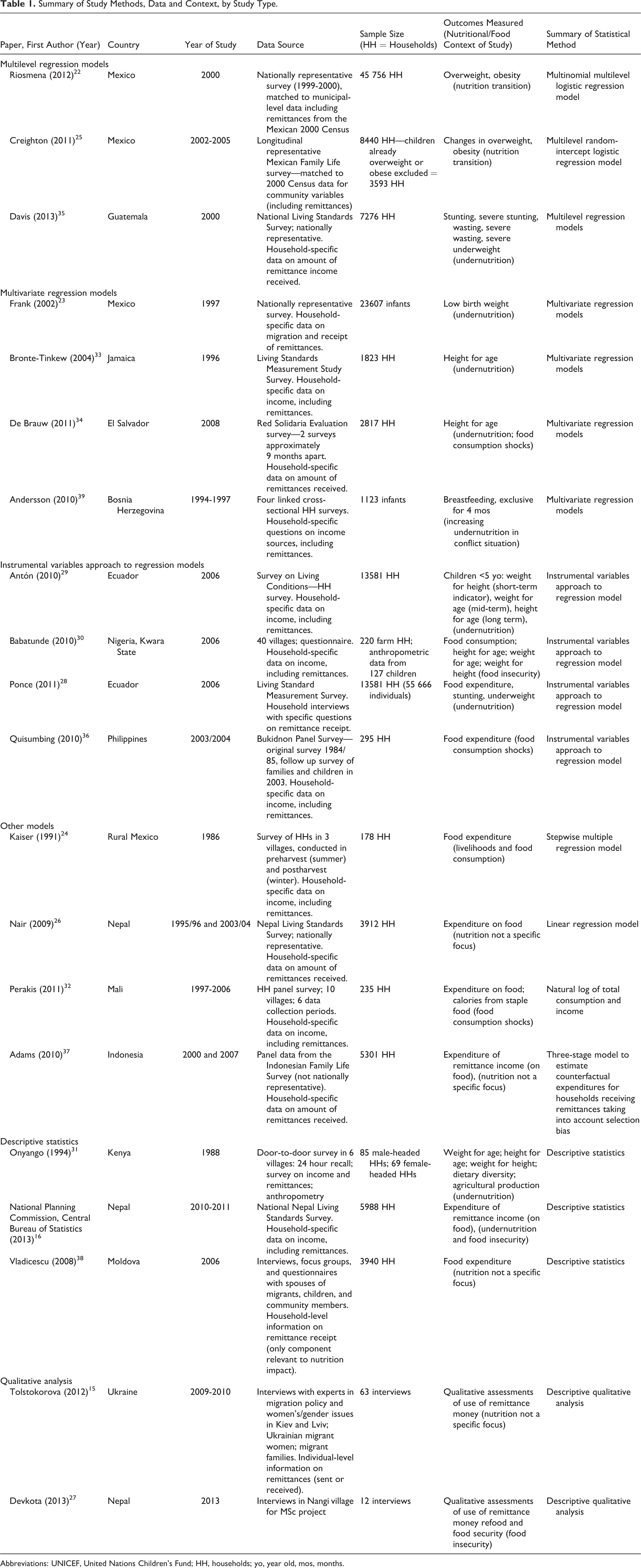
Abbreviations: UNICEF, United Nations Children’s Fund; HH, households; yo, year old, mos, months.
Assessment of Study Quality.a
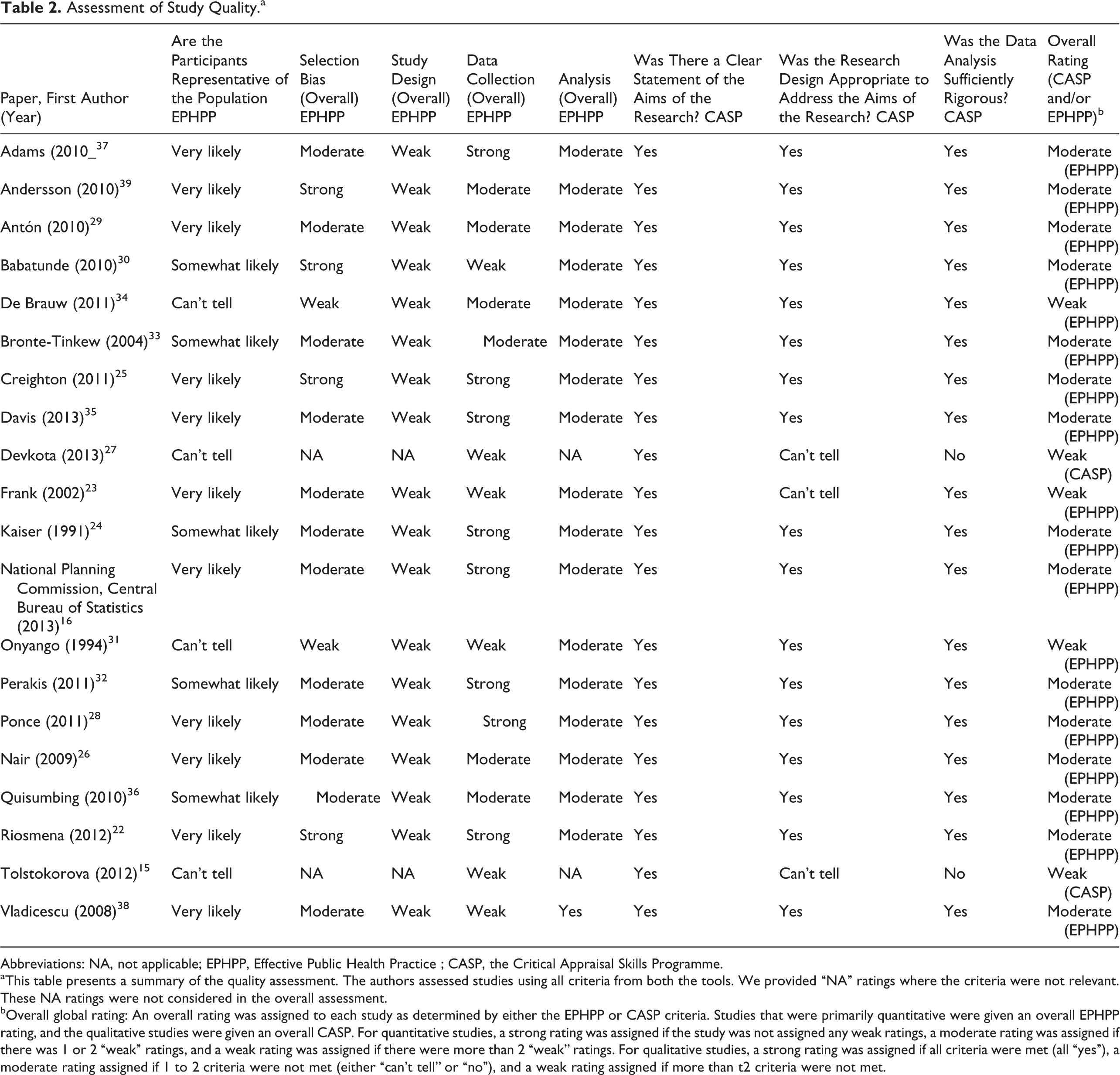
Abbreviations: NA, not applicable; EPHPP, Effective Public Health Practice ; CASP, the Critical Appraisal Skills Programme.
aThis table presents a summary of the quality assessment. The authors assessed studies using all criteria from both the tools. We provided “NA” ratings where the criteria were not relevant. These NA ratings were not considered in the overall assessment.
bOverall global rating: An overall rating was assigned to each study as determined by either the EPHPP or CASP criteria. Studies that were primarily quantitative were given an overall EPHPP rating, and the qualitative studies were given an overall CASP. For quantitative studies, a strong rating was assigned if the study was not assigned any weak ratings, a moderate rating was assigned if there was 1 or 2 “weak” ratings, and a weak rating was assigned if there were more than 2 “weak” ratings. For qualitative studies, a strong rating was assigned if all criteria were met (all “yes”), a moderate rating assigned if 1 to 2 criteria were not met (either “can’t tell” or “no”), and a weak rating assigned if more than t2 criteria were not met.
Based on the possible pathways of effect that we identified (Figure 1), we report the findings of the review according to effects on food expenditure, food consumption, and nutrition-related anthropometry. Eight studies assessed impacts on food expenditure, 5 studies assessed impacts on consumption (including quantitative measures of food consumption and breast-feeding and qualitative measures of household decision making and food consumption), and 11 studies assessed impacts on anthropometric measures (height and weight). Four studies examined more than 1 outcome measure. Half the studies focused on children’s nutrition: 9 anthropometric studies and 1 consumption study. A narrative summary of findings is presented below, with statistical details to be found in Table 3. To reduce repetition, we highlight study quality throughout the findings, only for studies rated methodologically weak.
Summary of study findings, by author.
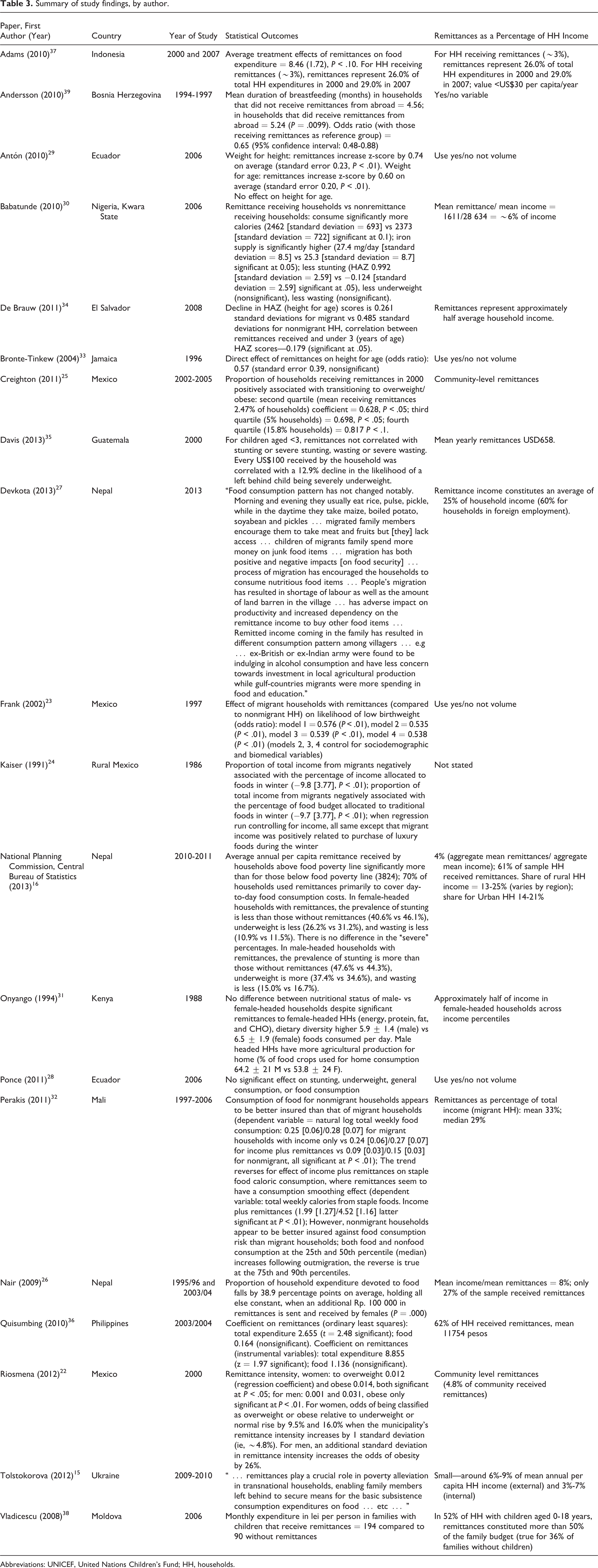
Abbreviations: UNICEF, United Nations Children’s Fund; HH, households.
Impact of Remittances on Food Expenditure
Two studies comparing nonremittance-receiving households with those that receive remittance income found that expenditure on food increases. In Indonesia, based on panel data, Adams and Cuecuecha found that households receiving remittances spent 8.5% more on foods than what they would otherwise have spent. 37 In Moldova, using a nationally representative survey, a United Nations Children’s Fund study found that monthly expenditure on food per person in families with children that receive remittances doubled. 38
Three studies found that food expenditure was unchanged by remittances. Quisumbing and McNiven found in the Philippines that remittance income increased total expenditure significantly but not food expenditure. 36 However, a study from Mali found that although food expenditure did not increase, consumption of food was better insured in households with remittance income, suggesting that remittances can “smooth” consumption by acting as an additional income source that reduces the effect of household shocks; for example, reduced income, unexpected expenses, or price increases. 32 One study in Ecuador found that remittances increased health expenditures, suggesting that remittances can assist households in responding to adverse events. 28
Two studies found that remittances were associated with a decrease in the proportion of income devoted to food, which is consistent with economic theory suggesting that as total income rises, a decreasing proportion will be spent on food (as an essential good). In rural Mexico, Kaiser and Dewey found that remittance income was negatively associated with the percentage of total income allocated to foods in winter and also with the percentage of food budget allocated to traditional foods in winter. 24 In contrast, remittance income was positively associated with luxury food purchase in winter. In Nepal, based on the National Living Standards Survey, the proportion of household expenditure devoted to food fell by 38.9 percentage points on average, holding all else constant, when an additional 100 000 Rupees (approximately 1000 USD) in remittances is sent and received by females. 26 However, this survey also showed that the average annual per capita remittance income was significantly higher for households above food poverty line than for those below the food poverty line and that 70% of households used remittances primarily to cover day-to-day food consumption costs. 16 Weak qualitative data from the Ukraine also indicate that remittances are used for basic subsistence consumption expenditures on food for family members left behind. 15
Impact of Remittances on Consumption
In Nigeria, based on a village survey, remittance-receiving households were found to consume significantly more calories than nonremittance-receiving households and to have significantly higher iron content in their food supply. However, remittances were not associated with an improvement in dietary diversity or dietary quality. 30
In contrast, a village survey in Kenya 18 years earlier found no difference in energy, protein, fat, or carbohydrate intakes between male and female-headed households, despite significant remittances to female-headed households. However, the methodology was weak. This study also found that dietary diversity was higher in remittance-receiving, female-headed households, mainly due to increased purchased foods. Male-headed households reported more agricultural production for home usage. 31
Weak qualitative data on the impact of remittances on consumption patterns from Nepal and the Ukraine suggested that remittance income is important in improving food security, 15,27 consistent with the consumption smoothing effect noted earlier. However, the study in Nepal also noted that remittance income is associated with a higher intake of purchased foods—both nutritious and “junk” food—and that there is an increased dependency on purchased foods (rather than home produced) among households with remitting migrants.
A study from Bosnia-Herzegovina, during the conflict period, found that infants in households that received remittances had a longer duration of breast-feeding. These infants were more likely to be breast-fed for 4 months compared to those in households without remittances. 39
Impact of Remittances on Measures of Nutritional Status
Nine of the 12 studies reporting the effect of remittances on nutritional status (anthropometry) were conducted in Latin America, and all but 3 of the 12 studies indicate that remittances can reduce underweight (weight for age) among children younger than 5 years of age but may have a limited effect on chronic undernutrition (stunting). In Guatemala, remittances were associated with a 12.9% decline in the likelihood of a left behind child (ie, child of a migrant parent) being severely underweight for every US$100 remittance income received, but remittances were not associated with stunting or severe stunting (height for age) and wasting or severe wasting (weight for height) in children younger than 5 years of age. 35 In Ecuador, remittances were found to reduce underweight (weight for height and weight for age z-scores) but had no effect on stunting (height for age z-scores). 29 In Nepal, this was only true for female-headed households, in which the prevalence of stunting was less, underweight was less, and wasting was less compared to those without remittances. 16 In male-headed households with remittances, the prevalence of stunting was more than those without remittances, underweight was more, and wasting was less.
However, 2 studies found a positive effect on stunting and 1 on low birthweight. In El Salvador, a panel survey found a lesser decline in height for age scores during the food price crisis for children in migrant households compared to nonmigrant. 41 Other, weaker evidence shows remittances were correlated with reduced stunting represented as height for age scores. 34 Similarly, in Nigeria, children in remittance-receiving households were significantly less likely to be stunted than those in nonremittance-receiving households, although the findings of reduced underweight and wasting were nonsignificant. 30 In Mexico, weak evidence indicates that infants in migrant households with remittances were less likely than nonmigrant households to have a low birthweight. 23
In contrast, 3 studies found no effect of remittances on measures of nutritional status in children. In Jamaica, a study using regression analysis found a positive but nonsignificant effect on stunting, 33 and in Ecuador, no significant effect on stunting or underweight compared to nonremitting households was found. 28 An earlier, methodologically weak, survey in Kenya found no difference between the nutritional status of children (weight for age, height for age, weight for height) in male compared to female-headed households, despite significant remittances to female-headed households. 31
In terms of overnutrition, 3 recent studies from Mexico have indicated that remittance receipt by households, aggregated at the community level—which encompasses any flow-on effects of having more money spent in community, by those receiving remittance income—is associated with increased rates of obesity among children and adults. One study found that community remittance intensity was correlated with increased rates of overweight and obesity in women and obesity in men. 22 For women, odds of being classified as overweight or obese relative to underweight or normal rise by 9.5% and 16.0%, respectively, when the municipality’s remittance intensity increases by one standard deviation. For men, an additional standard deviation in remittance intensity increases the odds of obesity by 26%. 22 Another study found that children living in communities where relatively more households received remittances are significantly more likely to become overweight or obese. 25
Discussion
This systematic review identified a limited amount of information on the impact of remittances on nutrition, although it does provide indicative evidence for an effect of remittances on food expenditure, consumption, and nutritional status. The studies that have been conducted vary widely by population and methodology and are low-to-moderate quality, which makes it challenging to assess effects. The small number of studies identified by this review of both published and gray literature indicates that more research into the effect of remittances on dietary patterns and nutrition specifically is needed—both their primary effects on food expenditure at the household level, including in relation to dietary diversity, and also their secondary effects at the community level. In addition, no studies have investigated whether remittance income might have any effects related to the dual burden of malnutrition within households, which has been identified as a potential concern as a result of uneven intrahousehold food distribution. 42
However, this review does shed some light on the possible implications of remittances for public health nutrition. With respect to undernutrition, remittances increase access to (purchased) food and may have a consumption smoothing effect, reducing vulnerability of households to crises and leading to improved food security. This is supported by the majority of studies on undernutrition that were reviewed here, finding improvements in markers of underweight, particularly in children. However, remittances are generally not long-term sources of income, which may help to explain the generally negative findings of the papers reviewed with respect to stunting, which is a marker of longer term chronic undernourishment. One additional factor relevant to effects on undernutrition that was highlighted in 2 papers reviewed is that, at a population level, it is often not the poorest who migrate (given the costs involved in relocation). 16,37 As a result, strategies to increase remittance income may not generate substantial long-term gains in reducing undernutrition, which is often seen in vulnerable resource poor populations.
Seven studies also suggest that the extra income from remittances may compound trends toward purchasing less healthy (nontraditional) foods and may thus have associations with the nutrition transition. First, 2 studies reviewed from Mexico and Kenya suggested that remittances, as cash income, can increase consumption of purchased foods, compared to agricultural production, and may reduce consumption of traditional foods. 24,31 Second, a study in Nigeria found that increased calorie intake was not accompanied by a corresponding increase in diet quality among remittance receivers, which suggests that it is possible for this additional purchased food to contribute little nutritionally to diets. 30 This is similarly reflected by the findings of the study in Mexico, in which remittances to rural areas were found to increase purchase of “luxury” food items. 24 Third, an association between remittance income and overweight/obesity was reported in 3 studies from Mexico, which based on the above may be due to increased purchase of nontraditional foods, that add little of nutritional value (other than calories) to the diet. 22,23,25 This hypothesis is supported by studies indicating that additional cash coming into households has been seen in other, nonremittance, contexts to have links to overweight and overnutrition. For example, the cash transfer component of the Mexican Oportunidades program has been found to be associated with significantly higher prevalence of overweight and obesity as well as diastolic blood pressure. 43 Similarly, the Brazilian Bolsa Familia cash transfer program was found to be associated with higher consumption of sugar and sugar-sweetened beverages. 44 This effect would be compounded in situations where it is the better-off who migrate (as noted earlier), as these populations are at risk of overweight and obesity in LMIC. 45
The review is limited in its exclusion of non-English language literature. It is also limited in its focus on identifying the specific impacts of remittances on nutrition and diet, as there are many possible impacts of migration more generally on nutrition and food consumption/expenditure, as well as agricultural production, which go beyond the scope of this review. There were a number of studies identified that presented data on the impact of migration on the nutrition of households left behind (eg, Azzarri and Zezza 46 and Karamba et al 47 ); but these did not isolate remittance impacts specifically and were therefore excluded. Another limitation is that analysis of any country-level effects on household responses to remittances was beyond the scope of this review. There may be complex sociocultural dynamics at play, as well as broader effects relating to food skills and knowledge, which influence household-level responses. There may also be cultural, social, and economic differences between countries that influence remittance flows and utilization. These potential system-wide effects may not be apparent from the limited number of studies conducted to date but would be important to consider in designing future studies.
The findings of this review suggest that remittances could have a positive impact for food security and undernutrition. However, programs to ensure that those households receiving remittances move beyond just meeting sufficient calories and improve dietary quality could create further benefits. For example, through targeting remittance receivers with education regarding the importance of investments in improving nutrition overall, including increased consumption of high nutritional-quality foods, investments in sanitation and hygiene, and education, and with counseling for financial management at the household level.
Given the potential role of remittances in facilitating the nutrition transition, indicated by this review, a constructive policy response might also draw on the interventions identified in the World Health Organization’s Global Action Plan on Noncommunicable Diseases(NCDs). 48 In particular, policies to improve the acceptability, affordability, and accessibility of healthier foods in local markets and retail venues that target pricing, labeling, production, and supply of foods like fruit, vegetables, and nutrient-rich staple foods. These could be augmented by interventions specifically designed to influence expenditure of remittances toward more nutritious foods. For example, nutrition information provision and food skills workshops could target receivers of remittances through placement of information at venues for remittance receipt, such as Western Union, or through the use of mobile technology that provides nutrition messaging linked to remittance receipt.
The review also highlighted some specific research gaps related to the effect of remittances on nutrition. More research is needed on the possible interactive effect on nutrition of the agricultural effects of migration and the receipt of remittance income. For example, the extent to which access to credit and technology (enabled by remittances) outweighs the absence of an adult household member or the extent to which changes in agricultural production with an absent household member affects nutritional outcomes. Although remittances provide income, there is likely to be an increased burden on women and the feminization of agriculture due to outmigration of the working-age male population. 49 This also relates to the finding that the gender of the household head receiving remittances was another important predictor of nutritional outcomes in a few studies, reflecting broader evidence of the interrelationship of income and gender in influencing nutrition. 50,51 This warrants greater exploration of household decision making in different contexts and might influence how remittances and support for vulnerable households are directed. Other areas where further research is needed are regarding possible effects related to the dual burden of malnutrition within households and differential effects on nutrition by household economic status. To address these research gaps, future studies could consider the inclusion of measures of household decision making in relation to remittance expenditure, and particularly considerations in decisions regarding own production and food purchase, which would help to identify specific opportunities to improve nutrition in communities receiving high remittance incomes. In addition, studies on migration and nutrition more broadly need to consider the role of remittances specifically, and where possible collect data on remittance income and expenditure (disaggregated to consider nutrition-related food expenditure) in relation to markers of undernutrition and diet-related NCD risk factors.
Footnotes
Declaration of Conflicting Interests
The author(s) declared no potential conflicts of interest with respect to the research, authorship, and/or publication of this article.
Funding
The author(s) received no financial support for the research, authorship, and/or publication of this article.