



Abstract
First vehicle purchase is a crucial decision as it dictates households’ travel behavior which consequently impacts traffic congestion, emissions, and energy consumption. This paper focuses on investigating first vehicle purchase timing and type choices. The timing of the first vehicle purchase is investigated using a hazard-based duration model. This method accommodates the continuous time dimension of households’ car-free state and transitions to the car ownership state through its termination. Vehicle type choice considers three choice dimensions: body type, vintage type, and presence of technology. A joint discrete choice model is developed for vehicle types which captures the correlation between different choice dimensions. The timing and type choice models are developed in a nested structure using the logsum parameters. The results confirm the presence of significant correlations between vehicle type choices. The timing model also retains a statistically significant logsum from the vehicle type choice model. The study confirms that life-cycle events and longer-term changes, built-environment characteristics of the residence, mobility tool ownership, and socio-demographic attributes are significant determinants of first vehicle purchase decisions. The birth of a child, residential relocation, and the addition of a job are likely to accelerate the first vehicle purchase whereas the loss of a job has the opposite effect. Urban dwellers are likely to take a longer duration to transition from being car-free to owning a car compared with others. The findings provide important insights into the factors that delay the first vehicle purchase decisions and encourage the ownership of more efficient vehicles.
Keywords
Vehicle ownership is a medium-term decision, interacting with long-term decisions such as residential relocation ( 1 ), and dictating short-term travel mode choice decisions, and the consequent carbon footprint of an individual/household. Given the crucial nature of this decision, several studies have examined vehicle ownership decisions ( 2 – 4 ). Evidence suggests that younger adults are becoming less inclined toward owning a car ( 5 , 6 ). So, the question is: are younger adults eventually becoming car owners over time as they progress along their life course? This puts forward the idea of understanding the first-time vehicle purchase decision, which will provide an understanding of what factors influence someone to transition from the vehicle-free to vehicle ownership lifestyle. This is a crucial decision given the substantial financial investment as well as the possibility for change in vehicle-dependent travel behavior associated with it. In addition to this timing of the first vehicle purchase decision, another decision that is taken at the same time is what type of vehicle to purchase. Vehicle type involves the choice of multiple dimensions such as body type and vintage (i.e., the age of the vehicle), which are the most commonly used choice dimensions in the existing literature of vehicle type choice decisions ( 2 , 7 ). The type of vehicle owned dictates vehicle usage which impacts vehicular energy consumption, emissions, and traffic congestion. For example, larger vehicles such as vans, pick-up trucks, and sport utility vehicles (SUVs) are often equipped with larger and less fuel-efficient engines that have higher emission rates. The vehicle performance factors such as emission and pollution control systems and fuel efficiency, among others, may vary depending on vehicle vintage. Newer vehicles are often superior to older vehicles in regard to vehicle performance factors such as emission and pollution control systems and can potentially be more environmentally sustainable. Therefore, understanding households’ preferences for body and vintage types of vehicles is critical for the accurate prediction of energy consumption and emission and for testing the transport network performance. Additionally, with recent advancements in vehicle technology, advanced technology features are integrated into modern vehicles which ensure higher safety, comfort, and convenience. As a result, the choice of vehicle technology is another important dimension that needs to be considered along with the vehicle body and vintage choices.
The aim of this study is to investigate households’ first vehicle purchase that involves the following decisions: 1) timing of first vehicle purchase and 2) vehicle type choice. The decision of the first vehicle purchase is assumed to have a continuous time dimension, where households have a car-free state in their lifetime and transition into a car ownership state through the purchase of the first vehicle. To capture this continuous time dimension of the decision, a hazard-based duration modeling technique has been adopted. The study explores how life-cycle events such as the birth of a child and longer-term changes such as change in residence can influence this decision. In the case of vehicle type choice, a joint probit-based model is developed for vehicle body type, vintage type, and the presence of technology. The assumption is that households may not consider these vehicle type choice dimensions separately, rather they are likely to assess and consider all the dimensions simultaneously resulting in underlying correlation across the choice dimensions. The joint model captures the correlation among the vehicle type dimensions. The vehicle type chosen is also assumed to influence the timing decision. Therefore, a nested modeling structure is adopted to accommodate this influence through a logsum parameter. This study uses data collected through a retrospective survey conducted in the Okanagan region of British Columbia (BC), Canada. In addition to the life-cycle events, several exogenous factors such as socio-demographic, mobility tool ownership, and built environment attributes have been tested.
Literature Review
The existing studies made substantial efforts in modeling vehicle ownership which can be broadly categorized into static and dynamic models ( 4 ). The static models deal with cross-sectional data which captures the vehicle ownership of the household for only a single temporal point. Most of these static studies investigated vehicle ownership by exploring the vehicle ownership level ( 8 , 9 ), vehicle type choice that includes body and vintage type choices, and vehicle usage ( 7 , 10 ), among others. Vehicle ownership levels were modeled either as ordered or discrete choices whereas vehicle type choices were modeled as discrete choices. In the case of vehicle type choice, the majority of the studies used hierarchical and joint modeling methods to model vehicle body and vintage type choices. For instance, a study by Mohammadian and Miller ( 2 ) investigated vehicle body and vintage preferences using a nested logit model. They found that households’ demographics such as age, income, household composition, education, and occupation, and vehicle specifications such as price, space, and performance factors, among others, are the key factors affecting their vehicle choice. In addition, the built-environment and neighborhood attributes of the residence such as living near the urban centers, bus stops, and schools, and having access to more employment affect the preference for vehicles ( 11 , 12 ).
Several studies also explored the dynamics of households’ vehicle ownership by investigating vehicle transaction decisions. The majority of these adopted hazard-based duration and competing risks modeling techniques to predict the duration after which households make vehicle transactions. For example, Mohammadian and Rashidi ( 3 ) developed a competing risk duration model to investigate vehicle ownership as a dynamic decision of adding, disposing, and trading a vehicle in the Toronto area. Their findings suggest that socio-demographic attributes, such as income, age, household composition, ownership of a driver’s license, and vehicle fleet size and composition significantly affect vehicle transaction decisions. Using a similar modeling technique, a study by Yamamoto et al. ( 13 ) found that changes in household characteristics such as household composition and home ownership type significantly affect vehicle transactions. Major life-cycle events such as the birth of a child, change of job, and residential relocation significantly affect individuals’ daily activity and travel patterns and therefore, can trigger a change in the vehicle fleet. For example, Oakil et al. (2016) conducted a study in the Netherlands and found that individuals are more likely to acquire a vehicle right after entering into parenthood. A recent study by Gu et al. ( 14 ) investigated the heterogeneity in the relationship between households’ different life cycle events and vehicle transaction decisions by developing a latent segmentation-based competing risk model. This study identified two segments in the population—younger households with no car, and older households that owned a car. The first segment of the population is found to be more sensitive toward household characteristics such as the birth of a child and starting a conjugal relationship. On the other hand, the latter segment is likely to be more sensitive toward residential relocation and job change.
Although the above-mentioned studies explored households’ dynamic vehicle ownership, they did not specifically consider the first vehicle purchase decision. Households’ transition from a no-car ownership state to owning the first car is a significant decision as it might trigger a modal shift followed by a change in activity and travel patterns ( 15 ). Among the few studies, Khan and Habib ( 16 ) investigated households’ first vehicle purchase timing and their vehicle body type choices. They adopted a life-oriented approach to modeling households’ transition from a no-vehicle ownership stage to owning a car and then becoming a vehicle-free household. The life-oriented approach also known as the life-course perspective accommodates the inter-dependencies between the decisions and changes occurring in different domains of life such as travel behavior, residence, family life, family budgets, neighborhood, leisure, and recreation domain ( 17 , 18 ). The findings of the study confirm that the timing of the first vehicle transaction and the corresponding vehicle choice decision is significantly dictated by the life-cycle events (e.g., birth of a child and death of a member), and changes and experiences in household demographics over the lifetime (e.g., residential relocation and addition of a job). However, this study did not consider modeling vehicle vintage and advanced vehicle technology choices for the first vehicle and test the effect of vehicle type choices on transaction timing. To address this gap, this study aims to model households’ first vehicle purchase timing and their vehicle type choices accommodating vehicle body, vintage, and presence of technology. Furthermore, the inter-dependencies between the vehicle type choices and vehicle transaction timing are explored.
Methodology
Vehicle Type Choice
In transportation literature, the jointness or interdependencies among different decision processes has been explored using different modeling approaches. For example, copula-based modeling technique ( 1 ) and capturing common unobserved factors through joint probability distribution are a few of the notable approaches for joint modeling ( 2 – 4 ). This study uses multi-dimensional probit model to investigate households’ vehicle type choices including vehicle body, vintage, and presence of technology during their first vehicle purchase. The modeling technique captures the correlation among the unobserved factors affecting different vehicle type choices simultaneously. Additionally, the modeling formulation facilitates the estimation of all the parameters associated with different vehicle types simultaneously in a single step similar to the traditional maximum-likelihood approach and identified as a joint model in the literature ( 3 , 4 ).
The utility derived from each vehicle type for household

Here,
The error term is assumed to have a covariance structure that reveals the correlation among the alternatives within and across vehicle type dimensions. Now, considering the vehicle body type dimension, the stacked vector of error terms

Now, if a household chooses alternative

Since

where

Similar to Equation 3, the vector of utility differentials for vehicle vintage (


Now, if we consider all the choice dimensions together, the stacked vector of all the utility differentials for household

where
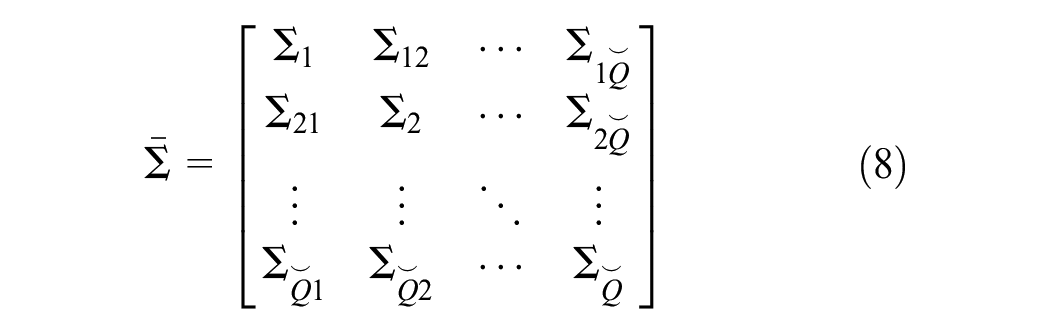
The off-diagonal elements of the above covariance matrix reveal the dependency between the utility differentials of the alternatives within and across the choice dimensions with respect to the chosen alternative ( 20 ).
The likelihood function for each household can be represented as follows:

where

where
While estimating the model, two critical issues must be addressed—the model should be theoretically identified and the covariance matrix should be positive definite. Both of these issues were resolved following Paleti ( 22 ). Since only the utility differences matter for discrete choice models, the utility differentials are taken with respect to the base alternative for each vehicle type dimension to make all the elements of the covariance matrix identifiable. This matrix is of similar dimension to the one shown in Equation 5 except that the utility differences are taken with respect to the base alternative instead of the chosen alternative for a household. This way the top left diagonal element of the covariance matrix for each vehicle type dimension can be fixed to 1 to account for scale invariance. Finally, the positive definiteness is ensured by estimating the Cholesky matrix of the resulting covariance matrix after identification as the parameters.
Vehicle Purchase Timing
A hazard-based duration modeling technique is used to investigate the timing when the failure of the no-vehicle ownership state of the household occurs thus triggering the first car purchase. The probability of failure

where household

where

where

where
The survival function

Finally, the likelihood function takes the following form:

where
Data
Data Sources
This study primarily draws data from the travel technology and mobility survey (TTMS) conducted in the Okanagan region of BC, Canada in 2019. TTMS is a retrospective survey that collected historical data concerning the respondents’ residential and employment history, vehicle ownership records, technology ownership, travel characteristics, socio-demographics, and life-cycle events. The residential history component includes information concerning the location of the residences, the time and reason for residential relocation, home ownership type, and dwelling attributes (e.g., price, number of bedrooms, dwelling type, etc.). The vehicle ownership records include information concerning each vehicle currently and previously owned by the household. For each vehicle, respondents were asked to provide information about the year, make, model, trim, purchase and disposal year, purchase price, and the type of technology available in the vehicle. TTMS also included information about the availability of different technology devices in the household such as smartphones, laptops, desktops, Google Homes, and televisions. In addition, the travel characteristics component collected information concerning travel modes, subscriptions to rideshare services, and the number of transit passes and bikes in the household. Among the socio-demographic characteristics, respondents were asked to provide information concerning annual household income, household size, number of children, employment status, and occupation. All of this information was collected for each of the current and previous residences from which the corresponding data during the first vehicle purchase is extracted.
TTMS includes a life-cycle event calendar component that collects information on the years in which different key events occurred in the household, including the birth of a child, death of a member, member moved-in and moved-out, marriage, divorce, change and loss of a job, retirement, and starting of school. The timing of these events, collected as part of the survey, allows for the identification of key life events occurring at the time of the first vehicle purchase.
Several secondary data sources were used in the study. For instance, the locations of different points of interest such as restaurants, schools, bus stops, and so forth were collected from the enhanced points of interest (EPOI) dataset. In addition, neighborhood characteristics of the residential and work locations such as population density, dwelling density, and employment rate, among others were extracted from Statistics Canada at the dissemination area level. Finally, land use-related information such as areas of residential, commercial, and other lands was extracted from the central Okanagan’s open data platform.
The sample includes 525 households that purchased their first vehicle. Although the sample is not reasonably large, it was considered for modeling exercise following many previous studies that used similar sizes of samples for modeling such decisions. Notably, Khan and Habib ( 16 ) investigated households’ vehicle ownership state and type choices in Halifax, Canada using a sample consisting of 475 households. One of the major reasons for having a smaller sample is the collection of retrospective data in small-scale cities in Canada with relatively low populations. Collecting retrospective data is often difficult yet one of the most cost-effective ways of collecting historical information of the households. However, it puts a lot of burden on the respondents as it involves recalling memories which might result in incomplete and missing information and thus a smaller sample.
Vehicle Type Choices
The vehicle specification of each vehicle owned by the household was utilized to create the choice sets of the vehicle body, vintage, and presence of technology. According to the body size, vehicles were categorized into cars including subcompact cars, compact cars, midsize or large cars, and larger vehicles including SUVs, and vans or trucks. The example of vehicles included in each of the body type categories can be found below:
Subcompact (e.g., Honda Fit, Toyota Yaris, Toyota Echo, Mini Cooper, etc.)
Compact (e.g., Toyota Corolla, Honda Civic, Hyundai Accent, Mazda 3, etc.)
Midsize/large car (e.g., Honda Accord, Toyota Camry, Chevrolet Impala, Mazda 6, Hyundai Sonata, Ford Fusion, etc.)
SUV (e.g., Acura MDX, Honda CR-V, Toyota RAV4, Ford Escape, BMW X5, etc.)
Van/truck (e.g., Honda Ridgeline, RAM 1500, Ford F-150, Toyota Sienna, Toyota Venza, Honda Odyssey, Dodge Caravan, etc.)
In the case of vintage, vehicles were categorized as new and used vehicles based on their year of purchase and make year. Any vehicle less than one year old is considered new and the rest are considered as used vehicles. Finally, the presence of technology is a binary choice where the vehicles are considered to have advanced technology if any of the advanced features such as blind spot detection, lane-keep assist, parking assist, and autonomous emergency stop are available in the vehicle. The share of subcompact cars, compact cars, midsize/large cars, SUVs, and vans/trucks in the sample is 11, 22, 22% 30, and 15%, respectively. Because of the small proportions of large cars (8%) and passenger trucks (4%) in the sample, these categories were combined with their closest counterparts to ensure a more balanced sample distribution of these vehicles for modeling purposes. For instance, the large cars were combined with midsize cars, while trucks were combined with vans. In the case of vintage, the sample includes 54% new and 46 % used vehicles. Finally, 18% of the first purchased vehicles were found to have advanced technology in the vehicle.
First Vehicle Purchase Timing
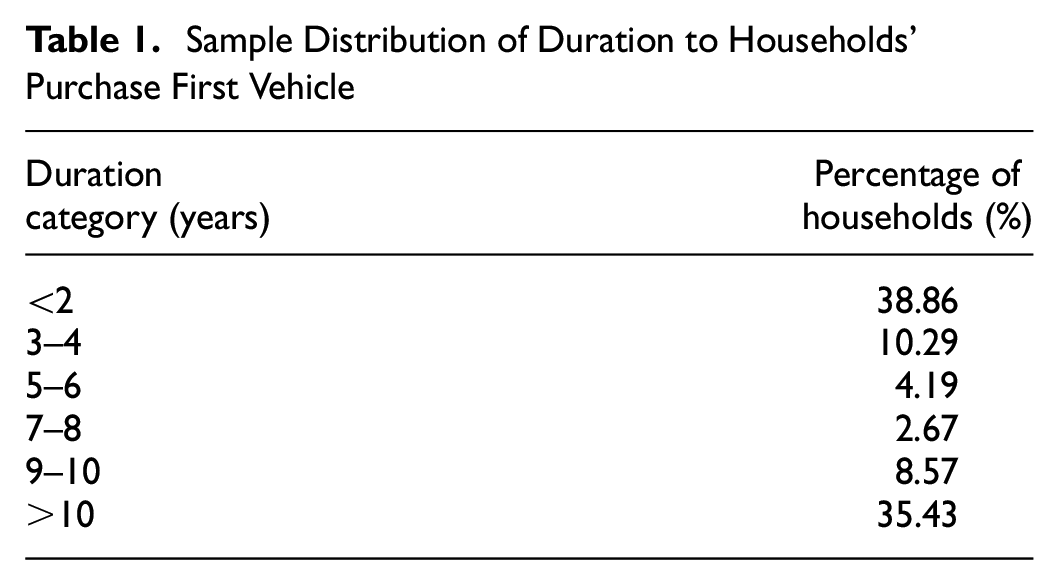
The first vehicle purchase timing is investigated using a hazard-based duration modeling technique. The model predicts the duration in years after which households purchase their first vehicles. The censoring issue often arises in the case of hazard duration models which must be dealt with to avoid any estimation bias. The right censoring issue is resolved by taking a survival approach in the modeling ( 1 ). Households that do not make their first vehicle transaction before the survey end date are considered right-censored. The left censoring issue in the data is dealt with by considering the duration of the first vehicle purchase since moving to central Okanagan. Any vehicle owned by the household before moving to Okanagan is left-censored. The average duration to purchase the first vehicle in the sample is found to be 10.19 years. Table 1 shows the percentage of households with varying durations of the car-free stage.
Sample Distribution of Duration to Households’ Purchase First Vehicle
Results and Discussion
Table 2 represents the summary statistics and the description of different variables used in vehicle purchase timing and vehicle type choice models. A wide variety of variables are tested in the model which are categorized as life-cycle events and longer-term changes, built-environment attributes, mobility tools, and socio-demographics. The life-cycle events include the birth of a child and a member moving in or out. The event of residential relocation and addition, change, and loss of a job are considered longer-term changes. Among the built-environment attributes, land use index (following Bhat and Gossen [ 24 ]), area of residential land use, distance to the nearest bus stop from the residence, number of bus stops near the residence, distance to the urban center, and the employment rate is tested in the model. The mobility tool variables include the ownership of bikes and transit passes in the household. Finally, the socio-demographic attributes include household income, age, household composition, home ownership type, and dwelling types.
Summary Statistics of the Variables Used in the Models
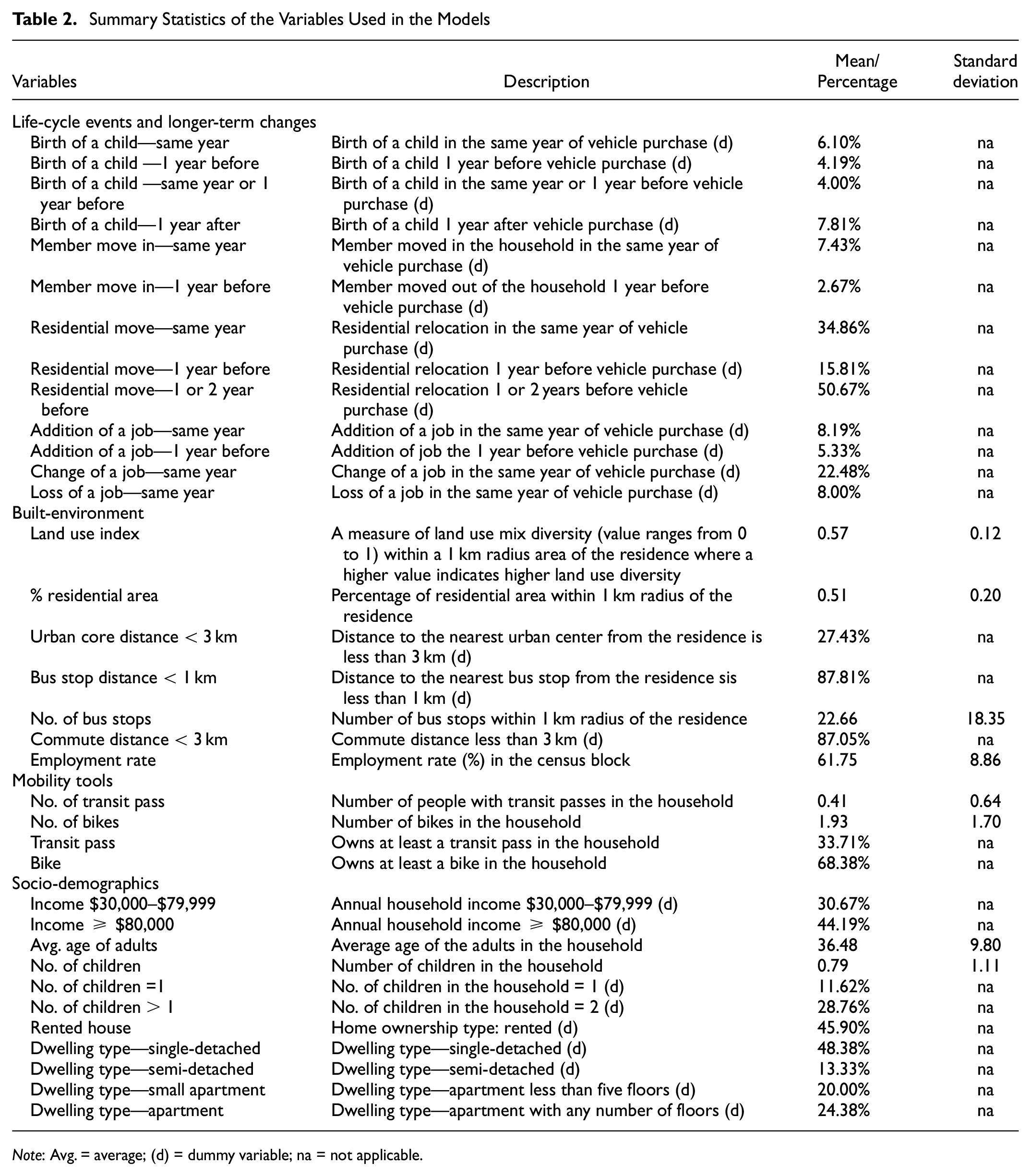
Note: Avg. = average; (d) = dummy variable; na = not applicable.
Vehicle Type Choice
The comparisons of goodness-of-fit measures between the joint model and the independent model without correlation are shown in Table 3. The joint model with correlation is found to yield lower Akaike information criterion (AIC) and Bayesian information criterion (BIC) values compared with the independent model and therefore, indicates a better model fit. Additionally, the likelihood ratio (LR) test performed on the models results in an LR value of 44.66 which is greater than the critical chi-squared value for two degrees of freedom (5.99). Therefore, the hypothesis of correlation between different vehicle type choices cannot be rejected and should be accommodated in the model for better model fit.
Comparison of Goodness-of-Fit Measures of the Models
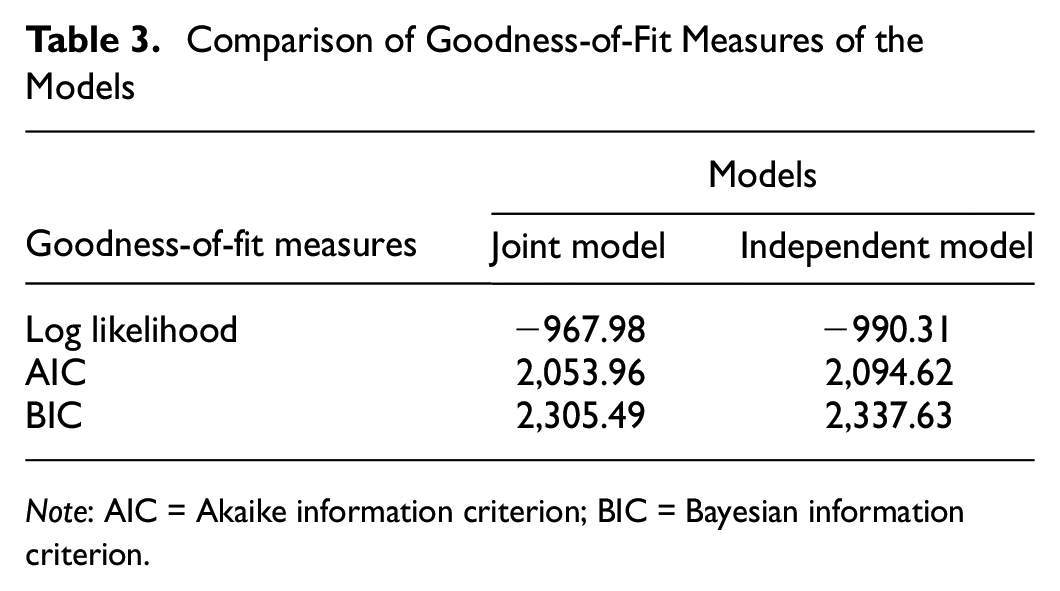
Note: AIC = Akaike information criterion; BIC = Bayesian information criterion.
Vehicle Body Type
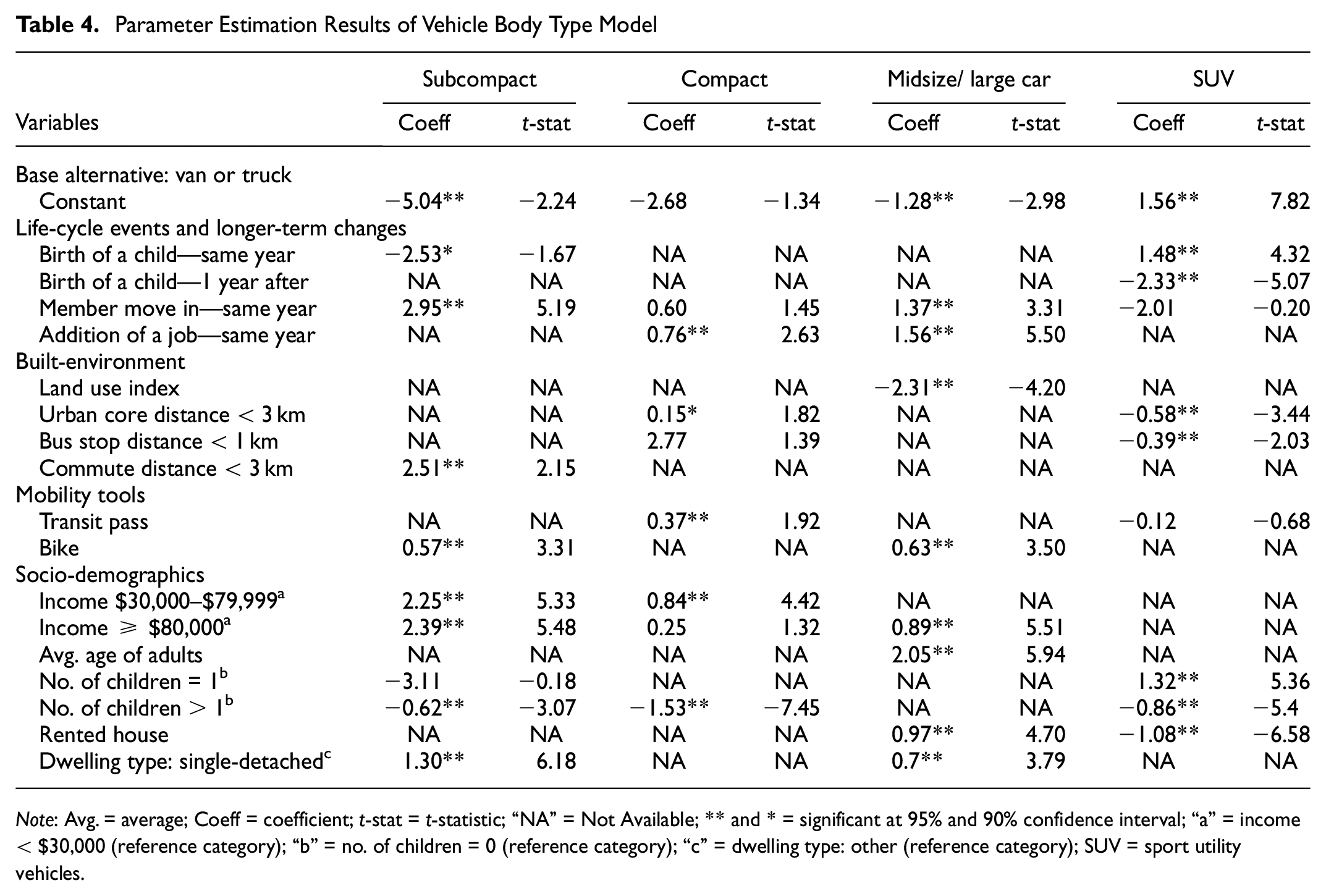
The model results for vehicle body type choice during the first vehicle purchase of the households is presented in Table 4. The results reveal the statistically significant effects of households’ life-cycle events and longer-term changes, built-environment characteristics, mobility tool ownership, and socio-demographic attributes on their choice of the first vehicle. Among the life cycle events, the birth of a child in the same year of vehicle purchase is found to have a positive effect on the preference for larger vehicles (e.g., SUV) whereas an opposite level of preference is found for smaller cars (e.g., subcompact vehicles). The presence of children often requires additional cargo space for carrying childcare equipment in the car which might affect households’ preference for larger vehicles. On the other hand, if the birth of a child occurred after one year of the first vehicle purchase, households are less likely to prefer such larger vehicles. In addition, a member moving into the household in the same year of the vehicle purchase is found to have a statistically significant effect on households’ vehicle type preferences. The model results suggest that households are more inclined toward smaller or midsize/large cars, and less inclined toward larger vehicles. Among the longer-term changes, the addition of a job has a positive and significant effect on the preference for compact and midsize/large cars. Interestingly, a higher coefficient for midsize/large cars than compact cars indicates a higher preference for midsize/large cars. The addition of a job indicates a possible increase in household income and thus might provide the financial ability to purchase bigger cars such as compact and midsize/large cars than subcompact cars. This result implies the added financial flexibility that comes with the addition of a job which allows the household to purchase comparatively bigger cars than the subcompact cars. However, The result may also reflect the cautious approach by first-time vehicle purchasers, who might prefer compact and midsize cars over larger vehicle options like SUVs and vans/trucks because of the financial implications.
Parameter Estimation Results of Vehicle Body Type Model
Note: Avg. = average; Coeff = coefficient; t-stat = t-statistic; “NA” = Not Available; ** and * = significant at 95% and 90% confidence interval; “a” = income < $30,000 (reference category); “b” = no. of children = 0 (reference category); “c” = dwelling type: other (reference category); SUV = sport utility vehicles.
In the case of built-environment attributes, the land use mix diversity near the residence, distance to the nearest urban center and bus stop from the residence, and commute distance are found to have influences on households’ first vehicle preference. For example, individuals living closer to the urban center and bus stop, and having lower commute distance are more likely to prefer subcompact and compact vehicles and less likely to prefer SUVs as their first vehicle. Additionally, individuals living in high land use mix areas are more likely to prefer midsize/large cars. These results indicate that first-time vehicle owners living in high-density urban areas are more inclined toward smaller vehicles whereas suburban dwellers are more inclined toward larger vehicles. These findings are consistent with the findings of Khan and Habib ( 16 ) which identified the perceived benefits of owning smaller vehicles in limited parking spaces and heavy traffic which is a very common scenario in high-density urban areas. In the case of mobility tools, owning a transit pass has a significant positive association with the preference for compact cars. However, households with a transit pass are less likely to purchase an SUV as their first vehicle. Transit passes essentially provide access to a travel mode that might serve the mobility needs of the household members and thus households might not need to own a larger vehicle as their first vehicle. Furthermore, owning a bike has a significant positive effect on the preference for midsize/large cars. Bike owners might be more inclined toward active transportation and more environment-concerned which might lead them to prefer smaller and more efficient vehicles ( 25 ).
The final category of attributes in the vehicle body type choice model is the socio-economic characteristics of the households which includes household income, age, number of children, home ownership type, and dwelling type. Mid-income (annual income $30,000–$79,999) and high-income (annual income ≥ $80,000) are found to have a higher likelihood of preferring subcompact and compact cars compared with low-income households. In the case of midsize/large cars, high-income households are likely to have higher preferences compared with low-income and mid-income households.
The results also suggest that the average age of the adults in the household is also found to be a statistically significant factor that positively affects their preference for midsize/large cars. Older adults are likely to prefer the comfort and convenience of driving a relatively bigger car and therefore might opt for midsize/large cars as their first vehicle ( 16 ). The presence of children is another important factor that influences household vehicle body type choice. Households with one child and more than one child are less likely to prefer subcompact cars. On the other hand households with one child are likely to prefer SUVs. Interestingly, the preference for SUVs is found to be less if the household has more than one child. With a higher number of children, households might require more space, and therefore smaller cars and even SUVs might be insufficient; whereas with only one child an SUV might provide enough space to ensure comfort and convenience. Furthermore, the results suggest that renters have a higher preference for midsize/large cars and a lower preference for SUVs. This finding has several implications. According to the data, the majority of renters own a single vehicle (approximately 66% of the sample). Since this is their only vehicle, they might prefer larger cars for their versatility and functionality but avoid the biggest ones because of price and space constraints. Midsize/large cars might offer a balance of space and functionality, making them more appealing to renters compared with smaller cars.
Vehicle Vintage
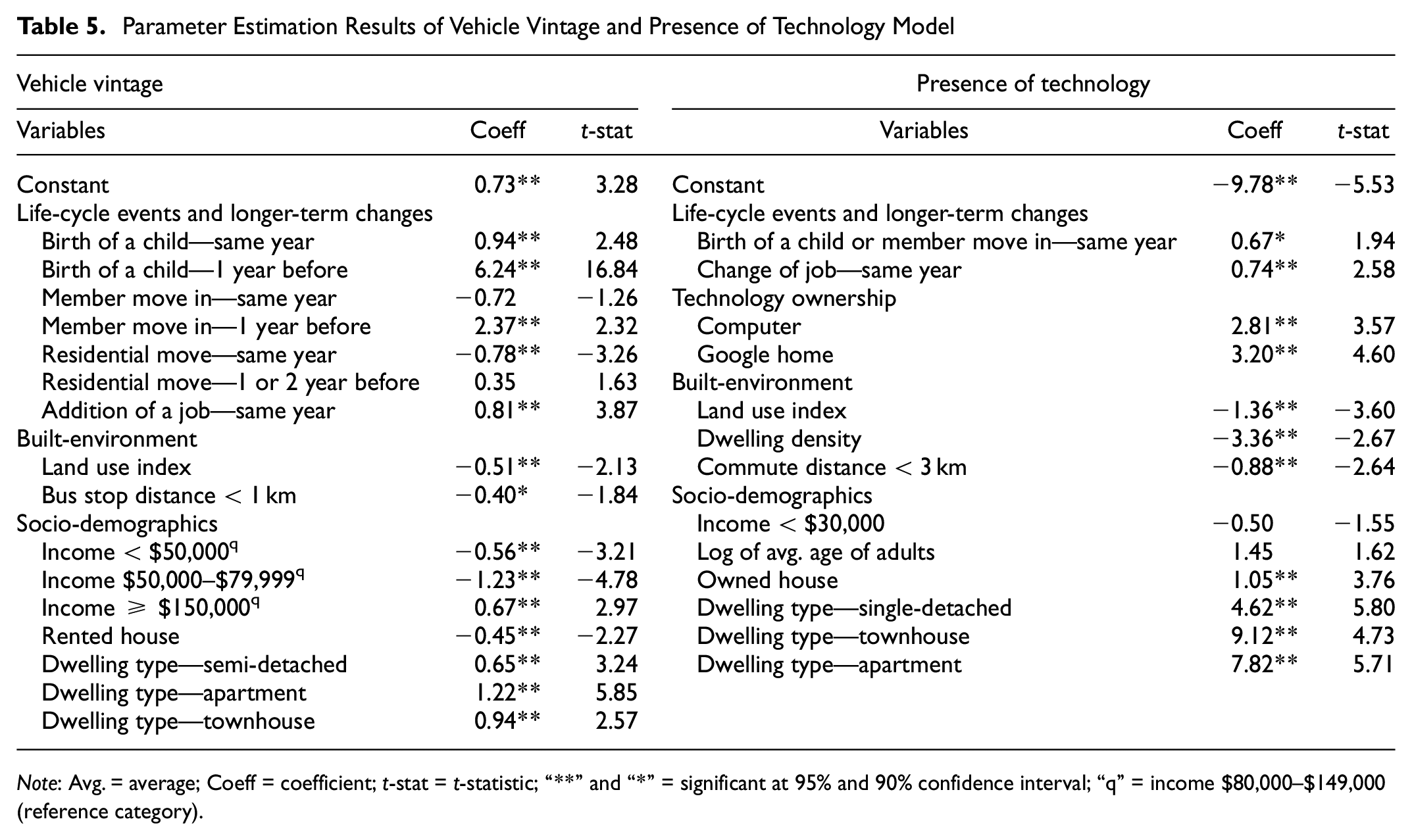
The model results for vehicle vintage choice during households’ first vehicle purchase are presented in Table 5. Households’ significant life-cycle events such as the birth of a child and a member moving in are found to be significant factors for their vehicle’s vintage choice. For instance, the birth of a child in the same year and one year before the vehicle purchase are likely to lead the households to purchase a new vehicle as their first vehicle. Such a significant life event might eventually make the household more concerned about safety and comfort while using a vehicle and encourage them to purchase newer vehicles with higher safety and convenience features. A member moving in the same year of the vehicle purchase has a negative effect on the preference for new vehicles. On the other hand, the event of a member moving in the household one year before the vehicle purchase has a positive effect on the preference for new vehicles. These results indicate that households are likely to require an adjustment period to purchase a new vehicle after such an important life event. Among the longer-term changes in the household, the addition of a job in the same year of vehicle purchase which is also an indicator of increased income is likely to increase the likelihood of purchasing a new vehicle. In addition, residential relocation is another significant factor affecting households’ choice of vehicle vintage. Households moving to a new residence in the same year of the vehicle purchase have a lower likelihood of purchasing a new vehicle whereas, after one year of the residential relocation, they are more likely to prefer a new vehicle.
Parameter Estimation Results of Vehicle Vintage and Presence of Technology Model
Note: Avg. = average; Coeff = coefficient; t-stat = t-statistic; “**” and “*” = significant at 95% and 90% confidence interval; “q” = income $80,000–$149,000 (reference category).
In the case of built-environment attributes, land use index and distance to the nearest bus stop from the residence are found to be influential factors affecting households’ choice of their first vehicle. Living in a high land use mix areas and closer to the bus stop is likely to decrease the probability of choosing a new vehicle. Low-income (<$50,000) and middle-income ($50,000–$79,999) households are less likely to own a new vehicle as their first vehicle. On the other hand, households with a very high income have a higher likelihood of purchasing a new vehicle. Because of the higher price of the new vehicles, higher-income households are likely to have the financial ability to purchase new vehicles as their first vehicle. Furthermore, individuals living in a rented dwelling have a lower likelihood of purchasing a new vehicle. This result is plausible as living in a rented house might represent relatively lower-income individuals who might not have the affordability to purchase a new vehicle.
Presence of Technology
The parameter estimation results of the presence of technology model (Table 5) reveal that households’ longer-term changes and key life cycle events, technology ownership, built-environment attributes, and socio-demographic characteristics are the significant factors that influence their decision to purchase a vehicle having advanced technology as their first vehicle. The model results suggest that households are likely to purchase a vehicle with advanced technology following the birth of a child or move-in of a member in the household. Following such a key life event, households might be more concerned about driving safety and convenience which might lead them to choose advanced technology in their first vehicle. Similarly, households are more likely to prefer advanced technology in the vehicle if a change in the job of a household member occurs in the same year of the vehicle purchase. As a result of the change of job, households might gain the financial ability to purchase such a vehicle which is often more expensive than the regular vehicle without any advanced technology features. The model results also confirm that technology ownership in the household significantly influences the decision to own advanced technology in the vehicle. Households owning a computer and a Google Home are found to have a higher likelihood of owning advanced technology in their first vehicle. Owning such technology devices might be an indicator of the tech-savviness of the households. Households with prior exposure to technology are likely to adopt the newer and advanced vehicle technology as tech-savvy people are likely to be more comfortable and familiar with using these vehicle features ( 26 ).
In the case of built-environment attributes, the land use index variable shows a negative relationship with the preference for advanced technology in the vehicle. This indicates that individuals living in a lower-density area have a higher likelihood of having advanced technology in their first vehicle. Similarly, individuals living in a neighborhood with low dwelling density and higher commute distance are likely to prefer vehicles with advanced technology. These results might represent comparatively richer people living in suburban areas for whom purchasing a vehicle with advanced technology is a feasible option. Among the socio-demographic characteristics, income, age, home ownership type, and dwelling types are the key factors that affect households’ preference for vehicle technology. For instance, low-income households (income < $30,000) are less likely to purchase a vehicle with advanced technology as their first vehicle. With the increase in the average age of the adults in the households, the likelihood of having advanced technology features in the first vehicle is likely to increase. The concern for driving safety and comfort might be stronger among older adults which is likely to increase their preference for such vehicles. Also, as households age, their financial status is expected to improve, which might explain their inclination toward advanced technology in vehicles. Furthermore, individuals living in an owned house are more likely to purchase a vehicle with advanced technology. These individuals are likely to be financially more stable owing to living in an owned house and therefore purchasing such a vehicle might be a feasible choice for them.
Error Correlation
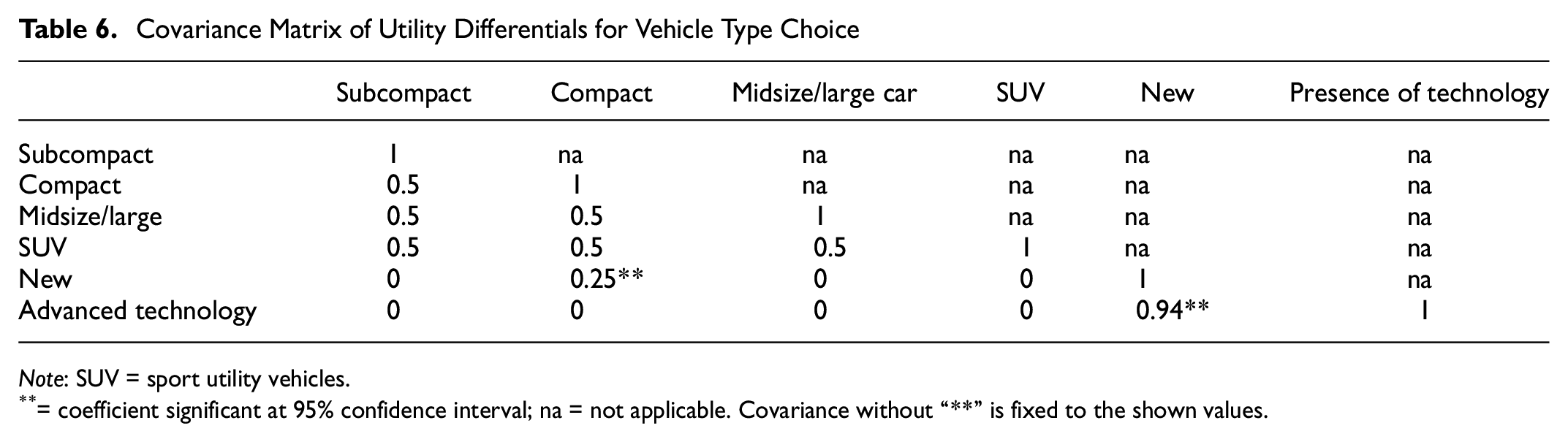
The covariance matrix of the utility differentials with respect to the base alternative is presented in Table 6 which reveals unobserved correlation across different vehicle type dimensions. The correlation coefficients represent how changes in the utility differential of one alternative are correlated with the utility differential of other alternatives where the differences are taken with respect to the base alternative of each choice dimension. The coefficients are estimated with respect to the fixed values of an independent multinomial probit model, where the covariance matrix of error differences consists 1s on the diagonals and 0.5s on the off-diagonal elements ( 21 ).
Covariance Matrix of Utility Differentials for Vehicle Type Choice
Note: SUV = sport utility vehicles.
= coefficient significant at 95% confidence interval; na = not applicable. Covariance without “**” is fixed to the shown values.
The model was tested with different sets of relaxed correlation coefficients. However, the final model includes only two statistically significant coefficients, likely because of the small sample size constraint of this study. A significant positive correlation is found between new and compact vehicles. This indicates that the unobserved factors that increase the preference for new vehicles, increases the preference for compact vehicles. This result might represent the pro-environment households who are concerned about the environment and thus, prefer more efficient vehicles like compact cars. Similarly, a significant positive correlation between new vehicles and advanced vehicle technology dictates that the common unobserved terms have a similar effect on the preferences for both types of vehicles. This might reflect the tech-savvy households that prefer driving comfort and safety of the vehicles.
Elasticity Analysis
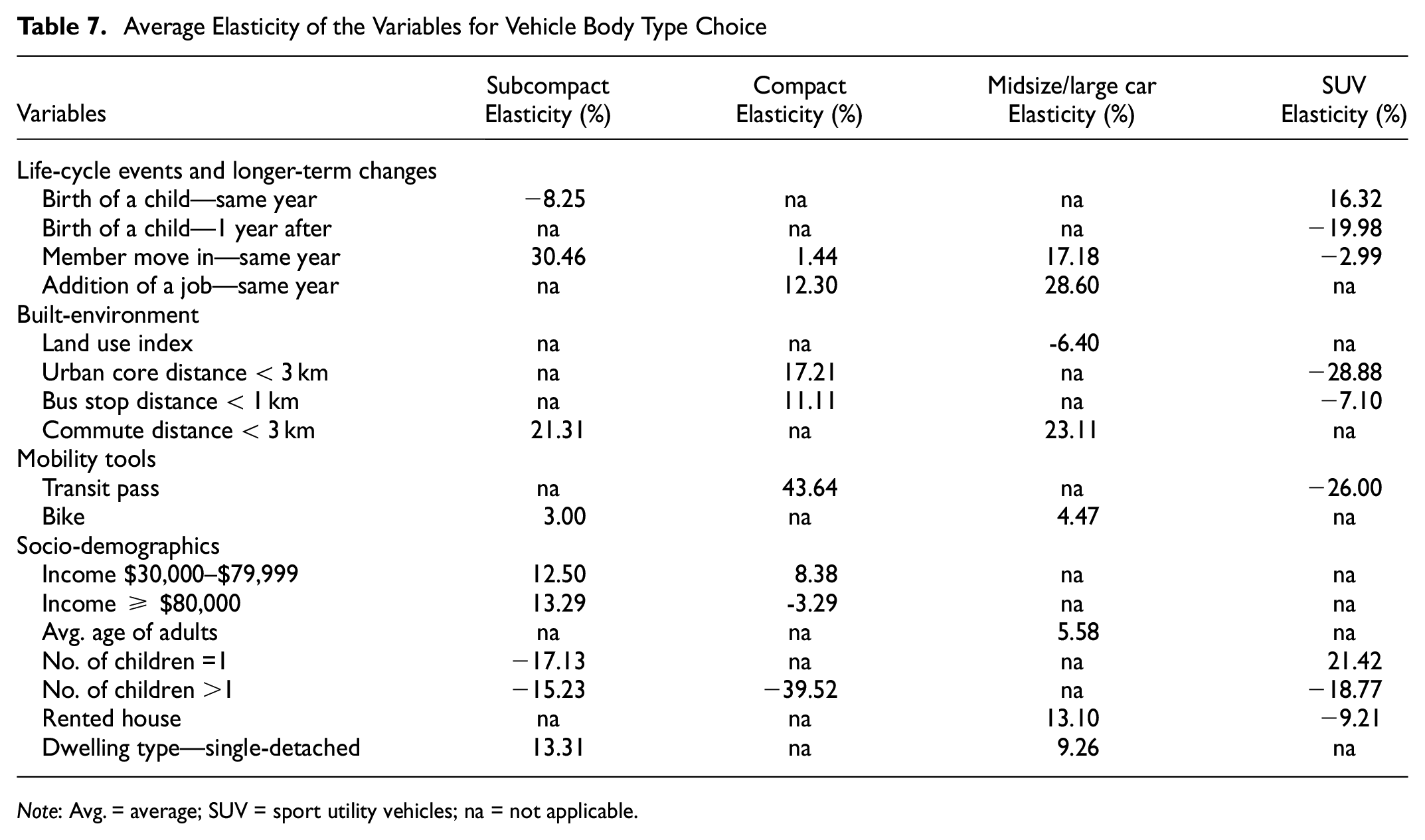
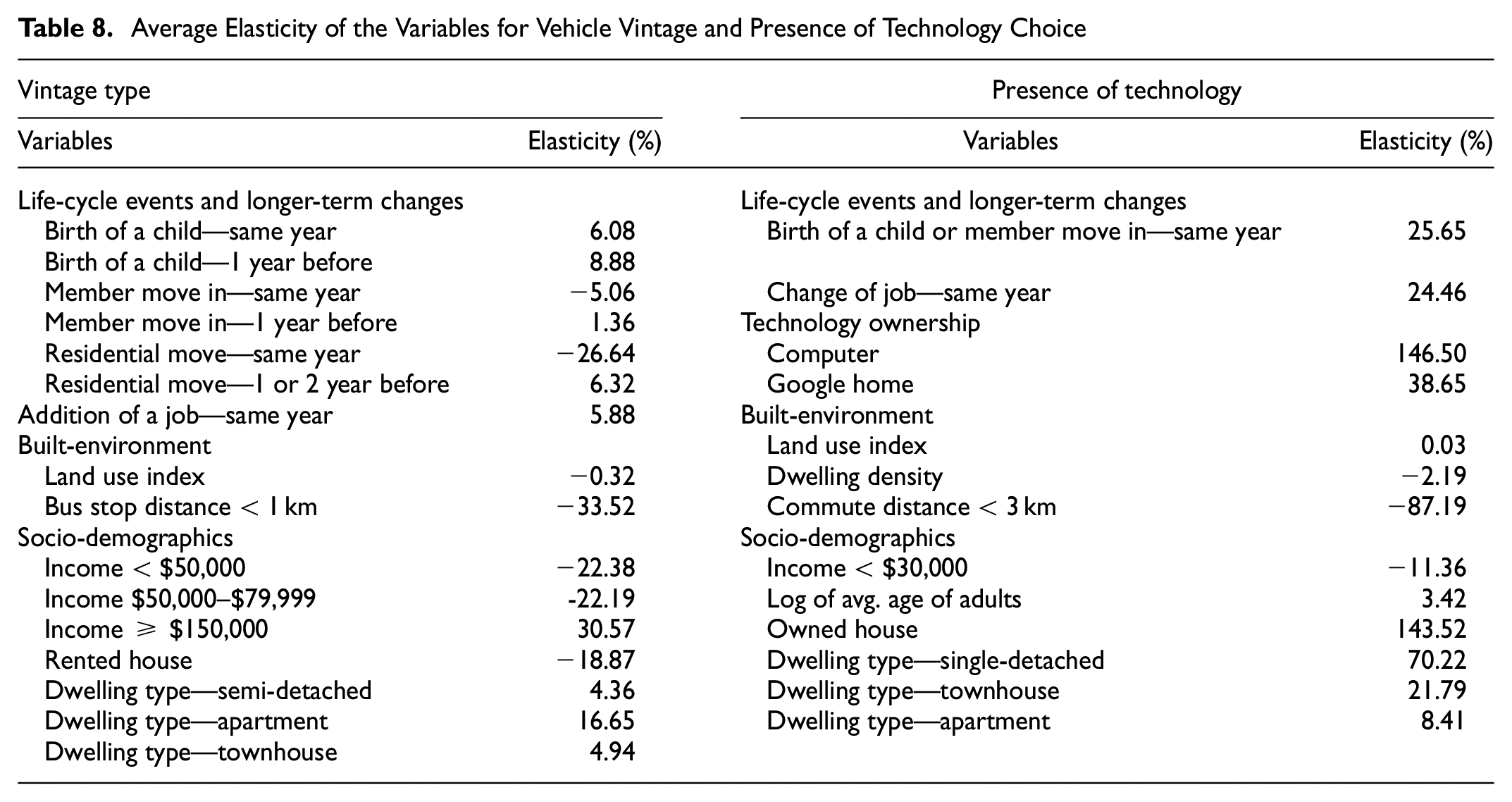
The parameter estimation results presented earlier offer insights into the statistical relationships between explanatory variables and households’ vehicular preferences. To further illustrate the magnitude of the impact of each variable on vehicle type choices, parameter estimation results should be followed up with further interpretative analysis such as elasticity analysis ( 27 ). Table 7 shows the average elasticity effects of the variables for vehicle body type choice, while Table 8 displays the average elasticities for vehicle vintage type and the presence of technology choices. In the case of binary independent variables, the elasticity estimates represent the percentage change in the probability of choosing an alternative when the value of the variable changes from 0 to 1 or vice versa. For a continuous variable, the elasticity estimates reflect the percentage change in the probability of choosing an alternative as a result of 1% change in the variable.
Average Elasticity of the Variables for Vehicle Body Type Choice
Note: Avg. = average; SUV = sport utility vehicles; na = not applicable.
Average Elasticity of the Variables for Vehicle Vintage and Presence of Technology Choice
The elasticity estimates for vehicle body types show that households living within 3 km distance of the urban core are 17.21% more likely to prefer a compact car as their first vehicle, while 28.88% less likely to prefer SUVs. Similar results are found for owning transit passes which increases the probability of owning a compact car by 43.64% and decreases the probability of owning an SUV by 26%. Additionally, households living within 1 km distance from the bus stops are 11.11% more likely to prefer compact cars whereas they are 7.1% less likely to purchase SUVs. These results provide direction for land use-related policymaking to promote the purchasing of smaller vehicles which are often more energy efficient and therefore, environmentally more sustainable.
The elasticity analysis results for vehicle vintage type choice show that following a residential move in the same year of first vehicle purchase, households are 26.46% less likely to purchase a new vehicle compared with used or old vehicles. Household income shows a substantially large impact on vehicle vintage preference. For instance, households earning more than $150,000 are 30.57% more likely to purchase new vehicles, whereas low-income (<$50,000) households are 22.38% less likely to do so.
For the presence of vehicle technology, ownership of technology has a significantly large impact on the preference for advanced vehicle technology. For instance, households that own a computer are 146.5% more likely, and those with a google home are 38.65% more likely to prefer advanced vehicle technology compared with others. Low-income households (income less than $30,000) are 11.36% less likely to purchase advanced vehicle technology compared with mid and high-income people. On the other hand, people living in an owned house have a 143.52% higher likelihood of owning vehicles with advanced technology. These findings suggest that the relatively higher cost of these vehicles makes them more accessible to wealthier individuals.
First Vehicle Purchase Timing
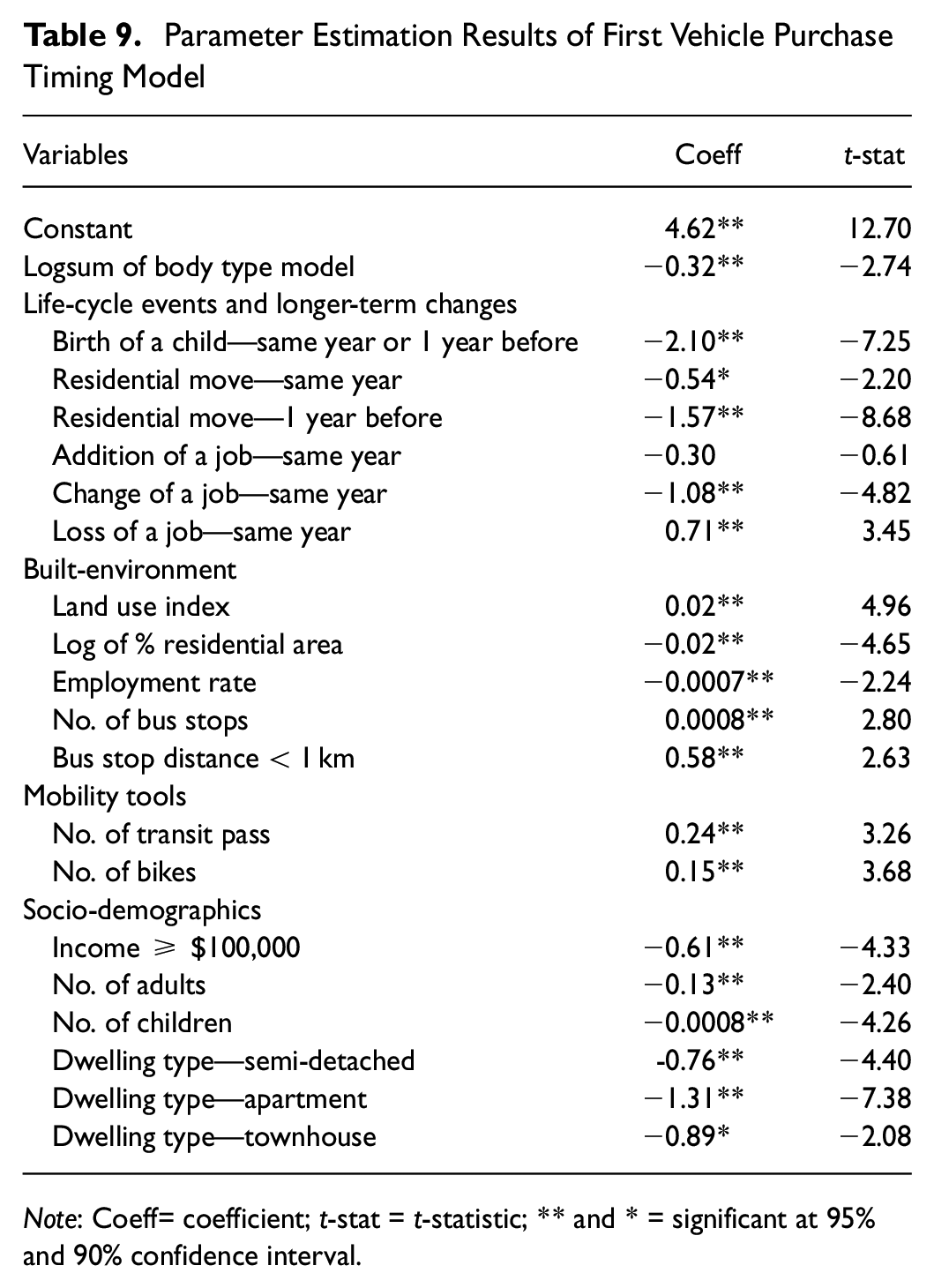
Table 9 represents the model results of the first vehicle purchase timing model. The model is estimated using both Weibull and log-logistic baseline hazard functions for comparison purposes. The log likelihood (LL) function, adjusted pseudo r-squared (Adj-R2), and BIC values of the model using the Weibull hazard function are -434.09, 0.22, and 999.40 respectively. In the case of log-logistic baseline hazard, the LL function, Adj-R2, and BIC values are -418.95, 0.29, and 969.10. The higher value of LL and Adj-R2 and the lower value of BIC indicate that log-logistic baseline hazard provides a better model fit and therefore used in the final model of the first vehicle purchase timing model. The model results suggest that following the birth of a child, households are likely to terminate their no-vehicle ownership stage and purchase their first vehicle in the same year or one year later. This result agrees with the findings of Clark et al. ( 28 ) as households’ travel needs might increase following the birth of a child and to fulfill that households might prefer to purchase a vehicle if they do not already own one. The model results also reveal that longer-term changes in the household such as residential relocation significantly affect their decision to purchase their first-ever vehicle. As a result of the residential relocation, access to other travel modes and activity points might be affected which might encourage households to purchase a vehicle in the same year or one year after the move ( 15 ). In addition, changes of employment of the household members such as the addition of a job or change of job of a member are found to have a positive effect on the first vehicle purchase decision. Households may gain financial advantages when changing employment which might allow them to purchase the first vehicle of their lifetime ( 16 ). On the other hand, the loss of the job of a member in the household will decrease the probability of purchasing their first vehicle and will increase the no-car ownership period.
Parameter Estimation Results of First Vehicle Purchase Timing Model
Note: Coeff= coefficient; t-stat = t-statistic; ** and * = significant at 95% and 90% confidence interval.
Among the built-environment attributes of the residence, the land use index is found to have a positive coefficient. This result indicates that living in a high-density urban area is likely to increase the no-car ownership period of households. Similarly, a higher number of bus stops near the residence and living closer to bus stops are likely to decrease the probability of households’ first vehicle purchases. These results further indicate that urban dwellers might have easier and more frequent access to alternative travel modes and access points which might negatively influence their vehicle purchase decision ( 15 ). The model results also suggest that access to different mobility tools such as ownership of bikes and transit passes are likely to increase the duration after which households make their first vehicle transaction. Access to these mobility tools is likely to serve households’ travel needs and therefore reduce the need for owning personal vehicles. In addition, households having transit passes and bikes might also be more environment-concerned and thus prefer sustainable transport modes over personal vehicles.
In the case of socio-demographics, variables representing high-income households (annual income ≥ $100,000) are found to have a positive parameter which indicates they are more likely to purchase their first vehicle early following the termination of the no-vehicle ownership state. Similarly, the model results indicate that the likelihood of first vehicle purchase increases with the increase in household size (e.g., the number of adults and children). Larger households are likely to have higher travel needs which might encourage the early purchase of their first vehicle. Furthermore, the logsum of the vehicle body type choice model is tested in this model which yields a negative coefficient. This result indicates that with the increase in the expected maximum utility of vehicle body types the probability of early termination of the no-vehicle state increases.
Conclusion
This study investigates the timing of households’ first vehicle purchase and the type of vehicle during the purchase utilizing retrospective survey data from the Okanagan region of BC. Firstly, the vehicle purchase timing is investigated by developing a hazard-based duration model. Secondly, a joint model for vehicle type choice during the purchase is developed considering the following choice dimensions: body, vintage, and the presence of technology. The model confirms the presence of a significant correlation among the choice dimensions. Additionally, the timing and choice models are developed in a nested framework using a logsum parameter. The timing model retains a statistically significant logsum from the vehicle type choice model, confirming the influence of type choice decisions on timing. For example, households are likely to terminate the no-vehicle ownership state early with the increase in utility from vehicle type such as body type. The study confirms that life-cycle events and longer-term changes, built-environment characteristics of the residence, mobility tool ownership, and socio-demographic characteristics of the household significantly affect both purchase timing and vehicle type choices.
The results of this study have important implications. For example, key life-cycle events such as the birth of a child and long-term changes such as residential relocation and the addition of a job are likely to accelerate the first vehicle purchase whereas the loss of a job has the opposite effect. Many studies have confirmed younger adults’ disinterest in vehicle ownership and inclination toward sustainable travel mode ( 29 ). The findings of this study indicate that as they make progress along their life course, they may tend to purchase their first vehicle in response to the occurrence of life-stage changes and different long-term decisions. The results also shed insight into land-use-related policymaking to deter the first vehicle purchase decision. For example, individuals living in urban areas with higher mixed land use and well-connected transit networks are more likely to delay their first vehicle purchase decisions compared with suburban dwellers. Therefore, vehicle-free households can be targeted and offered more housing options in urban areas, which may allow them to delay their first vehicle purchase decisions. The results also suggest that subscription to sustainable travel modes such as transit passes and ownership of bikes may delay the first vehicle purchase decisions significantly. This result indicates that car-free households could be targeted to receive incentives for transit passes and bikes, which may delay their vehicle ownership. Furthermore, innovations, plans, and policies are required to allow different demographics of the population such as parents with a child use sustainable travel modes. For example, allowing stroller access and priority seating for the parents with children in the transit buses may encourage households to deter their first vehicle purchase decisions after the birth of a child. Furthermore, incentivizing family cargo bikes for car-free households may also encourage them to continue their car-free state after the birth of a child. In the case of vehicle types, life cycle events and longer-term changes are significant determinants. For example, the birth of a child is found to increase the probability of purchasing larger vehicles (e.g., SUVs), new vehicles, and vehicles with advanced technology features. Additionally, individuals living in urban areas and commuting shorter distances are more likely to purchase smaller vehicles. Subscription of transit passes and ownership of bikes may lead to the purchase of smaller vehicles. Therefore, incentivizing transit passes and bikes may encourage households to purchase smaller vehicles, which are typically more efficient with regard to energy and space requirements. The model results also suggest that high-income households are likely to purchase newer vehicles and vehicles with advanced technologies. This may indicate affordability as a major barrier for low-income households to access new vehicle technologies. To allow equitable access to safer and newer technologies, targeted marketing such as providing rebates, tax incentives, and other monetary benefits for low-income groups might significantly increase the market share of these newer, more efficient, and safe vehicles.
One of the limitations of this study is the smaller sample size. The major reason for having a smaller sample is the collection of retrospective data in small-scale regions, like the current study area in Canada with its relatively lower population. Collecting retrospective data is often difficult, yet one of the most cost-effective ways of collecting historical information on households. However, it puts a lot of burden on the respondents as it involves recalling memories which might result in incomplete and missing information and thus a smaller sample. Nevertheless, many existing studies used similar-sized samples to explore comparable research questions in the field of transportation.
Another limitation of this study is that the vehicle fuel type choice could not be included in the model. As a result of sample size constraints, an adequate share of alternative fuel vehicles was not available to develop a fuel type choice model. Additionally, the model failed to capture the monotonic effects of a few categorical exploratory variables (e.g., household income) in the vehicle type choice model which might also arise from using a smaller sample size. One of the immediate future research directions would be to collect more comprehensive retrospective survey data so that such limitations can be overcome in the future.
Footnotes
Acknowledgements
The authors would like to thank the Natural Sciences and Engineering Research Council—Discovery Grant, and Environment and Climate Change Canada—Environmental Damages Fund provided under its Climate Action and Awareness Fund for their financial support. The authors would also like to thank Nathan Nichol for proofreading the manuscript.
Author Contributions
The authors confirm contribution to the paper as follows: study conception and design: M.S. Hossain, M.R. Fatmi; data collection: M.R. Fatmi; analysis and interpretation of results: M.S. Hossain, M.R. Fatmi; draft manuscript preparation: M.S. Hossain, M.R. Fatmi. All authors reviewed the results and approved the final version of the manuscript.
Declaration of Conflicting Interests
The authors declared no potential conflicts of interest with respect to the research, authorship, and/or publication of this article.
Funding
The author(s) received no financial support for the research, authorship, and/or publication of this article.
