




Abstract
This study aims to evaluate equity in cycling initiatives and their operational challenges by reviewing a wide range of cycling initiatives implemented in Auckland, New Zealand. The effectiveness of current initiatives with respect to various target groups or resulting beneficiaries is discussed, along with potential additional initiatives, barriers to implementing cycling equity initiatives in practice, and possible solutions to address such barriers. By interviewing policymakers, decision-makers, planners, designers, and transportation professionals, 44 cycling initiatives are identified. Results suggest that the geographical distribution of some of the current initiatives implemented could be more equitable. While some initiatives are equitable, there remain challenges with respect to their implementation. Additionally, there are limited initiatives focusing on the safety of female cyclists in Auckland, and no initiatives specifically aimed at Māori and Pacific people, groups that can both be considered disadvantaged with respect to cycling in Auckland. Potential additional policy initiatives include e-bike/bicycle subsidies, policy and law changes, education and awareness campaigns, better urban planning, policies aimed at making cycling easier, and better monitoring and evaluation. Barriers to the implementation of cycling equity initiatives in practice include sociocultural issues, financial constraints, poor planning, human resource limitations, and the built environment. Suggested strategies to help overcome some of these issues include adopting an equity lens and providing equity assessments for all initiatives, thus providing a wider coverage with respect to diversity in the population, enhanced engagement with the community, and the empowerment of people.
Active and sustainable mobility modes, such as cycling and walking, are being promoted in many countries worldwide to help achieve health, environmental, and societal goals through a reduction in reliance on private motorized vehicles. There are many types of initiatives aimed at improving cycling in cities. These cycling initiatives can be split into “hard” and “soft” measures. Hard measures are those cycling initiatives that influence cycling by improving the physical and built environment, including the implementation of bike lanes, providing safer cycling infrastructure, establishing bike-sharing systems, using specially designed trishaws to take older people on rides exploring their local area ( 1 , 2 ), and installation of bicycle self-repair stations ( 3 ) and public cycle pumps ( 4 ). Soft measures, on the other hand, include those cycling initiatives other than physical implementation, such as online blogs ( 5 ), community-focused initiatives ( 6 , 7 ), cycling promotion initiatives ( 8 ), education about safe urban riding, using monitoring and evaluations to guide decision-making for cycling ( 9 ), and GPS tracking of cyclists for research purposes ( 10 ).
The adoption of cycling initiatives has become a key strategy in many countries for several reasons, including reducing reliance on private vehicles for mobility, environmental concerns, and improving the safety of cyclists. However, little attention has been given to how resources allocated to cycling initiatives can be distributed fairly and equitably, in the sense that the benefits, as well as costs, are shared equitably across all members of society ( 11 ). There is a lack of consideration of equity in cycling, in particular during bicycle planning and decision-making processes ( 12 ). For example, a review of Canadian transport plans by Doran et al. ( 13 ) indicated that most of the plans make limited or no effort to address and operationalize equity in cycling.
Equity in transportation can be discussed through the lens of distributive equity, procedural equity, or participatory equity ( 14 , 15 ). In the cycling sector, distributive equity is a commonly used equity concept and typically investigates the distribution of cycling benefits and costs in society. Cycling equity can also be approached from different points of view, including social equity, spatial equity, or a combination of both ( 15 ). Equity needs to be considered for several different reasons: providing equitable rights and benefits of a service or program for all, maximizing the welfare of the whole of a community, and improving outcomes for disadvantaged population groups ( 16 ). A recent comprehensive definition of cycling equity is “a situation where cycling is a safe, secure mode of travel that improves mobility and accessibility fairly, enabling all people to participate in socio-economic life” ([ 13 ], p. 4). Critically, equity seeks fairness in society and this is the point of difference when compared with the concept of equality ( 14 , 17 ). “Equal access to facilities and infrastructure” differs from “equity in accessibility” as equal access does not consider the differences among population groups, with equity better considering the experiences of disadvantaged population groups. Although accessibility is one of the most commonly used measures for assessing equity in cycling, there is not a standardized method, principle, or indicator to evaluate equity in cycling. Clearly, adequately measuring cycling equity is still in its early stages ( 12 ).
Equity in cycling was also influenced by the recent COVID-19 pandemic. For example, traffic changes caused by the pandemic regulations increased bicycle usage by women and the elderly in Canada ( 18 ). As reported by Tiako and Stokes ( 19 ), bike-share companies across the U.S. changed their policies during the pandemic, providing more access to vulnerable communities. This approach increased some workers’ travel options, decreasing their risk of contracting COVID-19 while in public transit. Davidson et al. ( 20 ) demonstrated a significant impact of the pandemic on the duration of bike trips for all users of bike-share services (7 to 12 min increase), and this positive effect was consistent across various geographic areas. Their findings indicated, first, that individuals with low socioeconomic status (SES) exhibit a similar likelihood to the general population in opting for longer trips and, second, that bike-share schemes are able to provide a resilient and equitable mode of transportation. Davidson ( 21 ) argued that positive changes in bike-share trip durations during the pandemic were also associated with low SES areas of Philadelphia, and that many streets in these underserved areas may benefit from new or improved bicycle infrastructure.
Literature Review
This section reviews equity measures within the literature, specifically pertaining to cycling equity initiatives, encompassing diverse cities and countries worldwide. Its objective is to identify knowledge gaps in the assessment of equity in cycling. In cycling equity analysis, the equity measures used have primarily focused on hard measures and have typically considered equity in relation to the provision of cycling infrastructure ( 22 ). To discuss equity in cycling, previous studies focused on different criteria and methods, including the associations between sociodemographic characteristics and the availability of cycling infrastructure ( 14 , 23–28); the density of cycling routes ( 28 ); availability, coverage, and connectivity of bike lanes ( 29 ); associations between access to cycling infrastructure and sociodemographic characteristics using the deprivation index ( 30 ); and the Gini coefficient ( 31 ), Lorenz curve ( 32 ), Palma Ratio ( 33 ), Atkinson index ( 34 ), and Theil index ( 35 ). In all the aforementioned methods, access to cycling infrastructure was the main indicator used to measure equity in cycling, and discussions were built on the difference in levels of accessibility between the most and least deprived areas. Income, age, education, and ethnicity were the most used sociodemographic characteristics in cycling equity analyses ( 12 ). The majority of studies that assessed and discussed cycling equity have focused on bike lanes ( 23 , 25 , 26 , 31 , 36–38) or bike-sharing systems ( 39 – 44 ) as the main cycling provisions which should be distributed fairly.
The literature on cycling equity also contains several studies which discussed cycling equity from perspectives other than the “traditional” method of observing associations between access to cycling infrastructure and sociodemographic characteristics. However, such studies remained focused on bike lanes, bike-sharing systems, or both. For example, Rebentisch et al. ( 45 ) discussed the equitable distribution of safe cycling infrastructure by comparing crash rates among different population groups in New York. Another study in four U.S. cities (Chicago, Cincinnati, Philadelphia, and Portland) discussed the influence of public participation in locating bike-sharing-system stations on the equitable distribution of these stations ( 46 ). In another study in the U.S. context, the equity considerations of 56 bike-sharing systems were evaluated by questioning the service providers about their equity policies ( 47 ). An investigation of equity consideration in planning and policy-making processes in Santiago de Chile also evaluated cycling infrastructure development in different areas of the city to determine inequity in cycling ( 48 ). As reported by Cunha and Silva ( 12 ), reviewing equity in the distribution of bicycle-related benefits showed that the majority of studies used quantitative approaches and considered the cycling network or bike-sharing system in equity assessments. One of the most recent studies introduced a planning tool for assessing equity in cycling. The researchers similarly focused on the distribution of cycling infrastructure and accessibility levels across distinct socioeconomic groups ( 49 ).
In contrast, only a limited number of studies discussed the importance of cycling initiatives beyond bicycle infrastructure for providing equity in cycling. Reviewing literature focused on active-transport equity, Lee et al. ( 15 ) highlighted that studies commonly assess spatial equity but do not consider engagement of transportation-disadvantaged groups in the public participation and decision-making process, and that there was therefore a lack of consideration of their needs and preferences. As argued by Oosterhuis et al. ( 50 ) and Batterbury and Vandermeersch ( 7 ), investing solely in cycle routes does not solve the inequity issue in cycling, and implementing cycling policies that consider the lived experience of disadvantaged communities should be a priority for government from an equity perspective. A qualitative study in Hackney, London explored the extent to which equity is considered in cycling policies ( 4 ). This study showed that, despite Hackney having a good reputation for bicycle usage rates, the cycling policies did not consider equity for race and gender appropriately. As argued by Lam ( 4 ), “hard” and “soft” cycling infrastructure must work in tandem, and soft cycling infrastructure, specifically that which focuses on education and encouragement of cycling disadvantaged target groups, should not be ignored in cycling equity policies. Another study in England showed that even by increasing cycling infrastructure in more disadvantaged areas, the level of bicycle usage remained low. This suggests that focusing only on cycling infrastructure is not fair, since the influence of cycling infrastructure on bicycle usage could be different among different population groups ( 51 ). A recent study by Jahanshahi et al. ( 52 ) also showed that availability of cycling infrastructure is not the main factor that influences people’s perceptions of cycling, and that considering soft cycling infrastructure in policy making and planning could help improve equity in cycling. In reviewing Canadian transport plans, Doran et al. ( 13 ) emphasized that to better achieve equity in cycling, it should be improved socially as well, and that solely focusing on spatial analyses could be misleading. The importance of empowering and engaging diverse communities, and avoiding relying solely on the provision of fair cycling infrastructure, was also mentioned in several other studies in the U.S. context ( 53 – 56 ). Another study in Canada undertook a policy scan of Canadian municipal and regional policy documents to better understand the language used to describe “All Ages and Abilities” in the context of cycling infrastructure. They showed the importance of defining and standardizing “cycling equity language” for municipal plans to specify not only cycling infrastructure, but also the communities that cycling infrastructure aims to serve ( 57 ). A recent study by Yuan et al. ( 58 ) explored how gender and its interactions with other socioeconomic and cultural factors influence a person’s decision to utilize active transport. Apart from “typical” findings related to transport equity, their findings suggested that multidisciplinary urban planning and developing neighborhoods with more mixed land use can improve equity in active transport.
As outlined above, while enhancement and extension of bicycle infrastructure is recognized as part of the solution to improving the uptake of cycling, other provisions have also been found to be effective, especially if they are targeted to suit the needs of particular communities ( 4 , 52 , 59 ). Specifically, cycling provision can also be related to a population group’s differing needs. These might include education and awareness about the benefits of cycling, improving cycling proficiency, and consideration of the sociocultural factors which can facilitate bicycle use for particular population groups—for example, demands for social and family cycling and the need to access places of importance for specific communities ( 52 ). This perspective of equity in cycling is in line with the message of the “capabilities approach” of justice, suggesting that focusing only on the provision of cycling infrastructure, such as bike lanes and bike-sharing systems, can be misleading ( 14 ). It can also result in other cycling initiatives being ignored because of the considerable importance of cycling infrastructure. The capabilities approach has recently gained increasing attention in the transport literature and, as Beyazit ( 60 ) explained, its utilization in transport opens an avenue to discover people’s unique expectations and the way that transport systems can meet these expectations and enhance their capabilities. The capabilities approach considers the achievement that individuals could have based on the provisions rather than the level of access to those provisions. It also considers the diversity of people’s perceptions, needs, and constraints in their travel choices ( 14 , 61 , 62 ). Based on the concept of the capabilities approach in transport, the ability to convert the benefits of transportation into valuable functioning is not the same for all, suggesting that improving accessibility to cycling infrastructure does not necessarily improve people’s access to valuable opportunities ( 63 ). In particular, based on the capabilities approach, the wide diversity of individuals and the way in which the distribution of transport resources could differently affect people’s opportunities because of their personal features, aspirations, and choices should be considered ( 64 ). Applying the capabilities approach to the concept of cycling equity makes it clear that though people with different sociodemographic characteristics may receive the same cycling provision, the ability to convert these resources into actual freedoms will, however, be different based on their various sociodemographic characteristics. Therefore, not only does the influence of cycling infrastructure on bicycle usage differ for all, but cycling infrastructure should not be the only provision to empower people to cycle. Focusing only on hard (spatial) cycling infrastructure and ignoring soft (social) infrastructure could, therefore, diminish equity in cycling.
Despite the emphasized importance of considering cycling initiatives beyond infrastructure in cycling equity assessments in the literature, currently there is limited understanding about aspects of equity in cycling initiatives other than bike lanes and bike-sharing systems in relation to specific target groups. This applies in general, and so also to countries that have implemented cycling policies successfully, and have a long cycling history, such as the Netherlands and Denmark. With better understanding, cycling initiatives could target different population groups, resulting in a fairer distribution of resources. Cycling initiatives should be comprehensive and consider various aspects of cycling to address cycling inequities, as focusing only on one aspect could be misleading. It is therefore important to identify current cycling initiatives, understand their target groups or resulting beneficiaries, and evaluate them with respect to equity.
Another challenge is the successful implementation of policy. For example, there could be barriers preventing councils from implementing cycling equity initiatives in practice. As suggested by Doran et al. ( 13 ), highlighting the barriers to implementing these policies could help planners and decision-makers improve the practicality of cycling equity initiatives. One study ( 65 ), divides the barriers into four main categories: legal and institutional, financial, political and cultural, and practical and technological. In comparison, Banister ( 66 ) divides barriers into five groups with respect to measures for sustainable mobility, namely: resource barriers, institutional and policy barriers, social and cultural barriers, legal barriers, and unintended outcomes. Barriers to implementation of cycling equity initiatives specifically in relation to practice have yet to be considered, and this remains a gap in the literature.
Research Questions and Paper Outline
Improving cycling equity through better planning and policy making is a context-dependent challenge; strategies which work in one city, in particular those with considerable bicycle usage rates, might not be applicable to another city, such as, for example, a “starter” cycling city ( 12 , 67 ). Therefore, to discuss cycling equity definitions, metrics, challenges, and strategies in the specific context of New Zealand, it is necessary to investigate them locally and avoid blind imitation of existing strategies. Using as a case study Auckland (New Zealand), a city with low bicycle usage rates and a large indigenous population, this research aims to address this gap by answering the following questions:
What are the current policies, definitions, and metrics associated with cycling equity in Auckland?
What are the cycling initiatives used to motivate and empower people to cycle, and who are the target groups or resulting beneficiaries for each initiative?
What potential additional cycling initiatives could help with achieving cycling equity?
What are the barriers to implementing cycling equity initiatives in practice?
What are the possible solutions and enablers for helping to overcome these barriers?
The remainder of the paper is structured as follows. The methodology section (the next section) details the study area and qualitative approach. The results section (the third section) then delves into the current state of cycling equity in Auckland, examining existing definitions, policies, initiatives, and their target groups, challenges to the effectiveness of initiatives, as well as potential new approaches, barriers to implementing cycling equity initiatives, and strategies to address those barriers. Following this, a discussion section (the fourth section) contextualizes these findings. Finally, the paper concludes (in the fifth section) by summarizing key insights, acknowledging study limitations, and setting out future research directions.
Methodology
Study Area: Auckland, Aotearoa New Zealand
In New Zealand, the use of bicycles within urban areas is comparatively low when contrasted with other developed countries. The limited popularity of cycling as a means of transportation in New Zealand can be attributed, in part, to the geographical features of the landscape. Existing evidence indicates that bicycle usage rates are even lower among low-income and minority populations, groups that also exhibit higher rates of obesity than the general population ( 68 ). Moreover, Māori, the indigenous peoples of Aotearoa New Zealand, experience diminished health benefits from cycling as a result of lower rates of bicycle usage ( 69 ). Additionally, a significant gender disparity in cycling exists in New Zealand, with three-quarters of regular cyclists being male ( 70 ).
Auckland is the most populous city in New Zealand, with approximately 1,717,500 residents, and covers the largest urban area ( 71 ). It is one of the most culturally diverse cities in the world, spanning more than 220 ethnic groups, with four in 10 Aucklanders having been born overseas. Auckland and its surrounding areas are home to 60% of the country’s indigenous population, Māori, and boast the largest Polynesian population in the world ( 72 ). The city has the lowest overall cycling rates among the large cities in New Zealand at 0.4%. In comparison, cycling rates are 3.6% for Christchurch, 1.9% for Tauranga, 1.4% for Wellington, 1.3% for Dunedin, and 1.1% for Hamilton ( 73 ). Differences in cycling rates between cities can be attributed partly to differences in topography, but also to the geographic extent of the city and urban compactness. In Auckland several factors influence people’s perceptions of cycling, including local cycling norms, socioeconomic barriers, appreciation of the new community walking and cycling trails, a desire for connectivity beyond the neighborhood, and concerns about on-road bike lanes ( 74 ). Women’s cycling preferences in the New Zealand context could be influenced by perceptions of traffic danger and personal safety, and the need to be safety conscious because of responsibilities for others ( 75 ). As shown by Jahanshahi et al. ( 52 ), bike-lane availability in Auckland did not significantly influence perceptions of cycling infrastructure; however, ethnicity and sociocultural factors do play an important role in a person’s perception about cycling infrastructure.
Figure 1 includes the existing bike lanes across Auckland, and the years in which they were constructed. As illustrated in the figure, certain areas in Auckland lack any bicycle infrastructure, while others are adequately equipped with such facilities.
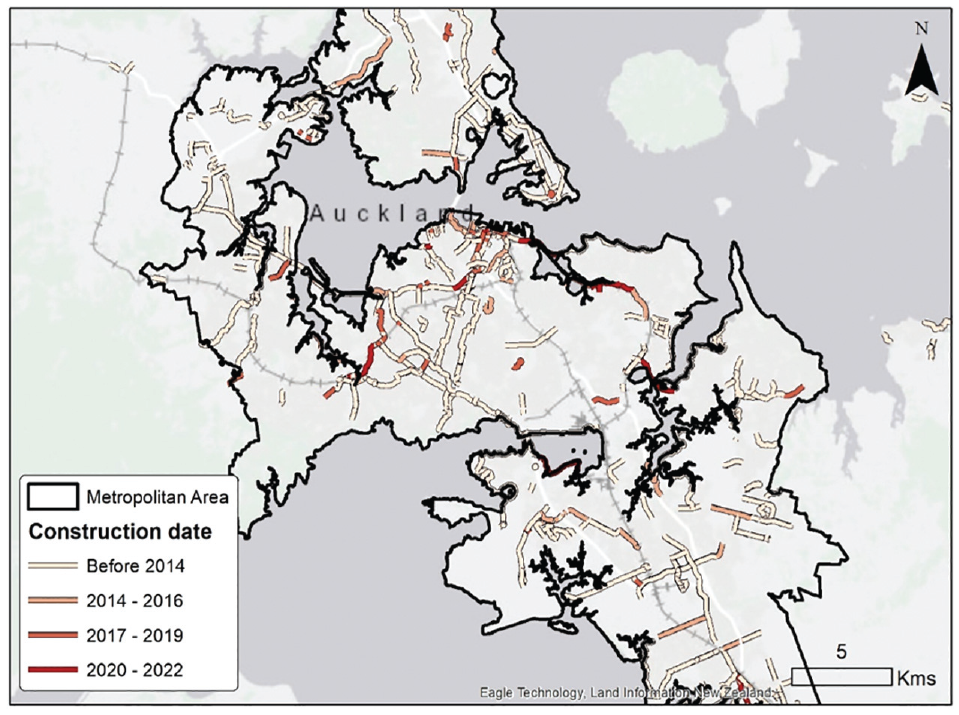
Spatial distribution of cycling infrastructure in Auckland.
Qualitative Approach
To address the research objectives, this study uses a qualitative approach. First, the goal is to identify and list current cycling initiatives in Auckland, and to discuss their effectiveness from the point of view of policymakers, decision-makers, planners, designers, and transportation professionals. Then, potential additional initiatives are investigated, along with barriers to implementing cycling equity initiatives in practice. Finally, possible solutions and enablers to address those barriers are discussed. Semi-structured interviews are used for this purpose. Interviews were conducted during June and July of 2022. The interviews lasted around 60 min and were audio-recorded and then transcribed by the researchers.
Participant recruitment was a combination of direct recruitment and snowballing. Potential participants were contacted via an invitation email, and continued to be recruited and interviewed until data saturation was reached. The invitation email requested that potential participants forward the email to other potential participants who they thought would be interested in participating. It became apparent during the initial invitations and subsequent snowball sampling that the pool of individuals with knowledge and experience of equity in cycling initiatives in Auckland was very small and was, therefore, a potential limitation. However, no further initiatives were identified by the seventh interview and no new insights were provided by the ninth interview, indicating that data saturation had been reached. Consequently, the total number of participants was nine, based on data saturation.
The specific study participants were transportation professionals with expertise in cycling provision and equity and with at least 3 years of experience in the transport sector. They also had experience of working on the development and delivery of cycling initiatives in Auckland. Only participants who were 18 years and older were eligible to participate. Among the interviewees, five of them were female and four of them were male. The age range of the interviewees was approximately between 25 and 65 years. One of the interviewees worked for a not-for-profit organization and the remainder worked in government organizations related to the transport sector. The interviewees were experts in various fields such as active- and sustainable-modes planners, transport planners and advisers, strategic planners, community-engagement experts, and behavior-change experts. More detailed information about the participants is not provided so as to maintain confidentiality and anonymity of the participants, following the University of Auckland Human Participants Ethics Committee approval.
The semi-structured questions used in the interviews were as follows:
What are the current cycling initiatives in Auckland designed to motivate people to cycle?
Do you consider this initiative to be more or less effective for any specific community or demographic?
What current definitions, metrics, and policies are used for equity in cycling in Auckland?
Are there other potential cycling initiatives, not currently being implemented, that you can think of that could be implemented to encourage the uptake of cycling?
What are the barriers to implementing cycling equity initiatives in practice? What are some of the strategies you can think of to address these barriers?
A thematic analysis approach was used to analyze the content of the interviews. Thematic analysis is widely used in qualitative studies, and is applicable across a wide range of subjects because of its flexibility, enabling scholars and researchers to apply multiple theories to this process for different subjects ( 76 ). Also, it makes interpretation of themes supported by data more convenient ( 77 ), and facilitates categorization based on data ( 78 ). As guided by Braun and Clarke ( 76 ), the following steps were applied in this study for reading the transcriptions, making notes, and identifying the patterns:
Data familiarization, including transcribing voice recording of interviewees, reviewing transcripts, making notes, and developing ideas.
Developing initial codes.
Scanning the interview transcriptions for themes and sub-themes in line with the research aims.
Reassessing themes/sub-themes: Initial themes/sub-themes were reassessed for their relevance, significance, and distinctness from other themes/sub-themes.
This process followed an inductive approach, meaning that the themes were derived directly from the data. Initially, there were no pre-defined themes, and they emerged organically through the examination of the data (steps above). This approach was chosen because of the complexity of the topic and nature of the research questions, and allowed the authors to remain open to unexpected patterns and insights that were grounded in the participants’ actual experiences and narratives. NVivo software was used to conduct the thematic analysis and initial coding stage.
In the realm of qualitative research, thematic analysis and content analysis serve distinct purposes. Thematic analysis, with its emphasis on identifying and interpreting patterns and themes in data, offers a flexible and in-depth approach. It is particularly adept at uncovering the nuanced meanings within participant narratives, making it ideal for studies focused on understanding complex subjective experiences. Conversely, content analysis provides a more structured and quantitative lens, primarily suited for counting and categorizing explicit content. For this study on cycling equity in Auckland, which requires a deep exploration of perceptions and experiences, and in line with similar transport studies ( 79 , 80 ), thematic analysis was the preferable choice. Its interpretative depth and flexibility in data analysis align well with the study’s goals, allowing for a richer and more comprehensive understanding of the underlying issues, as used in similar transport studies ( 81 – 84 ).
Figure 2 illustrates the themes and sub-themes identified from the thematic analysis.
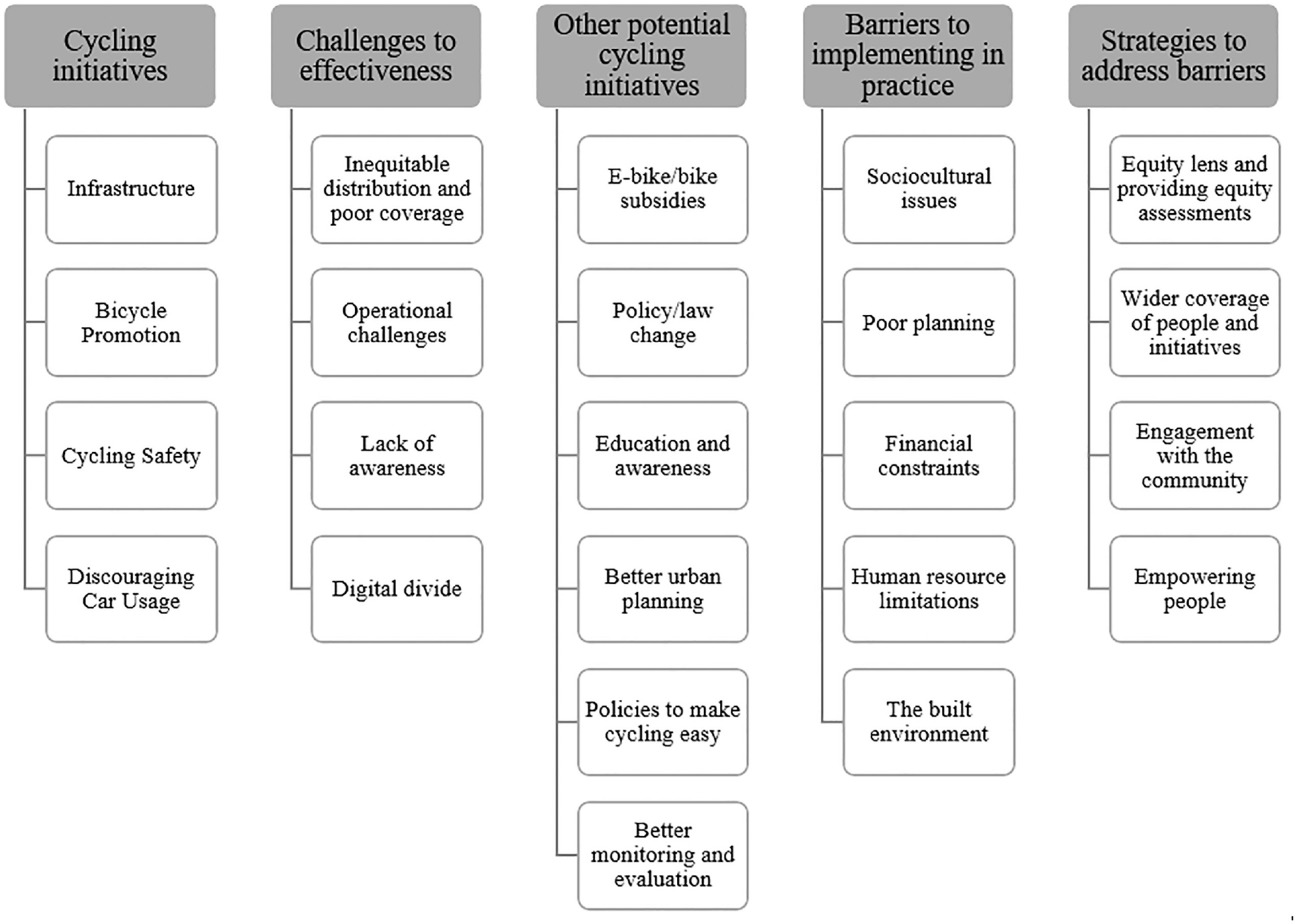
Themes (shaded) and sub-themes.
Results
Current Definitions, Metrics, and Policies for Equity in Cycling in Auckland
As the first stage of investigating cycling equity definitions, metrics, and cycling equity policies in Auckland, the key planning documents relating to Auckland were reviewed to summarize the sections relevant to equity in cycling. These key documents include the Auckland Regional Land Transport Plan 2021-2031 ( 85 ), Auckland’s Climate Plan ( 86 ), Auckland Region Transport Strategic Case 2021-2031 ( 87 ), Auckland Transport Roads and Streets Framework ( 88 ), and The Auckland Network Operating Plan 21-24 ( 89 ).
The Auckland Regional Land Transport Plan 2021-2031 ( 85 ) did not include any particular section or notes about equity in cycling, although equity was considered more broadly in statements such as “Page 62: Tackling the emissions challenge is complex and requires a systems-based approach taking account of a number of factors, including technology maturity and supply chains, equity and behavior change” and “Page 25: Existing deficiencies in the transport system and an inability to keep pace with increasing travel demand is limiting improved and equitable access to employment and social opportunities.”
Auckland’s Climate Plan ( 86 ) focused more on mode shift to active modes, including cycling, and equity was discussed several times, although not particularly for cycling. For example, “Page 85: Supporting affordable fares and low-cost transport options such as walking and cycling enables ōritetanga [equity]. Equitable access for whānau [extended family] and communities to jobs, education and other opportunities leads to an enhanced quality of life for all” or “Page 96: intergenerational equity, as well as cultural and socio-economic equity, is critical to a fair transition. As a society, we are only as safe as our most vulnerable.” Equity with respect to Māori was also considered: “Page 110: From a Te Ao Māori [the Māori World] perspective, we need to consider equity and fairness from the perspective of nature, place, and people. Recognizing the rights and interests of nature, place, and people from a whole living systems perspective is critical.” The only clear definition of equity in Auckland’s key documents was mentioned in the Climate Plan: “Page 11: Equity refers to whether the distribution of impacts (both benefits and costs) is fair and appropriate—being aware that people have different starts in life and different needs. Equality treats everyone the same, but equity acknowledges the different needs people have and ensuring that everyone has what they need to succeed.”
The Auckland Region Transport Strategic Case 2021-2031 ( 87 ) primarily focused on increasing cycling usage, safety, and attractiveness. In respect of equity, equitable access to and from key destinations such as employment and social opportunities, equitable access to public transport, equitable safety of transport, and affordable and equitable travel choices were mentioned. However, equity in cycling was not mentioned in particular. Equity was not considered or mentioned in the Auckland Transport Roads and Streets Framework ( 88 ) or The Auckland Network Operating Plan 21-24 ( 89 ).
In a second stage, the interviews carried out with policymakers, decision-makers, planners, designers, and transport professionals were reviewed. Based on these, there is no definition, metric, or policy specifically aimed at equity in cycling in Auckland. Also, it appears that a clear understanding of cycling equity, and how it differs to equality, is lacking. For example, one of the interviewees mentioned that “from that more strategic level, I think it would be good to know what that definition would be, but [that there was] nothing that [they had] come across, sadly.” Another interviewee mentioned that as an equity initiative, “[they] used to count the number of cyclists and [monitor] the percentages of men and women [for the purpose of] understanding gender inequalities.” Another of the interviewees believed that they should “have a specific cycling equity policy or framework or strategy [providing] some sort of guidance around cycling equity” but that “it is [currently] missing.”
According to several interviewees, there are some challenges related to policies on funding that affect the implementation of equity-related policies. These primarily relate to the allocation of the funding which is set by central government. “Central government [via] Waka Kotahi [New Zealand Transport Agency] … have to make some policy changes on funding.” From the viewpoint of the interviewees, the problem is about “how the funding is allocated from Waka Kotahi.” Similarly mentioned by the majority of interviewees, “it is very limited” and most of the money that they get is “safety-related” and, therefore focused on “where we have the most serious injuries and deaths.” Indeed, it could be argued that funding is the most important driving factor for implementing equity in cycling, and that without sufficient funding transport professionals feel that their “hands are tied.”
Current Cycling Initiatives and Their Target Groups or Resulting Beneficiaries
Table 1 presents a summary of the main initiatives identified through the thematic analysis of the interviews. The specific target groups or resulting beneficiaries for whom the initiatives were intended were provided based on the interviewees’ opinions. In total, 44 different implemented cycling initiatives were identified, and categorized into four main groupings based on thematic analysis. The first one is infrastructure (incorporating seven initiatives) which relates to initiatives that provide or improve bicycle infrastructure such as bike lanes, cycle parking, or public end-of-trip facilities. The second is bicycle promotion (incorporating 23 initiatives) which relates to initiatives that promote and encourage bicycle usage. The third is cycling safety (incorporating seven initiatives), which includes initiatives that attempt to raise safety in cycling. The fourth, and last, category is discouraging car usage (incorporating seven initiatives), which relates to initiatives that try to limit car usage to increase bicycle usage and public transport ridership. From Table 1 it is clear that a considerable number of initiatives target current cyclists, while only a few initiatives target non-cyclists, potential cyclists, and current car users. There are also several initiatives, albeit limited, which target lower socioeconomic groups specifically, including the e-bike trial/library, bike hubs, skills training in schools, and the Community Bike Fund. There is only one initiative designed for women and the elderly. There are no targeted initiatives aimed specifically at population groups with lower bicycle usage rates.
Implemented Cycling Initiatives in Auckland
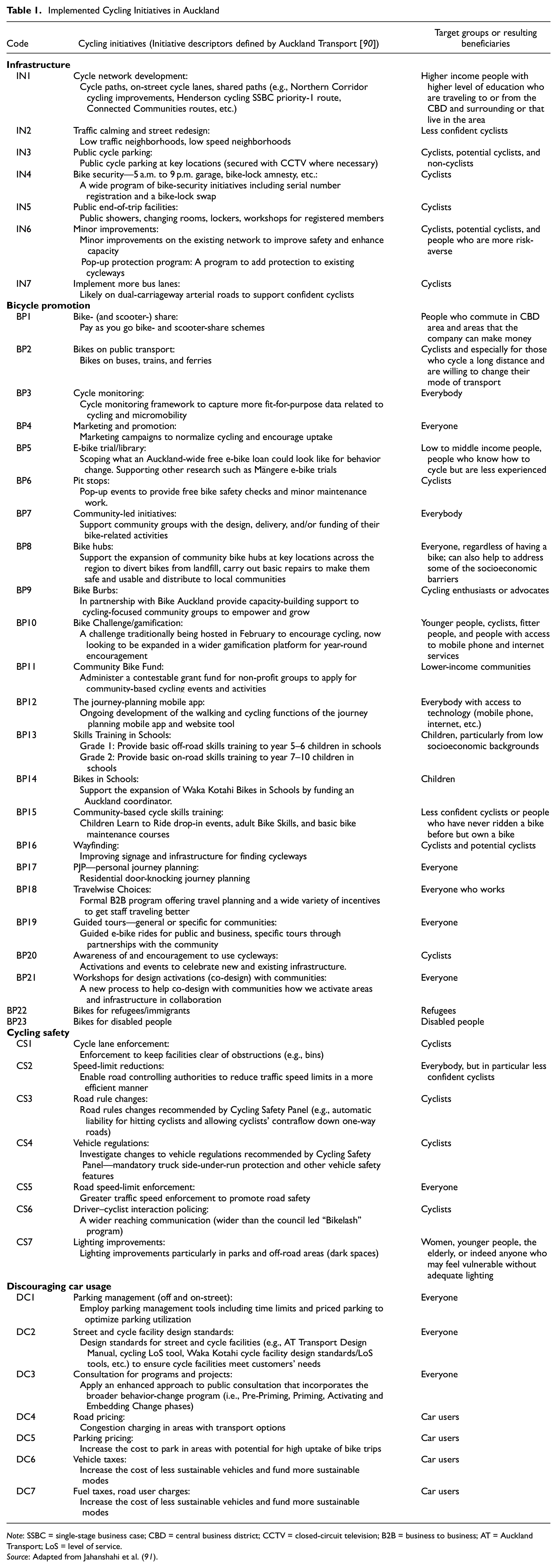
Note: SSBC = single-stage business case; CBD = central business district; CCTV = closed-circuit television; B2B = business to business; AT = Auckland Transport; LoS = level of service.
Source: Adapted from Jahanshahi et al. ( 91 ).
Challenges to Effectiveness
Several challenges were discussed in the interviews in relation to the effectiveness of the initiatives. The challenges discussed in the interviews can be split into four main groups: inequitable distribution and poor coverage, operational challenges, lack of awareness, and the digital divide.
Inequitable Distribution and Poor Coverage
The spatial and social distribution of cycling initiatives was found to be a significant challenge. In some cases, the spatial distribution was better in more affluent areas, and in other cases initiatives needed to be spatially and socially distributed more widely. For example, the distribution of public end-of-trip facilities is currently not equitable. Such facilities are expensive and, while they are available in some businesses, “there are some communities that won’t have these types of facilities unless they are provided by [a public] agency.”
Bike-share systems in Auckland also appear to be inequitable in spatial and social distribution. One of the most common challenges for bike-sharing systems mentioned by several interviewees is that these systems are managed by the private sector and their incentive is to provide the best efficiency in the system in relation to making a profit. They are “going [to focus on] areas where money is going to be made.” Another frequently reported challenge in interviews, given that the bicycles are left unattended when not in use, is theft and vandalism. Therefore, operators will focus on areas where “their bikes are going to be safe” and “they won’t have to constantly be replacing inventory.”
Pit stops are also not distributed fairly, according to several interviewees. The problem with pit stops is that they are usually implemented “in the same few places,” typically “where people are already cycling as commuters.” Therefore, it seems that encouraging potential cyclists or non-cyclists is not currently a focus in the implementation of pit stops since it serves regular cyclists, mostly in the central business district (CBD), instead of identifying and serving invisible cyclists in disadvantaged areas.
The Bikes in Schools program (providing bicycles for children in schools), also seems to have some challenges. Uptake of the Bikes in Schools initiative depends on the facilities that schools have. “It’s probably slightly better for schools that [have sufficient] resources and capability to engage.” Therefore, some schools are disadvantaged in the program.
The attainment of equity in community-based cycling-skills courses depends on the “location of where these courses take place and who might have the time to do these courses.” For example, someone who works, has multiple jobs, and has children to support and look after might not have the time to participate. Another equity challenge relates to adequate temporal distribution of certain initiatives, such as skills courses. For example, they could be run during the week and therefore not be feasible for everyone to attend.
Operational Challenges
Operational challenges of cycling initiatives were also raised in the majority of interviews. For example, carrying bicycles on public transport is allowed, in theory, albeit currently only on trains and ferries. However, in practice, there are challenges with respect to adequate capacity on public transport, especially during peak periods, whereby “how many they can actually fit on there … is at the discretion of the staff.” Further work is needed in policies so that they can “really say, yes, we want bikes on these modes.” Also, equipping buses with the space for bicycles would definitely encourage cyclists to use their bicycles for more integrated journeys and, potentially, encourage non-cyclists and potential cyclists to use their bicycles.
Several of the interviewees also believed that bike-lane enforcement “is not happening” adequately, and that while tools are provided for street design standards they are “not confident that they’re helping”—because there are too many. Finally, from an operational perspective, the general view was that public consultation with respect to initiatives “needs to be a bit more proactive about how do you actually reach out to people and who you’re actually getting that engagement with” to ensure that it is equitable.
Lack of Awareness of Cycling Initiatives
Sometimes the challenge is a lack of awareness. For example, with respect to the Bike Fund, people can lose a great opportunity to participate in the program “if [they] miss the promotion, if [they] don’t hear about it.” Similar concerns were raised for Travelwise Choices.
Poor promotion and marketing coverage was another challenge for the initiatives. According to the interviewees, promotion and marketing of the initiatives should be dispersed more widely (geographically), and “it needs to be just in your face, on the TV stations, on the radio,” so that no one misses out because they were unaware it was happening.
Digital Divide
A lack of access to technology, a digital divide, can be challenging with respect to achieving equity in cycling initiatives. For instance, several interviewees think that to have a better Bike Challenge program, policymakers and others need to address the digital divide issue and they “need to find a way to partner with a digital partner to help provide that digital piece for people that want to participate.” The digital divide was also identified as one of the challenges for the journey-planning mobile app. One interviewee went so far as to say that the technology “needs to be supplemented … with paper maps.” At the end of the day, the digital divide seems to be an unavoidable challenge for initiatives that rely on any digital tool, and will result in people “missing out [if they] are not using those tools.”
Other Potential Cycling Initiatives
In addition to the existing cycling initiatives, the interviewees identified several additional initiatives that could be implemented to aid in achieving equity with respect to cycling. As shown in Figure 3, these have been split into six sub-themes using thematic analysis. Of the six sub-themes, four can be included in the previously identified categories (education and awareness, policies to make cycling easier, e-bike/bicycle subsidies, and policy/law change), while two are new (better urban planning and better monitoring and evaluation).
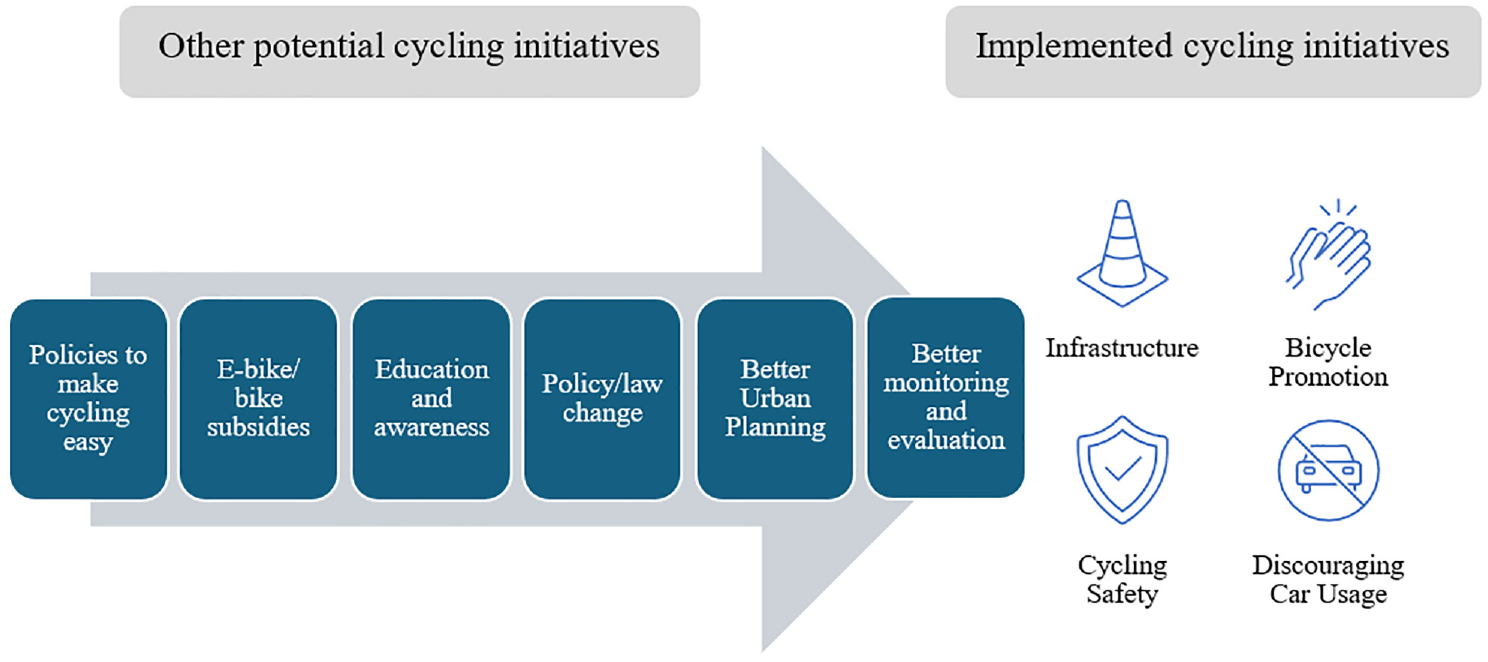
Currently implemented and other potential cycling initiatives.
E-bike/Bicycle Subsidies
E-bike/bicycle subsidies were seen as a promising initiative by the majority of interviewees, because access to bicycles is one of the key barriers to cycling as a result of the cost, particularly for the e-bikes. Although e-bike trials do exist there isn’t “a program to really subsidize people buying e-bikes.” One suggestion was to extend it to “trade in a vehicle to get a higher subsidy for a cargo bike or something like that.” Bicycle subsidies could be private or government-funded and it “would mean that more people could afford to purchase bikes.” Other interviewees’ suggestions included “partnering with different bike-share programs” to subsidize bicycles, and to promote recycling of second-hand bikes, given that “there are plenty of bikes out there that could be fixed up and handed out to the community.” Interestingly, one participant did express doubt over whether bicycle subsidies work as an equity initiative based on experience with several large companies and organizations that offer bicycle/e-bike subsidies to their staff.
Policy/Law Changes
Changes to some of the existing cycling policies and regulations could help to address equity issues in cycling. For example, several interviewees believed that the ability to “slowly roll through a crossing [on] a red light [during the pedestrian phase] if you are on a bike” could be a key effective factor for cycling and could “improve their efficiency.” Also, changes in the fringe-benefit tax could help cycling and public transport. Currently, people “don’t have to pay fringe-benefit tax on parking spots,” but they do for “employee benefits for public transport or cycling. That should change.”
Education and Awareness
Improved education was identified as one of the initiatives that could help improve cycling equity. One participant suggested adding lessons to the school curriculum to teach children about the benefits of cycling, similar to how “driving lessons or home economics used to be taught.” Educating young people about the benefits of not becoming car-dependent and avoiding “so much focus around young people getting their driver’s license” was suggested as an idea for improving cycling equity.
There are many businesses that require their staff to have a car, or be able to drive, as part of the hiring process and “if workplaces removed these requirements, or even incentivized biking to work, it would be much more equitable and would help incentivize more people to bike.” An idea raised in the interviews included increasing the budget provided to “The school cycle Skills Training Program [which] has a small budget,” and this could also help influence cycling equity. Overall, educating young people and businesses about the repercussions of car dependency, adding cycling lessons to the school curriculum, and increasing the budget for teaching cycling skills in the schools could help achieve cycling equity.
Better Urban Planning
Better urban planning could help improve cycling equity. Designers and planners “need to improve urban design [by] stopping green field developments unless unavoidable.” In addition, changes in transport planning and network planning could help to encourage bicycle usage. One participant believed that everyone could be encouraged to cycle “if we had a greater remit to reallocate space on the transport network and had less car-focused planning and projects, and a greater focus on people movement via sustainable modes.”
Policies to Make Cycling Easy
Policies to make cycling easier were also suggested by the majority of interviewees to address some of the inequity issues. “People are psychologically lazy and take the easy option [and this has resulted in infrastructure] designed to make cars the easy option.” Car-free days would encourage people to use bicycles and decrease car usage. This initiative is an example of a “smaller scale initiative,” which could gain traction and result in “removing vehicles from the road” which in turn would “help to make cycling much more attractive.” Another suggestion is to make the cycling environment easier for children and “complete the cycle network to enable all children in Auckland to be able to cycle to and from school safely.”
Better Monitoring and Evaluation
Having “enough information [which could be related] to monitoring” of bicycle usage and cycling equity was another suggestion for achieving equity in cycling. Sufficient monitoring of bicycle usage could help addressing equity issues by detecting disparities.
As a summary of this whole section, e-bike/bicycle subsidies, policy/law changes, education and awareness, better urban planning, policies to make cycling easy, and better monitoring and evaluation were identified as potential additional cycling initiatives that could help improve cycling equity in Auckland.
The Barriers to Implementing Cycling Equity Initiatives in Practice
This section presents the barriers to implementing cycling equity initiatives in practice, extracted from the interviews. Five sub-themes were identified as barriers on the basis of the thematic analysis, including “sociocultural issues,”“poor planning,”“financial constraints,”“human resource limitations,” and the “built environment.” These have been identified as barriers in relation to both current and potential initiatives. The quotations below provide examples of what interviewees mentioned as potential barriers.
Sociocultural Issues
One of the barriers to implementing cycling equity initiatives mentioned by one interviewee was historical racism and working in a colonized system. For example, policymakers, planners, designers, and transport professionals “have to deal with the fact that the system that [they] are working in is a colonized system with [ingrained] racism and historical violence.” This has led to pushing certain communities into areas with underdeveloped transport infrastructure where the car is still the only available option. Therefore, every initiative implemented could be advantageous to privileged groups and unfavorable to disadvantaged population groups. For example, “raising the fuel tax is inherently regressive (just as goods and services tax is) and … [it] is inequitable.” It seems paying attention to historical reasons and “looking to those historical reasons to address their effects” might help address inequity. People’s perceptions and awareness could also be barriers to implementing cycling equity initiatives. “Some groups don’t want to cycle or won’t cycle at all or it is not in their culture to cycle.” Perceptions of parents about children’s “safety” can also influence bicycle usage among children. People have become very “risk-averse” with how their children travel to and from school. From the viewpoint of several interviewees, some people do not think about equity, and it is in doubt whether “they quite understand what it means.”
Sociocultural barriers prevent equity in cycling by limiting participation and access among both marginalized groups and those with differing cultural perceptions and awareness. Without engaging with and educating communities, misconceptions and cultural resistance persist, deterring many from cycling. Additionally, the lack of prioritization for developing safe and accessible cycling infrastructure in historically underserved areas increases inequities, as these communities continue to have fewer opportunities to cycle safely. Consequently, cycling remains an inequitable mode of transportation, predominantly benefiting privileged backgrounds and leaving both marginalized groups and those with different perceptions without equitable access to its advantages.
Poor Planning
Poor planning could be a barrier to implementing cycling equity initiatives. By failing to anticipate and address the specific needs of diverse populations, poor planning perpetuates existing cycling inequities. For example, planning for e-bike subsidies should consider differences in people’s income levels. As one interviewee mentioned, “I think that’s where things like e-bike subsidies come into play for areas where people may not be able to afford e-bikes because it’s a pretty decent capital outlay when you’re purchasing one, so there’s, sort of some barriers around income definitely.” This highlights the need for equity-focused planning that ensures financial accessibility for all groups and avoids ignoring lower-income population groups.
Another issue is that planning is “not as proactive as it could be. It’s more reactive,” with planners and policymakers often “waiting for [people] to come to [them].” This reactive approach can lead to initiatives that primarily benefit those who are already engaged and aware, often from more privileged backgrounds, while neglecting the needs of marginalized communities who may not have the same capacity to advocate for themselves.
Financial Constraints
All of the interviewees believed that funding and prioritization are significant barriers to implementing cycling equity initiatives. Financial problems/limitations are often a reason that some parts of the city are left out. Policymakers and transport planners “can’t deliver all projects and initiatives needed everywhere,” leading to certain streets, communities, or town centers being neglected until funding becomes available. There is a trade-off decision in Auckland for spending the limited funding. Overall, there is “limited funding,” and policymakers and transport planners are starting from a “low base.” Therefore, they have to make trade-off decisions about who they are targeting. The trade-off is that they should weigh up the value of getting quick uptake on cycling (the low hanging fruit) versus providing everybody with equal access to cycling, or preferably providing better access for more vulnerable, lower-income, disabled people, and so forth. The current strategy in Auckland is “to try and build a core [base] of use,” encouraging early adopters with the expectation that others will follow. This approach, however, risks perpetuating inequities by initially benefiting those who are already more likely to cycle, often from more privileged backgrounds, while leaving marginalized communities behind.
An important challenge is prioritizing the various needs in more disadvantaged areas. “The elected representatives in places like South Auckland would argue that there are a lot of issues lower-income communities face that are perhaps more important than cycling infrastructure.” These areas often have pressing issues related to “health services, education services, and public transport” which are generally “ranked higher in priority than cycling infrastructure.” Therefore, the “fundamental needs” of these communities are understandably a priority over cycling improvements.
Financial constraints force difficult trade-offs, often ignoring the needs of disadvantaged communities. This perpetuates existing inequities, as privileged groups benefit first from available resources. To overcome these barriers, it is crucial to recognize how financial limitations shape the accessibility and distribution of cycling infrastructure and to understand the broader context of competing priorities in disadvantaged areas.
Human Resources Limitations
The current capacity for human resources and skills could be a barrier to implementing cycling equity initiatives in practice. Language skills, for instance, were identified as a crucial resource. Currently, transport teams primarily consist of English speakers, and they lack individuals “that are fluent in Te Reo Māori, Chinese or any of these other languages of the different groups that [they] want to be targeting.” It can be said that they do not have the “capability to be able to talk to different groups,” which inhibits effective communication and engagement with diverse groups, as highlighted by several interviewees.
Expanding the team responsible for cycling could also help better provide equity in cycling. “We are such a small team, we have only focused on targeting 100 or more businesses, which are primarily in the CBD area.” It seems they could do better if they had the capacity in their team to be able to work with different groups or different universities or communities, but “[they] are so busy working with businesses at the moment.” Having “the right skill set” to work on cycling equity could also be helpful for achieving cycling equity.
These human resource limitations directly affect equity in cycling by hindering effective communication and engagement with diverse communities. Additionally, the constrained team size restricts outreach efforts, particularly in underserved areas, leaving many communities without access to cycling initiatives.
Built Environment
Urban design and housing density could be a barrier to implementing cycling equity initiatives. South Auckland is a good area for riding a bicycle. It is flat, without hills, and with wide roads. However, use of active modes is not that popular for many reasons, including ones “relating to housing density and relating to when and where people work.” Cycling infrastructure provision is primarily focused on the CBD and surrounding areas, where the wealthier people live and work. However, for people in South Auckland “there are very few options for them to get to work other than driving early in the morning.” Therefore, it can be argued that disadvantaged populations are not being served well. However, the fact is that areas such as South Auckland are very dispersed, densification not being a factor because of the distance from the CBD and other business areas, and providing sufficient infrastructure coverage is always going to be a challenge economically.
Transport Strategies to Address the Barriers
This section reports on the strategies suggested by the interviewees to address barriers to successfully implementing cycling equity initiatives. As shown in Figure 4, four sub-themes were identified through thematic analysis. Interviewees, only in a very limited way, mentioned strategies to address the barriers. The quotations below provide examples of some of the strategies mentioned.
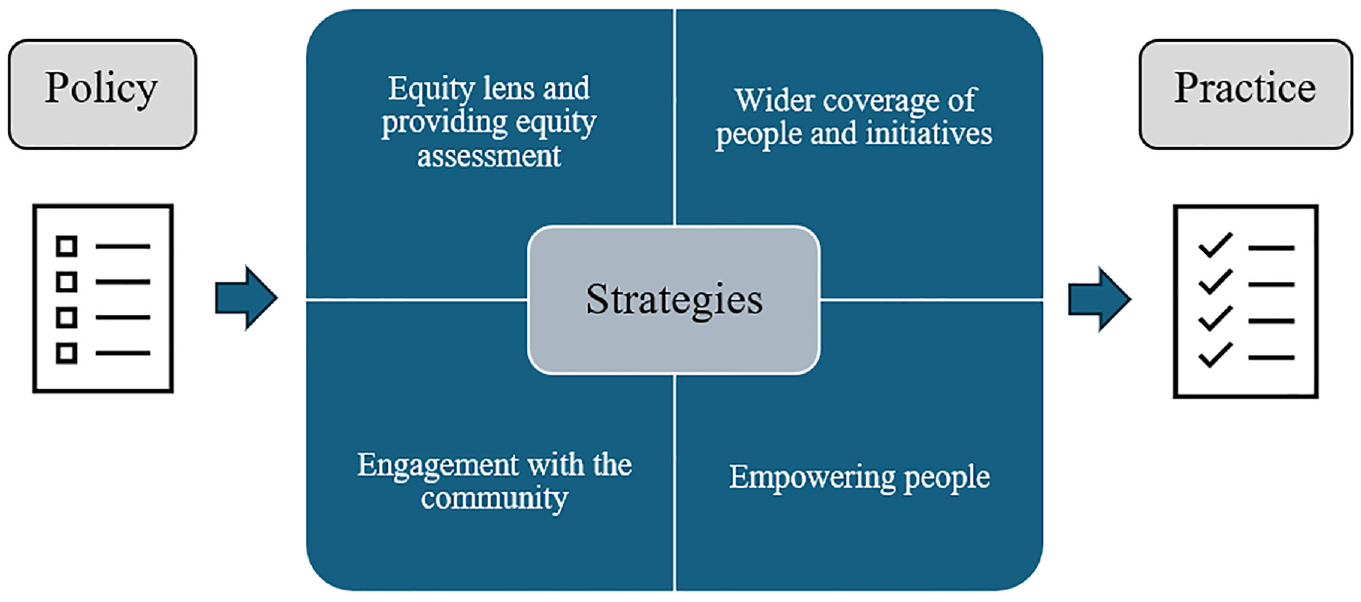
The gap between policy and practice and relevant transport strategies.
Having an “equity lens” in cycling initiatives is one of the strategies suggested by the majority of interviewees to address the barriers, so that “they are not too focused on one specific [advantaged] location or one specific [affluent] socioeconomic group.” Another strategy could be bringing equity into the assessment tools so that “project teams run that lens across their options.” In addition, a wider variety of trips need to be considered and focusing only on commuting be avoided. Historically, cycle development has been quite focused on the commuter trips to and from the city center, however, planners and policymakers are currently “looking at a wider variety of trips like people getting to school and to the local shop, and the post office.” In addition, having variety of cycling initiatives for population groups and avoiding “one size fits all” is an important strategy. Cycling initiatives should not be solely about infrastructure. While a considerable amount of funding is going toward protected cycle facilities, policymakers and planners should know that it is not the only barrier to people’s cycling and they also need to invest in “cycle parking and initiatives like cycle skills training, and marketing.” One suggestion is for planners and policymakers to consider a balanced range of initiatives and not only focus on one solution. Engagement with a wide range of community groups is a strategy which can address barriers and “certainly helps to bring a more balanced perspective.” One of the strategies suggested by several interviewees to address barriers was supporting people in their communities and “mapping out what those areas are and what kind of capability [policymakers and planners] would need in order to reach those groups.” Policymakers and transport planners should identify champions and they can support people in their communities to help be those champions because it is important for people “to take more ownership of their local area and transport in their area.” The last strategy which was discussed in the interviews was empowering people to help improve cycling equity. One of the interviewees believed that “there are plenty of people out there wanting to help” and that success would require finding “the right people, motivated to do the right thing for altruistic reasons.”
Discussion
This study aimed to identify the cycling initiatives currently being implemented in Auckland, along with their intended target groups or resulting beneficiaries. The study also investigated equity issues in cycling initiatives, other potential initiatives not currently being implemented, barriers to implementing cycling initiatives in practice, and possible strategies to address these barriers. This section discusses the results, departing from the five research questions presented in the introduction.
First, this study attempted to uncover definitions and/or metrics with respect to equity in cycling in Auckland. From what we understood from the interviews, a clear understanding of cycling equity, and how it differs from equality, was lacking. Also, equity was primarily mentioned in only broad terms in the key planning documents for Auckland and equity in cycling was not specifically considered. Although there have been some efforts made in the transport sector to address cycling inequity issues, a lack of a clear definition and metrics and a lack of a systematic plan, with priorities for funding and capabilities, results in challenges and barriers to addressing cycling equity. As argued by Cunha and Silva ( 49 ), one of the key reasons behind the inequitable distribution of cycling provisions is the lack of knowledge about the equity-oriented measures and methods during planning and decision-making processes. Lam ( 4 ) also showed that poor understanding of equity by policymakers and planners was one of the reasons for an inequitable cycling environment.
Second, based on the interviews, this study identified 44 different cycling initiatives currently being implemented in Auckland. These can be categorized into four groups consisting of (1) infrastructure, (2) bicycle promotion, (3) cycling safety, and (4) discouraging car usage. Looking at the cycling initiatives, 14 of the initiatives specifically targeted current cyclists and confident cyclists while five targeted less confident cyclists. Among the initiatives, the e-bike trial/library, bike hubs, skills training in schools, and the Community Bike Fund targeted lower-income population groups. Only one initiative (lighting improvements) targeted women, younger people, and the elderly. A recent study investigating the health benefits of active transport in New Zealand suggested that such benefits are not evenly distributed across the population. Specifically, while Māori receive significantly fewer health benefits from cycling generally ( 69 ), the relative benefits are higher when they partake ( 92 ). Among the various ethnic groups, European New Zealanders (and males) are the most likely to use a bicycle in New Zealand, while Pacific peoples are the least likely ( 73 ).
Third, this study highlights several challenges to the effectiveness of cycling initiatives, such as inequitable distribution and poor coverage of cycling initiatives. Equity in many of Auckland’s cycling initiatives depends on their locations and coverage. It seems that the spatial distribution of some of the initiatives is not currently equitable in Auckland and many of the initiatives remain focused on the CBD and surrounding affluent neighborhoods. Inequitable distribution of cycling infrastructure and initiatives was reported in several previous studies with lower access among disadvantaged populations ( 28 , 37–39, 43 , 93 , 94 ). Reasons for this inequitable distribution were identified, including a lack of sufficient funding, prioritization of funds, and a lack of adequate human resources.
Another reported obstacle to implementing an effective cycling initiative was operational challenges. Some initiatives, such as being able to carry bicycles on public transport systems, are equitable initiatives but they still have some challenges and barriers in operation, such as adequate capacity on public transport, especially during peak periods. Lack of awareness was another identified challenge to the effectiveness of cycling initiatives. Challenges to properly informing people about cycling initiatives can make the whole system inequitable because of lack of awareness. As explained by Bernatchez et al. ( 95 ), awareness of the benefits of cycling in Montreal, Canada was found to play an important role in bicycle usage. Also, awareness was one of the most important factors identified for raising bicycle usage in Iran ( 96 ). Subsequently, the digital divide was one of the reported equity challenges for some of the initiatives, including the Bike Challenge and the journey-planning mobile app, challenges which are related to ownership of a digital device and technology acceptance. The public’s acceptance or rejection of ideas, systems, and programs has important implications for the likelihood of success of attempts to encourage behavior modification. Acceptance of cycling technologies was investigated in several previous studies ( 97 – 99 ), although the relationship between technology acceptance and cycling equity is yet to be fully understood.
Fourth, this study identified potential additional initiatives to the currently implemented cycling initiatives. For example, e-bike subsidies have been implemented in many European countries and could help promote cycling in Auckland, by overcoming the reluctance to cycle arising from the hilly terrain and barriers linked to the cost of e-bikes ( 100 , 101 ). A growing number of European countries have run schemes to provide grants for e-bike purchases. The European Cyclists’ Federation in 2016 identified subsidy schemes at regional or local level in Austria, Belgium, France, Germany, Italy, the Netherlands and Spain ( 102 ). There is a lack of understanding of the feasibility of e-bike subsidies in the Auckland context, and further studies are required to evaluate and investigate whether an e-bike subsidy would be successful in Auckland.
Policy and law change was also suggested as an additional initiative. Changes to policy suggested by the interviewees were around taxes, network planning for increasing spaces for cycling, and making cycling easier and safer. These policies could be supplementary regulations to the current initiatives for discouraging car usage. Another suggested initiative, education and raising awareness, can also play an important role in addressing inequity by changing people’s travel behavior. The educational level and cycling awareness of population groups can affect their bicycle use preferences ( 95 ). Better urban planning, policies to make cycling easier, and better monitoring and evaluation were the remaining potential additional initiatives identified.
Fifth, this study shows that there are five main barriers to implementing cycling equity initiatives in practice, including financial constraints, poor planning, sociocultural issues, human resources limitations, and the built environment. Financial constraints are a limiting factor in implementing cycling initiatives. Financial barriers include budget restrictions limiting overall expenditure on the strategy, financial restrictions on specific instruments, and limitations on the flexibility with which revenues can be used to finance the full range of instruments ( 65 ). Poor planning included, in hindsight, some errors in implementation of initiatives that interviewees believed could be done differently. For example, a lack of consideration of population groups with respect to income levels in bicycle subsidy (trial) plans, being more reactive and not proactive, and promoting complicated programs—instead of simple ones that are easy to understand and, therefore, accessible to all.
Some sociocultural barriers, such as historical racism, were identified as requiring more in-depth investigation in future studies. Another example of sociocultural barriers is the perception that people have about cycling, as some people do not want to cycle for cultural reasons. These issues vary based on local contexts. In some cultures, cycling may be perceived as a lower-status mode of transport compared with owning and driving a car. This perception can discourage people from cycling, especially among those who associate vehicle ownership with social status, and the economic prosperity of individuals leads to a preference for cars as a symbol of success ( 92 , 94 , 100 ). The lifestyle and convenience associated with cycling can also be influenced by cultural norms and practices. In cultures where speed and efficiency are highly valued, the slower pace of cycling might be seen as a disadvantage.
Cultural norms about gender and age can also influence cycling. In some societies, there might be reluctance among women to cycle because of safety concerns, societal perceptions about femininity and physical activity, or practical issues such as clothing norms ( 103 ). Kaplan et al. ( 104 ) suggested that the cycling habits of female immigrants are related to past travel habits, while future intentions of cycling are connected to tangible and emotional barriers. They showed a positive relation between cycling culture and cycling habits in both culture strength and exposure. Different age groups may have varying attitudes toward cycling. Older generations, for example, might view bicycles as a necessity from a past era, while younger generations might see them as a trendy or environmentally friendly choice.
Also, perceptions of parents in relation to the safety of their children when cycling were identified as one of the sociocultural barriers. Cultural attitudes toward safety and risk can affect cycling. In some societies, there may be a heightened sense of vulnerability when cycling, especially if the infrastructure is not fully developed or if there is heavy motor-vehicle traffic. Cultural adaptability to weather conditions can also play a role. In regions where there are extreme weather conditions, such as heavy rain, snow, or extreme heat, there might be a cultural preference for enclosed, climate-controlled modes of transport ( 105 ). Despite these potential cultural issues, policymakers and government can attempt to address cultural barriers through education, promoting cycling as a safe and viable mode of transport, developing better infrastructure, and fostering a cultural shift toward sustainable and healthy living.
Human resources were identified as another barrier, this one being related to the team capacity and skillsets of transport planners/designers to address inequity in cycling. Given the size of the cycling equity challenge, additional resource is needed to implement the required initiatives. The built environment was identified as another barrier to implementing cycling equity initiatives that should be addressed. The built environment as a barrier to cycling equity has not been discussed in previous studies. This is related to the influence of urban design, housing density, employment locations, and place of living, on the implementation of cycling initiatives. Further research is required to investigate the solutions for urban design and housing density associated with bicycle usage behavior.
Finally, in respect of the suggested strategies, four main strategies were identified, including incorporating an equity lens in the assessment of planning proposals, wider coverage of people and initiatives, engagement with the community, and empowering people. Further research is required to understand the feasibility of the aforementioned strategies.
Limitations
Thematic analysis with an inductive approach has limitations such as potential researcher bias in identifying and interpreting themes, which can affect the shaping of the themes, oversimplify complex data, and limit the depth of understanding in any study. To mitigate these issues, several rounds of cross-checking of the themes among the authors were conducted to enhance the reliability and validity of the findings. In addition, participants’ opinions were represented as extensively as possible, to ensure a broad and comprehensive inclusion of their perspectives in the analysis.
Because of the specialized nature of this study, it became apparent that the number of eligible participants with knowledge and experience of equity in cycling initiatives in Auckland was limited; however, data saturation was reached. In other potential contributions, understanding the viewpoints of population groups such as community activists, community representatives, or both, on potential cycling initiatives, as well as possible solutions and strategies, could add invaluable knowledge. It is recommended that this be included as part of further research.
Conclusion
This study has emphasized the importance of identifying cycling initiatives beyond physical infrastructure and aimed to provide guidance for decision-makers and planners by answering a set of research questions.
The main contribution of this research was the increased understanding of the whole cycling equity environment through identification of cycling initiatives in Auckland, beyond the provision of bicycle infrastructure, and the role they can play in cycling equity. This was achieved by identifying a comprehensive list of cycling initiatives in Auckland, their intended target groups or resulting beneficiaries, the current level of understanding of cycling equity in Auckland, potential additional cycling initiatives, barriers to implementing cycling equity policies in practice, and strategies to address the barriers. These findings will help decision-makers to better understand what type of initiatives influence cycling equity, and how they might solve barriers to implementing cycling equity policies.
Based on the findings of this study, to improve equity in cycling in Auckland, it is crucial for the government to ensure that there is a clear and common understanding of equity in transportation, and in particular cycling, in their organizations. The current definitions and metrics of equity in transportation were derived from deep philosophical debates on justice and equity.
Highlighting the resulting beneficiaries of cycling initiatives in Auckland showed that, consistent with what we know about bicycle usage in Auckland, it seems only limited effort has been expended on empowering women and low-income groups to cycle. In addition, there are no initiatives aimed specifically at any particular cycling disadvantaged ethnic group, such as Māori or Pacific people. Despite the low bicycle usage rates of Māori and Pacific people, it seems that current cycling initiatives are not specifically focused on these groups. Although some initiatives are available for particular population groups if they are proactive and request assistance, this kind of policy is based on “want” and not “need” and, therefore, will not be effective in addressing equity issues. It is suggested that, to improve equity in cycling in Auckland, resources should be expended on adequately exploring different communities’ perceptions, needs, and potential motivations, as well as observing the difference between their perceptions of effectiveness of cycling initiatives. This would help provide a better understanding of the equitable distribution of cycling initiatives for policymakers and planners in Auckland.
Based on the findings of this study relating to barriers and possible strategies, more funding would, obviously, allow planners and policymakers to increase the coverage of initiatives. However, an important challenge is how they prioritize spending of constrained funding in different areas. For example, decision-makers for disadvantaged areas such as South Auckland could argue that there are a lot of issues lower-income communities face that are perhaps more important than cycling infrastructure, such as health services, education services, and public transportation. As discussed in the interviews, it seems prioritization is assessed on a case-by-case basis and the level of bicycle usage. For example, funding in Auckland, aimed at increasing bicycle use and facilitating the fast uptake of cycling, may be best used to expand the capacity of the system (infrastructure). In contrast, in places with high bicycle usage rates (such as Amsterdam and Copenhagen), funding could be used to encourage disadvantaged population groups to start cycling. Addressing financial constraints in a manner that promotes equity requires a strategic approach to funding and prioritization. Initiatives should balance the immediate benefits of quick cycling uptake with the long-term goal of equitable access. This involves ensuring that disadvantaged and underserved communities receive appropriate investment in cycling infrastructure alongside other critical services. By doing so, cycling equity initiatives can more effectively serve all population groups, providing opportunities for everyone to benefit from cycling.
Addressing equity in cycling can indeed pose a challenge when it comes to recommending funding priorities to decision-makers. The issue arises from the need to demonstrate tangible results and usage to secure ongoing funding and political support for cycling initiatives. This emphasis on immediate and measurable outcomes can potentially hinder efforts to address equity in cycling for several reasons. In respect of inequitable distribution of resources, funding decisions based solely on demonstrated usage may perpetuate existing inequalities in cycling infrastructure. Areas with already high cycling rates or well-developed infrastructure are more likely to show immediate usage results, whereas underserved communities or areas lacking infrastructure may struggle to demonstrate comparable usage in the short term. In addition, disadvantaged communities often face systemic barriers that limit their access to safe and convenient cycling infrastructure. These barriers can include factors such as limited infrastructure, safety concerns, lack of bike-sharing programs, or inadequate connectivity to key destinations. Overcoming these barriers and building equitable cycling systems may require upfront investments that may not yield immediate high usage rates, making it challenging to secure continued funding based solely on short-term metrics. Encouraging more diverse and inclusive participation in cycling requires addressing long-standing behavioral patterns and cultural norms. It takes time to build awareness, shift attitudes, and change behaviors, particularly in communities that have historically been marginalized or underserved. Funding decisions solely based on short-term usage metrics may undermine efforts to promote equitable cycling, as it may not allow sufficient time for behavior change to occur and for communities to embrace cycling as a viable mode of transportation.
To address these challenges, it is important for policymakers to advocate for a broader understanding of success metrics beyond immediate usage rates. They should emphasize the importance of equity, accessibility, and inclusivity in cycling initiatives. This can involve considering factors such as the level of service provided to underserved areas, the potential for long-term behavior change, and the overall impact on community health and well-being. By highlighting the social and environmental benefits of equitable cycling initiatives, policymakers can help decision-makers recognize the value of investing in projects that prioritize equity, even if they may not yield immediate high usage rates.
Equity in cycling is a global issue that extends beyond geographical boundaries, given that cities around the world share similar transport and cycling equity concerns. While this study is based in Auckland, New Zealand, the insights and findings are transferable elsewhere. The universal nature of the challenges, barriers, and strategies discussed in this paper ensures that this research can help inform and enhance the efforts of cities worldwide toward implementing equitable cycling initiatives.
Footnotes
Author Contribution
The authors confirm contribution to the paper as follows: study conception and design: D. Jahanshahi, S. B. Costello; data collection: D. Jahanshahi; analysis and interpretation of results: D. Jahanshahi, S. B. Costello, Kim Natasha Dirks, B. van Wee; draft manuscript preparation: D. Jahanshahi, S. B. Costello, Kim Natasha Dirks, B. van Wee. All authors reviewed the results and approved the final version of the manuscript.
Declaration of Conflicting Interests
The author(s) declared no potential conflicts of interest with respect to the research, authorship, and/or publication of this article.
Funding
The author(s) received no financial support for the research, authorship, and/or publication of this article.
