



Abstract
A first/last mile (FLM) trip is defined as the distance a person travels before boarding a transit stop (first mile) or after disembarking (last mile). FLM trips could encourage or discourage people from riding transit systems, affecting their access to major services such as healthcare, education, employment, and transportation. When considering underserved communities specifically, where people rely heavily on public transportation, challenges to completing the FLM trip often negatively impact quality of life. This paper provides a comprehensive review of previous research efforts discussing the FLM trip. It begins by identifying the outcomes of challenges in completing the FLM trip and the contributing factors to those challenges and subsequently summarizes the various solutions transportation agencies and decision-makers have implemented to address the first and last legs for transit users. The most common solutions include shared mobility services, circulating shuttles, and built environment improvements. This research serves as a valuable reference for transportation professionals to enrich their understanding of the FLM barriers and the potential solutions to bridge this FLM gap.
Transportation plays an essential role in shaping the economy through the movement of people and goods. It is also essential to people’s health and economic well-being as it allows for better access to healthcare and potential employment opportunities. As a mode of transportation, the public transit system has several tangible benefits. With regard to the economy, the American Public Transportation Association (APTA) reported that for each U.S. dollar invested in public transit, a return of U.S.$5 is earned in economic activities ( 1 ). Environmentally, the nation’s carbon emissions could be reduced by 84% by using public transit rather than a car, and gasoline consumption by 6 billion gallons of gas each year ( 2 ). From a safety perspective, public transit travel recorded a 90% lower crash rate compared with automobile travel ( 3 ). However, despite the benefits obtained from public transportation, it is still unable to provide a reliable service to the public. In 2021, it was recorded that 45% of Americans cannot access public transit systems ( 4 ). This lack of access is particularly critical for underserved communities, which rely heavily on transit systems and often lack alternative modes of travel.
One major barrier to accessing public transportation is the distance to and from transit stops. Many transit commuters usually need to combine other modes of travel to bridge the gap between their origin or destination and the transit stops themselves, otherwise known as the first/last mile (FLM) trip ( 5 , 6 ). Depending on the length of travel to overcome this gap, certain commuters may feel discouraged from using public transportation. While the APTA reported that more than two-thirds of transit riders walk to transit stops, several U.S. studies revealed that public transit use declines by up to 90% when passengers need to walk more than 0.5 mi to the transit stop ( 2 , 7 ). The FLM trip is especially pronounced for disadvantaged groups, such as people with disabilities, people of color (Black or African American, Hispanic or Latino, Native American or Indigenous, Pacific Islander, and other non-White groups), and lower-income travelers. In addition to published research on the effects of the FLM trip, transit agencies have also been implementing a wide range of initiatives to address those same effects and enhance transit accessibility. Shared mobility programs, including carsharing, bike-sharing, ridesharing, scooter-sharing, shuttles, and built environment improvements (e.g., streetscape and transit stations) are two proven methods for bridging the FLM gap.
This paper summarizes the outcomes of the FLM challenge and the contributing factors to these challenges, as well as various strategies to alleviate FLM problems, their implementation potentials, and their challenges, with a specific focus on underserved/low-income communities. The high dependency of underserved communities on transit systems makes them more vulnerable to the FLM problem compared with others, which raises disparities and inequities in transportation systems. Taking this into consideration, this research investigates literature that defined applicable approaches to improve public transportation accessibility for lower-income communities. This paper serves as a valuable reference for transportation professionals to foster a greater understanding of the importance of providing feasible FLM connections to enhance equitable access to public transportation systems.
Methodology
This study followed Arksey and O’Malley’s ( 8 ) framework to perform a scoping review of the literature to determine how challenges to completing the FLM trip create different barriers (e.g., healthcare, employment, and education), and to identify initiatives for alleviating the FLM trip and enhancing transit accessibility. A scoping review approach was selected because it facilitates concisely summarizing and disseminating research findings to decision-makers and practitioners.
Electronic databases like Google Scholar, ScienceDirect, Springer, Taylor & Francis, and Rowan Campbell Library were instrumental in gathering relevant literature. Since transit accessibility research has been widely studied, searches excluded any work published before 2010. A two-block search approach was performed to expand the breadth of the preliminary search. The first block considered the challenges associated with the FLM trip, utilizing keywords like “first mile,”“last mile,”“challenge,”“barrier,”“transit,”“accessibility,”“education,”“public health,”“healthcare,”“job accessibility,” and “employment.” The second block considered the solutions to bridge the FLM trip, utilizing keywords like “first mile,”“last mile,”“solution,”“transit,”“accessibility,”“shared mobility,”“bike-sharing,”“ridesharing,”“carsharing,”“infrastructure,”“built environment,” and “land use.” The search was constructed using the Boolean operators “OR” and “AND,” where the keywords “last mile” and “first mile” were always connected with the term “transit” using the operator “AND.” In total, the searches uncovered more than 6,500 documents. To further filter these initial results, a title, keywords, and highlight section screening was performed, resulting in 861 relevant studies. Following the title and abstract screening, a full-text review was performed on 146 studies with a heightened focus on those conducted in the United States, and 79 documents were ultimately selected. Figure 1 illustrates the selection process.
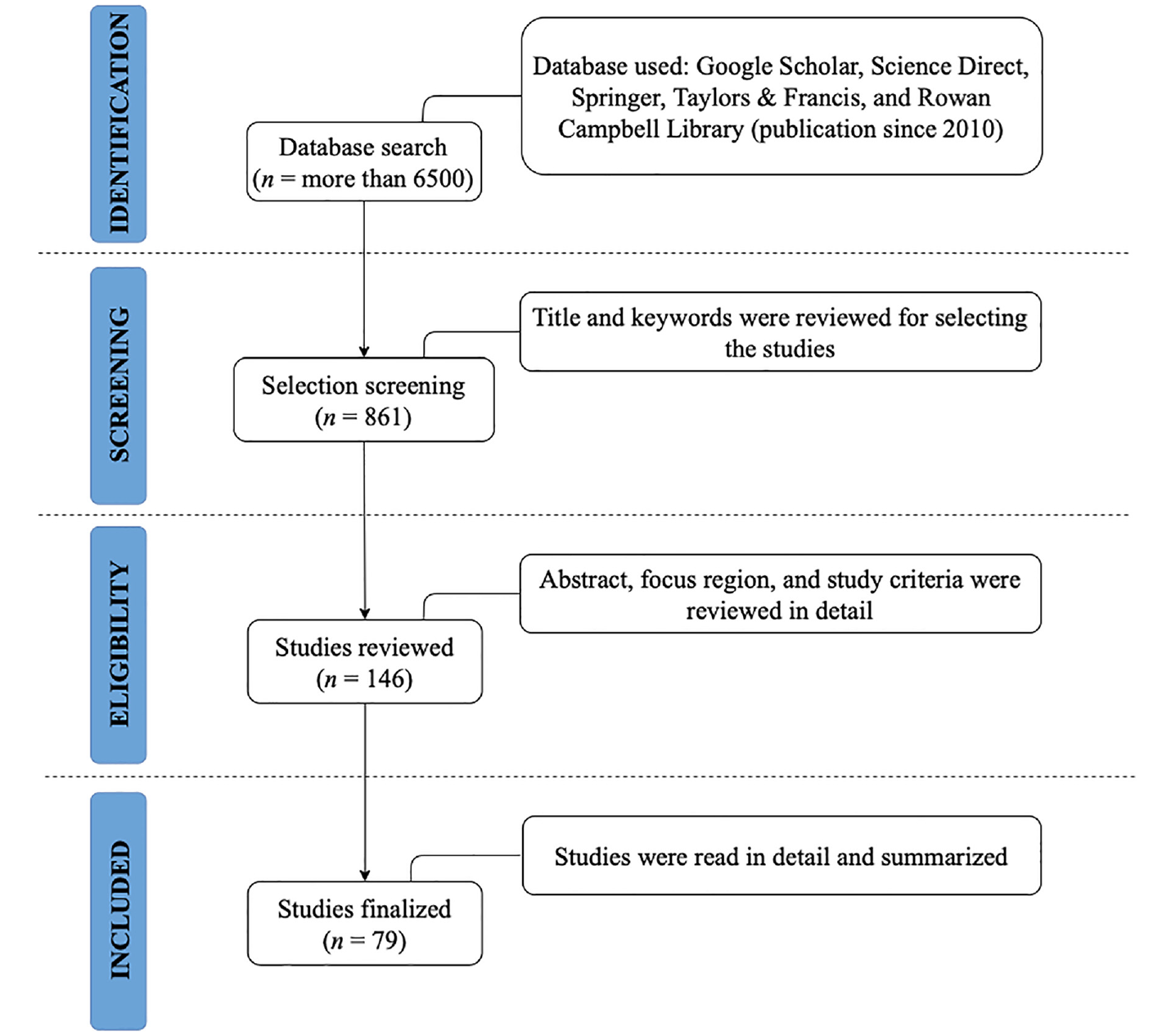
Flow diagram of literature search and review.
Findings and Discussion
The 79 documents selected for this review focused on the challenges associated with the FLM trip, the solutions implemented to alleviate the problem, or both. The selected documents were published in 2010 or later, with 70 published since 2012. Of the reviewed documents, 82% (65 documents) were conducted in the United States, and the rest (14 documents) were published in Europe (7 documents), Canada (4 documents), South Africa (2 documents), and Malaysia (1 document). In relation to the document type, 58% (46 documents) were journal articles, 22% (17 documents) were white papers, and the remainder were a combination of conference papers (5 documents), educational papers (10 documents), and newsletters (1 document). Out of the 79 documents, 72 were research-based studies, where 13 discussed the barriers associated with transit accessibility and the FLM trip only, 33 discussed initiatives, research, or programs implemented to alleviate the FLM trip challenges, and 26 discussed both the challenges and solutions.
The key findings of the reviewed articles are summarized in two sections, each of which is described by overarching subsections as follows: barriers associated with the FLM trip (i.e., transportation accessibility, healthcare, education, and employment); and solutions to alleviate the FLM trip challenges (i.e., shared mobility services, micro-transit, enhancement of infrastructural facilities, and land use and transportation management strategies).
Barriers Associated with the FLM Trip
The first and last parts of a journey, which are frequently the shortest with reference to distance, are usually the most time-consuming parts of a trip. Problems with completing these two components could be interpreted as accessibility concerns and may have detrimental effects on communities. Other obstacles, such as inaccessible transit systems and disconnected transportation networks, may compound the issue. Accessibility to transportation, public health, education, and employment are outlined in this section as the four major FLM hurdles. Each of the sections below discusses the negative outcomes of the FLM challenge with reference to their respective hurdle.
Impact on Transportation Accessibility
Transit users often perceive the first and last legs of their trips as the most challenging and least reliable parts, thereby confirming these parts as an accessibility barrier to public transportation ( 9 , 10 ). The literature highlights how lower transit ridership and higher dependency on auto travel could result from poor access to public transportation ( 9 , 11 ), which could then affect the environment by raising gas consumption and greenhouse gas (GHG) emissions, thereby complicating a community’s ability to achieve sustainability ( 12 , 13 ). Previous studies also emphasize that the FLM issue is especially critical for people who rely on public transportation as their primary mode of travel, as well as how transit accessibility is an equity barrier that increases marginalization and social exclusion for transportationally disadvantaged groups ( 14 – 16 ).
The impact of transportation accessibility issues varies depending on several factors, including the built environment (e.g., land use and streetscape factors), time-related issues, and socioeconomic characteristics ( 11 , 14 , 17–22). In relation to land use, a study conducted in Chicago indicated that the FLM trip is less problematic in mixed land use areas than in non-mixed land use ones because of the greater number of options available to complete the FLM trip ( 17 ). In addition, the study highlighted that streetscape conditions, particularly well-maintained sidewalks and crosswalks, encourage walking to transit stops ( 17 ). Other studies highlight land use patterns as a significant impact factor on transit accessibility ( 11 , 18 ). Zuo and Wei ( 11 ) pointed out that mixed land use near transit stations promotes transit ridership. Another study conducted in Sweden to assess the FLM problem in accessing the transit system found that people who live in apartments in mixed land use areas have higher accessibility to the transit system than those who live in single houses in suburban and rural areas ( 18 ). Temporal factors also affect transit use and accessibility. For instance, an assessment study in Utah examined the FLM issue through temporal factors and found that different temporal barriers, such as waiting time, FLM travel time, and the fluctuation of trip schedules, are influential factors in assessing the quality of transit services in the area ( 19 ). Other studies ( 14 , 20 , 21 ) investigate the impact of socioeconomic characteristics on transit accessibility and bridging the FLM gap, finding that lower-income populations, people with disabilities, people of color, and vulnerable populations face considerably higher challenges in accessing transit stops.
In the transit literature, the FLM problem is identified as a factor in measuring the overall transit service quality. The Transit Capacity and Quality of Service Manual identifies the proximity of transit stations and stops to origins and destinations, safety, security, door-to-door travel time, and passenger amenities as essential factors for evaluating the FLM problem ( 22 ). Based on these selected studies, it is clear that the FLM trip is a complex issue with its involvement in lower transit use/ridership, longer travel times, and a higher tendency for auto travel ( 23 , 24 ).
Impact on Public Health
A lack of access to transportation is known as one of the major barriers to accessing healthcare ( 25 ). Kullgren et al. ( 26 ) conducted a cross-sectional analysis of 2007 data from the Health Tracking Household Survey (HTHS) and identified accessibility barriers such as the lack of transportation sources and travel time as two reasons for delayed or absent healthcare service. Furthermore, Geisinger medical facilities noticed that in 2017, 150,000 patients missed their appointments because of the lack of transportation accessibility ( 27 ). Morris notes that low-income and elderly individuals face the most transportation-related barriers to accessing health services because of their high dependency on the transit system ( 28 ). Ermagun and Tilahun’s study on low-income communities in Chicago, IL, further confirmed this connection, reporting that the lack of accessibility to healthcare centers and healthy food has a significant impact on residents’ health and wellness ( 20 ). The authors noted that people in the studied communities are highly dependent on transit systems, and the FLM problem is of considerable concern for them. A study in Indiana indicated that increased access to transit networks improves people’s accessibility to healthy food providers ( 29 ). Finally, multiple studies identified transportation as a barrier for people who need frequent visits to healthcare centers, such as people with chronic diseases or cancer, children, and women who need prenatal care ( 30 – 32 ). In underserved communities and among lower-income populations, people rely heavily on public transportation, and issues in completing the FLM trip will considerably affect their access to healthy food and healthcare services ( 20 , 27 , 28 ).
Impact on Education
Many studies have identified transportation as a major barrier to accessing education ( 33 – 36 ). Some studies have highlighted that the distance to school affects the quality of education in a community ( 34 ). McMillan discusses the complex relationship between urban forms and children’s trips to school, and explains how a student’s travel mode could be highly influenced by the presence of safety elements in the area, such as sidewalks, crosswalks, and lighting ( 35 ). In addition, the National Center for Education Statistics reported that lower-income students face considerable safety concerns during their trips to school because of the lack of adequate infrastructure, which revealed a concern about school access equity ( 36 ). Similarly, a study that performed interviews with students in a low-income community found that approximately half of the respondents considered walking to be an unsafe travel mode to the school, indicating fast-moving vehicles, strangers, uncontrolled animals, and homelessness as major safety concerns ( 33 ). Relating these findings to people in lower-income communities mainly walking to school or using public transportation where they walk to transit stops, it could be inferred that the FLM trip is a challenge to efficient access to education. The literature concluded that educational accessibility issues could highly affect children’s and adults’ futures because of their effect on students skipping their classes and being tardy.
Impact on Employment
As part of the work commute, issues in FLM trips could limit job accessibility and interrupt work trips, especially for employees who rely on public transportation ( 9 ). Tilahun et al. conducted a study to examine the effect of the FLM problem on travel modes for work trips, reporting that areas with better pedestrian facilities and fewer street crimes provide a safer environment for transit users to bridge the last mile gap ( 37 ). Other factors affecting the impact of the FLM problem on work commutes include time-related factors (e.g., working hours for an employee and travel time [ 19 , 38 ], a community’s level of income [ 14 , 39 , 40 ], the built environment [ 17 ], and age and disability [ 20 ]). A study assessing the FLM for the transit system in Utah found that issues with transit station commutes are more frequent for employees who work night shifts ( 19 ). Another study conducted in the same area stated that transit service cuts and last mile problems increase travel time and reduce job accessibility in the area ( 38 ). A study conducted in a lower-income community in San Diego, CA, indicated that job accessibility increases when work commuters use faster modes in their FLM trip, such as cycling and driving instead of walking, especially if the commute is longer than 30 min ( 14 ). Similar findings were highlighted by other studies that defined the FLM problem as a challenge to work trips, specifically in underserved communities ( 39 , 40 ). Moreover, planning and transportation policies were marked as an impact factor on transit accessibility. A study in Chicago, IL, found that areas that support transit-oriented development (TOD) offer higher accessibility to transit stations compared with areas with poor streetscapes ( 17 ). Last, people with disabilities and older adults were found to face relatively higher traveling challenges to access their jobs, primarily if they rely on the transit system. A study conducted in Chicago, IL, found that older people are the second highest group with limited accessibility to transit for accessing their jobs after lower-income workers ( 20 ).
The reviewed literature highlights the adverse outcomes of FLM-associated challenges and the contributing factors to those outcomes. The factors’ weights differ based on the number of outcomes with which they are associated (Figure 2). For instance, low-income level has the highest weight, followed by crime rate, older population, and pedestrian infrastructural facilities. For low-income populations and underserved groups, issues in completing the FLM trip could deprive them of many opportunities and access to primary services such as employment, healthcare, and education, which violates equity principles and perpetuates disadvantaged communities. Alfaris and Jalayer completed an assessment study to evaluate the FLM problem in underserved communities and defined the factors contribute with the adversity of the problem, which greatly overlap with the ones defined in this study. However, the factors' importance was ranked differently in respect with underserved communities, and safety-related factors were given the highest rank in affecting the FLM issue ( 41 ). These findings should encourage transportation agencies and researchers to conduct additional studies and develop unique plans to alleviate the FLM problem. The next section discusses initiatives to do just that.
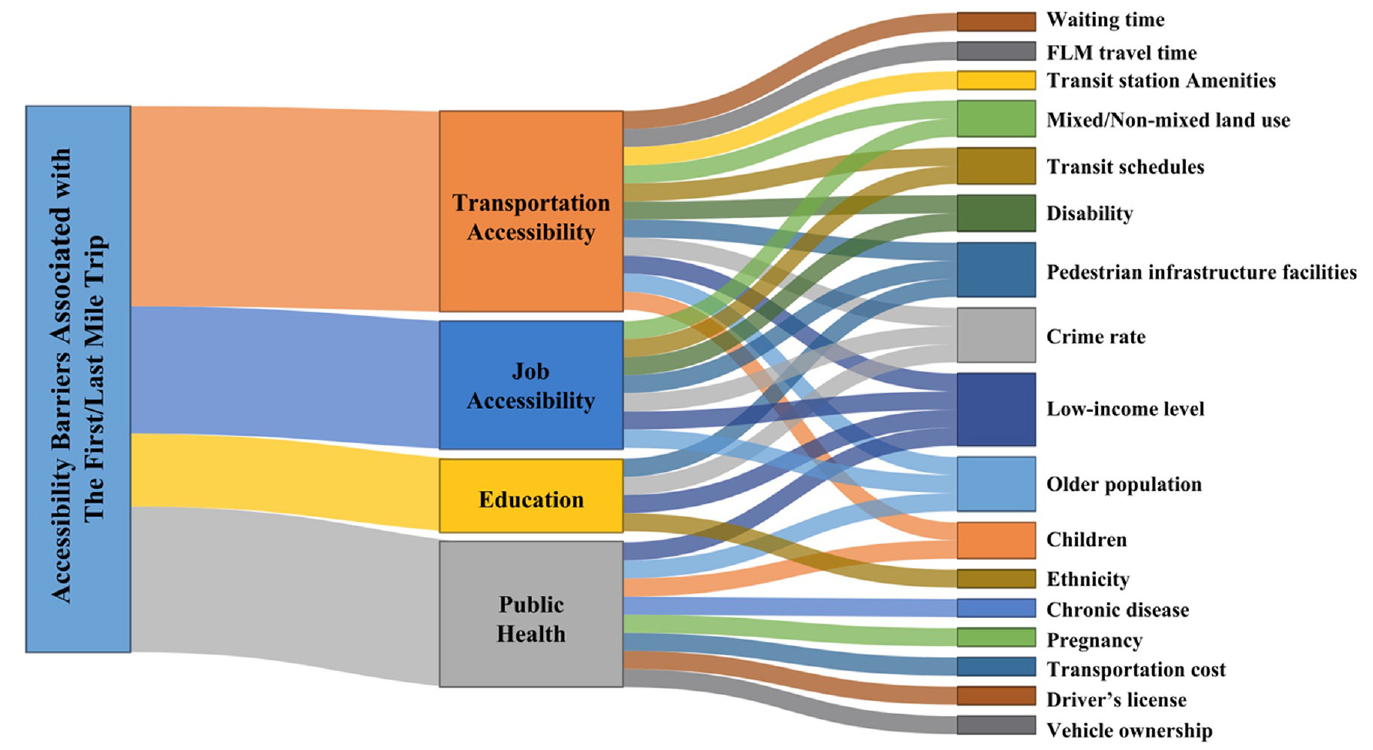
Sankey diagram representing the factors that affect the FLM barriers, weighted according to each factor’s effect.
FLM Solutions
During the last decade, several initiatives have been adopted to alleviate the FLM problem and enhance public transportation accessibility and utilization. This section provides a thorough review of the feasibility and effectiveness of the solutions implemented by different agencies and local authorities across the United States. This section is organized into four key categories: shared mobility services, micro-transit services, infrastructural development, and land use and transportation management.
Shared Mobility Services
Shared mobility is a service that has the potential to maximize the accessibility to public transportation by providing shared-use modes of transportation. With recent advancements in information and communication technologies (ICTs), the robustness of shared mobility has increased. These ICT advancements have allowed for the emergence of real-time ridesharing services such as Uber and Lyft, as well as carsharing, bicycle- and scooter-sharing services. Shared mobility also offers several environmental, social, and transportation-related benefits. Many case studies in the United States leveraged shared mobility services to address the barriers associated with the FLM problem and enhance transit accessibility. The first initiative to solve the FLM problem with carsharing programs was in 1999 using CarLink-I ( 42 ), followed by a similar program called Zev.Net in 2002 ( 43 ). Currently, many organizations have adopted similar initiatives to alleviate the FLM problem of operating traditional (not automated) and automated vehicles ( 44 – 51 ). In the Vancouver Metro area, Gamiz et al. evaluated the one-way carsharing model as a solution for the first/last mile problem and concluded that this model is considered effective and flexible enough to bridge the FLM gap ( 44 ). In Ann-Arbor Detroit Area, MI, shared autonomous vehicles were operated to connect the Ann-Arbor transit system and Detroit Wayne County Airport; Moorthy et al. evaluated the program and concluded its effectiveness in providing last mile transit services ( 46 ). Other regions in the United States also adopted carsharing programs and considered them in their FLM plans to enhance transit accessibility, such as the Regional Transit District, CO ( 48 ), the Riverside Transit Agency, CA ( 49 ), Richmond, VA ( 50 ), and the Metro Transit Agency, CA ( 51 ). Additionally, ridesharing programs, which are mostly run through transportation network companies (TNCs), play an essential role in enhancing transit accessibility and solving the FLM problem ( 49 – 56 ). Ridesharing programs in their two operational models, traditional and subsidized, were primarily involved in FLM strategic plans and programs ( 49 – 56 ). In Florida, the city of Altamonte Springs partnered with Uber to subsidize 20% of the FLM trip cost between a rider’s origin/destination and transit stations in the city to facilitate the FLM trip and enhance transit ridership ( 52 ). In Boston, MA, the Massachusetts Bay Transportation Authority partnered with Uber and Lyft to provide transit accessibility for people with disabilities. The program also subsidized 70% of the FLM trip ( 53 ). Some companies partnered with TNCs to facilitate the FLM trip for their employees. TriMet in Portland, OR ( 47 ), and the Regional Transportation District (RTD) in Colorado ( 48 ) conducted partnerships with Lyft to subsidize and facilitate trips between transit stations and workplaces for employees.
Bike-sharing and scooter-sharing programs, known as micro-mobility transportation models, offer higher accessibility to transit stations and stops ( 9 , 15 , 24 , 48–51, 57–60). Micro-mobility refers to a type of transportation that involves the use of small, lightweight vehicles for short trips; these vehicles could include bicycles, electric bikes, and electric scooters, and they are typically adopted within urban areas. The benefits of bike-share programs include reducing air pollution, alleviating traffic congestion, and mitigating parking demands ( 60 ). Kaufman et al. studied the Citi Bike system in New York City and found that almost 75% of its bike-sharing stations are within a five-min walk from a subway station, providing an FLM connection to public transit ( 57 ). Zuo et al. conducted a study in Hamilton County, OH, to evaluate the effectiveness of a bike-sharing program as an FLM travel mode ( 9 ). Zuo et al. ( 9 ) and Zuo and Wei ( 15 ) found that bike-sharing provides high accessibility to transit stations; they also noted that bike-sharing maintains equity and provides transit accessibility to low-income people. Flamm and Rivasplata analyzed survey results for cyclists to transit in Philadelphia, PA, and San Francisco, CA, and they highlighted that a larger catchment area for transit could be provided by cycling compared with traditional modes such as walking ( 58 ). Although the literature indicates the importance of the aforementioned models in improving transit accessibility, each model has its own implementation challenges, especially in underserved communities that lack the necessary logistics to access such models (e.g., bank accounts, smartphones, and internet access).
Micro-Transit Services
Micro-transit services are known as a form of on-demand or flexible transportation service that uses smaller vehicles, such as vans or shuttle buses, to provide point-to-point service within a defined area. Many agencies operate micro-transit services to tackle the barriers associated with the FLM problem (49–51, 55 , 59 ). A shuttle service is one primary micro-transit model that has been utilized to connect people with transit stops ( 61 – 63 ). While this service could be costly and difficult to administer, agencies have offset costs through partnership programs, as well as employer-sponsored, agency-sponsored, and short-distance vanpools. As an approach to leveraging micro-transit, healthcare centers and agencies have deployed the service to offer facilitated medical trips for patients ( 61 – 63 ). For instance, Seattle Children’s Hospital, WA, offered shuttle links to transit hubs as a part of its financial and personal commitment to building, executing, and growing transportation services ( 61 ). Another project launched by Health Outreach Partners (HOP) adopted multiple strategies to alleviate transportation issues to access public health; among these strategies, the project operated a door-to-door shuttle service ( 62 ). On the educational side, Denver Public Schools in Colorado led a bus shuttle service to encourage school attendance and facilitate participation in before- and after-school activities in the city’s outlying areas. This initiative, in collaboration with other programs, contributed to raising students’ attendance and eliminating truancy ( 63 ). For job accessibility, the city of Oakland in California operates Oakland’s Broadway Shuttles to connect the Bay Area Rapid Transit (BART) with employment and shopping centers ( 64 ).
Infrastructural Development
Studies show that the design of active transportation infrastructure can encourage both active transport and transit mode share ( 65 , 66 ). This approach includes the improvement of pedestrian facilities, biking facilities, and transit station amenities. Many last mile plans and projects prioritized this approach to enhance transit ridership and solve FLM-associated problems (49–51, 55 ). For improving transit accessibility, studies argue that the level of comfort, safety, and connectivity are major influencing factors for people to walk or bike to transit and ride it pleasantly ( 67 ). Meng et al. ( 68 ) state the quality of pedestrians’ infrastructure could encourage or discourage a person from walking to a transit stop, echoed by findings from a study through the University of Florida ( 47 ). Biking facilities are also considered a major influence to encourage people to ride their bikes and bridge the FLM gap; these facilities include dedicated bike lanes, installing bike racks at transit stations and stops, and installing bike racks at transit vehicles ( 11 , 15 ). Additionally, providing on-site amenities at transit stops could enhance multimodal access to public transportation, improve the overall transit riding experience, inspire new riders to use public transit, and increase passengers’ sense of security and safety ( 69 ). Previous literature highlighted that enhanced pedestrian safety signs encourage people to walk to transit stiops and improve their safety ( 70 – 72 ). Amenities at transit stations and stops include seating, adequate lighting, wayfinding, weather shelters, and security cameras ( 22 ).
Land Use and Transportation Management Strategies
Several planning policies and strategies have been adopted to enhance accessibility to transit systems and bridge the FLM problem. TOD is one of the approaches that positively affects transit accessibility ( 50 , 73–75). Several agencies approved TOD in their land use and transportation plans, including Portland Metro, OR ( 73 ), Metro Vancouver Region, BC ( 74 ), the City Council of Charlotte, NC ( 75 ), and the City of Richmond, VA ( 50 ). In addition to TOD, a transportation demand management (TDM) policy was adopted by communities, cities, and employers across the United States, including the San Diego Region, CA ( 76 ), and Cambridge, MA ( 77 ). Richmond, VA ( 50 ), also adopted this policy to provide a multimodal transportation approach for workers to complete their work commutes. Moreover, planning and transportation policies considered improving educational accessibility as well, such as the Safe Route to School (SRTS) program, a federal program launched in 2005 and adopted by different organizations to enhance students’ access to schools, especially for students who walk, bike, or ride public transportation. Referring to statistics collected between 2007 and 2012 from regions that applied SRTS policies, students who walked to or from school increased from 14.1% to 17.7%, although this increase occurred mostly among students who attended low-income schools ( 78 ). These strategies, in collaboration with other policies and organizations such as parking management ( 79 ) and transportation management associations ( 50 ), can play a substantial role in alleviating the FLM problem and its barriers in the short and long term.
To better understand the contributions of the aforementioned initiatives in solving the FLM problem, Table 1 summarizes the capability, operational models, advantages, disadvantages, and implementation barriers with regard to each approach.
Summary of the First/Last Mile (FLM) Solutions and their Effectiveness, Models, Advantages, Disadvantages, and Implementation Barriers
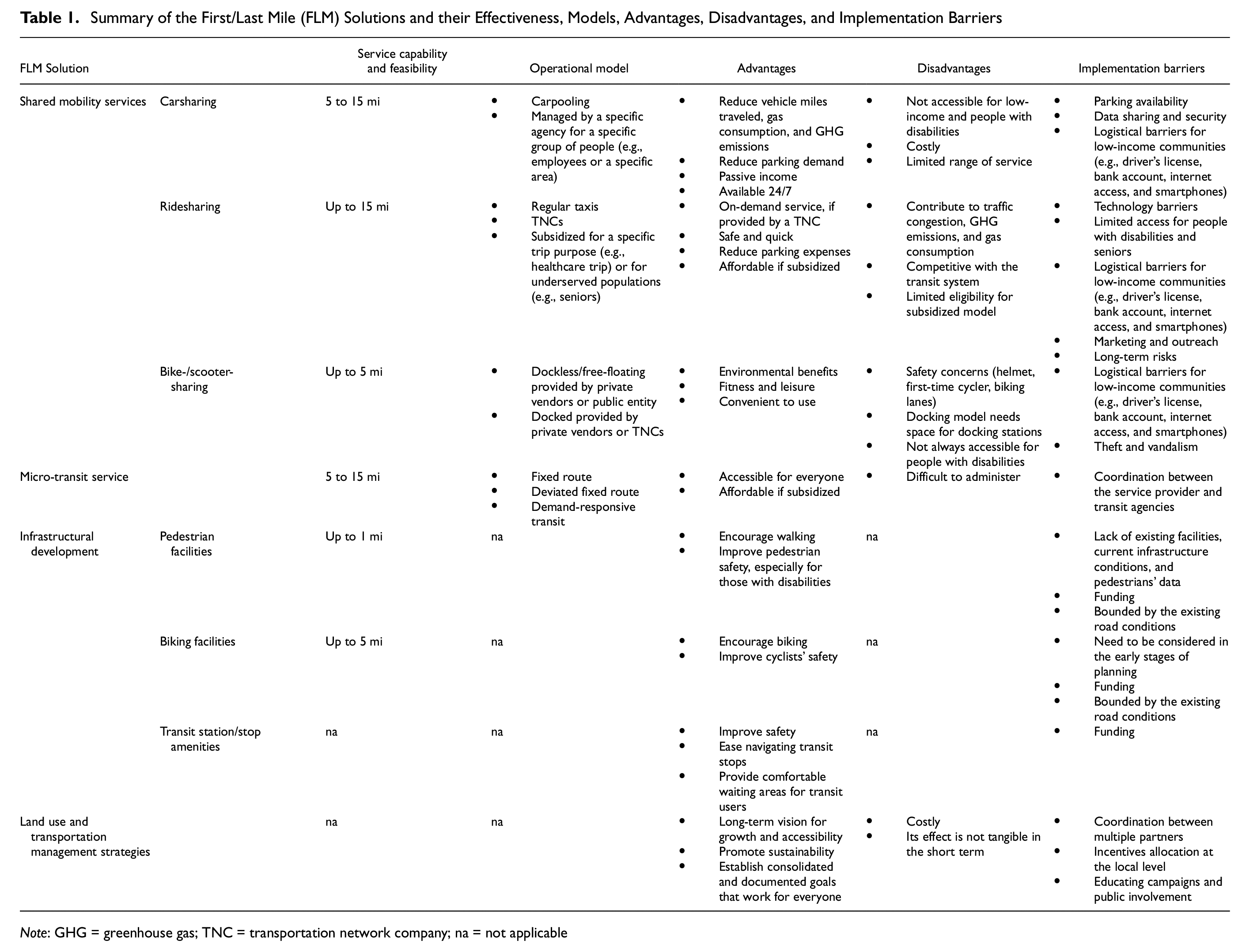
Note: GHG = greenhouse gas; TNC = transportation network company; na = not applicable
Conclusion
The FLM problem is a critical issue impacting people’s access to primary services, including healthcare, education, employment, and transportation. Issues in completing the FLM trip and access to public transportation could result in transportationally disadvantaged communities that face underuse and social exclusion, inferior health conditions because of delaying and skipping healthcare appointments, unemployment and lower economic levels because of decreased job accessibility, and lower levels of education. As a result, the FLM problem and its resultant barriers could lower the quality of life and prevent the achievement and maintenance of equity, especially for underserved populations. Furthermore, the impact level of the FLM problem differs depending on several factors, including socioeconomic characteristics and factors related to health, the built environment, safety, and accessibility.
In the last decade, governments and agencies have made concerted efforts to bridge the FLM gap and maintain fair transportation access through initiatives like shared mobility programs (e.g., carsharing, ridesharing, bike-sharing, and scooter-sharing), micro-transit services (e.g., fixed route, deviated fixed route, and demand-response transit shuttles), infrastructural improvements, and land use and transportation planning. Despite the wide range of initiatives implemented, a very limited number of studies considered the equity aspect, and almost no studies discussed the feasibility and accessibility models of these solutions for lower-income populations and underserved communities.
This research provides a concise overview of the capabilities, operational models, advantages, disadvantages, and implementation barriers of the summarized solutions to foster a better understanding of the potentials and challenges with regard to each approach. The provided summaries could serve as an enriched reference for transportation professionals and agencies throughout the process of planning for the FLM trip and equitable transportation networks, especially for disadvantaged groups.
Footnotes
Author Contributions
The authors confirm contribution to the paper as follows: study conception and design: R. E. Alfaris, M. Jalayer; data collection: R.E. Alfaris; analysis and interpretation of results: R. E. Alfaris, D. Patel; draft manuscript preparation: R. E. Alfaris, D. Patel, M. Jalayer, M, Meenar. All authors reviewed the results and approved the final version of the manuscript.
Declaration of Conflicting Interests
The authors declared no potential conflicts of interest with respect to the research, authorship, and/or publication of this article.
Funding
The author(s) disclosed receipt of the following financial support for the research, authorship, and/or publication of this article: This article is based on a research project funded by the South Jersey Transportation Authority (SJTA).
