



Abstract
Within cold U.S. regions, winter storms can cause interruptions in transportation networks, affecting transportation entities’ revenue streams. Conventional snow-removal methods on roadways efficiently remove snow and ice, yet their adverse environmental impacts further make winter maintenance more challenging. In response to these concerns, electrically conductive cement concrete (ECCC) pavement has become an effective alternative for deicing and snow melting on road surfaces. ECCC utilizes the Joule heating principles to effectively melt snow and ice by incorporating conductive elements into conventional concrete. This paper comprehensively reviews the current literature on ECCC pavement. Previous studies have diligently explored various aspects of ECCC pavement, including concrete conductivity enhancement, heat transfer processes, and meticulous performance assessments, ranging from controlled laboratory scale experiments to small-scale field evaluations. The conclusions drawn from these investigations highlight the potential of ECCC pavement to considerably enhance winter road maintenance, consequently improving road safety and minimizing traffic interruptions during winter storms. The present review emphasizes ECCC pavement as a promising paradigm for effectively addressing the complexities associated with winter road maintenance in colder regions. Moreover, its environmentally friendly deicing capabilities present a sustainable departure from conventional methodologies. However, certain limitations currently impede widespread adoption of ECCC pavement, mainly concerning optimizing cost-effective construction techniques, ensuring long-lasting durability, and enhancing energy efficiency. Addressing these limitations could accelerate the broader adoption of ECCC pavement, promoting safer and more sustainable winter transportation practices.
Keywords
Transportation systems have significantly evolved over time, leading to the rapid growth of urbanization. Maintaining transportation safety remains a paramount societal concern and involves several important factors related to travelers, drivers, vehicles, highway characteristics, and environmental factors. Notably, natural climatic factors such as moisture, ice, and snow pose significant roadway hazards, often contributing to brake failures and crashes that result in economic losses, injuries, compromised road safety, and reduced roadway capacity ( 1 ). Statistics underscore the severity of the issue, revealing that approximately 10% to 15% of road crashes and fatalities are attributed to hazardous icy and snowy road conditions ( 2 , 3 ).
Severe winter conditions, such as snow and ice accumulation on roads, significantly affect road conditions, posing imminent dangers to travelers’ safety. To date, various methods have been deployed to prevent snow and ice accumulation and maintain safe and efficient roadways. These include thermal approaches, which use heat to melt snow and ice, chemical techniques using deicing and anti-icing substances, and mechanical strategies involving machinery to remove snow and ice physically. Although these methods effectively manage road conditions, they often require substantial time and labor investments. Additionally, using chemicals like sodium chloride can harm the environment, including the deterioration of concrete pavement structures and changes to the integrity of the soil ( 4 , 5 ). Similarly, mechanical tools may escalate maintenance costs and potentially damage road surfaces ( 6 ). Therefore, a careful evaluation of the advantages and disadvantages of each technique is imperative to ensure the appropriate and secure maintenance of roads in cold regions throughout the winter season.
Recent years have witnessed a growing interest in exploring alternative pavement deicing methods, driven by a quest for safer and more environmentally friendly solutions compared with conventional approaches. These alternatives encompass a variety of techniques, including hydronic heating fluids ( 7 – 11 ), electric heating pipes ( 12 ), infrared heat lamps ( 13 ), electrically heating wires ( 14 ), and heated pavement systems (HPS) ( 15 – 28 ). Among these, HPS have taken on various forms, including electrically conductive concrete (ECC) ( 19 , 29–31), embedded heating elements ( 15 , 16 ), and sandwich conductive layers ( 3 , 32 ). Researchers have meticulously examined these methods, considering their fundamental aspects, cost-effectiveness, installation, performance, and overall efficiency.
In the current landscape, two emerging HPS methods have garnered attention for their potential to prevent snow and ice accumulation on road surfaces. These methods involve the application of a superhydrophobic coating ( 33 – 35 ) and an electrically conductive coating ( 36 – 41 ) on pavement surfaces. Researchers are actively pursuing sustainable avenues to address the cost, safety, and environmental concerns often associated with traditional snow-removal practices. Among these evolving strategies, ECC (with asphalt or cement) stands out as a front-runner because of its feasibility, affordability, efficiency, environmental friendliness, and inherent sustainability. Within this context, the present review study focuses on the development of ECCC pavement using a range of conductive fillers such as graphite powder, flexible graphite pet sheet, carbon fiber grille, carbon nanofiber polymer, carbon nickel particles, steel slag, and steel fibers ( 1 , 15 , 30 , 42 ).
ECCC pavement has demonstrated itself to be a highly effective and cost-efficient approach for snow removal on roads ( 36 ). However, this advancement is not without its challenges. ECCC HPS technology shows promise for snow removal and deicing, but its practical implementation remains confined to laboratory settings because of its high initial costs and a lack of established designs and guidelines. Critical aspects, including conductive filler selection, properties mixing process, conductive mechanisms of ECCC, performance metrics, and large-scale implementation, remain subjects of incomplete understanding. The existing gap in practical knowledge necessitates a comprehensive review of the relevant literature on ECCC pavement. Addressing challenges such as optimized ECCC preparation, performance assessment, and cost-effective transition from laboratory to real-world scenarios is paramount. This review endeavors to bridge these gaps and offer all grounded findings from previous research endeavors of ECCC, with particular emphasis on advancements made over the past decade. Therefore, it facilitates the progression of ECCC by pinpointing specific areas requiring further research and targeted improvements, thus paving the way for safer, more sustainable, and effective winter road maintenance practices.
This study presents a detailed overview of the background, working principle, preparation process, performance, economic feasibility, prospects for future development, and concluding insights in the following sections. By addressing these aspects, the study contributes to advancing our understanding of the potential of ECCC HPS technology to enhance winter road maintenance, ultimately leading to improved road safety and reduced disruptions during winter storms.
Background
During the 20th century, addressing snow and ice accumulation on roadways primarily relied on thermal deicing methods, harnessing heat sources like geothermal, solar, hydronic water, and electrothermal systems. These strategies aimed to melt snow and ice in an efficient and eco-friendly manner. Nevertheless, ECCC pavement deicing represents a paradigm shift in pavement deicing. This pavement consists of dielectric aggregates, water, binder, and conductive materials, resulting in a heterogeneous material.
Table 1 summarizes prior research studies delving into ECCC pavement, offering a collective insight into its development and purpose of snow melting and deicing. Notably, pioneering work by Xie et al. led to a patent application, outlining the excellent conductivity and mechanical properties of conductive materials ( 43 ). Subsequent investigations ( 43 , 44 ) further explored the performance of ECCC in the context of pavement deicing. Yehia and Tuan extended this exploration to bridge decks and pavement, integrating elements like steel fibers and shaving ( 45 ). Their findings underscored the feasibility of achieving the necessary electrical conductivity and concrete mechanical durability by incorporating conductive fillers. This historical progression highlights the evolution from traditional thermal deicing to the novel realm of ECCC HPS technology. The transition to ECCC opens new avenues for efficient and effective snow and ice removal from roadways.
Summary Studies of ECCC Pavement
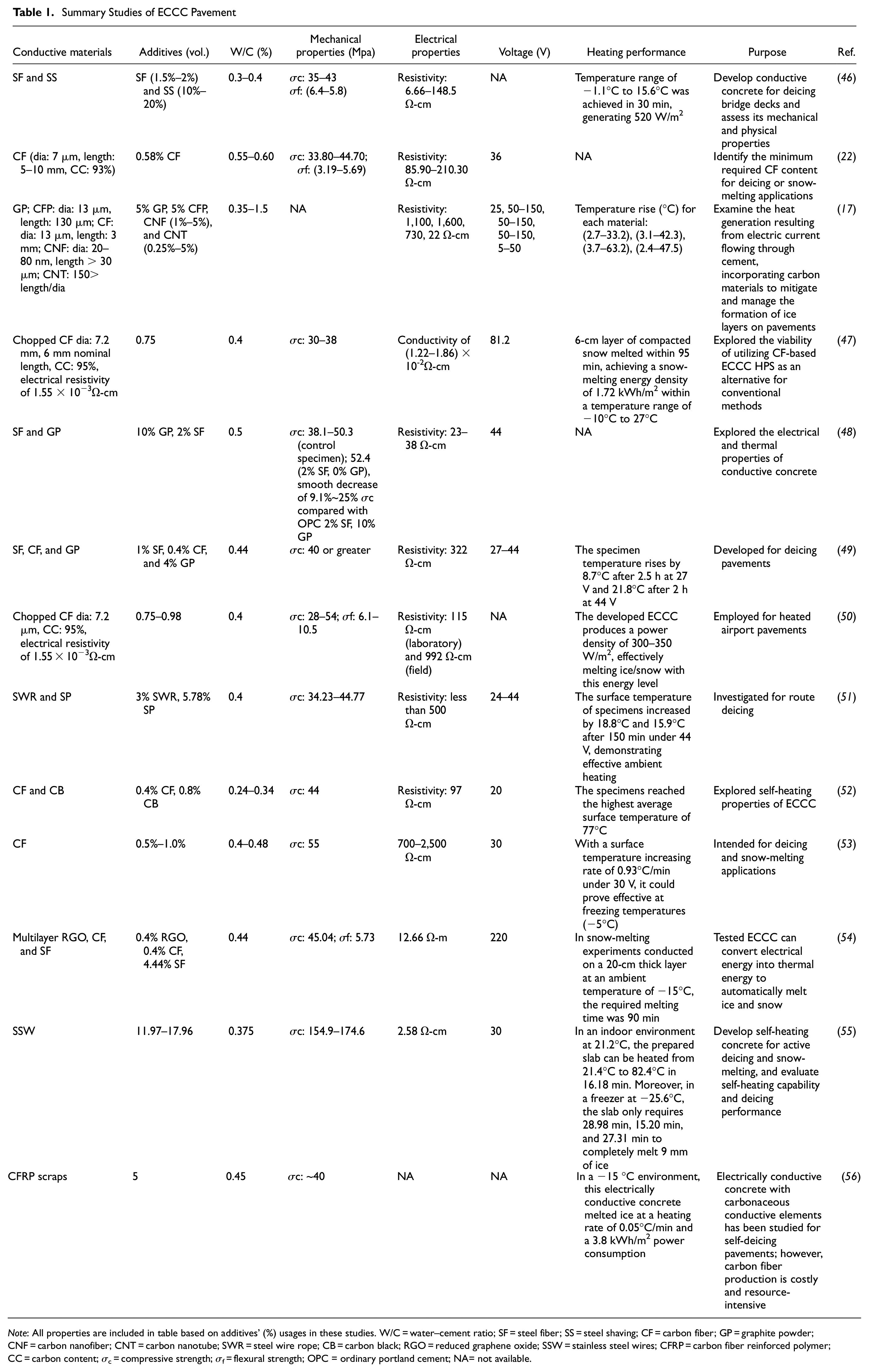
Note: All properties are included in table based on additives’ (%) usages in these studies. W/C = water–cement ratio; SF = steel fiber; SS = steel shaving; CF = carbon fiber; GP = graphite powder; CNF = carbon nanofiber; CNT = carbon nanotube; SWR = steel wire rope; CB = carbon black; RGO = reduced graphene oxide; SSW = stainless steel wires; CFRP = carbon fiber reinforced polymer; CC = carbon content; σc = compressive strength; σf = flexural strength; OPC = ordinary portland cement; NA= not available.
ECCC Pavement: Overview
Working Principle of ECCC Pavement
The ECCC pavement consists of two main elements: heat transfer between layers and the deicing system. Specific key components are necessary to facilitate effective deicing, including a power source, heat transfer components, and sensing units to monitor weather conditions such as snowfall, outside air temperature, and humidity. A control regulator is also essential to regulate the system ( 57 ), with electricity as the primary energy source ( 47 ). A well-designed heating system must be in place to ensure efficient snow melting from the pavement surface, providing sufficient heat energy. Heat exchange within the system occurs through three mechanisms: conduction, convection, and radiation. Initially, at the pavement–atmosphere interface, heat energy is balanced through thermal radiation, dissipation of solar energy, and convection, leading to temperature variations between the pavement surface and its internal layers. Heat is continually transferred through the conductive layer through conduction, facilitating heat transfer to the pavement surface. The working principle of ECCC pavement is illustrated in Figure 1.
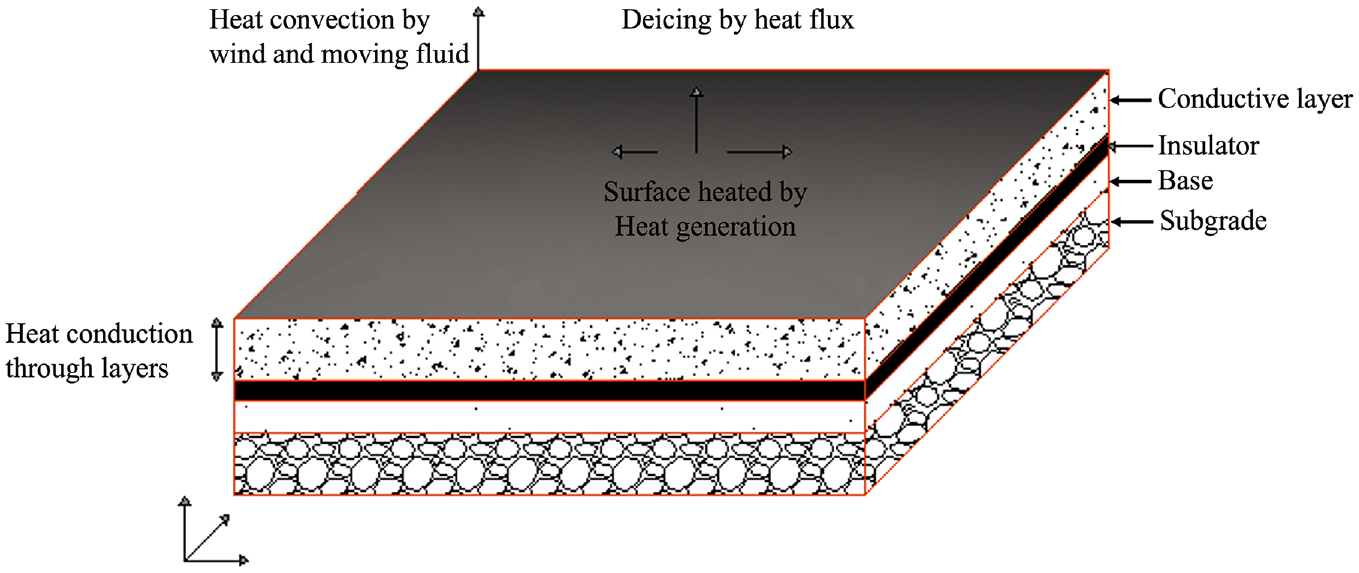
Working principle of self-deicing ECCC pavement.
Conduction
The ECCC pavement stems from two distinct mechanisms: ionic conduction and electric conduction. Ionic conduction is facilitated by the movement of ions in the pore solution and free electrons, whereas electric conduction occurs when electrons are transmitted through fibers ( 58 ). The electrical conductivity of ECCC reflects the electrical properties of its components. Determining the conductivity or resistivity properties of conductive concrete is crucial to study its characteristics effectively. Therefore, understanding the conductivity or resistance and the distance and surface area of ECCC becomes essential for calculating its electrical conductivity. This calculation aligns with the first Ohm’s law, as expressed in Equation 1:

where
R is resistance,
I represents the measured current, and
V stands for voltage.
Using the second Ohm’s law, as shown in Equation 2, the electrical resistivity, ρ, can be determined:

where A is cross-sectional area, and L is length.
Equation 3 demonstrates that the inverse of electrical resistivity, σ, is termed electrical conductivity:

This leads to Equation 4, where R is expressed as the ratio of L to the product of σ and A:

Joule’s law unites the principles governing the generation of heat, H, and power from electrical energy. In addition to this law, the Joule effect is renowned for producing heat because of current passage through conductive materials.

where t signifies the duration.
Convection
Convection is pivotal in the thermal dynamics of ECCC pavement, facilitating heat transfer process by the movement of fluid or air across distinct location. In ECCC pavement, convection occurs on the surface through two distinct methods: between the pavement, the ice layer, and the air above it. This convection process may be either induced circulation of heated fluid or occur passively, driven by the ambient air currents. Although the model will consider the effects of wind on the surface of the snow that covers the ECCC pavement, it will not consider forced convection within the snow layer or natural convection through the snow layer.
ECCC Pavement Preparation
Conductive Materials
The inherent low conductivity of concrete, attributed to the intrinsic resistance of its component (fine and coarse aggregate and binder), poses a challenge for efficient deicing. To meet resistivity requirements below 1000 Ω-cm ( 2 ) conductive materials must be integrated, transforming the composite into a heating element for deicing applications ( 2 , 20 , 22 , 29 , 45 , 48 , 49 , 59 ). Moisture content closely influences the resistivity of these composites, with air-dried samples showing a range of 6.54–11.4 × 10⁵ Ω-cm, whereas oven-dried composites exhibit around 108 k Ω-cm. The breakthrough involves incorporating conductive materials (powders, fibers, and solid particles) into the concrete mixture. This infusion fosters the creation of conductive networks within the concrete matrix, effectively reducing the resistivity of the composite and achieving enhanced conductivity, meeting the requirements for deicing applications. Empirical evidence demonstrates the success of this transformation, with electrical resistivity varying between 400 and 2.4 × 10⁵ Ω-cm ( 60 ) across studies. Notably, carbon fiber (CF) emerges as a standout performer ( 60 , 61 ). Table 2 presents electrical conductivity and propels the development of ECCC tailored for deicing.
Overview of Conductive Materials Utilized in ECCC Pavement
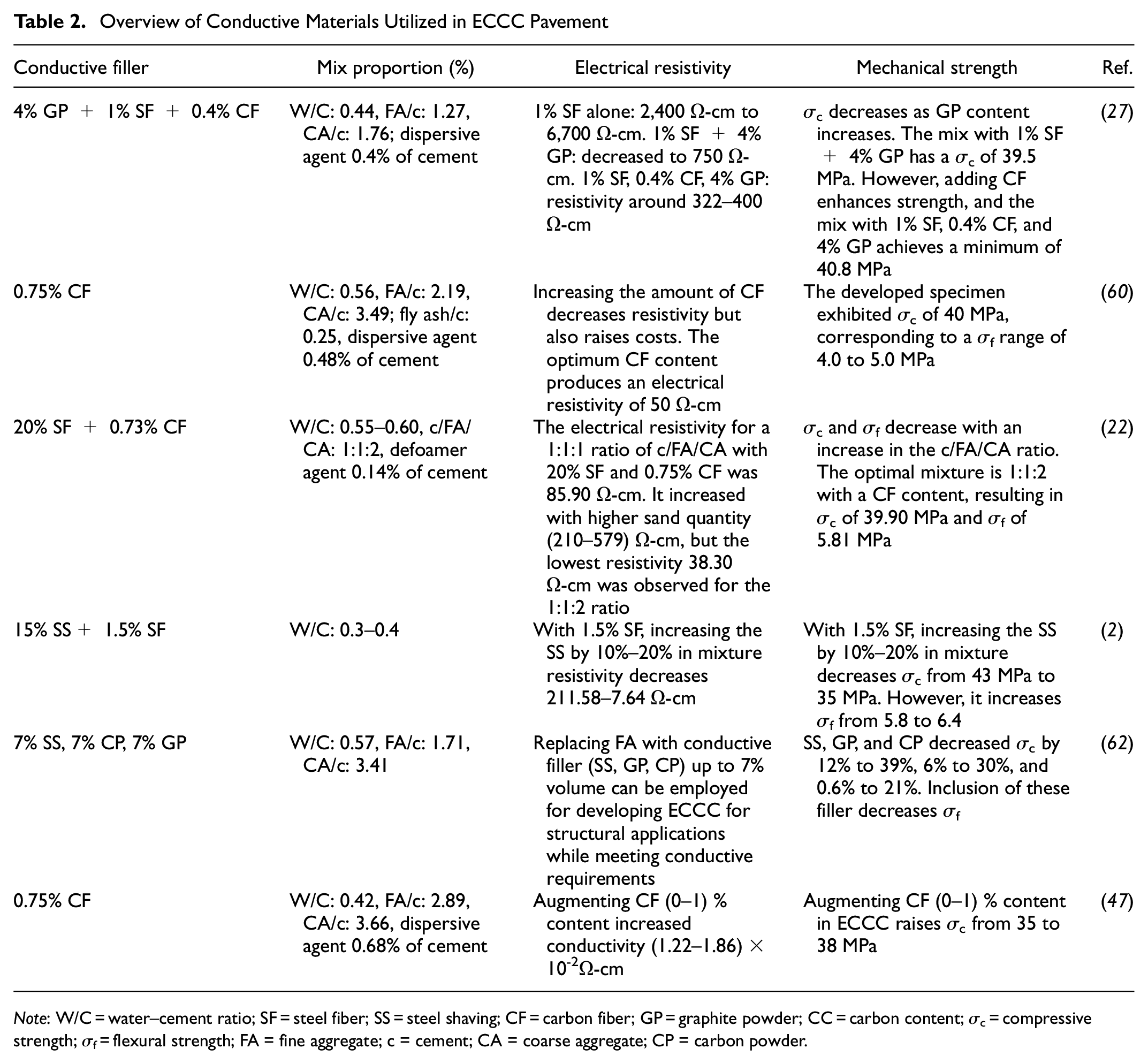
Note: W/C = water–cement ratio; SF = steel fiber; SS = steel shaving; CF = carbon fiber; GP = graphite powder; CC = carbon content; σc = compressive strength; σf = flexural strength; FA = fine aggregate; c = cement; CA = coarse aggregate; CP = carbon powder.
This innovative approach categorizes conductive materials based on grain dimensions into three classes: powders, such as aluminum chips, carbon black, and graphite ( 63 – 65 ); fibers, including nanofiber, CF, steel fiber (SF), and more ( 66 – 72 ); and solid particles like copper slag and steel slag ( 73 – 76 ). Integrating these materials into concrete at varying percentages, ranging from 1% to 20% by volume consistently demonstrates significant reductions in electrical resistivity ( 60 ).
Whittington et al. achieved an ECCC resistivity of 100 Ω-cm by adjusting CF attributes, increasing the length from 1 to 3 mm, and reducing volume from 5% to 3% ( 58 ). Similarly, Abdualla et al. ( 60 ) optimized CF usage, using only 0.75%, to achieve a 50 Ω-cm ECCC mix for the Des Moines International Airport pavement. Meanwhile, Sassani et al. ( 50 ) achieved concrete’s electrical conductivity of 115 Ω-cm in laboratory-scale samples and 992 Ω-cm in field-scale samples. Although CF demonstrates remarkable conductivity, it presents challenges, including high water absorption capacity and cost implications, which compromise the workability of the concrete mix ( 61 ). To address these issues, an innovative solution (hybrid fillers) has been introduced by Banthia et al. ( 77 ). Integrating CF with materials like SF or graphene particles, hybrid fillers have successfully mitigated challenges and optimized concrete properties. As a testament to this approach, practical applications such as airport pavements and bridges have witnessed successful implementation, exemplified by Tuan ( 19 ) (used GP and SF) and Wu et al. ( 27 ) (used GP, SF, and CF) by achieving lower resistivity and efficient deicing solutions.
Aggregate Gradation
The investigation into optimizing aggregate gradation for ECCC is an area of potential for further research. Whereas current practices align with conventional concrete mix design, there is untapped potential for optimizing aggregate gradation for the improved electrical conductivity of ECCC. This is rooted in the core principle of ECCC, necessitating ample space within the mineral and fine aggregates to create enough conductive networks and elevate electrical conductivity.
Balancing enhanced conductivity with the mechanical strength required for ECCC is a challenge. The integration of conductive materials as fine aggregate and filler alternatives holds promise, though adjustments in material density are necessary to safeguard mechanical properties. Overall, exploring aggregate gradation optimization in ECCC emphasizes the need for harmonizing electrical performance and mechanical resilience through meticulous material density calibration.
Mixing Procedure
ECCC can be fabricated through three distinct methodologies: the admixing method, the synchronous admixing method, and the latter admixing method. The choice between these methods depends on the sequence in which conductive elements are introduced. This process is visualized in Figure 2, which outlines the phases of each fabrication approach. To ensure uniform distribution of conductive materials within ECCC, adequate mixing of these fillers with the cementitious composite is essential. Table 3 provides recommended fabrication methods tailored to different types of conductive materials. Notably, the joint mixing method has proved advantageous for hybrid materials.
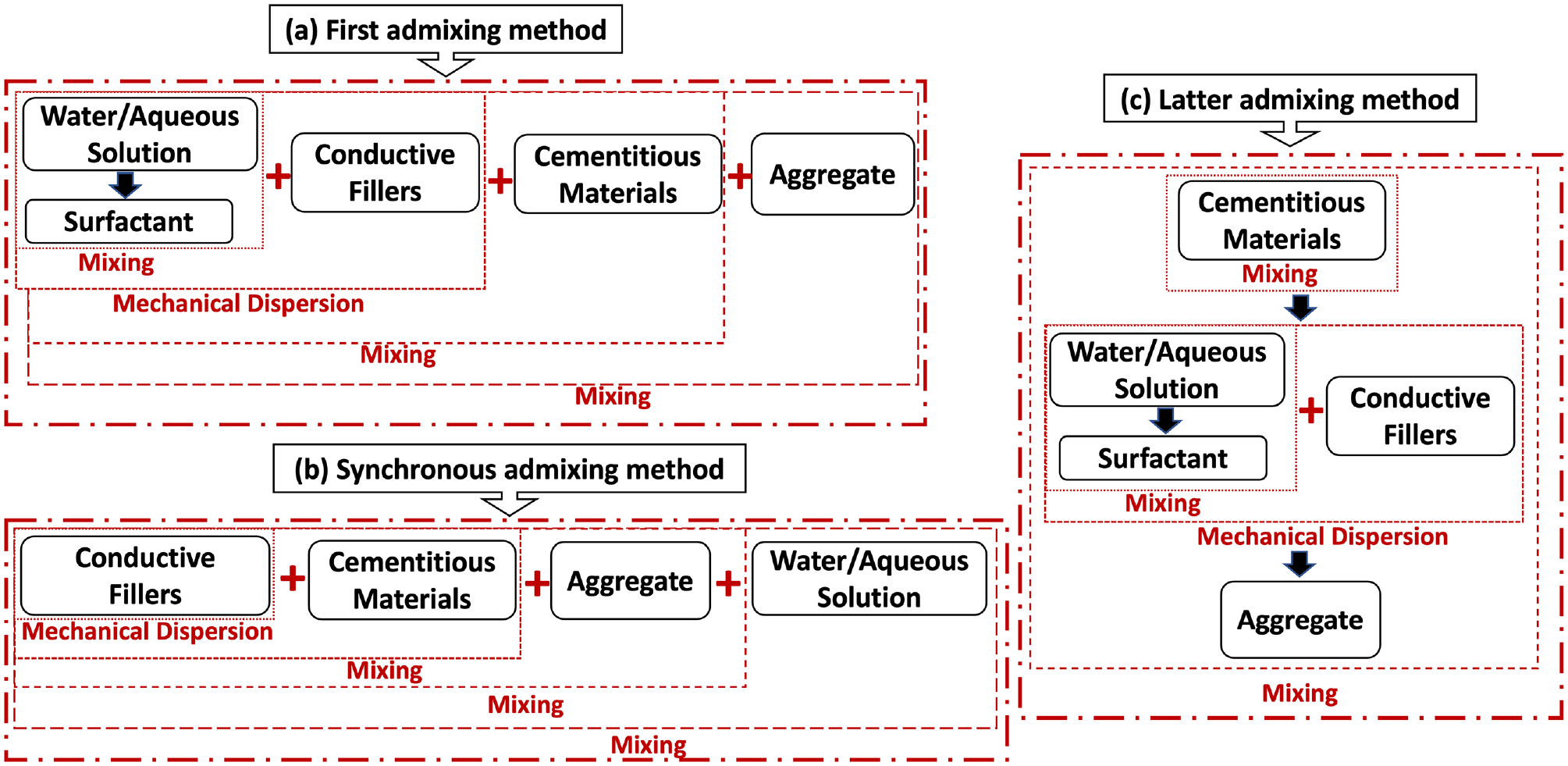
ECCC fabrication methods.
Suitable Manufacturing Approaches for Various Conductive Fillers
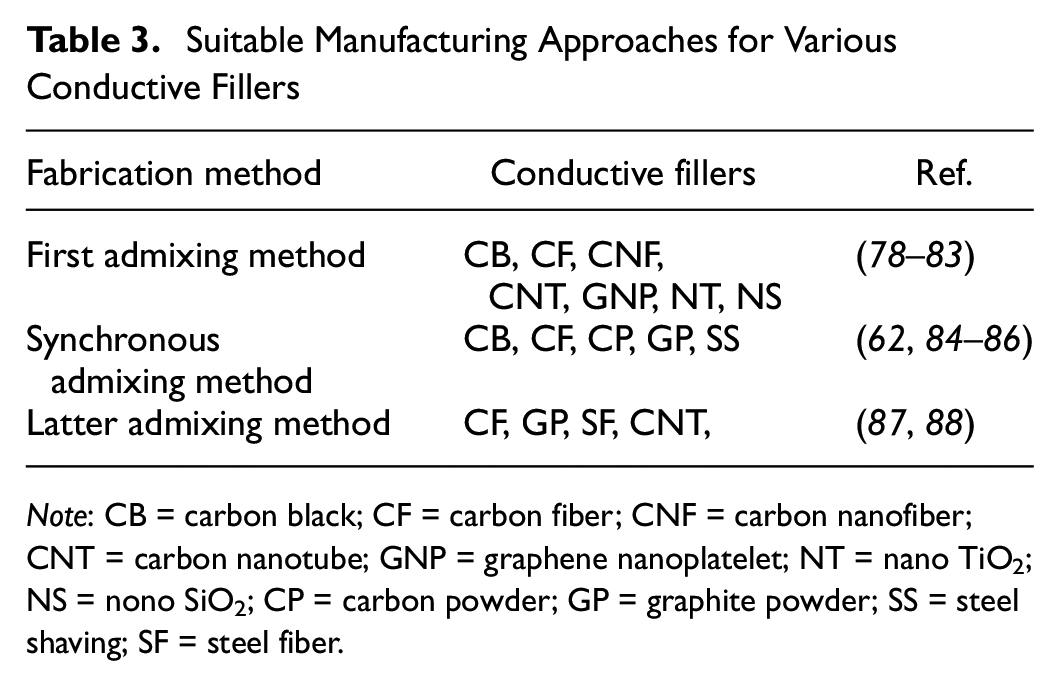
Note: CB = carbon black; CF = carbon fiber; CNF = carbon nanofiber; CNT = carbon nanotube; GNP = graphene nanoplatelet; NT = nano TiO2; NS = nono SiO2; CP = carbon powder; GP = graphite powder; SS = steel shaving; SF = steel fiber.
Dispersion Method
Achieving uniform dispersion of conductive materials in the ECCC presents a formidable challenge owing to the extensive matrix boundary. This challenge is evident at both the nano- and macro scales, driven by substantial van der Waals forces arising from particle interactions. Inadequate dispersion of conductive materials leads to aggregation, hindering electron flow. In contrast, well-dispersed materials create conductive networks, ensuring consistent conductivity, preventing clustering, and ultimately enhancing performance. Three primary methods are commonly employed to improve material dispersion: mechanical, chemical, and the incorporation of mineral fillers (excluded in this study).
Mechanical Method
Conventional mechanical mixing techniques such as mechanical stirring, ball milling, and ultrasonication are employed to disperse conductive materials in ECCC. However, mechanical stirring falls short for conductive nanofillers as it fails to break particle bonds, resulting in uneven distribution. Al-Dahawi et al.’s high-speed mixing methods have been investigated for electrical performance, but lack a comprehensive examination of mechanical properties ( 89 ). Ball milling weakens bonds, causing delays in nanoparticle aggregation and compromising material integrity, making it unsuitable for fibrous particles ( 90 ). When combined with a surfactant in an aqueous solution, ultrasonication effectively disperses nanomaterials, provided sufficient energy and time are applied. Zou et al. have found optimal energy and good mechanical characteristics using ultrasonication with CNT particles ( 91 ). However, the sonicator must operate for only 20 s per cycle to prevent suspension overheating ( 92 ).
Chemical Method
Chemical dispersion methods can be categorized as covalent and noncovalent. Covalent methods involve chemical modifications such as oxidant and acid treatments to introduce functional groups to material surfaces ( 93 ). However, this method is less effective than noncovalent techniques, which rely on the physical absorption of particles to prevent damage to the structure and material attributes ( 94 ). Noncovalent approaches, such as endorsed surfactants, have been used for material dispersion. Yu and Kwon have found that noncovalent methods are more effective than covalent methods for CNT cement matrix synthesis since suspended surfactants impede CNT particles ( 93 ). Chemical modification may negatively affect structures and mechanical properties ( 95 ) leading to a preference for noncovalent techniques combined with ultrasonication. Ultrasonic treatment is recommended for nanomaterials owing to their high aspect ratio and large surface area, addressing challenges associated with chemical dispersion. Surfactants should be introduced before ultrasonication to prevent re-agglomeration, ensuring consistent and successful dispersion.
Performance Evaluation of ECCC
Evaluating the performance of ECCC involves a comprehensive analysis of both mechanical and conductive properties. This study also delves into the impact of factors like voltage, temperature, and load on resistance fluctuations within ECCC.
Mechanical Properties
Conductive materials are pivotal in advancing ECCC, as they contribute to enhanced conductivity and bolster mechanical and durability attributes. These materials strengthen the composite’s bond within the cementitious matrix, effectively reducing both macro- and micro cracks and thereby improving the physical and mechanical performance of the composite ( 96 ). Furthermore, conductive fillers expedite cement hydration within the matrix, forming a calcium silicate hydrate gel that fills gaps in the binder and reinforces the bond between aggregates and the binder ( 97 ). Two particularly effective conductive fillers for ECCC pavement are SF and CF. SF, renowned for its microfibrous properties, stands out as a viable replacement for conventional reinforcement across various applications ( 87 ). Its high modulus of elasticity and tensile strength augment the flexibility and flexural strength of the ECCC. Depending on the reinforcement requirements, the cement-based matrix can use micro- or macro diameters of SF ( 27 , 77 , 87 , 98–100). Similarly, CF contributes to cementitious material reinforcement, proficiently resisting micro cracks, enhancing durability, and minimizing drying shrinkage because of its elevated elastic modulus and tensile strength ( 96 ). SS, either in aggregate or powder form, presents another notable conductive filler option. Notably rich in iron (Fe), SS boasts excellent erosion resistance, making it a suitable aggregate replacement ( 101 ) that simultaneously bolsters compressive strength ( 102 – 104 ). CNT also joins the ranks of fibrous nanomaterials, enhancing the resilience of ECCC pavement. Their exceptional tensile strength and Young’s modulus ( 105 ) render CNT a compelling conductive filler choice, given its potent reinforcement, high specific strength, and chemical resistance ( 79 , 81 ).
Conductive Performance Assessment
Electrical Resistance Measurement
Evaluating the electrical resistance of ECCC entails applying two primary techniques: the two- and four-probe methods. Two electrodes measure current and voltage in the two-probe technique, whereas the four-probe method involves four electrodes that independently measure these variables ( 92 ) as depicted in Figure 3. Whereas the four-probe approach offers greater accuracy and precision, the simplicity of the two-probe method makes it a preferred choice for numerous applications ( 106 ). Typically, ECCC resistivity measurements range from 1 to 105 Ω-m using the two-probe method and above 106 Ω-m using the four-probe method ( 107 ). The selection of electrode layout and arrangement significantly influences the accuracy of resistivity measurements ( 61 ). Implanted electrodes, such as copper mesh ( 82 ), copperplate ( 108 , 109 ), polished brass plate ( 86 , 109 , 110 ), brass mesh ( 111 ), stainless steel mesh ( 27 ), galvanized iron sheet ( 106 ), metallic grids ( 79 ), and titanium mesh ( 87 ) can either be embedded or attached to the sample. Among these, copper mesh stands out because of its low contact resistance and high durability ( 61 ). Previous studies have employed methods like conductive adhesive or wiring to reduce the contact resistance between specimens and electrodes, including the use of materials like brass endplates ( 62 ), a silver conductive adhesive ( 78 ), silver epoxy paint, and copper wire ( 62 , 112 ). Nonetheless, measuring complex geometries or nonuniform materials remains a challenge. There is a growing need for innovative electrode materials and techniques to enhance measurement accuracy and reliability, especially in intricate scenarios.
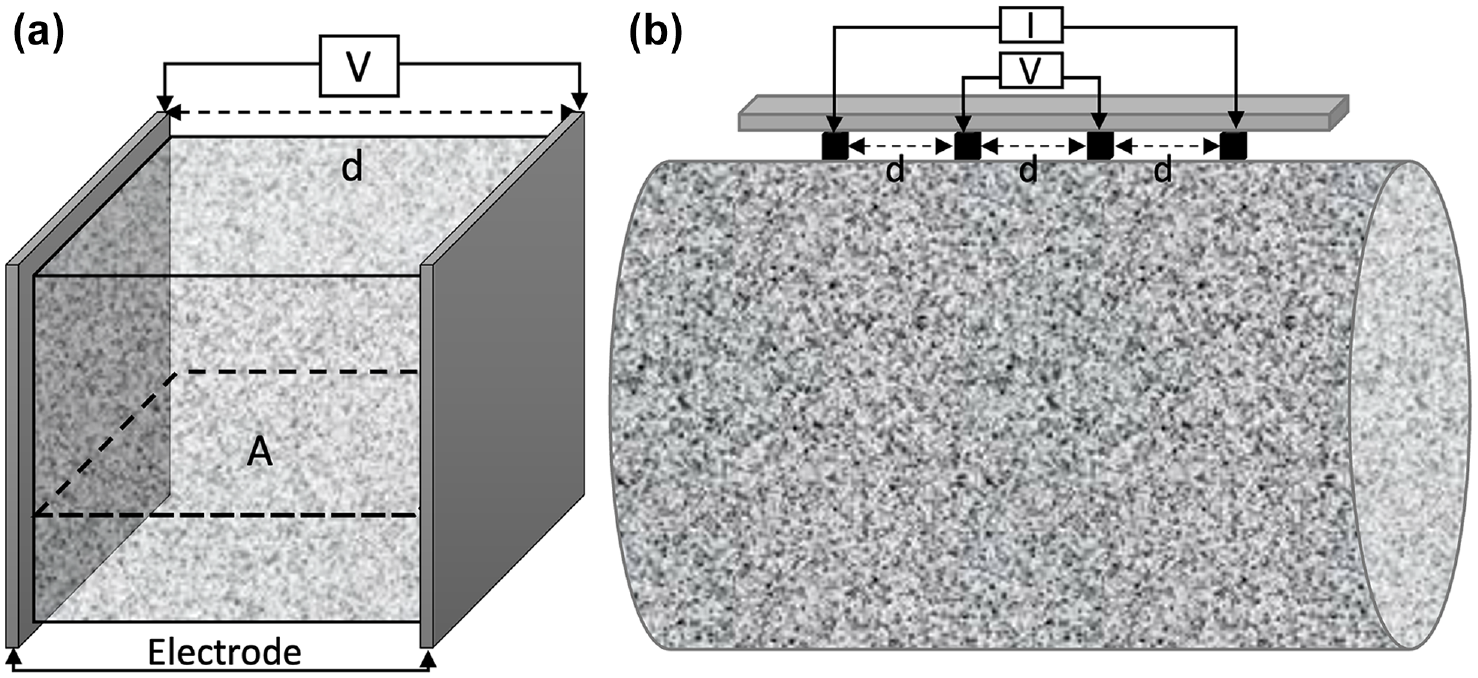
Electrical resistivity methods: (a) two-probe and (b) four-probe methods.
Electrically Conductive Performance
According to a literature review, the conductive filler concentration significantly affects composites’ electrical resistance. This section encapsulates the electrical resistivity of the composite by examining the effects of micro-, macro-, and hybrid fillers. An array of conductive materials, including SF, steel slag (SS), CF, graphite powder (GP), carbon nanofiber (CNF), and carbon nanotube (CNT), contributes to ECC’s intricate performance landscape.
SF finds prominent use in ECCC pavement owing to its dual enhancement of mechanical qualities and conductivity. An increase in SF content correlates with improved flexural strength and diminished resistance ( 77 ), as shown in Figure 4a. However, SF’s aspect ratio ( 87 ) may lead to agglomeration, so You et al. recommended a controlled 3 wt% SF content that exceeds the percolation threshold ( 98 ). The combination of SF with other conductive fillers proves the effectiveness, as seen in using SS to enhance conductivity for deicing applications ( 2 , 29 ). Figure 4b shows that the relationship between SS content and desired conductivity varies, demanding higher SS proportions but raising concerns about composite compressive strength resulting from elevated water–cement ratios.
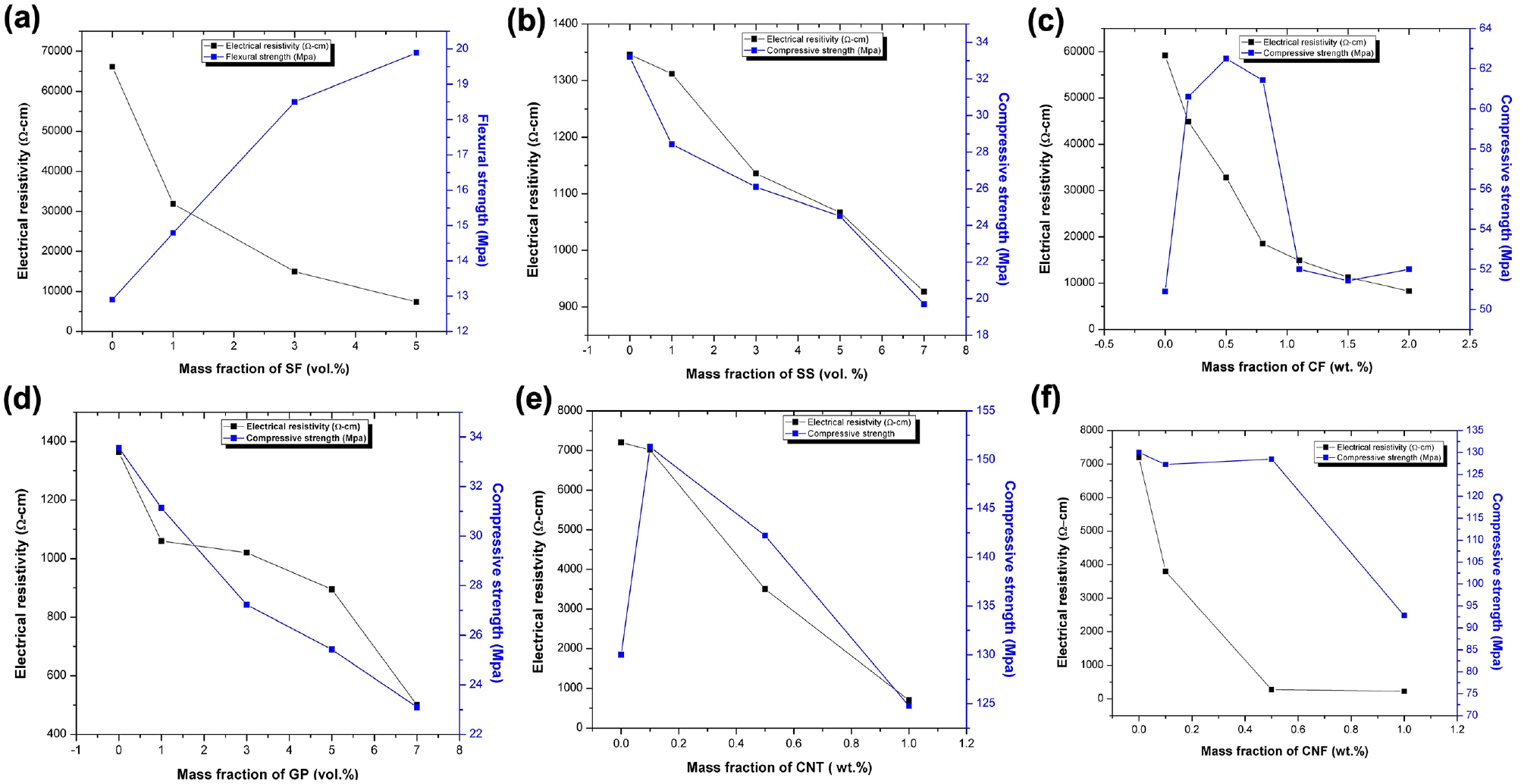
Relationship between electrical resistivity and compressive strength with different percentages of conductive materials: (a) SF, (b) SS, (c) CF, (d) GP (e) CNT, and (f) CNF.
CF, with its lower concentration, can significantly enhance the electrical conductivity and strength of ECCC. Figure 4c illustrates that increasing CF content reduces the electrical conductivity of the composite. Nevertheless, excessive CF doses can compromise compressive strength owing to high concrete porosity and poor workability. Han et al. found that 0.5 wt% of CF content in composite provides higher compressive strength with reasonably lower resistivity ( 81 ). Chuang et al. observed that the CF content overlaps between 0.6 wt% and 0.8 wt% ( 97 ). Therefore, if CF dosages exceed a specific limit, the composite decreases its conductivity ( 113 ). GP offers an alternative, though demanding higher GP percentages for increased conductivity. Yet, this pursuit of conductivity may risk elevated porosity and a decrease in mechanical qualities ( 62 ) as shown in Figure 4d. A reasonable approach involves blending GP with fibrous materials to foster improved conductive networks.
CNT, in Figure 4e, demonstrates noteworthy conductivity even at low concentrations, dropping significantly below the 0.1 wt% percolation ( 60 , 93 ). Nevertheless, this conductivity trend reverses as CNT concentration rises, which diminishes linear conductivity between 0.5 wt% and 1 wt% ( 81 , 114 , 115 ). This performance outperformed other nanofibers because of their greater surface area ( 115 ). Similarly, CNF shows a dramatic drop in resistivity as its concentration increases until 0.5 wt% ( 81 ), as shown in Figure 4f. Galao et al. also evaluated CNF concentration in the composite, finding no significant difference between 0.5 wt% and 1 wt% ( 116 ). The high aspect ratio of CNF produces clusters and inhibits fiber contact ( 117 ); hence dispersion treatment is advised to mitigate cluster formation.
Specific ECCC applications harness synergistic combinations of conductive fillers to achieve targeted performance outcomes. Yehia et al. successfully employed a mix of SF and SS, yielding desirable resistivity and compressive strength results for deicing ( 2 ). This study achieved 102 Ω-cm resistivity when the combination was 20 vol% SS and 1.5 vol% SF, which also attained a 30 Mpa compressive strength of the composite. Banthia et al. employed CF and SF to craft highly conductive concrete and used a monofiber composite with 3 vol% CF and SF to make highly conductive concrete because SF has high conductivity and strong CF connections ( 77 ). In contrast, Wu et al. demonstrated that SF and GP can effectively contribute to conductivity ( 27 ). You et al. introduced SF and CNT combined in ultra-high-performance concrete ( 98 ). The resistivity had achieved 2.6 × 10⁵ Ω-cm when 2 vol% SF was used alone. However, when the 0.5 vol% CNT was included, the resistivity decreased considerably since the CNT was attached to SF’s surface, creating conductive paths and thoroughly passing the current. In general, GP in combination with CF has shown better electrical conductivity than GP in ECC alone since GP can bridge CF fibers and transmit electrons through conductive paths, lowering the percolation threshold of both composite materials, but compressive strength may be compromised ( 111 , 118 ). Mono-carbon material combing can reduce the resistivity of concrete; for instance, Qin et al. found 0.5 wt% CNT and 0.4 wt% CF in ECCC achieved a resistivity of 35 Ω-cm, since CNT connected with the surface of CF and induced an excellent bridging effect that enabled active conductive networks ( 118 ). Similarly, the combination of CNT and GP can reduce resistivity and offer good mechanical strength. Rovnanik et al. showed that containing 2 wt% GP and 0.1 wt% CNT successfully minimized 80% resistivity of ECCC ( 119 ). Wu et al. have used the combination of three conductive elements, including GP, SF, and CF, for ECC, which achieved a resistivity of less than 400 Ω-cm ( 27 ).
Although the conductive filler is a pivotal factor influencing composite electrical resistivity, parameters like the dispersion method, mixing procedure, and material matrix also exert influence, contributing to the nuanced landscape of resistivity fluctuations. Understanding the intricate interplay of these factors is vital to optimizing the electrically conductive performance of ECCC.
Conductive Characteristics and Influences
This section details the conductive properties investigated in earlier studies, including methodologies for increasing conductivity and resistivity changes that occurred due to alterations in temperature, voltage, and load.
Mechanism of Conductivity Improvement
Introducing conductive materials into concrete transforms it from an insulator to a conductor by fostering conductive pathways within the composite. However, this can elevate the cost of ECCC relative to conventional concrete. To address this challenge, identifying cost-effective methods for enhancing conductivity while preserving mechanical properties becomes paramount. Statistical percolation theory is crucial for determining the optimal conductive material quantity, pinpointing the threshold at which conductive pathways emerge, and significantly reducing composite resistivity ( 120 ). Visualized through Figure 5, ECCC reveals distinctive zones: insulated, transition, conductive, and saturated, each playing a role in achieving the desired conductivity level while mitigating costs.
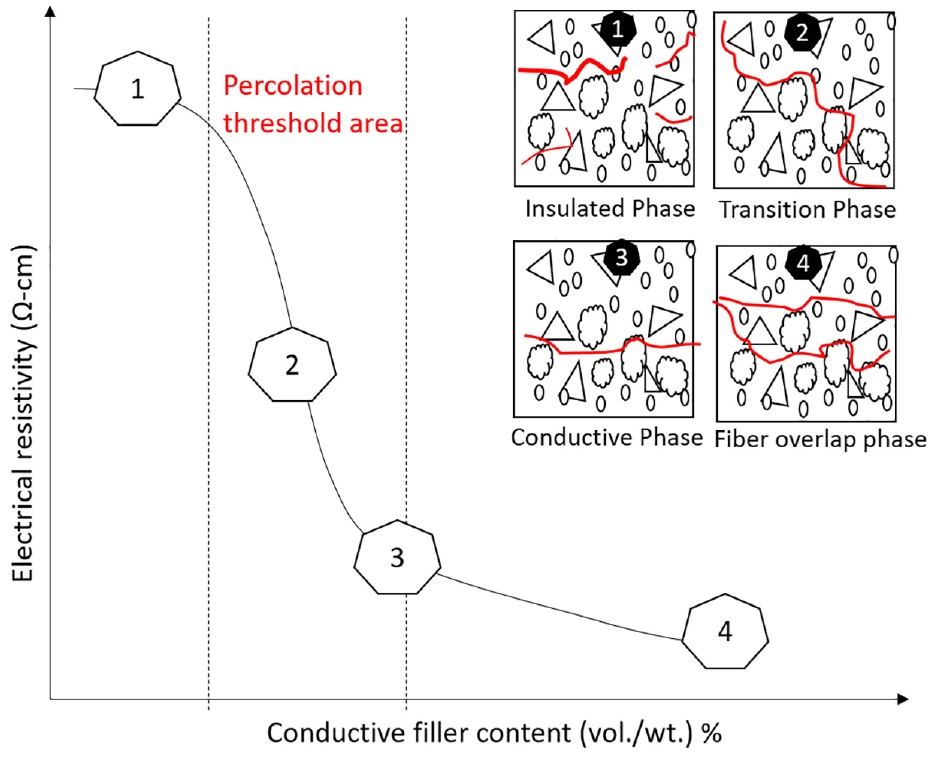
Different phases of ECCC.
The concentration and aspect ratio of the conductive fillers significantly affects the conductivity of the cement matrix. Small-diameter fibers/particles exhibit superior dispersion efficiency, driven by their lower surface energy, leading to reduced resistivity ( 80 , 114 ). Longer fibers, at consistent filler concentrations, yield lower resistivity owing to the establishment of more persistent conductive paths ( 80 ). Extending this insight, Al-Dahawi et al. ( 114 ) observed that longer fibers yield lower resistivity results, capitalizing on their potential to form overlapping, constant conductive paths at lower concentrations. This finding complements Chen et al.’s ( 121 ) observation of enhanced conductivity through improved fiber-to-fiber contact. Filler dispersion and size, in tandem with filler content and water–cement ratio, determine the efficacy of the conductive path formation. Employing an optimal surfactant quantity, which balances enhancing dispersion and mitigating water reduction, is crucial in achieving uniform conductive pathways without bubble-induced segregation. This dispersion optimization, gained through surfactant use and water–cement ratio adjustment, aligns with adjusting the sand-to-cement ratio to fill concrete voids without compromising conductivity ( 27 ). Moisture content emerges as a critical factor; although water is an excellent conductor, evaporation of pore water can destroy conductive paths.
Temperature Effect on Resistance of ECCC
Temperature fluctuations significantly affect ECCC performance; this is attributed to its thermal expansion coefficient of 10 × 10−6/°C. This expansion may lead to disconnected materials and disrupted conductive networks, resulting in heightened ECCC resistivity. However, empirical findings have established an inverse exponential relationship between temperature and resistivity ( 122 ). ECCC exhibits a positive temperature coefficient ( 123 ), where resistivity initially decreases with temperature rise, followed by a notable surge. Under a critical limit, electrons create a tunneling effect by converting absorbed heat into kinetic energy. Yet, exceeding this limit triggers temperature reduction through pore water evaporation ( 123 ). In specific conditions, such as weather and concrete age, temperature rise can even reduce ECCC resistivity, as found by Abdualla et al. ( 124 ).
Resistivity Respond to Voltage Variation of ECCC
The application of voltage to ECCC exhibits a nonlinear relationship between voltage and temperature ( 27 , 46 ), following the Joule heating law. Increasing voltage yields reduced resistivity, inducing heating ( 48 ). This reduction stems from the tunneling effect, where current passage through concrete creates tunnels for electrons, effectively lowering resistivity. Higher voltages propel free electrons with increased energy, hastening their movement through the matrix and diminishing resistivity. The interplay of electric heating and cooling during voltage application results in varying resistivity magnitudes.
Resistivity Response to Load Variation of ECCC
ECCC presents reversible resistance changes with strain, termed piezoelectric resistivity. The gauge factor, signifying resistivity change per unit of strain, can be positive or negative. Previous studies revealed longitudinal resistance growth of ECCC with escalating tensile strain at specific stress levels during loading cycles ( 29 , 79 , 113 , 116 , 117 , 125 , 126 ). Elevating the gauge factor involves infusing conductive filler during the transition mode to amplify conductive pathways. Yet, surpassing the percolation threshold for tensile stress or strain can boost the gauge factor ( 113 , 126 ). Notably, GP outperformed other materials in piezoelectric resistivity, offering heightened sensitivity and stability ( 92 ). On the other hand, hybrid fillers demonstrate superior performance to single fillers ( 127 ), evident in combinations like SS and CF, which excel with individual CF applications ( 102 ). Chen et al. recommend a blend of 2.5 wt% GP and 0.7 wt% CF for stability and self-monitoring ( 111 ). Han et al. ( 127 ) highlight successfully utilizing a CB and CNT hybrid for ( 128 ) excellent sensitivity, repeatability, and stability ( 128 ). The self-monitoring attribute of ECCC has the potential for damage detection in conventional concrete pavements, although comprehensive research in this realm is lacking. Previous studies have quantified the strain–resistivity relationship, offering a foundation for future exploration.
ECCC Performance Beyond Laboratory Studies
The utilization of ECCC for snow- and ice-melting on pavements represents a notable development in construction and building materials innovation. The effectiveness of this application is based on the heating capabilities of ECCC, influenced by ambient conditions like temperature, wind speed, power supply, and solar heating. Noteworthy evaluations have illuminated the potential of ECCC for deicing, with performance underscored by various factors.
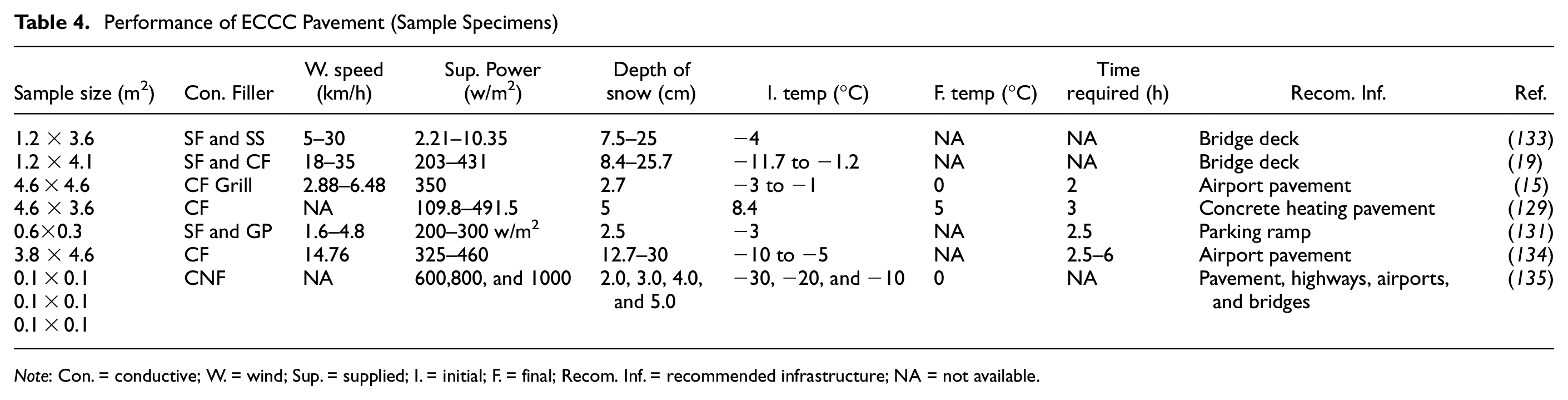
The significant potential and success showcased by ECCC in laboratory studies could facilitate streamlining the transition to its field-scale deployment. Presently, ECCC HPS has been applied in diverse locations, encompassing bridge decks ( 30 ), parking lots ( 130 ), airport apron areas ( 131 ), and parking ramps ( 132 ), and roads ( 133 ). Nonetheless, before the extensive implementation of ECCC HPS, these field-scale projects required comprehensive investigation.
Pioneering studies by Yahia and Tuan 1998 introduced ECCC for deicing purposes on bridge decks, employing SF and SS as conductive fillers ( 134 ). Notably, ECCC presented successful deicing performance even at −9°C. This research continued between 1998 and 2000, consistently demonstrating deicing efficacy at similar temperatures. Subsequent exploration from 2003 to 2007 shifted focus to the Roca Spur Bridge, incorporating both SF and CF within ECCC.
Lai et al. extended the frontier by embedding CF beneath airport pavement and supplying power through a grid at 350 W/m2 during real-time snowfall scenarios with temperatures ranging from −3°C to −1°C ( 15 ). Impressively, this experiment witnessed the melting of 2.7 cm of snow within 2 h. A noteworthy revelation emerged as residual heat continued to melt snow even after power was turned off, effectively maintaining the pavement temperature at 0°C.
Rao et al. delved into the potential of ECCC by integrating SF and GP, subsequently applying it to a parking ramp ( 132 ). The innovation did not halt there, with other researchers ( 130 , 135 , 136 ) exploring ECCC formulations using CF, SF, and GP. These formulations have found practical application in diverse contexts such as highway pavements, airport pavements, and bridge decks. Table 4 provides an ECCC pavement overview of snow-melting performance and associated characteristics.
Performance of ECCC Pavement (Sample Specimens)
Note: Con. = conductive; W. = wind; Sup. = supplied; I. = initial; F. = final; Recom. Inf. = recommended infrastructure; NA = not available.
Economical Application
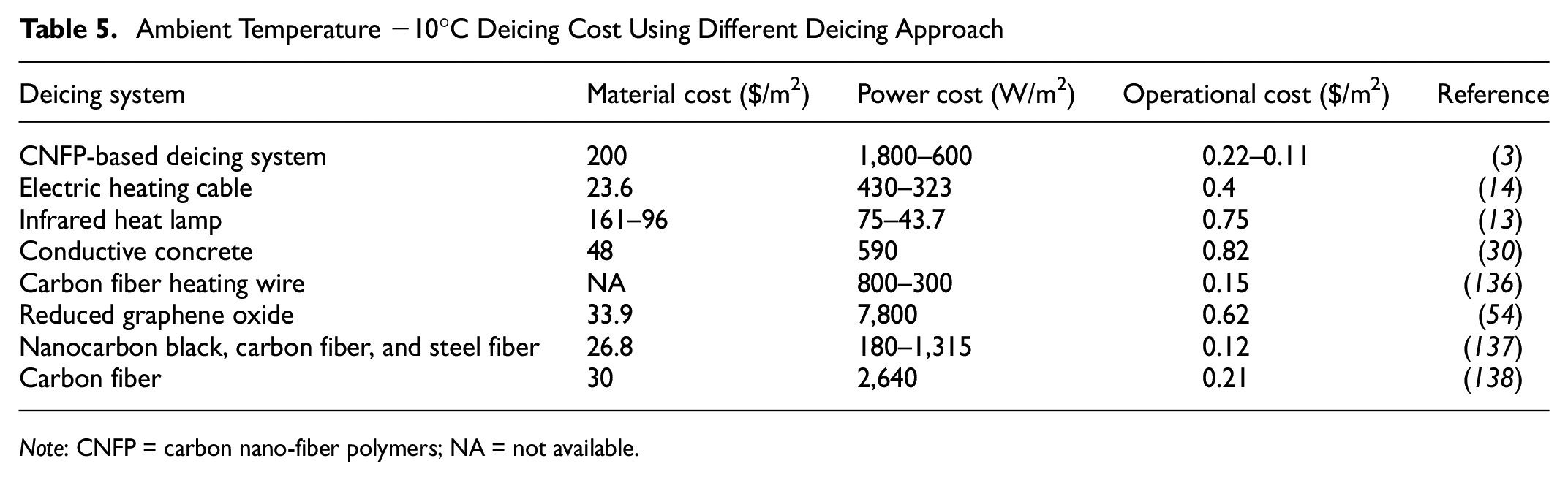
There are several notable benefits to using ECCC for deicing and snow melting. With regard to finishing quality and workability, ECCC successfully matches conventional concrete without requiring specialized machinery or highly qualified personnel. Furthermore, ECCC eliminates electric shock hazards, thus enhancing operational safety. As outlined in Table 5 ECCC emerges as a cost-efficient option for deicing, although a lack of comprehensive information persists concerning its operational complexity, maintenance requisites, and proper installation protocols. Encouragingly, several field-level projects have been initiated, marking a promising trajectory.
Ambient Temperature −10°C Deicing Cost Using Different Deicing Approach
Note: CNFP = carbon nano-fiber polymers; NA = not available.
Despite a potentially higher initial implementation cost relative to conventional deicing approaches, cost-benefit analyses lean favorably toward ECCC owing to its eco-friendliness, reduced maintenance expenses, and absence of harmful effects on pavements. However, the challenges parallel those encountered with conventional deicing methods, reflecting the overall conditions. Notably, the filler material’s characteristics exert a discernible influence on concrete’s mechanical attributes. Meanwhile, temperature, voltage, and load fluctuations can stimulate micro-crack formation and perturb the ECCC resistivity through disruptive conductive filler pathways. Beyond this, the demand for deicing heat, averaging between 200 and 800 W/m2 ( 108 ), remains subject to weather nuances, encompassing wind speed and precipitation variables.
Enhanced operational success may be achieved by segmenting pavements, a strategic move but one posing formidable implementation hurdles. These complexities underscore the emerging challenges hindering widespread ECCC application in the real world.
Discussion
The discussion highlights the need for comprehensive research to bridge existing gaps in the realm of deicing and snow melting using ECCC pavement. For the development of this field, it is crucial to concentrate on the following areas:
Expanding study scale: Although laboratory and small-scale field tests for ECCC HPS have been undertaken, it is crucial to conduct full-scale pavement assessments to comprehensively evaluate its efficiency and holistic consideration of winter maintenance impacts. Beyond the environmental aspect covered in past studies ( 56 ), costs and social factors should be examined, including the effectiveness of ECC versus traditional methods in enhancing highway safety and mobility during winter.
Complete life cycle assessment (LCA): Now, it is crucial to quantify the LCA of a full pavement by the added benefits of conductive filler in ECC, potentially reducing the environmental impact by extending pavement service life, minimizing repair needs, and delaying reconstruction.
Guideline and specification: A pivotal progress toward practical ECCC pavement application lies in developing comprehensive guidelines and specifications. This undertaking necessitates thorough research, encompassing material specifications, conductive material mixing, efficiency assessment, numerical simulations, pavement design, snow-induced ECCC behavior, and systemic control design.
Economic feasibility: Whereas certain studies have explored the economic feasibility of ECCC-based HPS ( 139 , 140 ), a promising avenue for future research involves considering the economic impacts on users. Additionally, the benefits of ECC in retaining and recruiting winter maintenance workforce should be considered. This assessment paves the way for a thorough comparison against other snow-melting approaches, ultimately facilitating well-informed choices.
Machine learning models: A promising direction is using machine learning models to forecast ECCC pavement performance. These models can be refined using a variety of algorithms (such as gradient boosting, random forest, xgboost, and Shap), visualizing the efficiency of ECCC pavement in various scenarios. They can be fed with plenty of experimental data from extensive laboratory samples and real pavements.
Simulation studies: The developed machine learning models are supported by simulation studies that accurately recreate large-scale field tests in snowy situations. Such simulations provide insightful information that helps in the optimization and performance improvement of ECCC pavement designs.
Varied weather impact: Although certain studies have delved into the effects of snow and ice on ECCC pavement, further exploration is needed into the influence of diverse weather conditions, encompassing temperature and humidity, to comprehend pavement behavior comprehensively.
Exploration of alternative conductive materials: To bolster ECCC pavement performance, going beyond conventional conductive elements, for instance CF or SF, is essential. Investigating alternative conductive materials like conductive polymers holds promise for the future.
Sustainable methods comparison: Validating ECCC pavement sustainability necessitates benchmarking its performance against alternative sustainable deicing methods, including geothermal energy, radiant heating, and geotextile systems.
Environmental impact scrutiny: Although ECCC pavement’s potential to reduce ecologically harmful footprint is evident, evaluating its overall environmental impact, encompassing manufacturing, installation, and maintenance, remains vital.
Driver safety assessment: Comprehensive understanding of how ECCC pavement influences driver behavior and safety, particularly amid diverse weather conditions, is paramount. Delving into its impact on reducing risks like black ice is necessary.
Addressing these research gaps will begin in a new era of ECCC pavement applications for deicing and snow melting, leading to widespread adoption and effective use. The interplay of research gap identification, resolution, and machine learning model deployment will streamline ECCC pavement design and implementation, culminating in sustainable, long-lasting deicing methods. Transport infrastructure officials stand to gain invaluable insights for informed ECCC pavement integration. Ultimately, robust ECCC pavement research promises significant cost-savings, environmental gains, and a safer, more efficient alternative to conventional deicing methods
Conclusion
The challenges posed by winter storms on transportation networks in colder regions have long been a concern for transportation agencies. Conventional snow-removal methods, despite their effectiveness, bring about detrimental environmental consequences, exacerbating the complexities of winter maintenance. ECCC pavement has emerged as a promising solution for deicing and snow melting on road surfaces in response to these challenges. By integrating conductive elements into conventional concrete, ECCC pavement employs the Joule heating principle to efficiently melt snow and ice, offering a potential remedy to winter road hazards.
This paper has comprehensively reviewed the literature relevant to ECCC pavement, exploring its background, working principles, preparation, and overall performance. The findings of previous studies have highlighted the remarkable potential of ECCC pavement to elevate winter road maintenance, resulting in enhanced road safety and minimized traffic disruptions during harsh winter conditions. With its eco-friendly deicing capabilities, ECCC pavement represents a sustainable alternative to conventional methods, thus addressing environmental concerns while ensuring road safety.
However, the realization of ECCC pavement’s full potential is hindered by certain limitations, particularly in relation to cost-effective construction, durability, and energy efficiency. These constraints underscore the need for targeted efforts to overcome these challenges to facilitate the wider implementation and adoption of ECCC pavement. Addressing these limitations can pave the path toward a safer and more sustainable winter transportation infrastructure.
Moving forward, our study suggests several crucial areas for further exploration. Investigating optimized ECCC pavement preparation methods is imperative, developing robust performance assessment metrics, and establishing cost-effective strategies for transitioning ECCC HPS technology from controlled laboratory and small-scale field tests to real-world scenarios. Additionally, exploring alternative conductive materials, understanding the diverse impacts of weather conditions, and assessing the long-term performance of ECCC HPS are avenues that require comprehensive research.
In conclusion, this comprehensive review of ECCC pavement potential as a solution for winter road maintenance challenges underscores its importance in addressing both safety concerns and environmental impact. By bridging the gap between conventional snow-removal methods and sustainable alternatives, ECCC pavement presents the evolution of transportation infrastructure in cold regions. The insights gained from this study advance our understanding of ECCC HPS capabilities and pave the way for informed decision-making in road maintenance strategies. As the transportation industry moves toward more eco-friendly and efficient solutions, ECCC pavement stands as a symbol of progress, promising safer roads, a reduced environmental footprint, and a brighter future for winter transportation practices.
Footnotes
Author Contributions
The authors confirm contribution to the paper as follows: study conception and design: M. Anis, M. Abdel-Raheem; data collection: M. Anis, M. Abdel-Raheem; analysis and interpretation of results: M. Anis, M. Abdel-Raheem; draft manuscript preparation: M. Anis, M. Abdel-Raheem. All authors reviewed the results and approved the final version of the manuscript.
Declaration of Conflicting Interests
The authors declared no potential conflicts of interest with respect to the research, authorship, and/or publication of this article.
Funding
The authors received no financial support for the research, authorship, and/or publication of this article.
