




Abstract
The need to implement sustainable mobility is growing in both urgency and pace. However, in cities where the bicycle is underused and cars are overvalued, trying to change the mobility paradigm comes with many challenges. Planners committed to creating cycling mobility plans have to overcome information and resource barriers in coming up with solutions in their respective contexts. Facilitating access to conceptual and practical information for such cities could provide impetus for more effective decisions. With a view to achieving this goal, the “BooST – Boosting Starter Cycling Cities” research project has developed a planning tool, the Cycling Measures Selector (CMS). The tool facilitates access to specific information on measures promoting bicycle use and provides practical guidelines on how to implement these measures in a comprehensive and effective manner. Through its web-based platform, the CMS presents detailed informational sheets on each measure and provides a structure for testing different combinations. Each combination receives a score and suggestions as to how to increase the efficiency. This paper presents the tool and assesses its utility or usefulness for strategic development. To this end, the inputs of three groups working in the cycling promotion area were taken into consideration: local planners, academics, and activists. A series of workshops provided the space to interact with the tool and explore its potential. Those experiences revealed an apparent disconnect between theory and practice, along with a clear need for detailed and varied information on cycling measures. The findings suggest that the CMS can fulfill that need, as well as aid in the planning process.
Keywords
Strategic cycling planning is already on course in many cities around the world, with policymakers and stakeholders reconsidering the dependence on private motorized vehicles while displaying a growing awareness of healthy lifestyles and the convenience provided by the bicycle ( 1 ). Research has found consistent and encouraging confirmation of the role of the bicycle in sustainable mobility, yet many cities are still struggling to find the correct political and social commitment for bringing cycling into the discussion on mobility. The so-called “starter cycling cities” face particular challenges here, given their incipient cycling infrastructure and limited technical know-how in defining cycling strategies ( 2 , 3 ). Despite the general political discourse in favor of a modal shift toward cycling, political and technical scepticism around change is still dominant in these cities, leading to a lack of political commitment and lacklustre interventions in the respective territories ( 4 ).
One reason for such scepticism has to do with the perceived poor pre-conditions for alternatives to the car, particularly bicycle use ( 5 ). There are socio-demographic, psycho-social, and land-use factors which differ from context to context and exert their particular influence in a given territory. Certain social groups might have a higher propensity to cycle on account of their younger age or better social status ( 6 ). Likewise, the existing territory, be it for the lack of specific infrastructure, unsuited topography, or a lesser degree of diversity in relation to the distribution and concentration of activities, can also affect adherence to cycling ( 7 , 8 ). The perception of the spaces in question and existing travel behaviors also plays a key role in the use of the bicycle ( 9 , 10 ).
For instance, bicycle-oriented measures proposed in “champion” and “climber” cities around the world (particularly in northern European countries, such as the Netherlands, Germany, and Denmark) are regarded as hard to transfer to cities where bicycles are not widely spread or used only for leisure purposes. In such contexts, the car plays an important role as a status symbol, and measures aimed at restricting car use or parking are viewed as very unpopular ( 5 ). Despite encompassing a majority of cities around the globe, the starter city circumstance is not thoroughly represented in the existing research, which focuses mostly on champion cities. Starter cities face challenges in relation to political and social commitment, therefore requiring specific support. Acknowledging their specific situation and needs can lead to the development of more effective strategies ( 11 ).
Previous research indicates that more comprehensive strategies have greater potential to generate visible increases in cycling. This can include, among other things, strategic planning in relation to infrastructure design, financial/economic incentives, information, education, and communication initiatives aimed at improving awareness ( 11 – 14 ). Givoni highlights the importance of creating an inventory of measures, where each one is characterized and evaluated in relation to its potential effectiveness ( 15 ). Information on a range of cycling policy measures can currently be found as part of the planning support systems (PSS) developed in the field of travel demand management (TDM). In addition to offering a library of policy measures, many of these PSS also offer support in policy packaging, providing guidance in the development of integrated strategies that go much further than the implementation of isolated measures ( 16 ). However, given the comprehensive nature of such PSS, the detail of these cycling measures generally does not fit the needs of starter cycling cities aiming to make their first push toward a cycling culture.
PSS such as KonSULT, Max Explorer, SiMPlify, and VTPI online TDM Encyclopedia address this issue by including multi-criteria evaluation of the impact of various mobility measures on policy goals and good practices for sustainable mobility ( 17 – 21 ). The framework for the online TDM Encyclopedia is less interactive but it provides an extensive knowledge library that clarifies the synergies between measures. Going a step further, KonSULT provides a framework for creating and evaluating packages of measures. Likewise, the Urban Transport Roadmaps tool considers measure packaging, but it also directly quantifies the impact on transport, the economy, and the environment ( 22 ). However, neither of them considers the specific requirements of starter cycling cities, and, in some cases, their comprehensive scope hinders identification of which measures directly contribute to the cycling paradigm, as opposed to other sustainable mobility objectives.
In an endeavor to address the gap in planning support tools for starter cycling cities, this paper explores a new tool offering developed information on policies and packaging specifically for starter cycling cities—the Cycling Measures Selector (CMS). This tool was developed as part of the “BooST – Boosting Starter Cycling Cities” research project. The project also developed two other tools aimed at facilitating the strategic development of cycling strategies. These are the Gross Potential for Cycling (GPC), which focused on evaluating the territory according to its cycling potential, and the Economic Value for Cycling (EVC), which concentrated on the economic value of increasing the cycling modal share ( 25 , 38 , 39 ).
This paper also explores the utility and user-friendliness of the tool in supporting the planning process, reporting on a series of online workshops involving different sets of stakeholders where the tool was introduced and interacted with. The concepts used are based on the current literature, but adapted to better express the specific details of the CMS ( 23 ). The term “user-friendliness” is used to refer to the ease of use of the tool, while “utility” is used to refer to the tool’s capacity to affect the development process.
The next section presents the CMS. This is followed by a description of the research approach used to assess the tool. The main results and conclusions are presented in the last two sections of the paper.
The Cycling Measures Selector (CMS) Tool
The CMS’s ultimate goal is to support stakeholders in starter cycling cities in defining cycling strategies. To this end, it provides complete and comprehensive information on several measures for cycling promotion, focusing on the specific context of such cities. That goal can grow from isolated measures to encompass different policy combinations (packages of measures). The CMS seeks to raise awareness about the different levels of utility that each of these packages have on the implementation of cycling, and about what are the best practices in measure packaging.
It builds on other PSS, namely KonSULT, PRESTO, and VTPI online TDM Encyclopedia, altering the approaches of these to reflect the viewpoint of starter cities by focusing the measure selection process on the characteristics of the users, and the packaging process on disseminating best practices ( 17 , 18 , 21 , 24 ).
The CMS is a web-based tool that guides the user through an interactive process to explore individual measures and to select them so as to create a package, which is then given a score. Initially, the tool asks for the user to be defined from three categories. The first category, Municipality, encompasses a wider range of measures simultaneously focused on the network and the cycling conditions in the city in question and on the provision of information, raising awareness and other stimuli for changing the mobility behavior of its inhabitants. The second and third categories, School/University and Organization/Company, respectively, have a certain degree of autonomy in defining a mobility plan for their own particular institution, but are necessarily more limited than municipalities in relation to budget, target audience, and scope of intervention (Figure 1).
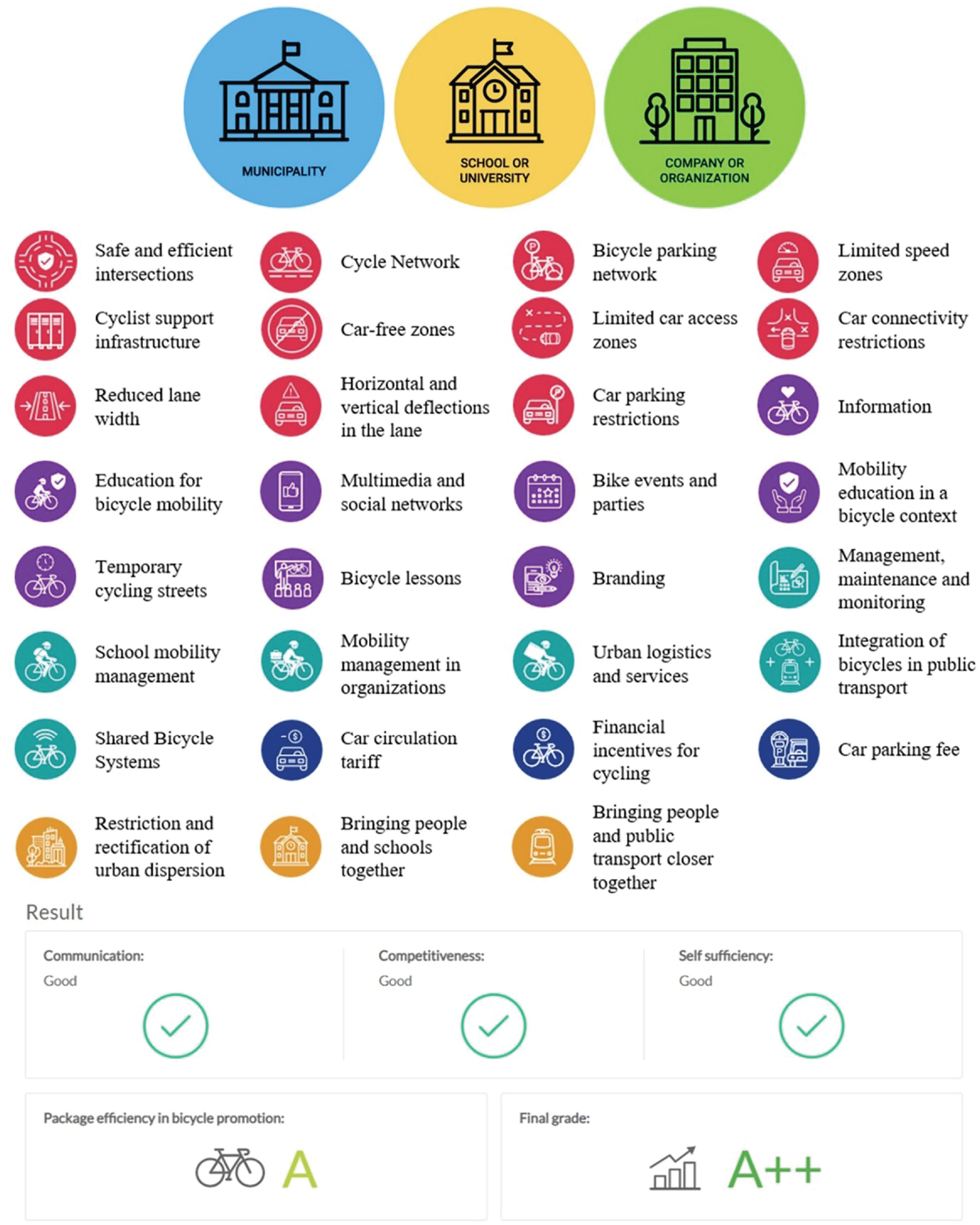
Cycling Measures Selector (CMS) promotors (top), measures (middle), and example of package score (bottom).
The profile choice leads to the next stage of the tool, the Measure Library. As indicated above, the measures vary according to the promotor, and only those in agreement with the promotor’s intervention capacity are shown. Each measure is categorized in accordance with the area of intervention: (1) Infrastructure; (2) Attitudes and Behaviors; (3) Management and Services; (4) Finance; and (5) Land use (Table 1). Furthermore, the promotor profile has an influence on each measure in relation to its hierarchic ranking. Primary measures establish the bases on which the remaining measures can operate, thus making their inclusion in a package mandatory. In contrast, complementary measures areas apply to a range of intervention areas and can be combined in different flexible solutions. This allows each promotor to tailor the strategy to what best suits its resources and needs. For example, two different municipalities may focus on the same primary measures, but, while one may take advantage of its over-dimensioned road infrastructure and complement its strategy with the “Reduced lane width” measure, the other can emphasize its strong online connection with its citizens through the “Multimedia and social networks” measure. In total, the CMS contains 31 measures (Figure 1, Table 1), but the actual number of measures presented depends on the selected promotor. To ensure that sufficient information is provided with each package creation, each measure is accompanied by a report explaining in detail how it can be implemented.
Classification of Cycling Measures Selector (CMS) Measures
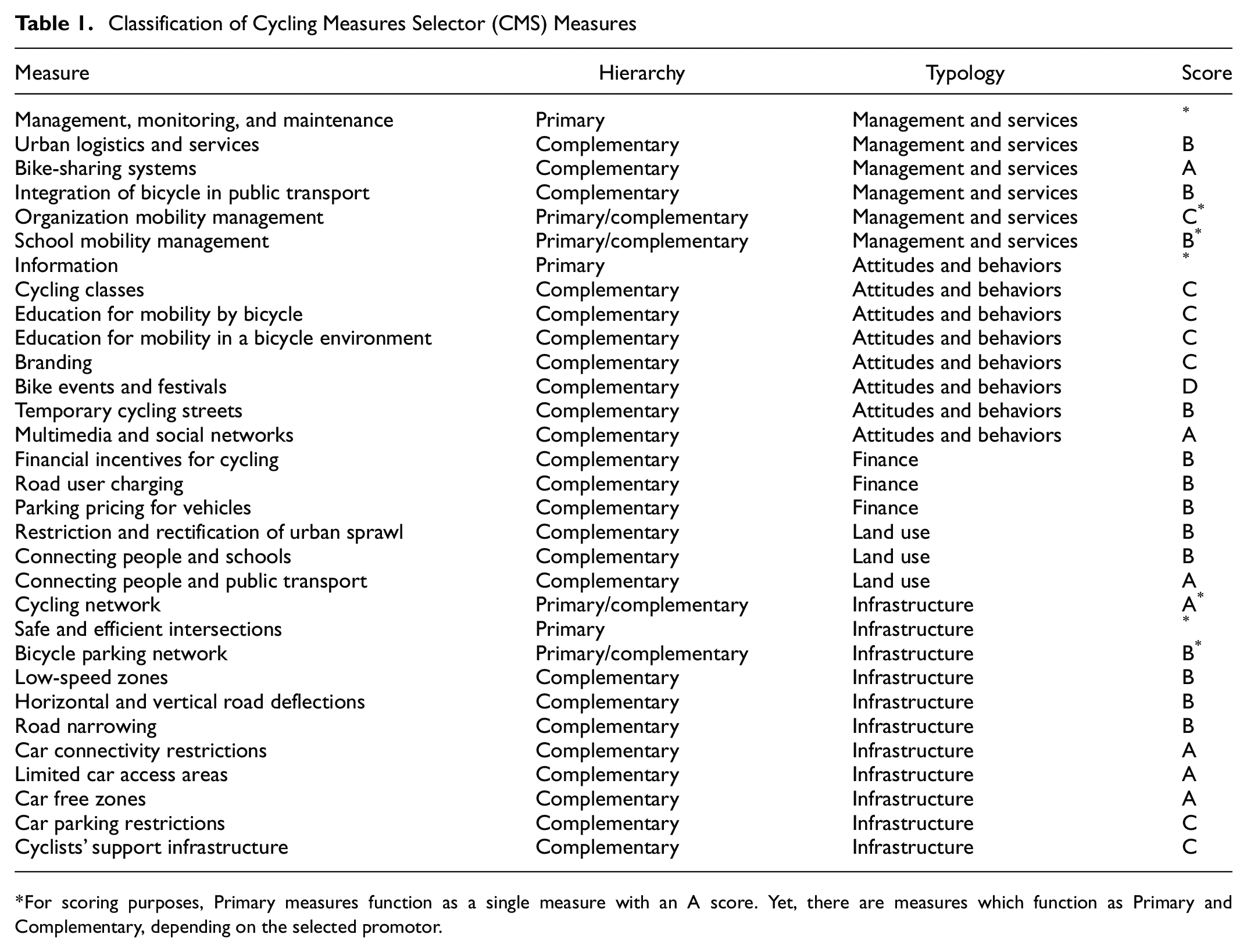
For scoring purposes, Primary measures function as a single measure with an A score. Yet, there are measures which function as Primary and Complementary, depending on the selected promotor.
Each measure has an individual score that is determined by a group of academics, urban planners, associations, public authorities, and professionals in the field of bicycle production, management of cycling infrastructure, or shared cycling systems. Their experiences cover several different Portuguese cities, providing a varied outlook on the possibilities among starter cities. These experts were supplied, via email, with a survey, in which they evaluated the measures in relation to their efficiency in promoting bicycle use, using a scale of four values. The final scores—ranging from D (least effective) to A (most effective)—were determined by a comparison of their responses (Table 1).
To create a package, users can select which measures they consider most important from the options available for the selected promotor profile. To provide additional support in the decision-making process, there is a warning system indicating if certain criteria are being met. These criteria are Self-sufficiency, Communication, and Competitiveness. The first criterion is based on the inclusion of measures capable of generating income, namely “Car circulation tariff” and “Car parking fee.” The second criterion is based on the inclusion of educational and promotional measures, including all measures in the Attitudes and Behaviors category (Table 1). Finally, the third criterion is based on the inclusion of measures that further the competitiveness of cycling by hindering the use of the private cars. This includes measures from the Infrastructure and Finance categories, such as “Horizontal and vertical deflections in the lane” or “Car parking fee” ( 25 ).
Once the measures have been selected, a score is calculated for the package, evaluating its utility in encouraging cycling, on a scale from A++ (highest utility) to F (lowest utility) (Figure 1). This score takes into consideration the individual scores of the measures selected for the package, in addition to compliance with basic good practices concerning policy packaging ( 26 – 28 ). Figure 2 shows two examples of packages created for the Municipality promotor. Both packages of measures have an efficiency of B. However, while one fulfills all criteria for good practices (Package B), resulting in an improvement in the final score, the other does not (Package A), resulting in a decrease. The more criteria are met, the greater the increase in score. These changes in score vary between a decrease, no alteration, the addition of a plus to the original score, and, finally, the increase in score.
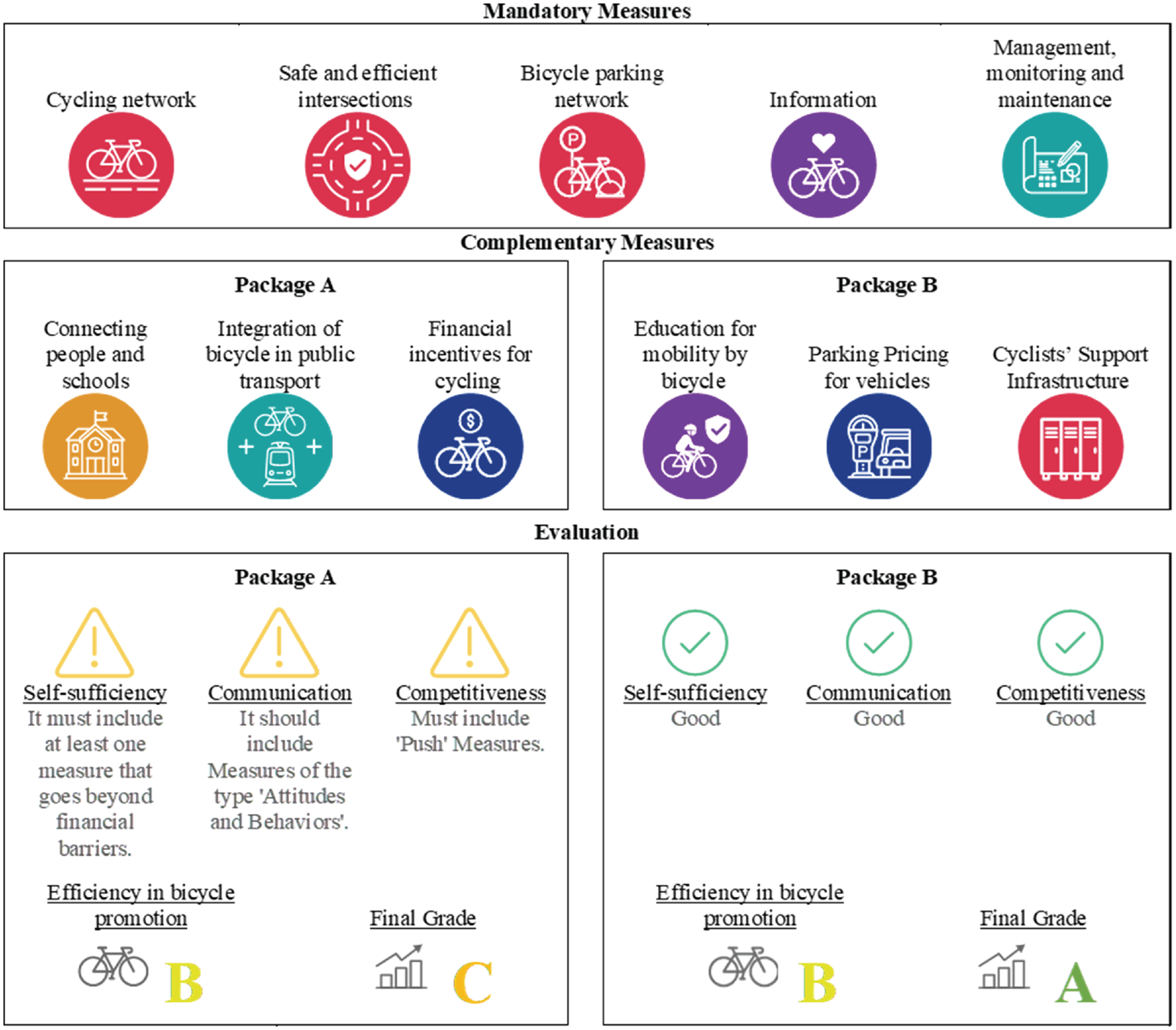
Examples of measures’ packages.
Therefore, the primary goal of the CMS is not to rank existing cycling strategies, but to provide a platform for the testing of possible combinations and inform planning entities as to the best methods to boost the utility of cycling strategies and, consequently, support implementation of the measures.
Research Approach
Exploring the Capabilities of a Planning Support System (PSS)
PSS such as the CMS allow for more informed, transparent, and efficient work, and contribute to the education of users and to the levels of communication and cooperation between them ( 29 ). In addition to facilitating the development of cycling mobility strategies, PSS must be straightforward to use and reflect the needs of planning practice ( 30 ). The tools must also be designed to be accessible to all, thus allowing stakeholders and citizens to engage in the policymaking process, and contributing to the identification of possible problems and solutions ( 18 ).
However, PSS are often deemed too complex, scientific, and comprehensive to satisfy the more specific needs of planning entities ( 31 – 34 ). In the case of starter cities, this disparity is compounded by a lack of targeted information. This, in turn, generates general distrust and antagonism toward these tools, thus hampering their application ( 35 ). It is, accordingly, necessary to establish evaluation methodologies that look at the PSS from a design perspective, so as to develop tools capable of overcoming the barriers between strategy and implementation ( 31 ).
With a view to gauging the importance of conceiving PSS with a design mindset and testing their utility, for this study CMS was explored with three specific concepts in mind—Soundness, User-friendliness, and Utility. The first of the three refers to an evaluation of the fundamental concepts of the tool and the efficiency of the means used to explore them. It gauges the comprehensiveness of the tool, in relation to the scope of its measures and the credibility of the results.
User-friendliness refers to the more practical aspects of the use of the tool. The concept explores how accessible the interface and its results to its users are. It focuses on the tool’s capacity to facilitate the development of ideas, the clarity of the results, and the ease with which they can be compared against each other.
Finally, the concept of utility is used here to clarify the impact of the tool in various dimensions of the planning process. Two areas were analyzed in this spectrum: the impact on the outcomes of the decision-making process and the impact during different stages of this same process. The first encompasses aspects which are mostly considered in the literature, namely the capacity to generate consensus, facilitate communication—not only within the planning team but also in the community—and provide new insight on existing promotion measures ( 33 , 36 ). In the same area, the tool’s capacity to improve the existing commitment to cycling promotion was also analyzed, focusing on the user’s interest in using and sharing the knowledge provided by the CMS. The second area of the concept of utility focused on the CMS’s capacity for support during the decision-making process, namely the insight it provides at each stage on the best practices for putting together each package, and the impact of this information on the necessary debate during this process. In this regard, the impact of having a single score that aggregates several different components of the evaluation process is also analyzed.
The Portuguese Case and its Wider Relevance
These concepts were evaluated in a series of workshops involving three different groups, (i) planning practitioners; (ii) academics; and (iii) activists. All groups operated in the context of urban planning and urbanism, sustainable mobility, or cycling promotion in Portuguese cities.
Most cities in Portugal are currently in the starter group, with high levels of car use and varying degrees of acceptance of the bicycle as a transport mode. Of the 12 municipalities represented at these workshops, ten are part of metropolitan areas, though two of those are more peripheral. In relation to the urban fabric, five are mostly densely urban, five are more suburban, with large residential and industrial areas, and two are mostly rural but have compact town centres. The size of the cycling infrastructure network ranges from non-existent (two municipalities) or low (eight municipalities below 12 km), to relatively average (two municipalities between 15 km and 20 km), or very high, taking into consideration the starter city context (one municipality with more than 100 km). Despite this fact, even the municipality with the most extensive cycling infrastructure has less than 1% of journeys carried out by bicycle ( 37 ). This expresses a wide variety of contexts, as are also identifiable in other starter paradigms across the world.
Applied Methodology
Two different types of workshop were organized, the first more focused on the interaction with the tool and the second focused on the principles it is based on. Both types were conducted online, in November and December, 2020, because of Covid-19 restrictions. This fact limited observation as to how much each participant was interacting with the tool.
The first workshop was aimed at planning practitioners, which is the target audience for the GPC tool. In this 2 h session, the participants were given the chance to interact directly with the CMS. This monitored experimentation process served to gather participants’ primary reactions to the tool’s user-friendliness. Groups of five to seven participants were formed, made up of participants from different municipalities but with similar contexts in relation to populational density, regional location, and extension of the existing bicycle infrastructure. Through the grouping of similar backgrounds, the participants could simultaneously relate to each other’s realities and had a range of experiences in common. Each group was asked to create a cycling strategy using the CMS tool. With a view to facilitating the creation process and discouraging the introduction of personal preferences in relation to cycling measures, each group was assigned a hypothetical scenario to consider and an objective to be achieved with the chosen strategy. The objectives sought to correct some of the issues raised in the scenarios, which, in turn, were based on the urban characteristics of the participants’ own municipalities. The scenarios deliberately did not mirror any specific municipality, and instead provided only a general idea as to the current situations. This phase was followed by a debate session where participants were encouraged to discuss their initial expectations, how they rated the tool’s performance, its most useful characteristics, and aspects to be improved.
The workshop with practitioners was both preceded and followed by two different surveys. Each contained statements to be rated using a five-point Likert scale, from “Strongly disagree” to “Strongly agree.” Participants were also given the possibility of declining to answer each question. The first survey questionnaire gathered information on practitioners’ preconceived notions. Twenty statements were divided into seven major categories: (i) the bicycle as a means of increasing accessibility; (ii) the bicycle as a viable means of transport; (iii) cycling as a priority in mobility planning; (iv) barriers to cycling; (v) cycling promotion requirements; (vi) department resources dedicated to the bicycle; and (vii) how useful PSS could be for cycling promotion, and familiarity with PSS. This would reveal if having a predisposition to supporting bicycle use would generate different interactions with the tool.
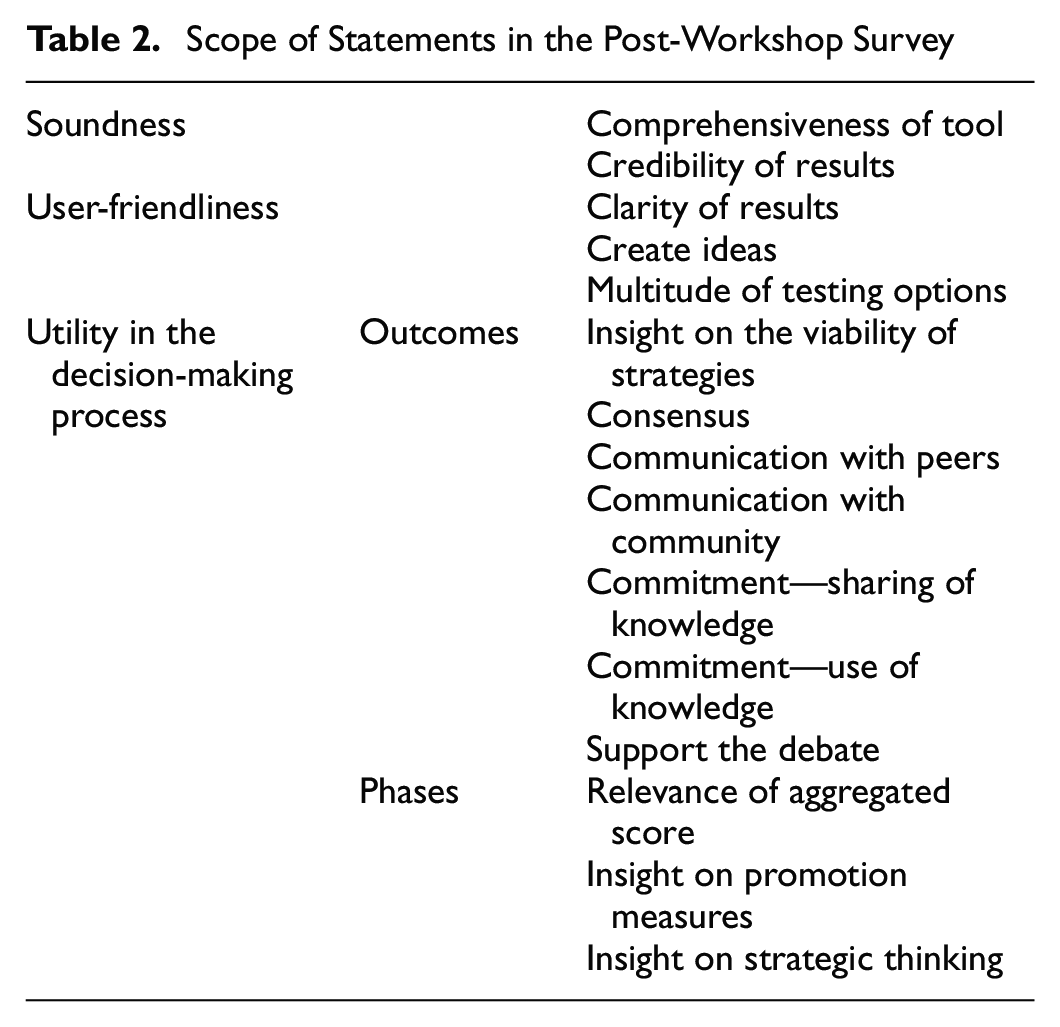
The second questionnaire analyzed the overall utility of the tool by focusing on the three concepts previously described: Soundness, User-friendliness, and Utility, in the decision-making process. The survey ended with open-ended questions on perceived limitations and virtues of the CMS, and other suggestions (Table 2).
Scope of Statements in the Post-Workshop Survey
This session was followed by two workshops for activists and academics. The aim this time was to achieve a different point of view on the utility of the tool, shifting the primary focus from the interaction with the CMS to the analysis of its methodological principles. Two sessions, of 2 h each, were carried out, one for each group. In the sessions, the aims and outputs of the CMS were presented, along with the other two tools developed by BooST. This was then followed by a debate session, focusing on how necessary the main objectives were and on how useful the results of the tool were in the response to these aims. Each participant was encouraged to visit the website and experiment with the tools beforehand. Following each debate session, the participants were asked to fill in a survey, organized in the same manner as the post-workshop survey presented to the planning practitioners. However, their version was more concise, being composed of only the statements which better represented their specific point of view.
Participant Sample
With regard to the participants, the participation method varied from group to group. For municipal practitioners, a general invitation was sent to 21 Portuguese city councils, which were working with the project in the context of the other tools. Twelve responded to the invitation, representing, in all, 20 participants, the majority of which were women, between 40 and 49 years old and working as specialists in the areas of Planning and Urbanism, and Mobility and Transports, which were equally represented. Furthermore, most either had worked or were working on sustainable mobility and in the area of cycling. Nevertheless, the absence of higher-ranking positions, namely department directors and council alderpersons, should be noted.
In relation to preconceptions in relation to the bicycle, the pre-workshop survey (Figure 3) did not find any significant differences between where they exist and the use of the tool; however, it did reveal a general consensus on the bicycle as a priority in mobility planning. Likewise, there was general agreement on the different promotion strategies, though detailing the economic benefits and enforcing car restrictions raised some minor doubts. The same was observed as far as awareness of existing solutions for the promotion of the bicycle is concerned.
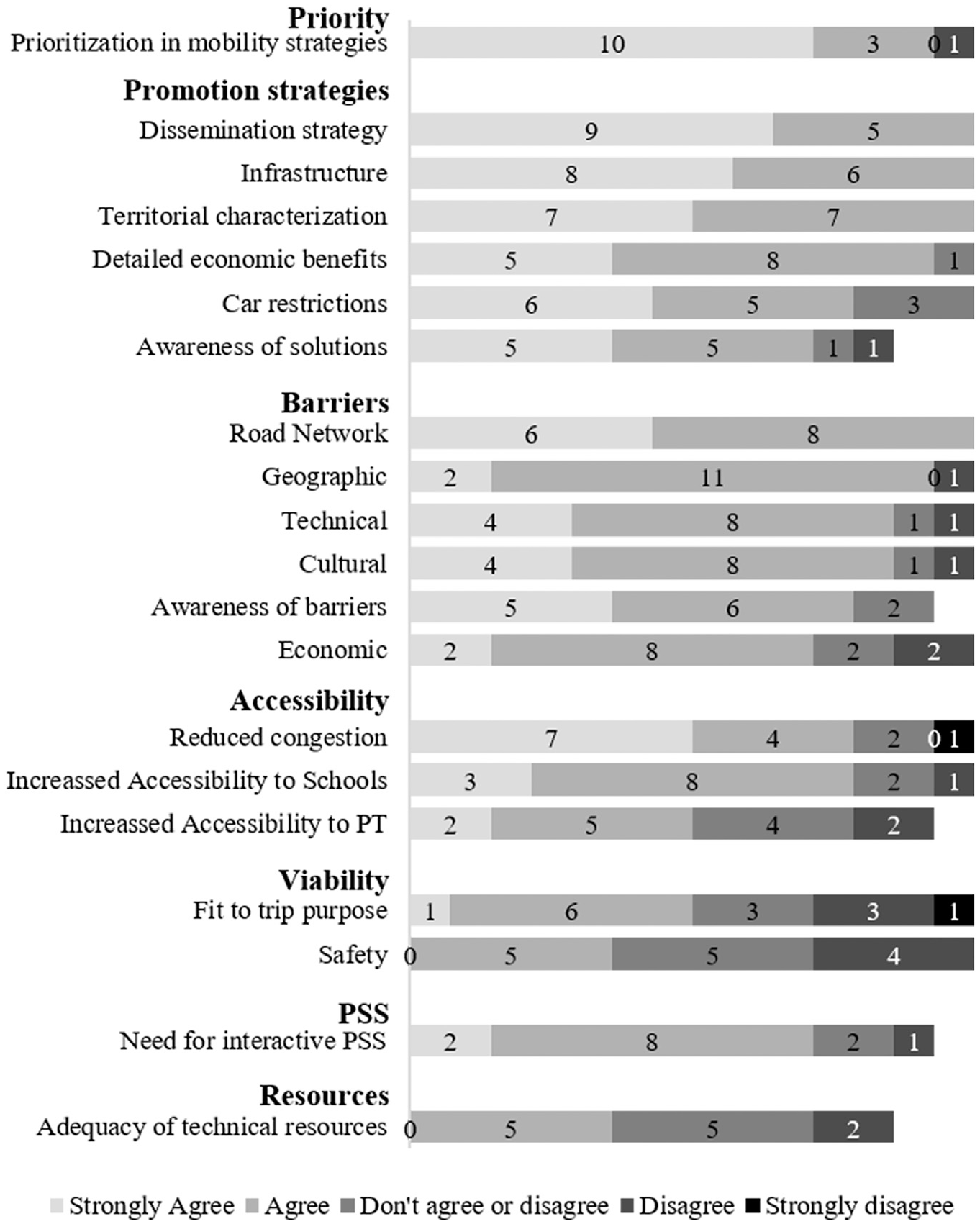
Municipal practitioners’ responses to pre-workshop survey.
With regard to existing barriers to cycling, there was a consensus on the road network as one; other barriers also raised some, albeit minor, disagreements. As for the respondents’ self-assessment on recognizing existing barriers to certain promotion strategies, there were some minor doubts, but overall general agreement. Their doubts about existing barriers are reflected in their notion of the viability of the bicycle and its role in increasing accessibility, particularly to public transport. There were also some minor, but nonetheless noticeable, doubts and disagreements, especially on the question of the viability of the bicycle for different journey purposes and its overall safety. Though practitioners generally agreed on the need for interactive PSS, the same cannot be said about their department possessing the necessary resources to promote bicycle use, which gave rise to significant doubt.
This suggests a generally beneficial view of the bicycle, with some territorial specificities and the municipalities’ available resources posing as its greater barrier. This focus on the territory also suggests less strategic thinking and more focus on the cycling network, as opposed to integral strategies where infrastructure merely plays a role among other measures.
In the case of activists and academics, they were invited on the grounds of specific work they had carried out in the areas of urban mobility, particularly cycling mobility. Accordingly, their paths had already included strategic cycling planning, which familiarized them with barriers to it and promotion requisites for it. Of the 14 participants, four worked in academia and ten worked with activist groups for cycling promotion. The majority were male, between the ages of 40 and 59. However, in contrast to the practitioners, there was greater representation of the 25–44 age group, particularly among activists. The following section analyses the results of the surveys and of the overall workshop experience.
Perceived Utility of the CMS
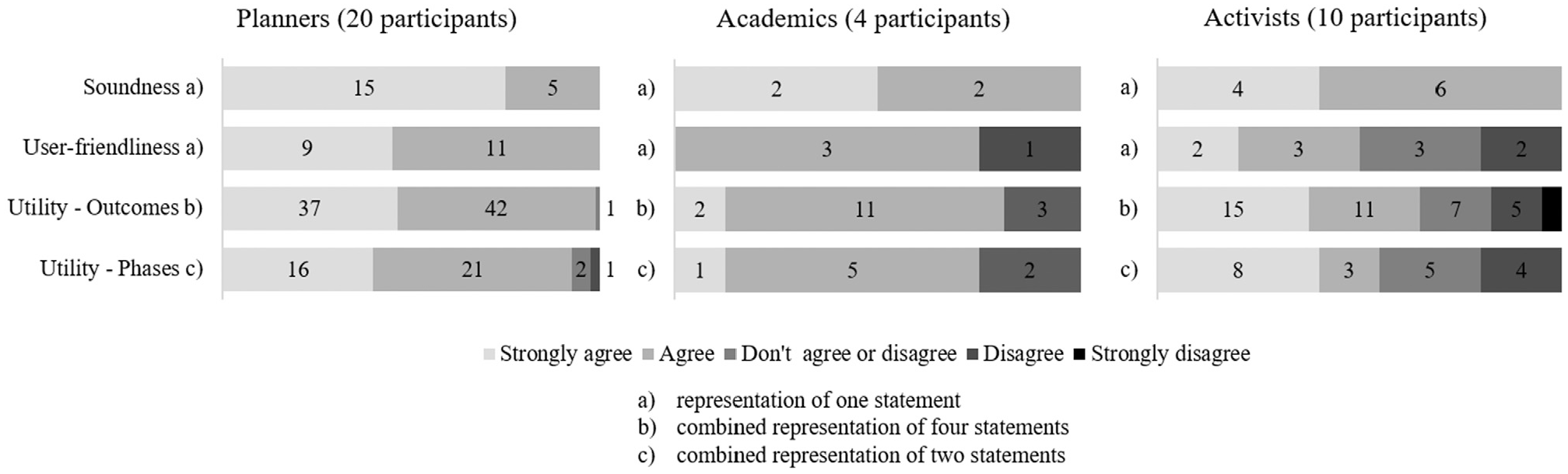
Generally speaking, the tool was well received by the participants. There was general agreement about the soundness of the tool. Indeed, considerable enthusiasm was expressed as to its comprehensive scope (Figure 4). During the discussion, planners described the Measure Library as “considerably useful,” and the descriptions of the measures as “a valuable help.” This feeling was reflected by the activists and academics, who indicated that the library was “very complete and the separation into primary and complementary measures makes sense.” The Measure Library in particular was seen as the tool’s strongest aspect, on account of its detail and organization. One activist commented that “it is useful because it really concentrates a lot of measures, which we have [detailed in other places], but there they are dispersed, whereas here they are well organized, well structured, and it is very easy to understand which path to take.” They also appreciated the tool’s capacity to help “think, reflect, and support the decisions of local authorities,” as summed up by one of the participants.

Results of post-workshop survey on the soundness of the Cycling Measures Selector (CMS).
However, during the discussion, some activists expressed a certain degree of apprehension as to the application of the tool. Although they felt its simplicity facilitated the dissemination of information, one participant felt the separation into only two hierarchies did not properly reflect reality. Likewise, another participant feared that a lack of follow-up following the use of the tool would result in inefficient strategies (Figure 5).
Responses to post-workshop survey per utility concept.
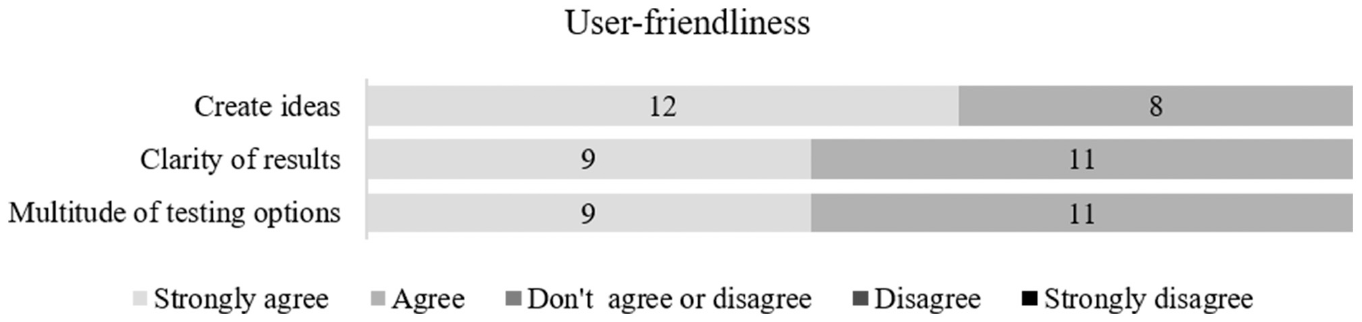
All practitioners agreed, albeit with differing levels of enthusiasm, that the tool is user-friendly, as it facilitates the creation of ideas, presents clear results, and allows easily for a multitude of them to be tested and compared (Figure 6). One participant commented that it was “visually appealing.”
Results of post-workshop survey on the user-friendliness of the Cycling Measures Selector (CMS).
However, some academics and activists had reservations as to the clarity of the results (Figure 5), though this might in some way be related to how the sessions were organized. In contrast to the session with planning practitioners, here the CMS’s principles were prioritized over interaction with the tool, possibly hampering the academics’ and activists’ full understanding of some of its operational elements.
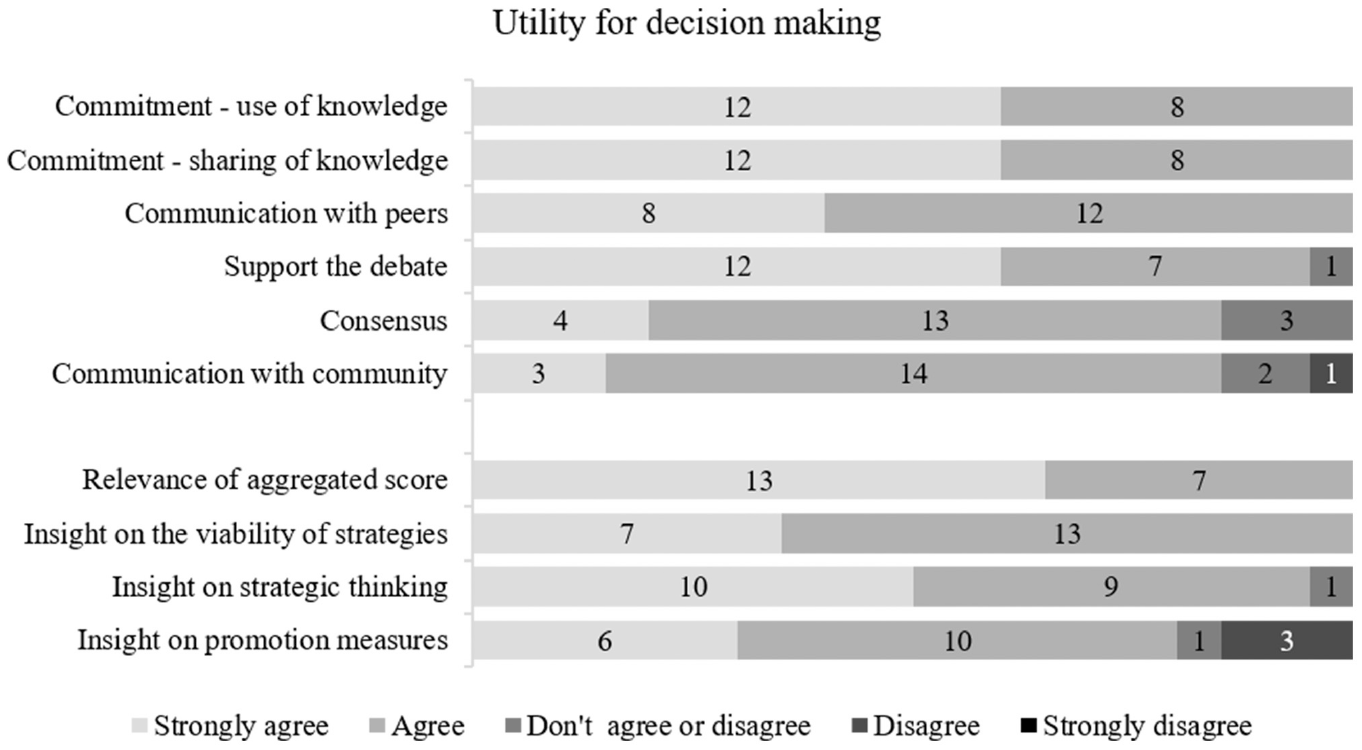
With regard to the utility of the tool, most responses were positive. There was overwhelming agreement that it strengthened practitioner commitment to the potential of cycling, though there was a certain degree of uncertainty as to its support of the debate and the facilitation of a consensus. There was also divergence on the topic of communication. While most practitioners agreed that the CMS facilitated communication with peers, a minority either disagreed or felt unsure that the same could be achieved with the community.
As for its impact in different stages of the decision-making process, the idea of the aggregated score met with enthusiastic support. Respondents also agreed that it facilitated the decision-making process and, albeit with minor doubts, that it provided insight on strategic thinking (Figure 7). As one planner indicated during the discussion: “The utility is in the planning … it can be a tool to assist the technical decision-making process involving the political decision-makers.”
Results of post-workshop survey on the utility of the Cycling Measures Selector (CMS).
However, a minority of practitioners felt that the tool did not provide any novel insight on cycling promotion measures. This suggests that the needs of the planning practitioners do not necessarily have to do with a lack of knowledge, but rather a lack of comprehensive gathering of this knowledge, to facilitate application of the tool.
Given the differing points of view of academics and activists, both the insight on the viability of strategies and on strategic thinking generated a certain degree of uncertainty, as did the use of an aggregated score (Figure 5). When one considers the comments made during the sessions, these issues seemed to stem from the possibility that the tool could be used in the place of opinions from experienced professionals in the field of cycling. As one activist put it: “the greatest potential of this tool is in fact its serving as a menu for those who are not very well familiarized with these dynamics … but it is always indicative and, in this case, I do not think it can go beyond that … further than attributing scores, it seems to me that it works much better as a repository of information on the various options that can be used by the different types of entities involved.”
However, not all participants felt the same, with one finding the tool “rather interesting and probably that which will serve us participants in cycling promotion and civic movements better … we can build a package and then approach a local government, or entity.” Another activist indicated that she had already applied the tool in projects, in writing articles and also in a more strategic perspective.
With regard to their final comments, most practitioners indicated that the tool is more useful for providing detailed insight on each measure and justifying municipal strategies. Nevertheless, the majority felt that the political decision-makers will not recognize its potential. Many did suggest additional layers of contextualization, namely the ability to select pre-defined scenarios and objectives, together with a more restricted set of measures to choose from and with different evaluation parameters. Other proposals included the definition of parameters to quantify whether or not the measures are being efficiently implemented, and the integration of different territorial scales as another contextualization layer.
Conclusions
The aim of the CMS is to facilitate the implementation of cycling in Starter Cycling Cities by focusing on strategic development and providing practical know-how to overcome technical barriers and strengthen political commitment. The CMS has built on the ideas of its predecessors to further extend its impact and to relay knowledge, not only concerning the individual measures but also possible combinations thereof.
On a fundamental level, the tool appears to be of use to different agents in the context of promoting bicycle use; that said, the Measure Library, thanks to its comprehensiveness, systematization, and user-friendliness, appears to be its greatest asset. This suggests that finding dependable and complete information is one of the primary difficulties in defining cycling planning strategies. There does not seem to be a lack of knowledge of the concrete measures, but rather a lack of diversified information on each individual measure and on how to better combine them. Therefore, the capacity to evaluate different packages of measures becomes secondary to the information on efficient strategic cycling development.
Nevertheless, the process of creating packages did generate some doubts. While activists felt that the evaluation criteria were too complex to fully understand the tool, practitioners believed that it could be improved by adding more layers of information, namely more specific groups of measures, in accordance with possible objectives and territorial scales. Whilst introducing more conditional choices in the decision process could facilitate the creation process, it could also restrict the choices and the range of starter cities that could use the tool. This was the major inconsistency between the responses and the creators’ fundamental ideas for the tool. This suggests a disconnection between practice and theory in starter cities. While the latter group wants increasingly detailed solutions, the former group favors more versatile options. The answers may lie in tool flexibility, making it possible to increase or decrease the amount of information as required. In this case, it is beneficial that this is an online tool. It allows for various educational elements to be gradually introduced, thus better explaining the inner workings of the CMS.
Some academics and activists felt that the CMS lacked definition in relation to a breach between the expected responsibilities of planners and the contributions of the tool. This revealed a need to extensively clarify the use of the tool. The CMS’s aim of supporting existing knowledge and experience, as opposed to replacing it, must be made more explicit.
Generally speaking, most participants agreed that the tool was useful for opening up channels of communication between planners and the community, thus fomenting greater acceptance for cycling and breaking barriers.
Approaching the three different groups (Planning practitioners, Academics, and Activists) was extremely helpful for understanding different points of view, particularly those that were not expected. It became clear that the CMS could indeed provide detailed knowledge and an organizational framework during the planning phase for a cycling strategy. Future studies should consider this work to increase the acceptance of this tool with all groups. However, this will involve a delicate balance to avoid over-restricting the strategic options and a narrowing of the focus. It is still important for the tool to promote discussions and allow input based on experience with the territory.
Footnotes
Acknowledgements
The authors would like to express their deep gratitude to all the participants of the workshops, for their time and contributions to this project. The authors would also like to thank Isabel Bezerra da Cunha for her collaboration in this project, specifically in the development of the CMS.
Author Contributions
The authors confirm contribution to the paper as follows: study conception and design: C. Silva, A. Mélice Dias, M. Lopes; data collection: A. Mélice Dias, M. Lopes; analysis and interpretation of results: A. Mélice Dias, C. Silva. M. Lopes; draft manuscript preparation: A. Mélice Dias. All authors reviewed the results and approved the final version of this manuscript.
Declaration of Conflicting Interests
The author declared no potential conflicts of interest with respect to the research, authorship, and/or publication of this article.
Funding
The author(s) disclosed receipt of the following financial support for the research, authorship, and/or publication of this article: This paper is the result of the project BooST—Boosting Starter Cycling Cities, reference POCI-01-0145 – FEDER – 031479, which is funded by the European Regional Development Fund (ERDF) by means of the Operational Programme for Competitiveness and Internationalisation (COMPETE2020), and by national funding (PIDDAC) through FCT/MCTES.
