




Abstract
This study sought to examine the extent to which research collaboration has influenced research productivity and impact in Kenya, the latter two being critical indicators of research excellence. The relevant data was extracted from Elsevier’s SciVal analytical tool. Descriptive statistics and correlation and regression analyses were used to analyse the data. The study’s findings reveal that Kenya’s research is highly collaborative; collaboration varied across 27 research fields; university–industry collaboration is on the rise, albeit slowly; and international collaboration accounts for over 80% of co-authored papers in Kenya. The study found a significant link between research collaboration and research productivity, on the one hand, and research collaboration and impact, on the other. Given the findings, the conclusion can be made that research collaboration influences research excellence in Kenya and, as such, strategies should be put in place to safeguard the gains made, while harnessing further research collaboration initiatives to enhance research excellence in the country.
Keywords
Introduction
Research excellence has been described as a complex, multifaceted notion devoid of a universally accepted definition (Ferretti et al., 2018), particularly in terms of ‘measurable attributes at the organizational levels’ (Tijssen, 2003: 91). Tijssen (2003) nevertheless observes that the concept is often used as a synonym for good or high-quality research. Research excellence involves the conduct of high-quality research using cutting-edge technologies and innovative methodologies. Tijssen and Kraemer-Mbula (2018), while appreciating the fact that many futile attempts have been made to operationalise the concept of research excellence, use what they term three issues that are associated with (and adequately represent) research excellence in order to explore African science and, more specifically, the sciences acknowledged by the Science Granting Councils of sub-Saharan Africa in terms of policies, perceptions and performance. They identify the issues as (1) sufficient knowledge of the subject matter to pass credible, evidence-based value judgements on research quality; (2) the existence of meaningful ‘ordinary standards’ that enable convincing definitions or descriptions of ‘unusually good’; and (3) widely acceptable operationalisation and quantification of ‘unusually good’ quality research (Tijssen and Kraemer-Mbula, 2018). Worldwide, the concept has emerged as a popular notion or expression in the frameworks used to assess research performance, including the Research Excellence Framework in the UK and Excellence in Research for Australia. Despite the lack of a definition and universal viewpoints regarding its depth and scope, research excellence has become a global priority among stakeholders for many and varied reasons. First, research excellence is seen as crucial for solving complex global challenges, including those related to health, climate change and economic development (Sutz, 2020). Second, there is growing recognition that investments in research and development can deliver significant societal benefits such as job creation, economic growth and innovation (Rouse et al., 1997). Governments and private sector entities have therefore increased funding for research and are seeking ways to encourage and facilitate the conduct of high-quality research. Third, research excellence is related to attracting resources, reputation and talent (Snyder et al., 1991), and, as such, higher education institutions and research-intensive organisations seek to promote research excellence to attract funding and recruit and retain talented researchers. Fourth, research excellence is deemed a critical factor in maintaining and improving the international competitiveness of research organisations (Hardeman et al., 2013; Tijssen, 2003; Watermeyer and Olssen, 2016). Lastly, there is growing emphasis on interdisciplinary research, which requires academics to work together to address complex global challenges, as expressed in the United Nations’ Sustainable Development Goals (Brown et al., 2019).
Research collaboration is now increasingly closely linked to research excellence as a predictor, an outcome/benefit or simply an indicator of research excellence. As a predictor or facilitating condition, collaborative research among academics from diverse backgrounds and regions is considered an essential strategy for delivering research excellence, especially in interdisciplinary fields. In this regard, Tijssen and Kraemer-Mbula (2018: 398) and Economic Insight (2014) are of the opinion that collaboration between researchers and various stakeholders is a key factor in shaping the relevance and ‘local excellence’ of research, while scientific collaboration is a driving force for research excellence. Similarly, Jacob and Meek (2013: 331) argue that ‘many of the newly emerging economies have been able to leverage themselves to advantageous positions in the global scientific economy through the skilful deployment of international research networks’. For this reason, it is not surprising that research collaboration (particularly of an international nature) is considered an important indicator of research excellence (see Vertesy and Tarantola, 2012), and therefore a critical indicator in global university ranking systems.
An examination of the published studies related to the current topic reveals that there are a few articles touching on some aspects of research excellence (e.g. Atieno et al., 2021; Kavulya and Kyengo, 2022; Onyancha et al., 2021). Three articles highlight their diverse focuses and methodologies compared to the current study on the influence of research collaboration on research excellence in Kenya. While Onyancha et al. (2021) broadly evaluate Kenya’s research excellence using an informetrics perspective, Atieno et al. (2021) delve into research productivity at the Technical University of Kenya, and Kavulya and Kyengo (2022) provide an overview of research excellence as it relates to sustainable development in the entire continent of Africa. Each article employs distinct methodologies tailored to its objectives, ranging from data analysis using the Web of Science and Google Scholar to panel data analysis for cross-country comparisons. In terms of findings, Onyancha et al. (2021) reveal trends in the top-cited article publications, co-authorship patterns and Kenya’s performance compared to other African countries; Atieno et al. (2021) identify factors influencing research productivity at the Technical University of Kenya; and Kavulya and Kyengo (2022) propose strategies for enhancing research excellence in Africa. Conversely, the current study focuses on the significant link between research collaboration and productivity and impact in Kenya. In conclusion, while the reviewed articles contribute valuable insights to the broader field of research excellence, particularly on research productivity, this study provides a focused analysis of the influence of research collaboration on research excellence across several subject areas in Kenya.
Collaboration for research excellence: conceptual framework
For the purposes of this study, a review of the literature on research collaboration was conducted to identify different types of collaboration and the benefits or outcomes associated with them, on the one hand, and the indicators or outcomes of research excellence, on the other. To this end, the study adopted the Composite Indicators of Research Excellence (CIRE) framework as its anchoring conceptual framework. The CIRE framework, developed by Vertesy and Tarantola (2012), is based on a framework that was initially proposed in the 2011 report of the Expert Group on the Measurement of Innovation, led by Rémi Barré, Hugo Hollanders and Ammon Salter. The 2011 framework (Barré et al., 2011) proposed three pillars of research excellence: 1a. Engagement with research actors – knowledge production; 1b. Engagement with research actors – institutional arrangements, interaction schemes; 2a. Engagement with industrial innovation actors – knowledge production; 2b. Engagement with industrial innovation actors – institutional arrangements, interaction schemes; 3a. Engagement with societal and political actors – knowledge production; 3b. Engagement with societal and political actors – institutional arrangements, interaction schemes.
In essence, the pillars revolved around knowledge production and institutional arrangements among and with different actors, including researchers, industrial innovators, and social and political entities. Having tested and validated the framework of Barré et al. (2011), the revised and improved CIRE framework proposed ‘three coherent and statistically sound pillars’ and 13 indicators that can be used to assess and measure research excellence: (1) excellence of public research (six indicators); (2) interactions and collaborations (four indicators); and (3) excellence in industrial actors (three indicators) (Vertesy and Tarantola, 2012: 4).
Figure 1 presents the conceptual framework that was developed to guide the study reported on here. Research collaboration refers to the cooperative efforts of individuals, groups or organisations in jointly conducting scientific or academic investigations, and is proxied in the co-authorship of papers. It involves pooling the expertise, resources and knowledge of different parties to achieve common research goals. Research collaboration can occur within a single institution, such as a university or research centre (institutional), or across multiple organisations in the same country, including academic institutions, government agencies, industry and non-profit organisations (national), or across different countries (international) (Katz and Martin, 1997). Research collaboration can also be categorised into academic–academic (or university–university) and academic–industry collaboration; the former refers to research partnerships or collaborations established between researchers in academic institutions such as universities, colleges or research centres, while the latter refers to partnerships or collaborative initiatives between academic institutions and private or public sector entities. The benefits or outcomes associated with research collaboration are many and diverse, depending largely on the objectives and goals of said collaboration (Melin, 2000). Figure 1 gives examples of the benefits or outcomes associated with research collaboration to demonstrate the link with research excellence. The benefits include: improved research productivity; high-quality research; broader impact; increased research funding; enhanced research capacity building; access to unique research infrastructure, facilities and resources; esteem and prestige; and visibility within the academic community and beyond (see Abramo et al., 2009; Lee and Bozeman, 2005; Zehrer and Benckendorff, 2013). Basically, the outcomes of research collaboration can be treated as predictors or indicators of research excellence, implying that, to some extent, those benefits define or influence the research excellence of an individual, an institution or a country. This relationship is further elucidated in the indicators of research excellence, which are expressions of the outcomes of research collaboration in Pillars 1 (excellence in public research) and 2 (excellence in industrial research), while Pillar 3 (interactions, collaborations) of research excellence is in itself ‘research collaboration’.
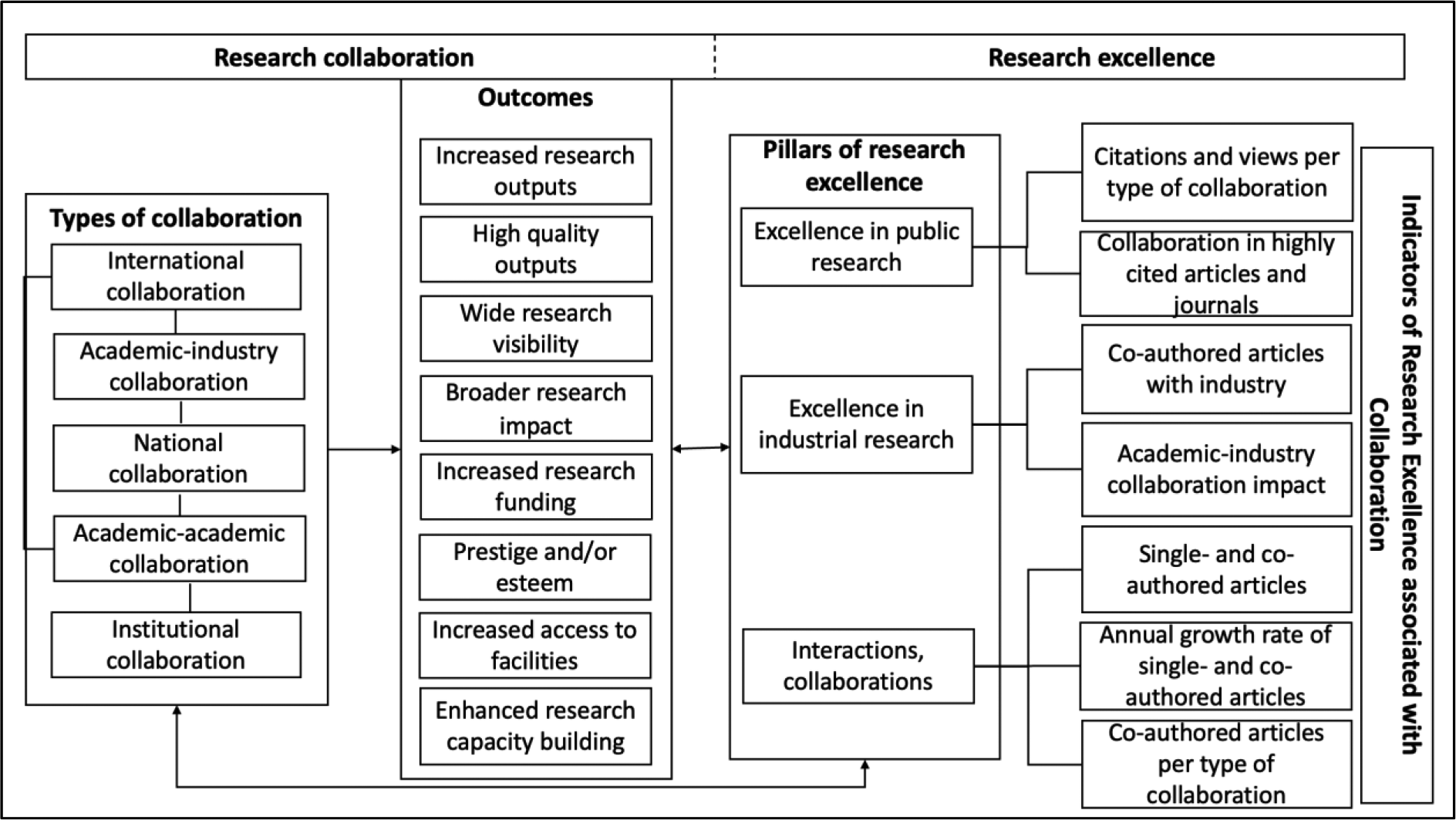
Research collaboration for research excellence: conceptual framework.
With regard to the choice of appropriate research excellence indicators to guide the current study, indicators that aligned with the types and relevant outcomes of research collaboration were identified and adapted from the published literature (see Barrere, 2020; Tijssen, 2003; Tijssen and Kraemer-Mbula, 2018; Tijssen et al., 2002) and the research excellence framework developed by Vertesy and Tarantola (2012). The use of the CIRE framework and the published literature was based on advice offered by Tijssen and Kraemer-Mbula (2018) and Barrere (2020) regarding the different and unique perspectives of research excellence held by different geopolitical jurisdictions. For example, Tijssen and Kraemer-Mbula argue that: to gain a deeper understanding of research excellence in Africa, it is important to take into account the practical challenges faced by researchers and research funding agencies to align and reconcile socioeconomic interests with international notions of excellence and associated research performance indicators.
Although the CIRE framework was developed and validated using European data, the indicators are recognised as key to nurturing and/or assessing research excellence in many other regions, including Africa. For this study, co-authorship of publications was used to proxy research collaboration, which was categorised into institutional, national and international, and academic–industry or Academic–academic collaboration (in accordance with Elsevier’s SciVal classification; see first column in Figure 1). From the CIRE framework’s 13 indicators and other indicators identified in the literature, the study developed seven indictors in order to assess research collaboration across fields and its contribution to research excellence in Kenya. The indicators include: Pillar 1 (Interactions, collaborations) – the number of single- versus co-authored papers published over time, the annual growth rate of single- and co-authored papers, and co-authored papers per field and type of collaboration; Pillar 2 (Excellence in public research) – citations and views per type of collaboration and field, and the number of co-authored papers in highly cited papers and top journals; and Pillar 3 (Excellence in industrial research) – the number of university–industry co-authored papers and university–industry collaboration impact.
Study objectives
The study aimed to investigate research collaboration and its influence on research impact across Scopus’s 27 research fields in Kenya. Specifically, for the Kenyan context, the study sought to: Examine the trends and patterns of research collaboration across the 27 research fields; Determine the relationship between research collaboration and research productivity; Examine the influence of research collaboration on research impact across the 27 research fields.
Research methodology
The researchers adopted informetrics as the research design to assess research collaboration and its influence on research excellence in Kenya. As a quantitative research design, informetrics examines patterns in information, from its creation to its use. The relevant data for the study was obtained from the SciVal analytical tool, which obtains its bibliographic and citation data from Scopus, one of the world’s largest such databases. The tool allows one to search for data using a country name and to benchmark the results against other similar entities. This study obtained data through a search using ‘Kenya’ as the country of publication. The ‘benchmark’ module allows researchers to extend the publication period beyond the 10-year period offered in other SciVal modules, such as ‘overview’, ‘collaboration’ and ‘trends’. The researchers limited the search to ‘articles only’ published between 1996 and March 2023, the latter date being when the search was conducted and the data was extracted from SciVal. At the time of downloading the data, Kenya had published, between 1996 and 2023, a total of 45,032 articles, which were analysed in the current study. Besides downloading the list of articles with full bibliographic and citation data, additional data was obtained in the form of the (a) trend, number and impact of academic–industry co-authored papers; (b) number and impact of co-authored papers in institutional, national and international collaborations; and (c) number of papers in highly cited papers and journals.
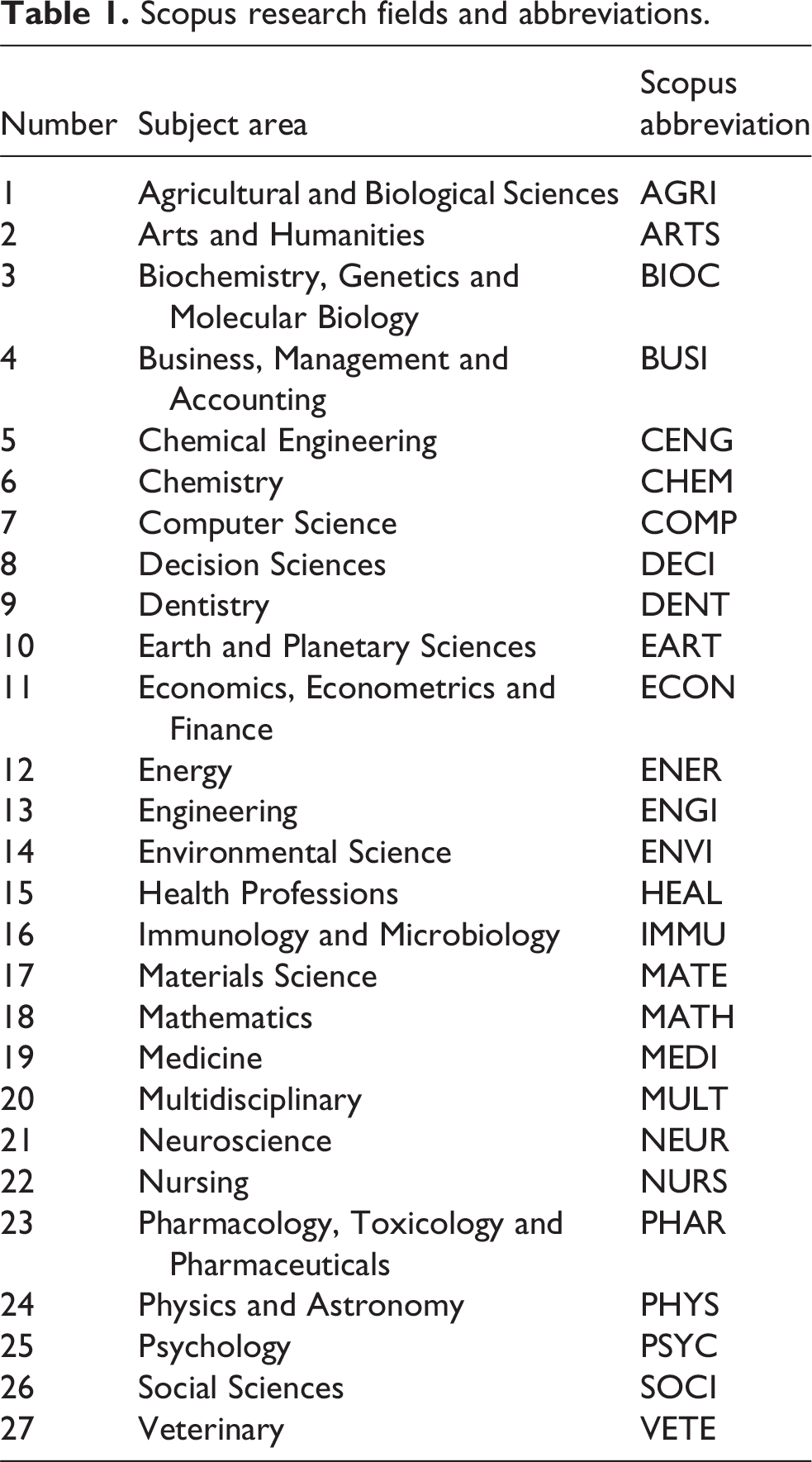
The data was analysed according to the 27 research fields (see Table 1) and in line with the study’s objectives. Descriptive statistics, percentages, and correlation and regression analyses were used to address the research objectives. Specifically, the percentage and proportional representation of single- and co-authored papers were assessed to examine the superior and preferred type of authorship in Kenya; descriptive statistics were used to gauge the number of authors per paper; and correlation and regression analyses were conducted to determine the relationship between, and influence of, research productivity and/or impact (research excellence) in Kenya.
Scopus research fields and abbreviations.
Limitations of the study
While this study provides valuable insights into the influence of research collaboration on productivity and impact in Kenya, it faces several limitations. First, the reliance on data solely from Elsevier’s SciVal tool may restrict the comprehensiveness and representativeness of the findings, potentially overlooking relevant publications not captured by this database. Second, the generalisability of the results beyond Kenya’s context may be limited, as research collaboration dynamics can vary across regions and disciplines. Additionally, there is a possibility of publication bias, wherein only the most visible and impactful collaborations are reflected in the data, neglecting less prominent yet potentially valuable collaborations. These limitations underscore the need for caution when interpreting the findings and highlight avenues for future research to explore a more diverse range of data sources, enhance generalisability and mitigate publication bias for a more comprehensive understanding of research collaboration’s impact on excellence.
Results
The findings are presented under two broad headings – namely, research collaboration and productivity in Kenya and research collaboration and impact in Kenya – in an attempt to assess the relationship between research collaboration and research excellence in the country.
Research collaboration and productivity in Kenya
Publication trends for single- and co-authored papers
The trends presented in Figure 2 relate to scholarly publications in Kenya from 1996 to March 2023. As the graph demonstrates, a close association exists between collaboration and research productivity, as witnessed in the publication trend pertaining to co-authored papers (i.e. ‘co-authored’ in Figure 2) vis-à-vis the national output (i.e. ‘total output’ in Figure 2). The number of co-authored papers followed an almost similar upward trend to the total national outputs. In contrast, single-authored papers exhibited a publication plateau or stagnant publication trend. These patterns can be illustrated using the values of R 2, where the value of the co-authored papers is R 2 = .7708 and single-authored papers is R 2 = .0501, compared to the national (total) output of R 2 = .7584.
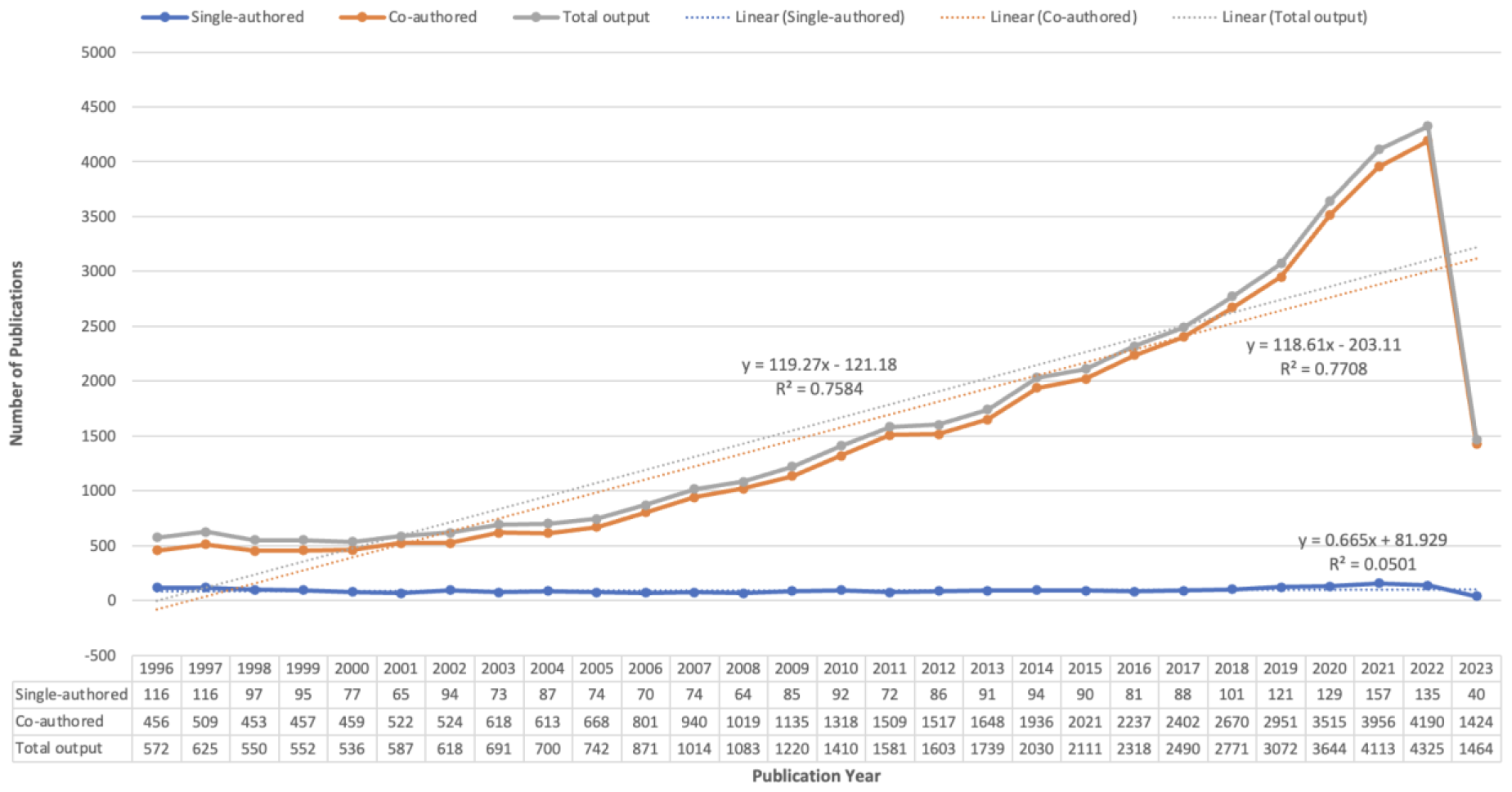
Trend of single- and co-authored papers vis-à-vis national scholarly outputs in Kenya.
Regarding the average annual growth rate, the country registered a publication percentage growth rate of 5.56% nationally, −0.70% for single-authored papers and 6.38% for co-authored papers. The number of single-authored papers grew from 116 in 1996 to 157 in 2021, accounting for a percentage growth of 35% in this period. Similarly, the growth in co-authored papers between the two publication years was 818%, while the national output grew by 656%. When the data in Figure 1 was subjected to regression analysis, where the national tally was the dependent variable while single- and co-authored papers were treated as independent variables, the results showed a stronger contribution in terms of co-authored papers, β = .986, r = .9999, p < .05, compared to single-authored papers, β = .022, r = .6332, p < .05.
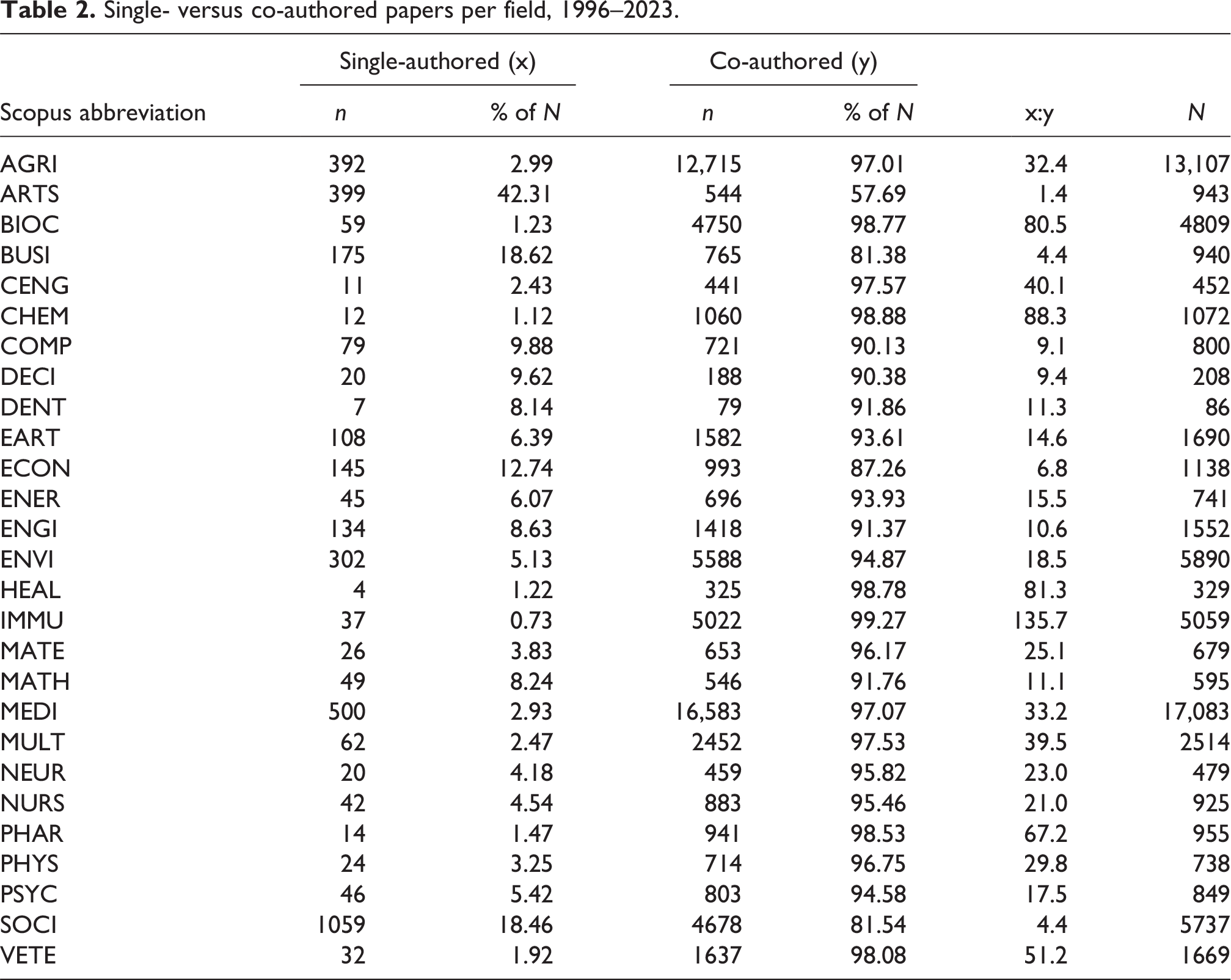
The dominance of, and/or preference for, co-authored papers over single-authored papers was evident in each field (see Table 2, where the former contributed over 80% of the number of papers published in each field between 1996 and 2023). The highest contribution was registered in IMMU (99.27%), followed by CHEM (98.88%), HEAL (98.78%), BIOC (98.77%), PHAR (98.58%) and VETE (98.08%). Cumulatively, the 42,468 co-authored papers in Kenya represented 94.31% of the national scholarly output; the remainder (i.e. 2564 or 5.69%) were single-authored papers. The lowest percentage of co-authored contributions to the national output was witnessed in ARTS, with 57.69%. The ARTS field posted the lowest representational ratio between single- and co-authored papers; for every single-authored paper, there were 1.4 co-authored papers in this field. The highest ratio was recorded in IMMU (1:136), implying a higher degree of collaboration than in the remaining fields, including ARTS. Other fields that registered high values included CHEM (1:88), HEAL (1:81) and BIOC (1:81). Regarding the national scholarly output, the ratio of single to multiple authorship was 1:17. The majority of the fields (17) surpassed this ratio, while 10 performed below the national representation of the two types of authorship. The regression analysis of the data (see Table 2), in which single- and co-authored papers were independent variables and the country’s total number of papers was the dependent variable, yielded the following Beta coefficients: co-authored papers, β = .968, p < .05, and single-authored papers, β = .057, p < .05.
Single- versus co-authored papers per field, 1996–2023.
Size of teams in collaborative research by field
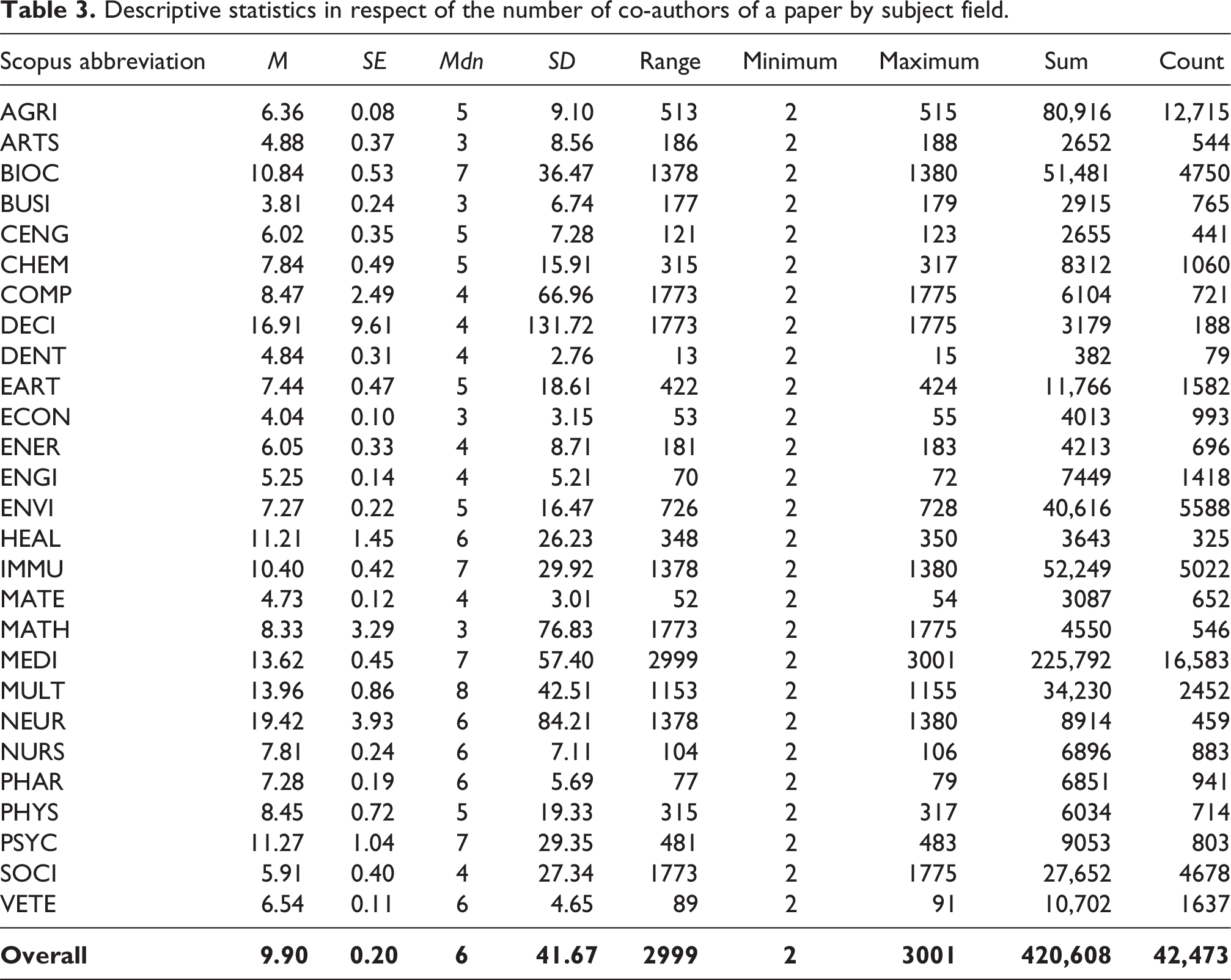
The second indicator used to assess the intensity of the collaboration in each field was the average number of authors per paper in co-authored papers (see Table 3), which reflects the size of the teams in collaborative research. Table 3 shows the co-authorship nuances that exist across the fields of research. The statistical mean in Table 3 indicates that the following eight research areas surpassed the overall national average number of authors in co-authored papers: NEUR (19), DECI (17), MULT (14), MEDI (14), PSYC (11), HEAL (11), BIOC (11) and IMMUN (10). Conversely, BIOC, IMMU, MECI and PSYC yielded a median value of 7, where the median illustrates the centrality of co-authorship distribution in the fields. MEDI registered the highest median of 8. Notably, none of the fields posted a median lower than 3 –a value recorded in ARTS, BUSI, ECON and MATH. Two interesting statistics in Table 3 that may illustrate how collaboration varies across fields, and how such variations may influence research excellence in the fields and the country in general, are the maximum number of authors contributing to a paper and the range (between the minimum (i.e. 2) and maximum values). Although MEDI did not register the highest mean score, the field posted the highest number of authors (3001) who collaborated to publish articles. One paper was co-authored by 1775 authors and was multidisciplinary, hence its appearance in COMP, DECI, MATH and SOCI.
Descriptive statistics in respect of the number of co-authors of a paper by subject field.
Collaboration and research impact in Kenya
In order to examine the association of research collaboration with research impact, this section focuses on assessing the (a) co-authorship of papers and the resultant citation and views impact across the fields and (b) the number of co-authored papers according to the different types of collaboration, as reflected in different research fields. Research impact, proxied through citations and views (among other measures), is one of the indicators of research excellence. In the first instance, this section presents the number of scholarly outputs according to the type of collaboration, as explained in the conceptual framework. The section concludes by presenting the citation and views impacts in each field in relation to single- and co-authored papers.
University–industry collaboration
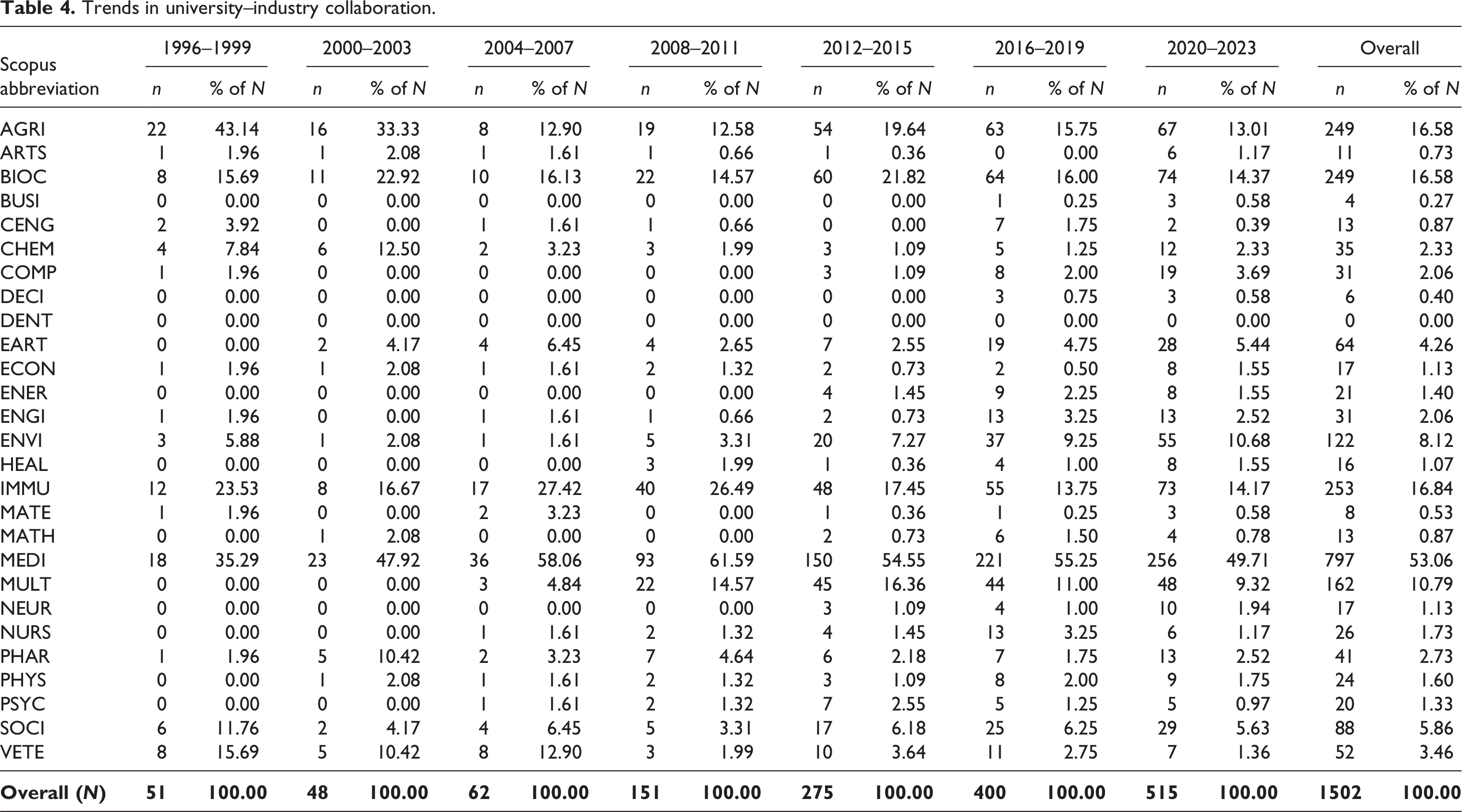
Table 4 shows the trends in the research conducted through academic–corporate (inter-sectoral) collaboration. The majority of the academic–corporate papers were in MEDI (53.06%), followed by IMMU (16.84%) and AGRI and BIOC, which yielded 249 papers, each accounting for 16.58% of the 1502 papers co-produced from 1996–2023. DENT yielded no papers in this category of collaboration, while the fewest number of academic–corporate papers were found in BUSI (4, 0.27%), DECI (6, 0.40%) and MATE (8, 0.53%), with less than 10 papers in total. The trend of co-authorship of papers shown in Table 4 indicates that the number of academic–corporate papers continued to increase over time, albeit slowly, across all fields. The most improved fields in terms of growth in academic–corporate papers, determined using the average annual growth rate, include ENVI (127.83%), MULT (124.12%), PHAR (113.02%) and ENGI (91.67%). However, an assessment of the consistency of research within the fields shows that many recorded zero publications at the beginning or mid-term. Nevertheless, all fields yielded co-authored papers in more recent years, as illustrated in Table 4.
Trends in university–industry collaboration.
Institutional, national and international collaboration in Kenya
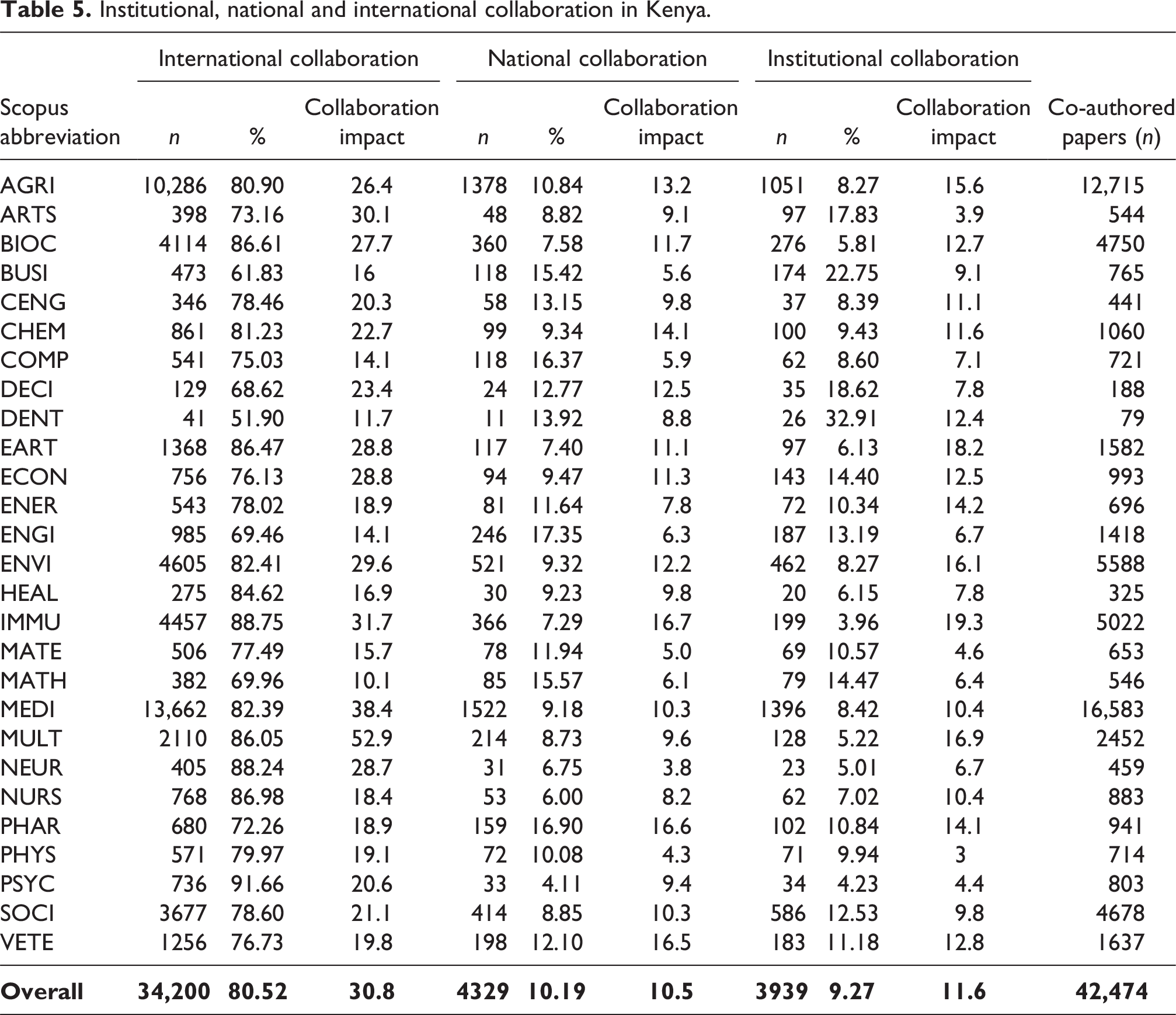
Table 5 reveals that international collaboration represented 80.52% of the 42,474 papers co-authored in Kenya between 1996 and 2023. National collaboration yielded 4329 papers (10.19%), while institutional collaboration stood at 9.27%. Generally, there was more international collaboration – the most preferred indicator when assessing research excellence – than the other two types of collaboration in all the research fields (see Table 5). The highest percentage contribution in international collaboration was registered in PSYC (91.66%), followed by IMMU (88.75%), NEUR (88.24%), NURS (86.98%), BIOC (86.61%), EART (86.47%) and MULT (86.05%). National and institutional collaborations made up less than half the number of international collaborations with regard to co-authored papers. Table 5 shows the collaboration impact associated with each type of collaboration. Collaboration impact ‘calculates the average citations per publication for publications with different types of geographical collaboration and indicates how beneficial these collaborations are with respect to citation impact’ (Elsevier, 2023). The international collaboration impact stood at 30.8, while the collaboration impacts for national and institutional collaborations were 10.5 and 11.6, respectively. This pattern – whereby international collaboration yielded more papers and higher collaboration impacts than national and institutional collaborations – was evident across all the research fields. Although the overall collaboration impact showed that institutional collaboration was more impactful than national collaboration, comparing the collaboration impact values in each field (according to the two types of collaboration) showed mixed impact patterns. Some fields yielded higher collaboration impact scores in national collaboration than institutional collaboration, while the reverse was true in others. The collaboration impact scores for national collaboration were higher than those for institutional collaboration in nine fields – namely, CHEM (14.1 versus 11.6), DECI (12.5 versus 7.8), HEAL (9.8 versus 7.8), MATE (5.0 versus 4.6), PHAR (16.6 versus 14.1), PHYS (4.3 versus 3.0), PSYC (9.4 versus 4.4), SOCI (10.3 versus 9.8) and VETE (16.5 versus 12.8) – while institutional collaboration yielded higher scores than national collaboration in 18 fields.
Institutional, national and international collaboration in Kenya.
Citation and views impact of single- and co-authored papers across fields
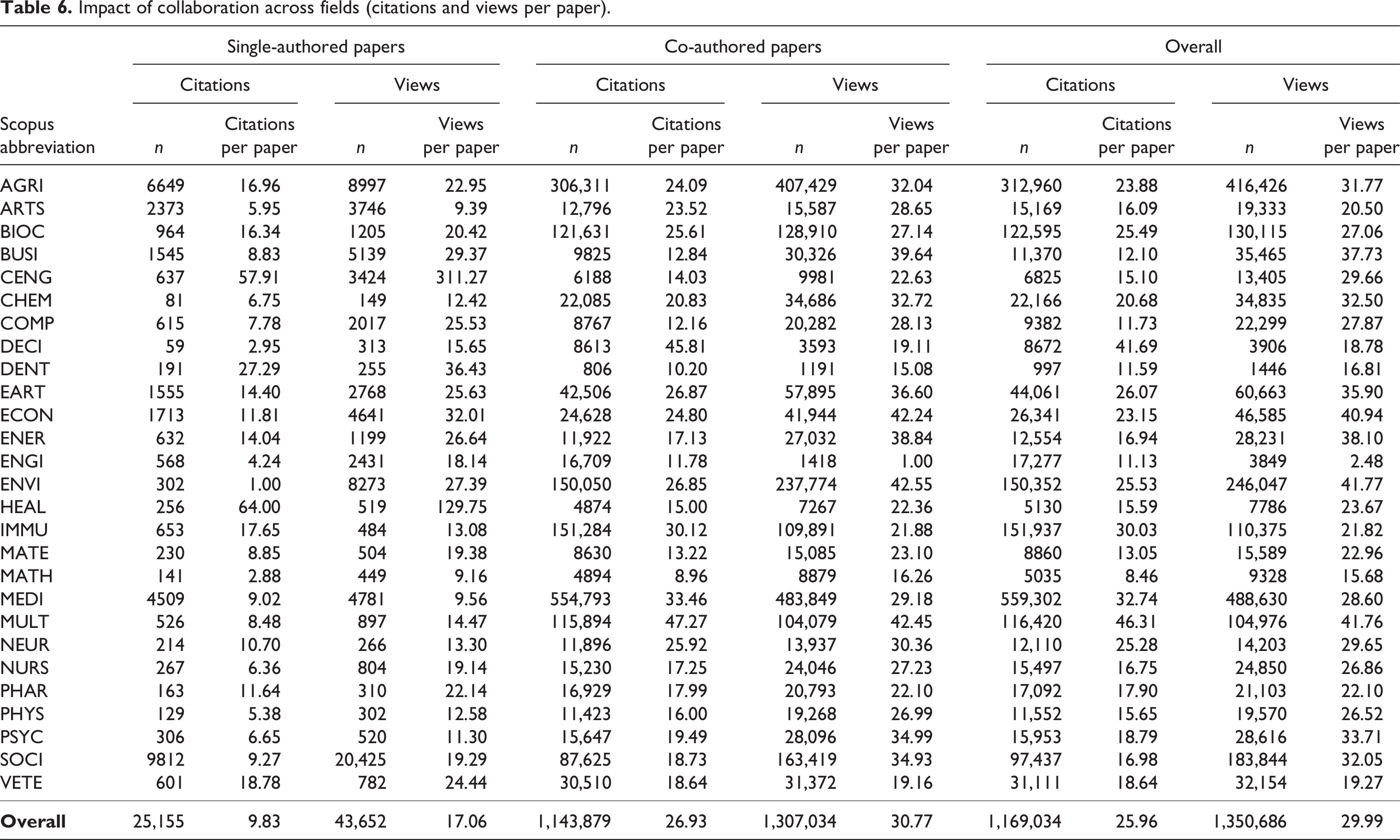
The last indicator considered in this section towards analysing the influence of research collaboration on research excellence involves assessing the average citation and views impact of single- and co-authored papers, and benchmarking the results against the overall influence of authorship on impact per field (see Table 6). In other words, an answer was sought to the following question: What type of authorship most influences research impact in each field and collectively, and how? Collectively, Kenya’s single-authored papers (n = 2564) generated a total of 25,155 citations and 43,652 views, yielding an average of 9.83 citations and 17.06 views per paper. With regard to co-authored papers (n = 42,468), they received 1,143,879 citations and 1,307,034 views, which accounted for an average of 26.93 citations and 30.77 views per paper. Both authorships (n = 45,032) yielded 1,169,034 citations and 1,350,686 views, which translated into an average of 25.96 citations and 29.99 views per paper. As Table 6 further reveals, co-authored papers yielded more citations per paper than single-authored papers in 23 of the 27 fields. The exceptions were CENG, DENT, HEAL and VETE. A regression analysis of the data, using the number of citations per paper, showed that co-authored papers, β = 0.946, p < .05, contributed more to the national citation impact than single-authored papers, β = 0.039, p < .05. The same pattern was witnessed in the case of views impact – co-authored papers, β = 0.933, p < .05, single-authored papers, β = 0.025, p < .05 – with both authorships yielding lower coefficients in views per paper than in citations per paper.
Impact of collaboration across fields (citations and views per paper).
Nature of collaboration and its influence in highly cited journals (top 10%)
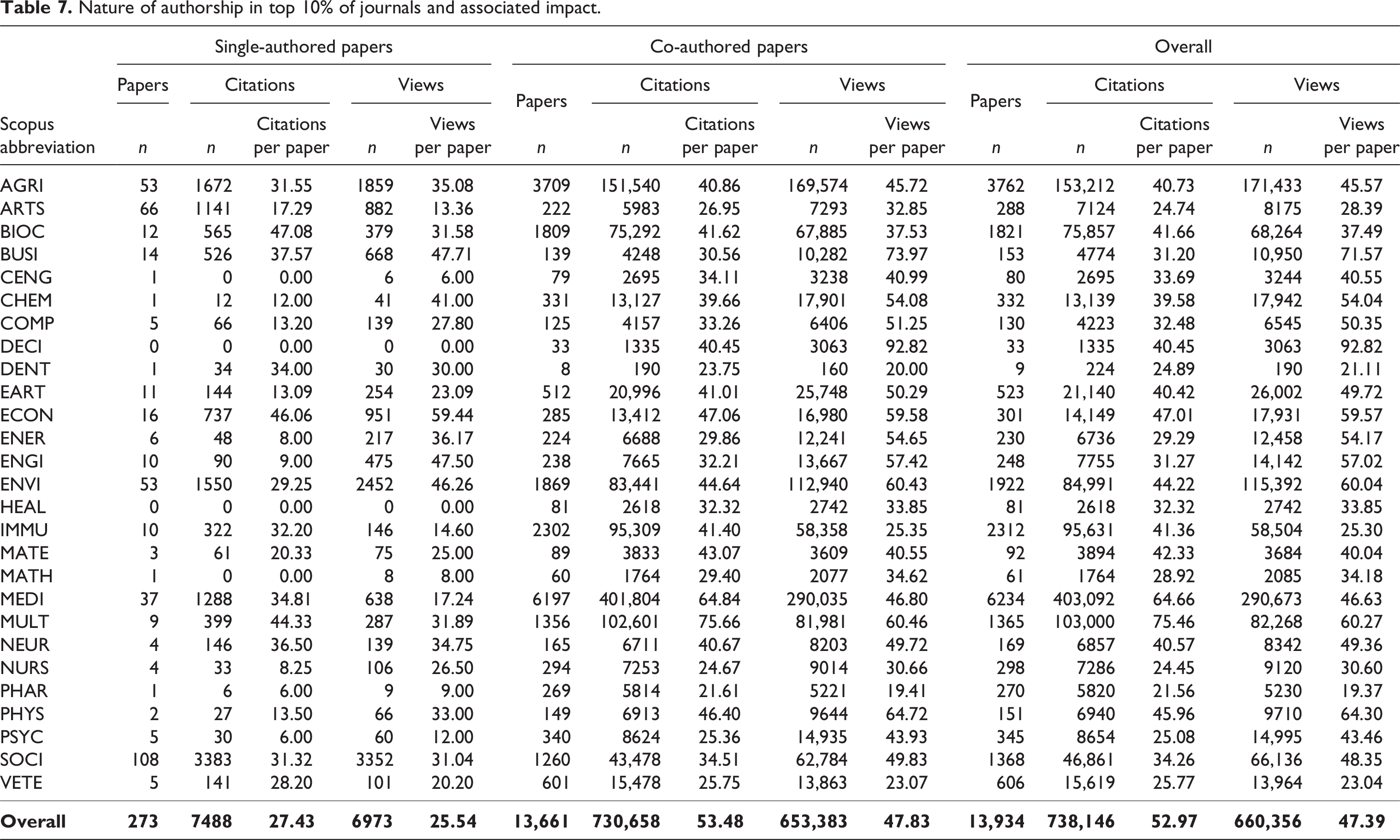
The number of papers published in highly cited journals is one of the indicators of research excellence, hence its use in this study to assess the influence of collaboration on research excellence. Of the 42,468 papers published in Kenya between 1996 and 2023, only 13,934 (32.81%) were published in highly cited journals; single-authored papers constituted 1.96%, while co-authored papers accounted for 98.04%. All fields exhibited similar scenarios, with the number of co-authored papers in highly cited journals nearing 100% in each field. In fact, co-authored papers in highly cited journals accounted for 90% and above in all but two fields – namely, ARTS (77.08%) and DENT (88.89%). The highest percentage of co-authored papers was 100.00% in DECI and HEAL, followed by CHEM (99.70%), PHAR (99.63%) and IMMU (99.57%). Table 7 further reveals that MEDI (6234), AGRI (3762), IMMUN (2312), ENVI (1922), BIOC (1821), SOCI (1368) and MULT (1265) posted the highest number of papers in highly cited journals. Regarding impact, the papers had an impressive average of citations per paper (see Table 7) compared to all the papers combined, irrespective of their performance in citations and views (see Table 6). Kenya’s 273 single-authored papers in highly cited journals yielded 27.43 citations and 25.54 views per paper, while co-authored papers produced 53.68 citations and 47.83 views per paper. Although the co-authored papers in highly cited journals were generally more impactful than the single-authored papers, there were some exceptions, as reflected in Table 7, whereby single-authored papers posted higher average impact scores than co-authored papers – notably, in BIOC, BUSI, DENT and VETE.
Nature of authorship in top 10% of journals and associated impact.
Nature of collaboration and its influence in highly cited papers (top 10%)
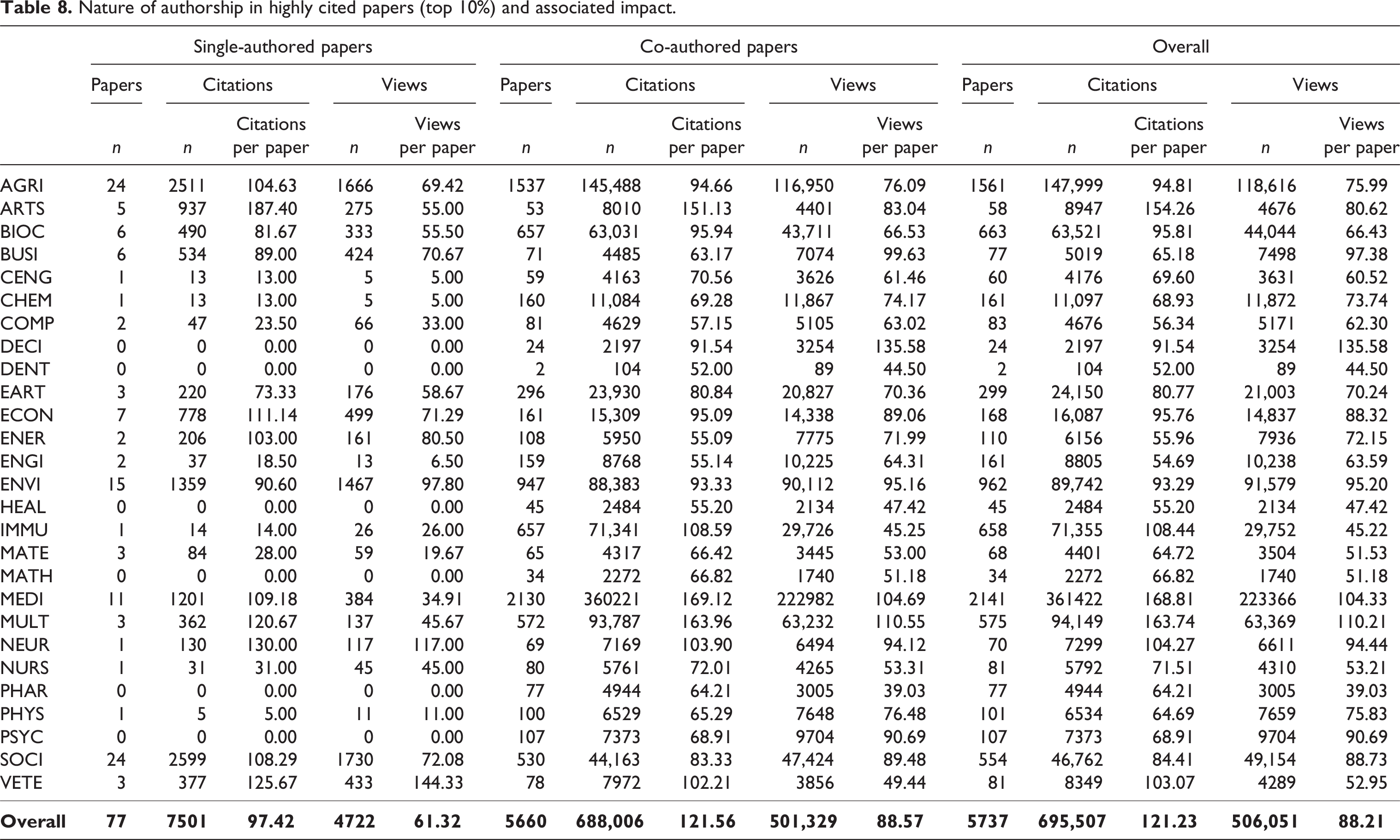
Closely linked to the highly cited journals are the highly cited papers, which similarly were used as a dependent variable for research excellence. Table 8 shows the number of highly cited papers, the number of citations, the average citations per paper, the number of views and the average views per paper. Whereas the top 10% of journals that published Kenya’s research totalled 13,934, the actual number of highly cited papers was only 5737, accounting for 13.51% of the total scholarly output in Kenya (42,468). The single-authored highly cited papers stood at 77 (1.34% of 5737), while co-authored papers represented 98.66%. This pattern was replicated in every field, with co-authored papers accounting for over 95% of the highly cited papers. All of the papers in six fields (DECI, DENT, HEAL, MATH, PHAR and PSYC) were co-authored. Regarding citations, the 77 single- and 5660 co-authored highly cited papers generated 7501 and 688,006 citations, resulting in 97.42 and 61.32 citations per paper, respectively. As for views, the single- and co-authored papers obtained 4722 and 501,329 views, thereby generating 61.32 and 88.57 views per paper, respectively. Table 8 further shows that several fields surpassed the national citation and views impact. In respect of citation impact, nine fields performed above the national average in single-authored papers, while only three did so in co-authored papers. By contrast, the national views per paper (61.32 for single authorship and 88.57 for co-authorship) were lower than the averages recorded in seven and nine fields in single- and co-authorships, respectively. There was a stronger correlation between the co-authored papers than between the single-authored papers and the national tally in each field. The average citations produced the following correlation coefficients: single-authored papers: citations, r = 0.6857; views, r = 0.2253; co-authored papers: citations, r = 0.9996; views, r = 0.9991. The regression analysis of the average citations and views per paper yielded the following Beta coefficients: single-authorship: citations, β = 0.014, p < .05; views, β = 0.011, p < .05; co-authorship: citations, β = 0.991, p < .05; views, β = 0.986, p < .05.
Nature of authorship in highly cited papers (top 10%) and associated impact.
Discussion
Research into the influence of collaboration on publishing (or research) productivity has attracted interest from many scholars, whose studies have reported mixed results. For example, Sooho and Bozeman (2005) acknowledge that co-authorship significantly correlates with publishing productivity. Similar findings have been reported in the current study, which is not unique, as several other researchers have noted the immense contribution of co-authorship to publication productivity (e.g. Abramo et al., 2009; Lee and Bozeman, 2005). It is worth noting, however, that Sooho and Bozeman’s (2005) conclusions are based on results obtained from an analysis of data using a whole (normal) count technique, instead of fractional counting. Abramo et al. (2017) associate the growth in co-authored publications (and, as such, research collaboration) with targeted policies on the part of individual universities and national and international research systems, and other determinants such as funding and research equipment. The current study, using a whole count technique, found a strong and significant relationship between co-authorship and publishing productivity (see Figure 1 and Table 2), which implies that research collaboration influences research productivity, which is one of the pillars of research excellence (see Vertesy and Tarantola, 2012). The research collaboration trend in Kenya not only significantly correlates with the national research trend, but also runs across all fields of research, where co-authored papers dominate single-authored papers.
Investigating the nature of authorship across fields, or in different fields, to assess publishing productivity is common in scientometric studies (see Barrios et al., 2019; Coccia, 2017; Didegah and Thelwall, 2013; Frame and Carpenter, 1979; Kyvik and Reymert, 2017; Parish et al., 2018). Coccia (2017) acknowledges the challenge of accurately measuring changes in collaboration patterns across scientific fields, but also notes an acceleration of co-authorship of papers in numerous fields. In their study, Abramo et al. (2009), who sought to correlate research collaboration and productivity across fields, conclude that collaboration intensity was not uniform, but depended on the scientific fields being investigated. Coccia (2017) further notes accelerating international research collaboration in the medical sciences, social sciences and certain applied sciences (e.g. geosciences, agricultural sciences and psychology). These fields have experienced a significant increase in international co-authored articles compared to collaborations within domestic institutions alone. By contrast, theoretical sciences such as physics and mathematics exhibit lower relative growth in international collaborations. Indeed, in the current study, the percentage of co-authored papers was found to differ from one field to another. For example, whereas the Arts and Humanities field produced 57.69% of its papers through co-authorship, the highest co-authorship of papers (99.27%) was recorded in the field of Immunology and Microbiology. Further, the ratio of single- to co-authored papers varied across fields, as shown in Table 2, implying that research collaboration – despite leading to scientific productivity – has different results depending on the investigated field. The degree of collaboration in research fields seems also to differ across countries. For example, Sooryamoorthy (2009), in his study on research collaboration in South Africa, notes that although the highest number of co-authored papers was in medicine, surgery, oncology, health and food (i.e. 2951) between 2000 and 2005, the proportion of co-authored papers as a percentage of the total field output was highest in chemistry (93.5%). Parish et al. (2018) note a positive correlation between collaboration and research productivity in physics, medicine, infectious diseases and brain sciences. In Kenya, the number of co-authored papers was highest in Medicine (16,583), Agricultural and Biological Sciences (12,715) and Environmental Science (5588).
The number of authors in co-authored papers in each field demonstrates a slightly different picture from the analysis of the nature of authorship per field. While the fields that reported a high proportion of co-authored papers were largely the same ones that reported a high number of authors per paper, the latter’s ranking differed from the former’s (see Tables 2 and 3). The variations associated with the number of authors per paper, across fields, are congruent with the findings of other studies, such as those of Newman (2001) and Sooryamoorthy (2009).
The findings on the influence of research collaboration on research impact, which is another pillar of research excellence (see Tables 5–8), reveal that co-authorship of publications (research collaboration) not only significantly correlates with publication impact but also makes a superior contribution in terms of citations and views in highly cited papers and journals over single authorship. Single-authored papers published in highly cited journals in Kenya yielded a moderate number of citations (27.43 per paper) and views (25.54 per paper). In contrast, co-authored papers published in highly cited journals had a higher impact, generating more citations (53.68 per paper) and views (47.83 per paper). This indicates that co-authored papers generally have higher visibility and influence within the academic community. Furthermore, the regression analysis results showed that both single- and co-authored papers had a statistically significant impact on citations and views, and, as such, the impact of co-authored papers was significantly higher than that of single-authored papers. The regression coefficients (β) indicated that co-authored papers had a much stronger effect on citations (β = 0.991) and views (β = 0.986) than single-authored papers (citations: β = 0.014; views: β = 0.011). This highlights the importance and positive influence of research collaboration on Kenya’s research impact and global standing. Variations were noted in terms of the influence that research collaboration had on research impact across fields. Tijssen and Kraemer-Mbula associate these patterns of citation impact with the publication preferences of authors in different fields: Where researchers from the ‘hard’ sciences are more likely to see certain citation impact metrics as useful, those who are active in the ‘soft sciences’ generally see such metrics as problematic. This is because international information sources (such as the WoS [Web of Science] database and Scopus database) and related bibliometric indicators (e.g. the H-index) tend to serve those who publish in English-language scholarly journals and scientific conference proceedings. Many researchers in the social sciences and humanities still publish predominantly in local language journals and/or books. (Tijssen and Kraemer-Mbula, 2018: 10)
Other indicators that were used to assess the influence of research collaboration on research excellence were the types of collaboration (academic–industry versus academic–academic and institutional, national or international) in relation to citation and/or views impact. Research collaboration between universities and industry is becoming a central and critical indicator of research excellence (Vertesy and Tarantola, 2012). It provides a means to assess science and technology co-production and impact beyond academia, thereby enhancing the research excellence status of an institution or country (Freitas et al., 2013; Kuys et al., 2021; Zhao and Cui, 2022). The current study’s findings revealed a steady increase in the number of co-authored university–industry (academic–corporate) publications, thereby signalling the growth of research collaboration between the two sectors. There were variations across the research fields, with the lowest number of co-authored papers reported in the fields of Dentistry, Computer Science, Business, Management and Accounting, and Material Science, which recorded fewer than 10 papers each between 1996 and 2023. The highest number of university–industry co-authored papers was recorded in the medical and health sciences fields of Medicine, Immunology and Microbiology, Agricultural and Biological Sciences, and Biochemistry, Genetics and Molecular Biology. It is illustrative that the aforementioned are among the most heavily funded fields in Africa (Kozma et al., 2018). Kozma et al. (2018: 36), in their study into research funding in Africa, noted that the leading fields with regard to papers that acknowledged funding included ‘physics, particles & fields’, ‘ecology’, ‘astronomy & astrophysics’, ‘genetics & heredity’, ‘immunology’, ‘infectious diseases’ and ‘virology’. The influence of international collaboration on research impact cannot be overemphasised (see Leydesdorff et al., 2019; Nguyen et al., 2017; Van Raan, 1998; Wang et al., 2015). Like most developing countries, Kenya collaborates closely with international partners, with few domestic and/or institutional collaborations. Kwiek (2020: 2629) vividly captures the factors that have resulted in the dominance of international collaboration over other types of research collaboration: ‘scientists collaborate internationally when it enhances their academic prestige, scientific recognition, and access to research funding, as indicated by the credibility cycle, prestige maximization, and global science models’. This sentiment is echoed by Sooryamoorthy (2009) in South Africa, and by Obamba et al. (2013) and Muriithi et al. (2018) in Kenya. Despite its importance, international collaboration presents challenges in Africa and, as such, the Association of African Universities (2023) has developed a Charter for Transformative Research Collaborations in Africa to, among other things, rebalance the global science and research ecosystem in and/or for the continent.
Conclusion
This study has highlighted the trends and patterns of research collaboration in Kenya, finding authors to be highly collaborative, with over 94.31% of publications being co-authored and international collaboration producing the bulk of papers, while domestic and institutional collaboration accounted for approximately 10% each. The average percentage of co-authored papers stood at approximately 80% per research field. In line with the observations made by Hicks et al. (2015), there were, however, considerable variations across the 27 fields in terms of research collaboration and its influence on impact, reinforcing Hicks et al.’s advice for research excellence stakeholders (students, teachers, evaluators, etc.) to take into consideration the field-specific variations in not only research productivity but also research impact – two critical pillars of research excellence. With regard to the influence of research collaboration on research impact in Kenya, the correlation and regression coefficients between co-authored papers and citations and views were very high, signalling a strong relationship as well as the significant contribution research collaboration makes to Kenya’s research excellence.
To harness research excellence in Kenya, several strategies should be implemented or enhanced by different institutions and organisations, as well as the country at large, including increased funding and facilitation of international research collaborations. National research funding agencies should increase their funding for research and identify priority areas. In addition, initiatives to improve research infrastructure and technology platforms should be established to support researchers within the country, and between Kenya and other countries. International research collaborations, which have improved Kenya’s research excellence standing in the world, should be facilitated by several mechanisms, including developing international research networks and partnerships, joint research calls, and the training of researchers to develop international partnerships. However, international collaborations should be governed by clear guidelines and policies that ensure balanced partnerships, as encapsulated in the African Charter for Transformative Research Collaborations (Association of African Universities, 2023).
Footnotes
Declaration of conflicting interests
The author declared no potential conflicts of interest with respect to the research, authorship and/or publication of this article.
Funding
The author received no financial support for the research, authorship and/or publication of this article.
