




Abstract
Effective collaboration between library and information science academics and practitioners is vital for the professional growth and success of individuals working in the field. It facilitates the exchange of knowledge, skills and innovative practices, which, in turn, enhance the quality of library services. It allows for the integration of theoretical knowledge with practical experience, resulting in more effective and efficient library operations. However, the lack of studies on fostering collaboration between library and information science academics and practitioners in Bangladesh presents a notable research gap. Addressing this gap is critical as it directly impacts the career success of library and information science professionals and the development of library services, particularly in a rapidly developing nation like Bangladesh. This study utilized a qualitative approach to gather data through semi-structured, unstructured, and focus group interviews with renowned Bangladeshi academics and experienced library practitioners. The research has broader implications for the global library and information science community, adding a valuable perspective from a developing nation. The results highlight the significance of mindset and attitude in influencing collaborative efforts, urging academics and practitioners to adopt an open-minded approach without ego-related conflicts. The study identifies the strengths, weaknesses, barriers and opportunities in relation to effective collaboration between library and information science academicians and practitioners. Additionally, the research proposes viable solutions and outlines the potential for academic and professional success through collaboration.
Introduction
There are numerous studies on collaboration between library and information science (LIS) practitioners and academics (e.g. Hazeri and Martin, 2009; Karasmanis and Murphy, 2014; Martzoukou, 2021; Oxnam, 2019; Pham and Tanner, 2015; Pham and Williamson, 2020; Pritchard, 2019). Studies such as those by Aslam (2022), Kuhlthau (1993), Martzoukou (2021), Montiel-Overall (2005) and Pham and Williamson (2020) emphasise the importance of collaboration between LIS education academics and library professionals. There is a growing need for collaboration between LIS academics and professionals. While it is generally agreed that collaboration between academics and library employees is essential, collaboration is a complex concept, reflecting a high level of human relationships, and there are several possible obstacles to creating a successful collaborative partnership (Pham and Tanner, 2014). According to Austin and Baldwin (1992): ‘many believe collaboration increases productivity, maintains motivation, and stimulates creativity and risk-taking. It can maximise the use of limited resources and enhance the quality of teaching and research’.
The development of the LIS profession primarily depends on collaboration, where the professional and academic activities create a bridge. Research such as Sacchanand’s (2012) considers collaboration to be essential due to changes in the higher education environment, a paradigm shifts in LIS, and the changing role of teaching faculty and librarians. Similarly, Lillard and Wales (2003) recommend that academic librarians and LIS educators work together to seek creative approaches to strengthening LIS education. Al Harrasi and Hassan Jabur (2014) found that collaboration brought about economic value, resource sharing, training and other benefits. In their day-to-day activities, library professionals face several challenges to meeting user demands due to rapid changes and the implications of information technology in libraries. A recent study by Aslam (2022) found that librarians face challenges in keeping abreast of evolving competencies and embracing innovative systems and approaches due to the swift pace of change in diversity. The study suggests that effectively managing change involves transitioning from conventional to modern approaches and fostering collaboration across all levels.
There is a lack of notable studies focused on LIS collaboration in the Asian subcontinent, specifically Bangladesh, which could shed light on the factors influencing collaboration between LIS academics and practitioners. This study aims to clarify the factors that affect collaboration between LIS academics and practitioners, including current collaborative relationships, challenges, formal and informal LIS collaboration history, approaches to collaborative partnerships and the potential areas of collaboration in the LIS sector. The researchers identified that a qualitative approach was a suitable method for the study to achieve the appropriate results and findings, where focus group discussions and interactions clarified the topic. Data was collected by conducting several personal interviews and focus group discussion sessions. The researchers employed thematic analysis to explore the research concerns among expert participants using a wide range of evidence-based input, thereby reaching their conclusions and recommending further activities.
In this article, the researchers demonstrate that collaboration between LIS academic and professional is essential. The findings originate from practitioners and academics, which will help prompt greater collaboration between these two groups. The conclusion focuses on some implications of the findings for LIS academics and professionals undertaking collaborative partnerships to sustain LIS education in Bangladesh. The objectives of this study are to: Examine the factors that affect collaboration between LIS academics and practitioners in Bangladesh; Identify the current collaboration practices between LIS academics and practitioners and detect potential areas of collaboration among LIS stakeholders; Provide evidence-based recommendations for potential areas of collaboration in the LIS sector.
Literature review
Due to the rapid changes in information technology and paradigm shift in library systems and services, collaboration and its benefits focus on several aspects. Generally, collaboration constitutes more than one person’s involvement and interpersonal relationships to achieve mutual goals and success. According to Pham et al. (2014: 18): “collaboration is a contemporary phenomenon that has emerged as a long-term solution for sustaining the development of individuals and organisations”. This mode of human relationship has been constructed to aggregate the knowledge, power and resources of people across organisational boundaries, and resolve issues that cannot be dealt with individually. In their study, Malik and Ameen state: collaboration and partnership is an international trend, flourishing under globalisation’s slogan. Scarcity of resources, expertise and facilities, and a paradigm shift in LIS due to rapid emergence of technological devices has forced LIS programs to actively seek collaborative opportunities with various stakeholders including department faculty, practitioners and employers. (Malik and Ameen, 2018: 566)
The evidence has proved that collaboration is considered the highest level of a relationship among stakeholders, overcoming all sorts of barriers between individuals, groups and organisations. Why is LIS collaboration essential in the current world? Each discipline has a unique perspective on the benefits of collaboration, with its distinct understanding of the positive outcomes that can be achieved through collaborative efforts. According to Pham and Tanner: In education, it is enhanced teaching, learning or research; in knowledge management, it involves strategic benefit such as value creation through innovation/creation of new knowledge or exploitation of existing knowledge; and in library and information science, development of effective information literacy and research skills and information resources/services. (Pham and Tanner, 2014: 22) Collaboration is essential to the advancement of Library and Information Science (LIS) as a science and a profession. It helps strengthen the ability to achieve the mutual goal of the LIS schools and academic libraries, and the capacity of faculty and librarians to increase the quality of teaching and learning, research, library and information services, as well as cost advantages in sharing human resources. (Sacchanand, 2012)
Foo et al. (2006) list the possible benefits of collaboration for education, training and research, and divide them into four categories: benefits for students (e.g. student visits, exchange programmes, internships); for faculty (e.g. PhD scholarships, fellowships, faculty on sabbatical); for institutions (e.g. joint programmes, visiting professors to teach a new subject not previously offered); and for the academic community (the propagation of new ideas and research results). Al Harrasi and Hassan Jabur’s (2014) study mentions that collaboration brings economic value, resource sharing, training and other benefits. In their day-to-day activities, librarians face several challenges in meeting users’ needs. Due to the rapid changes in and implications of information technology on libraries, diversification has been necessitated and extended. Collaboration has also been identified as one of the factors that contribute to improved research skills (Kuhlthau, 1993).
Research is a pivotal factor in addressing many problems. However, there is limited research available on librarians’ activities in collaboration, and many of them may not be aware of it. Various terms are synonymous with ‘research collaboration’, including co-authorship, research partnership, research networking, joint research and participatory research (Livina et al., 2017). Research such as Ocholla’s (2008) suggests that opportunities for collaboration exist in developing partnerships with industry/employers in curriculum development, teaching, research, publication and experiential learning. This is another critical issue to work on together and, without the cooperation and collaboration of practitioners, it will not work effectively.
Many researchers have identified various barriers to collaboration, such as time constraints, lack of money and lack of energy (i.e. human resources). Information technology infrastructure, willingness, government policies and differences in cultures and values have been the most discussed factors that impede successful collaboration. Al Suqri (2010), Foo et al. (2006), Ocholla (2008) and Sacchanand (2012) have identified some significant administrative barriers, including a lack of formal policy at the university level, incompatible organisational structures, complicated and bureaucratic procedures, inter-institutional communication and time-consuming processes. They further discuss some essential administrative practices that have created barriers to successful collaboration, such as the lack of a need to collaborate, motivation, encouragement and self-esteem, and the absence of real commitment by one or more partners. Ocholla (2008) categorises such barriers in three broader groups – namely, time and cost, geographical and psychological factors. Haddow and Klobas (2004: 30) analysed LIS literature and identified a total of 11 gaps between research and practice: a knowledge gap, a cultural gap, a motivation gap, a relevance gap, an immediacy gap, a publication gap, a reading gap, a terminology gap, an activity gap, an education gap and a temporal gap.
Collaboration is not a magical thing. A number of variables make it successful – such attributes as friendliness, geniality, collegiality, interchange, respect, a propensity to share (a mutual vision, thinking, problem-solving, the creation of integrated lessons), trust, tractability and proper communication. Effective collaboration fundamentally requires formal commitment, dedication and strenuous efforts among the participating partners. Ocholla (2008) believes that the collaboration process involves at least three stages: initiation, implementation/execution and evaluation. Sacchanand (2012) proposes the ‘3PC’ strategies (policy, people, process and communication, commitment, credibility) for building successful collaboration between LIS educators and practitioners. Johnson and Johnson (2009) present a detailed description of the success factors, including the potential for collaboration, partners’ capacity, motivation and a sense of shared purpose, political realities, a conducive environment with resources and incentives, trust, mutual respect and a shared culture.
Collaboration has no boundaries; it can be local, national, regional or international. It can be one on one, between groups, or between an individual and a group within an institution. Johnson and Johnson (2009) present a simple taxonomy for local, regional or international collaboration. They further explain that local collaboration exists within national boundaries, while regional collaboration and international collaboration exist beyond national boundaries in a particular region or across the globe. There have been several studies on LIS education and collaboration. For example, Abdullahi and Kajberg (2004) and Virkus (2008) identify the focus of LIS education in Europe as resource-sharing, collaboration, and the formulation of international standards for equivalence and reciprocity of qualifications for student mobility and employment. Virkus (2008) discusses the expansion and intensification of collaborative initiatives in Europe during recent years.
Partridge et al. (2011) identify collaboration and partnerships among various Australian LIS education stakeholders as critical drivers for academic programmes for a sustainable future. A study to help align future research projects and activities in the Australian LIS profession, jointly conducted by the Australian Library and Information Association and Charles Sturt University, identified the gaps in LIS knowledge and the need for further development of the LIS research infrastructure in Australia (Pham and Tanner, 2015). On the other hand, using Giddens’ structuration theory, Pham and Williamson’s (2020) study examines the constraining and enabling factors in collaboration between library staff and academics in contrasting countries – Australia and Vietnam. This study reveals that structural factors, such as those related to governance and resources, played a dominant role. At times, agency, particularly in trust-building and personal relationships, was also evident in effective collaboration.
In determining the extent of collaboration in Africa, Ocholla (2008) found hardly any research on the topic. He states that collaboration in the region is largely informal. Abioye’s (2014) study of two leading schools in Nigeria and Ghana also reveals informal collaboration among faculty members. In terms of collaboration in Asia, Foo et al. (2006) identify and discuss various initiatives that have offered potential collaboration and cooperation among LIS educators, particularly in the Asia-Pacific region. These include hosting and participating in workshops, symposiums and conferences; implementing a portal for education; developing a repository of learning objects and resources; assuring quality through accreditation; and promoting and sustaining research and scholarship.
An analysis of two decades of LIS articles from Bangladesh by Khan et al. (1998), published in the Malaysian Journal of Library and Information Science, reveals a dynamic shift in research collaboration trends. Approximately 300 articles were examined dating from a span of 22 years, showcasing the evolution of contributions from both practitioners and academics. Initially, practitioners dominated the landscape, actively participating in research activities. However, a noteworthy turnaround occurred over time, with practitioners increasingly engaging in scholarly endeavours, aligning their contributions with the academic community. This shift suggests a growing recognition among practitioners of the importance of research in advancing the field and contributing to the knowledge base.
The current literature appears to require a comprehensive and systematic study of collaboration in LIS education and practice focusing on different regions and levels (local, national, regional and international). While the literature highlights the importance and benefits of collaboration in LIS, it also acknowledges the existence of barriers and challenges. This study argues that there is limited study in this area in Bangladesh.
Research methodology
Building on the identified gaps in the current Library and Information Science (LIS) literature on collaboration in Bangladesh, this article's subsequent section discusses the research methodology employed to address the central research question. The study aims to provide a comprehensive understanding of the effective implementation of collaboration in LIS education and practice. Therefore, it addresses the following main research question: How can collaboration between LIS academics and library professionals be optimally enhanced in LIS education and practice in Bangladesh? This research question addresses the need to explore and analyse the various dimensions of collaboration in LIS, including formal and informal partnerships and the specific contexts of different regions. It also invites the investigation of strategies for overcoming barriers and maximising the benefits of collaboration in the field of LIS. This study seeks to remedy these problems by applying different research methods and demonstrating empirical knowledge. It focuses on several questions, including the collaboration between LIS academics and practitioners in Bangladesh and how both groups can improve their collaborative partnerships to achieve better LIS teaching and research, generate qualified professionals and add value to the LIS sector.
This is an exploratory study among LIS academics, researchers and professionals in Bangladesh. It uses qualitative methods within a multiple data collection paradigm to explore the research questions. A qualitative approach was deemed suitable for this study since the research aim is to explore and interpret textual accounts of the complex, multi-faceted interaction and collaboration between Library and Information Science (LIS) professionals and academics. The selection of the methodology was based on a case study paradigm. This research study is based on the contemporary phenomenon of collaboration in the LIS sector in Bangladesh.
According to Gorman et al. (2005), qualitative research methods and data analysis procedures are useful to libraries and library activities in many ways, offering flexibility and variability in the data analysis, facilitating the use of data triangulation, fulfilling library service imperatives, and fitting the social nature of libraries. More importantly, qualitative methods help information professionals to meet service imperatives better than quantitative methods (Gorman et al., 2005). Qualitative research methods, such as focus groups, are particularly effective in uncovering detailed and contextualized insights, allowing researchers to engage in face-to-face interactions with community members and uncover the most effective solutions.
Data collection
Focus group discussions
In employing the focus-group-interview method, this study aimed to harness the collective wisdom and diverse perspectives of the participants in order to gain a comprehensive understanding of the collaborative landscape within the LIS field in Bangladesh. This method was chosen for its ability to facilitate dynamic interactions, allowing participants to build on each other’s insights and generate new perspectives (Krueger, 2014). The structured yet open-ended discussions encouraged the participants to express their views freely on various topics, from challenges to potential solutions. This method uncovered shared norms, cultural beliefs and group dynamics, which may not have emerged as vividly through individual interviews (Kitzinger, 1995; Morgan and Spanish, 1984).
Focus group discussions are a crucial qualitative research method for gathering insights and perspectives from participants on a particular topic of interest (Krueger, 2014). In this method, a trained moderator facilitates a structured yet open-ended discussion among the participants, encouraging them to share their experiences, opinions and viewpoints (Morgan, 1996). Focus group discussions are particularly effective for exploring complex social phenomena, as they allow for the dynamic interaction and exchange of ideas among the participants, often yielding rich and diverse data (Morgan and Spanish, 1984). Furthermore, focus group discussions can clarify collective experiences and offer deeper insights into the participants’ perceptions and attitudes through group interactions, while providing a platform to validate or challenge viewpoints (Krueger, 2014). This collective sense-making process enhances the depth and nuance of the qualitative data collected.
Population and sample size
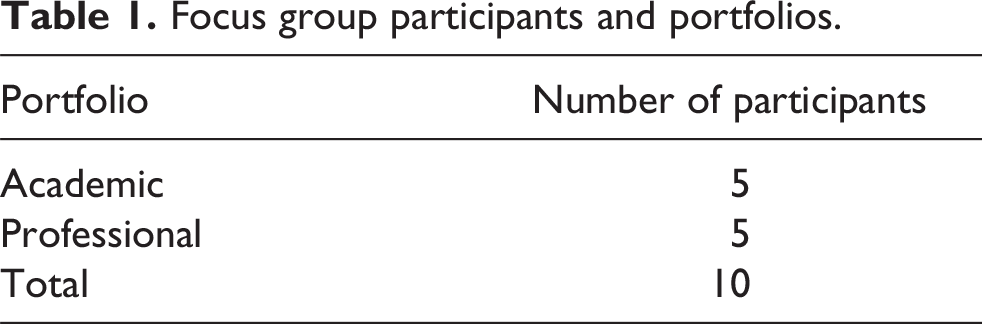
The participants for the focus group discussions were chosen using purposive selection, a method recommended for identifying individuals who can best provide valuable insights into a study’s research objectives (Yin, 2015). A sample size estimation led to the identification of 10 potential participants (see Table 1).
Focus group participants and portfolios.
Participant demographics
The selected participants were experienced LIS professionals and academics within Bangladesh, with an average of 22 years of experience. The sample comprised five LIS academics and five practitioners affiliated with renowned organisations in the country (see Table 1).
Invitation process
Invitations were extended to the selected participants via email, providing a comprehensive overview of the study’s objectives and the role of focus group discussions in the data collection. The email also sought consent for participation. On receiving consent, the participants were provided with sample questions to facilitate their preparation for the focus group interview sessions. These questions served as a guide to ensure focused and meaningful discussions.
Personal interviews
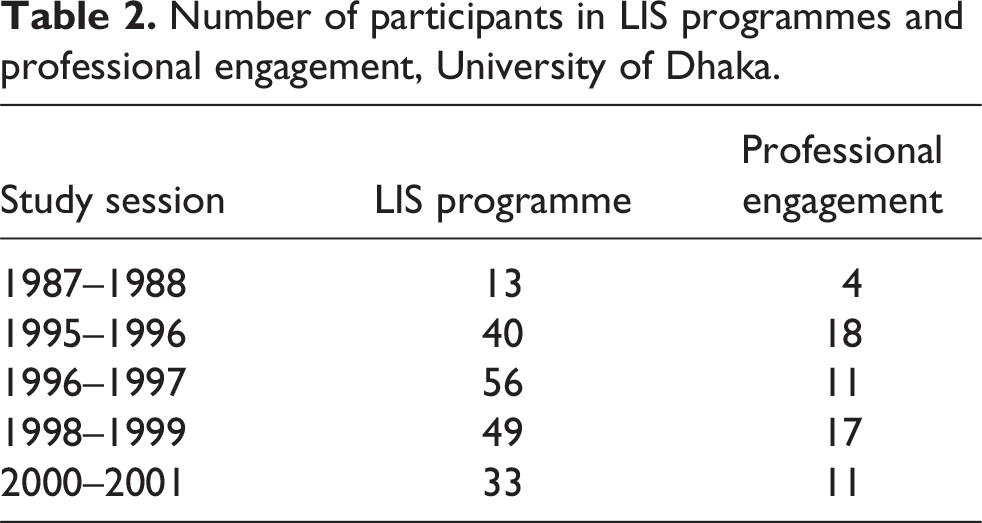
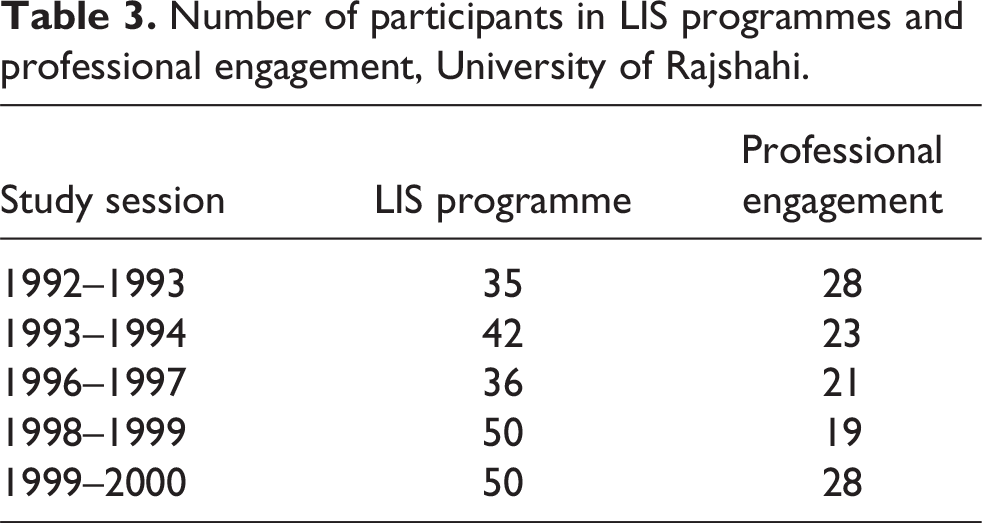
A second data collection method employed for this study involved conducting 18 personal interviews with individuals who had completed their LIS education. The interviews were conducted online via phone, which was chosen as the mode of communication for its convenience and accessibility for the participants. The decision to use phone calls was made based on the availability of the interviewees. To obtain a representative and comprehensive cross-section of Library and Information Science (LIS) graduates, specific efforts were made to ensure that at least one representative from each graduating class between 1987 and 2001 was included from the two primary LIS degree providers: the University of Dhaka and the University of Rajshahi (in tables 2 and 3).
Number of participants in LIS programmes and professional engagement, University of Dhaka.
Number of participants in LIS programmes and professional engagement, University of Rajshahi.
This strategic selection process encompassed a temporal span that allowed for a robust longitudinal analysis of career trajectories. The participants were selected based on the enrolment data obtained from two public universities offering LIS programmes. The aim was to gather comprehensive insights into the connection between these individuals and the LIS profession, examining whether they were actively practising in the field or had pursued different careers. The snowball sampling technique was deemed reasonable for recruiting the interview participants. This technique, characterised by its iterative process of participant referral, facilitates the identification of individuals with unique and valuable insights into a research domain, thereby ensuring purposive and informed selection.
Thematic analysis
Thematic analysis is one of the essential tools in case study research (Crowley, 2005; Edwards, 1998). Based on the research questions from the literature review, the researchers formulated themes and subthemes. A thematic analysis based on a data-driven approach was used to explore the research issues among the expert participants with a wide range of evidence-based input.
Results
Past and present collaboration practices between LIS academics and practitioners
The historical background of collaboration between LIS academics and practitioners in Bangladesh is a crucial aspect to consider in understanding the current dialogue between these two groups. The focus group interviews were conducted in two sessions with the academic and professionals. To identify the past and present collaboration practices between LIS academics and practitioners, the question posed in the focus group discussion was: ‘Drawing from your experience in Bangladesh, has there been a precedent for close dialogue aimed at increasing collaboration?’ The inquiry directed towards library professionals and academics within the LIS domain in Bangladesh sought to ascertain the existence and nature of collaborative endeavours – both historical and contemporary – between these two distinct cohorts. Specifically, the respondents were prompted to reflect on formal or informal collaborative engagements that had transpired within the LIS domain.
Most of the participants believed that formal dialogues had not been previously conducted, but relatively informal events had taken place. In connection with this, one of the participants commented: ‘This topic has not been formally addressed previously, but there have been informal instances of discussion and interaction. This meeting may mark the first formal gathering and a sense of novelty’. Other participants echoed this view.
A substantial number of Bangladeshis actively participated in the IFLA Idea Tour Global Vision General Programme, wherein ideas were generated. Subsequently, ideas were was submitted to IFLA, with contributions from both practitioners and academicians. Another discussant noted that formal collaborative research initiatives were yet to happen. However, curriculum-based collaborations had occurred – notably, under the purview of the Institutional Quality Assurance Cell, where diverse stakeholders such as current faculty, non-academic staff, employers, existing students and alumni had convened, and their input had been duly considered.
All of the participants agreed that a noteworthy event in this context was the awards ceremony and ‘fun night’ hosted by the Librarian Times on 2 February 2018 in the Business Faculty Auditorium at the University of Dhaka (Roy, 2018). During the panel discussion, this subject was raised, arguably constituting the first formal dialogue within an open professional and academic forum in Bangladesh.
At least two participants stated that the United Nations (UN) Office in Dhaka took a significant step in 2002 by establishing the UN Library Network in Bangladesh. This Network organised 16 workshops, bringing together faculty members and 30 library networking members within Dhaka. In this connection, one of the participants stated: ‘We were really honoured to be there to participate in the UN library workshops’. These workshops addressed a range of topics, including the Millennium Development Goals spanning from 2000 to 2015. The initiative aimed to encourage collaborative efforts, knowledge-sharing and the integration of academic research in practical applications. Presently, the Sustainable Development Goals feature 17 comprehensive objectives for all member countries. The Network, over 16 years, documented these workshops on its website, signifying a tangible effort towards collaborative endeavours between these distinct cohorts.
Participants from the Department of Information Science and Library Management at the University of Dhaka extended the focus group discussions. They mentioned two specific initiatives designed to engage practitioners in the syllabus development process, ensuring that the curriculum remains relevant and effective in meeting the needs of the field. One of the participants noted that this practitioner participation possibly marked the inaugural formal meeting about syllabus development. Additionally, insights were gleaned highlighting that collaboration entails cooperation, spanning individual and collective levels and encompassing both national and international dimensions. Another participant confirmed that his institution arranged workshops to develop the curriculum for the Bachelor of Social Science in LIS programme at Noakhali Science and Technology University. These results (see Figure 1) sought input from the practitioners and incorporated suggestions from the discussants, exemplifying a collaborative approach to curriculum development.
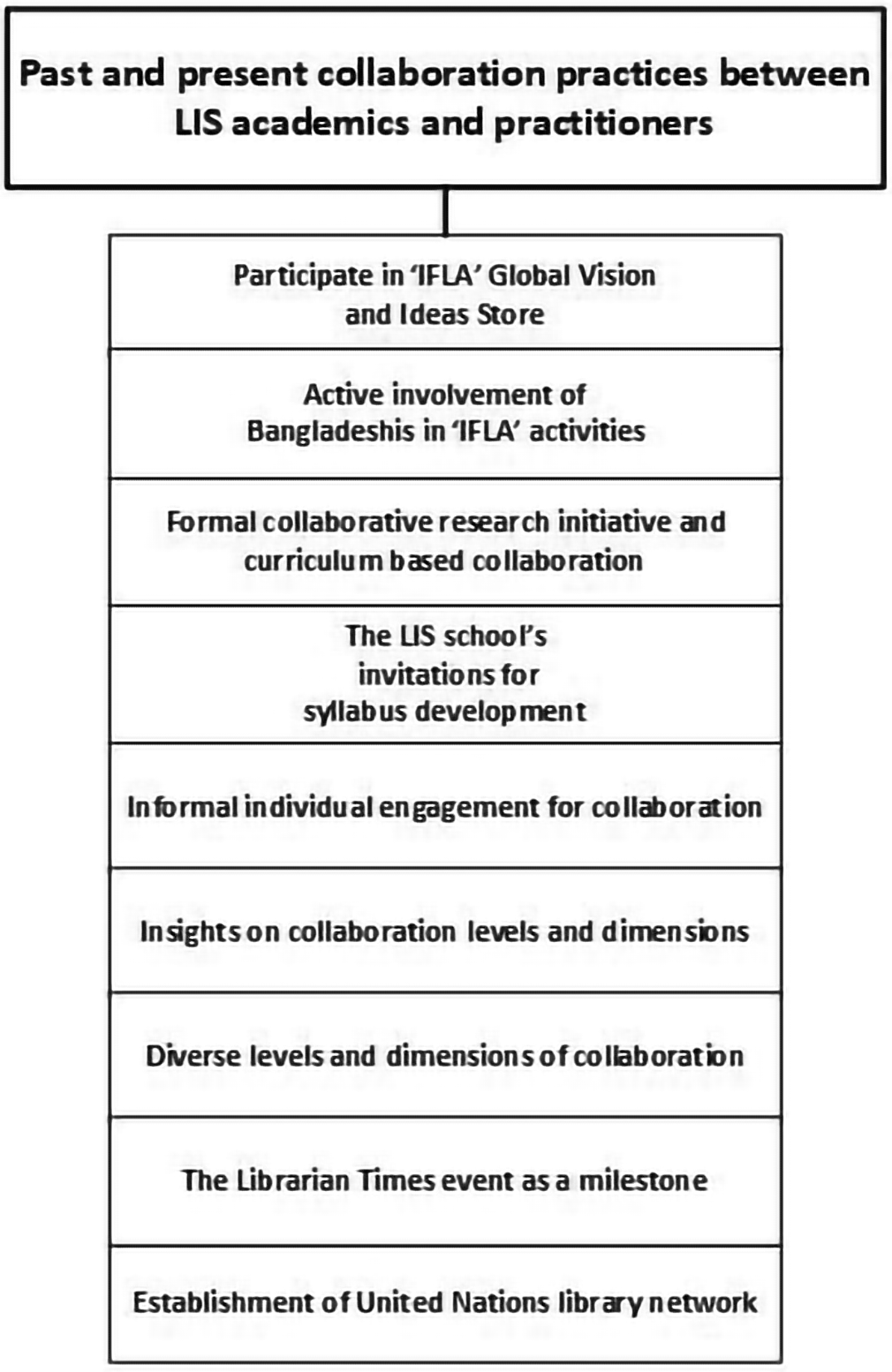
Past and present collaboration practices between LIS academics and practitioners.
Challenges of collaboration
The focus group discussions illuminated several challenges impeding effective collaboration between library professionals and academics within the LIS field in Bangladesh (see Figure 2). These encompassed:
Lack of willingness. A prevailing reluctance among professionals and academics to engage in collaborative endeavours was identified.
Absence of government policies. The absence of explicit government directives or policies delineating collaborative frameworks was noted as a significant hindrance.
Absence of formal policies at the university level. The participants underscored the absence of established protocols at the institutional level to facilitate and promote collaboration.
Incompatible organisational structure. Discrepancies in the organisational structures of academic institutions and professional environments were acknowledged as a barrier.
Complex and bureaucratic procedures. Cumbersome administrative processes were identified as a deterrent to seamless collaboration.
Inter-institutional communication and time-consuming processes. The challenges of effective communication and the time-intensive nature of collaborative initiatives were highlighted.
Lack of opportunities and motivation. The participants indicated a deficiency in opportunities and motivational factors that could encourage collaborative efforts.
Lack of self-esteem and commitment. A perceived lack of confidence and commitment among specific stakeholders emerged as an impediment to successful collaboration.
Inconsistencies among libraries. The participants highlighted inconsistencies among libraries, potentially stemming from variations in operational policies, resources and organisational cultures. Addressing these disparities and establishing standardised criteria for library collaboration was deemed imperative to promote meaningful cooperation.
Challenges in collaborating with school librarians. Diverse roles and responsibilities were observed in school libraries, where a single librarian often managed all aspects. However, challenges arose in establishing collaborative work between LIS faculty and school librarians, exacerbated by their varying treatment and recognition within the educational context. This dynamic underscores the complexities associated with integrating professionals from different settings.
Divergent perspectives on research collaboration. Research collaboration, while acknowledged as essential, faced varying levels of engagement among the practitioners. Some participants pointed out that practitioners’ engagement in research was limited due to factors such as lack of incentives, financial constraints and geographical location, which hindered their participation in seminars, conferences and similar events.
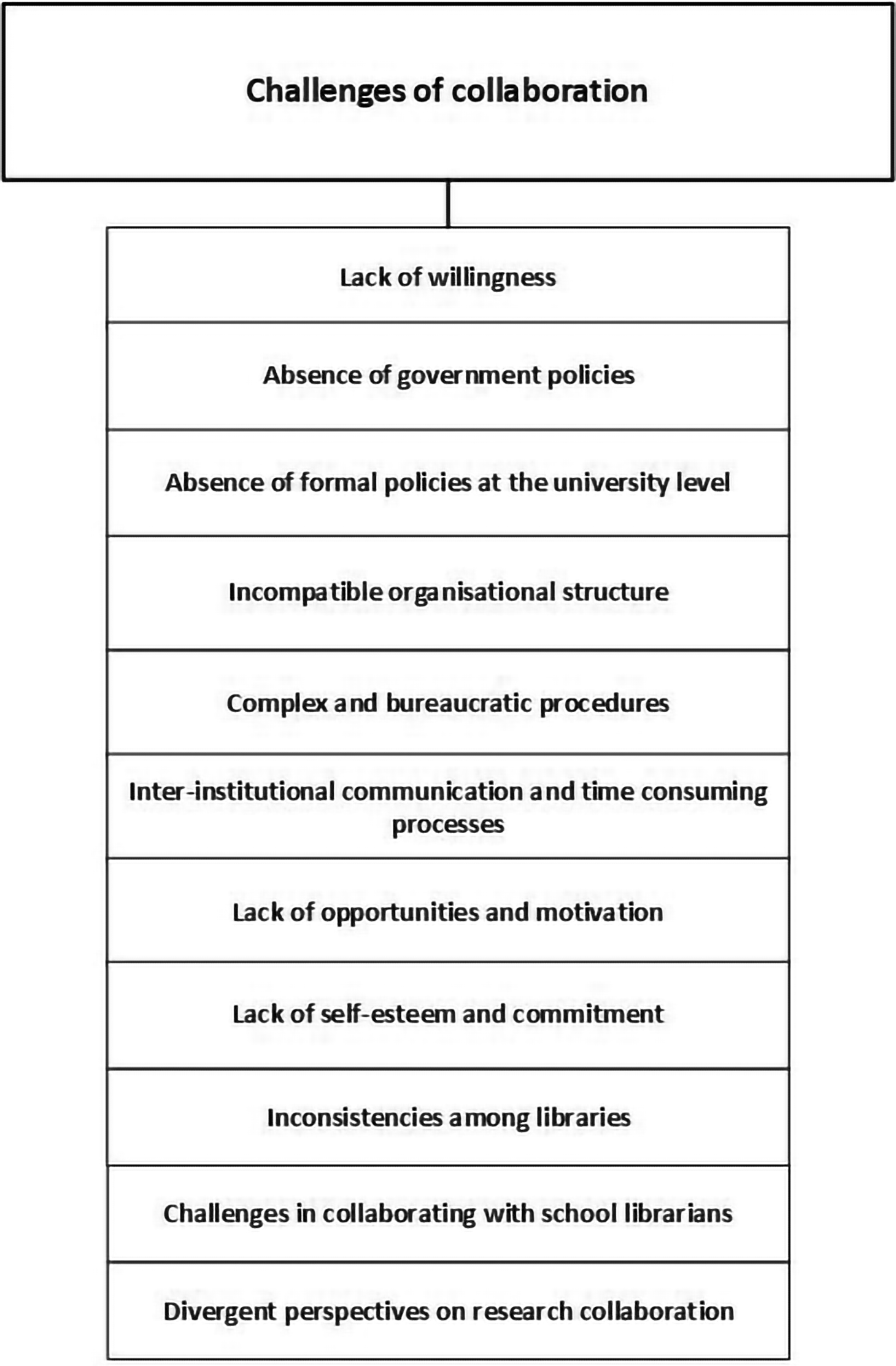
Challenges of collaboration.
Lack of willingness
The respondents attributed the reluctance to engage in research activities in Bangladesh to distinct job-related characteristics. Notably, the discrepancy in expectations for research output between LIS educators and practitioners was underscored. While publications are significant for career advancement in academic settings, practitioners do not face such imperatives. Many professionals are driven by personal interest or the desire for professional development to engage in research pursuits, whereas in some instances practitioners receive commendations. This disparity in incentivisation between the two cohorts was recognised as a contributing factor to their differing willingness to collaborate. In this respect, one of the participants commented: ‘In the domain of computerised issues and tacit knowledge, practitioners lag behind on research due to a lack of incentives, while faculty requires research for their promotion’. This statement implies that practitioners face a barrier in the form of a lack of incentives to engage in research. This could refer to various factors, such as limited funding, time constraints, or a lack of recognition or rewards for research efforts. On the other hand, the statement suggests that research is crucial for promoting LIS faculty members. This implies that conducting research is likely a key criterion for career advancement.
Absence of formal policies at the university level
The participants unanimously voiced concerns regarding the need for formal policies at the university level that specifically facilitate collaboration between professionals and academics. The current LIS curriculum and educational framework were criticised for not being designed with a collaborative ethos. For instance, limited opportunities are afforded to practitioners to contribute to practical classes or serve as guest lecturers, despite their potential to provide valuable insights. The participants emphasised the need for a more inclusive and adaptable curriculum that reflects the dynamic interplay between theory and practice within the field. On the role of librarians in practical classes in collaboration with teaching, one participant remarked: ‘Librarians can contribute by sharing their experiences in the classroom. Through such collaborative efforts, establishing public and academic libraries will bring immense benefits to all’.
LIS graduates and professional involvement
The investigation into the professional engagement of LIS graduates uncovered a notable trend. Despite having substantial talent, many LIS graduates tend to disengage from active involvement within the LIS profession. Specially, high-achieving graduates in LIS programmes are not actively pursuing careers within the LIS profession. This result was derived from both the personal interviews and focus group discussions.
A noteworthy finding pertains to LIS graduates with honours pursuing Master’s degrees in LIS, accumulating four to five years of continuous education in the field. This observation was further underscored and emphasised by the participants in the group interviews. The data regarding this phenomenon was meticulously gathered through direct communication with graduates, facilitated by access to comprehensive graduate lists provided by relevant universities. This distinct educational trajectory was predominantly observed in only two prominent public universities – namely, the University of Dhaka and the University of Rajshahi.
Areas of collaboration
This study examined potential collaboration areas within the LIS domain in Bangladesh. The participants’ responses highlighted several domains where collaboration between LIS academics and professionals could be mutually beneficial. These encompassed research, teaching and learning, and professional development.
LIS associations and curriculum development
The role of LIS associations in curriculum development emerged as a pivotal factor for potential collaboration. Insight was provided into how the involvement of these associations could facilitate curriculum enhancement, exemplified by instances where practitioners had been invited to participate in curriculum development initiatives. Despite some inherent limitations, the proactive engagement of associations was viewed as a catalyst for positive change.
Professional engagement in LIS teaching
The discussions underscored the potential for collaboration offered by inviting guest lecturers to LIS schools. This could bridge the gap between theoretical instruction and practical implementation, enabling practitioners to contribute their first-hand knowledge. Additionally, such engagement could inform LIS educators of the evolving demands and expectations in practice.
Synergy between theory and practice
The participants emphasised the mutual benefits that could be derived from integrating theoretical and practical knowledge. Overcoming entrenched mindsets and societal attitudes towards research in the LIS field emerged as a central challenge. To this end, collaborative efforts were deemed essential in establishing convergence between theory and practice. In this regard, one of the participants, who is a champion of and a leading researcher in the LIS field in Bangladesh (Islam et al., 2022; Islam and Roy, 2021), responded with the following: ‘The absence of practitioner relations poses a challenge in finding research topics’. This statement highlights a significant issue in the context of conducting research. ‘Practitioner relations’ refers to the connections and interactions between researchers and practitioners in the LIS field. These relationships are valuable because they facilitate the exchange of knowledge, insights and practical experiences, which can inform and enrich research endeavours. When there is an ‘absence of practitioner relations’, there is a lack of active engagement or collaboration between researchers and practitioners. This can be a challenge because it limits researchers’ exposure to real-world problems, practical insights, and current trends or issues in the field. Without these connections, it becomes more difficult to identify relevant and meaningful research topics that address practical needs or contribute to advancing the field. This statement emphasises the importance of building and maintaining solid connections with LIS practitioners to enhance the quality and relevance of research efforts. It suggests that without such relationships, researchers may struggle to identify research topics that have a direct impact on the practical applications of their work.
Mutual expectations and bridging gaps
The expectations of LIS practitioners and academic faculty were acknowledged as bidirectional. There was a call for practitioner leaders to contribute actively, the need for continuous leadership development and a focus on the enhancement of soft skills. Additionally, integrating practical experience within academic coursework was proposed in order to address existing gaps.
Specialised courses for experienced practitioners
The participants recommended the introduction of specialised courses for experienced practitioners, aimed at enhancing their research capabilities. Such initiatives, whether short or long term, could serve as platforms for skills development, the identification of research topics and academic advancement.
Streamlining Master’s and PhD admissions
This section has summarized the key areas of collaboration and recommendations that arose from the focus group discussions, providing a robust basis for building successful and collaborative relationships between LIS professionals and academics in Bangladesh.
Concerns were raised regarding the complexity of the admissions processes for Master’s and PhD programmes within LIS departments. The participants emphasised the importance of fair practices in selecting students for these advanced research-oriented programmes.
Future directions for collaboration in LIS education and practice
Following an exhaustive exploration of the collaborative landscape within the LIS domain, the participants unanimously advocated for a comprehensive study to determine how collaboration may revolutionise LIS education and practice, ultimately paving the way for enhanced academic and professional accomplishments. This study’s extensive literature review and insightful focus group interviews have yielded invaluable findings, providing a solid foundation for proposing recommendations to foster synergistic relationships between LIS academics and practitioners (see Figure 3).
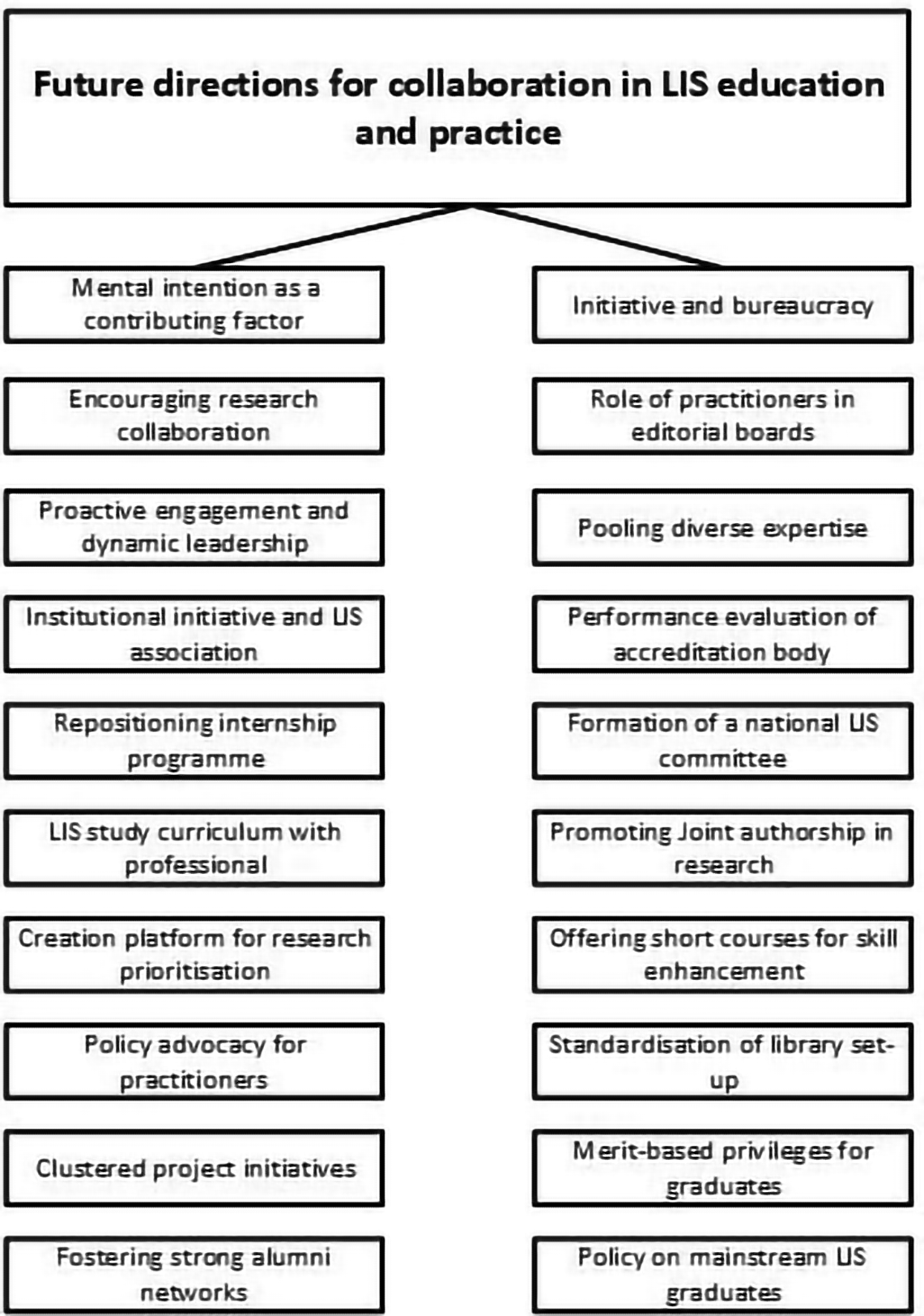
Future directions for collaboration in LIS education and practice.
Positive mindset. The participants underscored the critical role of a positive mindset and attitude in shaping collaborative endeavours. One of the participants commented: ‘Both parties need to possess a positive attitude for effective collaboration. I have observed a gap in this aspect in Bangladesh’. Both academics and practitioners were urged to maintain an open-minded approach, with no ego-related conflicts. Overcoming preconceived notions and fostering a spirit of mutual respect and cooperation emerged as crucial prerequisites for successful collaboration. There was a salient focus on the pivotal attributes of positive attitudes, leadership and initiatives: ‘LIS academicians and practitioners alike must embody positive attitude, leadership, and initiative’. This sentiment resonated with all of the participants, signifying unanimous agreement.
Proactive initiatives and less bureaucracy. A perceived lack of proactive initiatives and bureaucratic hurdles were identified as impediments to collaboration. The participants expressed the need for proactive engagement and removing administrative barriers to facilitate smoother collaborative processes.
Research collaboration. The role of academics in fostering research collaboration was emphasised. A substantial proportion of academic output was revealed to be collaborative, reflecting a solid inclination towards joint scholarship. The participants suggested that a more inclusive mindset should be cultivated, encouraging academics to collaborate with students and their peers in scholarly endeavours. One of the academic participants remarked: ‘Curriculum-based collaboration thrives, uniting stakeholders for quality assurance, while research-based efforts remain in the shadows’. The emphasis on ‘curriculum-based collaboration’ has yielded tangible results, fostering harmonious partnerships between practitioners and academics. Meanwhile, the potential of research-based endeavours, though present, has yet to materialise.
Practitioners on editorial boards. A comparative examination of the editorial boards of scholarly publications shed light on a notable observation. In Bangladesh, there appears to be a courteous inclination to include academic professionals on editorial boards, potentially reflecting the need for further inclusivity in these critical decision-making forums.
Proactive engagement and dynamic leadership. The participants emphasised the importance of proactive engagement and dynamic leadership, particularly in the context of technically oriented subject matter. Taking decisive steps forward and assuming leadership roles were perceived as indispensable components in fostering effective collaboration.
Pooling diverse expertise. Acknowledging the inherent diversity in expertise levels and subject areas, the participants advocated a unified approach. They posited that pooling diverse strengths and knowledge bases under a collective umbrella could result in a formidable force that would be capable of surmounting the existing challenges and advancing collaborative goals. The insights gleaned from the focus group discussions shed light on the multifaceted challenges confronting collaborative endeavours in the field of LIS in Bangladesh. The participants collectively stressed the need for a concerted, proactive and inclusive approach to overcome these challenges and realise the potential for meaningful collaboration within the domain.
Institutional initiative and involvement of LIS associations. Institutions and LIS associations must assume an active role in driving collaborative initiatives. Their active participation could catalyse meaningful engagements between academics and practitioners.
Performance evaluation of accreditation bodies. The effectiveness of the accreditation bodies in overseeing curriculum development and affiliation processes necessitates a rigorous evaluation. A robust accreditation system should actively involve both academics and practitioners.
Repositioning internship programmes. In order to enhance practical learning experiences, internship programmes should be strategically positioned within the curriculum, allowing students to integrate theoretical knowledge with real-world applications seamlessly.
Formation of a national LIS committee. The establishment of a national committee comprising experts and professionals is recommended to oversee and monitor collaborative efforts in the field of LIS.
Curriculum development through practitioner involvement. Academics are urged to create opportunities for practitioners to actively contribute to curriculum development, enriching syllabi with practical insights. Additionally, practitioners should be invited as guest lecturers on pertinent subjects.
Joint authorship in research. Encouraging joint authorship in research endeavours holds the promise of higher-quality output and advancing the body of knowledge within the field.
Online platform for research prioritisation. A dedicated online platform should be established to facilitate the selection of priority research areas, streamlining collaborative research efforts.
Short courses for skills enhancement. Academics should consider offering specialised short courses to practitioners, ensuring continuous skills development in tandem with emerging industry trends.
Policy advocacy for practitioners. Academics are encouraged to engage with policymakers to address the challenges faced by practitioners, leveraging their influential position within the socio-economic landscape.
Standardisation of library infrastructure. Prioritising the standardisation of the library infrastructure will serve as a cornerstone for effective collaboration and resource-sharing activities.
Clustered project initiatives. Organising national seminars, symposiums and workshops on specific sectors will foster targeted collaboration and knowledge exchange.
Merit-based privileges for graduates. Recognising and rewarding high-achieving LIS graduates with additional privileges will incentivise their active engagement in the professional sphere.
Strong alumni networks. Establishing a robust and regularly updated alumni database will serve as a pivotal conduit for seamless collaboration in the future.
Policy emphasis on mainstream LIS graduates. High-level policymakers are urged to accord special attention and incentives within the workplace to mainstream LIS graduates, thereby promoting their involvement and success in the collaborative landscape.
In concert, these recommendations chart a strategic course towards a future characterised by vibrant collaboration, revolutionising the LIS profession and LIS education in Bangladesh.
Discussion
The research question posed in this study – How can collaboration between LIS academics and library professionals be optimally enhanced in LIS education and practice in Bangladesh? – serves as the cornerstone of this investigation into the dynamics of collaboration within the LIS sector. By delving into formal and informal partnerships and considering the specific contextual nuances in Bangladesh, an attempt has been made to provide a comprehensive analysis of the various dimensions of collaboration in LIS. This research aims to shed light on the strategies that are necessary to surmount the barriers and harness the full potential of collaborative efforts in this field. The results reveal a multifaceted set of challenges impeding effective collaboration in the LIS field in Bangladesh. These challenges encompass a prevailing reluctance among professionals and academics to engage in collaborative efforts, a notable absence of government and institutional policies delineating collaborative frameworks, and a shortage of established protocols at the university level to facilitate and promote collaboration. Discrepancies in organisational structures, along with cumbersome administrative procedures, further hinder seamless collaboration. Additionally, the challenges of effective communication and the time-intensive nature of collaborative initiatives were highlighted by the participants. They also emphasised a lack of opportunities and motivational factors that could catalyse collaborative endeavours.
Moreover, issues such as a perceived lack of confidence and commitment among specific stakeholders, along with existing disparities among libraries, underscore the complexities of fostering meaningful cooperation. Furthermore, challenges were observed in establishing collaborative work between LIS faculty and school librarians that are driven by the diverse roles and responsibilities within school libraries, as well as varying levels of recognition. Research collaboration, while deemed essential, faces obstacles stemming from limited incentives, financial constraints and geographical barriers among practitioners, impacting their engagement in scholarly events. These insights collectively underscore the intricate landscape of collaborative efforts within the LIS domain in Bangladesh.
The participants stressed the critical role of a positive mindset and attitude in shaping collaborative endeavours. Both academics and practitioners were urged to maintain an open-minded approach, with no ego-related conflicts. Overcoming preconceived notions and fostering mutual respect and cooperation emerged as crucial prerequisites for successful collaboration.
A perceived lack of proactive initiatives and bureaucratic hurdles were identified as impediments to collaborative endeavours. The participants expressed the need for proactive engagement and the removal of administrative barriers to facilitate smoother collaborative processes. The role of academics in fostering research collaboration was emphasised. A substantial proportion of academic output was revealed to be collaborative, reflecting a solid inclination towards joint scholarship. The participants suggested that a more inclusive mindset should be cultivated, encouraging academics to collaborate with students and peers in scholarly endeavours.
Acknowledging the inherent diversity in expertise levels and subject areas, the participants advocated for a unified approach. They posited that pooling diverse strengths and knowledge bases under a collective umbrella could result in a formidable force that would be capable of surmounting the existing challenges and advancing collaborative goals. The insights gleaned from the focus group discussions served to shed light on the multifaceted challenges confronting collaborative endeavours in the field of LIS in Bangladesh. The participants collectively stressed the need for a concerted, proactive and inclusive approach to overcome the challenges and realise the potential for meaningful collaboration within the domain.
This study adopted a multifaceted approach, employing diverse research methods to furnish empirical evidence and insights. Through rigorous examination, the collaboration between LIS academics and practitioners in Bangladesh has been highlighted. This study aims not only to identify the existing challenges but also to propose actionable steps towards enhancing collaborative partnerships. It is believed that this will ultimately lead to improved LIS education and research, the cultivation of highly qualified professionals, and the augmentation of value within the LIS sector.
Research implications
The findings of this study have significant implications for advancing collaborative efforts within the LIS field in Bangladesh. The identified challenges, ranging from a reluctance to collaborate to institutional and bureaucratic obstacles, underscore the need for targeted interventions to promote a culture of cooperation. Addressing these barriers requires proactive engagement, the establishment of supportive policies, and the cultivation of a collaborative mindset among LIS academics and professionals. Additionally, recognising the diverse expertise and subject areas within the LIS domain highlights the potential for a unified approach to harness collective strengths. By implementing the proposed future directions for collaboration, the LIS sector in Bangladesh could enhance education and research, produce highly skilled professionals, and increase its overall impact and value. This study is a valuable foundation for future initiatives to foster meaningful collaboration.
Conclusion
In conclusion, this study offers a comprehensive exploration of the challenges hindering effective collaboration in the LIS field in Bangladesh. It is evident that reluctance among professionals and academics, coupled with the absence of clear policies and established protocols, presents significant barriers to seamless collaboration. Organisational disparities and bureaucratic processes further impede progress. Communication challenges and the time-intensive nature of collaborative endeavours add another layer of complexity. Additionally, the participants highlighted the need for more significant opportunities and motivational factors to drive collaborative efforts forwards. The study also brings to light the nuanced dynamics within the LIS community. Issues such as confidence and commitment, as well as disparities among libraries, highlight the intricacies of fostering meaningful cooperation. The challenges in bridging the gap between LIS faculty and school librarians underscore the diverse roles within educational settings. Research collaboration, while recognised as vital, faces obstacles due to limitations in incentives, financial resources and geographical constraints among practitioners, impacting their participation in scholarly events. Importantly, the participants emphasised the pivotal role of a positive mindset and attitude in shaping collaborative endeavours. Overcoming preconceived notions and fostering a culture of mutual respect and cooperation emerged as critical prerequisites for successful collaboration. Furthermore, the advocacy for a unified approach, acknowledging the diversity in expertise and subject areas, demonstrates the potential for a collective force to overcome the existing challenges and advance collaborative goals. In light of these findings, it is evident that a concerted, proactive and inclusive approach is essential to overcoming the identified challenges. By addressing these barriers and implementing targeted strategies, the LIS community in Bangladesh can unlock the full potential of collaborative efforts, ultimately advancing the field and enriching the professional landscape.
Footnotes
Declaration of conflicting interests
The authors declared no potential conflicts of interest with respect to the research, authorship and/or publication of this article.
Funding
The authors received no financial support for the research, authorship and/or publication of this article.
