




Abstract
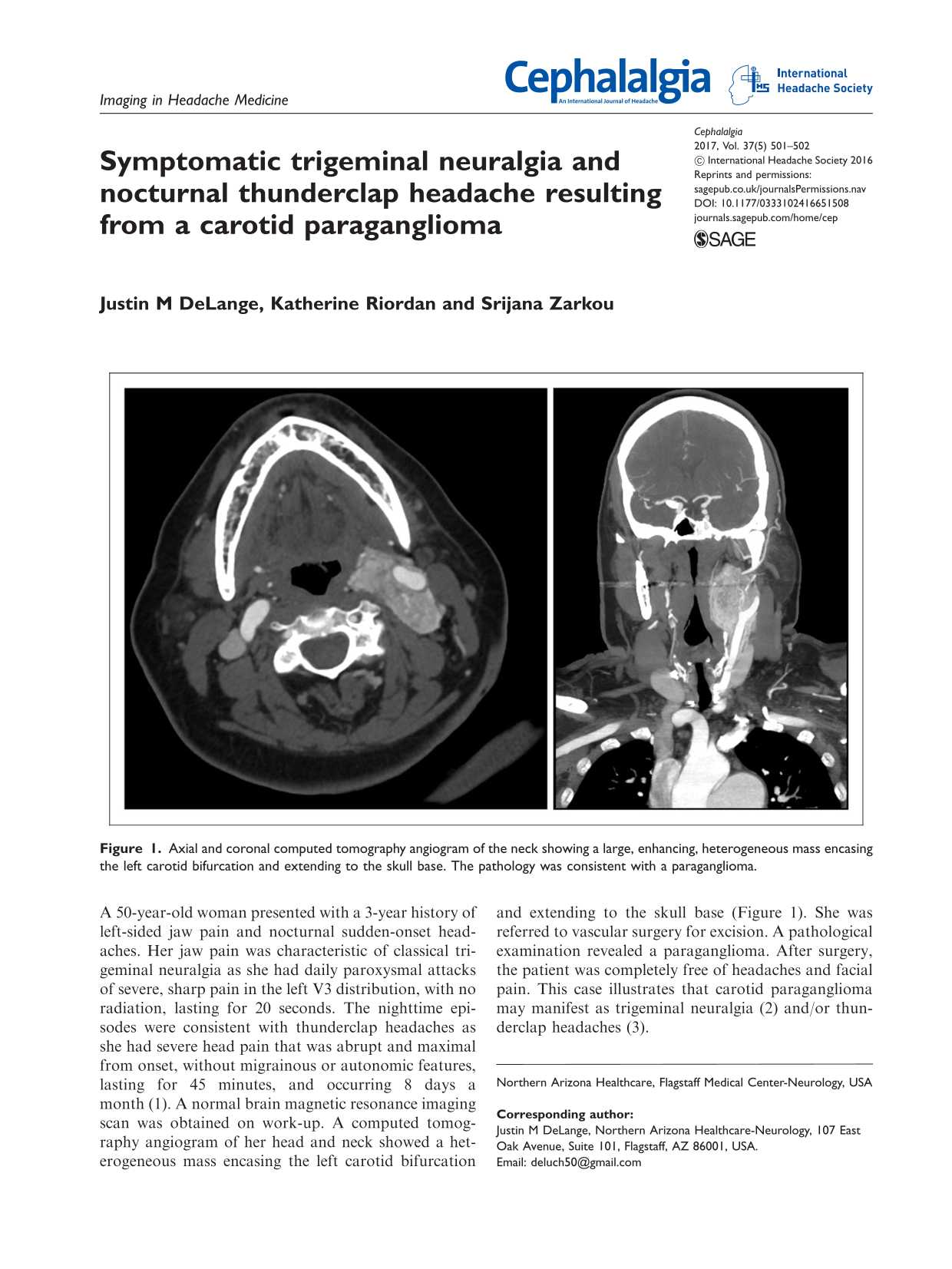
A 50-year-old woman presented with a 3-year history of left-sided jaw pain and nocturnal sudden-onset headaches. Her jaw pain was characteristic of classical trigeminal neuralgia as she had daily paroxysmal attacks of severe, sharp pain in the left V3 distribution, with no radiation, lasting for 20 seconds. The nighttime episodes were consistent with thunderclap headaches as she had severe head pain that was abrupt and maximal from onset, without migrainous or autonomic features, lasting for 45 minutes, and occurring 8 days a month (1). A normal brain magnetic resonance imaging scan was obtained on work-up. A computed tomography angiogram of her head and neck showed a heterogeneous mass encasing the left carotid bifurcation and extending to the skull base (Figure 1). She was referred to vascular surgery for excision. A pathological examination revealed a paraganglioma. After surgery, the patient was completely free of headaches and facial pain. This case illustrates that carotid paraganglioma may manifest as trigeminal neuralgia (2) and/or thunderclap headaches (3).
Axial and coronal computed tomography angiogram of the neck showing a large, enhancing, heterogeneous mass encasing the left carotid bifurcation and extending to the skull base. The pathology was consistent with a paraganglioma.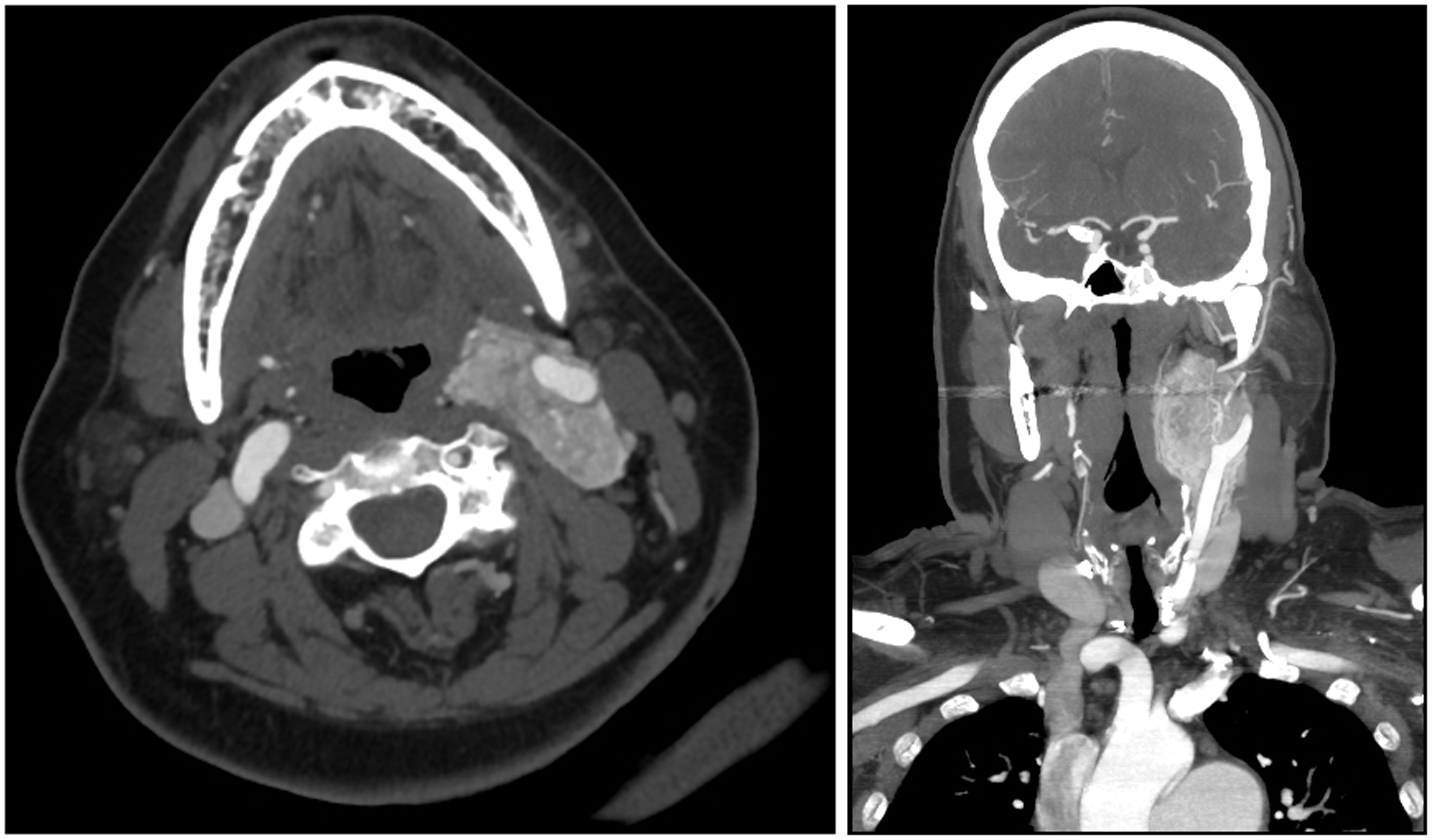
Clinical implications
Carotid paraganglioma may be a symptomatic cause of trigeminal neuralgia. Carotid paraganglioma is an important cause of thunderclap headaches.
Footnotes
Declaration of conflicting interests
The authors declared no potential conflicts of interest with respect to the research, authorship, and/or publication of this article.
Funding
The authors received no financial support for the research, authorship, and/or publication of this article.