




Abstract

A 54-year-old man complained about chronic bilateral headache. Cerebral and spinal magnetic resonance imaging (MRI) were suggestive for spontaneous intracranial hypotension (SIH). Conventional myelography with post-myelography computed tomography (CT) detected the exact location of cerebrospinal fluid (CSF) leaks (Figure 1). Seven days after admission and conventional therapy (bed-rest and caffeine intake) the patient deteriorated and suffered from recurrent brainstem infarctions (Figure 2). After CSF-leak occlusion by CT-guided blood patching and evacuation of growing subdural fluid collection, the clinical condition stabilized. Brain sagging due to SIH in predisposed patients (Figure 1 (a)) can result in brainstem infarction because of severe kinking and occlusion of perforating cerebral arteries (1,2). CSF-leak detection and occlusion is critical to prevent further infarction and subdural rebleeding (3).
(a) Saggital CT-scan of the patient showing platybasia as a normal variant (arrow); (b) Cerebral MRI with bilateral subdural fluid collection and pachymeningeal enhancement suggestive for SIH; (c) spinal MRI showing syringomyelia and suspicious epidural fluid (arrows); (d) CT-myelography depicting a CSF leak at the cervical level (arrow). CT: computed tomography; MRI: magnetic resonance imaging; SIH: spontaneous intracranial hypotension; CSF: cerebrospinal fluid. (a), (b) Diffusion-weighted MRI (DWI) lesion indicating a left pontine stroke (arrow) at the acute stage (a) and one day later (b); (c) DWI lesion corresponding to another ischemic stroke at the mesencephalo-pontine junction (after occurrence of new clinical signs at the same day as (b)); (d)–(f): cerebral MRI four days after SDH evacuation showing subdural rebleeding ((d), (e)) and a new left lateral pontine ischemic stroke ((f), arrow). MRI: magnetic resonance imaging; SDH: subdural hematoma.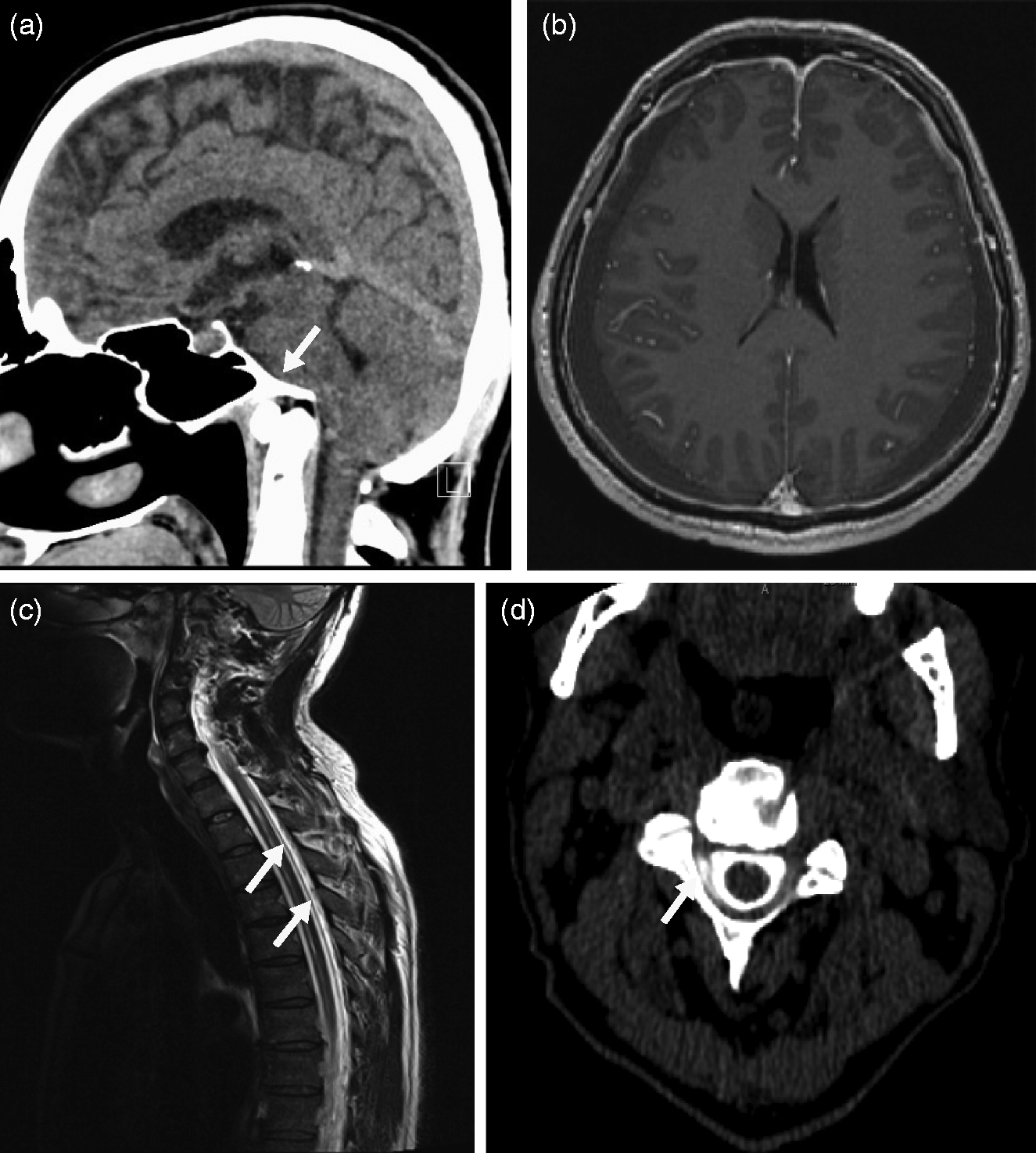

Footnotes
Declaration of conflicting interests
The authors declared no potential conflicts of interest with respect to the research, authorship, and/or publication of this article.
Funding
This research received no specific grant from any funding agency in the public, commercial, or not-for-profit sectors.