




Abstract
Disinhibition is a lack of restraint manifesting as tactless, uncivil, and inappropriate behavior; reward omission leadership is the failure of a leader to reward desirable behavior. We hypothesize disinhibition is associated with reward omission leadership. We test this possibility by associating an objective measure of disinhibition and personality models of disinhibition with reward omission leadership. In S1 (N = 166), the go/no-go task and personality models of disinhibition were generally associated with reward omission leadership. In S2 (N = 176), using multi-actor ratings, personality models of disinhibition were generally associated with reward omission leadership. In S3 (N = 91 junior managers; 273 employees), the tested personality model of disinhibition was associated with reward omission leadership using employee ratings from a non-Western organization. Results suggest disinhibition predicts reward omission leadership and sheds light on what is meant by disinhibition.
Keywords
On Fred Trump (father of Donald Trump): “Good work was expected but never acknowledged; only mistakes were called out and punished.” Quote from: Too much and never enough: How my family created the world’s most dangerous man by Mary L. Trump
1. Introduction
Reward omission leadership, such as illustrated by Fred Trump above, is non-responsiveness by leaders to desirable behavior by followers in organizational settings (Hinkin and Schriesheim, 2008). It is a passive or a laissez-faire style of non-leadership behavior in which a leader fails to provide, or omits, positive feedback to subordinates (Yukl, 2006). It is an habitual passive behavior because reward omission leadership involves a hands-off approach to motivating and incentivizing followers, rather than actively engaging with them and providing positive reinforcement. Thus, team members are left to operate independently, under the assumption that they will perform their tasks without the need for external motivation. Passive leadership is widespread (Aasland et al., 2010) and although there may be instances when reward omission stimulates intrinsic motivation (Zhang et al., 2020), it is generally associated with poor work outcomes including subordinate stress and lack of trust (Harold and Holtz, 2015; Skogstad et al., 2014), Indeed, the absence of an active approach to leadership through nonresponse to good performance has been found to be so detrimental for employees that researchers have referred to these behaviors as destructive leadership behaviors (Judge and Piccolo, 2004; Skogstad et al., 2007). This and other forms of incivility by supervisors are widely experienced by employees in the workplace (Andersson and Pearson, 1999), with approximately 50% of employees experiencing incivility from their boss every week (Porath and Pearson, 2010, 2013) which can then reduce morale and the bottom line (Porath and Pearson, 2013). Despite the pervasiveness of passive leadership in the workplace and the significant consequences, scant research has been conducted on reward omission leadership (Hinkin and Schriesheim, 2008; Judge and Piccolo, 2004; Komaki, 1998; Zhang et al., 2020), and research has yet to identify psychological mechanisms associated with this behavior.
Reward omission leadership is problematical because employees tend to attribute high performance to their own effort and ability, and thus perceive reward omission as notably unfair and confusing (Hinkin and Schriesheim, 2008). 1 Understanding some of the psychological mechanisms underlying reward omission leadership is therefore an important goal. The aim of this research is to determine if disinhibition—a central construct of psychopathy (Patterson and Newman, 1993)—can effectively predict reward omission leadership. We extend previous research that more generally shows high psychopathy predicts passive leadership (Mathieu et al., 2015; Westerlaken and Woods, 2013), and research on how attentional resources influence constructive and destructive leadership (Collins and Jackson, 2015). We do this by assessing disinhibition in multiple ways: at the trait level by determining if carefree nonplanfulness (similar to disinhibition) and theory driven combinations of extraversion, neuroticism and lateral preference (Gardiner et al., 2015; Jackson, 2008; Patterson and Newman, 1993) predict reward omission leadership; and, at the state level, by determining if omission errors in the experimental condition of the go/no-go task predict reward omission leadership (e.g. Gillespie et al., 2022).
Disinhibition describes a habitual lack of restraint, an over-focus on poorly chosen reward seeking behavior, and a failure to learn the negative consequences of punishing stimuli (Collins et al., 2017; Patterson and Newman, 1993). Even though reward omission leadership is a passive behavior, it still must be selected from a repertoire of potential behaviors by prioritizing and pursuing an alternative task that does not involve a response to desirable behavior. We will argue that the habitual choice of reward omission leadership is rushed and impulsively made which accounts for why disinhibition, as a psychological mechanism of lack of restraint, is associated with this passive leadership style.
Furthermore, our work will also interest disinhibition and psychopathy researchers because we test the more novel lateral preference model of disinhibition (Jackson, 2008) against the better-established extraversion-neuroticism model of disinhibition in the literature (Patterson and Newman, 1993). Moreover, investigating the relationship between both state and trait disinhibition and reward omission leadership is useful. Trait studies show habitual relationships with powerful and long-lasting real-world outcomes across multiple contexts, and experimental investigations at the state level often involve the manipulation of context to determine more precisely how cognition affects dependent variables. Together, a combination of state and trait research helps provide strong evidence of a link between disinhibition and reward omission leadership.
1.1. Disinhibition and reward omission leadership
Psychopathy is associated with laissez-faire leadership (Mathieu et al., 2015; Westerlaken and Woods, 2013) and disinhibition is an important facet of psychopathy (Patterson and Newman, 1993). We theorize that disinhibition predicts reward omission leadership because they both reflect callous, shallow behaviors driven by a lack of restraint. The neuropsychological process of disinhibition is best understood by focusing on the role of neuroticism as originally proposed by the Response Modulation Model (RMM; Patterson and Newman, 1993). In their seminal paper, disinhibition is viewed as a blend of high neuroticism and high extraversion. Neurotic people are emotionally unstable and perceive the world in terms of conflicts (i.e. incompatible choices) in their decision-making. They seek to reduce their levels of anxiety by either resolving cognitive conflicts too quickly and/or inappropriately (referred to as disinhibition) or by taking an inordinately long period of time (referred to as passive avoidance). Disinhibition is therefore the neuropsychological process of how neurotic people resolve conflicts too quickly by seizing upon solutions without evaluating their quality or consequences. Patterson and Newman (1993) argue that neurotic people will tend to choose disinhibited responding when conditioned for action such as through being an extravert. Thus, Patterson and Newman (1993) advocate that neurotic extraversion tends to be associated with habitual quick decisions to respond in ways that lack forethought and effective learning.
Thus, according to RMM (Patterson and Newman, 1993), action-oriented neurotics will habitually make rushed cognitions which are poorly thought out leading to inappropriate behavior. However, we argue that sometimes a rushed cognition will underlie the choice of a passive behavior such as reward omission leadership. Here the action-oriented neurotic leader rushes their decision-making and habitually chooses to omit rewards in social interactions. Some leaders may have underlying beliefs centered on authoritarianism, desire for micromanagement, short-term gains, or a strong need for control which are unlikely to be well controlled by leaders who lack restraint in their leadership approach. This deficiency will likely lead to adoption of reward omission leadership which seems likely to be rooted in beliefs emphasizing strict adherence to rules, low tolerance for deviation, and the use of coercive and uncivil tactics to enforce compliance. It is therefore possible that disinhibition might be associated with reward omission leadership since the latter might also be considered a poorly conceived behavior with a basis in rushed decision-making.
All leaders face intensely stressful social interactions in which they must switch their communication styles depending upon the recipients such as between superiors and direct reports (Anicich and Hirsh, 2017). Moreover, leaders may need to reinterpret or reject plans from higher management (Gjerde and Alvesson, 2020) and are thus often stressed (Thomas and Linstead, 2002). Neurotic leaders will worry, be anxious, and experience even more conflicting social interactions compared to more emotionally stable leaders. We believe it is in these situations that an action-oriented neurotic leader will engage in disinhibited behavior such as reward omission leadership.
1.1.1. Trait disinhibition as carefree nonplanfulness
Disinhibition has been conceptualized as both a trait and a state (e.g. Gardiner et al., 2015; Kiehl et al., 2000 and Neo et al., 2018, respectively). As a trait, disinhibition is a stable personality attribute characterized by a lack of restraint or self-control that differs between people. People with this trait may exhibit more impulsivity, more disregard for social norms, and struggle to inhibit their desires more than others. As a state, disinhibition refers to a consistent within person behavioral response to a temporary or situational decrease in inhibition or self-control.
A widely adopted trait measure of psychopathy is the Psychopathic Personality Inventory (PPI; Lilienfeld and Andrews, 1996), which includes a number of subscales associated with two factors: fearless dominance and self-centered impulsivity. In this research, we will adopt carefree nonplanfulness as a trait-level proxy for disinhibition (defined as “an insouciant absence of forethought”; Lilienfeld and Andrews, 1996: 495) because they both concern an absence of forethought, lack of restraint and limited willingness to formulate future plans. Showing disinhibition has the strongest relationship between all the facets of psychopathy and reward omission leadership reduces the problem of endogeneity in this research, because it would indicate that the other facets of psychopathy are much less important in explaining variance between disinhibition and reward omission leadership. We thus expect carefree nonplanfulness to be the most important predictor of reward omission leadership over other facets of psychopathy:
Hypothesis 1 (H1). Carefree nonplanfulness is positively associated with reward omission leadership and will be the most important facet of psychopathy related to reward omission leadership.
1.1.2. Trait disinhibition as combinations of neuroticism and extraversion
Also at the trait level, we compare two neuropsychological personality models of disinhibition and their association with reward omission leadership: the RMM (Patterson and Newman, 1993) and the lateral preference model (Gardiner et al., 2015; Jackson, 2008). According to the RMM, as introduced above, disinhibited individuals are high in both extraversion and neuroticism. Extraversion is habitual reward oriented behavior associated with approach and action (Depue and Collins, 1999) and neuroticism is associated with high threat sensitivity to conflict. As a result, the action potential of high extraversion conditions the high neurotic commit to fast and inappropriate action (Collins et al., 2017; Patterson and Newman, 1993). We hypothesize the following interaction:
Hypothesis 2a (H2a). High extraversion and high neuroticism predict high reward omission leadership.
Using extraversion in Hypothesis 2a also provides the opportunity of informally testing another straightforward perspective which is that reward omission leadership is associated with being introverted and thus uncomfortable giving feedback.
Yet we also have some doubts about this hypothesis. Since extraversion is associated with socializing and assertiveness, it seems unlikely that extraversion will be strongly associated with a passive and non-social behavior such as reward omission leadership. Extraverts could be expected to commit to active social behaviors as opposed to passive behaviors like reward omission leadership. From this additional perspective comes further understanding that extraversion can interact with neuroticism to predict inappropriate socially based disinhibited behaviors such as psychopathy; but that extraversion and neuroticism is unlikely to be associated with less social behaviors such as reward omission leadership.
1.1.3. Trait disinhibition as neuroticism and left hemispheric lateral preference
The left hemisphere of the brain’s association with well-researched action tendencies (Davidson, 1998; Harmon-Jones et al., 2003; Wacker et al., 2003) suggests disinhibition may be associated with brain asymmetries (Jackson, 2008). For example, there is much neuropsychological research associated with left hemispheric preference and action tendencies based on the motivation direction model (Davidson, 1998) and the behavioral activation-behavioral inhibition model of anterior asymmetry (Wacker et al., 2003). Multiple methods can be used to measure hemispheric laterality including laboratory state techniques such as electroencephalography (EEG) and functional magnetic resonance imaging (fMRI), but they are situational, context dependent, and usually associated with small sample sizes (Button et al., 2013). We therefore investigate trait hemispheric asymmetry as self-reported habitual lateral preference. The lateral preference model of hemispheric asymmetry does not rely on a direct neuronal projection from auditory to neuroticism centers of the brain and does not claim to measure frontal asymmetries of the brain. Like the more widely used unilateral hand contraction model that is a proxy for asymmetric frontal cortical activity, we argue that the lateral preference model works on the basis of indexing spreading activation through the hemispheres (Harmon-Jones and Gable, 2017; Schiff and Lamon, 1989, 1994).
Jackson (2008) proposed that lateral preference in highly neurotic people may predict disinhibition. In this article, we therefore think that lateral preference in highly neurotic people may be associated with reward omission leadership better than the trait models which include extraversion. This is because left lateral preference is more associated with pre-potent action potential (i.e. the desire to engage in action) and thus rushed decision-making in general, whereas extraversion is associated with action-oriented and more socially based behaviors such as psychopathy. Gardiner et al. (2015) provided the first test of all the four personality models of disinhibition in the prediction of the go/no-go task. In their research, the lateral preference model of disinhibition was the best predictor, and extraversion failed to predict the go/no-go task. Thus, we hypothesize the following:
Hypothesis 2b (H2b). High neuroticism and greater left brain hemispheric lateral preference compared to right brain hemispheric preference will predict reward omission leadership.
1.1.4. State disinhibition as errors in the go/no-go task
At the state level, experimental techniques such as the go/no-go task are widely used to investigate how a pre-potent approach response set triggers disinhibition in neurotic people. Often, respondents are split into two conditions. The experimental condition is primed to approach and then punished for their approach, with the expectation that disinhibited individuals will continue to approach more than others. The control condition is primed to avoid and then rewarded with the expectation that disinhibited individuals will not be different from others due to the lack of reward conditioning (see Gardiner et al., 2015). In such studies, participants make a motor action response (a “go” response) for a “target” stimulus and a non-motor action response (a “no-go” response) for a “distractor” stimulus. The task produces various measures including omission errors (making a “no-go” response when a “go” response is appropriate) and commission errors (making a “go” response when a “no-go” is appropriate).
Psychopathy and disinhibition research usually focuses on commission errors because inappropriate commitment to action is core to engaging in an active behavior (e.g. Gardiner et al., 2015; Newman et al., 1990). However, for reward omission leadership, omission errors will likely be the best index of disinhibition because we are predicting a passive behavior. In the current research, we therefore focus on omission errors in the experimental condition as a measure of state disinhibition:
Hypothesis 3 (H3). Omission errors in the experimental condition are positively associated with reward omission leadership.
1.2. The current research
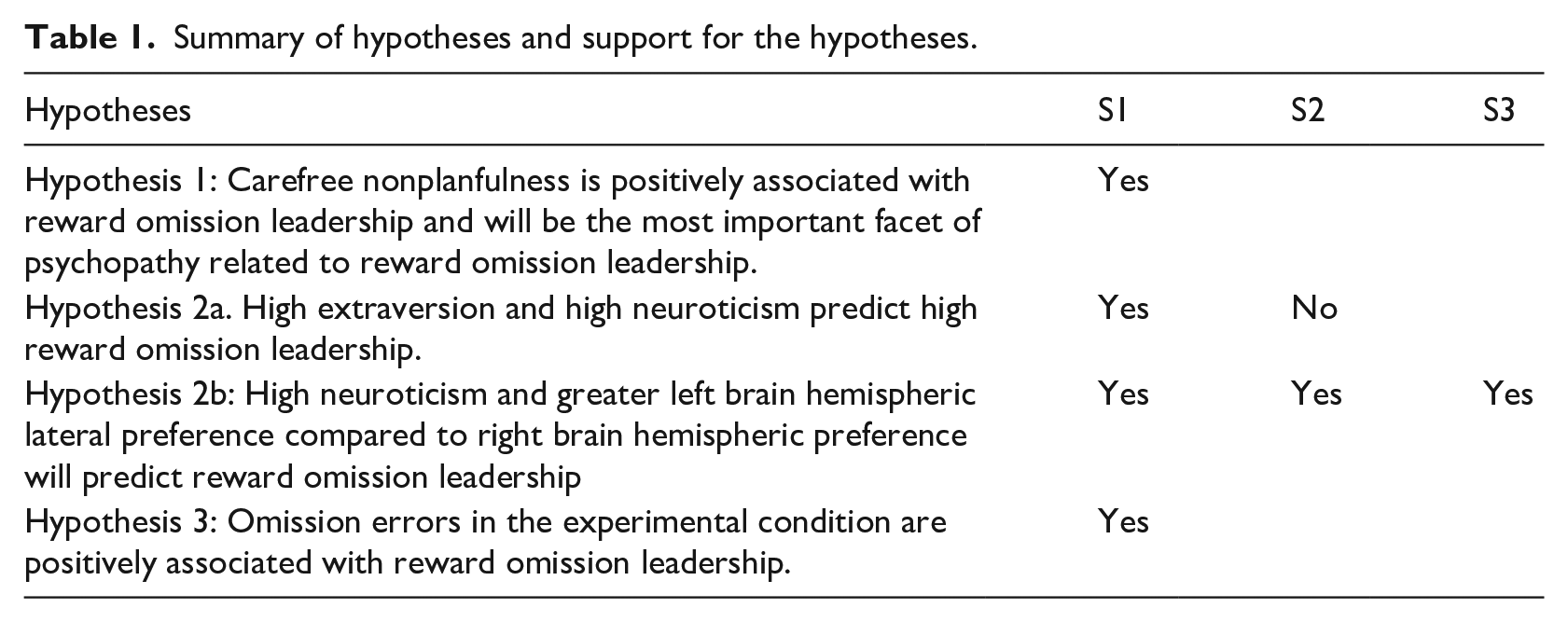
The current research examines the association of disinhibition with reward omission leadership through three studies that measure disinhibition using several different approaches: as carefree nonplanfulness, high neuroticism and high extraversion (Patterson and Newman, 1993), high neuroticism and left lateral preference (Gardiner et al., 2015; Jackson, 2008), and as omission errors from the experimental group of the go/no-go task. Study 1 and Study 2 use online samples. 2 Study 1 is self-report and tests all hypotheses. Study 2 uses multi-actor ratings to further explore the trait models of disinhibition tested in Study 1. Study 3 extends the research using participants from a single non-Western organization and multi-actor ratings to determine if the preferred model from Studies 1 and 2 continues to be predictive in very different circumstances. Table 1 provides a summary of the hypotheses.
Summary of hypotheses and support for the hypotheses.
2. Study 1
Study 1 tests all hypotheses using a sample of team leaders. Participants completed a battery of assessments at the YWeDo (www.chrisjackson.biz/ywedo/lab.asp) online cognitive laboratory (Jackson, 2010) and were recruited from an online research participation website.
2.1. Participants
We recruited 166 full-time team leaders based in the United States who supervise at least 4 employees (53% men, 47% women, Mage = 32.70 years, SDage = 8.53 years, age range: 18–61 years). As expected, the sample incorporated many careers of which the most important were sales (11%), healthcare (8%), food industry (9%), and office and administration (5%). Team leaders were employed in small business with 1–20 employees (27.1%), mid-sized business with 21–100 employees (34.9%), and large business with 100+ employees (38%). Participants were each paid US$35 for full completion.
2.2. Measures
2.2.1. Reward omission leadership
Hinkin and Schriesheim (2008) designed a measure of reward omission leadership that negatively predicted work outcomes. We used a self-report version that comprised four items using a five-point scale (1 = completely disagree to 5 = completely agree). An example item is “Even when my followers perform well, they still will receive no praise from me.” In all analyses, across all studies, reward omission leadership scores were squared as this helped normalize the distribution. The internal reliability was acceptable (α = .87).
2.2.2. Extraversion and neuroticism
Personality was measured using the International Personality Item Pool (IPIP; Goldberg, 1992) version of the Five Factor Model (Costa and McCrae, 1992). We report extraversion and neuroticism as they are key predictors of disinhibition (Patterson and Newman, 1993). Each questionnaire consists of 10 items rated on a five-point scale (1 = completely disagree to 5 = completely agree). An example extraversion item is “I am the life of the party,” and an example neuroticism item is “I get stressed out easily.” Internal reliabilities were acceptable (extraversion α = .88; neuroticism α = .89).
2.2.3. Carefree nonplanfulness
We used the 56-item version of the Psychopathic Personality Inventory (PPI; Lilienfeld and Andrews, 1996) with statements rated on a four-point scale (1 = false to 4 = true). We focus on the 5-item carefree nonplanfulness scale to test Hypothesis 1. An example item is “I weigh the pros and cons of major decisions carefully before making them (reverse scored).” The internal reliability of carefree nonplanfulness was acceptable (α = .78). Cronbach’s alphas of the other scales from the PPI were all acceptable (i.e. above .7, except for coldheartedness, α = .69 and impulsive nonconformity, α = .64).
2.2.4. Lateral preference
Hemispheric lateral preferences were assessed using the Hand Ear Eye Preference Questionnaire (HEEP; Jackson, 2005, 2008), which is adapted from the Lateral Preference Inventory (Coren et al., 1979). We focused on ear preference over hand preference as our measure of lateral preference based on evidence that lateralization processes have evolved earlier for sensory functions than motor functions (Rogers, 2002; Rogers and Andrew, 2002; Vallortigara, 2000; Vallortigara and Rogers, 2005) which thus might suggest that ear preference is likely to be a more central predictor of hemispheric asymmetry. Moreover, ear preference was used in prior work showing that it was a better moderator of neuroticism than extraversion in the prediction of disinhibition (Gardiner et al., 2015; Jackson, 2008). Jackson (2008) validated the model across 8 studies. Ear preference as a measure of laterality is supported by multiple studies (e.g. Gardiner and Jackson, 2012; Gardiner et al., 2015; Gullo et al., 2010; Jackson, 2005, 2008, 2011a; Jackson et al., 2001, 2012). The ear preference scale comprises seven items rated on a five-point scale (1 = always left to 5 = always right). An example item is “If you wanted to hear some one’s heartbeat, which ear would you place against their chest?” Due to contralateral connections between auditory pathways and the brain, right ear preference indicates left hemispheric preference and left ear preference indicates right hemispheric preference (Springer and Deutsch, 1993). The internal reliability was acceptable (alpha = .91). A low score indicates a habitual preference for the left ear (right hemispheric lateral preference) and a high score indicates a habitual preference for the right ear (left hemispheric lateral preference).
2.2.5. Go/no-go task
The go/no-go task is widely used to investigate how conditioning to reward activates disinhibited behavior in people being punished (e.g. Kiehl et al., 2000). We used a go/no-go task design to measure disinhibition similar to that used by Gardiner et al. (2015). The task consisted of 70 stimuli of a color (e.g. red) and some text (e.g. “is red”). If the color matched the text, then participants were instructed to make a “go” action response which involved pressing a button. If the color (e.g. pink) did not match the text (e.g. “is black”), then participants were instructed to make a “no-go” response in which no action was required. Different colors were blue, gray, pink, red, and white. Text was randomly presented in two ways (e.g. “is white” or “is not white”).
After the instructions, each participant completed trials in different blocks (Block 1: Trials 1–10; Block 2: Trials 11–30; Block 3: Trials 31–50). Block 1 was a mixed incentives practice block with equal numbers of “go” and “no-go” trials, where feedback was provided (“Well done you got that right” or “You got that wrong. The color does not match the text—do nothing when this happens”). Blocks 2 and 3 were counterbalanced. Half of the participants were randomly placed in an approach-primed (experimental) group that received more “go” combinations of color and text (18 “go” and 2 “no-go”) in Block 2 and more “no-go” combinations of color and text (12 “no-go” and 8 “go”) in Block 3. Those in the avoidance-primed (control) group received more “no-go” combinations than “go” (12:8) in Block 2 and more “go” combinations than “no-go” (18:2) in Block 3.
For participants in the approach-primed (experimental) group, the provision of more “go” opportunities in Block 2 was expected to establish a pre-potent approach response tendency which remains even during the increased “no-go” stimuli presented in Block 3. In contrast, for participants in the avoidance-primed (control) group, reduced “go” opportunities in Block 2 were designed to discourage development of a pre-potent approach response style. We report commission errors and omission errors in Block 3, and we expect omission errors to be associated with reward omission leadership.
2.2.6. Control variables
Team leader’s age and gender were included because they may influence psychopathic related behaviors. Tenure with organization, seniority, company size and number of staff supervised were included as these variables may influence leadership behavior.
3. Results
Mean values, standard deviations, and alphas of all key variables used in Study 1 are reported in Table 2. Internal reliability for these key variables are satisfactory (i.e. α > .7). Correlations between the key independent variables used in Study 1 are also shown in Table 2. In support of Hypothesis 1, reward omission leadership is positively correlated with carefree nonplanfulness (r = .50, p < .001). In support of Hypothesis 2, reward omission leadership is positively correlated with errors of omission from the go/no-go task (r = .40, p < .001) in the experimental condition. Our focus on neuroticism as a central construct of reward omission leadership is also supported (r = .33, p < .001). In other results, carefree nonplanfulness is negatively correlated with extraversion (r = .27, p < .001) and positively correlated with neuroticism (r = .50, p < .001) as well as errors of omission in both conditions (r = .25, p < .05 and r = .57, p < .001 for experimental and control, respectively). Extraversion is negatively correlated with neuroticism (r = −.40, p < .001) and neuroticism has a positive correlation with errors of omission in the control condition (r = .34, p < .05). Finally, lateral preference is correlated with errors of commission in the experimental condition (r = .28, p < .05).
Study 1: correlations between the key variables.
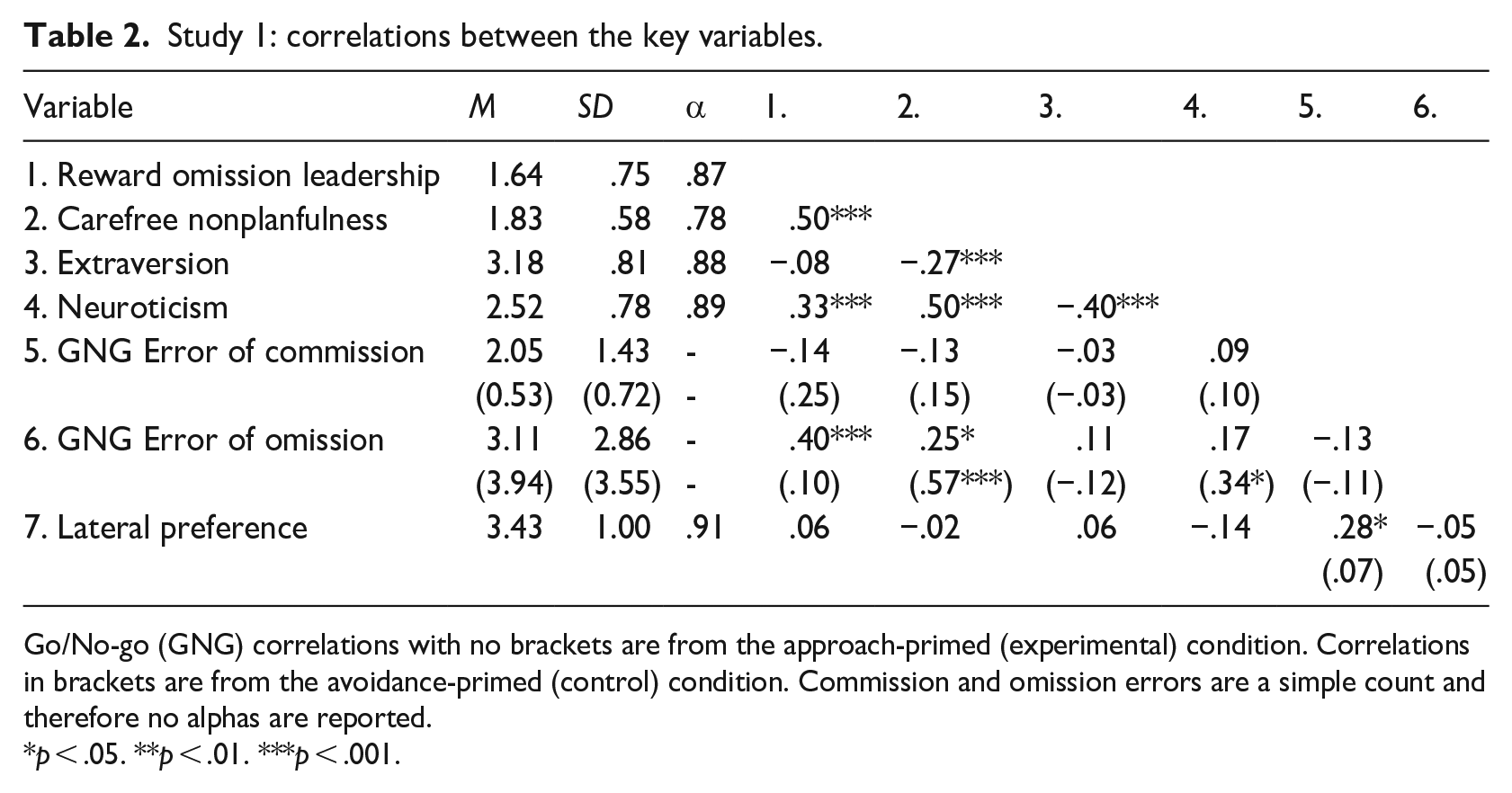
Go/No-go (GNG) correlations with no brackets are from the approach-primed (experimental) condition. Correlations in brackets are from the avoidance-primed (control) condition. Commission and omission errors are a simple count and therefore no alphas are reported.
p < .05. **p < .01. ***p < .001.
These correlations are generally as might be expected, except for the significant relationship between errors of omission and carefree nonplanfulness in the control condition. Combined with the more expected finding of a significant correlation in the experimental condition, the significant correlation in the control condition is best explained by understanding carefree nonplanfulness as a broader construct than disinhibition and thus more broadly related to errors of omission.
We also examined if carefree nonplanfulness was the best predictor of reward omission leadership from subscales of psychopathy as measured by the PPI. Correlations between the subscales showed that carefree nonplanfulness had the highest association with reward omission leadership (carefree nonplanfulness, r = .50, p < .001; Machiavellian egocentricity, r = .28, p < .01, stress immunity, r = –.22, p < .05; impulsive nonconformity, 3 r = .23, p < .01; fearlessness, r = .17, ns; blame externalization, r = .09, ns; coldheartedness, r = .20, p < .05; social potency, r = .04, ns). In multiple regression of all the PPI subscales in the prediction of reward omission leadership, the only significant predictor was carefree nonplanfulness (β = .43, p < .001). Since carefree nonplanfulness is in the same constellation of traits as disinhibition, this result suggests that disinhibition is an important predictor of reward omission leadership. Support for Hypothesis 1 was therefore found and regression results suggest that our study does not overly suffer from endogeneity problems associated with psychopathy in general.
Table 3 presents regressions which test the four neuropsychological models of disinhibition across Studies 1 and 2: the RMM (Patterson and Newman, 1993) and the lateral preference model (Gardiner et al., 2015; Jackson, 2008). In Studies 1 and 2, the three models of disinhibition were tested with mean centered two-way interactions terms (extraversion × neuroticism, neuroticism × lateral preference) in multiple regression (Hayes, 2009). These two-way interactions and resultant simple slope analyses provide a direct test of Hypotheses 2a and 2b.
Study 1 and Study 2: regressions of key variables predicting reward omission leadership.
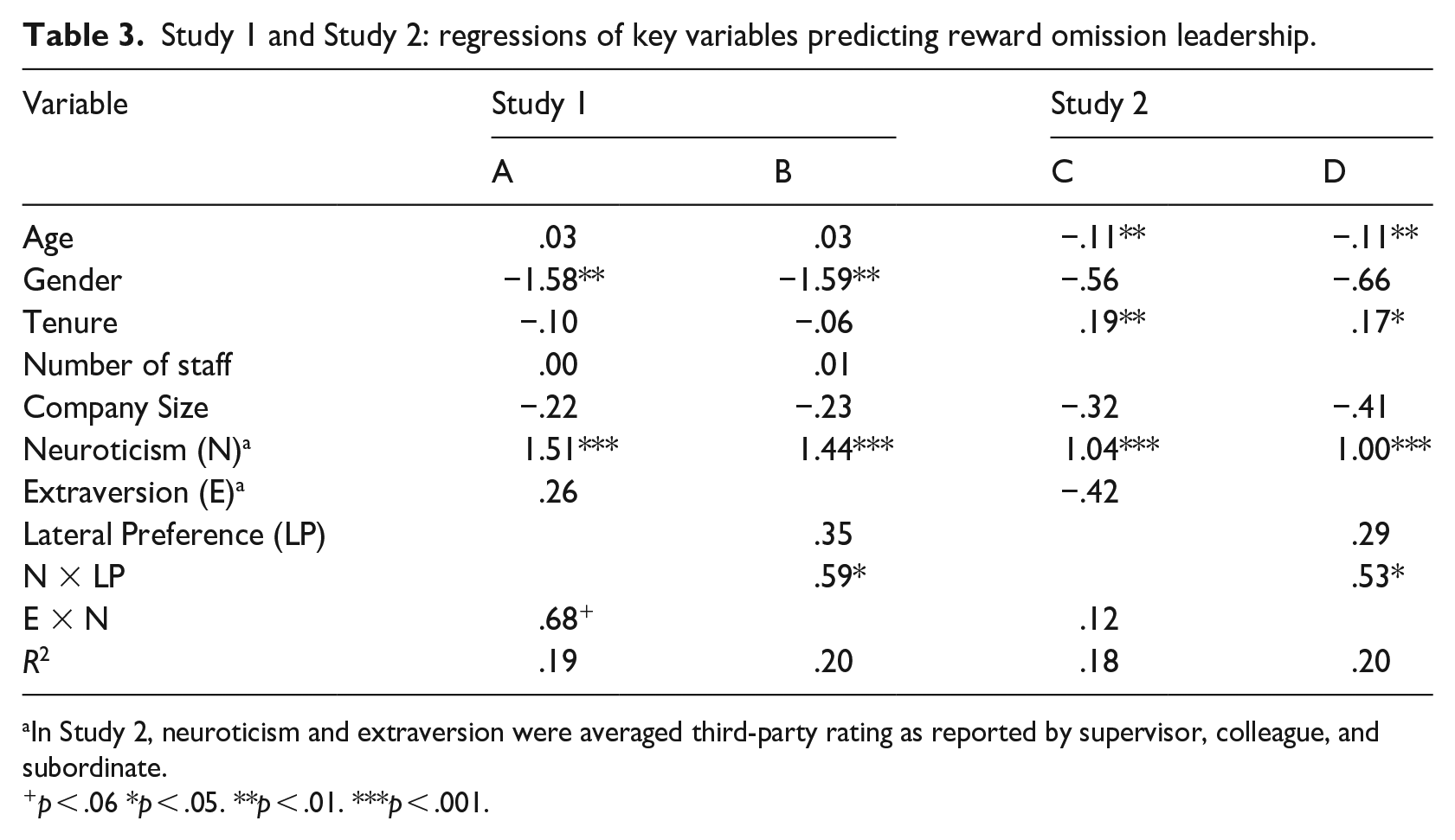
In Study 2, neuroticism and extraversion were averaged third-party rating as reported by supervisor, colleague, and subordinate.
p < .06 *p < .05. **p < .01. ***p < .001.
When we regressed neuroticism and extraversion against reward omission leadership (Analysis A in Table 3), gender and neuroticism were significant and extraversion × neuroticism was close to significance (p < .06). Males and higher scorers in neuroticism were higher in reward omission leadership. Simple slopes analysis of the interaction showed that the slope for neuroticism at high extraversion was higher (b = 2.06, p < .001) than for low extraversion (b = .95, p = .04) as shown in Figure 1. This provides partial support for Hypothesis 2a.
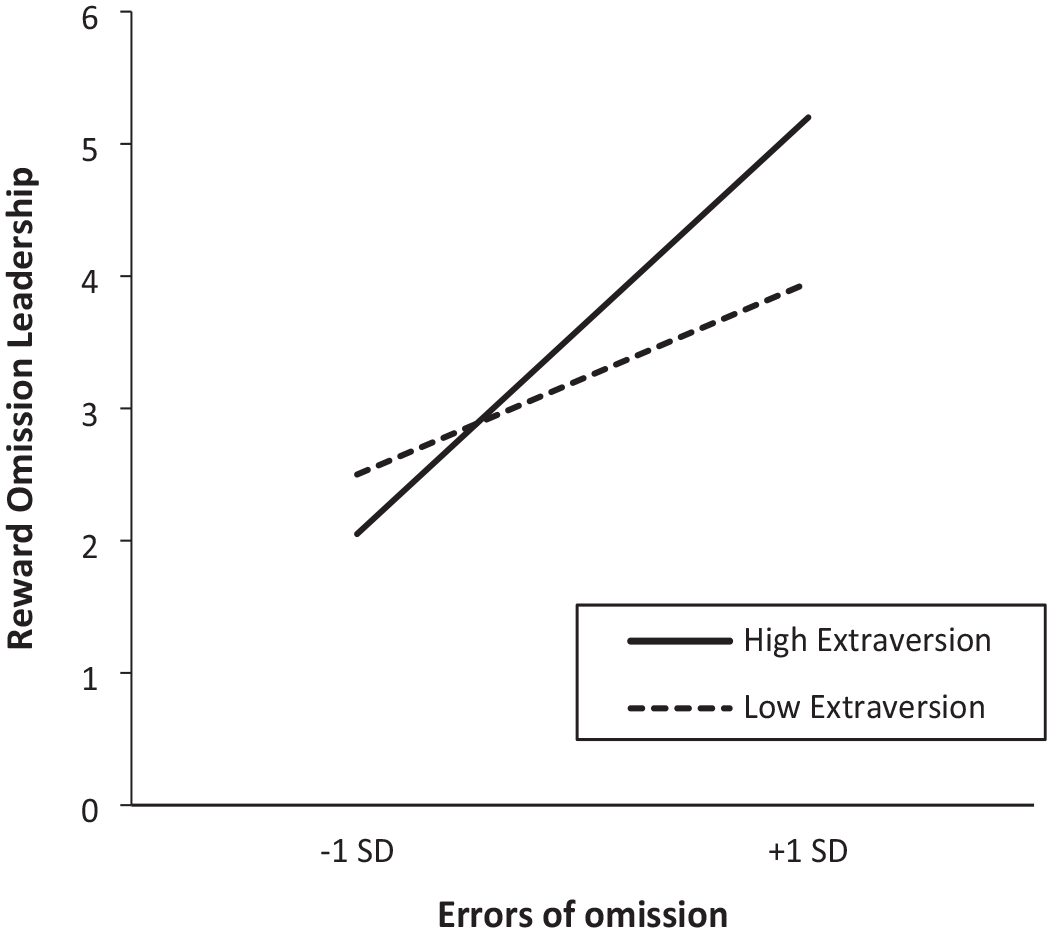
Study 1: plot of the simple slopes showing how higher extraversion strengthens the relationship between neuroticism and reward omission leadership.
When we regressed reward omission leadership against neuroticism and lateral preference (Analysis B in Table 3), gender, neuroticism, and neuroticism × lateral preference were significant. Men and higher scorers in neuroticism were higher in reward omission leadership. Simple slopes analysis of the interaction, as shown in Figure 2, showed that neuroticism predicted reward omission leadership for individuals with left hemispheric preference (b = 2.03, p < .001). The slope for right hemispheric preference was not significant. This result supports Hypothesis 2b.
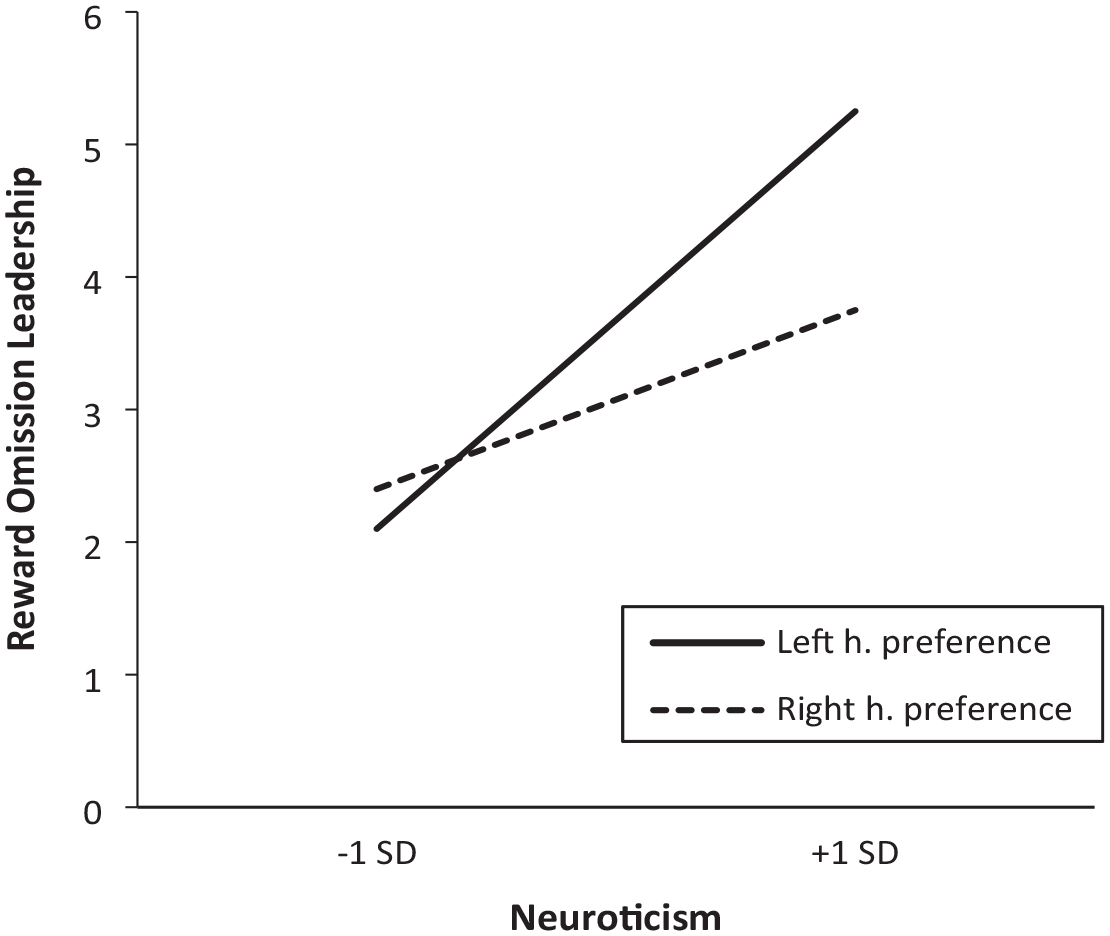
Study 1: plot of the simple slopes showing how left hemispheric preference compared to right strengthens the relationship between neuroticism and reward omission leadership.
Table 4 presents the regression of omission and commission errors against reward omission leadership (Hayes, 2009). After mean centering, results show that the interaction between omission errors and go/no-go condition was significant (b = –.40, p = .04). In support of Hypothesis 3, the simple slope of omission errors in the experimental condition was significant (b = .47, p = .002) and not significant in the control condition. A plot of the simple slopes is shown in Figure 3. Gender was also significant (males were higher in reward omission leadership than females, b = –1.50, p = .02).
Study 1: regression of commission errors and omission errors against reward omission leadership.
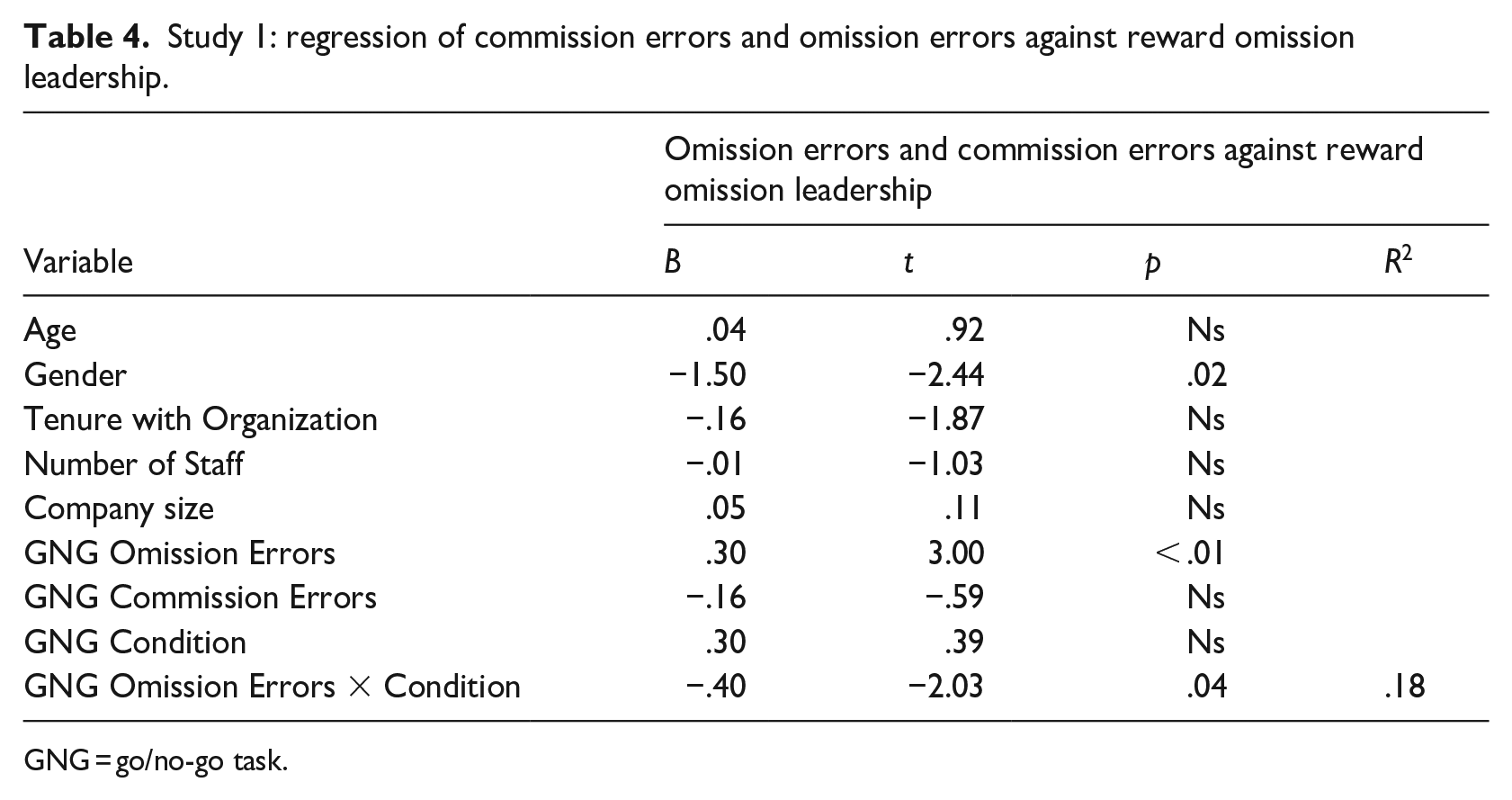
GNG = go/no-go task.
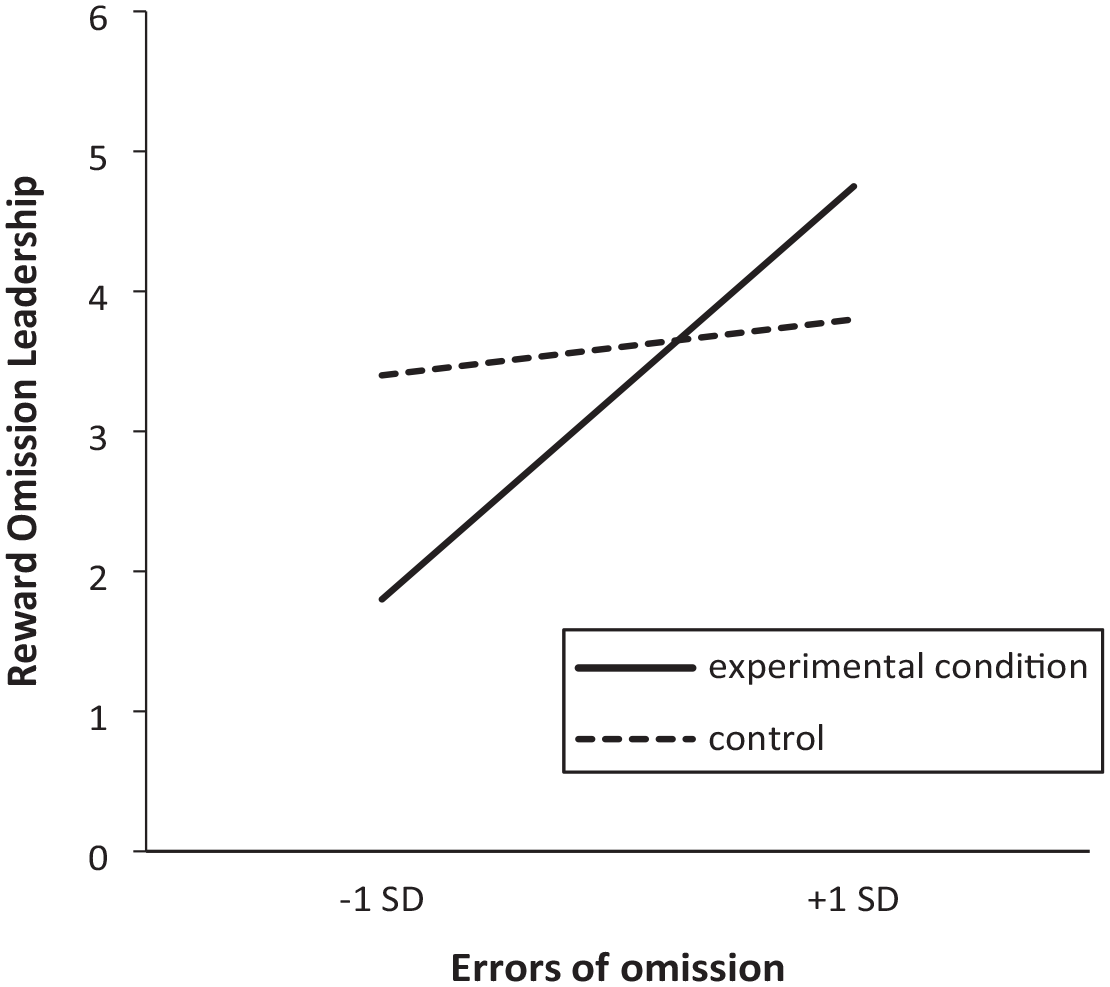
Study 1: plot of the simple slopes showing how errors of omission predict reward omission leadership according to experimental context.
4. Study 2
In Study 2, we attempt to find more evidence for Hypotheses 2a and 2b. The main difference between Study 1 and Study 2 is that we use extraversion and neuroticism ratings from third parties (supervisor, colleague, and subordinate) to reduce potential effects of common method variance. We continue to focus on trait level relationships between disinhibition and reward omission leadership because they would indicate effects that generalize across different contexts.
4.1. Participants
We recruited 176 full-time team leaders based in the United States (51.4% women, 48.6% men, Mage = 31.03 years, SDage = 8.60 years, age range: 18–62 years). The sample incorporated many industries including services (47%), retail (15%), education (15%), production (12%), and others (11%). Team leaders were employed in small business with 1–20 employees (29.0%), mid-sized business with 21–100 employees (40.1%) and larger business with 100+ employees (30.9%). Participants were paid US$25 for full completion of the tests in the YWeDo online laboratory and were recruited from a website that provides this expertise. Since 80.4% of participants were using cable or faster Internet connection, this was not used as a control variable.
4.2. Measures
4.2.1. Reward omission leadership
See Study 1. Internal reliability was acceptable (α = .91)
4.2.2. Lateral preference
See Study 1. Internal reliability was acceptable (α = .91)
4.2.3. Third-party ratings of extraversion and neuroticism
A module of the YWeDo online laboratory automatically emails a representative supervisor, colleague, and subordinate a link to a questionnaire (for another study using this method see Jackson, 2011b). This procedure can be contrasted with most third-party rating studies that collect data from within only one organization where a supervisor assesses many subordinates. The procedure followed in the current research has strengths in that it provides data generalizable across organizations. Although this study included other third-party ratings, the only ratings of interest are extraversion and neuroticism. The question was asked in the following way: “Thinking about his or her personality, to what extent has <participant’s name> shown the following general characteristics: High extraversion (i.e. being gregarious, outgoing, sociable, projecting one’s personality),” and “high neuroticism (i.e. tendency to be upset or emotional).” Participants responded on a five-point scale (1 = completely disagree to 5 = completely agree). Other authors also use single item scales of personality (e.g. Denissen et al., 2008).
Inter-rater reliability between the three third-party supervisors was assessed by computing the intraclass correlation coefficients, where ICC(1) is the ratio of between group variance to total variance and ICC(2) is the reliability of the group mean. Agreement among team members was assessed using rWG which provides an index of the consensus between raters. For third-party neuroticism, ICC(1) = .57, ICC(2) = .80 and average rWG = .64. For third-party extraversion, ICC(1) = .55, ICC(2) = .78 and average rWG = .72. Based on the relatively high levels of the ICC measures supported by high average rWG, we had enough evidence to average the personality ratings from the subordinate, colleague, and subordinate to provide summary third-party ratings of extraversion and neuroticism.
4.3. Results
Mean values, standard deviations, alphas, and correlations are shown in Table 5. Similar to Study 1, third-party neuroticism is significantly correlated with reward omission leadership (r = .30, p < .001). No other correlations are significant.
Study 2: mean values, standard deviations, alphas, and correlations.
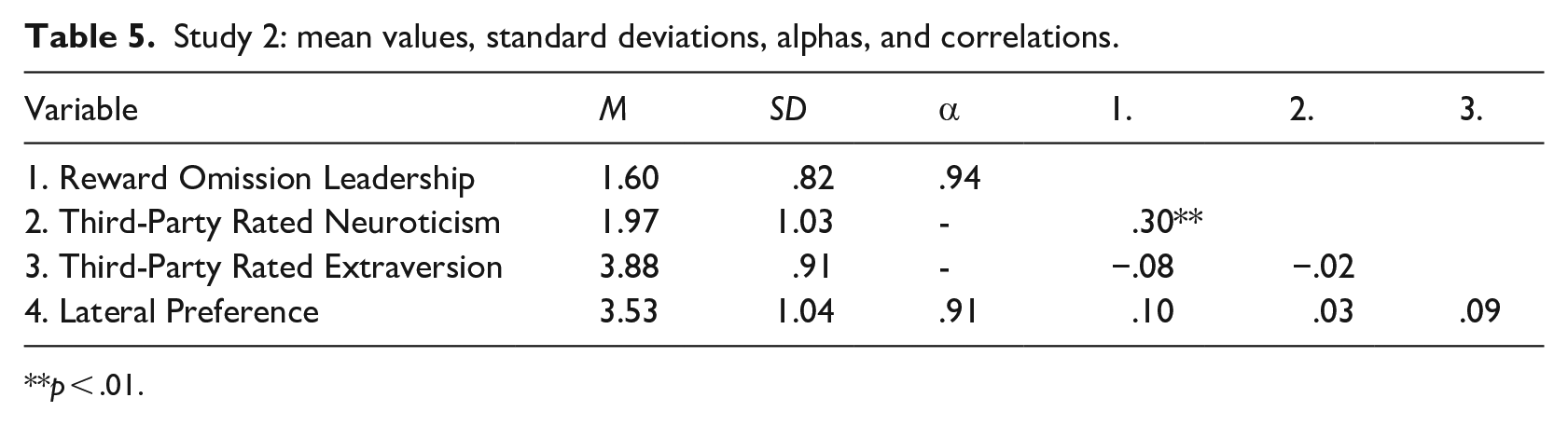
p < .01.
When reward omission leadership was regressed against neuroticism and extraversion (Analysis C in Table 3), age, tenure and neuroticism were positive and significant predictors. The extraversion × neuroticism interaction was not significant which provides no support for Hypothesis 2a. When we regressed reward omission leadership against neuroticism and lateral preference (Analysis D in Table 3), age, tenure in organization, neuroticism, and neuroticism × lateral preference were significant. Younger people, more tenure, and higher scorers in neuroticism were higher in reward omission leadership. Simple slopes analysis of the significant interaction (see Figure 4) showed that neuroticism predicted reward omission leadership for individuals with left hemispheric preference (b = 1.56, p < .001). The slope for right hemispheric preference was not significant. This result supports Hypothesis 2b.
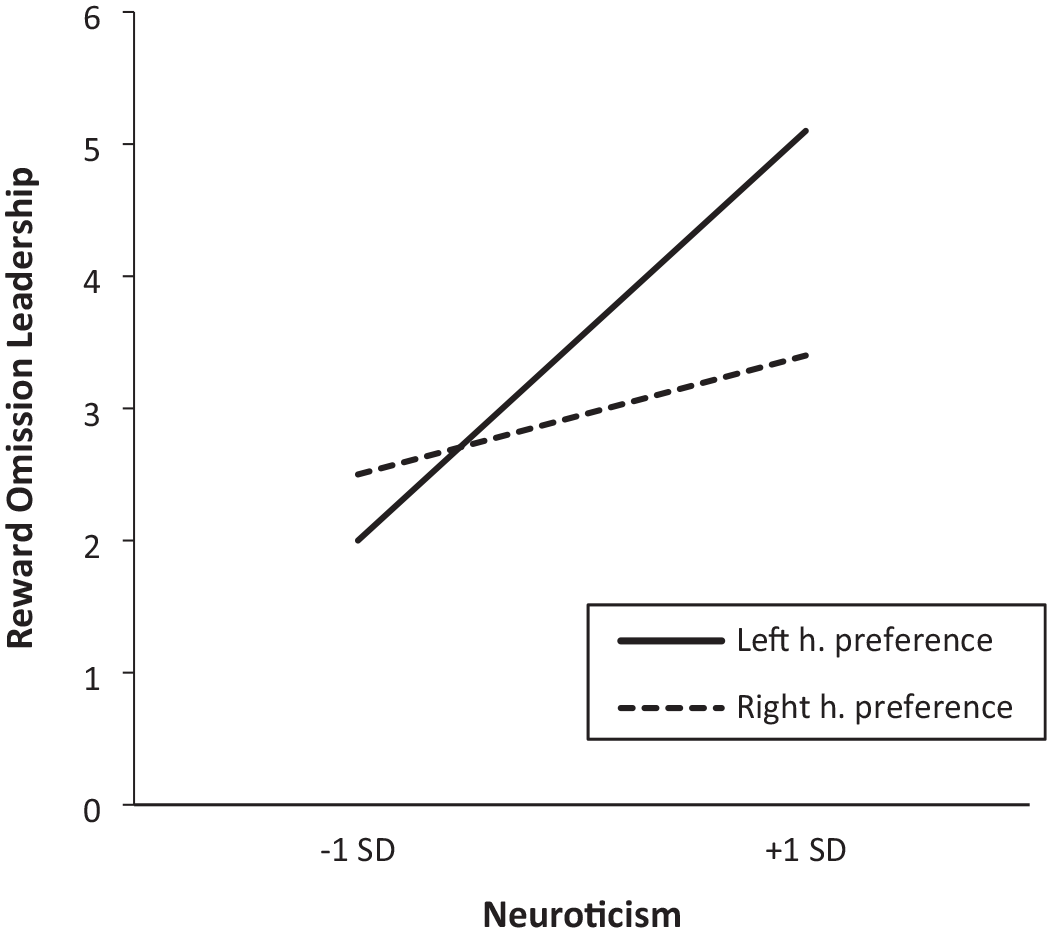
Study 2: plot of the simple slopes showing how left hemispheric preference compared to right hemispheric preference strengthens the relationship between neuroticism and reward omission leadership.
5. Study 3
Study 1 provided evidence for the RMM (Patterson and Newman, 1993) and the lateral preference model of disinhibition (Jackson, 2008). Study 2 provided further evidence for the lateral preference model. Potential weaknesses of Study 1 and Study 2 include that reward omission leadership is self-reported by the team leader and that data are collected across organizations. In Study 3, we report data collected from a single organization using employee ratings of reward omission leadership from three representative employees. Employee ratings of reward omission leadership were used by Hinkin and Schriesheim (2008) in their original article so the use of employee ratings has merit.
5.1. Participants
Participants were 273 employees in 91 junior team leaders. The teams worked in “gas stations 4 ” for a petroleum sales organization in Mongolia. Team leaders comprised 18.7% men, 81.3% women, Mage = 40.52 years, SDage = 99.07, and age range: 24–58 years. Average tenure of the team leader was 12.01 years (SD = 9.08) and average number of employees was 7.38 (SD = 2.83). Three representative employees of each team leader from the petroleum retail outlet completed a small battery of questionnaires including their perception of the team leader’s reward omission leadership. Employees worked at the gas station to provide personal service to customers as Mongolian gas stations are not self-service as commonly found in Western countries. This provides a good context to test our hypothesis for two reasons: The non-Western context in contrast with samples from Study 1 and Study 2, and that gas station employees would have abundant face-to-face time and exposure to their junior manager, with ample opportunities for the leader to demonstrate responsiveness to desirable behavior. Data were collected by the fourth author and two research associates who personally traveled across Mongolia to collect the data. Neither team leaders nor employees were paid for questionnaire completion and all participants were assured that the data collection was for research purposes only.
5.2. Measures
All questionnaires were translated into Mongolian by the third author and then back translated into English. A few minor changes were then made to the Mongolian translation.
5.2.1. Employee ratings of team leader’s reward omission leadership
See Study 1. The questions were as originally written by Hinkin and Schriesheim (2008) who used employees to rate leaders in their study (alpha at Level 1 = .89).
5.2.2. Lateral preference
See Study 1. Completed by team leader (Level 2 α = .75).
5.2.3. Neuroticism
See Study 1. Completed by team leader. Upon further inspection, one item, “I often feel blue” was more like “I often feel bored and blue” in Mongolian. This item was removed as it had a negative correlation with the scale total (Level 2 α after item deletion = .78).
5.2.4. Control variables
We included age, sex, tenure and education of the assessors in line with the previous studies. We also included the Cognitive Reflection Test which is composed of three “ability type” questions provided by Frederick (2005). With this test, the obvious answer (i.e. the intuitive and quick answer) is incorrect (Level 2 α = .83). The correct answer is provided by participants who suppress the first solution that “springs to mind” and reflect on the task (Frederick, 2005). We thought that managers who were low scorers (i.e. who state the obvious and incorrect answer) would be more likely to display reward omission behavior to third parties, as a result of their less sophisticated cognitive style.
5.3. Results
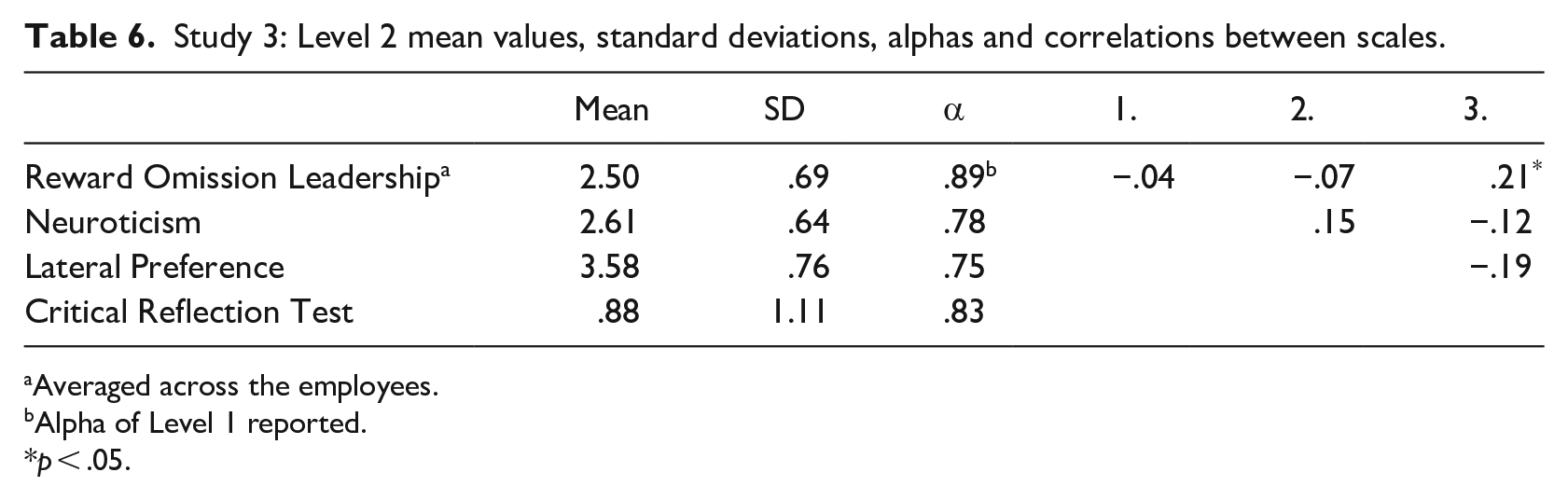
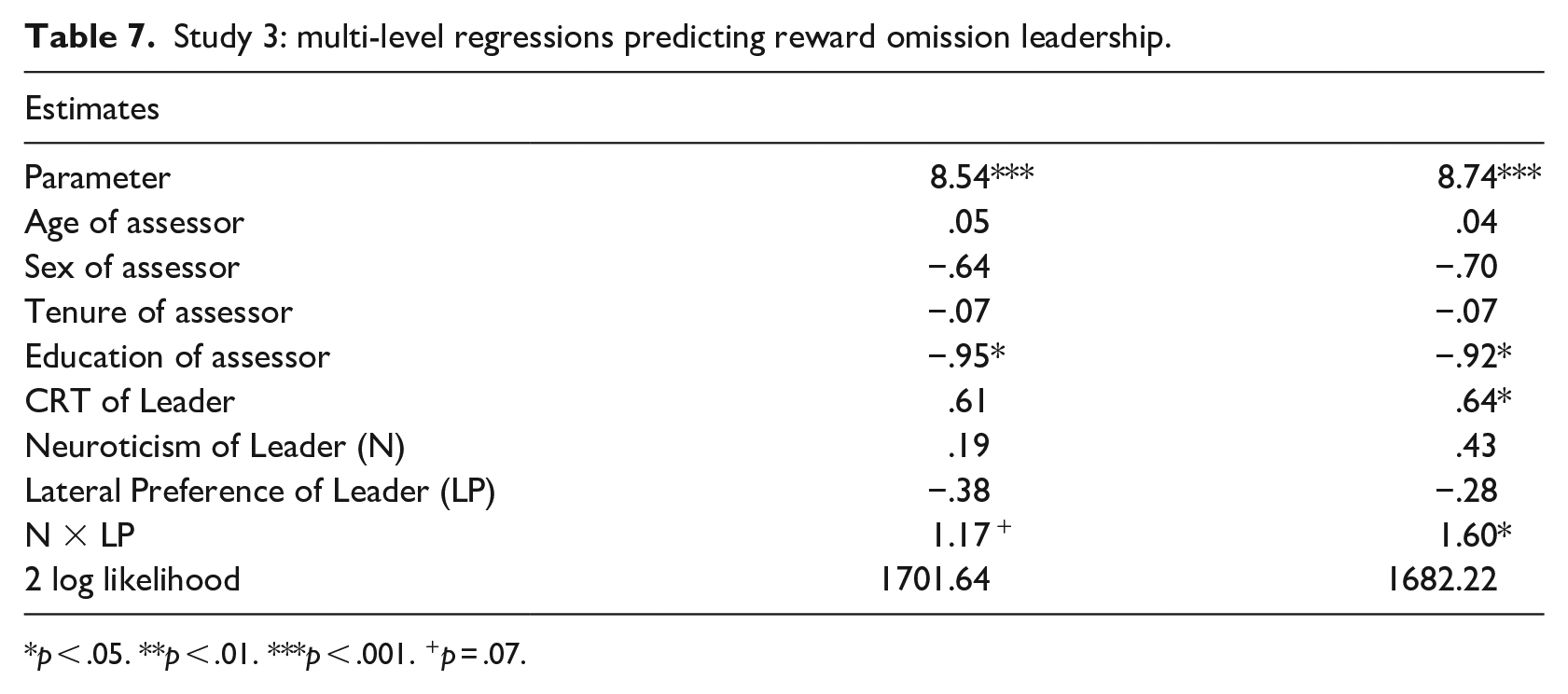
Mean values, standard deviations, alphas, and correlations of the Level 2 and Level 1 data are shown in Table 6. Perhaps unsurprisingly, the means of reward omission leadership from employees are higher in Study 3 than the self-report means in Study 1 and Study 2. All alpha internal reliabilities are satisfactory (α > .7). For the employee ratings of reward omission leadership, ICC(1) = .51 and ICC(2) = .89 and average rWG = .76. Although suggestive of reasonable reliability and agreement as indicated by ICC(2) and average rWG, the ICC(1) was somewhat low, so we used means as outcomes multi-level regression (Raudenbush, 2002) to examine the two-way interaction between neuroticism and lateral preference in the prediction of the employee ratings of the team leader’s reward omission leadership. We controlled for the raters’ age, sex, education, and tenure (as per previous studies) and for the manager’s cognitive reflection. Independent variables were mean centered.
Study 3: Level 2 mean values, standard deviations, alphas and correlations between scales.
Averaged across the employees.
Alpha of Level 1 reported.
p < .05.
Table 7 presents the results of the multi-level regression. Using all the data, the interaction between leader neuroticism and leader lateral preference in the prediction of the leaders third-party assessed reward omission leadership was not quite significant (Model 1). By removing three outliers, identified from the regression, the interaction becomes significant (p < .05). In support of Hypothesis 2b, simple slopes analysis of the interaction shows that neuroticism predicts reward omission leadership for leaders with a left hemispheric preference (b = 1.62, t = 1.94, p = .05) and the slope was not significant for leaders with a right hemispheric preference as shown in Figure 5.
Study 3: multi-level regressions predicting reward omission leadership.
p < .05. **p < .01. ***p < .001. +p = .07.
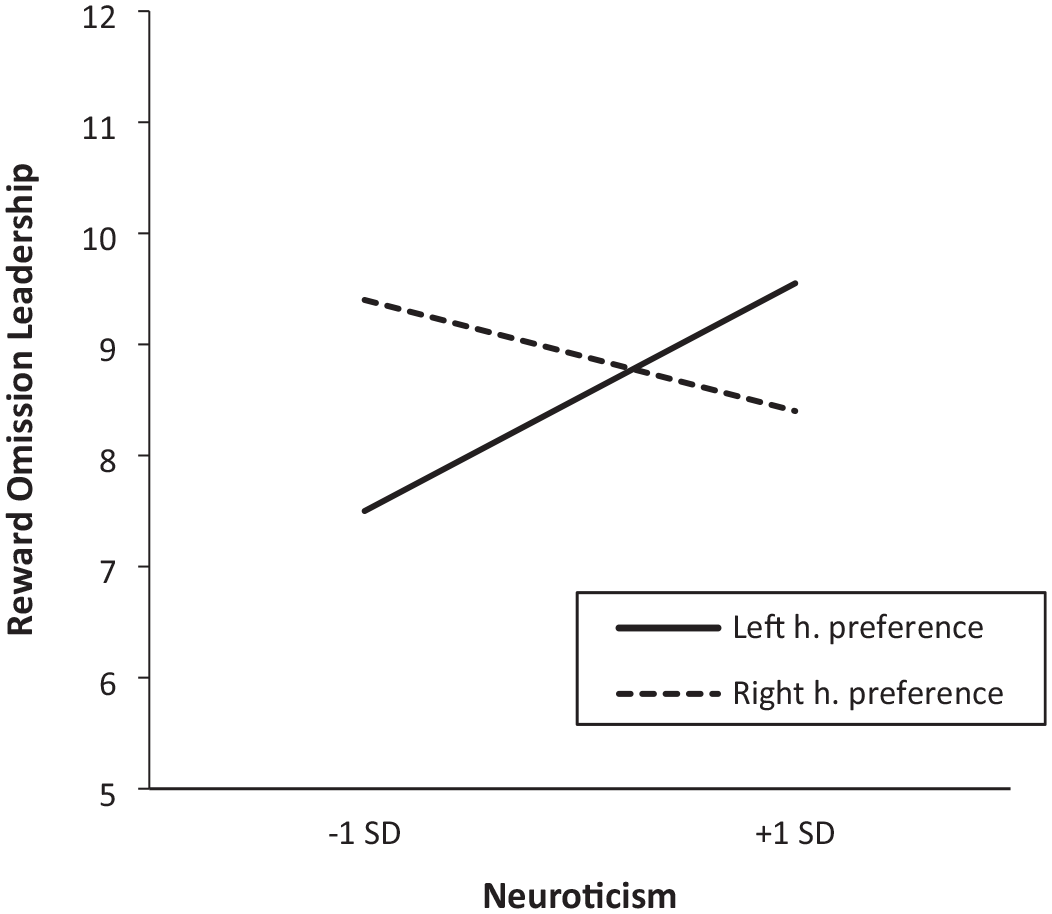
Study 3: plot of the simple slopes showing that increasing change from right to left hemispheric preference strengthens the relationship between neuroticism and reward omission leadership.
6. General discussion
Research on leadership has predominantly focused on practices that foster positive outcomes such as productivity, commitment, and well-being (Day et al., 2014). Some leadership styles such as passive forms of leadership have also been found to have important detrimental effects, yet little is known about why it occurs (Fosse et al., 2019). Reward omission leadership is a passive and particularly destructive form of leadership that is poorly understood. We sought to examine what predicts this behavior by comparing different models of disinhibition across multiple studies to understand what is meant by disinhibition and the mechanisms that explain its positive association with reward omission leadership. This is important to management practice because an understanding of the psychological mechanisms associated with reward omission leadership provides opportunity to select and train leaders so that the workplace can be improved.
Overall, results generally converge to suggest that disinhibition is positively associated with reward omission leadership. Our results provide support for: Hypothesis 1, carefree nonplanfulness (a proxy for disinhibition) is central to reward omission leadership; Hypothesis 2b, that high neuroticism and left hemispheric preference predict reward omission leadership, and that this association remains true when relying on peer evaluations of reward omission leadership. We also found partial support in Study 1 for Hypothesis 2a, that high neuroticism and high extraversion predicts reward omission leadership. Support was also found for Hypothesis 3, that omission errors in the experimental condition from a classic measure of disinhibition (go/no-go task) predict reward omission leadership. We did not find any evidence of a simpler notion that introversion predicts reward omission leadership.
Across all the studies, evidence therefore suggests that the inappropriate behavior of reward omission leadership in highly neurotic people can be conditioned at a state level such as using a pre-potent approach response set in the go/no-go task, partially by trait extraversion or more generally by habitual left hemispheric activation. Overall, our findings therefore suggest that, in neurotic people, reward omission leadership is associated with the action components of left hemispheric preference. From this perspective, we believe that the lateral preference model has advantages over the RMM (Patterson and Newman, 1993) which focuses on the role of extraversion in activating disinhibition in neurotic people since extraversion captures more than just action-potential. We think extraversion will influence neurotic people to engage in more disinhibited socially oriented activities.
Our findings have practical implications with regards to the training and promotion of leaders high on the psychopathic facet of disinhibition. Identifying disinhibition as a predictor of reward omission leadership highlights potential risk factors in leadership settings. Recognizing these risk factors can lead to interventions or training to help leaders develop more effective leadership strategies. Psychopathic individuals, and males in particular (Landay et al., 2018), have been shown to excel at climbing the hierarchy with damaging implications for the well-being and productivity of their teams. To protect employees from the detrimental impact of reward omission leadership on morale and productivity, organizations can integrate a disinhibition assessment tool as part of training procedures. Our research demonstrates that the PPI, the go/no-go task and the lateral preference scale in combination with a neuroticism scale can be used to help explain how disinhibition provides an understanding of those prone to reward omission leadership. Psychologists can use the ideas presented in this article to provide counseling for those seeking promotion and for those managing a virtual or hybrid team who are more in need of regular feedback and therefore more susceptible to suffer from reward omission leadership.
By exploring the relationship between disinhibition and reward omission leadership, our study contributes to the advancement of leadership theories. It may lead to the development of more nuanced and comprehensive leadership models that consider the role of personality traits as well as disinhibition in shaping leadership behaviors and outcomes. Given that we have identified that reward omission leadership is predicted by disinhibition, we suggest that disinhibition might predict other forms of destructive leadership which might also be construed as presenting due to a lack of cognitive restraint. As such, we suggest future research might investigate this possibility. Moreover, our work in researching how disinhibition is a lack of cognitive restraint instead of a lack of physical restraint also opens the door for a lot more research on how disinhibition might predict dark cognition in general as opposed to dark triad personality traits which are often behaviorally measured.
This research includes several strengths including that we took steps to reduce effects of endogeneity and common method variance. In Study 1, we tested the underlying reasoning of just focusing on disinhibition and omitting other facts of psychopathy, and we incorporated an objective task; and in Study 2 and Study 3, we incorporated third-party ratings. Convergence of results across three studies using multi-method multi-rater techniques provides greater confidence in findings. Further strengths are that we use participant samples from both a single business and across multiple organizations and include a sample from a non-Western country.
One limitation of our work is that we do not explore whether reward omission leadership is intentional or non-intentional. This is important since the cognitive pathways to reward omission leadership may be different and intentional reward omission leadership may be associated with some positive outcomes whereas non-intentional reward omission leadership is much more likely consistently associated with negative outcomes. We think it likely that the non-intentional path from disinhibition to reward omission leadership may be much more direct than the intentional path. Future research could include interviews to determine if such leaders intentionally or unintentionally engage in these behaviors. Another limitation is that experimental laterality researchers might dispute the usefulness of self-reported ear preference as a measure of hemispheric asymmetries of activity in favor of physiological measures. Future research could use EEG and fMRI to more precisely measure frontal asymmetries whereas ear preference measures more broad hemispheric asymmetries. We do not perceive this to be a major problem to our methodology since ear preference is likely to index spreading activation of emotions and actions through the hemispheres similar to the more widely used unilateral hand contraction model that is also used as a proxy for asymmetric frontal cortical activity (Harmon-Jones and Gable, 2017; Schiff and Lamon, 1989, 1994). We acknowledge that ear preference has limitations, but the limitations differ from those inherent in laboratory research, and as a result, they add valuable complimentary evidence to ongoing debates regarding approach asymmetries in the experimental literature (such as for example differences in the models proposed by Davidson, 1998 and Wacker et al., 2003). Moreover, results of the current research add further weight to previous disinhibition research focused on ear preference as a general measure of laterality (Gardiner et al., 2015; Jackson, 2008). We think future research could also explore other antecedents of reward omission leadership and antecedents of punishment omission leadership. We think an especially fruitful line of research would be drawing on more of the clinical literature to develop theory. In the introduction, we thought it likely that leaders who habitually use the tactic of reward omission leadership likely have underlying beliefs of authoritarianism, micromanagement, short-termism and need for control. It would be very fruitful to evidence this perspective.
Experimental researchers may also be concerned that we conducted the go/no-go task online as opposed to in a physical laboratory. We acknowledge the merits of laboratory testing and the possibilities for error with online usage (e.g. non-comprehension, false responding). However, our online technique has the advantage of using managers as opposed to student samples typically used in laboratory research and we use a much larger sample size compared with many laboratory studies. Such errors would likely reduce, as opposed to increase, the likelihood of finding evidence in support of our hypotheses.
Some organizational scholars may also be critical of using online samples in Study 1 and Study 2. The strengths of our technique include that respondents were willing to complete unusual tasks (such as the go/no-go task) which would usually be unacceptable within an organizational selection, appraisal or training procedure. Moreover, our results are likely to be generalizable as respondents come from different organizations and cultures. Furthermore, motivation to provide socially desirable responses was likely low since poor scores carried no consequences and payment ensured motivation to complete the test battery. Research shows that online data are representative and reliable (Buhrmester et al., 2011; Chandler and Shapiro, 2016). In any case, we also tested our model using a more single organization in Study 3.
Future research might focus on how disinhibition is related to other forms of dysfunctional leadership such as authoritarian, narcissistic, toxic, Machiavellian and unethical. Potentially, the lack of restraint and rushed choice of leadership strategy might underlie dysfunctional leadership in general. Punishment omission leadership may however have somewhat of a different basis—perhaps in anxiety. We think anxious people might worry about the way in which negative comments might be perceived and therefore omit them as much as possible. Future research might also focus on how organizational rules and culture might ameliorate reward omission leadership. Social norms of being civil, respectful, positive and encouraging might easily reduce the tendency of leaders to omit rewards due to the social pressure of needing to conform to organizational values. Performance appraisal systems such as 360° feedback might also identify leaders with these dysfunctional tendencies and executive coaching provided to try and assist leaders to hone their leadership skills toward more productive tendencies.
7. Conclusion
Research strongly supports that it is in the organization’s best interest to avert reward omission leadership. We provide evidence for a predictor of this pervasive and detrimental leadership behavior. We measured disinhibition using several different approaches and results converge to suggest that disinhibition is associated with reward omission leadership. Results show that a model of disinhibition characterized by reward seeking behavior of neurotic people is predictive of reward omission leadership.
Footnotes
Acknowledgements
The authors are grateful to the editors of AJM and the anonymous reviewers for helpful comments.
Final transcript accepted 28 June 2024 by Shenjiang Mo (AE Organisational Behaviour).
Funding
The author(s) received no financial support for the research, authorship, and/or publication of this article.
1.
Punishment omission leadership can also lead to negative outcomes.
2.
In Studies 1 and 2, we chose a sample size for each study of n > 165 as this is the minimum required to detect an effect size = .1, with power = .80, type 1 error = .05 and with nine predictors in multiple regression. In Study 3, while limited by the size of the business, we were reassured that  report that about 100 groups at Level 2 even with a small group size provide enough power for coefficients and standard errors to be estimated accurately.
3.
Impulsive nonconformity concerns being radical and having a different role in society than that which is culturally acceptable. It thus markedly differs from disinhibition.
4.
Also known as petrol stations