




Abstract
Background:
Foot orthoses are used to optimize lower extremity function and can improve postural stability by enhancing the afferent somatosensory feedback available to the central nervous system.
Objective:
The aim of this review was to evaluate the effect of foot orthoses on balance control in older subjects.
Study design:
Systematic review.
Methods:
The search strategy was based on the Population Intervention Comparison Outcome method. A search was performed in PubMed, Science Direct, Google Scholar, and ISI Web of Knowledge databases by using selected keywords. A total of 22 articles were selected for final evaluation.
Results:
The results demonstrated that older people should be advised to wear thin, hard-soled footwear with high collars to reduce the risk of falling. The findings for insoles demonstrated an increase in balance control via vibratory or magnetic insoles, but textured insoles do not appear to be beneficial for balance improvement.
Conclusion:
Foot orthoses improve postural stability via a somatosensory or biomechanical effect. Use of footwear with the proper features can be an appropriate intervention in order to increase the balance in the older population and reduce falls.
Clinical relevance
Loss of balance is an important factor in increasing the risk of falling in older subjects. Foot orthoses can improve functional measures of stability in older adults. In this review, results from studies suggest a number of recommendations regarding the optimal footwear for older people to reduce the risk of falling.
Background
One in three people over 65 years of age and almost one in two people over 80 years of age will fall at least once per year. 1 Approximately 20%–30% of these fallers suffer moderate to severe injuries such as hip fractures or head trauma, and more than 90% of hip fractures occur as a result of falling. 2 Apart from the physical consequences, falls can have a severe impact on psychological well-being and quality of life (QOL). In particular, the psychological effects can lead to impaired mobility, loss of confidence, loss of function, and an overall decrease in QOL. 3 The correlation between fall risk and poor postural stability in older adults is well documented. 4 Advancing age is reported to be associated with increased postural sway. 5 Individuals who have suffered multiple falls are thought to perform more poorly on balance and functional tests by exhibiting 20%–30% greater postural instability in comparison with non-fallers when standing on various surfaces. 6
Balance maintenance is directly related to the visual, somatosensory, and vestibular sensory information available to the central nervous system (CNS) regarding the location of the body’s center of gravity (COG). 7 Older adults are predisposed to a reduced quality and quantity of sensory information which is a major contributor to decreased postural stability. Specifically, loss of cutaneous pressure sensation is a normal result of aging and has been linked to postural instability in the older population. 8 Foot orthoses (FOs) are one intervention that has been shown to improve postural stability and could play an effective role in improving postural stability for older people. 9
FOs are used to optimize lower extremity function by supporting and realigning the foot into a more mechanically stable and optimally efficient position. 10 Realigning the foot and increasing the surface area contact between the foot and the ground allow for joint mechanoreceptors in the talocrural and subtalar joints to detect important sensory information.10,11 Many studies have reported improved postural stability with the use of FOs and attribute the improvement to increased tactile stimulation of the plantar surface of the foot.12–14
Few recent studies have considered the mechanical role of custom-molded and prefabricated orthoses on improvement of balance.9,15 Other studies have been conducted using different types of balance-enhancing orthotics to determine their effects on balance in the older population. These devices were designed to address the diminished somatosensory feedback existent in older adults.16,17 Since footwear appears to be an easily modifiable risk factor for falls, identifying specific footwear features that might facilitate or impair balance in older people is imperative for the design of targeted fall prevention interventions.18,19
Studies have been performed in the past decade to determine the effects of footwear on balance and postural sway in a number of populations, producing varying results.9,13,20–23 The mixed findings from these studies are likely to be due to a myriad of factors, including different sample populations, various types of orthoses used for intervention, different footwear characteristics, and the length of time the effects were observed. Some of the populations studied have included healthy subjects, older adults, and patients suffering from acute and chronic ankle sprains, functional ankle instability, and excessive forefoot varus or rearfoot malalignment. Additionally, studies have included the use of several different types of FOs, ranging from custom-made or various types of prefabricated orthoses and shoes. Despite the differences in population and the types of orthoses, several trends can, however, be identified. The aim of this review was therefore to assess studies that have evaluated the effect of insoles, FOs, and footwear on balance in healthy older subjects.
Methods
Protocol and eligibility criteria
The methods for conducting this systematic review and for assessing the quality of evidence were based on using the Preferred Reporting Items for Systematic Reviews and Meta-Analyses (PRISMA) method. 24 Studies published from 1992 to July 2014 were included in this review. This review contains those articles that utilized the following: FOs, insoles, and footwear, and those which utilized shoes as an intervention method on postural and dynamic stability in healthy older people. Studies which involved the use of other interventions simultaneously were excluded, as well as those studies in which volunteer subjects had other disabilities. Several studies evaluated the effect of FOs in older people with neuropathy, and those who had a foot problem were excluded. Figure 1 gives further details of the inclusion and exclusion criteria.
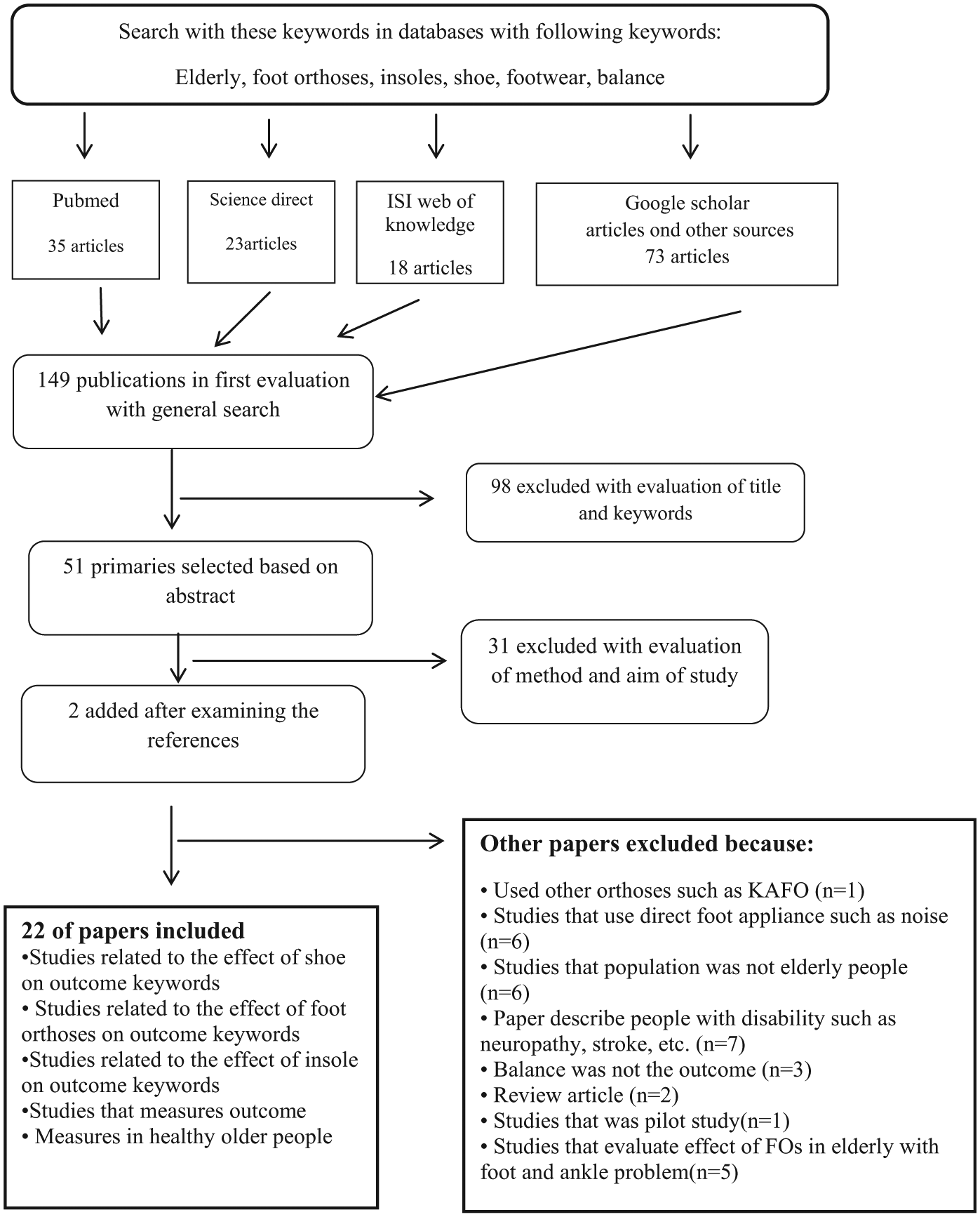
Procedure followed using the PRISMA method.
Information sources
Databases searched included PubMed, Science Direct, Google Scholar, and ISI Web of Knowledge. The review strategy involved checking the title of the articles against the inclusion criteria. Inclusion was validated by checking the abstracts against the inclusion criteria. Abstract-only study reports were not considered in this review because they provide limited information about intervention and participants’ characteristics, thus making it difficult to determine the specific quality of these studies with the PEDro Scale. Only studies written in English which were published in journals were used.
Search strategy
The search strategy was based on the Population Intervention Comparison Outcome (PICO) method and included all relevant articles published from 1992 to 2014. The keywords defined from the MeSH database in MEDLINE were shoe, footwear, FOs, balance, postural stability, dynamic stability, elderly, and older people. For the keyword orthoses, truncation was also used as search strategy to retrieve articles with words composed of the root orth (e.g. orthosis, orthoses, and orthotic devices). Finally, a conclusive search was performed with all keywords combined. Two researchers conducted the search separately, and final selection by checking the abstracts was conducted. A total of 22 articles were selected for final evaluation.
Study selection
Studies were eligible for inclusion in this review if the following information was in the title or abstract: (1) participants were older subjects; (2) the intervention included FOs, insoles, shoes, and footwear; (3) any outcome measure of balance; and (4) statistical analysis of results was reported. The full text version of all studies was obtained, checked once more against the inclusion criteria, and then assessed for method quality.
Method quality and level of evidence
The method quality of the included studies was critically appraised by applying the PEDro Scale. 25 This is an ordinal scale comprising 11 items with each item scored present (1 point) or absent. The scale includes aspects of external, internal, and statistical validity. The PEDro Scale total is a 10, with the item “specified eligibility criteria” not scored. 26 Higher scores represent higher method quality. To describe potential for bias in individual studies, the level of evidence of each retrieved study was assessed according to the criteria suggested by Law and Philp 27 (Table 1). These criteria were chosen because it was suggested as adequate for the rehabilitation scientific literature. Table 2 shows the PEDro scales in the 22 papers selected.
Levels of evidence classification system. a
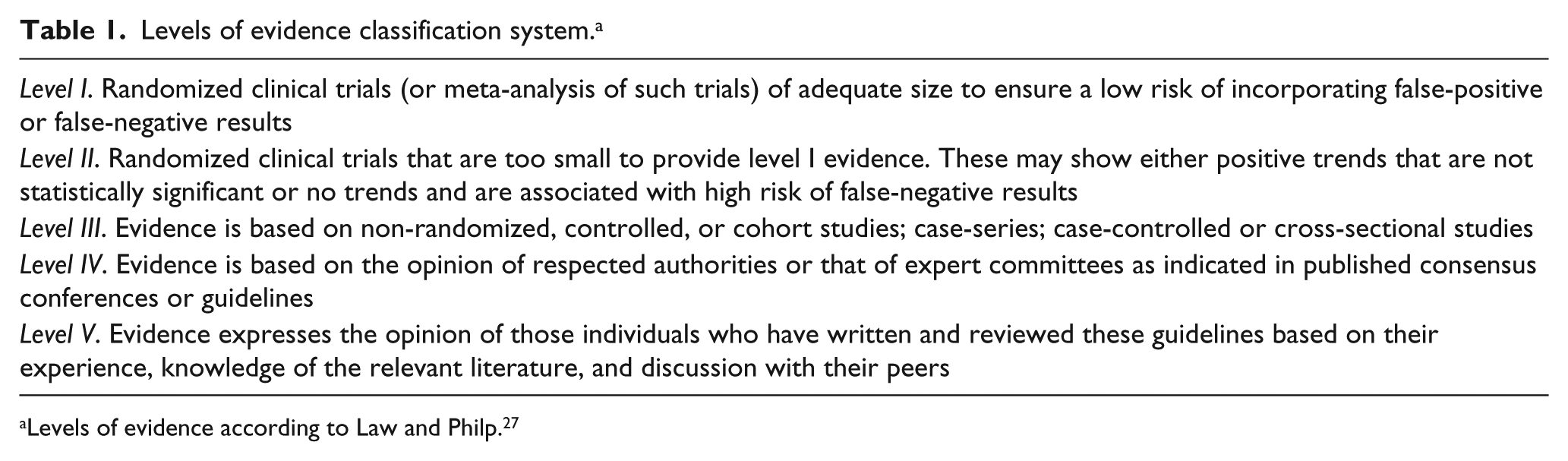
Levels of evidence according to Law and Philp. 27
Level and methodological quality of the evidence.
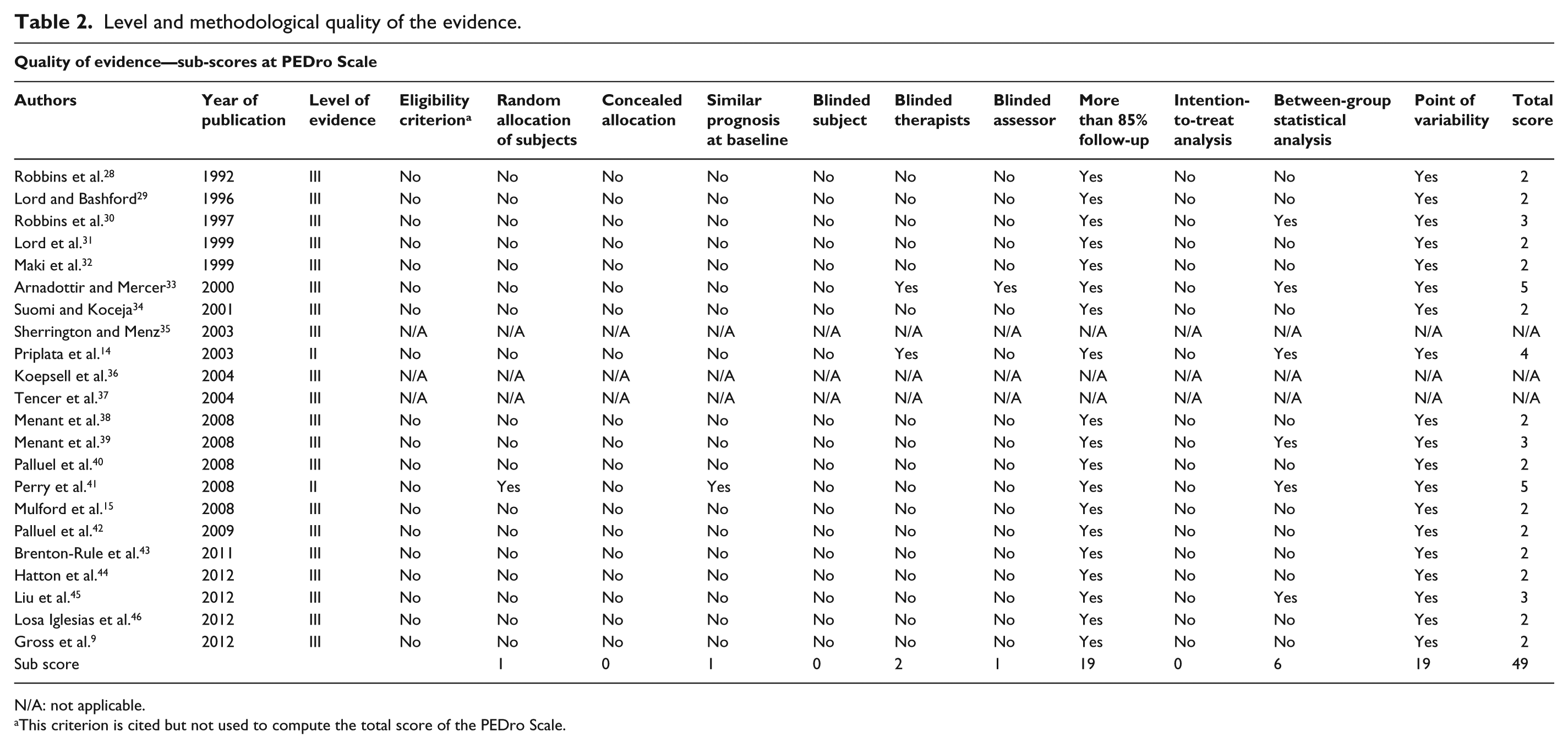
N/A: not applicable.
This criterion is cited but not used to compute the total score of the PEDro Scale.
Data collection process and synthesis
In addition to a PEDro rating, 26 data were extracted describing each study so that specific features could be compared across studies. This included general information about the study such as authors, data of publication, subject demographics, study design, intervention characteristics, and key results. The findings of this review are presented qualitatively as narrative summaries. The details of each study are described chronologically by date of publication.
Results
The following text summarizes the results demonstrated by studies investigating the effects of FOs on balance in healthy elderly individuals. Results categorized the effect of FOs on static and dynamic balance.
Effect of FOs on static balance
Although this grouping contains the largest number of studies by far, 14 in all, just 1 randomized clinical trial (RCT) was reported among those which evaluated the efficacy of FOs on static balance in older people 14 and 12 studies had a low level of evidence according to the PEDro Scale (2/10).14,30 In a study of 20 healthy subjects, Losa Iglesias et al. assessed the impact of soft and hard insole densities on postural stability in healthy older adults. Their results showed that a hard insole was effective when visual feedback was removed, suggesting that the more rigid the insole, the greater the potential for a reduction in fall risk. They concluded that insoles may be a cost-effective, clinical intervention which is easy to implement to reduce the risk of falling in the elderly population. 46
Hatton et al. investigated the immediate effect of wearing textured insoles on gait and double-limb standing balance in older fallers. A total of 30 older adults with a mean age of 79.0 ± 7.1 years and a self-reported history of falling in the previous year underwent a test of double-limb standing with their eyes open and eyes closed on a Kistler force platform under two conditions: wearing textured insoles (intervention) and smooth insoles (control) in their usual footwear. There were no statistically significant effects of the textured insoles on anterior–posterior (AP) or medial–lateral (ML) range or the center of pressure (COP) velocity, with the eyes either open or closed ( p > 0.05). 44
Gross et al. assessed to determine whether balance in older adults could be significantly improved with FO intervention. A total of 13 individuals over 65 years of age, who reported at least one unexplained fall during the past year and demonstrated poor balance, participated in the study. Significant improvements were observed for all tests immediately following the application of FOs, but no differences were found between performance after the initial application and after 2 weeks of orthotic use. These results indicate that customized orthotics have prominent and immediate effects on both static and dynamic balance, possibly making up for the balance deficit caused by loss of plantar sensation. However, there were no continued improvements or reductions in stability after the initial insertion of the FOs. 9
Brenton-Rule et al. evaluated the differences between two different types of athletic footwear in relation to postural stability in healthy older adults. A total of 21 healthy older adults with a mean age of 74 years were recruited. Postural stability was measured using a force plate for AP and ML COP excursion for 30 s with their eyes either closed or open using two different types of athletic footwear. There were significant main effects for both the footwear and eye conditions ( p < 0.05), and these occurred between the barefoot and the two shoe conditions, but not between the two shoe conditions. 43
Palluel et al. explored the lasting effects of a tactile sensitivity enhancement induced by spiked insoles on the control of stance in the elderly subjects. Healthy older subjects (n = 19, mean age = 68.8 years) and young adults (n = 17, mean age = 24.3 years) were instructed to stand or to walk for 5 min with sandals equipped with these spike insoles. The results suggest that the artificial sensory message elicited by the spikes improved postural sway, and the participants were particularly perturbed when the tactile sensitivity enhancement device was removed. The increased sensory context provided by this tactile sensitivity enhancement device appeared to lead to a better postural control. 42
Menant et al. investigated the effects of flared-sole shoes with altered heel to sole differentials on tests of balance and stepping in 29 older people. The results revealed significantly increased sway with an elevated heel when compared to the standard shoe condition ( p < 0.05) which proved to be detrimental to balance ( p < 0.05), whereas a high topline and collar and a hard sole showed trends toward being beneficial. They found no differences between standard shoes and flared-sole shoes in older people. 38
Palluel et al. determined the effect of spiked insoles on postural stability and plantar surface cutaneous sensitivity in volunteer subjects of differing ages. In total, 19 older people (mean age = 69.0 years) and 19 young adults (mean age = 25.9 years) were instructed to stand or to walk for 5 min with sandals equipped with spiked insoles. Cutaneous sensitivity threshold was also evaluated with Semmes–Weinstein monofilaments. Although no immediate effect of the spike insoles was found, the results indicated that standing or walking for 5 min with sandals equipped with spike insoles led to a significant improvement during quiet standing in the older subjects. This suggested that spiked insoles could enhance cutaneous sensation as well as postural stability in older people. 40
Tencer et al. conducted a study to determine the relationships between the biomechanical properties of shoes and style of footwear. Participants were a cohort of 1371 older adults, of whom 327 reported a fall and 327 served as age and sex-matched controls. The results demonstrated that 61% of falls occurred outdoors and that shoes with heels greater than 2.5 cm in height increased the risk of falls compared with athletic or canvas shoes. Greater heel height was associated with increased risk of a fall ( p < 0.03), whereas greater sole contact area was associated with a reduced risk ( p < 0.005). 37
Koepsell et al. determined how the risk of a fall in an older adult varied in relation to the style of footwear worn. A total of 1371 adults aged 65 years and older were monitored for falls over a 2-year period. Interviews were undertaken to explore the risk factors of falling after the fall occurred. Athletic and canvas shoes (sneakers) were the styles of footwear associated with the lowest risk of a fall. Going barefoot, or when stocking nets (tights) were worn, was associated with a sharply increased risk. Relative to athletic/canvas shoes, other footwear was associated with a 1.3-fold increase in the risk of a fall. Contrary to findings from gait laboratory studies, athletic shoes were associated with a relatively low risk of a fall in older adults during everyday activities. 36
Sherrington and Menz assessed the effect of footwear characteristics on balance in elderly subjects. A total of 95 older people (average age of 78.3 years) who had suffered a fall-related hip fracture were asked to identify the footwear they were wearing when they fell. Footwear characteristics were then evaluated using a standardized assessment form. The most common type of footwear worn at the time of the fall was slippers (22%), followed by walking shoes (17%) and sandals (8%). Few subjects were wearing high heels when they fell (2%). The majority of subjects (75%) wore shoes with at least one theoretically suboptimal feature, such as absent fixation (63%), excessively flexible heel counters (43%), and excessively flexible soles (43%). Many older people who have had a fall-related hip fracture were wearing potentially hazardous footwear when they fell. 35
Priplata et al. evaluated the effect of vibrating insoles and balance control in 27 elderly participants. Each stood quietly on vibrating gel-based insoles and calculated sway parameters. The application of noise showed greater improvement in the elderly group in comparison with young people in two variables: ML range ( p = 0.008) and critical mean square displacement ( p = 0.012). Displacement of the head–arm–trunk segment was measured with a reflective marker attached to the right shoulder of each participant. The results showed that the noise-based devices, such as randomly vibrating insoles, could ameliorate age-related impairments in balance control. 14
Suomi and Koceja evaluated the effect of magnetic insoles on postural sway measures in men and women during a static balance test. A total of 28 adults (14 old, 14 young) were assessed using postural sway measures while performing a static two-legged stance test on a Kistler force platform under two treatment conditions (magnetic insoles, non-magnetic insoles). Significant reductions in total sway area and lateral sway scores were obtained by the older adults while standing on the magnetic insoles. These preliminary results indicate that treatment of postural instability using magnetic insoles may be a viable alternative for older adults. 34
Robbins et al. found a relationship between foot position awareness and stability when wearing footwear. In total, 13 older men and 13 younger subjects participated in their study which found that midsole thickness is negatively related to stability ( p < 0.001). Midsole hardness was positively related to stability ( p < 0.001). The findings showed that foot position awareness is related as a causal effect to stability with shoes with a thin and hard sole providing better stability for men than those with thick, soft midsoles. 30
Robbins et al. tested the hypothesis that shoes with thick, soft midsoles, such as modern running shoes, provide better stability in older individuals than those with thin, hard midsoles (n = 25 healthy males, minimum age of 60 years). Contrary to the hypothesis, the findings showed that midsole softness was associated with poor stability ( p < 0.0001), and thick midsoles also provided poor stability ( p < 0.01). When barefoot, subjects showed 19% higher balance failure frequency than with the poorest shoe and 171% greater than the best shoe ( p < 0.0001). Higher comfort was generally found in shoe types associated with higher balance failure frequency. For optimal stability, shoes with thin, hard soles were shown to be preferable for older individuals. 28
Tables 3 and 4 summarize the effect of footwear and FOs on postural stability in healthy older people.
Effect of shoe characteristics on balance in healthy elderly subjects.
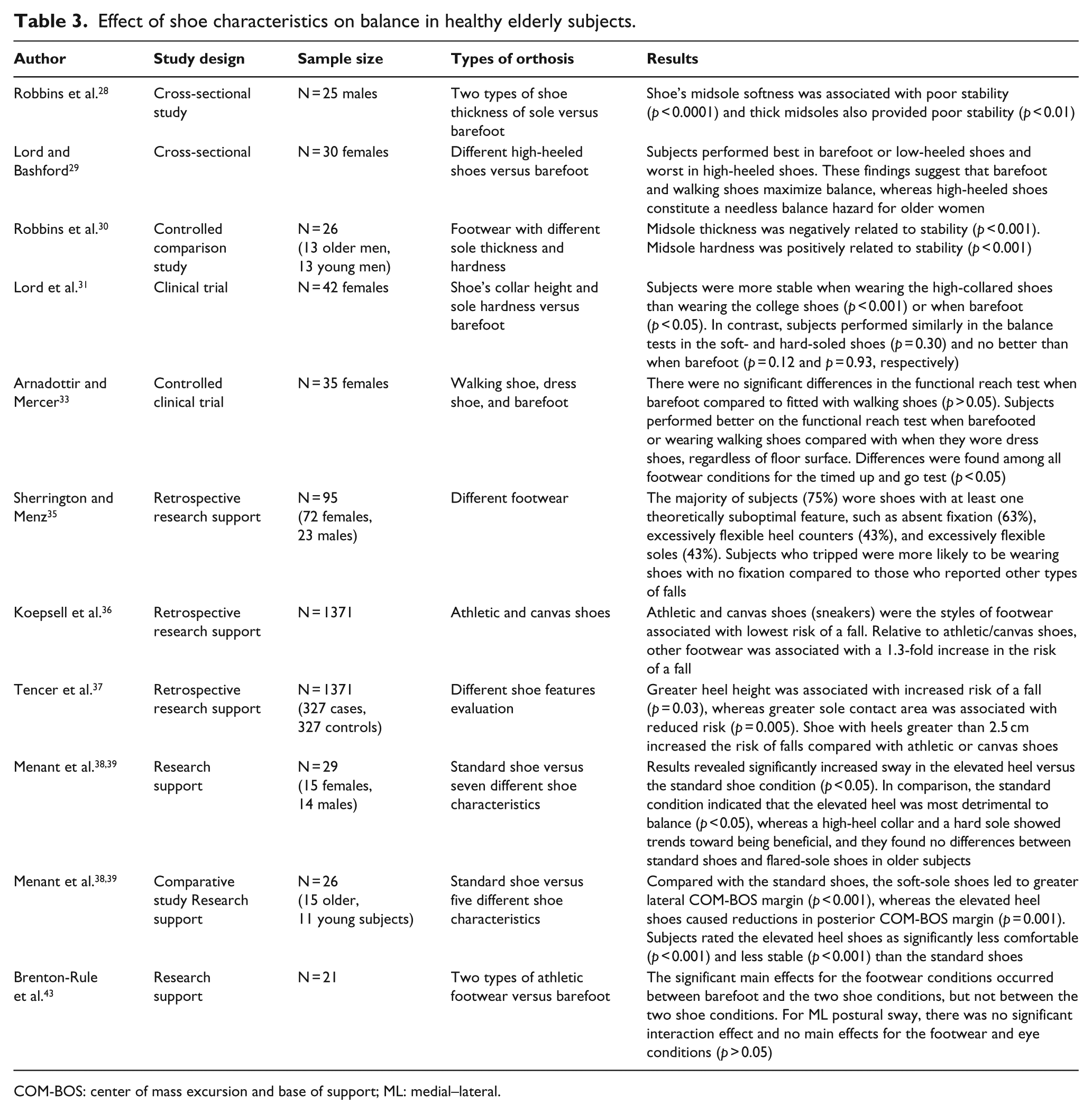
COM-BOS: center of mass excursion and base of support; ML: medial–lateral.
Effect of insole and foot orthoses on balance in healthy elderly subjects.
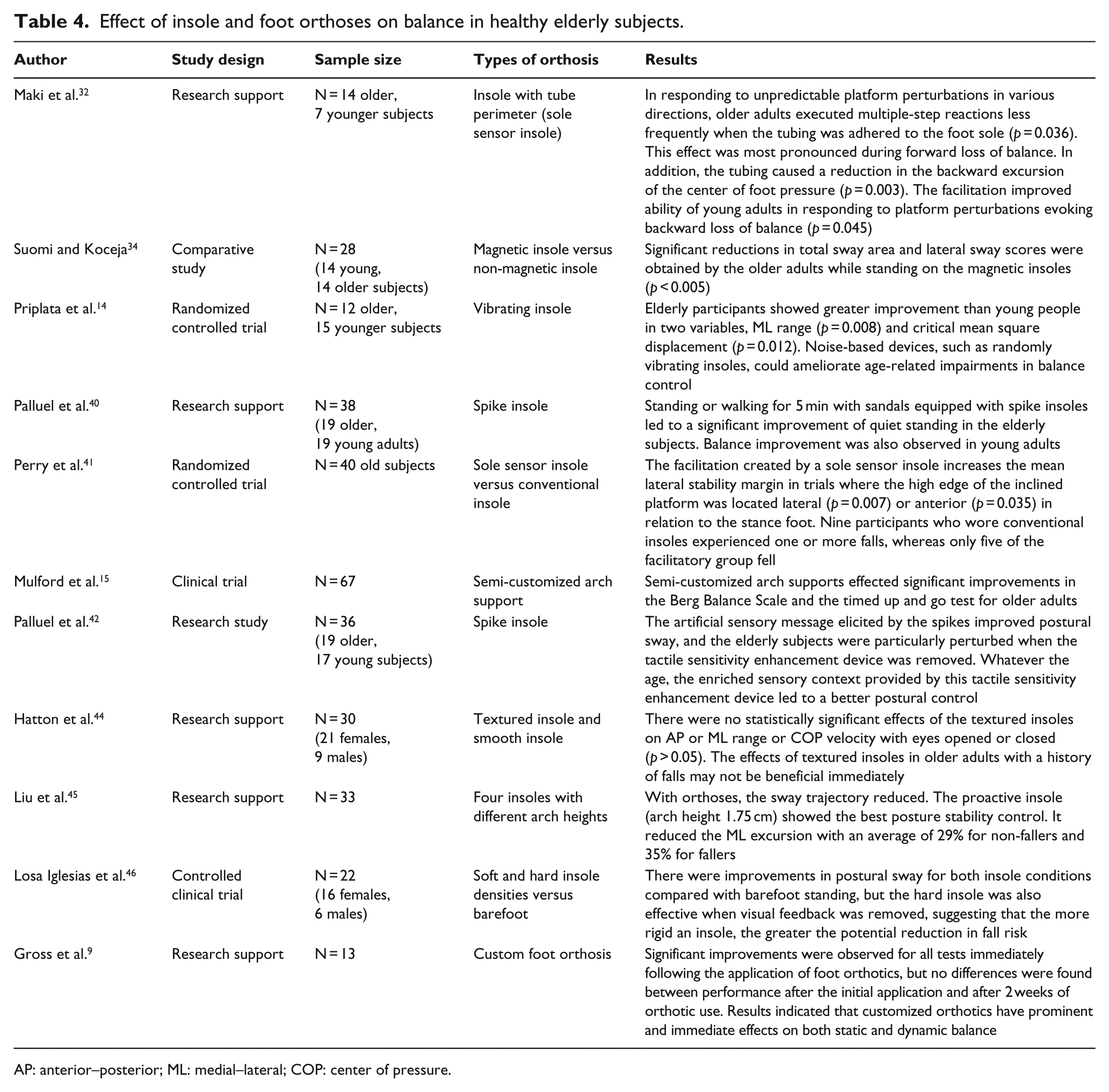
AP: anterior–posterior; ML: medial–lateral; COP: center of pressure.
Effect of FOs on dynamic balance
Half of the studies (4/8) which evaluated the effect of FOs on dynamic stability in older people have a low level of evidence according to the PEDro score (2/10).15,29,31,32 Liu et al. evaluated the influence of different hardness and arch support designs in controlling posture stability. In total, 15 older people who had previously experienced a fall (67.67 ± 2.40 years) and 18 who had not previously fallen (68.67 ± 3.13 years) were recruited in this study and were requested to perform a static balance test (the Berg Balance Scale (BBS)), as well as a dynamic balance assessment with Biodex Medical System and with a pressure mat. With FOs, the sway trajectory reduced, and it was noted that the proactive insole (arch height = 1.75 cm) showed the best posture stability control. It reduced the ML excursion by an average of 29% for non-fallers and 35% for previous fallers. 45
Mulford et al. examined the effects of arch supports on balance with the Berg balance test and on functional mobility with timed up and go (TUG) test. In addition, self-reported back pain and lower extremity pain were measured without the arch supports, immediately after the insertion of the supports in the subject’s footwear and after 6 weeks of arch support use. A total of 67 older adults completed the study, and it was noted that the semi-customized arch supports had significant improvements in the BBS and the TUG test. 15
Menant et al. also explored the effects of various shoe features (sole hardness, heel height, heel collar height, tread pattern) on dynamic balance control and perceptions of comfort and stability in 11 young and 15 older people during walking. Overall, compared with the standard shoes, the soft-sole shoes led to a greater lateral center of mass excursion and base of support (COM-BOS) margin (p < 0.001). Subjects rated the elevated heel shoes as significantly less stable (p < 0.001) than the standard shoes. The findings of this study suggest that an increased shoe heel height and sole softness caused a more conservative walking pattern and impaired ML balance control, respectively, in both young and older subjects. 39
Perry et al. evaluated the effect of an insole with ridged perimeter on balance. A total of 40 community-dwelling older adults (aged 65–75 years) with moderate loss of foot-sole sensation were fitted with the same model of walking shoes. Half of the participants were randomly assigned to wear the shoes with a facilitatory insole for 12 weeks, and other participants wore a conventional insole. The facilitatory insole improved lateral stability during gait, and this benefit did not habituate after 12 weeks of wearing the insole. 41
A study by Arnadottir and Mercer evaluated the effects of footwear on measurements of balance of 35 older women aged 65–93 years. Each subject performed the functional reach test (FRT), TUG, and 10-m walk (TMW) test while wearing walking shoes, dress shoes, and also while barefooted. They showed no significant differences in functional reach performance in barefoot compared to fitted with walking shoes. Subjects performed better on balance tests when barefooted or wearing walking shoes compared with when they wore dress shoes, regardless of floor surface. Differences were found among all footwear conditions for the TUG assessment. 33
Maki et al. examined the potential for compensating for the destabilizing effects of reduced cutaneous sensitivity on postural balance. In total, 14 healthy older adults (aged 65–73 years) and 7 healthy young adults (aged 23–31 years) were selected for inclusion in the study. They studied the effects of plantar facilitation on control of rapid stepping reactions evoked by unpredictable postural perturbation, applied via sudden platform movement in forward, backward, and lateral directions. Plantar facilitation reduced the incidence of extra limb movements in the older adults. Both young and older subjects reduced the center of foot pressure on posterior foot boundary during continuous AP platform motion. 32
Lord et al. assessed the balance ability of 42 older women (mean age = 76 years) when barefoot and in shoes with standard collar height (Oxford-style shoe) and a raised collar height. The findings suggested that the subjects were more stable when wearing the high-collared shoes than the other shoes (p < 0.001) or when barefoot (p < 0.05). In contrast, subjects performed similarly in the balance tests in the soft- and hard-soled shoes (p = 0.30). The results revealed that subjects performed better in the high-collared shoes for both the body sway and coordinated stability tasks. 31
In a study on 30 women, Lord and Bashford found that older women performed worse in a test of maximal balance range, but exhibited less postural sway and better scores in a leaning balance test (coordinated stability) when barefoot than when wearing standard low-heel shoes. They found a significant overall shoe condition effect with subjects performing best in barefoot or low-heeled shoes and worst in high-heeled shoes. 29
Discussion
The aim of this review was to evaluate the effect of insole designs, FOs, and shoe characteristics on balance control in healthy older subjects. It is clear that the wearing of footwear may influence postural stability in either a beneficial or detrimental manner. Footwear alters the interface between the sole of the foot and the ground; however, despite a number of published recommendations as to which features should be implemented in footwear design for older adults with postural instability, it appears that many questions remain unanswered regarding the influence of specific design features on postural stability. Evidence shows a consistent trend toward footwear interventions markedly improving postural stability measures, which are predictors of falls in the elderly people. 47
Effect of footwear characteristics on balance
It seems reasonable to suggest that older people should be advised against the wearing of high-heeled shoes because of the detrimental effects of this style on stability and lower extremity function. Footwear with heel heights greater than 2.5 cm are associated with an increased risk of falling.37,48,49 This may have been because an increased heel height was associated with an increase in the supination angle of the foot at heel strike, as a more supinated position of the foot may subject the wearer to an increased risk of inversion ankle sprain and fall. 50 Cho and Choi 51 announced that in the case of high-heeled shoes, the displacement of COP is increased by 200% when compared to barefooted during postural balance tests.
Studies suggest that the use of thick, soft materials in midsole construction may cause instability by reducing afferent feedback from the sole of the foot. This is because footwear with a softer sole (sole hardness less than shore A-33) can alter balance control during challenging gait tasks and relatively thick, soft midsoles have been found to interfere with positional sense and contribute to instability.30,32 Older people should be advised to wear thin, hard-soled shoes with a shore A-50 density to optimize foot position.28,30,44,46,52
There is evidence that footwear with a high topline improves balance ability in older people. Studies suggested that footwear with high-heel collars improve lateral stability by reducing the leverage for supination movements around the subtalar joint, and subjects performed better in the high-collared footwear for both the body sway and coordinated stability tasks.31,38,53 The presence of material surrounding the ankle region is thought to provide mechanical stability to the ankle and subtalar joints in the frontal plane, and in addition, high-collared shoe increases proprioceptive feedback compared with the standard footwear condition.
An alternative view in the literature suggests that lateral flaring may be detrimental to stability because it increases foot pronation by increasing the lever arm for eversion movements around the subtalar joint during the contact phase of gait. 54 A number of authors have suggested that a large midsole flare is beneficial, and it provides a broader base of support, thereby enhancing the stability of the shoe, 55 but other results in elderly subjects showed that there was no significant difference between flared and standard shoes. 38 Therefore, the effect of midsole flaring on balance in older subjects requires further investigation.
Effect of insoles on balance
Custom FOs and prefabricated insoles can improve balance via an increase in contact area at the midfoot and forefoot and improve static and dynamic stability.9,15 Two studies have been conducted using different types of balance-enhancing orthoses to determine their effects on balance in the elderly people. One of these types of balance-enhancing orthoses included a raised ridge around its perimeter. 17 The ridge was located at the perimeter of the orthosis to enhance stimulation of the cutaneous mechanoreceptors on the periphery of the foot. Another study sought to enhance the plantar surface somatosensory feedback via the use of a vibrating insole. Indeed, it has been found that stimulating cutaneous afferent mechanoreceptors through vibrating insoles can reduce sway in older people. 56 Priplata et al. showed that fine-touch sensitivity in older adults can be significantly improved with the input of electrical noise. The application of vibrating insoles reduced sway due to a proposed mechanism called stochastic resonance (SR). SR can be described as a counterintuitive mechanism, whereby the addition of noise to a non-linear system can enhance the detection of weak stimuli or enhance the information content of a signal. 56 As a result, earlier detection causes earlier reaction to a change to an upright position, and hence in a better control of balance. 14 Direct vibratory stimulation applied to the plantar region can modify the balance of older women with greater effectiveness on improvement in postural control.14,57
Different types of textured orthoses were evaluated but did not show any significant difference in postural stability in elderly subjects. 44 Another study showed that FOs with differently textured surfaces pose no improvements or detrimental effects on postural stability. The study by Wilson was, however, performed on middle-aged subjects, 16 and a further study on older people would be beneficial.
Summary and implications for research and clinical practice
From 22 studies, only 2 studies have high level of evidence14,41 and 20 studies have level III evidence in this review. In 22 of the studies, just 6 studies included between-group comparisons.14,30,33,35,39,41 Only three studies have PEDro Scales 4 and 5.14,33,41 Only 9 of the 22 studies published provided data with adequate internal validity, as demonstrated by their low scores on the PEDro Scale (2/10).The flaws in the study designs included lack of randomization procedures, lack of parity among groups, no blinding of the examiners, and attrition rates not being reported or controlled. The more recent studies have not substantially improved the quality of the research. There is a continuing need for high-quality experimental studies in this area. Future studies should consider stronger designs that can control for confusing factors, such as a cross-over and single-subject designs A high-quality RCT provides the best design to control for potential bias, thus offering the strongest evidence of cause-effect inferences between interventions and outcomes.
Future studies should therefore:
Evaluate the effect of FOs during gait, because most falls occur when performing dynamic tasks;
Evaluate the long-term effects of footwear interventions on balance and the prevention of falls;
Evaluate the effect of different types of insoles on dynamic stability in older subjects;
Clarify the effect of flared soles on balance in elderly subjects.
Conclusion
Although a number of recommendations have been made regarding optimal footwear for older people at risk of falling, the concept of what constitutes an ideal design for stable footwear to prevent falls is still somewhat obscured. Footwear interventions seem to alter underlying strategies controlling static and dynamic movement patterns through a combination of sensorimotor and mechanical mechanisms. Older people should be advised to wear thin, hard-soled shoe with a high collar and topline to reduce their risk of falling. The findings of this review for insoles showed an increase in balance control via vibratory and magnetic insoles, but textured insoles appear to be both non-beneficial and detrimental for balance improvement. The results of the reviewed studies suggest a positive effect of the use of FOs on balance control in older subjects. Studies using high-quality methods are still needed to support evidence-based decisions regarding the use of FOs for this population.
Footnotes
Author contribution
All authors contributed equally in the preparation of this manuscript.
Declaration of conflicting interests
The authors report no conflicts of interest. The authors alone are responsible for the content and writing of this article.
Funding
This research received no specific grant from any funding agency in the public, commercial, or not-for-profit sectors.