




Abstract
Two novel plate-bending elements are developed and investigated in this study. Elements with 13 and 15 degree-of-freedoms are named AT13 and AT15, respectively. These triangular elements are formulated in a semi-analytic way. For this aim, the basic elasticity function is employed with unknown parameters. Subsequently, the trial-and-error procedure is used to determine the unidentified constants. Besides, the achieved results are compared with those obtained by displacement-based triangular elements with the same degrees-of-freedom (TUBA13 and TUBA15). In this research, both stress and displacement responses of diverse structures are assessed. After performing extensive numerical studies, the findings clearly demonstrate the superiorities of the proposed elements.
Keywords
Introduction
Conventional elasticity theories employ strain as the only deformation measure. So, these theories do not take the internal length scale of the material into account. Conversely, numerical methods are usually used to solve the edge effect problem, and among them, the FEM is generally regarded as the most efficient and popular one.1–4 Nevertheless, due to the inherent theoretical deficiencies, only poor performances can be expected when the usual finite elements are used. 5 Among these, Remešíková et al. 6 enhanced the performance of the triangular elements using the discrete Lagrangian schemes. The obtained results were also compared with those obtained experimentally. Results demonstrated that the performance of triangular elements was extensively improved because of using the grasshopper component for Rhinoceros. In addition to Lagrangian schemes, the zigzag theory was also developed to assess the structural performance of elements accurately.7–9 Recently, Yekkalam Tash and Navayi Neya 10 developed a new element to assess the performance of thick bending plates. They showed the accuracy of the proposed element, and plates with different thicknesses were evaluated. For this aim, the displacement of potential techniques was employed. They found that the ultimate deformation of the plates with different thicknesses was moved from the center to the thinner edges. In another investigation, Magnucka-Blandzi et al. 11 evaluated the flexural behavior and buckling potential of a circular plate. By using two elements, the three-layers plate was measured. The achieved results illustrated the accuracy of the proposed elements to assess the performance of bending plates. In 2018, Zhang et al. 12 utilized the finite difference method to improve meshes’ performance in order to measure the behavior of circular plates. Elements were established using energy formulations. Based on the obtained results, using energy schemes led to improving the performance of bending plate elements considerably. 13
In 2013, Li et al. 14 utilized a wavelet way to modify plate behavior prediction. During the integration procedure, multiple boundary circumstances could be applied forthrightly. The obtained outcomes demonstrated the positive role of wavelet theories in order to improve the accuracy of bending plate elements. Levyakov and Kuznetsov 15 presented a new triangular element in order to solve composite plates. The obtained formulas permit one to freely measure the strain energy of the element. Hence, the stress and strain components of the element edges could be measured accurately. Numerical consequences were given to illustrate the nonlinear capacity of the proposed element. Han et al. 16 used wavelet theories to assess the behavior of bending plates. For this purpose, a rectangular element was used. This element was established by the combination of both wavelet and Monte Carlo schemes. Their conclusion showed that using wavelet theories played an effective role in obtaining high numerical accuracy and converging fast. In 2010, Choo et al. 17 studied the performance of the triangular and rectangular plate elements. To develop new elements, the hybrid-Trefftz model was utilized. Their achieved outcomes demonstrated that their proposed elements were robust, accurate, and free of shear locking in the thin plates.
Dey et al. 18 developed a new element in order to evaluate the behavior of composite shells under vibration. Their element could predict the displacement of a member with low degree-of-freedoms. To show the accuracy of the proposed element, different numerical examples were utilized. According to the conclusion of their study, free vibration examination of plates using the presented element could reach highly accurate outcomes and reduce the calculation cost. In 2012, Dehghan and Sabouri 19 used triangular and quadrilateral elements in order to solve the Pennes bioheat transfer equation. For the triangular elements, the error was achieved when quadrature points coincided with the nodal points. This scheme was also utilized to solve the equations in order to calculate the temperature influence on the thin bending plates. Zhang et al. 20 evaluated the performance of triangular elements under uniform load in a 3D piezoelectric medium. The proposed models were presented simply by a linear combination of three kinds of elementary functions, linear, trigonometric and logarithm ones. Their elements were useful to assess the behavior of the bending plate with highly accurate values. Recently, Geng et al. 21 used a B-spline wavelet to improve the accuracy of finite element schemes in order to anticipate the dynamic behavior of thin plates. The numerical consequences demonstrated that both the computing efficiency and stability of the proposed schemes were higher than those of the conventional finite element methods. In 2018, Shirmohammadi and Bahrami 22 assessed the dynamic performance of circular plates using a spectral element scheme. A novel formulation was projected in the frequency field for conducting a spectral element matrix. The obtained results showed the high accuracy of their proposed formulation for the members under dynamic and impact loads. To remedy this defect, the Airy stress function was used in this study.
For researchers, the FEM is a frequently utilized numerical approach in existing designs and simulations. 23 Nonetheless, a strong process is still plagued by several numerical issues that have yet to be resolved. One of these is the mesh distortion sensitivity problem. 24 The convergence of stress solutions is frequently not as good as that of displacement solutions due to the inherent theoretical flaws of displacement-based element models. The discordant displacement modes,25–27 the improved strain method, 28 the selectively reduced integration system, 29 the new spline FEM, 30 the unsymmetric interpolation technique, 31 and natural coordinate ways32–36 have all been proposed in the last 50 years for developing strong finite element models that are insensitive to mesh distortion. Although the preceding methods can help to improve the FEM’s robustness, it should be noted that most models will fail once the element form is sufficiently distorted. In the case of a rounded quadrangle degenerating into a triangle or a concave quadrangle, for example. Many scholars investigated alternative meshless approaches34–42 to overcome this challenge, which has substantially greater processing costs.
This paper is dedicated to the behavior study of four novel plate-bending elements. All of them have triangular shapes, but two of these are stress-based, and the others are displacement-based. Besides presenting element formulations, a lot of problems are solved to show the merit of the new elements. In order to find a semi-analytic solution, the errors between the exact displacement-based finite element and recommended scheme are also minimized. All the obtained results show the superior of the presented new elements.
Elements formulation
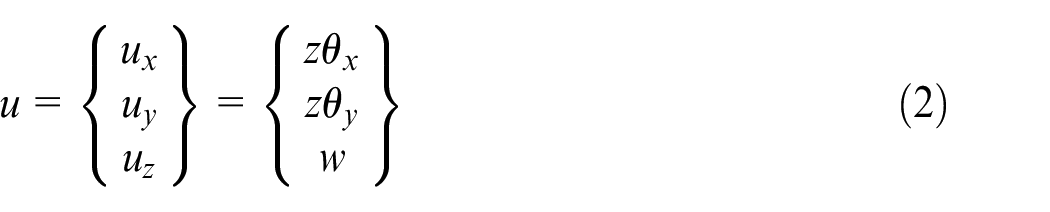
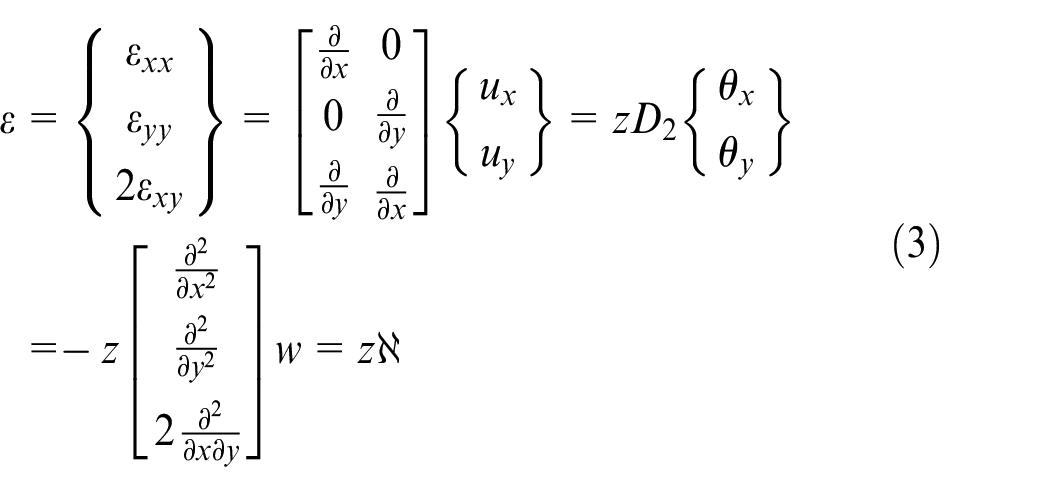
The deformed shape of a plate is defined using the transverse displacement at the midplane (w). Having this field variable, the rotation and the corresponding displacements at any point could be obtained using the following relationship, as demonstrated in Figure 1. Where,

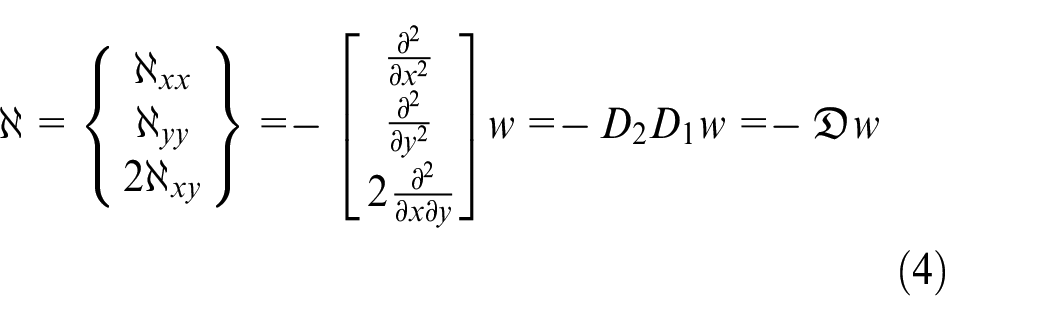
In which,
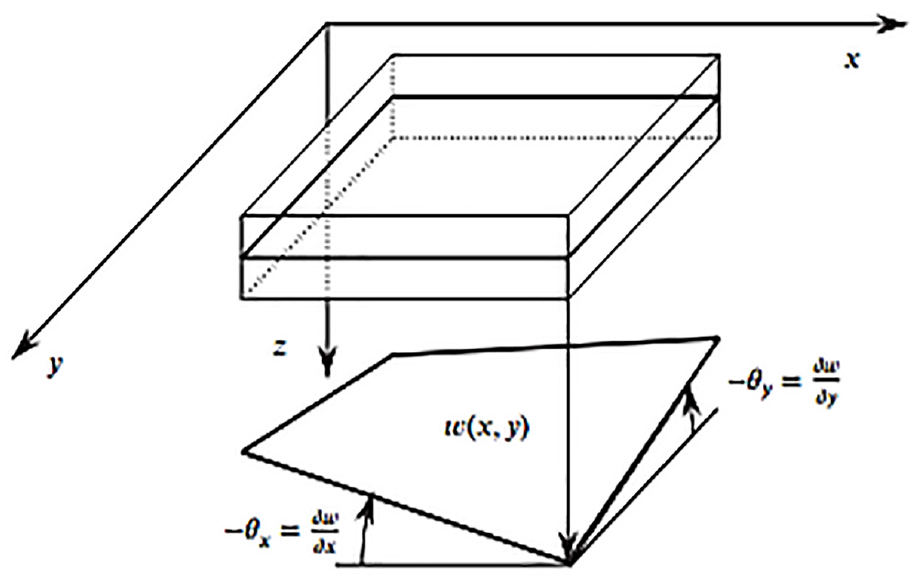
Displacement and rotation components of an infinitesimal plate element. 43
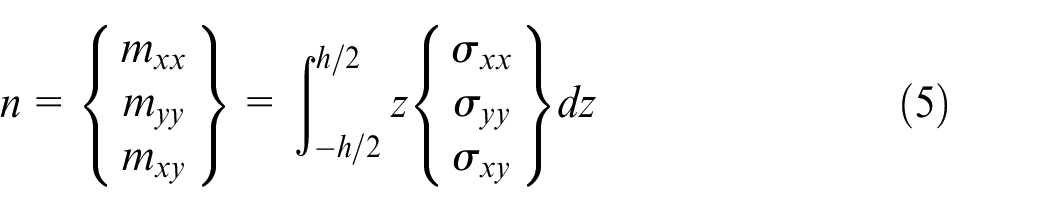
Furthermore, the moments at any point are defined as the integral through the thickness of the plate, h, of the stresses times the distance to the midplane. Besides, the shear forces correspond to the integrals of the out-of-plane shear stresses and could be calculated as follows. 43

Where,



Or


These formulas can be combined as:


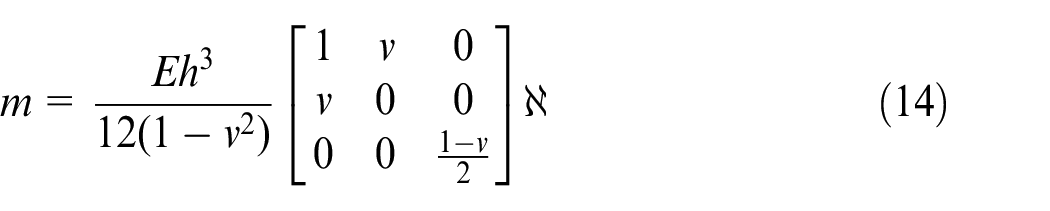
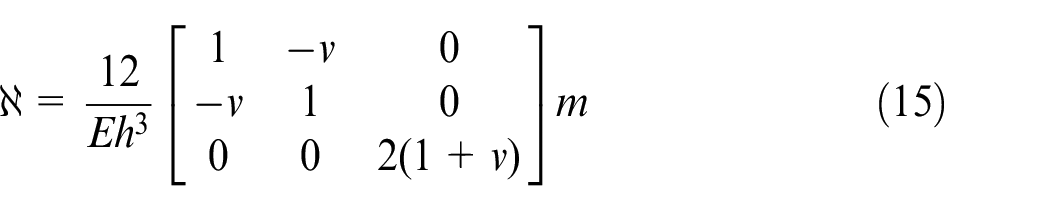
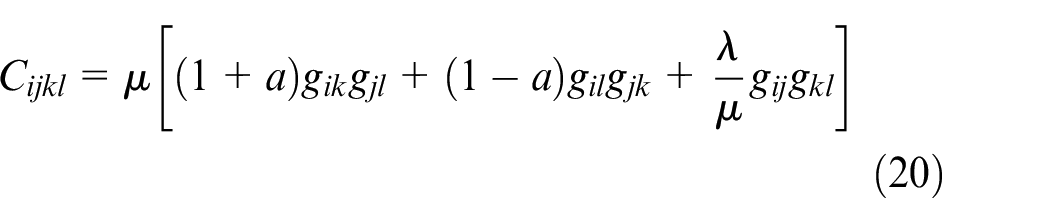
The plane stress linear elastic constitutive law leads to the following relations between moments and curvatures:


Where,


In which:


Here, the



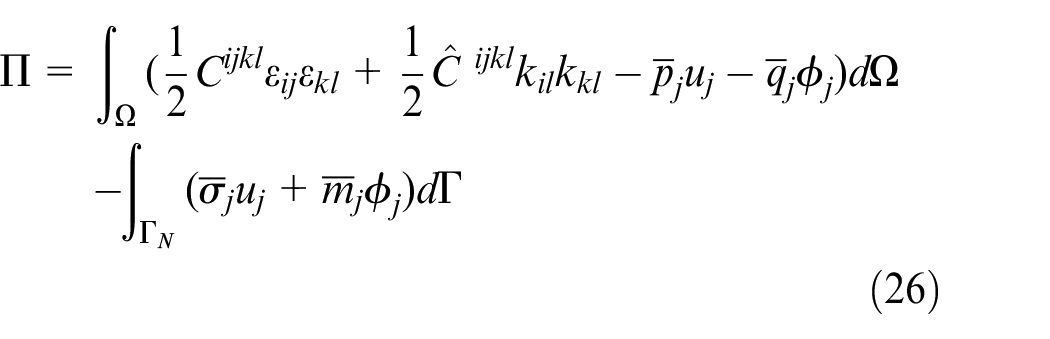
It should be stated that the boundary conditions have to be satisfied with equations (7)–(9). Moreover, the stress and strain expressions can be simplified by introducing the symmetric “S” and anti-symmetric “A” stress and strain tensors, namely:

Where




Then, the constitutive relations could be rewritten as:

In which




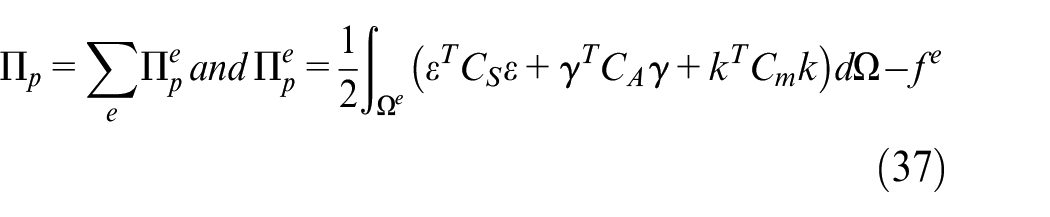
Where


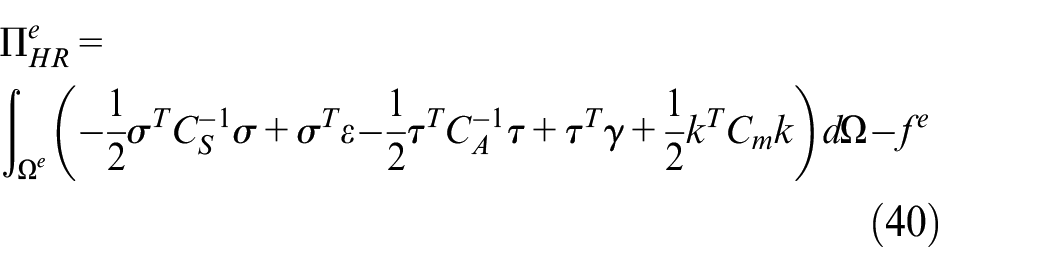
In this function,

Where, P and Q are the shape function matrices for symmetric stress, r, and anti-symmetric stress,
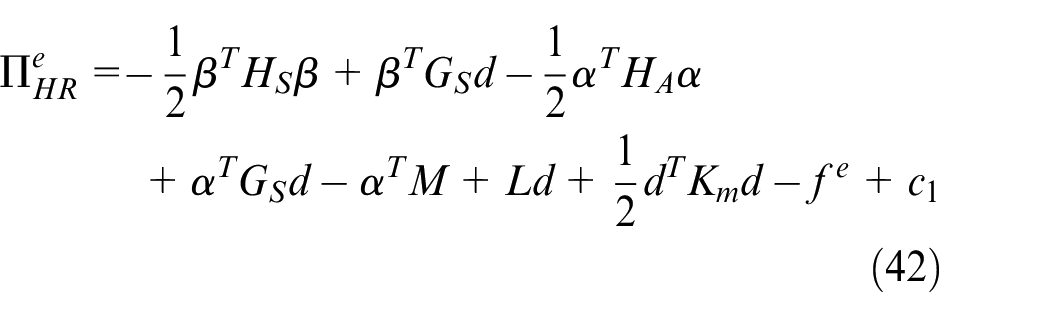
In which
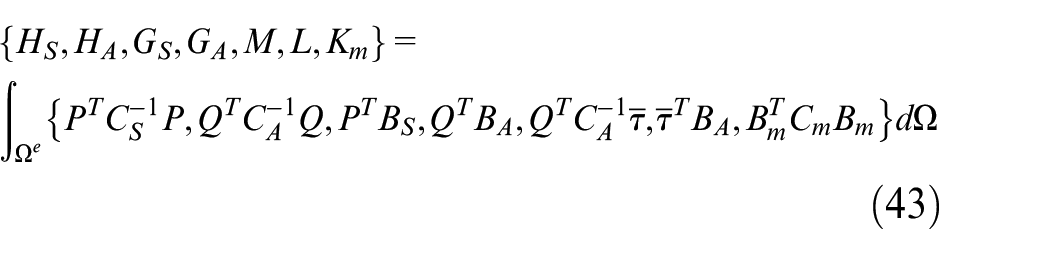
Here,


Finally, the following equation could be concluded:
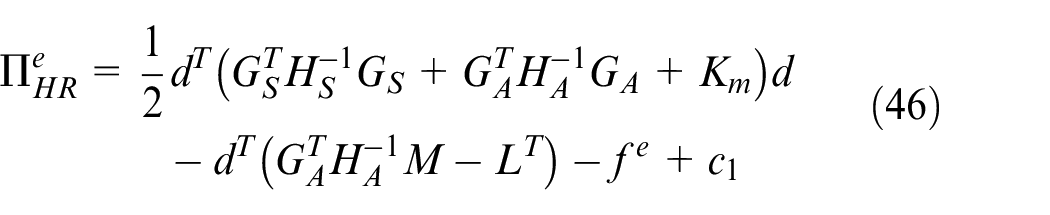
In this study, two well-known elements with 13 and 15 nodes, named TUBA13 and TUBA15, are utilized. These elements are formulated by using the compulsory energy scheme. Besides, the newly presented stress-based elements are named AT13 and AT15. Figure 2 shows the proposed elements. To increase the degree of approximation and look for the adequate distribution of DOFs in the element, both
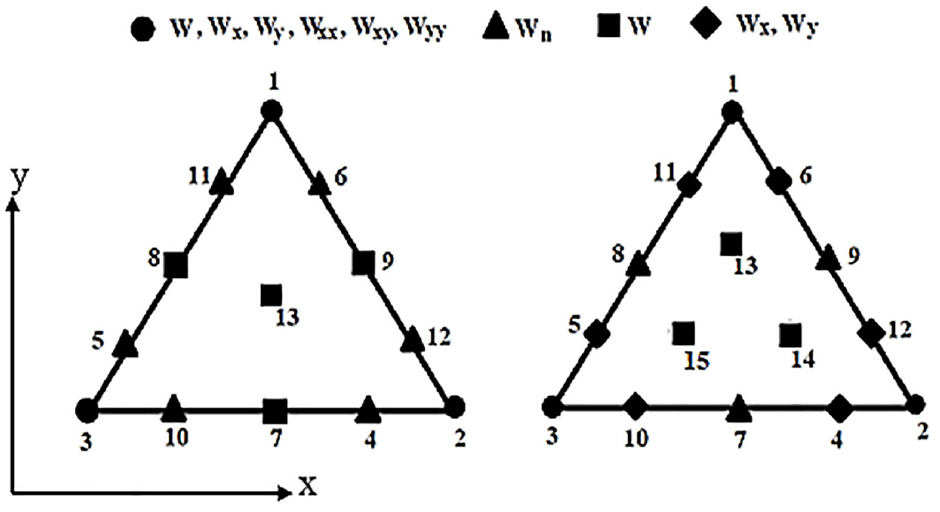
Proposed triangular elements TA: (a) TA13 and (b) TA15.
In the finite element scheme, the complementary energy function has the next form:
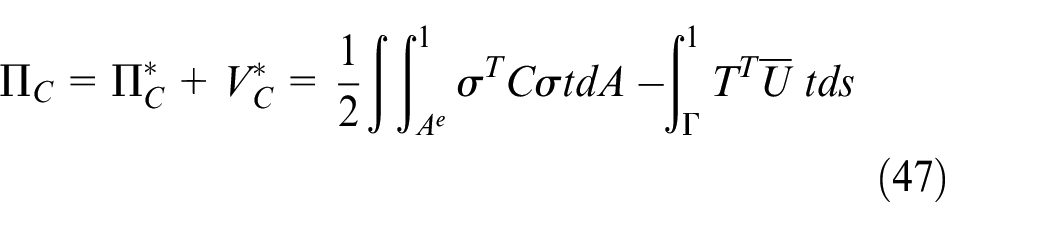
In which:


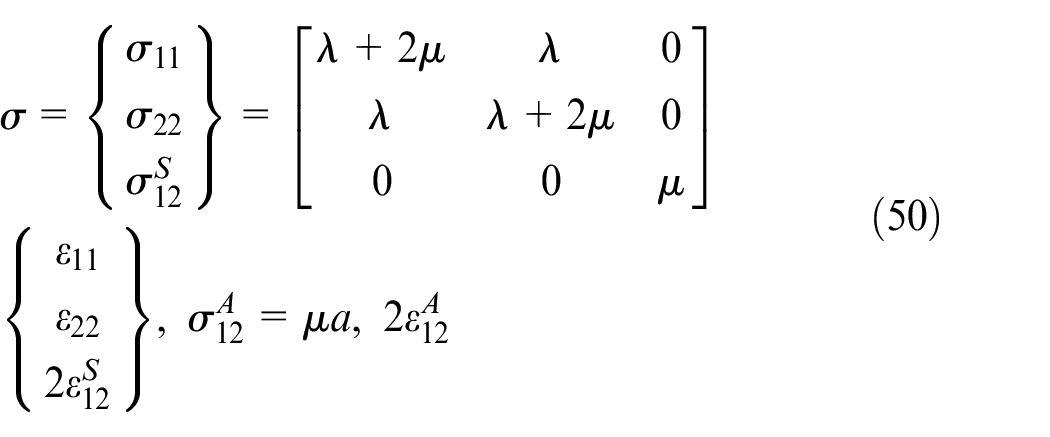


Where,
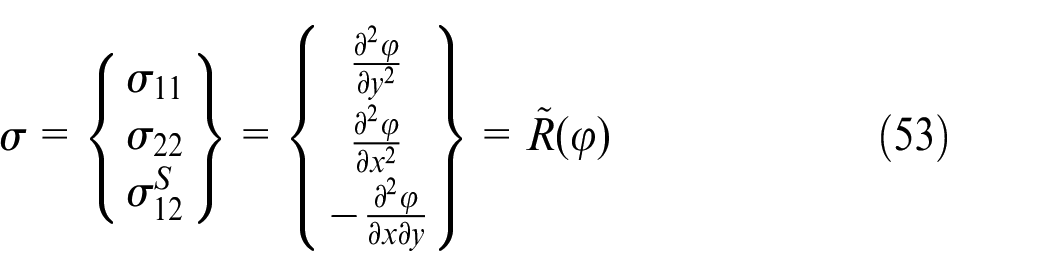
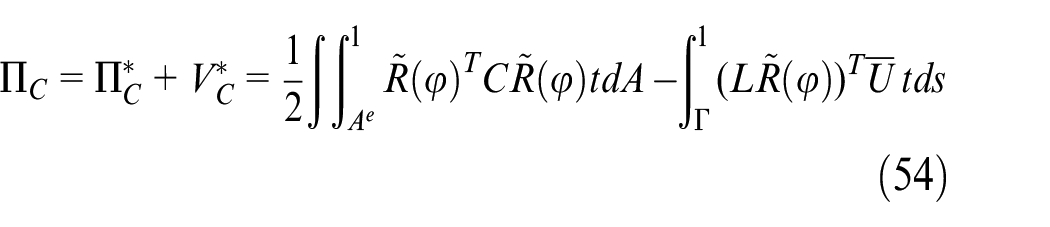
At this stage, the complementary energy function can be written in the following form:
Different parts of the last equation can be expressed by:


Up to now, the element complementary energy functional containing the Airy stress function is established based on the fundamental relationships of the finite element method. In the plate bending problems without the body forces, the Airy stress function satisfies the following equation:

In the first stage, the Airy stress function can be defined in terms of unknown parameters. A general form of this function is as follows:

Where, n is the number of analytical solutions, and the other parts are given below:




Here, S and M are the matrix expressions. Having these matrices, the plate bending analysis will be achieved. Therefore, the matrix M can be written as follows:

Where,


Matrices,
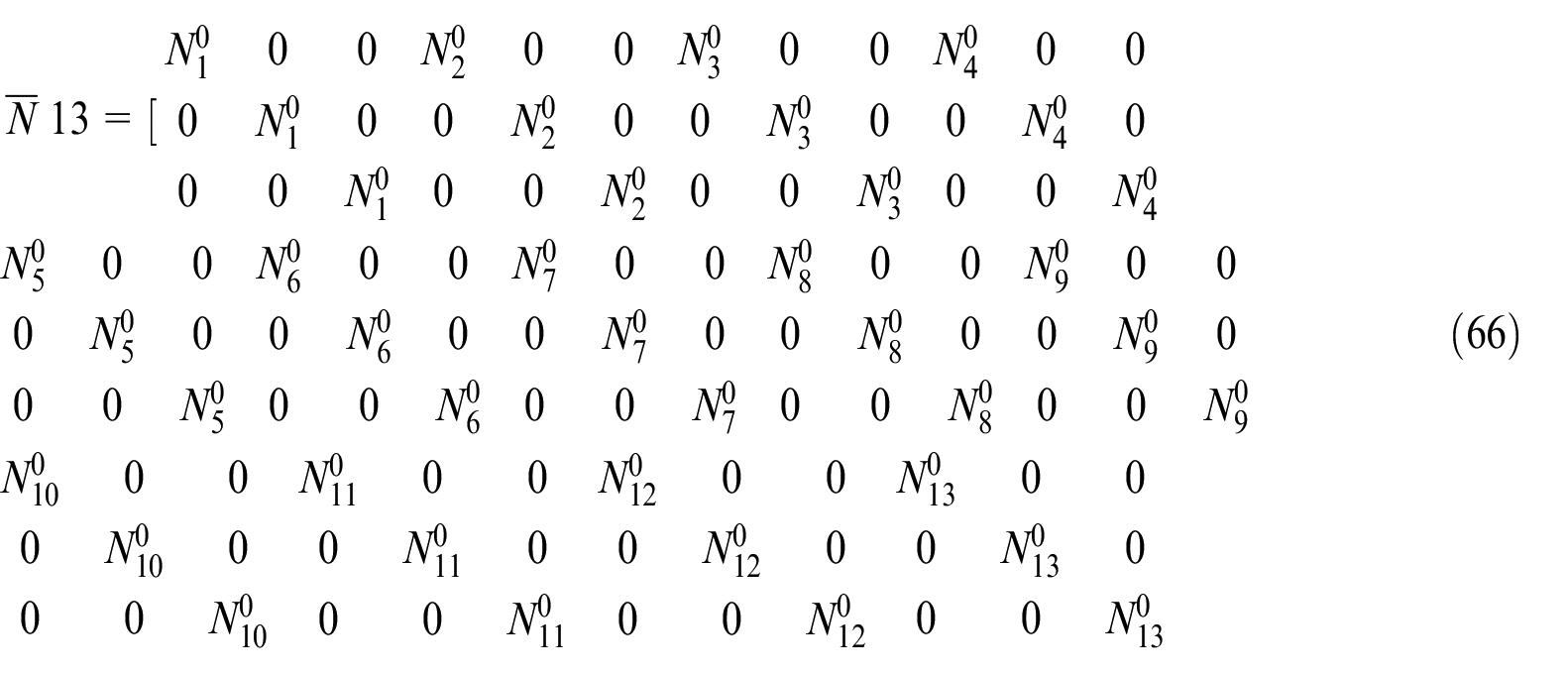
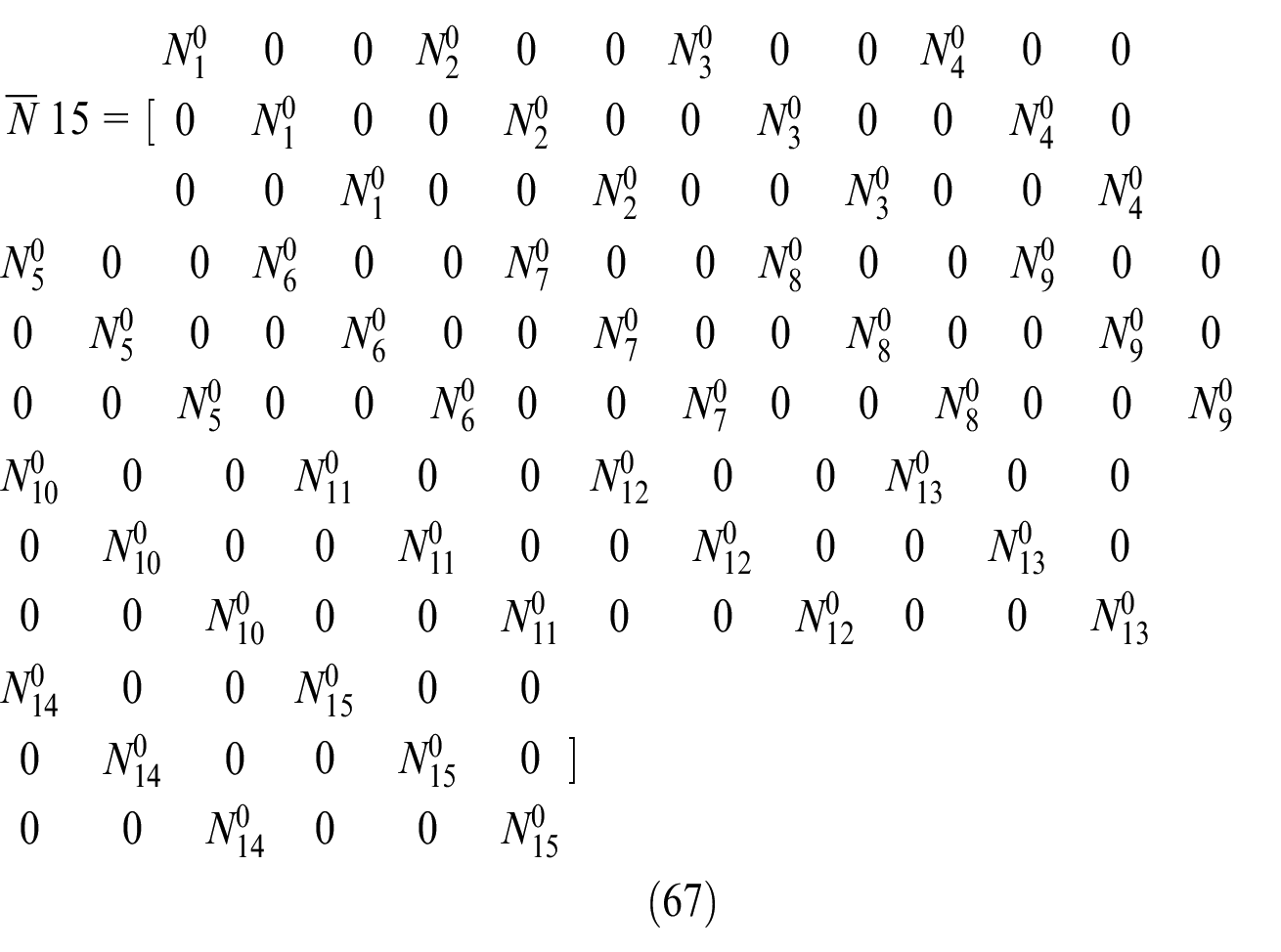
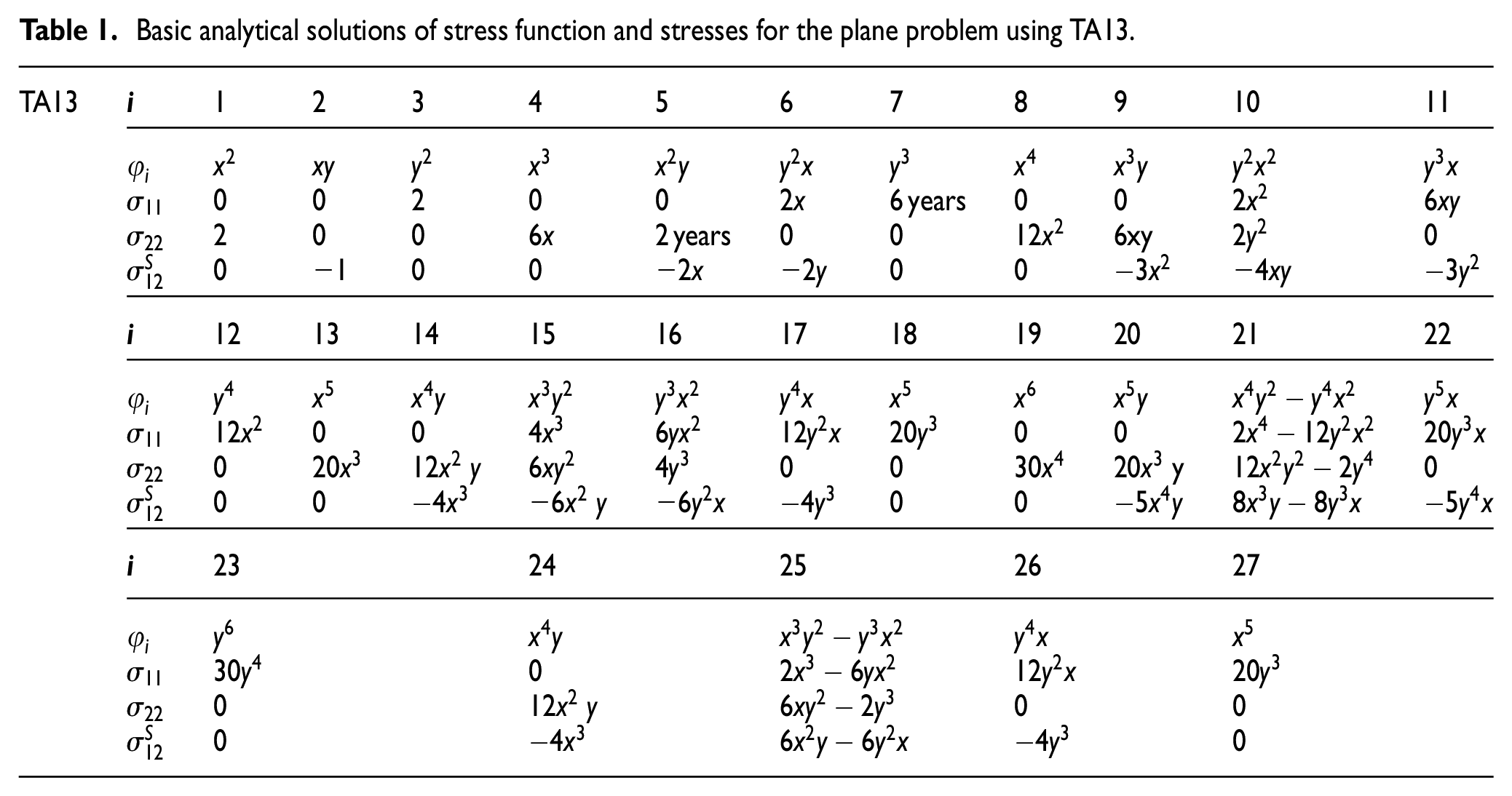
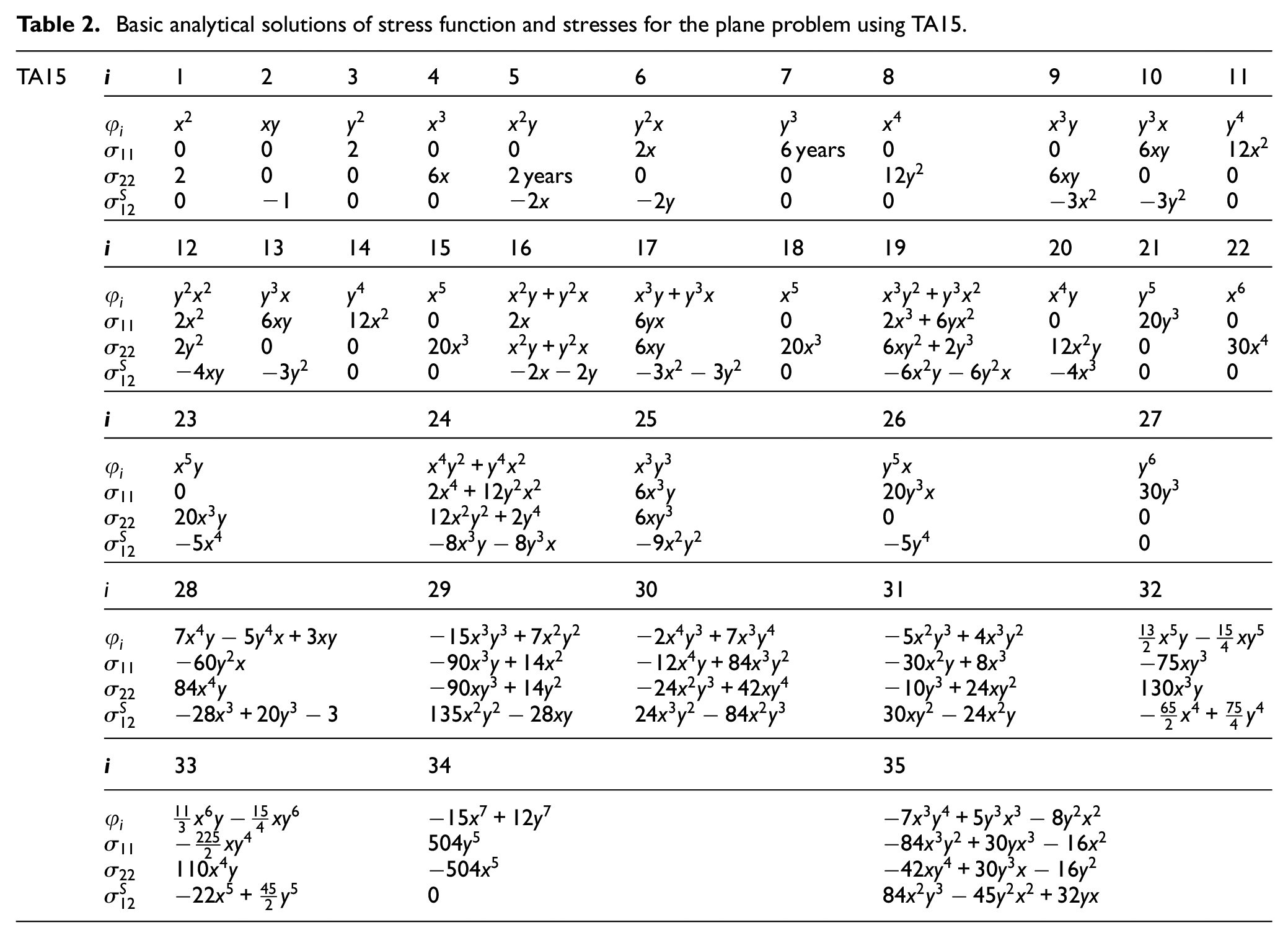
These functions are required to develop new TUBA elements. According to the number of nodes and degrees of freedom in these elements, stress function can be determined. The newly developed stress-based elements are called TA13 and TA15. After searching, examining and matching, all stress function parameters are found and listed in Tables 1 and 2.
Basic analytical solutions of stress function and stresses for the plane problem using TA13.
Basic analytical solutions of stress function and stresses for the plane problem using TA15.
At this stage, the degrees of freedom for the new elements are defined. As it is shown in Figure 2, the element nodal displacement vector,
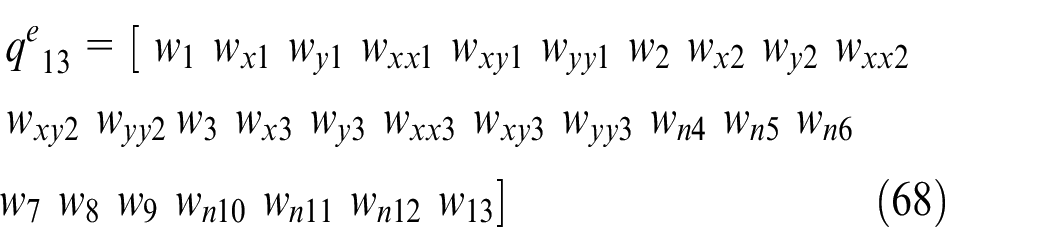
TA15 has the following degrees-of-freedom:
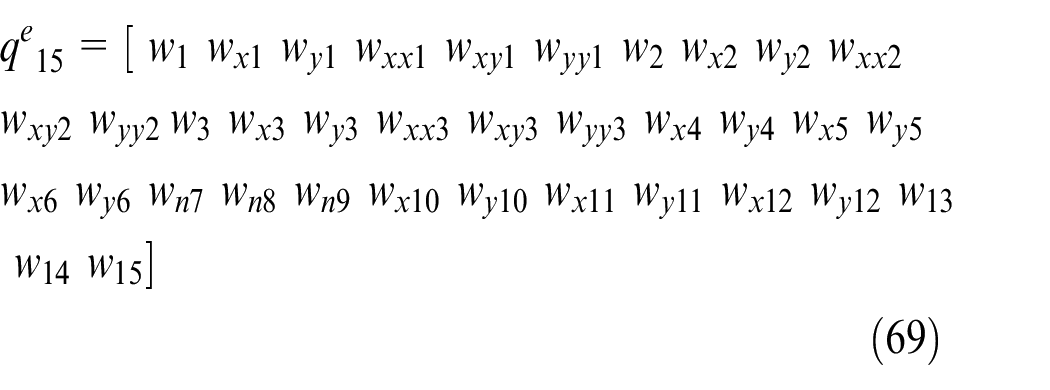
Having these matrices, plate bending analyses will be obtained. After performing the required calculations, the next result for TA13 will be found:
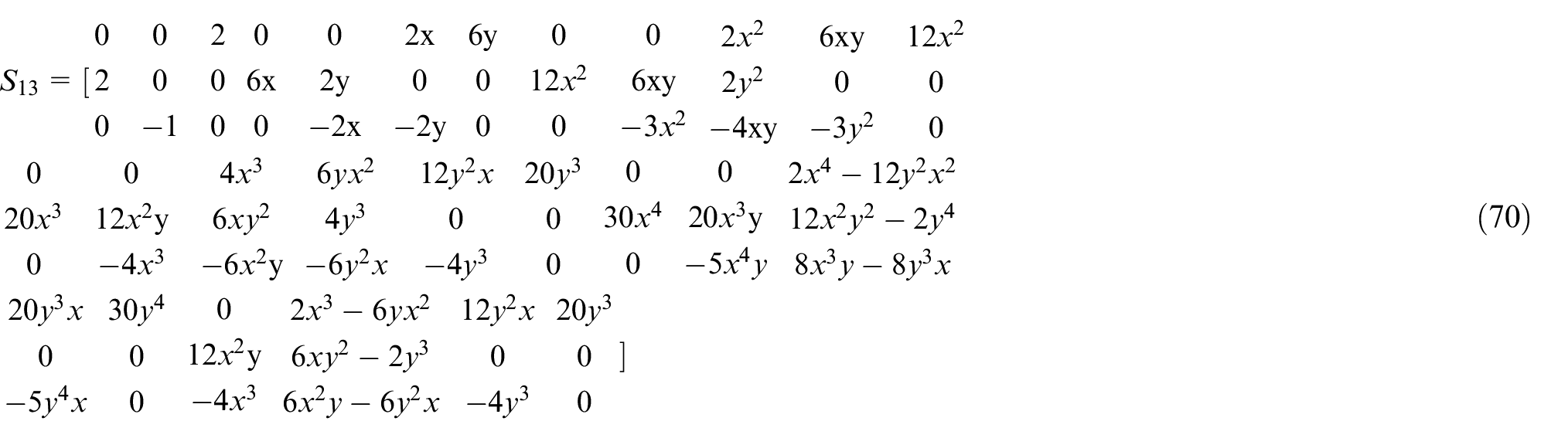
For TA15, the subsequent result is obtained:
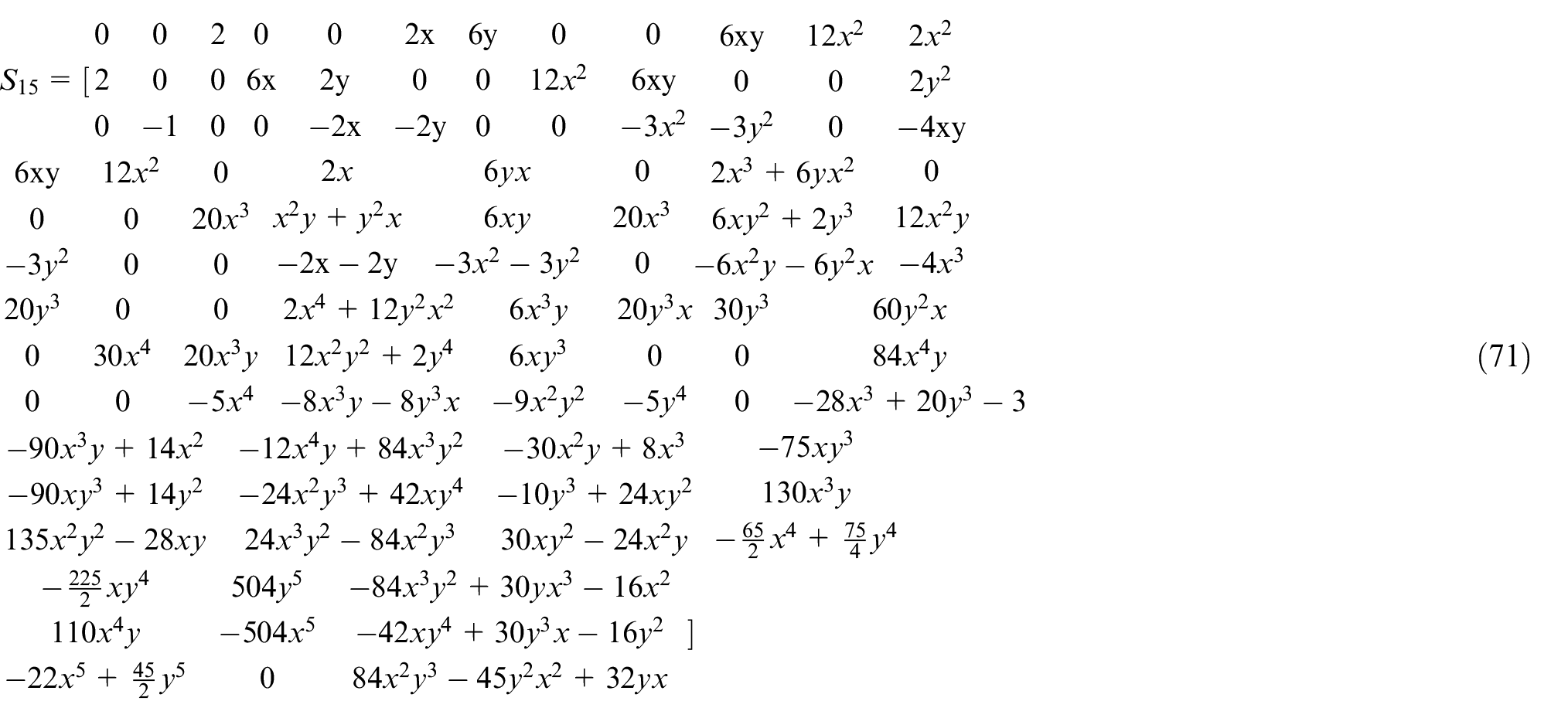
Matrices of
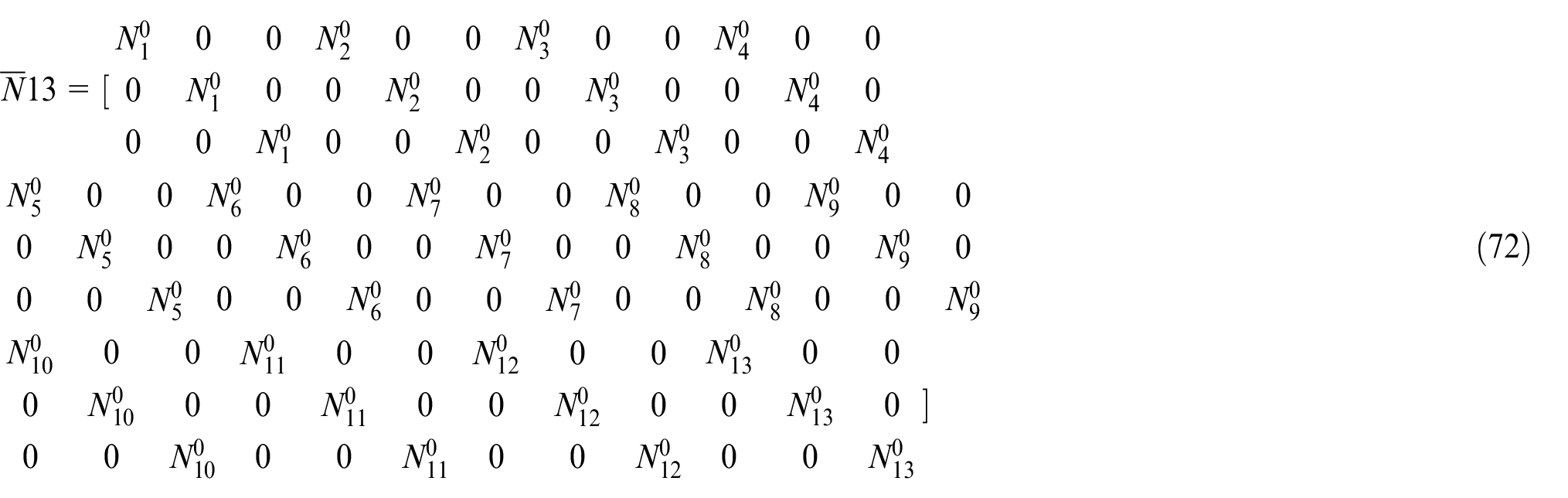
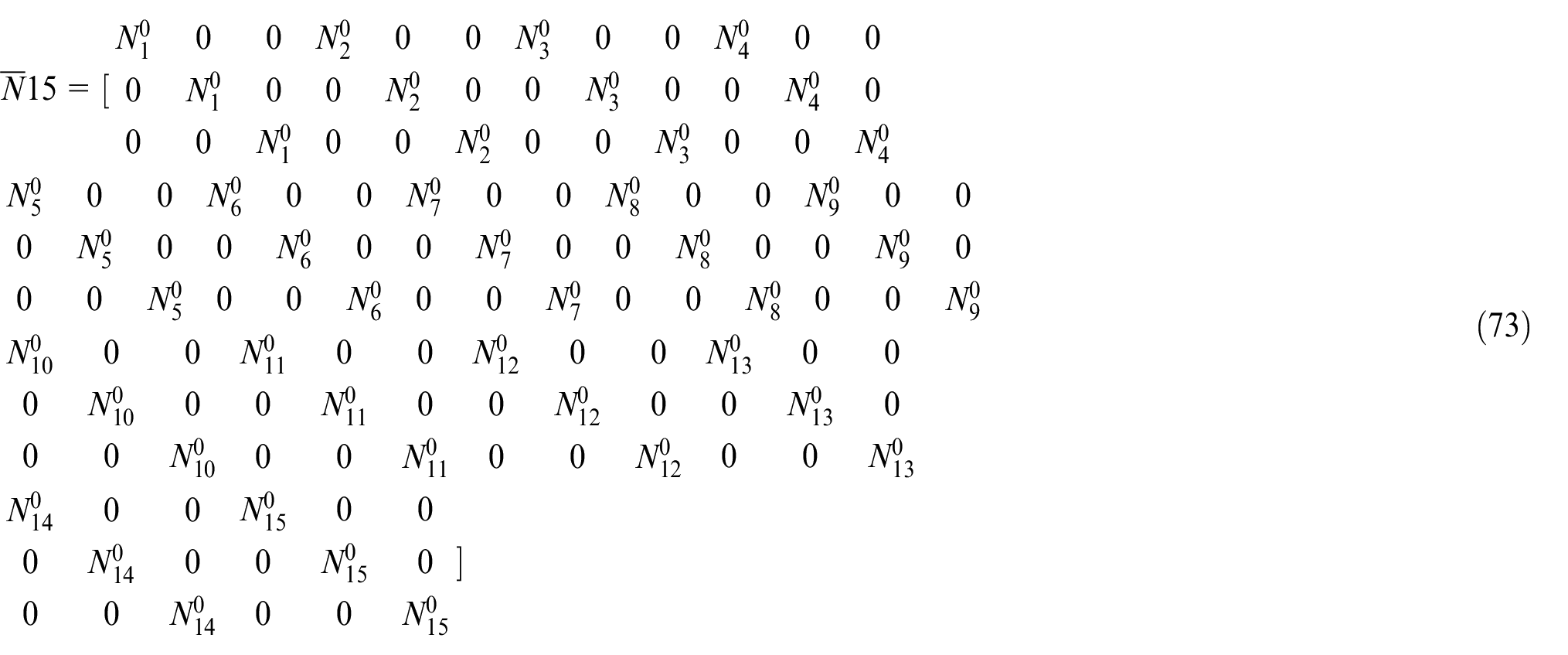
Moreover, H has the next formula:
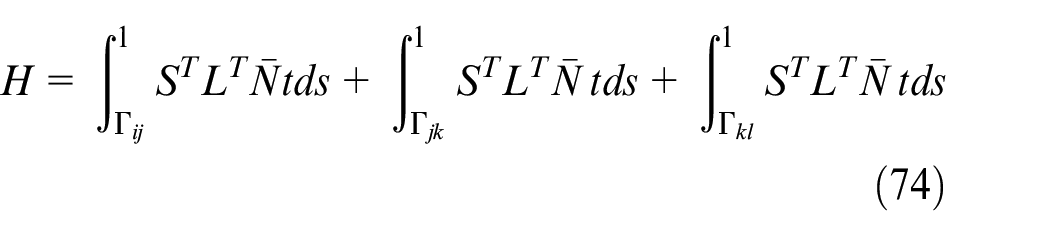
Where,

By inserting equations (74) and (75) into equation (54), the subsequent element complementary energy function can be found:

To find the solution by using the principle of minimum complementary energy,

After calculating the nodal displacement vector,

Substitution of equation (78) into equation (74) yields:


In the last equation, matrix K* can be considered as the equivalent stiffness matrix. This matrix can be used in the way as the conventional finite element technique. After finding the element nodal displacement vector,

Having the stress function for each element, stresses of all points will be in hand. In fact, the stress value at any point within the element can be determined by inserting the Cartesian coordinates of that point into equation (81).
Numerical examples
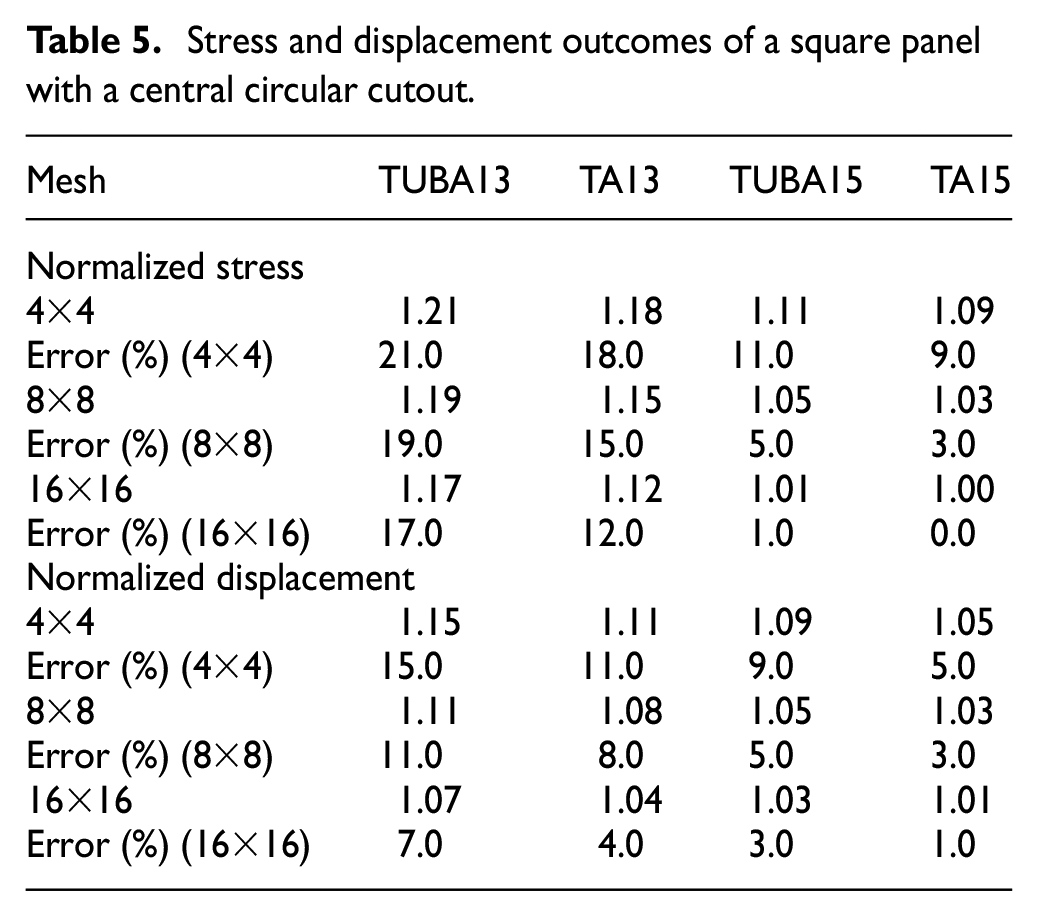
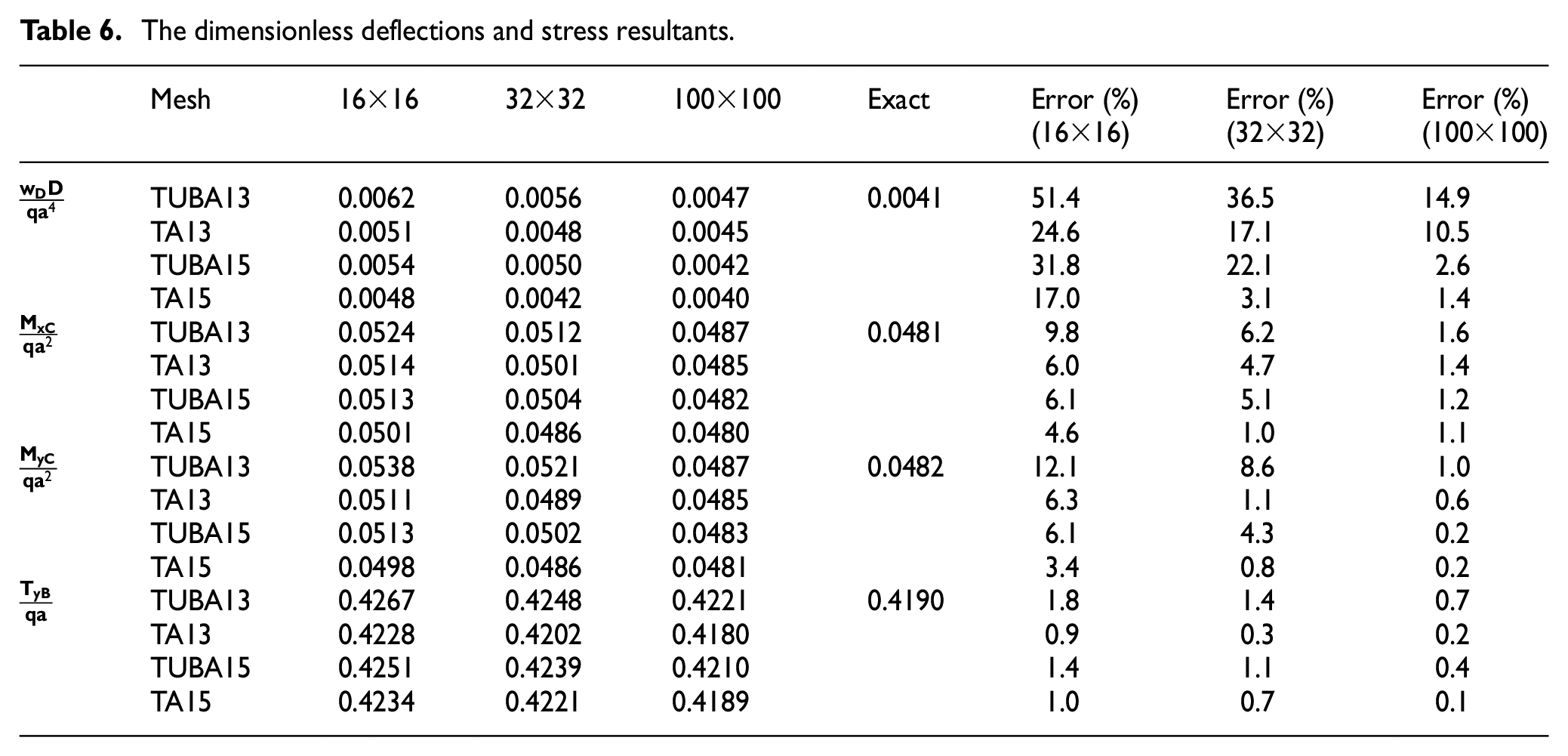
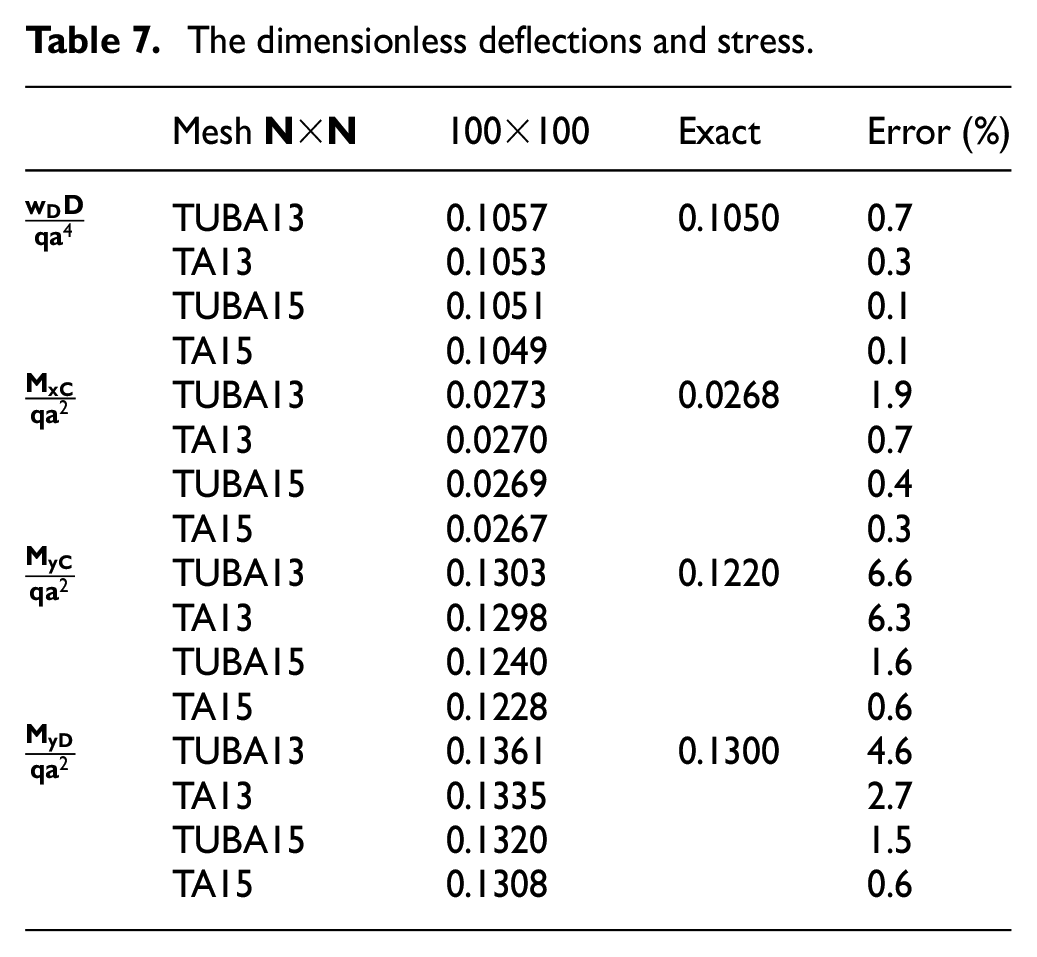
To show the accuracy of the proposed new elements, TA13 and 1315, nine different benchmark problems are analyzed for both stresses and displacements. Moreover, the obtained results are compared with those achieved using well-known displacement-based elements (TUBA13 and TUBA15). The findings will clearly demonstrate the qualities of the new suggested elements in analyses of plate bending structures. All of the used units are consistent.
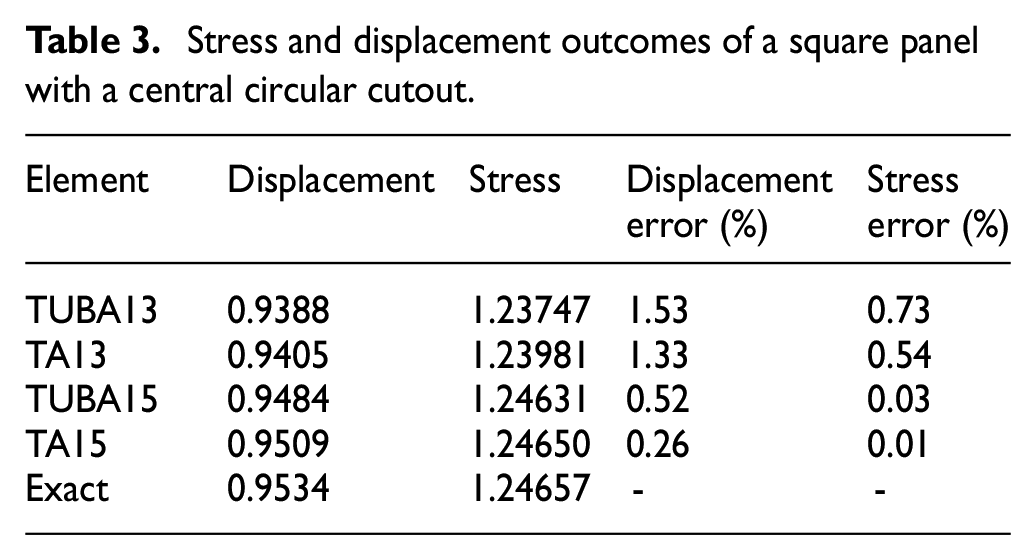
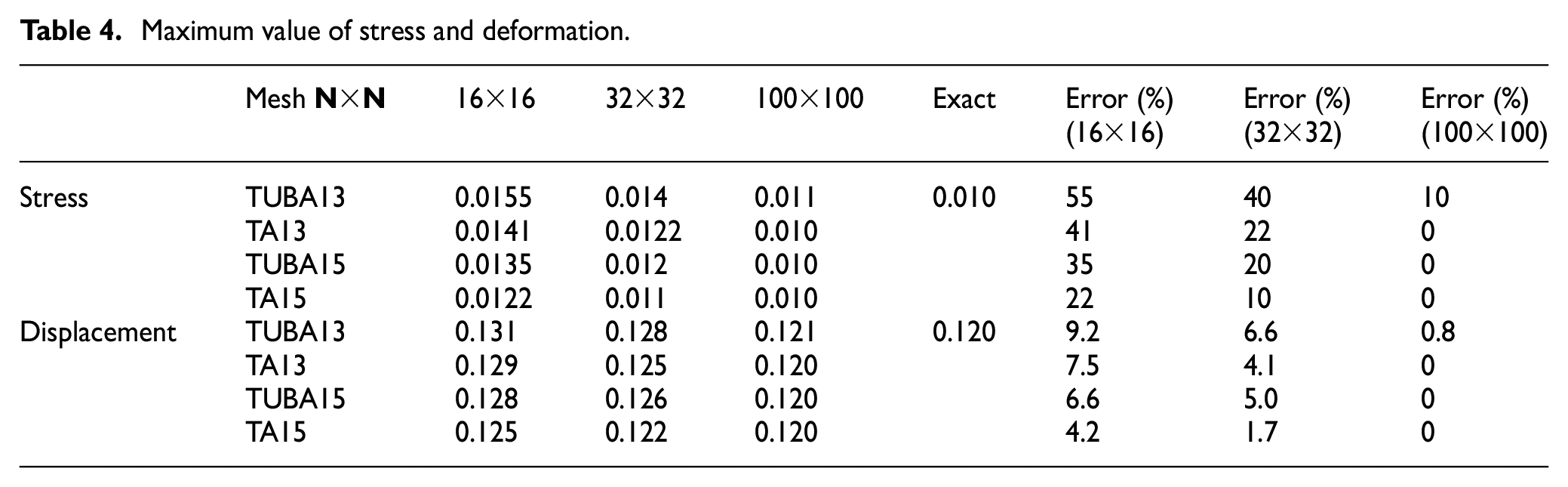
Stress and displacement outcomes of a square panel with a central circular cutout.
Maximum value of stress and deformation.
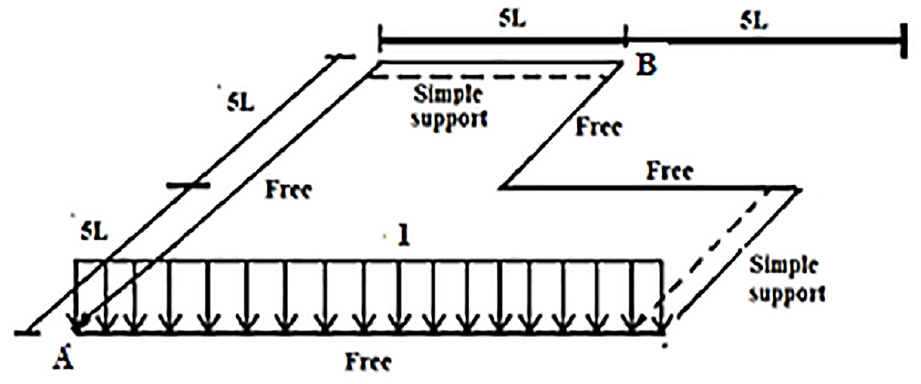
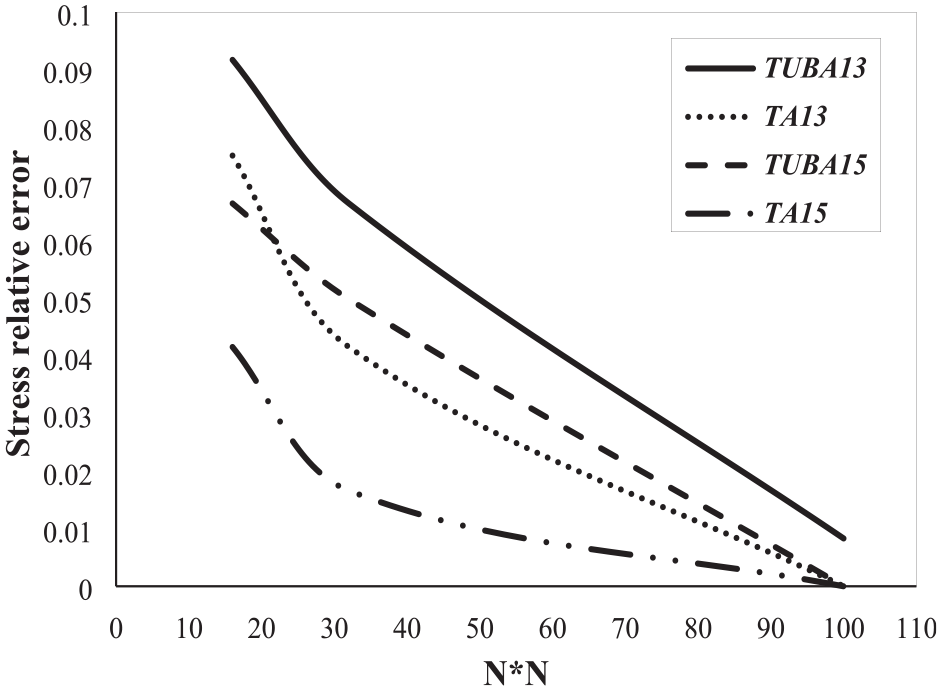
Relative error of the center L-shaped domain pate.




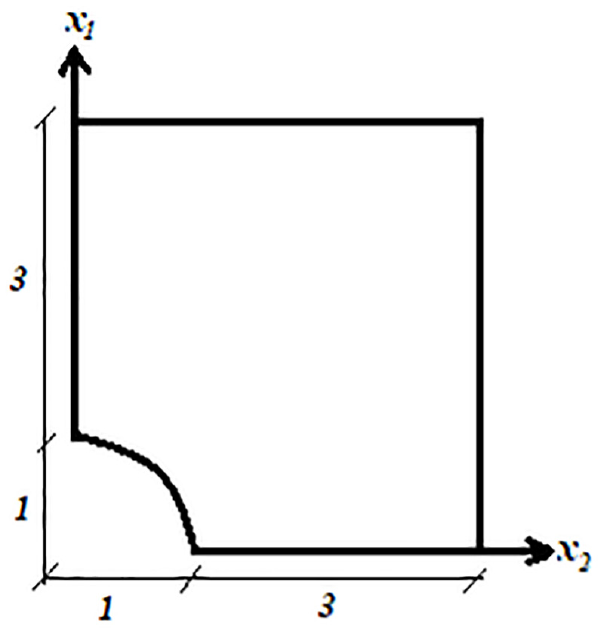
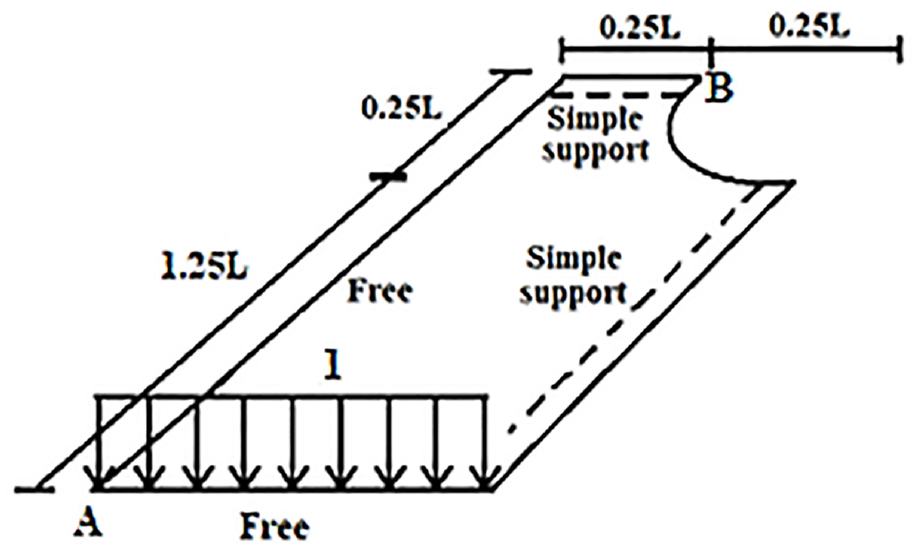
A quarter of a square panel with a central circular cutout.
Stress and displacement outcomes of a square panel with a central circular cutout.
The dimensionless deflections and stress resultants.
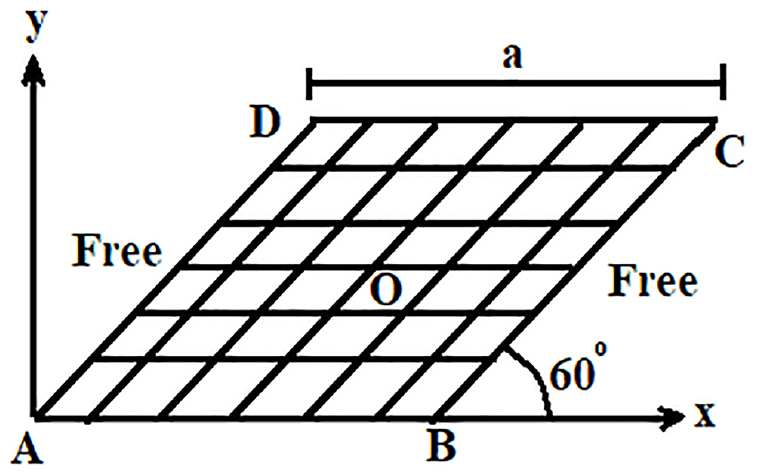
The 60° skew plate with two opposite edges is hard simply-supported. 25
The dimensionless deflections and stress.
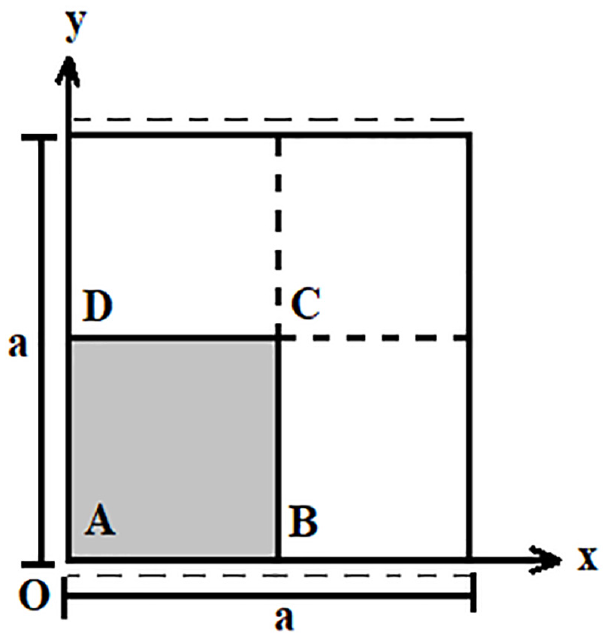
Square plate with two opposite edges hard simply-supported.
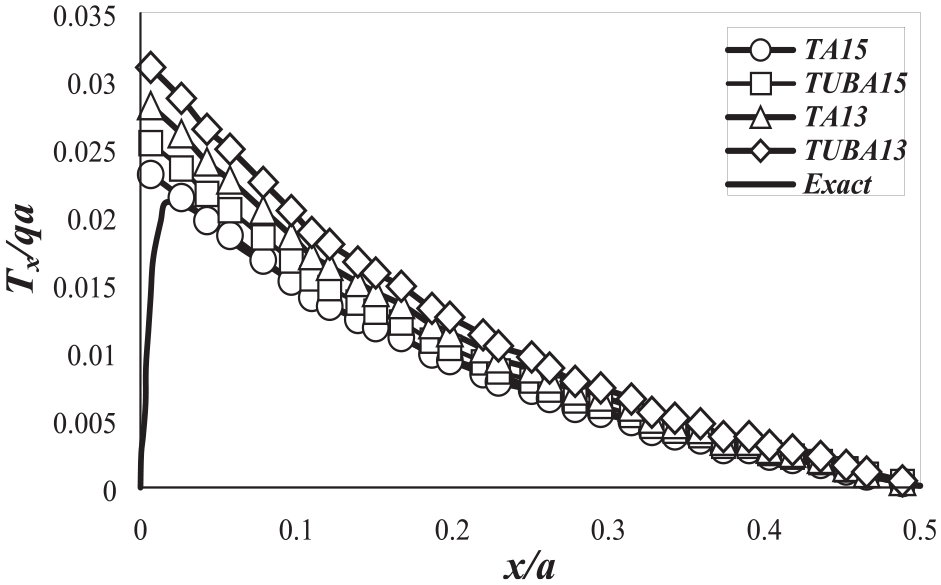
Shear force distribution lengthways the edge DC.
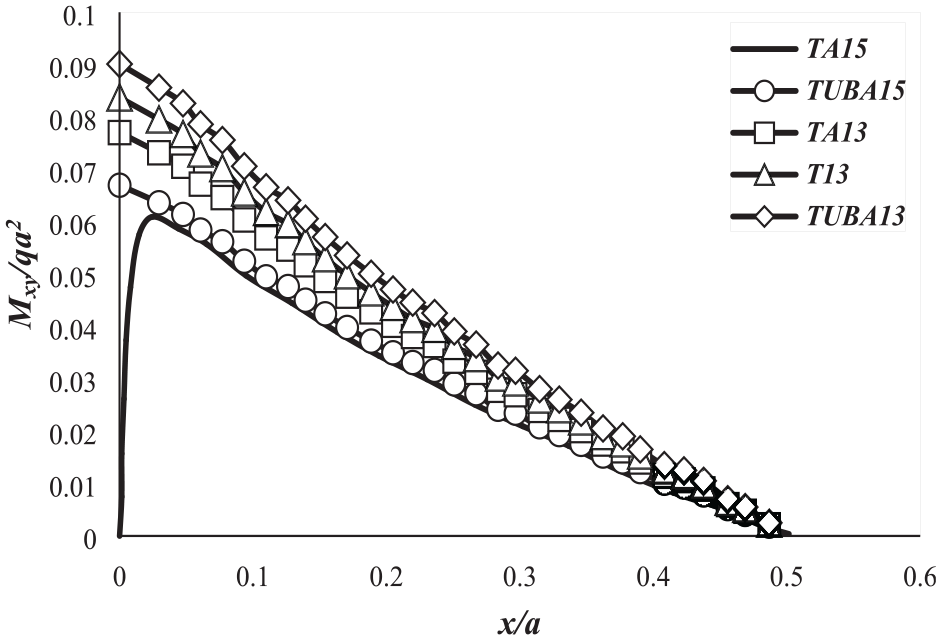
Twisting moment distribution lengthways of the lowest border AB.
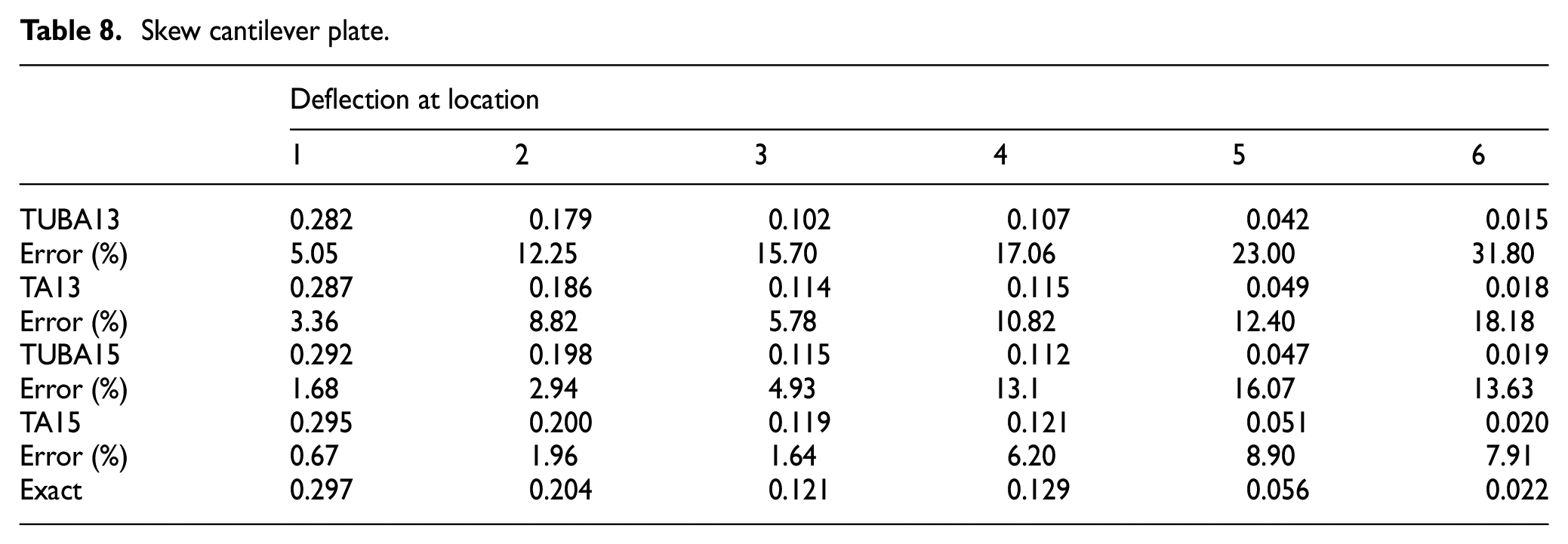
Skew cantilever plate.
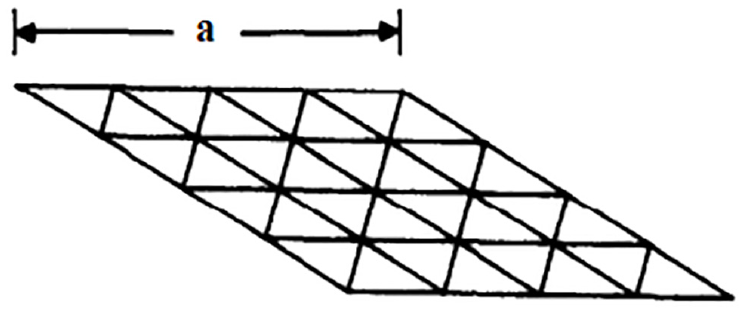
Typical mesh for Morley skew plate example.
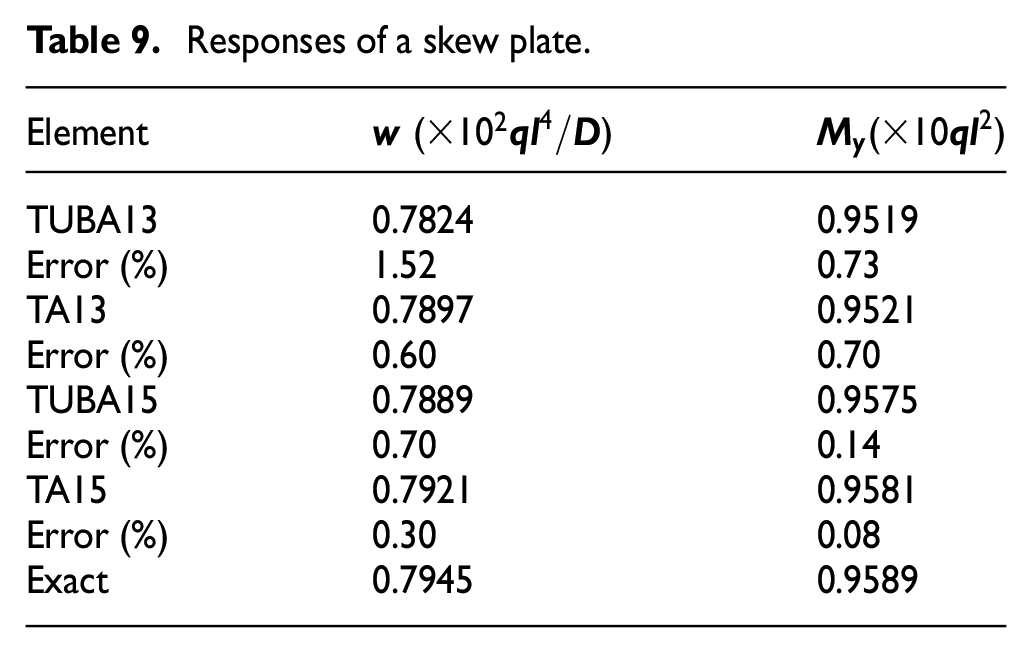
Responses of a skew plate.
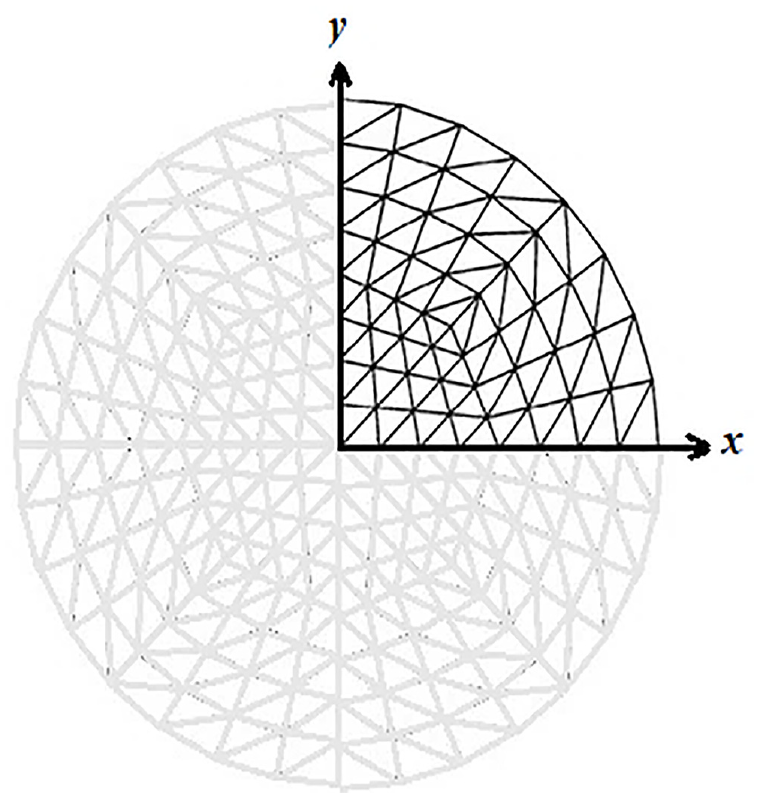
Typical mesh f2or quadrant of a circular plate.
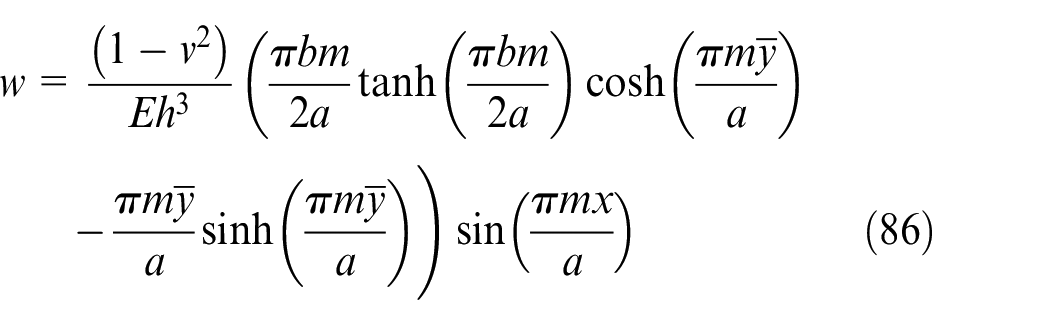
where
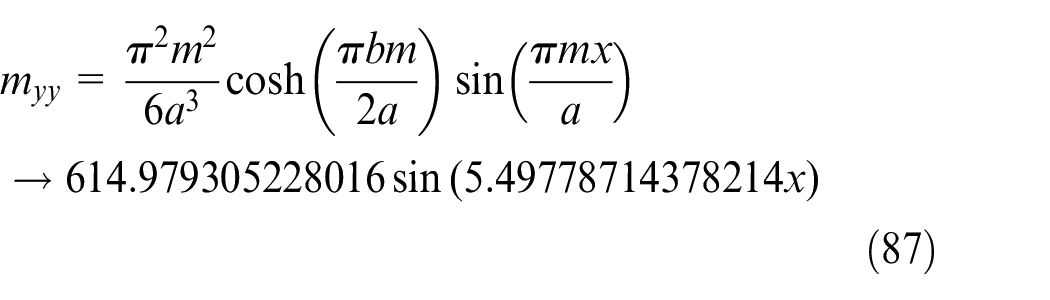
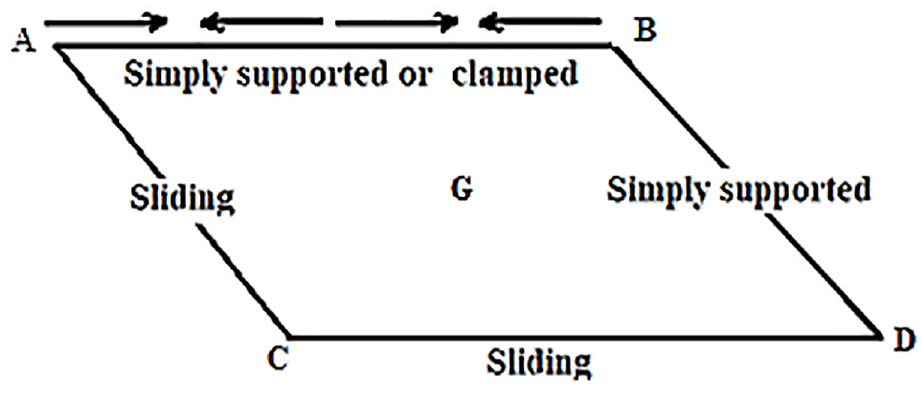
Double symmetry simplification of the rectangular plate with a sinusoidal action.
At the simply supported sides with uniform y. Therefore, at these edges, the turning is free to occur while the transitional degree of freedom in two directions in the plane is fixed. The distribution of applied moments/imposed rotation is illustrated in Figure 13. When this problem is solved with the suggested elements, the corresponding solutions are not strictly equilibrated, because the polynomial moment field cannot be exactly represented for the sinusoidal load. Nevertheless, it is possible to obtain locally equilibrated solutions by considering the problem with imposed displacements, which has the same exact solution, i.e., the sides with uniform y become clamped. In fact, the normal rotation corresponding to the exact displacements is here imposed as previously given by:
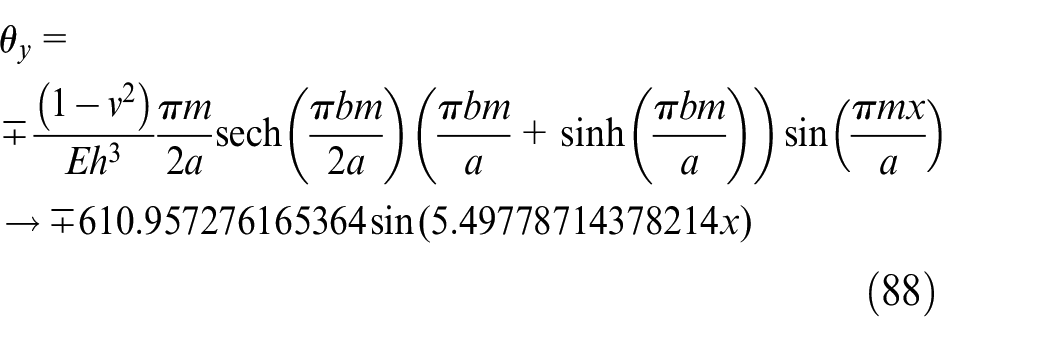
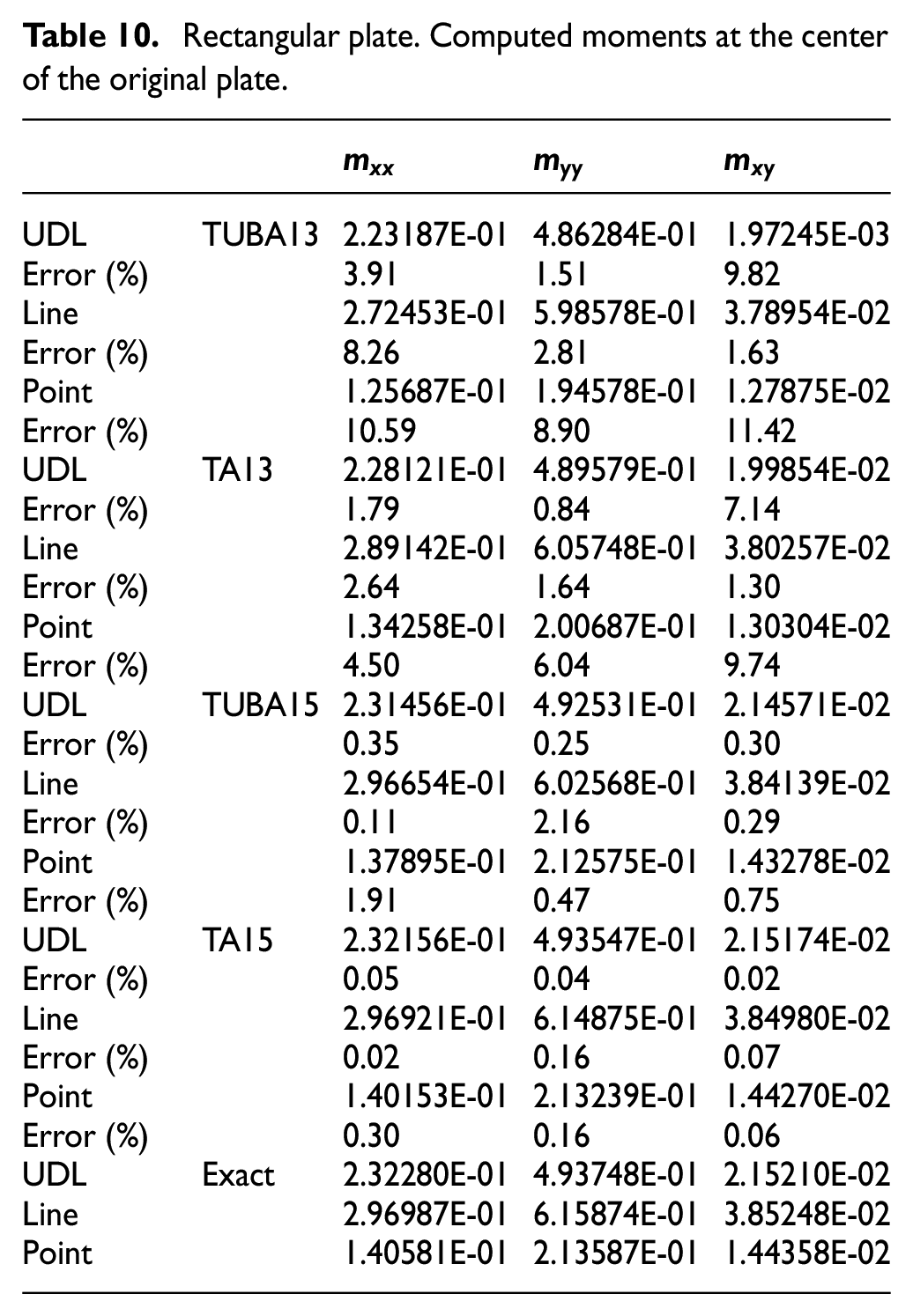
The values obtained for the different elements are presented in Table 10. It is obvious that TA13 and TA15 have better performance than TUBA13 and TUBA15 elements.
Rectangular plate. Computed moments at the center of the original plate.
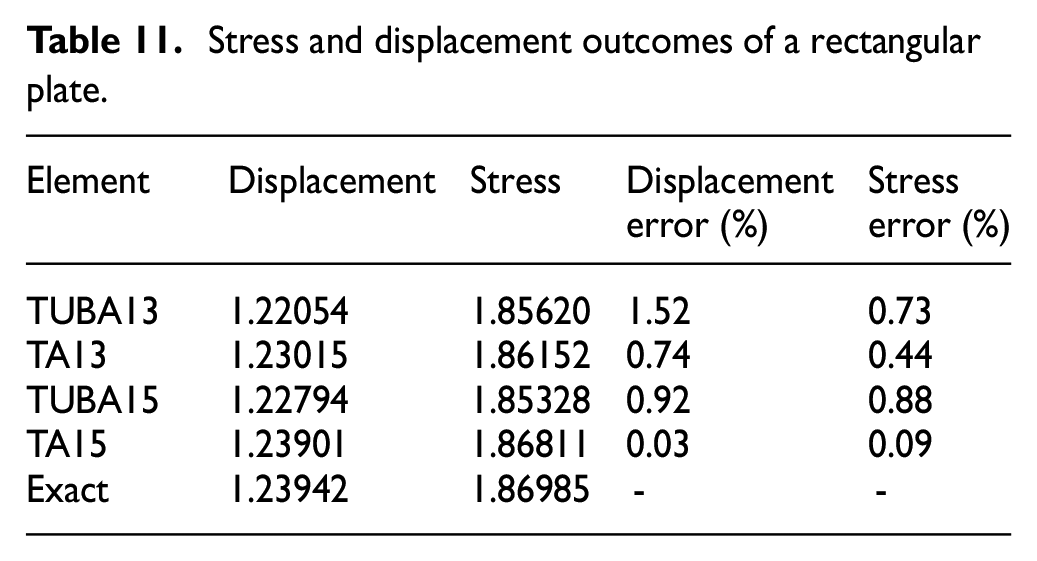
Stress and displacement outcomes of a rectangular plate.
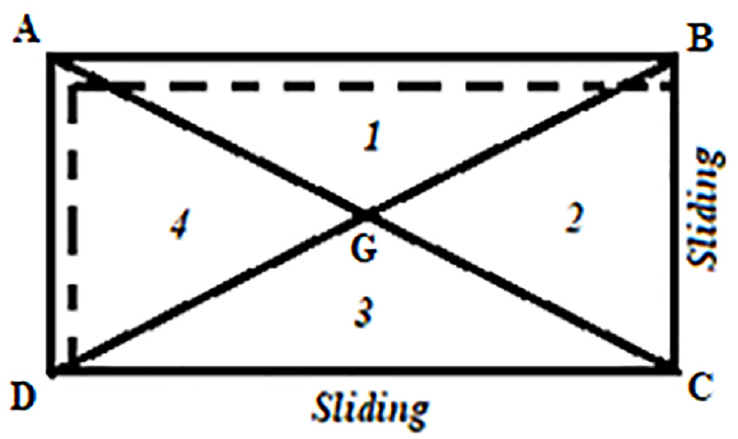
Rectangular plate: symmetry simplification, geometry, mechanical characteristics, boundary conditions, and initial finite element mesh.
Conclusion
In this study, two new elements were proposed for analyzing the plate bending problems. One of them had 13, and the other one had 15 nodes. Both elements were formulated based on Airy’s functions. To build these elements, a complementary energy function was employed within the element. In this energy expression, the Airy stress function was applied as a functional variable. In addition, some basic analytical solutions were assigned for the stress functions. These trial functions were matched with each element’s number of DOF. After some mathematical operations, the element equation was established. To demonstrate the accuracy of the presented elements, several benchmarks were solved. Comparison studies were also carried out with two related compatible and displacement-based elements of TUBA13 and TUBA15. All numerical solutions indicated that accurate results could be obtained for the displacements, as well as; the stress by using these new elements.
In this study, the influence of shear stress is not considered which is one of the limitations of this study. Additionally, the proposed methods are proper for thin plates. So, it is recommended for future studies to measure and develop the Airy stress function for thick plates considering the shear stress influence.
Footnotes
Acknowledgements
The authors are thankful to Professor Mohammad Rezaiee-Pajand, a Faculty member of the Ferdowsi University of Mashhad, Iran, for his unstinting help, constructive suggestions, and scientific advice.
Declaration of conflicting interests
The author(s) declared no potential conflicts of interest with respect to the research, authorship, and/or publication of this article.
Funding
The author(s) received no financial support for the research, authorship, and/or publication of this article.
