



Abstract
Long-lying snow (snowpatches) has come under increased scrutiny for its role in alpine and high latitude environments, and as a marker of climate change. Multiple disciplines researching different aspects over many decades has led to an inconsistent and conflicting nomenclature and definitions, impeding cross-disciplinary collaboration and understanding. Scientific endeavour increasingly involves researcher collaboration, success relying on an agreed shared terminology and ontology. We present a rationalisation and simplification of the existing nomenclature and terminology, advocating wider cross-disciplinary adoption of the word snowpatch, defining a snowpatch from residual snowpack by its effect on its local environment. We advocate longevity as the most effective means to discriminate snowpatches of different types, proposing novel limits for the established qualifiers seasonal, semi-perennial and perennial, providing a clearer discrimination between them, permitting better quantification and tracking over time, and enabling greater insights into climate driven changes in snowpatch dependent vegetation communities, nivation processes and local hydrology.
Keywords
Introduction
Long-lying snow is defined as discrete areas of snow occupying topographically favourable locations for accumulation such as hollows and lee slopes beyond the breakup of the winter snowpack, including snow that melts before the next winter’s snowpack returns, or irregularly or consistently persists from snowpack-to-snowpack (Billings and Bliss, 1959; Green and Pickering, 2009b; Wahren and Papst, 2001), (Figure 1). In alpine and high latitude environments it supresses plant growth, and as it progressively ablates, produces a mosaic of highly-specialised chionophilic plant communities, providing meltwater to downslope plant and aquatic communities (Hejcman et al., 2006), influencing soil geochemical processes (Gooseff et al., 2003), driving a range of geomorphological processes grouped under the term nivation (Christiansen, 1998; Galloway et al., 1998; Matthes, 1900), and creating refuges for cold-adapted species through local atmospheric, soil and aquatic cooling (Brighenti et al., 2021; Gardner, 1969; Hayes and Berger, 2023). An example of long-lying snow on Mount Clarke, Kosciuszko alpine area, Australia (SP1 1980m −36.4374 148.2881 @2025), showing the development of small nivation hollows, a reduction in vegetation, and the creation of downslope alluvial fans.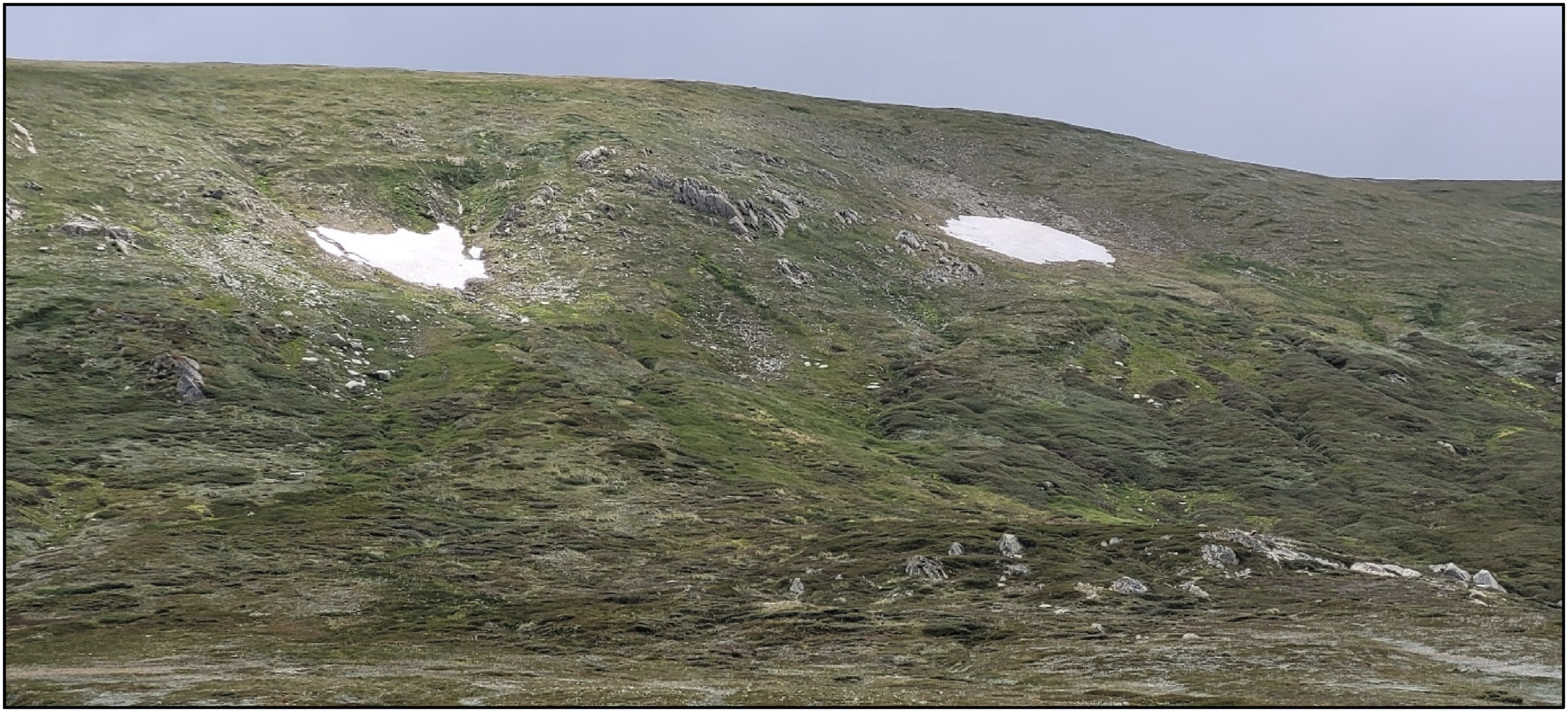
Its vulnerability to changes in temperature, precipitation, and wind, and its location in alpine and high latitude areas where the effects of global warming are most significant (Daimaru et al., 2002; Green and Pickering, 2009b), has resulted in a global decline in long-lying snow, affecting dependent plant communities, geomorphological processes, and hydrology. Understanding the effects of this decline has attracted the interest of researchers from a wide array of disciplines including geomorphology, climatology, glaciology, hydrology, paleoclimatology, paleoecology, pedology, ecology, civil works, and archaeology. This research is, however, hindered by a complex and siloed nomenclature and definitions, with Rosvold stating, ‘the literature search (on snowpatches) is, however, complicated by the fact that such areas have been defined under a large variety of different names’ (Rosvold, 2016), with Serrano noting that ‘Definitions such as small glaciers (and the frequent use of the synonym glacierets), snow patches or nevés and ice patches are frequently used but very vague and unclear and in need of precise definition’ (Serrano et al., 2011).
Terminological ambiguity ‘slows scientific progress, leads to redundant research efforts, and ultimately impedes advances towards a unified foundation for ecological science’ (Madin et al., 2008). As the decline of long-lying snow and its environmental effects faces increasing scrutiny, a clearer nomenclature and definitions, and the defining of boundaries between differing types of long-lying snow is needed to foster a more collaborative scientific environment, and to enable more accurate monitoring and forecasting of changes and their effects. This paper (1) surveys and discusses the problems with the existing diverse nomenclature for long-lying snow, proposing the wider adoption of the word snowpatch and its qualifying variants, and (2), introduces new limits for snowpatch types based on their longevity, applying them to real-world examples from both the southern and northern hemispheres.
The issues of nomenclature and definition discussed herein are not trivial, Thorn and Hall discussing nivation noting ‘A large portion of our expectations are embedded in terminological definitions, the sharpness of these definitions reflects the sharpness of our thinking; the sharper our thinking the greater our ability to extract information from what are clearly complex landscapes’ (Thorn and Hall, 2002).
Good science relies on good communication, and with interdisciplinary collaboration increasingly important in academic research (Callaos and Horne, 2013) harmonisation of nomenclature and terminology is essential to prevent misunderstandings and to facilitate the effective communication of information. With snowpatches facing increased scrutiny for their usefulness as markers of the effects of climate change, it is intended that the adoption of the presented changes to snowpatch nomenclature and definitions will help facilitate greater collaboration and understanding of these important landscape features of alpine and arctic regions.
Long-lying snow nomenclature
Current long-lying snow nomenclature
Long-lying snow is most commonly referred to as a snowpatch (Davies, 1969; Derbyshire and Peterson, 1977; Hall, 1980; Thorn et al., 1989; Verrall et al., 2023) or variants of this term including snow patch (Costin et al., 1964; Lewis, 1939; Parry and Balmer, 2017), and snow patch (Fujita et al., 2010; Higuchi et al., 1980; Tufnell, 1971; Wahren and Papst, 2001; Watson, 2011), with roadside accumulations of snow in Russia referred to as anthropogenic snow patches (Kazakova and Lobkina, 2016; Muzychenko and A., 2018), or artificial snow patches (Podolskiy et al., 2015). Long-lying snow may also be referred to as a snowbank (Billings and Bliss, 1959), drift (McLuckie and Petrie, 1927), snowdrift (Manley, 1971; Ostler et al., 1982; Parr et al., 2020), summer snow patch (Watson et al., 1994), late-lying snow drift (Graham, 1969), summer snowdrift (Edmonds et al., 2006), wreath (Cameron, 2016; Thomson, 1889), seasonal snowfields and perennial snowfields (Ødegård et al., 2017), seasonally late-lying snowpatches (Leppäranta et al., 2013), seasonal snow spots (Liu et al., 2020), late-lying snowfield (Olyphant and Isard, 1988), residual winter snow/firn (Colucci et al., 2021) and perennial snow/firn patches (Grunewald and Scheithauer, 2010).
Deriving from North American archaeological literature, perennial snowpatches that on melting yield artifacts are commonly referred to as an ice patch, (Hughes et al., 2024; Martinsen and J., 2015; VanderHoek et al., 2007; Ødegård et al., 2017), or the Inuit word aniuvat (Dixon et al., 2005; Rosvold, 2016). In ecology, the terms snowbed (Kirkbride, 2015; Venn and Thomas, 2021), and snow bed (Tomaselli, 1991), are used to refer both to long-lying snow and to long-lying snow dependent plant communities. Snowbeds are described as ‘topographic depressions that accumulate large amounts of snow during the winter months, and the final snowmelt does not occur until late in the growing season’ (Björk and Molau, 2007), Hejcman stating ‘a site with a deep snowpack and, subsequently, with a short snow-free period is called a snowbed, in physical geography the term ‘snowpatch’ is used in similar meaning’ (Hejcman et al., 2006); with Tomaselli adding that ‘the term (snow bed) is very common in the geobotanic literature, but practically ignored by geomorphologists’, (Tomaselli, 1991). In addition to snowbed, ecologists also use snowbank or snow bank in referring to long-lying snow dependent plant communities (Verrall et al., 2023), and areas of long-lying snow (Billings and Bliss, 1959; Lewkowicz and Young, 1990; Munroe, 2018), while this term is also used outside the ecological community to refer to anthropogenic accumulations of roadside snow (Labadia and Buttle, 1996; Moghadas et al., 2015).
Adding to the diversity of terms describing long-lying snow are qualifying words. To denote longevity, snow that melts prior to the arrival of the next winter’s snowpack may be referred to as seasonal, summer, late-lying or long-lying, snow that lasts irregularly to the following winter snowpack as semi-perennial or semi-permanent, and snow that lasts consistently to the next winter snowpack as sustainable, perennial, or permanent. In the ecological literature the qualifying terms snowpatch, snowbed and snowbank, and variants of them, are commonly used to denote plant communities associated with long-lying snow.
Proposed nomenclature
The growth in cross-discipline collaboration between scientists (Sonnenwald, 2007), requires good communication and a common scientific language (Klahr, 2013) and an ontology with clear definitions of the classes of entities under study (Michie et al., 2019; Poff, 1992). The diversity of terms for long-lying snow, its variable use in different disciplines, and sometimes conflicting meanings has led to an extensive, unclear, and inconsistent literature. In geomorphology, snowpatch and its variants are most often used, in ecology snowbed and snowbank, in reference to road clearing, snowbank or snow patch, and in archaeology, snowpatch, ice patch and aniuvat; with disciplines using the same term with different meanings, such as perennial snowpatch, firn-ice patch and glacieret, or snowpatch, snowbed and snowbank.
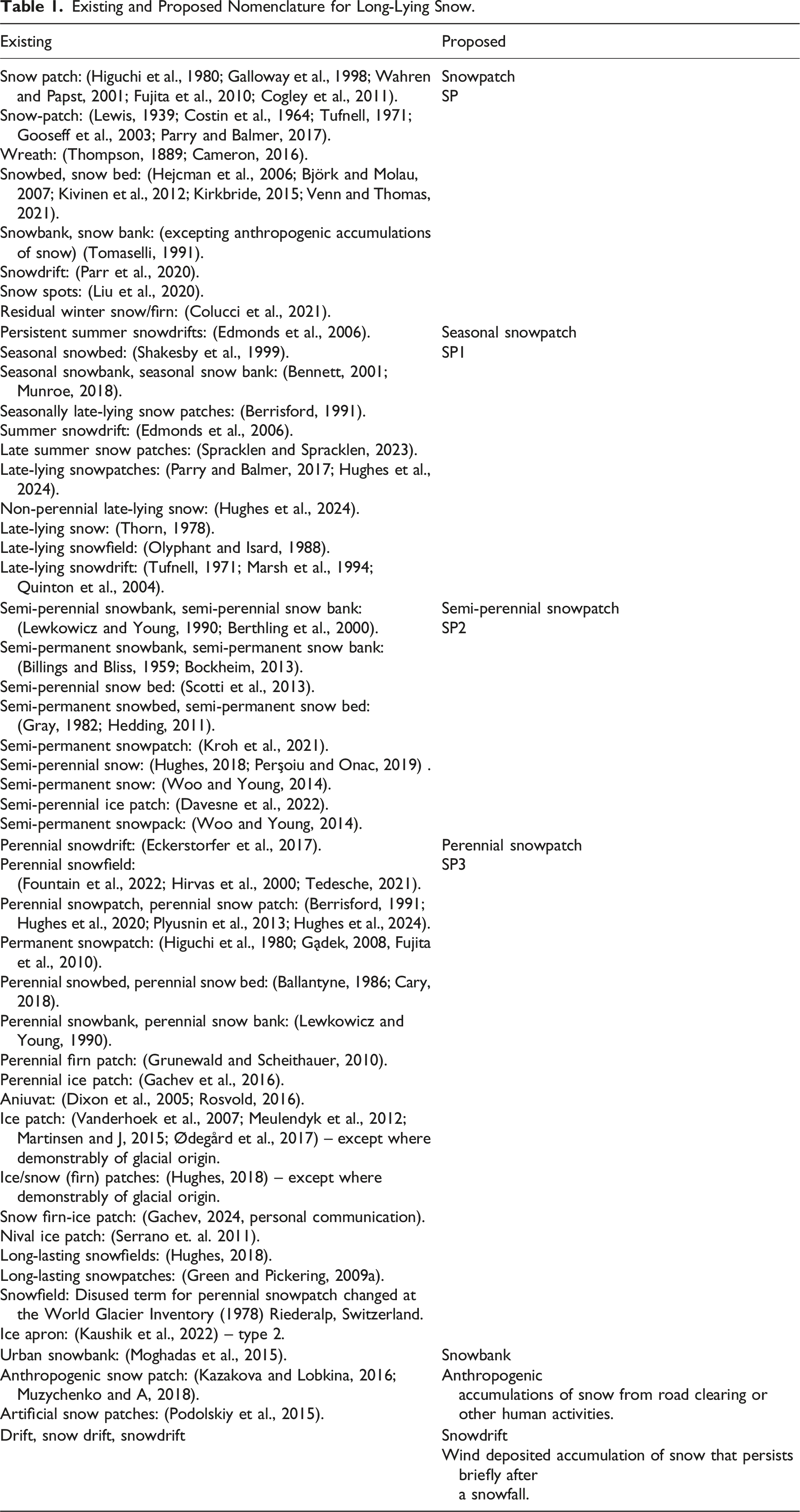
To address this, we propose a simplification of the existing nomenclature with snowpatch as the most appropriate encompassing term to describe long-lying snow, as its use is current while having a long history of use in academic publications, is descriptive of the phenomena, and avoids potential confusion caused by words such as drift and bank which can refer to transient or man-made features. The adoption of the term snowpatch by several key international organisations provides further weight for its more widespread adoption, including the International Permafrost Association (IPA), World Data Centre for Glaciology (WDCG) and National Snow and Ice Data Center (NSIDC) in their ‘Glossary of Permafrost and Related Ground-ice Terms’ (Everdingen, 1998), and the International Hydrological Program (IHP) and International Association of Cryosphere Sciences (IACS) in the ‘Glossary of Glacier Mass Balance and Related Terms’ (Cogley et al., 2011). The spelling ‘snowpatch’ rather than ‘snow-patch’ or ‘snow patch’ is proposed as preferable for its better online searchability and adoption by the IPA, IHP, WDCG, NSIDC and IACS.
To account for variability in longevity, the established qualifiers seasonal, semi-perennial and perennial should be continued, with the use of perennial rather than permanent as it encompasses the concept of repetition over permanency, better reflecting the observed behaviour of snowpatches. It is proposed that use of the qualifiers snowbank and snowbed to denote vegetation associated with snowpatches be discontinued in favour of snowpatch. The use of snowpatch as a qualifier is already used by some ecologists, particularly in Australia, where vegetation associated with snowpatches is commonly referred to as ‘snowpatch herbfield’ (Morgan and Walker, 2023; Verrall et al., 2023), and its wider adoption would better align the use of the term snowpatch in geomorphology with its related use in ecology.
Existing and Proposed Nomenclature for Long-Lying Snow.
Defining snowpatches
Simply defined, a snowpatch results from an uneven distribution of snowfall where snow is either carried by wind until it is deposited on the lee slope of ridges or in depressions (Green and Pickering, 2009b), or from avalanching from the upslope collapse of cornices or unstable snowpacks (Munroe, 2018; Watanabe, 1988), and its persistence as a discrete body into the ablation or melt season, which may be defined quantitatively by positive degree-day or energy-balance models that use the relationship between positive air temperatures and melt to approximate ablation.
As the ablation period progresses, snowpatches begin to affect underlying vegetation by limiting the photosynthetically available insolation, reducing desiccation (Harrison et al., 2001), insulating against fluctuations in temperature and the effects of frost (Körner and Körner, 2021), and providing additional moisture from meltwater (Helm, 1982). This produces predictable gradients leading to distinct snowmelt zones with differences in vegetation composition, cover and richness (Edmonds et al., 2006; Pickering et al., 2014). Snowpatches, even those that completely ablate prior to the following snowpack, may also retouch the landscape through the action of nivation processes including enhanced chemical weathering (Ballantyne et al., 1990), solifluction (Ballantyne, 1985), freeze-thaw activity (Berrisford, 1991; Colhoun, 2002), bedrock plucking and rock movement (Costin et al., 1964; Costin and Wimbush, 1973; Galloway et al., 1998), sheetwash, rill-wash, fluvial channels, alluvial fans (Kňažková et al., 2021), and by building protalus and pronival ramparts (Hedding, 2016; Shakesby, 1997).
This ability of long-lying snow to modify vegetation communities and the underlying ground surface allows for a more objective means to define the boundary between remnant winter snowpack and the emergence of snowpatches. We propose that for a discrete area of snow to be defined as a snowpatch, sustained modification of the underlying vegetation and/or ground surface must occur. How long this takes will vary for each site depending upon factors such as the vegetation, slope, soil and climate. For example, in the Kosciuszko alpine area in the Australian Alps appreciable nivation requires 240–245 days from snowpack onset (Galloway et al., 1998), while Pickering recorded changes in alpine grassland a mean of 143 days after 1 July, equating to 21 November (Pickering et al., 2014). In contrast, in the nearby Victorian alps, vegetation changes from snowpatches have been recorded as early as mid-October (Good et al., 2019). Figure 2 shows the rapid transition from remnant snowpack to snowpatches in the Kosciuszko alpine area, Australia. Sentinel-2 L2A false colour bands 8,4,3 images of the Kosciuszko alpine area, Australia. The left image from 9 October 2023 shows highly fragmented, remnant snowpack a week after the thaw commenced. The right image is the same area on 13 November with only snowpatches remaining. The dark area in the centre of each image is Lake Cootapatamba −36.46530 148.25449 @2025).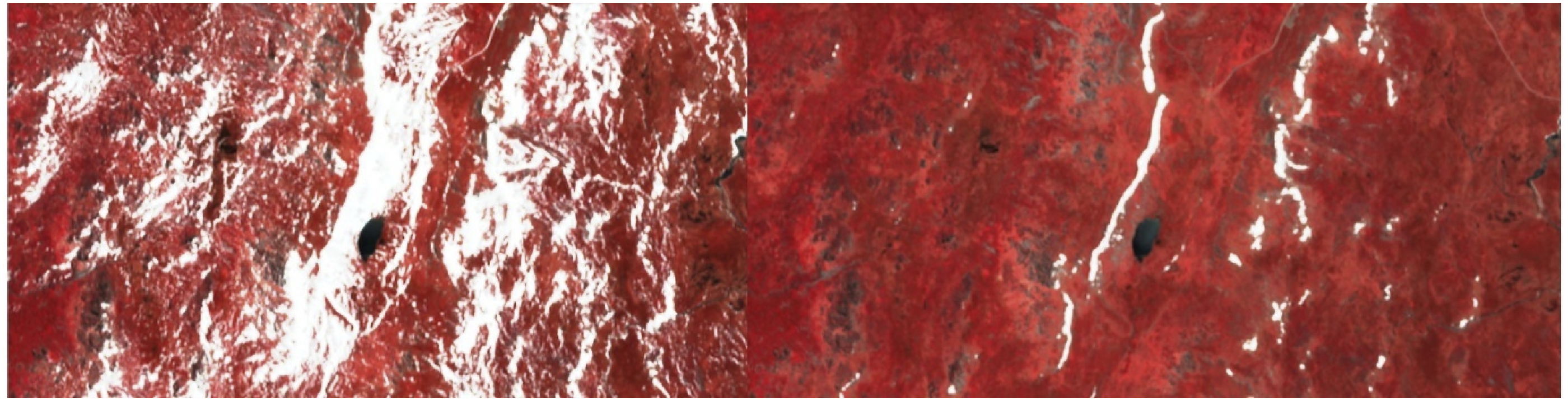
The proposed definition of snowpatches may be applied to any location and allows for long-term changes in climate as well as year to year variability in snowfall and ablation conditions. This is preferable to defining snowpatches using an arbitrary length of time from the onset of the ablation period, where variability in aspect, precipitation, insolation, temperature, and wind, and changes in them over time, can lead to markedly different dates for snowpatch emergence from the snowpack and their subsequent longevity. As the definition encompasses modifications to the underlying ground surface by nivation and other erosive processes as well as vegetation, it may be applied to vegetation-free localities, and by requiring sustained changes to occur, deliberately excludes low annual recurrence interval events that might provide sufficient snow at a location in an individual year to cause a temporary modification to the vegetation or ground surface.
Snowpatch types
Defining snowpatch types
Snowpatches have been varyingly categorised based on their location, morphology, presence of permafrost, the source and nature of their constituent snow and ice, mass balance and longevity. Popov sought to delimit snowpatches based on location, as either bottom snowpatches, couloir snowpatches or rock wall snowpatches (Gachev et al., 2016; Popov, 1964), while Lewis distinguished snowpatches based on their morphology: transverse, longitudinal and circular (Lewis, 1939). Ekblaw proposed a similar classification to that of Lewis, proposing circular hollows, piedmont drifts (corresponding to Lewis’ transverse), and wedge drifts (corresponding to longitudinal) (Ekblaw, 1918). More recently, St Onge adapted Lewis’ definition, describing hemicircles (circular), hollows (longitudinal) and ledges (transverse), with lithology seen as the driver of the different morphologies described (St Onge, 1969); while Henderson distinguished between wholly nival niches and those polygenetic forms showing post-nival mass wasting (Henderson, 1956). Kunitsky referred to snowpatches underlain by permafrost as cold snowpatches, others being undefined (Kunitsky et al., 2002), while Serrano classified ice-rich perennial snowpatches as nival ice patches (Serrano et al., 2011). Higuchi placed perennial snow patches into three broad categories based on the source of their constituent snow, those developed from local accumulations of drifting snow, those by avalanche, and those by a combination of both (Higuchi et al., 1980), while Woo used changes in a snowpatches’ mass balance to discriminate between snowpatch types (Woo and Young, 2014).
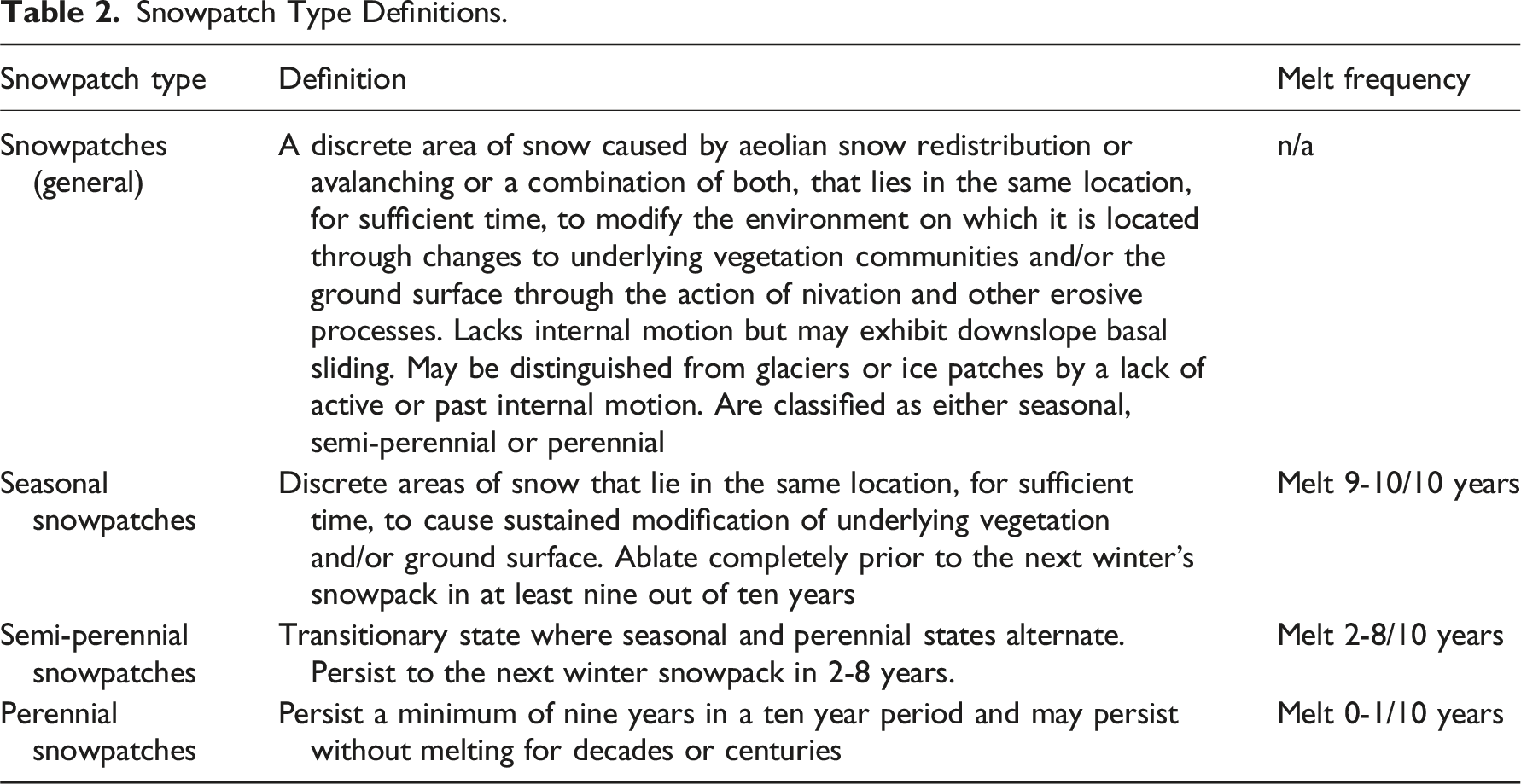
We differentiate snowpatch types based on their longevity, as it is the principal driver of snowpatch-related changes to vegetation and nivation. Three types are commonly recognised: seasonal, semi-perennial and perennial. Seasonal snowpatches typically ablate prior to the return of the succeeding snowpack (Bennett, 2001; Berrisford, 1991; Munroe, 2018), the duration of their persistence limited to any date prior to the snowpack’s return. The duration of a seasonal snowpatch is therefore highly variable both between areas and seasonally depending upon the prior winter’s snow accumulation and the nature of the ablation period – seasonal snowpatches in arctic and polar areas persisting for no more than a few months into the short summer, while those in lower latitudes may persist six or more months before ablating. Perennial snowpatches typically persist to and become part of the succeeding snowpack, while semi-perennial snowpatches occupy an intermediate state, persisting irregularly to the next snowpack.
It is proposed the digraph SP, already used by some researchers to denote the presence of a snowpatch on a map or diagram (Whalley, 2021) be more widely adopted and extended. Applying FAIR data concepts (Whalley, 2024; Wilkinson et al., 2016), it can be made more useful by using the alphanumeric SP1 to denote seasonal snowpatches, SP2 for semi-perennial snowpatches, SP3 for perennial snowpatches, and SP0 for locations where a formerly mapped snowpatch no longer occurs. To this may be appended additional information such as the year of observation, coordinates and elevation. For example, a seasonal snowpatch at Mount La Perouse in southern Tasmania may be designated as Mount La Perouse SP1 -43.5025 146.7456 @ 2024, 1135m. This clearly identifies the snowpatch, its type, location and elevation at a point in time, to enable better monitoring of changes. Understanding changes in individual snowpatches and the relative abundance of seasonal, semi-perennial and perennial snowpatches within a region is important, providing insights into potential changes in vegetation communities, meltwater, and the action of nivation and other snowpatch influenced geomorphological processes.
Differentiating snowpatches from glaciers and small ice bodies
While the modification of their immediate environment provides a more objective way to define seasonal snowpatches once they emerge from the snowpack, it does not distinguish perennial snowpatches from glaciers, which like perennial snowpatches, completely suppress vegetation and act to modify the underlying ground surface. Perennial snowpatches generally exist below the glaciological equilibrium line, where annual accumulation is equivalent to ablation (Fujita et al., 2010) and are defined as not ablating entirely over the thaw season (Lewkowicz and Young, 1990), or not ablating for at least two consecutive summers (Higuchi et al., 1980; Watanabe, 1988) and may last many centuries or even millennia, (Meulendyk et al., 2012; Nakamura, 1990; Ødegård et al., 2017). As perennial snowpatches age, their snow turns to firn, and with sufficient time, massive regelation and segregation ice may develop (Serrano et al., 2011). Unlike glacial ice, snow volume is insufficient to cause deformation by internal motion, with any downslope movement instead by basal sliding (Davies, 1969; Hughes, 2018), thus distinguishing them from glaciers. Rarely, the accumulation of snow may provide sufficient mass to cause glacier type motion but is prevented by topography such as in deep karstic dolines, where the snow-firn mass may be tens of metres thick but remain immobile (Djurović, 2012).
As small ice masses with no visible surface flow pattern but exhibiting internal deformation (Gachev, 2023), glacierets closely resemble perennial snowpatches. While a lack of deformation by internal motion separates snowpatches from glaciers, the literature distinguishing between very small glaciers such as glacierets, ice aprons (Kaushik et al., 2022), niche glaciers (Groom, 1959) and perennial snowpatches is nonetheless often vague and difficult (Grunewald and Scheithauer, 2010), with the term glacieret as defined by the World Glacier Monitoring Service (WGMS) too general to summarise the whole variety of small forms containing snow, firn, and ice. The term ‘small snow-firn-ice features’ has been used (Gachev, 2023, 2024) to summarise those forms smaller than cirque glaciers but lasting longer than seasonal snow cover, including small glaciers, ice patches, and perennial snowpatches. Alternatively, ice patches (or dead glacial ice) and glacierets have been categorised together without perennial snowpatches as ‘firn-ice patches’ (Gądek, 2008).
A further complication arises from the small volume of snowpatches, glacierets and other small ice bodies which enables them to respond quickly to changes in inputs and change type. Glacierets have been observed cycling between a glacier and ice patch state in the Rhodopean Massif and Dinaric Range in the Balkans according to short-term changes in inputs (Gachev, 2020, 2023). An example is the Debeli Namet in the Dinaric Mountains of Montenegro, which under a climate strongly influenced by the proximity of the Adriatic Sea, has at the end of the ablation season been 13 times in a small glacier state and 8 times in an ice patch state between 2003 and 2023 (Djurović, 2012; Gachev, 2023; Hughes, 2008).
Similarly, snowpatches may alternate between states as inputs vary (Figure 3) transitioning back and forth between perennial, semi-perennial and seasonal as inputs vary. However, those snowpatches that transition to a glacial state do not transition back to a perennial snowpatch, as glaciers and glacierets decay into glacial ice patches, also known as dead or stagnant glacial ice. Examples include the Megali Kazania cirque on Mt. Olympus, Greece, and the Calderone cirque in Gran Sasso, Italy (Gachev, 2023; Styllas et al., 2016, 2023). Snow to ice transition states. While snowpatches may transition to glaciers in an anaglacial phase, glaciers do not transition back to snowpatches in a kataglacial phase, instead transitioning to glacial ice patches.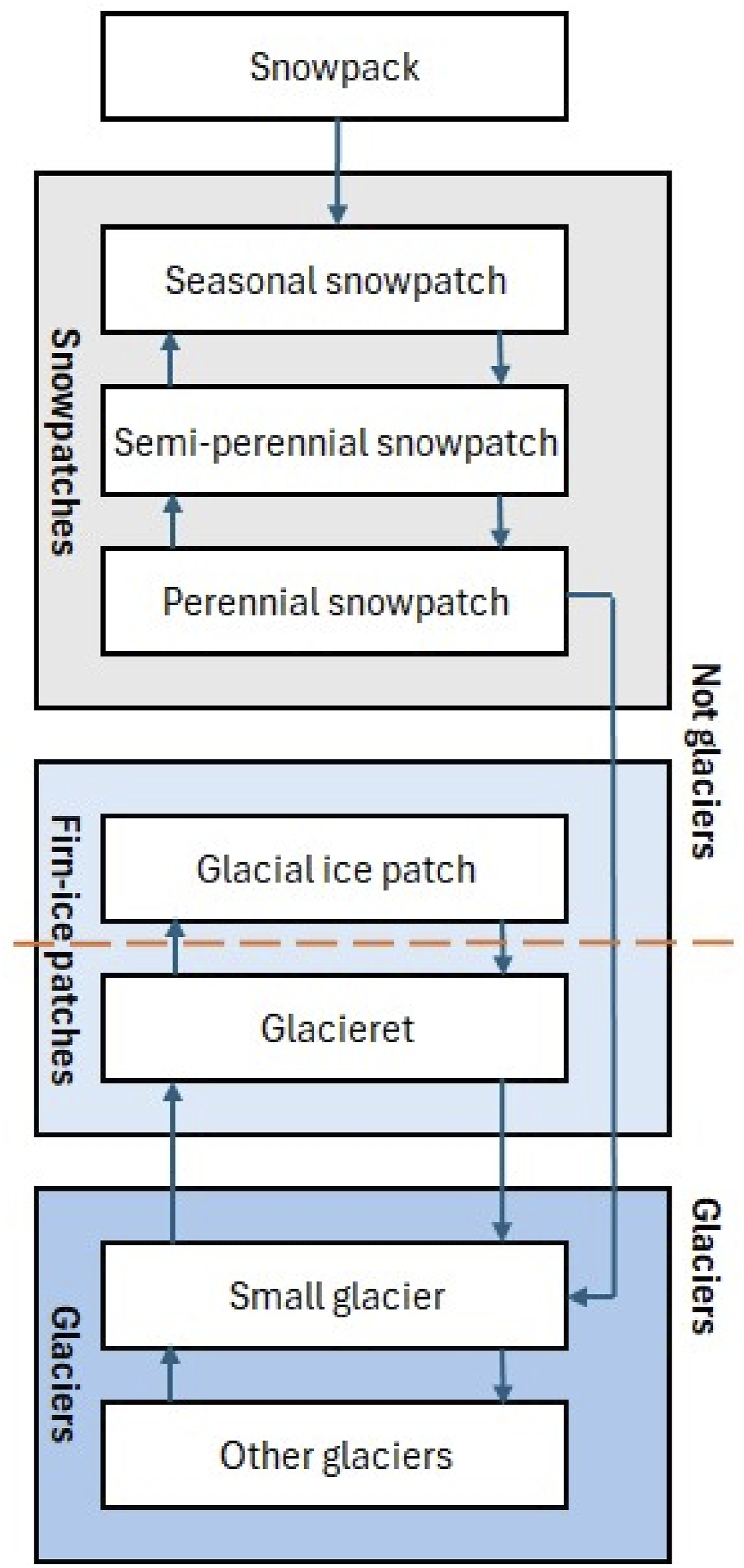
Perennial snowpatches also need distinguishing from ice patches, this term used both by archaeologists to refer to ablating perennial snowpatches that surrender archaeological specimens (VanderHoek et al., 2007; Martinsen and J., 2015; Ødegård et al., 2017) and by glaciologists to refer to stagnant glacial ice. Ice patches referenced by archaeologists are almost always nival in origin, their constituent ice being the remnants of an ice core or lens within a decaying perennial snowpatch. In contrast, glacial ice patches always comprise stagnant ice from a decaying glacier, and while movement has ceased, still show evidence of past movement and deformation (Serrano et al., 2011). Kaushik provided three categories for ice aprons (Kaushik et al., 2022) of which one equates with perennial snowpatches, the other two with glacial ice patches; while Serrano suggested the term ‘nival ice patch’ for areas of perennial ice generated by snow accumulation and firn development. As nival ice patches and type 2 of Kaushik’s ice aprons are synonymous with perennial snowpatches, it is proposed to avoid adding further to an already complex nomenclature, unless an area of ice is clearly of glacial origin, that the term ice patches or nival ice patches be discontinued in favour of the use of the term perennial snowpatches. For ice patches of a glacial origin, the qualifier ‘glacial’ proposed by Serrano provides clarity.
Snowpatches therefore form a distinct class of snow and ice body, within which three types may be distinguished: seasonal, semi-perennial and perennial. While each may be distinguished from the other by their longevity, characteristics, and effect on their local environment, all are nival in character, clearly separating them from ice patches, glaciers and firn-ice bodies.
The perennialism problem
While snowpatches may be defined by their impact on their local environment compared to residual snowpack, and categorised by their ability to persist habitually or erratically to the succeeding snowpack as either seasonal, semi-perennial or perennial, the duration of persistence required for a snowpatch to be termed perennial has proved difficult to define, Tedesche noting that ‘The basis for defining “perennial” is vague for snowfields, as very few have attempted to define a minimum age of persistence’ (Tedesche et al., 2022). Perennialism has varyingly been set at ‘two summers’ (Higuchi et al., 1980; Kisyov et al., 2021; Watanabe, 1988), ‘two or more years’ (Ødegård et al., 2017), or ‘an indefinite time longer than one year’ (Fierz et al., 2009). These reflect the UNESCO/IASH 1970 definition for glacierets and perennial snowpatches where they are defined as ‘exist(ing) for at least two consecutive summers’. In contrast, Tedesche considered snowpatches perennial only if they persisted for at least four years (Tedesche et al., 2019), while DeVisser and Fountain set a minimum of twenty years (DeVisser and Fountain, 2015).
Using the definition of perennial by UNESCO/IASH, Figure 4 shows a hypothetical southern hemisphere snowpatch that persists from winter to summer in some years, and from winter through two summers in another year. On a snowpack-to-snowpack basis, the snowpatch is either seasonal or perennial. Over multiple years, the alternation between a seasonal and perennial state makes the snowpatch semi-perennial in character.
While an individual instance of persistence over two summers meets the UNESCO/IASH definition for perennialism, the term perennial is more commonly used by researchers to describe snowpatches that have not melted in decades or centuries (Davesne et al., 2022; Ødegård et al., 2017), with semi-perennial the alternation between a seasonal and perennial state. In setting the definition of perennial as two consecutive summers, a counter-intuitive situation arises as shown by Figure 4, where perennial snowpatches may be viewed as a subset of semi-perennial ones. Ablation pattern of a hypothetical southern hemisphere snowpatch showing snowpack to snowpack seasonal and perennial patterns of persistence, within a longer semi-perennial pattern. Blue colour denotes months where the snowpatch was extant.
In seeking a clearer definition for perennial snowpatches, the minimum durations of Tedesche et al. (2019) and DeVisser and Fountain (2015) were assessed as possible alternatives. Tedesche’s four years, however, more reflects their study duration than a universally applicable boundary between seasonal and perennial snowpatches, while the method used by DeVisser and Fountain is not readily applicable outside of their study. In lieu of this, the literature was assessed for environmental differences between each snowpatch type that could act universally to discriminate perennial from semi-perennial and seasonal snowpatches.
Snowpatches host a suite of geomorphological processes, usually grouped under the term nivation (Christiansen, 1998; Galloway et al., 1998; Thorn, 1978). These processes enable snowpatches to undertake local landform modification including the formation of nivation hollows, headwalls, pronival ramparts and alluvial fans. Most such processes and landform features, however, are not unique to snowpatch sites, nor do they form a typical and distinct assemblage at all snowpatch locations, with different processes operating to different extents in different areas and under snowpatches of differing longevity. As snowpatches may currently only retouch landscapes extensively modified during past cold periods when there was greater nival activity, observed nival landscape features may also owe little to the action of current snowpatches (Galloway et al., 1998). Further, there is a paucity of research on what nival processes operate in conjunction with different snowpatch longevity types, with evidence that some operate within multiple types. For example, Costin found evidence of plucking and movement of rocks and their scratching of underlying boulders at a semi-perennial snowpatch on Mount Twynam (Costin et al., 1964, 1973), and while this snowpatch has since transitioned from semi-perennial to seasonal, evidence of multiple fresh striations were found during a May 2023 field visit at the site of Costin’s original survey, show rock movement is ongoing. A further example is afforded by Berrisford, who found evidence of enhanced mechanical weathering associated with both perennial and semi-perennial snowpatches in Norway (Berrisford, 1991). With no definitive evidence of any one geomorphological process universally typical for each type of snowpatch, such processes may be discarded as a means of distinguishing snowpatches by longevity.
The impact of snowpatches on vegetation communities was also assessed. As a snowpatch persists, the growing season is reduced with progressively fewer species able to survive and reproduce (Green and Pickering, 2009a), with all vegetation eliminated after three summers of consecutive snowpack to snowpack persistence (Green K., personal communication, 2024). While the complete suppression of vegetation by perennial snowpatches at three summers provides a potential distinguishment between perennial and other snowpatch types, seasonal and semi-perennial snowpatches may also completely supress vegetation. For example, the melt week of a seasonal snowpatch at 2130 m on a south-east facing ridge of Mount Kosciuszko (2170m −36.4610, 148.2642 @2025), in the Australian Alps was determined using Landsat, Sentinel and Planet satellite images for the period 1979–2024, showing it melted prior to the return of the snowpack in all years, confirming its seasonality. Fieldwork in January 2024 after the snowpatch had melted showed a small vegetation-free area where snow-lie was greatest, and the fluvial erosion of fines inhibited vegetation colonisation. Seasonal and perennial snowpatches can also be found in vegetation-free locations such as Antarctica (Gooseff et al., 2003; Leppäranta et al., 2013), and on scree or talus slopes. The effects of snowpatches on vegetation may thus also be discarded as a method to distinguish snowpatch types.
A qualitative measure of differentiating snowpatches
As vegetation and specific geomorphological processes or their effects cannot provide definitive and globally universal markers of the transition boundary between the different types of snowpatches, we propose a qualitative measure of the boundary between different snowpatch types based on longevity (Figure 5). This proposes an annual recurrence interval for snowpatch survivability that reflects the characteristics of each snowpatch type, provides an effective measure to track changes in snowpatches from state to state in anaglacial and kataglacial periods, and allows for exceptional low annual recurrence events. Snowpatches are termed perennial if they persist to the next snowpack in at least nine out of 10 years, semi-perennial if they persist for two to eight years out of 10, seasonal if they persist a maximum of one in 10 years, with the pattern of year by year persistence typically erratic. Proposed ranges for seasonal, semi-perennial and annual snowpatches. Blue shows the total number of years of persistence in a 10 year period for each snowpatch type. Years of persistence are typically non-consecutive.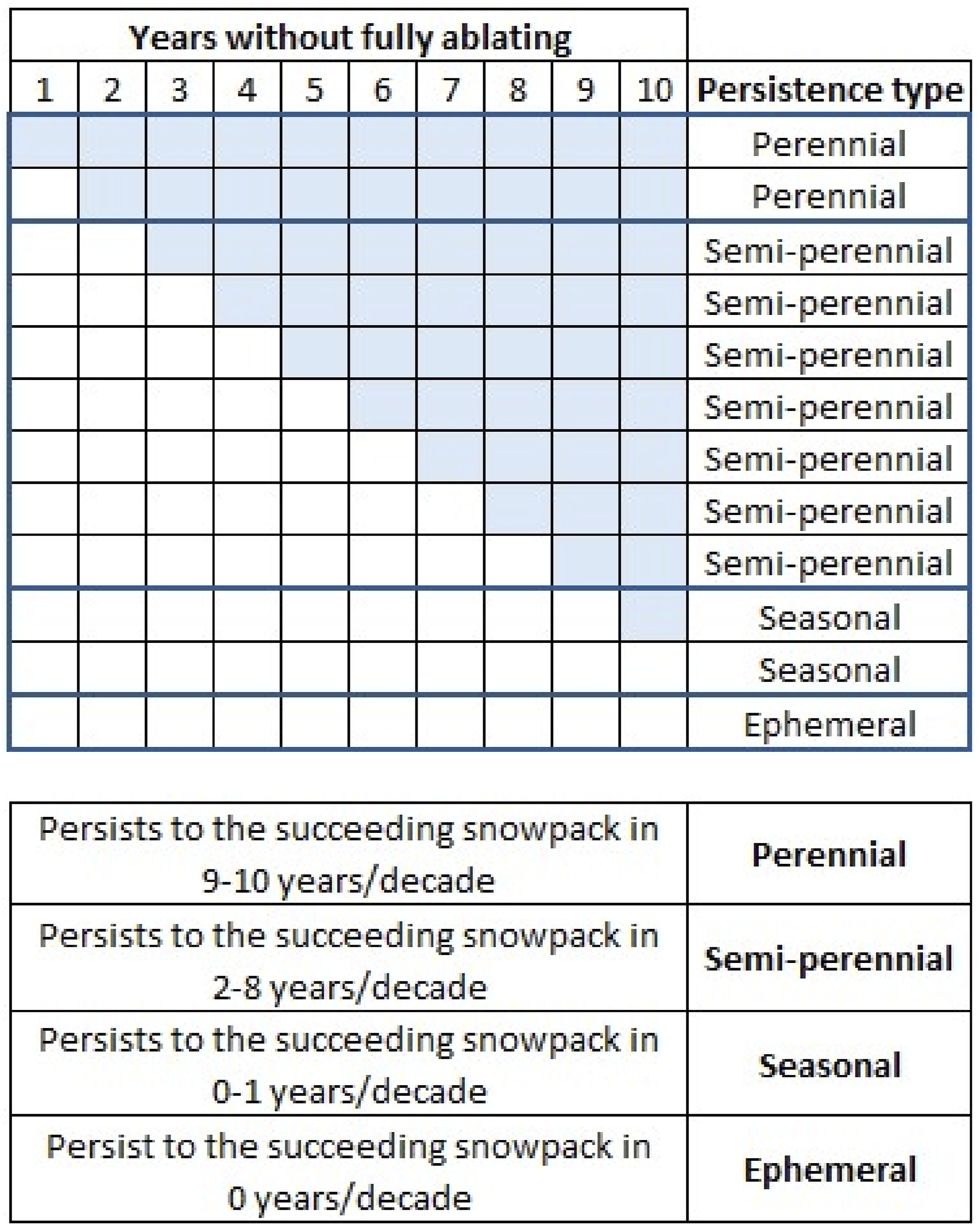
While further research is required to determine if climatic fluctuations such as the El Nino Southern Oscillation Index (ENSO), Indian Ocean Dipole (IOD), Southern Annular Mode (SAM) for the Southern Hemisphere, and North Atlantic Oscillation (NAO) and others for the Northern Hemisphere, cause observable shorter term patterns in years of persistence and complete ablation, these are unlikely to cause snowpatches to sustainably transition between types.
Using satellite data, we applied the proposed ranges to three locations in the Southern and Northern Hemispheres, in Australia, Iran, and Scotland, to snowpatches with seasonal, semi-perennial and perennial characteristics. While the term seasonal carries the imputation of the complete melt of snow during the ablation season, the proposed range accounts for exceptional years when a snowpatch uncharacteristically persists until the following snowpack. This is exemplified by a seasonal snowpatch at 3450 m in the Zard Kuh mountains, Iran. The snowpatch was assessed using Sentinel and Landsat satellite imagery for the period 1986–2023, during which it was observed persisting until the return of the following snowpack in only two years, in 1993 and 2023 (Figure 6). Were the term seasonal defined as having zero persistence in all years, such rare instances of persistence would have the snowpatch unnecessarily temporarily transitioning to semi-perennial then back to seasonal when the long-term character of the snowpatch is clearly seasonal. Persistence years for a snowpatch in the Zard Kuh area of Iran (SP1 3450m 32.2644 50.1337 @2025). Sentinel and Landsat satellite imagery from 1986–2023 show only one year, 1993, when the snowpatch persisted to the following winter snowpack.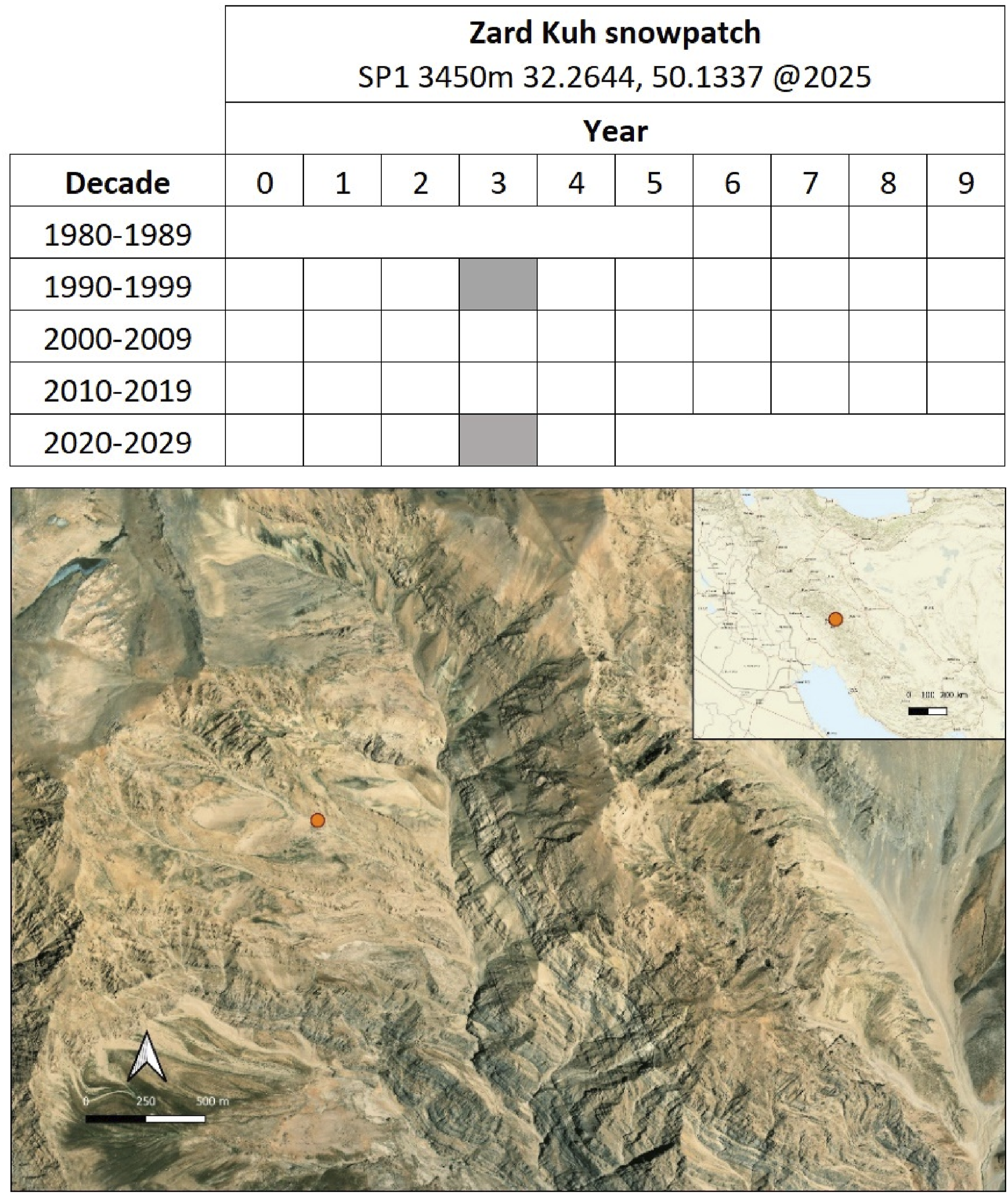
The allowance for exceptional years was then applied to Scotland’s most persistent perennial snowpatch, The Sphinx, located in a cirque at 1140 m near Braeriach, Scotland (Figure 7). In the 90 year record from 1900–1989 curated by Scottish snowpatch researcher Iain Cameron, the snowpatch ablated just twice, in 1933 and 1959 (Cameron et al., 2023; Watson, 2011). Were perennial defined as a snowpatch persisting all years, the two isolated instances of complete ablation would temporarily transition the snowpatch to semi-perennial then back to perennial when the snowpatches’ overall character during this period was perennial. Persistence of The Sphinx snowpatch (SP2 1140m 57.0605-3.7494 @ 2025) 1900–2024. Perennial years in grey alternate with seasonal years in white. The snowpatch transitioned to semi-perennial in 2007 after two years in a 10 period in which it completely ablated.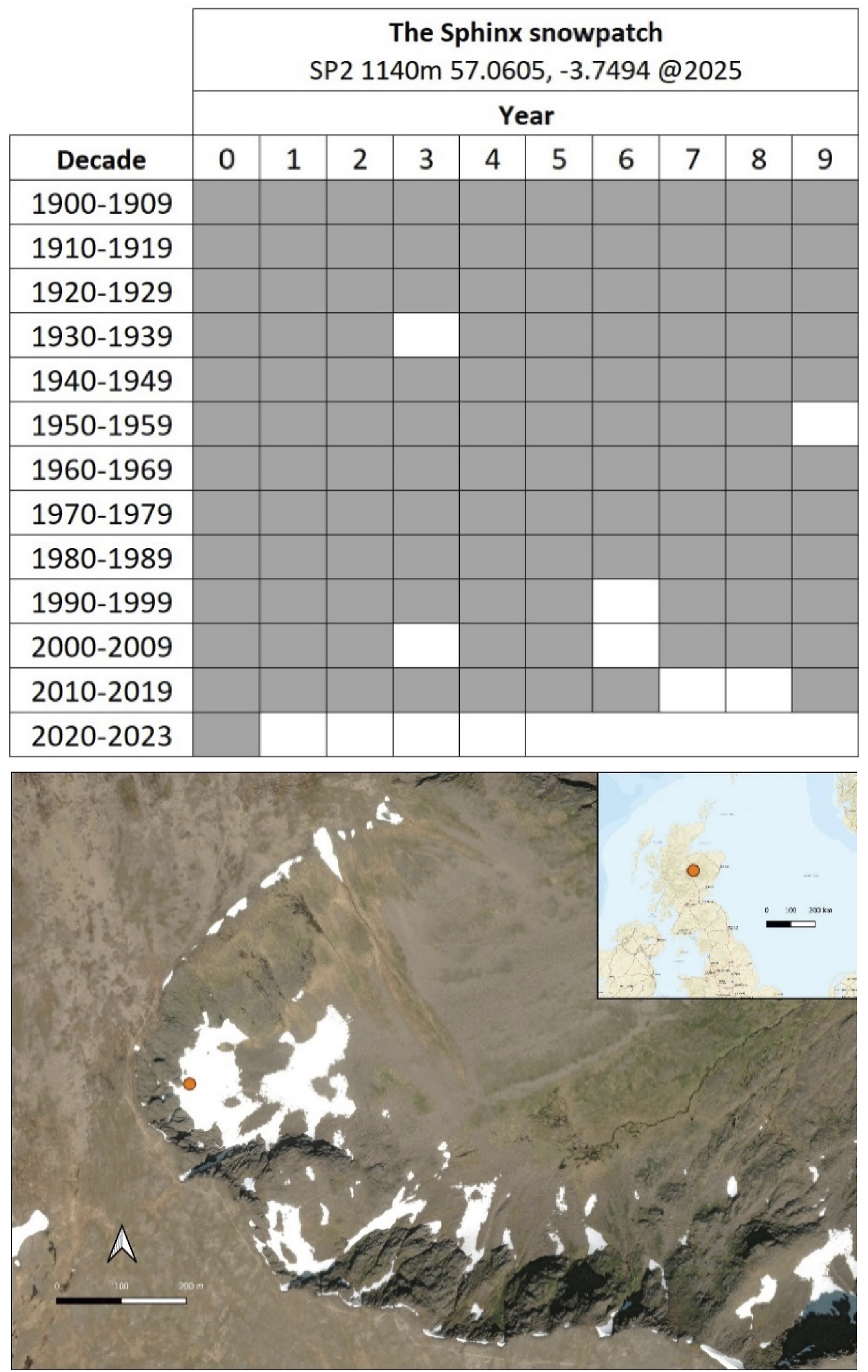
The proposed ranges do, however, allow for snowpatch types to transition when there is evidence of sustained change. The proposed ranges were applied to a snowpatch located at 2130 m in a steep south-east facing gully on the slopes of Mount Twynam in the Australian Alps (Figure 8). Landsat, Sentinel and Planet satellite images supported by ground survey records, were assessed for the period 1979–2024, with the record extended to 1936 by comparisons to routine snow depth measurements at the nearby Spencers Creek and Victoria’s Rocky Valley Dam snow courses. This showed over the 89 year combined record the snowpatch was semi-perennial until 1991, persisting at least twice in any 10 year period. From 1992 it persisted no more than once in each 10 year period, transitioning to a seasonal snowpatch. Persistence of the Mount Twynam snowpatch (SP1 2170m −36.3936 148.3173 @2024) 1935–2024. Perennial years in grey alternate with seasonal years in white. The snowpatch transitioned to seasonal in 2002 after a period of persisting to the next snowpack at least twice in 10 years finished in 1996. Shaded years are year of accumulation.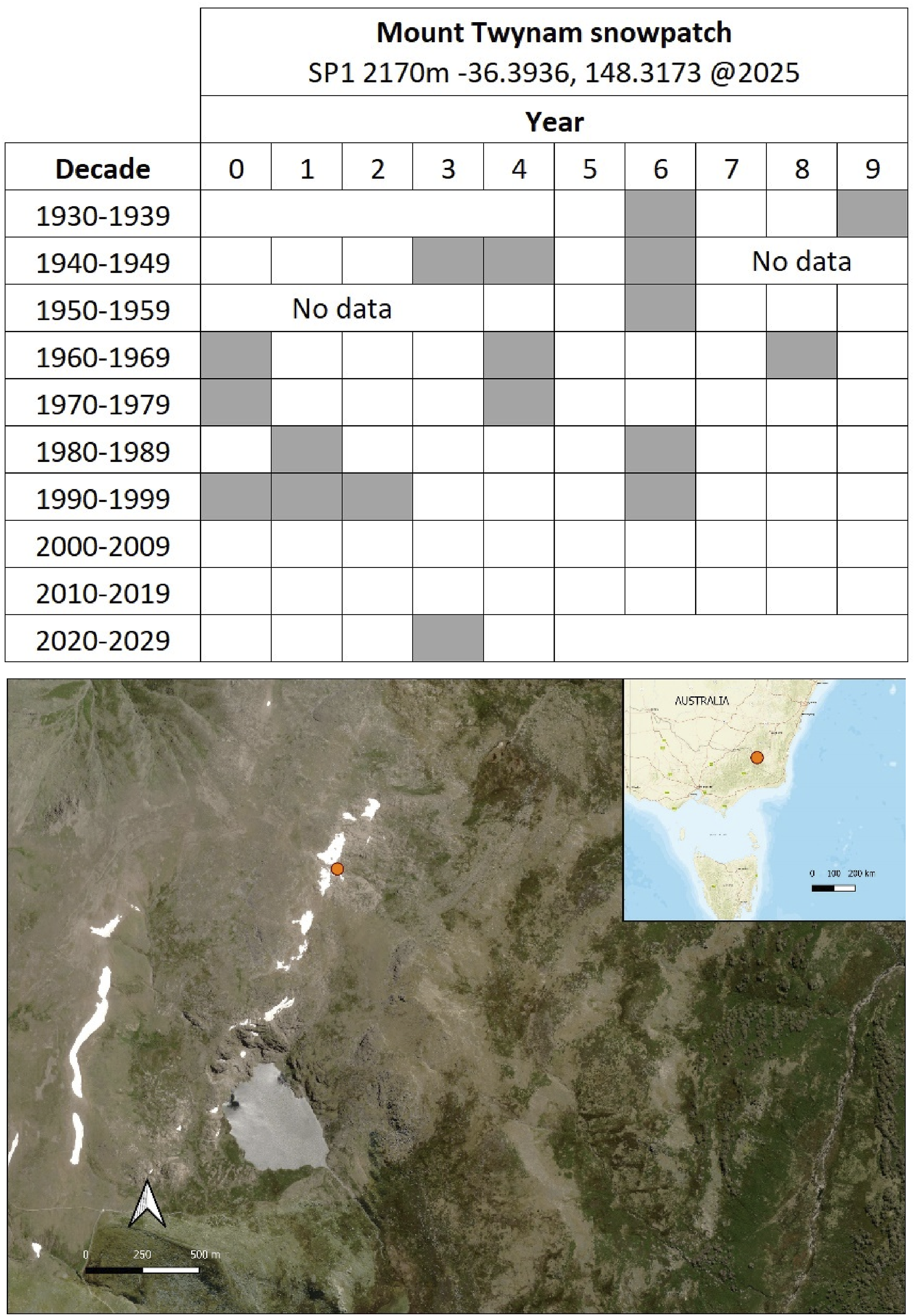
Applied to the full record of snowpatch persistence for The Sphinx snowpatch, prior to 1996, the snowpatch melted no more than once in any 10 year period, maintaining its perennial character. When the snowpatch melted in 1996 and for the second time in a decade in 2003 and continued a pattern of multiple full ablations per decade, it met the criteria to have transitioned to a semi-perennial snowpatch. In both the Mount Twynam and The Sphinx snowpatches, the proposed ranges show a clear transition of snowpatch type based on longevity, while allowing for exceptional years of persistence or ablation.
Conclusion
Snowpatch Type Definitions.
By making it easier to count changes in the number of seasonal, semi-perennial and perennial snowpatches, insights into potential future changes in vegetation communities and the action of nivation and other snowpatch influenced geomorphological processes can be obtained, providing land managers with useful information.
Footnotes
Acknowledgement
The authors gratefully acknowledge Ellen Campbell and Dr Matt Jeromson for their help in the preparation of figures, Dr Ken Green for comments on the manuscript, and Iain Cameron for his insights and invaluable data on Scottish snowpatch persistence.
Declaration of conflicting interest
The authors declared no potential conflicts of interest with respect to the research, authorship, and/or publication of this article.
Funding
The authors received no financial support for the research, authorship, and/or publication of this article.
Ethical statement

Data Availability Statement
Data used in the compilation of the paper may be requested by emailing the lead author.