




Abstract
Global environmental change is one of the most pressing issues facing future generations. Equipping schoolchildren with a clear understanding of physical geography is therefore a key educational priority. Effectively engaging schoolchildren with complex scientific ideas can be challenging, but with the appropriate tools, scientists can play a valuable role in developing meaningful science communication experiences. Climate Explorers addressed these issues by forging a collaboration between physical geography and social science academics, and 320 UK school students and their teachers in seven primary (elementary) schools. Using insights from co-production techniques and storytelling, the project aimed to 1) produce new open access, online climate science education resources, and 2) test co-production and storytelling approaches to physical geography science engagement. Our findings demonstrated that school children responded especially well to working with ‘real life’ scientists, where meaningful and memorable educational interactions were forged through the use of narratives, personal experiences and tailored language. Here we summarise our approach, and provide templates that can be readily applied by scientists working across the physical geography spectrum anywhere in the world. The flexibility of the templates means that they can be adapted and developed for a range of formats, from small-scale community workshops to national-scale educational initiatives, for delivery both in-person or online. We hope that our approach will provide a springboard to transform and enhance physical geography science communication more broadly.
Keywords
I Introduction
The effects of global environmental change, such as heatwaves, flooding and sea level rise, are already being experienced in some parts of the world (Brechin and Bhandari, 2011; DeConto and Pollard, 2016; Matthews, 2018; Pachauri et al., 2014; Wouters et al., 2017), and will be amongst the most significant global issues facing future generations. Equipping schoolchildren with an early understanding of physical geography, including climate science, is therefore a major educational priority, because increased knowledge of environmental challenges and potential solutions will enhance preparedness (Lawson et al., 2018).
In some national curriculum systems, including the UK, core physical geography issues such as climate science are embedded in secondary/high school level education (12+ years), and supporting resources are widely available, including a range of popular science books, exam revision websites, and magazines. Provision of climate science resources to support formal curricula at the primary/elementary school level (5–12 years) is typically much less developed. A systematic review of the climate education literature uncovered only a small number of initiatives targeted at the primary level (Monroe et al., 2019). This age group is at a critical learning stage when fundamental scientific principles become embedded in a child’s understanding of the world, and children are able to understand experimentation and theory building (Duschl et al., 2007). Lack of knowledge is one of the barriers to meaningful engagement with major issues such as environmental change (Lorenzoni et al., 2007). Recent analysis has shown that emotions also play a role, for example, in determining an individual’s support for climate policy (Wang et al., 2018). These ideas are effectively summarised by Baba Dioum: “In the end we will conserve only what we love, we will love only what we understand, and we will understand only what we are taught” (Valenti and Tavana, 2005: 308). Education that develops personalised engagement is therefore key to changing attitudes and behaviour (Cordero et al., 2020; Trott, 2020). With the recent growth in media coverage of environmental issues, the advent of climate school strikes and an increase in environmental activism, it is timely to ensure that the importance of physical geography is well-understood by schoolchildren (Lee et al., 2020, Martiskainen et al., 2020). There are two key challenges to this.
The first is that learners often struggle to reconcile global-scale phenomena with their individual experiences (Van der Linden, 2015). The quantity of information, as well as the negativity of environmental issues, means that audiences can become anxious, overwhelmed or desensitised and subsequently disengage (Budziszewska and Jonsson, 2021; Clayton, 2020). The complex nature of earth and environmental sciences make them difficult to teach in an engaging and comprehensible way. What is more, teachers do not always have access to positive, solutions-based materials, which are important to make the teaching more effective (Jacobson et al., 2017).
A solution to this educational need, to maximise the role that scientists can play in supporting existing curricula, may lie in the use of ‘co-production’ science engagement techniques: the collaborative production of educational materials between the knowledge providers and recipients (Bateman, 2016). It is based on a recent call to transition from one-way didactic models of science communication (addressing deficits in public knowledge, the ‘deficit model’; VanDyke and Lee, 2020), to a two-way dialogue model (where the public actively contribute to the learning process) (Wibeck, 2014). This aligns with the constructivist theory where knowledge is developed through dialogue-based social interactions (Dillon, 2003). In particular, it has been highlighted that educators should consider an audience’s existing knowledge as a basis for the learning process (Wibeck, 2014). This is especially relevant for global environmental issues, such as climate change, that are interdisciplinary and often perceived as being beyond the scope of individual actions (Findlater et al., 2018; Van der Linden, 2015). By embedding scientific knowledge into everyday experiences, including through the use of images and stories to build relationships with the audience, the message can become more relevant and memorable, and lead to personal action (Bracken et al., 2015; Howarth and Black, 2015; O’Neill and Nicholson-Cole, 2009; VanDyke and Lee, 2020). As identified by Aristotle and, later, Gustav Freytag, a typical story contains a start, middle and an end, known as ‘Freytag’s Triangle’ (Theune et al., 2003). The narrative or ‘dramatic arc’ of the story can take many shapes, but is usually punctuated by elements that build and resolve tension, including opening narrative hooks to pique the audience’s interest, dramatic incidents, obstacles and problems, action and adventure, and resolutions to overcome adversity (Boyd et al., 2020). Because storytelling is an inherent part of human nature (Boyd et al., 2020), narrative conventions have been highlighted as highly effective vehicles for scientific knowledge exchange (e.g. Dahlstrom, 2014; Green et al., 2018; Topp et al., 2019).
The second challenge is that schools outreach typically takes the form of university academics and professionals delivering workshops in schools, school children visiting a university campus or, increasingly, video links with scientists. As such, these engagements are embedded into already busy school curricula and typically only last the duration of a single class period. It is therefore important to maximise the impact of often time-limited engagement opportunities to ensure knowledge development. Scientists may not have an in-depth knowledge of school curricula, and, due to their training in highly specialised, technical language (Altman et al., 2020), may be at risk of delivering over-complicated material. It has been identified that the scale and content of science communication training varies considerably between institutions (Rodgers et al., 2020; VanDyke and Lee, 2020), and many academics are not confident communicating beyond scientific communities (Rose et al., 2020). Science communication resources that provide practical solutions for a range of audiences could transform the skills and science communication confidence of academics (Altman et al., 2020). Co-production in its purest form relies on continued collaboration between the learner and the educator at multiple stages in the learning process (Brandsen et al., 2018). This approach is often precluded by the logistical constraints outlined above, and is not in itself a prerequisite for effective communication strategies. However, if considered as part of a spectrum from one-way didactic outreach to full co-production initiatives, it is possible to identify a number of best-practice co-production elements that are straightforward yet effective, do not require continued engagement, and can thus be incorporated into a range of outreach activities.
We combined the expertise of physical geography researchers, educational specialists, and multimedia producers at Fun Kids radio, working collaboratively with 320 primary school students (Figure 1) to address these two challenges. There were two aims: Establish and enhance the climate science knowledge of primary-aged children by developing engaging and scientifically accurate educational resources. A series of 10 short (∼3 min), freely available, online radio podcasts and accompanying animated videos were designed to address 10 climate science topics, entitled ‘Climate Explorers’. Apply and test elements of co-production and storytelling to physical geography outreach during the development of Climate Explorers learning materials.
Through this, we propose best-practice templates that can be used/adapted by other science outreach teams, scaled up or down, and completed face to face or remotely, to accommodate case-specific themes and logistical requirements.
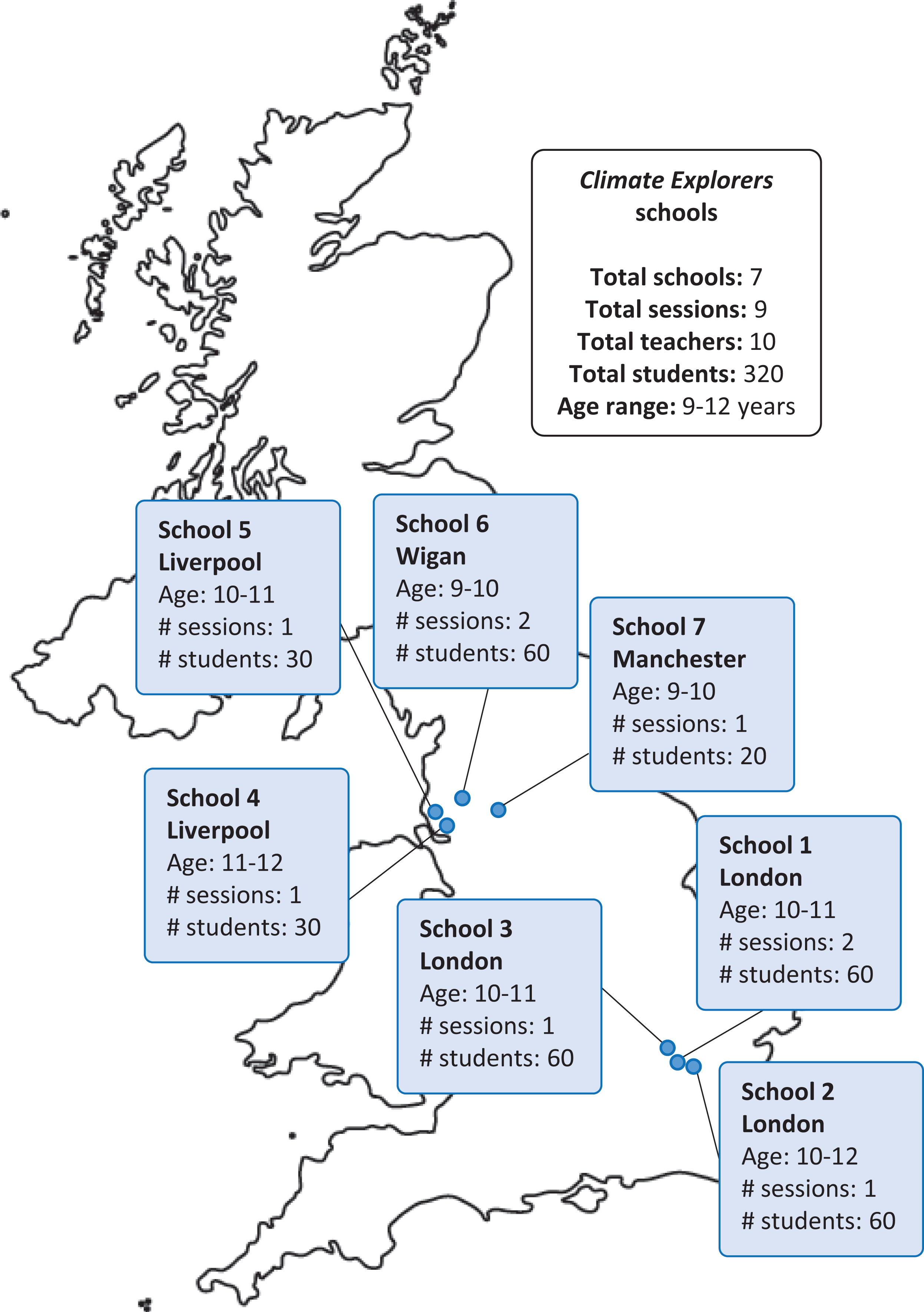
Location of schools in the Climate Explorers network, workshop class sizes, and age groups. Schools have been anonymised.
II Project design, methods, and the Climate Explorers schools network
Climate Explorers was divided into three phases (Figure 2; Sections III–V): Identifying existing knowledge – development and delivery of schools workshops to establish the knowledge boundaries and learning preferences of the audience. In short, what do the children already know, and what would they like to know more about? Furthering knowledge – the creation of new educational materials available internationally, based on the findings of Phase 1, to further the knowledge of the target audience, including those beyond the Climate Explorers schools networks. How can we build on their current knowledge in a way that interests them? Evaluating co-production and narrative approaches – assessment of best practice in co-production and narrative-focused outreach, and its application to physical geography science communication. How can these tools be distilled for other users in a range of activities?
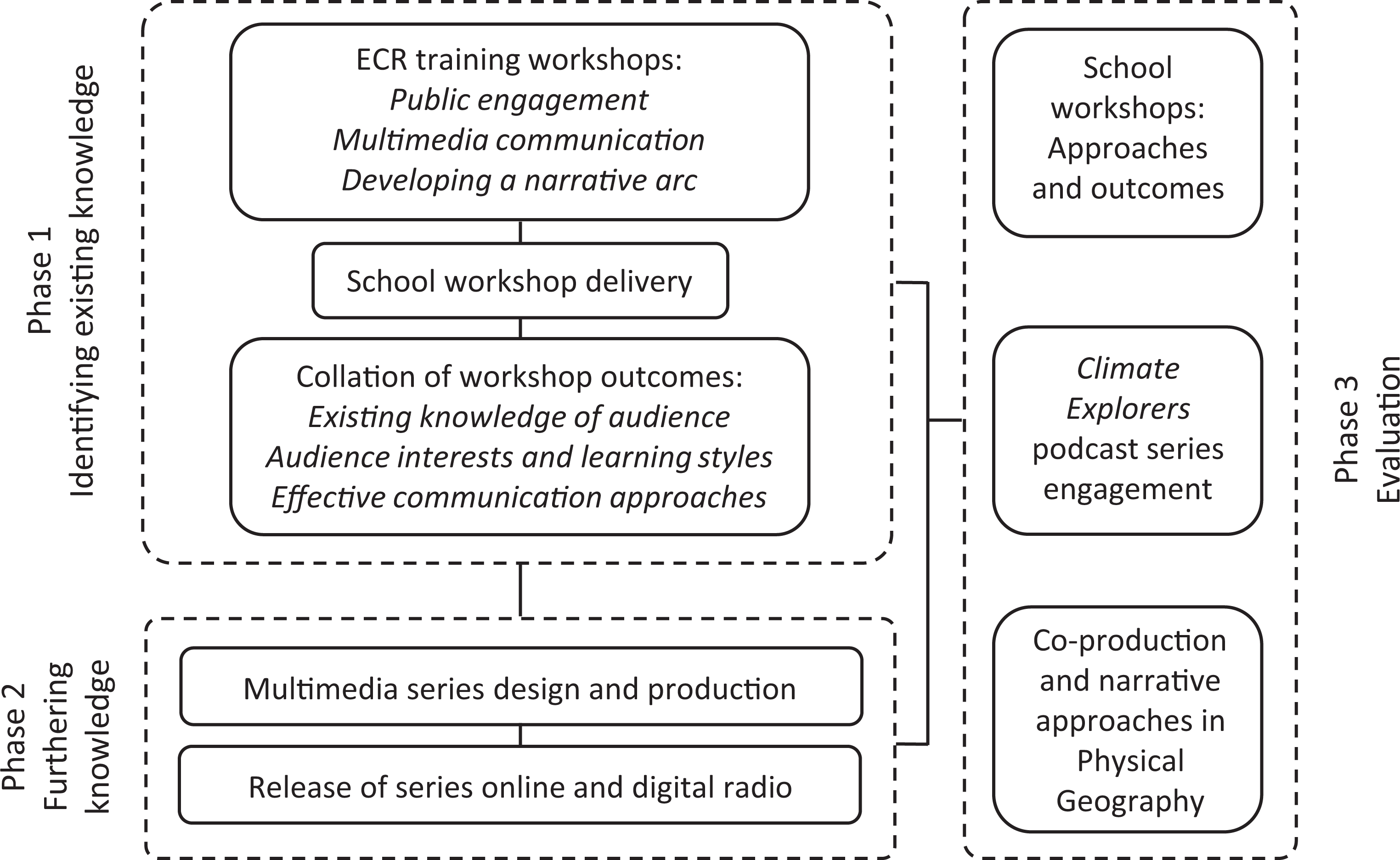
The stages of Climate Explorers: Phase 1 – Identifying existing knowledge, including delivery and discussion of schools workshops; Phase 2 – Furthering knowledge by producing a series of radio podcasts and animated videos to build on the findings of Phase 1; Phase 3 – Project evaluation, including reflection on schools workshops, educational materials, and narrative and co-production elements in physical geography science communication.
The Climate Explorers team was assembled in response to an outreach funding call and networking workshop by the UK Natural Environmental Research Council. Schools were contacted using the team’s institutional local schools networks. Seven primary schools were part of the Climate Explorers network (Figure 1), located in different parts of England, including state-run (non-fee paying) and private (fee-paying) schools. Nine hour-long climate science workshops were delivered by 11 early career researchers (ECRs) over a 2-month period, across a range of age groups (9–12 years), and class sizes (20–60). In total, we worked with 10 teachers and 320 students from a cross section of backgrounds, age groups and knowledge bases, to gain a meaningful sample of the current climate science understanding amongst primary-aged groups.
The ECRs had a broad range of physical geography research expertise: oceanography, glaciology, renewable technologies, ecology and conservation, atmospheric science, Quaternary science, and cultural perspectives on climate change. This variety of specialisms ensured that we could deliver workshops across a range of topics. The insights gained from the schools workshops were used to develop new, publicly available educational resources produced with Fun Kids radio, the largest children’s radio broadcaster in the UK. Multimedia entertainment such as video, audio, art, and music, is known to be a valuable approach to engage children with important scientific concepts (e.g. O’Neill and Nicholson-Cole, 2009; Singhal and Rogers, 2012; Topp et al., 2019). However, despite their popularity (Lee et al., 2009; Lee and Kuo, 2002; Vandewater and Lee, 2009), these mediums are not widely used in physical geography. Televisions, computers, tablets and mobile phones are the most common devices used by children aged 5–15 years to consume multimedia (Dinleyici et al., 2016; Vittrup et al., 2016). To maximise this popularity, Climate Explorers therefore produced radio podcasts with accompanying videos, to be accessed on a range of devices.
The Climate Explorers project involves multiple schools, a team of researchers, and multimedia producers. The scale and resources of this were understandably beyond the scope of typical schools outreach sessions. Accordingly, we distilled the key findings of our workshops and multimedia resources to devise adaptable templates for other physical geography academics working with schools and broader public audiences at a range of scales.
III Phase 1: Identifying existing knowledge
Establishing the audience’s knowledge base and skills set is a valuable part of science communication (National Academies Of Sciences, Engineering, and Medicine (NASEM), 2017) and an essential starting point for co-production approaches. It ensures that their prior understanding, interests and learning preferences are clearly established, so that they can be used as a foundation to develop further knowledge (Phase 2). In the case of Climate Explorers, Phase 1 centred on a series of interactive, ECR-led schools workshops. Here, we summarise the theoretical basis for effective science communication, and explain how this was translated into schools workshops to identify what children already knew and what they would like to know.
3.1 Key concepts in public engagement and narrative arcs
ECRs were trained in the theory and logistics of successful co-production approaches, to ensure bespoke communication strategies for the Climate Explorers schools’ audiences. The key premises covered in the training sessions are relevant to all aspects of science communication, including future applications in physical geography, and are summarised as follows: An audience’s understanding of science is conditioned by the relevance of the scientific message to their own experiences, the appeal of science, and the trust in the scientific message and its provider (Anderson, 2015; Farrell, 2018). As such, the language and communication techniques must be tailored to the audience, to avoid misunderstandings between what the presenter believes they are saying and what the audience hears (Akmajian et al., 2017; Bell, 2016), and to address the audience’s precursory understanding, including elements of cognitive dissonance (Festinger, 1957; Gifford, 2011). Scientists have different roles within society, encompassing pure scientist, science arbiter, issue advocate, broker of policy alternatives, and science communicator (Pielke, 2007; Rapley and De Meyer, 2014). Individual scientists need to understand their personal role and, collectively, the scientific community needs to represent all of these roles and be able to adapt to the audience’s values, knowledge and interests. Terminology, sentence length, and tone of voice are key when communicating scientific ideas to children. It is not always necessary to reduce the complexity of the subject, but the delivery should be adapted appropriately. Stories and narratives are a powerful means of communication (Dahlstrom, 2014; Green et al., 2018; Topp et al., 2019), creating relatable links between the presenter and the audience, and forging lasting memories. An effective way to achieve this is to deliver a scientific message using a narrative arc punctuated by personal experiences and anecdotes (Wang et al., 2018). Such ‘narrative hooks’ help to engage the audience, bridging the gap between familiar and unfamiliar ideas by provoking an emotive response (e.g. anecdotes of danger during fieldwork, or the excitement of a successful lab experiment) (Humm et al., 2020; Wang et al., 2018). We propose that communication with an embedded narrative arc can be achieved by considering the presenter’s message, in this case climate change, through three nested lenses: field-wide lens – the full topic under consideration (e.g. climate science and its global importance); specific area lens – an individual researcher’s work within the first lens (e.g. oceanography); personal lens – the presenter’s personal experiences and day-to-day research activities (e.g. laboratory analysis or fieldwork). Science communicators most commonly use the field-wide lens, which can lead to abstract concepts that lay audiences find difficult to relate to, such as large-scale earth systems (e.g. the atmosphere) or unrelatable terminology (e.g. gigatons). A personal lens can instead provide a rich variety of creative engagement opportunities to relate the expertise of the scientist with the experiences of the audience.
3.2 Climate Explorers schools workshop content
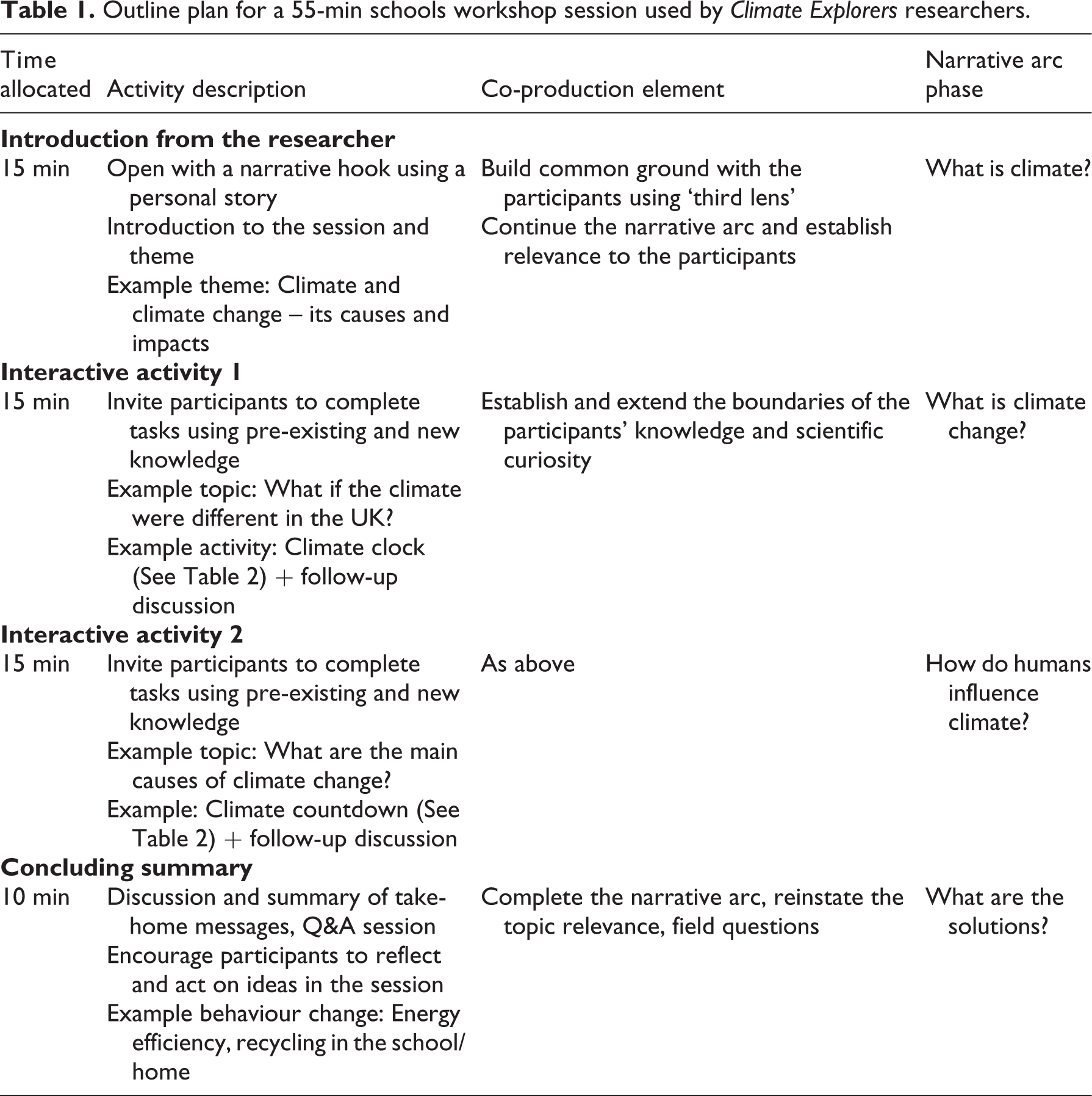
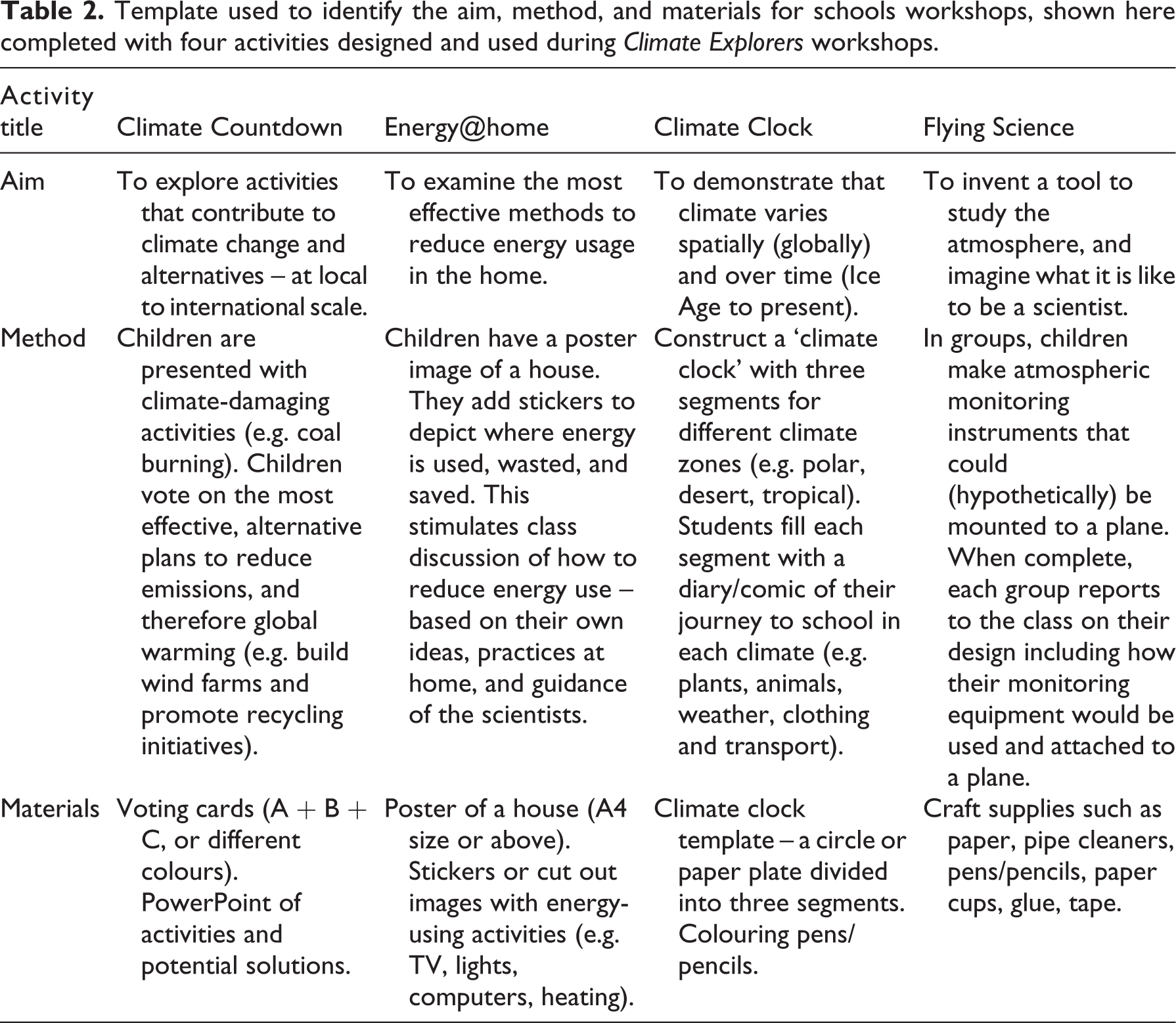
Workshops were designed around inclusive discussion, enhancing the personal connection between the ECRs, the school children and the scientific topic. This flexibility allowed the workshop group (ECRs, children, teachers) to collectively identify, continually reassess and adjust the workshop content as appropriate. It also ensured that the learning styles, knowledge basis and scientific curiosities of the students were captured (Phase 1) in preparation for the development of further educational resources (Phase 2). Examples of the structure, activities and narrative arc of a typical Climate Explorers workshop are shown in Tables 1 and 2. At the end of each workshop, the ECRs documented their observations of 1) key strengths and knowledge gaps in the children’s academic understanding of climate change, and 2) communication strategies and narrative elements that were particularly effective in engaging the children with physical geography concepts. Their accounts were shared amongst the ECR group and used as a basis for roundtable discussion and podcast design (Phase 2).
Outline plan for a 55-min schools workshop session used by Climate Explorers researchers.
Template used to identify the aim, method, and materials for schools workshops, shown here completed with four activities designed and used during Climate Explorers workshops.
3.3 Current knowledge: What do children in the Climate Explorers workshops already know?
On the basis of roundtable discussion, the scientific knowledge identified in the schools is summarised below, and in Table 3 where topics are presented according to the relative frequency with which they were observed in the workshops (in ‘None’ of the workshops, ‘Some’, ‘Most’, or ‘All’ workshops).
Summary of the common observations from the schools workshops, distilled during roundtable discussion between workshop leaders and multimedia producers, and used as the basis for podcast content and structure. Part A (top): scientific knowledge; Part B (bottom): narrative elements. Observations were unquantified, but assigned a rating 0 to 3, and shaded accordingly below: 0 = not observed/not effective; 1 = observed in some workshops, 2 = observed in most workshops; 3 = observed/effective in all workshops.
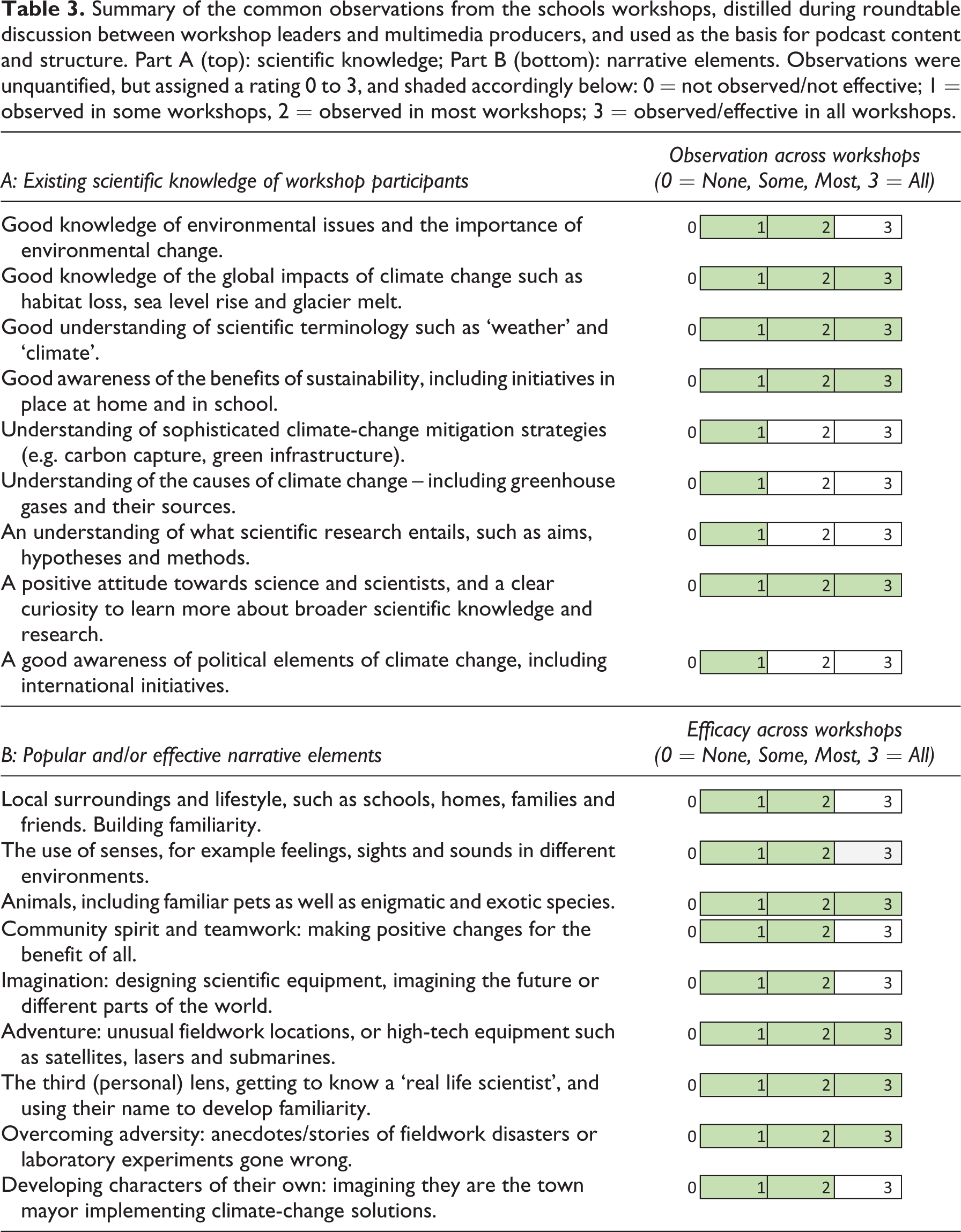
Children already had a good baseline knowledge of environmental issues. Almost all children were aware of the general issues and importance of environmental change. In all workshops, children had a good awareness of environmental terminology such as ‘weather’ and ‘climate’ and at least a basic understanding of their meaning.
There was good awareness of the global impacts of climate change such as melting of glaciers and sea level rise, but knowledge of the causes of climate change was variable. In particular, there was some conflation of issues such as the hole in the ozone layer and greenhouse gas emissions.
Workshop leaders identified a good general awareness of the benefits of sustainability, such as renewable energy and recycling. Most schools had a recycling policy in place, and children were often aware of energy efficiency in the home, including measures such as switching off lights and reducing wastewater. There were some more complex questions regarding climate-change mitigation strategies, including carbon capture and green transport infrastructure, as well as top-down governmental and international climate-change policies.
A small number of children understood the concept of scientific research, but were not aware of what a scientist might do on a day-to-day basis. A small number of students – one workshop cohort – had a good understanding of the scientific process, including hypotheses, research questions and methods.
Importantly, children across all workshops had a positive attitude towards science and scientists, and a clear curiosity to learn more about broader scientific knowledge and the methodology of scientific research.
At the end of the sessions, the children self-identified as having learned something new about climate change. In at least one instance, the children also encouraged the scientist to ensure climate action (‘They even asked me if I would be reusing/recycling their coloured card at the end of the session!’).
In informal discussion at the end of the workshops, teachers indicated that students benefited from specialist knowledge that would otherwise be inaccessible to them when planning lessons (e.g. the characteristics of Ice Age climate; or the methods used to analyse atmospheric conditions). It was also identified that students benefited from engaging with a ‘real life’ scientist. This demonstrates the importance of direct science–schools interaction to reinforce the curriculum, identify interests and provide opportunities to develop further knowledge. When working with school-aged audiences, an open dialogue with teachers, before, during, and after outreach activities, is a valuable way to gain feedback on the suitability of resources, knowledge gained and successful (and unsuccessful) approaches. Teachers and classroom assistants were invited to participate in the Climate Explorers workshops. The level of participation varied between schools owing to teacher workload, and ranged from active engagement with the group to more passive attendance.
3.4. Effective narrative elements: What are the children interested in?
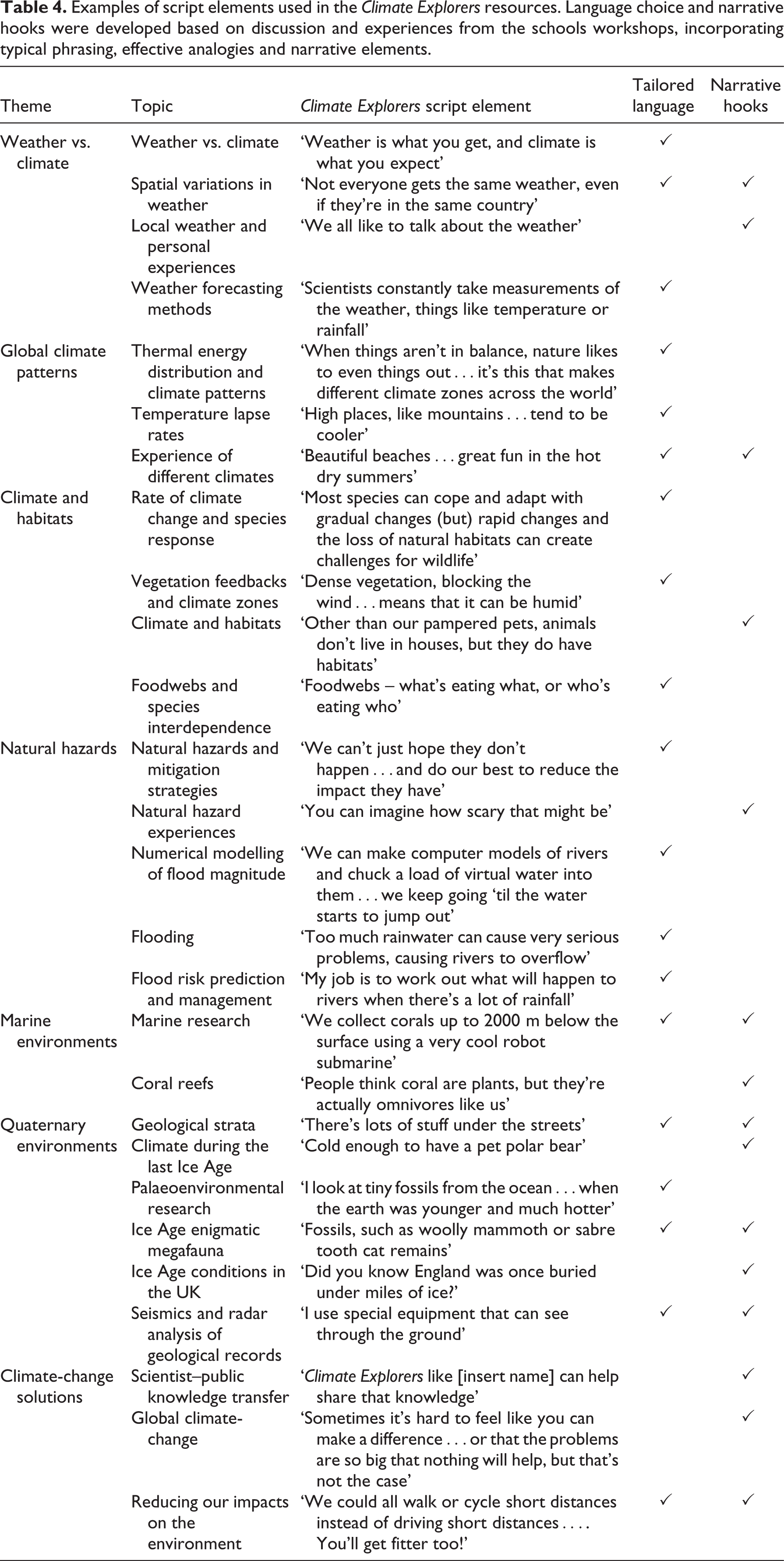
Narrative elements used in workshop delivery were evaluated by the ECRs on the basis of their popularity and/or efficacy in engaging and enthusing the students. These are summarised in Table 4 and discussed below. Note that, due to variations in workshop theme and content, not all conventions were used in all sessions.
Examples of script elements used in the Climate Explorers resources. Language choice and narrative hooks were developed based on discussion and experiences from the schools workshops, incorporating typical phrasing, effective analogies and narrative elements.
The third (personal) lens was identified as an effective strategy to build a rapport with the students, allowing them to see that ‘real life’ scientists are ordinary people; an important message given recent calls to enhance the accessibility of STEM (science, technology, engineering and mathematics) career paths for young people. Similarly, stories and anecdotes about the practicalities of scientific research allow children to recognise that science involves tangible methods, not simply abstract ideas. For example, they were especially captivated by problems encountered on fieldwork, such as broken equipment, and how these issues were overcome to complete the research. This sense of adventure not only enthuses and captures their imagination, but also provides an important narrative hook allowing them to relate to the scientific process.
Personal relevance was developed most successfully when activities allowed the children to: Place new concepts into their local surroundings and lifestyle, such as their schools, homes, families and friends. For example, how many green spaces can they identify in their neighbourhood? Use their imaginations to consider how they might experience different environments and tasks. This engaged their senses to consider different environments. For example, what kind of clothes would they need if they travelled to school during the last Ice Age? Include animals in their work. Notably, family pets and enigmatic species, such as whales, polar bears and mammoths allowed the children to relate environmental issues with tangible changes to well-loved species. In one instance, a student imagined their pet dog chasing a woolly rhinoceros during their walk to school. Develop a community spirit. The children were incredibly enthusiastic about teamwork, and this allowed ECRs to convey the interdisciplinary, multinational nature of physical geography research. It also meant that ideas could be scaled up from personal to international incentives. For example, personal approaches to tackle energy efficiency (e.g. turning off your games console), local community goals (e.g. school-wide recycling initiatives), and national and international plans (e.g. switching to renewable energy, and international agreements).
Examples of student drawings from one of the workshop activities, the ‘Climate Clock’, are shown in Figure 3. This exercise was used to establish the children’s knowledge of weather and climate over space and time by imagining the school journey under different climate scenarios: in the UK, the desert, and during the last Ice Age. Their drawings and annotations demonstrate several narrative elements discussed above. The children particularly employed their senses, by describing feelings (‘it was freezing cold’, ‘a little windy’) and sights (‘I saw mammoths’, ‘the sun is out’) to anchor their experiences in these imagined environments. Local surroundings also provide mechanisms for students to identify with more abstract ideas. For example, their drawings often contained family/friends, pets, and familiar buildings. In one instance, during discussion with an ECR, a student described ‘dodging crocodiles and hippos on my bike around the local pond’. Examples such as these, from across the schools workshops, were considered further during the next stage of resource development.
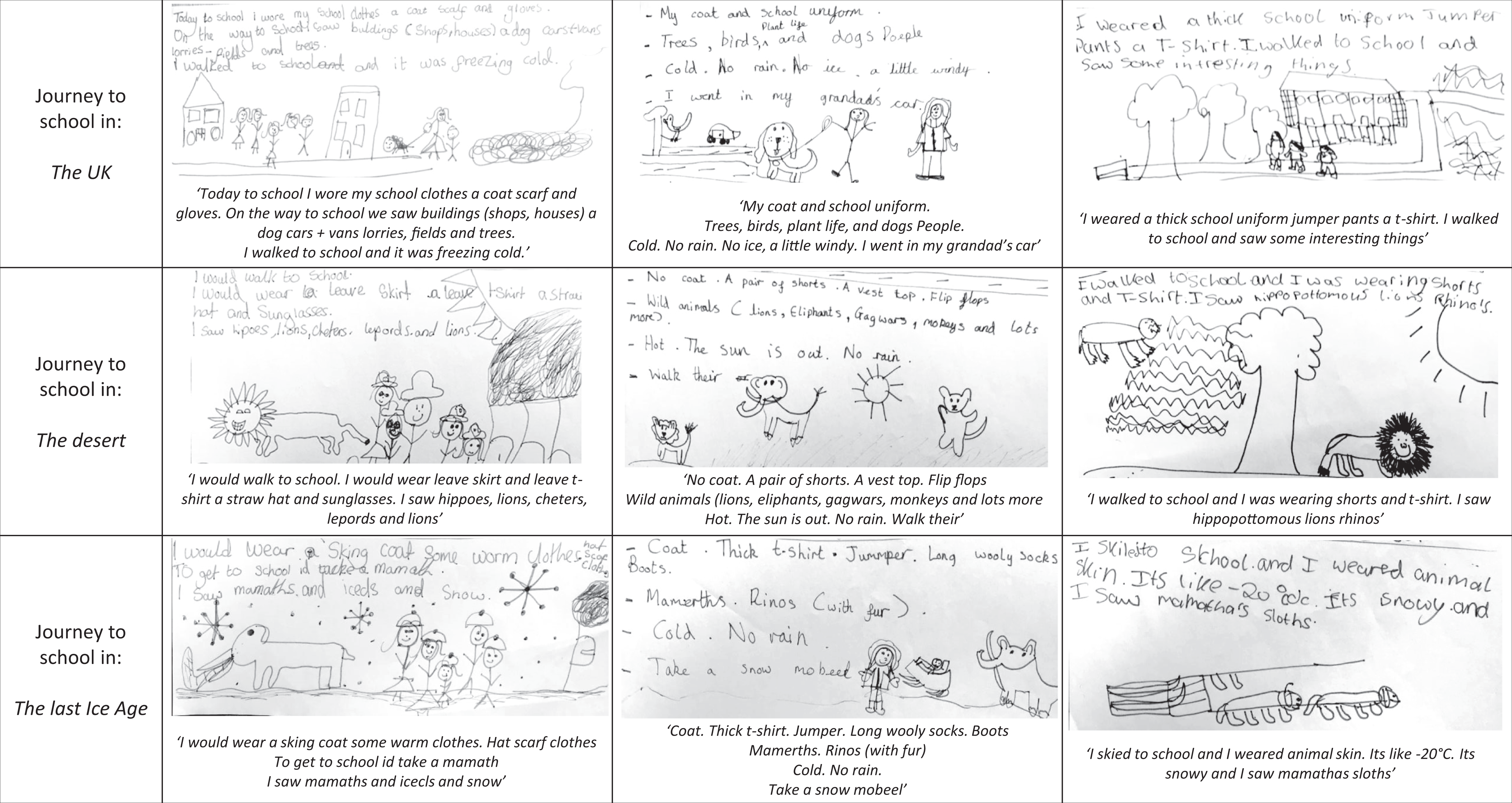
Outputs from a Climate Explorers schools workshop where children were asked to draw/describe their journey to school under three scenarios. Narrative elements were used to help the children develop a sensory experience of travelling to school (sights, sounds, temperature, etc.) under different climate settings in order to explore ideas around weather and climate over space (the UK and in the desert), and through time (at the present day and during the last Ice Age). Information such as this was used as the basis for discussion and resource development in Phase 2 of the project.
IV Phase 2: Furthering knowledge
The second stage of our approach hinges on the consideration of pre-existing knowledge boundaries, preferred learning styles, and effective communication strategies (e.g. successful analogies, language and narrative elements) identified in the schools workshops (summarised in Table 3). This ensures that knowledge can be advanced in the most appropriate way for the audience. In Section 5.3, we consider how this phase would work practically in a range of physical geography outreach scenarios.
In the case of Climate Explorers, workshop experiences were consolidated via roundtable discussion to identify common knowledge gaps across the workshops and communication strategies that proved popular with the children (see Table 3). This was to ensure the resulting podcasts and videos would be useful to, and engaging for, as many students as possible. It was noted that children enjoyed working with scientists, and that they would like to learn more about scientific research, including adventure and adversity in the scientific method. Areas where existing knowledge was strong, such as the global-scale impacts of climate change and an awareness of the importance of environmental issues, could be used as a vehicle to introduce less familiar or complicated ideas, including the causes of climate change, specialist knowledge, and the range of solutions available. As highlighted above, a series of narrative elements, including scientist ‘characters’, adventure and adversity, combined with local or familiar conceptual tie points, were identified as successful communication conventions.
Ten themes were selected for podcast development, on the basis that they fed directly into, and extended, the current knowledge of primary school children, and aligned with the research themes of the Climate Explorers team, to ensure the scientific integrity of the resources. Each podcast was designed around a clear narrative arc, and, collectively, the series contributed to a broader narrative framework with elements of incremental knowledge (Figure 4).
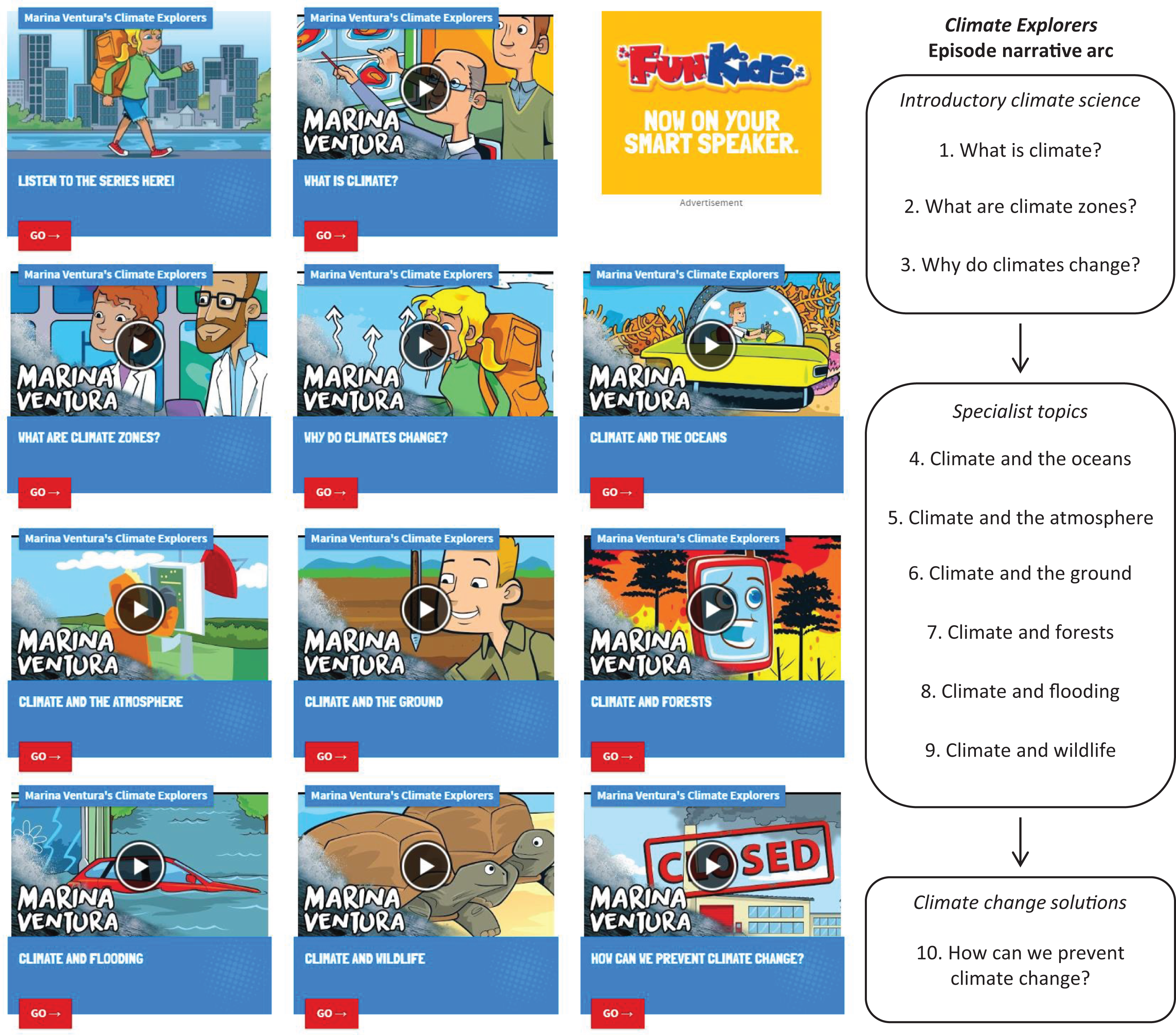
The Climate Explorers online video content, indicating the narrative arc and episode titles developed and released during Phase 2 of the project, building on the knowledge boundaries and progressions identified in the schools workshops.
Scripts were developed by the Fun Kids broadcasters in consultation with the ECRs, using effective content (e.g. analogies, anecdotes, visuals) and language (e.g. terminology, tone) identified in the workshops. This phase was especially important because the broadcasters, with their expertise in script writing for children, ensured that scientists refrained from using inappropriately complex terminology. The personal lens that inspired the school engagement activities carried over into the content of the radio series. This ensured that the series avoided the use of abstract language often used in science communication. Instead, each podcast focused on more tangible, relatable aspects of climate science by telling stories about the research activities of the ECRs, such as field experiences and experiments, building on the effective strategies from Phase 1. In doing so, the series keyed into ideas that the school children already knew (as identified in Phase 1), while introducing new concepts through familiar mechanisms, such as anecdotes. Samples of script elements from across the Climate Explorers episodes are shown in Table 4. These provide examples of tailored language and narrative hooks, appropriate for primary-aged audiences, and could be used as a basis for other physical geography outreach activities.
Each podcast was presented by the existing Fun Kids character Marina Ventura, and, where appropriate, featured guest voiceover appearances from the ECRs. This approach was a response to the success of the schools workshops, where children enjoyed working with a ‘real life’ scientist, reinforcing the idea that role models play a valuable part in education (Cordero et al., 2020). Video and audio combinations ensured that the Climate Explorers resources could address different learning styles. The 10 podcasts and accompanying videos were aired weekly from March to May 2017, and made available in perpetuity on the Fun Kids website (www.funkidslive.com/marina) and on YouTube.
V Phase 3: Evaluating co-production techniques for Climate Explorers and beyond
We evaluated the project in light of the two intended outcomes: 1) the production of climate science communication material for primary-aged children, and 2) the application of co-production and narrative initiatives for physical geography science communication. While based on workshops from only three cities in England (320 students) and online surveys (271 respondents), we were able to identify a series of effective best-practice elements.
5.1 Climate Explorers audience engagement and evaluation
Fun Kids audience metrics were used to establish audience reach and engagement. At the time of submission, the Climate Explorers webpages have received >148,000 page views, with an average of >13 min spent on each page. Since their publication online, the podcasts have been downloaded >3,000 times, and the accompanying animated videos have had >86,000 views. Overall, including audio and video content, Fun Kids audience trackers estimate that the features have reached >300,000 people, which includes children, their relatives, and educators.
An online survey designed and hosted by Fun Kids was used to gauge audience response to the podcasts. A total of 271 respondents took part in the survey, which included multiple choice and free-text questions (Figure 5). The Climate Explorers podcasts and webpages were rated ‘Enjoyable’ (55–57%) and ‘Fantastic’ (37–41%). Children were ‘Very satisfied’ (65%) or ‘Satisfied’ (35%) with the series overall, and ‘Very satisfied’ (31%) or ‘Satisfied’ (69%) with the level of information. Eighty-four per cent of children would be ‘Interested’ or ‘Very interested’ in further Climate Explorers resources.
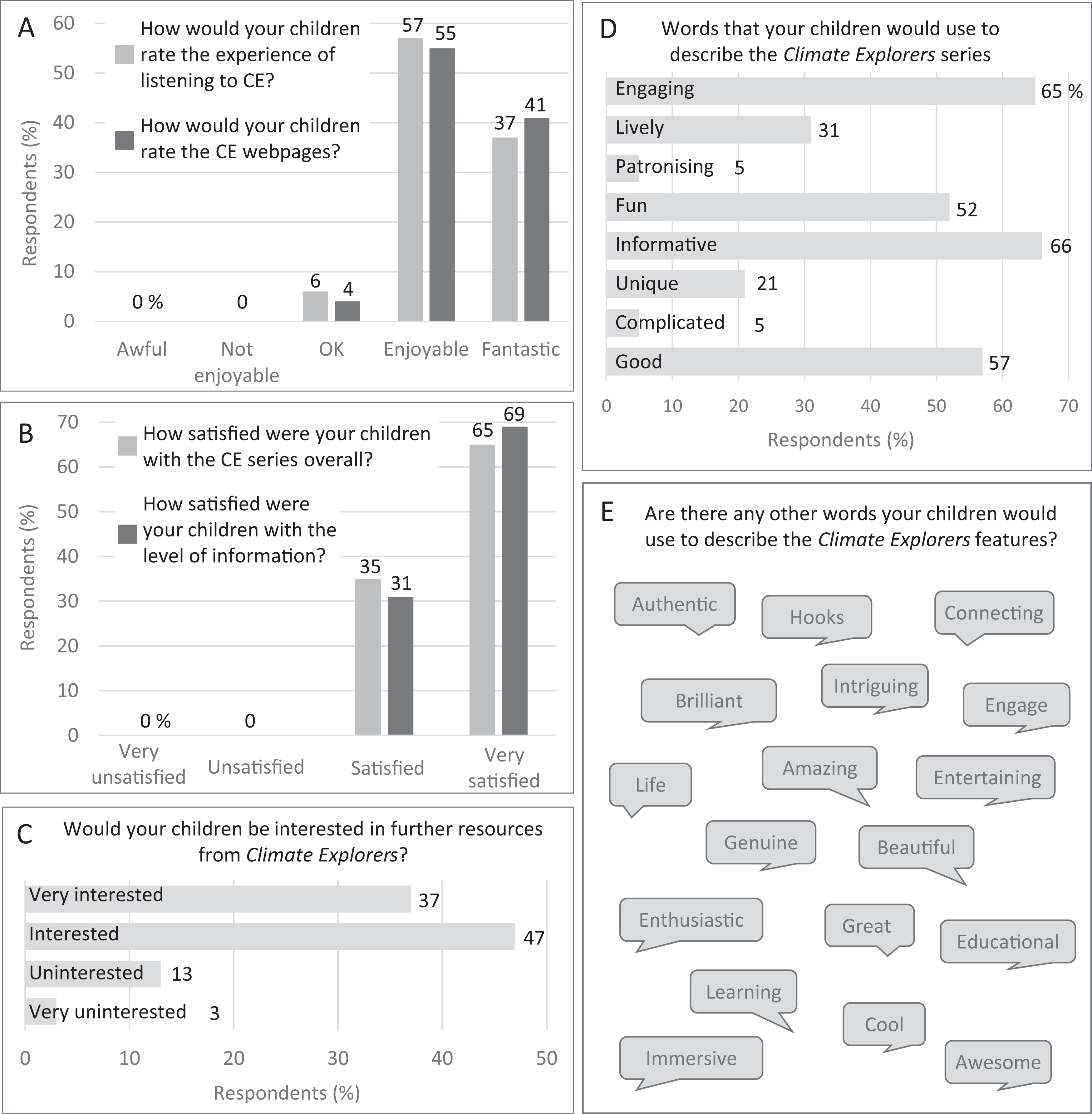
Responses from the Fun Kids web survey of the Climate Explorers (CE) resources. A total of 271 people responded to the survey: (a) rating the experience of the CE resources; (b) rating the satisfaction with the series; (c) gauging interest in future resources from Climate Explorers; (d) words used to describe the CE series. Note that respondents could select multiple words, thus total values exceed 100%; and (e) free-text comments of additional words used to describe Climate Explorers.
Respondents described the series as ‘Informative’, ‘Fun’, and ‘Good’, as well as ‘Entertaining’ and ‘Educational’. These terms, together with ‘Engaging’, ‘Intriguing’ and ‘Immersive’ suggest that the podcasts extended beyond basic knowledge exchange, to provide a more exciting educational experience. This may be a response to the narrative arcs, not least because they were developed using examples and language proven to be effective during schools workshops with the target age group (Tables 3 and 4). This reflects the value of embedding such narrative elements into communication strategies in order to engage with the audience on the most appropriate or desired level (Avraamidou and Osborne, 2009).
The terms ‘Connected’, ‘Authentic’ and ‘Genuine’ mirror feedback from the schools workshops, where children enjoyed ‘getting to know a real life scientist’. The personal lens was shown to be a valuable way to frame the scientific message, engage the audience, build trust, and tie abstract ideas to personal experience (NASEM, 2017). In effect, it enables scientists to meet the audience on their own terms, and guide them through the knowledge landscape. Due to its success, this approach was built into the podcasts via guest scientists and appropriate language elements (e.g. colloquialisms, metaphors; Tables 3 and 4). Without prior interaction with the target age group, with specific emphasis on identifying effective communication strategies, it is likely that such best practices would have been overlooked for the Climate Explorers series.
5.2 Long-term impacts and engagement: Challenges and significance
The positive feedback from the online surveys suggests that the language and narrative elements identified in the schools workshops have formed an effective communication approach when developing podcasts for wider audiences. Freely available access to the podcasts is intended to provide ongoing educational support. Not only can children engage with the resources but, given that parents/guardians/educators have responded to the online surveys, their interactions with the materials could encourage and reinforce follow-up learning, longer-term development of pro-environmental behaviour, and climate action. It has been suggested that this type of sustained engagement with environmental issues can have long-lasting impacts on personal energy use, views of climate change, and sustainability (Cordero et al., 2020; Orams, 1997). Cordero et al. (2020) recently tested the long-term changes in behaviour of university graduates after completing a course on environmental issues. After taking the course, students made significant reductions in their personal carbon emissions (such as reducing food waste, purchasing energy-saving appliances and travelling less). In the current format of Climate Explorers, there is no mechanism to test the long-term impacts of the knowledge exchange activities for individual children that took part in the workshops, or those of the broader online audiences. Enquiries for follow-up feedback from participating schools were not returned due to staffing changes and time commitments of teachers. This further exemplifies the logistical challenges in creating longitudinal outreach activities, and thus the importance of maximising the value of single, and sometimes ad hoc outreach sessions. Where feasible, future studies building on our approach could embed such longitudinal elements into the project evaluation to test the long-term impacts of educational initiatives. This could take the form of, for example, more formalised teacher surveys, student quizzes or follow-up workshops scheduled in advance to ensure sustained communication.
5.3 Best practice and co-production approaches in physical geography outreach: A template
Climate Explorers involved a large team of primary school children, teachers, ECRs and multimedia producers. This allowed us to gain important insights into the interests and learning preferences of children, and effective ways to engage them with major climate science issues. In practice, schools outreach, and indeed other forms of community engagement, are frequently time-limited, often in hour-long sessions, with individual schools, in classes of 20–30 students. This means that maximising these interactions for teachers, students and academics is key. This is especially important at present, because physical geography issues are at the forefront of global challenges.
Invariably, audience knowledge, priorities, experiences and attitudes towards science will vary nationally and internationally in response to a range of social, economic and environmental factors (see Canfield et al., 2020). We suggest that the approaches applied during the Climate Explorers face to face workshops, and used to design the resulting podcasts are broadly applicable and adaptable across a range of audience groups. We hope that the flexibility of this approach, in terms of logistics and delivery, will provide scientists with the tools to create and deliver inclusive, accessible and audience-appropriate climate science communication resources (Canfield et al., 2020; Humm et al., 2020).
Accordingly, we have synthesised the outcomes and experiences of the Climate Explorers workshops and podcasts to develop a series of best-practice templates that are designed to: Be flexible for different topics and outreach scenarios, including both face to face and virtual interactions; Take account of the time pressures and logistical considerations involved in science–schools interactions; Maximise the outcomes for students and teachers, to complement and extend existing curricula; and Be applicable to other outreach activities, beyond school-aged groups.
Figure 6 is a template of outreach session structures and logistical elements. Our approach is divided into four modular components: Phase 1, Phase 2, Evaluation, and Pro-environmental actions. These components can be adapted to fit any outreach schedule (e.g. a single hour-long session or multiple video links), while ensuring that the audience leads the way in designing their own learning trajectory. The Climate Explorers workshops identified that this modular structure, with embedded activities and discussion time, was successful in encouraging interactions between the participants and scientists. This enabled the participants to actively adapt the sessions and maximise engagement.
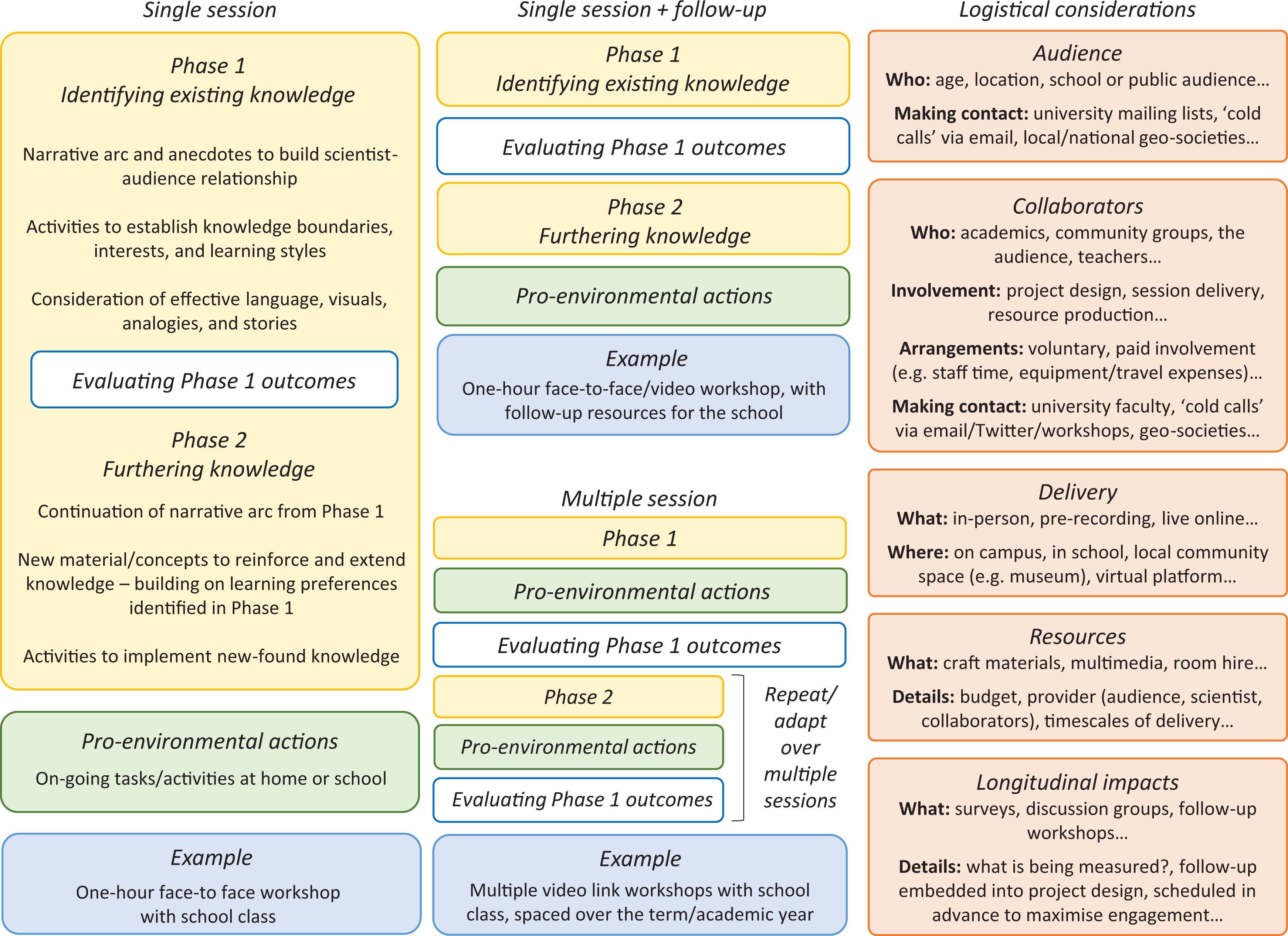
Templates for embedding co-production and narrative approaches into multiple physical geography outreach scenarios: 1) single session, 2) multiple session + follow-up resource provision (as in the Climate Explorers model), and 3) multiple session. A modular format of Phase 1, Phase 2, Evaluation, and Pro-environmental actions components allows maximum flexibility, collaboration and ease of application. Yellow: taught workshop element; white: scientist evaluation of current knowledge; green: tasks/activities for the audience to continue after the session or between sessions; blue: examples of a typical session format. Logistical considerations of outreach activities across all designs are shown in orange.
Our workshops and script-writing experiences (e.g. Figure 3, Tables 3 and 4) highlighted four key ingredients for successful communication, drawing on co-production philosophies and storytelling components: narrative arcs, lenses, interests and narrative hooks, and phrases and terminology. Figure 7 provides examples of how these could be adapted and combined for physical geography topics. Flexibility is key, where the workshop leader monitors the efficacy of communication strategies in order to identify knowledge boundaries, acquisition and potential.
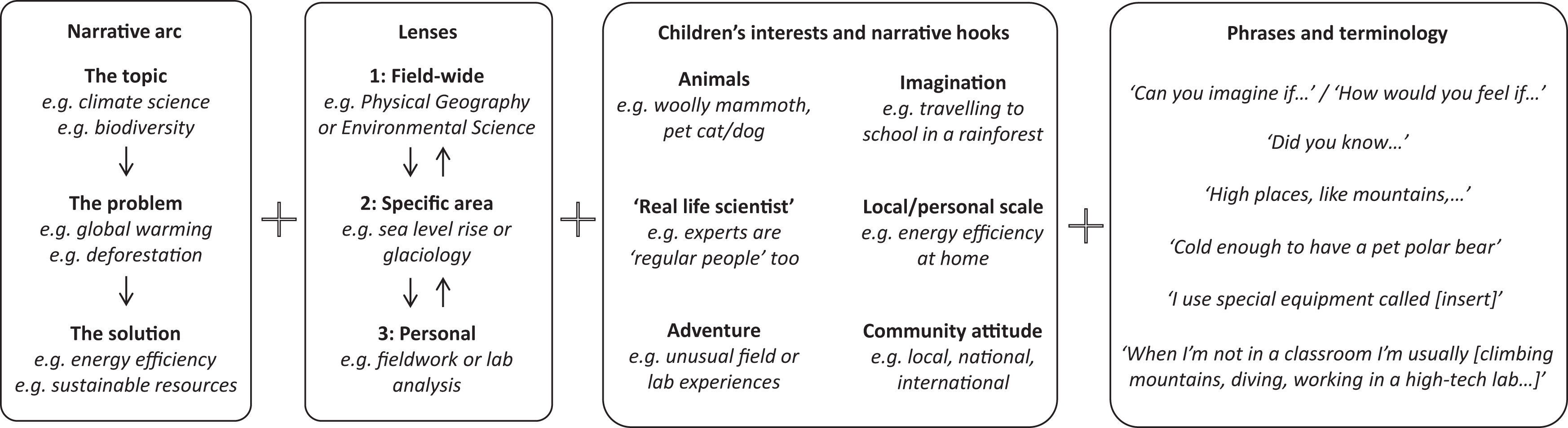
A ‘recipe’ of narrative and co-production elements in physical geography science communication identified across the Climate Explorers schools workshops. Elements can be combined and edited as appropriate, to tailor communication strategies to the audience.
VI Conclusion
With increasing challenges posed by global environmental change, it is timely to ensure that schoolchildren are equipped with a knowledge of the natural world. However, global-scale issues are often difficult to communicate in a locally or personally meaningful way. Scientists can play an important role in providing engaging and relevant science communication for school-aged children, as well as broader audiences, if they are provided with effective tools to do so. To address these issues, Climate Explorers used co-production and storytelling initiatives in order to 1) produce new multimedia climate science resources for primary (elementary) school-aged children, developed in collaboration with school students, and 2) test the value of co-production and narrative approaches to develop a series of templates that can be adapted and applied by physical geography academics in a range of outreach scenarios.
Our working group comprised 320 school students and 10 teachers, in 7 schools, working with 11 ECRs and science communication specialists. Phase 1 involved schools workshops to identify the students’ existing knowledge, paying particular attention to their interests, narrative hooks, and language. In Phase 2, we collated these findings to produce new online educational resources for broader schools’ audiences, to further their knowledge of climate science. In Phase 3, we evaluated our approach and outcomes to develop templates and practical solutions for other physical geographers working with public audiences in a variety of settings. In particular, our findings showed that the personal lens, experience of ‘real life’ scientists, and narratives can be used to develop meaningful, relevant and memorable educational interactions. This helps to ensure that communication strategies are tailor-made, and relevant to the target audience, thus maximising knowledge transfer in what are often time-limited public engagement sessions. We intend for our approach to form the basis for further development and application to other age groups and physical geography disciplines, in-person and via online workshops, including the design of longitudinal studies to examine the longer-term impacts of science communication initiatives.
Since its original delivery, the co-production and story development approach taken in Climate Explorers has been successfully applied and further developed in the following projects: Future of Our Seas, an engagement project bringing together marine scientists with marine public engagement professionals (De Clippele et al., 2021); Citizen Engagement on the Environment, a project bringing together environmental scientists, policymakers and conservation experts; as well as individual school sessions (face to face and online) and public exhibition events. It has also been used as the basis for scientist training workshops with the European Geosciences Union on the value of story arcs and the personal lens.
Footnotes
Acknowledgements
We would like to thank all of the ECRs, school children and teachers who participated in the project, our project funders, Natural Environmental Research Council, and three anonymous reviewers for truly helpful comments and insightful discussion of the concepts raised in the manuscript.
Declaration of conflicting interests
The authors declared no potential conflicts of interest with respect to the research, authorship, and/or publication of this article.
Funding
The authors disclosed receipt of the following financial support for the research, authorship, and/or publication of this article: Natural Environmental Research Council grant (Public Engagement Pilot 2016_077).
