




Abstract
In the papers collected in Man's Impact on the Hydrological Cycle in the United Kingdom Hollis gives us a fascinating view of the concerns and approaches of practising hydrologists in the late 1970s. Hollis, a physical geographer from University College London, spent most of his research career considering the way that humans acted to change their surroundings, looking first at the impact of urbanisation on flooding and later at the management of wetlands. The papers in this book cover a wide range of subjects, from the impact of forestry to the effects of house building on channel morphology and function. Many provide valuable reviews and insights into contemporary thinking on the effect of humans on the UK environment, and the modern reader will discover much of value in the ideas and approaches described in this book.
Introduction
Are old academic books undeservedly neglected? Many journals have made great efforts to digitise back issues, but books remain available only through a visit to the library, or a lucky second-hand purchase. This relative inaccessibility is unfortunate: well-edited books gather relevant material together to examine a subject from a range of perspectives, providing the reader with a valuable synthesis that illuminates the important ideas and themes of their time. Hollis’s 1979 edited volume, Man's Impact on the Hydrological Cycle in the United Kingdom (Hollis, 1979a), is already 35 years old but tackles many issues that still resonate today: human interaction with the environment, the challenge of engaging practitioners and researchers together, and the desire for research to have an impact beyond academia.
Examining the impact of humans on the hydrological cycle of the UK in under 300 pages was an ambitious undertaking, but GE (Ted) Hollis was undoubtedly ready for the challenge. Hollis was a physical geographer who spent his entire career in the Department of Geography at University College, London (see Figures 1 and 2), joining as an undergraduate in 1965, and working there until his untimely death while participating in a wetlands conference in Perth, Australia, in September 1996, not yet aged 50 (Department of Geography, 1997). His PhD (Hollis, 1974) looked at the hydrological effects of the urbanisation of Harlow New Town, Essex, and is dedicated ‘to the memory of George Perkins Marsh, author of The Earth as Modified by Human Action, 1863’. Hollis was thoroughly engaged with the idea that understanding human modification of the environment would be beneficial because of impacts on flood plain management, water supply, sewage disposal and water quality (Hollis, 1974: 345). Hollis’s work on the impact of urbanisation on flood magnitude remains influential: according to Google Scholar, his 1975 paper on the effect of urbanisation on flood return periods (Hollis, 1975) has been cited more than 350 times, with at least 30 citations in 2013 and 2014 alone. ‘Man's Impact on Hydrology’ (as the book’s spine bravely renders the title) also perhaps represents a turning point in Hollis’s career; while he continued to publish on urban hydrology into the late 1980s (e.g. Hollis and Ovenden, 1988), the bulk of Hollis’s subsequent work concentrated on wetland management and protection (e.g. Acreman and Hollis, 1996). It is for this work on wetlands that Hollis is perhaps best remembered; indeed, University College London, continues to award the Ted Hollis PhD scholarship to a student pursuing research in wetland hydrology and nature conservation.
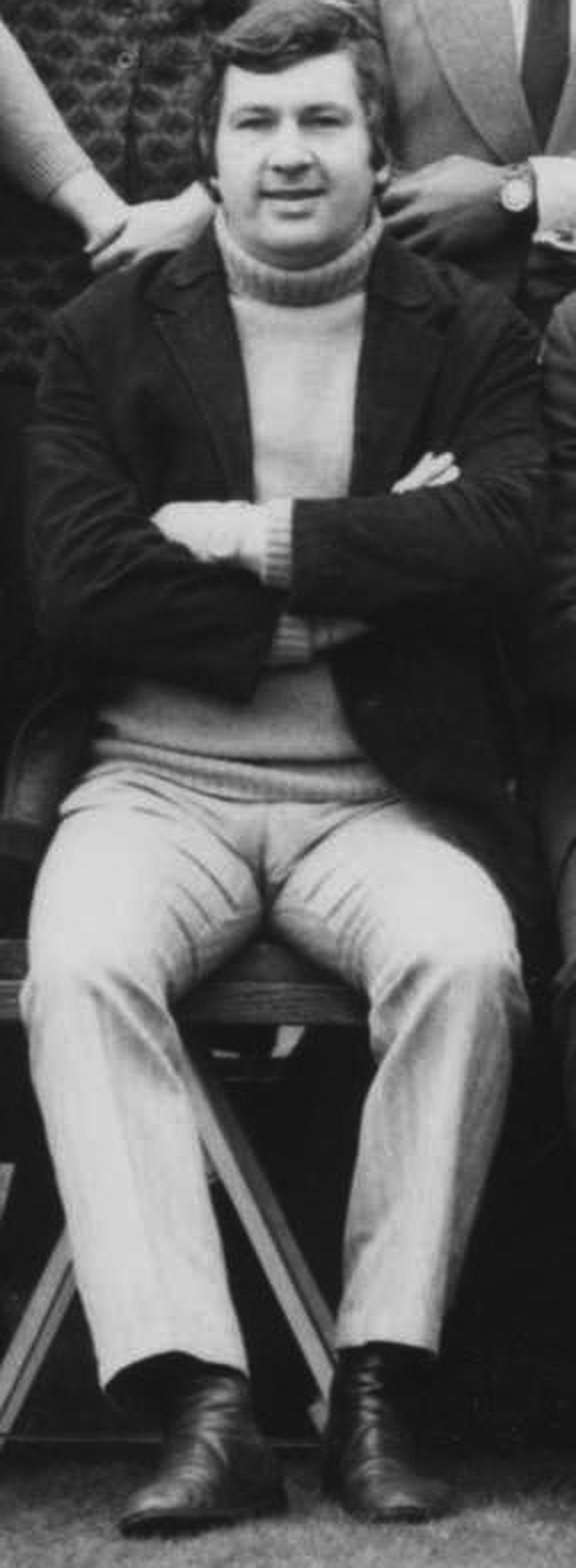
Ted Hollis at UCL in 1972.

Ted as many of us remember him, c. 1990.
The UK water landscape in 1979
Before considering the content of ‘Man’s Impact’ in detail, it is valuable to examine the context in which it was written. Of the 19 papers included, 18 consider England or Wales, where the institutional and organisational water landscape was in many ways different from the current picture. Before 1973 water supply and water management had been predominantly local; the Water Resources Act (1963) had established 29 river authorities, with water supply being provided by a mixture of mostly small municipal and private water companies (Hall, 1989). The same act had also set up the Water Resources Board, which planned water supply development on behalf of the government (see, for example, Water Resources Board, 1973). The Water Act (1973) changed this dramatically. Ten public-sector regional water authorities were established, to co-exist with 29 existing private water supply companies that together provided over a fifth of all water supply, mainly in south-east England (Ofwat and Defra, 2006). The water authorities were responsible for water supply (except in the areas covered by the private water companies), sewerage, land drainage and regulation of abstraction from and discharges to rivers and other water bodies. The Water Resources Board was abolished by the Water Act (1973) and water planning was effectively carried out by the water authorities, with little apparent concern that the new regulators were also the main users of water. The regional water authority boundaries were catchment-based, offering the opportunity for integrated catchment management. It was in 1979 that Margaret Thatcher’s Conservative government was first elected; the Conservative election manifesto from that year makes no mention of the privatisation of utility companies (Conservative Party, 1979) and no-one could possibly have imagined the further enormous changes to water governance that were to come from privatisation of the water industry in 1989.
The 1960s and 1970s had seen water governance reforms on a hitherto unprecedented scale. UK population grew rapidly in the 1950s and 1960s, though it was almost stable through the 1970s (Jefferies, 2005). Between 250,000 and 360,000 new properties were built across the UK in every year of the 1970s: in contrast, fewer than 150,000 properties a year were built from 2010 to 2013 (DCLG, 2014). By the 1970s, the demand for water was the highest it had ever been (National Rivers Authority, 1994) and many major water supply schemes had been constructed, with Kielder Water and Rutland Water both starting to put water into supply in the mid-1970s. Indeed, of the main reservoirs in England and Wales today, only Carsington Water had not yet been built, though its planning was well under way (Wilby and Davies, 1997). Construction of the Thames Barrier, protecting London from tidal flooding, had begun, though the barrier was not operational until 1982. Perhaps the most notable recent hydrological event was the major drought of 1976, documented admirably in what must be considered another classic book (Doornkamp et al., 1980). With standpipes in Devon and rota cuts in South Wales (Doornkamp et al., 1980), the 1976 drought remains one of the most severe of the last century (Marsh et al., 2007).
This, then, is the context for the papers in ‘Man's, Impact’: centralised planning of water by 10 large water authorities in an era of rapid housebuilding and growing demand for water.
Rationale and contents
Hollis makes no attempt to define the scope of subjects that might be included in a book with this title: indeed, he contends that such a definition is ‘impossible, for it encompasses all of the interactions between man's activities and the many facets of the land phase of the hydrological cycle’ (Hollis, 1979b: 2), though he picks out as being of particular interest land-use change (particularly afforestation and urbanisation), farming and forestry activities, and the storage, abstraction and return of water by urban communities. Hollis argues that concentrating on the UK makes sense because it gathers information for the benefit of UK water managers, and is scientifically justified because hydrological responses to modification differ between hydroclimatic zones. This deals neatly with the tension between impact and international relevance that persists even now; managers need to understand their own locale, but journals find these studies to be of limited international relevance and may discourage their submission. The preface was contributed by Lord Nugent of Guildford, who chaired the National Water Council, a statutory organisation that provided a strategic steer for the water authorities. He emphasises the importance of research for practical management of the water cycle, and encourages rural and urban land managers to understand their impact on hydrology.
The book developed from a symposium at the 1977 conference of the Institute of British Geographers. Any book based on a conference can include only the papers that are first offered and then completed. It is not clear how much review was involved: none of the authors acknowledges the contribution of referees, so it is perhaps reasonable to assume that there was a light touch to editing. There are 19 papers: following an introduction from Hollis, the rest of the book is split equally between papers on rural and urban environments, a division that Hollis admits is ‘perhaps a little arbitrary’ (Hollis, 1979b: 4). Rural papers cover a wide range of subjects including land drainage, groundwater development, upland land-use change and the impact of reservoirs on river hydrology and morphology. The urban papers are perhaps even more diverse: urban impacts on rainfall in London, urban sediment loads, pollution from landfills and modifications to river thermal regimes.
Highlights of the papers
It is impossible to review all of the papers in detail here; there are many, and they cover a very wide range of subjects, sometimes in considerable depth. Instead, I have picked out some of the highlights and some elements that are perhaps surprising, surveyed, of course, with the benefits of hindsight.
Green (1979) looks at the impact of field under-drainage on the hydrological cycle. He notes that field drainage not only modifies flow patterns but also changes nitrate concentrations, with marked peaks in spring and autumn, particularly after dry summers. In 1979, though, sewage discharge was a greater source of nitrates than farming. Wilcock (1979) also looks at land drainage, concentrating on a peat catchment in Northern Ireland, in the only paper in the collection drawn from outside England and Wales. He concludes that drainage removes water from storage, reducing the magnitude and frequency of winter floods and increasing summer flows, but that these effects last only between 10 and 12 years.
Reid (1979: 19) describes, rather poetically, ‘the way the ploughman secures an annual increase in surface roughness and the way weather destroys it’; in other words, he investigates how seasonally-changing surface depressions in agricultural land affect run-off. His methods were experimental: three lysimeters were filled with soil and kept on Birkbeck College’s roof over the winter of 1973–74. Reid’s home-made ‘micro-relief meter’ – wires that slide in a frame – is a valuable reminder of the ingenuity demonstrated by previous generations of physical geographers.
Two papers on groundwater present a degree of contrast. Burgess and Smith (1979) combine detailed hydrogeology, data analysis and the results of numerical modelling to look at the effects of groundwater development in southern Lincolnshire. In contrast, Drennan’s (1979) short paper takes a more theoretical perspective to the question of whether river support boreholes have consequences for agriculture. He concludes that lowered water tables are generally good for agriculture, and that ‘with care in choice of well [borehole] sites and suitable monitoring of potentially sensitive areas there need be no serious or long lasting harmful agricultural or ecological changes resulting from sensible programmes of groundwater management’ (Drennan, 1979: 38). The key to the accuracy of this statement is in the choice of site and suitable monitoring, and today we might well question whether this ideal was actually met in the schemes developed in the 1970s.
The impacts of forests on hydrology, especially upland hydrology, in the UK has long been of interest and two papers in ‘Man's Impact' cover this area. Binns (1979) argues that forests reduce ‘water yield’ (mean river flow) and increase sediment production, but reduce flooding from major rain storms. He also provides practical guidance on how forest practitioners can reduce the undesirable impacts of forest operations, for example by allowing drainage channels to fill with silt, managing fertiliser application and felling only small areas at any one time. Clarke and McCulloch (1979) describe the Institute of Hydrology’s work at Plynlimon and Coal Burn. McCulloch was the first director of the Institute of Hydrology, credited with establishing the long-running experimental catchment at Plynlimon (Wilkinson in Kirby et al., 1991). Clarke and McCulloch show that annual run-off in the unforested Severn was 240 to 330 mm more than in the forested Wye catchment, and suggest that evaporation (sic – the word evapotranspiration is not used) from forests can be greater even than from open water.
It can be no surprise that floods form an important part of the book, spanning the rural–urban division. Lewin et al. (1979) consider the impact of modifications to flood plains, such as railway embankments, on flood extent. They conclude that the impacts are highly dependent on the configuration of the modification, and ponder how best to model flood inundation on complex topography (still a thorny problem, even with today’s increased computing power and remotely-sensed topographical mapping (Hunter et al., 2007)). Walling (1979) examines the hydrological impact of the construction of a suburban housing estate in Exeter, finding increased storm run-off volumes and peaks, and huge increases in sediment load. Knight (1979) evaluates the hydrological response of two small catchments to the construction of new towns as an example of a rapid change in catchment characteristics from rural to urban. In both cases, Knight finds increases in flood frequency and magnitude, increased total annual flow and increased channel size. Helliwell and Kidd (1979) take a detailed look at the modelling of storm flows in suburban catchments, considering both surface and subsurface flow. Packman (1979) considers how the impacts of urbanisation can be generalised to produce approaches that can be used to improve the estimates of floods from the groundbreaking Flood Studies Report (NERC, 1975). Petts and Lewin (1979) look at the wider impacts of reservoirs on river systems: summer and smaller floods are reduced in size, but for higher magnitude, less frequent events, the change is smaller. Petts and Lewin also find that the reduction in downstream flows leads to changed channel forms that may be of ecological importance, particularly for fish populations.
The remaining papers cover a disparate range of subjects. In a detailed examination of thunderstorm records, Atkinson (1979) finds that London’s urban area contributes to increased convective activity, partly related to increased urban temperatures, but that more work would be needed to allow this understanding to inform flood forecasting. Smith (1979) looks at thermal pollution of rivers, from power station cooling, reservoir releases, afforestation and urbanisation, concluding that more work is needed to understand natural river water temperatures. Ellis (1979) evaluates urban sediments and water quality in the heavily modified catchment of Hendon, north London, where the major A1 trunk road and M1 motorway meet. Of particular note is his Figure 2 (Ellis, 1979: 202), a general view of the Graham Park catchment: this sprawl of housing estates and blocks of flats is truly urban, in marked contrast to so many of the catchments examined in hydrological studies. Ellis concludes that street cleaning has little effect in reducing poor quality run-off from roads. Mather and Parker (1979) discuss the impact of landfills on water quality; they contend that it is better to allow liquid waste to leach slowly from landfills rather than to aim for complete containment: current policy, of course, is that landfills must be lined to avoid polluting groundwater (Defra, 2010).
Unlike the other papers, which report on research, the final paper (Addyman, 1979) considers the application of research in what he calls ‘catchment control’: today, we would probably use the term ‘catchment management’. Addyman is careful to comment on all of the areas covered by the papers in the book, and suggests that, together, these papers will lead to further developments and refinements of catchment control. He picks out nitrate pollution from agriculture as a particular problem that will need to be addressed in future. Addyman adds his own examples of difficulties caused by poor catchment management, including the impact of reduced flows on fisheries, the challenges of using reservoirs for flood management, problems caused by the drawdown of groundwater levels and the impact of pollution from run-off from motorways. Addyman is clear that research should ‘improve man's ability to control his own environment’ (Addyman, 1979: 246), and he expects this to be implemented mainly through further legislative control, reminding us that in the 1970s water management was entirely the domain of government organisations.
A view from 2014
How should one approach a collection of papers that is already 35 years old? Submitted to a journal today, many of these papers would struggle with peer review, with some making unsupported assertions and others suffering from weak statistical analyses (missing confidence intervals and uncertainty analysis, for example). But the reader dismissing the papers based on modern standards would miss the value that this book still holds, both as a source of information and as an opportunity to reflect on current approaches and thinking.
Each of the individual papers provides a valuable insight into historical thinking in some aspect of hydrology. Most researchers and practitioners would find something of interest in many of the papers: for example, I hope to track down the water temperature records starting in 1937 for the Nene mentioned by Smith (1979). Some of the papers make a special effort to review thinking in a particular area, and these reviews remain relevant today, providing a broader context for research that may not always be appreciated by today’s hydrologists.
The main value of ‘Man’s Impact’, though, is as a collection of papers that reflects the concerns and approaches of practising UK hydrologists in the late 1970s. Most of these papers examine hydrological problems at specific locations, with detailed investigations aimed at understanding hydrological and geomorphological processes. Few of these papers make any attempt to generalise their results to a broader scale: in the main, this is place-based physical hydrology by case study. Packman’s paper on flood response to urbanisation is the exception here, working through possible approaches to estimating simplified flood model parameters from catchment characteristics. This is an obvious approach for UK hydrologists brought up with the Flood Studies Report (NERC, 1975) and its low flow equivalent (Institute of Hydrology, 1980; Gustard et al., 1992), but must have been novel in the late 1970s.
The 1970s were a time of rapid change and it is clear from these papers that human impacts on catchments were of real concern. It is interesting to observe that there is little discussion of divergence from natural conditions, which forms the basis for much current catchment planning, including the European Water Framework Directive. There seems to be little anxiety about how to protect nature or the environment. Instead, many of these papers consider the impact of human-induced hydrological change on other human activities, such as changes in flood frequency or the availability of water. Environmental protection is mentioned, of course, but does not feature strongly in most of the papers. At the same time, though, people barely feature at all. The changes described, despite being the result of human activities, appear to occur spontaneously, and there is little discussion of strategies to reduce or adapt to these changes. Even impacts like flooding are described not through their effect on people but by changes in magnitude or frequency. Chorley and Kennedy (1971) argue that systems where humans have made deliberate interventions should be considered ‘control systems’, and that their analysis demands an understanding of both physical and socio-economic components. ‘Mans Impact’ most definitely concentrates on the physical aspects of modification.
What is missing? Perhaps the most obvious gap is that there is little discussion of the impact of water abstraction on flow regimes, despite the very severe drought of 1976. This may reflect a lack of concern about the environmental impact of reduced flows. None of the papers attempts to forecast future conditions, although further urbanisation and a growing population were undoubtedly anticipated. In most of the papers, there is little discussion of management options: today, authors would have certainly made far more recommendations for action, perhaps with an eye to demonstrating that their research has impact. Today, a volume like this might well focus on climate change, perhaps at the cost of other, more immediate problems: here it is not mentioned at all, though Atkinson (1979) does consider feedbacks between the earth surface and the atmosphere. As far as I can tell, all the authors are male, though one or two are not readily traced. It would have been helpful, or at least interesting, to have had short biographies of the authors to accompany these papers.
Conclusions
Why is ‘Man's impact on the hydrological cycle of the United Kingdom’ a classic? By collecting these papers together, Hollis has given us a fascinating and rewarding insight into the concerns of practising hydrologists at the end of the 1970s. These authors are grappling with some serious problems that span hydrology and geomorphology at a time of rapid environmental change. Many of the questions asked here would be worth revisiting. How does present-day house building affect sediment budgets and channel morphology? Could street cleaning improve river water quality? What is the lasting impact of reservoirs on downstream channel form and function? This is perhaps the only collection of papers on UK hydrology that gathers together such a wide range of studies into human impacts in a single place, demonstrating the foresight of Hollis and the convenors of the original seminar.
The longevity of this book is exemplified by Hollis’s list of future research, which would not look out of place today. He picks out the need for a systems view of hydrology, thinking about water quality as well as quantity. He expects further work on evapotranspiration (Hollis does use this word) in both rural and urban environments, and improved numerical models to describe catchment behaviour. Hollis’s vision is for a future that ‘holds a prospect of continuing challenges for scientific hydrologists in the area of measuring, modelling and predicting the effects of human activity on the hydrological cycle in the UK’ (Hollis, 1979b: 5). Hollis’s challenges remain relevant today: hydrologists working in this area would surely benefit from seeking out a copy of this classic book.
Footnotes
Acknowledgements
I am very grateful to Nicholas Clifford for suggesting the subject of this review, and to the Environment Agency for allowing me to write it. The views, of course, are my own.
Funding
This research received no specific grant from any funding agency in the public, commercial, or not-for-profit sectors.