




Abstract
This paper reviews the implications of climate change for the water environment and its management in England. There is a large literature, but most studies have looked at flow volumes or nutrients and none have considered explicitly the implications of climate change for the delivery of water management objectives. Studies have been undertaken in a small number of locations. Studies have used observations from the past to infer future changes, and have used numerical simulation models with climate change scenarios. The literature indicates that climate change poses risks to the delivery of water management objectives, but that these risks depend on local catchment and water body conditions. Climate change affects the status of water bodies, and it affects the effectiveness of measures to manage the water environment and meet policy objectives. The future impact of climate change on the water environment and its management is uncertain. Impacts are dependent on changes in the duration of dry spells and frequency of ‘flushing’ events, which are highly uncertain and not included in current climate scenarios. There is a good qualitative understanding of ways in which systems may change, but interactions between components of the water environment are poorly understood. Predictive models are only available for some components, and model parametric and structural uncertainty has not been evaluated. The impacts of climate change depend on other pressures on the water environment in a catchment, and also on the management interventions that are undertaken to achieve water management objectives. The paper has also developed a series of consistent conceptual models describing the implications of climate change for pressures on the water environment, based around the source-pathway-receptor concept. They provide a framework for a systematic assessment across catchments and pressures of the implications of climate change for the water environment and its management.
I Introduction
Across many parts of the world the water environment is facing increasing challenges. Loadings of nutrients have increased significantly, air pollution has caused surface water acidification, a wide variety of pollutants are discharged to water courses and abstractions from rivers and groundwater have affected flow regimes. As of 2009, only 44% of rivers in the 27 member states of the European Union, plus Norway, were classified as being of ‘good’ or ‘high’ ecological status (European Commission, 2012), and in some regions less than 10% of rivers met this standard. However, water managers are well aware of these pressures, and have implemented improvement measures. For example, whilst 4% of rivers and lakes in Saxony, Germany, were classified as being of good status in 2009, by 2015 it is anticipated that this will increase to 14% (Spanhoff et al., 2012). Climate change poses an additional challenge. It has the potential to affect the water environment through changes to water quantity and quality and freshwater biodiversity, and to influence the effectiveness of management measures required to restore water quality. A major assessment of the probable impact of climate change on European lakes, rivers and wetlands has been conducted recently (Kernan et al., 2010) and George (2010) examined the potential impact of climate change on the nutrient status of European lakes, but a thorough systematic study of the impact of climate change on the water environment in England has yet to be carried out.
This paper presents a high level review of the potential consequences of climate change for the water environment in England, with a particular emphasis on implications for the delivery of water management objectives. It is based on a review of published literature produced for the Department for Environment, Food and Rural Affairs (Defra) (Arnell et al., 2014a), and combines evidence from published case studies with scientific first principles. A significant amount of work has been done and published. Many processes are understood in principle if not adequately captured by models but, as the review shows, there are substantial gaps. In particular, studies have been undertaken in a relatively small subset of environments and it is therefore difficult to generalise to produce national-scale assessments. This paper summarises the current knowledge of potential impacts in England, and proposes a series of conceptual models to frame future catchment or national-scale assessments. It develops the review produced by Whitehead et al. (2009a) by considering all types of water bodies, by considering potential impacts from first principles and observations as well as model results, by explicitly considering implications for water management and finally by proposing generalised conceptual models.
II The water environment: current and future pressures
Managing the water environment
The dominant driver for the management of the water environment in England, and indeed the rest of the European Union (EU), is the Water Framework Directive (WFD: 2000/60/EC), adopted in 2000. This drew together a number of previous directives, and its primary objective is to provide ‘good’ status for all European water bodies by set deadlines (2015, 2021 or 2027 depending on affordability and feasible system recovery times). ‘Good’ is interpreted in terms of ecological and chemical status, and the status of designated ‘protected areas’. These designated protected areas consist of drinking water protected areas (DrWPAs), nutrient sensitive areas (nitrate vulnerable zones and areas downstream of urban waste water treatment sites), shellfish waters, bathing waters, and sites with unique and valuable habitats (Natura2000 sites). WFD objectives are delivered through periodic river basin management plans (RBMPs), which specify actions (known as the ‘programme of measures’) to be taken by a wide range of stakeholders. The first round of RBMPs was published in 2009, and the second round is due to be produced by the end of 2015. Water managers also have a duty to reduce pollution from specified substances to surface water and groundwater to maintain regulatory standards. They also have an operational responsibility to respond to, and reduce risks from, individual polluting incidents.
The water environment comprises both surface and groundwater bodies. Surface water bodies are rivers, lakes, transitional waters and coastal waters. Transitional waters are bodies of surface water in the vicinity of river mouths which are partly saline but substantially influenced by freshwater flows; most are estuaries and rias, but there are some coastal lagoons. Coastal waters are within one nautical mile of the coast, and can therefore be affected by inflows of surface and groundwater from the land, typically from small catchments (because the largest rivers enter the sea through estuaries). More broadly, the ‘water environment’ is often interpreted to include those terrestrial ecosystems which are influenced by the volume and quality of water, largely because the interventions which may be necessary to maintain their status come through water management. This paper focuses on surface and groundwater bodies, and does not consider explicitly water-dependent terrestrial ecosystems such as wetlands.
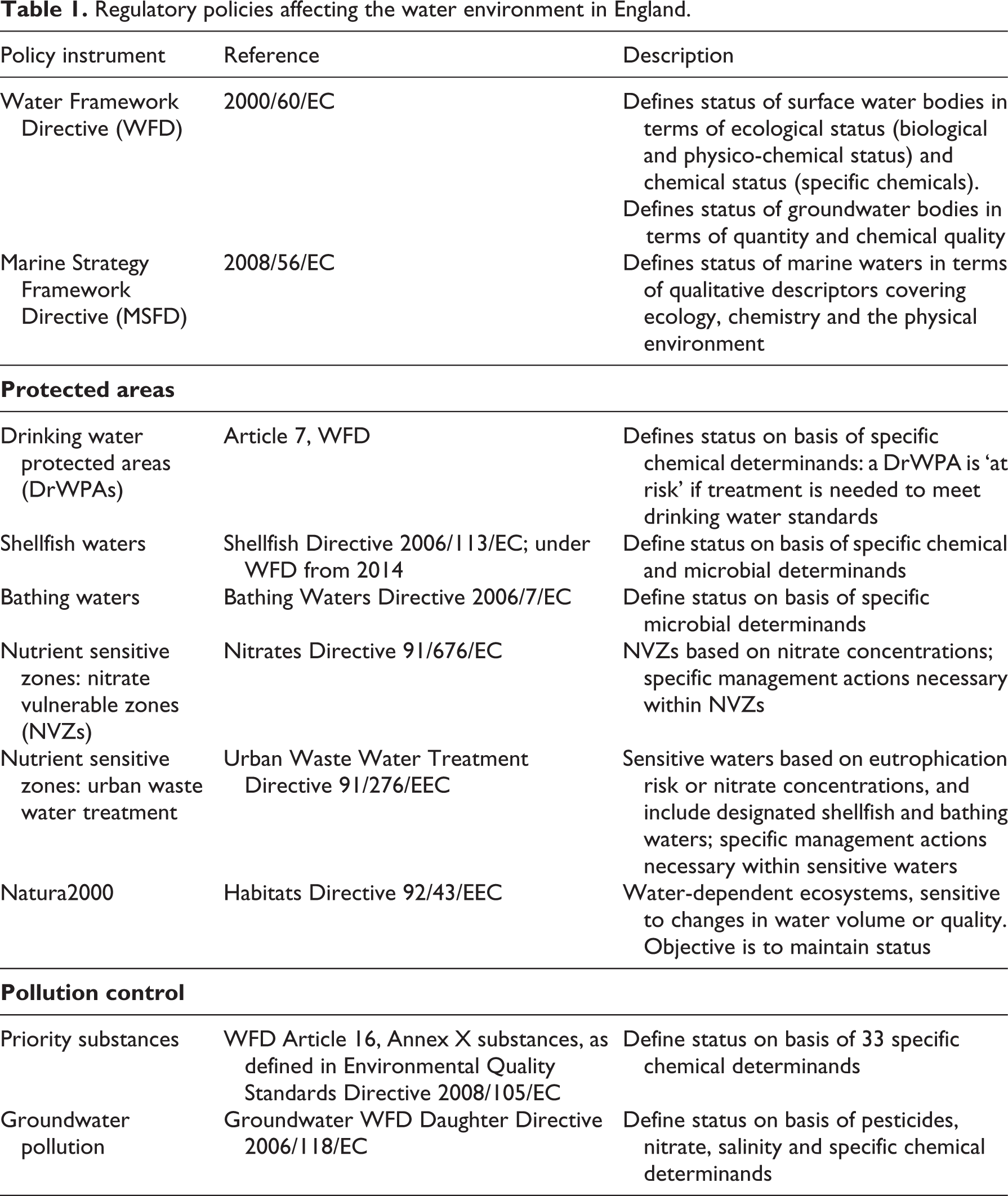
The regulatory policy drivers are summarised in Table 1. Most are focused around the definition of the status of a water body, based on a very wide range of chemical, biological and, for groundwater bodies, quantitative indicators (there are dozens of chemical indicators, although not all are measured or relevant for each water body). Threshold values are defined separately for each indicator based either on values deemed to be indicative of ‘good’ status (based on observations), or on toxicological limits. Different threshold values may be defined for different types of water body (river, lake, etc.), and for different categories of each water body type. Quantitative indicators are not defined for the Natura2000 sites because of their diversity, and status is based on expert judgement. In all these cases, the aims of water management are to allow water bodies to maintain or achieve a defined status, to prevent deterioration and, for groundwater bodies, reverse significant adverse trends. Compliance is therefore measured in terms of the water body status. The regulatory approach for nutrient sensitive zones is slightly different. In these cases, ‘sensitive areas’ are defined on the basis of chemical and biological indicators, and specific management approaches must be implemented in these areas (for example, relating to the application of nitrogen by farmers and the treatment of sewage effluent). Compliance under these regulations is measured in terms of the implementation of these interventions, not in terms of the quality of the receiving water – although this will typically be addressed by the other regulations.
Regulatory policies affecting the water environment in England.
Current pressures on the water environment in England
There are seven main current pressures on the water environment in England, and Table 2 maps these onto the regulatory framework in Table 1:
Relationship between pressures on the water environment and regulatory policies.
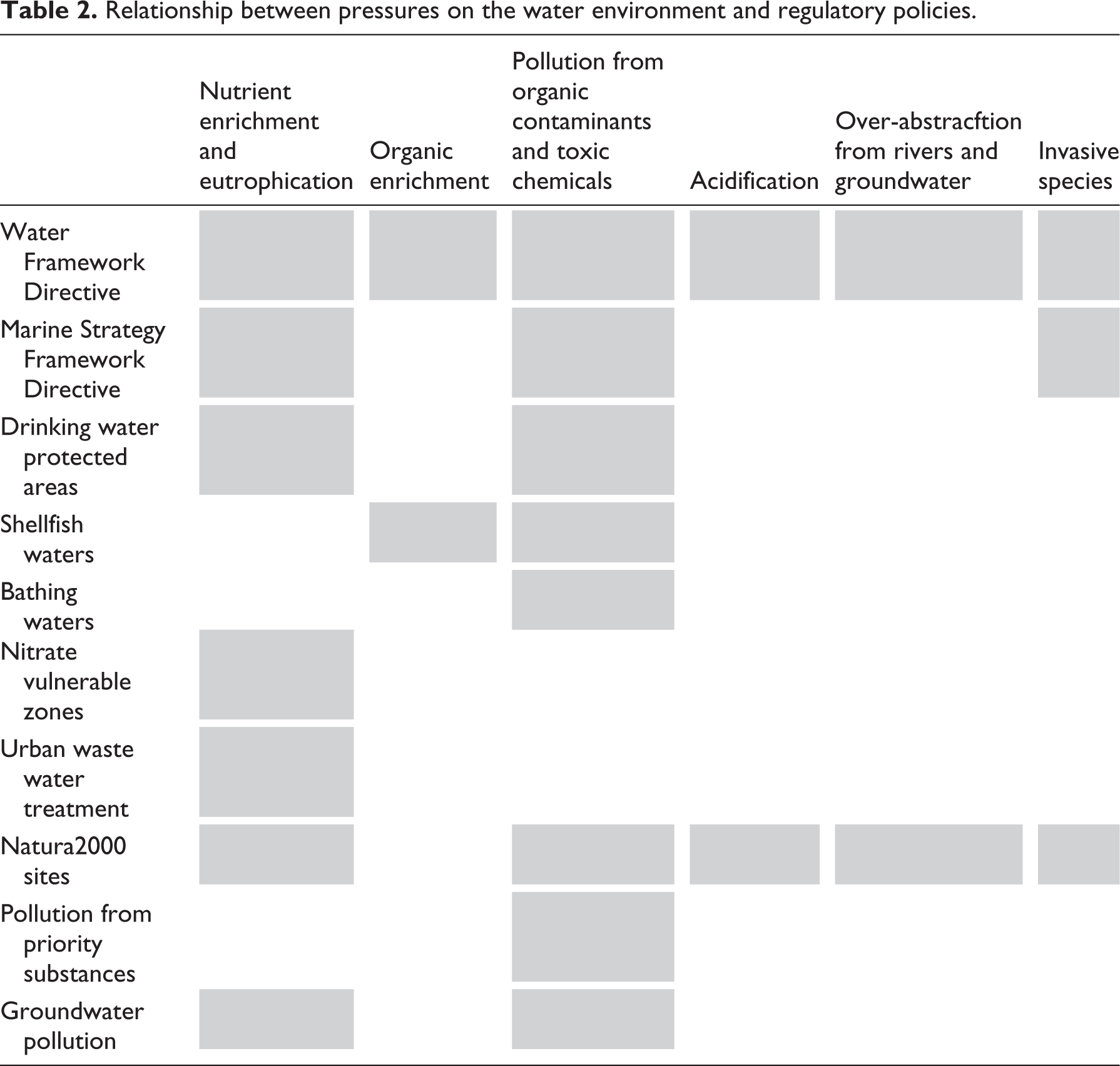
eutrophication and nutrient enrichment (primarily due to nitrogen and phosphorus species);
organic pollution leading to increased oxygen demand from species inhabiting freshwater habitats (organic enrichment);
pollution from organic contaminants (including pesticides, herbicides and microbial pathogens) and toxic chemicals;
acidification (from sulphur and nitrogen deposition and their legacies);
over-abstraction from rivers and groundwater;
morphological changes to water bodies (erosion, sedimentation and channel modification);
invasive species affecting species interactions and biodiversity.
As of 2013, 21% of rivers, 26% of lakes, 16% of transitional waters and 33% of coastal waters in England were classified as having ‘good’ ecological status under the WFD, and in 2010 38% of groundwater bodies were classified as having good status. Most of the rivers that fail to achieve good ecological status do so largely because of excessive nutrients (mostly phosphorus concentrations) adversely affecting biological communities, morphological modifications to the river channel (such as obstructions to fish movement) and sedimentation affecting fish and invertebrate communities. Eutrophication and excess nutrients are also the dominant causes for lakes, transitional and coastal waters failing to achieve good ecological status. The groundwater bodies that fail to achieve good status do so for a combination of reasons including eutrophication (particularly high nitrate concentrations) and also because over-abstraction affects the volume of surface waters.
Around 30% of the surface water DrWPAs in England and Wales, and 70% of groundwater DrWPAs were classified as ‘at risk’ in 2013 because additional treatment may be needed to meet drinking water standards (Environment Agency, 2013a). The dominant reasons for ‘at risk’ status for surface water DrWPAs are excessive pesticide concentrations, poor water colour (due to high dissolved organic carbon) and high algal concentrations due to excessive nutrients. High nitrate concentrations are by far the main reason why groundwater DrWPAs are at risk (Environment Agency, 2013a). Virtually all of England’s bathing and shellfish waters meet basic quality standards, but only 81% and 34%, respectively, meet the stricter ‘guideline’ standards. All these failures are due to excessive faecal coliform concentrations.
Failure to achieve target status is therefore due to a variety of drivers, mostly ultimately related to various dimensions of water chemistry. Excessive concentrations of nutrients and pollutants derive from both point and diffuse sources.
Climate change
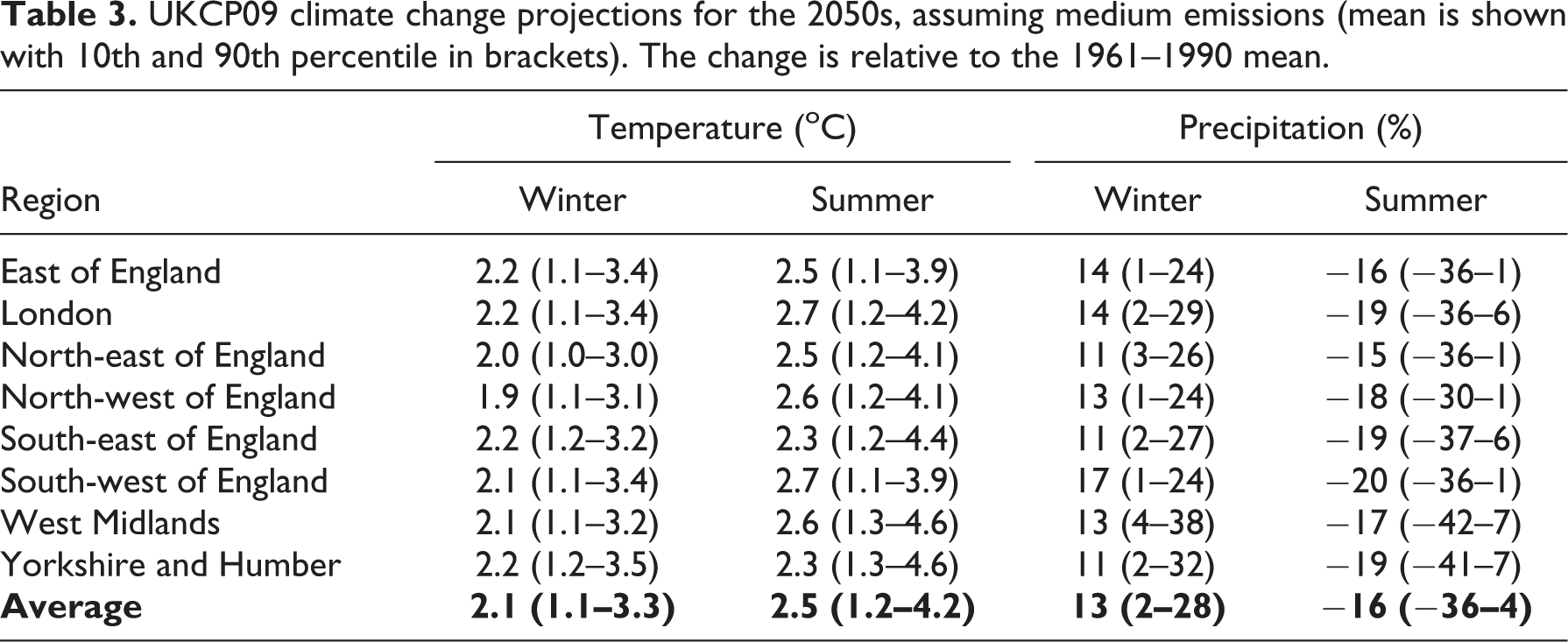
By 2050, mean winter temperatures in England are projected to rise by approximately 1.1 to 3.2oC (with a central estimate of 2.1oC) and mean summer temperatures could be 1.2 to 4.2oC (central estimate 2.5oC) higher than in 1961to 1990 (UKCP09: Murphy et al., 2009). Mean winter precipitation could increase by 2 to 28% (central estimate 13%) and mean summer precipitation could change by between −36% and +4% (central estimate −16%). Table 3 shows the variation in the potential impact on average seasonal temperature and precipitation across England, and illustrates the large amount of uncertainty even assuming one scenario for future emissions. The frequency of intense rainfall events is likely to increase, as a warmer atmosphere can hold more water. Warmer and drier conditions on average during summer could be expected to lead to more frequent hot dry summers.
UKCP09 climate change projections for the 2050s, assuming medium emissions (mean is shown with 10th and 90th percentile in brackets). The change is relative to the 1961–1990 mean.
Sea level is projected to rise by approximately 18–26 cm by 2050 (relative to 1990) in south-east England, and sea surface temperatures to increase by of the order of 0.2–0.3oC per decade (suggesting an increase of 1.6–2.4oC by 2050 relative to 1961–1990). The salinity of the seas around England is likely to reduce by 2050, particularly in the North Sea, but changes in estuaries will be strongly affected by changes in river flows. Stratification in estuaries is likely to increase slightly, and the duration of stratification in summer to increase (Statham, 2012). There is currently considerable uncertainty on potential changes in the circulation in the coastal zone.
Other pressures on the water environment
By the mid-2030s, the population of England is projected to increase by between 6.5 and 9.6 million over the 2012 level (Office of National Statistics, 2013). This will have two effects on the water environment. First, demand for water resources will likely increase, although the effect will depend on future per capita water use; the Environment Agency (2013b) projects changes in demand in England and Wales by 2050 under different scenarios ranging from a decrease of 28% to an increase of 49% (relative to 2008). Population growth and demand growth is most likely to occur in south-east England, the driest area of the UK. Second, increased population would lead to increased discharges of sewage effluent to treatment works and the water environment, although the effects of this would depend on changes to water treatment practices.
The water environment may also be affected by future changes in land cover and use. Increased urbanisation and a potential increase in the area of land devoted to biofuels may affect river flow regimes and recharge through altering flow and recharge generation processes, but potentially the greatest effect of land use change is on water chemistry. Fertiliser use in the UK is currently declining (Defra, 2014) and overall pesticide use is also declining (although the areas receiving pesticide applications are increasing) (The Food and Environment Research Agency, 2013), but many factors affect pesticide and fertiliser use so it cannot be assumed that current trends will continue and there is a legacy of nutrient pollution which will continue to affect water quality for decades. Changes to farming practices have the potential to alter loads and affect the mechanisms by which material reaches the water course.
III Potential effects of climate change on the water environment
Introduction
Table 4 lists the refereed papers (as of May 2014) which consider explicitly the implications of future climate change for the water environment in the UK, categorised by major pressure. Some of the papers cover several pressures (for example both river flows and nutrients), and some papers consider some pressures en route to estimating impacts on other pressures (for example, whilst there have been few published papers dealing specifically with the effects of future climate change on river water temperature in the UK, most of the studies looking at nutrients and oxygen depletion incorporate potential changes in temperature). The papers do not necessarily represent separate studies (sometimes different aspects of the same project are reported in several papers), but most include some form of quantitative analysis. The table does not include studies which have examined past associations between variability in weather or climate and the water environment, unless they specifically considered implications for the future. Government and water management agencies have also commissioned and published reports into various aspects of climate change and the water environment. These too are shown in Table 4; note that the list includes some scoping studies. Some of these studies have also been presented in the refereed literature.
Published papers and reports into the potential effects of future climate change on the water environment in England.
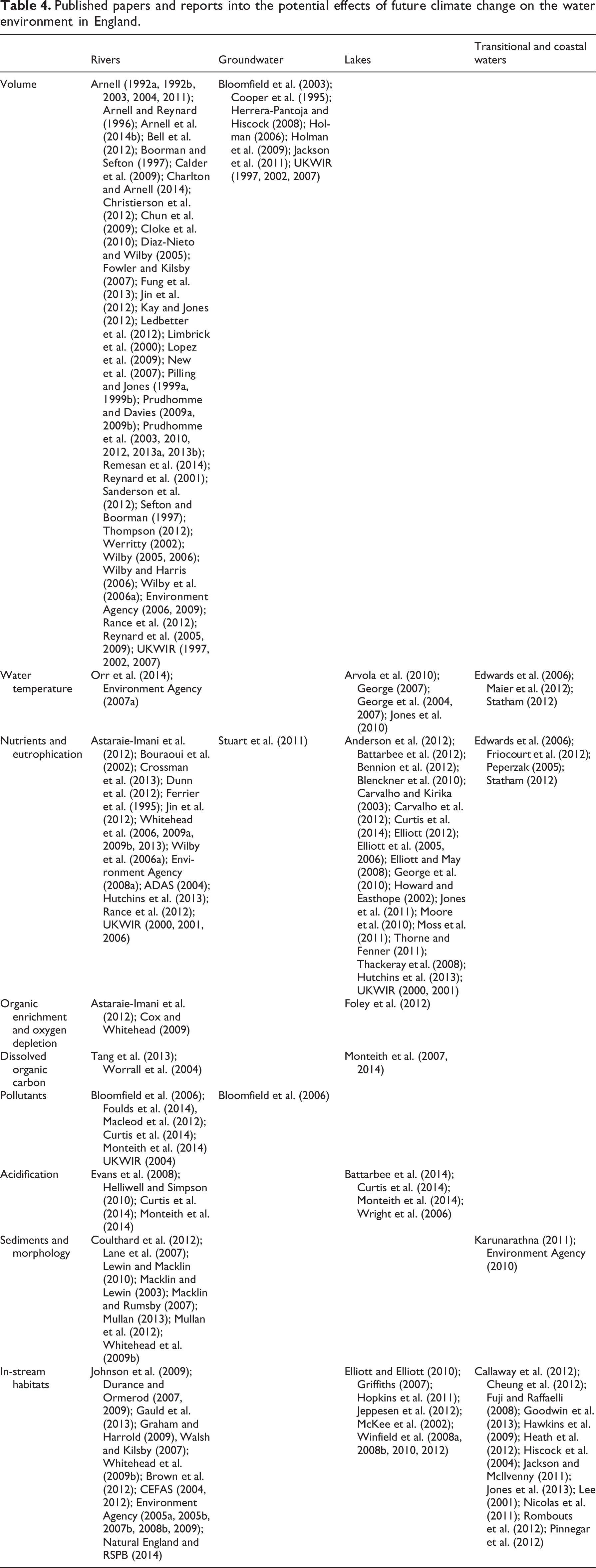
Key conclusions from the overview of the literature are: very few papers have considered biological aspects of water quality in rivers, with most focused on water chemistry; there have been far more papers on surface waters than groundwater; there has so far been very little published research on potential changes in sediment properties and river and lake morphology; most of the chemical water quality papers concentrate on nitrogen and phosphorus dynamics; there is little literature on coastal and transitional waters; published studies do not explicitly consider policy-relevant determinands – with the exception of nitrogen and phosphorus; virtually all projections of the potential effect of climate change in rivers use models, whilst most of the studies in lakes rely on experimental or observational evidence on sensitivity to change; studies have largely focused on a small number of case study catchments or water bodies; few studies have so far used the UKCP09 climate projections, with most utilising earlier projections.
Figure 1 presents a conceptual model of the effects of climate change on the water environment, based on the literature shown in Table 4 and first principles. The water environment in a water body is characterised by the quantity of water (and its variation over time), together with its physical, chemical and biological properties that form ecosystems. The two key physical properties are temperature and sediment concentration. The chemical properties are a function of the materials dissolved in the water or present in sediments, and the biological characteristics are defined by the assemblage of plants and animals in the water body and their interaction. There are links between these different components. Chemical, biological and physical characteristics may depend on water temperature, many chemical changes in a water body are driven by microbial processes and both chemical composition and physical properties affect biology.
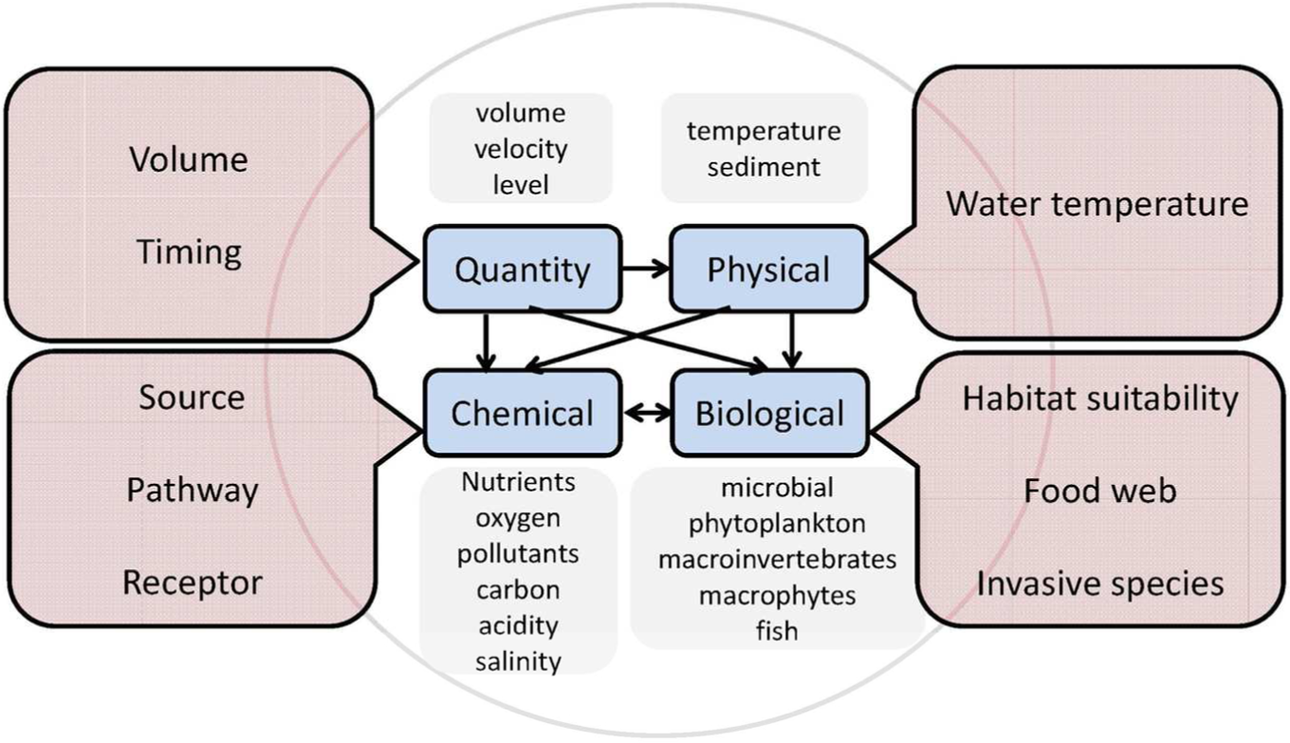
The impact of climate change on the water environment.
Climate change affects these four components of the water environment differently but – crucially – all together at the same time, as ecosystems. Changes in weather regimes will affect the volume and timing of river flows, inflows to lakes, transitional waters and the coastal zone and the amount of groundwater recharge. Increases in air temperature affect water temperature and the thermal structure of standing water. Changes in the chemistry of water bodies will be determined by changes in the sources of material, pathways by which material reaches the water body, and processes within the water body itself – the receptor. The biological characteristics of a water body will be affected not only by changes in hydrological, physical and chemical characteristics, but also by changes in habitat suitability, food-web structure and the presence of invasive species. Climate change will be superimposed onto other changes in the catchment. In a given catchment, these land use changes or changes in management practices may be more significant for the water environment than climate change alone (as shown, for example, by Crossman et al., 2013). In the uplands, air pollution and its legacy may remain the dominant control on water quality for many headwaters.
Hydrological changes
Climate change also has the potential to alter river flow generation processes, although this has not yet been assessed in any studies in England. For example, warmer, drier conditions in summer could lead to changes to soil structure (for example cracking), which could change the nature of hydrological response to subsequent rainfall. Such changes are not incorporated into the current generation of hydrological models used to estimate climate change impacts.
Changes in physical properties
The effects of climate change on lake water temperature profiles depend not only on the change in temperature and energy balance, but also on the characteristics of the lake, including its depth and degree of mixing (Arvola et al., 2010). Higher temperatures and increased emissions of long-wave radiation generally increase lake water temperature at the surface, but stimulate earlier and more persistent stratification so thermal profiles through the lake will change (George et al., 2007). Lake temperature changes are most influenced by changes in winter and night-time air temperatures (Jones et al., 2010). The incidence and length of winter ice cover will diminish.
Implications for pressures on the water environment
Regulation and compliance in the water environment is largely focused around the linked chemical and biological characteristics of a water body; a biological ‘fail’ frequently has a chemical cause. Figure 1 suggests that impacts on chemical characteristics are dependent on changes in sources, pathways and receptors. Figure 2 presents generalised models of the impacts of climate change on chemical characteristics and therefore also biological pressures on the water environment, in terms of changes to sources, pathways and receptors. The models indicate the direction of impact. The magnitude of impact, and the relative importance of the different drivers, will vary with local context (and it is significant that many of the relationships can be either positive or negative); not every change will occur, or be important, everywhere. The models have been developed through a combination of reasoning from first principles and evidence from observational (mostly in lakes) and numerical modelling studies presented in Table 4.
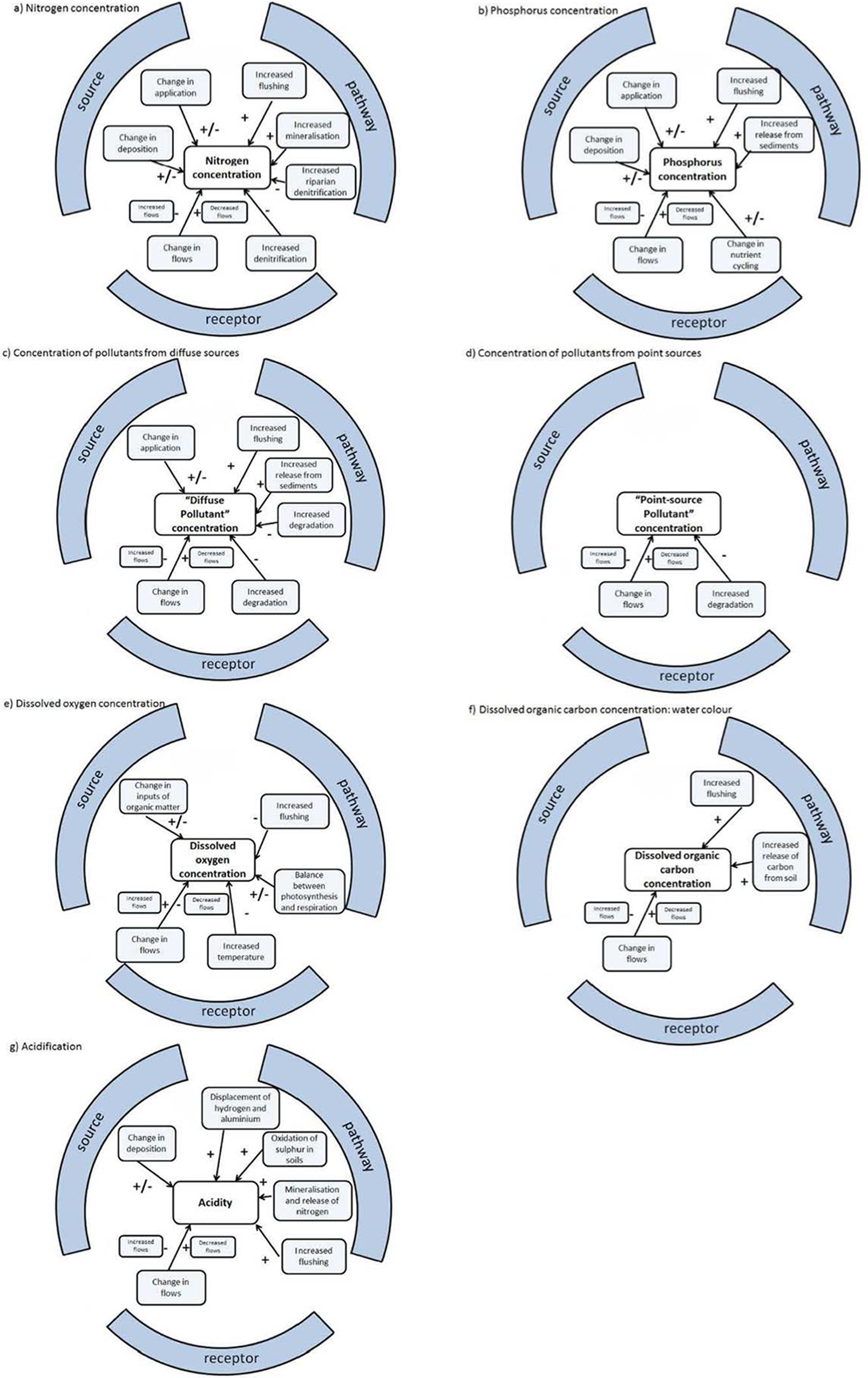
The impact of climate change on pressures on the water environment: sources, pathways and receptors.
Most nitrogen species come from agricultural land as non-point sources, although drainage from sewage treatment works and septic tanks can make significant contributions in some catchments. In the uplands, high nitrate concentrations in surface waters can be the result of atmospheric deposition and leaching from catchment soils saturated by decades of nitrogen deposition from fossil fuel combustion and agriculture. Changes in precipitation intensity and distribution have the theoretical potential to alter atmospheric deposition rates of pollutant nitrogen. Historically, most phosphorus has come from industrial and domestic sources as point sources from sewage effluent, but with the increasing effluent treatment standards an increasing proportion derives from agricultural land; the balance varies between catchments and the level of effluent treatment. With no change in land use, it is possible that changes in agricultural growing conditions due to climate change could lead to changes – increases or decreases – in the agricultural application of nitrogen and phosphorus to the soil.
Higher soil temperatures and changes in seasonal rainfall and temperature patterns will alter catchment nutrient processing and nitrification in the riparian zone. Changes in the moisture status of the soil are likely to increase mineralisation, leading to increased availability of nitrate for delivery to streams. Increased storm events may also increase the delivery of nutrient loads and sediment from agricultural land through increased flushing, which would mobilise and transport soil particles and associated nutrients to river systems. Increased storm events, especially in summer, could also result in more frequent incidences of combined sewer overflows. These events result in highly polluted water, including untreated sewage, discharging directly into receiving water bodies.
With the projected changes in UK precipitation, it is anticipated that many river systems will see a reduction in summer flows. This would reduce the dilution capacity of system receptors resulting in higher nutrient concentration, particularly in point-source dominated catchments. In addition to reducing receptor dilution capacity, lower summer flows will result in longer water residence times, increasing the potential for eutrophication and the development of algal blooms.
Increased temperatures and lower summer flows may, however, enhance denitrification, potentially lowering riverine nitrogen concentrations, but the effects will depend on the size of the catchment and hence residence times. Changes in nutrient uptake by primary producers (mainly algae) and releases by decomposition may also affect both nitrogen and phosphorus concentrations in water bodies, and a range of chemical phosphorus cycle processes (including direct assimilation, adsorption/desorption and co-precipitation are temperature-dependent). In groundwater-fed catchments, the increased importance of groundwater contributions during low flow periods in the summer could also result in elevated river nitrate concentrations due to historic contamination. In river systems which have experienced historic contamination, remobilisation of within-channel phosphorus has also been observed during storm events, as a result of increased water velocity. In addition, higher temperatures or lower oxygen concentrations in river water may also increase phosphorus release rates from the bed-sediment.
The relative importance of these potential changes to sources, pathways and receptors will vary between catchments. For example, simulations projected increases in summer nitrate concentrations in the River Kennet due to reduced dilution (Whitehead et al., 2006), but reductions in summer nitrate concentrations in the River Thames because increased denitrification offset the reduced dilution effect (Jin et al., 2012).
Altered freshwater fluxes of nutrients, principally nitrogen and phosphorus, will also impact upon estuaries and coastal waters. There is also good evidence (Statham, 2012) that the ratio of nitrogen and phosphorus to silicon has increased in estuaries over time (because of increased anthropogenic loadings of nitrogen and phosphorus), leading to the risk that phytoplankton blooms will consist of potentially toxic cyanobacteria or dinoflagellates rather than diatoms. Submarine groundwater discharges can be important contributors to transitional waters in the UK (e.g. Jickells, 2005), especially for nitrogen. In some areas, depending on the geological setting, there is a large pool of nitrate in groundwater, and climate change-driven hydrological changes leading to a changed flux from this pool may alter considerably nitrogen fluxes into transitional waters.
Increased nutrient loading from upstream as a result of increases in winter precipitation and summer storms would also impact upon eutrophication in lakes, and changes to processes, especially enhanced nutrient recycling within lakes, may further promote eutrophication (Moss et al., 2011). Warmer, drier summers, longer water residence time and earlier and more stable stratification causing reduced hypolimnetic oxygen concentration in deeper, stratifying lakes may lead to increased algal growth (Foley et al., 2012). Phenological change, especially differential earlier growth of some species, may lead to possible mismatches of life-cycles and to complex impacts on lake communities and lake ecosystem functioning. A change in food-web structure and lake functioning caused by rising water temperature can lead potentially to changes in the composition of fish populations and an increase in fish abundance causing increased predation on zooplankton populations and increased algal growth. For shallow lakes, this may also be accompanied by a shift in aquatic plant community composition towards floating plants, dense algal blooms and a decrease in night-time oxygen concentrations, potentially leading to fish kills (Moss et al., 2011).
Key pollutants affecting compliance with water quality standards.
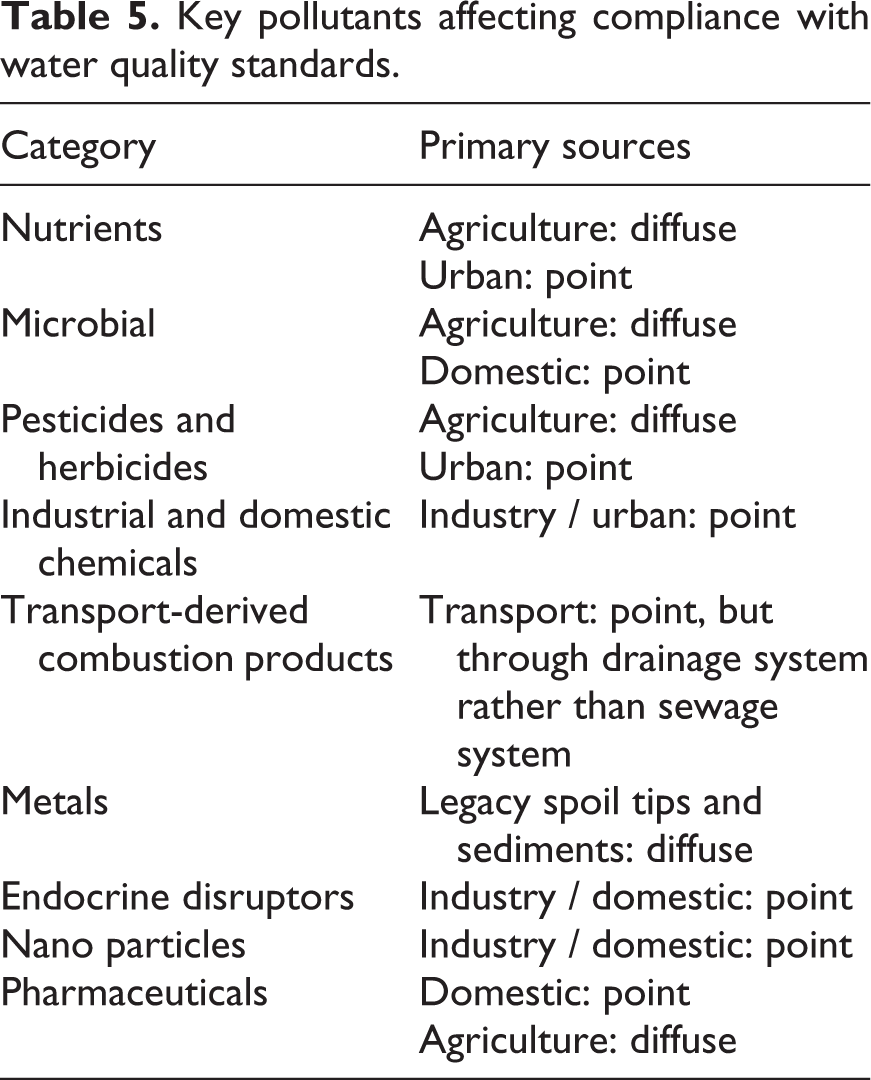
Total inputs of point-source pollutants (mostly from industry and domestic sources) will be unaffected by climate change, but the application of pesticides and herbicides by farmers may be influenced by the effect of climate change on crop growth. Although the emissions of toxic metals and POPs are now controlled, toxic substances stored in soils and in sediments in the river bed continue to be transported along water courses through leaching and erosion processes. Increased incidences of combined sewer overflows due to more intensive heavy rainfall events could result in highly polluted untreated waters, containing heavy metals and hydrocarbon based pollutants, discharging directly into receiving water bodies (Rügner et al., 2014).
Increased delivery of diffuse pollutants to rivers and groundwater may result from the anticipated changes in extreme events, with storm events resulting in increased flushing and the remobilisation of contaminated materials (Foulds et al., 2014), until the source becomes exhausted. However, higher temperatures will likely increase the volatilisation and degradation of pesticide residues both in the soil and in surface waters, and this will have the effect of reducing pesticide loads (Bloomfield et al., 2006). Changes in runoff generation processes – for example through increased soil cracking – could alter pathways by which pesticides reach water courses and groundwater.
Pollutant concentrations in rivers will also be affected by changes in the volume of river flows. Reductions in summer flows would increase concentrations, whilst higher flows in late autumn, winter and early spring would reduce concentrations; the effect depends on when the pesticides are applied or pollutants discharged. Higher water temperatures may also potentially affect pesticide concentrations in receiving waters through changing degradation rates.
Higher temperatures reduce the water solubility of oxygen and may make stratification in estuaries more intense (Rabalais et al., 2009) which, in conjunction with higher primary productivity and enhanced nutrient inputs, may lead to increased risk of anoxic zones developing. These will have a considerable effect on both organism distribution and biogeochemical cycling.
Implications for habitat suitability and invasive species
Increasing water temperatures in rivers and lakes may significantly affect freshwater biological assemblages by altering species distributions and abundance through changes in metabolic rates, feeding, migration patterns and physiological harm at different life-cycle stages. Many species, such as salmonid and bullhead species, have thermal limits that determine the success of spawning, migration and survival. Warming could also lead to less suitable conditions for cold and cool-water-adapted species (including high conservation value taxa such as Arctic charr (Salvelinus alpinus)), isolating them in increasingly confined headwaters and lakes (Winfield et al., 2008a, 2010). Thermal refuges may be further compromised by oxygen depletion resulting from nutrient enrichment. The thermal tolerances of species can also be lowered by other climatic driven changes in the riverine environment, such as lower water levels and reduced dissolved oxygen concentrations. Other freshwater species, including some macroinvertebrates, can only tolerate a narrow range of temperature, meaning they are highly susceptible to any changes in riverine thermal regime. Reductions in river flows may also restrict access to refugia which aquatic organisms may have historically used, and changes in the river morphology, such as siltation and culverting, may also limit the refugia available.
Temperature increases are likely to impact on the distribution of aquatic plants and animals in transitional and coastal waters (Callaway et al., 2012). Much ecological modelling relating to climate change in coastal waters has focused on water temperature (e.g. Jones et al., 2013; Rombouts et al., 2012). Mobile organisms are likely to move northwards as temperatures rise. The distribution of exploited fish species round the UK is also changing (Nicolas et al., 2011; Heath et al., 2012), with the pattern being consistent with temperature rise. However, it is also clear that patterns of change will be more complex than a simple northerly shift in species, because if keystone species are affected, then there could be widespread changes in community structure and composition. There are likely to be interactions between temperature rise and other driving forces. Marine ecosystems are often dominated by organisms with planktonic life history stages, and are thus sensitive to alterations in coastal circulation patterns. Harmful algal blooms in the North Atlantic and North Sea are potentially affected by changes in circulation, and particularly stratification.
The potential for invasion varies between water bodies, with the greatest potential in coastal and transitional waters. In inland water bodies, invasive plant species are most likely to be introduced by human action intentionally and unintentionally moving propagules.
IV Implications for water management
The WFD does not explicitly mention climate change in either the setting of standards or the assessment of risks, although the 2009 RBMPs for England (and Wales) do include highly-generalised qualitative assessments of the effects of climate change on pressures on the water environment. Wilby et al. (2006b) identified five potential implications of climate change for the WFD. The first is on the characterisation of water bodies (different standards are applied to different classes), but in practice it is unlikely that climate change will mean that water bodies in England will change character (Environment Agency, 2007c) because characterisation is largely based on geological and physical properties such as size, altitude and exposure.
The second potential implication of climate change (Wilby et al., 2006b) is on the risk of water bodies failing to meet regulatory compliance objectives. Table 1 listed the main regulatory drivers on compliance, and it was noted that in most cases compliance was based on the status of water bodies. Climate change has the potential to alter water body status, and therefore compliance – and the general direction of change is to increase risks of non-compliance with objectives. The evidence from the literature shows that these risks will vary from one catchment or water body to another.
Wilby et al.’s (2006b) third implication of climate change was for the effectiveness of the programmes of measures incorporated within RBMPs to achieve water environment objectives. For example, with higher water temperatures and lower diluting flows, planned improvements to effluent treatment and controls on diffuse pollution might become less effective. In order to maintain compliance, it may therefore be necessary to further develop and implement measures to maintain the quality of water bodies, but a key implication of the literature evidence, again, is that this would depend on local conditions. Whitehead et al. (2006) demonstrated that it was technically feasible to offset through a suite of measures the effects of climate change on nutrient concentrations (and therefore compliance) in a lowland chalk stream, but did not evaluate costs and other barriers. Some of the consequences of climate change (for example the effects of higher water temperature) may be difficult to avoid through adaptations to water management approaches. In such cases, climate change could imply an unavoidable regulatory failure – or that the standards of what is deemed to be ‘acceptable’ or ‘good’ would need to be changed.
Wilby et al.’s (2006b) fourth implication of climate change was for monitoring, and in particular for the maintenance of long-term monitoring for trend detection and the selection of reference sites used to define ‘good’ status. Their final implication was for the river basin planning process under the WFD; climate change adds uncertainty to potential future risks and the effectiveness of response measures, for example, and many land use measures that are being considered to address climate change (for example relating to soil protection, agricultural production and biofuel production) will affect the water environment.
V Conclusions
This review has identified the extent of our understanding of the way climate change might affect a range of dimensions of the water environment in England. There is a large literature on potential impacts (over a 100 papers in the refereed literature), but most studies have looked at flow volumes or nutrients, and none have considered explicitly the implications of climate change for the delivery of water management objectives. Most of the studies in lakes and estuaries have been based on observations made over long periods and have inferred future changes from past climatic variability, whilst most of the studies of changes in flows and nutrients in rivers have used numerical simulation models. Studies have been undertaken in a very small number of locations (catchments, lakes or estuaries), and it is clear that the impacts of climate change will depend on local conditions – including the extent of pressures on the water environment. It is therefore difficult to extrapolate from the catchment to the national scale for an overall assessment of the implications of climate change for the water environment and compliance with regulatory objectives. Nevertheless, it is possible to conclude that climate change has the potential to pose risks to water management, in two main ways: it affects the status of water bodies (and therefore compliance), and it affects the effectiveness of catchment and in-stream measures to manage the water environment and meet policy objectives. However, the magnitude of this risk depends on local conditions. The interpretation, measurement and definition of WFD status is also potentially affected by a changing climate.
The impact of climate change on the water environment – and therefore the risks posed to water management – is uncertain, for five reasons. First, future changes in relevant aspects of weather and climate are uncertain, and may not be represented in current generation climate scenarios. Changes in most chemical determinands (and therefore biological systems), for example, are strongly dependent on changes in the duration of dry spells and frequency of intense ‘flushing’ events. Second, whilst there is a good qualitative understanding of potential ways in which systems may change, some of the interactions between components of the water environment are poorly understood and new high-frequency observations are giving new insights into system dynamics (Wade et al., 2012). Third, predictive models are currently only available for some components of the water environment, and these models have parametric and structural uncertainty which has not yet been fully explored. Fourth, climate change is not the only pressure affecting catchments, and how climate change affects the water environment in a place will depend on other land use and management pressures. Finally, the future consequences of climate change will depend on the management actions taken to respond not only to climate change, but also to the other evolving pressures.
The paper has also developed a series of consistent conceptual models describing the implications of climate change for pressures on the water environment, based around the source-pathway-receptor concept. The models have been largely constructed from first principles, but have been informed by the results of observational and modelling studies. They provide a framework for a systematic assessment across catchments and pressures of the implications of climate change for the water environment and its management.
Footnotes
Acknowledgements
We gratefully acknowledge the helpful support and comments of Dr Debbie Coughlin and Stuart Kirk (Defra), Dr Glenn Watts (Environment Agency) and Professor Stephen Maberley (CEH).
Funding
This work was supported as part of a scoping study funded by the UK Department for the Environment, Food and Rural Affairs (Defra), under contract WT1540.