




Abstract
This paper analyses how a group of researchers from different disciplines has been able to form creative collaborative spaces to model life together. Making mathematical models of life is a new way of creating biological knowledge – called systems biology – that ultimately aims to revolutionise medicine, by making it more effective through personalisation. By conceptualizing this interdisciplinary effort to create a new research field as a Scientific/Intellectual Movement, I analyse the entanglement of epistemic and social transformations, discussing how systems biology moved from the periphery towards the center of biology. Thereby, I am turning the focus on the spatial dimensions of Scientific/Intellectual Movements. More specifically, I introduce a topological approach detailing three interrelated spatial movements: aggregation, circulation and oscillation that together constitute the choreography of systems biology. They show how some strong, dispersed, local centers have effectively raised funds to build human capacity, organisations and infrastructures, while creating international networks. Through interaction with science policy makers, a global circulation of policies took place, stimulating the building of collaborative centers for systems biology, while the ending of funding programmes is now causing fragmentation again. As such, this paper argues that the choreography of systems biology as a Scientific/Intellectual Movement exemplifies how spatial (re-)configurations are fundamental to transformations in the knowledge landscape and the institutionalization of creativity.
Introduction
Advancement in science has been characterised through a dialectic between specialisation and integration (Hackett et al., 2016). While natural philosophy branched out in diverse disciplines and sub-disciplines, specialisation is increasingly countered by integration in the form of multi- and interdisciplinary research (Pickstone, 2000, 2007). As the integration of diverse knowledge is assumed to spur creative moments and processes leading to novel and valuable contributions to a field (Amabile, 1996; Csikszentmihalyi 1997; Hampton and Parker, 2011) – or scientific and social innovation – such synthesizing efforts are often stimulated by contemporary science policy. Systems biology is an example of such a recent integrative effort that is reshaping the “scientific landscape”, a term that shows how the relationship between scientific transformation and space is embedded in our language. The creation of new knowledge – or the process of creativity – is necessarily situated in space (Hautala and Jauhiainen, 2014; Ibert and Müller, 2015), actually requiring the constitution of a new (epistemic and physical) space, as is also exemplified by the characterisation of a new specialism or discipline as a “new field”.
The term “systems biology” appeared on the scientific stage around 2000, broadly defined as “an integrative research strategy designed to tackle the complexity of biological systems and their behavior at all levels of organization – from molecules, cells and organs to organisms and ecosystems” (Auffray et al., 2009). While the Human Genome Project and subsequent reductionist – omics approaches produced masses of data on the key molecules in living cells, systems biology shifts towards a more holistic mind-set, focussing on interactions to discover life’s universal principles and laws in order to calculate and predict life (Calvert and Fujimura, 2009). This new way of creating biological knowledge brings together biologists, physicists, engineers, mathematicians and computer scientists to construct mathematical models of life, aiming to advance biological understanding and further personalize medicine. As such, systems biology entails collaboration between disciplines – most notably wet/laboratory and dry/computational research – which means that the mixing of different disciplines requires the construction of new spaces in which researchers from different backgrounds can work together (e.g. new Centers for Systems Biology).
The history and the fragmented nature of systems biology make scholars argue about the character of the new field. Should it be framed as a new research approach new discipline, or even a new paradigm, while historians ask if it is “new” indeed? (Drack et al., 2007; Green and Wolkenhauer, 2013; Kastenhofer et al., 2011; Morange, 2009). However, the emergence of systems biology is surrounded by the usual signs of a new discipline in the process of formal institutionalization – from editorials to special issues, and new journals, chairs, institutes and conferences (Molyneux-Hodgson and Meyer, 2009). And while systems biologists have been publishing outlooks on the first decade of systems biology (Chuang et al., 2010; Macilwain, 2011), such reflections on the dynamics of systems biology cannot be found from historians, philosophers or sociologists of science. Moreover, there is no focus on geography, while systems biology does not only bring diverse intellectual traditions together in dedicated buildings, but explicitly builds on developments in different countries – primarily in Japan, the United States, and European countries – which makes place an important element in its institutionalisation. In fact, and as I will argue in this paper, spatial dynamics are crucial in the understanding of both the emergence of systems biology and its current status.
In order not to predefine systems biology as a new discipline, I will analyse its development as a convergence of intellectual traditions and local developments, through the theory of Scientific/Intellectual Movements (SIMs) (Frickel and Gross, 2005; Parker and Hackett, 2012). Analogous to transformations in the political landscape through social movements, SIMs conceptualise transformations in science as programmes of change that acquire traction and – if successful – become institutionalised. “Like social movements, SIMs represent major forces for initiating changes, large and small, in the organization, production, diffusion, and transformation of ideas and their associated roles and practices” (Frickel and Gross, 2005: 225). SIMs explicate the intellectual, social, temporal and spatial coordination that move and reorder the scientific landscape. Consequently, SIMs allow to focus on the spatial by unpacking and elaborating the movements involved in the creation of systems biology.
To capture these different movements and to enable the analysis of spatial dimension of systems biology as an integrative movement, I will use a topological approach through the concept of ontological choreography (Metzger, 2013; Thompson, 2005). After creating the theoretical framework outlining the choreography of SIMs, I discuss three different movements in the emergence of systems biology: aggregation, circulation and oscillation. Aggregation traces the intellectual roots of systems biology, presenting five different local “types” of systems biology. After presenting the various ways in which these different strands are coming together, I show how the global circulation of systems biology takes place through the mobility of scientists and the creation of a fashion in science policy (Rip, 1998). As fashions come and go, this then leads to the movement of oscillation, constituted by the opposite movements of rise and decline, equalling centralisation and fragmentation over time.
As such, the choreography of SIMs provides a framework to study the spatiality of creativity (see the introduction to this special issue on Creativity in Arts and Sciences: collective processes from a spatial perspective). It expands the conception of creativity being a collective process that is inherently social and interactive (Kakar and Blamberger 2015; Langley et al., 2013) while situated in time and space (Hautala and Jauhiainen, 2014; Ibert and Müller, 2015), by examining the different movements and spatial configurations in collective creative processes. The choreography of systems biology shows how different local configurations of research have combined in a more or less coherent international movement, shifting systems biology from the periphery towards the center of research into life and making it a global scientific fashion. As similar patterns can be found in other contemporary integrative fields, the case of systems biology informs the spatial dynamics of scientific intellectual movements – explicating choreographies of aggregation, circulation and oscillation – adding a spatial dimension to scholarship on the institutionalisation of integrative research and the formation of (inter)disciplines.
The choreography of Scientific/Intellectual Movements
In an effort to define “systems biology”, philosophers and sociologists of science have been looking for its “essence”, or basically its DNA (Calvert and Fujimura, 2009, 2011; Keller, 2005; O’Malley and Dupré, 2005). As this is more in line with the reductionist approach, one might wonder if a core can be found in a movement that explicitly wants to go beyond such essentialism by focussing on interactions and multiplicity. Or as Keller puts it: “does systems biology in fact need a single coherent, theoretical framework? Perhaps it can forge an adequate or at least workable, scaffolding by molding, transforming, and combining elements of the theoretical traditions that have preceded it” (2005: 8). In line with Keller’s focus on multiplicity in the theoretical framework of systems biology, I outline in this paper the intellectual and spatial multiplicity of systems biology, and show some of the molding, transforming and combining work that takes place. Thereby I conceptualise systems biology as a SIM (Frickel and Gross, 2005), while adding a spatial dimension to SIMs theory.
Explaining why and how the intellectual landscape changes and how science is institutionalised, SIMs theory is itself a compositional framework, synthesizing work in the sociology of ideas, social studies of science, and social movement studies, and building on studies on the emergence of disciplines, subfields, theory groups, invisible colleges, etc. As new intellectual developments challenge the status quo, and rearrange the order of knowledge, they are inherently political and can thus be compared to social movements. To summarise, SIMs are (1) a more or less coherent programme of scientific change or advance (2) that significantly challenge received wisdom or dominant ways of approaching some problem or issue (thus encountering resistance), (3) and are therefore inherently political, aiming to redistribute academic resources (4) through organised collective action, (5) during a specific, finite period (Frickel and Gross, 2005: 206–208).
As such, SIMs are prime movers of creativity and intellectual change and their study enables reflection on the dynamics of the knowledge landscape, disciplinary formation and integration, and the institutionalisation of new fields.
Through the emphasis on movements, SIMs also provide the opportunity to delve deeper into the spatial dimensions of creativity and scientific transformation. Although early work on the coherent groups that sparked SIMs did attend to space explicitly (Ben-David, 1977; Mullins, 1972, 1973), the theory of SIMs itself does not elaborate and unpack its spatiality yet, which leaves room to elaborate and enhance the theory. Social movement theory already begins to take space into account, as movements act from, on and in space, while also making space (Routledge, 2015: 383). However, and to elaborate on the spatial dimension of SIMs, I draw on a rich body of literature that attends to the role of place in knowledge production – or the spatial turn – which acknowledges that all knowledge is “situated knowledge” (Ophir and Shapin, 1991) and that “all science is science in place” (Della Dora, 2010) and introduces geographical perspectives in studies of science and technology.
In line with the work of Mullins which contributed to the emergence of SIMs theory, studies in the history and sociology of science clearly argue the importance of place for knowledge creation. Historians of science have shown how different historical sites have influenced the generation and dissemination of knowledge (Livingstone, 2003; Pickstone, 2000), while sociologists examine this interaction into the present, also attending to increasing globalisation of science (Hackett et al., 2016). From a theoretical perspective, especially Actor-Network Theory has incorporated spatial dimensions into reflections on the interaction between technology and society (Latour, 2005; Law, 1999; Marres, 2012). By using spatial concepts such as networks and assemblages, they introduced a topological perspective into studies of technology in society: “Topology concerns itself with spatiality, and in particular with the attributes of the spatial which secure continuity of objects as they are displaced through space” (Law, 2003: 4). By studying entities-in-relation, a topological approach overcomes the primacy of technology, replacing it with a dynamic perspective that highlights interrelatedness and interaction (Marres, 2012), which leads to mutual influence. Consequently, spatiality is not pre-given, fixed or part of the order of things, 1 but instead is generated while coming in various forms (Law, 1999, 2003). However, these discussions are focussed on technological objects and do not explicitly attend to the spatiality of the creation of new knowledge or scientific fields, which is the purpose of this paper.
In the context of the creation of new scientific fields, work by Molyneux-Hodgson and Meyer (2009) on the emergence of new epistemic communities is especially relevant when thinking about the spatiality of SIMs. Based on research into synthetic biology, they argue that epistemic communities can be analysed through the identification of a mixture between movement and stickiness. Next to the convergence of disciplines, they identify the enrolment of scientists, the mobilisation of resources, and the articulation of futures as movements: “These movements consist, in other words, of the movements of the building blocks of a community and the convergence of these towards some central position. Such movements create a more or less homogeneous space in which it is possible, safe and fruitful to work together” (p. 142). However, and while the movements result in the creation of “space”, the movements that the authors describe are epistemic and discursive movements and the space that is referred to is an epistemic space. As such, the geography of the creation of such communities is not explicitly discussed, although they do attend to what they call the “placing” of such communities in more recent work where they show spatial differences between synthetic biology communities in France and the United Kingdom (Meyer and Molyneux Hodgson, 2016).
My analysis explicitly addresses the spatial dynamics through a focus on movements in SIMs theory, emphasising the importance of geographical movement for emerging scientific communities. Moreover, SIMs theory enables the analysis to go beyond emergence, as it also analyses the subsequent institutionalisation of new scientific fields and/or the possibility of decline, which, as I will argue, has spatial dimensions too. Using a topological approach, I introduce the concept of choreography in SIMs to address their spatiality.
Coming from the artistic community of dance, the meaning of choreography is generally understood as: “the sequence of steps and movements in dance” or “the art or practice of designing choreographic sequences” (Oxford dictionary). Translating this into Science and Technology Studies, Thompson (1998, 2005) presents ontological choreography – referring to the dynamic coordination between the scientific, technical, legal, political, financial, relational and emotional aspects of clinics for Assisted Reproductive Technology. Through these choreographies different orders of togetherness are enacted, including epistemic, social, emotional, moral, material, etc.: “What might appear to be an undifferentiated hybrid mess is actually a deftly balanced coming together of things that are generally considered parts of different ontological orders” (Thompson, 2005: 8). As the creation of new disciplines or fields is also a coming together of different, institutional and local embedded ways of doing research – see also Schikowitz (2017) on the choreography of trans-disciplinary research.
I chose the choreography concept to analyse the movements of SIMs as it does not only depict a multiplicity of spatial-temporal movements, but also allows to show synergy: between parts and whole; movement and stickiness; and resistance and variation. Or as Law (2003) points out, taking a choreographical perspective shows how decentring is crucial to centring and how order is always temporary: “For there is no need to draw things together, except for a moment – and that moment will pass, pass into oscillation, movement, alternative patterning. At some other moment things will be ordered differently” (p. 6). As such, the choreography concept shows how movements are not stable but dynamic, causing turbulence or continuous reordering. Choreography is always moving, often in oppositional or complimentary directions, as are art and science in general.
By introducing these understandings of choreography into SIMs theory and the institutionalisation of science, I am making literature on spatiality in STS relevant to the emergence of scientific fields and other creative endeavours.
Methodology and analysis
The analysis is based on qualitative and quantitative studies of epistemic and organisational developments related to systems biology. I have analysed policy documents and scientific papers, mapped the output of specific centres of systems biology, and performed more than 50 interviews with scientists from diverse disciplinary backgrounds and policymakers in the United States, Japan, United Kingdom, Netherlands, Germany, Switzerland, Denmark and Luxembourg, sometimes several with the same person to follow developments over time. Interviews were complemented by ethnographic observations at conferences and meetings and in labs and offices intermittently during two years. As such, the research entailed a multi-sited ethnography (Falzon and Hall, 2009; Marcus, 1998), which in itself shows the importance of space for both the creation and the study of science.
While traces of the places where knowledge is produced can be found on papers, when looking at the authors and their departments, through the analysis of websites of research institutes in specific places, or through the analysis of science policies from specific countries, the extend of the impact of place can only be experienced through immersion. Consequently, I literally followed the movements of systems biology, while mapping its spaces and movements. To make this double movement – of systems biology and of its analyst – visible, I have added a reflexive layer narrating my own movements during the research process through fieldnotes. This method of presenting results emphasises the multiplicity of ordering work performed through the writing-up of empirical material (Law, 2003), thereby underlining the multiplicity of movements expressed through the concept of choreography.
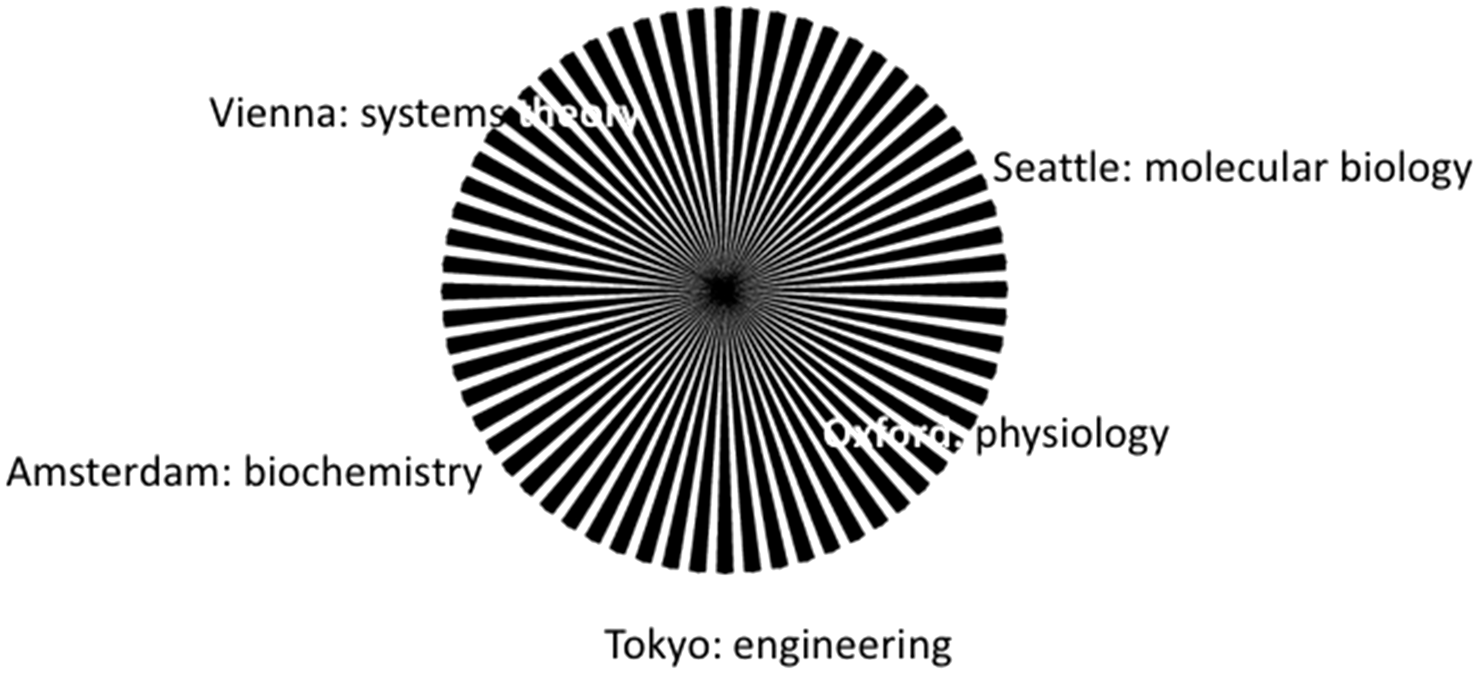
Based on my travels tracing the roots of systems biology, I analyse the spatial movements of systems biology as a SIM. First, I will elaborate the movement from the parts to the whole, or what I have called aggregation. Different local and disciplinary parts are discussed, from systems theory in Vienna to physiology in Oxford, and from engineering in Tokyo to molecular biology in Seattle and biochemistry in Amsterdam. It shows how these various parts scaled-up and interacted through the set-up of international platforms of exchange – such as conferences, journals and information infrastructures – forming a nascent international scientific movement. In turn, circulation analyses international mobility and the wave of national science policies for systems biology, arguing that systems biology developed in close interaction with the increasing importance of global fashions in science policy (Rip, 1998). However, the temporal character of fashions also explains the possibility of a downward turn, which will be discussed in the final movement of oscillation (see also Hackett, 2005), which depicts up- and downward movements equalling centralisation and fragmentation.
Aggregation
Back in the days in Vienna
Vienna, Autumn 2009. Is it a coincidence or a systemic property? My proposal for this Wellcome Trust project on the emergence of systems biology was written in Vienna, the exact same place where important roots of systems biology can be found. While working temporarily as a post-doc in Vienna’s university which still breathes the remarkable past through its monumental old buildings, I wrote and rewrote drafts of the proposal, sending them off via the electronic highway to Prof John Pickstone in Manchester for feedback. He had noticed my early work on systems biology (Vermeulen, 2009) and thought it worthy of further investigation and his support has been fundamental. Although he unfortunately passed away before I could share much of my findings with him, I know he would have smiled when telling him that I found a predecessor of the contemporary systems biology centres in early 20th-century Vienna.
The Vivarium, an impressive classic building with broad stairs leading to three arched doorways, stood in the middle of the Prater, a large green area in Vienna. Initially built for the World Expo in 1873 showing the public a variety of life forms, later the building turned into a research center: the Biologische Versuchanstalt in which different types of biological research where brought together – ranging from plant to human biology while combining experimental and theoretical work (Drack et al., 2007). Unfortunately, the building did not survive World War II, but it was in this early 20th-century environment in which Paul Weiss and Ludwig von Bertalanffy developed their work which historians identify as the first conceptualisation of systems thinking in biology (Drack and Wolkenhauer, 2011; Pouvreau, 2009).
Developing a holistic view on life, Bertalanffy’s organismic biology is not understanding biology through its parts, but through its relations: “It is by no means enough for a knowledge of life when we know the single parts and processes in the finest details; we are allowed to speak of such a knowledge only if we know the laws which rule the order of all those parts and processes” (Bertalanffy, 1932 as cited in Pouvreau and Drack, 2007: 307). In line with this, Weiss (1971) later defines a system as “a complex unit in space and time so constituted that its component subunits, by ‘systematic’ cooperation, preserve its integral configuration of structure and behaviour and tend to restore it after non-destructive disturbances” (Drack and Wolkenhauer, 2011; Weiss, 1971). Consequently, their systems approaches to biology are explicitly dynamic, paying attention to the interactions between different levels of organisation and the development of biological systems over time.
However, these early meetings of systems theory and biology did not immediately result in a new field of systems biology (Calvert and Fujimura, 2011; Green and Wolkenhauer, 2013). While contemporary scientists explain this through a mismatch between the state of the field of biology, and developments in mathematical modelling and computer science at that time (Green and Wolkenhauer, 2013; Ideker et al., 2001; Kitano, 2002a), the molecularisation of biology research can also be seen as an explanation for the prevalence of reductionism in biology during the second half of the 20th-century.
Looking for the ghost in biology
Tokyo, August 2010. I am trying not to sweat too much, walking slowly uphill, while following the patterns of the dark shadows on the road. It is extremely hot and humid as I am navigating the leafy streets between the concrete blocks of Shinagawa to find the Sony Computer Science Laboratories together with my note pad and recorder. As I had clearly explained my interest in systems biology to Hiraoki Kitano, I was a bit surprised to receive directions to Sony and not to the Systems Biology Institute (SBI) that he set-up a decade earlier. The Sony building looks like any other office building, with people behind personal computers in offices and no sign of research into life. Soon I find out that Kitano basically never stopped working for the electronics company, and it is his work on a robot dog which caused his interest in biology, triggering his thinking on systems biology and ultimately leading to the set-up of the SBI.
In line with the Japanese fascination for robots – a tradition which the historian Shouji Tasukawa traces back to an 18th-century tea-serving robot that is still serving tea (Helmreich, 1998) – Kitano has been involved in the development of AIBO, the Sony robot dog that attracted much media attention (Fujimura, 2011). Being trained in computer sciences, Kitano expected to find inspiration and guidance in knowledge about the development of intelligent life. Wanting to understand how intelligence emerged, he started to talk to biologists and worked himself through biology handbooks. However, he became a little disappointed as he discovered what he jokingly calls “ghost biology”, a biology that examines what happens but does not understand how it happens: “In Japan you have this ghost in a bucket on the side of the street, and people are interested to see if it pops-up or not. But I’m interested in how ghosts show up. Do ghosts show up all of a sudden, or actually gradually show up and disappear. I need a time course, I need a quantitative examination how ghosts are actually showing up or not, and things like that” (interview Kitano, 2010). Consequently, his idea to simulate and predict what was going to happen in a biological system was conceived. He initially called it “virtual biology”, but renamed it “systems biology” as the term “virtual” was not well received by biologists who are interested in the materiality of life.
Through references to Norbert Wiener’s cybernetics and his collaborations with control engineer John Doyle from CalTech, Kitano also explicitly links systems biology to engineering and cybernetics (Pickering, 2010). Continuing the old metaphor of man as a machine (La Mettrie, 1748), he compares the understanding of life with the functioning of an airplane, while using concepts from control theory, such as “robustness” and “feedback”. To pursue his new research agenda, Kitano received funds from the Japanese government for the ERATO Kitano Symbiotic Systems Project and set-up the SBI, which is collaborating with pharmaceutical companies to improve clinical studies advising for instance on the selection of patient populations and the combination of different drugs: “The application of systems biology to medical practice is the future of medicine. (…) Although the road ahead is long and winding, it leads to a future where biology and medicine are transformed into precision engineering” (Kitano, 2002b: 209).
The complexity of life
Seattle, September 2012. The window of the office of Leroy Hood looks out on the large headquarters of Amazon and an iconic Starbucks opposite the street. The Institute of Systems Biology just moved to this new location: the third move in its relatively short history, but the former building – especially designed to enhance collaboration among scientists – simply became too small and the new location gives novel opportunities, as for instance collaboration with Amazon is on the agenda. While the ISB started out as a cross-disciplinary department of molecular biology in the University of Washington, its intellectual roots can be found at Caltech in California, where Hood started to become interested in the complexity of life: “my labs in CalTech were right next to Max Delbrück, who was a famous Nobel Prize winner who later in his career became interested in systems analysis” (interview Hood, 2012). Delbrück argued the importance of systems to tackle the complexity of life, and while Hood admits he wasn't immediately convinced, it later let him to move up the west coast to Seattle to pursue this idea further.
Having a background in immunology, Hood used to work as a classical molecular biologist focussing on biological parts, and this was initially delivering good scientific progress. However, only later he realised that they for instance did not know how vaccines work, and that biology could indeed only be understood when deconvoluting its complexity. According to Hood, three things are needed for this: the generation of lots of data to deal with complexity; a parts list of the genes for an organism; and technology development: “what I got excited about was that we needed to develop new technologies that really could generate different and more comprehensive types of data” (interview, 2012). Believing in the importance of technology, he became involved in the development of the automated sequencer in the late seventies. Being more difficult than expected, there were some years where not much progress was made: “and then the key was actually putting together a cross-disciplinary team of a really good chemist, a really good chemist engineer, a really good computer scientist and a molecular biologist” (idem). This work convinced him of the importance of cross-disciplinary research, and unlike CalTech the University of Washington gave him space to set-up a cross-disciplinary department.
Hood started to think about systems approaches as a way to tackle the enormous amount of data generated through the Human Genome Project. This is reflected in the foundational paper A New Approach to Decoding Life: Systems Biology (Ideker et al., 2001) that states: “Perhaps the most important consequence of the Human Genome Project is that it is pushing scientists towards a new view of biology – what we call the systems approach” (p. 343). Consequently, in this systems approach not only technologies are central – quantitative high-throughput biological tools such as genome sequencers, DNA arrays and mass spectrometry to measure proteins – but also data(bases) and the ways in which they can be analysed and integrated, using computation and mathematical modeling. This should ultimately lead to systems medicine, or predictive, preventive, personalized and participatory – so-called P4 medicine – which is further developed in Hoods new institute for P4 medicine that emerged out of the ISB (Hood and Flores, 2012; interview Hood, 2012; interview Flores, 2012).
Quantifying biochemistry
Amsterdam, 2004. When Hans Westerhoff opens the door of his office in the department of biochemistry of the Free University (VU), he apologises as he immediately turns to the floor to deal with a splash of water that surrounds the enormous plant covered with a tapestry of green needles that extends to the high ceiling. Something went wrong with the watering of the plant, he explains. The tree is a gift from a South-African colleague with whom he is already collaborating for a long time, now constructing an online database to share models of life. It is his idea to make a silicon cell that I am interested in, an ambitious project to make a replica of a cell in a computer that must become bigger than the Human Genome Project (interview Vermeulen, 2009, 2012; Westerhoff, 2005). Little did I know then that the silicon cell was a key road into systems biology.
Westerhoff worked on this with colleagues in biochemistry from the University of Amsterdam – headed by Roel van Driel – within the interuniversity institute BioCenter Amsterdam, which also included mathematicians, computer scientists and physicists, and which later transformed in the Netherlands Institute for Systems Biology (NISB). The institute has its roots in the group of now emeritus Professor Karel van Dam, who already in 1986 published an article entitled Biochemistry is a Quantitative Science stating that: “The usefulness of the application of quantitative principles of mathematics and physics to complex biological systems is still often underestimated. Biochemical knowledge can be applied more fruitfully if we are willing to use it in a quantitative way” (Van Dam, 1986: 13). Both Westerhoff and Van Driel were part of Van Dam’s group, and while Van Driel took over his chair, Westerhoff set-up his own group at the Free University, but they always kept collaborating and played an important role in spreading this quantitative approach, for instance through the Silicon Cell project (Vermeulen, 2009, 2012). Later, and in light of the upcoming term of systems biology, the scientific work in Amsterdam was renamed: “Forget the silicon cell, now it is systems biology” (interview Van Driel, 2005).
This “Amsterdam School” present systems biology as a cyclical research process that combines experiments with computation: from experiments to producing data and constructing a model, to the prediction of new hypothesis that are tested in experiments, etc. In addition, Westerhoff explicitly divides two types of systems biology (Westerhoff and Palsson, 2004). On the one hand, there is the “more familiar” first type known from Leroy Hood, which stems from discoveries about the nature of genetic material and developments in recombinant and high-throughput technologies, while on the other hand there is the systems biology “which sprung from nonequilibrium thermodynamics theory in the 1940s, the elucidation of biochemical pathways, and feedback controls in unicellular organisms and the emerging recognition of networks in biology” (Westerhoff and Palsson, 2004: 1249), which was later reformulated in top-down and bottom-up systems biology (Bruggeman and Westerhoff, 2007). As such, this distinction contributes to connecting local developments under the same name, while allowing for international heterogeneity.
The music of life
Leipzig, July 2012. When I first meet Denis Noble – a British biologist and retired professor from Oxford – he stands in the spotlight of a large concert hall. The seats in front of him are not filled with chatty, well-dressed concert enthusiasts, but with participants of the 4th Conference on Systems Biology of Mammalian Cells (SBMC), who await in a serious quiet the next performance. With long grey hair forming a crown around his head, Noble looks a bit like The Bard himself. He likewise romances his audience with questions not dissimilar to the preoccupations of England’s national poet: What composes life and how should we study it? For Noble, his greatest composition may be his heart – that is the virtual one he started to work on more than 50 years ago.
The human heart, a vital organ that beats about 100,000 times every day, pumping blood through our body, captured Noble’s interest very early on in his career. Intending to be a clinician, he enrolled as a medical student at University College London, but was first diverted into studying physiology and never got back to medicine (interview Noble, 2013). His teachers converted him into thinking about the big questions in biological science and turned his attention the application of physics and chemistry to biology. He remembers reading Hodgkin-Huxley papers on equations for the nerve impulse published in 1952: “(I) was astounded, both by the fact that you could do what physicists do, which is to produce a completely mathematical theory of a biological phenomenon, in this case the conduction of the nerve impulse, and make a spectacular prediction” (idem). So he decided to apply this modelling to the heart, through a challenging research trajectory involving additional lessons in mathematics, acquiring the (night-time) use of UCL’s Ferranti Mercury Computer and endless experiments with sheep hearts (Noble, 2006; Noble et al., 2012; Noble and Auffray, 2012). However, he managed to put together an early model of the heart, first published in Nature in 1960 and then as a full paper in 1962, showing the cardiac cell rhythm and the individual iron cells opening and closing in synchrony with the rhythm.
While being an important figure in the systems biology community, contributing to its shaping and self-reflections – e.g. through the organisation of a seminar group in Balliol College to discuss its conceptual foundations (Werner, 2013) – Noble always approached and framed systems biology as physiology. He identifies physiologist Claude Bernhard who already called for the mathematical analysis of biological phenomena in the 19th-century as the first systems biologists (Kohl and Noble, 2009; Noble, 2008a), and in the first special issue on Systems Biology in Science he starts his contribution “Modeling the Heart – from Genes to Cells to the Whole Organ” stating: “Successful physiological analysis requires and understanding of the functional interactions between the key components of cells, organs, and systems, as well as how these interactions change in disease states” (Noble, 2002: 1678). And in line with physiologies closeness to medicine, the work on the virtual heart always aimed to transform the diagnosis and treatment of heart disease and already led to some concrete applications within the pharmaceutical industry and the development of medical devices (Hunter et al., 2001; Noble, 2008b).
From the parts to the whole
In sum, the history of systems biology shows a variety of persons with backgrounds in a variety of disciplines working on their specific research questions and aims within their local, organisational configurations, but all simultaneously focussing on the making of models of life. While the use of systems approached in biology emerges in different places around the same time – which refers to ideas on multiple discovery or simultaneous invention (Merton, 1961/1973) – this analysis of the different parts that constitute systems biology also exposes its fragmented nature – both epistemic and spatial. While in Japan artificial intelligence and the making of robots has been an inspiration, in the United States technology development was key, especially genome sequencing technologies and “big data”. In Holland, we find the basis of systems biology in biochemistry, while in the United Kingdom physiology and the functioning of human organs has inspired Noble to start using computer generated models in his work. And of course, additional local places where systems biology emerged, will add to this diversity of origin stories (e.g. in Edinburgh Henry Kascer can be seen as the intellectual father of systems biology). 2
As such, it is especially interesting to ask how the different parts have been able to come together into the movement known as systems biology? Or as Calvert and Fujimura rightly ask: “Will systems biologists manage to work together even though they hold heterogeneous epistemic aspirations?” (2011: 162), while geographical dispersion also needs to be added to this equation. In fact, the answer can be found partly in the local developments, where key actors played important roles in the staging of the concept and the carving of a global space for systems biology, through aggregation and circulation.
Aggregative movements that brought the different parts together existed of conventional discipline building activities and the creation of centres and (inter-)national platforms of exchange. The writing of introductions into systems biology, the making of special issues and the establishment of new systems biology journals have made an epistemic place for the concept of systems biology in the global scientific community, enrolling scientists and articulating futures (Molyneux-Hodgson and Meyer, 2009). Especially Kitano played a major role in the building of an international community, organising the first International Conference for Systems Biology in Tokyo that is since 2000 every year taking place somewhere else, circulating around the world with most recent touchdowns in Melbourne (2015) and Barcelona (2016). Kitano also attempted standardisation of systems biology, developing a universal language for systems biology (SBML) to enable international communication between scientists modelling life. “It is crucial that individual research groups are able to exchange theory models and create commonly accepted repositories and software environments that are available to all” (Kitano, 2002c: 206). In line with this, European systems biologists are now working together within the European Strategy Forum for Research Infrastructures (ESFRI) to build a European data generation and collection Infrastructure for Systems Biology (ISBE) that is supposed to connect different systems biology research centres. 3
Consequently, the different locations in which systems biology emerged have not developed completely independent from each other, as they increasingly interacted through communications and meetings, forming international networks. Moreover, they have influenced the international movement of scientists, and the creation of science policies for systems biology, which circulated globally. Through aggregation and circulation developments in different spaces could align with each other making systems biology a global movement.
Circulation

How to capture an international movement through interviews and observations? Doing multi-sited ethnography certainly results in family and friends remarking on the amount of travelling you do. And indeed, it was systems biology that made me move from Vienna to Manchester, while also spending shorter periods of time in the United States, the Netherlands and Germany. I found myself in a variety of places learning about systems biology: in the sun on a luxury yacht in the harbour of San Diego talking three hours with its owner who wrote a handbook for systems biology on this same yacht; in a lab in Manchester desperately trying to complete experiments before finally getting time for dinner after 10 pm; and in a large Copenhagen conference hall with thousands of systems biologists without feeling lost. In sum, I started to feel like a member of the global systems biology community myself. Occasionally, I dressed-up a little to enter the buildings of national funding bodies, from the headquarters of the NIH in Bethesda to the office of the BMWF overlooking Berlin.
Key actors in the systems biology community made similar efforts and much more to come together, exchange ideas and create an international movement. On an individual level, the mobility of researchers and their ideas has been crucial in the making of the international movement of systems biology (see also papers on mobility in this special issue). In addition, scientists have been presenting the new concept and its epistemic meaning and agenda towards the broader academic community, while also working to convince administrators within their universities as well as policymakers and politicians on regional, national and international levels about the importance of systems biology research.
The creation of dedicated research centres for systems biology has probably been the main achievement to centralise systems biology, literally putting system biologists together in buildings. Through extensive lobbying of scientists and the creation of many science policy documents promoting systems biology, funding has been made available to establish integrative centres which bring together wet and dry biology in architecture that stimulates collaboration (Vermeulen and Bain, 2014). This institutionalisation of systems biology followed the example of first institutes in Tokyo and Seattle and has been made possible by the development of science policy for systems biology in various countries.
Interestingly, and when asking the policy makers responsible about the origin of these policies, it became clear that also the ideas behind these policies are circulating around the world. Jim Anderson, who used to work for the NIH before he retired, remembers the origins of the systems biology funding that established more than 17 integrative centers from 2003 to 2013: “There was an article in either Science or in Nature. It was a report on a meeting that was held in Britain on complex systems. And I remember when I read it… I mean, that was kind of pivotal. (…) Most of the real action was in Europe. (…) And that, because they were much more mathematically. Mathematical biology was more accepted in certain areas, including the Netherlands. In particular the Netherlands. And so that the U.S. was going to be playing catch-up” (interview, 2012). In turn, the Brits where inspired by what was happening in the United States (interview Kell, 2012), the Germans by what was happening in the United Kingdom (interview Laplace, 2012), and finally the Dutch were referring to Germany and the UK again (interview Breimer, 2013).
Connections between centers are made through meetings and the movement of individual scientists. Next to the aggregation of systems biologists at conferences – especially the International Conference for Systems Biology – international exchange has increased the global character of systems biology. For instance, Westerhoff took over the lead of the Manchester Centre for Integrative Systems Biology (MCISB), which was set-up by his long-term colleague and friend Douglas Kell, who successfully advised the British funding councils to invest in systems biology and became head of the British bioscience funding council, the BBSRC (interview Westerhoff, 2012; interview Kell, 2012). Similarly, Ruedi Aebersold left the Institute of Systems Biology to direct the Swiss national initiative on systems biology, Systems Bio-X (interview Aebersold, 2013), while Leroy Hood worked closely with the Luxembourg government, assisting them to establish the Luxembourg Institute of Systems Biomedicine as the flagship project of the new University of Luxembourg (interview Hood, 2012; interview Baling, 2013). And working from his heart towards the whole human body, Noble has been working on both the epistemic and organisational scaling-up of systems biology. For instance, his work on the virtual heart was chosen as a pilot project for the development of e-science in Integrative Biology (Welsh et al., 2006) evolving into an international research consortium to model the heart and other parts of the human body, via the launch of the Virtual Physiological Human (VPH) (Kohl and Noble, 2009), now also an institute. Last but not least, a substantial amount of PhD students and post-docs have made their careers going from the one country to the other creating international circulation. E.g. originally from Greece, Vangelis Simeonidis did his studies in London, a post-doc at the MICSB in Manchester, and then moved on to the ISB in Seattle as a research associate of the Luxemburg Centre for Systems Biology (interview Simeonidis, 2012), and I can list many more international trajectories of young researchers which facilitated exchange between various sites.
Consequently, the concept of systems biology circulated through the movement of individual scientists within and between countries, as well as the international circulation of research policy dedicated to systems biology. As a result, systems biology became a global fashion in science policy (Rip, 1998) with epistemic consequences: the different local developments became part of a global movement in which discussions about standardisation of data and models took place. However, and although there have been several efforts to combine different local and epistemic approaches to the modelling of life, epistemic integration has only been partial, which is exemplified by the fact that the annual conference has a very different orientation which is depending on the location in which it takes place.
Oscillation
In the first weeks of my research project I discovered something unexpected. While following the movements of systems biology from 2004 onwards, I was certainly not new to the field and the scientists involved. But after moving to Manchester to further explore the new field of systems biology in the UK, I did some interviews to catch-up with the latest and found the MCISB falling apart. Set-up in 2006, its funding was cut after only five years, and it was running on a one year extension and some smaller research grants when I entered in 2012. And Manchester was certainly not the only systems biology centre having problems to sustain itself. So instead of studying the emergence of systems biology, I was suddenly studying its decline too.
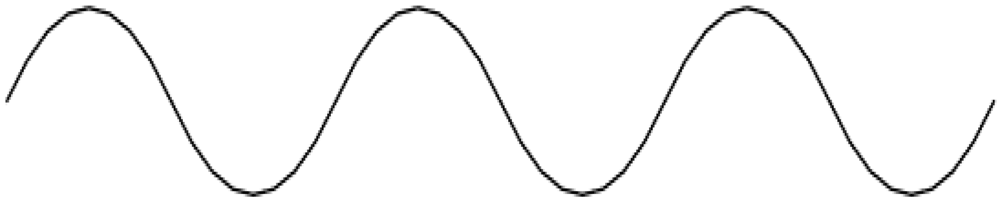
“Emergence” is an important term in systems biology, referring to the process in which interactions between parts give rise to more complex properties. 4 So indeed, we have seen how different disciplinary parts came together to give rise to systems biology. However, what goes up must come down, which refers to another important term in systems biology: “oscillation” or the repeated variation over time between two different states, or as gradual transition between one state and another (Hackett, 2005). Similarly, the movement of systems biology combines aggregation and centralisation with fragmentation.
Most importantly, some of the centres in the United States, the United Kingdom, and the Netherlands are not finding funding anymore, which in some cases let to the minimising of activities, renaming or close-down of centers (interviews: e.g. Breimer, 2013; Groen, 2013; Hood, 2012; Westerhoff, 2012). Although research agendas sometimes proofed to be challenging and funding proposal promises could not always be met, reasons are mostly not performance but finance related. Institutional discontinuities are due to the crisis which cut science funding, and to available funding moving away to new fashions in science policy. For instance, in the United Kingdom the funding for systems biology centers has now been replaced by funding for synthetic biology centers (Molyneux-Hodgson and Meyer, 2009; Schyfter and Calvert, 2015). This surely does not mean that the emergence of systems biology was financially driven, as I would argue it was primarily an epistemic development that gained ground through the support of research policy and funding. However, and in light of current dynamics of research funding being increasingly short-term and novelty driven, researchers start to re-orientate themselves again in order to survive, often falling back on their original, more disciplinary orientated work or on alternative careers (e.g. in research management) (interviews: e.g. Armitage, 2013; Aubrey, 2013; Weichart, 2012).
Consequently, and although it is not at all clear what will happen in the future with systems biology, fragmentation is occurring as this quote from a former post-doc of the MCISB shows: “There was so much expertise. It was a good group, and now it has become much smaller. Before, it was much more cohesive; it had much more of a team feel about it. Now the group is fragmented. Everybody is working on different things and in different projects” (interview Aubrey, 2013). As such, concentration in one space is breaking apart and research is now increasingly conducted again at places physically separate from one another. Moreover, and with national priorities moving elsewhere, local groups are starting to reorientate themselves according to local preferences and circumstances, which is conducive to the geographical fragmentation of systems biology, but can perhaps form new choreographies. The movement of oscillation thus shows the rise and decline of specific choreographies, while also pointing to the abilities of local parts to generate new choreographies.
Conclusion and discussion
Places influence the creation of knowledge and, in return, places are shaped by knowledge too (Livingstone, 2003). This paper showed the importance of place for creativity in science, tracing the development of a new field in the life sciences: systems biology. Framing it as a SIM, while unpacking its spatial dimensions, has allowed me to emphasise the geographical movements and patterns of systems biology, or in other words its choreography.
How does a new research field gain ground? How does a peripheral creative development move to the centre stage of the academic world? While SIMs theory explains epistemic and social convergence, the choreography of systems biology depicted in this paper shows how they are also constituted of different spatial movements, thereby extending the theory. I have shown how the choreography of systems biology as a SIM consists of three movements: aggregation, circulation and oscillation. Most importantly, the aggregation of different local socio-epistemic configurations which are modelling life through discipline-building activities. Secondly, the global circulation of “systems biology” as a new approach in the life sciences, through mobilisation of individual scientists and science policy development that spreads internationally. Both types of movements – aggregation and circulation – are causing a transition from fragmentation to centralisation. Thereby, systems biology moves from a marginal activity towards the forefront of research into biology, transforming from local, globally dispersed activities into a coordinated international connected movement that changes the view on life from reductionism towards holism. Finally, oscillation is describing the movement from fragmentation to centralisation, while also attending to the opposite movement, which occurs after (financial) support for national systems biology programmes is disappearing again. So some of the problems of the institutionalisation of systems biology that are now becoming apparent, cannot only be explained through disciplinary fragmentation – or heterogeneity – but also through its spatial fragmentation. Or in other words, systems biology is constituted through both epistemic and spatial multiplicity.
In sum, from a topological perspective, SIMs do not only cause scientific change, but do so by making space through movements, both locally and globally. A SIM comes into being through a process of centralisation, that is advanced through aggregation and circulation. In choreographic terms, decentring is crucial to centring (Law, 2003: story two), and these opposite movements become visible in the choreography of SIMs, where we find a transition from fragmentation to centralisation which is again followed by signs of fragmentation. This process of oscillation explicates how SIMs rise but fall over time, in line with the fate of SIMs which are stated to be “episodic creatures that eventually and inevitably disappear, either through failure and disintegration, or through success and institutional stabilisation” (Frickel and Gross, 2005: 225). The analysis of the choreography of systems biology as a SIM, adds spatiality to the theory of SIMs, and these movements are also recognisable in other fields such as nanotechnology, synthetic biology, tissue engineering and bioprinting. As such, this analysis adds to thinking about the institutionalisation of science, the creation of new (sub-)fields or epistemic communities, and especially the ways in which these are inherently spatial configurations. The mapping of the choreography of SIMs builds on Molyneux-Hodgsons and Meyer’s (2009) attention for the creation of epistemic space through movements that open-up discourses, while adding spatial movements as a dimension in the creation of new epistemic communities. In line with recent attention to the local configuration of new research fields (Merz and Sormani, 2016), it indeed recognises the importance of the local in the origin of movements as well as local variation, but in addition the choreography of SIMs explicates the ways in which the local becomes global (see also Rheinberger, 2016) through specific movements. Moreover, the choreography of aggregation, circulation and oscillation do not explicate how the scaling-up of new research fields takes place without attending to decline and fragmentation, maintaining symmetry (Bloor, 1984). Consequently, the choreography of SIMs shows the importance of space in the institutionalisation of science, while it also argues its role in disintegration, when the local takes prominence again.
Thereby the choreography concept introduced in this paper, presents a specific topological view on space in which relations are central, including the relation between order and change. The concept of choreography enables a specific way of ordering movement, whereby there is no need to create one coherent picture, but whereby there is room for variety and multiplicity of oppositional movements (see also Schikowitz, 2017). As such, the choreography concept underlines that movements are continuously transforming, creating order between the epistemic, social and spatial, while also leaving room for ambivalence and opposition. And although dialectics can be a source of creativity (Weiner, 2016), the movements in the choreography also show the importance of stickiness (Molyneux-Hodgson and Meyer, 2009) for the institutionalisation of science as components need not only be brought together, but also glued or cemented so they stick together against forces of epistemic as well as spatial fragmentation.
Finally, and in the context of this special issue, the choreography of SIMs presents a method for analysing interactions between creativity and space. Following the movements of SIMs shows transitions from the periphery to the centre, while also attending to both individual and collective creative endeavours and the ways in which they sustain each other. Systems biology is just one example of a SIM that articulates a specific choreography, and further research into the spatial dimensions of SIMs will certainly add new movements to the dance. Most importantly, and as creativity connects the arts and sciences, SIMs theory also goes beyond these boundaries and can be equally useful when analysing artistic movements and to come to a comparative understanding (see also Parker and Corte, 2017). As such, the spatiality of SIMs theory could be used to trace movements in both arts and science, two domains in which the creation of space for creativity is crucial.
Footnotes
Declaration of conflicting interests
The author(s) declared no potential conflicts of interest with respect to the research, authorship, and/or publication of this article.
Funding
The author(s) disclosed receipt of the following financial support for the research, authorship, and/or publication of this article: The author(s) received financial support from the Wellcome Trust, grant number 095820/B/11/Z for the research, authorship, and/or publication of this article.