




Abstract
Fieldwork at Amarna from autumn 2024 to spring 2025 involved excavation and survey in Amarna’s housing areas, including the house of the vizier Nakht, and the continuation of several post-excavation projects. The post-excavation work reported on here is the study of human skeletal materials, pottery, and matting from the non-elite cemeteries; relief fragments from the Maru-Aten; zooarchaeological samples from the house of Panehesy; and lithics and osseous technological pieces from various locations at Amarna. Ongoing community engagement work is also summarised.

Introduction
This report presents the preliminary results of two periods of on-site work undertaken by the Amarna Project, 1 from 1 to 22 December 2024 and from 6 April to 21 May 2025. Fieldwork in both seasons centred on housing areas in the Main City, focusing in spring 2025 on the re-excavation of the house of the vizier Nakht. A diverse programme of post-excavation work also continued. Reported on here is the study of skeletal materials, pottery, and matting from the non-elite cemeteries; relief fragments from the Maru-Aten; zooarchaeological samples from the house of Panehesy beside the Great Aten Temple; and lithics and osseous technological pieces from Amarna as a whole. Community engagement work is also presented.
Housing Survey (A. Stevens)
In 2023, the Amarna Project launched a three-year pilot study designed to test and begin implementing solutions to protect Amarna’s ancient houses. The project, Akhenaten’s City: Protecting Amarna’s Urban Heritage, has four main work packages: photogrammetric survey of the housing suburbs, with re-excavation and re-recording of a sample of houses excavated in the early 1900s; conservation and public presentation of one house (that of the vizier Nakht); construction of protective boundary walls; and a programme of community archaeology. 2 Its overall goal is to improve engagement with the houses across varied stakeholder groups, including researchers, visitors, and local communities, to increase the chance these buildings survive in the longer term. In 2023, we re-excavated and re-recorded a sample of houses of varying sizes that were first cleared in the early 1900s (M50.3, M50.24, M50.25, M51.5, N49.19, N49.32, and N49.33, an unnumbered house excavated by the Egypt Exploration Society (EES) in 1924; and a garden shrine at M50.1), and began the photogrammetric survey. 3
During the short season in autumn 2024, we continued recording house M50.3; undertook surface planning at Nakht’s house (M50.1); and recorded artefacts excavated in 2023, including a cache deposited by excavators in the early 1900s and recovered from house M51.5. 4 In spring 2025, our focus was the re-excavation of Nakht’s house, as outlined below. Further recording was undertaken at N49.19 and M50.3, and an area excavated in 1911 outside the entrance to the estate of the priest Pawah (house O49.1), where the Deutsche Orient-Gesellschaft (DOG) recorded two possible mastabas extending into the street. 5 Clearance of overburden revealed that the mastaba-like features are part of a more substantial structure that extends beyond the edges of the DOG trench, and will need further investigation. This work contributes to our understanding of external spaces at Amarna, which have long been under-investigated. Kate Spence also undertook an architectural survey of houses in the Main City, and Gemma Tully oversaw community engagement, as summarised below. It was not possible to continue the photogrammetric survey, but we plan to restart this from late 2025.
House of Nakht
The house of Nakht (M50.1) lies just north of the town of El-Hagg Qandil (fig. 1). We have singled it out for consolidation and public presentation because of its historical value, how it symbolises the precarity of Amarna’s mudbrick houses, its location near the road and accessibility to visitors, and its association with El-Hagg Qandil. There already exists some knowledge within the El-Hagg Qandil community about the house and its owner, and there is an opportunity here to further this connection to Amarna’s pharaonic heritage and develop the building as a local monument.
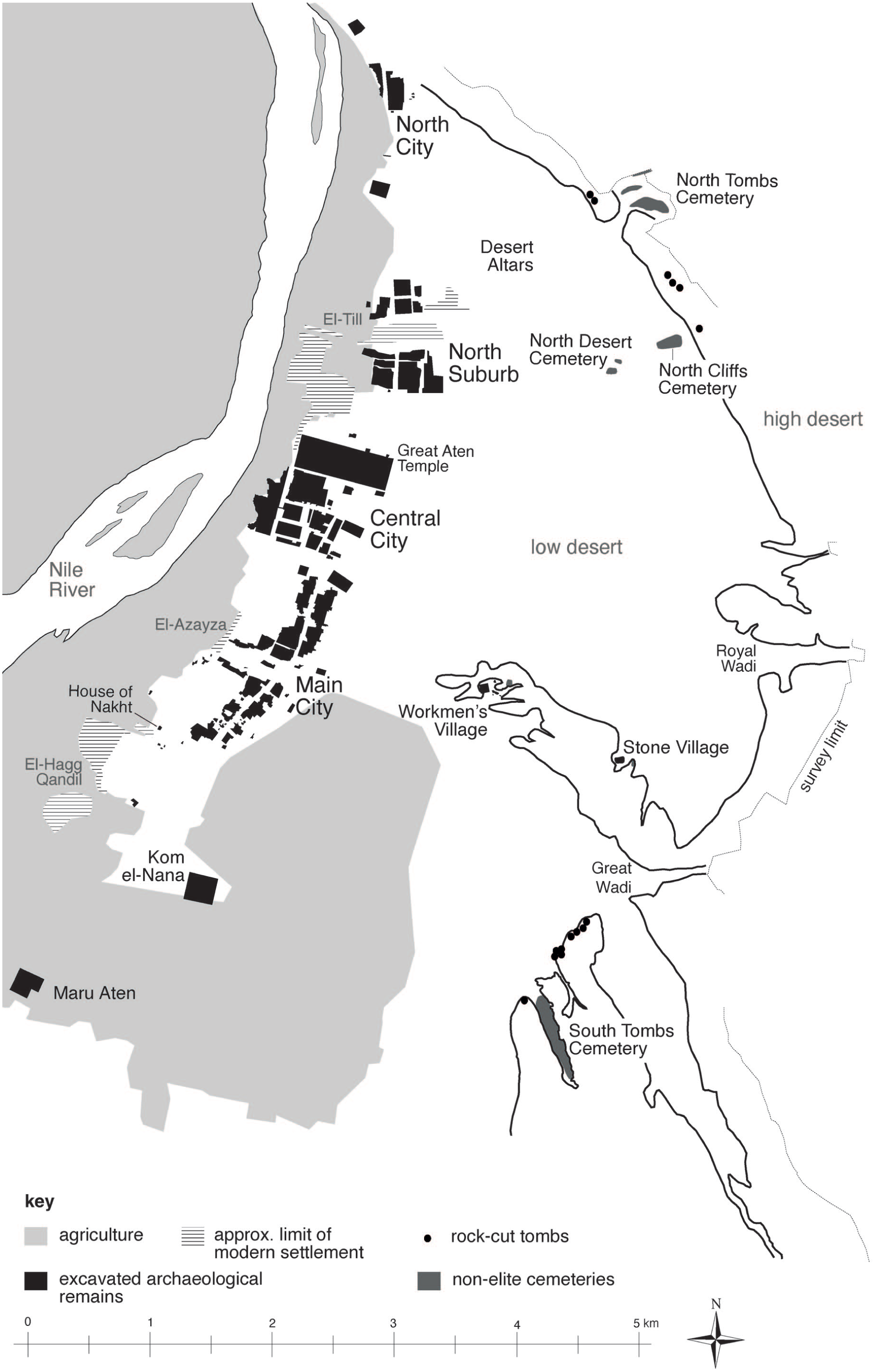
Map of Amarna (base map: Barry Kemp and Helen Fenwick, Amarna Project).
The house was excavated by the EES in 1922 (fig. 2), 6 at which time it stood to about fifteen brick courses (over 1.5 m), preserving white-washing, wall paintings, and stone fittings, including door frames providing Nakht’s name and titles. Few other Amarna houses preserve written evidence of their owners, and rarer still is the fact that Nakht’s likely tomb has also been identified (South Tomb 12, unfortunately largely unfinished). 7 Nakht’s house is, by far, one of the largest and most elaborate houses excavated at Amarna, measuring c. 35 x 26 m, with 30 ground-floor rooms. Within the current project, and its goal of increasing engagement with the houses to demonstrate their value, the re-excavation will allow for the juxtaposition of a monumental upper-elite residence with small, mid-sized, and large houses re-excavated over the course of the project to reconsider these buildings in terms of materiality, construction, upkeep, and other aspects that are difficult to approach from the early excavation records. Photogrammetric models of the re-excavated houses, and related resources, are being developed for online presentation, to share data with the research community and wider public.
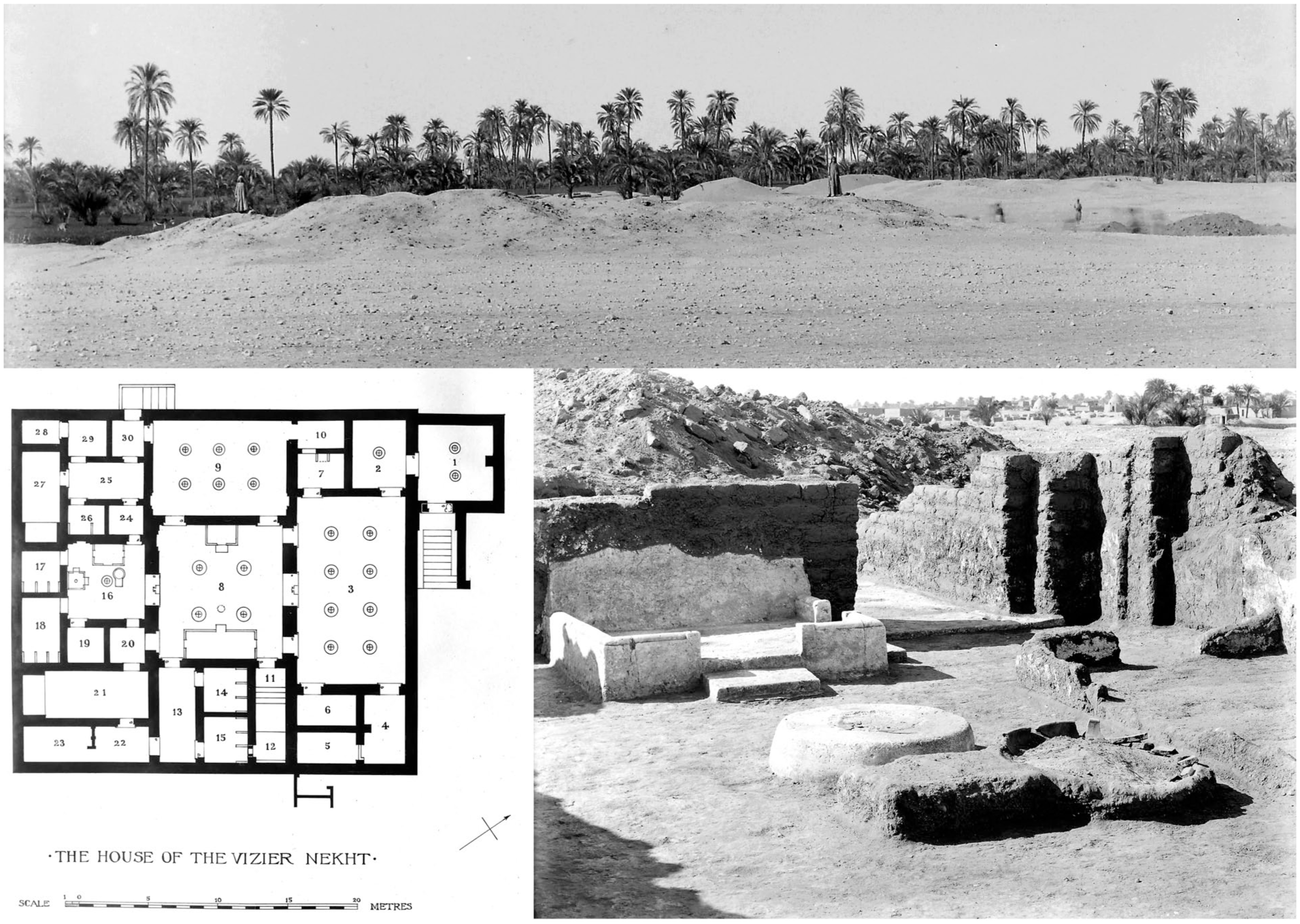
Clockwise from top: the house of Nakht prior to the 1922 EES excavations; a view through Room 16 in 1922, showing well-preserved emplacements; the EES plan of the house (images: EES.TA.NEGS.22.136, 157, 160; courtesy of the Egypt Exploration Society).
Unfortunately, Nakht’s house has greatly deteriorated since 1922, despite the best efforts of heritage managers. 8 Its proximity to El-Hagg Qandil has seen it degrade to a much greater degree than excavated houses located further away from modern roads, fields, and settlement. Before work began in 2025, it was evident that the mudbrick walls had lost most of their height, although many limestone column bases remained. Targeted intervention was needed if this striking example of an elite Amarna house, connected with a known historical figure, was to survive. Our goals here, developed with the Ministry of Tourism and Antiquities, are to re-excavate the building; re-record it to supplement the cursory records created in 1922; and consolidate and partly reconstruct the house so that it can be presented to the public. While there are many houses at Amarna that stand to greater height and are also in need of consolidation, at Nakht’s house we can be confident that the investment of time and resources into reconstruction will result in the longer-term protection of the house and also have public impact.
In spring 2025, we began excavating the deposits that had accumulated in the house since 1922, and by the end of the season had re-exposed the northern two-thirds of the building (figs 3 and 4). The stratigraphy was straightforward overall. The immediate surface deposits tended to comprise trampled silt and chaff. As these were cleared, the tops of the mudbrick walls generally appeared. At a depth of c. 5–30 cm, we encountered a distinct layer of hardened cream-coloured clay deposited during a major flash flood that has swept through the building, probably in the 1960s. 9 In some places, spans of articulated brickwork were embedded in the mud, showing how the flood undermined and caused some walls to collapse. Removal of the flood deposits exposed the floors of the house, which were paved with distinctive ‘tiles’ of unfired alluvium, c. 45 x 37 cm and 5 cm thick (fig. 5). 10 These tiles, which would originally have been covered with plaster, appear to be unparalleled among other excavated buildings at Amarna. 11 Several flint artefacts were observed eroding out of the tiles, and some of the brickwork (see Ricketts below).
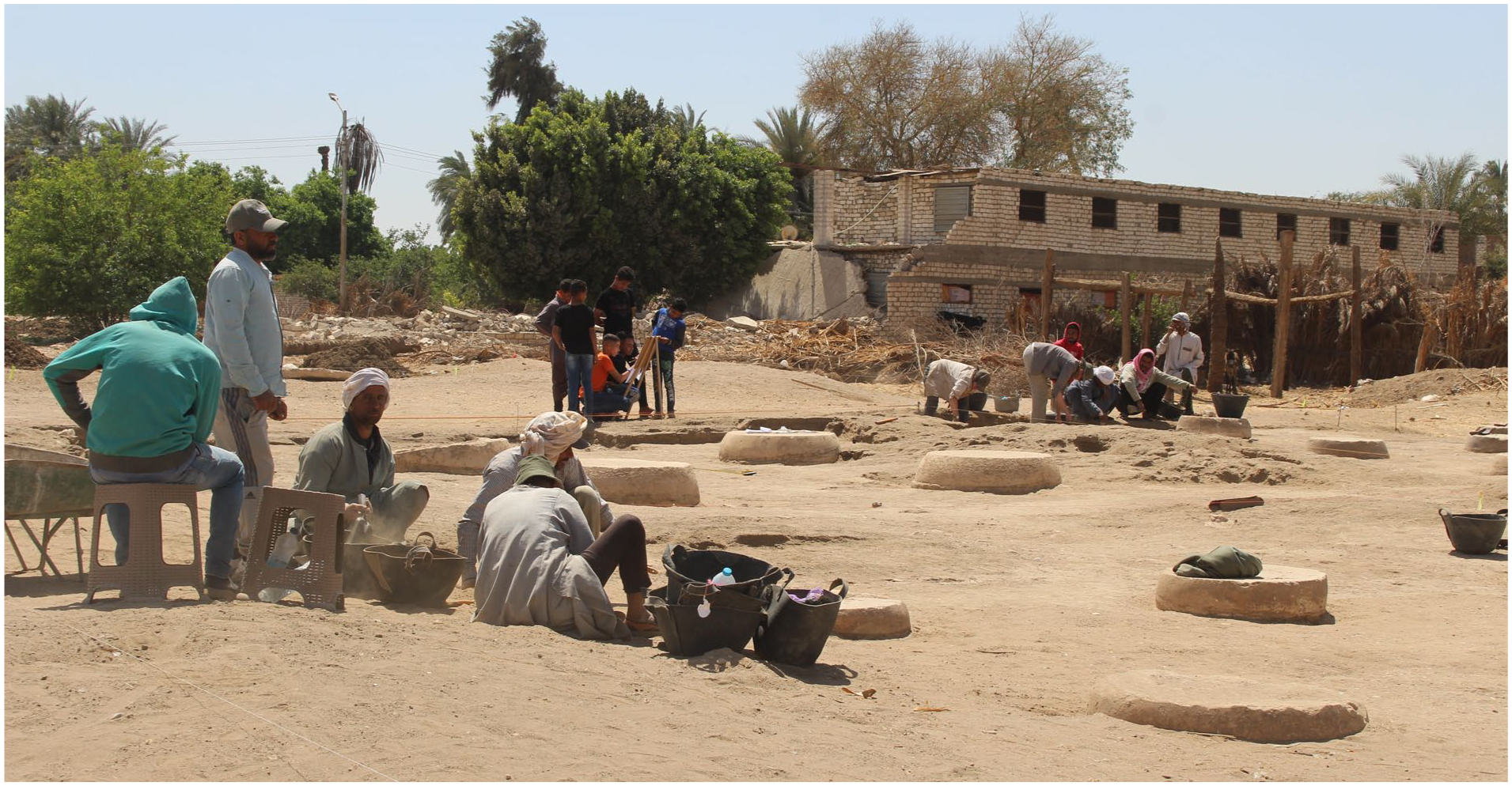
Re-excavation of the house of Nakht. In the background (left), children add notes to an interactive information panel. Facing south-west (photo: Amarna Project).
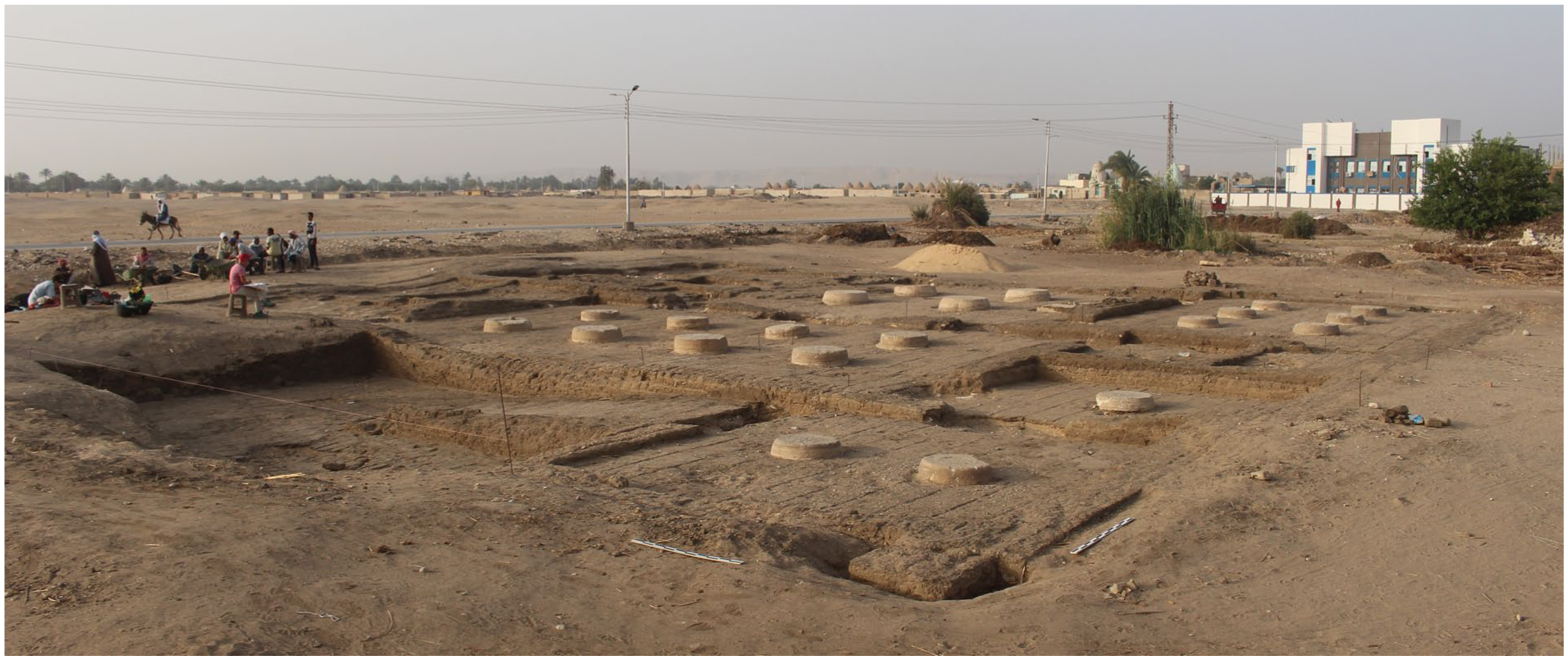
The house of Nakht at the end of excavations in spring 2025, with the northern two-thirds of the building exposed. Facing south-east (photo: Amarna Project).
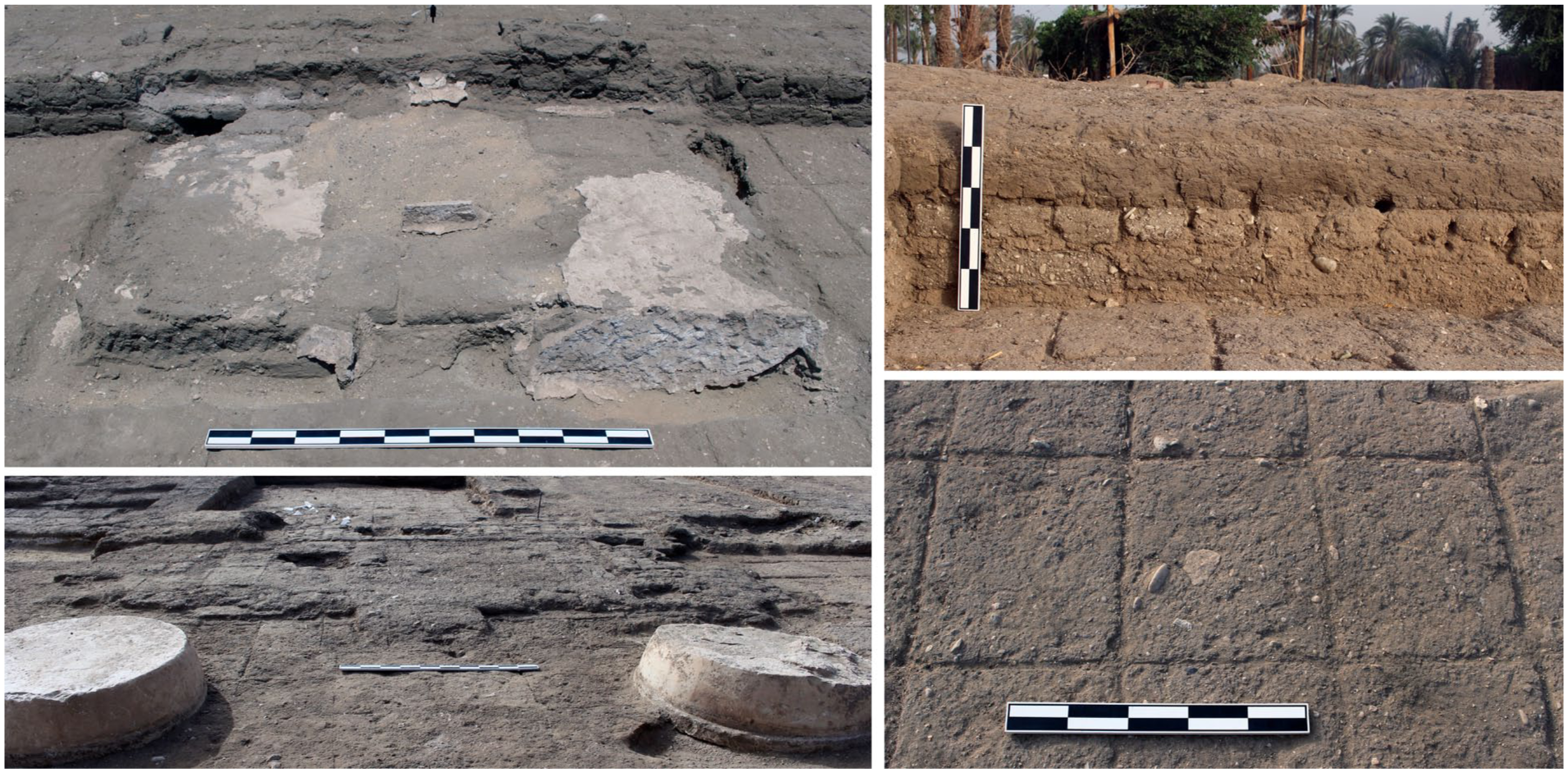
Clockwise from top left: remains of the lustration slab in the central room; different brick types built into the walls; the unusual ‘floor tiles’; remains of a large mastaba in the central room (photos: Amarna Project).
Outside the house to the north there was a deep ditch excavated by the EES to find the house entrance, which was filled with rubbish, ash, chaff, and more flood-borne mud. Removal of these deposits exposed an external pavement, again made of tiles, and the entrance staircase. A circular feature here might be a large ‘tree pit’, later filled in to create an even surface, but requires further investigation. The EES excavation pit cut into a thick deposit of mudbrick rubble that seems to comprise, in large part, sheet collapse from the front wall of the house. This explains why the ground around the house is slightly higher than the surrounding desert: the house walls have in part eroded/collapsed outwards. Some rubble remaining in the EES ditch was excavated, and included towards the northern end of the deposit several bricks with patches of yellow, blue, red, and white paint.
While in a much poorer state than when exposed in 1922, the building remains a striking monument in its scale, quality of construction, and layout. Most of the walls now stand to two to four courses above floor level. The limestone thresholds originally preserved in most of the doorways have been smashed, leaving voids filled with limestone and gypsum-mortar chips. No trace of in situ door frames has been found. All the original column bases have survived, however, in the rooms so far exposed. Most were still in situ; four had been displaced but could be repositioned into their original locations. In cases where the bases had been displaced, their locations were marked by voids in the floor in which clean yellow sand was visible. The column bases seem to have been laid directly over this levelling sand. 12 In the central room, the mastaba and lustration slab also survived partly intact (fig. 5).
A modern archaeological recording of the house and its deposits reveals many details that were not captured in the EES records. Observation of the brickwork, for example, shows how the house was built in two phases. The lower parts of the walls were first constructed in a yellowish brick (figs 4 and 5), creating a casemate-like foundation which was infilled to raise the floor above the desert surface to around 80 cm at the house entrance. With the plan of the building mapped out, construction continued upwards using greyish-brown alluvium-rich bricks, and the floor tiles were inserted. Unusually, the floors of the rooms so far exposed are at different heights, rising up overall from the entrance to the centre of the house, perhaps to emphasise the elevated status of the house owner as visitors navigated the building. 13 The reason for the use of different brick types in the walls is not yet clear, although it can be noted that light-coloured nodules visible macroscopically within the foundation bricks resemble a clay known today as طمي ال سيل (tamy el-siel: clay from the flood), which is known for its strength when used as a construction material. 14
Outside the house, the sheet collapse from the front wall is of interest in terms of the original height of the ‘long hall’ (Room 3). This articulated collapse extends northwards at least 4 m, and possibly 5 m, from the standing remains of the front wall, providing a minimum height for this wall of 4–5 m; the painted plaster in the northern end of the deposit may represent decoration around the top of the wall. Further investigation of rubble around the perimeter of the building may provide additional data on the vertical appearance of the house. Nakht’s house is, in fact, one of few at Amarna where possible archaeological evidence of upper storeys has been recorded. There can be little doubt that a house of this size had at least a second storey. 15 In 1922, the EES excavators recovered several column bases that were too small to have originated from the ground floor, where all the column bases survived in situ; 16 four were found in Room 9 (diam. 0.63 m) and seven (diam. 0.53 and 0.45 m) in front of the main staircase into the house. They suggested the column bases were from an upper storey. 17 As we cleaned back the eastern edge of the EES trench north of the house, we found two fragments of a further small column base (diam. 0.45 m) on the external pavement beneath the wall collapse. While we cannot be sure that these column bases were part of Nakht’s house, their distribution, and this new stratigraphic evidence showing that at least one was placed, broken, in front of the house before it collapsed, could support a scenario in which column bases were dragged out from an upper storey when the house was standing, and left near the front door. A context for this activity could be the removal of building materials for re-use in the years after the royal family abandoned the city, 18 although in this case the stones themselves were not obviously reused. As we continue to re-examine Amarna’s houses in a holistic and comparative manner, their dynamic life histories are increasingly coming to light.
Conservation and site management
Conservation of Nakht’s house also began in 2025, led by Alexandra Winkels. To preserve the walls and floors with plaster applications, these surfaces were cleaned and structural conservation was then carried out by thoroughly spraying the architectural surfaces with a specialised mixture of organic cellulose consolidant and a suspension of silica nanoparticles. After a curing period, this treatment provides basic structural consolidation of the original surfaces. Preparations are now under way to cap the walls with new mudbricks. With the help of the local council, modern rubbish around the house was also relocated, an informal track running over the building diverted, and spotlights were installed to illuminate the site at night. At the close of work, a fence was installed around the house, incorporating space for a viewing platform with information panels to be constructed in the future.
Community engagement (G. Tully)
Work continued to codevelop resources that highlight local expertise, valorise community knowledge, and share local and archaeological interpretations of urban life at Amarna for different demographics. 19 In spring 2025, we set the groundwork for partnership on interpretation of Nakht’s house. A temporary Arabic information panel was erected during the excavations, which provided basic information for adults and younger audiences about Nakht, his life, his house, and urban/family life at Amarna (fig. 3). It included questions linked to local understandings of these themes. Responses, predominantly from children, shared via sticky notes, included further questions as well as interpretations of the house and its history. These contributions will be used to develop draft information panels, to be honed following further community feedback. The feedback will also help shape future open days at the Amarna Visitor Centre and the content of a learning folio undergoing development. Several hundred copies of the book Amarna: Life Under the Sun were also distributed to children who visited the excavations. In autumn 2025 we aim to run site visits, workshops, and open days to enhance the aims and outputs linked to the Nakht panel, test folio activities, and shape new content.
Architectural survey (K. Spence)
Re-excavation and recording of housing areas as part of the Akhenaten’s City project provides an excellent opportunity for a detailed examination of standing architecture and construction techniques. During spring 2025, houses M50.3 and M51.5 were examined in detail, with additional observations made in the house of Ranefer (N49.18), and smaller houses N49.19, 32, and 33. The standing structures of the large houses O49.1 (Pawah) and L51.1, which have not been cleared by the project, were also examined briefly.
The medium-sized and larger houses have provided useful information on how professional builders went about constructing houses. The practice witnessed at the house of Nakht (described above) is widely observable. Houses were laid out in plan directly onto the surface of the site, which was often not flat. The walls were built up to around the intended floor height, with varying numbers of courses and brick positions, and used to level the base of the house. The platform of the house was then levelled, usually to around one course below floor level, using a sand and gravel fill. In smaller houses levelling was very limited but in the biggest houses substantial volumes of fill were used to create a high platform: this sand filling seems likely to derive from the excavation of private wells adjacent to the largest houses, suggesting that in many cases the well was excavated early in the construction process, providing water for making mortar and sand which could serve as temper for mortar and perhaps bricks, as well as filling for the platform.
In the houses examined, door thresholds seem to have been put into position when the house plan was at floor level, as the upper parts of walls are often built directly over them. The walls were then built up by four brick courses in most of the houses examined. With the walls at this height, the ground plan of the house was reviewed and adjusted where necessary. This is seen most clearly in occasional doorways blocked with walls at this height; in other cases, visible changes in mortar or bricks also suggest a pause or review with the walls at around this height. The door jambs seem then to have been put into place: cordage is visible in mortar joints between bricks at the rear of house M50.3, apparently tying the jambs firmly back into the wall. Parallels for this practice can be seen at a number of houses across the city; for example, in the house of Pawah (O49.1).
The houses also reveal something of the aspirations and limitations of the house owners. For example: M50.3 and M51.5 are physically close and comparable in layout, although M50.3 is a little larger. 20 They share some interesting features, such as an unusual L- or U-shaped stair arrangement. However, there are also significant differences. M50.3 is a well-proportioned house, comparable to others of a similar scale at Amarna, and it has a good number of small rectangular ancillary rooms (nine on the ground floor, excluding the probable bathroom), perhaps for storage. The builder added some unusual flourishes, such as the circular arrangement of bricks around the column of the central hall, but the house owner seems to have had a limited budget as no porch was built at the time of construction, nor features such as the usual mastaba bench seen in many houses of this size. M51.5, by contrast, is a house with a number of expensive and unnecessary features, such as a hard and very bright white stone threshold to the porch and structurally unnecessary columns in the front hall, but it has small and badly proportioned rooms in the inner, private part of the house, and the wind-hood ventilation to the bedroom is largely blocked by the position of the stair. The house has only two or three ancillary rooms (other than the likely bathroom), which is low for a house of this size and quality of construction. The owner clearly valued visible status symbols – such as an imported stone doorway on the outside of the house, a columned front hall, and a small side hall (a private reception room) – over storage provision and personal comfort.
Cemetery Study
Bioarchaeology (G. R. Dabbs)
The bioarchaeological work in autumn 2024 and spring 2025 aimed to record human remains recovered from house M51.5 in 2023 21 and to continue recording human remains from the North Desert Cemetery. 22 Previous reports on a small sample of individuals from this cemetery demonstrated biological characteristics suggestive of lower levels of stressor (e.g. higher average stature; lower frequencies of trauma, degenerative joint disease, linear enamel hypoplasia, and cribra orbitalia) than at other Amarna cemeteries, along with an unexpectedly large number of older individuals. 23 Analysis followed previously established protocols 24 and included demographic characteristics (age, sex), metric traits (stature and others), palaeopathological observations, and dental assessments.
Human remains from house M51.5
Excavations in M51.5 revealed a New Kingdom grave cut into the central room. This contained the remains of a nearly complete older adult female (51+ years; Ind. M51.5A) found mostly in situ in a wooden coffin and an older adult of indeterminate sex represented only by an incomplete skull (c. 60% present; Ind. M51.5B). The robusticity and general size of the skull are inconsistent with the in situ postcranial remains of Ind. M51.5A, suggesting it is intrusive. This is supported by its sun-bleached appearance, suggesting long-term environmental exposure. How and when Ind. M51.5B was deposited in the grave is unknown. Little can be said of the life of Ind. M51.5B, but the dental remains exhibit characteristics commonly observed at Amarna, including multiple carious lesions, several teeth lost antemortem, and an alveolar abscess. The right maxillary third molar was lost relatively close to death, as the alveola was in the process of remodelling the tooth crypt at the time of death.
Ind. M51.5A was c. 80% complete and in better condition than Ind. M51.B, consistent with Ind. M51.5A being the original occupant. Ind. M51.5A was a 51+ year-old female who stood c. 150.6 cm tall. She exhibited many of the common pathological conditions observed at Amarna, including linear enamel hypoplasia, antemortem tooth loss, carious lesions, alveolar abscess, degenerative joint disease in the vertebral column and major joints of the limbs, and Schmorl’s nodes, but also conditions rarely seen, including metastatic cancer, a coccyx fracture, and a rare condition previously unidentified at Amarna known as osteitis pubis. 25
Human remains from the North Desert Cemetery
Fifty-three individuals from the North Desert Cemetery were recorded across the two seasons: (2024 n=17; 2025 n=36); the data are combined for all further discussions. There are 32 adults (>15 years; 60.4%) and 21 subadults (<15 years; 39.6%). A complicating factor is the poorer preservation of individuals compared with other non-elite cemeteries at Amarna. Nearly a quarter of the studied sample (c. 24.5%) can only be estimated as ‘adult’ or ‘subadult’ due to the state of preservation or degree of completeness of the remains. Of those who can be more precisely assessed, there is one late-term fetus, six infants (birth–2.9 years), five early subadults (3–6.9 years), seven late subadults (7–14.9 years), ten young adults (15–24.9 years), one adult 25–35 years, three adults 36–50 years, and seven old adults (51+ years; fig. 6). The adult sex distribution is consistent with the slight over-representation of females observed in the other cemeteries, with seventeen females (60.7%) and eleven males (39.3%). The sex of four individuals could not be estimated.
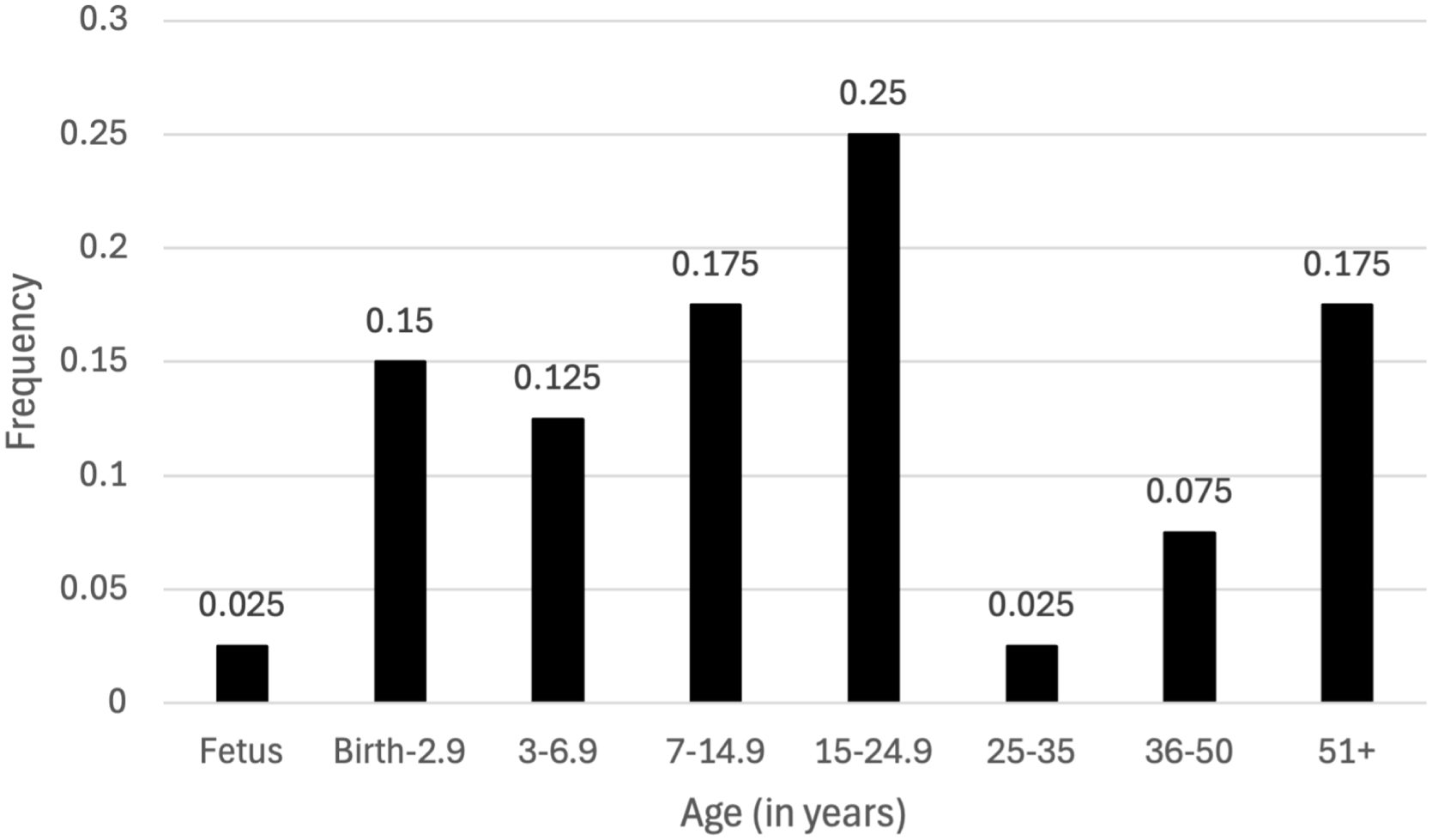
Demography of the North Desert Cemetery sample studied in 2024–2025; individuals identified only as ‘adult’ or ‘subadult’ are excluded (graph: Gretchen R. Dabbs).
Adult stature is a general indicator of net available resources during the growth period, as physiological and psychological insults during childhood divert resources from growth to other systems such as immune response. Adult stature could be estimated for 23 individuals (thirteen females; ten males), at 156.4 cm for females and 163.7 cm for males. These are consistent with previously reported average statures from the North Desert Cemetery. 26 The North Desert Cemetery males are similar in stature to males from the South Tombs and North Cliffs Cemeteries, but c. 2.5 cm taller than those from the North Tombs Cemetery. The females from the North Desert Cemetery are the same height as those from the North Cliffs Cemetery, and c. 1.7–2.6 cm taller than females from the South Tombs and North Tombs Cemeteries (fig. 7). 27 The previously suggested potential for social and/or economic variation between individuals buried in the different non-elite cemeteries may be limited to females, 28 but further consideration is necessary.
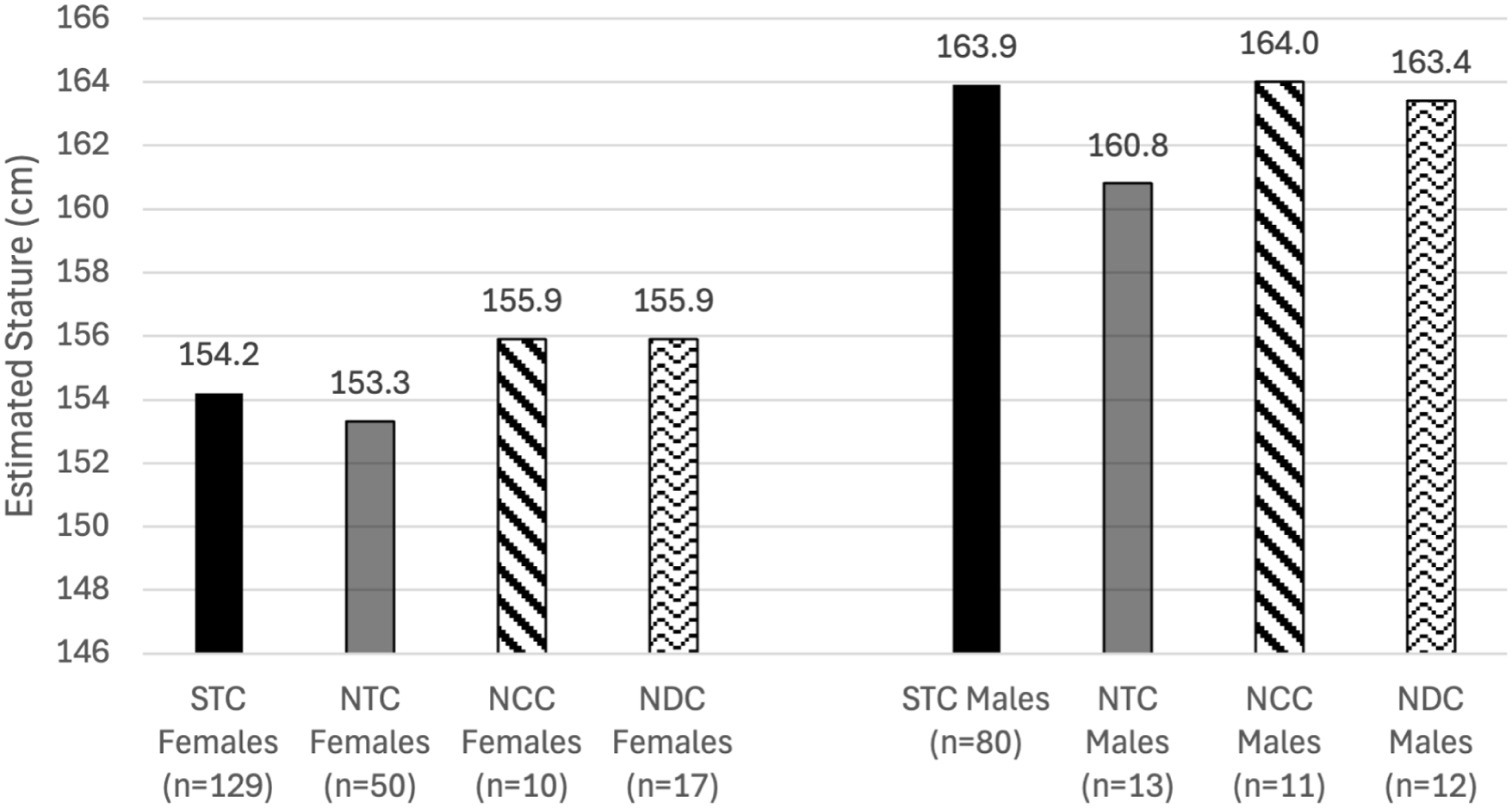
Estimated stature for adult individuals buried in the main non-elite cemeteries at Amarna (STC: South Tombs Cemetery; NTC: North Tombs Cemetery; NCC: North Cliffs Cemetery; NDC: North Desert Cemetery). Includes the small NDC sample studied in 2023 (graph: Gretchen R. Dabbs).
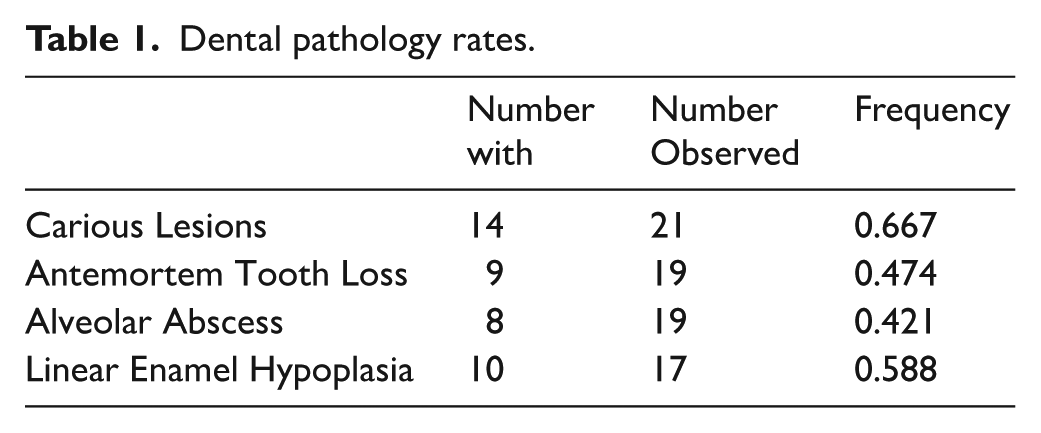
Dental pathology is recorded in terms of antemortem tooth loss, carious lesions, linear enamel hypoplasia, and alveolar abscess. All are present, although for all dental lesion types the number of individuals for whom observations could be made is limited. Dental pathology rates are high (table 1). Two-thirds of the sample exhibited a carious lesion, and nearly half exhibited an alveolar abscess or lost a tooth before death. These are all characteristics associated with high-carbohydrate diets and the high frequency observed here may be influenced by the comparatively large number of older adults. Human dentition does not remodel and is not replaced after the permanent teeth erupt. Pathological lesions accumulate over a lifetime, often leading to higher frequencies of pathological lesions in older samples.
Dental pathology rates.
Along with stature, two indicators of subadult health are the presence of linear enamel hypoplasia and evidence of cribra orbitalia. Linear enamel hypoplasia present in the anterior permanent dentition records periods of extreme stress during the dental growth period (i.e. early childhood). Nearly 60% of individuals in this sample exhibit at least one linear enamel hypoplasia, suggesting severe childhood stress was common, but also that those buried in the North Desert Cemetery had lower stressor levels than some others buried at Amarna. 29 Cribra orbitalia is an indicator of chronic anaemia 30 and generally thought to form only if an individual suffers the condition before age eight. 31 Only six individuals in this sample exhibit cribra orbitalia (26.1%), which is very low compared with other cemeteries at Amarna (c. 60–80%). 32 Differences in diet, activity, and exposure to pathogens and parasites can all cause chronic anaemia and the overall lower frequency of cribra orbitalia here may suggest better diets, lower activity levels, reduced exposure to pathogens and parasites, or some combination of these.
In line with the other non-elite cemeteries at Amarna and previous reports from the North Desert Cemetery, this sample exhibits high rates of trauma and degenerative joint disease (table 2). Vertebral degeneration is the most commonly observed condition. Interestingly, the most frequently affected area of the vertebral column is the thoracic, where 70.7% of individuals observed exhibited degeneration. It is more typical for the lumbar region to exhibit the most frequent degeneration, and this may hint at activity pattern differences for the individuals buried here. Thirty-four individuals exhibited non-vertebral joint degeneration, including of the long bones and of other areas (table 2). The most common sites of non-long bone degeneration include the feet, hands, rib heads and tubercles, temporomandibular joint, patella, and scapula.
Frequency of degenerative joint disease, metabolic disease, and traumatic injury observed in the 2024–2025 North Desert Cemetery sample.

Traumatic injury is frequently observed at Amarna (see table 2), and among the other non-elite cemeteries vertebral fractures are the most common. In this sample fourteen individuals exhibited at least one form of vertebral trauma (Schmorl’s nodes, compression fracture, spondylolysis), with Schmorl’s nodes being the most common form overall, followed closely by compression fractures. Arm and leg fractures were generally of the lower limb and exhibited fracture morphology associated with falls. Ten individuals exhibited a foot fracture, although mostly of the toes, so they may have been relatively minor.
It was previously noted that the North Desert Cemetery sample contains a higher-than-expected number of individuals displaying skeletal lesions of tuberculosis. 33 This trend of chronic bacterial infections affecting the vertebral column continued in the samples from 2024 and 2025. Six additional individuals (11.3%) exhibited lytic lesions of the vertebral column consistent with either tuberculosis or brucellosis infection. 34 This adds further evidence to suggest overall stressor loads were probably lighter for individuals buried in this cemetery, as those with lesions survived insults long enough to develop skeletal lesions, whereas those with higher levels of stress likely died before forming lesions. 35 This sample also included a number of individuals with skeletal formations rarely observed, including a teratoma, 36 a pituitary cyst/tumour, and two possible metastatic carcinomas.
Conclusion
The ongoing recording of human remains from the North Desert Cemetery is beginning to suggest a different picture for these individuals’ lives than has been observed at other non-elite cemeteries at Amarna, one of lower stressor levels. While there is still ample evidence that life was physically and, perhaps, psychologically demanding, lower frequencies of conditions such as linear enamel hypoplasia and cribra orbitalia, coupled with typical (male) or higher-than-typical (female) stature, may suggest some level of social or economic advantage during childhood for individuals buried here. Lower levels of trauma, especially vertebral trauma, variation in the vertebral areas affected by degeneration, and common evidence of hand and foot degeneration hint at variation in activity patterns between individuals buried here and elsewhere at Amarna. Although it is premature to make statements about the causes of these differences, the evidence does suggest the individuals buried in the North Tombs Cemetery experienced social and/or economic advantages that resulted in a lived experience with fewer overall stressors.
Archaeobotany (A. Clapham)
The spring 2025 season was spent studying the different types of matting found in graves at the North Tombs, North Cliffs, and North Desert Cemeteries (fig. 1). Study of matting from the North Tombs and North Desert Cemeteries was completed, and work on the North Cliff Cemetery samples is ongoing. Over 600 samples were examined (table 3). Further analysis may reveal that some samples have originated from the same excavation unit (e.g. having been collected on different days), but this assessment nonetheless provides preliminary insight into the distribution of matting types across the cemeteries.
Types of matting in the northern cemeteries.

To be completed.
North Tombs Cemetery preliminary results
The matting here was poorly preserved, with only small fragments available for study; however, it was possible to identify eight types (table 3, fig. 8a). Halfa grass (Desmostachya bipinnata) stem matting was the commonest type, followed by date palm (Phoenix dactylifera) rib, reed (Phragmites australis), sedge (Cyperus sp), tamarisk (Tamarix sp.), date palm leaf, rush (Juncus sp – a new matting type), and papyrus (Cyperus papyrus).
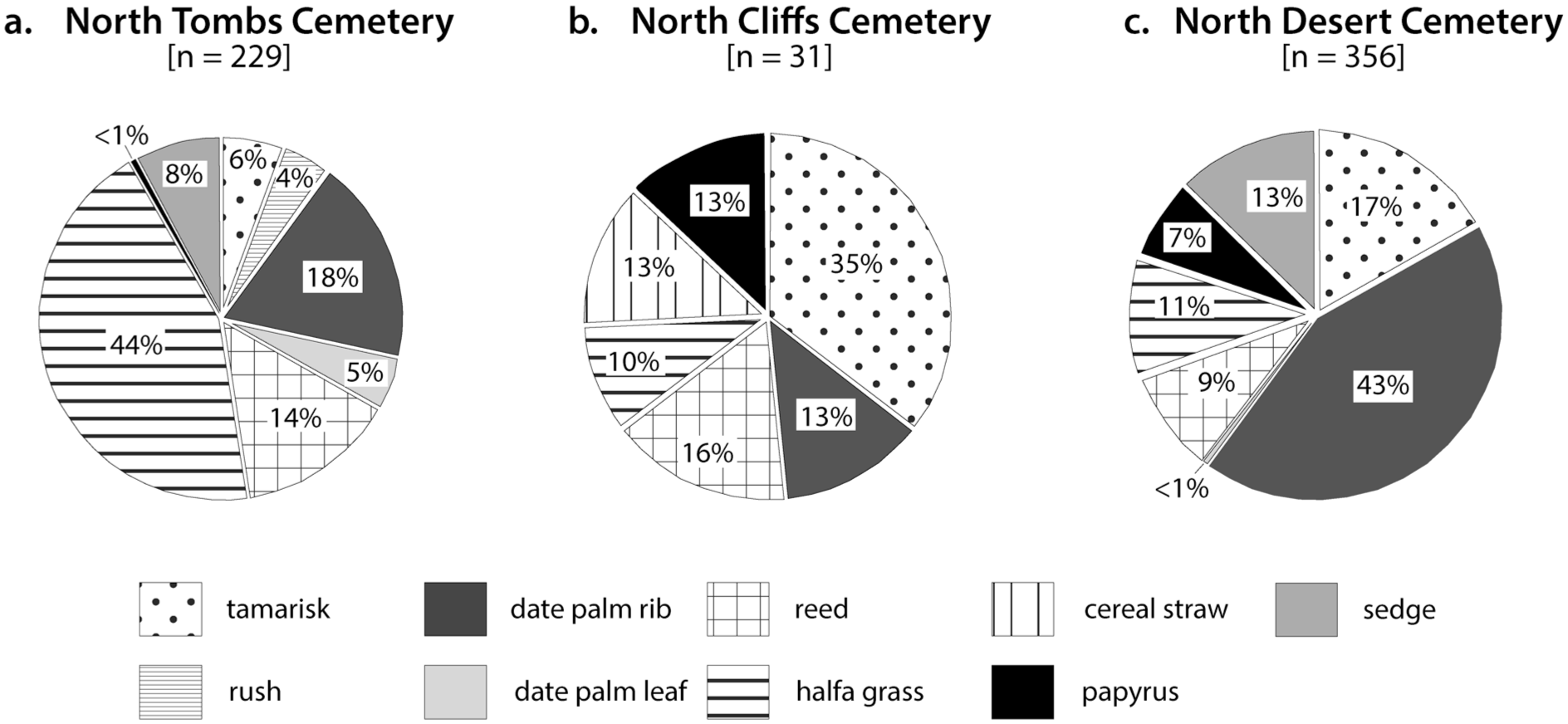
Distribution of matting types at the northern cemeteries (North Cliffs Cemetery to be completed) (graphs: A. Clapham).
North Cliffs Cemetery preliminary results
The samples from the graves excavated here produced six types of matting (table 3; fig. 8b). Tamarisk was the commonest, followed by reed. Cereal straw (another new type), date palm rib, and papyrus were each the next commonest, followed by halfa grass. The range of matting types and their abundance may change when the study of samples from this cemetery is complete.
North Desert Cemetery preliminary results
The 356 samples from this cemetery produced seven types of matting (table 3; fig. 8c), with date palm rib the commonest, followed by tamarisk, sedge, halfa grass, reed, papyrus, and date palm leaf matting. The matting from this site and the North Cliffs Cemetery was better preserved than that from the North Tombs Cemetery.
Conclusion
In conclusion, each of the three northern cemeteries had a different dominant matting type. Halfa grass was dominant at the North Tombs Cemetery, tamarisk in the North Cliffs Cemetery, and date palm rib at the North Desert Cemetery. This may relate in part to the social status of the individuals at each site. Three types of matting were identified from the northern cemeteries which were not found at the South Tombs Cemetery: rush, from the North Tombs Cemetery only, cereal straw from the North Cliffs Cemetery only, and papyrus from all three cemeteries. This difference may again relate to social status. Once the data from the matting study is combined with that from the archaeology and skeletal remains, a more complete picture of the burial practices at each cemetery can be produced.
Maru-Aten Reliefs Catalogue Project (K. Thompson)
In spring 2025, a study of 381 unpublished relief fragments from the Maru-Aten complex was conducted. The goal is to publish a catalogue of this corpus. These fragments originated in the South House Dump, located beside the expedition house. The South House Dump was first noticed by Barry Kemp and his team in 1979, with pieces coming to the surface as people and animals walked through the area. A small group of pieces was gathered at this time (labelled ‘TA SURFACE’). Two excavations in 1992 and 2002 then cleared the dump. It contained a large number of finds from both the DOG excavations of 1911–1914 and the EES excavations of 1921–1936. The dump had been formed in 1924, when the EES moved to a new expedition house at the northern end of Amarna. That team emptied the magazine of finds and buried them without making note of the fact.
Alongside unfinished statuary pieces from the Thutmose Workshop, large quantities of potsherds from the 1921–1924 seasons, 37 and architectural elements from the Maru-Aten, were the small group of relief fragments discussed here. Most did not have any field numbers written on them, but ten pieces, including a largely preserved sandstone talatat, did have numbers with dates – e.g. 22/365C. The pieces clearly originated in a royal stone building. The only such structure excavated in 1922 was the Maru-Aten. The small number of pieces that had been published confirmed that source.
The pieces were initially registered in 2008 and 2009, with a small number of joins made and some pieces photographed. The reliefs were grouped by subject matter into five types: human figures; parts of buildings; plants, water, and boats; inscriptions; and small pieces with grooves and other unidentifiable shapes. In spring 2025, photographs were taken of the entire corpus and further observations added to the records.
The Maru-Aten, a complex of buildings far to the south of the city, was excavated and published only once, cursorily, in 1922. 38 Over succeeding decades, the cultivation slowly encroached on the site. In 1987 Kemp observed that the complex had completely disappeared under cultivation. 39 Many of the finds from the 1922 excavations were dispersed to museums around the world and largely remain in storage and unpublished. The planned publication of a catalogue of the recovered fragments will give access to a substantial body of evidence concerning this intriguing but lost part of ancient Akhetaten.
Zooarchaeological Investigations of the Official Residence of Panehsy (C. Stimpson)
Spring 2025 saw the completion of a zooarchaeological investigation of the house of the priest Panehsy beside the Great Aten Temple. This has reviewed materials recovered from the house and adjacent spoil heaps between 2005 and 2007, 40 with particular focus on the bones of birds and small mammals. This work is now complete and a total of 412 specimens (a ‘specimen’ being a bone, tooth, or fragment thereof) have been examined; bones of small birds, shrews, and rodents were photographed in detail and measured and compared to reference material held in UK museums. A total of twelve different bird taxa have been identified and a sample of shrew skulls have been the subject of a dedicated metric investigation.
In addition to taxonomic identifications, the small vertebrate assemblages have yielded taphonomic insights, which were complemented by the collation and review of unpublished data on the abundant cattle bone assemblages from the site collected by the late Professor Tony Legge. Collectively, these data have yielded (in some cases surprising) insights into the final stages of occupation, use, and subsequent abandonment of the house, before it was ‘sealed’ by the desert and excavated by the EES in 1926. 41 The results are now being written up for publication.
Lithics (S. Ricketts)
During the 2024–2025 field seasons, a short reconnaissance survey was undertaken across the Amarna plain, building on an earlier landscape survey initiated by Charles French. 42 The aims of the field survey were, first, to understand the prehistoric potential of the Amarna area, and second, to gain a greater understanding of the New Kingdom lithic industries and flint sources associated with the city of Akhetaten, to contextualise recent discoveries of flint within brickwork at the house of Nakht (see Stevens above).
Palaeolithic flint scatters – Middle Stone Age activity in the Amarna area
A roughly triangular spit of land preserved between the entrances of the Great and Royal Wadis (fig. 1), correlated to the 25 m contour, probably represents the lowest levels of the geomorphological Valley Border Levels identified by Rushdi Saïd and further discussed by Pierre Vermeersch et al. 43 Described as limestone and cemented limestone gravel with a weathered mantle, they are probably structural or fluviatile in origin. 44 The plateau is a probable remnant terrace of fanglomerate origin, incised by later wadi action on its northern and southern edges. 45 Early work by French identified probable Palaeolithic flint scatters here, including a mixture of Levallois flakes and cores, cores with striking platforms, and numerous blades and bladelets, protected by erosional action from the two wadis. 46 Field walking in 2024–2025 across the top of the preserved plateau identified not only concentrations of dark grey flint artefacts, but also diffuse scatters that occupy a majority of the plateau surface, particularly in the vicinity of the Stone Village.
The predominately dark grey flint occurs as surface scatters, and appears relatively fresh, although some pieces show obvious dark desert patination (fig. 9a). Cursory observations identified artefacts including exhausted cores, rectangular flakes, and utilised blades in accordance with French’s notes. French’s early characterisation of the material suggested that it probably correlates to a (possibly local) transitional Middle/Upper Palaeolithic industry. 47 Additional analytical work is required to further characterise this material and understand its geomorphological and geoarchaeological context, particularly in light of more recent work on distinguishing the differential Nile Valley technocomplexes of the Palaeolithic. 48 Ongoing investigations will aim to clarify whether the material is in situ, the likely age of the plateau, 49 and whether the scatters are representative of a singular industry or a palimpsest of multiple time periods due to deflationary action. Regional sites surveyed by the Belgian Middle Egyptian Prehistoric Project such as Rab’Abu Zeid (76/11), Nag’el Gawanim (76/17), Beit Khallaf (76/25), and El Busa (76/41) occur in similar geomorphological conditions (gravel terraces or isolated hills on the edges of Nile Valley Border Areas) and thus are likely comparable sites. 50
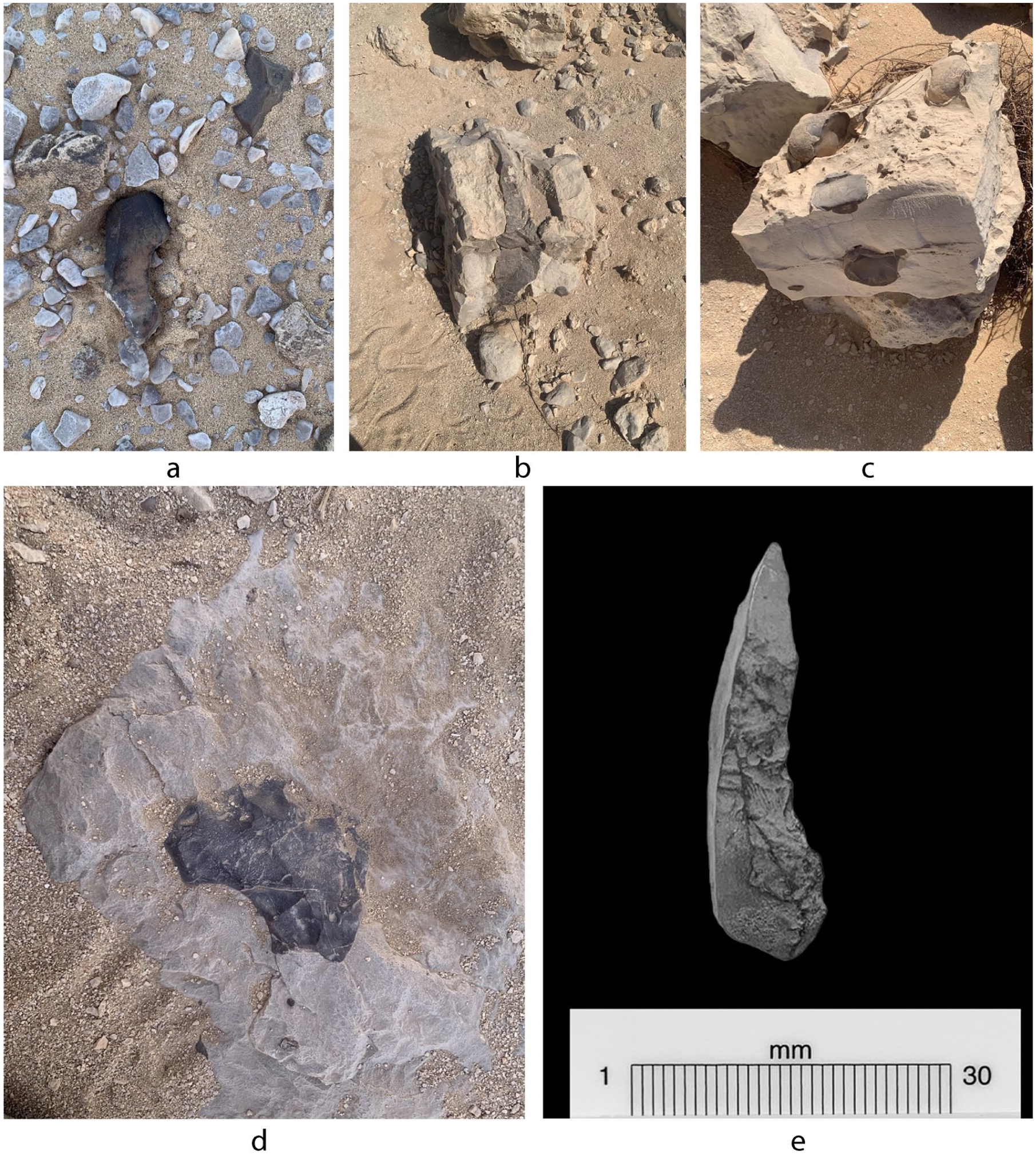
a) Surface artefact from the 25 m contour showing dark desert patination; b) flint seam observed within secondary Eocene limestone, the Great Wadi; c–d) flint nodules embedded within secondary Eocene limestone, the Great Wadi; and e) backed blade, house of Nakht (photos: S. Ricketts/Amarna Project).
The Great Wadi – an alternative flint source for Amarna?
To begin understanding stone artefact manufacture and patterns of flint exploitation at ancient Akhetaten in earnest, a fuller picture of raw material accessibility and sources is required. Preliminary studies of Amarna-period stone artefact assemblages have all made reference to the likelihood of local flint sources within the Amarna cliffs and the exploitation of both nodular and tabular sources, 51 although no cohesive study of flint exploitation and distribution patterns has been undertaken.
Initial surveys have indicated at least three potential sources of naturally occurring flint in the immediate Amarna area. These include black nodules originating in the Middle Eocene limestone as pebbles, a less common/poorer quality mottled brown flint occurring as pebbles and thin (c. 4 cm thick) seams to the southeast of the South Tombs, and a likely 18th Dynasty flint quarry adjacent to the Hatnub road, with nodules occurring in mottled or finely banded patterns of white, light grey, and dark brown. 52 The utilisation of Palaeolithic artefacts as a raw material source, evidenced by the presence of double patinated tools, was also noted by Robert Miller among the Workman’s Village material, probably originating from the plateau immediately beside the site. 53 In 2025, field walking of several of the Eastern Desert Amarna wadis was initiated, looking for flint sources that may have supplied the ancient city. No sources were noted within the northern wadi system, with the well-documented travertine and limestone quarries dominating. 54 Within the Great Wadi, however, a previously unpublished flint source was encountered, occurring as both light brownish-grey tabular seams and mid-grey nodules within large pieces of limestone bedrock that had fallen from the higher Eocene scarp (figs 9b–c). 55 Some of this flint-bearing limestone was also found at ground level, suspended within deep alluvial deposits across the wadi floor (fig. 9d). Large scatters of flaked stone artefacts were noted both within the loose wadi wash accumulation on the wadi sides, and on the wadi floor at the wide entrance of the wadi mouth, carried by flood activities towards the low desert.
Prehistoric lithic artefacts within New Kingdom mudbrick
In addition to the above work, a large number of flint artefacts were concurrently recovered during the re-clearance of the house of Nakht (fig. 9e). They occurred in contexts including the silty surface deposits, flood deposits that covered the house above the floors, and were observed actively eroding out of the alluvial mudbrick of the walls and from the floor tiles. Curiously, these flint artefacts appear to be a range of both debitage and tool types, including formal tools such as backed blades and bladelets, scraping tools, and piercing tools. Many display a glossy surface sheen, although whether this is the result of desert varnish or heat treatment requires further assessment. Many of the artefacts are manufactured on a deep orange, glossy flint that so far does not appear to have a local source (although see discussion above).
Further analysis is required to establish the nature of the lithic industries represented as well as their potential origin. A key question is whether the artefacts originate from the surrounding New Kingdom settlement, as temper used to strengthen the mudbrick, or whether they pertain to earlier occupation in the surrounding landscape and were inadvertently collected within the alluvial silt used in the manufacture of the bricks and tiles.
Osseous Technology Study (M. C. Langley)
In December 2024, 26 bone and ivory artefacts from the Workmen’s Village, Stone Village, and Main City were examined to explore their manufacture and use-lives. The largest class of osseous artefact in this assemblage are those most commonly referred to as ‘pin-beaters’, whose function remains inconclusive despite focused attention on their morphology and distribution across Akhetaten (fig. 10). 56 To address this, the eighteen intact and fragmentary pieces of uni- and bipointed bone implements in the Amarna magazine, along with an additional 109 pointed bone artefacts from Amarna in the Ägyptisches Museum und Papyrussammlung (Berlin), were investigated following current standards in osseous artefact investigation. These traceological methods and methodologies, primarily developed for prehistoric archaeological contexts, rely on the identification of characteristic manufacturing, use, and taphonomic stigmata to determine the function/s of recovered tools. 57 Following these protocols, the morphology, size, and visible manufacturing and use traces were mapped for the Egyptian artefacts. The digital data from this non-invasive study are currently being analysed and will shortly be published.
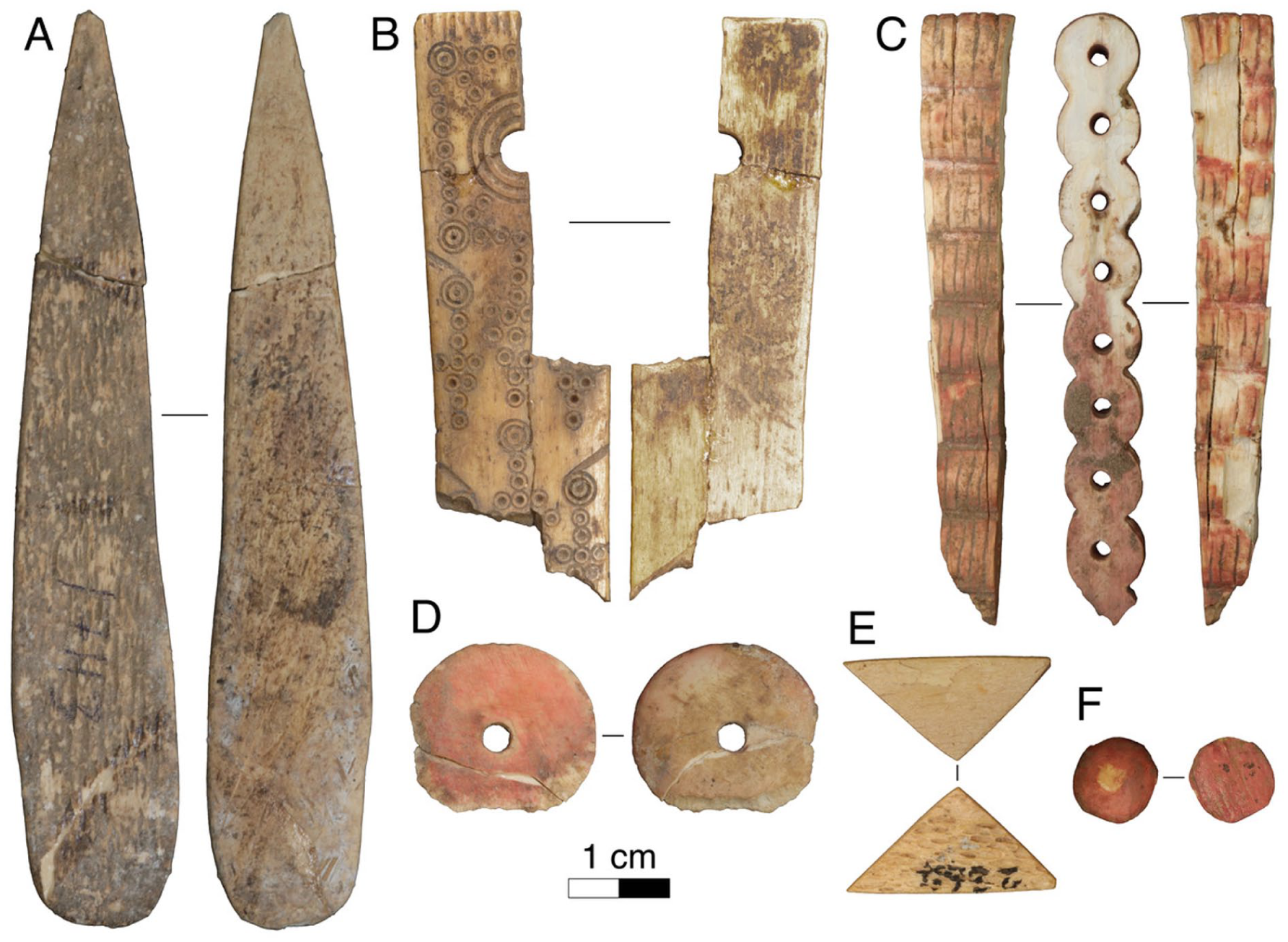
Range of bone and ivory artefacts examined from Amarna: a) typical example of a bone unipoint, often identified as ‘pin-beaters’ (obj. 6366); b) Late Roman Period bone comb or hairpin (obj. 94); c) ivory bead-spacer (obj. 35065); d) bone disc (obj. 4351); e) bone inlay (obj. 2364); and f) ivory dome inlay (obj. 35533) (photos: M. C. Langley).
In addition, two perforated phalangeal artefacts were investigated. The largest, recovered from the Stone Village and made on the first phalanx of a juvenile Bos, was identified as a possible phalangeal whistle – a unique item in a dynastic Egyptian context. 58 The second phalanx item, found in 2023 in the secondary burial in house M51.5 (see Dabbs above), may also be such an artefact, though its smaller size and the appearance of its multiple perforation rims better aligns with damage from a small-to-medium-sized carnivore.
Finally, the few miscellaneous items made of bone and ivory recovered from across the city were examined following the same traceological methods. These include a possible weaving comb or spacer (possibly of hippopotamus ivory; raw material to be investigated further), an elephant ivory bead-spacer with red painted overlay (fig. 10c), a bone disc also painted red (fig. 10d), a bone triangular inlay (fig. 10e), and, finally, a small red-painted dome of ivory which may also be an inlay though other interpretations are possible (fig. 10f). Also present is a probable unipoint made of mammal bone which features the incised ‘circle-and-dot’ decoration consistent with Late Roman Period pieces (e.g. bone combs, hairpins; fig. 10b). 59 This last piece fractured in antiquity across its face (proximal end), with further post-depositional fractures also present. Overall, continuing investigation of the selection and use of osseous and other hard animal materials (e.g. shell) throughout the Dynastic Period hopes to shed new light on Egyptian craftsmanship both at Amarna and further afield.
Other Projects
In autumn 2024, Amandine Mérat continued her study of textiles, focusing on samples found in burials at the Stone Village in 2008. 60 These will be presented as a comparative assemblage in the forthcoming South Tombs Cemetery monograph. In spring 2025, Pamela Rose and Jolanda Bos continued their studies of pottery and hairstyles, respectively, from the South Tombs Cemetery. Several researchers continued work on materials from the Great Aten Temple: namely, Stephanie Boonstra (faience inlays and tiles), Juan Friedrichs (quartzite stela fragments), and Sue Kelly (small finds). Anna Hodgkinson examined materials related to high-temperature technologies recovered during the 2023 housing survey, oversaw collection of halophytes (salt-tolerant plants) for upcoming glass-making experiments funded through a Rakow Grant (Corning Museum of Glass), and prepared for excavations planned for 2026 at the ‘Hayter-Sherraif Workshop’ near the house of Ranefer, for the DFG/AHRC-funded project Craft Interactions in a New Kingdom Industrial Landscape (Egypt, 1550–1069 BCE) (Freie Universität Berlin/British Museum; PIs Hodgkinson and F. W. Rademakers). Amélie Deblauwe and Alice Salvador also began work to catalogue, illustrate, and photograph objects excavated at the Workmen’s Village from 1979 to 1986 in advance of an upcoming monograph.
Footnotes
Acknowledgements
We are grateful for the support of the Egyptian Ministry of Tourism and Antiquities (MoTA) and thank, in particular, Mr Ahmed Fathi (general manager for Middle Egypt), Mr Fathy Awad (manager of the Mallawi sector), and Mr Hamada Kellawy (chief inspector of Tell el-Amarna). Our MoTA inspectors were Mr Mustafa Khallaf (magazine, 2024, 2025), Mr Mohamed Khallaf (site, 2024), Mr Maezan Osman (site, 2025), and Mr Mohamed Said Abu el-Qasm (site, 2025). We thank the local council for their assistance with site management at the house of Nakht, and Waleed Mohamed Omar for designing and overseeing construction of the protective fence here.
The research team for the autumn 2024 season was Anna Stevens, Gretchen Dabbs, Sarah Ricketts, Michelle Langley, Amandine Mérat, Alice Salvador, Tracy Lakin, and Erin Casey. For the spring 2025 season the team comprised Anna Stevens, Melinda King Wetzel, Sarah Ricketts, Kate Spence, Tracy Lakin, and Erin Casey (housing study); Alexandra Winkels (conservation); Gretchen Dabbs, Pamela Rose, Alan Clapham, and Jolanda Bos (cemetery study); Anna Hodgkinson (industrial archaeology); Sue Kelly, Stephanie Boonstra, and Juan Friedrichs (Great Aten Temple); Chris Stimpson (zooarchaeologist); and Alice Salvador (illustration) and Amélie Deblauwe (photographer). Members of our excavation team from El-Hagg Qandil and El-Till were: Waleed Mohamed Omar, Ahmed Mokhtar, Abdel Hafiz Abdel Aziz, Abdel Malek Mohamed, Mohamed Saleh Osman, Bakr Amin Abdel Rakhman, Abu Zeyd Ezz El Din, Mohamed Rabia, Mohamed Mahmoud, Shahata Mohamed Sayed, Yahya Sadiq, Ahmed Sayed, Ahmed Abdel Moein, Mahmoud Bakr, Mahfouz Mahrous, Ahmed Mezagher, Mohamed Abdel Sittar, and Mohamed Rafaat.
Finally, we thank the JEA reviewers for their feedback.
Funding
Akhenaten’s City: Protecting Amarna’s Urban Heritage is funded by the American Research Center in Egypt’s Antiquities Endowment Fund (USAID), administered by Monash University. Community outreach is funded through the Akhenaten’s City grant and the project Preservation Through Education: Protecting Ancient Settlements Through Outreach at Amarna, Egypt funded by the Archaeological Institute of America. Work on materials from the cemeteries was supported by the Institute for Bioarchaeology (British Museum) and the School of Anthropology, Political Science, and Sociology at Southern Illinois University. The Workmen’s Village publication is supported by the Shelby White and Leon Levy Program for Archaeological Publications. Additional financial support was provided by the Amarna Trust.
1.
British Mission to Tell el-Amarna, McDonald Institute for Archaeological Research, University of Cambridge.
2.
On the project background, see Stevens in Stevens, et al. 2024: 29–31.
3.
Stevens, Docherty, Lakin, and Tully in Stevens, et al. 2024: 29–41; Stevens, et al. 2025.
4.
Lakin, et al. in press; Lakin in Stevens, et al. 2024: 37–39.
6.
8.
Tully, et al. 2020: 32, fig. 24, 79, n. 7, 105.
11.
12.
We did not have time to open a test pit through the sand to investigate the sub-floor levels further.
14.
17.
Peet and Woolley 1923: 8–9. Column bases thought to have come from upper storeys have also been recorded from houses V37.1 and S33.1 at Amarna: Spence 2004: 125, n. 12;  : 6–7, 67.
18.
See also the secondary New Kingdom burial in the central room of house M51.5, re-excavated in 2023, where a column and column base were presumably removed before the grave was cut: Stevens, et al. 2024: 34–35, figs 18, 19.
19.
Tully in Stevens, et al. 2024.
20.
See images in Stevens, et al. 2024: figs 18, 20.
21.
Stevens in Stevens, et al. 2024: 34–35, figs 18, 19.
22.
On excavations here, see Stevens, et al. 2020: 1–6; Stevens, et al. 2022: 9–17; Stevens, et al. 2023: 99–103.
23.
Dabbs in Stevens, et al. 2024: 41–42.
25.
Further details to be published in the future.
26.
See Dabbs in Stevens, et al. 2024: 41 for previous reports of NDC stature, and Stevens and Dabbs in press for comparative data from other Amarna cemeteries.
27.
See Dabbs in Stevens, et al. 2024: 41.
28.
Dabbs in Stevens, et al. 2024: 41–42.
29.
30.
Anaemia is a symptom of over 200 conditions and its cause can rarely be identified in archaeological materials.
31.
33.
See Stevens, et al. 2024: 41.
34.
The two conditions exhibit similar lesions and further differential diagnosis is required to ascertain the potential cause of these lesions with greater confidence.
35.
Osteological Paradox: Wood, et al. 1992.
40.
See Payne 2006, for methods.
48.
E.g. Wendorf, et al. 1993; .
49.
It seems likely that the mapped fanglomerate deposits are eroded alluvial fans originating from the Eastern Desert wadis, rather than a remnant Nile terrace, although this requires further clarification.
51.
E.g. Miller 1986; .
55.
I am indebted to Waleed Mohamed Omar for sharing his recollections of observing flint in the Great Wadi.
57.
E.g. Bradfield 2015; Buc 2011; .
60.
Published in preliminary form by Stevens 2012: 181–190.